When Children Suffer: California to Funnel Billions Into Mental Health Overhaul
Jocelyn Wiener / Thursday, March 17, 2022 @ 7:57 a.m. / Sacramento
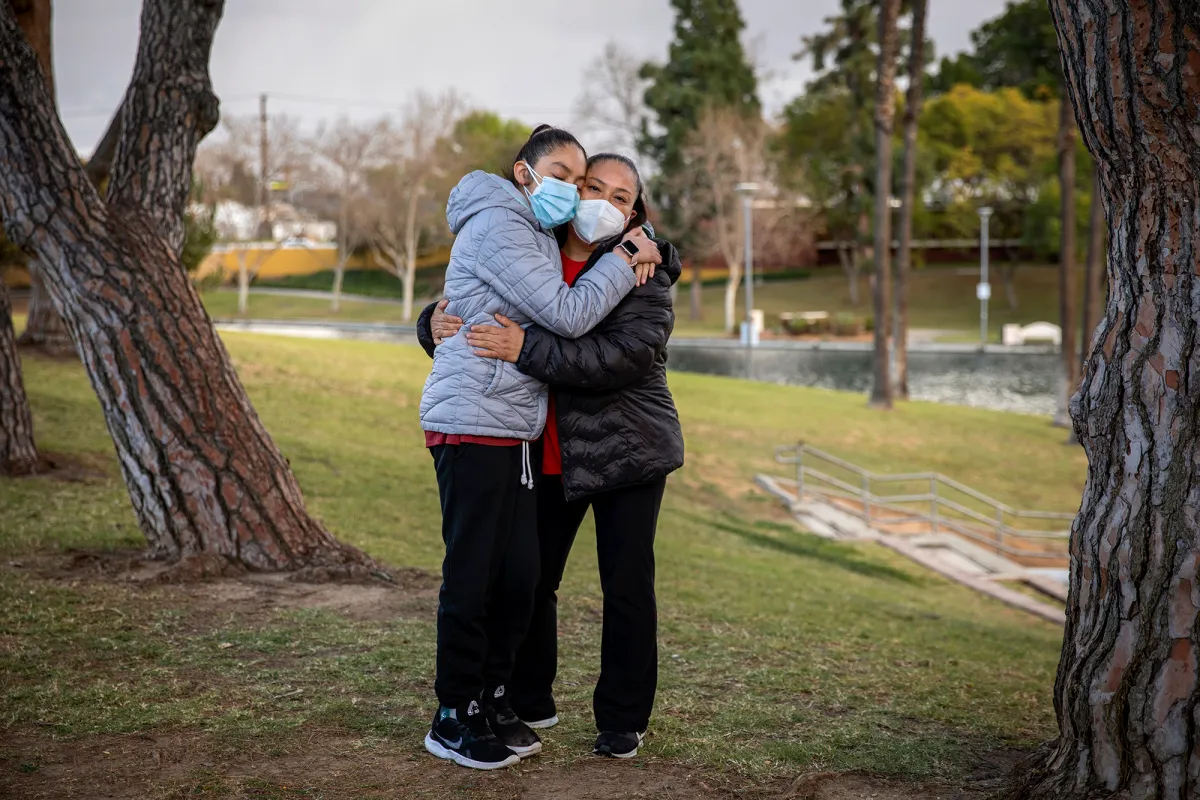
Amanda Arellano, 17, left, and her mother Maria, right, at a park they love near their home in Los Angeles on Feb. 22, 2022. Photo by Alisha Jucevic for CalMatters.
Amanda Arellano felt a heavy weight pressing down on her chest. It was May of 2021, and the teenager struggled to breathe.
Maria Arellano rushed her 17-year-old daughter to the pulmonologist. Amanda has cerebral palsy, autism, epilepsy, asthma and a heart murmur. With COVID on the prowl, they couldn’t be too careful.
This wasn’t an asthma flare-up, the doctor told them. This was anxiety.
Sitting in a Jack in the Box near their home in Boyle Heights last month, Maria’s eyes filled with tears as she searched for the words to describe watching her normally gregarious daughter struggle.
“It makes you feel very powerless,” she said.
Many California parents know this feeling well. Two years into the pandemic, our children are in pain. Rates of anxiety and depression have shot up so quickly that several national leaders — including the U.S Surgeon General — have issued urgent public health advisories. School-based therapists report long waiting lists and an increase in fighting and behavior issues. Emergency room doctors say they are overwhelmed by the number of children coming in after trying to harm themselves.
On top of all this, the state is facing a shortage of mental health providers.
State officials know they have a serious problem and have vowed to address it. Along with county public health departments, school districts and other agencies that serve children, the state is grappling with a complicated challenge: Gov. Gavin Newsom’s administration plans to build a brand new system to solve these problems in the coming years. But pressure is mounting to help children like Amanda — now.
“We know that this is job number one, to help our students address the trauma that they … are experiencing during the coronavirus pandemic.”
— Tony Thurmond, state Superintendent of Public Instruction
Dr. Mark Ghaly, a pediatrician who serves as the state’s secretary of Health and Human Services, told CalMatters he feels “concerned but hopeful” about the state’s ability to meet the growing need, though he’s also “very aware that even the most short, short-term interventions are not as immediate as I think we would like.”
Last year, Newsom’s administration allocated $4.4 billion in one-time funds to create a statewide Children and Youth Behavioral Health Initiative. The proposed sweeping transformation of the children’s mental health system will be funded by a sum many describe as “unprecedented.” The bulk of the money has yet to be distributed, but efforts to develop a vision and work with stakeholders are underway.
Tony Thurmond, the state superintendent of public instruction, recently told CalMatters he has visited 45 schools since July. Staff tell him that they don’t have the resources to help struggling students.
“We know that this is job number one, to help our students address the trauma that they have experienced and are experiencing during the coronavirus pandemic,” he said. “That’s got to be our priority.”
Children’s advocates are enthusiastic about the state’s commitment to the issue, but also worry that help won’t come soon enough.
A crisis was brewing before the pandemic; COVID set it to a boil.
- Suicide rates among Black youth doubled between 2014 and 2020, according to state data.
- Incidents of youth deliberately causing self-harm increased 50 percent in California between 2009 and 2018, the state auditor reported. Children’s hospital officials told CalMatters last fall that mental health emergency room visits spiked dramatically during the pandemic.
- Between 2019 and 2020, opioid-related overdoses among 15- to 19-year-olds in the state nearly tripled, according to a CalMatters analysis of state data.
Lishaun Francis, director of behavioral health for the advocacy group Children Now, appreciates the state’s long-term planning, but she wants action now.
“I think what people are looking for is an emergency response,” she said. “That has never been the state of California’s plan.”
On March 7, her organization joined a coalition of children’s advocates and health providers in sending a letter to Gov. Gavin Newsom, calling on him to formally declare the status of child and adolescent mental health in California a public health emergency. The challenges facing young people in the state, they said, are “dire and widespread.”
‘It won’t be this way forever’
For a moment, in March 2020, Amanda felt excited. Her school planned to close briefly; two weeks at home sounded like an unexpected vacation.
But school didn’t reopen that spring, or all the next school year. And many supports Amanda depended on – social therapy, music therapy, physical therapy – moved online or fell away completely.
Terrified of the virus, Amanda refused for months to venture out of the small blue house in Boyle Heights where she and her mother rent a room from another family.
Always a strong student, Amanda grew increasingly frustrated during virtual learning. Sometimes a shaky internet connection booted her out of Zoom class. Other times, teachers were hard to understand.

“I don’t know what I can do to calm myself down,” Amanda told her mother.
Maria would see tears in the long-lashed brown eyes of the daughter she’d always known to be creative, happy and resilient. She’d pull out photos they’d taken on pre-pandemic outings.
“It won’t be this way forever,” she’d tell Amanda. “One day this will end.”
Amanda tried meditation and exercise. She lost herself in video games, playing Roblox until her hands hurt.
As the months wore on, Maria saw the toll on her daughter’s self-esteem.
On Dec. 18, 2020, Amanda sent an email to a teacher, apologizing for missing certain assignments: “I am very embarrassed,” she began.
For months, she explained, “I have felt constant headaches and I have felt very dizzy; I have been extremely fatigued. Never, since I started school, have I left assignments without finishing them. I have always been a good student. But in this moment with the pandemic, my life has been impacted in many ways, especially with Distance Learning.”
Her teacher reassured her: “You are an amazing student that inspires everyone you meet.”
But the anxiety continued. In February 2021, Maria wrote to the school psychologist, asking for help.
‘It’s getting worse’
Young people’s suffering has been widespread, as revealed in a January report on the state of student wellness. Based on surveys of 1,200 California middle and high school students between April 2020 and March 2021, 63% of the students reported having had an emotional meltdown; 43% said they had a panic or anxiety attack; and 19% described suicidal thoughts, according to the report published by American Civil Liberties Union California Action, California State University, Long Beach and the California Association of School Counselors.
“We know from the numbers it’s getting worse,” said Amir Whitaker, senior policy counsel for ACLU Southern California, who is the report’s lead author. “We’re not done yet.”
Whitaker leads the Youth Liberty Squad, a group of high school students around the state who are advocating for better school-based mental health care. Many have experienced their own anxieties and traumas these past two years. As life edges closer to normal, they find details of their lives changed in unsettling ways.
“You don’t want to get your hopes up, because another wave might come.”
— Joel Salas, 12th-grade student, Los Angeles
Lizbeth Zambrano-Sanchez, a Los Angeles senior, notices the painful silence in math class after her teacher asks a question that once might have prompted conversation.
Sonia Banker, a San Francisco 12th grader, describes a new awkwardness in social interactions: “There’s this feeling that when you talk with someone, it feels harder.”
Joel Salas, a Los Angeles senior, spent a month isolated in his bedroom after the rest of his family contracted COVID-19. His mother fell extremely ill, and he ended up caring for her while studying and working five or six hours a day at his parents’ taco stand.
One of the biggest challenges for him now is the unrelenting uncertainty.
“You don’t know what’s happening next,” he said. “You don’t want to get your hopes up, because another wave might come.”
Another challenge is what’s left unsaid. Many of his classmates lost family members, he said. People rarely talk about it.
Amanda, who is also a leader within the Youth Liberty Squad, felt terrified when school resumed in person last August. What would happen if she was exposed to the virus? To protect herself physically, she distanced herself from her classmates.
Amanda’s mother, Maria, understands these fears. She also knows a teenage girl needs friends.
Workforce shortage means long waits for care
The trauma of the pandemic — the grief, fear, loneliness and boredom — has layered upon concerns about food and housing insecurity, gun violence, climate change, political polarization, racism, transphobia, deportation and, now, the war in Ukraine.
One in 330 California children has lost a parent or caregiver to the pandemic, according to a report released in December by COVID Collaborative.
Counselors who work in schools say more students are acting out. Some children struggle to get out of bed at all.
Josh Leonard, executive director of the East Bay Agency for Children, which provides mental health services for children, calls this “a natural predictable response to the stress and anxiety at the moment.”
“Kids are struggling profoundly,” he said.
But big systems are not nimble enough to address the building emergency, he said. As waiting lists grow, workers at overwhelmed schools and mental health agencies like his are not always proactively reaching out to children and families, he said. Why bring children into the system when no one is available to serve them?
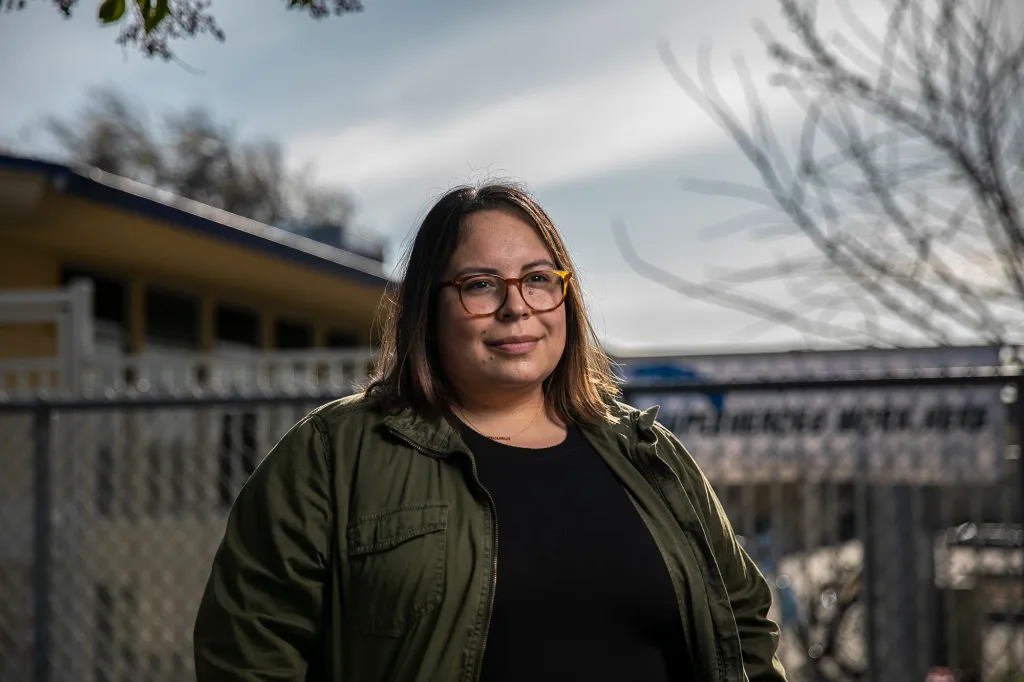
Alyssa Hurtado, a school therapist at Schilling Elementary School in Newark, stands in front of the school on March 15, 2022. Photo by Martin do Nascimento, CalMatters
Alyssa Hurtado, a social worker with Leonard’s agency who works at a Newark elementary school, did her best to stay connected with families during the school closure. After more than a year of remote learning, many of her young clients now struggle with separation anxiety. Others have difficulties with motivation and concentration.
“Kind of like, ‘What’s the point?’” she said.
Hurtado herself is stretched thin. Five children are on a waitlist to get services at her school. In the meantime, she’s also been helping to cover a vacancy at another school.
Across the agency, Leonard says 10 therapy positions remain unfilled out of a total of 50. Each of those positions would allow the organization to see 18 to 20 additional children. He and other nonprofit leaders say it’s difficult to compete with counties, school districts and big fish like Kaiser. Telehealth companies that sprang up during the pandemic have lured some clinicians away. Others are opting for the flexibility of working for themselves, avoiding onerous paperwork requirements by seeing patients who can pay out of pocket. Still others are moving to places with lower costs of living.
“If we’re calling this a crisis in mental health, let’s respond to it like a crisis.”
— Jodie Langs, WestCoast Children’s Clinic, Alameda County
Those who remain often carry the extra load and face burnout.
“Every applicant has 20 different job opportunities right now,” said Stacey Katz, CEO of WestCoast Children’s Clinic in Alameda County, who is also trying to fill 15 to 20 openings.
“No one likes you to say you have a ‘waiting list,’” she said, describing pressure she and others say they receive from counties to avoid using that term. “I don’t know what you call it when there are 176 people waiting for services.”
The clinic’s public policy director, Jodie Langs, chimed in: “If we’re calling this a crisis in mental health, let’s respond to it like a crisis.”
Hope on the horizon?
Advocates recognize the tension of this moment. They commend the Newsom administration’s leadership and its willingness to invest the state’s budget surplus in solutions. But they also say the state is playing catch-up, having failed for years to address the spiraling need.
For many of these advocates — and for the families and children they serve — the state’s promises are only as good as the change they see on the ground.
Alex Briscoe, head of California Children’s Trust, an initiative to reform the state’s children’s mental health system, calls current state leaders “extraordinary” and their investment ‘“unprecedented.” But he also notes that California has “among the worst track records in the nation” when it comes to children’s mental health.
A 2018 report from The Commonwealth Fund put the state at 48th out of 50 in terms of the percentage of children ages 3 to 17 who received needed mental health care. A 2020 progress report published by Children Now right before the first shutdown gave the state a D grade for children’s behavioral health, noting that mental illness was the leading reason kids here were being hospitalized. The 2022 report gave the state a D-plus.
“I don’t want to suggest nothing’s happening, but it’s unclear yet what it will signify,” Briscoe said.
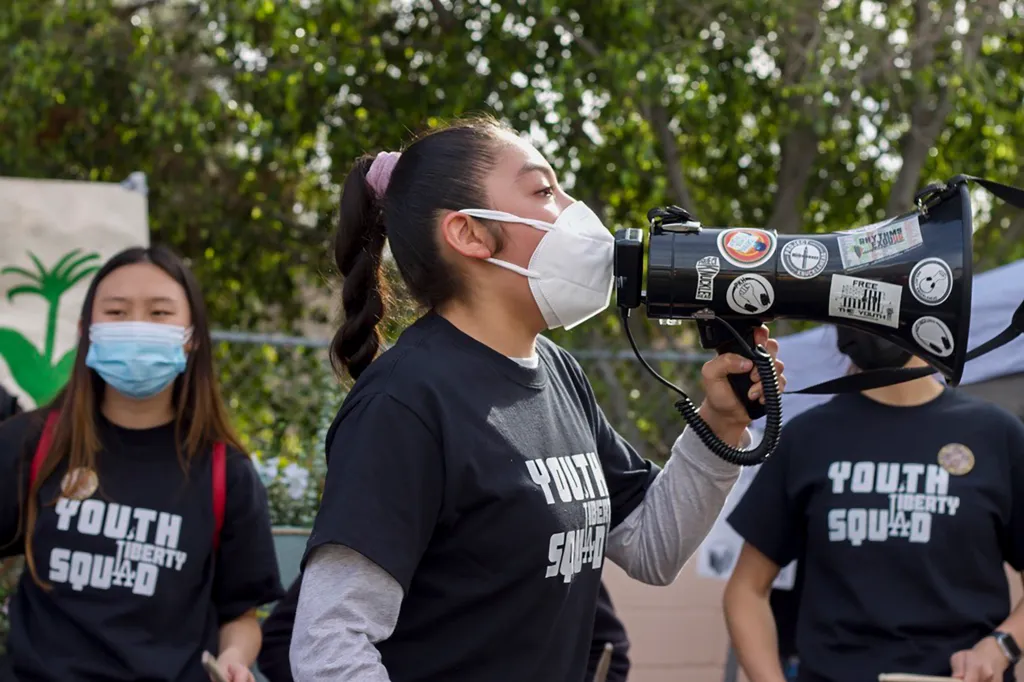
Amanda Arellano at a protest in Los Angeles on Feb. 26, 2022. Photo courtesy of Sophie Sylla.
Ghaly and others in the administration say they are working hard to develop a strategy. They aim to create an integrated system that focuses on prevention and equity and brings together public, commercial and private systems that often are siloed and highly fragmented – “something with a lot of entry points, a lot of front doors,” he said.
“The truth is we don’t really have a cohesive children’s behavioral health system,” Ghaly said. “I see a lot of opportunity to stitch something together.”
The administration is still mainly in the first phase of a three-phase plan it expects to roll out over five years. State leaders are gathering stakeholders, setting goals and figuring out big-picture issues. In the coming years, they plan to translate that into major initiatives — including a virtual mental health platform that would be available to all young people. They also envision a public awareness campaign to address stigma, a school-based treatment model that will be available regardless of insurance status and the training of a bigger, more diverse workforce.
Ghaly is aware of the urgency and says some initiatives are already underway. The state has rolled out CalHOPE, an online platform that offers mental health support. It has formed a partnership with the Child Mind Institute to provide educational materials about mental health. It has allocated new funding to support partnerships between schools and counties. As part of a statewide effort to transform Medi-Cal, the health insurance program for low-income Californians, state officials recently announced that children and youth do not need a diagnosis in order to access specialty mental health services.
“Is it enough? Does it touch as many kids as we would like? No. But it is certainly trying to move the needle quickly,” Ghaly said.
“The truth is we don’t really have a cohesive children’s behavioral health system. I see a lot of opportunity to stitch something together.”
— Dr. Mark Ghaly, California’s secretary of Health and Human Services
Thurmond, the state schools superintendent, is supporting a legislative proposal to use loan forgiveness and deferrals to attract 10,000 new clinicians into schools and community-based organizations in the next few years.
Thurmond said his commitment derives from losing his own mother when he was 6 years old.
“I’m a believer that when there’s trauma, you must acknowledge it,” he said. “You must have an available workforce to address it.”
As these big initiatives roll out, though, what can be done now?
Some believe the answer lies, in part, with kids themselves. Students can be trained to act as peer counselors, and to be on alert for signs of suicide, many experts say. That can serve a double benefit – providing real-time support now, and helping build a pipeline of mental health providers from diverse communities.
“Students are not being tapped into enough,” said Whitaker of the ACLU.
That is beginning to change. In the past few years, Cal-HOSA, an organization focused on training students for careers in health, has piloted student mental health programs in 25 schools around the state. Students receive training to provide peer counseling support. The experience also allows them to consider careers in mental health.
‘My life is so bright’
In the pandemic’s early months, Maria Arellano found herself in a situation familiar to many parents: She was Amanda’s principal, teacher, nurse, tutor, playmate and advocate.
Maria knew how important it was for her daughter to use her own voice.
She suggested Amanda join some youth advocacy organizations, and also start making music videos, to “take out everything she was carrying within.”
In August 2020, Amanda posted one of these videos, “My Pandemic Song,” to her YouTube channel. Images of distraught medical workers and patients on ventilators scroll across the screen while she sings.
“You gotta calm yourself now, everything’s going to be alright (how?)
“The pandemic is on. Everyone’s anxious now.”
A year and a half later, much has changed in Amanda’s life. She is vaccinated. The final months of senior year are upon her: Prom. Senior trip. Graduation.
As mask mandates fall away, Amanda feels frightened. But, with the help of her mother, her therapist, and the strength she is discovering through her own advocacy, she is working to find peace within the new reality.
This past December, Amanda put up another video on her YouTube channel, with a new original song:
“I feel alive with all my might,”
“My life is so bright. My life is so bright.”
###
Behavioral health coverage is supported by a grant from the California Health Care Foundation. CALmatters.org is a nonprofit, nonpartisan media venture explaining California policies and politics.
BOOKED
Yesterday: 7 felonies, 17 misdemeanors, 0 infractions
JUDGED
Humboldt County Superior Court Calendar: Friday, Sept. 4
CHP REPORTS
0 Deerlick Springs Rd (RD office): Trfc Collision-1141 Enrt
434 Mm197 N Dn 4.30 (HM office): Traffic Hazard
6000 Mm101 N Men 60.00 (HM office): Trfc Collision-No Inj
6183 Mm101 N Men 61.80 (HM office): Trfc Collision-1141 Enrt
ELSEWHERE
RHBB: CDPH Issues Immunization Recommendations for 2026-27 Respiratory Virus Season
RHBB: Redway Transfer Station to Close an Extra Day for Construction
RHBB: Dows Prairie Road to Close for Two Months for Culvert Repair
Short-Term Fixes Won’t Really Solve California’s Teacher Shortage
Joe Hong / Thursday, March 17, 2022 @ 7:28 a.m. / Sacramento
###
Daniel Poulos worked as a custodian for Castro Valley Unified School District for 12 years. He became a familiar face at Redwood High, a school for at-risk youth, where he made sure the classrooms were clean and the lights stayed on.
But in 2017, he got the chance to become a history teacher with the help of California’s Classified School Employee Credentialing Program, where he spent a year earning his teaching credential. That year, California allocated $25 million in grant funding that would help non-teaching school staff become teachers in an effort to address a statewide shortage.
He said he had always expected to retire as a custodian. “But when the opportunity to teach arose, I jumped at it,” Poulos said.
State-funded teacher training programs continue to chip away at the dire teacher shortage in California, but they might not be enough to deal with the urgent, short-term needs. A January report by the Learning Policy Institute found that some of the state’s largest districts had 10% of vacancies still unfilled at the start of the new school year. One district had a quarter of its vacancies unfilled.
And not all districts are feeling the benefits of the state money. More remote, rural districts don’t have enough applicants for state grants, nor do they have four-year universities nearby to train educators.
“We don’t have time for grant writing,” said Morgan Nugent, superintendent of Lassen Union High. “Our time is stretched making sure we have meals going to kids and educators in classrooms.”
Barret Snider, a lobbyist who represents school districts across California, said that he heard one superintendent compare the state’s grant programs to giving a Disneyland vacation to a family in poverty.
“That’s nice,” Snider said. “But that’s not what we need.”
Since 2015, California has invested $4.8 billion in teacher recruitment, retention and training efforts, all designed to alleviate a chronic staff shortage that devolved into a crisis during the pandemic. That amount of money would pay one year’s salary for over 56,000 teachers earning the average salary for public school teachers in 2019-20. Gov. Gavin Newsom proposed spending $560 million more in next year’s budget.
“We don’t have time for grant writing.”
— Morgan Nugent, superintendent, Lassen Union High School District
While school districts consider these short-term grants a blessing, administrators say more permanent increases to education funding are necessary to help them pay the ongoing costs of teacher salaries and benefits. Teacher salaries can range from around $50,000 to about $100,000. One of the bonuses of teaching are the long summer and holiday breaks.
Nicole DiRanna, who oversees a teacher training program at San Marcos Unified in San Diego County, said her district is doing the most it can within the restrictions of this state funding, but the obvious solution is to raise teachers’ pay.
“The problem is the different types of state funding,” she said. “If we had it our way, we would just raise the salaries, right?”
A long-term exodus
The teacher shortage predates the pandemic.
School districts had a tough time hiring teachers as they began recovering from the Great Recession and reinstating positions that had been cut, according to a 2016 study by the Learning Policy Institute. Science, math, bilingual and special education teachers were in particularly high demand and the study projected that statewide, districts would need to hire about 300,000 teachers a year starting in 2018.
“Prior to the pandemic, big drivers of shortages were significant decline in preparation, increased demand and teacher turnover,” said Tara Kini, the director of state policy at Learning Policy Institute. “In California, that accounts for 90% of the demand.”
While student enrollment also dropped at a faster pace during the pandemic than during previous years, teacher retirements and turnover were even bigger factors at some districts.
Since the start of the pandemic, teachers have been leaving the profession at a faster rate. The California Department of Education does not track statewide teacher turnover, but data from the California State Teachers’ Retirement System shows that retirements increased by 26% in the first year of the pandemic. According to a survey, 56% of retirees left due to the challenges of teaching during the pandemic.
California Teachers Association president E. Toby Boyd in a statement to CalMatters said teachers are “exhausted and burned out and are planning to leave the profession earlier than expected.
“If California is truly serious about providing every child with the education they deserve, addressing our teacher shortage should be the top priority of every district and our elected leaders right now,” he said.
School district administrators and union leaders across California agree that virtual instruction pushed many educators out of the profession for good. They also say teachers have been underappreciated during the pandemic.
“It’s bad, and it’s going to get worse,” said Matt Best, superintendent of Davis Joint Unified School District. “The trend has been in place for a better part of a decade. We have to fix some of these barriers.”
Proposed solutions to teacher shortage
One of those barriers is the cost of becoming a teacher. After earning a bachelor’s degree, prospective educators need to spend an additional one or two years in school earning a credential and spend time as unpaid student teachers.
To help ease that burden, California has budgeted nearly $170 million since 2017 to help current public school employees who aren’t teachers earn teaching credentials. They can get up to $25,000 to help cover tuition, books and testing costs. The grants have so far produced 511 teachers and could generate up to 7,620 in the coming years.
“We need our workforce to mirror our rural community, and it currently does not.”
— Brooke Berrios, Fresno County Office of Education
At Davis Joint Unified, Best said his goal with this program was to diversify the district’s teachers with a labor force that would stay with the district for many years.
“These were people who were already invested in the community and in their schools,” he said. “The program is attractive to them because they’ve lived here for a generation.”
The state has also offered school districts $350 million for teacher residency programs where college graduates receive stipends and are paired with mentor teachers, who provide hands-on training.
In Fresno County, teaching “residents” work at rural schools while attending classes at local universities. After completing the two-year program, they’ll be considered first for job openings in their districts.
“We need our workforce to mirror our rural community,” said Brooke Berrios, who oversees the program for Fresno County Office of Education. “And it currently does not.”
Berrios said early-career teachers typically work at these districts for a few years before leaving for a suburban district. It costs about $9,000 each time a district has to hire a new candidate — a significant bite for small rural districts.
“Historically these schools have been so underserved that they’ll take anybody,” Berrios said. “The cost of hiring isn’t always equitable.”
More remote districts left out
Sometimes, the problem can be as simple as filling out the paperwork.
Applications for state grants can be dozens of pages long and require several staff members to complete. If the district gets a grant, then staff must also oversee how the money is spent. It’s an issue that plagues rural districts such as Lassen Union High School District.
Nugent, the superintendent of Lassen Union High, and his staff are already stretched thin, he said. Nugent himself regularly transports kids to and from school in a van.
“They benefit larger districts that have the manpower to apply for these grants,” he said. “There’s only so many hours in the day.”
The 800-student district, situated about 190 miles northeast of Sacramento, doesn’t have any four-year universities in its vicinity. Chico State is about 2 hours and over a hundred miles away.
“Chico graduates get hired in that community before we even have a chance to reach out to them,” Nugent said. “We don’t have access to highly qualified individuals.”
The district currently has openings for two teachers and three teaching aides, and Nugent said he’s not confident he’ll be able to fill them. On top of that, he says, Lassen Union High is one of the few districts in the state where student enrollment is growing. The district also kept schools open for most of the pandemic.
Even so, Nugent said he feels like he’s getting little help from the state.
Snider, the lobbyist, said trying to address the staff shortage through one-time or even multi-year grant programs is unsustainable for districts.
He said district administrators are cautious not to sound ungrateful for the grant money, but the state needs to increase continuous, overall funding for schools so districts can give teachers more competitive salaries and attract talented candidates.
“You need to send ongoing money to schools,” Snider said. “Labor organizations and management share that perspective.”
A promising future?
The 2021-22 state budget contained a historic amount for teacher training, recruitment and retention. One of the largest investments was an ongoing increase in funding to the state’s highest-need school districts, totalling $1.1 billion. Districts receiving this money, must show how they’re using the money to hire more staff.
Anothing promising program, Kini of the Learning Policy Institute said, is the Golden State Teacher program, which would give college students up to $20,000 for committing to working at schools with the worst teacher shortages.
While districts will likely continue feeling the pain as they wait for these grant programs to bear fruit, Kini said she’s optimistic about the long term. The data, she said, shows a correlation between the state grants and an uptick in teacher preparation.
“We’re moving in the right direction,” she said.
###
CALmatters.org is a nonprofit, nonpartisan media venture explaining California policies and politics.
OBITUARY: Denis George Fowler, 1941-2022
LoCO Staff / Thursday, March 17, 2022 @ 6:56 a.m. / Obits
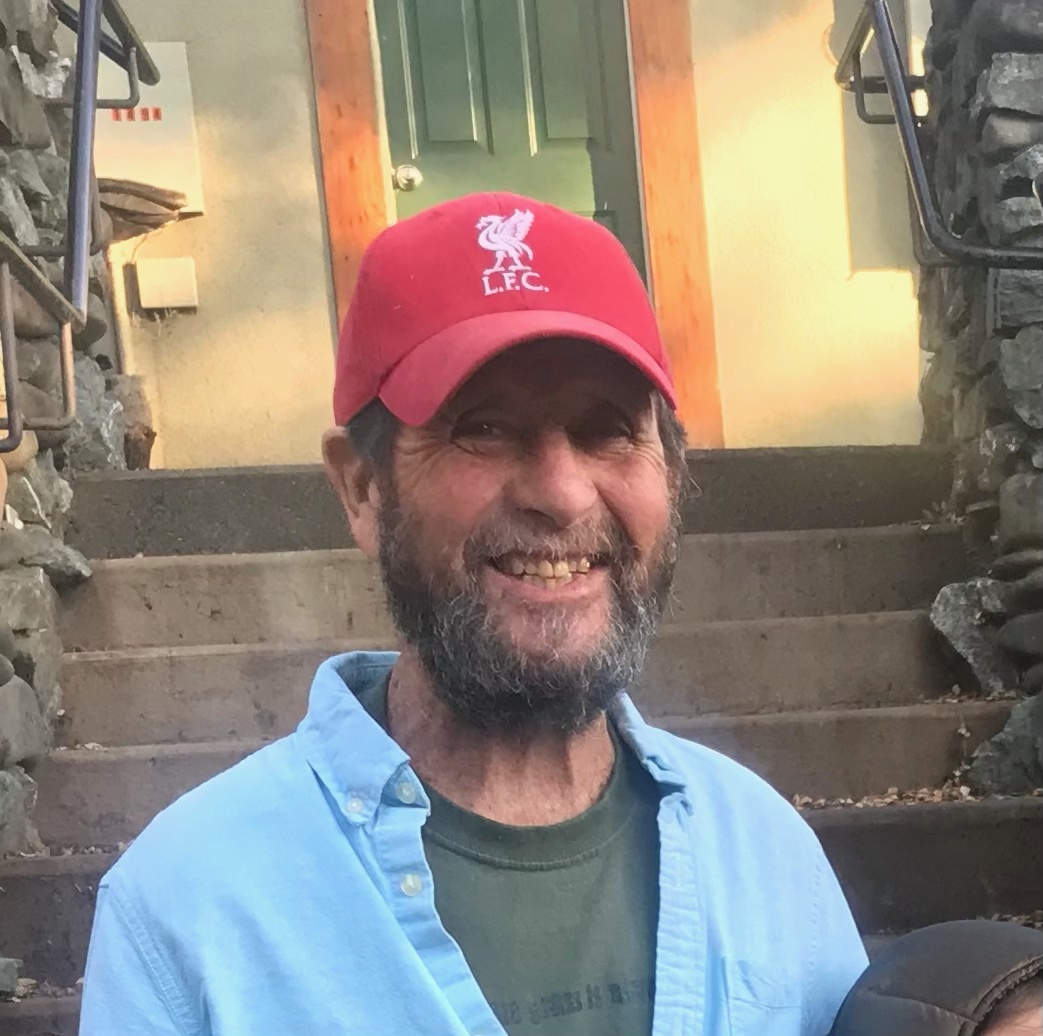
Denis George Fowler
Oct. 7, 1941-Jan. 25, 2022
George was born on October 7, 1941 in Orpington, Kent, England to John and Margaret “Peg” Fowler. He was the eldest of four siblings — two brothers, Alfred Micheal and David Joseph, and a sister, Margaret.
George was full of wanderlust as a young man. After some time in the Merchant Navy he soon knew that was not the life for him. He headed off on many adventures, traveling through western Europe, the Middle East, parts of North Africa and Australia. Some of his favorite places were Afghanistan, Pakistan, Nepal and India — settling in India and meeting the love of his life, his wife, Sydell, at a full moon party on the beaches in Goa. They quickly fell in love and decided to return with her to her native United States, where they were married at the chapel of the UN in New York City, moving upstate to Rhinebeck and birthing their first child, Jonathan Moe Fowler, in 1976.
Shortly after the birth they both realized that was not their final destination. They packed up their belongings in an old van to head west, picking up a VW camper in Florida and headed to California. They had friends in Bolinas, where they met up with some of the great characters they had originally met in India. They followed some friends up to Bell Springs Road and eventually moved farther north to Humboldt County and landed on China Creek Road, outside of Briceland Ca. This is where they birthed their second child, Harvest Jhoti Fowler, in 1978.
Spending many years as back-to-landers, George built a home for his family, doing most of the work himself with help from neighbors, as many did. After many years living on the land George and Sydell decided it was time to move to town and purchased a house in Redway, where they birthed their third child, Eli George Fowler, in 1984.
Known to many as “English George,” he deeply rooted himself into the Southern Humboldt community, helping lay stone work for Beginnings, Inc and the Mateel Community Center. George was an accomplished bricklayer and rock worker, a registered caregiver and even a census taker in the early 2000s.
George was a dedicated father to his children. Many will remember him taking his eldest, Jojo, to motorcycle races around California and helping man the gates at the Phillipsville motocross track. George was a dedicated soccer coach, starting in the youth league and coaching his son Eli all the way up to the South Fork High School level. When Eli graduated he went back to Youth Rec League and coached many kids for over 20 years. His last years of coaching he proudly coached his eldest grandson, Brock Fowler, for several years. He spent many hours maintaining the Redway soccer field and started an adults game on Sundays. He played, he coached, and he watched soccer for the majority of the second half of his life. George was a dedicated Liverpool fan until his last moments. When George retired from coaching the league decided to dedicate Redway field in his name, naming it “Fowler Field.”
George was very physically fit and enjoyed going to the gym and to cross fit with his daughter in-law Piper. Piper and George went on many adventures together, including hiking Kings Peaks multiple times with different groups of friends. You could regularly catch him at a women’s league softball game watching his daughter Harvest play while socializing with other spectators.
George’s final pride and joy came from his five grandchildren. He spent many hours volunteering at school and community events. He proudly earned the name Papa George around Redway school, frequently picking his grandchildren Brody and Kendall up from school and walking them home.
George transitioned from this world in the early hours of Tuesday January 25, 2022. He spent his last days surrounded by the love of his family being supported while he moved on. He was a loving husband who really enjoyed his wife’s cooking, a dedicated father and grandfather, a brother, a son, and a friend who never missed an opportunity to have a chat or share a laugh. He had a charming accent and a wonderful sense of humor and he will be deeply missed by all that knew him.
He is preceded in death by his father, John Fowler, and his mother, Peg Fowler. George leaves behind his wife of 47 years, Sydell, his three children Jonathan (PIPER) Harvest, and Eli. His five grandchildren, Brock Brody, Kendall, Bayla and Braxton. He also leaves behind his two brothers Mick (MARY) and Dave (Beryl), his sister Margagret and many nieces, nephews and great nieces and nephews in England who love him and will miss him very much.
###
The obituary above was submitted on behalf of George Fowler’s loved ones. The Lost Coast Outpost runs obituaries of Humboldt County residents at no charge. See guidelines here.
Jury Convicts Hoopa Man of Attempted Murder, Aggravated Mayhem and Other Charges Stemming From 2021 Shooting Incident
LoCO Staff / Wednesday, March 16, 2022 @ 1:56 p.m. / Courts
Press release from the District Attorney’s Office:
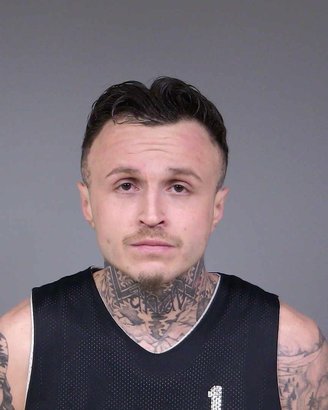
On March 16, 2022, a Humboldt County jury found 30-year-old Hoopa resident Byron Titus Jr. guilty of all charges brought by the District Attorney. The charges included the attempted premeditated murder of Joshua Salinas and assault with a firearm on Carmelita Ruiz, with the special allegation that Mr. Titus personally used a firearm to commit the crimes. The jury also convicted Mr. Titus of aggravated mayhem, residential burglary, and shooting at an inhabited dwelling.
The case stemmed from an incident on the night of January 6, 2021 at the RV where Mr. Salinas and Ms. Ruiz were living. Testimony revealed that Mr. Titus attempted to enter the RV, but Ms. Ruiz managed to push him outside. At that point Mr. Titus fired one round from a short-barreled shotgun into the RV at Mr. Salinas, striking him in the face. Titus then fled the scene.
Deputy District Attorney Luke Bernthal prosecuted the case, with assistance from District Attorney Investigator Steve Dunn and Victim/Witness Advocate Holly Hensher. Private attorney Zack Curtis represented Mr. Titus, who now faces a sentence of 32 years to life on the attempted murder charge with the special allegation for personal use of a firearm inflicting great bodily injury. Mr. Titus also faces possible additional prison time on the other charges, depending on Judge Elvine-Kreis’ application of California Penal Code section 654, which prohibits multiple punishments for the same act.
###
The County is Considering a Temporary ‘Safe Shelter’ Ordinance Allowing For Emergency Homeless Accommodation; Planning Commission Will Hold Hearing Tomorrow
LoCO Staff / Wednesday, March 16, 2022 @ 1:27 p.m. / Local Government
PREVIOUSLY:
###
Community notification from the County of Humboldt:
The Humboldt County Planning Commission will hold a public hearing on the proposed Safe Parking - Safe Shelter Pilot Program and Shelter Crisis Ordinance, on Thursday, March 17, 2022. You are invited to join us in-person or remotely for this hybrid meeting.
Summary of the Proposed Ordinances: This item allows for a Safe Parking - Safe Shelter Pilot Program that will expire in 18 months, and will provide safe, temporary shelter sites that accommodate vehicles, tents, or other approved structures for people who are experiencing homelessness while they seek permanent housing. Approved Safe Parking - Safe Shelter sites would be allowed by right in the same zoning districts as emergency shelters. Any government agency, religious institution, non-profit charitable organization, or private non-profit organization may operate a Safe Parking - Safe Shelter site if it follows one of three approved management plans. The site locations, type and number of vehicles, the participants’ length of stay, hours of site operation, and level of services provided are selected by the Provider, and described in the management plan. The proposed ordinance for both Inland and Coastal areas sets definitions, site standards, and provisions for site management.
Concurrently, a Shelter Crisis Ordinance is proposed that continues the County’s 2018 Shelter Crisis Declaration in order to comply with new legislation (AB 2553), ensure minimal public health and safety for occupants of emergency shelters, and facilitate development of emergency shelter sites.
Visit the Safe Parking - Safe Shelter Pilot web page for more information. Zoom instructions are available on the meeting agenda here:
COUNTY OF HUMBOLDT - Calendar at this link.
WHEN: Thursday, March 17, 2022, 6:00 p.m., or as soon as possible thereafter
WHERE: Hybrid Planning Commission Meeting, In-person and Remote, 825 Fifth Street, Eureka CA, Board of Supervisors Chambers.
WHAT: Planning Commission Public Hearing - Draft Safe Parking - Safe Shelter Pilot Program and Shelter Crisis Ordinance
YESTERDAY in SUPES: $18.2 Million CARES Act Grant Will Fund Improvements at Humboldt County Airports
Isabella Vanderheiden / Wednesday, March 16, 2022 @ 12:11 p.m. / Airport

Humboldt County Director of Aviation Cody Roggatz addressed the Board of Supervisors Tuesday | Screenshot.
###
After decades of neglect, Humboldt County’s aviation facilities will soon see some much-needed improvements thanks to an $18.2 million federal grant through the Coronavirus Aid, Relief, and Economic Security (CARES) Act Funding Project Plan.
The CARES Act funding is broken into three areas of focus: reimbursement of personnel costs for Department of Aviation staff to the tune of $7.1 million; general improvements of hangar infrastructure at Murray Field, Rohnerville and Garberville airports in the amount of $5 million; and $6.1 million for parking rehabilitation at the Humboldt County Airport (the main one north of McKinleyville). The funds must be spent by June 2024.
“We’ve had certain situations, primarily around the Thanksgiving and Christmas holiday last year in 2021, where we were way over on demand compared to our capacity [at the Humboldt County Airport],” Director of Aviation Cody Roggatz said during a presentation to the Board of Supervisors on Tuesday morning. “…Between short and long-term there are approximately 375 spaces. This design here would bump that up to 575 spaces.”

Humboldt County Airport parking rehabilitation plan | Screenshot
The aviation department was unable to utilize the CARES Act grant funds when they were made available in April 2020 due to an ongoing lawsuit with the Federal Aviation Administration (FAA).
The lawsuit, which was spurred by multiple regulatory compliance issues related to past management practices of the county’s six-airport system, was dismissed in January. Since the anonymous whistleblower complaint was filed in 2018, the Department of Aviation has worked to get back into compliance with FAA rules to resume the county’s access to federal grant funds.
“The changes we had to make – specifically those around adjusting rents – were even more unpopular due to the lack of maintenance and infrastructure improvements implemented at the county’s six airports over the past several decades,” Roggatz said during the Board of Supervisors’ meeting on Tuesday. “However, these changes were made to ensure our compliance … and ensure our eligibility for tens of millions of dollars in federal funds today and moving forward.”
The county is also competing for approximately $12 million in federal funds to repave the main runway at the Humboldt County Airport and upgrade the airport’s antiquated electrical systems, he said. “These improvements will equate to approximately $30 million in investments in our airports over the next two years.”
“We’re trying to get additional federal funds on top of the $30 million…for completely reconfiguring, reconstructing and expanding our terminal facility,” he added. “…We intend to pursue as much federal funding as possible. …And when I say federal funds, I’m talking about the infrastructure [bill] that was just passed by Congress a few months ago.”
The grant funds will also go towards replacing the fuel system at Murray Field, one of the top priorities identified by the local aviation community, Roggatz said.
“We are working as quickly as we possibly can to get that infrastructure removed, replaced and moving forward to better serve that [general aviation] community,” he said. “…The records that I’ve found as it relates to the installation of that [tank], I believe it was done in 1978 and we have not maintained it between 1978 and now.”
Even with proper maintenance, the tank has surpassed its normal life due to the salty ocean air, First District Supervisor Rex Bohn noted.
Alex Stillman, a longtime member of the Aviation Advisory Committee, credited Roggatz for making progress on the much-needed improvements at the county’s airports. “I know that Cody had a lot of work to catch up on…but now it’s time for us to move and get things fixed in the other areas that our aviation community has been very, very patiently waiting for.”
While local airports are an important part of public safety, Third District Supervisor Mike Wilson said the aviation community will likely face some difficult discussions about maintaining these infrastructures due to the low population density relative to the number of local airports.
“I feel like a bit of a turd in the punchbowl in this conversation, but we really have to understand that even when we take monies for capital costs … there may be general funds, allocations and decisions that we’re going to have to make in the future that are relative to long-term maintenance,” he said. “…It’s a challenge for rural communities for sure.”
Wilson ultimately made a motion to receive and file the report which was seconded by Fifth District Supervisor Steve Madrone. The motion passed unanimously 5-0.
###
PREVIOUSLY:
Accidental Kitchen Fire Causes $45,000 in Damages to Ridgewood Drive Home, Humboldt Bay Fire Says
LoCO Staff / Wednesday, March 16, 2022 @ 11:10 a.m. / Fire
Press release from Humboldt Bay Fire:
At 3:28 p.m. on Tuesday, March 15, 2022, Humboldt Bay Fire units were dispatched to report of a home on fire on the 1400 block of Ridgewood Drive.
Engine 8112 was the first of six units to arrive on scene and found a moderate amount of dark smoke drifting from the front door. The homeowner had already evacuated and stated there was no one else inside which crews confirmed with a thorough search.
The crews attacking the fire found that it was confined to the kitchen and, after mitigating some hazards in the area, crews were able to knock down the fire quickly. Once the fire was completely extinguished they cleared the residence of smoke and the building was turned back over to the homeowner.
After an investigation, it was determined that cooking oil had been left heating on the stove which led to smoke and, eventually, an accidental fire. The damage to the home is estimated to be a total of $45,000 including damage to the structure itself and its contents.
Humboldt Bay Fire would like to remind the public to never leave your cooking unattended. Cooking fires are the #1 cause of fires both here in HBF’s jurisdiction and across the nation. Cooking fires are largely accidental and can happen to anyone. Don’t let it happen to you – stay in the kitchen while you are cooking and always set timers to remind you to check on your food.
Humboldt Bay Fire would also like to thank our partners at California Highway Patrol and Humboldt County Sheriff’s Office who helped assist us on this incident.