

Here’s Your Final List of County Candidates for June’s Primary Election, Including Four Running Unopposed
Ryan Burns / Friday, March 18, 2022 @ 3:10 p.m. / Elections

###
The lineups are set! Your candidates for public office have assembled and submitted the necessary paperwork, setting the stage set for another primary election season here in Humboldt County.
With a mere 81 days before the June 7 election, campaigns can now shift into high gear, though for a handful of lucky candidates, the race should be a breeze. In fact, the Outpost is prepared to call four races right now.
Congratulations to Humboldt County Sheriff William “Billy” Honsal and Superintendent of Schools Michael Davies Hughes, who will both win re-election, barring any wildly unlikely late write-in campaigns, as they are running unopposed.
Congrats, also, to Humboldt County’s next assessor, Howard LaHaie, and its next treasurer-tax collector, Amy Christensen, both of whom positioned themselves as the heir apparent No. 2s in their respective offices, having earned the trust of their bosses, Assessor Mari Wilson and Treasurer-Tax Collector John Bartholomew, both of whom are retiring from their positions.
Now, on to the contested races:
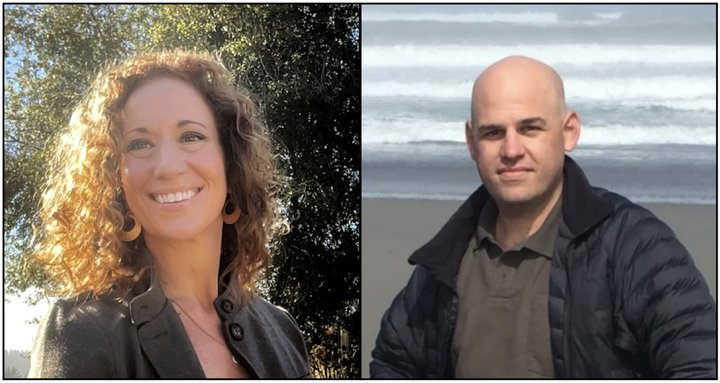
Eads (left) and Kamada. (We’ve reached out to Acosta to request a campaign photo but have yet to hear back.)
District Attorney
With the late qualification of Eureka attorney Michael Acosta, whose trial for felony charges for allegedly selling drugs and maintaining a drug house remains ongoing, this is now a three-way race between Acosta, Assistant District Attorney Stacey Eads and Deputy Public Defender Adrian Kamada.

Paz Dominguez (left) and Dillingham
Auditor-Controller
On paper, this, too, is now a three-way race, but administrative analyst Mychal Evenson has announced that he’s no longer actively running and will instead support challenger Cheryl Dillingham, the finance director in Rio Dell who spent 30 years working for the county. She’s facing off against incumbent Karen Paz Dominguez.
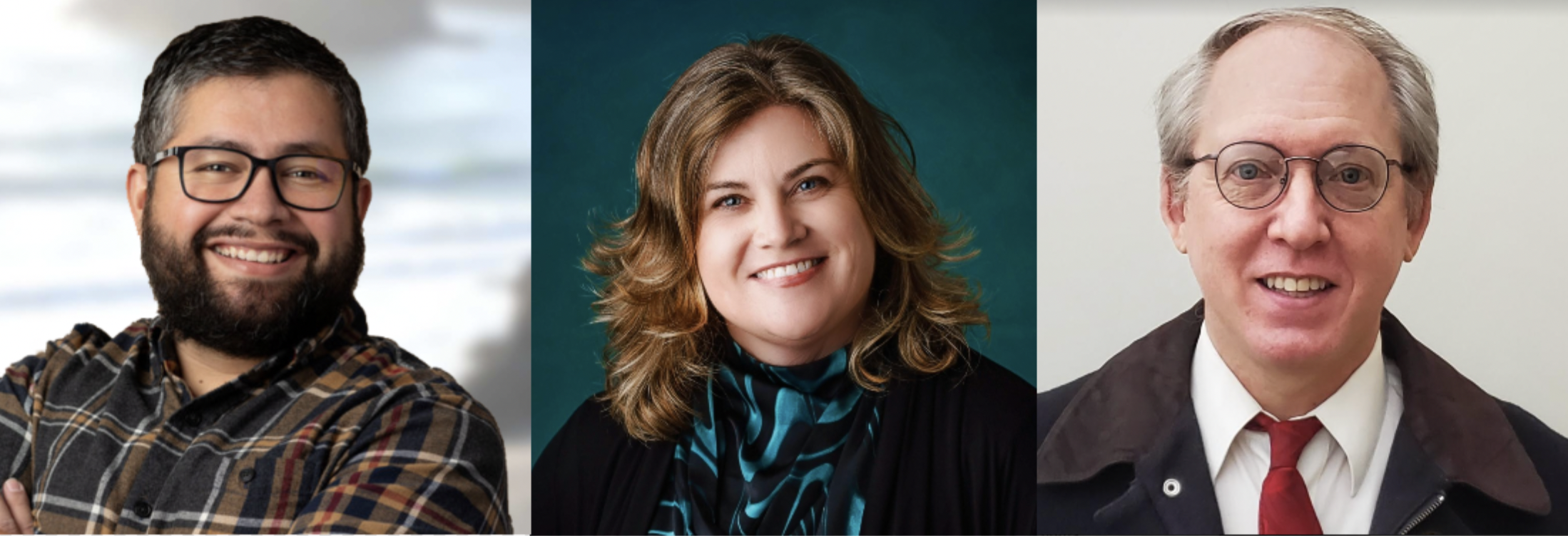
From left: Cervantes, Nielsen and Hershberger.
Recorder-Clerk/Registrar of Voters
Unexpectedly, there are also three candidates running for this position, which will be wide open due to the retirement of incumbent Kelly Sanders. All three come from within the dual offices overseen by this position. They are: Deputy County Registrar Juan Pablo Cervantes, Deputy Recorder-Clerk Tiffany Hunt Nielsen and Fiscal Officer Benjamin J. Hershberger.

From left: Arroyo, Bergel and Newman
County Supervisor, District Four
Yet another three-way race! Here, looking to take over representation of the Eureka-dominated Fourth District from incumbent Virginia Bass, who’s not running, we have two current Eureka city councilmembers — Natalie Arroyo, a resources manager with Redwood Community Action Agency, and Kim Bergel, an instructional assistant at Eureka City Schools — and one former Eureka city councilmember, insurance broker Mike Newman.

From left: Madrone and Doss
County Supervisor, District Five
Up north, in the expansive McKinleyville-to-Orick-to-Willow Creek Fifth District, incumbent Steve Madrone will face off against challenger Larry Doss, a realtor and rancher.
Superior Court Judge, Dept. 5
There’s one judgeship up for grabs this election cycle, and the two candidates seeking that black robe are Deputy District Attorney Steve M. Steward and Eureka attorney Ben McLaughlin.
###
Election Day is June 7. The Outpost will have plenty of coverage between now and then. Happy (and safe) campaigning to all the candidates!
BOOKED
Yesterday: 7 felonies, 17 misdemeanors, 0 infractions
JUDGED
Humboldt County Superior Court Calendar: Friday, Sept. 4
CHP REPORTS
0 Deerlick Springs Rd (RD office): Trfc Collision-1141 Enrt
434 Mm197 N Dn 4.30 (HM office): Traffic Hazard
6000 Mm101 N Men 60.00 (HM office): Trfc Collision-No Inj
6183 Mm101 N Men 61.80 (HM office): Trfc Collision-1141 Enrt
Lesina Rd / Titus Rd (HM office): Trfc Collision-Unkn Inj
ELSEWHERE
RHBB: CDPH Issues Immunization Recommendations for 2026-27 Respiratory Virus Season
RHBB: Redway Transfer Station to Close an Extra Day for Construction
RHBB: Dows Prairie Road to Close for Two Months for Culvert Repair
TANNER CASE: Judge Drops Arson Charge Against Suspect in Ettersburg Homicide, but the Trial on Kidnapping and Murder Charges is Scheduled to Start Monday
Rhonda Parker / Friday, March 18, 2022 @ 2:08 p.m. / Courts
Judge Kaleb Cockrum dismissed an arson charge this morning against Ryan Anthony Tanner, who remains accused of kidnapping and murdering Jason Todd Garrett more than two years ago in the Ettersburg area.
Cockrum, responding to a defense motion, denied the request to dismiss all charges but agreed evidence of arson of an inhabited structure was “contradictory and largely circumstantial.”
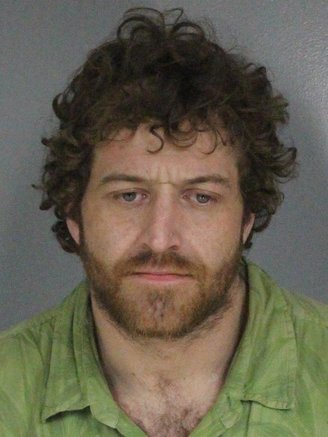
The jury trial for Tanner, 34, is expected to begin Monday and last six to eight weeks. He allegedly shot the 33-year-old Garrett to death after forcing him into a bathtub in a remote cabin. Afterward the cabin burned to the ground.
During Tanner’s 13-day preliminary hearing, key prosecution witness Christopher Champagne said he witnessed the shooting and helped dig Garrett’s grave under a water tank on Tanner’s property. Champagne made conflicting statements about the cabin where the shooting occurred, saying both that it appeared to be lived-in but also that items in the house were moldy, as if they hadn’t been touched in a long time.
Defense attorney Russ Clanton filed the dismissal motion based on his contention that Champagne, whose preliminary hearing testimony was sometimes hallucinatory, is not a competent witness.
Champagne provided some testimony corroborated by others. But he also said the cabin where Garrett was killed had been transformed into a torture chamber, complete with a human hand stuck in a vise. And Champagne claimed Tanner murdered numerous law enforcement officers, piled up their bodies and set them on fire.
Champagne, the son of Tanner’s former girlfriend, also testified both Garrett and his dog were killed by a single shot. He remembered wrapping the dog’s body in a shower curtain. In fact, the dog was alive and well. Also, Champagne believed Tanner at one point slashed Garrett’s throat so brutally, his jugular vein was hanging out.
An investigator testified during the preliminary hearing the wound “was just a scratch.”
Judge Cockrum, in his written ruling, said the standard for witnesses is capability, not competence. Champagne “was capable of expressing himself and did so for the better part of five days” during the preliminary hearing, the judge stated.
This morning was scheduled for a trial-assignment hearing, and Cockrum announced the case would be assigned to Judge Gregory Elvine-Kreiss. Then Clanton made an oral motion to disqualify Elvine-Kreiss, so Cockrum assigned it to himself.
Attorneys will be back in court Monday morning for some pre-trial work, including going over questionnaires for potential jurors. Also, Cockrum will rule on a motion, filed by Deputy District Attorney Whitney Timm, to modify a special allegation against Tanner.
Timm said outside court the special allegation of using an assault rifle should be changed to simply “a rifle.”
Timm is the trial prosecutor, with assistance from Deputy District Attorney Jessica Acosta. This morning Cockrum appointed private attorney Zack Curtis to assist Clanton.
Tanner, who remains in custody, was arrested in Briceland by a SWAT team five days after he allegedly murdered Garrett. He has pleaded not guilty and not guilty by reason of insanity.
###
PREVIOUSLY:
- HOMICIDE IN ETTERSBURG: Sheriff’s Office Arrests One After SWAT Operation Yesterday
- Investigators Locate Ettersburg Suspected Homicide Victim’s Remains
- Ettersburg Murder Suspect Enters Not Guilty Plea; Also Charged With Assaulting Two Other Men With AK-47
- Suspect in Homicide Near Ettersburg is Sane Enough to Face Charges, Judge Rules
- Witness Describes Execution-Style Murder of a Man and Dog in a Bathtub During Ryan Tanner Prelim Hearing
- Main Prosecution Witness Garbles Testimony
- Witness Provides Gruesome, Hallucinatory Testimony in Ettersburg Murder Trial
- Girlfriend of the Accused Testifies That He Abused Her and Threatened Her With Death
- Another Neighbor Testifies That the Accused Had Been on a Paranoid, Violent Rampage for Weeks Before the Killing
- Police Investigators Testify to the Discovery of the Body and Possible Murder Weapons
- Defense Attorney Grills Lead Detective, Attempts to Cast Doubt on Witnesses, Evidence, Investigation
- ETTERSBURG MURDER CASE: Judge Rules That Ryan Tanner Must Stand Trial For Murder
- ETTERSBURG MURDER CASE: Trial Date Set for May; Accused’s Laywer Enters Pleas of Not Guilty
- SoHum Murder Suspect Changes Plea to Not Guilty by Reason of Insanity
TSUNAMI PREPAREDNESS TEST! The Sirens Will or Should Be Rip-Roaring on the Peninsula Tomorrow, and Manila Residents Are Urged to Practice Getting to Higher Ground
Hank Sims / Friday, March 18, 2022 @ 11:24 a.m. / Non-Emergencies
Next week is Tsunami Preparedness Week! The big water is gonna hit us sooner or later, so it’s as well that we should be prepared.
The first event of the week comes tomorrow at 9:30 a.m., when the Office of Emergency Services will lead a drill in one of the most tsunami-prone communities in the county: Manila. The “hi-lo” sirens should start sounding right about then, and if you’re a Manila resident maybe you want to practice getting yourself to higher ground. See the map below.
Also: Consider signing up for the emergency alert system, as detailed in the following communique from HumOES.
Have a fun, safe, successful drill, Manila friends! Shelter Cove, your turn is coming on Thursday. And the big, county- and region-wide drill happens Wednesday,
From the Humboldt County Office of Emergency Services:
Do you know what to do in the event of a tsunami? Tsunami Preparedness Week is set for March 21-25, 2022, and the community is invited to take part in any of the several events happening this month to bolster your personal preparedness for a local tsunami.
Kicking off tsunami week, on Saturday, March 19, the community of Manila will undergo a walking evacuation drill beginning at 9:30 a.m. As part of this drill, Humboldt County Sheriff’s deputies will patrol several neighborhood streets sounding the Hi-Lo Evacuation Siren and Office of Emergency Services staff will conduct a test of Zonehaven AWARE, the county’s new evacuation mapping tool. Residents in Manila are encouraged to walk to higher ground, as designated in the included map, upon hearing the Hi-Lo siren. This drill is being organized by the National Weather Service in coordination with the California Governor’s Office of Emergency Services and the Manila Community Services District.
On Wednesday, March 23, a test of the Tsunami Warning Communications System will be conducted for Del Norte, Humboldt, and Mendocino counties. Beginning at about 9 a.m., the Humboldt County Sheriff’s Office of Emergency Services (OES) will conduct a test of Humboldt Alert, the county’s emergency alert system. Residents who are signed up for Humboldt Alert, will receive an alert to their cellphone, landline, or email as part of this test. Later that morning, at 11 a.m., the National Weather Service will then conduct a test of the Emergency Alert System (EAS). As part of this test, alerts will be sent out via radio and TV broadcasts, weather radio, reverse 911, and tsunami sirens may be activated in some areas. People on the coast may also hear test broadcasts from airplanes.
Finally, on Thursday, March 24, the town of Shelter Cove will undergo a walking evacuation drill. During this drill, the town will also test their tsunami sirens. For more information about this drill, please contact the Shelter Cove Fire Department.
“Humboldt County is prone to a variety of natural and human caused disasters,” said Ryan Derby Humboldt County Sheriff’s OES Manager. “Your best tool to effectively respond to and recover from a disaster is your personal preparedness.”
Humboldt County residents are encouraged to utilize Tsunami Preparedness Week to review your personal preparedness plans for a local disaster.Find out if you live, work, or recreate in a Tsunami Hazard Zoneand create a plan for how you will respond should a tsunami occur. Create and discuss your emergency plan with family, friends and co-workers.
Residents are also encouraged to sign up for Humboldt Alert, the county’s opt-in emergency alert system, and tofind their pre-designated evacuation zone using Zonehaven AWARE, the county’s new evacuation mapping tool. Remember, we can’t alert you if we can’t reach you.
“Recent events like the December 6.0M earthquake and January tsunami advisory really served as a wakeup call to some of our coastal communities regarding the very real threat of a destructive tsunami,” Derby said. “Whether you are on the coast or inland, now is the time to begin getting yourself and your family prepared for whatever disaster the future may have in store.”
Find out more about preparing for earthquakes, tsunamis or any other disasters on the North Coast at https://rctwg.humboldt.edu or Ready.gov.

Get to higher ground, Manila!
Paz Dominguez Supporter Thomas Edrington Takes Up His ‘Old, Bloodstained Tools,’ Explains Why He Engineered Auditor-Controller Document Dump
Hank Sims / Friday, March 18, 2022 @ 10:47 a.m. / Local Government

Edrington at Tuesday’s rally for Auditor-Controller Karen Paz Dominguez on the courthouse steps.
PREVIOUSLY:
- Paz Dominguez on the Offensive: Auditor-Controller Riles Supervisors, Staff With Allegations of Fiscal Shenanigans
- Auditor-Controller Karen Paz Dominguez Blasts Humboldt County Board of Supervisors During Reelection Announcement
- Auditor-Controller Submitted Overdue Report to the State After 10 Last Night; Special Meeting to Present Proof Behind Her Recent Allegations Canceled
###
Local sometime political activist Thomas Edrington — a strong supporter of Auditor-Controller Karen Paz Dominguez — took to his Facebook page yesterday to explain his role in Tuesday’s release of documents that he requested from the Auditor-Controller’s office, and which comprise the “documentation” of alleged financial malfeasance that Paz Dominguez has promised to present to the Board of Supervisors.
That presentation has been delayed and delayed again — see links above — but Paz Dominguez’s campaign apparently worked with Edrington to release the decontextualized documents directly to the public. (Find them at this link.) During her reelection campaign on the courthouse steps Tuesday, Paz Dominguez sent reporters and supporters to Edrington’s request in the county’s “NextRequest” public records platform. (Later, Edrington put them in the Google Drive linked above and sent them out by email.)
In his post yesterday, Edrington talks about all of this and tells how experience in the local cannabis industry made him a Paz Dominguez supporter.
Through incompetence and malfeasance the County has done irreparable damage to our cannabis farmers. They failed to honor their promises to me, to you, and to our neighbors. In doing so, they made all the work I had done a lie. They had made a liar out of me.
I take that pretty goddamn personally. Since then I’ve been watching. Mapping social networks. Monitoring anomalous datapoints in County finance and policy. Last year I began an onslought of public records requests, and had to pull teeth from the CAO’s office to get them to even begin to process them. They knew what I was fishing for.
I wasn’t the only one fishing. While I was just casting lines from the shore I spotted a lady in the middle of the water, who knew where all the fish were. When Karen Paz Dominguez used her 3 minutes of public time on her lunch break as a county staffer to raise a red flag from the Auditor Controller’s office, and then had the audacity to run to fix it, I knew there was going to be a much better way to catch fish. All I had to do was watch her, and they’d all come to bite. Why waste worms?
Shockingly, she was elected. An honest politician won the race. I love it when I’m wrong. But I also loved that it if I was going to be fishing for corruption, she would be both bait and sonar as AC. I never had to approach her, and if I had it’d have spooked the fish. But every shot she’s taken from every lazy, corrupt, or incompetent county department has been a data point. I spent years watching her in the water, keeping my shadow on land, and crafting myself a great big fucking net.
As the excerpt above will attest, Edrington’s full post is well worth a read. The first part of it is embedded below; click “see more” to access the entire thing.
Overdue: State Owes Community Clinics Millions for COVID Vaccinations
Kristen Hwang / Friday, March 18, 2022 @ 7:11 a.m. / Sacramento
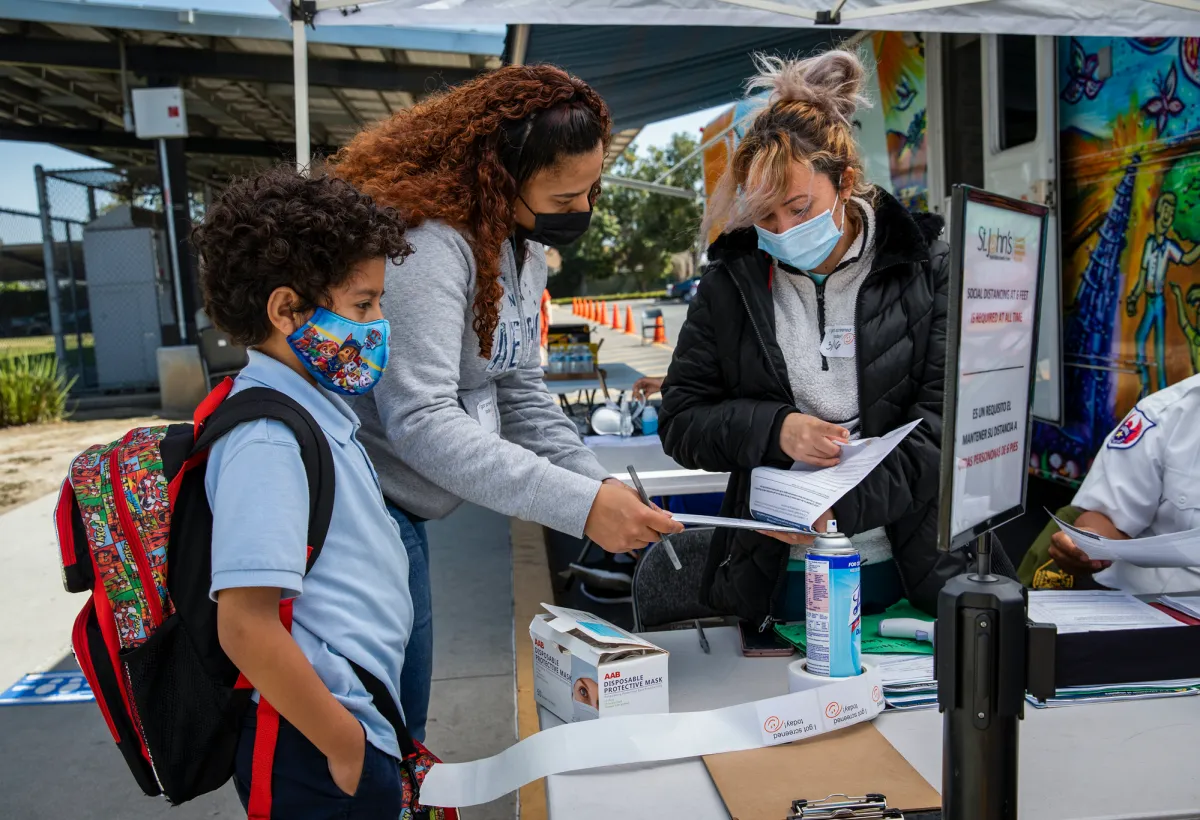
Jayden Elizondo, 5, waits with his mother, Jennifer Paices, as Maritza Thomas helps them fill out Covid-19 vaccination forms at a St. John’s Well Child and Family Center mobile health clinic at Helen Keller Elementary School in Los Angeles on March 16, 2022. The clinic has administered about 440,000 Covid-19 vaccines in Los Angeles since the pandemic began. Photo by Alisha Jucevic for CalMatters
Community clinics in California that have been waiting for more than a year to be reimbursed for COVID-19 vaccinations may soon be flooding state officials with tens of millions of dollars in bills.
The clinics, which serve California’s poorest and most vulnerable residents, may be owed as much as $408 million for the 6.1 million vaccinations they have administered to patients.
Now many clinics say they’re teetering on the edge of a financial cliff and desperately need the money from the state Department of Health Care Services. Some say they have already been forced to cut back patient services by reducing their hours or postponing doctor’s visits.
Without funds from the state, CEO Jim Mangia said St. John’s Well Child and Family Center in South Los Angeles will have to shut down vaccination efforts by April 1.
The largest community health clinic in Los Angeles, St. John’s has administered more than 441,000 COVID-19 shots, mostly to low-income people of color. The clinic is awaiting state payment for at least a third of them, costing $7 million; the rest have been reimbursed under private insurance.
“It’s frustrating because the state says they’re committed to vaccine equity, but they’re not paying the vaccine equity providers,” Mangia said.
California’s 1,300 community health centers are mandated to provide free or reduced-cost care to people with no or inadequate insurance. They’ve been integral to the state’s efforts to reduce vaccination inequities. About 80% of vaccines provided at California’s community clinics have gone to people of color, according to federal data.
The clinics were told not to submit claims to the state until now — a year after they spent millions ramping up to vaccinate patients — because the state and federal government had to figure out how to pay for vaccinations.
“It’s frustrating because the state says they’re committed to vaccine equity, but they’re not paying the vaccine equity providers.”
— Jim Mangia, St. John’s Well Child and Family Center
Last month, the federal government agreed to pay California $67 for each COVID-19 vaccination.
The Biden administration announced Tuesday that it had run out of money to pay for free COVID-19 vaccinations, tests and treatment. State officials said this will not affect reimbursement for vaccines already administered.
Health department officials said in a statement to CalMatters that they have no idea how much money they owe the clinics. The agency has yet to issue guidance on how exactly to submit their claims, and clinics don’t know how long it will take to get paid after sending the state their bills.
“It’s so painful that it’s been delayed,” said Andie Martinez Patterson, senior vice president of the California Primary Care Association, which represents community clinics. “Health centers have been holding millions of dollars of claims for over a year. We are desperate that it comes as soon as possible.”
Several clinics told CalMatters that services to their patients are suffering because of the payment delays, since they’ve been forced to use their federal emergency funds to cover the cost of vaccines instead of salaries and other primary care services.
Patterson said she hasn’t heard of any clinics closing, but many have cut back. That means fewer providers and longer wait times for patients who need medical care.
Where is the money?
Before the pandemic, there was no system in place to pay community clinics for a single service like a vaccine. Typically, shots or scans are billed as part of a provider visit, but that requires being seen by a doctor, which doesn’t happen at walk-up clinics or mass vaccine drives.
Instead, state officials told community clinics to hold onto their receipts while the Department of Health Care Services and federal government worked out the payment system.
The health department blames the federal government for the delay in payments. California’s initial request for alternative payment was submitted to the federal government in March 2021, but it wasn’t approved until the end of February, nearly a year later.
“The request for reimbursement for these ‘vaccine only’ visits required additional guidance from (the U.S. Centers for Medicare and Medicaid Services) and modifications to the original proposal,” a spokesperson said in a statement. Also, the state agency said it “needed to work collaboratively with clinics to obtain data to support the modified proposal of $67 per administration.”
Community clinics say they felt a responsibility to administer vaccinations to their patients rapidly, even if payment wasn’t guaranteed.
“I don’t think there is anyone who lives in South LA who hasn’t lost a loved one, lost a job, lost a home because of COVID,” Mangia said. “In the midst of that incredible suffering, we decided to mobilize.”
St. John’s had considerable expenses, reaching millions of dollars: It purchased freezers to store 80,000 vaccines, opened 26 vaccination sites in Los Angeles and hired nearly 600 people to run the clinics six days a week.
The clinic received nearly $20 million in federal funds from the American Rescue Plan Act, which was supposed to subsidize primary care efforts. But Mangia said most of those funds were used to pay for vaccination efforts. The $7 million the state owes St. John’s is a drop in the bucket compared to its total costs, but it would still help, Mangia said.
Now, just as St. John’s is focusing its efforts on vaccinating children under 5, it will have to close its vaccination sites within two weeks without the funds.
“It’s not like we have the capacity to float that kind of money for an extended amount of time,” Mangia said.
In Orange County, the Families Together health center has consistently been among the top 10 vaccine providers, administering 56,000 shots in the past year. Between COVID-19 tests and vaccines, about 28,000 patient visits have not been reimbursed, CEO Alexander Rossel said. The clinic is owed at least $1 million for those services, Rossel said.
“I’m hoping and praying that the state and the county look back and learn what was the best way to deliver vaccines and resources.”
— Alexander Rossel, Families Together Clinic
Last year the center’s board allocated general funds toward vaccination efforts despite not knowing whether they’d be reimbursed.
“We were struggling for a while. We used a lot of money to deliver these 56,000 vaccines,” Rossel said. “The emergency funds got to the state and the cities and not to the clinics. We’re still waiting for the money.”
Rossel said the clinic has worked hard to meet the community’s needs, vaccinating more than 80% of local teachers and sending a mobile clinic to restaurants and shopping centers to serve essential workers.
He said he’s disappointed in the lack of support and confidence from the state and local health department, which opted to first open mass vaccination drives at places like Disneyland. Rossel said low-wage workers couldn’t afford to wait hours in line or get the information needed to convince them the vaccine was safe.
Community clinics are still upset that the state health department didn’t prioritize them and get them vaccines quickly last year to help their low-income patients.
“We had to literally fight to get a hold of those vaccines. The federal government started giving us vaccines directly but that took six to eight months,” Rossel said.
Mangia said St. John’s also had to fight for vaccines, sending a letter to the state signed by 100 community organizations demanding the vaccine be sent to South Los Angeles after it had first been sent to UCLA and Cedars Sinai instead.
The delayed payment is yet another blow to the fragile, but essential, health care system.
“I’m not a politician. I don’t pretend to be, but I’m disappointed,” Rossel said. “I’m hoping and praying that the state and the county look back and learn what was the best way to deliver vaccines and resources, and I’m hoping they have learned that the community clinics were one of the top tier responders and they don’t forget about us again.”
The fallout at community clinics
Complicating matters, health centers are struggling with the same employee burnout that hospitals and private clinics have seen during the pandemic — but their margins are even thinner now.
“There’s a lot of fear around not having enough money to make it,” said Dori Rose Inda, CEO of Salud Para La Gente in Watsonville, which serves about 30,000 low-income patients.
Salud Para La Gente saw precipitous drops in revenue during the first six months of the pandemic when patients were told to avoid non-emergency care. They were only able to survive the past year with a $5 million American Rescue Plan Act grant, Inda said, but that money is all but gone.
“We literally pivoted everything to work differently during COVID,” Inda said. “Now as the grants are ending, we’re faced with…figuring out how to go full steam into primary and preventative care again and engage with people who are behind in the care that they need who may be sicker because of that.”
In Redding, at the Shasta Community Health Center, staff turnover has been high, with workers getting sick or burnt out. About 10% left when the state vaccine mandate for health care workers took effect, CEO Dean Germano said. He has five times more job openings than normal.
“When you don’t have a supportive workforce, it really does impact your clinical efficiency and patient happiness, too, if they can’t get through the phone quickly or get an appointment when they want it,” Germano said.
Revenues haven’t bounced back with patient visits still below pre-pandemic levels, particularly on the dental side, where the clinic sees only about half as many patients as before.
Shasta Community used some of its $5.6 million rescue grant to increase salaries to try and stay competitive, but most of it went toward breaking even on vaccine distribution, Germano said.
In Modesto County, Angela Millan said staff turnover is so high and funding so limited that some clinics at Golden Valley Health Centers have not reopened.
“They told us there was not enough staff or providers. They’re saying there’s not enough funds for these clinics to reopen,” Millan said.
Millan, who handles patient scheduling, said every few months she’s told to remove a doctor from the schedule because they’ve left, leading to long wait lists.
Long-term solutions needed for clinics
A bill introduced by state Sen. Bob Hertzberg, a Democrat from Van Nuys, aims to help alleviate some of the financial burden exacerbated by the pandemic by investing $400 million annually in community health centers to be spent on wages, workforce training and improved care.
He said the delayed COVID-19 vaccine payments are just one symptom of a long-standing funding gap for community clinics.
“Health care for millions of Californians is on the line if we fail to support our state’s community health clinics,” Hertzberg told CalMatters. About a third of the state’s 12 million Medi-Cal enrollees rely on community clinics for health care.
Employees at health centers make between 5% and 25% less than hospital workers, according to the Service Employees International Union, co-sponsors of Hertzberg’s bill. SEIU California represents roughly 14,000 health center workers.
“The wage gap is pretty significant,” said Joseph Bryant, president of SEIU 1021 in Northern California. “One of our clinics that we were recently able to get some substantial wage increases for, they were hovering just above minimum wage for many of the physicians, in the ballpark of $17 to low $20s.”
The state health center association has also made a budget request, asking for changes to be made in the way health centers are reimbursed, focusing on the value of services provided rather than volume.
“There are patients telling me ‘I don’t even bother calling the clinic anymore because the wait time is over an hour.’ So treatments get delayed.”
— Brisa Barrera, Santa Rosa Community Health
Should either effort pass, workers say it could make a big difference.
Brisa Barrera, SEIU member and lead medical assistant at Santa Rosa Community Health, said two new medical assistants quit after three weeks because the workload was too much.
The churn is affecting patients too. Some referrals for specialty care are four months old, and specialists have told the clinic they can’t take any more patients.
“There are patients telling me ‘I don’t even bother calling the clinic anymore because the wait time for a live person to answer is over an hour.’ So treatments get delayed,” Barrera said.
She thinks about leaving herself sometimes, but as a former Medi-Cal patient, she knows it makes a big difference when patients see a face they recognize.
“My parents struggled because of translation, because of culture, because of their financial issues,” Barrera said. “These are patients that need access to care that don’t get the best care elsewhere. If I’m not here for my patients, who is going to take care of them?”
###
CalMatters health coverage is supported by grants from the Blue Shield of California Foundation, the California Health Care Foundation and the California Wellness Foundation.
CALmatters.org is a nonprofit, nonpartisan media venture explaining California policies and politics.
Sen. Mike McGuire Gets a Little Swear-y When Describing His New Bill, Which Would Require PG&E to Underground its Wildfire-Risky High-Power Transmission Lines
LoCO Staff / Thursday, March 17, 2022 @ 4:27 p.m. / Sacramento

Senator McGuire. | File photo.
Press release from the Office of Sen. Mike McGuire:
For far too long, America’s largest utility – PG&E – has failed its customers and made California unsafe. For years, the utility underfunded modernization and wildfire safety efforts, which has had devastating impacts here in the Golden State.
PG&E has been charged with nearly 100 felonies in the deaths of California residents in wildfires they caused over the past 4 years. Californians have literally run for their lives while their homes burned to escape flames from PG&E-caused wildfires. Californians have sat in the dark with food spoiling in their warm refrigerators for days on end during wind-driven public safety power shutoffs, and they’ve been left without access to critical lifeline services when power lines go down.
This has been our reality for long enough.
Today, Senate Majority Leader Mike McGuire introduced a bill that will finally advance what should have been done years ago, undergrounding PG&E transmission and distribution lines in the most fire-prone zones.
SB 884 will provide a path to expedite undergrounding of 10,000 miles of PG&E utility lines in the highest fire risk zones, save ratepayers money, and hold PG&E accountable to their timelines. Currently, PG&E undergrounds less than 100 miles of their electrical lines annually.
Here’s what the bill will do:
· Mandated performance metrics would be implemented by the California Public Utilities Commission on undergrounding projects, including timelines for completion, financial penalties for not hitting timelines, and the utility would have to prove safety protocols are met prior to receiving a rate of return.
· Develops a pathway to expedite undergrounding construction by establishing a shot clock for local government permit approval/denial to just 150 days.
· The legislation would save ratepayers money by forcing PG&E to first use available federal infrastructure funds to construct the undergrounding project before using ratepayer funds and it would mandate telecommunication companies underground their utilities in the same trench as the electrical undergrounding. This dig-once policy will help as a cost share and help make our state telecommunication system more resilient, especially in the highest risk zones.
· Guarantees a 270 day judicial review in California courts if an undergrounding project faces a California Environmental Quality Act Lawsuit.
“Every single time a wildfire has ripped through our communities, PG&E apologizes, pays a fine and claims to harden their lines in the areas that might burn next, and then moves on,” Senator Mike McGuire said. “I have great respect for the women and men who work everyday to keep our lights on, but I don’t trust the lip service from those at the top. For years, PG&E has known the way to fix this – it’s burying their damn lines. With this legislation, we can get PG&E to finally underground the lines most at risk to start a wildfire and it would hold them accountable with strict performance metrics. This bill will save ratepayers money and save lives. If PG&E doesn’t hit their performance metrics, the utility would be held accountable.”
This legislation will further reduce the devastating climate impact wildfires have in our state. In 2020, more than 4 million acres – 4 percent of land in California – burned across the state in just one record-setting year. The smoke from these fires generated the equivalent emissions of 28 million vehicles and blanketed many parts of the state with unhealthy smoke for weeks
“The Western United States is getting hotter and drier, and the threat of wildfires is only getting worse. Everyone knows the only path forward is for PG&E to speed up the pace of moving power lines underground. Lives are literally at risk. This legislation will safeguard our communities and save ratepayers money.”
Auditor-Controller Submitted Overdue Report to the State After 10 Last Night; Special Meeting to Present Proof Behind Her Recent Allegations Canceled
Ryan Burns / Thursday, March 17, 2022 @ 3:02 p.m. / Local Government
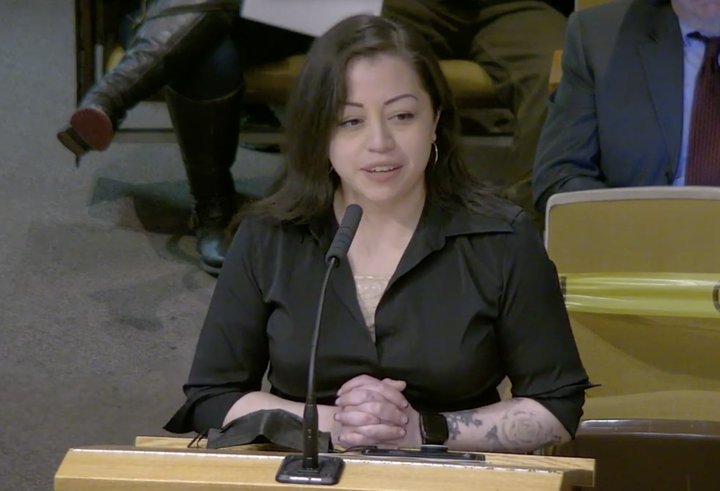
Humboldt County Auditor-Controller Karen Paz Dominguez. | Screenshot from a March 1 Board of Supervisors meeting.
###
Humboldt County Auditor-Controller Karen Paz Dominguez had been given a firm deadline of March 16 to submit a long-overdue Financial Transactions Report (FTR) to the State Controller’s Office, and with legal repercussions hanging in the balance, she and her staff appear to have made it — barely.
“It was after 10 [p.m.] when we finished the FTR,” Paz Dominguez told the Outpost via text this morning, “but it’s finished and submitted.”
The State Controller’s Office confirmed via email this morning that the county submitted financial data last night, though Jennifer Hanson, press secretary for the agency, added, “I cannot confirm if this [submittal] constitutes a complete and correct submission until SCO completes its review.”
A “Final Demand Letter” sent by the Attorney General’s Office on Feb. 24 said the county’s 2019/20 Financial Transactions Report was more than a year past due, even though Paz Dominguez had told the state last June “that the data was collected and being processed, and completion of the report was an ‘urgent priority.’”
At a March 1 meeting of the Humboldt County Board of Supervisors, Paz Dominguez said she believed the “Final Demand Letter” may have been sent in error because a visiting team of auditors from the State Controller’s Office knew nothing about it. However, both the State Controller’s Office and the Attorney General’s Office later confirmed that there had been no error.
Meeting canceled
That March 1 meeting was also notable because Paz Dominguez went on the offensive, listing a series of alleged fiscal misdeeds from several county departments. Her accusations ranged from relatively minor infractions, such as departments not submitting invoices in a timely fashion, to serious charges that suggest possible criminality.
For example, she accused the County Administrative Office of forging an actuarial report and sending it to the State Controller’s Office. She said the Department of Health and Human Services and the County Administrative Office have “manipulated information” on invoices. And she accused First District Supervisor Rex Bohn of pressuring departments to perform tasks for him or his friends.
At one point, Board Chair and Fourth District Supervisor Virginia Bass interjected to ask Paz Dominguez whether she has proof to back up these allegations, and the auditor-controller assured her that she does. The supervisors wound up voting unanimously to have Paz Dominguez return at the March 15 meeting with a written report offering evidence for her accusations.
However, that didn’t take place. Nor did a subsequently scheduled special meeting come to fruition. Here’s what happened:
On Thursday, March 10, nine days after she made the accusations, Paz Dominguez emailed Clerk of the Board Kathy Hayes saying she had not opened an item in Legistar, the county’s agenda management system, in time to have that item reviewed and placed on the agenda for the March 15 meeting.
“This was my oversight and I apologize,” she wrote, and she asked whether a special meeting could be scheduled, or an item added to an already-scheduled meeting.
Shortly before 1 p.m., Hayes sent a reply, saying neither option would be possible given the board’s heavily loaded schedule this month, though she added that it still wasn’t too late: If Paz Dominguez could upload her item to the system before 5 p.m., staff could still manage to get it on the March 15 agenda.
Paz Dominguez replied at 10:46 p.m., saying she’d been busy working on payroll, which she had just completed.
“I will explore alternative options for sharing this information with the public and will provide the information to the Board via e-mail,” she wrote.
But the next morning, Friday, Hayes responded with an alternative solution. “I have gone back and revisited the Board Members calendars and we were able to schedule a Special Meeting of the Board of Supervisors on Monday, March 21st at 9:00 a.m. to accommodate your agenda item,” she wrote. “In order to have sufficient time for review, we will need to have your agenda item uploaded and routing in workflow by Monday, March 14th at noon.”
Later that morning, County Administrative Officer Elishia Hayes also emailed Paz Dominguez. “Department Heads asked about this in yesterday’s meeting,” she said. “I would suggest you update them on the timeline and also forward a draft to them with ample time to respond.”
That didn’t happen either. Instead, at noon on March 15, Paz Dominguez appeared on the steps of the county courthouse to announce her re-election campaign and level more accusations against county department heads, supervisors and staff. The county’s fiscal management system is sick, she said, “and the illness is caused by the continuing decentralization of accounting functions.”
In response to the calls for proof, Paz Dominguez directed people to an online trove of (primarily) email exchanges between herself and county staffers, department heads and supervisors. These records were evidently obtained (and the files headlined) by Thomas Edrington, a cannabis industry consultant who has been volunteering on behalf of Paz Dominguez. (He has offered to work for her re-election campaign, she told the Outpost, adding that she has yet to officially form one.)
The Outpost reviewed the emails and will report on them in more depth soon. They date from November 2017 through November 2021, and while several of the accusations Paz Dominguez made at the March 1 Board of Supervisors meeting are also made in her emails, there doesn’t appear, on first reading, to be much in the way of proof documenting “confirmed cases” of fraud or forgery, which were among her March 1 allegations.
We emailed Paz Dominguez this morning asking for any additional documentation she may have to support the allegation that the County Administrative Office forged an actuarial report. (There is a “Pension Analysis” report reproduced in the emails, from September 2019, that says the information it contains was “reviewed by a credential actuary,” but it doesn’t claim to be an actuarial report.) We’ll report about any such documentation if and when we hear back.
As for the special meeting scheduled for March 21, Kathy Hayes sent an email yesterday morning to supervisors, department heads and a few staffers announcing that the meeting had been canceled.
“The AC has not responded to numerous emails related to the Special Meeting she requested on Monday, March 21st,” Hayes wrote. “Therefore, I am cancelling the meeting and removing it from your calendars. Thank you.”
A few minutes later, Paz Dominguez replied-all, telling Hayes that she (Hayes) had only emailed “once to say that you scheduled the meeting but before I could confirm, you notified others it was happening. You emailed me a second time yesterday when I wasn’t available and I haven’t had a chance to respond. Now, you’re cancelling a meeting I didn’t even get a chance to confirm.”
She continued: “The BOS/CAO has scheduled several meetings about the A-C without the A-C in the past and I’m not sure why that can’t be done now given you all control the agendas. If you’ve already scheduled the meeting, then I think you should keep it. Or, at least, communicate that it was scheduled without A-C confirmation and is now being cancelled by BOS choice. I can make myself available if you leave it scheduled.”
Reached by phone this morning, Hayes said the meeting had to be canceled because nobody initiated a meeting by uploading an item to the county’s electronic workflow module. The agenda management system requires departments to upload their items and documentation several days ahead of time for review by county counsel, the CAO and, if it’s related to county finances, the auditor-controller.
In this case, Hayes said, the onus was on the auditor-controller, “because that was a request out of a live board meeting. [Paz Dominguez] indicated to [the board] that she would bring that item with backup documentation to support some of the assertions. She agreed to do that, and that never happened.”
Cash hold
One other development from this week to report: On Tuesday night, Humboldt County Economic Development Director Scott Adair received an email from Veronica Champayne, a regional advisor with the California Employment Development Department.
She was notifying him that, because the county’s 2019/20 Single Audit has not yet been submitted to the state, our Local Workforce Development Area has been placed on a “cash hold,” restricting the county from drawing down federal grant funds that pass through the agency. The effective date was March 4.
Adair explained that this sanction prevents the county from seeking reimbursement for any expenditures stemming from programs funded through the federal Workforce Innovation and Opportunity Act (WIOA). In the long term, he added, it could impact the county’s ability to secure new grants.
Reached by phone Wednesday, Paz Dominguez said the overdue 2019/20 Single Audit is being completed by outside accounting firm CliftonLarsenAllen (CLA), and they’ve set a target completion date of March 31.
As for the “cash hold” sanction, Paz Dominguez said, “I can’t speak to how this impacts us in the present because it’s not clear from the email whether this is funding that was expected last week, this week or next month. This is another example of the challenge of decentralization because the A-C Office does not see the grant claims Economic Development is submitting or know how often it is occurring.”
###
PREVIOUSLY
- Attorney General’s Office Threatens Legal Action Against Auditor-Controller Karen Paz Dominguez Over Failure to Submit Financial Transactions Report
- Paz Dominguez on the Offensive: Auditor-Controller Riles Supervisors, Staff With Allegations of Fiscal Shenanigans
- Attorney General’s Office Confirms ‘Final Notice’ to Auditor-Controller Was Not Sent By Mistake
- TODAY in SUPES: Delinquent Financial Reports are Making County’s Budgeting Process a Challenge, Chief Financial Officer Says
- Fortuna City Council Directs Staff to Send Letter Expressing ‘No Confidence’ in Auditor-Controller Karen Paz Dominguez
- Auditor-Controller Karen Paz Dominguez Blasts Humboldt County Board of Supervisors During Reelection Announcement


