On February 1, 2022, Detectives with the Eureka Police Department’s Problem
Oriented Policing Team (POP) with the assistance from Special Agents with the
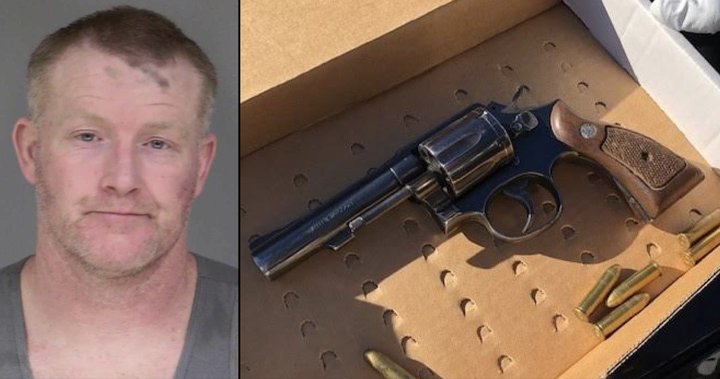
Humboldt County Drug Task Force, attempted to apprehend 43-year old Brent Clayton
Lynch of Eureka on the 300 block of D Street in Eureka. Lynch was wanted by State
Parole for a parole violation. Lynch was also reported to be possibly armed with a
firearm and selling illegal narcotics.
As POP Detectives attempted to contact Lynch outside of his vehicle, he began to flee
on foot. Detectives pursued him to the area of 5th and C Streets where he was taken
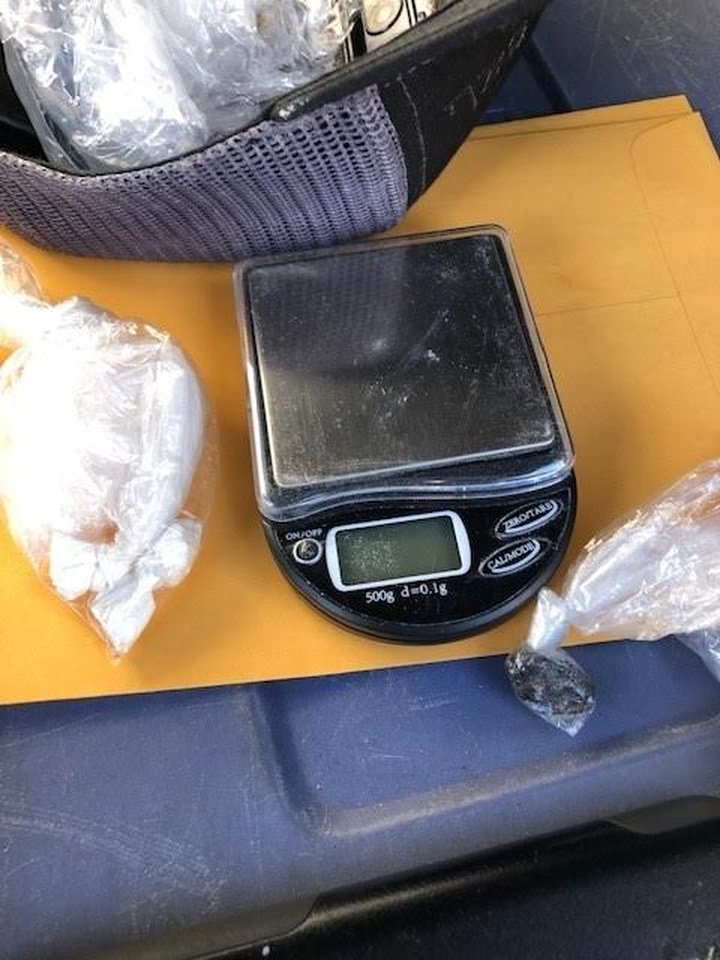
into custody after a short struggle. Lynch was found to be in possession of Fentanyl and
heroin which was packaged for sales. Inside the vehicle Lynch had been witnessed
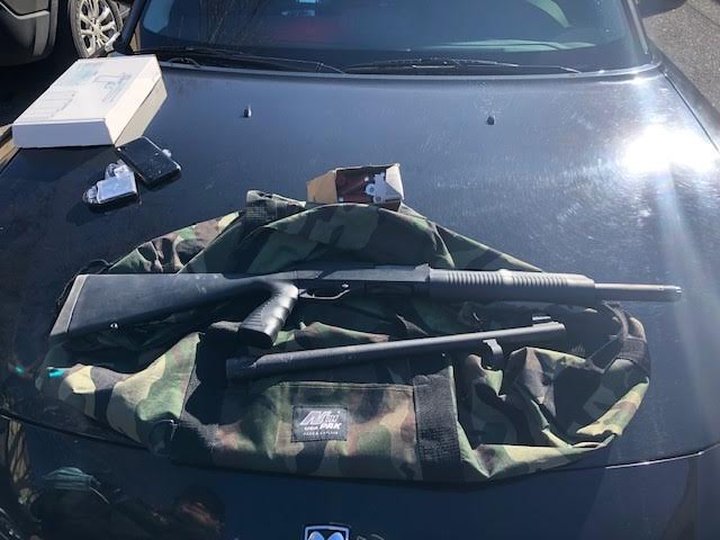
driving, Detectives located a 12-gauge shotgun with the serial removed, ammunition for
the shotgun, a stolen loaded .357 magnum pistol, a digital scale and packaging material
consistent with the sales of narcotics. Lynch is a convicted felon and prohibited from
owning or possessing firearms and ammunition.
Lynch was arrested and booked into the Humboldt County Correctional Facility for
felon in possession of a firearm, felon in possession of ammunition, removing a serial
number from a firearm, possession of a controlled substance for sales, being armed
while in possession of illegal narcotics, driving on a suspended license, resisting arrest
and his parole violation warrant.
The Eureka Police Department would like to thank the citizens who stopped and
assisted detectives during the apprehension.
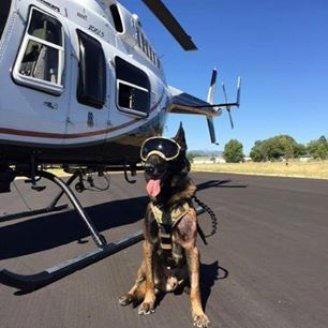
“Ice,” the retired Shasta Trinity National Forest Service K9 who suffered multiple stab wounds while working Trinity County marijuana raids in 2016, and again during a bust in the Klamath National Forest in 2020, has died.
The U.S. The Forest Service announced today that Ice died on January 26, and will be remembered for his outstanding work in the line of duty.
The Ice Man in action.
“We are mourning the loss of one of the most devoted and hardworking employees within our Forest Service family,” the neighboring Six Rivers National Forest wrote on social media today. “Canine Ice spent his career right next to us on the Klamath National Forest. Ice was recognized as the most decorated canine in Law Enforcement and Investigations.”
Ice and his handler U.S. Forest Service Officer Chris Magallon received multiple Law Enforcement and Investigations awards throughout the years, including the Director’s Award for Bravery, Valor or Heroic Act in 2017, and the Director’s Impact Award in 2020.
A preview from the 2017 Hero Dog Awards, which aired on the Hallmark Channel.
Ice was also voted “top dog” in the Law Enforcement/Arson dog category at the 2017 American Humane Hero Dog Awards. The honors earned Ice and Magallon a trip to Hollywood, where Ice was honored as one of the finalists for American Hero Dog of the Year. That same year, Ice and Magallon also traveled to New York City to appear on the “Today Show.”
Ice on the “Today Show.”
“During his nine years of service, K-9 Ice fully exemplified the qualities of a high performing and consummate law enforcement canine, executing his specialized duties with utmost bravery and valor,” the U.S. Forest Service said in a statement today.
Ice retired in September of 2020, a month after suffering nine stab wounds while apprehending a suspect during a raid at an illegal marijuana grow in the Klamath National Forest.
“I have some great memories of Ice,” Six Rivers National Forest Supervisor Ted McArthur stated. “He was such a goofball when he was in the office and all business when he was working.”
Press release from the Humboldt County Sheriff’s Office:
Humboldt County agricultural producers are encouraged to apply now for a Restricted Area Access Pass before the next emergency strikes.
The pass, which must be renewed yearly, allows qualifying agricultural and cannabis producers/cultivators and/or commercial livestock operators to gain entrance to evacuation zones, or other restricted areas, to provide feed, water, medical treatment and other care to large scale commercial livestock, and/or to tend to crops.
“In recent years, Humboldt County has felt the impact of wildfires, some of which required evacuations within our most rural communities,” Humboldt County Sheriff William Honsal said. “We realize the impact even a few days away from home can have on an agriculture business. In this last year, the Restricted Area Access Pass Program allowed Ag business owners access past closed roadways to take care of business safely while firefighters worked to mitigate the Knob Fire.”
Agricultural producers, licensed commercial cannabis cultivators and commercial livestock operators must submit an application to the Humboldt County Sheriff’s Office of Emergency Services (OES) by August 1, 2022, for verification and enrollment into the Restricted Area Access Pass Program. Once enrolled, the participant is issued a personalized pass which, based upon safety conditions and incident status, may be used to gain entrance into an evacuation zone or other restricted area in order to provide food, water, medical treatment or other care to large-scale commercial livestock, and/or to tend to crops.
“The access pass is not a guaranteed permit to enter a restricted zone but is a necessary pre-registration step making it easier for agricultural producers to access their livestock or crops during an emergency,” OES Manager Ryan Derby said. “Please make every effort to apply for this program prior to an emergency occurring.”
How it Works
The passes will be administered and approved through OES, in partnership with the county Agricultural Commissioner’s Office and the Planning & Building Department. Once issued an access pass, agricultural producers with operations located within an evacuation zone must notify OES or the Agricultural Commissioner’s Office of their interest in accessing the property. Authorization to enter restricted zones will be given daily and decided based upon the conditions. The pass holder will be notified of approval.
Following notification, pass holders can access their property through a law enforcement checkpoint during daylight hours. The Restricted Area Access Pass does not grant authority to the pass holder to stay at their residence and/or business when an evacuation order is issued.
The access passes will be valid through December 31, 2022.
Humboldt County residents can learn more about the Restricted Area Access Pass Program and apply at humboldtsheriff.org/oes.
All Humboldt County residents are encouraged to prepare now for an emergency by assembling an emergency supply kit and creating a family communication plan. Residents should also be sure to “Know Your Zone,” by checking your designated evacuation zone at community.zonehaven.com. Should an evacuation occur in your community, OES will use your evacuation zone name when announcing evacuation orders.
To ensure you receive the most up-to-date information and emergency alerts, sign up for Humboldt ALERT, Humboldt County’s emergency alert system.
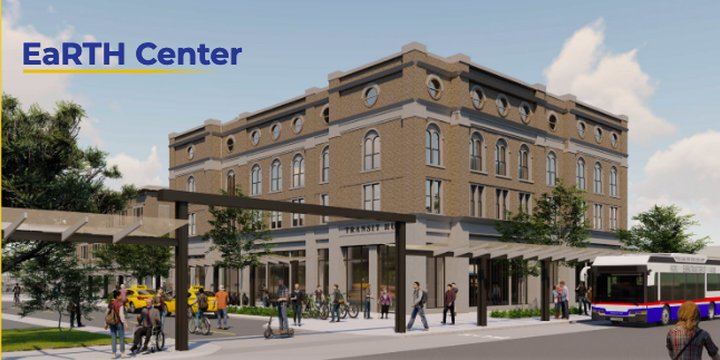
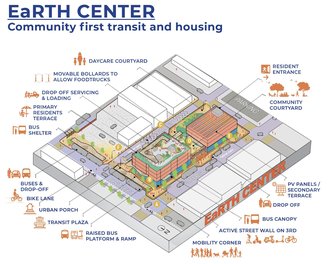
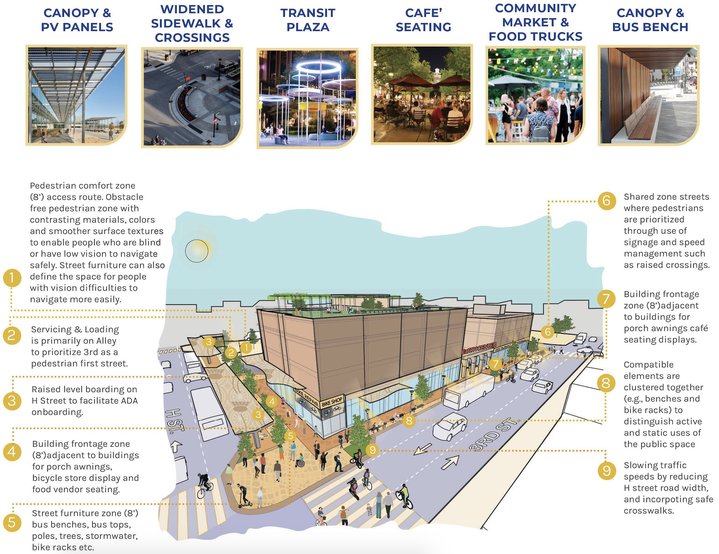
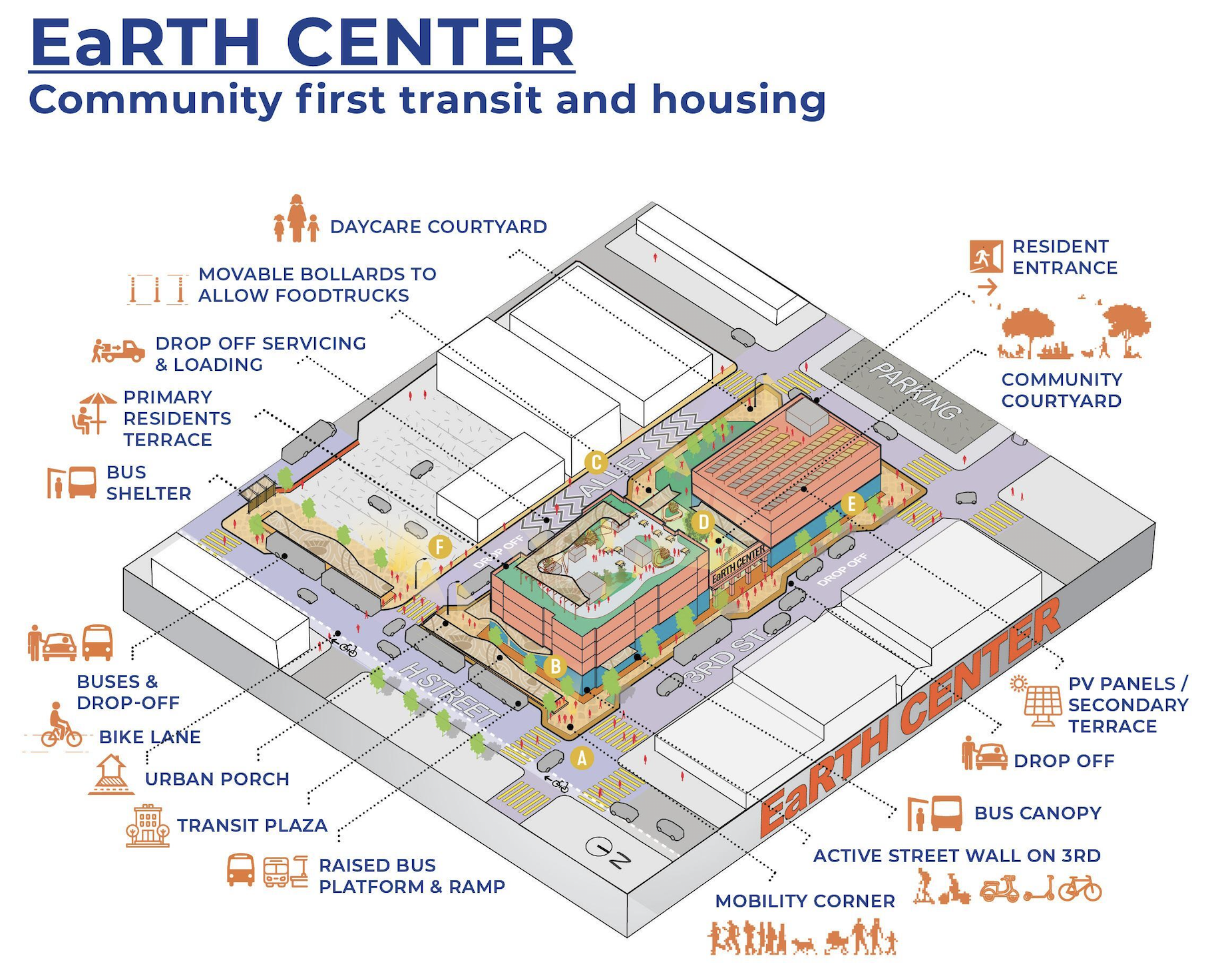
Behold the EaRTH Center, a housing/ transit center development proposed for Third Street Between G and H in Eureka | Images from the City of Eureka
###
As part of the City of Eureka’s plans to convert a bunch of City-owned properties into affordable housing, the Eureka City Council will consider releasing a batch of properties to be used for development, including two parking on lots on Third Street – behind the Lost Coast Brewery – to be developed into a large transit center surrounded by housing units.
The Eureka Regional Transit & Housing Center, or EaRTH Center, was proposed by the Humboldt Transit Authority (HTA) last year. During a meeting on Nov. 16, the council entered into an agreement with HTA to collaborate on the development of housing and a transit center on the site. According to an informational flyer sent to the Outpost by City Manager Miles Slattery, the proposed project would include two buildings and hold a transit hub, businesses and 31 residential units – 15 or which would be four-bedroom apartments used for student housing, 4 one-bedroom apartments for “traveling nurses and doctors” and 12 one-bedroom apartments for other members of the workforce.
“The EaRTH Center will provide apartments for Eureka’s workforce and student residents,” the flyer states. “These apartment units will give much needed support to Eureka’s Regional Housing Needs Assessment and the Colleges and Universities that serve our Community.”
The transit hub would include bus stops with dedicated routes to Cal Poly Humboldt, taxi loading/unload zones, rideshare (such as Uber and Lyft) loading/ unloading, Zipcar carshares, car rental facilities and secure bike storage, bike rental and repair. The proposal also includes plans for a childcare center, on-site pharmacy, a pedestrian plaza with outdoor dining and space for food trucks and a rooftop terrace.
Many different companies and groups will contribute to the project, including HTA, Schatz Energy Research Center and property development and management company Servitas, which has built student housing for colleges across the country. Financing for the project will come from a combination of grant funding obtained by HTA and “private matching funds from a tax-exempt bond,” which will be obtained by Citi.
You can check out the full notice about the proposed project here and attend a public meeting to provide your feedback on Wednesday, Feb. 9 at 6 p.m.
The 10 city-owned lots that are due to be declared surplus at tonight’s meeting.
In addition to the Third Street Parking lots, the council will be voting to release eight other city-owned parcels to be developed into housing to meet the city’s regional housing needs assessment outlined in the General Plan. Four of these sites – one at 1200 West Harris and three near Fairfield between Harris and Henderson – were recently obtained by the City through a land swap with the Pierson Company, approved by the council last month. Two of the sites – one at 1808 Sixth Street and another on Broadway and McCullans – are vacant lots owned by the city, and two of the sites are parking lots on the corner of Fifth and D Streets and Sixth and L Streets.
Eureka Art & Culture COVID Grant Program
In other business, the council will also consider the creation of a Eureka Art & Culture COVID Grant Program, which will provide funding to art and culture related entities that have been economically impacted by the pandemic.
Funding for the program will come from $130,000 in American Rescue Plan Act (ARPA) funds set aside by the city. The program will provide up to $7,500 to nonprofit organizations, museums, movie theaters, live performance venues, art galleries or performing art organizations to fund their continued operation.
To be eligible the business or organization must be able to demonstrate a 20 percent reduction in income due to the COVID-19 pandemic, which will be verified by comparing tax documents from 2019 and 2020. Read more about it here.
Eureka Small Business Rent Relief Bridge Program
Using additional ARPA funds, the City is also looking to establish a small business rental relief program. This program also can provide business owners in Eureka with up to $7,500 in funding to help continue operations. But, unlike the art and culture grant, this is geared toward financial impacts from the more recent surge in COVID cases. Using $500,000 of ARPA, the money will be allocated to small businesses in Eureka to cover unpaid or pending rent from January 1, 2022 through April 30, 2022.
For-profit businesses or a non-profit business that have been negatively affected by the pandemic may apply if they have had a 20% or more reduction in revenue resulting from the pandemic, are located in Eureka, if the business owner lives in Humboldt County, the business has 20 or fewer full-time employees and have been in business since March 1, 2022. Learn more about this grant program here.
###
The Eureka City Council will discuss these and other important issues tonight (Tuesday, Feb. 1) at 6 p.m. You can view the full agenda and directions on how to participate in the meeting here.
CORRECTION: This article has been changed to reflect that the parcels traded to the City by the Pierson Company are between Harris and Henderson, not Harrison.
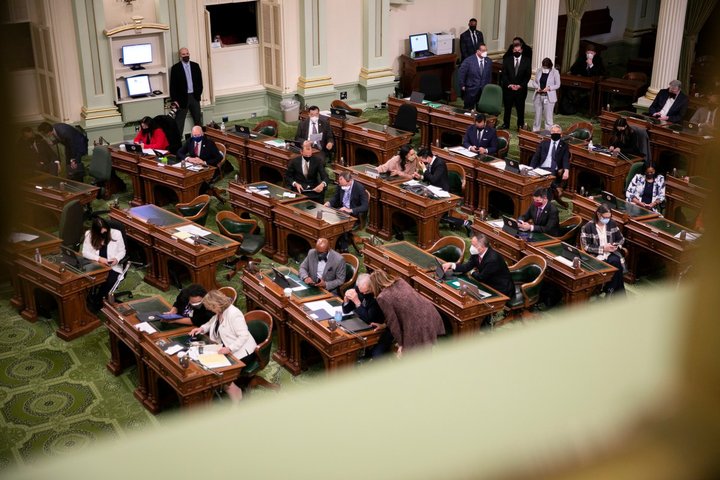
Lawmakers on the state Assembly floor on Jan. 31, 2022. A single-payer bill didn’t come up for a vote. Photo by Miguel Gutierrez Jr., CalMatters
###
Despite, or perhaps because of, an aggressive last-minute push by progressive activists ahead of a crucial deadline, legislation to create a government-run universal health care system in California died Monday without coming up for a vote.
The single-payer measure, Assembly Bill 1400, was the latest attempt to deliver on a longtime priority of Democratic Party faithful to get private insurers and profit margins out of health care. Because it was introduced last year, when it stalled without receiving a single hearing, it needed to pass the Assembly by Monday to continue through the legislative process.
But even the threat of losing the party’s endorsement in the upcoming election cycle was not enough to persuade the Assembly’s Democratic supermajority to advance the bill for further consideration, effectively killing the effort for another year.
After several tense hours Monday afternoon, during which a scramble of meetings took place just off the Assembly floor, Assemblymember Ash Kalra, the San Jose Democrat carrying AB 1400, announced that he would not bring up the measure for a vote.
Kalra declined multiple requests to discuss his decision and whether he would seek another path forward for his proposal. Following the floor session, he waited on a members-only balcony outside the chamber until a group of reporters was told to leave by a sergeant-at-arms.
“I don’t believe it would have served the cause of getting single payer done by having the vote and having it go down in flames and further alienating members,” Kalra said on a Zoom call with disappointed supporters later in the evening, in which he shared that he believed the bill, which needed 41 votes to pass, was short by “double digits.”
Stuck between powerful interests
The political obstacles to such a radical restructuring of the health care system remain enormous, even in a state as putatively liberal as California.
The influential California Chamber of Commerce, which represents business interests in the state, labeled AB 1400 a “job killer” shortly after it was reintroduced in January, indicating it would be a top priority to defeat. Its lobbying campaign — joined by dozens of insurers, industry groups and the associations representing doctors and hospitals — included social media advertisements and a letter to members denouncing the “crippling tax increases” that would be needed to pay for the system. After the bill stalled Monday, the chamber declared it would be ready if ideas from the “dangerous proposal” resurfaced.
Republicans were eager to make it into an election issuethis year. Though Kalra’s bill was largely conceptual, with a separate measure introduced to address the financing, they attacked it as a massive tax hike on Californians. (Kalra proposed a series of taxes on businesses and high-earning households to fund the single-payer system, estimated by legislative analysts to cost between $314 billion and $391 billion annually.)A 4,000-page petition signed by voters who opposed AB 1400 sat in the back of the chamber on Monday for Assembly Republican Leader Marie Waldron of Escondido to use as a prop in a floor debate that never happened.
Democrats also faced a squeeze from the left flank of their party. Activists with the California Democratic Party’s progressive caucus said last week they would push to withhold endorsements from members who did not vote for the bill. That ultimatum generated fierce anger in the Assembly caucus from members who felt cornered, though many refused to speak publicly about their frustration.
Backlash from activists
The decision not to bring up AB 1400 for a vote on Monday may have been about protecting members from having to take a position one way or the other on the bill, as Assembly Speaker Anthony Rendon did with the last single-payer measure in 2017.
Legislation to move the state toward a government-run health care system passed the state Senate that year, but was held by Rendon without a hearing because the bill included no plan to pay for it. That put him in the crosshairs of single-payer supporters, who blasted him on billboards.
This time, Rendon said he supported the effort, but he was not closely involved in rounding up votes for AB 1400. He declined to answer questions after the floor session on Monday and, in a statement, he pushed the blame onto Kalra.
“The shortage of votes needed to pass this bill out of the Assembly indicates the immense difficulty of implementing single-payer healthcare in California,” he said. “Nevertheless, I’m deeply disappointed that the author did not bring this bill up for a vote today. I support single-payer and fully intended to vote yes on this bill.”
The explanations are unlikely to assuage the measure’s most enthusiastic proponents.
“Nurses are especially outraged that Kalra chose to just give up on patients across the state,” the association said in an unsigned statement. “Nurses never give up on our patients, and we will keep fighting with our allies in the grassroots movement.”
Amar Shergill, chairperson of the California Democratic Party’s progressive caucus, said he would continue with plans to pull endorsements from Assembly members who did not publicly support the bill.
During the Monday night call, he and other advocates repeatedly criticized Kalra for setting back their movement and urged him to name the members who were opposed. “We are protecting them from negative scrutiny of a ‘no’ vote,” Shergill said.
Kalra said it would give him more time to work on winning over colleagues who were on the fence about AB 1400 and try again next year.
Where was Newsom?
One prominent Democrat who did not express support for AB 1400 was Gov. Gavin Newsom, who ran for office in 2018 on a platform to create a single-payer system in California but has since distanced himself from that pledge.
During a press conference in January to unveil his budget proposal, Newsom reiterated that he believed “the ideal system is a single-payer system,” but dismissed questions about Kalra’s approach.
“I have not had the opportunity to review that plan, and no one has presented it to me,” Newsom said at the time.
As AB 1400 marched toward defeat, the governor remained mum. His public remarks in recent weeks focused instead on several of his own budget proposals that he said would bring universal health access to California, including an expansion of Medi-Cal, the state’s health insurance program for the poor, to all residents regardless of their immigration status.
The distinction he has drawn between universal access to health insurance and an actual universal health care system has infuriated the nurses’ union, one of his earliest endorsers during the 2018 campaign, who accused him of flip-flopping on single payer. It seems unlikely to cause him much trouble in his upcoming re-election campaign, however, where he has yet to draw a significant challenger.
###
CALmatters.org is a nonprofit, nonpartisan media venture explaining California policies and politics.
On December 22, 2021, Karen Mensing entered into Glory.
Karen Lee Probasco was born in Santa Ana, Calif. on May 8, 1952. With her parents and her four siblings, she grew up in neighboring Costa Mesa. Karen was the middle child. She had three sisters — Kaitoria, Jacqueline and
Leigh — and the youngest sibling, her brother, Jack, Jr.
Karen was always very proud of her father, Jack Probasco’s, service as a Marine who
fought at Guadalcanal and Saipan and served in Okinawa. Karen’s mother,
Mervil E. Swift was born in England and grew up in New Zealand.
In 1972, while working at Tammy Advertising in Newport Beach, Karen and a friend
decided to take the bus to Garberville. Karen had
the address of some people in China Creek who weere raising goats and such.
There, she learned the art of stained glass. She and her short-time husband,
Mike Satrino, sold stained glass items at various craft and art fairs. For about
a year, she and Mike lived in Redwood City.
Karen eventually moved to Redway and held various local jobs. For a few years
she was married to John McGrath.
In 1988, while living in Garberville she married Dale Mensing.
While in Junior High, Karen received Jesus Christ as her Savior.
Karen was a long time member of First Baptist Church in Redway. As she loved helping
children, she became a leader in Sunday School and Vacation Bible School.
Karen had many interests. She loved butterflies and treasured her Auduban Butterfly
Field Guide. She would go on field outings to find and identify butterflies.
Accomodating her love of butterflies was her love of flowers. She charished her flower garden.
She had six different types of yellow rose bushes.
She enjoyed collecting sports cards, especially those depicting Nolan Ryan.
She was a member of four card-collecting clubs. Karen studied and employed the art of making
medicinal tinctures. She understood herself to be a healer.
Karen often reflected on how much she enjoyed hiking around the Sisters Mountains in Oregon.
She also loved to hike the King Range.
As Karen enjoyed beading, she sold beads and beaded work at booths in various fairs and markets.
She and Dale had a bead shop in Redway.
Karen also collected and sold dolls. She received the award for best display and booth at the Eureka doll show.
On many occasions, Karen prepared and took food, coats and gloves to people who seemed to be living on the street.
Karen raised and sold many chihuahuas and Chinese crested dogs. Much could be said
about her love for all animals. Her vizsla, Rika, and her chihuahua, Franky, were her “favorite people.”
For many years Karen provided in-home care for the elderly. She had many loving relationships with her clients.
Karen was very proud to be an American and did much work for her political party. She worked
the telephone and went door-to-door campaigning.
Karen had many friends and she loved Humboldt County. She is dearly missed by many.
On Saturday, Feb. 5, at 11 a.m. there will be a life celebration gathering at New Hope Assembly of God:
354 Sprowl Creek Rd, Garberville. Please bring photos and stories.
###
The obituary above was submitted on behalf of Karen Mensing’s loved ones. The Lost Coast Outpost runs obituaries of Humboldt County residents at no charge. See guidelines here.
Charles Frederick Dahl
Nov. 13, 1938 - Jan. 25, 2022
Born in Salt Lake City, Utah to Ernest Clarence Dahl and Madge Lena Bills, he was a proud Navy Vietnam Veteran.
He worked at Pacific Choice Seafood and Louisiana Pacific.
He is survived by his wife of 37 years, Donna, and his sons Walton and his wife Marci Dahl and Wes and his wife Sara Dahl; stepson Keith; sister Linda Dahl; grandfather of Patton Dahl and Baby Lilliana Dahl, coming soon.
Preceded in death by his son Derek Justin Dahl, parents and brother Larry Dahl.
Charles loved his family and always put them first, no matter what. His second loves were hunting and fishing. He was at home near a river in the mountains or in the ocean. He taught his sons and many of their friends how to hunt and fish as well, a skill they all still use to this day and are now teaching to their children and others.
He will be greatly missed by all who knew him.
At his request there will be no funeral or memorial service. If you would like to donate in his honor, please make donations to Hospice of Humboldt: 3327 Timber Fall Ct., Eureka, CA, 95503 or hospiceofhumboldt.org
And thank you to Ayers Funeral Home.
###
The obituary above was submitted on behalf of Charles Dahl’s loved ones. The Lost Coast Outpost runs obituaries of Humboldt County residents at no charge. See guidelines here.