CA Notify is a free service provided by the state that allows user to know if they’ve been exposed to COVID-19. Photo by Miguel Gutierrez Jr., CalMatters
###
During the COVID-19 pandemic earlier this year,Shira Shafir was trying to make vaccine appointments for some colleagues at UCLA.
Unfortunately, the first few times she used MyTurn, part of California’s technological response to the pandemic, the site proved difficult even for her, an adjunct associate professor at UCLA focused on epidemiology.
“I would get halfway through the process and then the website would glitch out,” Shafir said. Other times, appointments would appear and disappear. “It’s a remarkable position to be simultaneously scientist and citizen,” she said. As a healthscientist — one who was running training sessions for state workers enlisted as contact tracers — she knew the constraints the state was working under. As a citizen, she wanted to get an appointment for her 88-year-old mentor as quickly as possible.
Since the bumpy early months, though, Shafir said the site has improved dramatically. “One thing that is particularly impressive is how quickly they learned and adapted and went to fix those glitches, or those frustrations.”
Expectations for California’s digital response to the pandemic were high, given the talent in the state, said Dr. John Swartzberg, professor emeritus at UC Berkeley’s School of Public Health. The state didn’t meet those high expectations, he said, but it did pretty well given the technological capacity that state and county public health departments had at the beginning of the pandemic.
“The state of California and, frankly, every other public health department in the country started this pandemic with having been underfunded for decades, which translated to inadequate trained personnel, inadequate facilities, and, very importantly, inadequate digital tools,” said Swartzberg.
California built many new tech tools in response to the pandemic, often on a tight timeline. But the tools, such as MyTurn, the state’s vaccine portal, worked less well for older Californians, as well as those who lacked consistent internet access, or didn’t speak English fluently. Still, despite those and other complaints, experts that CalMatters spoke to thought the state did an overall positive job given the circumstances.
Here’s a look at the four of California’s tech responses to the COVID-19 pandemic.
Tool: COVID19.ca.gov, the state’s COVID-19 website
Cost: Staff time and $450,000 for translation into seven languages
In March 2020, staff at the Office of Digital Innovation created, in the space of four days, a website meant to serve as Californians’ primary source of information for the pandemic, according to J.P. Petrucione, the agency’s deputy director of communications.
The site now includes data on vaccine uptake by demographic groups, food and housing resources, guidelines for large events and more. As of late October it had more than 66.3 million unique visitors, Petrucione said, and users have averaged about three pageviews per person. About 40% of link clicks on the site went to MyTurn, another state tool. While staff built the site, the agency contracted with Avantpage to translate the site into seven languages. So far, that contract has cost $451,250, according to Petrucione.
I don’t believe there were a ton of older adults themselves who are on this website without getting information. — Denny Chan, Directing Attorney, Justice in Aging
Several public health experts and advocates said they found the site to be helpful in their own work and visited it frequently, but were less sure how widely used it was by citizens.
Swartzberg, at Berkeley, said he found the site useful and timely. Shafir said she’s been using the site on a daily basis. “I thought they started out very strong and very usable,” she said, and the case and vaccine data available has become even more robust. In trainings, she’s used the data dashboard to underscore to new contact tracers why asking about a person’s age or other health conditions is important.
Directing attorney Denny Chan at Justice in Aging, a national nonprofit fighting senior poverty, said the site was helpful for tracking infection and vaccination rates for older Californians, and for staying up-to-date on state policy changes. “It’s helpful for me as an advocate who’s helping others and helping inform our network about all these changes.” But, he said, “I don’t believe there were a ton of older adults themselves who are on this website getting information.”
Many older adults get information through radio and TV, but he credits the state with doing outreach through those mediums as well.
Tool: MyTurn
Cost: At least $50 million
The state’s vaccine appointment site may have been the most difficult to build, had the most troubled rollout and been the most important tech tool to Californians during the pandemic.
The site, conceived in January 2021 and launched the following month, was more than just a place to book appointments. As CalMatters reported in April, it also tracks vaccine orders and distribution, collects reams of vaccination data and helps organize volunteers statewide. And it can transmit data to the state’s immunization registry. In April, the state Public Health Department told CalMatters the site cost $50 million to build, including an $18 million contract with Accenture.
But it was the vaccine appointment-booking function of the site that most Californians interacted with — and which caused the most headaches.
Older Californians, who were among the first to qualify for the vaccine, experienced the site when it was at its least polished. “Because of the ways in which MyTurn and other appointment scheduling systems weren’t quite ready yet, there were a number of older adults that (said) ‘I’m just going to wait,’” said Chan.
Andrea Rivera, senior legislative advocate at California Pan-Ethnic Health Network, said the portal asked for insurance information, which caused confusion. Even though people could get the vaccine without health insurance, that question dissuaded uninsured people from making an appointment with MyTurn.
Some pages timed out, forcing people to start over, frustrating Californians who needed more time to fill out each page, said Andrew Imparato, executive director of Disability Rights California.
Soon after its launch, some people reported that theymade appointments at the site, but due to glitches they were erroneous and were cancelled without notification.
Even health professionals like Shafir struggled to use MyTurn at the outset.
But, she said, now she thinks MyTurn works “spectacularly.” These days, she said, you can find appointments by vaccine type, location, age and more. Now “MyTurn has the functionality that we want it to have to really serve the population in California,” Shafir said.
Worried about what happens if you lose your federal vaccine card? California built an app for that. Conceived of in April 2021 and built by the Office of Enterprise Technology, this portal for Californians to get a digital record of their vaccination went live in June. The project didn’t involve any contracts with outside firms.
The vision, said Rick Klau, California’s chief technology innovation officer, was never to require people to sign up; it’s an optional tool. “Our goal was simply to ensure that residents had access to a copy if they lost or damaged their original (federal) card,” he said. In the first couple of weeks, a million people downloaded the QR code version of their vaccine record. As of mid-October, that number had grown to 6.5 million, according to Klau.
Some found that if they made a minor mistake entering their vaccine information, or if their vaccine administrator made a small error — if, say, they swapped the month and day in the vaccine date — the tool wouldn’t be able to locate their vaccine record until the information was corrected.
Klau said for people who need to correct information in their vaccine record, a virtual assistant allows them to upload their federal card, and there’s a phone number they can call for help.
Some may not be eager for a digital record, said Rivera, the advocate at California Pan-Ethnic Health Network. Undocumented immigrants, for example, may have less trust in state agencies and might be apprehensive about where their data will go.
Some privacy protections do exist. The resulting QR code can only be scanned by certain devices (if you try to scan it with your own smartphone, it won’t work), and signing up for the record does not grant someone automatic access. Also, the digital record only includes the information on your physical card; it does not include your Social Security number or citizenship status, for example. More information can be found on the digital vaccine record site and on the SMART Health Card site
The state Technology Department released its source code publicly, and three other states are in the process of building their own version based on California’s code, according to Klau.
Tool: CA Notify
Cost: $2 million
Apple and Google both created digital contact tracing tools in 2020 that use bluetooth signals to gauge when users’ phones are near each other; if people using one of the tools tests positive, they can choose to share that information. If they were near people for a certain period of time who also have the system enabled, those close contacts will receive a notification that they may have been exposed to the virus. Apple users can enable the digital contact tracing via a setting on their phone; Android users must download an app.
In September and November of 2020, the California Department of Technology oversaw a pilot program that rolled the apps out at a handful of University of California campuses. UC San Diego was the first campus to pilot the apps, and received a $2 million contract from the state Health Department that the department said went to provide ongoing support for the system, including managing a call center, web development and analytics. On Dec. 10, the system was rolled out statewide.
As of late October 2021, roughly 13.3 million Californians — out of the state’s 39 million — had activated or downloaded the twin products, according to the department. For privacy reasons, it isn’t able to track how many people have since chosen to disable the tool or delete the Android app, officials said.
Between the statewide launch in December 2020 and mid-October 2021, roughly 102,000 people who tested positive used the system to alert others, and approximately 309,000 people received alerts that they may have been exposed to the virus, according to the health department. Longhurst said modeling shows that the adoption of CA Notify in California may have prevented tens of thousands of infections.
Now that officials have relaxed some social distancing guidelines, the apps may prove even more valuable. During the lockdown, the average number of people getting notified per positive test reported was less than two, said Longhurst. Post-lockdown, it’s more than five.
“With COVID becoming sort of endemic, and you know, question mark about whether we’re going to have a big winter surge coming in December and January, now really is the time to turn this on,” Longhurst said.
###
CALmatters.org is a nonprofit, nonpartisan media venture explaining California policies and politics.
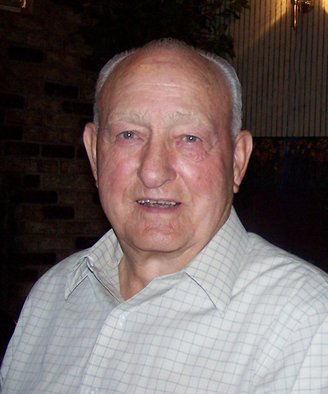
On the beautiful, sunny afternoon of October 16, Elmer Eberhardt
took his last breath at Hospice House in Eureka after some brief
medical issues. He celebrated his 96th birthday just one month prior
to his passing.
Elmer was born a
first generation American in Bayard, Nebraska, on September 14, 1925.
His parents, Heinrich (Henry) Eberhardt and Mary Kuxhausen, emigrated
to the United States as Volga Germans from Russia. Elmer was the
fifth of six children who lived and worked on the family farm.
As a four year
old child, he became responsible for watching his younger brother,
Robert. Elmer’s father passed away in 1941 when Elmer was six years
old. His mother remarried, and, when he was several years older,
Elmer worked in the farm fields with his siblings thinning and
weeding sugar beets among other farm chores. At 16 years of age,
Elmer helped haul 1200 tons of sugar beets. Farming was difficult,
back-breaking work. His mother insisted that the children get an
education during a time when many farm kids left school for good.
Elmer graduated from Nebraska’s Minatare High School in 1943.
While on a double
date with a friend, Elmer met Betty, who was actually his friend’s
date. After the friend stole Elmer’s date, Elmer got even by giving
Betty a big kiss. Betty says she saw stars and that is how their
courtship began. Betty and Elmer were married in Scottsbluff,
Nebraska, on November 26, 1948. Elmer worked at Bunk’s store, on
Hwy 26 east of Scottsbluff, before and after they married. Elmer and
Betty moved to Omaha so Elmer could attend the Electronic Radio and
Television Institute. Elmer worked at a creamery there while going to
school. They moved back to Scottsbluff where their first child, son
David, was born in 1949. Elmer worked in bean plants in Lincoln and
Scottsbluff, where he was responsible for the maintenance of the
electronic sorting equipment.
Living in the
Midwest, neither Betty nor Elmer wanted a farm life. Elmer was
looking for a better way to make a living, and his older brother, Al,
offered a solution. Al ended up in northern California after serving in the
Air Force in WWII, where there were many jobs that paid good wages in
the timber industry. After a year of contemplation, Elmer and Betty
moved their little family to Humboldt County, where Elmer began
working for Fairhurst Timber Company. Their second child, daughter
Diane, was born in 1955 followed by daughter, Debra, in 1957.
Eventually, Elmer and Betty were able to purchase a small house in
Eureka. Over the years, Elmer wired, plumbed, sheet rocked, painted,
roofed, built cupboards, etc. remodeling their home. In 1977, they
moved to their home in Cutten. From the moment they set foot in
Humboldt County, Elmer and Betty began exploring local rivers,
beaches, and forests. Elmer enjoyed spending time picnicking,
fishing, camping, and taking Sunday drives with Betty and their
children. Elmer was a good provider for the family. He made certain
they had all that they needed, including taking annual family
vacations. They enjoyed visiting interesting places and seeing the
sights in many states.
Elmer later
worked for Thurman B. White as a timber cruiser and land surveyor and
hiked many, many miles through northern California timberlands. He was a
state licensed forester. Elmer’s final job was with Belcher
Abstract and Title Company in Eureka from where he retired in 1990.
Elmer loved his
grandchildren. He attended their school functions, birthday, holiday
parties, and other important events. He loved having them come to
visit. Elmer probably spent the most time with his three young
granddaughters who lived just down the road and attended the nearby
schools. Grandpa Elmer and Grandma Betty provided afterschool care
and some summer care. The girls spent many hours at Grandma and
Grandpa’s house. If they weren’t baking with Grandma, or
listening to Grandpa read stories to them, they were in the yard with
Grandpa Elmer checking out the flowers, vegetables, and apples. They
went on many walks in the nearby forests. Grandpa would teach them
about trees, cones, plants, and insects. Often they would pick up
rocks or even stray golf balls from the forest. The Sequoia Park and
Zoo was another favorite place. There, Grandpa would push them on the
swings or take them exploring the Duck Pond, trails, and the zoo.
Family and travel
were very important to Elmer. Over the years, the family made
numerous trips back to the Midwest to visit family and friends and to
attend family reunions. He and Betty also loved to attend many of
their Minatare High School class reunions. They visited numerous
National Parks and Monuments throughout the western US, and they also
ventured into western Canada. As OCTA (Oregon California Trail Assn)
members, Elmer and Betty hiked pioneer trails from Missouri westward
making lifelong friends with other members. On several occasions,
they traveled with their children and grandchildren introducing them
to many of the same pioneer sites as well as many National Parks.
After retirement, Elmer and Betty hiked to the top of Mount Lassen
and to the bottom of the Grand Canyon.
Elmer was always
willing to assist his family with yard work, building projects,
painting and moving projects. Elmer was a regular blood donor – he
gave 14 gallons of blood at the Northern California Community Blood
Bank. For many years, Elmer enjoyed bowling with the Senior Bowling
League at Harbor Lanes in Eureka. He continued bowling even after
reaching the age of 90. He sometimes took some of his young
granddaughters to the bowling lanes instructing them how to properly
throw a bowling ball.
Although he never
wanted to be a farmer, the “farm gene” was in his blood. He planted
many vegetables in his back-yard gardens over the years. He made
homemade pickles from cucumbers and enjoyed zucchini squash,
tomatoes, and much more. Each year he would harvest a never-ending
crop of ‘Sweet 100’ tomatoes for all to enjoy. He loved planting
flowers – especially Marigolds.
When they moved
to Cutten, Elmer and Betty walked a daily two-mile route from 1977
until 2009. Later, they walked closer to home for safety reasons.
They quickly made friends with many neighbors and neighborhood
walkers over the years. Elmer and Betty held hands as they walked,
and they enjoyed their last walk in April 2020 when balance issues
intervened. Elmer and Betty celebrated their 72nd wedding
anniversary in November of 2020.
For about 17
years, Elmer and Betty accompanied their children, grandchildren, and
great-grandchildren to rented beach houses on the southern Oregon
coast. The Gray Whale on Rouge Shores Beach in Gold Beach became the
family favorite. Elmer and Betty would walk the beach, play games
with the kids, and enjoy food and laughter at family dinner time.
Elmer is survived
by his loving wife of 72 years, Betty; his children, David Eberhardt
(Marie), Diane Larkin (Dan), Debra Harper (Pat); his grandchildren,
Matt Eberhardt, Marc Eberhardt (Sara), Jacob Eberhardt (Emily), Sara
Farley, Brooke Eberhardt, Amy Borden (Huna), Katie Larkin, Hannah
Gossi (Jared), Emily Larkin Jewell (Brandon), Steven Harper (Rachel);
13 great-grandchildren; and one great, great-grandchild. He is also
survived by nephew, Vern Eberhardt (Joy); nieces, Judy Eberhardt,
Dawn Nelson (Kyle); several cousins, and family friends.
Elmer was
preceded in death by his father and mother; his siblings, Leo, Ruth,
Alexander, Theodore, and Robert; and a grandson, Bryan Hubbard.
Throughout his 96 years, Elmer lived a full and active life. He will
be deeply missed by his family and friends, but, the lasting memories
of his life will be treasured forever.
In lieu of
flowers, the family requests donations may be made to Hospice of
Humboldt, where Elmer received the most loving care in his final
days, to the Northern Community Blood Bank, or to the Sequoia Park
and Zoo in Eureka.
A small family
Celebration of Life will be held in the near future.
###
The obituary above was submitted on behalf of Elmer Eberhardt’s loved ones. The Lost Coast Outpost runs obituaries of Humboldt County residents at no charge. See guidelines here.
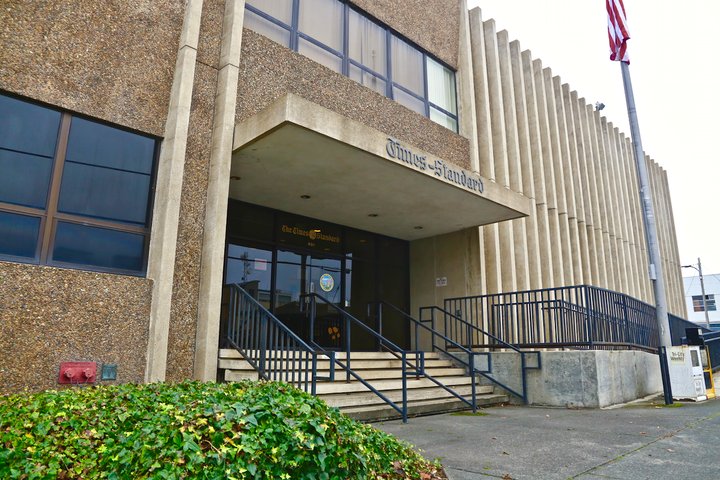
930 Sixth Street, the longtime — now former — home of the Times-Standard. | Photos by Andrew Goff.
###
A couple weeks ago, the staff of the Times-Standard, Humboldt County’s enduring daily newspaper of record, picked up stakes and moved across town, decamping from the publication’s longtime home inside the Brutalist edifice at 930 Sixth Street and heading a half-mile west to 39 Fifth Street.
This marks the first time the publication has moved shop in more than 50 years. As the paper’s hyphen hints, there were once two competing periodicals — the Humboldt Times (established in 1854) and the Humboldt Standard (1875) — which joined forces in 1967 and moved into the Sixth Street building the following year.
“The move was bittersweet for some Eurekans,” the T-S recounted in a former version of its “About Us” page. “The paper’s new site had been the location of the Sumner Carson mansion, built in 1914, which had been for sale for years.”
No takers, sadly, and so the mansion was torn down and this big concrete box, designed by Lockwood Greene Engineers, was built in its place — construction cost: $2.5 million.
The architectural style may reflect the industrial vogue of the time (Lockwood Greene designed many newspaper buildings like it around the country), but that’s not exactly a compliment. Reporters long referred to their windowless second-floor confines as “the news tomb.” The most attractive element of the structure is probably the ivy vines that crawled up its western face until they were removed a few years back.
Rich Somerville, the editor of the paper when I got hired as a copy editor and page designer in 2007, once mused, “This is an art town. Maybe what we need on Sixth Street is some dynamic art work. Maybe a painting of a view out a window.”
He also remarked, “No doubt affection for the place will come with time.” Well, it never did for me — not for the building, anyway. But I do have fond memories of my time within it. Improbably, Humboldt County was home to a good old-fashioned newspaper war back then, with the venerable T-S going head-to-head with Rob Arkley’s upstart Eureka Reporter.
In 2008 I moved to the other side of the news tomb, where I joined a crack team of eight reporters in a bustling, fluorescent-hued newsroom some 22 employees strong. I dug up a web cache of the Times-Standard‘s “Contact Us” page from September 2008. It lists 68 employees, including editors, photographers and quite a few folks who worked in departments — production, creative services, accounting — that no longer exist locally.
The invigorating competition provided by the Reporter vanished when the paper folded in November 2008. And like many other local newspapers across the country, the Times-Standard has been hit hard in the intervening years by a variety of forces buffeting the industry — from Craigslist and social media gobbling up classified and advertising revenue, respectively, to changing reader habits. (Hello, folks reading this on your phones.)
A recent story in the Atlantic examined another factor — namely, the insidious greed of Alden Global Capital, “a secretive hedge fund that has quickly, and with remarkable ease, become one of the largest newspaper operators in the country.”
Digital First Media, a subsidiary of Alden, now owns dozens of dailies, including the Denver Post, the San Jose Mercury News and, alas, the Times-Standard.
“The [Alden] model is simple,” writes McKay Coppins in the Atlantic. “Gut the staff, sell the real estate, jack up subscription prices, and wring as much cash as possible out of the enterprise until eventually enough readers cancel their subscriptions that the paper folds, or is reduced to a desiccated husk of its former self.”
The Times-Standard building went on the market in 2014 with a price tag of $2 million. Today, the paper’s newsroom staff is down to just five. The first job I did for the paper — page layout — is now performed down in Chico, which is also where the paper gets printed before being trucked up to Humboldt overnight for distribution.
But the newsroom staff, to their credit, keep churning out local news stories for new editions published six days a week. They just hired a new reporter. (Welcome, Jackson Guilfoil!) And now they have fresh digs.
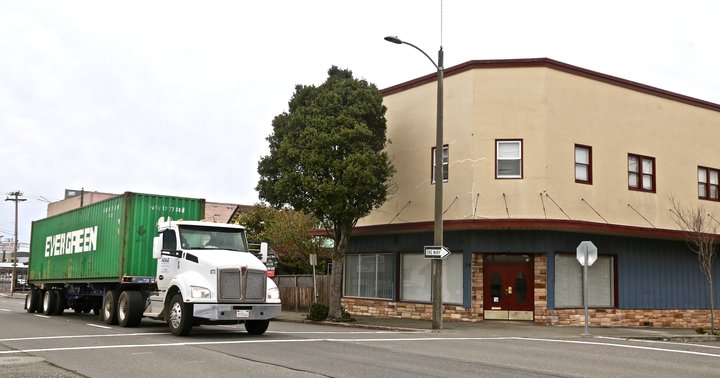
The paper’s new home, at the corner of Fifth and B, is a two-story wood-and-stucco building with a pair of swinging saloon-style doors. In an Oct. 23 note announcing the move, T-S Publisher John Richmond gamely remarked, “You know what? I like it. It fits us perfectly … .”
Best of all? No painting of a view out a window required.
###
CORRECTION: This post originally said the Times-Standard’s layout is being done overseas. Former editor Marc Valles says it’s being done in Chico and we believe him.
Press release from the Humboldt County Sheriff’s Office:
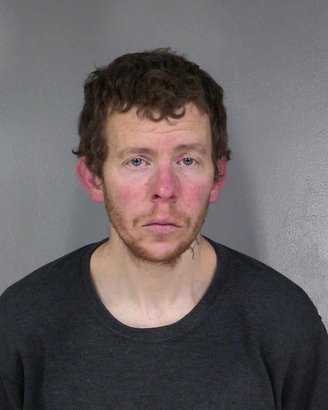
On Nov. 5, 2021, at about 3:12 a.m., Humboldt County Sheriff’s deputies were dispatched to a storage facility on the 1600 block of Murray Road in McKinleyville for the report of a burglary in progress.
According to the business, a male suspect was observed on security footage unlawfully accessing the property. While searching the facility, deputies found multiple storage units missing locks. Deputies located the suspect, 28-year-old Buddy Ray Blevins, hiding inside one of the unlocked storage units. During a search of Blevins and his belongings incident to arrest, deputies located burglary tools and over one gram of methamphetamine.
Blevins was arrested and booked into the Humboldt County Correctional Facility on charges of burglary (PC 459/461(b)), vandalism (PC 594(B)(1)) and possession of burglary tools (PC 466). An additional charge of possession of a controlled substance (HS 11377(A)) is pending review by the Humboldt County District Attorney’s Office.
Anyone with information about this case or related criminal activity is encouraged to call the Humboldt County Sheriff’s Office at (707) 445-7251 or the Sheriff’s Office Crime Tip line at (707) 268-2539.
Press release from the Humboldt County Sheriff’s Office:
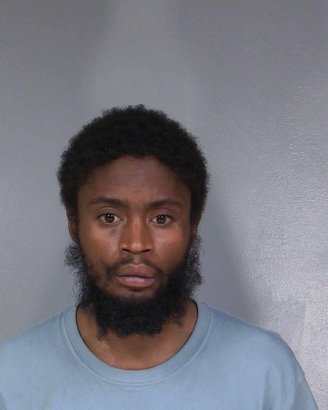
Temar Andre Thompson
On Nov. 6, 2021, at about 1:42 a.m., Humboldt County Sheriff’s deputies were dispatched to a residence on the 2100 block of Old Arcata Road in Bayside for the report of a stabbing victim.
Deputies arrived on scene and located a 43-year-old male victim with a major head injury. The victim was transported to a local hospital for treatment, where he remains in critical but stable condition at this time.
At the residence, deputies contacted multiple individuals, including 28-year-old Temar Andre Thompson. Through further investigation, Thompson was determined to be the suspect responsible for the stabbing and he was taken into custody without incident.
Thompson was booked into the Humboldt County Correctional Facility on charges of attempted murder (PC 664/187(a)).
This case is still under investigation.
Anyone with information about this case or related criminal activity is encouraged to call the Humboldt County Sheriff’s Office at (707) 445-7251 or the Sheriff’s Office Crime Tip line at (707) 268-2539.
If there’s one thing your President of Positivity loves it’s people who are just trying to figure out some way to make this messy world better. With that in mind, this week Michaele is joined by Eureka Police Department Captain Brian Stephens and the trusty crew from the Rotary Club of Southwest Eureka in wishing veterans here in Humboldt and beyond a happy Veterans Day! (OK, it falls on a Thursday this year, not a Monday. But whatever.) Ciao Bella!
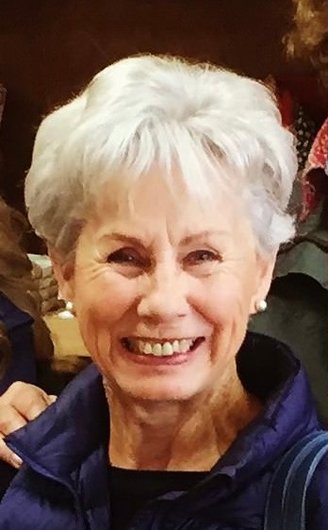
Ivey Lee Bryant-Boyd, age 79, of Fortuna, passed away on
October 27, 2021 after a brief illness.
Ivey was born
April 14, 1942 in Miami, Florida the daughter of Lee Ray Hamilton and
Lidia Lucelle Wood. She graduated from Eureka High School in 1961
and resided in Fortuna the remainder of her life.
She especially
loved spending time with family, quilting with her friends the Sew
Sew Sisters, and being active in her church activities. Ivey was a
loving and devoted mother, grandmother, great-grandmother, wife and
friend.
Remaining to
cherish Ivey’s memory are James Boyd, husband, Karen Hawkins,
daughter, Todd Bryant, son; Grandchildren- Cody Bryant, Taylor
Hawkins, Aaron Bryant, Hallie Hawkins, and Blaine Bryant; Great
grandchildren- Sienna Bryant, Kennedy Hawkins and Fallon Bryant.
Proceeding Ivey
are Kenneth Bryant, husband, Richard Bettis, husband, Larry Miller,
brother, and Laurence Bryant, son.
Services will be
held at Calvary Chapel, 914 9th Street, Fortuna on November 16, 2021 at 1 p.m. Ivey will be missed by
those who knew her for her kindness and strength.
###
The obituary above was submitted on behalf of Ivey Bryant-Board’s loved ones. The Lost Coast Outpost runs obituaries of Humboldt County residents at no charge. See guidelines here.