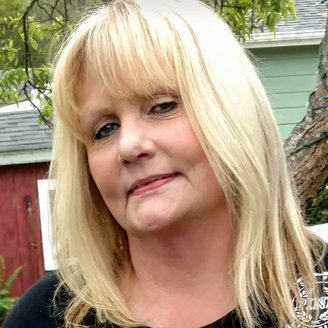
Bonnie Sue Tatum, a mother of
three boys and life-long resident of Rio Dell, passed away Wednesday
July 1, 2021 at the age of 66.
Bonnie
was born in Scotia on March 18, 1955 to Dalco and Mildred Lively. She
grew up in Rio Dell with her older sister. Bonnie later had three
boys of her own, which she raised in Humboldt County.
Bonnie
enjoyed hunting for arrow heads, reading historical romances, hiking,
and spending time with family. Her family was most important to her.
She was a spiritual, loving, and kind heart woman. She loved being at
her cabin; she would gather up as many grandchildren as possible,
along with her dog, and headed to the hills. Bonnie will be deeply
missed by her family, friends and all who knew her.
She
is survived by her husband — Curtis Tatum; sons — Jesse Sturdevant
(wife Allison), Seth Sturdevant (wife Shawn), Derek Boyd, Brian
Tatum, Kevin Tatum; grandchildren — Coleman, Cyrie, Dakota, Drew,
and Baileigh Sturdevant; Audrey and Krissy Tatum; Joey Catron; sister
— Jean Waters (husband Richard); nephew — Ken Waters; niece —
JoAnn Waller (husband Kenny) and their children Kenny and Keri
Waller.
Graveside services will be held at Sun Rise Cemetery in Fortuna at
10 a.m. on
July
24, 2021 for family.
A
celebration
of life
will be open to all friends and family at the Rio Dell Fire Hall July
24, 2021 at 3 p.m.
###
The obituary above was submitted on behalf ofBonnie Tatum’s loved ones. The Lost Coast Outpost runs obituaries of Humboldt County residents at no charge. See guidelines here.
Press release from the Humboldt County Sheriff’s Office:
On July 10, 2021, at about 3:50 p.m., Humboldt County Sheriff’s deputies were dispatched to a business on the 200 block of Big Rock Road in Orleans for the report of a theft.
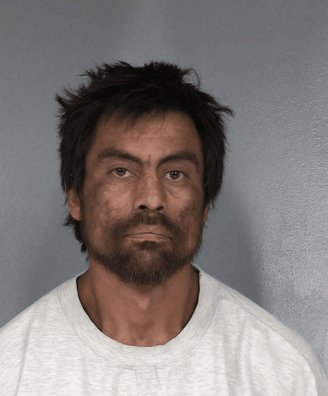
According to the business owner, earlier that afternoon a male suspect, later identified as 42-year-old Pimnunihus Itspihun Cenname, entered the business claiming to be responding to an emergency and stole over $350 worth of merchandise. Cenname was known by deputies to have outstanding warrants for his arrest.
While investigating the theft, deputies received information that an employee had located some of the stolen items in a drainage area near a business on the 38,000 block of Highway 96 in Orleans. Deputies descended an embankment to the area and located Cenname inside a metal culvert. Cenname was taken into custody after a brief struggle. During a search of Cenname incident to arrest, deputies located ammunition. During a search of Cenname’s belongings nearby, deputies located a loaded firearm.
Cenname was booked into the Humboldt County Correctional Facility on charges of felon in possession of a firearm (PC 12021(a)), prohibited person in possession of ammunition (PC 30305(A)), petty theft (PC 488), possession of stolen property (PC 496(A)) and resisting arrest (PC 148(A)(1)), in addition to warrant charges of vandalism (PC 594(B)(1)), possession of concentrated cannabis (HS 11357(A)), possession of a controlled substance (HS 11377(A)), resisting arrest (PC 148(A)(1)), failure to maintain a vehicle registration card (VC 4454(A)) and failure to provide vehicle insurance (VC 16028(A)).
The Humboldt County Sheriff’s Office would like to thank the California Highway Patrol for their assistance with this investigation.
Anyone with information about this case or related criminal activity is encouraged to call the Humboldt County Sheriff’s Office at (707) 445-7251 or the Sheriff’s Office Crime Tip line at (707) 268-2539.
Press release from the Humboldt County Sheriff’s Office:
On July 10, 2021, at about 7 p.m., Humboldt County Sheriff’s deputies on patrol in the area of Highway 101 near Loleta observed a vehicle parked along the highway appearing to be in need of assistance.
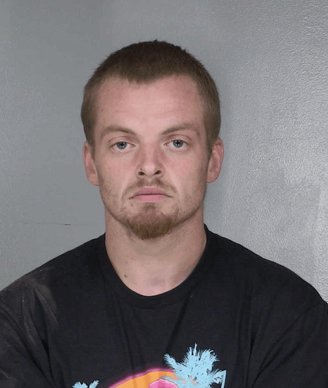
As deputies approached the vehicle to render assistance, a routine check of the vehicle’s registration notified deputies that the vehicle had been reported stolen out of the state of Washington. Deputies contacted the driver, 26-year-old Robert Charles Cross, and took him into custody without incident.
Cross was booked into the Humboldt County Correctional Facility on charges of possession of a stolen vehicle (PC 496d(a), in addition to warrant charges of carrying a concealed dirk or dagger (PC 21310), possession of a controlled substance (HS 11377(a)) and vehicle theft (VC 10851(a)).
This case is still under investigation.
Anyone with information about this case or related criminal activity is encouraged to call the Humboldt County Sheriff’s Office at (707) 445-7251 or the Sheriff’s Office Crime Tip line at (707) 268-2539.
The Eureka Friday Night Market is back for its third season starting August 6th at 5:30 in a brand new location - the Madaket Plaza at the foot of C street on Eureka’s beautiful waterfront.
Eleven Friday evenings in a row Humboldt Made and the North Coast Growers Association will transform Madaket Plaza into a festive place to meet up with friends and neighbors after the long work week. Friday Night Market has it all; farmers market, arts and craft vendors, bar featuring the best of Humboldt produced beverages, food trucks and pop-up food vendors and live music for dancing. This year comes with some new additions such as trolley and speeder car rides run by Timber Heritage Society, Madaket ferry rides, a wide variety of performance artists as well as each night will have its own costume theme for those who want to kick it up a notch.
Bring your own chair and don’t forget to bring your Humboldt layers.
Location: Foot of C st in Eureka
Time: 5:30 - 8:30
Dates: August 6th - October 15th
Musical Line Up / Costume Theme Nights:
Aug 6th - Vanishing Pints / Irish Pirate Night
Aug 13th - Tyger Byle / Favorite Movie Character
Aug 20th - Firesign / Super Hero
Aug 27th - Blue Rythem Review / Rouring 20’s
Sept 3rd - So Hum Girls / Rainbow
Sept 10th - Eyes Annonomous / 80’s Night
Sept 17th - Silver Hammer / 60’s Night
Sept 24th - Undercovers / Solid Color Day
Oct 1st - Latin Peppers / Burning Man
Oct 8th - Amber Soul / Fancy Dress Up Day
Oct 15th - Huckleberry Flint / Wild West
For more information visit humboldtmade.com com or Eureka Friday Night Markets on both Facebook and Instagram.
Eureka native, Grammy winning singer-songwriter, Tony nominated Broadway star, and current star of the network sitcom “Girls5eva” Sara Bareilles is gifting her hometown with books. Five thousand books.
Sara Bareilles gives the keynote address at the 2021 Scholastic Art and Writing Awards
As keynote speaker at the recent Scholastic Art and Writing Awards, Bareilles was invited by Scholastic, the world’s largest children’s book publisher, to select a charity to receive this massive donation. Bareilles chose Humboldt Literacy Project.
“We are overwhelmed with gratitude,” says HLP Executive Director Emma Breacain. “I don’t know if Ms. Bareilles realizes how far her gift will go. Of course our tutors and learners will use these books in their studies, but we also have partnerships with many other local agencies. Now that we’re coming out of various COVID restrictions, we’ll be able to have family book giveaways again soon, and to return to supplying books to local agencies that work with families and people trying to improve their skills and prospects.
“This is an open call to re-establish the relationships with the agencies we shared books with before the pandemic, and an invitation for other organizations to call us up and let us help them out. Because honestly, we are not just overwhelmed with gratitude, we are about to be overwhelmed with about 150 boxes of books. We’ll be working to get those books out of boxes and into the hands of readers all around Humboldt County.”
An estimated 14,000 adults in Humboldt County are functionally illiterate. Since 1981, Humboldt Literacy Project has been connecting adults who wish to improve their reading and writing with adult volunteer tutors for free, confidential, one-on-one English language tutoring for native English speakers and second-language English learners. They also have regular family literacy events and book giveaways.
Breacain says, “Ms. Bareilles has a lot of themes of courage and resilience and pride woven into her work, and I think that perfectly echoes the courage and resilience our volunteers and clients show every day, and how proud we are of them. We are going to be grateful ‘5eva’ for this wonderful gift.”
Learn more about Humboldt Literacy Project at humboldtliteracy.org, or call 707-445-3655.
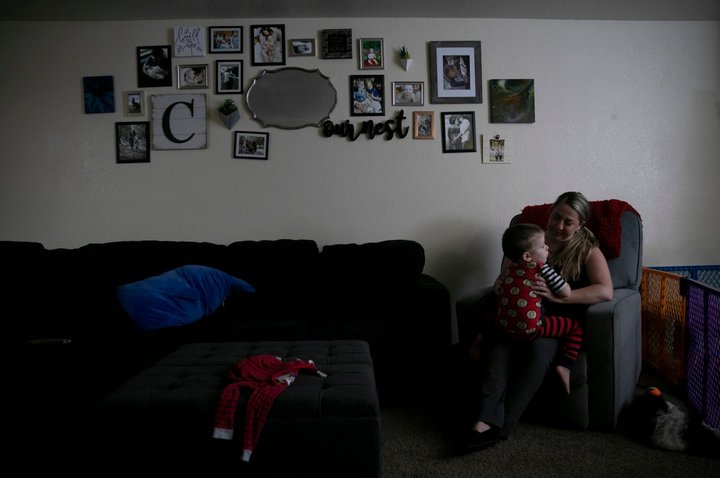
Miranda Griswold cuddles her three-year-old, Rhys, before bedtime at their Merced home on July 8, 2021. “Six weeks is nothing,” Griswold said of the current family leave allotment. “It’s barely time to recover [from C-section] and on top of navigating breast feeding.” Photo by Anne Wernikoff, CalMatters
###
Miranda Griswold and her partner were thrilled to grow their family when they had their first child in 2018. The less thrilling part: adding baby costs to their existing expenses — alimony payments, student loans and credit card bills.
Griswold had a C-section and her doctor recommended she stay at her Merced home for six weeks of recovery time. Her fiancé, who works at a commercial printing press, returned to work after one week of vacation because they couldn’t afford for him to take more time off using family leave, which would replace only 60% of his wages.
“There was no way we could make that percentage work,” said Griswold.
That’s the case for many workers in California. Assemblywoman Lorena Gonzalez, a Democrat from San Diego County, authored a bill this year to increase that percentage — making it more realistic for low-income earners to use the leave that they’re required to fund with 1.2% of every paycheck.
Assembly Bill 123, which the Assembly passed on a 65-0 vote in May and is now in the Senate, would increase the wage replacement rate from at least 60% to 90% of a worker’s highest quarterly earnings in the past 18 months.
“I think it is cruel that… we actually deduct the 1.2% from their paycheck and yet we are dangling something that is unattainable if you can’t afford it,” Gonzalez said in an interview.
Under current law, California’s paid family leave is often being used by those who can more easily afford going without full pay.
Workers making less than $20,000 a year filed nearly 48,000 family leave claims in 2019, only slightly more than the 46,000 filed by those earning $100,000 or more a year, according to the state Employment Development Department. And between 2017 and 2019, the number of claims from the lowest-wage workers declined while claims by workers of every other income group increased, with claims from the highest earners rising most of all, by one-third.
In total in 2019, the state paid nearly $1.1 billion in family leave benefits, including $287 million to those making $100,000 or more a year. The maximum benefit is $1,300 a week, for as long as eight weeks.
Expanding access to leave
AB 123 is the latest in a series of efforts to make paid family leavea more financially realistic option for more employees.
In 2002, California became the first state to adopt a family leave benefit. It was included as an expansion of the state’s disability insurance program, compensating employees who took time off to care for a seriously ill family member or to bond with a new child.
In 2016, then-Assemblymember Jimmy Gomez of Los Angeles authored a bill to increase wage replacements based on income: 70% for those earning below one-third of the state average, and 60% for those who earn more.
In 2019, Gov. Gavin Newsom extended the amount of time employees could take off from six to eight weeks. And last year, he signed a bill authored by Sen. Hannah-Beth Jackson of Santa Barbara, which expanded the law requiring large employers to grant 12 weeks of unpaid leave to any employer with at least five workers.
The wage replacement rates in the 2016 law were due to expire on Jan. 1, 2022. In the budget deal last month between Newsom and the Legislature, the higher rates were extended to Jan. 1, 2023.
“I think it is cruel that… we actually deduct the 1.2% from their paycheck and yet we are dangling something that is unattainable if you can’t afford it.” — Assemblywoman Lorena Gonzalez, author of bill to increase benefits
The wage replacement of at least 90% was also advocated in a December 2020 report from the California Health and Human Services Agency outlining a revamp of the state’s early learning and child care system.
Jill Thompson, directing attorney of the Audrey Irmas Project for Women and Girls’ Rights at Public Counsel, said she would like to see the higher benefits available for at least the lowest-wage earners.
“I almost feel like low-wage workers are subsidizing the rest of us because they’re paying into the system but not reaping the benefits,” she said.
Now, full-time workers at small businesses making California’s current minimum wage of $13 an hour get $6.24 a week deducted from their paycheck for family leave. Their pay before taxes is $520 a week, which means a weekly benefit of $364 under current law.
“That amount is under the poverty line,” Thompson said. “They’re expected to live under the poverty limit? No wonder people don’t do it. It’s not viable.”
Paid family leave in real life
For Jerry Sandoval, a 36-year old San Diego resident, the 60% wage replacement was not enough. He made about $1,000 a week in 2014 and took paid family leave after the birth of his daughter. But he went back to work after getting his first reduced paycheck.
“They’re expected to live under the poverty limit? No wonder people don’t do it. It’s not viable.” — Jill Thompson, directing attorney of the Audrey Irmas Project for Women and Girls’ Rights at Public Counsel
Sandoval, who now helps advocate for increased wages with the California Work and Family Coalition, recalls his hustle as a new father, working in a hotel by day and a graveyard shift at a casino at night. For a few hours in between, he’d go home to spend time with his baby.
“It’s tough. You don’t realize how hard it is until you go through it,” he said. “I do feel like in the future, if I ever have to use paid leave, I want to be able to take full advantage of it.”
Even for higher wage-earners, the coronavirus pandemic added new layers of financial difficulty to trying to take California’s paid family leave.
Arissa Palmer, 44, of Orange, brought her mother-in-law for a visit from Maryland before the pandemic but she was unable to fly back. She suffers from dementia and needs care 24 hours a day. But with a mortgage to pay and a household to maintain, neither Palmer nor her husband could afford to take leave or hire someone to take care of her.
“We didn’t even know if it was safe to have someone in the home caring for her — and honestly, couldn’t even afford it,” she said.
Palmer switched jobs so she could work from home. She serves as the executive director of Breastfeed L.A., which has been advocating for the passage of the bill alongside the Work and Family Coalition.
“Allowing that paid time where parents and the babies can learn to get to know each other and learn each other’s cues is so important,” she said.
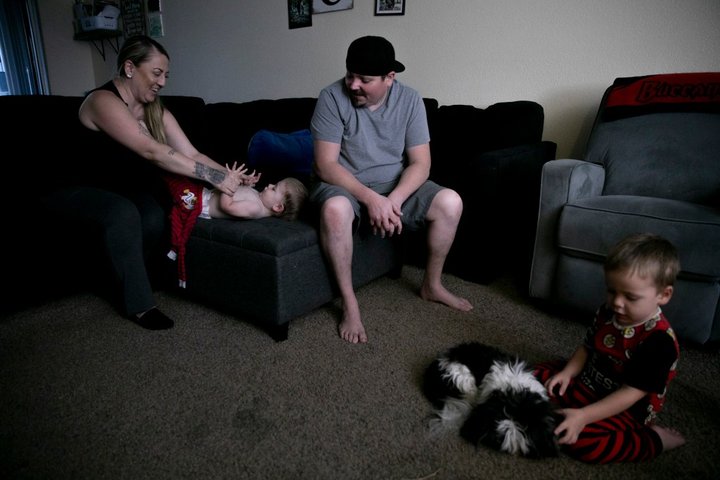
Miranda Griswold dresses 23-month-old Jax for bed with her fiancé, Matt Calhoun, while three-year-old Rhys plays with the family dog at their Merced home on July 8, 2021. “What are we doing to our families?” asked Griswold of the current family leave policy. “There’s no support.” Photo by Anne Wernikoff, CalMatters.
Businesses look at the bottom line
The bill does not increase employer contributions; instead, it increases the amount that employees pay into the state family leave fund from each paycheck.
While businesses will adapt and accommodate leaves as needed, the bill may be a bad deal for employees, according to the Central Valley Business Federation.
“In terms of this legislation, it’s a tax increase on everyday Californians, and so many workers in the state of California are having a hard time making ends meet with the cost of things going up,” said Clint Olivier, CEO of the federation, which represents about 70 businesses and associations across five counties, including Chevron and the California Association of Food Banks.
The bill would increase worker contributions by 0.1% to 0.2% per year, which Olivier estimates will be about $300 out of workers’ paychecks by 2025.
“The state says, well, this is such a small amount of money the worker won’t be able to feel it. But the situation on the ground is much different,” Olivier told CalMatters. “It begs the question: Who is in a better place to determine how that money is spent, the individual or the state? And so I believe it’s the individual.”
Matt Calhoun, plays with this son Rhys, 3, at their Merced home on July 8, 2021. Calhoun was only able to afford to take one week off from his job at a printing press when Rhys was born in 2018. Photo by Anne Wernikoff, CalMatters
Miranda Griswold and her partner had their second child in 2019, when they had fewer debts to pay off. Her fiance picked up extra shifts beforehand, so his paychecks would be higher and he could take the full six weeks off.
“We still ended up having to save a ton to make up the difference. Rent is still due, bills are still due,” she said. “On the one hand I almost feel grateful that we got what we did. Having two kids, there’s no way I could have done it by myself.”
“At least California offers this,” she said. “But for a lot of families, it’s still not enough.”
###
CALmatters.org is a nonprofit, nonpartisan media venture explaining California policies and politics.
Fighting COVID-19 in California has cost taxpayers at least $12.3 billion since the start of the pandemic.
That’s more than the gross domestic product of 50 nations. More than the value of the Dodgers, Yankees and Giants combined. Almost double General Motors’ profits last year. Enough to give $313 to every single Californian.
And that doesn’t include $110 billion from the feds to boost unemployment checks, and billions more in federal stimulus money, rent aid and loans to businesses shuttered for much of last year.
State finance officials added up the government costs from about 40 categories and came up with the $12.3 billion estimate for “total direct pandemic emergency response” between 2020 and 2022.
What did our federal and state tax dollars buy?
Truckloads of N95 respirators and surgical masks desperately sought by health care workers in the early days of the pandemic, purchased through a controversial $1.4 billion contract.
Hundreds of millions of gowns and plastic gloves.
Extra beds in hospitals.
Medical interpreters to handle hundreds of languages.
Laptops for students suddenly thrust into remote learning.
Temporary workers to trace contacts of infected people and answer hotlines swamped by unemployed Californians seeking benefits.
One of the biggest price tags was for state prisons, where 227 infected prisoners have died and combatting COVID-19 has cost nearly $1.6 billion. Other big price tags: Testing for the virus, at more than $1.8 billion, and $1.1 billion in lab equipment for overloaded public health labs.
The $12.3 billion may sound like a lot for a single state. But University of Southern California economist Adam Rose spells out the high stakes: He estimates that the cost of lives lost to COVID-19 in the United States could top $6.2 trillion, with another $5 trillion in overall impact. The economic burden of the pandemic far exceeds that of the Great Recession, Rose said.
More than 63,000 Californians have died from COVID-19.
“If you save 1,000 lives, that’s $10 billion that you save. If you did nothing at all, the situation would be much worse,” said Rose, who studies the economics of disasters. “You’re going to pay one way or another.”
Much of the money spent in California has come — or is forthcoming — from the federal government. To put that in perspective, Congress approved more than $5 trillion in COVID-19 related relief spending — more than all federal spending in 2019.
Hiring and training new case investigators and contact tracers cost $233 million in government funds. Some of that money went to Allison Busch-Lovejoy, a Caltrans analyst, who said she was “voluntold” last year to help trace COVID-19 cases in the Los Angeles region as part of a $8.7 million training program, run by UCLA and UCSF health experts, to aid overwhelmed county health departments.
“It challenged me as a human being,” said Busch-Lovejoy, who lives in Humboldt County. “It was difficult work to talk to people who were very ill, sometimes in hospital, always a challenge to honor the person you were speaking with.”
Nearly $1.4 billion of federal and state funds supported California’s massive vaccination campaign, which after a rocky rollout has seen more than 20 million Californians fully immunized.
Early on, that money financed the operations of mass vaccination clinics that could serve thousands in a day and the $50 million problematic MyTurn appointment and vaccine tracking system.
Yet vaccine progress has been uneven across the state, with lagging vaccination rates in rural counties, lower-income communities and among Black and Latino Californians. Now, federal and state money is being used to reach people who’ve been hesitant or unable to access the vaccine, through door-to-door vaccination drives, phone-banking and special events.
This month, state and local health officials staged a vaccination pop-up clinic and festival before a soccer match at the PayPal Park stadium in San Jose. The first 155 people immunized received a free pair of tickets to an exhibition match between two popular Mexican soccer teams.
The event drew Rosa Vargas and her boyfriend, Isidro Velazquez, all the way from Madera in the San Joaquin Valley. Velazquez, who already has been vaccinated, said they saw it as a good opportunity for Vargas to finally get immunized — and also get two free tickets to the sold-out match.
Dr. Gerardo Solorio Cortes, a Gilroy-based primary care doctor overseeing the pop-up clinic, considered the funds for the festival well-spent because it attracted hundreds of people, nearly all Latinos. “What better way to get people vaccinated?” he said.
A vaccination pop-up clinic sponsored by the California Department of Public Health was held before a soccer match at PayPal Park on July 7, 2021 in San Jose. Photo by Anne Wernikoff, CalMatters
California’s food banks have received about $230 million in state and federal cash grants as well as USDA boxed food deliveries. It was a much-needed boost for the Second Harvest of Silicon Valley, which saw demand for its food double early in the pandemic.
“We had to extremely quickly increase the food and infrastructure,” said Tracy Weatherby, the food bank’s vice president of strategy and advocacy.
The food bank used the money to buy 15 tractor trailers and lease another warehouse, and started a home food delivery program, Weatherby said. Soon the food bank was providing about 500,000 people with fresh produce, meat, milk, rice, beans and other foods, up from 250,000 pre-pandemic.
Government officials also funded 140 National Guard members and 100 San Jose Conservation Corps members to assist the food bank’s staff as volunteers stayed home.
“Double the people, double the food,” Weatherby said. “That’s what we’ve been dealing with.”
Before the pandemic, government grants made up 5 to 6% of the food bank’s budget, with other support from corporate, nonprofit and individual donations. Last year, that support doubled to about 12%, Weatherby said.
Weatherby says the food bank anticipates continuing its doubled distribution.
“We’re not seeing that need go down yet and we expect it not to go down for years,” Weatherby said. “People are in a very, very deep hole.”
###
CALmatters.org is a nonprofit, nonpartisan media venture explaining California policies and politics.