California Governor Gavin Newsom and the State Legislature have agreed on a new state budget with a historic $458 million investment in Humboldt State University’s effort to become Northern California’s first polytechnic institution.
The new funds will fast-track the launch of as many as 10 new academic programs by Fall 2023. Additional programs will follow that, primarily in engineering, technology, and applied sciences. Student enrollment is expected to grow quickly.
The investment includes $433 million in one-time investment for new academic facilities, building renovations, upgrades to lab spaces, additional student housing, technology throughout the curriculum, expanded broadband, and investments in renewable energy research capacity. There is $25 million in ongoing funds for new academic and student support programs. Both the one-time investments and ongoing funding will be leveraged to help HSU eliminate equity gaps and raise graduation rates to meet the goals of CSU’s Graduation Initiative 2025.
The new funding will also have a major impact on the North Coast economy, potentially revitalizing it for decades to come.
Humboldt State is already the largest employer in the area and has an estimated annual economic impact of $459 million. The new funding could eventually double the institution’s size, with new faculty and staff along with the increase in students. New construction will add hundreds of jobs. Current industries will have a broader talent pool along with graduates from new fields, while new businesses will likely want to take advantage of being located near a polytechnic. HSU’s outstanding relationship with the College of the Redwoods will further provide opportunities for student success while energizing economic development.
“This historic investment will be transformational for our institution, and it will revitalize this region for decades into the future,” said HSU President Tom Jackson, Jr.
“HSU will do everything we can to be deliberate, respectful, responsible, and forthright as we accept the investment by the people of California in this incredible university and this amazing region. This is our moment. This is our time as a campus and community to become the place we have always envisioned.”
President Jackson also thanked a broad range of individuals who have supported the effort, including CSU Chancellor Joseph Castro, Governor Gavin Newsom, and state legislators.
Support for designating Humboldt State a polytechnic was spurred by strong demand statewide for the programs and hands-on experiences offered by polytechnic schools. The two other polytechnic universities in the CSU—at San Luis Obispo and Pomona—are in high demand, and a third polytechnic would improve opportunities for students.
Humboldt State is well-positioned to meet the student interest. It already functions much like a polytechnic, with a significant focus on hands-on learning and a broad array of programs in the STEM areas (science, technology, engineering, math). In fact, HSU has the third highest proportion of STEM students in the CSU, and is first in the CSU for STEM students who go on to earn doctoral degrees.
Humboldt State’s vision and plans for becoming a polytechnic were developed over the course of the last year. It involved discussions and planning by hundreds of community members, alumni, staff, students, and faculty.
“Our self-study focused on principles we value at HSU like inclusivity, access, sustainability, and student success,” said Jenn Capps, Provost and Vice President for Academic Affairs. “The engagement and commitment by our campus community in our self-study process has been unprecedented and is a reflection of what we are truly capable of as an institution when faculty, staff, students and administration work together toward a common purpose.”
Emerging from the planning process was a concept for a 21st century polytechnic that builds on Humboldt State’s strong foundation in the liberal arts and long-standing commitment to sustainability and social justice. It will infuse areas such as traditional ecological knowledge and renewable energy. At the same time, the university will maintain its commitment to access and equity. The student body is highly diverse, and among STEM majors 56% are women and 40% are from underrepresented ethnic groups, which is well above national averages.
To be formally designated a polytechnic, HSU must receive approval from the CSU Board of Trustees. It is moving quickly in developing its proposal, with an initial draft nearly ready for review by the CSU Chancellor’s Office. A formal submission is expected this fall, and a decision by the Board of Trustees is expected in Spring 2022.
“Did you know Rockies coach Mike Redmond, who was featured in tonight’s MLB Home Run Derby, is a former Humboldt Crab?” the Crabs shared on social media last night
According to the Crabs’ Instagram post, Redmond played catcher alongside longtime Crabs Manager Matt Nutter in the mid-‘90s.
Redmond went on to have a successful 14-year MLB career, playing for the Miami Marlins, Minnesota Twins and Cleveland’s baseball team.
He won a World Series with the Marlins in 2003. That same season, Redmond notoriously pulled the Marlins out of a slump by taking batting practice naked on numerous occasions.
“Ballplayers do some strange things. I did them naked,” Redmond told USA Today in 2012. “I had to break a losing streak, so I did it by taking batting practice in the cage wearing nothing but spikes and batting gloves. And the next thing I knew, I was doing it seven or eight straight days.”
Redmond also went on to serve as the Marlins’ manager from 2012 to 2015. Listen to legendary Dodgers broadcaster Vin Scully tell Redmond’s story in the video embedded below.
In the months before California lawmakers in June granted prison guards a $5,000 bonus and an 8% raise over the next two years, the guards’ union made a few charitable donations. The recipients included two nonprofits run by the very legislators who were preparing to vote on the pay hikes.
State senators who lead the Legislature’s Black and Latino caucuses asked the correctional officers’ union to donate to the foundations they run — and the union complied, state records show, giving $15,000 in March to the foundation run by the Latino caucus and $60,000 over February and March to the Black caucus’ foundation.
The money largely comes from corporations and unions with business before the Legislature, who can get a tax break for giving to charity while also currying favor with influential politicians. While the nonprofit recipients may perform charitable work, they also pay for lawmakers to take trips abroad, enjoy steak dinners with tech executives in Silicon Valley and spend weekends schmoozing with lobbyists at the Disneyland Hotel.
One would require officials to disclose when they ask interest groups to give money to charities that the politicians or their family members control or are employed by.
Another would require officials to disclose when they are involved in a decision that impacts the person or group making the charitable donation at their request.
“These are relationships that raise concerns about the self-interest of the official and the possibility of undue influence or access for the payee as a result of the payment,” the commission staff wrote in a report explaining the proposed rules. “As such, these are relationships with a potential for influence or self-dealing that the public would want to have disclosed.”
The Fair Political Practices Commission is expected to vote on the proposed rules this fall. The commission is limited in how drastically it can change the rules on behested payments, which can only be banned or significantly overhauled with legislation.
Proposal includes a major carve-out
The rule requiring disclosure of official decisions that impact the donor comes with a large caveat: It does not include legislation. That means the rule wouldn’t change anything for state lawmakers who routinely vote on bills affecting the businesses and unions they hit up for donations to their nonprofits.
“We need to have a balanced, deliberate approach. I really believe that behested payments do a lot of good to a lot of worthy causes.” — Richard Miadich, chairperson of the Fair Political Practices Commission
Richard Miadich, chairperson of the Fair Political Practices Commission, said legislation should be treated differently because its impact is usually broad, not crafted in a way that bestows specific perks to individuals or interest groups. Asked about the example of the prison guards union donating to lawmakers’ charities just before lawmakers voted on their raise and bonus — a contract the Legislature’s own analyst described as providing “substantial compensation increases… without clear justification” — Miadich said existing disclosure is sufficient.
He does, however, want to see more transparency in situations where, for example, a city council is deciding the fate of a permit sought by a developer who makes donations to a council member’s charity.
“We need to have a balanced, deliberate approach,” Miadich said in an interview Monday. “I really believe that behested payments do a lot of good to a lot of worthy causes. And I do not want to inadvertently interrupt that, particularly coming out of a global pandemic.”
By contrast, the rule requiring disclosure of donations to nonprofits controlled by politicians and their family members would seem to impact several elected officials at the Capitol. Gov. Gavin Newsom has reported raising $881,297 for the California Partners Project, a nonprofit run by his wife Jennifer Siebel Newsom.
“When I vote, it’s about the issue, not about who’s giving me money or who hasn’t.” — Assemblymember Blanca Rubio, a Democrat from Baldwin Park who has raised money for a foundation run by her sister
Lawmakers routinely ask donors to give to nonprofits run by their legislative caucuses and in some cases, their family members. Assemblymember Blanca Rubio, a Democrat from Baldwin Park who wields significant power to kill progressive bills as the leader of a bloc of moderate Democrats, reported raising $62,000 for the Rubio Foundation, which is run by her sister Sylvia Rubio. Donors include pharmaceutical, petroleum and dialysis companies that routinely lobby at the Capitol.
“When I vote, it’s about the issue, not about who’s giving me money or who hasn’t,” Rubio told CalMatters. “And I’m very clear with them… that the one does not have to do with the other.”
Rubio pointed out that most donations she requested went to other nonprofits that were not her sister’s. The money she raised for her sister’s foundation helped put on a turkey giveaway at Thanksgiving and fund field trips for kids from a low-income school, Rubio said. She had no objections to the political watchdog’s proposed rule that would require additional disclosure from her.
“I’m happy to follow all the rules,” she said.
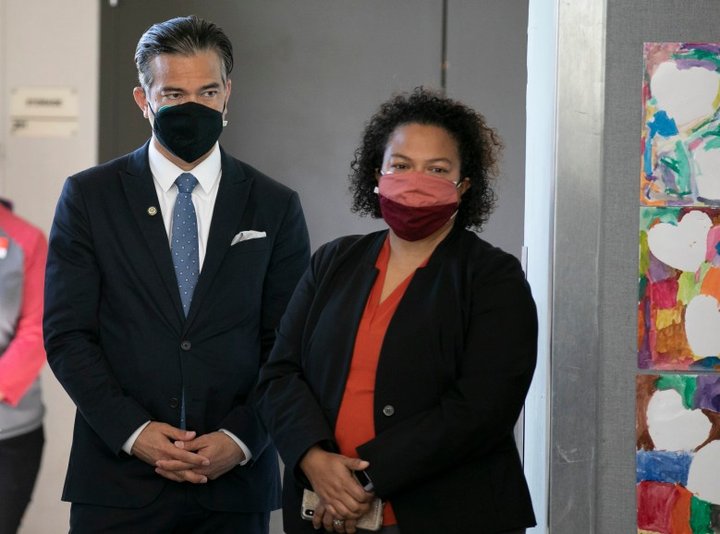
Then-Assemblymember Rob Bonta, left, and his wife, Mia Bonta, at a press conference in March shortly before he was appointed attorney general. Funds from the Bonta California Progress Foundation are now prohibited from going to any organization that employs either Bonta. Photo by Anne Wernikoff, CalMatters.
Bonta’s wife Mia Bonta is now a leading candidate to replace Bonta in the Assembly in a special election on Aug. 31.
Earlier this year, Bonta stepped down from the board of his eponymous foundation and it made several new rules, said his campaign spokesman Nathan Click. “Both Bontas are prohibited by the organization from making decisions about how funds are expended,” Click wrote in a message. “Funds are prohibited from going to any organization that employs either Bonta.”
One thing the commission may consider changing is how donations are reported if they come through a donor advised fund. That’s because such funds can obscure the original source of a donation, the Los Angeles Times reported, raising concerns that donors trying to curry favor with politicians may have found a way to avoid scrutiny. The FPPC is also scheduled to discuss donor advised funds at its meeting Thursday.
The commission has not yet completed its investigation of Assemblyman Evan Low, launched after CalMatters reported that the Democrat from Silicon Valley had stopped reporting donations to the nonprofit affiliated with the Legislature’s technology caucus.
###
CALmatters.org is a nonprofit, nonpartisan media venture explaining California policies and politics.
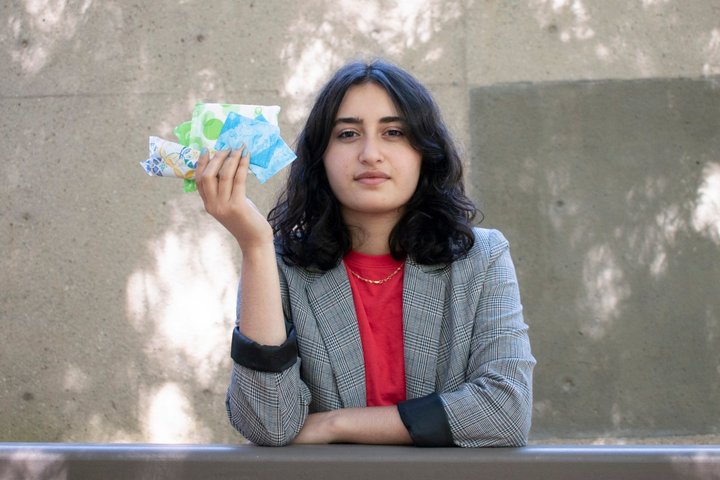
Menstrual activist and first year UC Santa Cruz student Amanda Safi holds a selection of pads and tampons. Safi founded The Period Project to provide free menstrual products to those who couldn’t afford them. Photo by Lluvia Moreno for the CalMatters College Journalism Network.
###
University of California Davis senior Audin Leung has spent their entire college career championing a novel concept — free period products throughout campuses.
“People are surprised, or they think it’s a radical idea, but it’s not a very radical idea because it’s a basic need,” Leung said.
Leung started advocating for better access to menstrual products when a friend got her period during class and couldn’t find any tampons or pads. Leung said the embarrassment their friend experienced was a familiar feeling to them, and one that often forces students to choose between hygiene and dignity or staying in class.
In 2017, Leung founded Free The Period, a student group working to make period products accessible on campuses across California. The group was behind a pilot program at UC Davis, which provided products free of charge in 24 restrooms on campus.
Similar campus initiatives across California have come and gone. With many students still recovering from the economic impacts of the coronavirus pandemic, Leung says now is the time for legislative action.
Free The Period and other student organizations are now backing a bill in the California Legislature that would require California State University, the California Community Colleges and public schools that serve grades 6-12 to provide menstrual products free of charge in designated places on campus. The bill also strongly encourages the UC and private universities to do the same, since the legislature cannot legally mandate those institutions.
“It’s really a question about gender equity and basic human dignity,” said Jason Chen, a freshman at Stanford University and chair of the Empowerment Collective, a California student group lobbying around policies that affect young people. “As a non-menstruating individual, I don’t have to worry about where my toilet paper is going to be or if I’m going to have access to toilet paper when I’m in the bathroom.”
While five states, including California, currently have laws requiring public schools to provide free menstrual products, Assembly Bill 367 would be the first in the nation to include colleges and universities. Spokespeople for the California Community Colleges and California State University said that the systems have no official stance on the bill. As of press time, the University of California had not returned a request for comment.
College students in California have sought to bring attention to menstrual equity on their campuses for years, forming teams and lobbying administrators for funding to provide free, convenient pads and tampons.
Chen said it’s critical to view period products the same way toilet paper or hand soap are treated — as basic hygienic products. One reason advocates say legislation like this hasn’t passed before is the discomfort surrounding menstruation.
“I think not just in California, but everywhere is this idea that we’re not supposed to talk about it, that it’s taboo,” said Assemblymember Cristina Garcia, a Democrat from Bell Gardens who introduced the bill. “We legislate on experience, and the vast majority of (legislators) don’t menstruate, and the people that menstruate around them hide it from them.”
This isn’t the first attempt to require colleges to supply free menstrual products to students in California. A 2017 bill, also introduced by Garcia, initially included colleges and universities, but they were cut from the final law due to budgetary concerns. Instead, the legislation that passed focused on low-income schools serving grades 6-12.
One challenge facing any menstrual equity law is enforcement. An analysis of the 2017 law from the California Commission on State Mandates found that only 20% of the low-income schools required to provide menstrual supplies submitted claims to the state for reimbursement. This likely signifies that the products were never supplied, supporters say. Leung says the current bill will clarify requirements by making it a blanket rule for all schools with certain grade levels.
The bill attempts to solve period poverty — when someone cannot afford menstrual products.
A January 2021 study published in the journal BioMed Central found that nearly 15 percent of female college students in the United States have experienced period poverty in the last year. The study also links period poverty to mental health challenges, such as depression, noting that menstrual health has long been ignored as a basic element of hygiene.
Dr. Jhumka Gupta, a researcher at George Mason University and an author of the study, said AB 367 is a first step in addressing menstrual equity, but its implementation is also important to watch. If the bill is enacted, she said it’s important that people who need free period products the most receive them.
“We know from my study that Black, Latinx, immigrant and first-gen women are reporting more period poverty,” said Gupta. “Once the bill is passed, menstrual products are available, are we reaching those that we need to reach the most?”
The bill initially required period products to be made available in 50% of campus restrooms, but was amended in the Assembly appropriations committee to say they must be dispensed at a “designated and accessible central location on each campus.”
Cost savings could be one reason for the change. A committee analysis estimated that in addition to $3.3 million to install dispensers and provide products for K-12 schools, there would be a one-time $7.5 million cost to install or modify dispensers across the three higher education systems. That’s on top of annual expenses of $3.4 million for California Community Colleges, $765,000 for CSU and $450,000 for participating UC campuses, the analysis found.
But the change raised red flags for advocates because they said it would exclude trans or non-binary people, and limit the general accessibility of the products, since the original language of the bill required products to be available in women’s, all-gender and men’s restrooms.
“If you’re a new student and you were not very familiar with the campus and you start your period on your way to classes, then how far is it going to take you from point A, where you are starting out, to point B, wherever that one centralized location on campus is?” said Jenn Galinato, a pre-law student at Sacramento City College.
Garcia added that the change was “concerning” since it requires less than what some colleges are already doing. Still, Garcia said she was inspired by the hard work she’s seen from students on the issue.
“Our biggest advocates have been young students, or young people in general who have been embracing this discussion and holding legislators accountable, saying, ‘This is important, and do not ignore us. Do not ignore this issue,’” she said.
Garcia said colleagues and constituents started referring to her as the “Tampon Queen” because of her history of authoring menstrual equity bills, but she prefers “Period Princess.” In addition to authoring the two bills addressing period product availability in schools, she has supported suspending the state tax on menstrual products. Former Gov. Jerry Brown vetoed an attempt by the Legislature to do that in 2016, but the current state budget suspends the tax through the end of this year.
Advocates say the pandemic has made period poverty a more urgent matter. The economic strain of the pandemic has left many students in need of greater access to basic necessities, including period products. Some campus food pantries are able to provide pads or tampons to students, but they often operate on set hours or rely on community donations, which doesn’t make them reliable throughout the day.
“More people are deciding between putting food on the table or buying pads and tampons,” said Amanda Safi, a University of California, Santa Cruz freshman and founder of The Period Equity Project in San Mateo County, an initiative to provide menstrual products free of cost to people who can’t afford them.
Galinato said community college students especially will benefit if the law passes. “I’ll be really frank about this: We don’t get as much resources as… the CSU and UC systems,” she said.
Community college students need an education that’s affordable, she said, and if colleges can provide period products, “that’s one less thing that students have to worry about.”
The Student Senate for California Community Colleges passed two resolutions to promote menstrual health and equity earlier this year, one of which Galinato co-authored.
The Cal State Student Association voiced their support for AB 367 in a statement, saying it “is in the best interest of CSU students. All students, regardless of sex and gender, should have the ability to attend classes and not worry about accessing menstrual products.”
If the bill passes, schools would have to comply by the 2022-23 school year. It unanimously passed the Assembly and is currently under consideration in the Senate appropriations committee.
###
Forschen is a fellow with the CalMatters College Journalism Network, a collaboration between CalMatters and student journalists from across California. This story and other higher education coverage are supported by the College Futures Foundation.
CALmatters.org is a nonprofit, nonpartisan media venture explaining California policies and politics.
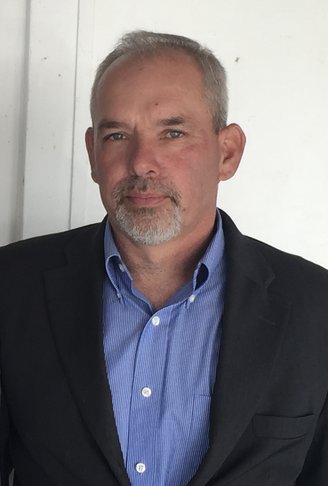
Alvin “Dean” Smither was born April 19, 1963, in
Eureka and passed away suddenly on July 7, 2021, on his mom’s
birthday.
Dean attended
school in California, Oregon and Washington. At the age of 17, he
joined the Army, where he served a total of four years and afterwards
joined the Army National Guard, where he served 16 years. During that
time, he was deployed to serve in the LA Riots of 1992, Ukraine and
Germany in 1999, and Fort Lewis, Washington after the 9/11 attacks.
As young students
at the College of the Redwoods, Dean took notice of his future wife,
Michelle in a nutrition class. As might be the case in many young
love stories, Michelle didn’t know he was interested in her until
he started showing up around Michelle’s mom’s house. As the story
tells it, he would jog up and down past her window with short-shorts
and no shirt on. That must have done the trick — Dean and Michelle
were married February 22, 1986.
Dean was a
contractor by trade, and started his career working for Bigham
Construction and for the housing authority. He eventually ventured
out on his own, starting his own company, Smither Construction. It
was this venture that led to the opening of the Old General Store in
Rio Dell and Redwood Mini-Golf. He eventually moved the mini-golf set
up to Manila and opened the Lighthouse Plaza and Mini-Golf, still
popular to this day. Dean remodeled and built many houses over his
career, including two houses for his family.
When he wasn’t
busy with his many business ventures, Dean was at his core, a family
man. He was a loving father who enjoyed spending time outdoors with
his family, hiking and camping, as well as helping with their many
projects. He was a natural teacher and incorporated his kids into his
work teaching them valuable life skills. Over the years, he also
mentored many adults with great patience to teach them the basics of
carpentry. Dean truly enjoyed helping people. He was open-minded,
non-judgmental, and generous with his time, money, and service.
Dean was also
creative and a true visionary. He was full of unique ideas and could
see the potential in even the roughest of projects and envision the
most spectacular outcomes. Dean had a big heart for animals, bringing
home both a stray puppy and kitten. He loved to spoil his animals!
Dean’s dry sense of humor and goofy nature will sorely be missed.
Dean is survived
by his wife of 35 years, Michelle Smither, his son Steven Gross and
wife Jessica, his daughter Laura and husband Nick, son Alexander, and
daughter Mariah; siblings Tammie Jean Jones, Terrie Lyn Bognuda and
husband Anthony, and Coral Rose Rainey; grandchildren Thacher,
Addison, and Amelia; 15 Great nieces and nephews, and 20 great-great
nieces and nephews. Dean is also survived by uncles and aunts Dan and
Judy Augustine, Robert and Cheri Olson, Mitzi Owsley, and Al and
Nancy Young, in addition to numerous cousins. Dean was preceded in
death by his mother, Jacqueline Fay Aho-Smither-Christian, his sister
Pamela Rae Mattingly, grandparents Terence and Rose Shaver,
brother-in-law Michael Rainey, and uncles John Aho and Pat Kiefer.
Please join us
for a celebration of life Friday, July 16 at 2 p.m., to be held at
4566 Excelsior Road, in Eureka.
###
The obituary above was submitted on behalf ofDean Smither’s loved ones. The Lost Coast Outpost runs obituaries of Humboldt County residents at no charge. See guidelines here.
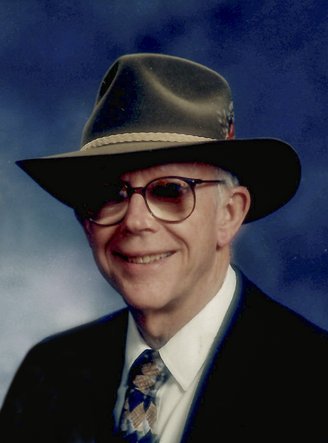
Oscar Huber died on Dec. 25, 2020 after a brief battle with COVID-19. He was born near Muleshoe, Texas on March 11, 1931.
Following Oscar’s graduation from high school, he enlisted and served with honor in the Air Force. He went on to attend San Diego State College, earned a degree as an engineering geologist, and worked in that field for more than 30 years for the State of California.
Oscar was happiest when he was in the great outdoors. He loved to hunt and fish, and was an accomplished archer and bow hunter. For decades, he volunteered for the Humboldt Archers, the Redwood Gun Club, the California Waterfowl Association, and Ducks Unlimited, among others. He helped foster new generations of outdoors enthusiasts by teaching archery and hunter safety. He was a member of the Veterans of Foreign Wars Mad River Post 2542 and participated in many VFW honor guard ceremonies.
Oscar was preceded in death by his beloved wife Marianne, and his brother Buell “Bud” Huber. He is survived by his daughter Holly and her husband Harvey II, his son Todd, his wife Kelly and Oscar’s dear granddaughter Delaney, his sister Melba McNitt and her husband John, his brother Noel Huber and his wife Mary Kay, his sister-in-law Janet Huber, and numerous nieces and nephews.
A memorial service will be held at 10 a.m. on July 15, 2021 at Ocean View Cemetery. Memorial contributions may be made to Hospice of Humboldt, Humboldt Archers, or the Veterans of Foreign Wars.
###
The obituary above was submitted on behalf ofOscar Huber’s loved ones. The Lost Coast Outpost runs obituaries of Humboldt County residents at no charge. See guidelines here.
Bonnie Sue Tatum, a mother of
three boys and life-long resident of Rio Dell, passed away Wednesday
July 1, 2021 at the age of 66.
Bonnie
was born in Scotia on March 18, 1955 to Dalco and Mildred Lively. She
grew up in Rio Dell with her older sister. Bonnie later had three
boys of her own, which she raised in Humboldt County.
Bonnie
enjoyed hunting for arrow heads, reading historical romances, hiking,
and spending time with family. Her family was most important to her.
She was a spiritual, loving, and kind heart woman. She loved being at
her cabin; she would gather up as many grandchildren as possible,
along with her dog, and headed to the hills. Bonnie will be deeply
missed by her family, friends and all who knew her.
She
is survived by her husband — Curtis Tatum; sons — Jesse Sturdevant
(wife Allison), Seth Sturdevant (wife Shawn), Derek Boyd, Brian
Tatum, Kevin Tatum; grandchildren — Coleman, Cyrie, Dakota, Drew,
and Baileigh Sturdevant; Audrey and Krissy Tatum; Joey Catron; sister
— Jean Waters (husband Richard); nephew — Ken Waters; niece —
JoAnn Waller (husband Kenny) and their children Kenny and Keri
Waller.
Graveside services will be held at Sun Rise Cemetery in Fortuna at
10 a.m. on
July
24, 2021 for family.
A
celebration
of life
will be open to all friends and family at the Rio Dell Fire Hall July
24, 2021 at 3 p.m.
###
The obituary above was submitted on behalf ofBonnie Tatum’s loved ones. The Lost Coast Outpost runs obituaries of Humboldt County residents at no charge. See guidelines here.