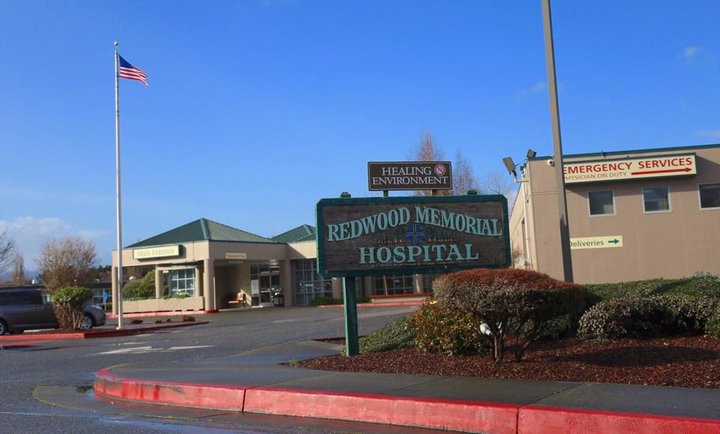
As a result of declining birth volumes across Humboldt County, especially in the Eel River Valley, and the county-wide loss of women’s services physicians, Redwood Memorial Hospital (RMH) plans to close its obstetrics program on July 1, 2021. Childbirth services will be transitioned to the obstetrics program at St. Joseph Hospital in Eureka (SJE), incorporating the staff and the legacy of both programs to create a single, high-quality childbirth center, supported by a Level II Neonatal Intensive Care Unit (NICU).
“Operationally, it’s been very challenging to support both programs. The decision to transition services was not taken lightly and we know this is nobody’s preference,” said Roberta Luskin-Hawk, M.D. chief executive for Providence in Humboldt County. “However, this is a trend that is happening across the country in rural communities. By focusing services at St. Joseph Hospital in Eureka, we will be able to recruit additional physicians, enhance the hospital as a robust regional medical center, build upon an award-winning program and develop a service line which will be recognized as a center of excellence, while supporting the important role of Redwood Memorial Hospital as a Critical Access Hospital.”
In 2013, the question of the sustainability of obstetrics care at RMH was evaluated and the community partnered with St. Joseph Health (now Providence) to recruit a physician with training in obstetrics and gynecology. Despite that effort and the addition of family physicians with obstetric privileges to Open Door Community Health Centers, the community once again faces challenges with the loss of women’s services physicians and support staff across Humboldt County and the gradual decline of deliveries. Consolidation will further address provider shortage in the county and allow resources to be better allocated at RMH.
Additionally, in a post-COVID world, some pre-natal care can now be delivered closer to home by virtual means. Consolidating programs will further ensure top-tier obstetric and gynecological providers will be on hand to support moms and babies.
RMH caregivers affected by the transition will be offered comparable positions within the obstetrics program at SJE. No layoffs are anticipated related to the consolidation.
“Redwood Memorial Hospital will continue to be a special place and a vital component of Providence’s care delivery network in Humboldt County,” said Dennis Leonardi, Ferndale resident and Chairman of the Community Board for Providence in Humboldt County. “The new acute inpatient rehab unit project at Redwood is just one example of the commitment local hospital leadership has made and will continue to make in the Eel River Valley.”
Plans have been developed to renovate and remodel the existing obstetrics unit at SJE. The redesigned unit will promote a nurturing environment with the latest technologies which will provide an enhanced birth experience for mothers and their babies. Construction will be completed this summer.
“Consistent with our Mission, our goal will always be to focus on the dignity of our patients and the quality and scope of services the Humboldt County community needs, while remaining good stewards of our resources,” said Luskin-Hawk, MD.
From the Humboldt County Joint Information Center:
Health officials are assuring the public about the safety of COVID-19 vaccines, while reminding them of common side effects, especially after the second dose of the series.
The Centers for Disease Control and Prevention (CDC) has reported that safety monitoring for the two vaccines approved for emergency use has been “the most intense and comprehensive in U.S. history.” The findings in the Morbidity and Mortality Weekly Report are similar to those of clinical trials from the manufacturers Moderna and Pfizer, which show injection site pain, fatigue, headache and muscle pain were most frequently reported, with a higher frequency after the second dose.
Humboldt County Public Health Nurse and Clinic and Communicable Disease Program Supervisor Hava Phillips said that individuals who have had a reaction to a vaccine in the past, or may have an allergy, should discuss vaccination with their health care provider.
“It is not uncommon for people to experience a sore arm and swelling where the shot was given, or symptoms such as fever, body aches and fatigue as part of the process of building immunity,” Phillips said. “This is especially true after the second dose, when the body’s immune response is stronger. Severe reactions to the vaccine, requiring medical care, are rare and usually happen within the first 24 hours after getting the shot.”
Getting vaccinated is one of the most powerful tools in protecting individuals and communities and ultimately in ending the pandemic, Phillips said. “We’re moving as swiftly as supplies will allow, so take the first appointment you’re offered,” she said. “We’ve gotten this far by working together and vaccination is the next step.”
To reduce injection site pain and discomfort, the CDC recommends using or exercising your arm and/or applying a clean, cool, wet washcloth over the area. To reduce discomfort from fever, drink plenty of fluids and dress lightly.
The CDC recommends not taking over-the-counter medications such as ibuprofen, aspirin, antihistamines or acetaminophen before getting vaccinated to prevent side effects, because it is unknown how these medications could affect the vaccine’s effectiveness. Individuals can take these medications to relieve post-vaccination side effects, but as always, talk to your doctor first.
Increasingly exasperated that most public schools remain closed even as coronavirus cases plummet nearly a year into the pandemic, California parents are taking to the streets. They’re protesting in Los Angeles and Silicon Valley. They’re trying to recall school board members in San Francisco and San Ramon. They’re mounting billboards along freeways in Sonoma County and Sacramento demanding that the government #OpenSchoolsNow.
The campaign to recall Democratic Gov. Gavin Newsom has seized on the frustrations. Republicans hoping to replace him are staging campaign events outside shuttered schools and highlighting that California lags the rest of the nation when it comes to getting kids back in the classroom. Newsom’s political future may hinge, in part, on how much longer millions of children remain stuck on Zoom.
But the state’s education system is incredibly fragmented, with more than 1,000 school districts tasked with deciding — mostly through negotiations with their local labor unions — when and how to reopen. Those districts must follow laws crafted by a Legislature with close ties to organized labor, and signed by a governor who was elected with the support of the teachers’ union but now finds himself at odds with it over his objections to making vaccine access a requirement for reopening.
Districts in San Diego, Long Beach and Berkeley recently struck deals to reopen this spring. But despite pediatricians and infectious disease experts saying it’s safe to open schools as long as precautions are in place, many large districts say they won’t be able to without new direction from the state Capitol. Newsom and legislative leaders have so far been unable to agree on a plan that could prod more schools to bring students back to campus.
“The fundamental breakdown here is a big struggle between management and labor on what ought to exist at the state level regarding the rules around reopening,” said Kevin Gordon, a lobbyist who represents numerous school districts. “That’s 100% of the problem.”
Two-thirds of California adults supported Newsom’s proposal to spend $2 billion to reopen elementary schools by mid-February, according to a January survey by the Public Policy Institute of California. With that date come and gone, and the plan stalled, parents this week asked Newsom to open schools “through whatever means necessary.”
But teacher union leaders remain fearful that it may not be safe. Some schools that have reopened have seen isolatedoutbreaks, and a new coronavirus variant could make people sicker and vaccines less effective. A state website that was supposed to show the public which schools have had COVID cases among students or employees has yet to publish any data.
And teacher unions have enormous sway in California politics. In the last four years, the California Teachers Association has given $10.7 million to the California Democratic Party. It alsospent $5.6 million on legislative races and $1.1 million supporting Newsom. And it donated $5 million to an assortment of local school board races, Democratic central committees and local union accounts.
Amid this confusing tangle of power, it’s hard to figure out who’s responsible for whether California kids will get back in the classroom. Here’s what we know:
What can the governor do?
Newsom could compel reopenings by using his emergency power during the pandemic to temporarily suspend the law that requires districts to negotiate with local labor unions, argues Carl Cohn, a former superintendent of schools in San Diego and Long Beach. Instead of the uneven process of a thousand separate labor negotiations in each district, he said, the governor should make one deal with the statewide teachers’ union.
“As we all face that extraordinary anniversary March 13, where kids will have been out of school for a full year, I just think you have to think out of the box,” Cohn said in an interview. “You’ve got to figure out a way to solve this.”
Newsom did not answer reporters’ questions this week when asked if he would consider suspending local bargaining or negotiate a statewide deal. He said he’s hashing out a new reopening plan with legislative leaders and is not ready to publicize the details.
He did use his executive authority to set aside 10% of the state’s vaccines for teachers and other school employees — an attempt to address the union’s argument that workers shouldn’t go back to campus unless they’ve been offered the shots. Newsom says he’s prioritizing school workers for vaccines with a focus on disadvantaged communities and has arranged dedicated inoculation drives for educators in Oakland and Los Angeles.
His administration has issued guidance on safety precautions schools must take, and gave districts three months worth of face masks. And he’s been using his bully pulpit to make the case that schools should reopen, holding press conferences to highlight communities that are vaccinating teachers and making plans to bring students back to campus.
But Newsom said “one size does not fit all,” and he’s so far resisted doing anything to usurp local control from school districts and their employee unions.
His Republican challengers Kevin Faulconer and John Cox said they would not suspend local bargaining.
“As we all face that extraordinary anniversary March 13, where kids will have been out of school for a full year, I just think you have to think out of the box.” — Carl Cohn, former superintendent of schools in San Diego and Long Beach
What about financial incentives?
The school reopening plan the governor unveiled in December — which floundered amid criticism — called for giving districts extra money if they return to in-person instruction, but didn’t compel them to do so. School leaders said that would wind up rewarding districts that were better positioned to reopen, while punishing those that couldn’t.
In that approach, Newsom has strange company: Faulconer, the GOP former mayor of San Diego, also suggested using financial incentives to reopen schools. During a campaign stop in Sacramento this week, Faulconer said if he were governor, he would tie state funding to in-person attendance. Asked how that differed from what Newsom tried unsuccessfully, Faulconer could not provide details.
What can the Legislature do?
Lawmakers tried to compel districts to get students back on campus with a bill saying they must have a reopening plan within two weeks of exiting the state’s purple tier for the most severe rates of infection. The proposal was inspired by legislators’ frustration that most schools did not bring students back during the fall, even though they were allowed to because COVID cases were low.
“Local control has been a complete failure,” said Assemblymember Phil Ting, a San Francisco Democrat who wrote the bill.
But Ting canceled a hearing on the legislation and instead helped write a new reopening plan that essentially gives local districts and their unions more control. It requires districts to negotiate reopening with their labor unions, and gives them a financial incentive — but not a mandate — to bring students back to campus by April 15. Newsom said the plan would slow down reopening in too many districts, and indicated he would not sign it into law.
The bill was panned both by school districts that said it was too meddlesome and by parents who said it was too weak.
“Local control has been a complete failure.” — Assemblymember Phil Ting
“If there are no mandates, then essentially what you’re still bound by is the collective bargaining process in each district,” said Megan Bacigalupi of Oakland, who created a parent advocacy group called Open Schools California. “If there was a requirement that at certain case rates you’d have to reopen, then you would see much more progress across the state, especially in the big urban districts where it’s been the slowest.”
Teachers’ unions want local school districts and unions — not the state — to decide when and how schools should open. But they also want the state to issue more safety requirements, including vaccines for school employees, improved ventilation, procedures for disinfecting campuses and routine COVID testing.
“We need something that’s going to be uniform so that we know that if a school up in Ukiah is open and a school down in San Diego is open, they are open because it’s safe,” said Toby Boyd, president of the California Teachers Association.
Kevin Gordon, the school district lobbyist, said the Legislature should focus on sending money to districts, and then “get out of the way.”
“The idea of inviting the state into the details of the local bargaining process is what’s gotten a lot of this so complicated,” Gordon said.
What can school districts do?
Many districts have been able to open under existing rules that require more spacing between desks and other safety precautions. About half of California’s school districts offer in-person learning, though most of them are only bringing some students on campus, or are in a hybrid mode where students spend part of the time in class and part online.
But the vast majority of California students remain entirely online because the districts that have reopened so far are mostly quite small. About three-quarters of the state’s elementary students and 86% of high schoolers are in districts that do not provide any in-person learning. A CalMatters analysis found vast inequities — overall, students in wealthier regions are going to school, while those in cities with more poverty are home on Zoom.
“Almost everything is driven locally,” said Tony De Marco, an attorney who works with school districts in Los Angeles, Orange and San Diego counties. “It starts really with the community and how much the community is pushing their local board members and their local districts to reopen — and to what degree.”
Though labor negotiations are the norm in school districts, many smaller ones have reopened without formal agreements with their unions, said Edgar Zazueta, a lobbyist for the Association of California School Administrators.
“In many districts, they just had a relationship with their employees that didn’t require them opening up new bargaining agreements. They still worked together and sought input,” he said. “Many just operated under existing (agreements) that didn’t deal with specific COVID mitigation issues.”
So do teachers unions have the final say?
Sort of.
Some communities made plans to come back to school without formal labor negotiations, and some schools were prevented from reopening because of public health orders from the state or county. So unions are not the only deciding factor.
But they play a big role in urban districts such as Los Angeles, Oakland and Sacramento, where tensions between labor and district management predate the pandemic. A statewide reopening plan that’s blessed by the California Teachers Association would smooth reopening in such districts, said Bruce Fuller, a UC Berkeley education professor.
Statewide “labor leaders need to feel like a safe and fair deal has been struck with the Legislature and the governor, because they need to signal that back to the remaining locals that are dragging their feet,” he said.
“If there is uncertainty or a lack of trust at the state level, we will be back to every union local being able to veto an agreement.”
“The communities who are most impacted by this are the communities that don’t have a bullhorn to shout out that they want their schools opened.” — Mike Trujillo, Democratic consultant
Senate leader Toni Atkins said it’s hard to imagine the state crafting a plan that would force reopening if employees don’t agree: “The goal is really to have willing partners, because you can’t go back to school without teachers.”
But some Democrats are hoping the state’s Democratic leaders will not give unions the last word on reopening schools. Mike Trujillo, a Democratic consultant who works with charter schools and politicians who support them, said the state should compel districts to open their classrooms without requiring agreements from local unions.
“The communities who are most impacted by this are the communities that don’t have a bullhorn to shout out that they want their schools opened,” he said. “This is the time to do what’s right for Latino and African American families up and down the state.”
###
CALmatters.org is a nonprofit, nonpartisan media venture explaining California policies and politics.
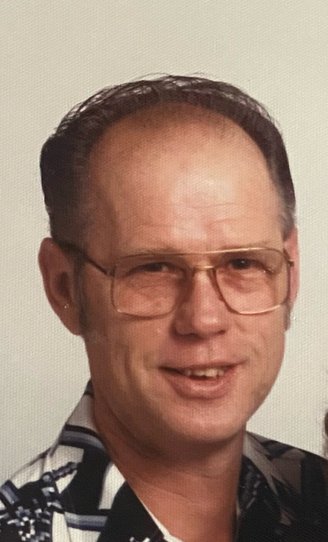
Jack Carl Reback, age 81, of Holmes Flat, Redcrest, passed away
February 19, 2021 in Eureka. He was born on March 4, 1939 in Fortuna.
Jack lived in Scotia and Weott and
graduated from South Fork High School in Miranda. Shortly after
graduating he joined the Navy and proudly served his county for four years but couldn’t stay away from Humboldt County any longer, for he
called this “God’s Country.”
He retired after 40 years from The
Pacific Lumber Company in Scotia.
For many years he enjoyed his little
Yamaha motorcycle and later his Hondas. He shared many memories of
his trip to Mississippi.
He supported the Blue Bird and Camp
Fire groups in Scotia and for several years was the Cub Scout Master
and followed his son in his years with the Boy Scouts. He was a
member of the Scotia School Board and the PTA and served many years
with the Scotia Volunteer Fire Department. He was always helping the
Beta Zeta women with many events for nearly 50 years. He was a behind
the scenes supporter for them with Relay for Life for over 20 years.
He was a Session member of the Presbyterian Church of Fortuna.
Jack was preceded in death by his
parents, Leonard and DeEtte Reback and brother and sister-in-law,
William and Saundra. He is survived by his wife, Bonnie of 61 years,
his children, Jeri Lynn and Bruce Alan (Debbie) Reback, his
grandchildren, Jackelyn Hatch, Tyler and Ashley Reback and great
grandchildren, Tristan and Sebastian. His brother Eugene (Donna)
Reback of Fortuna.
Viewing will
be held at the Goble’s Mortuary in Fortuna on Monday, March1 from 2
to 6 p.m. Services will be March 2 at Goble’s at 1 p.m. Burial
will follow at the Sunrise Cemetery.
In lieu of flowers donations may be
made to the American Cancer Society, Relay for Life, Team #91 2942
“F” Street Eureka, CA 95501 or to a charity of your choice.
###
The obituary above was submitted on behalf of Jack Reback’s loved ones. The Lost Coast Outpost runs obituaries of Humboldt County residents at no charge. See guidelines here.
It might only be February, but it’s never too early to think about that perfect Christmas tree, especially when it’s the one that will adorn the West Lawn of the U.S. Capitol! Today, Six Rivers National Forest officials, in partnership with non-profit partner Choose Outdoors, proudly announced that the 2021 U.S. Capitol Christmas Tree would hail from the Six Rivers National Forest, in California. This is the first time the U.S. Capitol Christmas Tree will be provided by the Six Rivers and the fifth time from the state of California.
Every year since 1970, the USDA Forest Service has provided the U.S. Capitol Christmas Tree. Providing the U.S. Capitol Christmas Tree—also known as “The People’s Tree”—is a great honor and opportunity for the State of California, the Six Rivers National Forest, and the entire North Coast of California to highlight the area’s breathtaking natural resources and cultural diversity, including those whose ancestors have called this area home since time immemorial.
The 2021 holiday season will kick off with the lighting of the U.S. Capitol Christmas Tree on the West Lawn of the U.S. Capitol, in early December. In addition, up to 100 smaller companion trees and tree skirts, along with 14,000 ornaments, handmade by Californians, will be sent to Washington, DC.
“California is honored to provide this year’s U.S. Capitol Christmas Tree as a living testament to the resiliency and fortitude of our beautiful national forests, despite a historic 2020 fire season,” said California Governor Gavin Newsom. “We are proud to showcase the Six Rivers National Forest on a national stage and look forward to the events leading up to December.”
“The North Coast has been rightly hailed for the unparalleled natural beauty of its forests, and it’s an honor to once again be able to share a part of our beautiful state with the U.S. Capitol and the people of America during the next holiday season,” said U.S. Representative Jared Huffman (CA-2). “This long-standing tradition serves as a way to unite the country and celebrate all our public lands and natural resources have to offer. Thank you to all of our partners in and outside of California who are making this special journey possible.”
The Six Rivers National Forest has partnered with Choose Outdoors to help implement the year-long public engagement campaign. The initiative is made possible with cash and in-kind contributions from companies large and small as well as volunteers locally and across America, who provide vital support of time and resources.
“The annual journey is only possible with the help of strong partnerships throughout California and beyond state lines,” said Bruce Ward, president of Choose Outdoors. “We’re looking forward to bringing people together to celebrate our public lands, our diversity and the joy of the holiday season.”
“It’s going to be a lot of work,” said Kathy Mick, acting forest supervisor for the Six Rivers National Forest, “but we’re excited and can hardly wait to get started in our search for that perfect tree! But, like most of our projects on the Six Rivers, it’s going to be a collaborative effort, working alongside our partners and communities to shine a bright light on what we can do on California’s North Coast!”
To follow the exciting journey of the 2021 U.S. Capitol Christmas Tree—and to be a part of the festivities over the next 10 months—visit www.uscapitolchristmastree.com, @uscapitolchristmastree on Facebook and Instagram, or the Six Rivers National Forest website at www.fs.usda.gov/srnf or at @SixRiversNF on Facebook and Twitter.
When asked about the irregular methods Humboldt County people are using to get vaccine — showing up at a hospital and waiting in line without an appointment, for example, or scoring a dubious appointment through a friend — Dr. Ian Hoffman, Humboldt County’s health officer, said that Public Health is not in the business of policing whether or not local providers are following his own guidelines about who should be vaccinated at this stage of the pandemic and who should not yet be.
“Certainly some individuals are going to extreme measures to get vaccinated out of order,” Hoffman said. “We’ve said often that’s we’re not going to try to police that to a degree that slows down this process.”
That, plus questions on variants, the county’s new vaccination statistics, the return of sports, and opening up to people with co-morbidities — we still don’t have enough supply for that, Hoffman says — in today’s media availability.
Video above, rough transcript below.
###
From the Times-Standard: The number of total doses administered is 26,789 on the county’s
dashboard but the number of individuals fully and partially partially vaccinated only adds
up to 19,415. Can you explain the discrepancy?
Sure, we’ve put on a dashboard that the number of individuals who are either partially or
fully vaccinated.
So if you take the individuals who are fully vaccinated, they receive two doses, so you’d
have to multiply that number by two and add the two numbers together, you’ll come up with
the full number.
From the Times-Standard: Does the county know if any residents of skilled nursing facilities
still need to be vaccinated?
Yeah, the skilled nursing facilities have mostly gone through the first two rounds of the partnership,
the CDC partnership, the third round for many of them are coming up this week, so that will
be their last visit, so there are some folks who are going to get their first shot in that
last visit, and then we’re working with the skilled nursing facilities and long-term care
facilities for a long-term plan of continuing to vaccinate any new residents who come in
and need to be vaccinated.
From the Times-Standard: Is the county making any safety recommendations for spectators
and outdoor prep sports events now that team sports have been allowed to resume?
So spectators are not allowed at any events for youth or adults.
What is allowed for the youth sports are age appropriate supervision, so an adult or potentially
multiple adults depending on the situation and the age, who could be there obviously
to supervise the the youth, but also transport them, be there in case of an injury something
like that, so we’re working closely with HCOE and Humboldt-Del Norte League to you know
define what that age appropriate supervision is and also I’m looking for clarification
from CDPH for more specifics on that.
From the Times-Standard: With athletes in high contact sports required to be tested
for COVID-19 weekly, is the county helping schools or HDNL participants acquire testing
kits?
Which agencies are responsible for acquiring testing kits for high schools and their athletes?
So we’ve been working closely with HCOE for testing in the schools and that testing can
also be extended to athletes at those schools.
There are also potentials for athletes to get tested through Optum site at Redwood Acres,
they could go to their private physician and there are two different types of tests that
can be offered.
There’s the PCR test, we’re also working with HCOE to implement antigen testing for schools
and then potentially for athletes as well.
From the Times-Standard: How long have HSU athletics and the county been planning for
their return to competition? How did HSU and the county collaborate on developing the athletic department’s return
to participation process?
So collegiate athletics is governed by NCAA and they have a set of regulations similar
to the way CDPH has put forth regulations for youth and adult recreational sports, so
HSU has you know reviewed those and submitted a plan to Public Health for our review and
we collaborated and discussed those and so it’s been a collaborative process.
From the Times-Standard: Is the county helping HSU obtain testing kits for its frequent testing
requirements?
Yes we are supporting HSU in their testing.
From the Times-Standard: The dashboard currently states 3,151 is the total number of Humboldt
County residents who have tested positive for the virus. Are there any residents who have contracted COVID-19 more than once?
We’re not aware of anyone who’s contracted COVID more than once in Humboldt County.
There are very rare cases of this across the the globe.
There are a few people who’ve tested positive twice within a 90-day period but didn’t have
a re-infection and those are removed from the count.
From reporter Daniel Mintz: How likely do you think it is that the variant with the
L452R mutation will be categorized as a variant of concern?
I think more studies needed to determine that and so currently it remains as a variant of
interest.
From reporter Daniel Mintz: What is the scale of testing at this point?
We definitely know testing’s down both here in Humboldt County and statewide.
We have the capacity to test much much more, so continue to encourage people to get tested
and utilize that testing ability so that we can you know stay safe and hopefully continue
to stay in less restrictive tiers.
From the Redwood News: You’ve mentioned before that the next group eligible for a COVID-19
vaccine includes food and agriculture workers. Can you go into detail about who exactly falls into this category locally?
Does this include grocery store workers, restaurant workers? Also are you able to give the community any update on when that phase is expected to open up?
So yes, all those people mentioned fall into the food and agriculture workers, it also
includes the production side, so people who produce food you know both on a farm or in
a warehouse, large scale kitchens, there’s a huge, it runs the gamut.
I think that just like every phase that we’ve opened and how we open it, it will depend
entirely on the amount of vaccine that we have, so we’re hopeful that with Johnson and
Johnson coming in the coming weeks that we could see an expansion of the number of vaccines
that we’re getting each week.
We also know that the federal government has continued to promise to send more.
It looks like that is actually starting to happen in the next few weeks, so when we have
enough vaccine we’ll open up to more tiers.
From the Redwood News: The state has released guidance about opening up vaccine eligibility
to people 16 to 64 years old with certain medical conditions starting March 15th.
How exactly will this guidance be implemented locally? Does the county have enough supply or anticipate having enough supply to open up vaccinations to this larger group of people starting on that date?
I think it’s unlikely that we will have enough to cover everyone by the middle of March,
so it’ll be you know how it’s continued to be, which is when we open up to one group
we, you know, understand that there will be a waiting period for for some of those people.
But as it’s been the whole time we have to you know sort of time these openings so that
we don’t have too small of an eligibility pool, that we have vaccine appointments that
go unfilled, and and balance that with you know keeping the field broad enough that those
people can get, or sorry, narrow enough that those people can get an appointment.
As far as how it’s gonna work um we have been in discussions with the medical groups around
Humboldt County and for people who have medical conditions it’s you know most likely that
we’ll be working with medical providers to have them call those patients in based on
their medical records and doing outreach and then have some sort of referral system to
allow for people who don’t have access to a vaccination site through their primary care
provider or who don’t have insurance or or don’t have a primary primary care provider
here in Humboldt County to be able to be referred to a vaccination site.
From the Redwood News: CDPH has indicated they’ll be shifting to an age-based vaccination
plan after Phase 1B Tier 1. What does this shift or change mean for Humboldt County’s vaccination plan moving forward?
Are there or will there be any impacts on Phase 1B that is currently open?
There shouldn’t be any impacts on Phase 1B.
We’re going to continue to finish that off and you know in terms of what the shift means
it really means that after those occupations in Phase 1B, that everyone will be going through
the line based on their age and those will open up, we’re being told statewide, all at
the same time.
So that’s what we anticipate and we’ll be looking forward to.
From the North Coast News: A viewer messaged us recently concerned about cancelled vaccine
clinics due to vaccine shipments delayed by inclement weather.
Have all the people scheduled for those clinics been contacted to register for another clinic?
Has anyone missed their second dose of the vaccine due to those cancellations?
So Public Health has reached out to everyone who had their Public Health clinics cancelled
due to this delay.
We do recognize that some people were delayed in getting that second dose on time, but it
should still fall within the realm of acceptable based on the CDC guidelines.
From the North Coast News: Where does the county currently stand on allowing organized
youth and adult sports? Will the county be following the guidance issued by the CDPH or will you be setting
more strict requirements?
We are following the CDPH guidance that was set out last Friday and goes into effect tomorrow
and I would think that it’s really solid guidance and look forward to seeing youth and adult
sports getting back into action.
From the North Coast News: Where is the county currently at in terms of vaccinating the local
homeless population? What outreach if any has the county employed to contact elderly members of the homeless
population who may not be aware of their eligibility status?
We’ve been in planning meetings with homeless advocacy organizations to address these communities.
We have plans in place to begin vaccination of you know age-appropriate individuals in
that population and also working to you know try to vaccinate more broadly in the homeless
population once vaccine becomes more available.
From the North Coast News: Has Public Health considered prioritizing vulnerable populations
more at risk for contracting the virus like those experiencing homelessness and incarcerated
people, or will people in those groups have to wait until their age group is prioritized?
So incarcerated individuals are those who are in prison, are handled by the state Department
of Corrections and Rehabilitation.
The staff who work in our local jails have been vaccinated, we have been in talks with
the jails about a potential vaccination plan for that population and I think this group
is definitely vulnerable and we recognize that and we want to vaccinate them, you know
we are just waiting for more vaccine to make that happen.
From the Lost Coast Outpost: By this point many or most people in Humboldt have heard
several first-hand stories of friends and neighbors getting the vaccine through unofficial
channels, for example by showing up and waiting in line at a clinic or hospital, or by being
put on a waitlist for extra doses through friends who work at such places.
Many people acquiring the vaccine in this way are not over 70, or over 65, and they’re
not employed in healthcare or education or emergency services. This happens often enough
that some people believe that there are loopholes in the county’s guidelines, and that if you
can put in time and effort — or if you know someone — you can get vaccinated now, even if
your tier is not up. Can you convince them that this is not the case?
We are in the business of getting people vaccinated and so we are trying to do that in an orderly
fashion and as quickly and seamlessly as possible with the focus on the right populations at
the right time.
Certainly some individuals are going to extreme measures to get vaccinated out of order.
We’ve said often that’s we’re not going to try to police that to a degree that slows
down this process.
We encourage individuals and groups of individuals to follow this process and I think it’ll you
know go much more smoothly and we, you know we hope to be able to open up more broadly
to to other groups in the near future and we’ll continue to do so as vaccine allows.
From the Redheaded Blackbelt: Earlier this month Humboldt County announced that they
would begin reporting the number of antigen test results each weekday on the dashboard.
The number reported has remained at 13 for some time now. Are antigen tests not being used, or are there no positives, or is the dashboard not being updated?
The dashboard continues to get updated on a daily basis.
For a while there have not been any positive antigen tests, which is not surprising given
the drop in the test positivity rate, I do think they’re still being used, I know they’re
being used in many settings, so we’ll we’ll continue to watch that and I think you know
going forward the other things they might be used more often say in schools or other
surveillance settings, with the the sports leagues that are starting up, so we might
see that go up but again it’s because of the decrease in test positivity overall that we’re
seeing that number go down.
On February 25, 2021, at about 5:00 a.m., officers with the Eureka Police Department
responded to a gas station on the 1000 block of Broadway for the report of an
attempted robbery that had just occurred.
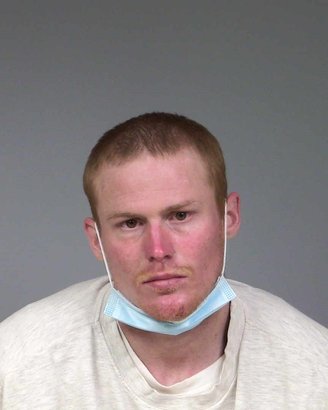
Dylan Anderson. | EPD
The employee stated an unknown male suspect entered the store claiming to have a
firearm and demanded money. The employee further stated that he hit the suspect
causing him to fall to the ground in an attempt to stop the robbery. The suspect then
fled on foot.
Officers located the suspect a few blocks away thanks to the assistance of several
witnesses. After a brief struggle, the suspect was detained and identified as 27-year-old
Dylan Anderson of Eureka.
Anderson was positively identified by the employee as the
suspect. Anderson was placed under arrest and booked into the Humboldt Country
Correctional Facility for robbery and resisting arrest.