

Total Request LoCO: Animation, Emo Rock and Prayer Rap
John Ross Ferrara / Saturday, Feb. 27, 2021 @ 9 a.m. / Total Request LoCO

To submit a locally-filmed (or produced) video, upload it to YouTube and email the link to News@LostCoastOutpost.com with your name, a brief description of your work and “TRL” in the subject line. Please do not submit videos containing any form of violence, racism, illegal activity, pornographic material, bullying or harassment. Also, no advertisements or duplicated submissions please.
“See You All In Hell” - Mookielaka
Local musician, artist and self-taught animator Jeff Ward sends us this impressive animated music video for his song “See You All in Hell.”
“More Than One Way” - Birdpaw
Birdpaw is a new emo-pop punk band based out of Humboldt County California. This video features a live, garage-band style recording of their song “More Than One Way.”
“‘Elohim’ One that is Many” - NoShogunz:
A high-quality, locally filmed music video by the group NoShogunz.
“This song expresses the connection bridging all gods or goddesses — faith and worship,” the group said. “A conscious effort to help our people heal and unify through breaking the chains of past cycles and stop the violence of religious/political greed and warfare. Countless generations have suffered and died contesting over ideological structures that all lead to “Elohim” — the One that is many. Look into your heart and you will truly know.”
BOOKED
Yesterday: 7 felonies, 7 misdemeanors, 0 infractions
JUDGED
Humboldt County Superior Court Calendar: Today
CHP REPORTS
Foothill Blvd / Tabor Ln (HM office): Traffic Hazard
ELSEWHERE
Mad River Union: Addressing immigration enforcement fear
Mad River Union: McK BMX track opens, adapts, evolves
Mad River Union: Sea level rise planning splits commission
Mad River Union: MCSD: Make ‘road diet’ part of overall traffic study
OBITUARY: Nikki Dion Metcalf, 1980-2021
LoCO Staff / Saturday, Feb. 27, 2021 @ 6:56 a.m. / Obits
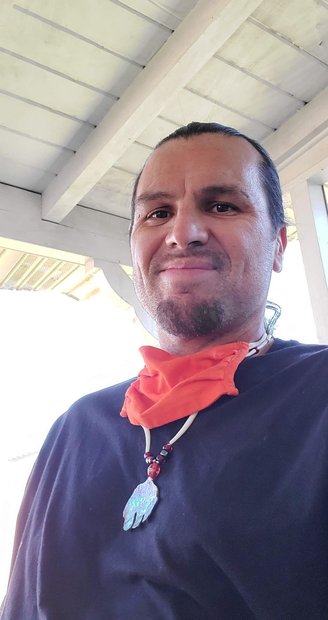
Nikki Dion Metcalf
July 19, 1980 - Feb. 10, 2021
Nikki Dion Metcalf was born to Barry Newton Metcalf and Sandra Dean Keisner on July 19, 1980, in Eureka, CA. Nikk had two biological children Barry Metcalf and Virginia Truby-Metcalf. He was engaged to Margarette Moon. Margarette Moon had three children Shelly, Chloe and Bubba, Nikk accepted them as if they were his own. It came naturally to Nikk to be a protective and caring father to all five of his children.
After Nikk’s Dad tragically passed just before Nikk’s thirteenth birthday he was on a mission or a path of destruction. Nikk often times showed no fear. He would fight or box with the biggest guy. He would wade in to the ocean far away from shore only to look further out until something from the shore drew him back in as if the ocean spit him out. He would climb trees to the highest large branch so he could sit at the top and gaze at the view. At one time in his life the path of destruction progressed further and he went along for a ride that landed him in a situation that he never thought would happen. For that reason, Nikk was away from his family for a period of time.
After being away from his family and friends for many years his focus coming back was on building or mending relationships. Once Nikk considered you family he would go to the end of the earth for you. Nikk was very accepting of others he saw past people’s character defects. He prided himself on not passing judgment. He once wrote, “I don’t want others to pass judgment on me for my past so I will go out of my way to see past others flaws and defects”. He was dedicated to making a better life. He wanted to live peacefully amongst those who loved him. He wanted to give back to his community. He wanted to be example for all the children of his community.
Nikk graduated from college with a 4.0 and an associate’s degree with a plan to advance in social work at HSU. He recently gained a facilitator certificate. His family learned the week of his passing that he had been asked to be the AOD counselor at Bear River. He was also working in maintenance. He was giving 200% to help others in all areas of his life.
Nikk was not materialistic. It wasn’t about money to Nikk it was about spending quality time with family and friends. He would give the shirt off his back for another person, his family saw him do exactly that more than a few times, usually for children sometimes his own other times for someone else’s. He loved dogs and they loved him. He was the only person that could come in to his friends’ homes without their dogs barking. Nikk loved children and animals. He was able to communicate with people and animals on a spiritual level. Sometimes with just a hand signal he was telling someone he loves them and that he gets what they are going through. He had a hand signal that he shared with his God daughter Jordan Tripp. Jordan’s parents Hector and Rhonda Tripp are also broken about the loss of a very loyal friend.
Nikk was compassionate, understanding, loving, kind, gentle and funny. He was really quite comical at times, he loved doing impressions sometimes poking fun at other people attempting to make a tough situation lighter. He frequently did this poking of fun at his own expense. He loved people and people loved him. Nikk loved playing basketball and football. His favorite football team was 49ers. He liked to play cards specifically poker.
Nikk was spiritual. He participated in sweats regularly. He would sing and pray. He most often was praying for his family and friends. We lost an amazing person. He was loved by many and he will be missed.
Thank you to Dawnetta and Tina Carpenter who hosted a fire at their home in remembrance of Nikki Metcalf, Margarette Moon and Shelly Moon. Thank you to Derek for leading us in an opening song while his son Barry Metcalf lit the fire. Thank you to Dawnetta, Tina, Derek, Orlando and James for manning the fire round the clock rain or shine. Thank you to Linda and Catherine for providing meals and snacks at the fire and for the family. Thank you to Bear River Social Services, Two Feathers, Sparky, Lil Kenny, Jack, James, Ruthie, Nicole, Hank and countless others. Thank you for providing a neutral location where many memories of Nikk, Margarette and Shelly were shared.
Nikk had siblings that loved him very much including Lucan, Rhoda, Alisha, Eddie, Troy, Bear, and Karen. His Grandparents Bert and Bonnie Metcalf who adored him. He had many Aunts and Uncles including Uncle Ben, Uncle Brent, Auntie Rhoda, Auntie Arlys, Auntie Jewel, many cousins, nieces and nephews. Nikk had a lot of friends and acquaintances including Jerimiah, Ray Ray, Derek, Dave, Kelsey, Kylee, Hector, Rhonda and countless others.
Nikk met Margarette last year and he asked her to marry him around Christmas time. They were planning their wedding for July 7, 2021. Unfortunately, Nikk, Magarette and Shelly were taken from us. Family and friends please join us at Bear River Recreation Center for a celebration of life for Nikk Metcalf, Margarette Moon and Shelly Moon Friday, Feb 26 at 10 a.m.
###
The obituary above was submitted on behalf of Nikki Metcalf’s loved ones. The Lost Coast Outpost runs obituaries of Humboldt County residents at no charge. See guidelines here.
DA’s Office Concludes Deadly Eureka Police Shooting Was Justified
LoCO Staff / Friday, Feb. 26, 2021 @ 4:20 p.m. / News
PREVIOUSLY:
- OFFICER-INVOLVED SHOOTING: Eureka Officers Shoot, Kill Man Who Had Leveled Weapon at Them, According to Police Report; Man Had Been Making Suicidal Threats
- Eureka Police Release Name of Person Shot By Officers Yesterday; Chief Issues Statement
- Eureka Police Department Releases More Records, Including Body-Cam Footage, from July Officer-Involved Shooting
Humboldt County Office of the District Attorney press release:
DA Maggie Fleming has completed her review of the investigation regarding the Eureka Police Department (EPD) Officer involved shooting of 51-year-old John Karl Sieger on July 23, 2020. A Humboldt County Critical Incident Team, with members from EPD, the Humboldt County District Attorney’s Office, Humboldt County Sheriff’s Department, Arcata Police Department, California Highway Patrol, and Fortuna Police Department, conducted the investigation. The Humboldt County Coroner’s Office and the California Department of Justice – Bureau of Forensic Services provided additional investigative resources.
The investigation revealed that shortly after 5:00 pm on July 23rd, an out-of-county friend of Mr. Sieger called EPD to request a check on his welfare, because she had received texts indicating he was contemplating suicide. Mr. Sieger’s messages to his friend initially included photos of bottles of alcohol; a subsequent message sent just before 4 pm included the same bottles with a hand gun. After the friend sent a text telling Mr. Sieger she was worried and asking him to be safe, he replied that he “can’t” be safe and that he was done with his life. She asked him by text to go find help and then asked where he was. When he questioned why that mattered, she replied she was going to call EPD to come check on him. She then called EPD at 5:16 pm.
At 5:19 pm, EPD Officers Wilson and Huffman responded to a request for a check on Mr. Sieger’s welfare from EPD dispatch; Sergeant Omey and Officers Endsley and Christiansen followed shortly thereafter. While traveling to Mr. Sieger’s home on Lowell Street in Eureka, officers requested information about Sieger from dispatch. Once at the scene, officers sought information on who else might be in the home. During this time, Mr. Sieger’s friend remained on the line with EPD and continued to share information she was receiving from Mr. Sieger. Sergeant Omey attempted to reach Mr. Sieger by phone at 5:43 and did reach him when he tried again at 5:46, but Mr. Sieger quickly ended the call. Officers on scene requested that dispatch notify neighbors to shelter in place. At 5:49 pm, while maintaining positions outside Mr. Sieger’s house, EPD requested a mental health expert on scene. At about the same time, Mr. Sieger texted the friend: “You called EPD? wtf?”
At approximately 6:20 pm, a mental health clinician and additional EPD officers arrived on scene and the search for information on Mr. Sieger via online databases and social media continued. A few minutes after the clinician’s arrival, the friend received a text from Mr. Sieger: “If they see me I will shoot them.” Using information uncovered about Mr. Sieger’s family, the mental health clinician contacted one of Mr. Sieger’s sons, who lived out of county and had not spoken to his dad that day. Officers also contacted Mr. Sieger’s sister, who let them know he lived with his wife and younger son. She also said she had received a text earlier that day indicating a personal matter could be affecting Mr. Sieger’s mental state. When his sister contacted Mr. Sieger to ask if he was OK, he responded, “I am not.” At that point the sister said she would come to the home to assist. EPD was able to contact Mr. Sieger’s wife and son inside the home and both exited the house to safety at 6:54 pm. They both were aware that Mr. Sieger was in the backyard but were not aware that he was suicidal. Mr. Sieger’s wife noted he had been drinking all day.
At 6:56 pm the friend texted Mr. Sieger that she only called the police because she couldn’t come check on him. He replied she did not need to ever think of him again and at 7:00 pm he texted her, “I respect cops and don’t force me to kill any of them.” The friend continued to send text messages pleading with Mr. Sieger to talk with those present and told him a crisis counselor was there.Shortly before 7:30 pm, one of the officers contacted a next-door neighbor to ask if the view from an upstairs window looked down into Mr. Sieger’s backyard. That neighbor allowed the officer to take a position in their house which provided a partial view of Mr. Sieger’s backyard.
About 7:30 pm, after speaking with Mr. Sieger’s sister, the mental health clinician contacted Eureka Veteran’s Affairs and learned Mr. Sieger was a client, last seen for mental health issues in September 2019. At 7:42 pm, the mental health clinician sent a text to Mr. Sieger introducing herself and letting him know she wanted to try to help. He responded 2 minutes later: “There isn’t an out for me and I know this. Please don’t corner me. I won’t call anyone.” At 7:46 pm the clinician let him know no one wanted to corner him but simply wanted to help and listen. He replied at 7:48 pm, “I apologize for this but I am simply done. My life was set as f–-d years ago.” The officer observing from the upstairs room could see Mr. Sieger holding something in his hand but could not identify the item.
Within 1 minute of that text, officers heard three loud pops which they recognized as gunfire. Shortly after the clinician sent a text asking Mr. Sieger to explain the shots, he replied he wanted to prove he needed to be left alone and asked her to stop texting him. The officer in the upstairs window could see Mr. Sieger at this point and confirmed his possession of a handgun.
At 8:23 pm, Mr. Sieger looked over the top of the fence at EPD officers. The officer in the upstairs window announced that Mr. Sieger was coming out and the back gate opened. Mr. Sieger initially paused, but then stepped out into the alley. The recording from an EPD body-worn device documented officers shouting, “show us your hands,” and “gun!” In response to the officers’ commands, Mr. Sieger yelled back, “No, f– you.” Immediately following the verbal exchange between officers and Mr. Sieger, video from an EPD body-worn camera showed Mr. Sieger raising his right hand, pointing a handgun directly at the officers.
In response to Mr. Sieger pointing his handgun at the officers, Officers Endsley, Bishop, Wilson, and Sgt. Omey fired their weapons at Mr. Sieger. Mr. Sieger was struck by gunfire and fell to the ground. Officers immediately approached Mr. Sieger and began lifesaving efforts including CPR. Medical personnel present and Humboldt Bay Fire personnel continued with the lifesaving efforts, and transported Mr. Sieger to St. Joseph Hospital, where he was pronounced dead at 8:47 pm.
Officers recovered a .40 caliber Glock pistol loaded with 7 rounds of ammunition where Mr. Sieger fell to the ground. The serial number from the Glock matched the serial number of the firearm in the photograph Mr. Sieger sent to his friend earlier in the day. Officers also recovered three .40 caliber shell casings in Mr. Sieger’s backyard, consistent with the report of three shots heard by law enforcement.
An autopsy by Dr. Super on July 28 revealed wound paths consistent with four officers firing from separate locations.The California Penal Code addresses justifiable homicide at Section 196:
Homicide is justifiable when committed by peace officers and those acting by their command in their aid and assistance, under either of the following circumstances:
(a)In obedience to any judgment of a competent court.
(b)When the homicide results from a peace officer’s use of force that is in compliance with Section 835a.
The California State Legislature made significant additions to Section 835a in 2019 (Assembly Bill 392). It now states:
Section 835a. Reasonable force to effect arrest; Resistance
(a)The Legislature finds and declares all of the following:(1)That the authority to use physical force, conferred on peace officers by this section, is a serious responsibility that shall be exercised judiciously and with respect for human rights and dignity and for the sanctity of every human life. The Legislature further finds and declares that every person has a right to be free from excessive use of force by officers acting under color of law.
(2)As set forth below, it is the intent of the Legislature that peace officers use deadly force only when necessary in defense of human life. In determining whether deadly force is necessary, officers shall evaluate each situation in light of the particular circumstances of each case, and shall use other available resources and techniques if reasonably safe and feasible to an objectively reasonable officer.
(3)That the decision by a peace officer to use force shall be evaluated carefully and thoroughly, in a manner that reflects the gravity of that authority and the serious consequences of the use of force by peace officers, in order to ensure that officers use force consistent with law and agency policies.
(4)That the decision by a peace officer to use force shall be evaluated from the perspective of a reasonable officer in the same situation, based on the totality of the circumstances known to or perceived by the officer at the time, rather than with the benefit of hindsight, and that the totality of the circumstances shall account for occasions when officers may be forced to make quick judgments about using force.
(5)That individuals with physical, mental health, developmental, or intellectual disabilities are significantly more likely to experience greater levels of physical force during police interactions, as their disability may affect their ability to understand or comply with commands from peace officers. It is estimated that individuals with disabilities are involved in between one-third and one-half of all fatal encounters with law enforcement.
(b)Any peace officer who has reasonable cause to believe that the person to be arrested has committed a public offense may use objectively reasonable force to effect the arrest, to prevent escape, or to overcome resistance.
(c)(1)Notwithstanding subdivision (b), a peace officer is justified in using deadly force upon another person only when the officer reasonably believes, based on the totality of the circumstances, that such force is necessary for either of the following reasons:
(A)To defend against an imminent threat of death or serious bodily injury to the officer or to another person.
(B)To apprehend a fleeing person for any felony that threatened or resulted in death or serious bodily injury, if the officer reasonably believes that the person will cause death or serious bodily injury to another unless immediately apprehended. Where feasible, a peace officer shall, prior to the use of force, make reasonable efforts to identify themselves as a peace officer and to warn that deadly force may be used, unless the officer has objectively reasonable grounds to believe the person is aware of those facts.
(2)A peace officer shall not use deadly force against a person based on the danger that person poses to themselves, if an objectively reasonable officer would believe the person does not pose an imminent threat of death or serious bodily injury to the peace officer or to another person.
(d)A peace officer who makes or attempts to make an arrest need not retreat or desist from their efforts by reason of the resistance or threatened resistance of the person being arrested. A peace officer shall not be deemed an aggressor or lose the right to self-defense by the use of objectively reasonable force in compliance with subdivisions (b) and (c) to effect the arrest or to prevent escape or to overcome resistance. For the purposes of this subdivision, “retreat” does not mean tactical repositioning or other de-escalation tactics.
(e)For purposes of this section, the following definitions shall apply:
(1)“Deadly force” means any use of force that creates a substantial risk of causing death or serious bodily injury, including, but not limited to, the discharge of a firearm.
(2)A threat of death or serious bodily injury is “imminent” when, based on the totality of the circumstances, a reasonable officer in the same situation would believe that a person has the present ability, opportunity, and apparent intent to immediately cause death or serious bodily injury to the peace officer or another person. An imminent harm is not merely a fear of future harm, no matter how great the fear and no matter how great the likelihood of the harm, but is one that, from appearances, must be instantly confronted and addressed.
(3)“Totality of the circumstances” means all facts known to the peace officer at the time, including the conduct of the officer and the subject leading up to the use of deadly force.
The District Attorney has concluded the shooting was legally justified, because the officers’ actions complied with California Penal Code Section 835a. Once Mr. Sieger refused their commands and pointed his gun at them, the officers reasonably believed they were in imminent danger of being killed or suffering great bodily injury. The District Attorney has notified Mr. Sieger’s family of her decision.
This case illustrates the difficult decisions that often must be made in cases involving persons dealing with mental health issues. When law enforcement can reasonably assume that others are not in danger, they can exercise the option to disengage from a person struggling with mental health issues. The investigation of this case revealed that EPD personnel were considering that option – until Mr. Sieger discharged his firearm in the backyard. At that point, given Mr. Sieger’s mental state and proximity to neighbors, the safety of others could not be assured and EPD remained on scene, while continuously attempting to peacefully resolve the situation. The District Attorney appreciates that EPD’s efforts to achieve a peaceful resolution included quickly involving a mental health expert, and the rapid response of the mental health expert to a crisis situation.
Judge Denies Motion to Dismiss Felony Animal Cruelty Charges Against Arcata Rancher Ray Christie
Rhonda Parker / Friday, Feb. 26, 2021 @ 4:15 p.m. / Courts
Judge Christopher Wilson has denied a defense motion to dismiss felony animal cruelty charges against Arcata rancher Ray Christie, whose second jury trial is now set for August.
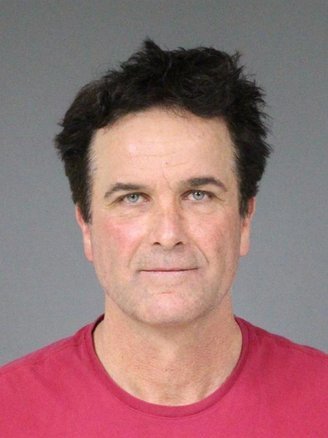
Christie
This afternoon Wilson heard and rejected arguments from defense attorney John Cogorno, who said Wilson wrongly dismissed a juror in Christie’s December 2019 trial. Cogorno also argued Wilson should have accepted the partial verdict the jury reached before the miscreant juror was kicked off the panel. Instead she was replaced by an alternate, and the jury scrapped six days of deliberations and started over.
Notes the jury sent to Wilson during the trial revealed Juror No. Five was discussing what punishment Christie might face, which jurors are not supposed to consider. Also, Juror No. Five said she was going to just randomly acquit Christie on half the charges and convict him on the other half.
“I’ve never seen a more clear example of juror misconduct in my 22 years on the bench,” Wilson said during a sometimes-heated exchange with Cogorno. The judge said his only regret was not removing her earlier, but judges generally take a “hands-off” approach to a deliberating jury.
Wilson said the jury was indeed tainted on the issue of penalty and punishment, and he placed the blame for that on Cogorno’s opening statement in the trial.
“Let me remind you what you said,” Wilson told Cogorno. “You said FEL-O-KNEE!’“
Revealing that Christie was charged with felonies was a clear attempt to influence the jury, the judge said, and it appeared to work. When the jury finally did return verdicts, they were able to make decisions on the misdemeanor charges but not the felonies.
Christie was convicted of 26 misdemeanor counts of dumping cattle carcasses within 150 feet of state waters. The jury hung — 11 to one for guilt — on the four felony animal cruelty charges.
The animal cruelty charges were filed after law enforcement found cows that were starving or in otherwise poor condition on property Christie owned or leased around the county. Officers also found many, many cow corpses and skeletal remains.
Cogorno argued Wilson should have declared a mistrial instead of removing Juror No. 5, whom Cogorno claimed was bullied by the jury forewoman because the forewoman was tired of deliberating and “wanted to get back to her busy day.”
Also, Cogorno said the forewoman didn’t like the verdicts because things “weren’t going her way.”
Wilson then pointed out that the verdicts the defense wanted him to accept were all verdicts of guilty. Cogorno said he hadn’t known what the verdicts were, only that the jury had agreed on some counts but not others.
When the jury — without the errant juror and including the new member — reached its verdict, the only one who didn’t vote to convict Christie was the alternate.
Today after Wilson denied the motion to dismiss, Cogorno said he plans to “take up a writ (to the Court of Appeal.)”
“That’s fine,” Wilson said, although he questioned whether Cogorno had any issues to raise on appeal. Christie’s retrial is scheduled to begin for Aug. 9.
PREVIOUSLY:
- ‘Nothing But a Show’ Rancher Ray Christie’s Attorney Says After Jury Shown Images of Numerous Dead or Dying Cows
- CHRISTIE TRIAL: Defense Attorney Attacks Investigating Deputy’s Credibility
- CHRISTIE TRIAL: Prosecutors Allege Rancher Illegally Removed Tags From Cattle to Pass Them Off as ‘Organic’
- CHRISTIE TRIAL: While Witnesses Testify to Stacks and Stacks of Carcasses Found, Defense Wonders Whether Cattle May Have Been Killed by Wild Animals or Poisonous Plants
- CHRISTIE TRIAL: Wildlife Warden Testifies to Carcasses Floating in Sloughs as Defense Gets Ready to Make its Case
- CHRISTIE TRIAL: After Showing Jurors Some Drone Footage, the Defense Rests its Case
- CHRISTIE TRIAL: Prosecution Rests; Ranch Hand Testifies He Was Ordered to Remove Cow Eartags
- CHRISTIE TRIAL: In Closing Arguments, Prosecutor Implores Jury to Hold Defendant Accountable for ‘Grossly Inadequate’ Management of Ranches
- CHRISTIE TRIAL: After the Defense’s Two-Hour Closing Argument, the Case is in the Hands of the Jury
- Juror Replaced in Christie Trial; Deliberation to Continue Into Next Week
- CHRISTIE TRIAL: Misconduct or Mistrial? One Juror Refuses to Deliberate or Follow the Law, Other Members Tell Judge; Unknown Whether a Mistrial Will be Declared or Possible Rogue Juror Replaced
- CHRISTIE TRIAL: Jurors Scheduled to Return to Deliberations Tomorrow Morning
- CHRISTIE TRIAL: Judge Dismisses Apparently Rogue Juror; Deliberations to Start All Over Again With Alternate
- CHRISTIE TRIAL: Hung Jury Declared After One Juror Out of 12 Declines to Convict Accused Rancher
- Christie Retrial on Felony Animal Cruelty Charges Pushed Back to May; Defense Anticipates Filing Motion to Dismiss
- Latest on Rancher’s Animal Cruelty Retrial
After Years of Study and Rumors, Providence Health Announces Impending Closure of Birthing Center at Redwood Memorial
LoCO Staff / Friday, Feb. 26, 2021 @ 1:51 p.m. / Health
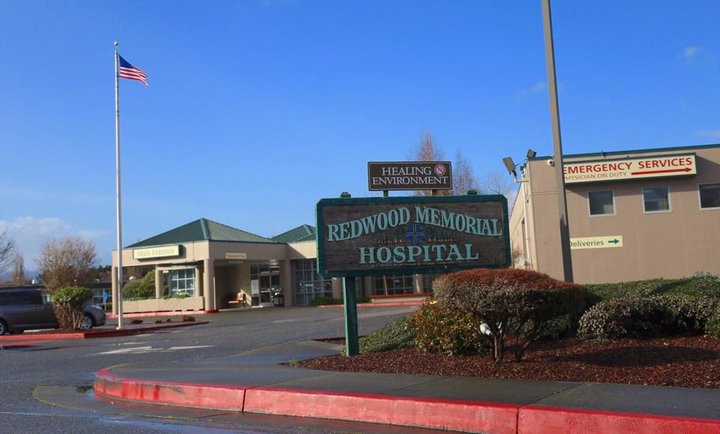
File photo: Andrew Goff.
###
PREVIOUSLY:
From Providence/St. Joseph:
As a result of declining birth volumes across Humboldt County, especially in the Eel River Valley, and the county-wide loss of women’s services physicians, Redwood Memorial Hospital (RMH) plans to close its obstetrics program on July 1, 2021. Childbirth services will be transitioned to the obstetrics program at St. Joseph Hospital in Eureka (SJE), incorporating the staff and the legacy of both programs to create a single, high-quality childbirth center, supported by a Level II Neonatal Intensive Care Unit (NICU).
“Operationally, it’s been very challenging to support both programs. The decision to transition services was not taken lightly and we know this is nobody’s preference,” said Roberta Luskin-Hawk, M.D. chief executive for Providence in Humboldt County. “However, this is a trend that is happening across the country in rural communities. By focusing services at St. Joseph Hospital in Eureka, we will be able to recruit additional physicians, enhance the hospital as a robust regional medical center, build upon an award-winning program and develop a service line which will be recognized as a center of excellence, while supporting the important role of Redwood Memorial Hospital as a Critical Access Hospital.”
In 2013, the question of the sustainability of obstetrics care at RMH was evaluated and the community partnered with St. Joseph Health (now Providence) to recruit a physician with training in obstetrics and gynecology. Despite that effort and the addition of family physicians with obstetric privileges to Open Door Community Health Centers, the community once again faces challenges with the loss of women’s services physicians and support staff across Humboldt County and the gradual decline of deliveries. Consolidation will further address provider shortage in the county and allow resources to be better allocated at RMH.
Additionally, in a post-COVID world, some pre-natal care can now be delivered closer to home by virtual means. Consolidating programs will further ensure top-tier obstetric and gynecological providers will be on hand to support moms and babies.
RMH caregivers affected by the transition will be offered comparable positions within the obstetrics program at SJE. No layoffs are anticipated related to the consolidation.
“Redwood Memorial Hospital will continue to be a special place and a vital component of Providence’s care delivery network in Humboldt County,” said Dennis Leonardi, Ferndale resident and Chairman of the Community Board for Providence in Humboldt County. “The new acute inpatient rehab unit project at Redwood is just one example of the commitment local hospital leadership has made and will continue to make in the Eel River Valley.”
Plans have been developed to renovate and remodel the existing obstetrics unit at SJE. The redesigned unit will promote a nurturing environment with the latest technologies which will provide an enhanced birth experience for mothers and their babies. Construction will be completed this summer.
“Consistent with our Mission, our goal will always be to focus on the dignity of our patients and the quality and scope of services the Humboldt County community needs, while remaining good stewards of our resources,” said Luskin-Hawk, MD.
The COVID Vaccines are Super Safe Though There Can be Side Effects, Humboldt County Joint Information Center Says
LoCO Staff / Friday, Feb. 26, 2021 @ 10:15 a.m. / COVID-19 and Humboldt

Photo by Daniel Schludi on Unsplash
###
From the Humboldt County Joint Information Center:
Health officials are assuring the public about the safety of COVID-19 vaccines, while reminding them of common side effects, especially after the second dose of the series.
The Centers for Disease Control and Prevention (CDC) has reported that safety monitoring for the two vaccines approved for emergency use has been “the most intense and comprehensive in U.S. history.” The findings in the Morbidity and Mortality Weekly Report are similar to those of clinical trials from the manufacturers Moderna and Pfizer, which show injection site pain, fatigue, headache and muscle pain were most frequently reported, with a higher frequency after the second dose.
Humboldt County Public Health Nurse and Clinic and Communicable Disease Program Supervisor Hava Phillips said that individuals who have had a reaction to a vaccine in the past, or may have an allergy, should discuss vaccination with their health care provider.
“It is not uncommon for people to experience a sore arm and swelling where the shot was given, or symptoms such as fever, body aches and fatigue as part of the process of building immunity,” Phillips said. “This is especially true after the second dose, when the body’s immune response is stronger. Severe reactions to the vaccine, requiring medical care, are rare and usually happen within the first 24 hours after getting the shot.”
Getting vaccinated is one of the most powerful tools in protecting individuals and communities and ultimately in ending the pandemic, Phillips said. “We’re moving as swiftly as supplies will allow, so take the first appointment you’re offered,” she said. “We’ve gotten this far by working together and vaccination is the next step.”
To reduce injection site pain and discomfort, the CDC recommends using or exercising your arm and/or applying a clean, cool, wet washcloth over the area. To reduce discomfort from fever, drink plenty of fluids and dress lightly.
The CDC recommends not taking over-the-counter medications such as ibuprofen, aspirin, antihistamines or acetaminophen before getting vaccinated to prevent side effects, because it is unknown how these medications could affect the vaccine’s effectiveness. Individuals can take these medications to relieve post-vaccination side effects, but as always, talk to your doctor first.
To read the full CDC report, visit this link.
Who Has the Power to Reopen California Classrooms?
Laurel Rosenhall / Friday, Feb. 26, 2021 @ 9:32 a.m. / Sacramento

Photo by Aaron Burden on Unsplash.
###
Increasingly exasperated that most public schools remain closed even as coronavirus cases plummet nearly a year into the pandemic, California parents are taking to the streets. They’re protesting in Los Angeles and Silicon Valley. They’re trying to recall school board members in San Francisco and San Ramon. They’re mounting billboards along freeways in Sonoma County and Sacramento demanding that the government #OpenSchoolsNow.
The campaign to recall Democratic Gov. Gavin Newsom has seized on the frustrations. Republicans hoping to replace him are staging campaign events outside shuttered schools and highlighting that California lags the rest of the nation when it comes to getting kids back in the classroom. Newsom’s political future may hinge, in part, on how much longer millions of children remain stuck on Zoom.
But the state’s education system is incredibly fragmented, with more than 1,000 school districts tasked with deciding — mostly through negotiations with their local labor unions — when and how to reopen. Those districts must follow laws crafted by a Legislature with close ties to organized labor, and signed by a governor who was elected with the support of the teachers’ union but now finds himself at odds with it over his objections to making vaccine access a requirement for reopening.
Districts in San Diego, Long Beach and Berkeley recently struck deals to reopen this spring. But despite pediatricians and infectious disease experts saying it’s safe to open schools as long as precautions are in place, many large districts say they won’t be able to without new direction from the state Capitol. Newsom and legislative leaders have so far been unable to agree on a plan that could prod more schools to bring students back to campus.
“The fundamental breakdown here is a big struggle between management and labor on what ought to exist at the state level regarding the rules around reopening,” said Kevin Gordon, a lobbyist who represents numerous school districts. “That’s 100% of the problem.”
‘Missing All CA Students’: Parents buy Rohnert Park billboard ad urging school reopenings https://t.co/RYtCFKE80h pic.twitter.com/DgIjDhPDJB
— The Press Democrat (@NorthBayNews) February 23, 2021
Two-thirds of California adults supported Newsom’s proposal to spend $2 billion to reopen elementary schools by mid-February, according to a January survey by the Public Policy Institute of California. With that date come and gone, and the plan stalled, parents this week asked Newsom to open schools “through whatever means necessary.”
But teacher union leaders remain fearful that it may not be safe. Some schools that have reopened have seen isolated outbreaks, and a new coronavirus variant could make people sicker and vaccines less effective. A state website that was supposed to show the public which schools have had COVID cases among students or employees has yet to publish any data.
And teacher unions have enormous sway in California politics. In the last four years, the California Teachers Association has given $10.7 million to the California Democratic Party. It also spent $5.6 million on legislative races and $1.1 million supporting Newsom. And it donated $5 million to an assortment of local school board races, Democratic central committees and local union accounts.
Amid this confusing tangle of power, it’s hard to figure out who’s responsible for whether California kids will get back in the classroom. Here’s what we know:
What can the governor do?
Newsom could compel reopenings by using his emergency power during the pandemic to temporarily suspend the law that requires districts to negotiate with local labor unions, argues Carl Cohn, a former superintendent of schools in San Diego and Long Beach. Instead of the uneven process of a thousand separate labor negotiations in each district, he said, the governor should make one deal with the statewide teachers’ union.
“As we all face that extraordinary anniversary March 13, where kids will have been out of school for a full year, I just think you have to think out of the box,” Cohn said in an interview. “You’ve got to figure out a way to solve this.”
Newsom did not answer reporters’ questions this week when asked if he would consider suspending local bargaining or negotiate a statewide deal. He said he’s hashing out a new reopening plan with legislative leaders and is not ready to publicize the details.
He did use his executive authority to set aside 10% of the state’s vaccines for teachers and other school employees — an attempt to address the union’s argument that workers shouldn’t go back to campus unless they’ve been offered the shots. Newsom says he’s prioritizing school workers for vaccines with a focus on disadvantaged communities and has arranged dedicated inoculation drives for educators in Oakland and Los Angeles.
His administration has issued guidance on safety precautions schools must take, and gave districts three months worth of face masks. And he’s been using his bully pulpit to make the case that schools should reopen, holding press conferences to highlight communities that are vaccinating teachers and making plans to bring students back to campus.
But Newsom said “one size does not fit all,” and he’s so far resisted doing anything to usurp local control from school districts and their employee unions.
His Republican challengers Kevin Faulconer and John Cox said they would not suspend local bargaining.
“As we all face that extraordinary anniversary March 13, where kids will have been out of school for a full year, I just think you have to think out of the box.”
— Carl Cohn, former superintendent of schools in San Diego and Long Beach
What about financial incentives?
The school reopening plan the governor unveiled in December — which floundered amid criticism — called for giving districts extra money if they return to in-person instruction, but didn’t compel them to do so. School leaders said that would wind up rewarding districts that were better positioned to reopen, while punishing those that couldn’t.
In that approach, Newsom has strange company: Faulconer, the GOP former mayor of San Diego, also suggested using financial incentives to reopen schools. During a campaign stop in Sacramento this week, Faulconer said if he were governor, he would tie state funding to in-person attendance. Asked how that differed from what Newsom tried unsuccessfully, Faulconer could not provide details.
What can the Legislature do?
Lawmakers tried to compel districts to get students back on campus with a bill saying they must have a reopening plan within two weeks of exiting the state’s purple tier for the most severe rates of infection. The proposal was inspired by legislators’ frustration that most schools did not bring students back during the fall, even though they were allowed to because COVID cases were low.
“Local control has been a complete failure,” said Assemblymember Phil Ting, a San Francisco Democrat who wrote the bill.
But Ting canceled a hearing on the legislation and instead helped write a new reopening plan that essentially gives local districts and their unions more control. It requires districts to negotiate reopening with their labor unions, and gives them a financial incentive — but not a mandate — to bring students back to campus by April 15. Newsom said the plan would slow down reopening in too many districts, and indicated he would not sign it into law.
The bill was panned both by school districts that said it was too meddlesome and by parents who said it was too weak.
“Local control has been a complete failure.”
— Assemblymember Phil Ting
“If there are no mandates, then essentially what you’re still bound by is the collective bargaining process in each district,” said Megan Bacigalupi of Oakland, who created a parent advocacy group called Open Schools California. “If there was a requirement that at certain case rates you’d have to reopen, then you would see much more progress across the state, especially in the big urban districts where it’s been the slowest.”
Teachers’ unions want local school districts and unions — not the state — to decide when and how schools should open. But they also want the state to issue more safety requirements, including vaccines for school employees, improved ventilation, procedures for disinfecting campuses and routine COVID testing.
“We need something that’s going to be uniform so that we know that if a school up in Ukiah is open and a school down in San Diego is open, they are open because it’s safe,” said Toby Boyd, president of the California Teachers Association.
Kevin Gordon, the school district lobbyist, said the Legislature should focus on sending money to districts, and then “get out of the way.”
“The idea of inviting the state into the details of the local bargaining process is what’s gotten a lot of this so complicated,” Gordon said.
What can school districts do?
Many districts have been able to open under existing rules that require more spacing between desks and other safety precautions. About half of California’s school districts offer in-person learning, though most of them are only bringing some students on campus, or are in a hybrid mode where students spend part of the time in class and part online.
But the vast majority of California students remain entirely online because the districts that have reopened so far are mostly quite small. About three-quarters of the state’s elementary students and 86% of high schoolers are in districts that do not provide any in-person learning. A CalMatters analysis found vast inequities — overall, students in wealthier regions are going to school, while those in cities with more poverty are home on Zoom.
“Almost everything is driven locally,” said Tony De Marco, an attorney who works with school districts in Los Angeles, Orange and San Diego counties. “It starts really with the community and how much the community is pushing their local board members and their local districts to reopen — and to what degree.”
Though labor negotiations are the norm in school districts, many smaller ones have reopened without formal agreements with their unions, said Edgar Zazueta, a lobbyist for the Association of California School Administrators.
“In many districts, they just had a relationship with their employees that didn’t require them opening up new bargaining agreements. They still worked together and sought input,” he said. “Many just operated under existing (agreements) that didn’t deal with specific COVID mitigation issues.”
So do teachers unions have the final say?
Sort of.
Some communities made plans to come back to school without formal labor negotiations, and some schools were prevented from reopening because of public health orders from the state or county. So unions are not the only deciding factor.
But they play a big role in urban districts such as Los Angeles, Oakland and Sacramento, where tensions between labor and district management predate the pandemic. A statewide reopening plan that’s blessed by the California Teachers Association would smooth reopening in such districts, said Bruce Fuller, a UC Berkeley education professor.
Statewide “labor leaders need to feel like a safe and fair deal has been struck with the Legislature and the governor, because they need to signal that back to the remaining locals that are dragging their feet,” he said.
“If there is uncertainty or a lack of trust at the state level, we will be back to every union local being able to veto an agreement.”
“The communities who are most impacted by this are the communities that don’t have a bullhorn to shout out that they want their schools opened.”
— Mike Trujillo, Democratic consultant
Senate leader Toni Atkins said it’s hard to imagine the state crafting a plan that would force reopening if employees don’t agree: “The goal is really to have willing partners, because you can’t go back to school without teachers.”
But some Democrats are hoping the state’s Democratic leaders will not give unions the last word on reopening schools. Mike Trujillo, a Democratic consultant who works with charter schools and politicians who support them, said the state should compel districts to open their classrooms without requiring agreements from local unions.
“The communities who are most impacted by this are the communities that don’t have a bullhorn to shout out that they want their schools opened,” he said. “This is the time to do what’s right for Latino and African American families up and down the state.”
###
CALmatters.org is a nonprofit, nonpartisan media venture explaining California policies and politics.


