

Audit Slams State Air Board for ‘Overstating’ Greenhouse Gas Cuts
Rachel Becker / Wednesday, Feb. 24, 2021 @ 7 a.m. / Sacramento

The state auditor warned that California may not meet its goal to cut greenhouse gases by 40% over the next ten years if it doesn’t pick up the pace and provide better accounting of the reductions. Photo by Anne Wernikoff, CalMatters
###
An audit of California’s climate change program released today criticizes state officials for overestimating the benefits of its efforts to encourage Californians to buy cleaner vehicles.
The state auditor warned that California may not meet its goal to cut greenhouse gases by 40% by 2030 if it doesn’t pick up the pace. Emissions from transportation have increased since 2013, which the report calls “a problematic trend.”
“Given the ambitious nature of the State’s climate change goals and the short time frame to meet them, California is in need of more reliable tools with which to make funding decisions,” California State Auditor Elaine Howle wrote in a letter to Gov. Gavin Newsom and legislators.
According to the audit, the California Air Resources Board “has generally not determined the effects its incentive programs have on consumers’ behavior and thus, has overstated (greenhouse gas) emissions reductions its incentive programs achieve.”
That data determining how well clean-car rebates are working is critical for weighing the cost effectiveness of programs that use the state’s cap and trade funds to pay Californians and businesses to buy zero-emission vehicles.
Richard Corey, executive officer of the California Air Resources Board, said the agency is committed to collecting and analyzing the additional information that the auditor recommended.
“In the case of some recommendations, it will take time to work through the public process to determine the most efficient and effective mechanisms,” he wrote.
The air board does not collect enough data to tell whether the majority of its rebate and funding programs led people to buy cleaner vehicles, which makes it tougher to assess their cost-effectiveness.
The Air Resources Board has both regulations and incentive programs to scrub carbon pollution from cars, trucks, buses and freight. Sometimes, these efforts overlap: One program, for instance, tasks vehicle manufacturers with selling a certain proportion of zero emission vehicles in the state. Others offer rebates to Californians who buy these vehicles.
That overlap is where the air board is falling short by failing to measure how much additional reductions come from the rebates, the audit said.
“By not taking into account the effects that regulations and other factors have on emissions, CARB overstates the incentive programs’ (greenhouse gas) reductions, although it is unclear by how much,” the audit said.
The air board also does not collect enough data to tell whether the majority of its rebate and funding programs led people to buy cleaner vehicles, the audit reported. That makes it tougher to assess their cost-effectiveness.
State rebates for zero-emission and plug-in hybrid cars range from $1,000 to $4,500 per vehicle.
California lawmakers have doled out more than $2 billion of cap and trade income to fund the clean transportation programs since the 2013-2014 fiscal year.
But income from the carbon trading program is variable and is expected to dwindle as the state’s biggest polluters clean up emissions. Last year, for instance, the air board’s clean transportation program took an $81 million hit amid a cap and trade auction shortfall during the first months of the coronavirus pandemic.
“This uncertainty, together with the short time frame remaining before the 2030 date for achieving the State’s (greenhouse gas) goals, increases the challenge of meeting those (greenhouse gas) goals,” the audit said.
###
CALmatters.org is a nonprofit, nonpartisan media venture explaining California policies and politics.
BOOKED
Yesterday: 5 felonies, 8 misdemeanors, 0 infractions
JUDGED
Humboldt County Superior Court Calendar: Today
CHP REPORTS
No current incidents
ELSEWHERE
RHBB: Majority of Humboldt Supes Support Surveillance Regulation
RHBB: BLM Headwaters Forest Reserve to Close for Pavement Repairs and Resurfacing
RHBB: Prescribed Burn in the Redwood Creek Drainage on Sunday 9/20
Politico: Industry titans’ warning to Congress: Do what we say or health insurance premiums are going up
OBITUARY: Awok Eugene ‘Gene’ Glenn Brundin, 1944-2021
LoCO Staff / Wednesday, Feb. 24, 2021 @ 6:56 a.m. / Obits
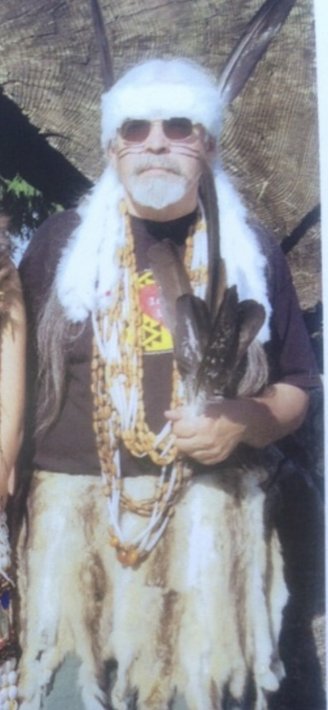
Awok Eugene “Gene” Glenn Brundin, the only child of Peter Otto Brundin
and Ruth Pearl (Wheelis) Brundin, was born on October 7, 1944 in
Humboldt. As a youth, Gene enjoyed spending time with his father,
hunting wild game and fishing. Mr. Brundin attended Arcata High
School and Humboldt State University, then moved to Santa Barbara
where he lived until he retired early to return home to care for his
mother. Gene remained in the family home where he was born and where
he died of natural causes in December 2020.
He was predeceased by his parents, several aunts and uncles, and cousins Peter (JoAnne) Comstock of San Diego as well as Ruth Luhtala, Lucille Luhtala, John Luhtala, and Shirley Luhtala Jones of Washington State.
Gene is survived by cousins Nancy Brunson and Jeannie (Wes) Martin of California, as well as Charles Comstock and Sharon (Clyde) West.
Gene had a keen mind and a special interest in his father’s Native ancestry. He became very familiar with the tribal customs of both the Yurok and Tolowa Tribes and over the years made friends with many extended family members from both Tribes. He was a registered member of the Yurok Tribe and participated in annual celebrations and rites and was supportive of efforts to maintain Yurok culture and language. You could often see Gene and Joe Giovanetti dancing together.
Gene was also an avid supporter of the non-profit Dell’Arte International in Blue Lake, a performance arts theatre, where he assumed the responsibility of filming performances. Unfortunately, the theatre was closed as a result of the pandemic in 2020 and Gene sorely missed his interaction with students and staff. Gene was an artist in his own right, known for his lovely pottery, which he generously shared with family and friends. I want to thank all the group that helped me that day.
Being an only child, family was very important to Gene, and he was in frequent touch with his cousins, the Brunson’s of Blue Lake and Lois Crawford. He also kept in regular contact with cousins from his Uncle, Harold Brundin, in Washinton State. Harold and his father were very close and enjoyed each other’s company many years until separated by death. Gene will be missed by many whose lives he touched, both inside and outside the family. Gene loved getting mail from Stacey and family, especially the socks.
Gene really enjoyed working at the Blue Lake Grange Breakfast (frying eggs was his job) and going to the Blue Lake Rancheria for the lunch that was served.
I want to send a special thank you to Annette and Tim Nickols for watching out for Gene and his home and all the support they gave during this sad occasion.
Due to COVID-19 there will not be a service now, but we plan on having a celebration of life later.
###
The obituary above was submitted on behalf of Gene Brundin’s loved ones. The Lost Coast Outpost runs obituaries of Humboldt County residents at no charge. See guidelines here.
OBITUARY: Milton Duane Conn, 1927-2021
LoCO Staff / Wednesday, Feb. 24, 2021 @ 6:56 a.m. / Obits
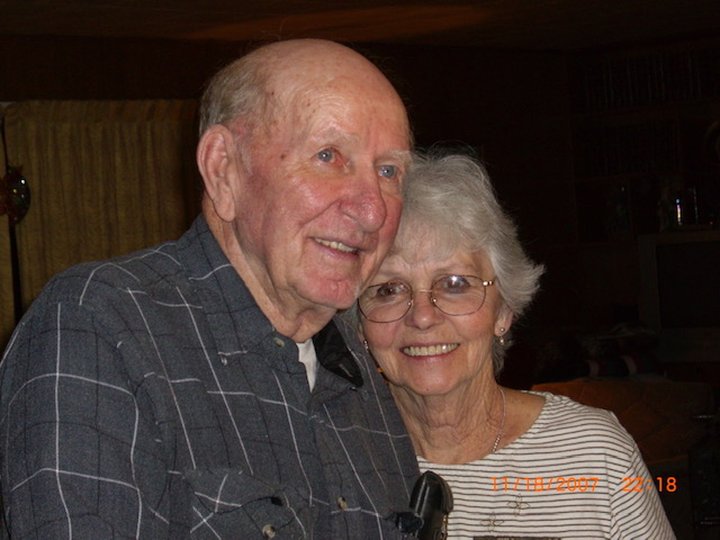
Milton Duane Conn passed away peacefully on February 19, 2021, having
lived 94 years to the day.
He was born to
Sanford and Hallie Conn on February 19, 1927 in Saquatch, Colorado,
the youngest of five children. He is predeceased by his first wife
(Virginia), both parents, his three sisters and one brother.
He is survived by
his beloved companion of twenty years, Violet Thomas, and his three
children, Cindy (Tony), Kavin (Mary) and John (Christine), two
stepdaughters, Tamara Matthews and Esther Josephson, as well as
several grandchildren and great-grandchildren.
Milton quit school
after the ninth grade and went to work in the Colorado mines to help
support his family. He enlisted in the Army in 1945 and served in the
Philippines for the duration of WWII, then was honorably discharged
in February of 1947.
From there he made
his way to Humboldt County, California where his eldest sister lived.
In 1948 he bought the property located at 95 Lum Street in Weott, and would live there for the next
seventy-one years.
On December 31,
1951, he married Virginia Morrison and together they adopted, and
raised Cindy and Kavin until Virginia’s death in March of 1970. He
adopted his son John in 1971.
Working for Morrison
and Jackson Lumber Company in Myers Flat, he acquired trucks and long
hauled lumber for the mill. Living elsewhere for two years, the
family returned to Weott about 1961, where he would build a log
trucking company. Eventually he owned five trucks displaying MD CONN
Trucking in a black and white scrolled logo.
Around 1972, seeing
the logging industry decline, he obtained a contractor’s license
and began a paving business that would see him through to his
retirement in 1998.He continued to work part time in the business
after turning it over to his son, Kavin.
Always one for a
joke, he will be remembered for his belly laugh and ready smile.
Generous with his time, he belonged for decades to the Weott VFD and
the water district and was instrumental in rescue efforts during both
the 1955 and 1964 floods.
We look forward to
the time the Bible’s promise will be fulfilled: “He forgives all
your errors and heals all your ailments. He reclaims your life from
the pit and crowns you with his loyal love and mercy. He satisfies
you with good things all your life, so that your youth is renewed
like that of an eagle.” Psalm 103:3-5
He will be missed and was much loved.
###
The obituary above was submitted on behalf of Milton Conn’s loved ones. The Lost Coast Outpost runs obituaries of Humboldt County residents at no charge. See guidelines here.
OBITUARY: David Allen DeVoy, 1949-2021
LoCO Staff / Wednesday, Feb. 24, 2021 @ 6:56 a.m. / Obits
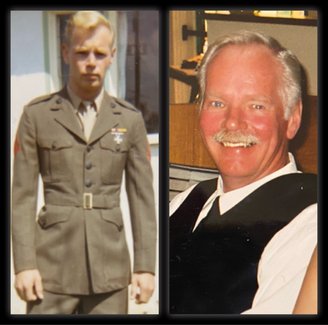
David Allen DeVoy, 71, of Eureka passed away unexpectedly on January 6, 2021.
Dave was born on December 19, 1949 to Ralph and Dorothy DeVoy of Eureka. In 1968, after graduating from Eureka High School, he went straight into the United States Marine Corps with two of his best buddies. He was always a very proud Vietnam veteran.
He went to work for Cox Cable in 1972. He spent 20 years in the cable TV industry as a project manager. He decided on a career change and went to work as a truck driver for over 10 years with both Bettendorf and Sierra Pacific. He drove long haul and locally before retiring.
Dave had a passion for restoring cars and woodworking. His prized possession was a 1971 Chevy Camaro that he’s owned for the last nine years. Dave enjoyed spending his time working and perfecting every inch of his car. He took great pride in it. He had been looking forward to finishing it and taking it to car shows and on long drives with his partner, Barbara.
He leaves behind his beloved son Kelly and daughter Katie and his precious grandchildren Sierra, Kaleena, Jonathan, Emiley, Carson, Jaxson and Jacob. He also leaves behind his sister and brother-in-law Bonnie and Mike McReynolds, as well as his partner for the last 22 years, Barbara Stamps.
He is preceded in death by his parents Ralph and Dorothy DeVoy and his sister Trudy.
Dad will be missed beyond measure, it was just too soon for him to go. It’s hard to imagine a world without him. We will cherish every memory of him and smile because that’s what he would’ve wanted us to do. “Dad, your guiding hand on my shoulder will remain with me forever.”
A celebration of life will be announced when COVID restrictions are lifted.
###
The obituary above was submitted on behalf of David DeVoy’s loved ones. The Lost Coast Outpost runs obituaries of Humboldt County residents at no charge. See guidelines here.
TODAY in SUPES: Board Approves ‘Audit Committee’ in Hopes of Solving the Ongoing ‘Dysfunction’ Surrounding Financial Transactions
Ryan Burns / Tuesday, Feb. 23, 2021 @ 4:11 p.m. / Local Government
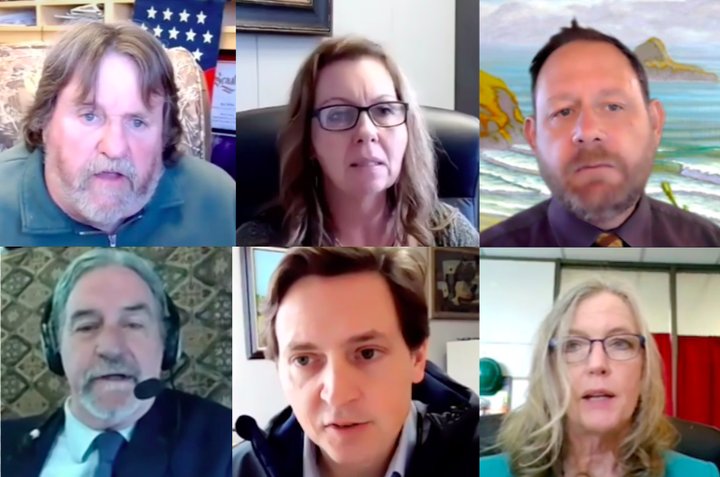
Screenshots from Tuesday’s meeting (clockwise from top left): First District Supervisor Rex Bohn, Second District Supervisor Michelle Bushnell, Third District Supervisor Mike Wilson, Fourth District Supervisor Virginia Bass, Health Officer Dr. Ian Hoffman and Fifth District Supervisor Steve Madrone.
PREVIOUSLY:
- The Auditor-Controller’s Ongoing Beef With Other County Departments is Getting Ugly
- Defiant Auditor-Controller Gives Board of Supes List of Conditions for Her Help With County Payroll Project
- Supes Call Special Meeting, Say County at ‘Serious Risk of Losing Millions’; Auditor-Controller Says She’s Being Asked to Cut Corners
- County Abandons Investigation Into Fiscal Management Delays, Having Never Interviewed the Auditor-Controller
###
The Humboldt County Board of Supervisors on Tuesday once again addressed financial reporting matters at the center of a conflict between the County Administrative Office and the office of Auditor-Controller Karen Paz Dominguez.
Today’s discussion was a sequel of sorts to a special board meeting back in November when supervisors Virginia Bass and Rex Bohn sounded the alarm over “operational gaps” in the county’s fiscal reporting. These gaps, according to staff, had placed the county at risk of losing more than $14 million in state and federal reimbursement.
A staff report from today’s meeting says there are still “outstanding financial transactions” that could wind up costing the county millions, and it asks the board to “authorize” Paz Dominguez to post the transactions in question.
The report, written by staff in the County Administrative Office (CAO), points the finger directly at the auditor-controller. It says she was about 16 months late in closing the books on fiscal year 2019-20, and when she finally did so it was abruptly, “as-is,” leaving loose ends that could have long-term ramifications, including a hit to the county’s credit rating.
The report also says Paz Dominguez is behind on distributing interest revenues to the county’s various interest-bearing funds and also late in submitting a Cost Allocation Plan to the State Controller’s Office — a prerequisite to getting reimbursed by state and federal agencies for a variety of services. On top of all that, the report suggests that Paz Dominguez doesn’t respond to her emails.
In response, Paz Dominguez on Monday submitted to the board a three-page memorandum addressing the allegations. Regarding her decision to close the books on fiscal year 2019-20, the auditor-controller says that’s a decision she’s entitled to make.
“It was evident to me that the County’s need to close [the books] outweighed my preference to fully and completely reconcile all of the funds in the Treasury,” she says. “I determined that it would have taken much longer to receive the information needed to reconcile and so I made the difficult decision to close the year as is.”
Her memo runs through the specific items identified in the CAO’s report, saying her office rejected some claims because they had insufficient substantiation and declined to process others because of “conflicting information received from the CAO.” Other transactions have indeed been posted, she says, while yet others are a mystery to her.
Regarding a $2,000 rent transfer from Courthouse Cafe, for example, Paz Dominguez writes, “Neither my staff nor I are aware of receiving this request.” And regarding a charge of $284,654 for something called “CWS CAST” she says, “Honestly, neither my staff nor myself could figure out what this item is about.”
Paz Dominguez adds that all interest apportionments due have been posted and all relevant information for the Cost Allocation Plan has been provided to the county’s cost plan consultants.
During the public comment period, both Kent Sawatzky and Thomas Mulder noted the apparent “dysfunction” involved here. The latter attributed it to Paz Dominguez’s office while the former suggested it lies somewhere between the CAO’s office and the Auditor-Controller’s Office.
Second District Supervisor Michelle Bushnell pointed out that a consulting firm at one point suggested that the county form an “audit committee” comprised of county officials and qualified members of the public. Such a committee might be a way to get past the “he-said, she-said” impasse here.
The board wound up voting unanimously to do just that, and it authorized Paz Dominguez to post any and all outstanding financial transactions from fiscal year 2019-20.
###
In the latest of his biweekly COVID-19 updates, Humboldt County Health Officer Dr. Ian Hoffman correctly predicted that the county would drop from the purple to the red tier today, meaning there will be looser restrictions on a variety of activities starting Wednesday. (See details here.)
County Public Health staff hope to start posting some vaccine data to the county’s online COVID dashboard in the coming week. Vaccinations are still being given to locals age 70 and older as well as folks working in K-12 education or licensed in early childhood education. County staff is in the planning stages for opening up vaccines to people age 65 and older and those working in higher education and frontline food and agriculture industries.
Around 14 percent of county residents have received at least one dose of the vaccine, including nearly 60 percent of people over age 70, Hoffman said. He also noted Gov. Gavin Newsom’s recent announcement of new guidelines that will allow the resumption of some youth and adult recreational sports in counties that have case rates below 14 per 100,000 residents.
He closed his presentation with words of sympathy, saying that after a year of dealing with this virus, “We’re all tired; we’re all ready for this to end.” Like a marathon, the last mile can be the hardest, he added, saying, “Let’s take it slowly … and we will make it to the finish line together.”
###
In other news, the board unanimously voted to reappoint Brian Mitchell, a certified public accountant, to the Humboldt County Planning Commission, and with a vote of 4-1, with First District Supervisor Rex Bohn dissenting, they appointed two people to at-large positions on the Measure Z Citizens Advisory Committee: Justin Roberts, (a Whitethorn resident and general manager of Resort Improvement District No. 1) and Bob Bronkall (a Eureka resident and the county’s deputy director of public works).
What’s Your Vision for Arcata or Eureka? Cities Invite You to Share Your Thoughts at Virtual ‘Visioning’ Meetings
Stephanie McGeary / Tuesday, Feb. 23, 2021 @ 3:06 p.m. / Local Government

What should Eureka and Arcata focus on for the next year?
Do you live in Arcata or Eureka and have thoughts on what goals your city should be focusing on? Or maybe you have a vision for a project that you think would benefit your city? You’ll have a chance to provide your thoughts this week, with both towns holding online meetings focused on setting and implementing the city’s goals for the next few years.
Arcata’s Community Development Department will host a virtual “Community Vision Listening Session” on Thursday, Feb. 25 from 5:30 to 7:15 p.m., which will include an overview from staff on the City’s Strategic Infill Redevelopment Program — a large-scale planning effort to support housing and economic development in the city.
“Community members will have the opportunity to brainstorm with City staff on a variety of topics identified in the previous listening session, and can provide feedback on how the City can implement their ideas regarding Arcata’s growth and development, neighborhoods and urban form, community engagement and community health, increasing art throughout Arcata, and environmental stewardship and sustainability,” says the City of Arcata on its website.
The City of Arcata also says that it also plans to hold a session in March for Spanish speaking residents and that more information will be provided on the website soon.
You can find more information and the zoom link to attend the session here.
###
For the City of Eureka’s part, the City will hold a “Strategic Visioning Workshop” during a special city council meeting on Friday, Feb. 26 at 1:00 p.m. This is the fourth and final session of this workshop series attended by the mayor, council members and city staff. Members of the public are not able to participate directly in the workshop, but are able to provide feedback during the public comment period at 4:45 p.m.
The workshop consists of a series of guided activities and brainstorming sessions facilitated by an outside consulting firm. The results of the workshop are then summarized into a few actionable goals to guide the council’s decision making for the next year. You can view the results of the last few Strategic Visioning Workshops here.
Councilmember Kim Bergel encouraged everyone who is able to watch the workshops and provide feedback, which will be considered for the city’s goal setting process. “As a council, the decisions we make are based on our communications with the public,” Bergel told the Outpost. “This is our city and we all have to work together to make it better.”
You can find information on how to view the online workshop and participate in public comment here.
RED TIER REOPENINGS: County Lists New Business Sectors That Can Open Or Expand, and Asks Citizens to Please Stay Vigilant
LoCO Staff / Tuesday, Feb. 23, 2021 @ 1:42 p.m. / COVID-19 and Humboldt
From the Humboldt County Joint Information Center:
Humboldt County has moved into the “Red” or Substantial tier under the state’s “Blueprint for a Safer Economy,” meaning many local business sectors can expand capacity with COVID-19 prevention measures in place. These changes take effect at one minute past midnight tonight.
The California Department of Public Heath announced today that Humboldt County’s adjusted case rate and positivity rate are 6.3 and 2.7% respectively, putting the county firmly in the Red tier without relying on the state’s Health Equity Metric.
Humboldt County Department of Health & Human Services Public Health Director Michele Stephens expressed cautious optimism, saying that while there’s reason to celebrate the move to the Red tier, the county is facing a long recovery.
“I’m proud to be part of a community that has worked so hard to get back to this point,” Director Stephens said. “To build on that success, we need to continue following all prevention measures and vaccinating as many people as possible as quickly as possible. That gives us our best chance to make this the last time we are ever in the ‘Purple’ tier.’”
Some of the changes under the Red tier include:
Restaurants – Open indoors at 25% capacity or 100 people, whichever is fewer.
Gyms and Fitness Centers – Open indoors at 10% capacity; climbing walls open; indoor pools, saunas, steam rooms, hot tubs remain closed.
Retail – Open indoors at 50% capacity.
Shopping Centers, Malls, Swap Meets – Open indoors at 50% capacity; food courts open at 25% capacity or 100 people, whichever is fewer; common areas remain closed.
Museums, Zoos and Aquariums – Open indoors at 25% capacity.
Places of Worship – Remain open indoors at 25% capacity.
Movie Theaters – Open indoors at 25% capacity or 100 people, whichever is fewer.
Hotels and Lodging – Fitness centers open at 10% capacity; indoor pools, hot tubs and spa facilities remain closed.
Family Entertainment Centers – Open outdoors only.
Wineries – Open outdoors only.
Bars, Breweries and Distilleries – Remain closed.
Office Work – Remains remote whenever possible.
Businesses are still encouraged to offer services outdoors as much as possible, and some activities remain limited under the Red tier due to higher risk of virus transmission. Live theatrical and musical performances, for example, are not allowed by the state. Gatherings of up to three households are allowed if everyone is wearing facial coverings and maintaining physical distance of at least 6 feet.
Read a full list of requirements under the Red tier at covid19.ca.gov/safer-economy/.
For the most recent COVID-19 information, visit cdc.gov or cdph.ca.gov. Local information is available at humboldtgov.org or during business hours by contacting covidinfo@co.humboldt.ca.us or calling 707-441-5000.


