Press release from the Humboldt County Sheriff’s Office:
On Feb. 2, 2021, at about 10 a.m., Humboldt County Sheriff’s deputies were dispatched to the 800 block of S. Westhaven Drive in Westhaven for the report of a domestic disturbance with shots fired.
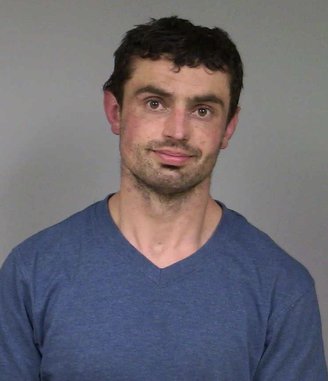
After arriving in the area, deputies made contact with one male victim. The victim told deputies that he had arrived at the residence while a disturbance was occurring and was confronted outside by the suspect, 35-year-old Walter Wayne Wright. According to the victim, Wright reportedly pointed a firearm at him and threatened to kill him. The victim was able to flee the scene in his vehicle, however, as the victim was leaving the property, Wright reportedly fired his weapon, striking the victim’s vehicle. The victim was not injured during this incident.
Deputies attempted to contact the individuals inside of the residence, however, the persons inside refused to comply with deputies’ requests to exit. Due to the unknown status of additional victims and location of Wright, the Humboldt County Sheriff’s SWAT Team and Crisis Negotiation Team were requested to assist.
Teams negotiated with the individuals inside of the residence for approximately three hours. During this time, deputies learned that Wright had possibly fled the residence prior to deputy arrival. At approximately 12:51 p.m., a community member contacted the HCSO Emergency Communications Center with information regarding Wright’s whereabouts. Following up on this information, deputies responded to the 5200 block of Dows Prairie Road where they located Wright and took him into custody without incident.
Following Wright’s arrest and negotiations with the Crisis Negotiation Team, the individuals inside the residence agreed to exit and speak with deputies. Deputies confirmed that all involved parties were accounted for and that there were no injured persons on scene.
Wright was booked into the Humboldt County Correctional Facility on charges of attempted murder (PC 664/187), assault with a firearm on a person (PC 245(a)(2)), possession of a firearm within 10 years of conviction (PC 29805(A)(1)) and possession of a firearm with knowledge of an outstanding warrant (PC 29805(A)(2)), in addition to warrant charges for driving on a suspended license (VC 14601.2(a)), driving without insurance (VC 16028(a)), no evidence of current registration (VC 4000(a)(1)) and violation of probation.
This case is still under investigation. Anyone with information about this case or related criminal activity is encouraged to call the Humboldt County Sheriff’s Office at (707) 445-7251 or the Sheriff’s Office Crime Tip line at (707) 268-2539.
Press release from the Humboldt County District Attorney’s Office:
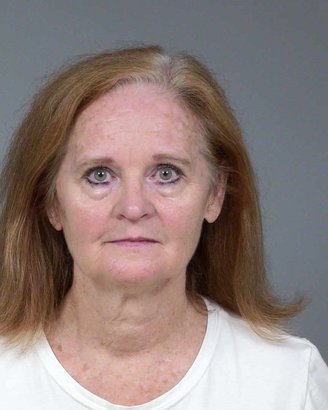
On February 1, 2021, Judge Christopher Wilson sentenced 68-year-old Peggy Esterley to 364 days in jail and two years of probation for her conviction on six counts of theft of an elder/dependent adult with the special allegation of embezzlement over $500,000. The District Attorney’s Office accepted the plea with possible sentences ranging from probation alone to 4 years in state prison. Judge Wilson noted the “egregious” amount of loss when sentencing Esterley. She was ordered to pay $1 million in restitution.
The victim hired the defendant as a bookkeeper for his small business in 1995 and believed they had developed a close personal relationship over the years. The defendant embezzled thousands of dollars per week over many years. In 2015 Esterley resisted the victim’s attempt to wind down the business. In August 2017 the embezzlement was discovered.
At that point Esterley admitted the crimes to the victim, attributed her conduct to financial difficulties and said she hoped the victim would forgive her. The victim died less than five months later at age 87. The Humboldt County Sheriff’s Office investigated the case. Braden Brawner, then a detective with HCSO now an investigator with the D.A.’s Office, executed search warrants for financial accounts, tax records, computers and cell phones.
A civil settlement provided $300,000 in restitution, but subsequent investigation revealed that Esterley had misrepresented both the duration and the amount of the embezzlement. Audits of the accounts, which were limited by a lack of historical records and Esterley’s practice of shredding documents, revealed theft of almost $1.2 million. Esterley’s expenditures included: gifts, inventory for her sister’s business, living expenses for her brother, a trailer, shopping sprees, and trips to Italy and Ireland.
Deputy District Attorney Shelly Small prosecuted the case. Michael Robinson represented the defendant.
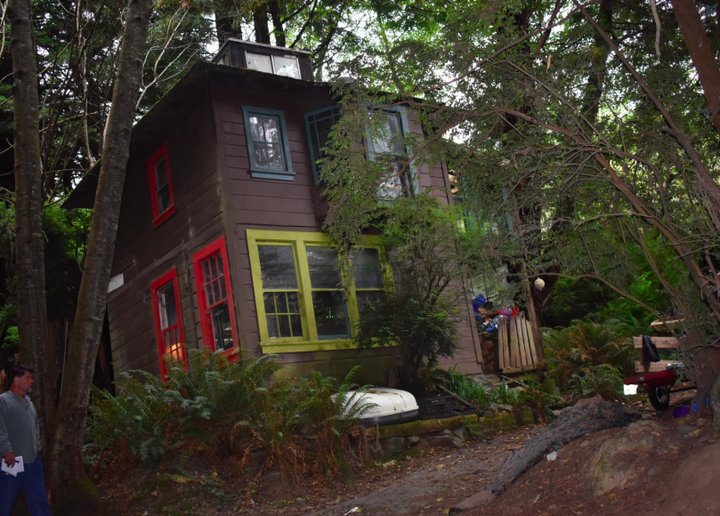
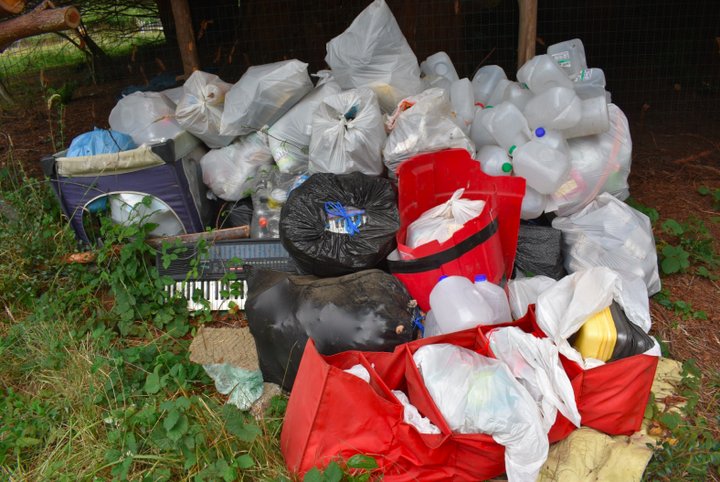
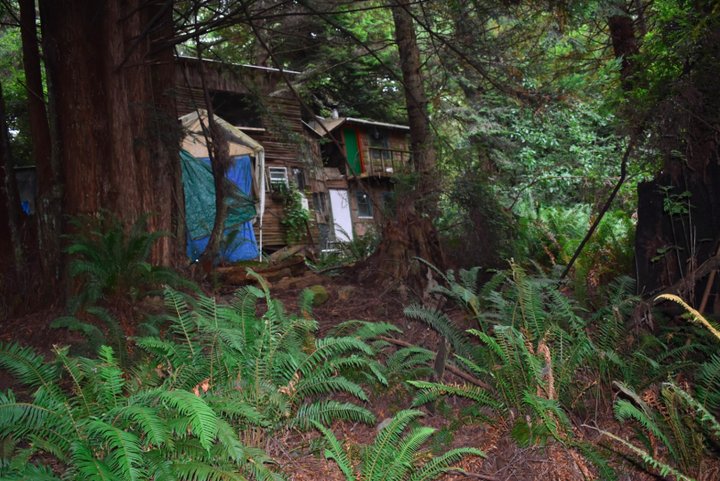
The property at 473 Quarry Road, just east of Trinidad, hosts multiple un-permitted residences, including makeshift structures and broken-down vehicles. | Photos via a Humboldt County inspection report.
A couple of former residents called in to Tuesday’s Board of Supervisors meeting to defend the property’s owner, Charles Garth.
“He has provided a service for people who couldn’t have found housing otherwise,” one woman said.
Another said she lived there when her son was a toddler and it was the only place she could afford. “That gave us an opportunity to stay in the area,” she said. “We were really poor.”
She’s now a homeowner with a good job in Arcata, she said, “and I know of several friends who can say the same thing. Charles gave us our start.” She argued that with the lack of affordable housing here in Humboldt, the county should be helping Garth, not punishing him.
County staff, however, say that Garth’s property has been an ongoing nuisance to neighbors and a danger to its residents and the environment. They presented documents to the board outlining a history of inspection warrants, abatement notices and a prolonged administrative battle that wended its way through the courts.
A collection of undated photos submitted to the board (some of which are included in this post) depict many of the violations, including un-permitted residences, corroded junk vehicles, exposed electrical wiring, disconnected plumbing, piles of discarded garbage and unapproved outhouse toilets. Several of the photos are labeled “Hazardous and Insanitary Conditions.”
###
After deliberating and hearing from the public, including Garth himself, the Board of Supervisors voted 4-1, with Fifth District Supervisor Steve Madrone dissenting, to approve a civil penalty of more than $62,000 against Garth.
The matter was on the board’s consent calendar, but Madrone pulled it for discussion.
“My concern,” he said, “is that when we levy large fines, does the property owner walk away, leaving us with the nightmare of the mess?”
John Ford, the county’s planning and building director, said the problems at the parcel date back to 2001. (Former North Coast Journal reporter Heidi Walters wrote an in-depth story about the pitched battle in 2008.) A settlement agreement was reached in 2009, with Garth agreeing to apply for permits and reduce the number of housing structures to two, but Ford said he never followed through.
“At this point, all avenues for the property owner have expired,” he said. “This may end up with us taking abatement action.” The county tries to avoid that outcome, but in this case, Ford said, the property owner has continued to appeal all enforcement actions, leaving no other options.
Madrone spoke up again, saying the lack of housing, both locally and statewide, should be considered. “The landowner, in many ways, was just trying to supply housing to people,” Madrone said, and he went on to recount his own family’s time living off-the-grid near Honeydew.
“We were poor,” he said. “We lived in a wikiup and had a pit privy.” He argued that until the county allows for alternative sewage disposal systems, such as waterless toilets, we’ll continue to lose housing opportunities.
“That being said,” Madrone continued, “this [situation] went way beyond. … There’s really no choice here.”
First District Supervisor Rex Bohn said he was glad to hear that Madrone had an environmentally correct privy in Honeydew, but the conditions on Garth’s property are simply unsanitary.
###
During the public comment period, it wasn’t just former residents who spoke up for Garth. SoHum resident Tom Grover accused Ford of misrepresenting the facts. He said the photos and the county’s narrative don’t reflect Garth’s recent cleanup efforts at the property, and he claimed that county planning staff had ignored a building permit application. (Ford disputed this, saying the permit application was woefully incomplete, and Garth allowed it to expire.)
“He has been taking care of poor people for 34 years,” Grover said. “Yes, it needs cleanup, but he has no funds to do that stuff with. …If you shut this [property] down, then these poor people will have nowhere to go.”
Recounting the emergency housing that was provided following Eureka’s mass eviction of the Palco Marsh homeless camps in 2016, Grover said the county shouldn’t leave these residents in the lurch or punish Garth.
“It would be a miscarriage of justice to put this on somebody who’s just trying to do the right thing,” Grover said.
Garth had some trouble calling in to the meeting, but when he succeeded in connecting his line, he said the county’s photos didn’t represent the current state of the property, he decried the “environmental disaster” of a Mercer-Fraser quarry surrounding the parcel, and he lamented county’s attitude toward housing generally.
“In Trinidad, no one lives there,” he said, suggesting that most of the homes are owned by rich people who don’t even reside in them for most of the year. “Everyone who lives in my place, they work,” he said. “I have a nice crew. I’ve done so much cleanup. … We’re happy. We have gardens. We’re raising kids.”
He said he has a contract with the county and alleged that the county hasn’t held up its end of the bargain. He said his lawyer had a degenerative brain disease and “probably died on me,” and finally, exasperated, he said, “I’m kind of over it at this point. You guys want the property, you can have it.”
But he appeared to rethink this resigned stance and turned defiant again. “We made a contract with you guys,” he said. “You gonna stick with your side of the bargain or what?”
###
After the public comment period ended, Ford contested some of the statements. There was no contract between Garth and the county, he said; rather, “there was a settlement agreement that wasn’t complied with.”
The forested parcel is zoned agriculture general (AG), meaning no more than two housing units are allowed. “To have many, many, many families on the site is inconsistent with the zoning,” Ford said, adding that while the process has been “difficult and contentious,” the county still wants to work with Garth to get the parcel cleaned up and in compliance with county codes.
The board was being asked to approve an administrative civil penalty assessment of $62,431.79, which would cover a $45,000 in fines approved by Humboldt County Superior Court plus more than $17,000 in administrative staff costs accrued during the course of this saga.
Bohn made a motion to approve the assessment, and Third District Supervisor Mike Wilson seconded the motion. Madrone did not state a reason for his dissenting vote. A voicemail left Tuesday afternoon requesting more information was not immediately returned. Regardless, the rest of the board voted yes, approving the civil penalties.
Bail
was set at $1.5 million today for a former teaching assistant charged
with sexually abusing a Fortuna middle school student in 2017 and
2018.
Gibson.
Judge
Christopher Wilson advised Matthew Oliver Gibson, 29, that he has
been charged with two counts of aggravated sexual assault on a child
under 14, continuous sexual abuse of a child under 14 and having
substantial sexual conduct with a child.
Gibson, who was
arrested Jan. 29 at his McKinleyville residence, appeared via
videocamera from Humboldt County Correctional Facility. Wilson
appointed the Public Defender’s Office to represent him, and Deputy
Public Defender Luke Brownfield entered pleas of not guilty on his
behalf. Because of the charges, Brownfield waived a bail hearing.
Asked
if his plea was not guilty, Gibson responded “Sure. Yeah.”
According
to Fortuna police, Gibson assaulted the girl while he was working in
an afterschool program at Toddy Thomas Middle School in Fortuna. He
has not worked at the school since December 2018. The alleged crimes
were not reported until last month.
Deputy District Attorney
Carolyn Schaffer, appearing today via Zoom, said she understood
Gibson has hired private attorney Russ Clanton to defend him. But
Gibson did not mention having an attorney, so for now the Public
Defender’s Office has his case.
Wilson
also informed Gibson that if he is convicted of the substantial
sexual conduct charge, any sentences he receives would be served
consecutively.
Alone,
the charge of aggravated sexual assault of a child can mean a prison
term of 15 years to life.
Gibson’s
preliminary hearing is scheduled for Feb. 16. Because of the nature
of the charges, the defense did not request a bail hearing.
Also
arraigned on serious felony charges today was Daniyel Ray Church,
arrested Jan. 29 after a four-hour standoff with law enforcement on
Buhne Drive in King Salmon.
Church.
Church,
46, allegedly barricaded himself in his home, with his juvenile son
held hostage. After hours of futile negotiations between Church, a
sheriff’s SWAT team and the Crisis Negotiation Team, officers
forced entry and found the boy unharmed.
Judge
Christopher Wilson advised Church he is charged with kidnapping with
the special allegation that he personally used a firearm. He also was
booked on a warrant alleging corporal injury to a spouse or
cohabitant, and with stalking.
Church
appeared in court via videoconference from the jail. At one point he
commented “I don’t have no firearms or nothin.”
Wilson
appointed the county Conflict Counsel’s Office to represent Church,
and Deputy Conflict Counsel Owen Tipps entered not guilty pleas on
his behalf. A bail hearing was set for Thursday, and the preliminary
hearing for Feb. 16.
Wilson
said Church would be served with an order to stay 100 feet from the
alleged victim and not to attempt any kind of contact. The judge said
it’s common that when people receive a stay-away order, the first
instinct is to call the victim and ask what’s going on.
Press release from the Humboldt County Sheriff’s Office:
The Humboldt County Sheriff’s Office is pleased to announce that due to the careful implementation of new data tracking, due diligence and continued compliance with the requirements of the California Department of Justice’s (DOJ) Stipulated Judgment dated Feb. 14, 2018, the DOJ is no longer seeking to extend the Stipulated Judgment’s monitoring period for the Sheriff’s Office.
“I am confident this is the correct decision by the Attorney General,” Humboldt County Sheriff William Honsal said. “The Department of Justice recognizes the diligent work our team has accomplished in the past three years. We have built strong relationships with Child Welfare Services (CWS) and community partners to make reporting and investigating child abuse more accurate and efficient, and to ensure that no child is left behind.”
Following entry of the Stipulated Judgment, the Sheriff’s Office immediately implemented the required improvements, including:
Revised Child Abuse and Domestic Violence procedures to reflect Child Abuse and Neglect Act (CANRA) requirements, ensuring all staff complete training and remain up-to-date on current requirements;
Established a CANRA Coordinator who conducts weekly audits of CWS cross reports and serves as a liaison with CWS, ensuring compliance with CANRA and timely cross reporting;
Created an electronic system to document and track CWS cross reporting and referrals, ensuring accurate records and clear communication between the Sheriff’s Office and DHHS;
Collaborated with CWS to create, and continues to participate in, a Community Task Force consisting of internal and external stakeholders, working together to identify areas of improvement.
While the DOJ is seeking to extend the monitoring period for Humboldt County CWS, it has agreed to release the Sheriff’s Office from court-ordered monitoring. Nevertheless, the Sheriff’s Office has agreed to continue participating in the Community Task Force meetings with CWS and to maintain the improvements resulting from the Stipulated Judgment. Like all other Countywide law enforcement agencies, the Sheriff’s Office will still be required to meet the mandates outlined by California law and will work to continue improving our services while ensuring full compliance with State law.
The Sheriff’s Office is committed to working together with CWS to improve outcomes regarding the abuse and neglect of children and families within the Child Welfare System and looks forward to continuing to improve communication and efficiency between the agencies.
No one ever said that distributing a vaccine to tens of millions of Californians spread out across 58 counties in the middle of a pandemic would be easy.
But Gov. Gavin Newsom came pretty close last October.
At a press conference on the 19th, the governor assured the public that California has “long been in the vaccination business.” That projection of confidence came just three days after the CEO of the pharmaceutical giant Pfizer announced the company would seek the regulatory greenlight for its new COVID-19 vaccine. California, the governor said, would be ready.
Roughly 19 million flu shots every year. The recent history of a mass Swine Flu inoculation program in 2009. An early partnership with the federal government to plan for the coming distribution campaign. A new “Logistics Taskforce” established within the governor’s Office of Emergency Services. The governor cited all this as evidence that “experience with vaccinations is well established here in the state of California.”
More than three months later, the state is still scrambling to deliver. And the mammoth logistical headache of inoculating a state desperate for a return to pre-pandemic normalcy has become a pressing political one for Newsom. According to the most recent federal data, California is still sitting on 40% of its allotted vaccine, putting it in the bottom third of all 50 states. The messaging also has been hard to decipher, with information from the governor’s office sometimes at odds with that being issued by the counties.
With Newsom now facing an increasingly credible recall effort, the slow, sputtering vaccine rollout raises the question: Didn’t the state have a plan for this?
Originally yes, it did — although the governor’s Office of Emergency Service isn’t responding to questions about those early preparations. During that Oct. 19 press conference, Newsom said that a state logistics task force had been working on a vaccine distribution plan for months. Public health experts say the state’s initial approach was modeled on the tried-and-true approach it uses to distribute flu shots — a plan that placed the bulk of the administrative onus on county governments, with the state serving a standard-setting and advisory role.
In the past, giving local health officers that flexibility “has been very advantageous,” said Dr. John Swartzberg, an infectious disease specialist and professor emeritus at the University of California, Berkeley School of Public Health.
“Unfortunately, during a pandemic, that approach can make it very difficult to implement things. And I think the state has recognized that.”
So last week, Newsom announced Plan B: proposals that he promises will simplify and speed up the process of pumping out vaccines. What went wrong with the initial plan — and shouldn’t the administration have anticipated these hiccups?
“For the past year, the entire approach that the governor has taken to the pandemic has been disorganized and petulant.” — Jeff Smith, Santa Clara County executive officer
Many public health experts say most of the factors that have slowed the state’s inoculation plan are outside the governor’s control: California’s size and complexity, a fragmented public health care system spread over 58 counties, unsteady federal leadership and the challenges of transporting, storing and administering current COVID-19 vaccines.
But some of the hurdles may be of the administration’s own making.
The state’s initial distribution framework, which prioritized Californians by occupation group, underlying medical conditions and housing status, may have slowed the process by creating a system that was difficult to administer and hard for the public to understand.
And some critics bemoan what they see as the governor’s penchant for making vague, premature announcements prior to consulting those most affected.
Jeff Smith, executive officer for Santa Clara County, is one of those critics.
“For the past year, the entire approach that the governor has taken to the pandemic has been disorganized and petulant,” said Smith, who disagrees that county governments are sitting on unused vaccine. “Whenever he feels like he’s getting bad press, he does something. And the things that he does are not wise things and they’re not driven by scientific decisions,” said Smith.
A vaccine rollout that is unprecendented
No matter how much blame Newsom deserves, Democratic consultant Garry South said the governor is sure to get the lion’s share.
“I’ve seen this movie before,” said South, former campaign manager to Gray Davis, the only governor in California history to be successfully recalled. Davis, South noted, was booted from office in large part for his handling of the state’s electricity crisis in 2001. ”The governor gets blamed not for the problem, but for not solving the problem.”
California is not the only state struggling. Vaccine production has been slower than many experts expected. Public health authorities say the outgoing Trump administration offered neither the guidance nor the necessary funding to states. The Pfizer vaccine must be stored at -94 degrees Fahrenheit, while the Moderna version can be kept at a balmy -4 F. Once thawed, both have a short shelf life.
“I would be hesitant to make any really strong judgments right now as to where things have gone wrong,” said Democratic state Sen. Josh Newman from Fullerton, one of roughly a dozen state Democratic legislators who get weekly Zoom briefings on COVID from the governor’s office. “It’s unprecedented (and) it’s inherently complicated.”
The complexity of the current vaccine campaign is ”a quantum leap” ahead of all of our other vaccination programs, said Swartzberg. “No one that I know expected it to go smoothly. And, you know, right now it looks like it’s gone just horrifically. But I think we’re really being granular, when — day by day — we critique it.”
It’s no coincidence that the states that seem to have had the most success in pushing out vaccines — West Virginia, the Dakotas — have populations a mere fraction of Los Angeles County’s and without nearly the linguistic and cultural diversity, said Jeff Goad, chair of the Department of Pharmacy Practice at Chapman University. He sits on the state’s Drafting Guidelines Workgroup, a panel of experts that help determine which groups should receive vaccines first.
“We’re in a class by ourselves,” he said.
“They’re burnt. They’ve just been running full speed for a year, and humans can’t take that.” — Tony Iton, California Endowment senior vice president
In explaining the slow rollout last week, the governor likened changing policy to “shifting course” on a “large ship.” But given how fragmented the state’s healthcare system is, with vaccine distribution responsibilities split up among 58 county governments, nine multi-county hospital networks and at least half a dozen pharmacy chains, “it’s more like a flotilla,” said Anthony Wright, director of Health Access and a member of the state’s vaccine advisory committee.
The state’s early planning efforts were also the victim of bad timing, said Tony Iton, a senior vice president of the California Endowment. Vaccine deployment planning took place just as the state’s COVID caseloads were peaking once again and hospitals in Southern California were turning away ambulances.
“The very people you need to sit back and do the analysis and research and the planning are caught up managing the day to day issues related to the just incredible surge we saw over the winter,” he said. “I know the folks that are working up there (in Sacramento) are — they’re burnt. They’ve just been running full speed for a year, and humans can’t take that.”
The governor’s early optimism notwithstanding, none of these hurdles were lost on those inside the Newsom administration this winter.
Six months = 300,000 shots a day
In a mid-December podcast produced by the Office of Emergency Services, Grady Joseph, assistant director for the state’s Covid-19 Logistics Task Force, predicted that the vaccination campaign would make the state’s earlier organizational struggles to buy and distribute personal protective equipment and ramp up testing “look fairly trivial.”
“If you want to vaccinate everybody within a six month time period, assuming you have the supplies and the vaccine, we have to do an excess of 300,000 vaccines a day,” said Grady. “If you compare that to the amount of COVID testing we’ve done, some of the highest days we’ve ever had have been 215,000.”
Yesterday the state administered a little over 167,000 doses, according to data collected by the Los Angeles Times.
The overhaul of the state vaccine plan announced over the last two weeks are intended to speed up the process.
On Jan. 22, the state launched a website where anyone in the state can sign up to be notified when they are eligible for a vaccine. Up until then, confused and anxious Californians seeking information would often ping pong between their county, providers and insurers.
The governor also announced that the state would hire Blue Shield to coordinate where vaccines will go and to gather data on distribution.
And last week, the governor announced a simplified eligibility system. Once counties finish vaccinating healthcare workers, next in line will be teachers, childcare workers, agricultural workers and emergency responders, and Californians over the age of 65. After that, counties will move through their populations solely by age.
“No one that I know expected it to go smoothly….I think we’re really being granular, when — day by day — we critique it.” — John Swartzberg, UC Berkeley School of Public Health Professor Emeritus
But demonstrating just how politically fraught vaccine distribution is, both the new eligibility plan and the Blue Shield announcement have earned the governor ire from fresh quarters.
The cost of simplifying the eligibility framework is that many high-risk candidates like grocery store clerks and younger people with chronic health issues or disabilities, have been pushed to the back of the line.
José Padilla is director of the nonprofit California Rural Legal Assistance and sits on the state’s community vaccine advisory committee. He said he was taken aback when, two weeks ago, State Epidemiologist Erica Pan and Surgeon General Nadine Burke Harris floated the idea of the new approach.
“Changing the eligibility criteria that is going to impact the rollout six meetings into the process just didn’t feel fair to me,” he said.
On Friday, the directors of lobbying groups that represent the state’s counties and county health executives wrote a joint letter to the governor warning that the Blue Shield proposal, “for which there is little detail, threatens to eclipse our members’ core local public health expertise and functions.”
“There have been so many fits and starts and changing directions of the vaccine rollout that it’s really tied the hands of counties,” said Graham Knaus, executive director for the California State Association of Counties. We “have gotten in our own way, in terms of the instability of what the game plan is.”
Vaccination: Newsom ‘shooting for the moon’ yet again?
Smith, the executive of Santa Clara County, argued that the state’s decision to bring in a company to ensure that doses are accurately being administered a “solution looking for a problem” and based on inaccurate data. In an email exchange he shared, an employee with the California Department of Public Health inquired about 24,159 doses that were “unaccounted for.” Smith said the real number is zero.
“The main problem right now is the amount of vaccine that’s available, not the utilization or distribution,” he said. “This one-size-fits-all (approach) hiring an insurance company is really just a political effort to try to take the heat off of the governor for not having a confident approach to the pandemic.” Smith noted that the county was only informed of the Blue Shield decision an hour before it was made public.
To critics, the Blue Shield announcement is part of a pattern of unclear and premature communication from the administration.
In mid-January, for example, the governor announced that all Californians over 65 were now eligible for the vaccine. But that was a state recommendation, a subtlety lost on many Californians who set about scrambling for their dose. Some counties expressed frustration, noting that limits on vaccine supply would make it impossible to vaccinate all residents over that age anytime soon.
“If there’s an expectation in a community that they’re now eligible and can hop into a provider or make an appointment and get it, but we can’t deliver that, that’s a very difficult place to be,” said Knaus at the California State Association of Counties.
For Newsom, California’s vaccine delay poses a quandary. He has long made big ambitious goal-setting a hallmark of his political style. When running for governor in 2018, he promised to introduce a state-funded single-payer health care system, despite a prohibitively high price tag and no obvious political pathway in the Legislature. He also vowed to oversee the construction of 3.5 million new homes — which would require the state to break its annual construction record by 36% every year for eight years.
That shoot-for-the-moon approach may serve the governor well on the campaign trail, said Dan Schnur, a professor at USC’s Annenberg School of Communications who has worked the press operations for Republican politicians such as former Gov. Pete Wilson and the late Arizona U.S. Sen. John McCain.
On most issues, making big, inspiring promises and then failing to fully deliver “hasn’t caused him any problems because most voters aren’t paying close attention to the day-to-day machinations of government,” said Schnur.
“But when it comes to COVID, they are paying close attention.”
###
CALmatters.org is a nonprofit, nonpartisan media venture explaining California policies and politics.
Craig Leo Perrone passed away January 29, 2021 after a courageous and
hard-fought battle with ALS (Amyotrophic Lateral Sclerosis or Lou
Gehrig’s disease) at the age of 73. Craig was born to Leo and Clara
Perrone on September 25, 1947 in Eureka.
In
his younger years Craig loved and played baseball. He played on the
Eureka High School championship teams of 1964 and 1965. Craig enjoyed
deer hunting, duck hunting, and fishing. He had a profound love of
nature and animals. Craig was a huge boxing fan and attended several
Oscar De La Hoya fights in Las Vegas with his daughter Jennifer who
shared his love of boxing.
Craig
had many passions in life, one of which was his family. He married
his high school sweetheart Jeanne Perrone in 1968. They would have
celebrated 53 years of marriage this April 26, 2021. Craig and Jeanne
had two children, daughter Jennifer and son Jason. Craig had two
grandchildren, Malia and Jamin Guilbert. He loved attending their
soccer, basketball, volleyball and football games, never missing a
chance to cheer them on. Most recently, he attended every high school
game for both Malia and Jamin in his electric wheelchair. Wearing his
breathing machine, he refused to miss a second, including attending
the Dick Nicali championship game at HSU in 2020, to watch Malia hit
the game winning shot to clinch the title for Eureka High School.
Craig loved spending time together every summer on the family
houseboat at Shasta Lake. He despised the heat, and complained the
entire time it was too hot, but toughed it out year after year
because he loved the quality time with his family. Craig often took
the grandkids out for adventures to parks, zoos, shopping, ice cream,
pottery painting, target shooting or anything else they told him they
wanted to do.
Craig
loved business and had a knack for it from an early age. In 1958 at
11 years old he started selling popcorn in the Food Mart parking lot.
His popcorn was such a hit with customers Food Mart bought a
commercial popcorn machine and put him out of business. They in turn,
offered him his first job sweeping sawdust on the floor of the
butcher department which Craig quickly accepted. He went on to
graduate from Eureka High School and Humboldt State University (Cum
Laude) where he received his Lifetime California Secondary Teaching
Credential. He intended to become a History Professor. He instead
ended up following in his father and grandfathers’ footsteps and
began a career as a liquor salesman with McKesson Liquor Company and
Andrew Rosaia Company.
In 1987 at the age of 40, Craig completed the
purchase of Andrew Rosaia Company and changed the name to DelReka
Distributing Company. His work ethic, drive and desire to succeed was
unparalleled and he worked 60+ hour work weeks for the better part of
25 years. He continued to work until his disease no longer allowed
him to. He met many great friends and colleagues over his years in
the Beer business. As his illness progressed his close friends sent
him texts or emails that he sometimes shared with his family.
His
sales supervisor, just two days before his passing, had this to say: “I
and all of us here at DelReka miss you and keep the lessons that you
instilled in us as a basis of our daily actions. Good is never good
enough, there’s never enough time in the day, all business
relationships do not start with business they start with
relationships. We really love you and your family very much and are
striving to do our best to make you proud.”
His friend and longtime
accountant said: “You are a man of passion, integrity, empathy and
fun. I will miss you, the strength of your message and mostly, the
twinkle in your eyes.”
Dave Jensen of Redding Distributing, whom
Craig considered a brother, said: “You and only you gave us small
distributors credibility with your involvement with CBBD and NBWA.
Not sure any of us ever got respect but you did because you earned
it. Thanks for helping us when none of us were willing to do what you
did.”
Finally,
Duke Reyes, CEO of Reyes Holdings, the largest beverage distributor
in the nation, who served on the California Beer and Beverage
Distributors board with Craig, captured who Craig was and who he
wanted to be when he sent, “I will miss you. You have been the best
of partners when certain people could not behave. You stood and
fought the fight with me. You have a great family, great business and
the heart of a lion.” He was a small distributor yet stood amongst
the giants of the industry.
Craig
was a strong believer in supporting his community and did so
throughout his life. He donated to, contributed to and sponsored many
events over the years, the majority of which were anonymous. His
professional and community service involvement included:
Chairman,
California Beer & Beverage Distributors
Regional
Director, 7 Western States, Management Board Member, National Beer
Wholesalers Association, DC.
Director,
Carrington Company
Founding
Director, Redwood Capital Bank
Director,
Bank of Loleta
Director,
Castle Management Group 50+ Chains
Director,
St. Joseph Hospital Foundation and Advisory Boards
Director,
Special Olympics
Director,
United Way of Humboldt
Director,
Eureka Rotary Club
President,
Ingomar Club
Chairman,
Humboldt State University, President’s Advisory Board, 4 years,
member 8 years.
Humboldt
State University Distinguished Alumni Award Recipient.
Humboldt
State University Athletic Booster of the Year Award Recipient.
There
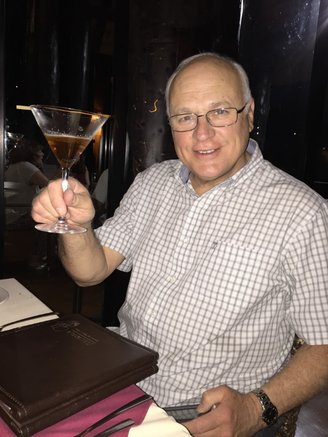
was nothing Craig loved more than a good martini, food and
conversation. In his final minutes on earth, he signed to Dr. Le he
wanted a martini. He loved Christmas, especially Christmas lights. He
had a passion for coin collecting and was an avid history buff. He
had plans to write history books about the historic bars in Old Town
Eureka and to get involved with several local museums in his
retirement. He loved to give his friends and family nick names. Malia
was “Missy M” and Jamin was “Big Guy” or “Mister Muggles”
when he was younger.
Craig
never met a stranger, he loved people. He talked to people he had
just met as if he had known them all his life. He often enjoyed
inviting people to join the morning coffee group he was a part of. If
one became a friend of his they would be a friend for life. He had a
huge heart, quick wit and a sparkle in his eye that stayed with him
until the end. Craig had a huge circle of friends and acquaintances
but a small circle he considered family. A special thank you to Dave
Furtado, Dave Jensen and Rob Arkley for your continued friendship,
visits and texts throughout this very difficult last year. Craig’s
devotion to his family and close friends was unwavering.
Craig
was preceded in death by his father Leo Perrone and his mother Clara
Perrone.
Craig
is survived by his loving wife Jeanne Perrone, daughter Jennifer and
her husband Rico Guilbert, son Jason Perrone, grandchildren Malia and
Jamin Guilbert, sister LeAnne Morini, nephew John Elam and his son
Tully Elam, niece Janelle Jackson and her children Gregory Jackson,
Collin Jackson, and Clara Jackson, and sister-in-law Dee McKittrick,
her husband Tony Cutsforth and nephew Steve Hill.
A
special thank you to Dr. Long Le of St. Joseph Hospital for providing
exemplary care.
Craig
had a devout resolution to accept this brutal disease which he could
not control. He lived his final days with grace, courage, love and
humor. He sent an email to a friend early on in his disease, “While
no disease is good, ALS is particularly brutal. It challenges one’s
endurance and tests one’s faith. It is torturous in so many ways.
It strips you of your dignity, but I refuse to give in to it. My
spirits remain high, and my faith is strong.”
He
fought a good fight. His love and light will be missed. As he so
often told his family in his last tough couple years, “All is
well…….”
Memorial
contributions can be made in Craig’s honor for research through the
ALS Therapy Development Institute via Go Fund Me at
this link.
###
The obituary above was submitted on behalf of Craig Perrone’s loved ones. The Lost Coast Outpost runs obituaries of Humboldt County residents at no charge. See guidelines here.