
Screenshot of Tuesday’s Humboldt County Board of Supervisors meeting.
###
Looking to strengthen protections for old-growth trees and prevent future misinterpretations of the Lower Redway “Q Zone,” the Humboldt County Board of Supervisors today directed staff to clarify certain aspects of the zoning ordinance, which was established in 1990s to safeguard redwoods near the John B. DeWitt State Natural Reserve.
The board’s action, passed in a unanimous 5-0 vote, directed county staff to form an open working committee to review potential changes to the ordinance, including expanded terms for “imminent danger” and “immediate hazard,” as well as minimum standards for arborists’ and foresters’ reports. The working committee will include Lower Redway residents, forestry experts, PG&E representatives and others.
The board also directed staff to come up with a draft ordinance that would expand protections offered by the Q Zone to forested areas across the county. The board asked staff to set a moratorium on proposed tree removal projects while staff drafts the new ordinance. The action was opposed by First District Supervisor Rex Bohn, who argued that a countywide ordinance was “too enveloping.”

The Lower Redway Q Zone is depicted in yellow. Click to enlarge. | Map: County of Humboldt
As previously reported by the Outpost, Q Zone protections came to the fore earlier this year after four old-growth redwoods were felled on a residential property at Oakridge Drive and Briceland Road in Lower Redway. The incident sparked outrage among environmentalists and raised questions about whether county policies outlined in the Q Zone Ordinance were being properly applied.
Speaking at today’s meeting, Planning and Building Director John Ford admitted that staff had an “incorrect understanding” of the county’s jurisdiction in the Q Zone, having previously thought that CalFire had the ultimate authority.
“Through this process, it was confirmed that the county does have the ability to implement local ordinances in situations where the property is less than three acres in the area, and not zoned TPZ [timber production zone],” Ford said. “[T]here [are] a number of concepts contained within the Q Zone that could be clarified and improved.”
For example, the ordinance allows for a tree in “imminent danger of falling” to be removed, but it does not set terms for what qualifies as “imminent danger.”
“It’d be better to give some more clarity to what an ‘imminent danger’ is and what an ‘immediate hazard’ is because trees can pose hazards for other reasons than just falling,” Ford continued. “It should be clear from the county’s perspective what that means and under what circumstances that a tree could be successfully considered for removal. And to correlate with that, there should be a more robust requirement process for determining the health and the safety of the tree.”
Ford also expressed willingness to draft a separate ordinance that would safeguard old-growth trees throughout the county.
All who spoke during public comment spoke in favor of the proposed changes to the Q Zone, though Redway resident Sue Maloney urged the county to keep better records to preserve institutional knowledge and avoid misunderstandings in the future.

Maloney
“We need to make sure that all these discussions get passed on to your successors … because there seems to be this kind of selective institutional amnesia every 10 or 15 or 20 years,” Maloney said, adding that the wrong ordinance was attached to the board’s agenda. “Is there a way to keep this in the front of everyone’s memory so that [it] doesn’t get lost again?”
“And I’m in favor of protecting more trees countywide, but not if it means delaying or weakening the Q zone for Lower Redway,” she added.
Following public comment, Ford emphasized that whatever comes next has “got to be a very public process.”
“This isn’t something that can be done in a closet,” he said. “Whether we work at [assembling] a specific group that works at it, or just have a lot of public meetings through the process … it’s got to have a lot of input.”

Ford
“I did have the experience of writing a tree preservation ordinance once before … and that was done in committee with a lot of different people representing the community,” Ford added a little later in the discussion. “It turned out to be quite extraordinary, and actually developed new areas of regulation that hadn’t been applied to trees before.”
Third District Supervisor and Board Chair Mike Wilson spoke in favor of a countywide ordinance to protect old-growth across the county. He floated the idea of setting a temporary moratorium while staff works on the ordinance to prevent “folks from trying to get ahead of what we’re trying to work on.”
Second District Supervisor Michelle Bushnell asked what would happen if someone applied for a special permit to remove a hazardous tree from their property under the moratorium. Ford said the county would still be able to issue an emergency permit for tree removal.
Bushnell made a motion to approve staff’s recommendation, including direction to create a countywide ordinance and set a temporary moratorium, which was seconded by Fourth District Supervisor Natalie Arroyo.
Bohn spoke in favor of the proposed changes to the Lower Redway Q Zone but felt a countywide ordinance was a step too far. He said he would not support a moratorium “of any sort.”
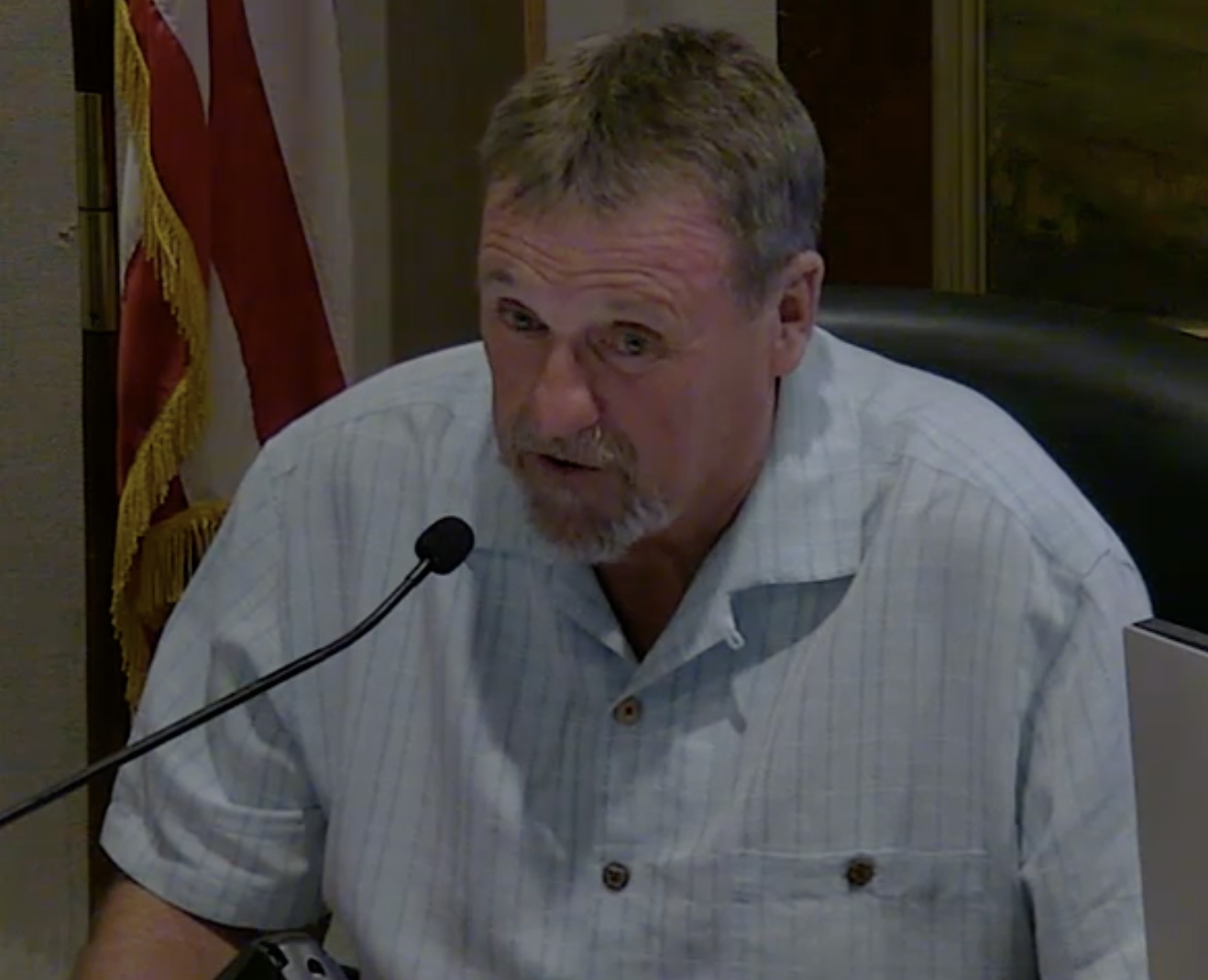
Bohn
“[As] somebody that lives with redwood trees, they’re a giant weed at the end of the day because I’m getting too old to climb my ladder now,” he said. “They’re wonderful and everything else, but my neighbors are asking for trees to come down … but I don’t have a place to fall ‘em because I’m in too small a lot. … I’m just saying, this hasn’t been a giant issue, but it’s becoming an issue to control … property rights. … In 15 years, I’ve had four of these or three of these [requests to remove trees], and now we’re going to encompass the whole county.”
After some additional discussion among board members, Bushnell decided to split her motion in two to separate the recommendations for Lower Redway from the countywide proposal.
The proposed Q Zone amendments passed in a 5-0 vote. The second motion passed 4-1, with Bohn dissenting and Bushnell noting that she was “amenable to the discussion coming back” to board, but not necessarily supportive of a countywide ordinance.
Revisiting the Beau Pre Heights Subdivision
Earlier in the meeting, Fifth District Supervisor Steve Madrone pulled an item concerning the final maps for the Beau Pre Heights Subdivision from the consent calendar for further discussion.
The Danco Group project, first approved by the Humboldt County Planning Commission in 2011, aims to turn a 197.3-acre forested parcel near McKinleyville, between Norton and Murray roads, into a 79-lot subdivision with parcels ranging in size from 1.03 to 4.79 acres. The commission has granted Danco numerous extensions on the project over the past decade to allow the builder to complete necessary improvements.

A map of the Beau Pre Heights Subdivision, located north of McKinleyville. | Map via County of Humboldt.
After a brief overview of the project from Public Works staff, Madrone acknowledged that the project has been in the works for many years, but the number of extensions were “a bit unusual.” He expressed concern about various environmental issues (fragmentation of forests, wetland delineations, fire danger, wildlife impacts, etc.) and suggested that Danco conduct a comprehensive environmental impact report (EIR) to assess cumulative impacts.
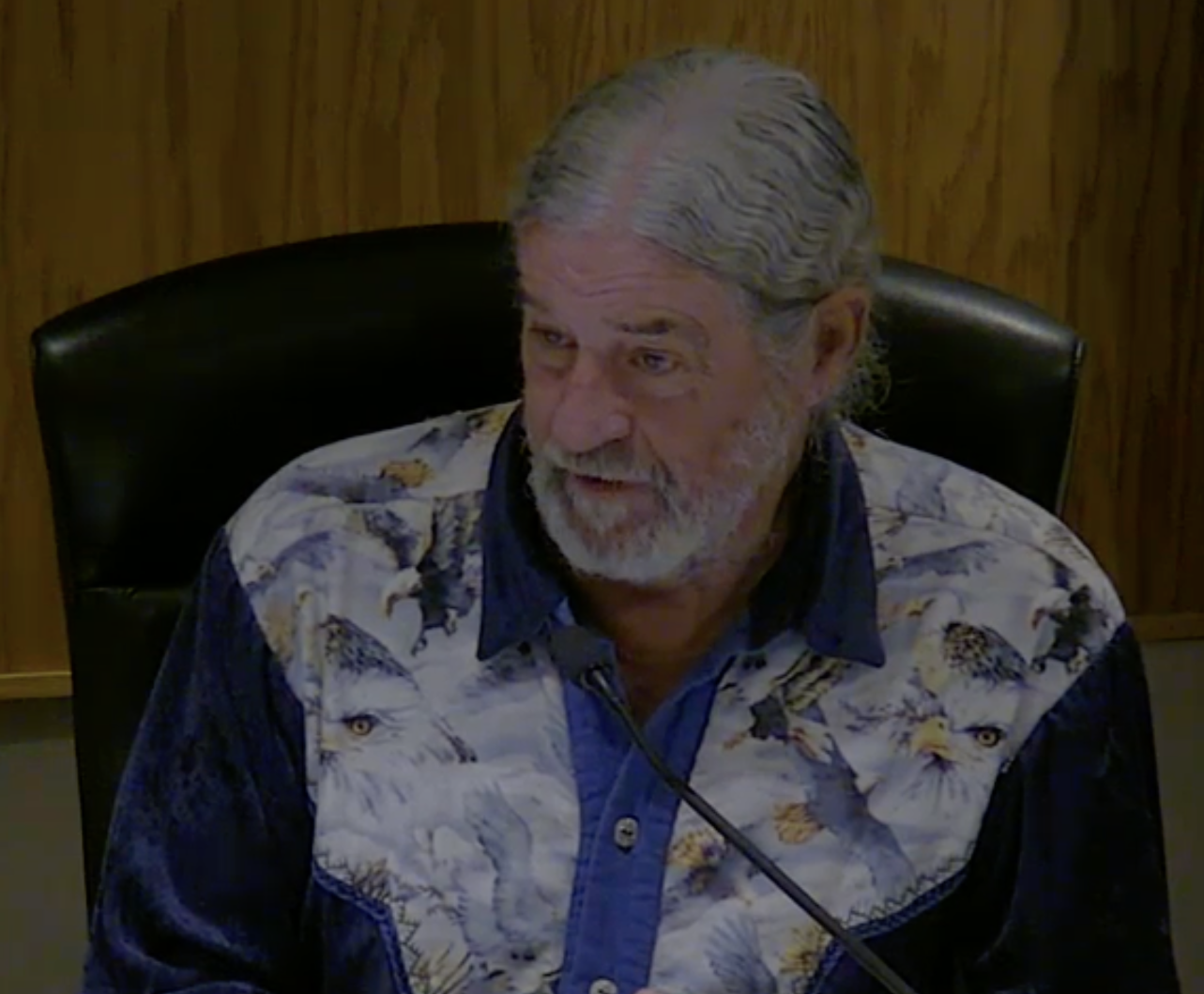
Madrone
“I pulled this [item] because it seems to me that the EIR that was done in 2011 was incomplete in terms of actually assessing the cumulative impact of this entire development,” Madrone said. “I’d be curious to know why the developer chose not to do a comprehensive EIR at that time.”
Bohn and Bushnell took issue with Madrone attempting to apply 2026 standards to a project that was approved in 2011. Bohn asked staff if it was appropriate to “change horses in the middle or the race,” or if it would open the county up to potential liabilities.
Ford said the Subdivision Map Act was written to “provide security for a developer once they receive the approval” from a governing body. “If they do everything they’re required to do, there’s not a second bite of the apple being taken.”
“What happened 15 years ago, as troubling as it may be, is not what’s at issue today,” Ford continued. “What’s at issue today is whether or not the applicant has put together a package to complete all the required improvements of the tentative map, the local ordinance and the Subdivision Map Act. We believe they have.”
Madrone argued that the wetlands study was done in a “piecemeal fashion,” and again called for a comprehensive wetlands delineation.
Speaking via Zoom, Chris Dart, Danco’s president of development and lead project manager for the Beau Pre Heights Subdivision, told the board that wetlands studies were vetted through the U.S. Army Corps of Engineers, the Water Quality Control Board and the California Department of Fish and Game, now the Department of Fish and Wildlife.
“Every single lot was evaluated,” he said. “… We’ve invested [and] we’ve done everything we’ve been told to do. We followed the process to the T, and we’re not trying to do anything that’s manipulative or anything to that effect. … I understand that rules change … but we are following that process, and we believe that we’ve done that to the letter of the law.”
A few people who spoke during the public comment portion of the meeting suggested the board continue the item to next week to give members of the public and the board more time to research the project’s history.
Arroyo and Wilson entertained the notion, but Ford said he would “caution expectations,” implying that pushing the item out a week wouldn’t change the outcome.
“You don’t get to go back and recreate what’s been done,” Ford said.
The board eventually voted 4-1, with Madrone dissenting, to approve the item.
CLICK TO MANAGE