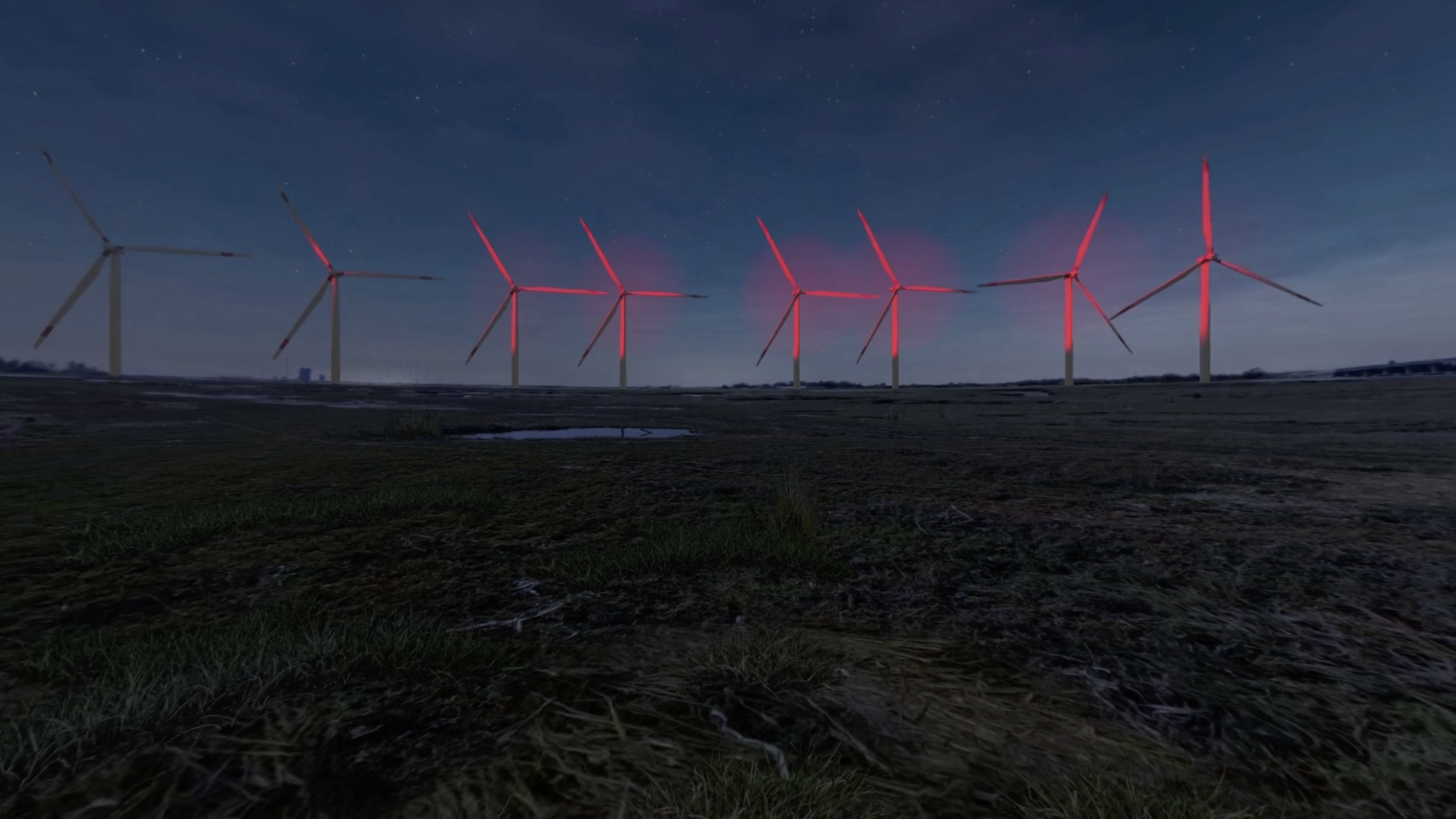
Video: Wiyot Tribe
###
###
As the Humboldt Bay Harbor District continues to gather public feedback for the proposed Offshore Wind Heavy Lift Marine Terminal Project on the Samoa Peninsula, the Wiyot Tribe is urging residents to carefully consider the full scope of environmental impacts associated with port development.
Last week, the Wiyot Tribe published a video, “Wigi Past Present Future Story,” which highlights the cultural significance of Humboldt Bay and Tuluwat Island, the Tribe’s spiritual center of the universe, and warns that the offshore wind development could “significantly impact Wiyot ceremony” and “alter the ecology of the bay.”
“Although the terminal development is proposed as a singular project, it is tied to the larger offshore wind development plan for the North Coast,” according to a statement shared with the Outpost by Wiyot Tribal Administrator Michelle Vassel. “The proposed port development must be looked at wholly and in its entirety, to gauge the impacts of the port and the impacts various industries will have on Wigi. Our community must understand the scope of impacts, in their entirety.”
In the video, an unseen Wiyot elder speaks to a young man about an industrial terminal coming to Humboldt Bay “that could change everything.” Looking out over a computer-generated view of the Samoa Peninsula from Tuluwat at sunrise, the elder warns, “It is a fragile thing, this bay. One small shell is a loose thread, child. You pull it, and the whole tapestry comes undone.”
The scene dims, and several enormous wind turbines slowly spin at the future project site, glowing red in the nighttime fog. The elder explains that “balance matters,” and asserts that “clean energy in the wrong place can take more than it gives.”
“Here, it could unravel the bay, the wetlands and people who depend on them,” the elder says. “But fortunately, things could still change. Let’s tear down these giants and restore the bay.”
While the Wiyot Tribe has not announced its formal opposition to offshore wind development on the North Coast, tribal officials continue to raise concerns about the port development project and the proposed floating wind farm. In a statement, which can be read in full below, the Tribe urges the Harbor District to consider potential environmental impacts, as well as cultural, economic, recreational and commercial impacts. The statement also highlights dozens of species that live in and around Humboldt Bay that could be impacted by offshore wind development.
“It is imperative that the Harbor District work in consistent and ongoing consultation, partnership, and collaboration with the Wiyot Tribe to determine impacts to Wigi, Tuluwat, and surrounds,” the statement reads. “Impacts to these locations could include visual, noise, glare, air and water quality. Further, there is a myriad of other potential cultural and environmental degradation from the proposed project.”
The Tribe also reminds residents to submit written comment on the notice of preparation (NOP) for the Offshore Wind Heavy Lift Marine Terminal Project. Comments submitted through the NOP, which is the first step in the California Environmental Quality Act (CEQA) review process, will be incorporated into the project’s draft environmental impact report (DEIR).
The Harbor District will host two scoping meetings next month to give the public a chance to comment on the project. Meetings will take place at 5:30 p.m. on Wednesday, Nov. 4 at the Eureka Veterans Memorial Hall (1018 S H Street) and Thursday, Nov. 5 at the Samoa Cookhouse (908 Vance Avenue). More information can be found here.
Comments on the NOP may be submitted via email to projectcomments@humboldtbay.org. Those who prefer snail mail can send their comments in writing to: Chris Mikkelson, Humboldt Bay Harbor, Recreation and Conservation District P.O. Box 1030 Eureka, Calif. 95502-1030. All comments must be received or postmarked by Monday, Dec. 7.
###
The Wiyot Tribe has real concerns about the Humboldt Bay project. We want to inform locals that the Humboldt Bay Harbor, Recreation and Conservation District has released the Notice of Preparation (NOP) of the Draft Environmental Impact Report (DEIR) for the proposed Humboldt Bay Offshore Wind Heavy Lift Multipurpose Marine Terminal Project on the Samoa peninsula, directly across from the Wiyot center of the universe and ceremonial site of Tuluwat, as well as the recently reclaimed Digawututklh dunes property. The terminal has the potential to significantly impact Wiyot ceremony and a multitude of resources and alter the ecology of the bay, which the community, region, and wildlife all depend on. The Tribe asks that you become informed about the project and submit your comments to the Harbor District by the deadline on December 7, 2026.
The Wiyot people have lived in relation with the waters and lands of Wigi (“Humboldt Bay”) since time immemorial. Twaya’t, or what is today known as Samoa on the Wigi peninsula is a place of cultural and natural importance to the Wiyot Tribe, who the Wiyot Natural Resources and the Cultural Department are charged with assessing the scope of potential environmental and cultural impacts from development projects for the Humboldt Bay Offshore Wind Heavy Lift Multipurpose Marine Terminal Project, and want to ensure any and all potential cumulative impacts from the proposed project on Tribal cultural and natural resources are fully addressed during the EIR process.
Although the terminal development is proposed as a singular project, it is tied to the larger offshore wind development plan for the North coast. The proposed port development must be looked at wholly and, in its entirety, to gauge the impacts of the port and the impacts various industries will have on Wigi. Our community must understand the scope of impacts, in their entirety. These massive projects are being developed by multinational private for-profit corporations, for a 25-30 year lifespan. Corporate utilities come at a higher cost. Recall during the 1930’s-60’s massive dams were built, which were packaged as green energy, a cheap alternative, and pollution-free energy source. Today we recognize that hydropower was oversold as green energy and came at a cost. Dams severely impacted Tribes locally. Additionally, we pay more for corporate owned utilities because the for-profit entity must cover not only its costs of operation, but its construction debt and cover its profit margins often at the expense of upgrades to critical systems as we have seen by other corporate utilities on the north coast. While building massive offshore wind farms may be cost effective for a corporation, is it more cost effect for us as consumers? Community solar, residential solar, and microgrids create energy sovereignty and shield us from monopolized rate increases. Locally we have seen our energy costs going up exponentially. If you don’t have solar, you are paying a 49-70% increase in utility costs since 2019 depending on your rate tier. Essentially, the question is that who is benefiting from this project and who is paying the price and dealing with the consequences of socio-environmental impacts of this project.
In addition to economic impacts, the Wiyot Tribe has concerns regarding environmental impacts, specifically including: protecting Tribal cultural resources, including sacred and ceremonial locations, preserving Tribal cultural landscapes, protecting bay water, its waterways, estuaries, and wetlands, ensuring safety, protecting biological resources, minimizing infrastructure impacts, abating air quality and greenhouse gas emissions, alleviating maritime congestion, addressing impacts of Project related traffic on surrounding communities, minimizing aesthetic impacts, protecting water quality, minimizing land use and operational impacts, minimizing impacts to fisheries and Bay industries, ensuring that more invasive species are not brought into Wigi, and protecting recreational opportunities in and around Wigi.
As a place of paramount cultural and ceremonial importance to the Tribe, and due to the project’s proximity to Tuluwat (formally known as “Indian Island”), all efforts should be made to preserve and protect Tuluwat. Tuluwat is the heart of the Wiyot people’s sacred, ceremonial, cultural, historical, and religious center. It is imperative that the Harbor District work in consistent and ongoing consultation, partnership, and collaboration with the Wiyot Tribe to determine impacts to Wigi, Tuluwat, and surrounds. Impacts to these locations could include visual, noise, glare, air and water quality. Further, there is a myriad of other potential cultural and environmental degradation from the proposed project that must be addressed in the DEIR. The DEIR should also address impacts to the hydraulics of the Samoa Channel and the bay from “wet storage” and increased vessel traffic, which could exacerbate erosion to Tuluwat and other cultural sites and habitats around the bay, especially when compounded with the fact the Humboldt Bay has one of the fastest rates of sea level rise (SLR) on the west coast.
Subsistence fishing, clamming, and waterfowl hunting are important Tribal cultural activities that occur in and around Tuluwat and include waters that will be affected by the “wet storage areas” in the Samoa channel. Pacific black brant (Branta bernicla nigricans), a culturally important species which migrate to Humboldt Bay during winter depend upon the rich eelgrass (Zoster marina) beds of the Wigi, and of the also heavily use this area as a grit site. Tribal citizens and peer reviewed research (i.e., Leach et all 2017) have noted declines in brant numbers in recent years and potential impacts to this species from the proposed project need to be assessed in full.
Wigi is California’s second largest bay, and the largest estuary on the Pacific coast between San Francisco Bay and Oregon’s Coos Bay. The marine and estuarine habitats of Humboldt Bay provide refuge and nursery habitat for more than 300 fish and invertebrate species, many with important associated commercial and recreational fisheries. Wigi and its wetlands and dunes are habitat for at least 20 State and federally listed species and numerous California Species of Special Concern (SSC). Sensitive Natural Communities (SNC) and special status species that are listed under the California Endangered Species Act (CESA); Federal Endangered Species Act; Fish and Game Code as Fully Protected (FP), California Species of Special Concern (SSC) or Watch List (WL); the California Rare Plant Ranking (CRPR) System, or the Vegetation Classification and Mapping Program with sensitive Global (G) / State (S) Heritage Ranks occur in or nearby the Project area and may be impacted by direct and/or indirect Project impacts. These species include:
Fish
- Coho salmon (Oncorhynchus kisutch), State and federally-threatened (Southern Oregon/Northern California (SONCC) Evolutionarily Significant Unit (ESU));
- Chinook salmon (Oncorhynchus tshawytscha), federally-threatened (California Coastal ESU);
- Coastal cutthroat trout (Oncorhynchus clarki clarki), State SSC;
- Steelhead trout (Oncorhynchus mykiss), federally-threatened (Northern California Distinct Population Segment (DPS)), State-endangered (Northern California Summer Steelhead);
- Longfin smelt (Spirinchus thaleichthys), State-threatened;
- Eulachon (Thaleichthys pacificus), federally-threatened (southern DPS);
- Green sturgeon (Acipenser medirostris), federally-threatened (southern DPS), State SCC (northernand southern DPS);
- Pacific lamprey (Entosphenus tridentatus), State SSC; and
- Western river lamprey (Lampetra ayresii), State SSC.
Birds
- Black brant (Branta bernicla nigricans), State SSC;
- Vaux’s swift (Chaetura vauxi), State SSC;
- Northern harrier (Circus hudsonius), State SSC;
- White-tailed kite (Elanus leucurus), State FP;
- Long-billed curlew (Numenius americanus), State WL;
- Osprey (Pandion haliaetus), State WL;
- Double-crested cormorant (Phalacrocorax auritus), State WL; and
- California brown pelican (Pelecanus occidentalis californicus), State FP.
Plants
- Dark-eyed gilia (Gilia millefoliata), CRPR 1B.2;
- Beach layia (Layia carnosa), State-endangered, federally-threatened;
- Menzies wallflower (Erysimum menziesii), State and federally-threatened; and
- Short-leaved evax (Hesperevax sparsiflora), CRPR 1B.2.
Insects
- Western Bumble Bee (Bombus occidentalis), State Candidate; and
- Obscure Bumble Bee (Bombus caliginosus); State SSC.
In addition, several species with important cultural, commercial, and recreational importance also exist within and adjacent to the proposed Project area and could be impacted by Project activities, including:
- Dungeness crab (Cancer magister);
- Pacific herring (Clupea pallasii);
- Northern anchovy (Engraulis mordax);
- Rockfish (Sebastes sp.); and
- California halibut (Paralichthys californicus
Other concerns that should be specifically addressed include: Eelgrass Habitat, Intertidal Mudflats, Dredging Impacts, Pile Driving, Bay Water Intakes, Overwater Structures and Light Pollution, Commercial and Recreational Fisheries, Eco-Friendly Shoreline Transition, Black Brant, Waterfowl, and Shorebirds, Ospreys, Cormorants, and Other Nesting Birds, Upland Development and Habitat Restoration Subareas, Water Quality & Benthic Habitat, Marine Debris, Analysis of Alternatives, and Closely Related Past, Present, and Reasonably Foreseeable Probable Future Projects.