

OBITUARY: Sharron Lea Anglin, 1952-2026
LoCO Staff / Tuesday, July 28 @ 6:56 a.m. / Obits
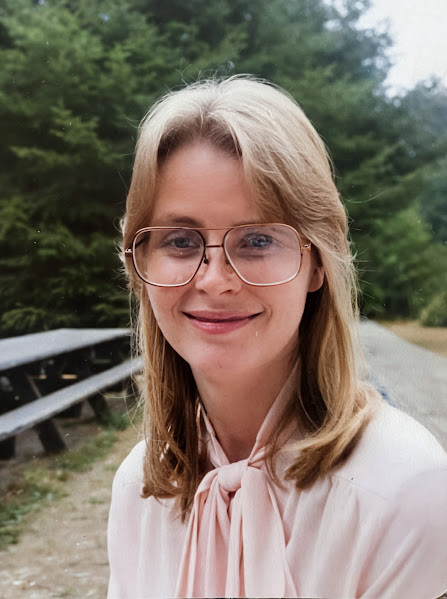
Sharron Lea Anglin, age 73, passed away peacefully at home, surrounded by friends and family, on July 3, 2026, after a courageous battle with cancer. She was a devoted wife, sister, daughter, aunt, great-aunt and friend whose kindness and quiet, unwavering love touched everyone fortunate enough to know her.
Sharron was born in Eureka to parents Billy Lee Boyd and Patsy Ruth Roff on July 15, 1952. She was proud of her accomplishments as a Girl Scout and often reminisced about the time she spent at her grandmother’s home in Hoopa with her older sister, Terry, and younger sister, Mary. After graduating from Eureka High School, she continued her education by studying business administration at College of the Redwoods.
Nearing the end of her high school years, Sharron’s friends, Scott and Diane, set her up on a blind date at a local football game, where the hometown team played hard and won by a landslide. Like the visiting team’s players, her date, Ken, didn’t stand a chance. He was immediately smitten with Sharron’s beauty, sharp wit and quiet nature. It was no surprise that Ken’s family fell for Sharron just as quickly as he had, though they were initially surprised by how naturally they balanced each other. Ken’s outgoing nature and gift of gab were perfectly counterbalanced by Sharron’s keen listening skills and attention to detail. After a short courtship, Ken asked for Sharron’s hand in marriage, and they were married at the Episcopal Church in Eureka on June 17, 1972. Sharron chose Disneyland as their honeymoon destination because of the cherished memories she had of visiting there with her grandmother as a child.
Ken and Sharron built a life of adventure and companionship. Every season of the 54 years they spent together brought surprises, new sights to see and something new to learn. Their devotion to one another became the foundation for how they navigated life’s curveballs. When Ken was replacing the old aluminum wiring in their first home, you could find Sharron in the next room, her curls held back by a red bandana, with a paintbrush or sander in hand. The way they fixed up that house is how they built their life: always together.
That togetherness wasn’t bound to just the two of them. As they blended their families, Sharron sought out ways to bring together everyone they loved. Thus, Sharron’s famous dinner parties were born. No one ever left her table hungry, and no one ever left wondering whether they were welcome. Anyone lucky enough to be invited to one of Sharron’s dinner parties could attest to her impeccable planning, signature dishes like Chicken Divine and delicious home-baked desserts.
Sharron lived a life beautifully balanced between adventure, hard work and the simple joys of home. She became the trusted expert and steady presence everywhere she worked. From her years as a teller at downtown Wells Fargo to the decades she spent at Pierce Mortuary and Sanders Funeral Home, where she earned her certification as a funeral director, she approached every role with quiet competence and genuine care. Sharron often carried a bit of the “Wizard of Oz” about her, quietly orchestrating plans and working her magic behind the scenes - whether pulling off epic adventures with lifelong friends or simply keeping the books balanced at Anglin Secondhand.
During her much-deserved retirement, Sharron could be found guessing the culprit in a British “whodunit”, baking a new dish, caring for her mother, spending time with her sister and traveling with lifelong friends to a new destination. In the years just before her passing, Sharron found a new passion in sewing and quilting. As with everything she did, Sharron took the time to meticulously learn the craft and became an avid quilter in no time. In just a few short years, every family member and friend had a beautiful quilt specially crafted just for them, with some of the first quilts being specially embroidered with adorable forest animals for the small children in her family.
Sharron was a natural planner and organizer, effortlessly coordinating everything from family gatherings to the smallest thoughtful details. She had an uncanny knack for remembering every birthday, anniversary, favorite meal and meaningful milestone, making the people she loved feel celebrated year after year. While she wasn’t one to spend hours on the phone, her door was always open. She delighted in welcoming friends and family into her home, where conversation came easily and everyone felt at ease. Whether she was hosting loved ones or simply heading out for the day, Sharron took pride in presenting herself with grace and style. She was always impeccably dressed and never passed up the opportunity to add a beautiful new pair of shoes to her collection.
Those who knew Sharron witnessed her quiet nature of offering understanding without judgment and making everyone who crossed her path feel genuinely valued. Sharron’s legacy is not found in grand gestures but in the countless quiet ways she made people feel loved. The family she so faithfully nurtured, the friendships she so intentionally cultivated, and the love she gave so freely will continue to carry her spirit forward. Though her presence will be deeply missed, those who knew Sharron will remember her every time they pause to celebrate another person, offer a helping hand, or choose kindness in the smallest of ways. In living as she did, she leaves behind a legacy that will endure for generations.
Sharron was preceded in death by her father, Billy Lee Boyd; her stepfather Eugene Donald Lake; her sister Terry Diane Boyd; and her great-nephew Christopher McLaren.
She is survived by her devoted husband of 54 years, Kenneth Dixon Anglin; her mother Patsy Roff Lake; her sister Mary Lake Mitchell; her sister-in-law Kathy Wynands; her nieces and nephews, Annette McLaren, Jennifer McLaren, Joel Mitchell, Amanda Mitchell, Paige Morales, Erica Winn, Rain Hill, Danyelle Vowles; Chandra Wynands; her lifelong friends Monty and Anita Soulis and Richard and Charlotte Markwell; a host of loving great-nieces and great-nephews and many extended family members and dear friends whose lives were forever enriched by her love.
A Celebration of Life honoring Sharron will be held on August 9, 2026 at 1 p.m. at 3854 D St, Eureka, CA 95503.
Family and friends are invited to join in celebrating Sharron’s remarkable life, sharing stories and remembering the quiet kindness, steadfast love and thoughtful generosity she so freely gave to everyone around her.
The family gratefully welcomes flowers for the celebration of life. Deliveries may be made to the address above prior to August 9. Those wishing to honor Sharron’s memory may also do so by extending the same thoughtful kindness and quiet acts of service that so beautifully defined her life.
###
The obituary above was submitted on behalf of Sharron Anglin’s loved ones. The Lost Coast Outpost runs obituaries of Humboldt County residents at no charge. See guidelines here. Email news@lostcoastoutpost.com.
BOOKED
Today: 10 felonies, 12 misdemeanors, 0 infractions
JUDGED
Humboldt County Superior Court Calendar: Today
CHP REPORTS
1656 Union St (HM office): Missing Indigenous
ELSEWHERE
County of Humboldt Meetings: Behavioral Health Board - SUD/Dual Recovery Committee - Sept. 10, 2026
County of Humboldt Meetings: Behavioral Health Board Executive Committee Meeting - July 1, 2026
RHBB: Judge Overturns Search Warrant in Student Activist Case: Devices Ordered Returned
RHBB: Multi-Vehicle Crash Closes South Fortuna Boulevard Near Strongs Creek Plaza
OBITUARY: Max Lennon Sr., 1935-2026
LoCO Staff / Tuesday, July 28 @ 6:56 a.m. / Obits

Max Lennon Sr. reunited with Carleen, the love of his life, on Thursday, July 16, 2026.
Born in Alton on August 17, 1935, Max lived in Humboldt County his entire life. He graduated from Hydesville Elementary School in 1949 and then Fortuna High School in 1953.
Max began his lifelong career as a heavy equipment operator working in the woods with Lennon Brothers Logging, running any piece of equipment that he could climb onto. Max strongly supported unionization and initiated with the Local 3 Operating Engineers Union on August 1, 1957, where he ran bulldozer until his retirement on December 1, 1996. Max was especially proud of working on the Warm Springs Dam that created Lake Sonoma from 1980 until 1982, and the US 101 Bypass of Prairie Creek in the early 1990s.
Max married Carleen Williamson in 1957 and they welcomed their son, Max Lennon Jr., in 1959. Max and Carleen spent 52 loving years happily married and he was ready to finally rejoin her.
Max loved his Cadillacs and “Cadillac Max” owned many throughout his life. On one occasion — pre-cellphone camera era — he even asked his niece Claudia and her husband Dave to take a look at the Cadillac dealership in Chico just to see if there was anything on the lot worth the trip over.
In retirement Max and Carleen travelled around the country whenever they could, exploring the Grand Canyon, Branson, Missouri and taking several cruises to Alaska and Mexico, often accompanied by his sister Darlene and her husband Huey.
You could always find Max at the poker table, playing for hours on his initial $40 buy-in. He was fortunate enough to hit a Royal Flush at the Bear River Casino and was grateful for the jacket he received in recognition of his good luck.
For a period of time, if he wasn’t milking that $40 for all it was worth at the poker table, Max was out on the ocean salmon fishing and throwing back silvers with his buddies Bob Johnson, Louis Lorenzo and Huey.
Max was able to pass away peacefully at his home in Fortuna. He is preceded in death by his mother and father, wife, son and granddaughter and is survived by his two sisters, grandson and three great grandsons.
We would like to say thank you to Hospice of Humboldt as well as Dave and Claudia Enns for all their support and guidance during Max’s final days. Your help has been invaluable. THANK YOU.
###
The obituary above was submitted on behalf of Max Lennon’s loved ones. The Lost Coast Outpost runs obituaries of Humboldt County residents at no charge. See guidelines here. Email news@lostcoastoutpost.com.
OBITUARY: Norma Elaine Snodgrass, 1939-2026
LoCO Staff / Tuesday, July 28 @ 6:56 a.m. / Obits
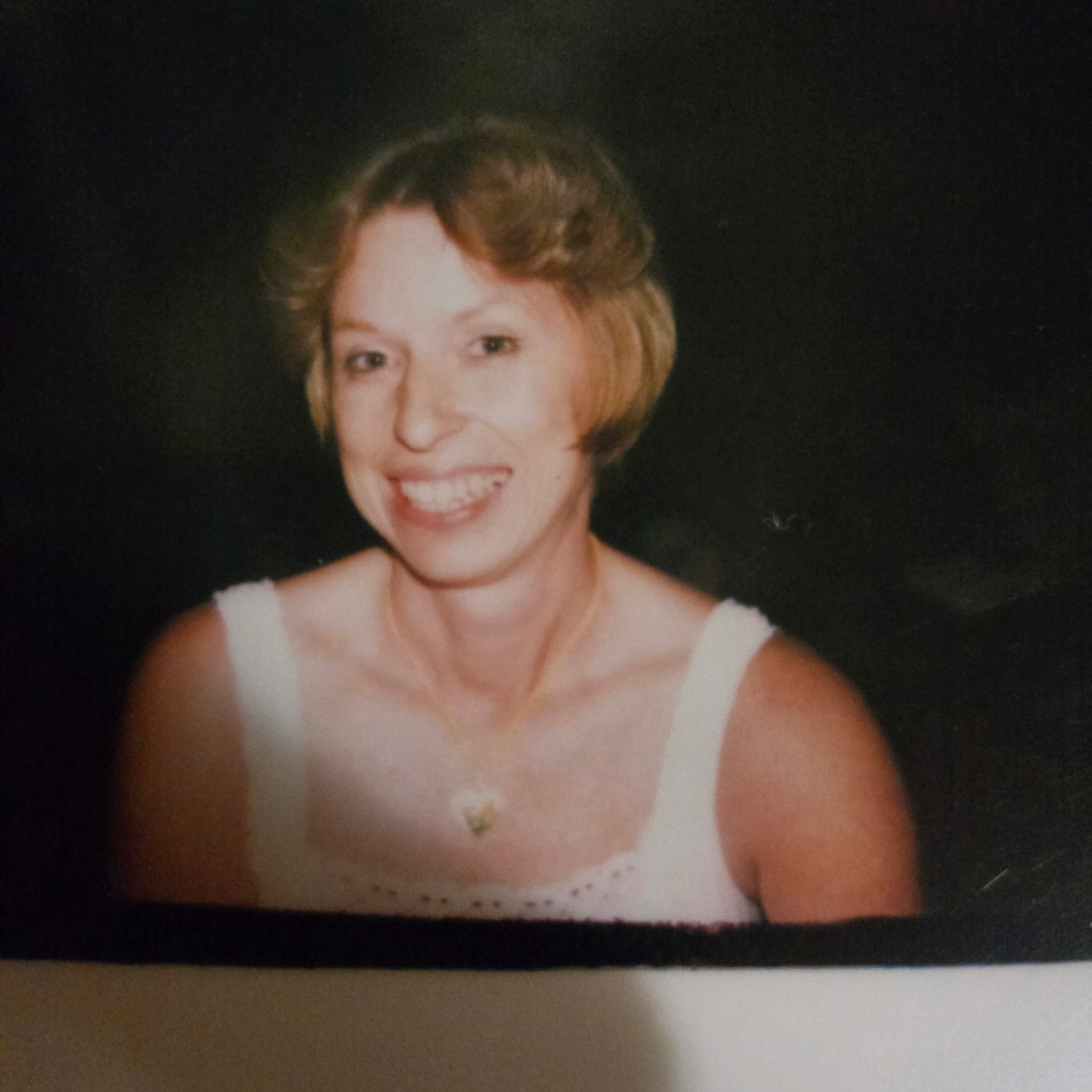
Norma Elaine Snodgrass, age 87, passed away peacefully on June 25, 2026, in Garberville. She was born on June 8, 1939, in Porterville, California, to Lee and Inez Jones.
Norma was the youngest of three children and was preceded in life by her sister, Pat Johnson, and her brother, Donald Jones.
Norma moved to Humboldt County, where she attended and graduated from South Fork High School. It was there she met the handsome Henry Harrell Snodgrass, the love of her life. They were married in June 1957 and shared a lifetime of love, partnership, and adventure while raising their three children: Laura Lea Frame (Ron), Vernon H. Snodgrass, and Sandra D Bonham (Rick).
After working for several local businesses, Norma and Henry bought the Yellow Dragon Machine Shop in the 1970s. Norma kept the office running with precision and dedication, handling the bookkeeping and countless behind-the-scenes details that helped the family business thrive.
Norma was a woman of many talents. She loved painting, sewing and quilting, was an avid reader, and found boundless joy tending her beautiful flowers.
One thing the community could count on every weekday was the familiar rumble of Norma’s beloved 1968 Ford Ranger as she faithfully delivered Henry’s lunch. Like clockwork, it became one of those small but cherished traditions that friends and neighbors fondly remember.
Norma was the devoted wife of longtime Redway Volunteer Fire Department firefighter Henry Harrell Snodgrass. She was much more than a firefighter’s wife — she was a steadfast supporter of the department and its members. For many years she volunteered her time, helped with community events and fundraisers, and became a cherished part of the Redway Volunteer Fire Department family.
Her dedication to children and her community extended beyond the fire department. Norma served as a Blue Birds and Brownie leader for her daughters and was a devoted room mother for many years, baking countless cookies, treats, and goodies that made school celebrations extra special for generations of children.
Norma treasured her family. She is lovingly remembered by her children, Laura Lea Frame (Ron), Sandra Bonham (Rick); her six grandchildren, Jonathan Frame (Beth), Jessica Frame, Leslie Morgan (Dustin), John Bonham (Megan), Jacquita Terrell (Josh), and Jacy Snodgrass (Wesley); her nine great-grandchildren, Cameron Frame, Jackson Ferry,, Brooke Bonham, Gavin Bonham, Derik Speaks, Kaycee Speaks, John Henry Terrell, and Annalise Terrell; and her great-great-granddaughter, Mabel Fisher.
She also leaves behind her lifelong friend from Hawaii, Donna Mae, and her dear neighbor and friend, Rosa Posy, whose friendship meant so much to her.
Norma was preceded in death by her beloved husband, Henry Harrell Snodgrass; her son, Vernon H. Snodgrass; her parents, Lee and Inez Jones; and her siblings, Pat Johnson and Donald Jones.
Norma’s kindness, quiet strength, generosity and unwavering love for her family and community touched countless lives. She will be deeply missed, lovingly remembered and forever carried in the hearts of those who knew and loved her.
###
The obituary above was submitted on behalf of Norma Snodgrass’s loved ones. The Lost Coast Outpost runs obituaries of Humboldt County residents at no charge. See guidelines here. Email news@lostcoastoutpost.com.
OBITUARY: Barbara Lynn Bareuther, 1943-2026
LoCO Staff / Tuesday, July 28 @ 6:56 a.m. / Obits

Barbara Lynn Bareuther
Dec. 8, 1943 – July 22, 2026
Barbara was born to Ralph and Ruth Bareuther in Santa Clara, California and she grew up with her older sister Nancy and younger brother Rick in Palo Alto. Barbara was a classic “tom boy” growing up and enjoyed fishing and camping with her family at her grandparent’s property near Yosemite.
Barbara graduated from Los Altos High School in 1961 before attending Foothill College. In 1963, Barbara married Ronald C. Jenkins with son Timothy and daughter Sharon following along. The family moved frequently due to job demands in those early years and Barbara made every place feel like home for her family. In 1975, the family moved to Vandenburg Village where Ron worked for a contractor on the Vandenburg Air Force Base nearby. Barbara was an amazing mom who spent considerable energy being a room mother at the kids’ schools, a den mother for Tim’s Cub Scout troupe and a leader of Shari’s Camp Fire group.
As Tim and Shari grew up, Barbara decided to enter the workforce and began doing clerical work at the air force base. Her first day on the job, she was thrilled to find a parking spot right next to the front door of her new office. She was later informed that the parking spot belonged to an air force general and she should probably not park there again.
Despite the dramatic changes going on in her life, Barbara remained dedicated to her children and to being the best mom she could. After 15 years of marriage, Ron and Barbara divorced.
Barbara moved with Tim and Shari to Reno, Nevada to be near her parents. She met James Meadows and remarried in 1980, moving the family to his country property in Crow, Oregon. She worked for the Bureau of Land Management in Eugene and continued being an active presence at the kids school activities and cheering them along in sports and drama performances. Barbara and Jim divorced after a couple of years.
In 1984, Barbara married Harold (Hal) Fanslow. They moved to the Sacramento California area and Barbara decided to go back to college to finish her degree and get a teaching certificate. She taught 3rd grade in the Sacramento area and Tehachapi to kids who didn’t speak English despite the fact that she didn’t speak other languages. At that time, California taught kids in an immersion program where they learned English rapidly.
California eliminated the immersion programs and laid off teachers that weren’t bilingual, so Barbara was pushed out of the state to teach. During these years Barbara and Hal divorced, remarried and divorced again.
Barbara married Ronald Keller in 1992 and they remained married until her death. Barbara and Ron moved to Las Vegas, Nevada where she taught third grade English as a Second Language to kids from all around the world until her retirement. Barbara was a dedicated teacher who adored “her kids” and took tremendous pride in their progress. She loved teaching third grade where the kids were “old enough to blow their own noses but young enough to not sass back.”
During these years, Barbara became a grandma seven times over and she couldn’t have been prouder. Despite living a distance away, she visited frequently and would send random “grandma care packages” to the kids just because. All of the grandkids have wonderful memories and stories to cherish about their grandma – she was a kick.
After retirement, Barbara and Ron moved to Roseville to be closer to Tim and his growing family. They lived there for a number of years before Barbara’s Alzheimer’s began showing itself as it did for her mother. Barbara and Ron chose to buy a house in Fortuna near Shari so she could provide more assistance as the care needs increased. Advancing Alzheimer’s is an awful slow-moving train wreck of a story so we will skip the details. Unfortunately, Ron was also experiencing his own mental health challenges at the time which were made that much worse by the pandemic lockdowns. The family had hoped that Ron would be a steady presence in the home who could assist Barbara as her memory continued to fail but circumstances intervened.
A conservatorship of both Barbara and Ron became immediately necessary and Adult Protective Services did what they could for which the family is grateful. APS referred them both to the Humboldt County Public Guardian’s (PG) office for a conservatorship but family members of Ron’s came to Fortuna and removed Barbara and Ron from the county before the PG could file papers. Ron’s family checked Barbara and Ron into a locked memory care facility in Rocklin despite not having any legal authority to place them and they restricted all family access to Barbara.
An epic conservatorship fight in the Humboldt County Probate Court ensued between Shari who had been designated by Barbara and Ron in their wills and living trust versus a previously unknown nephew of Ron’s who had hired a prominent local attorney. The Conservatorship of Barbara has been documented by Shari and her husband Steve on their local news website.
Judge Canning appointed this nephew as conservator despite the recommendations of the court investigator to not do that. To make a long story short, the Keller estate was completely drained within a few years and the conservator “resigned,” leaving Barbara and Ron as “wards of the county” under the conservatorship of the Humboldt County Public Guardian’s office.
Barbara’s health took a sudden and dramatic turn downward this spring as she was hospitalized multiple times for urinary tract infections. Her health never recovered and she began to deteriorate very rapidly. Through the extraordinary efforts of Cassidy Ross and Kelli Schwartz with the Public Guardian’s office, Barbara was brought home to Humboldt and to her family barely two months before she passed away. The family would like to extend their deepest appreciation to the Public Guardian’s office, Timber Ridge and the caregivers who provided wonderful care to Barbara at the end. Thank you!
Barbara will be remembered by her family and all who knew her as truly one of a kind. She was uniquely gracious and had a talent for meeting people where they were. This made her an extraordinary teacher and a deeply loving grandma. She loved Christmas and enjoyed going out to see the Christmas lights and decorations around town. She was a kid at heart and it was infectious to everyone around her. Barbara hosted many family Thanksgivings and Christmases - she knew how to throw a great party! She had a great eye for decorating that is hard to describe but easy to recognize. She made the world a better place by her presence. She will be deeply missed.
Loving mother to Timothy C. Jenkins (wife Joann) of Newcastle; proud grandmother to Alexandria and husband Thomas, and Laura Jenkins. Loving mother to Sharon L. Wolff (husband Steve) of Rio Dell; proud grandmother to Marylynn and husband Casey, great- granddaughter Ellie, Richard and wife Sara, great-grandson Damiano, Shauna and great- grandson Walter, Michael and wife Kathryn, great-grandchildren Benjamin and Samantha, Steven Craig and wife Kiera, great-grandchildren Nathan, Jackson and Iris. Barbara is further survived by her older sister Nancy Zinos of Graeagle, Calif., younger brother Rick Bareuther of Sparks, Nevada and spouse Ronald Keller.
On a personal note, I see my mom every time I look in the mirror and I couldn’t be prouder. I get most of my best lines from mom who was one of the funniest people I know because she never tried to be funny. She was simply genuine and her enthusiasm was a joy to be around.
There is a lot more to be said and many stories to be shared to honor my mom and her legacy. More to come …
###
The obituary above was submitted on behalf of Barbara Bareuther’s loved ones. The Lost Coast Outpost runs obituaries of Humboldt County residents at no charge. See guidelines here. Email news@lostcoastoutpost.com.
Redwood Coast Energy Authority Rates to Surpass PG&E’s For the First Time (by Roughly $2)
Sage Alexander / Monday, July 27 @ 3:51 p.m. / Government

RCEA’s office in Eureka. | File photo.
###
The Redwood Coast Energy Authority’s Board of Directors approved a rate increase Thursday that will prod RCEA rates just above Pacific Gas and Electric Company’s for the first time.
The increase will pencil out to about $2 more than what PG&E charges the average customer a month due to a change to the electric generation portion of the bill.
RCEA staff pointed to a skyrocketing fee charged by PG&E as the culprit.
Fiscal responsibility of RCEA was the broad purpose of the increase, adopted at last week’s meeting, with an aim to keep $26 million in the agency’s reserves to avoid paying creditor fees.
The agency, a community choice aggregator, purchases electricity for customers as a (typically more affordable) alternative to the same service offered by for-profit utilities. The aim is to, one day, offer a 100% renewable energy portfolio that’s locally controlled.
About 90% of residents of Humboldt County get their energy through RCEA.
Extra funds from customers rates are needed to keep reserves healthy thanks to jumps in power costs and a volatile fee customers pay to PG&E called the Power Charge Indifference Adjustment (PCIA), staff said at the meeting.
Executive Director Beth Burks called an analysis of the fee “shocking.”
“Since the inception of our Community Choice Energy Program, our customers have paid $118 million in PCIA fees,” she said.

PCIA fees over time. | Screenshot from RCEA meeting.
The fee is intended to recover a utility’s costs for power contracts or resources acquired before a customer left the utility in favor of an alternative energy provider (like RCEA).
But this fee is exceedingly volatile. It increased a whopping 230% this year, something that made it “impossible for RCEA’s retail rates to remain discounted from PG&E generation rates,” according to the resolution.
Without the fee, RCEA’s generation rates would be 25% lower than PG&E, according to RCEA staff.
“It really is the PCIA that makes it difficult for us to recoup our costs,” said Burks.
Board members criticized the PCIA, which customers of community choice aggregators must pay, and spoke in support of reform.
Community choice agencies have been pushing for legislative change, including a bill authored by North Coast Assemblymember Chris Rogers. AB 1761 would add transparency and forecasting measures to the fee, which was established by the California Public Utility in 2001.
The California Community Choice Association is also pursuing legal challenges to the methodology approved by the California Public Utilities Commission, claiming it unlawfully shifted costs onto customers of agencies like RCEA.
As for increasing rates on customers, board members and staff weren’t happy but agreed it was the right choice.
“It sucks. It doesn’t feel good,” remarked Vice Chair Sarah Schaefer.
The board agreed unanimously, with a couple of absences, to allow for staff to charge up to a 9.5% increase to the generation charge.
A 6% increase to this charge will go into effect September 1. The change would mean an average cost of $2.33 more than PG&E’s rates, staff said.
Other items like transmission and distribution fees make up larger portion of customers bill, according to Burks.
She called the volatility of the PCIA “frustrating,” when speaking to the Outpost today.
“This is really just tying our hands to deliver real benefits to our community,” she said.
Aside from this fee, staff at the meeting pointed to a fiscal situation that required action now, rather than later.
This fiscal year, expenses are outpacing revenue.
“We’re still not covering the total cost of power, let alone our operational expenses,” said Lori Biondini, RCEA’s business planning & finance director.
Staff told the board they are anticipating pulling $3.7 million out of cash reserves.
The board had previously directed staff to raise rates as part of a broader push toward fiscal responsibility. This raising of rates follows COVID-19 era financial problems for RCEA because people stopped paying their bills. The agency took out loans in response.
Burks encouraged customers to reach out to RCEA for explanations on bills, or for affordability programs geared toward energy efficiency.
(PHOTOS) The Pink Lady Mansion Enters Her Pinkest Era Yet
Isabella Vanderheiden / Monday, July 27 @ 12:55 p.m. / Eureka Rising

The Pink Lady Mansion, located at M and Second streets in Eureka. | Photos by Isabella Vanderheiden.
###
For the past two months, onlookers have watched Eureka’s prized Pink Lady Mansion undergo a dramatic transformation from pale to bubblegum pink, complete with fresh white trim and dark green accents. The paint project is a part of a six-year effort to revamp the 150-year-old Queen Anne Victorian, which rebranded as “The Pinc” shortly after Jacqueline Kretchmer took its helm in 2020.
When The Pink Lady’s makeover first began in mid-May, the bold hue — “Coming Up Roses” by Sherwin Williams — drew ire from many Facebook commenters who thought the shade was “garish” and “gaudy,” an interesting critique given the colorful, opulent history of Victorian architecture. The negative comments didn’t deter Kretchmer and her son, Mario Jarak, who’s done all of the painting himself
“It was in a state of disrepair, and I think locals stopped seeing the house and stopped noticing it because it just wasn’t readable,” Jarak told the Outpost. “I immediately saw the difference between the local reaction and the reaction from all the tourists. Now, I see the same locals driving by every day, they smile and give me a thumbs up. It’s nice to see a smile on people’s faces as they drive by and look at the house; it makes it all really worth it.”
The Pink Lady is Jarak’s first major restoration project, though he’s been working in construction in one form or another since he was a teenager.

Jarak smiles as he shows off The Pink Lady’s freshly painted gutters.
“My dad did commercial tiling in San Francisco, and all my all my close family and friends were all in construction,” he said. “I moved here three years ago, and I’ve been basically working on this project on and off for the last three years. … The house has needed paint for at least 10 years now, and it’s been in a state of disrepair. Frankly, we can’t afford to pay somebody to do a job like this, so that’s why I’m painting it. I don’t have much expertise in exterior painting, but I’ve spent a lot of time thinking about where to put the right colors and how to accentuate the details.”
If you look closely at the ornate details of the mansion, especially along the trim and gables, you’ll notice that some bits that were once white are now spotted with pink or darkened with green to improve contrast.
“This building has thousands of intentionally carved details that were meant to be read from afar, and when you basically have an off-white with an off-white-pink it can be hard to make out the details,” he said, adding that he would have “gladly painted it a different color,” but thought it was important to honor the mansion’s history. “All that detail work needs to be [highlighted] because somebody spent hours and hours of their lives carving every little thing on there. I feel like the one way to pay homage to them is to highlight the best we we can.”
“Every day I’ve been enjoying it. I’ve been learning a lot about the house and about myself,” he laughed. “I feel like it’s been an amazing and unexpected experience, almost like my whole life has been leading up to this moment.”
Jarak will soon begin work on the porch, the final piece of the years-long project. Work is expected to wrap up in mid-September.
Keep scrolling for more picture of The Pink Lady. Jarak was kind enough to take this reporter up in the boom lift this morning to snap some photos and check out the freshly painted gutters. Check out that view!




(CORRECTION) FERC OFF: Federal Agency Tosses Southern California Water Agency’s Bid to Take Over Eel River Water Rights
Hank Sims / Monday, July 27 @ 12:27 p.m. / Infrastructure

Scott Dam. Photo: Isabella Vanderheiden.
###
CORRECTION: As pointed out in the comments below, this headline probably shouldn’t have implied that Elsinore Valley is done, or even that it’s done insofar as the FERC process is concerned.
FERC denied Elsinore Valley’s late application to “intervene” in the case, meaning that they denied Elsinore Valley’s application, in effect, to have a seat at the table during decommissioning proceedings. But the water district still has lots of ways to attempt to insinuate itself into the larger matter of the future of the project itself.
So: Sorry if that was misleading. — Ed.
###
PREVIOUSLY:
- POTTER VALLEY DAM UPDATE: The U.S. Secretary of Agriculture Says That a Municipal Water District in Riverside County is Interested in Taking Over the Project
- Statements From PG&E and Friends of the Eel on SoCal Agency’s Potter Valley Dam Bid
- That SoCal Water Agency Says It’s Just in the Very Initial, Exploratory Phase of its Potential Bid to Take Over the Eel River Dams
- ‘This is Not OK’: Huffman Says He’ll Launch an Investigation Into the Trump Administration’s Eel River ‘Water Grab’ Scheme
- Internal Documents From a Southern California Water Agency Outline a Vision to Turn Eel River Water Rights Into a Cash Bonanza — at the Expense of Local Users
###
This morning, the Federal Energy Regulatory Commission – the agency overseeing Pacific Gas and Electric’s effort to decommission two dams on the upper Eel River – told a Southern California water agency that its late bid to take over the project, along with the water rights that come with it, will not be allowed to proceed.
In making its decision, FERC staff told the Elsinore Valley Municipal Water District that it presented no compelling argument as to why it should be allowed to intervene in the case more than eight months after the deadline to do so had passed.
“[T]he District failed to demonstrate that good cause exists to grant its untimely motion to intervene because it did not provide any explanation for the untimeliness of its motion,” reads the commission’s denial. “Therefore, the District’s late motion to intervene is denied.”
Elsinore Valley now has 30 days to ask the commission to revisit the decision, according to the notice.
The Elsinore Valley Municipal Water District, a Riverside County operation with about 150,000 customers, launched its bid to assume control of PG&E’s Potter Valley Project in April, when Brooke Rollins, the U.S. Secretary of Agriculture, tweeted that a “legitimate buyer” for the project had been found, several months after FERC’s deadline for such buyers to step forward had passed.
Elsinore Valley — which seems never to have discussed its bid to take over the operation in open session of its own board of directors — did not file a request to enter the proceedings until earlier this month.
The water district’s move sought to upend the “Two-Basin Solution” hammered out under the auspices of Congressman Jared Huffman, which would see the decommissioning of the two outdated and non-functional dams, the transfer of the associated water rights to the Round Valley Indian Tribes, and a long-term lease which would allow continued diversion of Eel River water to Russian River water users downstream in Mendocino and Sonoma counties.
Though there was no discussion of their intervention at meetings of the district, internal documents from Elsinore Valley seemed to suggest that the goal was to sell the water to downstream users at market rates, using the proceeds to subsidize its own operations.
The FERC document archive in the case — click here and search docket number “P-77-332” — continues to be filled with comments from Potter Valley agricultural interests, most of which present the historically odd spectacle of Northern California water users pleading for a Southern California water agency to assume the rights to their supply.
“Please reconsider this brainless idea and at the very least consider Elsinore as a option to saving our community,” writes “second-generation Potter Valley graduate” Joe Goeken in a letter to FERC dated last week, arguing that it would be cheaper to fix the dams than remove them.
In a letter filed today, Rep. James Gallagher, who is running against Sen. Mike McGuire to represent portions of Mendocino and Sonoma counties in Congress in the fall, likewise objects to PG&E’s efforts to decommission the dams and the subsequent implementation the “Two-Basin solution” plan.
“I write to express my strong opposition to Pacific Gas & Electric Company’s proposal to dismantle Scott Dam and drain Lake Pillsbury,” Gallagher writes. “This proposal threatens the health, safety, and economic well-being of many communities throughout Northern California that depend on Lake Pillsbury as a reliable, year-round source of water.”
Elsinore Valley’s effort to intervene in the proceedings was officially opposed by the Round Valley Indian Tribes, the Wiyot Tribe, Friends of the Eel and California Trout.


