

Microchips From Dogs Exhumed at Miranda’s Rescue Tied to 38 Registered Owners, Including Six Shelters or Rescue Orgs
Ryan Burns / Monday, July 27 @ 12:16 p.m. / Animals , Crime

Investigators conduct excavation and inspection work at Miranda’s Rescue in Fortuna on last month. | Photo by Ryan Burns.
###
Investigators with the Humboldt County Sheriff’s Office have identified 38 unique registered owners associated with microchips recovered from dog carcasses that were exhumed at Miranda’s Rescue in Fortuna during the execution of a criminal search warrant last month.
Six of those registered owners are animal shelters or rescue organizations elsewhere in the state, according to HCSO Public Information Specialist Erin Inskip.
The retrieval of this data is part of the ongoing, multi-agency investigation into Miranda’s Rescue founder and owner Shannon Miranda over allegations of fraud, theft and animal cruelty.
In emailed responses to a list of questions from the Outpost, Inskip explained that each microchip contains data identifying the individual or organization that implanted it, as well as the registered owner at the time the information was recorded.
“Ownership information may change over time, and microchip registration records are not always updated,” Inskip wrote. “As a result, previous private citizen owners may still be listed even if they subsequently surrendered the animal to a shelter, rescue organization, or another party.”
While 38 owners (or previous owners) were identified, data recovered from the chips identified 36 unique individuals or organizations responsible for implanting them. The majority of those were shelters and rescue organizations, Inskip said.
During last month’s three-day search and excavation at Miranda’s Rescue, investigators recovered 117 intact dog carcasses, 21 skulls and hundreds of bones. Asked whether necropsies of those carcasses have identified the causes of death, Inskip replied, “Due to the volume of examinations, the examination reports are not yet complete.”
Last week, the Outpost obtained a copy of the search warrant inventory of items recovered during the second search of the property, conducted June 23-25. The list includes four laptop computers, an iPhone, “copious” business records, microchip collars, notes on dog behavior, a credit card terminal and a Mossberg pump-action shotgun model 535 with a box of 12-gauge shells.
Inskip said investigators found the firearm beneath the bed in Miranda’s bedroom.
Asked why the gun wasn’t recovered during the first search of the property, on May 1, Inskip said, “It is unknown whether the firearm had been stored in a different location prior to the execution of the second search warrant.”
During that first search, investigators recovered multiple other firearms, including a Ruger 10/22 rifle, a Beretta .380 pistol and a Remington 870 model shotgun, each with ammunition. They also recovered a pellet gun, a BB gun and an air rifle.
As previously reported, investigators found approximately 600 dog collars in a barn north of the main residence during last month’s search. The search warrant inventory also lists live .22-caliber rounds, spent .22-caliber shell casings and swabs of suspected blood recovered from that barn, which investigators identified as the suspected “kill zone” where countless dogs were likely shot dead.
Several animal shelters have been informed that dogs they delivered to Miranda’s Rescue were among the 117 found dead on the property. This includes 15 dogs from Oakland Animal Services, which reported sending a total of 827 dogs to Miranda’s Rescue since 2020. Miranda’s Rescue personnel had told staff at Oakland Animal Services that eight of the 15 dead dogs had been adopted, the shelter reported online.
A Monterey County shelter, Hitchcock Road Animal Services, confirmed that two dogs transferred from their facility were found dead during the investigation. Two dogs from Palm Springs Animal Shelter were also found deceased during the search.
Jenna Moore is one of the two Fortuna women (along with Jennifer Raymond) who exhumed eight dead dogs from Miranda’s Rescue in late April, kick-starting the current investigation. She said she understands the community’s frustration over the fact that Miranda has not been arrested and his rescue operation continues to operate. But in a message posted to Facebook and later forwarded to the Outpost, she urged patience.
“We have to allow HCSO and all involved agencies the time needed to build a solid case,” Moore’s message says. “It is frustrating. It feels slow. But there is nothing we can do except keep this case visible and loud … . I’d much rather see a thorough investigation that leads to accountability than a rushed one that leaves room for mistakes.”
The Sheriff’s Office is conducting its investigation in collaboration with multiple state and federal agencies, including the FBI, California Department of Justice, U.S. Department of Agriculture (USDA) Office of Inspector General, California Attorney General’s Office and the U.S. Attorney’s Office for the Northern District of California.
Meanwhile, Moore estimates that there are still roughly 30 dogs and 20 cats awaiting adoption at Miranda’s Rescue. She and Raymond have both been advocating for increased support, both locally and statewide, for spay-and-neuter programs.
###
PREVIOUSLY
- Search Warrant Served at Miranda’s Rescue Amid Allegations of Felony Animal Abuse, Fraud and Conspiracy
- Fortuna, Ferndale and Rio Dell Pause Animal Services Contracts With Miranda’s Rescue as Sheriff’s Office Investigation Continues
- Miranda’s Rescue Search Warrant Reveals Eight Dead Dogs Have Been Recovered; Sheriff’s Investigator Believes Miranda Killed Them for Financial Gain
- ‘This Case Remains a Priority’: Sheriff’s Office Issues Update on Miranda’s Rescue Investigation, Asks Public to Come Forth With Information
- BREAKING: At Miranda’s Rescue, Multiple Agencies, Including the FBI, Execute Search Warrant Authorizing Excavation
- (VIDEO) More Than 700 Dogs From Miranda’s Rescue Remain Unaccounted For, Sheriff Honsal Says; Excavation of Grounds to Continue for Several Days
- ‘It’s Gruesome’: Investigators Dig Up More Than A Dozen Dog Carcasses at Miranda’s Rescue on Day Two of Excavations
- ‘This Investigation is Just Getting Started’: Sheriff’s Office Uncovers 117 Dog Carcasses, 21 Skulls and ‘Hundreds of Bones’ at Miranda’s Rescue
- Humboldt County Explains Why It Hasn’t Yet Shut Down Miranda’s Rescue
- (VIDEO) Humboldt County Sheriff Details Evidence From Barn ‘Kill Zone,’ Offers Updates on Miranda’s Rescue Criminal Investigation
- Shannon Miranda Admits Sending Fake Adoption Texts About Dogs He Shot Dead, Affidavit Says
BOOKED
Today: 10 felonies, 12 misdemeanors, 0 infractions
JUDGED
Humboldt County Superior Court Calendar: Today
CHP REPORTS
1656 Union St (HM office): Missing Indigenous
ELSEWHERE
County of Humboldt Meetings: Behavioral Health Board - SUD/Dual Recovery Committee - Sept. 10, 2026
County of Humboldt Meetings: Behavioral Health Board Executive Committee Meeting - July 1, 2026
RHBB: Judge Overturns Search Warrant in Student Activist Case: Devices Ordered Returned
RHBB: Multi-Vehicle Crash Closes South Fortuna Boulevard Near Strongs Creek Plaza
(PHOTOS) Stymied for Months by Insurance Investigations and Obtaining Permits, the Arcata Jan. 2 Fire Cleanup Began Today
Dezmond Remington / Monday, July 27 @ 11:08 a.m. / Environment , Fire

A worker suits up before entering the cleanup zone. Photos by Dezmond Remington.
Hazmat-suit clad workers and dump trucks began the cleanup of the six-month old fire debris cleanup in downtown Arcata today.
It’ll take 8-10 weeks to complete, a spokesman for Environmental Remedies, the hazardous materials abatement company the three affected property owners hired, told the Outpost recently.
Though the site is contaminated with various heavy metals and noxious chemicals, the cleanup crews are taking precautions to keep nearby residents and business safe, the spokesman said. They’ll be misting the debris to keep dust from floating around.
Mayfield Environmental Solutions, the subcontractor tasked with removing much of the noxious material, put up a flyer on nearby residences and businesses asking them to keep their windows closed and avoid the area, “for their own safety.” A company spokesman told the Outpost today that they didn’t expect any harmful dust to actually travel anywhere they didn’t want it to go. They asked out of an abundance of caution, he said, to “maximize health precautions.” They’ve been testing the site for lead and asbestos frequently.
“Local residents should know that our team’s priority is public safety, environmental protection and clear communication throughout the cleanup,” the Environmental Remedies spokesman wrote. “Residents can expect controlled work zones, air quality monitoring and updates as we move through each phase of the project. We’ll be working closely with the City of Arcata, state agencies, and environmental regulators to make sure every step of the cleanup meets strict safety standards. Our goal is simple: remove the debris safely, protect the community, and help the city move forward as quickly as possible.”


California Bill Would Let Abuse Victims Use Trauma as Legal Defense for Violent Crime
Ryan Sabalow / Monday, July 27 @ 7:32 a.m. / Sacramento

Assemblymember Mia Bonta announces the creation of the Office of Gun Violence Prevention within the California Department of Justice at a press event in San Francisco on Sept. 21, 2022. Photo by Martin do Nascimento, CalMatters
###
This story was originally published by CalMatters. Sign up for their newsletters.
###
Susan Bustamante isn’t giving up.
The formerly incarcerated 71-year-old woman has repeatedly made the long trip from Orange County to Sacramento to urge lawmakers to pass legislation she believes would help her fellow domestic abuse victims facing criminal charges.
Each time, lawmakers seemed supportive — and then killed her bill in secret.
She hopes the fourth year in a row will be different.Bustamante is again pushing for a measure, which police and prosecutors oppose, that would allow survivors of human trafficking and intimate partner or sexual violence to cite their abuse as a legal defense when facing charges for violent crimes, with the exception of most murder cases.
Those already convicted could also petition a judge to vacate their convictions. If the judge approves, their arrests and convictions would be treated as though they never happened. Their case files would be sealed and destroyed. Any fines and unpaid restitution to victims would be waived.
“I’m willing to fight for those who are not in the position that I am right now to be able to open my mouth and … fight for this,” she told CalMatters in an interview on Friday.
In 1987, Bustamante was sentenced to life in prison without the possibility of parole. Prosecutors alleged she hired her brother to kill her husband, Steven Bustamante, and helped dispose of his body for a $100,000 life insurance payout she split with her sibling.
Bustamante said she wasn’t allowed to tell jurors in her two-day trial about how her husband beat her and repeatedly threatened to kill her. She said she only asked her brother for help.“The idea that he would kill Steven never occurred to me,” she told lawmakers last month. “Later, he called me to say that Steven was dead. He threatened to call the police and say I planned it. He blackmailed me for Steven’s insurance. I was afraid of having my daughters taken from me, so I gave in.”
Former California Gov. Jerry Brown commuted Bustamante’s sentence in 2017 after learning her story and reviewing her spotless prison record. Bustamante was freed the next year after three decades behind bars.
Bustamante said she would not qualify to have her case vacated under the measure.
California law already allows defendants to cite abuse they experienced and call in expert witnesses who can explain how their suffering affected their behavior. Judges also can factor in a defendant’s history with human trafficking and domestic violence during sentencing. This bill takes it further by allowing them to cite their abuse as a legal defense when charged with a violent crime.
California law also allows those charged with or convicted of nonviolent offenses to petition courts for similar legal relief.
Appropriations committees kill bills
In the years since her release, Bustamante got involved with nonprofits that help people such as her navigate their past abuse and incarceration as they seek to reintegrate into life outside of prison.
Bustamante first testified before the Legislature about the need for the bill in 2023.
Since then, each year at least one of the Legislature’s two public safety committees approved similar legislation before an appropriations committee killed it.Twice a year, the Legislature’s two appropriations committees meet to quickly and with no debate kill hundreds of bills.
As CalMatters has reported, powerful special interest groups, the governor’s office and state agencies secretly lobby the committees to kill bills. Legislative leaders also use the committees to kill politically touchy measures that lawmakers prefer not to go on record voting against in public hearings.The Senate Appropriations Committee is expected to hear Oakland Democratic Assemblymember Mia Bonta’s abuse bill next month.
Riverside Democratic Sen. Sabrina Cervantes, the new chairperson of the Senate Appropriations Committee, declined to comment through a spokesperson.
Why DAs and police oppose
Law enforcement officials fear Bonta’s Assembly Bill 910 would allow violent criminals, including rapists, kidnappers and child molesters, to burden California’s backlogged judiciary system with a rash of petitions to vacate their convictions.
They say it’s an especially troubling example of how progressive Democrats keep trying to water down penalties for dangerous criminals, with little thought to their victims.
“To basically allow them to walk away from a violent crime in terms of accountability is just absurd policy,” said Greg Totten, a former Ventura County district attorney who heads the state’s DA association.

The witness stand of a courtroom at the San Diego Superior Court in downtown San Diego on Aug. 12, 2025. Photo by Adriana Heldiz, CalMatters
Totten noted that defendants already have the right to argue they were abused or trafficked during sentencing hearings.Bonta didn’t return an interview request, but she told the Senate Public Safety Committee last month that “AB 910 is a second chance bill, a dignity bill.”“Survivors should not spend their lives paying for abuse they endured,” she said.
At least 17 organizations, including ACLU California Action and the San Francisco Public Defender’s Office, support the bill, according to the CalMatters Digital Democracy database.
Supporters argue hardly anyone convicted of violent crimes actually would qualify under the proposed new law.
For the few who do, advocates say it would be much cheaper to allow abuse victims to reintegrate into society without their felony convictions being used against them as they look for jobs, housing and other support.
“If even one person is granted relief under this bill, it will pay for itself,” said Leigh LaChapelle, director of policy and advocacy at the Coalition to Abolish Slavery and Trafficking.
OBITUARY: João Soares Morais, 1946-2026
LoCO Staff / Monday, July 27 @ 7:25 a.m. / Obits
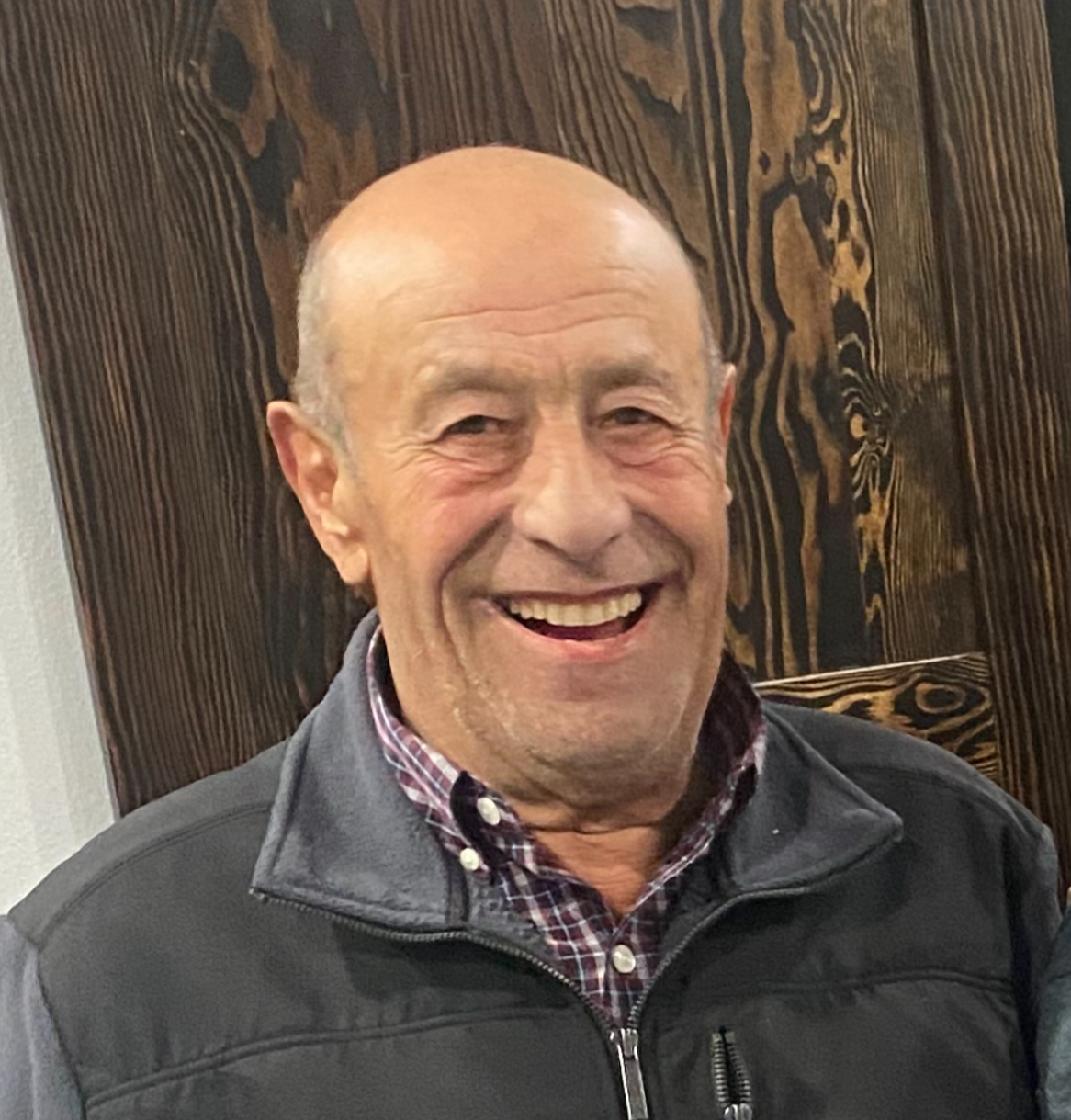
João Soares Morais entered his eternal rest on July 18, 2026. He was born on May 11, 1946, in the village of Porto Judeu, on the island of Terceira, Azores to João and Zulmira Morais. He was one of seven children. As a young man he enjoyed arena bullfights, fishing and playing soccer for the Leões, a local sports club.
João married the love of his life, Clara Drumonde DaSilva, on January 31, 1964, and they soon began creating their own little family.
He migrated to the United States on August 16, 1973, in search of the possibility of a better life with Clara and their 3 children Fernanda, John, and Helder. Their family became complete a few years later with the births of Jeremy and Steven.
Once here, João began working for the timber industry for several years before accomplishing his first goal of buying a house. He and Clara worked hard to make it a home. Soon thereafter, he realized his dream of owning his own business as a dairyman in Mckinleyville, which he maintained for 20 years until he retired. He enjoyed the ranch life and caring for his animals.
After retirement, he took pleasure in spending time with his family and friends. Family gatherings with friends and neighbors were always a highlight. He was often the life of the party with his funny, animated, sarcastic, jolly self. He kept up his garden and greenhouse where he grew a variety of fruits and vegetables . He continued his love for animals by raising his cherished birds in their own little outside shed where he fed and played music for them.
Although he appreciated all that our country provided for him and his family, João never forgot the island he originated from. He has visited his homeland a total of 27 times in 53 years since migrating here.
João was preceded in death by his parents; siblings, Zulmira and Francisco; and in-laws, Manuel and Amelia Dutra.
He is survived by his wife of 62 years, Clara; children Fernanda Beck, John (Tina) Morais, Helder (Erika) Morais, Jeremy (Trina) Morais, Steven (Tiffany) Morais; 13 grandchildren; 11 great-grandchildren; siblings Alberto, Natalia, Maria de Fatima, and Emanuel; and numerous nieces, nephews, and cousins.
Funeral Services will be held on Saturday, August 1, 2026, at St. Mary’s Catholic Church in Arcata.
Rosary: 11 a.m.
Funeral Mass: immediately following the Rosary.
Interment: St. Mary’s Catholic Cemetery
Pallbearers are his grandsons, Mike, Jonathan, Ryan, Tanner, Jarin, Logan and Colby.
The family is grateful for the wonderful physicians and staff that cared for João at Providence Hospital, especially Dr. Michael Palmer.
According to those who knew him he was a loving, giving, strong, hard-working man. According to others who knew him he was also a fiery, stubborn, brutely honest, unique, fireball, full of advice and never bashful about sharing it, HOA “Karen” around his neighborhood, and he had a way of critiquing you and you saying thank you when he was done. João was loved by so many and he will be deeply missed.
His smile remains a guiding presence for all who knew him.
###
The obituary above was submitted on behalf of João Soares Morais’s loved ones. The Lost Coast Outpost runs obituaries of Humboldt County residents at no charge. See guidelines here. Email news@lostcoastoutpost.com.
OBITUARY: Dylan Asbury, 2001-2026
LoCO Staff / Monday, July 27 @ 7:11 a.m. / Obits

In
Loving Memory of Dylan Asbury
February
13, 2001 – June 28, 2026
With broken hearts, we celebrate the remarkable life of Dylan Asbury, who left this world far too soon on June 28, 2026, while doing what he loved most—embracing adventure. Though his time here was only 25 years, Dylan lived with a passion, kindness, and fearless spirit that many never experience in a lifetime.
Dylan was born on February 13, 2001, at St. Joseph Hospital in Eureka to Lisa Peeples and Christopher Asbury, with his beloved Aunt Leslie proudly by his side. From the very beginning, Dylan was full of life — a true wild child whose curiosity, energy, and adventurous heart never faded.
As a young boy, Dylan had an incredible fascination with dinosaurs. He amazed everyone with his knowledge, effortlessly naming every dinosaur and explaining what each one ate. His love for the outdoors quickly expanded to include bugs, frogs, lizards, fish, and every creature he could find. He could often be found racing through the yard on all fours pretending to be a dinosaur, bringing laughter to everyone around him.
From an early age, Dylan faced life’s hardships with remarkable resilience. No matter the challenge, he refused to let adversity define him. His strength, optimism, and unwavering love for those closest to him became some of his greatest qualities.
Dylan treasured time spent with his grandparents. He loved woodworking alongside Grandpa Rick in Oregon. Dylan eagerly learned about racecars while helping Grandpa Peeples; proudly calling him Grandpa Racecar from then on. Those moments helped shape his hardworking nature and appreciation for learning new skills.
Growing up, Dylan’s enthusiasm was contagious. He and his best-friend younger brother, Tyson, spent countless hours recreating WWE matches in their bedroom, making memories that would become treasured family stories while also giving their mom lots of grey hair with their shenanigans! Dylan was also happiest anywhere near the water.
Whether exploring rivers, beaches, or lakes, nature was where he felt most alive. Football became another passion. Dylan proudly played for the Eureka Junior League Loggers before continuing at St. Bernard’s High School. He later graduated through ERC, an accomplishment that made his entire family incredibly proud.
Life was not always easy for Dylan. He experienced heartbreaking loss with the passing of one of his closest friends and later survived a violent assault that left him requiring facial surgery and nearly cost him his eyesight. Yet through every hardship, Dylan continued moving forward with courage and determination. Rather than allowing life’s struggles to harden him, they deepened his compassion and strengthened his character.
After moving to Redding, Dylan found a new chapter filled with hope and happiness. He cherished every opportunity to spend time with his family, especially his mother, Lisa, whom he loved deeply. He was always planning their next adventure, believing that life’s greatest memories were made together.
Dylan was fiercely loyal to the people he loved. He had an enormous heart, always willing to help a friend, offer a hug, or simply make someone smile. He loved traveling and recently made unforgettable memories attending Rolling Loud with his friends Talon, Joss, and Tory, along with his girlfriend, Adriana. He also enjoyed taking his brother Tyson, his mom Lisa, Grandma Carol, and Adriana to see Zach Top in concert — another adventure he talked about and loved.
He loved playing video games with his friends, cousins, and brother and enjoyed creating reaction videos that never failed to make him laugh. Dylan was proud of his work at Ace Hardware in Cottonwood. He would often talk about how fun it was working there and how great everyone, including the owners treated him. He was excited about the life he was building with Adriana. Having Grandma Carol nearby in Redding meant the world to him, and her love and guidance were a constant source of strength.
Anyone who knew Dylan knew they would never enter a room without receiving one of his famous hugs. He had a gift for making people feel welcomed, loved, and important. As the oldest cousin on his mother’s side of the family, he loved making the younger cousins laugh, playing games, and making sure everyone felt included. Family gatherings, backyard barbecues, holiday traditions, and simply being together brought him genuine joy. Above all else, Dylan lived life with unmatched enthusiasm. He sought adventure wherever he could find it, loved without reservation, laughed often, and made lasting memories with everyone fortunate enough to know him. His kindness, humor, loyalty, and infectious spirit will remain in the hearts of his family and friends forever.
On June 28, 2026, while camping with family and night fishing at Ruth Lake, Dylan tragically lost his life after the boat he and his friends were in capsized. While two of his friends made it safely back to shore, Dylan did not. His passing has left an immeasurable void, but his family hopes his story will inspire others to always wear a life jacket and to never take a single adventure — or a single day — for granted.
To honor Dylan’s memory, his family encourages everyone to live the way he did: seek adventure, appreciate nature, love animals, spend time with family, and never miss an opportunity to tell someone you love them.
Dylan adored his beloved dogs, Lola, Polo, and Polo Jr., and took great pride in being their dog dad.
He is lovingly survived by his mother, Lisa Peeples; his father, Christopher Asbury, and wife Jenna; his beloved girlfriend, Adriana Franzkowiak; his brother and best friend, Tyson Asbury; his sisters, Moriah Jackson (Colin) and Audry Asbury; his stepbrother, Cyle Walters; Grandparents Rick and Carol Sheesley and Rick and Ranee Peeples; Uncle Keith Asbury; Aunt Leslie Maxwell; Aunt Lynne and favorite uncle, Gabe Gerber; cousins, Danielle,Duke, Kaija, Wyatt, McKenzie, Colton, Lincoln, Trenton, Mason and Brielle. Special love to his second cousin little wild man Kasper who Dylan adored. His extended family and countless friends whose lives were forever changed by knowing him. He was preceded in death by his great-grandparents Claude and Marilyn Peeples, C.J. and Francis Brooke, and grandparents Sherry Asbury and Ron Asbury.
Though Dylan’s life ended far too soon, the love he gave, the laughter he shared, and the adventures he embraced will continue to inspire everyone who knew him. His spirit lives on in every river explored, every trail traveled, every campfire shared, every loyal friendship, and every hug freely given. He will be deeply missed, forever loved, and never forgotten. Dylan’s remains will be laid to rest in Humboldt County
Please join our family Saturday August 1st at 11 a.m. at Eureka The Pentecostal, 1060 Hoover Street, Eureka. Immediately followed by food, music, stories and love at Redwood Acres, 3750 Harris Street, Eureka.
###
The obituary above was submitted on behalf of Dylan Asbury’s loved ones. The Lost Coast Outpost runs obituaries of Humboldt County residents at no charge. See guidelines here. Email news@lostcoastoutpost.com.
ONCE UPON A TIME: The Hairdo Queen of Racine, Wisconsin Gets Stoned
Jeff DeMark / Sunday, July 26 @ 7 a.m. / Story
My mother, Geraldine O’Brien DeMark, was without doubt the hairdo queen of Racine, Wisconsin. Her hair was the eighth wonder of the world, a gravity-defying bouffant that she kept up her entire life, an amazing, silver-tinted cotton candy cone of hair. Her beehive could hypnotize anyone, as if magic powers swirled around inside of it, containing a trap door that you could fall through and be transported to a different epoch of time and space. I know because one time it happened to me. That’s how powerful my mom’s hair was.
My mom’s hair never took a vacation. It was always there, something you could depend on. In fact, she had her hair done up perfectly three days before she died because you never know whom you might meet on the other side.

The Hair Queen.
I always thought my mom was the missing link in the famed Rat Pack of the ’50s and ’60s. She would’ve fit right in with Frank Sinatra, Dean Martin, Angie Dickinson and the rest of them, sipping highballs and singing all night. She always wore colorful costume jewelry, fashionable dresses and serious make-up. Definitely the life of the party.
In our neighborhood in the summer, my parents’ friends would gather in our kitchen and drink beer and highballs. My mom possessed a beautiful voice and would strum a ukulele, harmonizing with Bob Smith and the gang on songs like “Gonna Take a Sentimental Journey,” “For the Good Times” and songs by Patsy Cline.
They’d keep us kids up half the night with their laughing and singing and I didn’t really mind because they were having so much fun. Kind of made me think getting old wouldn’t be so bad.
But one thing my mom was not was a naturalist. We never camped out once and didn’t take walks in the woods, either. My brother once asked her why we never camped.
My mom said, “Well, we never had picnics, either.”
“Why is that?”
“Because I hate bugs. All bugs, Always have. That’s why we eat indoors. Can’t stand any of those damn bugs.”
###
When I was about 30 I came home for a visit. My parent had an air conditioner in a kitchen window and someone had haphazardly tossed a blanket over it and never removed it for months. A beehive grew inside of the blanket and one day a couple bees flew through the air conditioner and stung my mother, completely terrorizing her.
“There’s bees in this house. You’ve got to kill them! You’ve got to destroy that hive and kill every single one of them!”
“How?”
“Go to the hardware store and get some poison spray or something, but you must kill them. I can’t live like this!!!”
I enlisted my friend Andy in the battle of the bees. We bought a can of bee death spray at the hardware store. Andy creeped up to the hive with a rake and I carried the spray that was supposed to shoot out at least 20 feet. We were both terrified. When Andy lifted the blanket, a big swarm of angry bees came flying towards us as I backpedaled and madly sprayed the poison at them. We ran around the house and burst through the front door. My mom was there, wringing her hands.
“Did you kill them? Did you?!”
“Yes, I think so.”
“What do you mean ‘You think so.’ Did you kill all of them?”
“Yes we did.”
“Then BRING ME THE DEAD BODIES!”
That was my mom: Hairdo Queen and anti-naturalist supreme.
###
One time when my mom was in her mid-’40s, we were sitting in our family room, fire blazing in the fireplace, watching Johnny Carson. My mom was smoking a long Parliament, her hair all done up, lying on the couch in her leopard print bathrobe and matching slippers, looking like a lounge lizard version of Olivia DeHaviland.
“Jeff, do you have any of that marijuana in the house?”
“Why?”
“I’d like to try some.”
“You’re kidding.”
“No. I want to see what the big deal is. Do you have some?”
“I have some upstairs.”
“Then please get it for me.”
“I don’t want to be the one to give it to you.”
“Why not?”
“Because you never know how someone might react the first time they get stoned. You might freak out and I don’t want to be the one responsible.”
‘Oh come on. Don’t be silly. I’ve been drinking for 25 years and I’ve never freaked out.”
“Marijuana’s different. Let’s say you get really out there and I have to bring you to the hospital. Can you imagine the Journal-Times headline, ‘Son of local dentist arrested for getting mother high on marijuana?’ That wouldn’t be good.”
She puffed on her Parliament.
“Would you please go upstairs and get your marijuana for your mother?”
Reluctantly, I went and got my brown Mexican pot and when I returned my 16-year-old sister Maria walked in the door.
“Put the marijuana away.”
She looked at my sister and in her gravest “I’m your mother voice,” said, “Maria, what would you think if your mother smoked marijuana?”
“I don’t care.”
“Jeff, roll it up.”
She took a few drags as if she were smoking a cigarette.
“I don’t feel anything. I knew this was dumb. I’ve always wondered why you kids just don’t have a couple drinks and laugh instead of getting high and sitting around like potted plants. I knew this would be boring.”
“Mom, you’re not doing it right. You have to hold the smoke in for a few seconds before blowing it out.”
She took two big hits and on the second one her cheeks blew out like a big puffer fish and as she exhaled she burst into laughter.
“Oh my god this is what it’s like? No wonder you kids like it!”
She lit up one of her Parliaments and settled back into a corner of the couch, her blue eyes flashing.
“You know this cigarette is so heavy. I never realized how heavy cigarettes are. I don’t even know how I can lift this.”
“Mom, it’s still just a cigarette.”
“Oh that’s right, it’s the marijuana, isn’t it?” she said, then let out more wild peals of laughter.
She took a couple more puffs of her cigarette and whispered to me, “I am so small that you could put me in your hand, carry me upstairs and drop me on my pillow, couldn’t you?”
“No, I can’t. You’re still 120 pounds, mom.”
“Oh that’s right.” And she howled with laughter again.
My sister said, “Mom you’re got to keep it down. You might wake Dad up and that wouldn’t be good.”
Suddenly she was feeling like we did as teenagers, afraid Dad would catch her doing something wrong.
“Oh no, he can’t know about this.’
I poured her a glass of gin on the rocks and said, “If dad comes down just say you had a little too much to drink.”
“Oh yes, good idea. I think if he smoked some of this his head might explode in a hundred pieces.”
After a couple hours of this, she practically floated up the stairs to bed.
The next day we were wondering how she’d feel. Would she be spaced out, depressed or happy?
Mid-morning she descended the stairs in a new red dress with a wide black belt and her hair and make-up done just right, like a kabuki mask, as always.
“How do you feel, Mom?”
“Oh, I feel really good, a little ticklish inside but really good. What I’d really like is to hear some music.”
I went over the stereo console and put on the greatest hits of Patsy Cline.
“Oh, that’s just what I want to hear.”
She began gliding around the living room, snow falling outside, singing “I Fall to Pieces.”
It may be just my imagination, but my mom looked lighter that day, not light enough for me to carry her in my hand, but at ease and beautiful and about as happy as I’d ever seen her as she danced around the living room singing in her beautiful voice,
“I
fall to pieces
Each time I see you again
I fall to
pieces
How can I be just your friend?”
###
Jeff DeMark is a writer and musician.
GUEST OPINION: When the Powerful Claim to be the Scapegoats
Wil Franklin / Sunday, July 26 @ 7 a.m. / Guest Opinion

“The birth of the Antichrist from a dying woman.” Image: See page for author, CC BY 4.0, via Wikimedia Commons.
###
Peter Thiel is most famous for co-founding PayPal and investing early in Facebook. He is irrefutably one of the most successful founders and venture capitalist in the United States, making him one of the most successful in the world. When he speaks, people listen. That is why his latest warnings of the “Antichrist” need some thoughtful analysis.
Peter Thiel’s “Antichrist” thesis warns that modern bureaucrats, climate regulators, artificial-intelligence safety advocates and international institutions may use the language of peace and security to construct a centralized technocratic order. Drawing partly on René Girard, Thiel’s own mentor at Stanford University, and Vladimir Solovyov, a 19th-century Russian philosopher, Thiel appears to suggest that societies driven by fear and mimetic contagion may unite against tech entrepreneurs, dissenters and the rich and powerful, transforming them into modern scapegoats.
There is a legitimate warning here. Crowds can become irrational. Moral outrage can spread through imitation (mimetic behavior) rather than evidence. People can join a campaign of denunciation because others are doing so, and a society can project complex structural problems onto a single person or group. Girard’s work on mimetics helps explain how easily collective judgment can become collective persecution. It also is a useful framework to understand cancel culture, wokeness and online tribalism in general.
But Girard’s warning can be misused. Not everyone who faces public anger is a scapegoat. Not everyone who loses power is an innocent victim. And a society that holds a ruler, monopolist, slave owner or powerful corporation accountable is not necessarily participating in mob persecution.
The Bible offers perhaps the clearest picture of the true scapegoat mechanism.
In John’s Gospel, the religious authorities fear that Jesus’s growing influence will provoke Roman intervention and destabilize their position. Caiaphas tells the council that “it is better for you that one man dies for the people than that the whole nation perish” (John 11:50).
The authorities do not confront the deeper causes of their crisis: Roman occupation, political domination, rivalry among elites, fear of rebellion and their own accommodation with imperial power. Instead, they concentrate those fears onto Jesus. One man is presented as the source of the danger, and his removal is offered as the path back to peace.
From a Girardian perspective, Christ becomes the archetypal scapegoat of the Roman imperial order. He is handed over through a convergence of mimetic forces. Authorities reinforce one another’s hostility. A crowd is swept into collective accusation. Political leaders choose expediency over justice. Pontius Pilate may symbolically wash his hands, but he still uses the machinery of the state to carry out the execution.
Jesus is treated as though he created the disorder. In reality, the crisis comes from a violent imperial system and from the institutions trying to preserve their place within it. The crucifixion temporarily unites competing groups by directing their fear and aggression toward an innocent victim.
The Gospel, however, refuses to accept the crowd’s verdict. The resurrection ultimately declares that the victim was innocent and that the supposed restoration of order was founded on political murder. This is the heart of Girard’s Christian insight: the cross exposes the scapegoat mechanism rather than endorsing it.
That distinction is important when considering Peter Thiel’s warnings about an emerging “Antichrist.” Thiel portrays this figure not as an obvious dictator but as a persuasive technocrat who promises safety, peace, global coordination, climate action, and control of dangerous technologies. In this telling, regulators, climate advocates, international institutions, and artificial-intelligence safety researchers may become the unwitting foot soldiers of a centralized and oppressive order.
Government power deserves scrutiny. Bureaucracies can become coercive, self-protective, and unaccountable. Appeals to public safety can certainly be used to restrict liberty including small business enterprise.
But Thiel’s “antichrist” argument risks turning Girard’s defense of innocent victims into a shield for powerful interests. The people who want surveillance companies audited, artificial-intelligence systems regulated, monopolies restrained, or billionaires taxed are not necessarily a mimetic mob searching for a sacrificial victim. They may be citizens attempting to place democratic limits on concentrated power.
A slave owner cannot claim to be the true victim because enslaved people revolt. The revolt may harm the owner. It may destroy property and end a way of life. It may even contain anger, imitation, violence and excess. But the owner’s losses do not outweigh the systematic theft of liberty, bodily autonomy, family, labor and human dignity imposed upon the enslaved.
The same principle applies more broadly. A dictator removed from office is affected by the uprising against him. A monopolist constrained by regulation loses freedom of action. A wealthy individual required to pay taxes has less control over that wealth. None of those consequences automatically transforms the powerful person into a scapegoat.
Mimetic behavior explains how collective action spreads; it does not determine whether the action is just. People imitate one another in lynch mobs, but they also imitate one another in labor movements, civil-rights campaigns, anticolonial struggles and revolutions against tyranny.
The central question is not merely whether a crowd has united against someone. We must ask whether the accusations are supported by evidence, whether the target possesses real power, whether that power has caused harm and whether the proposed remedy seeks justice or merely emotional purification.
True scapegoating punishes an innocent or disproportionately blamed person so that society can avoid confronting the real system producing its problems. Legitimate resistance confronts the people and institutions actually exercising oppressive power and seeks structural change.
Girard’s mimetic theory should teach us to protect innocent victims. He should not teach us to confuse oppressors with the oppressed simply because the powerful experience resistance.
Sometimes the crowd shouts, “Crucify him” against an innocent man.
Sometimes the crowd is demanding that Pharaoh let the people go.
###
Wil Franklin is the director of North Coast Small Business Development Center where he combines his teaching and entrepreneurial past to help build a connected, diverse, and equitable economic base in our region.


