On Sunday, Dec. 29, the world suddenly lost a beloved 100-year-old ex-President of the United States.
How do we, as a nation, deal with an event of this magnitude? Perhaps we bravely muddle through with our lives for a couple of weeks, until such time as we can set aside a full day to contemplate the man and his deeds, and in doing so shed some of the trauma we have been carrying deep inside ourselves since we got that terrible news.
On Tuesday, the Humboldt Board of Supervisors will consider giving county employees an extra paid holiday to do just that. President Joe Biden has declared Thursday, Jan. 9, a national day of mourning for his predecessor — a fellow one-term president representing the Democratic Party — and Board Chair Michelle Bushnell has brought forward a proposal to make that day a paid day off for county employees.
“President Carter was the thirty-ninth President serving the United States from Jan. 20, 1977 to Jan. 20, 1981,” notes the staff report on Bushnell’s proposal. (Minor correction: Actually, Carter was the first and only person to serve as president of the United States during this time.)
The staff report continues:
President Carter is
remembered as a man of character and compassion. He was a heroic champion of global peace and human rights. Under his
presidency, the Department of Education and the Department of Energy were created. Carter is also remembered for his critical
work on nuclear nonproliferation with the signing of the Panama Canal treaties and the 1978 Camp David Accords. After his
presidency, he continued as a global leader who advocated for peace and fundamental human rights for all.
Did you know that the Panama Canal Treaties and the Camp David Accords did so much to advance the cause of nuclear non-proliferation? Yet another reason to mourn.
Assuming the Board of Supervisors does the humane thing and gives the county’s approximately 2,500 public employees a paid holiday to recover from the shock of Carter’s passing, how might they most productively spend that time, so as to get back to providing taxpayer-funded services with whole hearts and maximum efficiency?
In his proclamation, President Biden has a suggestion:
I call on the American people to assemble on
that day in their respective places of worship, there to pay homage to the
memory of President James Earl Carter, Jr. I invite the people of the world
who share our grief to join us in this solemn observance.
This will undoubtedly happen. So don’t expect to find a parking spot at church on Thursday.
The Board of Supervisors meets at 9 a.m. on Tuesday, Jan. 7, in the Supervisors’ Chambers on the first floor of the Humboldt County Courthouse (825 Fifth Street, Eureka).
Press release from the Humboldt County Superior Court:
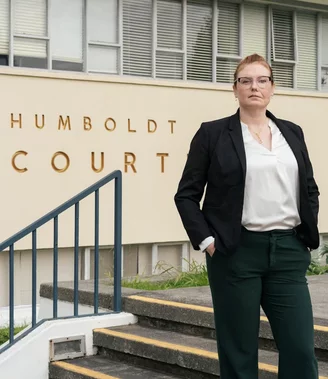
April Van Dyke | Image via campaign website.
April A. Van Dyke was elected to the position of Superior Court Judge, County of Humboldt, in March 2024.
She will be sworn in on January 3, 2025, and will begin her judicial duties in a family law assignment.
Ms. Van Dyke has worked in public defense for 14 years. After graduating from McGeorge School of Law,
she devoted her career to advocating for those who could not afford an attorney. She acquired extensive trial
and litigation experience throughout her career, some of which was spent as a public defender in San Joaquin
County. In 2019, she moved to Humboldt County where she continued her dedication to public service as
Deputy Conflict Counsel, prior to becoming a solo practitioner.
During her years of devotion to public service, Ms. Van Dyke worked on the California Public Defenders
Association Legislative Committee for over two years. She also drafted SB923 which was codified in Penal
Code §859.7.
Presiding Judge Kelly L. Neel stated that, “The Court is pleased to welcome Ms. April Van Dyke to the
Humboldt County Superior Court bench. We look forward to continuing our commitments to our community
and have every confidence that Judge-Elect April Van Dyke shares our dedication to the same.”
“I am deeply honored and incredibly grateful to Humboldt County for granting me the opportunity to serve
as a Superior Court Judge. This is a responsibility I take on with great humility and a steadfast commitment
to upholding the integrity that this position demands and deserves,” stated Ms. Van Dyke.
Humboldt winter is in full effect! This onslaught of rain has flooded and closed numerous roads across the county, prompting Eureka’s National Weather Service (NWS) office to issue a flood advisory for folks living along the coast and other flood-prone areas of Humboldt County.
“Showers and possibly thunderstorms are expected to move through much of the area this afternoon,” according to the NWS. “Small hail, gusty winds and locally heavy rainfall are expected with the stronger storms.”
Flooding has closed State Route 254 (Avenue of the Giants) between Holmes Flat and Barkdull roads, near Pepperwood. There is no estimated time of reopening, according to Caltrans District 1. Check out the Caltrans Quickmap for current road conditions.
Several county-maintained roads have been closed in response to the deluge. The Humboldt County Department of Public Works provided the following list of flooded roads:
Old Arcata Road between Graham Road and Jacoby Creek Road
Berta Road
Mitchell Road at Browns Road
Freshwater Road at Howard Heights Road
Freshwater Road at 1/2 mile west of Howard Heights Road
Howard Heights Road
Pine Hill Road between Elk River and Meyers Avenue
Little Hookton between Tompkins Hill Road and Highway 101
Walnut Drive at Redwood Street (one lane flooded)
The following roads are closed:
Mad River Road at Tyee City
Chemise Mountain Road
Coffee Creek Road
Eel River Road at Hookton Road
Telegraph Road at the water treatment plant
Jack Shaw Road Bridge
Folks living on Titlow Hill can expect two inches of new snow today. The road is open to the towers but all vehicles should carry chains, according to Public Works.
More information on county road conditions can be found at this link.
Parents and their kids on the first day of classes at Loma Vista Elementary School in Salinas on Aug. 8, 2023. State legislators want to limit deportation actions at schools. Photo by Semantha Norris, CalMatters
California lawmakers are proposing steps to protect K-12 students and families from mass deportations — although the real value of those proposals may be symbolic.
A pair of bills in the Legislature — AB 49 and SB 48 — would keep federal agents from detaining undocumented students or their families on or near school property without a warrant. The bills are a response to President-elect Donald Trump’s threat to deport undocumented immigrants, a move which could have major consequences for schools in California, which funds its schools based on attendance and where 12% of students have at least one undocumented parent.
Both bills would make it harder and more time-consuming for agents to enter schools or day care centers. But they can only delay, not stop, arrests.
“In no way can these bills override federal law,” said Kevin Johnson, a law professor at UC Davis. “But the bills respond to a great concern in the community that it’s not safe to take your children to school. … I can’t emphasize enough how important this is, how vulnerable undocumented immigrants feel right now.”
AB 49, proposed by Assemblymember Al Muratsuchi, a Democrat from Torrance, would require immigration agents to obtain written permission from the superintendent before coming onto school property. It also bars agents from being in rooms where children are present. SB 48, introduced by Sen. Lena Gonzalez, a Democrat from Long Beach, would prohibit local police from cooperating with federal agents — such as assisting in arrests or providing information about families’ immigration status — within one mile of a school. It also bars schools from sharing student and family information with federal authorities.
School districts have also doubled down on their efforts to protect students and families. Los Angeles Unified has partnered with legal aid organizations to assist families and instructed schools not to ask students about their immigration status. San Francisco Unified has similar policies.
“(San Francisco Unified) is a safe haven for all students regardless of citizenship status,” Superintendent Maria Su wrote to the community after the November election. “SFUSD restates our position that all students have the right to attend school regardless of their immigration status or that of their family members.”
Schools as safe havens
Schools have long been safe havens for immigrant students. Under a 1982 Supreme Court ruling, public schools must enroll all students regardless of their immigration status and can’t charge tuition to students who aren’t legal residents. And since 2011, federal guidelines discourage agents from making immigration arrests at schools, hospitals, churches, courthouses and other “sensitive locations.”
But Trump said he plans to eliminate the “sensitive locations” guidelines, and the conservative Heritage Foundation, which published the right-leaning Project 2025 manifesto, is encouraging states to charge tuition to undocumented K-12 students. That could set up the possible overturn of the Supreme Court decision guaranteeing access to school for undocumented students. The foundation’s rationale is that government agencies such as schools are already overburdened and need to prioritize services for U.S. citizens.
“The (Biden) administration’s new version of America is nothing more than an open-border welfare state,” Lora Ries, director of the Heritage Foundation’s Border Security and Immigration Center, wrote. “No country can sustain or survive such a vision.”
Muratsuchi, chair of the Assembly Education Committee, said he was inspired to author AB 49 just after the election, when he listened to the concerns of immigrant students in the political science class he teaches at El Camino Community College in Torrance.
“It became clear there was more and more fear among my students, not only for themselves but for their families. The fear of families being torn apart is very real,” Muratuschi said. “We want to send a strong message to our immigrant students that we’re going to do everything we can to protect them.”
‘Too scared to speak up’
For most undocumented families, deportation would mean a plunging into poverty and in many cases, violence. Nahomi, a high school senior in Fresno County whom CalMatters is identifying by her middle name because of her immigration status, described the threat of deportation as “a major worry for my family and I. Our lives could change completely in a blink of an eye.”
“I can’t emphasize enough how important this is, how vulnerable undocumented immigrants feel right now.” — Kevin Johnson, law professor at UC Davis
Nahomi and her parents arrived in California in 2011 from the city of Culiacan in Sinaloa, Mexico, an area plagued by widespread violence. They initially planned to stay until Sinaloa became safer, but once they settled in the Central Valley they decided the risks of returning outweighed the risk of deportation, so they stayed. Nahomi’s father works in construction and her mother is a homemaker, raising Nahomi and her younger sister.
While she and her family fear deportation, Nahomi is not afraid to attend school. She said schools can help families know their rights and help children feel safe.
“I feel very welcomed and safe there,” she said. “It is a very diverse high school and I just feel like any other student. … (But) a lot of these families are probably too scared to speak up about doubts they might have.”
Politically unpopular?
Patricia Gándara, an education professor and co-director of the Civil Rights Project at UCLA, said the risk of federal agents arresting students at schools is probably small. It’s unclear how many children in K-12 schools are undocumented, but it’s probably a relatively small number, she said. In any case, immigration enforcement that affects children almost always sparks public outcry from both parties, she said.
“Some people might say they’re anti-immigrant, but it’s another thing entirely when the family up the street, whom they’ve known for 20 years, suddenly gets deported, or your kid’s best friend gets deported,” said Gandara, who’s studied the topic extensively. “It’s politically very unpopular.”
Still, the proposed bills could send a powerful message that schools are safe places, she said. Immigration crackdowns can have a significant impact on student attendance, a Stanford study found, which can lead to less funding for schools, particularly low-income schools that enroll large numbers of immigrant children.
Immigration crackdowns can also lead to an increase in bullying, anxiety and general uncertainty on campus, not just for immigrant children but for everyone, Gándara said. Teachers, in particular, experience high levels of stress when their students’ safety is endangered, she said.
Schools can’t rely solely on state laws to protect immigrant families, though. They should partner with local nonprofits to provide legal services and other support to families who need assistance.
“Schools are one of the last places immigrant families feel safe,” Gandara said. “But as soon as (federal agents) move into schools, they’re not so safe any more. These bills say, ‘We’re not going to sit back and let this happen. Not all of government is against you.”
California ‘one of the best places to be’
Both bills are awaiting hearings in the Legislature. Tammy Lin, supervising attorney with the University of San Diego Immigration Clinic, expects California to continue to take steps to protect undocumented families, but political conflicts will be inevitable.
The incoming Trump administration is likely to battle California and other left-leaning states over immigration matters. Even within California, conflicts are likely to erupt between state leaders and those in more conservative regions, or even between agencies in the same area. In San Diego County, for example, the Board of Supervisors ordered the sheriff’s office to not notify federal immigration officers when it releases suspected undocumented inmates from jail, but the sheriff refused to comply.
Lin also said she wouldn’t be surprised if there’s an attempt to overturn the Supreme Court ruling guaranteeing education to undocumented children, potentially paving the way for other immigrants’ rights to be reversed.
“It’s a slippery slope,” Lin said. “Immigrants know this, which is why there’s immense fear and uncertainty right now. But bills like these show that California is still one of the best places you can be.”
###
Suriyah Jones, a member of the CalMatters Youth Journalism Initiative, contributed to this story.
CalMatters.org is a nonprofit, nonpartisan media venture explaining California policies and politics.
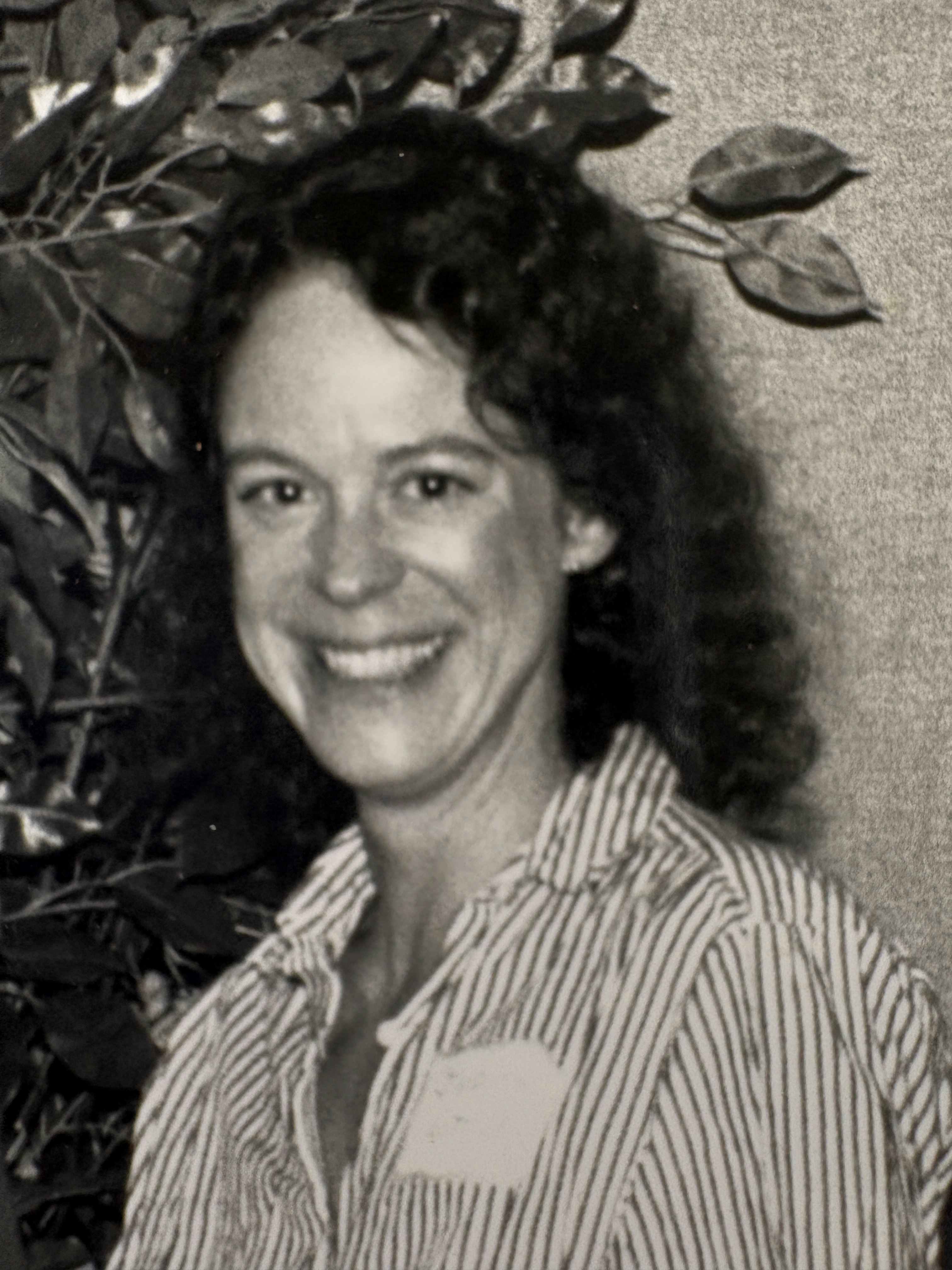
Judith Kristine Little passed away under hospice care on November 1, 2024 after a long bout with C.O.P.D. and other complications.
Judy was born in Berkeley on November 20, 1948 to Angela and George Little. Angela was a trailblazing woman in science at U.C. Berkeley, and George was a certified public accountant. An only child, Judy grew up watching her mother battle sexism in academics on the way to becoming a professor at Berkeley. Judy proved to be as motivated and determined in her own scholarly pursuits, and graduated from Berkeley High School at age 16. Judy attended Reed College for two years, returning to Berkeley where she received her B.A. with a major in social science from Cal.
Trained in piano at a young age, Judy was lured into taking up the bass by her high school music teacher. She ended up playing in various orchestras and jazz bands, and even mastered the glockenspiel in the marching band. While she did not continue with music, in her later years Judy would often remark how much she enjoyed being part of something that was much bigger than herself.
Judy’s first marriage took her to Eureka, where her husband Peter worked in television. Remarkably, she was elected chair of the Humboldt Democratic Central Committee at age 24 and was a McGovern delegate to the Miami convention in 1972. On September 19, 1972, she gave birth to her first daughter, Abby. She also enrolled in the Humboldt State University masters of sociology program. Not long after, Judy and Peter divorced. While working on her master’s degree Judy developed a relationship with James Derden, a professor of philosophy at Humboldt. With a master’s degree in hand, Judy married Jim on May 30, 1974.
Jim was an avid hunter and fisherman. Much to Jim’s delight, Judy took up the gun and rod. They fished for salmon and steelhead locally and enjoyed deep sea fishing during trips to Mexico. She was something of a pioneer as a hunter. They would take trips to hunt pheasants with their pointer-retriever in the Tule Lake/Lower Klamath refuges and the fields in Willows, and it was extremely rare to see another woman with a gun. The other men were surprised by Judy and some would grumble that she was just there so Jim could get an extra limit. If anything, it was the other way around; Jim would always try to get her to take his limit.
On one of these hunting trips Judy brought with her seven graduate catalogs and read them out loud as they sat in a goose blind. They picked the programs in Sociology to which she would apply. She was accepted to the program that she most wanted, with funding: The University of Washington in Seattle. At the time UW was known for its strength in statistical analysis, which would become a strength of Judy’s. Judy’s mom and Jim each took sabbaticals to live in Seattle to help with Abby while Judy completed her coursework.
In 1978, back in Arcata, Judy’s second daughter Erin was born. Judy spent the next years juggling family, working as a lecturer at Humboldt, and finishing her Ph.D dissertation, which she accomplished in 1985. Over the next decade she did everything from teaching statistics in the Natural Resources College, was head of Women’s Studies, and taught 80% of the courses listed in the catalog for Sociology. She developed a reputation as a workhorse, but was having to fight for tenure track status. Judy also became active in the union and was elected to serve on the state council as Northern California Lecturer representative. She traveled frequently in this role while Jim stayed home with the kids. Judy did not care for the broccoli family and the saying developed to wit: “If it’s broccoli for dinner, Judy is in L.A.”
In 1995 Judy got the recognition she deserved and was appointed to a tenure track position as an Assistant Professor. In 1997 she was recommended for tenure and Associate Professor rank, which she was awarded. Full professor rank shortly followed and the 15 year long “part-timer” became the department chair.
Judy loved the field of sociology and exploring the complicated factors that shape social behavior, human societies, and social change. She also enjoyed questioning stereotypes and how we categorize the world. During class introductions, she would have students share two seemingly contradictory characteristics about themselves. As an example she would say “I grew up in Berkeley in the 1960’s, and I hunt.”
Judy especially grew to love the field of applied sociology and was able to utilize her expertise in statistics to affect local issues. She crafted surveys and analyzed their results to inform decisions at the organizational, city, and county level.
Judy was heavily involved in her field beyond the Humboldt campus and community. Some of her roles included being a member of the Commission on Applied and Clinical Sociology, the Commission representative to the Board of the Association on Applied and Clinical Sociology, and President of the California Sociological Association. She was also active beyond the field of sociology, participating on numerous committees across campus, supporting HSU women’s athletics, and serving on the board of Open Door Health, the Arcata Economic Development Committee, and the Pacific Union School Board, among others.
Around 2010 Judy finally retired from Humboldt after a very successful career as a teacher and administrator. She and Jim enjoyed vacationing on warm sandy beaches until her health and cognitive decline made travel difficult.
Judy is preceded in death by her parents. She is survived by her husband, James Derden, daughters Abby Ward and Erin Derden-Little, and grandson Kailen Ward.
Our deepest gratitude to the amazing group of caregivers who supported Judy during the last year, especially Aleah, and to Hospice of Humboldt for helping us navigate the last week of her life.
In lieu of flowers, please consider making a donation in Judy’s name to Hospice of Humboldt. There will be a small, private memorial at a later date.
###
The obituary above was submitted on behalf of Judith Little’s loved ones. The Lost Coast Outpost runs obituaries of Humboldt County residents at no charge. See guidelines here. Email news@lostcoastoutpost.com.
It
is with deep sadness that we announce the passing of Tracy Jeff Guido
on December 27, 2024, at the age of 49. Jeff was a son, grandson,
husband, father, brother, uncle, friend, and mentor, and a proud
Yurok tribal member.
Jeff
was born on April 16, 1975 to Joanne Moore and Wallace Guido in
Portland, Oregon. As a young child, he could be found laughing and
playing with his older sister and cousins during summers in Hoopa at
the home of their grandmother Awok Violet Moore, who had a big
influence on him. He enjoyed camping, football, and monster truck
shows.
Jeff
was incredibly resilient and overcame adversity by embracing his
Yurok culture. He graduated from College of the Redwoods with a
degree in substance use counseling. He worked with Native youth at
risk in Humboldt County, teaching them to take the Red Road to
healing and healthy living, guided by the ways of our ancestors.
He
loved participating in traditional dances and was a beautiful singer.
He also loved fishing and sharing smoked salmon with friends and
family.
Throughout
his life, he was a role model for many, including his nephew and
cousins.
He
had a heart of gold and a kind, gentle, old soul.
Jeff
was preceded in death by his grandparents, Awok Haynes Moore and Awok
Violet Moore, his uncle Awok Arnold Moore, his aunts Awok Betty
Jackson and Awok Carol DeLaRosa, and cousin Awok Carl Snyder.
Jeff
is survived by his mother, Joanne Moore, older sister Joice Moore,
niece Isabella Violet Davis, nephew Nicolas Jessen Davis, wife Yvonne
Lynn Guido, daughter Trinity Cheyenne Newsom, son Albert Atlas Lewis,
grandson James Micah Holt, granddaughter Jamie Lynn Sanders, and
bonus daughter Kimora VenPelt. Jeff is also survived by his uncle
Bert Snyder and aunt Vivian Snyder, along with his aunt Barbara
Orcutt. In addition, Jeff is survived by countless cousins who loved
and adored him.
A
service will be at the Pecwan family cemetery in Pecwan at 12:30 p.m. on January 4, 2025, followed by a shared meal at the
Libby Nix Building in Weitchpec.
Jeff’s
life in this world was far too short for those who knew and loved
him, but he will be greeted by those who passed before him with
loving arms. We will forever hold him close to our hearts.
Service officiant: George Blake
Pallbearers: Nicolas Davis, Jonny DeLaRosa, Dan Rubinoff, Glenn Moore, Sport Surber, Curtis Kane, Zak Brown, Donald Moore
Honorary pallbearers: Kevin Orcutt, Bert Snyder, Pliny “Jack” Jackson III, John Greene, Edward Moore, Phillip Wagner.
###
The obituary above was submitted on behalf of Tracy Guido’s loved ones. The Lost Coast Outpost runs obituaries of Humboldt County residents at no charge. See guidelines here. Email news@lostcoastoutpost.com.
Joan Arlene Shapeero of Eureka peacefully passed
away on Dec. 23, 2024.
Joan was born on May 30, 1934 to Wesley and
Viola Lukenbill in Tacoma, Washington. She was the eldest of
three children. Following graduation from Lincoln High School in
1952, Joan went to work for the telephone company where she
worked for four years. In 1954 she met William Shapeero and
they married in October 1955. Joan and Bill had two sons, Michael
and Patrick. It was a busy household with Bill continuing his
education and Joan maintaining a household and raising their two
active boys.
When the boys were in their preteens the family moved to
Corvallis, where Bill pursued his doctorate at Oregon
State University and Joan worked at the University’s Student
Health Services. Completing his doctorate the family moved to
Eureka, where Bill taught at the College of the Redwoods, and
later moved to Hydesville. In 1975 Patrick graduated from
high school and Joan completed an Associates Degree in business
from the College of the Redwoods. Following her graduation Joan
worked for two years as a teacher’s aide in Fortuna.
Joan and Bill divorced after 32 yrs of marriage in 1987. It was a
difficult time for Joan but she rented a townhouse close to Pat
and his family and soon loved life again, living independently there
for over 30 years.
Joan joined Unity Church of the Redwoods, where she met Jim
Snow. They soon developed a loving companionship that lasted
25 years until his death in 2013. Joan and Jim enjoyed dinners
together, traveling, family holidays and their weekly Saturday
breakfast dates at Gill’s By the Bay. Joan joined Jim working in
his appliance store for five years until Jim retired.
At the age 70 Joan retired from North Coast Family Practice, where
she worked as a medical records clerk for 10 years. Never wanting
to be idle, she did volunteer work for another seven years.
Joan’s greatest joy were her three talented granddaughters and she
enjoyed sharing their accomplishments with her friends and
family. She was very proud of her sons and the life choices they
have made.
Joan is survived by her two sons, Michael Paul (Emma) of
Bloomsberg, Penn. and Patrick Wayne of Santa Rosa; three
granddaughters — Dhyana Wallace (Kenneth Meth), Jordan
Rohanna (Will Burner), Emily Shapeero; and Joan’s sister Carol
Mikesh (Paul). Joan was preceded in death by her brother Gary.
Joan enjoyed her life and wanted to thank some of those that made
that possible. “Thank you so much to the following. My special
friends from Unity Church Anne Merryfield, Janette Murphy and
Carol Saucier. Jim’s daughters, Jamie Boone, Kim Regalo and
their families who have been like a second family to me. Dolly Frye
of Frye’s Care Home and her capable staff for all their help. A
special thank you to my loving sister Carol for putting together my
life’s story.”
There will be a small family gathering in her honor sometime in the spring at Pat’s property in Kneeland.
###
The obituary above was submitted on behalf of Joan Shapeero’s loved ones. The Lost Coast Outpost runs obituaries of Humboldt County residents at no charge. See guidelines here. Email news@lostcoastoutpost.com.