
Sheriff’s Officers Find Woman on Probation with .40 Caliber Handgun, Drugs, and Stolen Checks
LoCO Staff / Monday, June 22 @ 10:27 a.m. / Crime

Press release from the Humboldt County Sheriff’s Office:
On June 19, 2026, at approximately 5:07 p.m., Humboldt County Sheriff’s deputies were dispatched to the 900 block of Sprowl Creek Road in Garberville for a welfare check on two subjects that were reported to be passed out inside a parked vehicle.
Upon deputies’ arrival, they located the vehicle and observed both subjects passed out inside, and drug paraphernalia in plain view. The subjects were contacted and detained. The female passenger was identified as 28-year-old Cooper Janne Henderson of Redway. She was on active probation and, per the terms of probation, was subject to search at any time.
During their investigation, deputies located drug paraphernalia, narcotics, a loaded .40 caliber firearm, and stolen checks in possession of Henderson. She was arrested without incident and transported to the Humboldt County Correctional Facility and booked on the following charges:
- HS 11364(a) Possession of drug paraphernalia
- HS 11370.1(a) Possession of a controlled substance w/ armed with loaded firearm
- PC 29800(a)(1) Felon/addict in possession of a firearm
- PC 475(b) Possession of blank checks
- PC 1203.2 Probation violation
- PC 25850(a) Carry loaded firearm in public
Anyone with information related to this investigation is encouraged to contact the Humboldt County Sheriff’s Office at (707) 445-7251.
BOOKED
Today: 11 felonies, 14 misdemeanors, 0 infractions
JUDGED
Humboldt County Superior Court Calendar: Yesterday
CHP REPORTS
6858-7051 Us199 (HM office): Trfc Collision-Unkn Inj
ELSEWHERE
Governor’s Office: Governor Newsom statement on compromise to address wildfire risk, support fire survivors, and create stronger accountability
RHBB: CDFW Announces Angling Closure at Mouth of the Klamath River
RHBB: Humboldt Bay Area Plan Planning Commission Workshop on Thursday, Sept. 3
GUEST OPINION: Now Is the Time for Community Participation in Offshore Wind Terminal Planning
LoCO Staff / Monday, June 22 @ 10:20 a.m. / Guest Opinion

A digital rendering of the fully built-out Humboldt Bay Offshore Wind Heavy Lift Marine Terminal. | Image: Harbor District.
###
The following guest opinion was submitted by Manila resident Colleen Clifford.
###
I am writing to encourage my fellow Humboldt County residents to attend the public meeting on Wednesday, June 24, at the Arcata Community Center from 5:30 p.m. - 7:30 p.m., to learn, ask questions and share their thoughts or concerns about the proposed Offshore Wind Heavy Lift Marine Terminal Project designated for Humboldt Bay.
“Is that project even really happening?” is the question I hear most when I tell people I have been involved in the discussion about offshore wind and the associated port project. I am a Samoa Peninsula resident and member of the Harbor District-convened Community Advisory Committee (CAC), that is hosting the meeting.
I talk a lot about wind and ports on the daily, but conversations I have outside of this bubble always start with surprise or skepticism. With such active hostility from the federal administration towards wind energy (including the buyout of offshore lease sites and the rescinding of a $426 million grant for the Humboldt port), to many it seems unlikely that wind projects will be built on the North Coast anytime soon, if ever.
The answer, still, at this point, is, “We need to participate in the process now, no matter what.” In her recent article, Lost Coast Outpost’s Isabella Vanderheiden explained in detail why now is the time for the Harbor District (the governing body of this project) to collect as much input from the public as possible as we move through the environmental review process. The upcoming months hold important opportunities for community members to help shape the design and avoid or mitigate the impacts of this incredibly significant development. We on the CAC will also learn what outreach still needs to happen and how information needs to be shared.
So come join us and get curious! The meeting on the 24th will start with a presentation about the project and include stations where visitors can learn and get their questions answered directly by experts. There will be various methods to capture questions and feedback from attendees. A panel of CAC members and project experts will then be asked to answer the most common and significant questions.
Information is power, and understanding this project now makes our community as strong as possible. This meeting will be the first of even more events to help keep the people of Humboldt educated and engaged. When the time comes to submit official comments to the public record, please continue to pay attention to deadlines and procedures, and take the opportunity to make your voice heard so that the project can best reflect the spirit and values of Humboldt County.
###
Colleen Clifford lives in Manila, co-leads the Peninsula Community Collaborative, and is a member on the Harbor District’s Community Advisory Committee.
California Gave Every Student in Prison a Laptop. How Community Colleges Are Using Them
Ella Carter-Klauschie / Monday, June 22 @ 7:53 a.m. / Sacramento
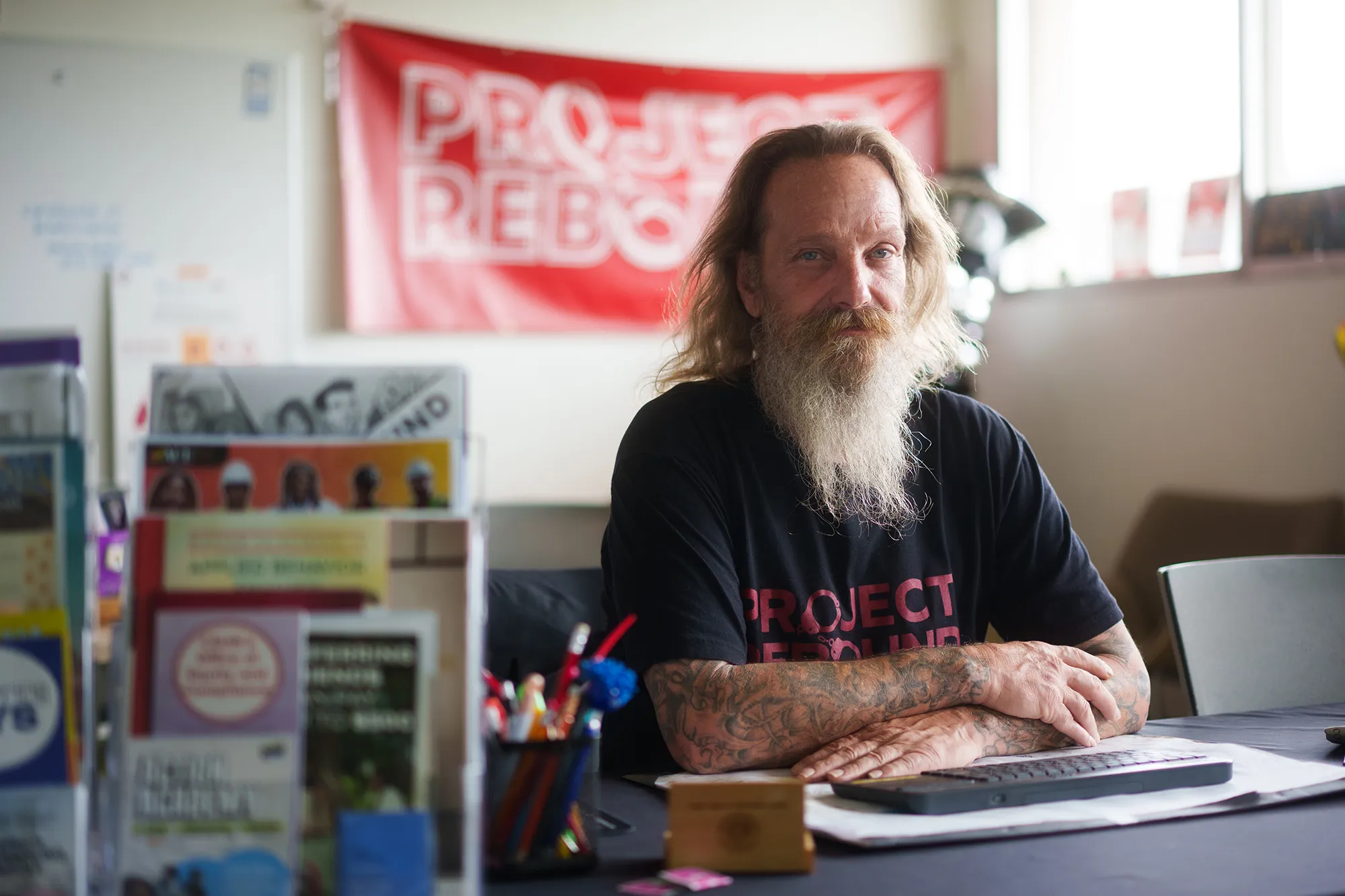
Garret Eiferman, a graduate student, inside the Project Rebound study room at Cal State Northridge on May 26, 2026. Photo by Jules Hotz for CalMatters
###
This story was originally published by CalMatters. Sign up for their newsletters.
###
Across California, every incarcerated individual taking a college course now has a tool those of us on the outside take for granted: a laptop.
In the past three years, the prison system spent $23.2 million to distribute 30,000 laptops to all incarcerated students. Almost half of those went to the 13,000 inmates enrolled in community college, who are increasingly doing their coursework online.
The growth of online learning marks a shift away from correspondence courses, where inmates receive assignments in physical packets, fill them out, and mail them back to colleges, with limited feedback. While some community colleges still offer those types of courses, the laptops are starting to replace the packets.
Meanwhile, students and faculty alike debate whether online courses are as effective as in-person courses. Some teachers say online options reduce disruptions when students have to miss class due to court hearings or prison lockdowns. Some students say they prefer in-person courses because they can build invaluable connections. In either mode of learning, inmates say using laptops helps them prepare for life on the outside.
“The more we understand about today’s world, the better we’ll be equipped to get out into the workforce as things continue to change,” incarcerated student Richard Moye said in an interview. “We don’t want to get left behind. … Tech literacy is of the utmost importance behind prison walls.”
Online courses could increase enrollment
In 2024, the state Legislative Analyst’s Office recommended improving the California Community Colleges’ prison education program, called Rising Scholars. The Legislature’s spending and policy adviser recommended addressing limited classroom space by offering more online courses. The office also suggested Rising Scholars prioritize enrollment for students still pursuing their first degrees, to allow for greater student access.
Today, 104 of the 116 community colleges in the state partner with prisons to provide courses and degree programs. According to data tracked by the community colleges, over 21,000 courses took place in prisons during fall 2025. Twenty colleges offer courses in person, with a faculty member commuting to the prison to teach the course. The rest teach courses either online or, with diminishing frequency, via mail correspondence, according to the California Community Colleges Chancellor’s Office.
The true number of online versus mail correspondence courses taken by incarcerated community college students is unknown. While community colleges have the option to track courses using the data labels “correspondence” or “text one-way,” there is no consistency as far as which ones they use, according to the Chancellor’s Office.
In-person classes can be difficult to get into because of enrollment caps and limited classroom space. The average in-person course generally ranges from 18 to 40 students. Many colleges enroll students on a first-come, first-served basis, enabling people on their second or third degree to “crowd out” those on their first degree, according to Orlando Sanchez Zavala, a policy analyst for the Legislative Analyst’s Office.

The Project Rebound study room at Cal State Northridge on May 26, 2026. Photo by Jules Hotz for CalMatters
Sanchez Zavala said prioritizing enrollment for people pursuing their first degree would have the most impact on lowering recidivism rates.
Leaving prison with a degree can make parolees eligible for a wider range of jobs, and more prepared to enter the workforce, reducing their likelihood of reoffending. According to the prison system’s recidivism report, during the 2018-2019 fiscal year, those who earned an associate’s degree while incarcerated had a 8.5% conviction rate in the three years after getting out, compared to a 41.9% conviction rate for all individuals released that same year.
Sanchez Zavala also suggested utilizing correspondence and online classes to open more courses with lower enrollment caps, allowing more incarcerated people to access community college.
Incarcerated students face multiple barriers
For in-person courses, a major challenge is finding classroom space in prisons. Though prisons have classrooms, they are also used for other programming and group meetings. Sometimes, classes take place in gyms or dining areas.
Joseph Bruno Martinez, 40, said he struggled to get into classes when he was incarcerated at high-security facilities, where institution-wide lockdowns sometimes interrupted learning.
Formerly incarcerated student Garret Eiferman, 56, said he found that prison correctional officers were not always amenable to helping incarcerated students complete degrees. He had to build relationships with officers so he could use the classrooms past 7 p.m., and, at times, even convince officers to allow his classmates to leave their buildings to attend class.

Graduate student Garret Eiferman at Cal State Northridge campus on May 26, 2026. Photo by Jules Hotz for CalMatters
He cited other obstacles to his instruction as well, including out-of-date textbooks with the hard covers ripped off for safety reasons, little to no feedback on his correspondence coursework, and challenges balancing work and other prison programs with classes.
Though he didn’t take any online-only courses when he was in prison, Eiferman said he can see the benefits for students as they grapple with the obstacles he went through trying to take in-person courses.
Online courses improve tech literacy
The new laptops offer much to the inmates: education, enrichment, and — for those who will go free one day — future employment.
For Moye, online education is important for technology literacy. Moye, 44, has been incarcerated for 16 years and takes courses online and in-person through Solano Community College at California Medical Facility in Vacaville.
Moye said a lack of emphasis on tech literacy in prisons is a “disservice to this community” as jobs on the outside require applicants to be skilled at using computers and other tech. Online learning is closing this gap for incarcerated people.
Students and teachers told CalMatters they now complete much of their coursework and grading through the online learning site Canvas, which is used across the state’s higher education systems for assigning and submitting work, as well as messaging between students and instructors.
Isela Ocegueda is the vice president of instruction at Coastline College and teaches an online English course to incarcerated students. She says using Canvas streamlines an incarcerated student’s transition from school on the inside to school on the outside. At her college, 80% of instruction is online.
Until 2023, Coastline College provided courses in prisons through mail-in correspondence. The college calls its new online format “Canvas-supported correspondence.”
Ocegueda says the online format allows instructors to offer more creative assignments and thorough feedback. Her first assignment to her English class last semester was a journal entry, in which she asked students to introduce themselves and tell her how she can help them throughout the class.
The class final is a research paper, on which Ocegueda can give instant feedback and edits to students who can turn in multiple drafts, which was nearly impossible through snail-mail correspondence.
“Imagine just trying to receive essays in the mail and then make your corrections and then send them back,” Ocegueda said. “That was really hard to do in the mail version of correspondence. … Canvas-supported correspondence allows more for that writing process to actually happen.”
Obstacles to online instruction
While major improvements to Wi-Fi connectivity and research materials for inmate coursework have been made, there are still obstacles. Wi-Fi access varies from prison to prison, and it can often take up to a week for students to get reading materials approved by prison librarians for them to access.
Students at Pelican Bay State Prison in Del Norte County and California Institution for Women in San Bernardino County say they can’t access Canvas in their cells due to a lack of Wi-Fi, while students at Folsom State Prison and San Quentin Rehabilitation Center say they are able to complete coursework from their cells, where the Wi-Fi is strong. According to a state prison system spokesperson, inmates have Wi-Fi access in the housing units at all but four state prisons. All prisons have Wi-Fi in education areas and classrooms, though signal strength may vary, according to the spokesperson.
Some students pursuing bachelor’s degrees in prisons reported to CalMatters last year ongoing challenges with Wi-Fi and limited access to research materials, with some wishing they could do a simple Google search for information.
Solano College English professor Ben Brookeshire’s main teaching challenge is delay in students accessing what he calls the “information space.” Some documents his students might need to explore on digital research libraries require approval from prison librarians.
In-person courses boost engagement
Eiferman, now a Cal State Northridge graduate student, did most of his in-prison coursework via correspondence courses from Palo Verde and Coastline colleges from 2009 to 2019. Eiferman holds an associate in arts, an associate in science and a business certificate from his time incarcerated. He was also pursuing a U.S. history degree when he paroled in 2020.
“The bulk of my interaction with professors during the degree completion was very minimal. It’s distance learning, so that means it’s all done with an envelope and a stamp, and feedback was never a thing,” Eiferman said. “It was extremely challenging to transfer out here to the university, thinking that I knew stuff that I didn’t or stuff that I knew that needed to be retaught and relearned correctly.”
 Garret Eiferman, a graduate student, uses one of the computers inside the Project Rebound study room at Cal State Northridge on May 26, 2026. Photo by Jules Hotz for CalMatters
Eiferman took his first in-person course through Bakersfield College at Golden State Community Correctional Facility, a medium-security prison in the southern San Joaquin Valley. It was a math class, a subject he had always struggled with, but Eiferman said he had “aha moments” and was even able to help teach his fellow students. He said he took people “under his wings” to conduct “spirit building” and encourage them to stay in class.
Moye said in-person classes allow students to more clearly understand teachers’ expectations. They also offer group interaction, peer support, tutoring and collaboration on class assignments.
Data tracked by the community college system indicates a 77% success rate for internet-based and correspondence instruction, and an 85% success rate for in-person instruction, for incarcerated students in spring 2025. “Success” means the student earned a C or higher, or a “pass” in non-letter graded courses. Incarcerated students have a success rate 10% higher than community college students overall in in-person courses.
“I’m a fan of in-person learning,” Moye said. “That’s my favorite style of learning, because to me, it resembles most what’s going on in society. If we’re trying to prepare incarcerated men and women for society, we have to have it look as much like society as possible.”
Brookeshire said he has seen his peers debate the merits of online versus in-person courses in the prisons. He said he knows online courses are inevitable, but he strictly teaches in person because it’s the best way for him to connect with students.
“I’m very passionate,” Brookshire said. “I really believe there’s magic in a classroom, and I really believe that face-to-face instruction is irreplaceable.”
###
Joe Garcia contributed to this story.
Ella Carter-Klauschie is a contributor with the College Journalism Network, a collaboration between CalMatters and student journalists from across California. CalMatters higher education coverage is supported by a grant from the College Futures Foundation.
ONCE UPON A TIME: Jesse and the Human Cannonball
Jeff DeMark / Sunday, June 21 @ 7 a.m. / Story

Over 20 years ago we bought a 100-year-old Victorian in Blue Lake. People called it the Red Lady, and it was a glamorous lady but in deep distress, needing a major renovation. We hired a Madhatter fix-it crew of unlicensed contractors, and they went at it: foundation, electrical, plumbing, painting, roof. You name it, we threw money at it
Eight months into our Moby Dick project, and a long way from being finished, I’d had enough of our crew’s hijinks and booted them off our project. They’d done a lot of good work but it was all too crazed and way too slow. It felt like throwing the buyers and sellers out of the temple.
But then I was left wondering if we’d ever finish this renovation or would we first go bankrupt, get a divorce or spontaneously combust from stress. My wife and I was spinning like broken tops.
Then, as I read the Times-Standard, I realized it was the last day of the Humboldt County Fair, one of my favorite events all year. It’s the only day I gamble, betting crazily on horses and mules and yelling and laughing at the finish line. I needed to go to the Fair this year more than ever and figured if I just made it into the fair grounds, something good would happen.
So I jumped into the car with my four-year-old son Jesse.
“We’re going to the fair, Jesse!”
“How many rides can we go on today?” Jesse asked
“As many as you can handle. But you know you’re too young for some.”
“But the Ferris wheel is ok, right?
“Yes, the Ferris Wheel, that’s fine. But I get to bet on the horses, too,
OK? ”
“OK, dad.”
###
When we arrived, we made a beeline for the Ferndale racing grandstand. It’s over 100 years old, all weathered wood and soul and the ghost horses of races past, the Wrigley Field of racetracks. We sat up high in the grandstand, a soft breeze blowing, looking out at the rolling hills, a white church steeple and a lone hawk swooping. Sitting next to my son, cheering on those B-grade horses and mules, while sipping a beer, made the madness of renovating our house feel a million miles away.
After a few horse races that yielded no wins, we walked into the fair munching on fresh kettle corn. As we strolled past a palm reader, sitting in her blue wooden box, she called out, “Read your future? Find your true path?”
I walked up to her and said “If you can you find me a good and honest contractor I’ll pay you $100 on the spot.”
Oh yes, I can do that for you sir, no problem,” she said but I kept walking.
Then we heard over the loudspeaker:
“Ladies and gentlemen get ready for the 8th wonder of the world. In two minutes the Human Cannonball will be shot out of this cannon and fly through air like a rocket ship! Be ready to be amazed!”
“What’s a human cannonball?” Jesse asked.
“Well, I’ve never seen one but I guess a guy will be blasted out of that cannon and land in that net way over there.”
“Will it hurt? Will he be blowed up?”
“Gee, I hope not. We’ll see.”
I didn’t think it would be much of anything, maybe some kind of cheap magic trick. I’d never seen a Human Cannonball before.
Then we heard, “5-4-3-2-1,” an enormous explosion and this guy wearing a sparkly blue helmet blasted out of that cannon, flew over a corndog stand and dropped into a net 200 feet away. He jumped up with his hands waving wildly and everybody exploded in applause, including Jesse and me.
“Dad that was so cool! When I get big I want to do that.”
“We’ll see. First you have to go to kindergarden.”
“But after that!”
Then we went to ride the Ferris Wheel. As we reached the pinnacle it stopped and we swayed in the cool breeze. We could hear all the screams and laughs floating up to us.
Jesse looked intently down at all the spinning rides and flashing lights, his tongue swishing on his lips back and forth, back and forth, lost in thought.
“Dad, are you old enough to ride the Hammer or the Gravitron?”
“Yes, I am.”
“Will I be old enough some day to ride the Hammer?”
“Yes, you will, someday.”
“Dad, did you ever ride the Hammer?”
“Yes, I did.”
“Then why don’t you ride it now?”
“Well, it scares me and makes me dizzy.”
“Does the Hammer scare the people who ride it now?”
“Yes, I think it does.”
His tongue kept swishing back and forth as he thought some more.
“Dad, why do people do things that scare them?”
I started to laugh.
“No, really … why do people do things that scare them?”
“I guess they want a thrill and for their stomach to be tickled.”
“Their stomach tickles when they’re scared?”
“Yeah, at least it does for me.”
“Do you think the Human Cannonball is scared?”
“Yes, I’m sure he is, even though he’s done it hundred times, But in a way, I think he knows he’s flying for all us who can’t. Do you know what I mean?”
“Ah, yeah, well, I’m not sure. Dad, I want to come back to the fair tomorrow!”
“Well, this is the last day so we’ll have to wait a whole year.”
“I wish there was always the fair, Dad.”
I gave my little boy a hug.
“Me too, Jesse. Me too.”
###
Jeff DeMark is a writer and musician.
ECONEWS REPORT: Offshore Wind Port Development
The EcoNews Report / Saturday, June 20 @ 10 a.m. / Environment

Despite Trump’s best efforts, offshore wind ain’t dead. The Humboldt Bay Harbor District has been steadily at work developing its Heavy Lift Marine Terminal Project, the port facility that will be used to assemble and service wind turbines. And there are updates to share with you.
The Harbor District-convened Community Advisory Committee invites you to attend a community meeting to learn more and ask questions about a proposed offshore wind heavy lift marine terminal project.
Community Advisory Committee members Rachael Smith, Colleen Clifford, and Matt Simmons join Rob Holmlund, Development Director at the Harbor District, to discuss the upcoming meeting and offshore port development.
We hope to see you at the meeting!
- DATE/TIME: Wednesday, June 24th: 5:30-7:30 p.m.
- WHERE: Arcata Community Center
- PRICE: Free
###
HUMBOLDT HISTORY: A Master Cowboy Taught Me How to Handle the Obstinate Cattle of the Mattole Valley
Ken Roscoe / Saturday, June 20 @ 7:30 a.m. / History
During the 1920s, I had the good fortune to work quite a bit with a master cowboy, Jim O’Dell. One occasion was a cattle roundup and drive to the railroad at Fernbridge. The shipping point was the old Singley Station located toward the river south of Singley Road. An old time cowman, George Cummings, hired me along with Jim O’Dell to help him gather his cattle and move them to the shipping point. The cattle were grazing on Mr. Cummings’ Spanish Ranch and on land to the south that he leased from W.T.S. Hadley. This was a large and rugged area along the Lost Coast west of the Mattole Valley.

The Cowboy (1900), Charles Marion Russell. Public domain.
Jim O’Dell was a good, seasoned cowboy, a superlative camp cook and a skillful packer. He used a pack mule widely known as “Cooskie Dick.” The mule was famous in southwest Humboldt County because no one had ever succeeded in riding him, although he made no objection to being packed. He was convinced that be was a pack mule and nothing else. Jim was adept at throwing the diamond hitch, and we never had trouble with a pack slipping.
Jim had one bad leg, permanently bent between the ankle and the knee, but that did not keep him from doing the things be wanted to do. He wore a pair of chaps made from bear hide, and in a pocket on one leg was usually a flat flask containing moonshine — very acceptable when you were young and battling to acquire a taste so you could be considered a man. Acquiring a taste took a lot of persistence, but it was usually conquered. Jim also bad a good singing voice, and every now and then he would burst into song.
Anyway, we rode down to Big Flat several miles south of the Spanish Ranch to spend the first night before starting the early morning roundup. No cabin was there at the time because of a fire, so we camped, and we had a very good night. After several days of gathering cattle, we moved the herd up the beach to the flat at the foot of Oat Ridge where we got into trouble.
Mr. Cummings had a fenced pasture there, but the fencing was in a poor state of repair. We put the herd in through the gate at the south end, and they broke right out on the north end. Jim said, “Let’s drive them on to Randall Creek. I know there is also a hole in the fence there, but we can camp in the hole.” So we drove the cattle on to the pasture at Randall Creek and camped in the hole, but what Jim did not know was that a little below our camp, toward the ocean, there was another hole in the fence.
After an early breakfast, we found that most of the cattle were missing, presumably on their way back to Big Flat. Mr. Cummings and I went south and got ahead of the cattle at Big Creek, north of Big Flat. Jim went up Lake Ridge above Randall Creek and rounded up the strays from that area, and we were once again on our way, but instead of leaving for the mouth of the Mattole at dawn, it was noon.
Soon after we got underway, an old steer, probably five or six years of age, broke from the herd and charged up the hillside. Our dogs were far from the best, and the steer shook them off and escaped. Evidently this had been a yearly occurrence, because Mr. Cummings said, “Well, Peter is gone again.” I have often thought of that statement. To me it was somewhat humorous. I do not know if Peter was ever captured and brought to market.
When we reached the mouth of the Mattole, we found that the cattle buyer we were to meet there had given up on us and gone home. We were also told that the mouth of the river had quicksand, so we abandoned our plan to cross there and took the herd up the river to Moore Hill, a Clark Rackliff ranch, crossing the river on a shallow riffle with solid footing. Clark’s pasture had a good fence, and we had a pleasant night with no more breakouts.
The next morning, we drove the herd up the river to the mouth of the North Fork below Petrolia, then over the hill to the Domingo Zanone corrals for weighing and sorting. From there we pressed on up the beach and over Cape Mendocino to Capetown, arriving late at night, only to be up again before daylight the next morning. I can still hear Jim saying, “One thing about this business, it sure doesn’t take long to stay all night.”
At daylight we left for Fern Cottage, following the county road to the Oil Creek junction where we left the road and went down by the old Flint place to the beach again and on to Fern Cottage between Centerville and Ferndale. Some of the cattle were separated and driven on to the Williams Creek slaughterhouse. The rest spent the night in a Fern Cottage pasture. We returned to Ferndale and checked into the Ivanhoe Hotel. I will not elucidate on how Jim and I spent the rest of the night.
Next morning, we were a bit bleary-eyed as we started the remaining herd toward the Singley Station. We got word that the Eel River crossing was soft and were advised not to try it. The alternative was to drive the herd across Fernbridge, another rather dangerous operation because a horse’s iron shoes can be treacherous on pavement. Also be informed that these cattle, raised in the wild, knew nothing of cars and trains and would stampede easily.
I went into the lead because I thought it no place for the older men. We got the cattle onto the bridge without incident. However, when we started down the approach ramp on the north end of the bridge, the herd picked up speed and were crowding my horse to the point that I had to use my bullwhip to get off the bridge safely. Then all hell broke loose.
The engineer of a train coming up from the south, but not yet in sight of the cattle, blew his warning whistle. At the same time a paving outfit on the other side of us was making plenty of noise. The cattle started to run, but I used the bullwhip to get the attention of those in the lead and got them to circle, heading off a stampede and giving Jim O’Dell time to demonstrate his cowboy cunning and do the right thing at that moment.
He went across the highway to the store, jumped off his horse, hobbled in and grabbed a pair of pliers, and scrambled with his bad leg up the bank and cut the fence above the highway. We got the herd started through the hole and then drove them through some other pastures onto a holding pasture on Singley Hill. From there it was an easy job getting them into the shipping yard and loaded on railroad cars the next morning. Too bad those days are also gone forever.
###
The piece above was printed in the July-August 1992 issue of the Humboldt Historian, a journal of the Humboldt County Historical Society. It is reprinted here with permission. The Humboldt County Historical Society is a nonprofit organization devoted to archiving, preserving and sharing Humboldt County’s rich history. You can become a member and receive a year’s worth of new issues of The Humboldt Historian at this link.
OBITUARY: Joan Peavey Hughes, 1949-2026
LoCO Staff / Saturday, June 20 @ 6:56 a.m. / Obits
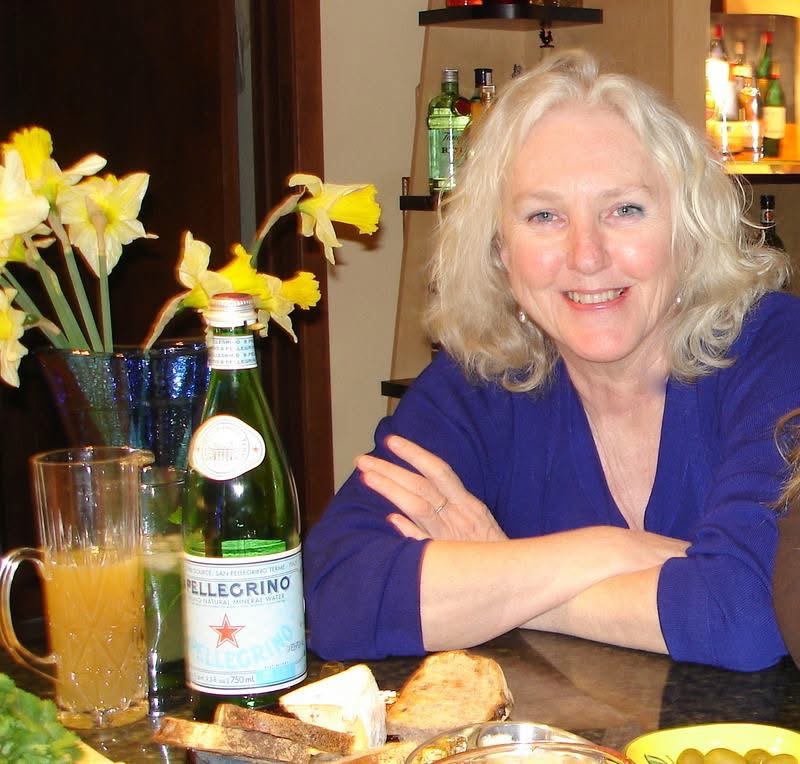
Joan Peavey Hughes, age 76, passed away peacefully, leaving behind a legacy of wisdom, love, and healing.
Born in Menlo Park, California, to the late Frank and Ellen Peavey, Joan grew up in the Bay Area. She and her husband of 53 years, Clifford Hughes, ditched the Bay Area for the Sierra Foothills, eloped in Reno, and eventually headed to Humboldt County to “live on the land” as part of the ’60s counter-culture. In their five-plus decades together, they lived a life full of adventure and friendship across many beautiful spots in Central and Northern California.
Joan graduated from Humboldt State and attended Stanford to become a Physician Assistant. She realized a lifelong dream by serving farmworkers at the Santa Lucia Medical Group in Salinas. For more than a decade, she served that community, becoming fluent in Spanish and beloved by her patients and colleagues. She and Cliff eventually felt the pull of the “homeland” and returned to Humboldt County, where she practiced medicine for another 20 years.
She was a consummate professional who read medical journals for fun well into retirement, while nurturing an amazingly silly side—as evidenced by the many years-long and completely ridiculous running jokes with family and friends. She was a phenomenal cook (although God help you if you needed a knife that was actually sharp). She liked a good solo adventure — like hiking the Inca Trail alone or exploring China — but more so, she was the glue that pulled everyone together. She and Cliff hosted countless gatherings for family and friends. She loved music and a good party and could play a surprisingly mean game of ping-pong. She played piano, later took up the guitar, and sang. She was “Doctor Joan” to everyone she knew. Whether you had a broken bone or a broken heart, Joan was the first phone call. She took care of everyone. Always.
Joan is survived by her devoted husband, Clifford; her siblings Frank, Barbara, Brian, and Lis Peavey; her sister and brother-in-law Jill and Sheldon Carter; and a small army of nieces and nephews: Frank, Jordan, and Natasha Peavey, and Amy, Adam, Megan, Kate, and Andrew Carter. She also leaves behind a growing brood of grand-nieces and nephews, including Callan, Chloe, Cliff, Conor, Griffin, Hudson, Martin, Michael, Michaela, and Nathan. She was preceded in death by her parents and her nephew, Michael Peavey.
In keeping with Joan’s spirit, there will be a celebration of life held July 18, 2026 at 1 p.m. at the Old Steeple in Ferndale. If you would like to attend please RSVP here.
In lieu of flowers, Joan would be thrilled if you made a donation to the Center for Farmworker Families. She spent her life caring for that community, and she’d love to keep supporting them even now that she’s finally stopped reading medical journals.
###
The obituary above was submitted on behalf of Joan Hughes’s family. The Lost Coast Outpost runs obituaries of Humboldt County residents at no charge. See guidelines here. Email news@lostcoastoutpost.com.


