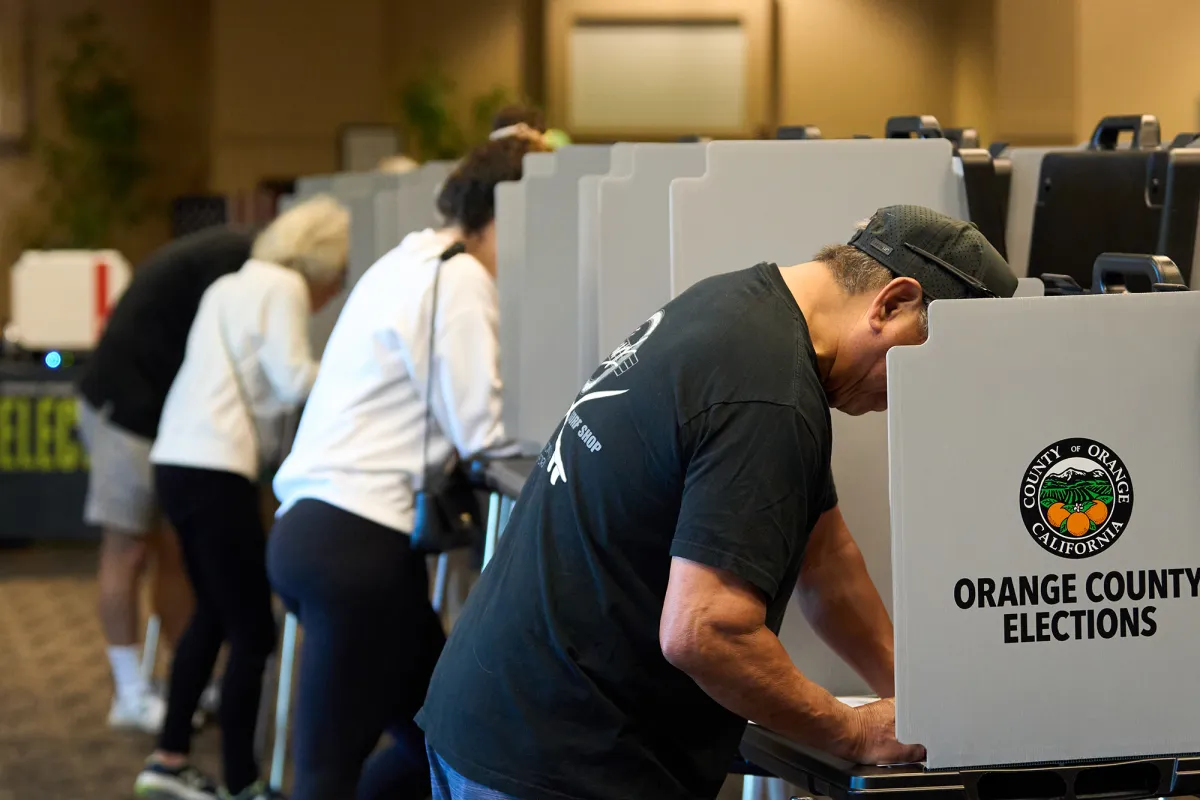
Voters fill out their ballots at a vote center at the Huntington Beach Central Library in Huntington Beach on March 5, 2024. Photo by Lauren Justice for CalMatters
California is taking Huntington Beach to court again — this time over a change to its city charter adopted last month by local voters that would allow the city to require voter identification in municipal elections.
Conservative city officials in Huntington Beach pushed for voter ID, a popular policy in Republican states, to address concerns from constituents about election integrity that have increasingly cropped up in the wake of former President Trump’s false claims that the 2020 election was stolen.
But Attorney General Rob Bonta and Secretary of State Shirley Weber announced today that they would seek to invalidate the new law for interfering with state protections of voting rights. The officials, both Democrats, argue that Huntington Beach’s ID requirement could disenfranchise voters and is unnecessary because there is not widespread fraud in California elections.
“It really is a solution looking for a problem, because we have not found this problem,” Weber said at a press conference. “We have worked very hard to make sure that every eligible Californian knows that they have the right to vote.”
The lawsuit, filed in Orange County Superior Court, contends that elections are an issue of statewide importance governed by statewide rules and that cities do not have authority to implement additional regulations that could interfere with a voter’s ability to cast a ballot.
Bonta said that Californians must already present identification and swear under penalty of perjury when they register to vote, allowing for a more expedited voting process. He said Huntington Beach had not provided a compelling reason for requiring voter ID at the polls.
“We believe that the position of the city of Huntington Beach is not only misguided, it is blatantly and flatly illegal,” Bonta said.
Huntington Beach City Attorney Michael Gates said the law — which takes effect in 2026, and also authorizes the city to add more in-person voting locations and monitor ballot drop-boxes — is intended to increase participation in elections.
“The people of Huntington Beach have made their voices clear on this issue and the people’s decision on the March 5th ballot measures for election integrity is final,” he said in a statement. “To that end, the City will vigorously uphold and defend the will of the people.”
Bonta and Weber already warned Huntington Beach last fall that its voter identification proposal would violate a provision in California’s election code that prohibits “mass, indiscriminate, and groundless challenging of voters solely for the purpose of preventing voters from voting.”
City officials put the measure on the ballot anyway and it passed by 7 percentage points in the March primary. The Secretary of State’s office finally certified those results on Friday.
State Sen. Dave Min, an Irvine Democrat who represents Huntington Beach in the Legislature and is running for Congress, has separately introduced Senate Bill 1174, which would prevent local governments from implementing voter ID requirements, a direct challenge to the city.
In his statement, Gates pointed to the bill as further evidence that Huntington Beach currently has legal authority to require voter ID in elections.
This state’s lawsuit follows another long-running legal saga with Huntington Beach over housing. California has sued the citytwice in the past five years for not meeting its obligations to plan for more housing, while Huntington Beach countersued last year, though that case was tossed in November.
The city in recent years has become a symbol of resistance against liberal California, with a newly-elected conservative city council majority jumping into battles over issues such as vaccine mandates, Pride flags and library books.
###
CalMatters.org is a nonprofit, nonpartisan media venture explaining California policies and politics.
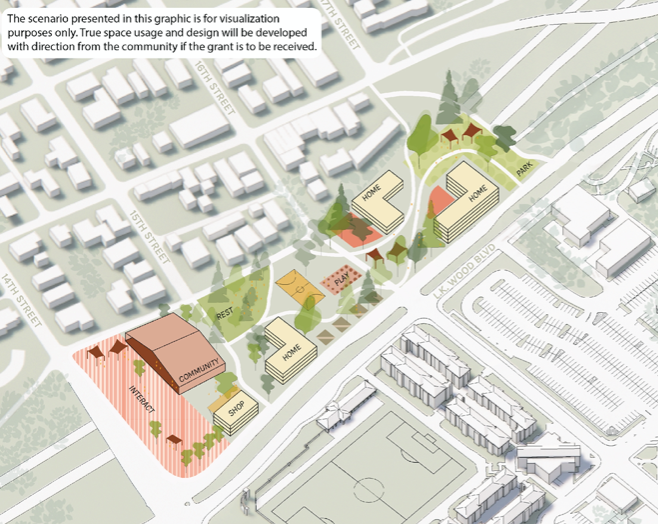
The potential vision for the Arcata Cap, which could create space for more housing, and places to shop, rest or play. | Image from Arcata’s grant application packet
###
It’s pretty much common knowledge at this point that Arcata (along with many other cities) is making a mad dash to plan for the creation of a lot more housing, both because it is badly needed and because it is required by the state. But one of the biggest roadblocks municipalities like Arcata face is that there is not a lot of undeveloped land left for building that housing. Arcata has been navigating this issue through promoting infill development, creating documents like the Gateway Area Plan, which aims to allow for housing to be built on all kinds of small or already partially developed sites that may not have been previously earmarked for development.
Now the City of Arcata is exploring another widely available space for development– the air. More specifically, the air above Highway 101.
That’s right. The City of Arcata is in the process of planning a project that would build entirely new land suspended above 101 between 14th and 17th Streets, connecting Northtown to LK Wood Boulevard. The project is known as the Arcata Cap – which would create about five acres of additional land that could be used to build housing and other community resources, while also providing a bike-and-pedestrian-friendly connection between the east and west segments of the city that are divided by Highway 101.
“The cap makes perfect sense in this area for various reasons,” Netra Khatri, Arcata’s city engineer, told the Outpost in a recent phone interview. “The area between 11th and 17th Street, if you drive through the highway, you will see that the highway is low and the grounds on either side are higher…Around it there’s a lot of dead zone – an area that’s not generally used right now. And once you put a flat area on it you will be able to use that for various things. It could be housing, it could become a community park, it could be a transit hub, anything you want.”
Sound insane? It might be. But, impossible? Well, city and state government agencies certainly don’t think so. In fact, this plan just became part of the California Department of Transportation (CalTrans) project Reconnecting Communities: Highways to Boulevards – a pilot program created after the the adoption of Streets & Highways Code 104.3 that funds the conversion of underutilized highways into multimodal corridors. And the City of Arcata was selected to receive a big ol’ chunk of grant funding to realize this literally lofty goal.
Khatri said that the exact amount of money Arcata will receive for this project is still unknown, but that Arcata was among three communities selected to receive the funding, along with San Diego and San Francisco. Khatri said that Caltrans has made $148 million available in grant funding, which will be divided (not necessarily equally) between the three awardees.
And though $148 million is a hefty sum, it will not get any of these projects anywhere near completion. As you can probably imagine, building acres of new land on top of a highway will be an extremely expensive and involved project that will take years and probably hundreds of millions of dollars to complete. Khatri said that the money Arcata receives will go toward the planning phase, including conducting studies, community outreach and drafting the plan. Any remaining funds will be used to leverage additional funding in the future for implementation of the project.
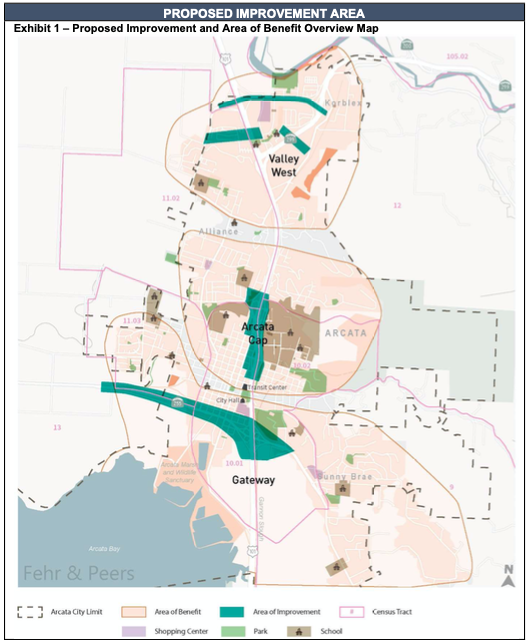
Arcata’s proposed improvement areas
Arcata’s vision for this project includes more than just the proposed highway cap. The idea, Khatri said, is to “reconnect Arcata” in the areas that have been separated by the highways, and the project also proposes improvements to Samoa Boulevard and the Valley West neighborhood. Khatri said that it is still not completely clear what those improvements would look like, but would likely include adding additional highway crossings, either building new bridges or improving existing bridges to be more friendly to bicyclists and pedestrians.
The idea, for Arcata’s project and the other projects Caltrans is funding, is that if we build more places for people to walk and bike across the highway that they will do so, and that would help further lots of California’s goals – decreasing greenhouse gasses by discouraging driving cars and improving public health by encouraging biking and walking.
“Our city is divided by 101 exactly in half,” Khatri said. “We used to have 17 or 18 connections – streets connecting the east and west. Right now we have only five connections. Those are all bridges and some of them don’t even have proper bike lanes and sidewalks.”
And it is true that some of the places where you can cross the highway are pretty dicey for cyclists and pedestrians. There is only one dedicated pedestrian bridge, which crosses over the highway at 17th Street and connects to Cal Poly Humboldt campus. The bridge that crosses on Samoa Boulevard (Highway 255) has no sidewalk or bike lanes, and although that certainly does not stop many people from crossing on bike or by foot, it can be pretty scary. If someone prefers not to risk it, they currently have to make their way up to Seventh street for another option to cross 101.
But if increasing people’s ability to cross Highway 101 is the big issue, why not just focus on improving the existing bridges and maybe adding a couple more? That seems like it would be a much more feasible solution than this highway cap idea. But Khatri said it’s about more than just improving accessibility between the different sections of Arcata, it’s also about improving our environmental ecology by creating more green space on the highway cap and “reconnecting the forest to the bay.”
“At one point this was forested land and because of the industrial revolution or other aspects of human nature, we went into development and we – I wouldn’t say the word destroy, but that’s the first thing that comes to my mind – have destroyed the forest, the creek. Jolly Giant Creek at some point was an open creek but right now it’s covered by downtown.”
By creating a highway cap, the hope is that it can help the city’s return to a simpler time, before the community was torn in half by four lanes of asphalt, when humans and other living things could freely roam across the land.
Current construction on the Wallis Annenberg Wildlife Crossing. | Screenshot from online web cam.
The idea is not totally new or unique to our region and many other communities are planning, or having even begun constructing highway caps – also referred to as highway lids or land bridges – as a way of returning the highways to the land without actually removing the road. One example is the Wallis Annenberg Wildlife Crossing, which is currently under construction in Agoura Hills and will cover a portion of Highway 101 to provide a place for wildlife to safely cross. Up in Portland, Ore. the I-5 Rose Quarter Improvement Project just clinched a $450 million grant to build a highway cap over the I-5 freeway to reconnect the Albina neighborhood to the city’s downtown. Another similar and already completed project is the Presidio Tunnel Tops in San Francisco, where portions of the Presidio Parkway run underground, with the park sitting atop.
Again, Arcata’s project is still in the very early planning stages. As for Arcata’s next steps, Khatri said that the City of Arcata will be working with Caltrans to form community partnerships and will be working with Cal Poly Humboldt, Humboldt County Association of Governments (HCAOG), Arcata House Partnership, the Wiyot Tribe and more to draft a plan that would provide the most community benefits. The City will also be seeking community feedback and Khatri said that staff will announce opportunities for public input over the next year or so.
Since this is a pilot program, Khatri said, all the involved agencies are still figuring out the best way to roll out the projects and allocate the funding. It will likely be at least five years before we see any actual development on the project. But Khatri is confident that it will happen and said that, even though he was very skeptical about the idea at first, the new availability of funding and the launch of other highway cap projects has made him much more confident.
“Very frankly, like five years ago when I first heard about this, I was like, ‘Well, this is impossible. The cost is going to be in the hundreds of millions and we will never get that much,’” Khatri said. “But you know, five years ago, we were applying for grants in the amount of two, three, four million. But now we are applying for grants for like $20 million.”
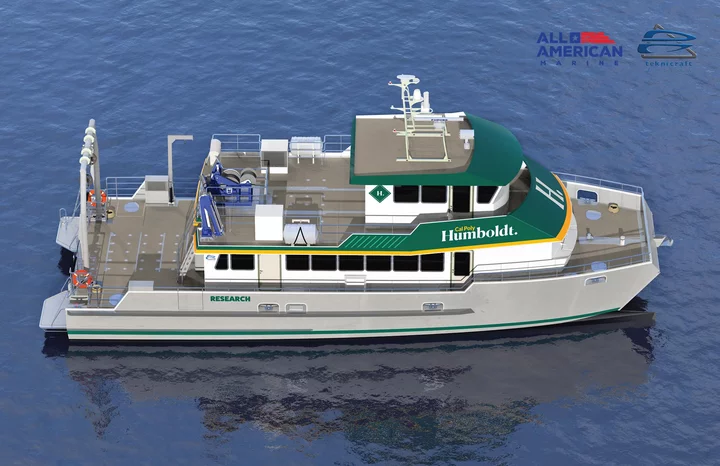
The ocean covers most of the planet’s surface, and of that, only 5 percent has been explored. To reveal the mysteries of our ocean, Cal Poly Humboldt is looking toward the future with a new oceanographic research vessel.
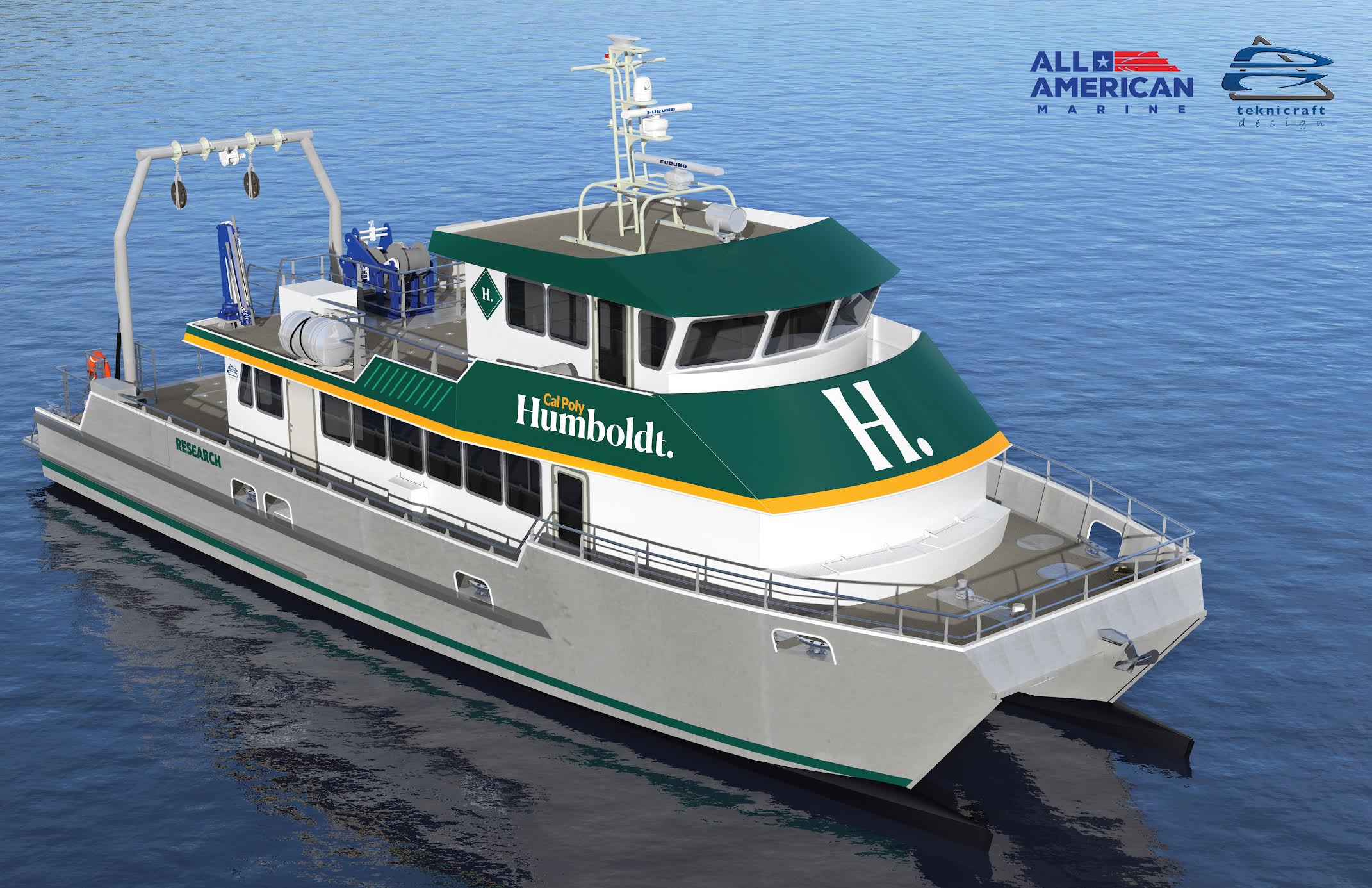
The 78-foot-by-28-foot custom-built aluminum catamaran powered by twin 1100 horsepower Tier 4 engines will travel at speeds up to 24 knots. The vessel—expected to be operational in early 2025—will carry up to 40 students, faculty, and crew on day trips and accommodate up to 14 people on multi-day research voyages. The vessel will have a variety of hydraulic deck machinery for handling up to 5,000 lb of oceanographic equipment and instrumentation.
The deck will also accommodate divers entering the water from two dive platforms off the stern. The vessel’s laboratory and pilot house will carry a diverse array of state-of-the-art navigation and oceanographic electronics to measure physical and biological features of the ocean bottom and water column.
“I see this as a continuation of the University’s long tradition of supporting and advancing marine research and educating our future marine scientists,” says Rick Zechman, associate dean of Marine Operations and director of the University’s Telonicher Marine Lab. “The new vessel reaffirms our commitment to ocean exploration and the University’s academic marine science programs”
That legacy of supporting undergraduate and graduate academic experiences while promoting marine research spans decades with programs and facilities that include the R.V. Coral Sea, which was purchased by the University in 1998.
Since then, thousands of Cal Poly Humboldt students have learned first-hand everything from gathering and analyzing water and sediment samples to collecting fish from the deep ocean, while also learning the basics of seamanship and what is required to work on a vessel at sea, says Coral Sea captain Jim Long.
“It’s one thing to learn about marine sciences in a class—but when students get their feet wet (literally), the science becomes real,” Long says.
Student research continues on land at the Marine Lab, which was built in 1965. There, samples collected from aboard the Coral Sea are analyzed.
Compared to the Coral Sea, the new vessel, being built by All American Marine, will be more fuel efficient and capable of a faster cruising speed, which translates into exploring the ocean farther offshore.
“All American Marine remains on the leading edge of manufacturing techniques and is an industry innovator, merging the latest technology into a functional and proven vessel,” says Ron Wille, president and chief operating officer of All American Marine. “We are thrilled to receive this contract for another multi-mission research vessel that will service a variety of critical missions such as offshore research, oceanographic surveys, and ocean monitoring, as well as informing the emergent offshore wind market on the West Coast. This vessel will open a new era of ocean conservation and research capabilities.”
The Coral Sea is due for retirement, says Eric Riggs, dean of Cal Poly Humboldt’s College of Natural Resources & Sciences. Though well-maintained, the Coral Sea turns 50 this year, far exceeding the average 30-year lifespan of a research vessel. In addition, the state passed new emission standards effective in 2026 for vessels in the Coral Sea’s class, and replacing the ship’s five diesel engines to meet the new standards would cost up to $2 million.
Acquiring another second-hand vessel presents its own challenges. It would require retrofitting with engines that meet state standards and outfitting with oceanographic equipment to handle the needs specific to the types of research being conducted by faculty and students. Given these factors, and the anticipated growth in enrollment in the University’s marine science programs, it made more sense to invest in a vessel built specifically for Humboldt, according to Riggs.
The $7.9 million new research vessel is made possible by the state’s historic investment in Humboldt’s expansion as a polytechnic university.
As for the Coral Sea’s next destination, the vessel cannot operate in California due to the state’s emissions rules. Given those restrictions, the University is considering selling it.
The new vessel will have dual certification from the U.S. Coast Guard as an oceanographic research vessel and passenger vessel, creating additional opportunities for the University, region, and other agencies.
California lawmakers are considering a bill that would require tortillas and other foods made with corn masa flour to include the ingredient folic acid. The vitamin reduces the likelihood of birth defects. Here, tortilla packages are stacked at a supermarket in Fresno on April 9, 2024. Photo by Larry Valenzuela, CalMatters/CatchLight Local.
Corn chips, tortillas, tamales and pupusas, while all delicious, may be missing a key vitamin for women of reproductive age.
Folic acid has long been used to prevent serious birth defects and help babies develop. Medical and public health experts advise daily consumption during pregnancy, but also in the months before becoming pregnant. This B vitamin is so important the federal government requires folic acid in certain foods such as enriched breads and cereals.
Now a California lawmaker is carrying a bill that would require manufacturers of corn masa flour — used to make many classic Latino foods — to also add folic acid to their products. Assemblymember Joaquin Arambula, a Fresno Democrat and physician, is carrying Assembly Bill 1830. The legislation would require that producers add 0.7 milligrams of folic acid to every pound of masa, and that this addition be reflected in the nutrition label.
Arambula wants to address clear disparities in who gets the necessary amount of folic acid. State public health data show that Latinas are less likely to take folic acid in the early weeks of pregnancy or before becoming pregnant when compared to other racial or ethnic groups. This puts them at higher risk of having children born with birth defects of the brain and spinal cord, most commonly spina bifida and anencephaly.
Folic acid, or synthetic folate, promotes healthy cell growth. Research has shown that when taken before and in the early weeks of pregnancy and in the early weeks, folic acid can help prevent birth defects by as much as 70%.
“Food is the best way that we can get folic acid into our communities before they’re pregnant,” Arambula told CalMatters. “Oftentimes the prenatal vitamins that we give to pregnant people are too late.”
That’s because the brain and spine begin to form within the first four weeks of gestation. Many people may not even know they’re pregnant during this time, especially when the pregnancy is unplanned.
The U.S. Food and Drug Administration followed that rationale when it handed down a mandate in 1998 requiring folic acid fortification in enriched grain products, including cereals, breads, pasta and rice. Since that rule took effect, the proportion of babies born with neural tube defects has dropped by 35% — about 1,300 fewer babies every year — according to the Centers for Disease Control and Prevention.
The FDA did not include corn masa flour in its folic acid mandate. Continuing to leave it out is “a real oversight,” Arambula said. Culturally, the diets of many Latinos, especially of immigrants and first generation residents, often rely heavily on corn flour.
Latinas get less folic acid
Dr. Megan Jones sees many high-risk pregnancies among Latina farmworkers as a maternal-fetal medicine specialist on California’s Central Coast.
She sees babies born with neural tube defects, cleft lips and cardiac defects, among other problems.
“We just had two babies with spina bifida in the last six months, they came kind of back to back. It’s not like I would say this is something we see every month, but a neural tube defect is a big deal,” Jones said. “This impacts the kid’s ability to walk, to be able to use the restroom, orthopedic stuff. This is a huge undertaking for a family. I would say in general, even seeing three or four of these in a year has a big impact on a community.”
And while it’s difficult to pinpoint what exactly is to blame in each case, hypertension, diabetes and folic acid deficiencies can play a significant role, she said.
Stacks of tortilla packages at a supermarket in Fresno on April 9, 2024. Photo by Larry Valenzuela, CalMatters/CatchLight Local
The CDC advises that all women of reproductive age get 400 micrograms of folic acid, much of which can be found in prenatal and women’s multi-vitamins. But Latinas and Black women are less likely to be taking these before pregnancy.
Between 2017 and 2019, the latest years for which state data is available, about 28% of Latinas reported taking folic acid the month before becoming pregnant, according to the California Department of Public Health. That compares to 46% of white women. Women on Medi-Cal, the state’s public health insurance program for low-income people, are also less likely to take folic acid before pregnancy compared to women on private insurance.
Regionally, women in the San Joaquin Valley and in the very northern part of the state were less likely to take folic acid.
Voluntary vs. mandated folic acid in foods
In 2008, Mexico began requiring that corn masa be strengthened with folic acid, but enforcement of that mandate has lagged, according to research conducted by Columbia University and Mexico’s National Institute of Public Health.
Meanwhile, the U.S. government has long acknowledged the potential benefits of fortifying corn masa with folic acid, but still does not require it. In a 2009 study, the CDC wrote: “Fortification of corn masa flour products could increase folic acid intake by nearly 20 percent for Mexican-Americans, who are at a 30-40 percent higher risk for a number of severe brain and spinal birth defects.”
With mounting data and advocacy, in April 2016 the FDA approved a petition to allow manufacturers of corn masa flour to add folic acid to their products. That was voluntary and producers have been slow to act. Two years after the FDA’s announcement, a study published in the Journal of the American Medical Association found that only 10% of corn masa flour contained folic acid; none of the corn tortillas tested did.
The Center for Science in the Public Interest, a consumer advocacy organization, did its own survey of hundreds of corn masa products from 2018-2022 and found folic acid in only 14% of corn masa flours and found none in the 476 corn tortilla products analyzed.
Arambula’s legislation is sponsored by the American College of Obstetricians and Gynecologists. The bill has made it out of its first policy committee, and so far has no registered opposition.
The March of Dimes, which advocates for maternal and infant health, for years has advocated for folate to be added to corn masa, so that more women can get folic acid through their diets. Advocates there believe California’s decision can have national influence and bring the issue back to the forefront, said David Pisani, director of advocacy and government affairs at March of Dimes.
“Folic acid hasn’t been on the tips of people’s tongues for quite some time,” Pisani said. “You don’t read about it, you don’t hear about it, and I think it’s because there is this misunderstanding that well, isn’t it already in everything most people are consuming? Obviously, the answer is not every product.”
Supported by the California Health Care Foundation (CHCF), which works to ensure thatpeople have access to the care they need, when they need it, at a price they can afford. Visit www.chcf.org to learn more.
###
CalMatters.org is a nonprofit, nonpartisan media venture explaining California policies and politics.
Anyone
who does their own taxes knows about confusion. Just trying to figure
out which forms to fill out in the first place practically requires
an MBA, while the calculations themselves require an advanced degree
in math. (The current US tax code is
over 70,000 pages long.) To paraphrase
Herbert Morrison, who witnessed the fiery end of the Hindenberg in
1937, Oh the insanity!
Which got me
thinking about other areas of confusion, large and small, that
bedevil our lives.
Units, SI vs. US
The Mars Climate
Orbiter, launched by NASA in December 1998, was lost the following
September during the course correction designed to take it into a
Mars-orbiting trajectory — it either burned up in the atmosphere or
entered an orbit around the sun, missing the planet entirely. The
error that resulted in the loss of the half-billion-dollar (in
today’s money) spacecraft was that, while Lockheed Martin used the
usual US units (pound-force), NASA used SI (metric) units,
newton-seconds, meaning that instructions sent to Mars Climate
Orbiter were off by a factor of 4.45.
The $600 million (in today’s dollars) Mars Climate Orbiter, lost on September 23, 1999 due to a metric conversion error. (NASA)
Next
“Today’s Sunday.
I’ll see you next Thursday,” you tell me.
“Wait, do you mean
four days from now or eleven days from now.”
“I
said next,”
you reply. “If I meant this
Thursday, I’d have said so.”
(Try explaining that
to a new immigrant in an ESL class.)
13/30, 14/40,
15/50…
“Do
you realize that at least fifty percent of ESL students have trouble
differentiating thirteen from thirty
when they hear it?”
“You’re kidding.
That’s funny.”
“Funny peculiar or
funny ha-ha?”
Biweekly
I
hate this one, and still have to check every time someone uses the
word. (Ditto bimonthly and biannual.) According to Merriam-Webster,
biweekly means both:
1:
occurring, done, or produced every two weeks
2:
occurring, done or produced twice a week
A
commentary by the M-W editors notes, “The problem lies in the
prefix bi-:
it means (among other things) both ‘coming
or occurring every two,’
and ‘coming
or occurring two times.’
This too is a long-established fact that we cannot ignore. English is
sometimes simply obstreperous.”
Glad we got that
cleared up.
Time Change
I
hate time change. You too, I’m guessing. Not just for screwing up
biorhythms (there’s always a spike in traffic accidents twice a
year) but for mundane stuff like Amtrak; every October, any Amtrak
train running on time stops at 2:00 a.m. and waits an hour before
getting underway again, so as not to
mess up the schedule. Sigh. Airplane crews use Zulu/UTC time
— which,
if adopted by the USA, would eliminate so much confusion.
This mess would be gone if we all adopted Zulu time! (Public domain)
Days and Dates
Being
a limey from Britain,
my instinct is to write my birthday as 6/9/1942,
that is, day/month/year, as is done in the UK, along with Europe,
Mexico and nearly all the rest of the world. Here, of course, I have
to invert the day and month (for 9/6/42) — in this the US is
unique. Almost. In Canada and South Africa, there’s no official
standard and you can go either way.
(By
the way, the sun was firmly in the constellation Leo when I was born,
so how come my sun sign is Virgo? Because of the precession of
Earth’s axis since the Babylonians originally settled on 12 signs
of the zodiac 5,000 years ago.)
Noon and Midnight
11:59
a.m. is one minute before noon, so why isn’t 12:00 a.m. noon? Actually,
it is in Japan. And was,
in this country; the style manual of the US Government Printing
Office ordained 12 a.m.
for noon until 2008!
I’m too confused
to keep going. Time for one of my bi-hourly breaks.
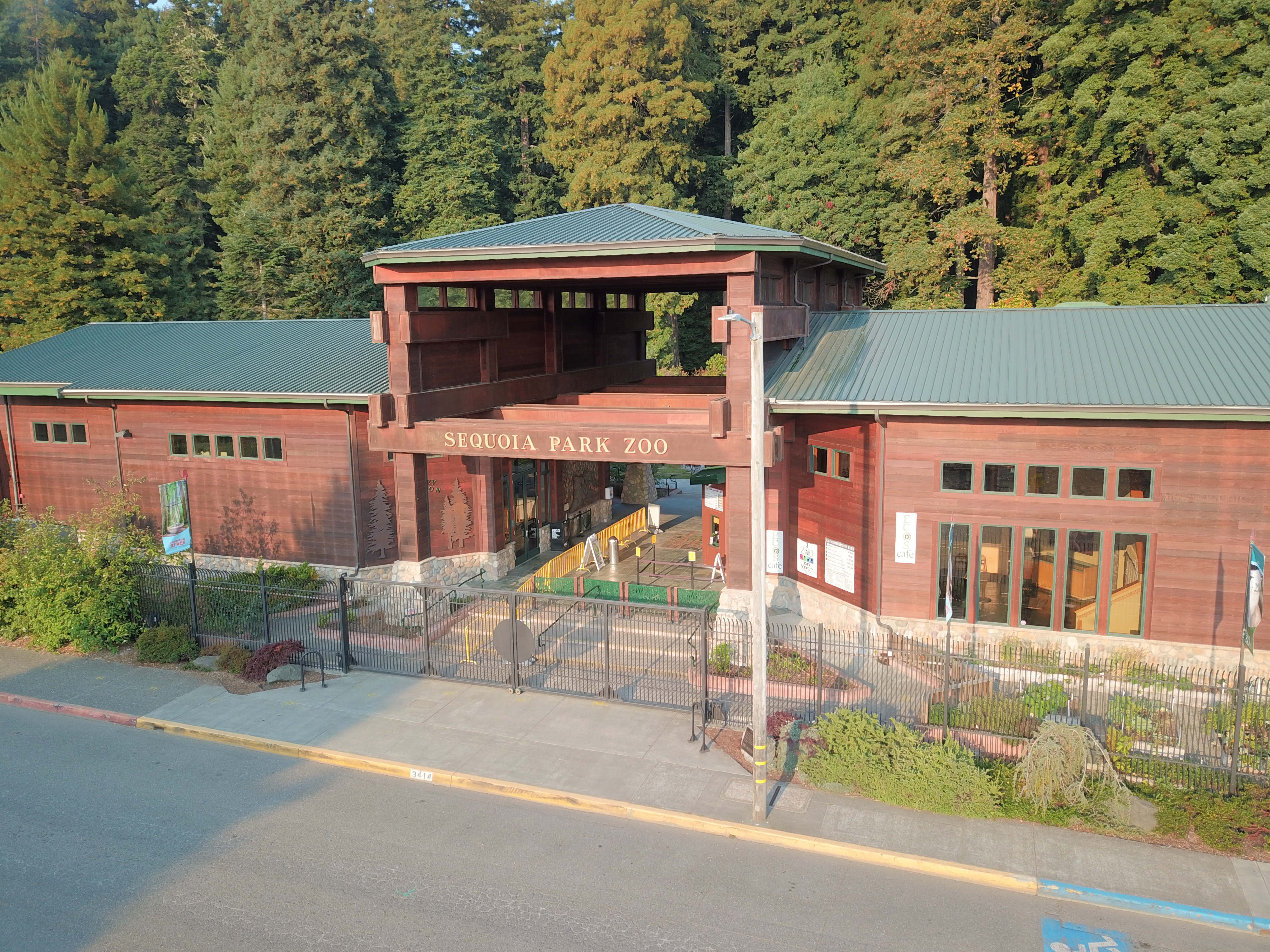
The City of Eureka has operated the Sequoia Park Zoo since 1907 and it will continue to do so for the foreseeable future. Image: Sequoia Park Zoo Foundation
Eureka, CA – The City of Eureka acknowledges the Sequoia Park Zoo
Foundation’s recent decision to dissolve their operations as a 501 (c) (3) non-profit fundraising
organization and is very grateful to the Sequoia Park Zoo Foundation for their many years of
philanthropic support.
The City of Eureka and Sequoia Park Zoo wishes to reassure the community that the
Foundation’s decision will not impact animal care, guest access, operations, or staffing.
“We will continue to meet and exceed the highest standards of animal wellbeing while
providing guests with experiences that create and deepen connections to wildlife and wild
places,” says Jim Campbell-Spickler, Sequoia Park Zoo Director. “We have seen record-breaking
growth over the past few years, and I am excited for what the future holds for our little zoo in
the redwoods.”
The City of Eureka has owned, operated, staffed and made all capital improvements to the
Sequoia Park Zoo since it opened in 1907, and the Zoo has been proudly accredited by the
Association of Zoos and Aquariums (AZA) for over 25 years.
“The City remains committed to preserving and promoting the unique history and mission of
the Sequoia Park Zoo,” says Donna Wood, Director of Community Services for the City of
Eureka. “We look forward to continuing to shepherd the success of the Zoo in collaboration with
our community partners.”
Anyone wishing to stay connected or learn more about the future of the Sequoia Park Zoo may
visit www.redwoodzoo.org.
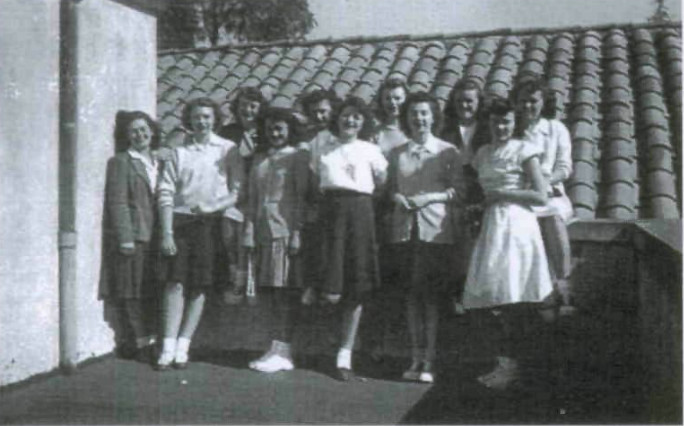
Left to right: Priscilla Shepherd, Marian Connick, Naida Olsen, Tiny Lindgren, Marianne Jensen, Lola Austin, Violet Lund, Maryellen Keating, Jessie MacMülan, Lois Carlson, and Wilda Lindgren. Photos via the Humboldt Historian.
A few days before Christmas 1944, after
months of stomach problems, my father died of
cancer. My mother, my two sisters, and I were
devastated. We came home from the funeral to a
house empty without him.
I had celebrated my seventeenth birthday less
than a month before he died. One would think
that with a war on. 1 would have been independent
and worldly, but that was not the case. I missed
my father and worried about how my mother
would manage without him. 1 was shy and myopic;
not part of the “in” crowd at high school. I
graduated from Eureka High School in January
1945, and I did not know what to do with myself
after graduation. Mother suggested I enroll at
Humboldt State College. With most of the young
men still fighting in World War II, about 145 of
the 159 students enrolled at HSC were girls. The
rest were boys under the age of 18, men not
eligible for the draft, and one or two men over 65.
I knew of only one family member who had
graduated from college — my mother’s younger
sister, Sadie Phillips. Later. I learned that two
cousins on my father’s side of the family, Anita
and Ruth Shaw, had also attended Humboldt
State.
Perhaps mother let me take the car that day, a
1941 olive-green Ford Deluxe sedan. I found the
school, where arena registration for the spring
semester of 1945 was in progress. I muddled
through and paid the fees, my ears ringing with
the echoes of voices, footsteps and dropped books
in the poor acoustics of the gym.
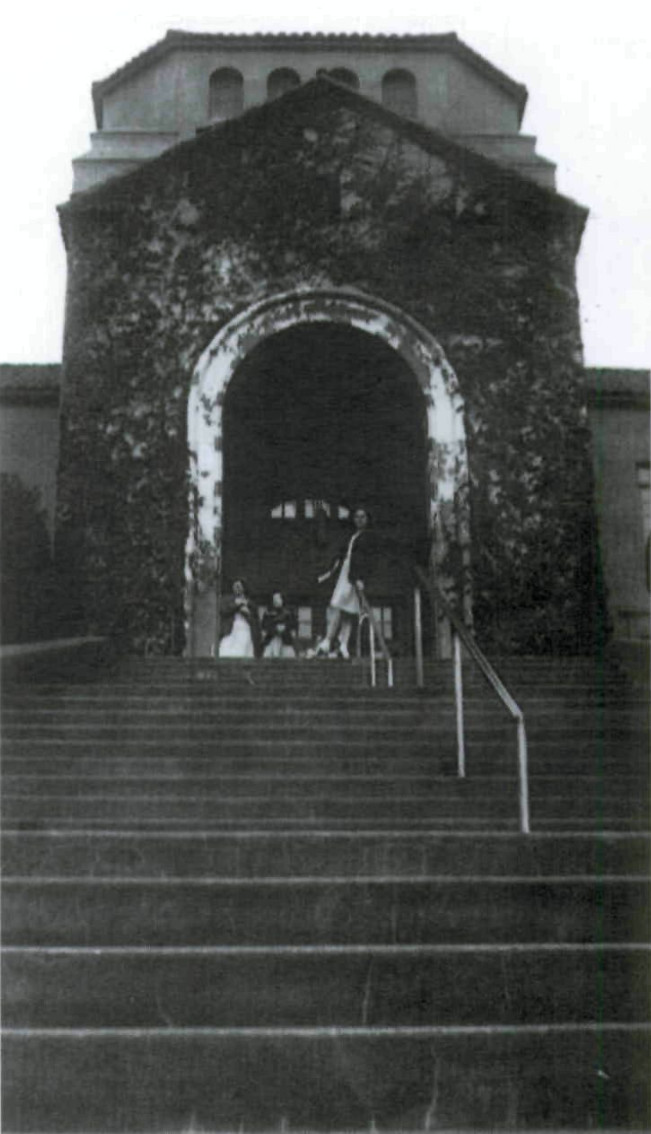
Nearly all of the classes were held in Founder’s
Hall. But some classes for prospective teachers
were held down the hill in the College Elementary
School, where student teachers taught under the
guidance of supervising teachers. The gym was
behind Founder’s Hall. Nelson Hall, a co-ed dorm
with one wing for girls and one for boys, stood
below the parking lot.
Most of my classes were easy to find. English
101 and Speech 101, both taught by John Van
Duzer, were on the second floor at the south end
of Founder’s Hall. World History was in a lecture
hall tucked away behind the auditorium on the
ground floor, north. Health class on the second
floor overlooked the front entrance of the building.
The rule that class was canceled if an instructor
was fifteen minutes late pleased us all, and the
Health teacher was usually late. We sat poised,
ready to leave, as the clocked slowly ticked to the
quarter hour. The women’s lounge, a “girls only”
sanctuary, was a place to go between classes to
study, eat lunch, talk, or smoke - but none of my
friends or I smoked. No boys allowed - even if
there had been any.
At the south end of Founder’s Hall was a wooden
structure, flanked by a wooden sidewalk. This
building housed industrial arts and crafts — woodworking and pottery — the domain of Horace
“Pop” Jenkins, who seemed frail and elderly to
me then, and who must have been there when
the college first opened its doors in 1913.
Everyone, students and faculty alike, called him
Pop.
Across a patch of worn grass and another
wooden sidewalk, a second wooden building
housed the Student Union and Book Store — the
Co-op. A soda fountain ran down the center of
the Student Union, where a scoop of ice cream
was a nickel, and a squirt of chocolate syrup, one
cent. I longed for one of those chocolate sundaes,
but 1 didn’t have six cents to spare, and felt I
could not ask my mother, so recently a widow,
for extra money.
At Humboldt, I felt I had arrived where I
belonged, no longer on the outside looking in. I
made friends with a large group of girls, all of
whom lived at home and commuted to school.
Some had cars and others rode the bus — the
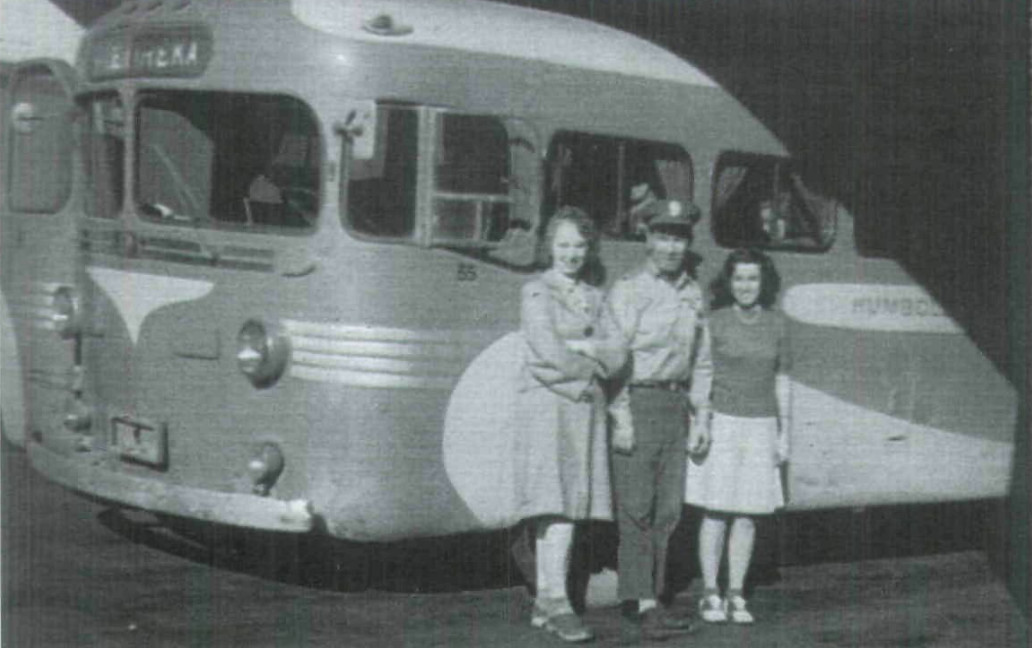
Humboldt Motor Stage. The bus company ran one
bus, a “modern,”snub-nosed vehicle driven by
Ralph Mackie all the way from Fortuna; this bus
reached the campus at 9 a.m., too late for eight
o’clock classes.
The bus I rode left Eureka at 7:30 and reached
the college by 8:00 a.m. I had to get up at six, dress, cook a little oatmeal for my breakfast, pack
a lunch, and make sure I had my bus pass, which
cost five dollars for one month. I walked four
blocks in the dark from my house to the corner
of Harris and E Streets and waited with a few
other students by the big wooden water tanks for
the bus.
The Humboldt Motor Stages bus from Fortuna, at the Greyhound station in Eureka on 4th Street. Left to right: Naida Bartlett, wearing her “Dutch girl” shoes: the bus driver. Ralph Mackie; and another student, possibly Pod Gushaw.
The old bus finally got there, limping along on
what were probably worn retreads. New tires were
not available for civilians in early 1945. The dim
glow of its parking lights, the only vehicle lights
allowed at night during wartime, barely
penetrated the gloom as the bus poked its long
hood out into the morning mists. The driver, a
college student, drove with care, aware that his
ancient chariot had to last until the war ended.
Brakes screeched as the bus stopped. The door
swung open. I stepped into the murky gloom and
found a seat. A musty odor permeated the interior,
as though it hadn’t been cleaned for some time.
A few students studied by the feeble glow of small
lights recessed above the windows. Others dozed
as the bus ratcheted down E Street. We made a
few more stops before heading east on Fourth, a
two-way street then, and part of Highway 101.
The asthmatic bus wheezed out of town, over
the drawbridge at the slough, and along Highway
101, past what were stinking mudflats a low tide
or wetlands at high tide, past the small airport at
Murray Field, and the eucalyptus windbreak
edging the bay. We hit the legal speed limit of
about thirty-five miles an hour by the time we
entered Branard’s Cut, a high cliff of red-ochre
dirt carved with the initials of dare-devils who
had had to hang over the edge or climb up the
side by sculpting hand- and footholds.
A diner, Ma’s Hamburgers, nestled at the base
of the cliff. A dirt road wound up the back of the
cliff and led to a lovers’ lane at the top. but I didn’t know about this until years later when my future
husband, Ken Gipson, took me there to study the
stars.
The sun broke over Fickle Hill and threw a rosy
glow across the duck blinds on pilings in the
tidewater. We passed the Samoa Road and the
Red Robin Café, and entered Arcata. The driver
down-shifted as we headed up the hill by Safeway,
the Bank of America, and the Ford garage. He
shifted again, and we passed the plaza with the
Varsity Sweet Shop in the middle of the block on
the right, and the Arcata Union print shop on the
corner. The Hotel Arcata was across from the
plaza’s northeast corner; Brizard’s Department
Store, across from the southeast corner; and a
statue of President McKinley in the center of the
square. Another hill loomed; another downshift
- gears grinding. We got a running start past the
bakery and turned up Humboldt Hill. When the
bus lugged down, the driver shifted to the lowest
gear, and we crawled up the grade to the college,
the engine complaining all the way. The old bus
came to a stop in front of the steps to Founder’s
Hail beside a bench donated by the class of 1933.
Among my new friends was one old friend from
Eureka High, Lola Austin (Larson). She and
Maryellen Keating (Householter) took pre-med and
both went to St. Mary’s nurses training school in
San Francisco and later had successful careers
as nurses.
New friends included Wilda and Tiny Lindgren,who drove to school every day from Trinidad;
Géraldine Stanbury. a red-headed girl we
nicknamed “Pinky,” who had her own car; and
Louise Meeks, Jessie MacDonald, Priscilla
Shepherd. Naomi Schmidt. Marianne Jensen
(Schroeder) known as “Toodie,” and a girl named
Gladys we teasingly called “Happy Bottom.” Lois
Carlson majored in education and eventually
became a supervising teacher at the College
Elementary School. Vicki Short (Hartman), who
had enrolled at Humboldt State when she was
only fourteen, later taught at Lincoln and Marshall
schools in Eureka. Marian Connick taught in
Stockton. Violet Lund (Oppenheimer) taught in
Sun River, Oregon. And I discovered another
Naida - Naida Bartlett. Naida B. and Naida O.
Naida B. wore wooden-soled “Dutch girl” shoes,
and wrote with a fountain pen in brown ink. I’d
never known anyone with my name before, nor
anyone who wrote with anything other than blue
ink. We became best friends. Naida and I decided
to become kindergarten-primary teachers. She
later taught in Rohnerville, and I eventually
taught at McKinleyville, Whitethorn Valley and
Rolph School in Fairhaven and substituted at
the Samoa School.
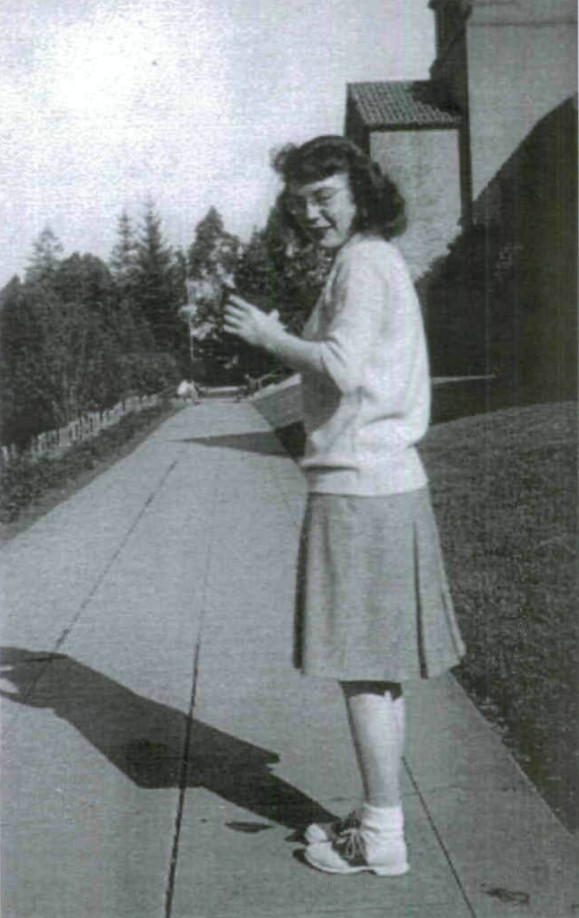
The author in the spring of 1945, on her way to class at Humboldt State College with her Brownie box camera.
Fred Telonicher taught zoology in the lab at the
back of Founder’s Hall. Jars of specimens pickled
in formaldehyde sat on top of the cupboards. For
a girl who had been raised on the perimeter of
the Victorian era, when girls were not told the
facts of life, zoology was a scary revelation.
The major project was the dissection of frogs — huge frogs, not little green tree frogs. My frog was
sixteen inches long with a fat tummy, and it was
stiff and stinking from the formaldehyde that
wrinkled the skin on my fingers. I picked up the
scalpel, turned my face away, took a deep breath,
held it. turned back, and cut. Tiny black and white
dots popped out. I had no idea what they were. I
looked at Lola’s and Maryellen’s frogs. They did
not have black and white dots.
Mr. Telonicher walked through the lab. and 1
asked him what the dots were. He gazed at me
for a moment and said “Eggs.” Then he moved to
another table where. I assume, he expected to
get more intelligent questions. Eggs. Oh. Well, that
would explain why my frog was so fat. It didn’t
explain why I was so ignorant of life.
Our young, dedicated P.E. teacher told us to
interpret the music for modern dance with long,
filmy scarves, waving them around, and dancing
to whatever the music made us feel. We ran back
and forth across the gym, our scarves floating in
the air. Since the age of five I had learned precise
dance steps and routines. I was too inhibited to
modern dance.
I will never forget the librarian, Helen Everett.
Mrs. Everett spoke in a soft voice as she
introduced the children’s literature class to A.A.
Milne’s Winnie-ihe-Pooh. I can’t thank her enough.
To this day, Winnie-the-Pooh and The House at
Pooh Corner remain my all-time favorite children’s
books.
Stella Little taught arts and crafts: water color
painting, knitting, basketry. These credits went
toward a minor in art. Mrs. Little’s classroom was
one of the light, airy, second-story front-facing
rooms in Founder’s Hall.
Because a few girls had cars, we had some mobility, as long
as we could get
rationed gas. We didn’t
go far: Mad River, up
the coast to
Luffenholtz Beach,
and. once in a while, if
we had any money, to
the Varsity on the
plaza for ice cream.
I had such a good
time at Humboldt that
I became one of the
rare third-semester
freshmen. Cutting
speech class whenever
it was my turn to give
a speech was not the
smartest thing to do. A
lot of students cut
health class, especially
in nice weather. My
friends and 1 would
take our triangular
first-aid bandages
from class and our
sack lunches, and go
up Mad River to swim
under the railroad
trestle. Triangular
bandage swimsuits
covered more bare skin
than today’s bikinis.
Even so, in 1945. they
were quite daring —
rather shocking, in
fact, as they were
nearly transparent
when wet. Fortunately.
there were no boys
around. We’d have
simply died if anyone had
seen us in our makeshift
swimsuits.
The war ended in
August of 1945.
No more worrying
about a telegram
announcing the
death of a loved
one. No more gold
stars in the front
windows. No more
gas rationing. No
more shoe or
butter or meat
rationing. Our
service men and
women were
coming home. We
could settle down
to a normal, happy
life.
Or so we
thought. We had
no inkling of the
explosion that was
about to take place
in our small “girls’”
school. The G.I.
Bill of Rights
would change our
school, and our
lives, forever.
###
The story above was originally printed in the Fall 2004 issue of the Humboldt Historian, a journal of the Humboldt County Historical Society. It is reprinted here with permission. The Humboldt County Historical Society is a nonprofit organization devoted to archiving, preserving and sharing Humboldt County’s rich history. You can become a member and receive a year’s worth of new issues of The Humboldt Historianat this link.