

McK GANG SHOOTING: Prosecution Rests Case Against Crescent City Man Accused of Attempted Gang Murder
Rhonda Parker / Tuesday, Oct. 25, 2022 @ 7:42 a.m. / Courts
On just the third day of jury trial, prosecutors rested their case yesterday against an alleged Norteños gang member who confessed he was hired to murder a McKinleyville man the gang suspected of stealing from them.
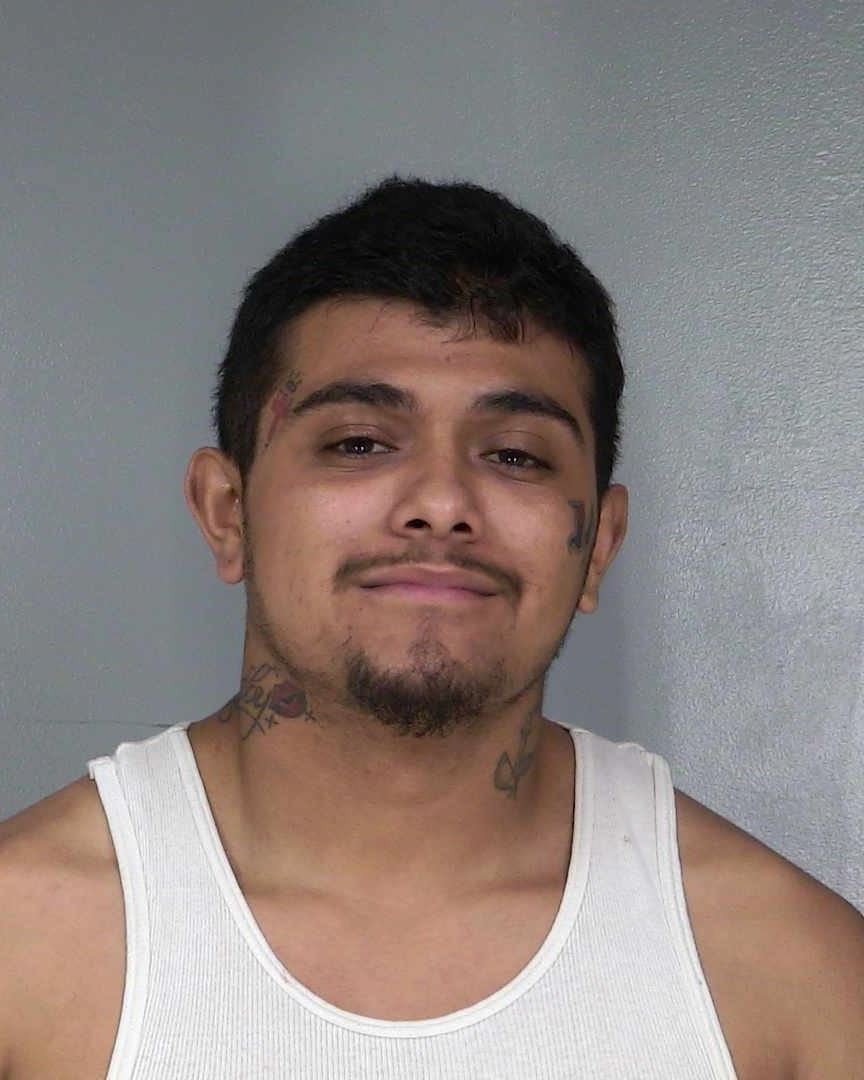
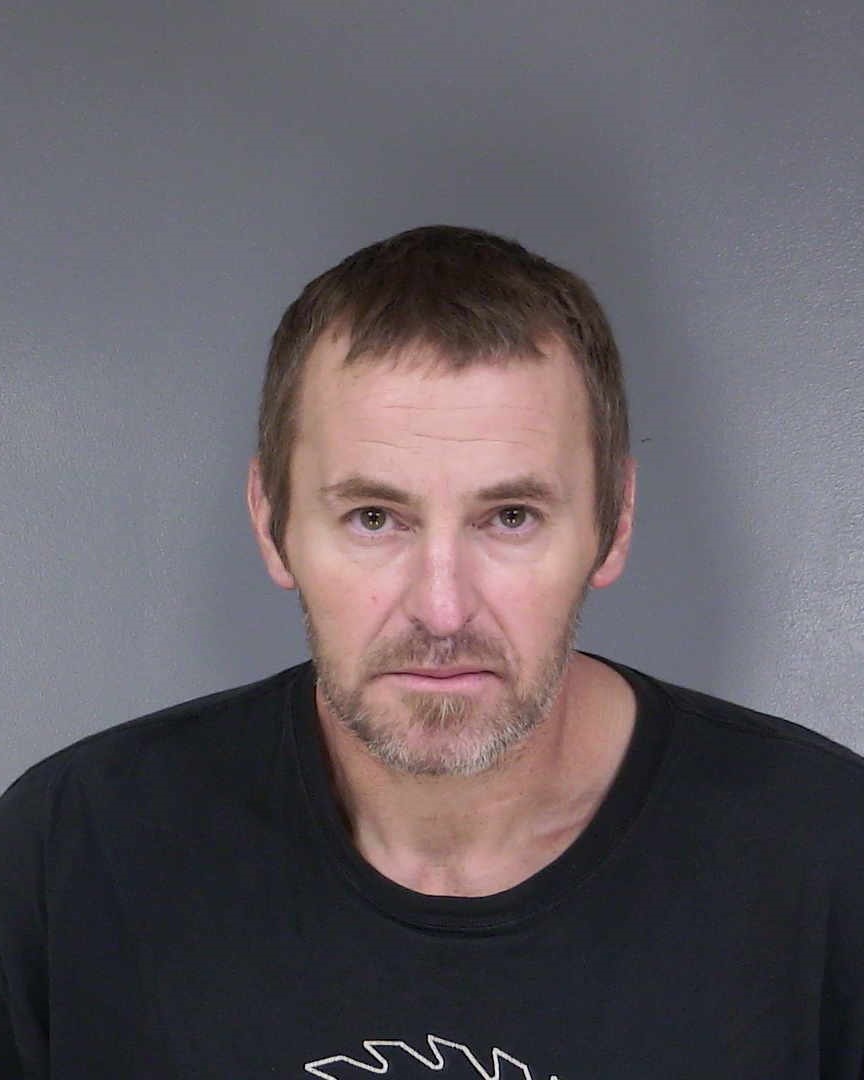
Soria.
Crescent City resident Isreal Soria Jr. is accused of the June 2021 attempted murder of Dylan Eubanks, who survived with a bullet wound to his arm after a gunman fired 11 shots into his home on Chapparal Drive.
In earlier testimony, jurors heard a tape recording of Soria’s confession, which included his admission to being a hired hitman who was paid an initial $7,500, with $25,000 due if he succeeded in murdering Eubanks. Eubanks did not testify during the trial.
On Monday the jury heard testimony from one of Eubanks’s former roommates, along with the accounts of some neighbors who heard gunfire, cries for help and then sirens.
The former roommate lived in the house with her boyfriend Tanner and Eubanks. She said she was lying in bed late at night when Eubanks, sounding stressed and worried, told her he thought someone was trying to get into the house.
The witness testified via Zoom because she is recovering from surgery. Under questioning by Deputy District Attorney Trent Timm, she said that shortly after Eubanks spoke with her, she heard gunfire and crouched on the floor.
The next sound was Eubanks “screaming in pain, calling for help.”
“Me and Tanner went outside and found Dylan,” she said. “He was lying on the ground, shot … I remember holding his arm, keeping it elevated, because he was bleeding so bad.”
Then the first officer arrived, and she spent the rest of the night sitting outside as officers cleared the scene and searched the house.
At one point, she said, Eubanks was asking for his phone. She got permission to go into the house and grab the phone from the kitchen counter.
“There was broken glass on the floor, holes in the walls,” she recalled. One window pane was shattered.
On the crime scene log noting everyone who entered or exited the house, there is no mention of the roommate.
Under cross-examination by defense attorney Christina DiEdoardo, the roommate said she was unaware officers found 2 pounds of marijuana in a hallway closet and 200 pounds — in four 50-pound bricks — in the garage.
‘’Two-hundred?!” she said, sounding shocked. “No.”
Law enforcement believes the alleged shooter stopped after firing 11 rounds because the gun jammed, likely because too many cartridges had been stuffed into the magazine.
Sheriff’s Deputy Johnathan Gomez testified he found 11 spent cartridges in an approximately 2 to 3-foot diameter area near the broken window. The right window pane was shattered, the left pane intact except for one distinct bullet hole about 4 feet off the ground.
When officers first arrived, Eubanks was in the process of climbing a fence outside. But it’s believed the shooter also climbed a fence as he was attempting to flee. He was arrested in a back yard in the neighborhood.
One neighbor called 911 to say she heard someone climbing her back fence, then pounding on her sliding glass door.
Another neighbor, Marissa Manson, said she heard gunfire and then “panicky” calls for help. She came outside to see a man crouched over and yelling.
“It looked like he was bleeding from his arm,” Manson said.
During Soria’s confession, he said he began firing at Eubanks after seeing him holding an assault rifle.
Soria is out of custody, which is highly unusual for a defendant facing a possible life term in prison. He posted $750,000 bail after his arrest and was able to hire DiEdoardo, who practices in the Bay Area.
DiEdoardo declined comment outside court. She is expected to present her case on Wednesday morning and could put Soria on the witness stand.
Timm and Deputy District Attorney Luke Bernthal are the trial prosecutors, with Judge Christopher Wilson presiding.
PREVIOUSLY:
BOOKED
Today: 13 felonies, 15 misdemeanors, 0 infractions
JUDGED
Humboldt County Superior Court Calendar: Today
CHP REPORTS
No current incidents
ELSEWHERE
RHBB: CHP Helicopter Airlifts Injured Person From Remote South Fork Trinity River Area
Coalition for Responsible Transportation Priorities: Eureka Can’t Enforce Its Way to Safer Streets
RHBB: Vehicle Crashes into Eureka House After Driver Falls Asleep
KINS’s Talk Shop: Talkshop July 3rd, 2026 – Miles Slattery
OBITUARY: Margaret Kaye Aiton (McCann), 1942-2022
LoCO Staff / Tuesday, Oct. 25, 2022 @ 6:56 a.m. / Obits

Margaret Kaye Aiton (McCann) passed peacefully on October 15, 2022 at
the St. Helena Hospital in St. Helena, California. Margaret was born
in Everett, Washington on January 27, 1942 to Chester (Chet) and
Esther (Carlson) McCann. Margaret grew up in Arcata with her three
siblings, Freddy (Fred) McCann, Charles McCann and Marianne (McCann)
Schmidt. She married Reid Aiton on January 13, 1961 in Arcata. She
resided in Snow Camp (Korbel) for the last 35 years.
Margaret loved her family and the many extra children that floated in and out of their home. She also loved sewing, quilting, and gardening. She loved building her rock gardens as much as the dogs loved her digging around in her gardens, and they were so helpful to her. She had many quilts started, most of which were hand-sewn rather than machine-sewn. Margaret also adored her chickens and her onery cats. Margaret’s other favorite pastime was painting — not paintings, but the décor of the house. One never knew what color the inside or outside of the house or your bedroom was going to be when they came home if she had stopped by a paint store. She loved color and the brighter the better.
Margaret is preceded in death by her mother Esther, father Chet, brother Fred and nephew Peter Schmidt.
Margaret is survived by her husband Reid, siblings Charles and wife Janice, Marianne Schmidt and husband Mike, her children Reid Jr., Dianne Holba and husband Kevin, Rodney, Russell and wife Michelle, 11 grandchildren and 19 great-grandchildren, several nieces and nephews, and cousins.
Graveside service will be held on October 26, 2022, at 11 a.m. Ocean View Cemetery, 3975 Broadway Street, Eureka. A Celebration of Life will be held at Arcata Veteran’s Hall, 1425 J St., Arcata, immediately following the service.
All are welcome.
Flowers should be sent to Sanders Funeral Home, 1835 E Street, Eureka, CA 95501.
###
The obituary above was submitted on behalf of Margaret Aiton’s loved ones. The Lost Coast Outpost runs obituaries of Humboldt County residents at no charge. See guidelines here. Email news@lostcoastoutpost.com.
Dog Shot and Killed by Officer Pursuing Fleeing Suspect in Greenbelt Area Near Bayshore Mall
LoCO Staff / Monday, Oct. 24, 2022 @ 8:21 p.m. / Crime
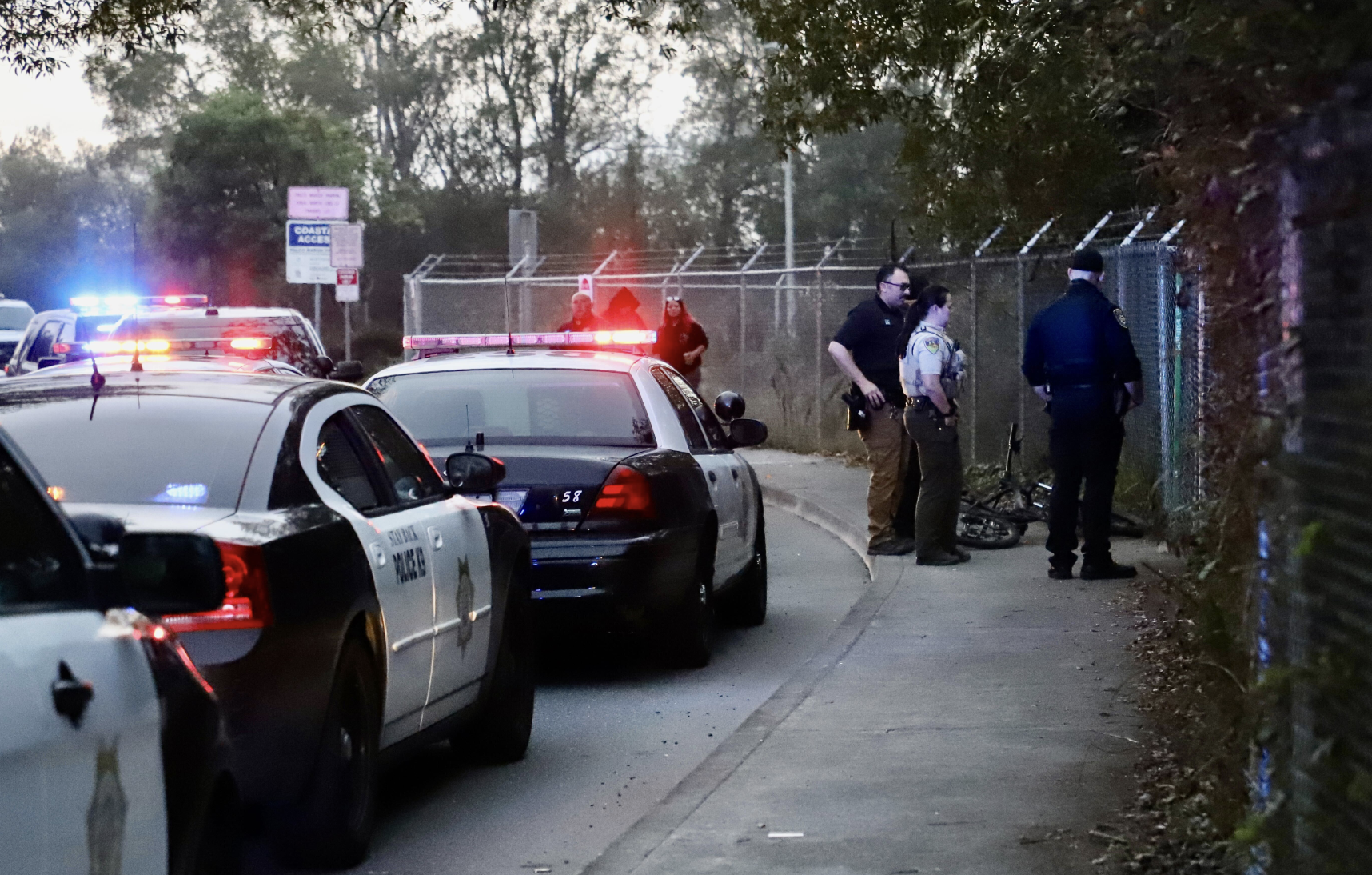
Photo: Andrew Goff
PREVIOUSLY: Going Down, Oct. 24, 2022
# # #
Eureka Police Department release:
On October 24, 2022, at approximately 5:51 p.m., Officers with the Eureka Police Department were dispatched to the 3300 block of Broadway on the report of two persons trespassing on the property. Responding officers were advised that one of the subjects had a felony warrant for his arrest.
Upon officer arrival, the felony warrant suspect was taken into custody after a short foot pursuit. The second suspect, who officers learned also had a warrant for his arrest, had fled the scene but was located near the 1300 block of Bayshore Way. The suspect fled again on foot into the greenbelt and an officer pursued. As the officer entered the greenbelt he was attacked by a dog that was off leash. The officer fired three shots from his duty pistol in self-defense, striking and killing the dog. The officer was not injured in the incident.
There were no civilians injured during this incident and there is no ongoing threat to the community. The second suspect was not apprehended. The Eureka Police Department is conducting an internal review into the on-duty discharge of a firearm.
Arcata Councilmember Brett Watson Arrested for Violating His Restraining Order
Ryan Burns / Monday, Oct. 24, 2022 @ 5:28 p.m. / Crime , Local Government
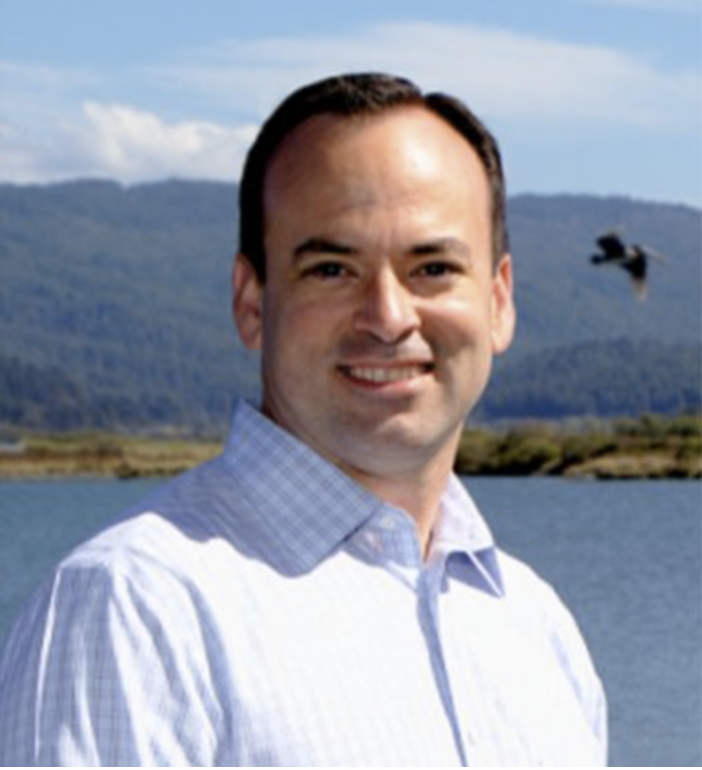
Embattled Arcata City Councilmember Brett Watson was arrested shortly after 1 p.m. Monday for violating the terms of a restraining order against him.
Arcata Police Chief Brian Ahearn tells the Outpost that he was arrested around 1:30 for having communication with one of the people protected by the order. He declined to give any further details.
Reached by phone, Watson said he was arrested at his home and booked into the Humboldt County Correctional facility and released after a couple of hours on $25,000 bail.
Watson said the prohibited communication consisted of cc’ing Mayor Stacy Atkins-Salazar when he was replying to a constituent.
“On Saturday a constituent emailed me and asked for an update on the hotels in Valley West that are being converted into housing for low-income and homeless people,” he said. In his emailed reply, Watson recommended that the constituent contact the city manager, “and I [wrote], ‘I’m also cc’ing Mayor Stacy Atkins-Salazar on this email so she’s in the loop,’” he added.
“It didn’t cross my mind” that this was a violation of the restraining order, Watson said. “I’m, like, just doing my job as a city council member. I was more focused on [staying] 100 yards away and not going to city hall.”
A Humboldt County Superior Court judge granted the restraining order last week. It restricts Watson’s access to City Hall and prohibits him from contacting or being within 100 yards of four city officials, their workplaces and vehicles, with the exception of Arcata City Council meetings.
“It is such an overreaction,” Watson said. “So not necessary. They could have just let me know.”
Watson’s arrest was first reported by KMUD News. His court hearing has been set for December 5, Watson said.
In the Wake of Bongio Controversy, Supes to Consider Changes to the Planning Commission
Ryan Burns / Monday, Oct. 24, 2022 @ 3:38 p.m. / Local Government
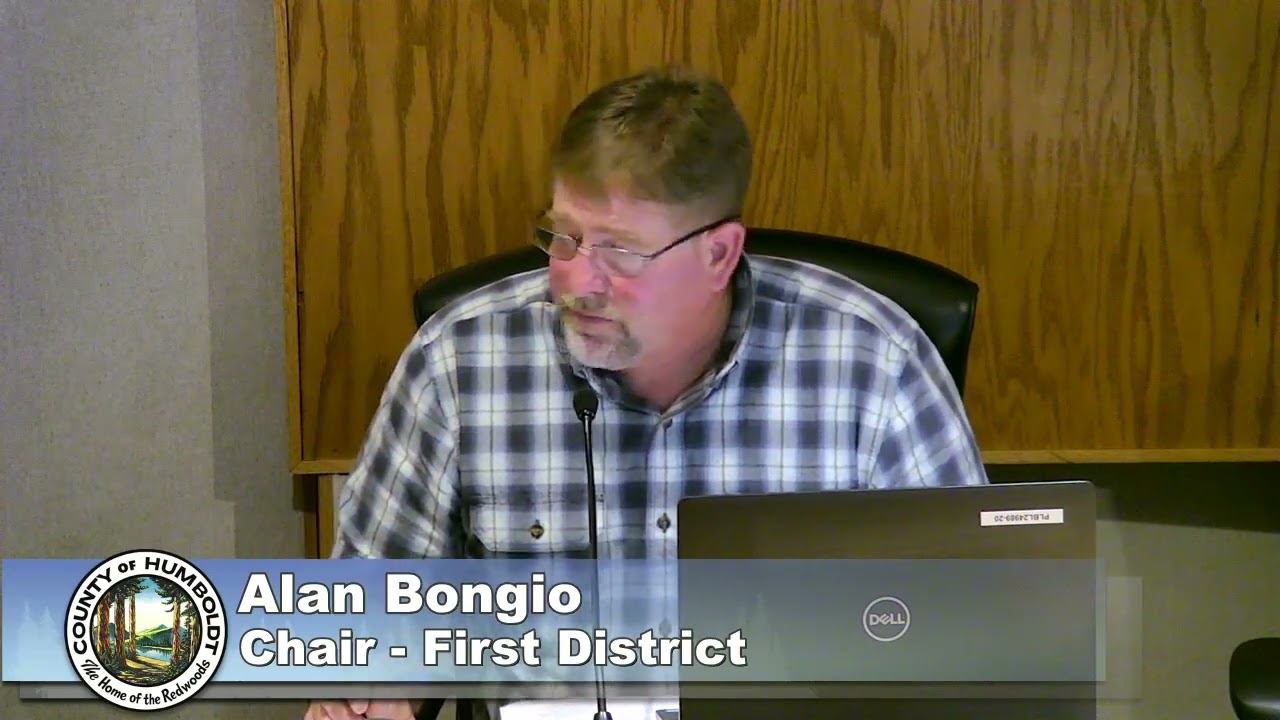
Alan Bongio, the now-former chair of the Humboldt County Planning Commission. | Screenshot.
###
A month after unanimously censuring former Humboldt County Planning Commission Chair Alan Bongio for making racist and derogatory remarks at an August 18 hearing, the Board of Supervisors on Tuesday will consider changing some things about the commission, including reducing its size and possibly altering the way commissioners are appointed and removed.
The board is also set to adopt a new set of rules governing the commission, one that includes a “Code of Conduct and Ethics.” Among other things, this code says planning commissioners’ behavior must be “above reproach” and avoid “even the appearance of impropriety.”
The commission is currently composed of seven members, including one appointee from each of the five county supervisors plus two at-large members, whose appointments must be approved by a board majority.
That’s unusual, turns out! Staff in the County Administrative Office recently surveyed 21 other counties and found that only two of them have seven-member planning commissions. One has a whopping nine-member commission, but the rest all have just five.
Why does ours have seven? Who knows?
“It is not clear why 7 commissioners were chosen as the appropriate number to serve on the Planning Commission,” a staff report admits. “It may have been to ensure there were sufficient members available to provide a quorum. Based on the information from other counties, this does not seem to be an issue for counties with 5 commissioners.”
Staff recommends that the board reduce the number of commissioners to five, which would eliminate the positions currently held by Melanie McCavour and Brian Mitchell.
While Bongio’s behavior has drawn the most attention, the Wiyot Tribe filed a complaint last month alleging, among other things, that McCavour has a conflict of interest because in addition to serving on the commission she works as the tribal historic preservation officer for the Bear River Band of the Rohnerville Rancheria.
While McCavour has recused herself on matters that require her professional opinion, the Wiyot Tribe argues that her dual roles nonetheless give her “special privileges” in conversing with the rest of the Planning Commission.
Eliminating her position from the commission entirely would obviously settle that particular dispute, but it would still leave the matter of Bongio, who was appointed to the commission nearly a decade ago by First District Supervisor Rex Bohn. At the meeting where Bongio was censured, Bohn made it clear that he had no intention of replacing him.
“I just can’t bring myself to it,” Bohn said, later adding, “I can’t fire my friend.” The board did ask Bongio to step down from his chair position, and he complied.
But tomorrow the board may also opt to change the procedure for removing a commissioner. The staff report says planning commissioners shouldn’t have to worry about being removed arbitrarily, “but if a Planning Commissioner acts in a way that is offensive and unbecoming to the county, then there should be a way to address that by the Board of Supervisors.” Presumably they mean something beyond a censure, which serves as a formal rebuke but carries no further repercussions.
Half of the 22 counties surveyed by staff (that’s including Humboldt County) allow for removal of a planning commissioner through a majority vote of the board of supervisors. Two counties leave it to district supervisors to initiate removal. Humboldt is one of them.
Curiously, in seven of the 22 surveyed counties “there are not clear provisions” for removing a commissioner. If you’re keeping track, that leaves two counties unaccounted for. In them, the staff report says, it takes a four-fifths vote from the board to boot a commissioner.
County staff thinks that may well be the best approach.
“A simple majority vote to remove a Planning Commissioner could be too low of a threshold,” the staff report says, “but the requirement for a 4/5ths vote would provide the opportunity to consider the matter and ensure that the Board is aligned in taking action to remove a commissioner.”
As for the code of conduct, it runs just over 15 pages and includes a number of provisions that have relevance to Bongio’s recent controversy, including one governing conflicts of interest.
Bongio’s impartiality has been called into question for his behavior during a series of hearings related to permit violations on a home-building project from local business owner and developer Travis Schneider. Bongio has consistently and fervently advocated on Schneider’s behalf during these hearings, claiming, for example, that the applicant has done everything that’s been asked of him despite ample evidence to the contrary. Bongio’s wife is also related to Schneider through marriage. And the North Coast Journal‘s Thadeus Greenson reported that Bongio performed concrete work at the construction site and failed to disclose it.
The code of conduct slated for adoption states:
No Commissioner shall engage in any business, transaction or activity, or have a financial interest, which is in conflict with the proper discharge of official duties, which would tend to impair independence of judgment or action in the performance of official duties, which creates the appearance of such conflict, or which otherwise violates applicable County policies or state or federal law.
The main source of controversy for Bongio has surrounded his comments about local tribes. To recount, he accused two Wiyot-area tribes of being dishonest and manipulative, made a veiled reference to a derogatory term that’s rooted in a negative stereotype and repeatedly referred to those tribes collectively and disapprovingly as “the Indians.”
The code of conduct notes that the Board of Supervisors recently added diversity education to the county’s list of required trainings. This new line of training includes education on implicit bias and cultural humility plus two sections that explicitly recognize “the important historical role of local tribal communities.”
Under the “Principles and Standards” section the document says, “The professional and personal conduct of Commissioners must be above reproach and by the law must avoid even the appearance of impropriety, which is critically important for maintaining a positive and productive image of county governance.”
The Board of Supervisors meeting is scheduled to begin at 9 a.m. Tuesday inside board chambers at the Humboldt County Courthouse. Theoretically you should be able to stream the meeting via Zoom by clicking a link that will appear on this page shortly before start time, but last week the county had technical difficulties that rendered the stream non-operational. But you can still participate by phone if you call the conference line 720-707-2699, enter Meeting ID 870 5493 8437 and press star (*) 9 to raise your hand.
###
PREVIOUSLY
- Heated Meeting Sparks Accusations of Dishonesty and Discrimination, Opening Rift Between Tribes and Humboldt County Planning Commission
- Despite Silence From Tribes, Mega-Home Builder Optimistic Ahead of Tonight’s Continued Planning Commission Hearing to Address Permit Violation Fallout
- After Rebukes and Apologies for Bongio’s ‘Disrespectful’ Comments, Planning Commission Defers Decision on Mega-Home Permits
- County Supes to Consider Censure of Planning Commission Chair Alan Bongio for Inappropriate Conduct
- Bohn Makes the Motion, Supes Unanimously Censure Bongio for Racist Remarks, Move to Remove Him as Chair of Planning Commission
- Bongio to Step Down as Chair; Planning Commission Set to Consider Apology for His ‘Insensitive, Racist’ Comments
- A Tour Through the Half-Built Dream Mansion of Travis Schneider, Who Remains Hopeful Amid Mounting Permit Problems
- Bongio Steps Down From Chair Position; Planning Commission Approves Apology Letter for Racist Comments
Big Cache of Firearms Found This Morning After Eureka Police Serve Warrant at Home of McKinleyville Man, Cops Say
LoCO Staff / Monday, Oct. 24, 2022 @ 3:26 p.m. / Crime

Photos: EPD.
Press release from the Eureka Police Department:
On October 24, 2022 at about 7:15 a.m., officers with the Eureka Police Department, with the assistance from the Humboldt County Sheriff’s Office and HCSO K9 Yahtzee, served a search warrant at a residence on the 1000 block of Hiller Road in McKinleyville. The search warrant was part of an ongoing investigation into 47-year-old Jed Vandanplas of McKinleyville for illegal firearms and narcotics.
During the search warrant, Vandanplas was located inside the residence and detained. During a search of the residence, officers located eight rifles including one assault rifle with a suppressor attached, four shotguns including one with an illegal short barrel, two handguns, thirty-two high capacity magazines for the assault rifle, six firearm suppressors, approximately 1.3 grams of suspected cocaine, approximately 2.2 grams of suspected methamphetamine, 15 Suboxone strips and drug paraphernalia.
Vandanplas was booked into the Humboldt County Correctional Facility for possession of firearms while in possession of narcotics, addict in possession of firearms, possession of an assault weapon, possession of high capacity magazines and possession of a short- barreled shotgun.
Amid Ominous Signs, California Releases First Student Test Scores Since the Pandemic
Joe Hong / Monday, Oct. 24, 2022 @ 8:18 a.m. / Sacramento

California is bracing for declines as state officials release student test scores for the first time since the pandemic. Photo by Miguel Gutierrez Jr., CalMatters
Today Californians get their first statewide look at test scores measuring the toll the pandemic took on students — and the way state education officials have handled the rollout provides plenty of clues that the news won’t be good.
Earlier this fall the state Education Department refused a media request to immediately release the scores, saying it would do so by the end of 2022. That fueled speculation that the agency’s head, Superintendent of Public Instruction Tony Thurmond, was delaying the release until after his November re-election bid. Eventually the department reversed course and agreed to release the data.
But it did so in a way guaranteed to complicate coverage. Reporters received the data Sunday morning, under a news embargo until 10 a.m. today. Typically, they use that embargo time to interview district officials and education experts — so releasing test score data when those sources are unavailable hinders reporters’ ability to analyze and contextualize an important measurement of the pandemic’s impact on California’s public school students.
“I can’t read minds, but it does give the appearance of trying to conceal the data,” said David Loy, legal director of the First Amendment Coalition. “It’s not uncommon that government at all levels will release data or other news when it’s inconvenient for media.”
It’s also likely not a coincidence that the state results will be released to the public the same day scores on a different test, the National Assessment of Educational Progress, were unveiled just past midnight on the East Coast. That test, taken by a much smaller sample of California students, allows comparisons between all states — and showed an achievement drop in every single one.
But Gov. Gavin Newsom immediately issued a press release highlighting the fact that California students overall didn’t fare as poorly as those in most other states. Anyone hoping to divine how divergent state pandemic policies impacted academic achievement will find these national results confounding: California fared about the same as Florida and Texas, two states that rushed to return to in-person learning.
Not so California, where state officials deferred to local control. Citing health concerns, schools here generally continued remote learning long after students in many other states had returned to their classrooms.
Unlike the national test, California’s Smarter Balanced tests are given to almost all students in grades three through eight and grade eleven every year. They measure whether students have mastered state standards for math and English language arts. The scores the state is releasing are for the 2021-22 school year, the first year that all students in the designated grades were required to take the tests since the start of the pandemic.
California’s Education Department, which supports over 1,000 school districts and charter schools, oversees the administration of standardized testing as well as the release of the Smarter Balanced scores.
“If the superintendent of public instruction is up for re-election in less than three weeks, it looks like they’re trying to bury the data.”
— David Loy, legal director of the First Amendment Coalition
In the past, it has given reporters a day of advance access to the test score data, usually on a weekday before it releases it to the public. Reporters use the time to analyze the data and identify outlier districts and schools. In this case, CalMatters attempted to contact education officials but most did not return calls because the advance release occurred on a Sunday.
The Education Department hosted a half-hour-long press briefing late Friday to summarize the test score data before it was released to reporters. But the virtual briefing only consisted of Malia Vella, a deputy superintendent at the department, speaking with her camera off. There was no slide presentation during the Zoom conference, and only a brief question-and-answer session. Reporters had to submit their questions in writing in the Zoom chat. The agency provided a text file following the briefing containing summaries of the data.
Earlier this year the education news site EdSource requested the statewide data from the department through a public records request but was denied in September. In its denial, the department stated it planned to release the data by year’s end, along with other student data like absenteeism and suspension rates.
In response to the denial, EdSource’s lawyer argued that the records exist because local school districts had already received their own test score data. The lawyer also stated the department did not identify any public interest when it chose not to disclose the data.
Less than a week later, the department backtracked and agreed to release the scores by the end of October without the additional student data. Some districts, including Los Angeles Unified and San Diego Unified, released their data to the public independently.
Thurmond, who has faced blowback for what critics described as a lack of leadership during the pandemic, did not respond to questions about the timing of the release.
But education experts who specialize in standardized testing said there’s an array of potential issues that could delay the publication of standardized test data. Li Cai, an education professor at UCLA specializing in standardized testing, said late October is still a reasonable time for the education department to release the data.
“They’re historically always pretty good, but during the pandemic there are occasionally delays and that’s understandable,” Cai said. “I don’t want to dramatize this.”
But Loy from the First Amendment Coalition said the timing is suspect: “If the superintendent of public instruction is up for re-election in less than three weeks, it looks like they’re trying to bury the data,” he said.
Thurmond’s challenger, Lance Christensen, was more explicit in his criticism.
“I’m utterly surprised the superintendent can’t own the drop in test scores and say we’ve had a problematic last few years,” Christensen said. “Hiding it and not having the data accessible to the public until right before the election, it’s really cynical and sad.”
Megan Bacigalupi, the executive director of the parent advocacy group CA Parent Power, said the test scores are just one factor that might help voters choose a school board candidate this election. Parents received their own children’s test scores months ago. But she said the complete state-level data is crucial for parents who want to compare schools.
“Parents need to know where their own child is academically, and how they’re doing,” she said. “But it’s also important to see where your school is in relation to your district. That’s information parents should have.”
###
CalMatters.org is a nonprofit, nonpartisan media venture explaining California policies and politics.


