

Humboldt County Supervisor Mike Wilson Apologizes for Seriously Pissing Off Elon Musk
Sage Alexander / Wednesday, April 29 @ 2:28 p.m. / Courts

Elon Musk (Wikimedia Commons); a SpaceX rocket launch (NASA); and Mike Wilson (Humboldt County). Graphic by Ryan Burns.
PREVIOUSLY
###
The California Coastal Commission has formally apologized to SpaceX, as part of a settlement agreement for a lawsuit involving choice comments about Elon Musk from a few commissioners, including Humboldt County Supervisor and Commissioner Mike Wilson.
The comments, made during an Oct. 10, 2024, Coastal Commission meeting, were related to a regulatory hurdle for the massive aerospace company to increase the number of launches from Vandenberg Space Force Base in Santa Barbara County. The commission regulates the coastal zone of the state, including the base.
“The Commission acknowledges that these political comments were irrelevant to the Commission’s consistency review and were improper, and the Commissioners apologize for those comments,” the letter, signed by Vice Chair Caryl Hart, says.
Concerns over Musk’s business practices and political activity were voiced by commissioners who ultimately rejected SpaceX’s plans in a 6-4 vote. Court documents later note the Air Force overrode the Commission’s objection, and SpaceX’s launches were not impeded.
“This company is owned by the richest person in the world with direct control over what could be the most extensive global communication system on the planet,” Wilson said at the 2024 meeting, referring to Starlink. “And just last week, that person was speaking about political retribution on a national stage. And it was very glib and but yet he was standing next to a person [Donald Trump], a candidate that openly promotes and is working to normalize that language, right?”
Despite the comments, Wilson actually voted in favor of SpaceX launches.
Five days later, SpaceX launched the lawsuit that named each commissioner as defendants over the comments and vote, alleging political bias.
This settlement agreement, first reported by Reuters and signed by each commissioner earlier this month, includes a written apology and a promise by the Commission to “not take into account the perceived political beliefs, political speech, or labor practices of SpaceX or its officers in considering any regulatory action concerning SpaceX.”
The Commission also agreed to no longer require SpaceX to get a Coastal Development Permit for the launch program in Federal Enclave Areas.
Meanwhile, SpaceX agreed to share monitoring data on sonic booms the Air Force collects.
The lawsuit was ordered dismissed April 17.
In a statement, California Coastal Commission spokesperson Joshua Smith said the commission still has “serious concerns about the impacts to coastal resources from increased rocket launches at the base. These impacts include restrictions on public coastal access, harm to sensitive species and coastal habitat, as well as the frequency and intensity of sonic booms.”
“Federal law requires the federal government to provide information to and coordinate with the Coastal Commission on such issues. The federal government has yet to provide sufficient information to the Coastal Commission about these activities and their impact on the California coast,” the Commission statement said.
An email to the media contact for SpaceX seeking comment went unreturned by publishing time. A text to Wilson similarly went unreturned.
BOOKED
Today: 10 felonies, 12 misdemeanors, 0 infractions
JUDGED
Humboldt County Superior Court Calendar: Today
CHP REPORTS
1656 Union St (HM office): Missing Indigenous
ELSEWHERE
RHBB: Judge Overturns Search Warrant in Student Activist Case: Devices Ordered Returned
RHBB: Multi-Vehicle Crash Closes South Fortuna Boulevard Near Strongs Creek Plaza
Governor’s Office: Governor Newsom announces nearly 15,300 illegal hemp, kratom and 7-OH products removed from California store shelves
KINS’s Talk Shop: Talkshop September 2nd, 2026 – Steve Madrone
There Will be an Anti-Amazon Protest This Afternoon Before an Informational Meeting About the Proposed Warehouse
Dezmond Remington / Wednesday, April 29 @ 2:12 p.m. / Activism , Business

Mock-up of the proposed Amazon distribution center near ACV. File image.
PREVIOUSLY:
- Amazon Confirms Plans for a Distribution Warehouse in McKinleyville
- Supervisor Madrone: The Jobs That an Amazon Warehouse Would Provide are Not What Humboldt County is Looking For
###
A protest is scheduled to be held before the county-led informational meeting on the proposed Amazon warehouse this afternoon.
It’s obvious that the warehouse shouldn’t be constructed, claim the organizers, and they offer plenty of reasons why.
“We do not want mega-corporations putting locals out of business, taking advantage of the community with their exploitative labor practices, and destroying the environment,” reads a widely-shared post from local radio DJ and activist Jacquelyn Stubers. “This is the opposite of boosting the local economy — it will send dollars away from the county and put them into the pockets of billionaires.”
The meeting will be on the permit application and the county’s permit review process, and will be at Azalea Hall in McKinleyville at 6 p.m. tonight. The protest is planned to take place next to the hall at Pierson Park at 4 p.m.
The organizers have encouraged residents to write to Steven Lazar, a senior planner with Humboldt County. Lazar told the Outpost he’s received emails from about 140 people since the plans were publicized in February; a list of compiled public comments on the project runs to 127 pages, the vast majority of them against the project.
Stuber said she was unavailable to comment; another organizer did not respond to a request for comment.
Sewage Keeps Spilling Into Humboldt Bay. It’s Hurting Oyster Farmers
Sage Alexander / Wednesday, April 29 @ 10:51 a.m. / Environment , Fish

Oysters at Humboldt Bay Provisions in 2021. Photo: by Sarah Stierch, Wikimedia Commons, Creative Commons Attribution 4.0
The oyster producing giant of Humboldt Bay comes to a grinding halt for weeks each year due to sewage overflows. And while emergency aquaculture closures keep the shellfish-dining public safe, oyster farmers say the situation is putting the industry on ice.
“When we are notified, everything stops,” said Todd Van Herpe, owner of Humboldt Bay Oyster Company, which farms on three acres in the north bay.
Affected farms are ordered closed by the California Department of Public Health’s Preharvest Shellfish Unit, and planned harvests come to a standstill. Sometimes, shipments have to be recalled.
For oyster companies, this means cancelled deliveries and triggers what Van Herpe calls a “cascading effect” that disrupts the careful timing of oyster seeds planted years in advance.
A closure from one overflow can last up to 21 days. And combined with mandatory harvest shutdowns during rain events, oyster farmers can go months in a year without harvest income.
Sometimes, Van Herpe said, the closures can be frustrating, especially when there’s a string of them in a row.
“I’m doing everything I can to play by the rules and do a good job, and do this in an ecologically friendly way and try and be an honest purveyor of oysters. And despite all that, something out of my control can shut me down and impact my business,” he said.
When asked to estimate business losses each year from the closures, he laughed. “I think it’d be pretty easy to quantify. And maybe I don’t want to know,” he said.
Arcata Settles With Pacific Seafood
After a 2024 sewage spill and 19-day closure, Pacific Seafood sued the City of Arcata for business losses. Arcata settled with Pacific Seafood and its subsidiaries for $71,500 in March.
1,275 gallons of sewage were released into Humboldt Bay from Arcata’s wastewater system on Jan 13, 2024. This prompted California’s Department of Environmental Health to close shellfish production in the bay from Jan. 13, to Feb. 3, 2024.
“Pacific Shellfish [a subsidiary of Pacific Seafood] was required to cancel harvests and shipments, and experienced lost sales, lost product, employee time, and other expenses and costs as a result,” a claim submitted to the city of Arcata states.
3,800 acres of tidelands, submerged areas and water bottoms in Humboldt Bay are leased by Pacific Seafood and subsidiaries, according to legal documents. The companies point to the vertically integrated nature of the business, with everything from shellfish production to packing being disrupted when the bay was closed.
The complaint alleges Arcata was negligent and has failed to properly design, operate and maintain the wastewater and stormwater systems. It points to four spills in 2024 that similarly shut down operations.
In a statement shared with the Outpost by spokesperson Lacy Ogan, Pacific Seafood pointed to the ongoing nature of the problem.
“Humboldt Bay shellfish farmers and our employees and their families are particularly harmed by bay closures every year, but aging water treatment infrastructure in Arcata and Eureka is a problem for everyone. This is a community problem that needs a community solution, with everyone working together to protect Humboldt Bay and all those who depend on it to have clean water,” the statement said.
The company did not want to comment on possible future litigation related to spills.
Meanwhile, Arcata’s city manager pointed to ongoing efforts to repair parts of the wastewater infrastructure — including the most recent phase of an ongoing Inflow and Infiltration Reduction Program for the city’s collection system, which aims to address a systemic problem that causes sewage spills.
“It’s frustrating, because we put a lot of work into maintaining our sewer collection systems to avoid things like this. And if you look at the type of rainfall events that result in these overflows, it’s a very hard thing to manage such a large amount of water in such a short period of time,” said Arcata City Manager Merrit Perry.
He said it’s common for cities to see overflows during large storms. “But the city’s committed to continuing to work to improve our collection system and avoid these types of situations from happening in the future,” said Perry.
The sewage overflow in question was on a wet day, when water inundated the sewage system. A manhole on West End Road overflowed into Janes Creek, ultimately reaching Humboldt Bay.
Arcata has since bolted down the manhole lid where the spill originated and added a high alarm sensor. But infiltration of old pipes in the area with groundwater and rainwater during winter remains an issue.
Heavy storms and “flushable” wipes causing overflows
Humboldt Bay is the largest producer of oysters in California. It’s also surrounded by multiple wastewater systems. More recently, spills in December 2025 and February 2026 resulted in closures, according to Pacific Seafood.
A California Department of Public Health spokesperson said it’s typical for Humboldt Bay to experience one to three sanitary sewer overflows per calendar year that cause a partial or full bay closure for oyster farming.
But why do the spills happen?
Daniel Vit, field superintendent for Eureka’s department of Public Works, said sanitary sewer overflows in Eureka are most commonly caused by a blockage in the sewer main — typically a combination of grease and debris like so-called “flushable” wipes, which really shouldn’t be flushed.
Overflows often happen during rainy weather, when sewage collection systems get inundated with water. Rain runoff and groundwater can get into aging pipes, compromised private laterals and illicit connections like rain gutters that feed into the sewage system.
“If that water has nowhere to go, it will follow the path of least resistance, which unfortunately is usually a manhole or clean-out, resulting in an SSO [sanitary sewer overflow],” said Vit in an email.
Kelly Allen, Eureka’s public works director, said the city is investing in maintenance, upgrades and monitoring of the system to reduce the likelihood of spills.
“Our ongoing goal is to make spills a non-issue, and the work being done is focused on improving reliability and preventing incidents before they occur,” she said in an email.
But fixing this problem is an expensive and time-consuming process.
Netra Khatri, Arcata city engineer, said it’s very difficult to estimate how much money it would take to fully prevent sanitary sewer overflows. “For a city with aging infrastructure, multiple creeks, and high groundwater levels during the winter season, a rough estimate would likely be in the millions of dollars to significantly reduce or prevent sewer overflows,” he said in an email.
For example, replacing the city’s entire collection system — something that would significantly reduce the inflow and infiltration problem — would cost $100 million or more, estimated Khatri.
Jen Kalt, executive director of environmental organization Humboldt Waterkeeper, said sewage systems locally and across North America aren’t ready for abnormal weather events, which are expected to become more frequent.
“The infrastructure is not built to accommodate the type of rain events that we’re seeing increasingly because of climate change,” she said.
Humboldt County’s Public Health Lab is working on adding a key shellfish test
The problem isn’t unique to Humboldt Bay. A massive sewage spill in the Potomac River earlier this year hit the oyster industry hard, with buyers hesitating to source seafood from the area. It’s also an ongoing problem for Massachusetts aquaculture.
For California, Humboldt Bay sees more sewage-related closures than other oyster farming areas, such as Tomales Bay.
“Humboldt Bay is surrounded by two large municipalities, several sanitary sewer collection systems and several wastewater treatment plants,” pointed out Grant Boyken, spokesperson for California Department of Public Health in an email.
And because overflows are often associated with heavy rainfall, the North Coast’s high precipitation is another factor.
Rainfall by itself triggers closures due to bacteria-related concerns, ranging from three to nine, days depending on rain. During the 2024-2025 season, Humboldt Bay had 155 full or partial closure days due to rainfall, according to the CDPH.
Closures are important to protect public health, said Boyken, because shellfish are filter feeders that can concentrate bacteria and pathogens in their tissues.
“Human sewage discharged into the water from sanitary sewage overflows can contain pathogens and poses a risk of illness to shellfish consumers. CDPH closes shellfish harvesting to protect public health and allow time for the shellfish to cleanse,” he said.
The industry is highly regulated by the National Shellfish Sanitation Program and state public health agencies.
Overall, Van Herpe, owner of Humboldt Bay Oyster Co, said he doesn’t necessarily feel like the regulations go too far.
“It’s a common feeling throughout the industry, that the public’s health is a primary concern. Nobody wants to get anybody sick,” he said.
He does believe the system can be improved, in particular by making it easier for local farmers to test their shellfish for a key indicator.
The 21-day sewage spill-related closures can be lifted earlier if shellfish samples are tested for an indicator for fecal contamination (viral indicator male-specific coliphage).
But the West Coast doesn’t currently have a lab that can test shellfish for this.
Local oyster farmers will commonly opt to wait the full three weeks rather than take on the logistics and cost of shipping samples to the East Coast, said Van Herpe.
Both the Humboldt County Public Health Laboratory and Oregon Department of Agriculture’s Laboratory are working towards offering the test in the future, according to a CDPH spokesperson.
“We are actively in the development of this assay and hope to have it online by the end of the calendar year. It might take a bit longer as this timeline is dependent on how long it takes the FDA’s National Shellfish Sanitation Program (NSSP) to approve our validation,” said Humboldt County’s Public Health Lab Director Pepper Stockton, in an email from a spokesperson.
Stockton said CDPH’s Preharvest Shellfish Program purchased a centrifuge and water bath for the lab for the test.
“Our challenges around staffing levels have prevented us from devoting the needed staff time to this project,” he added.
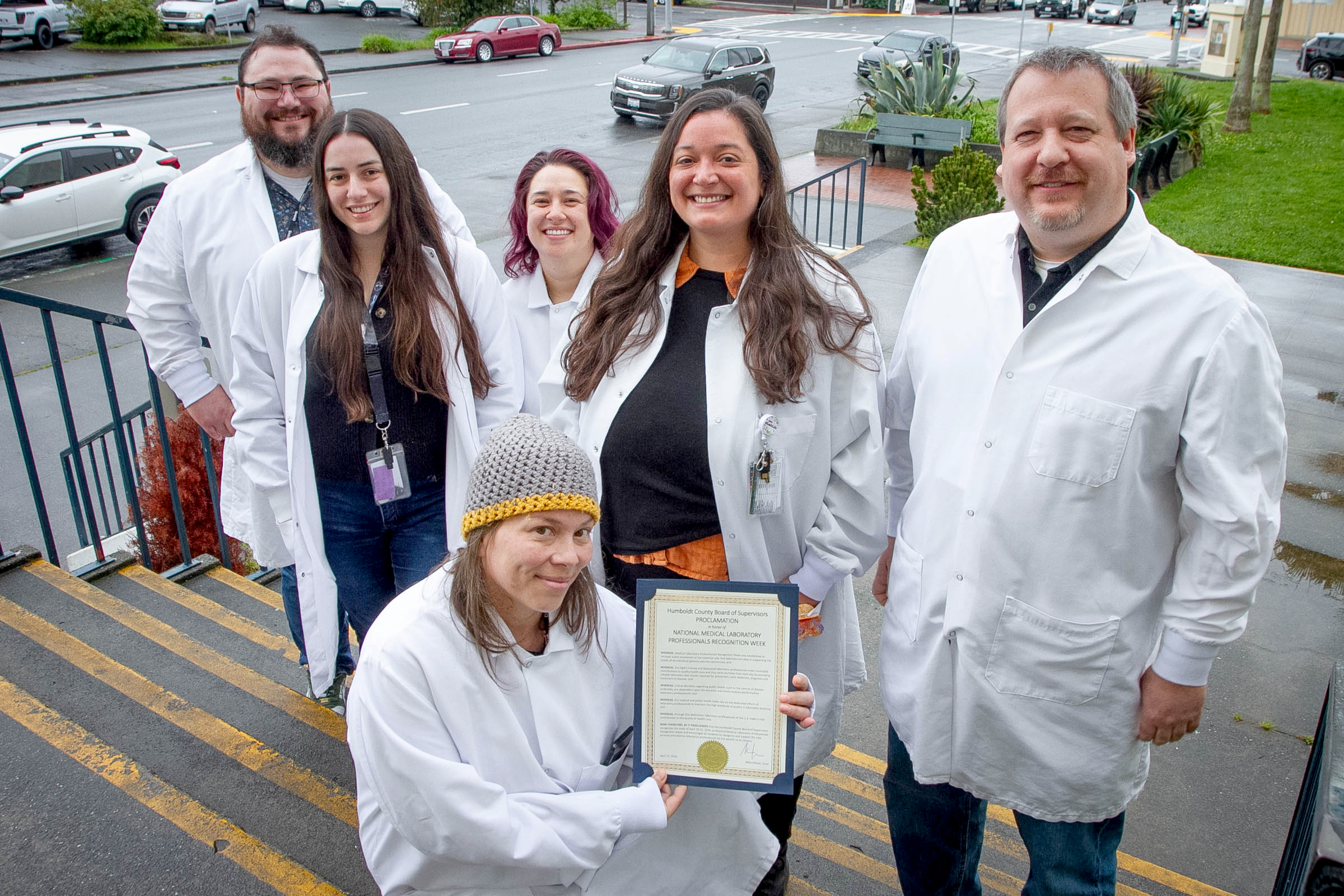
Humboldt County Public Health staff pose with a county proclamation last week, from left: supervising microbiologist Ray Fuller, lab tech Marilyn Sandoval, lab tech Cecilia Kennelly, microbiologist Vannia Pena, lab director Pepper Stockton and, up front, microbiologist Heather Maddox. Contributed DHHS
Oyster farmers are the bay’s “canary in the coal mine,” a stand-in for the health of the ecosystem. They rely on clean water to farm their product.
“If something happens on the water or to Humboldt Bay, we’re oftentimes the first ones to see it, because we’re out there every day,” said Van Herpe.
He’s hopeful the sewage spill problem can one day be fixed.
“We’re a pretty smart species if we apply ourselves. And I think that we can solve that, given the proper motivation and funding to do so,” he said.
California’s Race for Secretary of State Shows Partisan Divide Over How to Count Ballots
Yue Stella Yu / Wednesday, April 29 @ 7:33 a.m. / Sacramento

California Secretary of State Shirley Weber speaks during the California Democratic State Convention at the Anaheim Convention Center in Anaheim on May 31, 2025. Photo by Ted Soqui for CalMatters
###
This story was originally published by CalMatters. Sign up for their newsletters.
###
California Secretary of State Shirley Weber, who made history in 2021 as the first Black person to hold the office, is seeking a second four-year term.
As the incumbent and the only Democrat in the field, she will almost certainly cruise to victory in November. She faces only one serious challenger: Orange County Supervisor Don Wagner, a Republican. No Republican has won a statewide race since 2006.
During her tenure, Weber has faced criticism for California’s slow ballot-counting process — so slow that projected winners of state legislative races are often sworn in before Weber’s office certifies the results. Under state law, county election officials have 30 days to count ballots and conduct audits. Critics, including Wagner, say the time frame undermines voters’ trust in the state’s election integrity.
In an interview with CalMatters, Weber dismissed the concerns as an issue President Donald Trump drummed up to pick on California. She argued it’s important to count every ballot and that most outcomes are known before she certifies the results anyway.
“I know the value of being fast for some folks,” she said. “For me, accuracy is far more important.”
Wagner criticized Weber for doing little to lobby state lawmakers to speed up the ballot count. He said he would roll back the practice of sending universal mail-in ballots to every voter, which the state made permanent during the COVID-19 pandemic, though that would require legislative approval. He said he’d also support legislation to move up the deadline to certify election results.
“Rather than wait 30 days, let’s make these changes that are right now causing people of all parties and no party to question: ‘Geez, is that really a fair election?’” Wagner said.
Weber, a former San Diego assemblymember, was appointed to the position by Gov. Gavin Newsom in 2021 and later won a full term in 2022. The daughter of Arkansas sharecroppers who fled the Jim Crow South, Weber drew on her family history and campaigned on expanding voter access and boosting voter turnout.
Over the past five years, Weber has overseen the administration of contentious elections that drew the national spotlight, from the recall against Newsom in 2021 to the congressional redistricting fight last November. She said she has focused on expanding voter outreach to rural corners of California and encouraging voter registration on high school and college campuses — something she said she would continue to focus on in her second term if she is re-elected.
Weber has been in court several times defending California election laws. She has sued local governments for violating election law while also defending the state’s election administration against legal challenges from both Democrats and Republicans. She most recently fended off a lawsuit by Trump’s Department of Justice seeking voter registration data in California.
Weber said she fought to defend Californians’ voting rights. “If we were giving (voter information) away like candy, who would trust us … to protect their records?”
Weber has also faced criticism from advocates who say the state hasn’t done enough to make voting accessible. Disability advocates sued her in 2024 — albeit unsuccessfully — over state election laws that do not allow voters with disabilities to return their ballots electronically.
Wagner, the Republican challenger, wants to present an alternative to Weber, even though he acknowledged that a GOP upset would shock even himself. But if he were elected, Wagner, who also served in the state Assembly, said he’d garner enough national attention to use the office as a “bully pulpit” with the Democratic supermajority in the state Legislature. He said he would require voters to display ID while voting, which also would require a new law. A GOP-backed voter ID ballot initiative on Friday qualified for the November ballot.
Wagner argued that the goal is to restore voters’ trust in state elections.
“I am not one of those Republicans who is going to be out there telling you that unless a Republican wins, the election got stolen,” he told CalMatters. “What I am saying is I believe folks on either side of the political aisle and in the middle question the integrity.”
Sham Hospice Schemes Are Bilking Medicare — and Harming California Seniors
Ana B. Ibarra / Wednesday, April 29 @ 7:20 a.m. / Sacramento

Photo by Odin Reyna via Pexels.
###
This story was originally published by CalMatters. Sign up for their newsletters.
###
California has emerged as the epicenter of a sweeping hospice fraud crisis, one that is costing taxpayers hundreds of millions of dollars and putting vulnerable seniors at risk.
Yet years after the state acknowledged the problem, key regulatory fixes remain in limbo while state and federal officials trade blame.
Hospice care, an end of life service typically reserved for people with less than six months to live, has become a target for fraudsters looking to steal taxpayer dollars — with devastating consequences for patients caught in the middle. It has also become rich fodder for government and media investigations.
Last week, Sheila Clark, who leads the California Hospice and Palliative Care Association, became emotional as she told congressional leaders the story of a woman in Southern California who in 2020 suffered a devastating fall in the middle of the night on the way to the bathroom. The woman, a Medicare recipient, could not see; she needed cataract surgery. But scheduling that surgery ran into a hitch: at the time, Clark said, the woman’s records showed her enrolled in hospice – seemingly fraudulently. Unable to recover from the injuries of her fall, the woman died two months later. “That did not need to happen,” Clark said.
That case and others have refocused attention on a problem that advocates say has never gone away – and is again sparking a partisan fight. At the congressional hearing, some Republicans blamed California and Gov. Gavin Newsom for failing to get a handle on it, while some Democrats blamed the Trump administration for not doing enough and pardoning fraudsters.
The Newsom administration says it has not been standing idle. Just this month, California Attorney General Rob Bonta announced charges against 21 suspects who allegedly defrauded the state of $267 million in a major hospice fraud ring. Since 2021, the office has filed 119 hospice-related criminal cases. The U.S. Attorney’s Office also announced separate recent arrests in California.
The California Department of Health has also revoked 280 hospice licenses over the last two years and is reviewing another 300, according to officials. Meanwhile, state regulations meant to limit who can obtain a hospice license were due months ago.
Stuck in the middle of delays and political back-and-forth are Medicare and Medi-Cal beneficiaries. Californians who truly need end-of-life services may be at risk if they sign up with a sham hospice operator who may provide inadequate care or none at all, while others are enrolled in hospice services even though they are not dying and are locked out of services they need. “People lose access to care, they lose access to medications, to their [doctor], elective surgery,” Clark said. “It’s disheartening.”
Stricter hospice rules are still pending
In 2022, the California State Auditor found that the state’s “weak controls have created the opportunity for large-scale fraud and abuse.” Among other red flags, auditors noted a clustering of hospices in single buildings, particularly in Los Angeles County, and high rates of living patients discharged from hospice.
The audit found that Los Angeles County saw a 1,500% increase in hospice agencies over a decade, along with indicators of large-scale billing fraud and evidence that thieves stole medical personnel’s identities to obtain licenses.
That same year, the state placed a moratorium on new hospice licenses, which is set to expire next year. Meanwhile, emergency hospice regulations intended to tighten who can obtain a hospice license are again delayed. The state Department of Public Health says it’s revising draft emergency regulations based on feedback from industry representatives and consumer groups.
“Once these regulations are in place they will include stricter standards for who can own or run a hospice, nurse-to-patient ratios, limits on operators who try to oversee multiple agencies at once, minimum staffing requirements, and more thorough screening of potential licensees before a license can be approved,” said Mark Smith, a department spokesperson.
Licensing is only the first step – the federal Centers for Medicaid and Medicare Services must certify operators before they can start billing. Clark and Isidro say better fraud prevention would demand more transparency and better data sharing between state and federal government.
Fraud can happen in a number of ways
Psychotherapist Lynn Ianni still does not know how fraudsters got a hold of her information. Two summers ago she was finishing her last physical therapy session for a shoulder injury when Medicare denied her claim: Records showed she was enrolled in hospice care.
Ianni, who also testified in last week’s hearing, assumed it was a clerical error – she had hurt herself playing pickleball, but led an active healthy life. Medicare pointed her to a hospice in Arcadia where she was supposedly enrolled. The address was in a strip mall; she had never heard of the doctor. She spent hours on the phone, over months, trying to clear up the problem. Medicare refused to cover care for her shoulder even as she paid her premiums.
“It was over six months that I had no coverage or no services,” Ianni said. “I was really terrified because I couldn’t figure out how to solve it, and I had no resolution in sight.”
Fraud can take different forms. It can be providers knowingly overbilling Medicare and Medi-Cal or submitting false claims — but it can also be elaborate cases in which bad actors create sham agencies, steal medical information and bill for services they never provide or that are not medically necessary.
These scams sprawl past hospice care. The U.S. Centers for Medicare and Medicaid Services and the Office of Inspector General have also raised concerns over fraud in home health services, skin substitutes, and durable medical equipment such as wheelchairs and walkers or oxygen tanks. Just Tuesday, the feds accused a Pasadena clinic of improperly charging Medicare more than $34 million for skin grafts and wound care services it didn’t provide.
Scammers have many tricks. They make robocalls or approach people at grocery stores, after church, or door-to-door, offering gift cards, meals, or free health services in exchange for forms that ask for personal and medical information.
“They don’t realize that their Medicare number is being stolen, and next thing you know, they’re being entered into hospice,” said Catherina Isidro, director of the California Senior Medicare Patrol, a group that helps people report and navigate Medicare fraud.
Health workers have also filed whistleblower complaints reporting that colleagues share patient information with fraudsters in exchange for kickbacks, Isidro said. That kind of fraud is harder to guard against because medical providers are supposed to be people of trust.
Clark said fraudsters have made a business of stealing Medicare identification numbers from the dark web and then selling them to hospices or home health agencies. “They literally call themselves brokers,” Clark said. “‘Here’s 10 beneficiary numbers. How much will you give me every month that you’re able to bill?’”
Safeguarding your medical information is key
Families who truly need hospice care should not shy away from seeking the benefit over fear of fraud, said Mollie Gurian, vice president of government affairs at Leading Age, a group that represents providers of aging services. People can use the Medicare Care Compare site’s quality scores and phone directory to start looking for legitimate hospice providers. Legitimate providers should pick up the phone and be able to answer questions about their services, Gurian said.
“[Hospice] is a great benefit, and the fact that it’s been utilized to commit fraud in this way is very distressing.”
For everyone else, advocates advise guarding Medicare and Medicaid identification numbers like a Social Security number – never sharing the number over the phone or in exchange for freebies. People should also read Medicare summary notices and explanation of benefits documents to ensure everything looks accurate.
“It’s really critical that older adults, you know, Medicare beneficiaries, their caregivers or their family members, whoever is taking care of them, that they be very vigilant,” Isidro said.
Those who suspect fraud should call their state’s Senior Medicare Patrol, a federally-funded helpline that can help people disenroll from services they did not request, often within a day or two.
That hotline helped clear up Ianni’s Medicare account and restarted her benefits. Six months after first learning she was fraudulently enrolled in hospice, Ianni got a new Medicare card in the mail, with no explanation for what had happened. Just in time, too, she said: two weeks later, she broke a finger. “I was so relieved.”
###
Supported by the California Health Care Foundation (CHCF), which works to ensure that people have access to the care they need, when they need it, at a price they can afford. Visit www.chcf.org to learn more.
OBITUARY: Wincel Ann Nicholas, 1938-2026
LoCO Staff / Wednesday, April 29 @ 6:56 a.m. / Obits

Wincel Ann Nicholas, 87, of Biggs, California, passed away peacefully at her home on March 7, 2026 surrounded by her family. She was born on September 6, 1938, in Paris, Arkansas, to Eddie “Red” and Magdelene Garrett. Her early years were spent moving with her family throughout California, from Port Hueneme to Ferndale, and eventually Rohnerville, where she attended Fortuna Union High School.
In 1954, Wincel married Gordon Emry Stephens, and together they welcomed two children, Geneva Ann Stephens and Gordon Emry Stephens, Jr. In the late 1960s, she relocated to Anchorage, Alaska with her sister, Katie Currier and her family, where she later met and married Dr. Carmine Franklin Nicholas. Together they had one daughter, Christine Nicholas Santerre. Following Dr. Nicholas’s passing in 1972, Wincel returned to Humboldt County in 1975. There, she pursued her education at College of the Redwoods, earning degrees in business administration and photography, and went on to become a successful business owner in Fortuna for many years.
In 1982, Wincel reconnected with her high school classmate, Phil Branstetter, who became her life companion for over 30 years. Together they shared a life rich enjoying many mussel feeds and good times at Capetown, traveling, dancing and time with their blended family. They made their home in Fortuna before moving to Capetown in 2004 and later settling in Ferndale in 2006. After Phil’s passing in 2013, Wincel continued to cherish her independence and strong community ties. In 2024, she moved to Biggs, California to be closer to her daughter and became a member of Quota International, continuing her lifelong commitment to service.
Wincel lived a vibrant and adventurous life. She was an avid golfer and a dedicated member of the Redwood Empire Golf and Country Club for over 40 years, actively participating in tournaments and serving in leadership roles within the Women’s Golf Association. She was also a longtime member of Epsilon Sigma Alpha, Beta Zeta chapter, where she built enduring friendships over four decades. A passionate traveler, Wincel explored the world — from hiking the rugged Lost Coast Trail between Mattole Beach and Shelter Cove, to embarking on African safaris with stops in Dubai, and visiting England, Scotland, Ireland, Mexico and Hawaii.
In her later years, Wincel found great joy in life’s simple pleasures — playing pinochle with her card club, attending women’s luncheons, and walking the beach with her dear friend Marilyn Forsell and her beloved dog, Gracie. Above all, she treasured her family. She took immense pride in her grandchildren, delighting in time spent cooking, making jam, attending their sporting events and graduations, and following their lives with deep interest and love.
Wincel will be remembered for her quiet understanding, her thoughtful and wise words of wisdom, and her steadfast independence. She was a compassionate listener who devoted her life to caring for others, often placing their needs before her own with grace and humility.
She is survived by her sister, Katie Currier; her children, Gordon Stephens (Tammy), Christine Nicholas Santerre (Chadd), and stepson Lee Branstetter; her grandchildren, Geneva’s son, Robert Randow, Maggie Stephens Kelly (Vince), Garrett Stephens, Taylor Santerre Mardesich (Davis), Lance Santerre, Maci Branstetter, Kylee Branstetter, and Lane Branstetter.
Wincel was preceded in death by her parents, Red and Magdelene Garrett; her daughter, Geneva Stephens Lewis; her granddaughter, Benicia Champagne (Geneva); and her late husband, Dr. Frank Nicholas, and her beloved life partner, Phil Branstetter.
Her legacy of strength, kindness and quiet generosity will live on in all who knew and loved her.
A graveside service will be held July 11th at 10 a.m. at Ocean View cemetery in Eureka with a celebration following in Ferndale. More information will be made available.
In lieu of flowers, the family requests donations be made to the Colorectal Cancer Alliance.
###
The obituary above was submitted on behalf of Wincel Nicholas’s family. The Lost Coast Outpost runs obituaries of Humboldt County residents at no charge. See guidelines here. Email news@lostcoastoutpost.com.
TODAY IN SUPES: Board Appoints Two Residents – Mike Wilson and Carol Vander Meer – to Represent Humboldt on the Great Redwood Trail Agency’s Board
Isabella Vanderheiden / Tuesday, April 28 @ 3:04 p.m. / Local Government , Trails

Screenshot of Tuesday’s Humboldt County Board of Supervisors meeting.
###
Following tense deliberation at today’s meeting, the Humboldt County Board of Supervisors voted to appoint Board Chair Mike Wilson and Arcata resident Carol Vander Meer to two at-large seats on the Great Redwood Trail Agency’s (GRTA) board of directors. Vander Meer, a local nonprofit consultant, currently serves on the Humboldt Trails Council.
The motion passed in a 3-2 vote, with First District Supervisor Rex Bohn and Second District Supervisor Michelle Bushnell dissenting.
The Board of Supervisors reviewed 18 applications from a wide range of contenders, including several elected officials, retirees, city engineers and consultants, many of whom described themselves as avid cyclists and trail users. All but one of the applications were sent in by Humboldt County residents, with one submitted by Trinity County Supervisor Julia Brownfield, which would become a point of contention among supervisors.
At the outset of the discussion, Clerk of the Board Tracy D’Amico informed the board that two applicants had dropped out “due to the number of applications and other restraints,” including Trinidad resident Susan Ferson and Rio Dell Mayor Debra Garnes, who is currently serving as the city appointee on the GRTA board. Garnes’ two-year term is up in August.
Each applicant was given two minutes to make their case as to why they would be the best fit for the GRTA’s nine-person board, which includes two representatives each from Humboldt, Marin, Mendocino and Sonoma counties, as well as a city representative, who is selected by cities located along the path of the 300-mile trail.
Everyone who spoke expressed great enthusiasm for the trail, though some warned that such an ambitious project would come with complications, including Trinity County Supervisor Julia Brownfield.
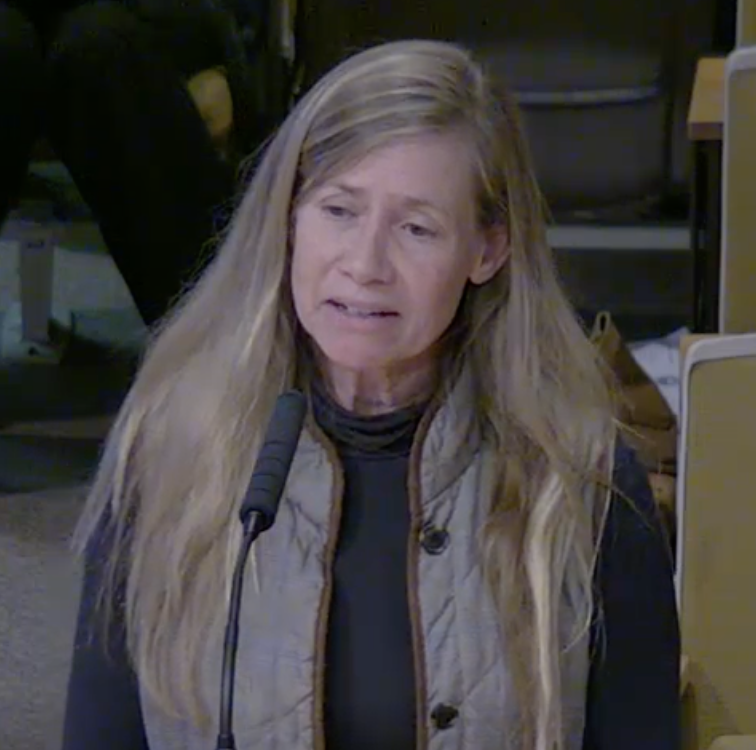
Brownfield | Screenshot
“I love trails, but we need to address the issues — [and] there’s some very big issues,” she said, noting that the trail passes through a “very historic and very cultural” portion of her district in Trinity County. “There will be obstacles in the way of this trail, and we need to be very cognitive and respective of those.”
Supervisors Bushnell and Wilson saved their pitches for last. Bushnell emphasized that one of the most critical segments of the trail passes through the remote Eel River Canyon, which straddles the Humboldt-Mendocino county line. Given that the area is already in her district, she felt she would provide much-needed representation for SoHum landowners.
“I think I bring a unique opportunity to the board [because] I represent those landowners already, and I see a great opportunity through the Eel River Canyon,” Bushnell said. “I want to make sure that people’s voices are heard, that we can do it right and we have a smooth transition with having that trail go through the canyon. … Regardless [of the appointment], I’ll continue to represent my constituents through the Eel River Canyon and look forward to what the Great Redwood Trail can bring to Humboldt County.”
Wilson began his pitch with a reminder that the GRTA is a state agency, and emphasized that representation is “not just for our local community, but users across the state.”
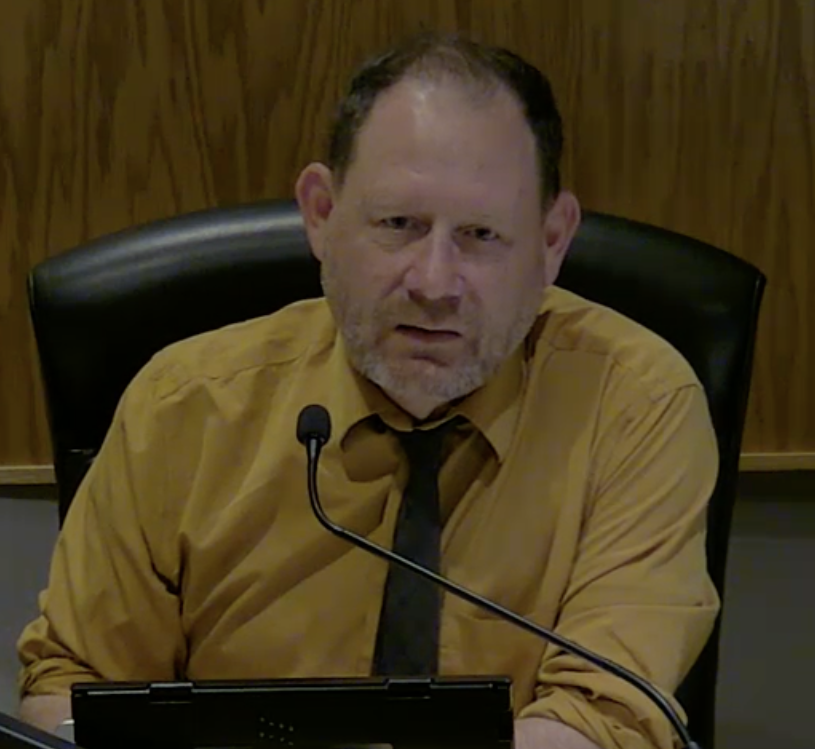
Wilson | Screenshot
“I’ve been a trails advocate since 2005, [and] I have extensive experience working with local communities, tribal governments and state agencies,” he said, referring to his tenure on both the Board of Supervisors and the California Coastal Commission. “I recognize the challenges and the opportunities the trail represents to connect our communities, strengthen the regional economy and benefit residents and visitors alike. I’m committed to ensuring to a diversity of local voices that shape the development, and it would be an honor to represent Humboldt County on the GRTA.”
During public comment, Tom Wheeler, executive director of the Environmental Protection Information Center, vouched for Vander Meer, who was unable to attend today’s meeting due to travel. “She was instrumental in getting the Bay Trail done [and] ran Friends of the Dunes for 30 years,” he said. “She — I think all of you know her — is a collaborative, thoughtful person, and I think that she would do very well on this board.”
Following public comment, outgoing GRTA board member and Fifth District Supervisor Steve Madrone also highlighted Vander Meer’s resume, noting that she secured a personal reference from Hank Seemann, the county’s deputy director of Public Works, “who really championed getting [the Bay Trail] done and getting it built.”
Madrone made a motion to appoint Vander Meer and Wilson to the GRTA board, which was seconded by Fourth District Supervisor Natalie Arroyo “for the purpose of discussion.”
While discussing whether or not it would be appropriate to appoint a Trinity County representative to the seat, Wilson said, “I don’t think it would be advantageous for Humboldt County to give half of its representation to Trinity County.” Instead, he suggested that the county advocate for Trinity County to have its own seat on the GRTA.
Bohn spoke highly of a few applicants from the Eel River Valley, but felt Brownfield and Bushnell would be the best fit for the GRTA board.
“We have two capable people [who] have two very different … approaches to this thing, but I know they will listen to their people along the trail to make a successful trail,” he said. “To make a successful operation, you’re going to have to have the neighbors involved.”
A little later in the discussion, Madrone echoed Wilson’s call for Trinity County to get its own seat on the GRTA, which drew sharp criticism from Bohn. “Today’s your opportunity,” he said. “You walk the talk, or you just talk the talk.”

Madrone | Screenshot
“I find it unfortunate that in order to push your position, you feel the need to insult me,” Madrone responded. “Anybody that knows me knows that I have been dedicated to trails for over 50 years here in Humboldt County, and I walk my talk every day in regards to that and the rest of it. So, it’s unfortunate you feel the need to do that. I’m going to leave it at that.”
Given the two-year term for each appointee, Arroyo thought it would be advantageous to select people who lived in communities that are next in line for trails.
“I think the phases of the trail that we’re most likely to see developed … are the ones that are already kind of in the queue or where there are small gaps to fill, like the Annie and Mary Trail to Blue Lake, like the segment to College of the Redwoods,” she said. “All of the areas in the sort of greater Humboldt Bay Area, broadly speaking, and then just outside of that are the likely next ones to move forward.”
After some additional discussion, the board voted 3-2, with Bohn and Bushnell dissenting, to appoint Vander Meer and Wilson to the GRTA.
###
The board is about to come out of its closed session discussion. Check back a little later — or perhaps tomorrow morning, this is shaping up to be a long one — for more coverage of today’s meeting.


_(cropped)_(b).jpg)