The Eureka City Council will confirm the City Manager’s appointment of Todd Jarvis as Police Chief at the
September 20, 2022 Regular Council meeting. Chief Jarvis began employment with the City of Eureka
on January 3, 2022 as Interim Police Chief and came to EPD with 35 years of law enforcement
experience.
Police Chief Jarvis started his career as a Community Service Officer and retired in November of 2019 as
Executive Assistant Chief of Police for the San Diego Police Department. Chief Jarvis was second in
command at SDPD, an agency consisting of 2043 sworn, 562 civilian budget positions and over 300
volunteers. Interim Police Chief Jarvis is a graduate of the FBI National Academy in Quantico, Virginia.
Other educational credits include Advance Training School on Counterterrorism, Western State
Counterterrorism Seminar, Tel-Aviv, Israel; Center for Creative Leadership; Drug Unit Commander’s
Academy; and the Sherman Block Supervisory Leadership Institute Class. Chief Jarvis also holds Basic,
Intermediate, Advanced, Supervisory and Management California Peace Officer Standards and Training
(POST) Certificates.
For the past nine months, Chief Jarvis has led Eureka Police Department and established himself as a leader
in the both the department and the community. Chief Jarvis has been instrumental in advising the City
Manager and Council on the establishment of a Community Oversight of Police Practices Board and
recruitment of an Independent Police Auditor.
“I have greatly appreciated Chief Jarvis’ extensive
background in Police operations and his leadership at EPD. During his interim assignment, he has a
demonstrated a balanced approach, inclusive mindset and high level of professionalism that has been
very much appreciated by EPD staff and our community. The City of Eureka is very fortunate to have
Chief Jarvis as part of our team,” said City Manager Miles Slattery.
Chief Jarvis stated: “I am very appreciative of the opportunity to continue serving the men and women
of the Eureka Police Department, our community, and all of our internal and external partners. There
are many good things happening here and it is an honor to work with so many dedicated and talented
people. The EPD will continue to focus on the safety and quality of life of all who live, work, and visit this
historic city.”
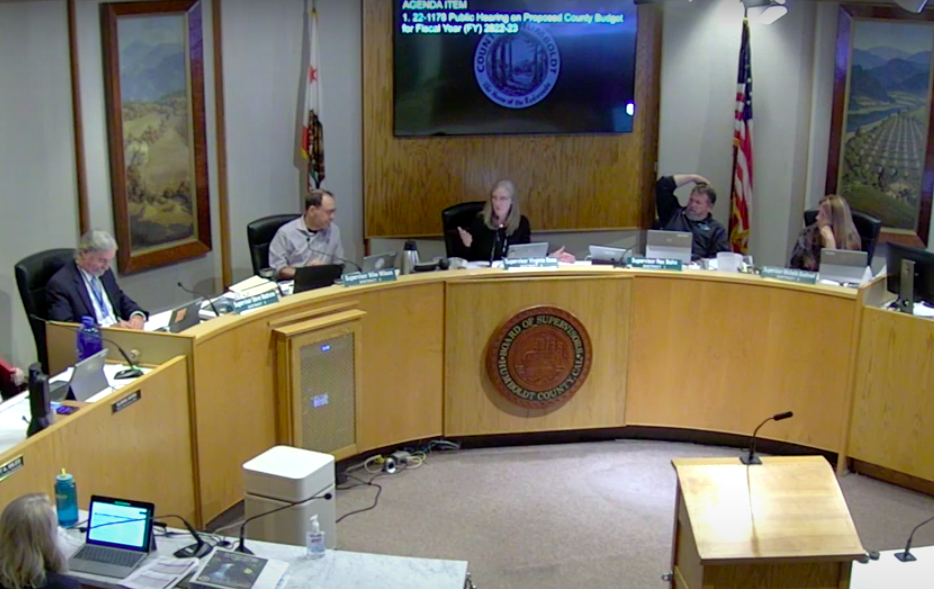
Screenshot of Monday’s Humboldt County Board of Supervisors meeting.
###
Humboldt County is still trying to get its finances in order.
During a special meeting on Monday afternoon, the Humboldt County Board of Supervisors embarked on a grueling discussion surrounding the county budget proposal for Fiscal Year 2022-23. Rather than focusing on various improvements to county infrastructure as in years past, this year’s budget aims to address ongoing budgetary gaps.
“Last year’s funding was utilized much more effectively for infrastructure and service enhancements,” County Administrative Officer Elishia Hayes explained. “This year, the funding is very much going to help to close budgetary gaps and to help us with the budgetary challenges that we’re having. [This budget proposal] hasn’t gone through the same sort of community input and evaluation process that we followed last year because, frankly speaking, we need these dollars to just continue with services this year.”
The county’s annual budget is normally settled by the end of June. This year, however, budgetary challenges stemming from a backlog of delinquent financial reports forced the Board of Supervisors to postpone the adoption of the final budget to give staff additional time to complete the audit for Fiscal Year 2019-20 and obtain more reliable estimates for the county’s fund balances. The board adopted a “recommended” budget at the end of June to serve as a placeholder for the final budget, which is scheduled for adoption at the end of this month.
“It has been an interesting and unique year for [our] budget,” said Tabatha Miller, assistant county administrative officer and chief financial officer.
On top of the aforementioned budget challenges, the county experienced a significant loss in revenue following the board’s decision to slash cannabis cultivation taxes earlier this year. The board also signed off on “some pretty significant increases” to employee salaries and benefits, which was done in hopes of improving recruitment and retention, Miller explained.
“[The county’s] total budget is $570.5 million, so it’s a pretty significant amount,” she said. “The graph here kind of breaks it down by size as far as where those dollars are being budgeted.”
Screenshot
The bulk of the budget discussion focused on additional funding requests. Item by item, Miller outlined dozens of requests for additional funding from various county departments and organizations. In most cases, the money would be sourced from the county’s General Fund or remaining ARPA – American Rescue Plan Act – funds. (You can find a breakdown of the funding requests at this link.)
One of the most notable items on the list was a request for $3.5 million from the Public Works Department to reduce the negative fund balance in the county’s roads fund.
“We know that we don’t have sufficient revenues to support our roads in the county and … we’re not even providing the roads at a level of quality that the citizens would like,” Miller said. “We have a significant deficit fund balance in that particular fund and there isn’t really any way to get around [it] other than [allocating] ARPA funds, which is what we’re proposing here, or pulling money out of the General Fund.”
Where did all the money go? Public Works Director Tom Mattson said the fund was drained by storm damage repairs back in 2017 and 2019.
“We have to do those projects for reimbursements and sometimes those reimbursements can be 10, 15 or 20 years down the line,” Mattson explained. “If I don’t do the projects within the timeline, then we’re not going to do the projects because we won’t get the funding. These are multimillion-dollar projects. …Now our equipment and our material costs have jumped 30% due to COVID and issues with the supply chain.”
Board Chair and Fourth District Supervisor Virginia Bass asked if the Public Works Department was further impacted by “concerns with the auditor’s office and not being reimbursed for certain things.” Bass, of course, is referring to the previous Auditor-Controller’s failure to submit important financial reports to the state in a timely fashion, a move that put the county at risk of missing out on grants and reimbursements from the state and federal government.
“We lost out on well over [$750,000],” Mattson said. “Now that we finally have one of our audits done, [we] can start putting our indirect cost plans back together and that will allow us to start charging our overhead back to our all of our state and federal projects.”
“That $750,000 is gone gone?” Bass asked.
“That’s gone,” Mattson said. “We cannot go back after the project is closed.”
First District Supervisor Rex Bohn suggested staff seek additional funding from Senate Bill 1, the Road Repair and Accountability Act of 2017, to offset some of the costs.
“The state has an excess of SB-1 monies … and they’re doing a good job but they’re having a hard time spending all their money,” he said. “We should ask for some one-time or maybe a few years of some extended spending for our rural areas and our roads. … We can pertain it to feeder roads or roads that are within a mile of state highway or something like that because I’ve got plenty of roads that are failing within a mile of a state highway.”
Hayes suggested the board forward the inquiry to North Coast representatives Assemblymember Jim Wood and state Senator Mike McGuire.
The board also discussed several other funding requests, including a $735,874 request for office renovations for the Auditor-Controller’s Office, a $15,000 request for travel and mileage reimbursement from Fifth District Supervisor Steve Madrone, a $5,500 request to remove the defunct tsunami siren pole at the Orick Volunteer Fire Department, an additional $59,000 to fund the county’s Laura’s Law pilot program, as well as three individual requests totaling $850,000 from the Sheriff’s Office for building maintenance.
About halfway through the board’s review, Second District Supervisor Michelle Bushnell asked whether the county had enough money to fund the list of recommended funding requests.
“You have the money,” Miller said. “Anything that you see here on this list that says ‘general fund contribution’ means that it’s coming out of your general fund, which means that you are dipping into your fund balance. So, you have funding there … just remember you’re digging into your savings and borrowing from money you can’t spend in the future.”
After about four hours of discussion and a few recommendations to staff, the board agreed to return to the subject later this month for final review. The final budget is scheduled for adoption on Sept. 27.
A recording of the board’s discussion can be found here.
Image generated by DALL-E, an artificial intelligence.
Press release from the office of Rep. Jared Huffman:
Today, Representative Jared Huffman (CA-02) introduced legislation to enshrine the right for small cannabis producers to ship and sell their products directly to consumers. The Small and Homestead Independent Producers (SHIP) Act would allow small farmers and producers to operate their agricultural businesses within and across state lines. The legislation is specifically targeted to support the smallest family farmers and provide them the certainty to sustain their businesses under a larger federal legalization law.
“Too often, the federal government falls behind, and the gears of Congress work too slowly to keep up with the pace of a changing economy,” said Representative Huffman. “Under my bill, folks in our state will be able to ship their products straight to consumers when the antiquated federal prohibition on cannabis is finally repealed. As large, commercial cannabis operations squeeze out local producers from the market, this legislation is critical for farmers to survive and expand their small businesses. We cannot leave our smallest family-farmers behind under full legalization.”
What Supporters are Saying
“The direct-to-consumer model is a necessary resource for any small-scale craft-producing community that is deeply tied to the land on which it creates — whether it produces wine, whiskey, cheese, beer, cannabis, or honey,” said Genine Coleman, Executive Director of Origins Council. “The legacy cannabis community that has worked so long in the shadows should have the opportunity to join the ranks of other artisan producers across the United States and enjoy the privilege of connecting personally with their adult customers. As is always true with each step cannabis takes towards legality, the greater community stands to reap enormous benefit in the process.”
“For small craft producers in nearly any context, direct-to-consumer shipping is the critical tool that enables a diversified market to survive and thrive. Cannabis is no different,” said Ross Gordon, Policy Director of Humboldt County Growers Alliance (HCGA) and Policy Chair of Origins Council. “The SHIP Act moves the conversation beyond the question of who can get a license to cultivate cannabis and addresses the practical reality of building an equitable and accessible market for small cannabis producers.”
“As a legacy cannabis producer and family farmer located in the heart of the Emerald Triangle, I see the direct-to-consumer retail pathway as the only future of my small farm, and indeed — of all rural communities like my own whose cultural heritage is rooted in craft cannabis cultivation and artisanal medicine making,” said Karla Avila, owner and operator of Flowerdaze Farm in Trinity County and Executive Director of the Trinity County Agriculture Alliance.
“The Parabola Center is proud to endorse the SHIP Act – the first federal marijuana bill we have ever endorsed. This is the only legislation so far that takes cannabis policy beyond the Big Tobacco model of industry domination and toward the craft cannabis model that benefits both small businesses and consumers,” said Shaleen Title, Founder, Parabola Center for Law and Policy.
The bill is cosponsored by Earl Blumenauer (OR-03), Co-Chair and Founder of the Congressional Cannabis Caucus.
It is endorsed by the Origins Council, Humboldt Country Growers Alliance, F.A.R.M.S. Inc, Washington Sun & Craft Growers Association, Vermont Growers Association, Maine Craft Cannabis Association, Farm Bug Co-Op, Big Sur Farmers Association, Nevada County Cannabis Alliance, Mendocino Cannabis Alliance, Trinity County Agricultural Alliance, and the Sonoma County Growers Alliance.
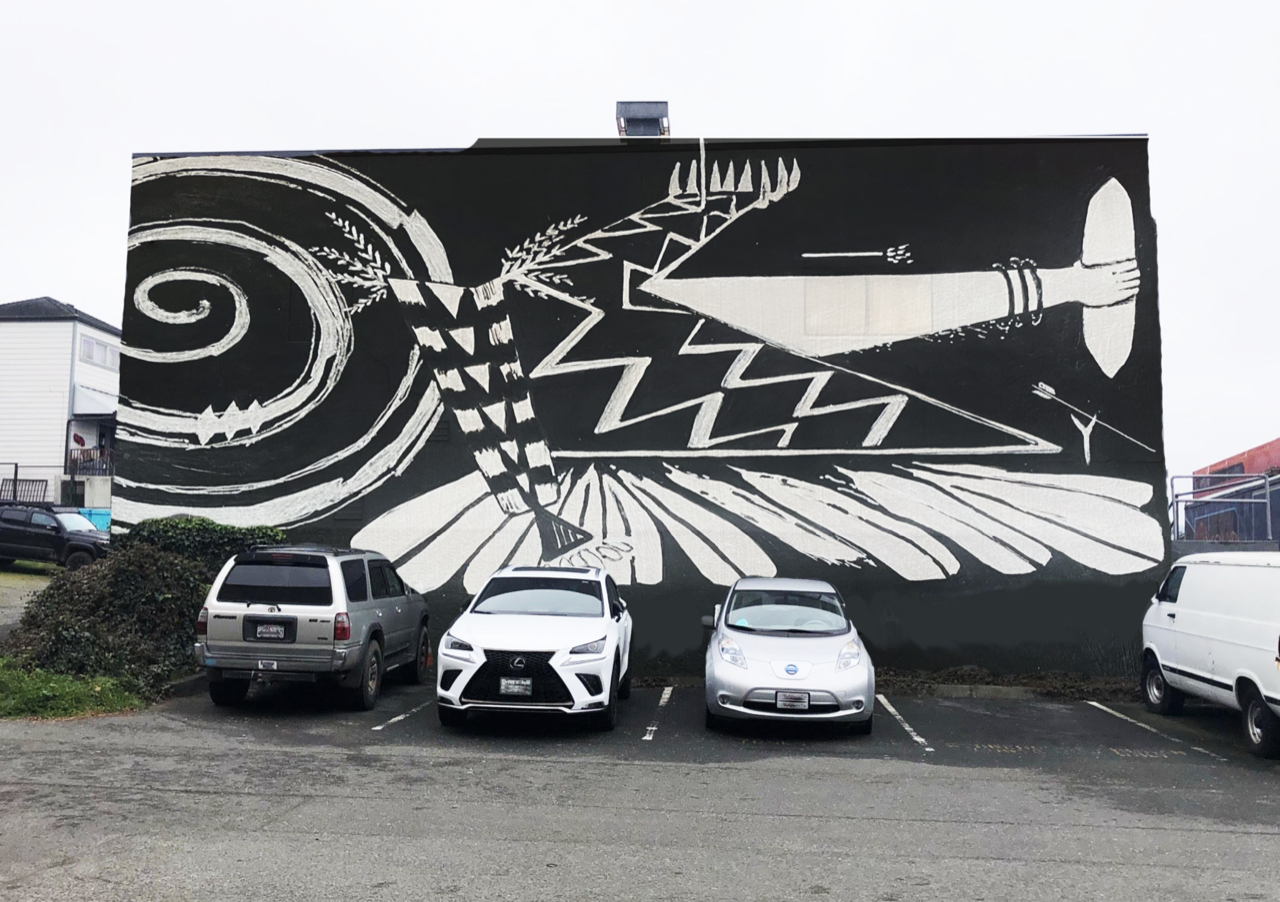
A new mural co-designed by Brian Tripp and Alme Allen will appear in Arcata this month | REBOUND
REBOUND press release:
This September Arcata will be graced with a new mural featuring artwork originally created by acclaimed Indigenous Artist and Activist Brian D. Tripp. The design entitled “We Been Healing That Way” was reinterpreted by Karuk–Yurok Artist Alme Allen with input and approval by the artist before his passing earlier this year. Installation will be completed by the Karuk Mural Crew led by Allen and will work in conjunction with Da’Luk Youth Program to inspire Native youth of the area to explore art. The mural will be painted on the westward facing wall of the Pacific Outfitters/Hatchet House building in downtown Arcata.
This project was conceived and led by REBOUND founder Benjamin Funke, working with Alme Allen, Brian Tripp and their families. The artists’ royalties will benefit the “RED HOUSE PEOPLE” Fund at the Humboldt Area Foundation, a fund created in his memory in support of California Native Arts & Artists. During his lifetime, Tripp was always known to support and encourage others who were learning their culture and working on their own artwork, and this fund hopes to continue this commitment.
Tripp, born in 1945 in Eureka, was raised in Klamath, California. He was instrumental in the revival of Karuk ceremonies and was a renowned singer and dancer in river communities. In 2018, Tripp was awarded the California Living Heritage Award from the Alliance for California Traditional Arts for his lifetime’s work to bring California Native art to foreground.
This project would not happen without the generous contributions and assistance by the Humboldt Area Foundation, Wild Rivers Community Foundation, Alme Allen and the Allen/Tripp family, the Da’Luk Youth Program, Julie Fulkerson, Ali Lee, Lindsey Bear, Aaron Ostrom, United Rentals, City of Arcata, the Ink People Center for the Arts and REBOUND.
Be aware, ocean watches! Another big boat has landed on our shores, for better or worse!
We warned you, of course. You will recall last week, when the Outpost foretold of future cruise ship activity in Humboldt Bay and, sho’ ‘nuff, on Wednesday morning the first of those scheduled floating parties — the MS Oceania Regatta, if you’re keeping score — has indeed paid us visit. Ka-ching? We’ll see!
If you’d like to see this hulking sea behemoth, click the video above sent to us by self-identified naturalist guide Justin Legge, a board member of Humboldt County Visitor Bureau, who does a bang up job narrating the Regatta’s trudge through the fog. LoCO was admittedly maybe not all that excited about another cruise ship, but Justin went ahead and made the experience magical for us.
“Here she comes! Headed for the dock for a day in the redwoods! Humboldt County! Eureka, California!” Legge proclaims in the clip above. “Godwits feeding in the muds of Humboldt Bay! A harbor seal swimming under the dock! King fisher as it flies by looking for little fish!”
We cannot stress this enough: You should allow Justin to make this otherwise nothing Wednesday special for you. Watch now!
Gary Bryant Jr. exchanged gunfire with a man in an Antioch apartment parking lot on a July afternoon in 2014. Both were struck by bullets. Bryant survived and the other man died.
Police said it was part of a string of gang shootings in the East Bay. At trial, prosecutors alleged — and a jury agreed — that Bryant and an accomplice were guilty of first-degree murder.
Bryant, then 28, was a local rapper in Pittsburg who uploaded music videos to YouTube. In his lyrics, he talked about gang war, shooting at rivals and challenging other rappers. At Bryant’s trial, an Antioch police officer testified that the lyrics were key to understanding his criminal mindset.
When Bryant said the phrase “geeked up,” the police officer alleged, he meant he was armed with guns. His words “lay a demo,” the officer said, meant shooting at someone.
A University of California, Irvine, professor acting as a witness for Bryant disgreed, saying that “geeked up” was commonly understood to mean intoxicated, and “laying a demo” meant to record a track.
Bryant may have been convicted without the introduction of rap lyrics — prosecutors and police said he and another man were in the parking lot to rob a carload of people.
But readily using such lyrics as evidence in a criminal case may soon change in California.
A bill before Gov. Gavin Newsom would force prosecutors who want to use rap lyrics, or any other form of creative expression, to hold a pretrial hearing away from the jury to prove that the lyrics or other artistic expression are relevant to the case.
The bill by Democratic Assemblymember Reggie Jones-Sawyer of Los Angeles would require judges to balance the value of the evidence with the “undue prejudice” and racial bias possible when that evidence is presented to a jury. Assembly Bill 2799 passed the Legislature late last month, with no registered opposition.
Civil liberties advocates are also challenging the practice in New York.
“There’s a pretty large body of information and a pretty strong body of opinion that prosecutors and their gang experts have their heads on backwards,” said Stephen Munkelt, executive director of California Attorneys for Criminal Justice, which wrote in support of the bill.
Munkelt compared gang investigations to evidence that has begun to be rooted out of courtrooms, like bite-mark analysis or polygraph tests.
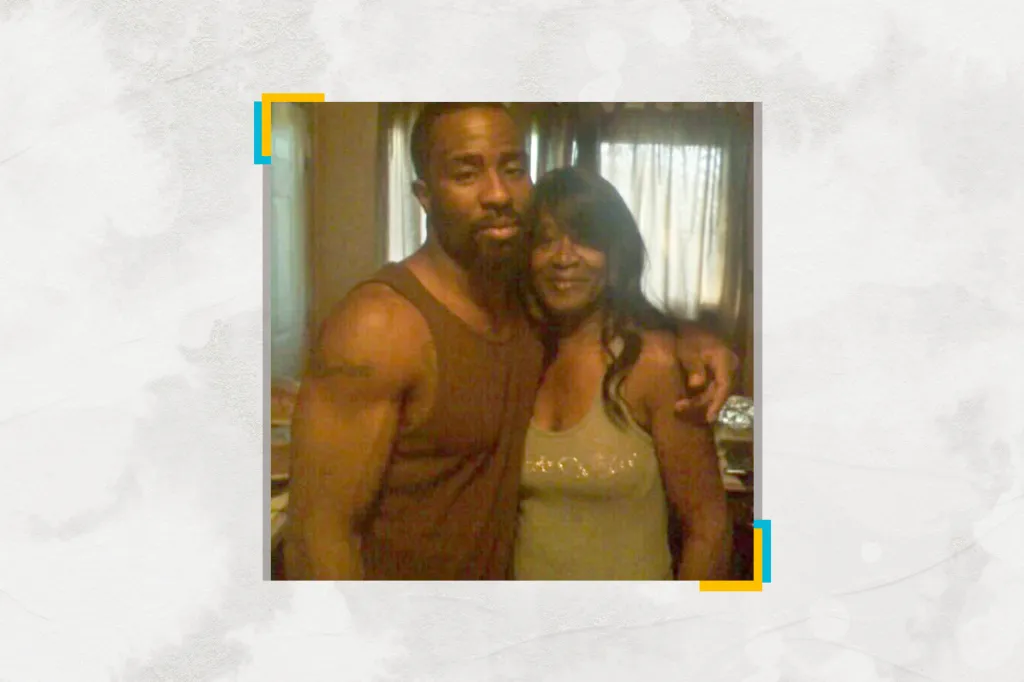
A photo of Gary Bryant Jr. with his mother, Denise Holdman. Photo courtesy of Denise Holdman
As early as 1991, prosecutors have used rap lyrics both to reveal a defendant’s mindset and as confessionals: They wanted juries to believe that rappers quite literally did the things they were rapping about.
In the 2000s, Louisiana prosecutors repeatedly used the lyrics of New Orleans rappers against them in murder trials, including Corey Miller, McKinley Phipps Jr. and, most recently, Torrence Hatch, who raps as Lil Boosie.
Nationwide, researchers have found approximately 500 cases of lyrics – almost always rap – introduced in state or federal trials.
Looking back, Bryant’s attorney, Evan Kuluk, said he would have challenged the introduction of lyrics at the 2017 trial, but research into the use of creative expression was in its infancy.
“I wish I had the information and the materials I have now with which to make the objection at that time,” he said.
“Unfortunately, when Mr. Bryant tried to explain to the jury the bigger cultural picture of rap music, he was shut down by prosecution objections that were mostly sustained.”
Kuluk’s office searched all Contra Costa County trials that resulted in appeal, and found that lyrics were introduced in 13 of them, all related to rap music. Ten of the defendants were Black and three were Latino. None was white.
Contra Costa County District Attorney Diana Becton declined to comment on the bill or Bryant’s case. Becton took office in September 2017, months after Bryant’s conviction.
Becton is a member of the progressive Prosecutors Alliance of California, a small group of district attorneys that supports alternatives to incarceration. The Prosecutors Alliance also declined to comment on the bill.
“When Mr. Bryant tried to explain to the jury the bigger cultural picture of rap music, he was shut down by prosecution objections that were mostly sustained.” — Evan Kuluk, Gary Bryant’s attorney
Bryant, sentenced to life in prison, is appealing his conviction, though his case isn’t explicitly about rap lyrics. Instead, he’s using a broader law from 2020, arguing that the original trial violated AB 2452, the Racial Justice Act. The act allows individuals to appeal their convictions if they can show prosecutors or their witnesses used racially discriminatory language to get a conviction.
Bryant is also seeking to remove the gang enhancements to his conviction, arguing both were improperly influenced by racist stereotypes.
Andrea Dennis, a University of Georgia law professor who pioneered the analysis of creative expression in criminal trials and wrote the 2019 book, “Rap on Trial,” reviewed Bryant’s trial’s transcripts for his appeal.
“The prosecution utilized racially coded and inaccurate assumptions of rap music as criminal confessions and autobiographies and stereotypes of Black men as inherently dangerous criminals to secure Gary Bryant’s conviction,” she wrote.
To show the mindset of prosecutors who use rap lyrics at trial, Dennis quoted from Bureau of Justice Assistance guidance to local prosecutors in 2004.
“Invariably, by the time the jury sees the defendant at trial, his hair has grown out to a normal length, his clothes are nicely tailored, and he will have taken on the aura of an altar boy,” wrote Alan Jackson for the American Prosecutors Research Institute. “But the real defendant is a criminal wearing a do-rag and throwing a gang sign. Gang evidence can take a prosecutor a long way toward introducing that jury to that person.”
According to Kuluk, that’s exactly what happened to Bryant: In court, his music videos and Facebook posts were introduced to the jury. He was photographed in a do-rag, and he made a letter “B” with his hands, which prosecutors alleged was a local gang sign.
“The whole music industry uses violence in their songs, you know? But my son is not violent. Those lyrics don’t portray who he is.” — Denise Holdman, Bryant’ mother
The bill before the governor also highlights the role of gang investigators, who tend to be working police officers, academics or retired members of law enforcement.
In Bryant’s case, his attorney has challenged the prosecution’s use of an officer without academic training in gang investigations working in the department that investigated Bryant’s case. The officer later testified to the lyrics’ so-called meaning, which were contested by the defense.
Robert Grant III, a former Los Angeles police officer who now does consulting work in gang investigations, said the bill before Newsom would “narrow” the way gang investigators do their jobs.
“The question is really, what is the person rapping about?” Grant said. “Is it literally their participation in gang activities in this incident? Is what the substance is close enough to their actual physical activity?”
Grant said police officers often are legitimate experts in gang investigations. As beat cops or supervisors, they’re closest to the people they’re investigating, and most familiar with the use and intent of what might be very local slang.
“Defense attorneys always want to describe us officers as a bunch of knuckle-dragging thugs that just come up with opinions out of our butt,” Grant said. “We are a lot more intelligent about what we try to do in the field.”
“As much as they would like for (rap lyrics) to be outside of the consideration for us as experts, I still get to consider it now and I still will.” — Robert Grant III, former Los Angeles police officer
Bryant’s mother, Denise Holdman, said the image of Bryant conveyed to the jury doesn’t cohere with the real person.
“The whole music industry uses violence in their songs, you know?” Holdman said. “But my son is not violent. Those lyrics don’t portray who he is.”
Holdman will be in court Sept. 30, when Bryant has a hearing for a new trial.
Grant, the gang investigator, said proponents of the bill “hoping gang investigations will be minimized or destroyed” will be disappointed by the outcome.
“There’s going to be a lot of people upset when they realize that for me as an expert, I get to use both admissible and inadmissible evidence to describe my opinion,” Grant said, meaning he can still interpret what lyrics or gang signs mean.
“As much as they would like for (rap lyrics) to be outside of the consideration for us as experts, I still get to consider it now and I still will.”
###
CalMatters.org is a nonprofit, nonpartisan media venture explaining California policies and politics.
The League of California Cities announced today that the city of Eureka
received the esteemed 2022 Helen Putnam Award for Excellence in Community
Services and Economic Development for its one-of-a-kind municipal social services
program, UPLIFT Eureka. The award-winning project connects community members
experiencing homelessness to vital community services and resources.
UPLIFT Eureka was created in 2018 with the goal of connecting community members
experiencing homelessness in Eureka with critical services, employment assistance, and
permanent housing, as well as assistance with obtaining employment and permanent
housing. UPLIFT Eureka is a comprehensive program comprised of several components
which work cohesively together to empower program participants and advance them
toward achieving their goals. One of which, the UPLIFT Eureka Housing Assistance
Program, has housed over 100 individuals since launching in 2019. Additionally, UPLIFT
Eureka’s Pathway to Payday employment workshop has helped more than 150
individuals obtain jobs.
Established in 1982 by the League of California Cities, the Helen Putnam Award for
Excellence is given annually and recognizes outstanding achievements by California’s
482 cities. The purpose of the Helen Putnam Award for Excellence program is to
promote innovative solutions by city governments. The 2022 winners, recognized for
their outstanding programs, were chosen from 155 submissions.
There are 12 award categories, including Intergovernmental Collaboration; Community
Services and Economic Development; Economic Development Through the Arts;
Enhancing Public Trust, Ethics, and Community Involvement; Health and Wellness
Programs; Housing Programs and Innovations; Internal Administration; League Partners
Award for Excellence in City-Business Relations; Planning and Environmental Quality;
Public Safety; Public Works, Infrastructure, and Transportation; and the Ruth Vreeland
Award for Engaging Youth in City Government.
Established in 1898, the League of California Cities is a nonprofit statewide association
that advocates for cities with the state and federal governments and provides
education and training services to elected and appointed city officials.