

OBITUARY: Gloria Baker, 1932-2022
LoCO Staff / Thursday, June 30, 2022 @ 7:15 a.m. / Obits
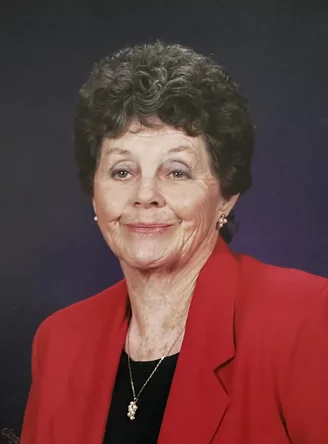
It is with broken hearts that we announce the passing of our beloved Mother, Grandmother, and
Great Grandmother, Gloria Baker. She passed away peacefully on May 31, 2022, at the age of
90. We were fortunate to spend her last Mother’s Day and 90th birthday together just before she
passed.
Gloria was born on May 20th, 1932, in Eureka. She was the first Grandchild born into a very large family. Her father Floyd Esmond Coon was one of 14 siblings. Needless to say, they were very excited to meet this adorable little girl. Her grandmother, Mable Coon loved having a new baby girl to snuggle with, patiently waiting for the day she could teach her how to embroider. Gloria loved spending time with her great grandmother Nanna Ellen Perkins (Curless). There was no shortage of love in the family.
Gloria’s mother, Hazel Curless (Coon), made sure to keep her busy with ballet lessons. She also participated in beauty contests beginning when she was about four years old. We are thankful that Hazel was quite the scrapbooker of Gloria’s activities, and that her father Floyd was a professional photographer, capturing all of her special moments and filling several photo albums that we will cherish.
Gloria truly appreciated the simple things in life. She enjoyed feeding the pigeons on the boardwalk and spending the day at the Sequoia Park Zoo. She loved sitting in her backyard enjoying her flowers, listening to old-time country music, and attending services at The First Baptist Church in Eureka. She also participated in a senior citizen exercise class for approximately 19 years and was known for adding a few of her own dance moves. She always loved to dance.
When Gloria was about 16, she met a boy named Stanley Irvine, at the local skating rink. A few months later he joined the Navy. They lost contact with each other, and then just by chance they met up about 45 years later and spent many happy years together.
Gloria cherished her children Danny Rossiter and wife Elaine, Peggy Baker (Annis), and her husband Bob Annis and her son Kenny Baker. It brings comfort to the family that she will be reunited with her sweet daughter Donna Baker (Jenkins) in heaven. Gloria did not doubt that she would be reunited with those that went before her. She had six grandchildren that she adored and they adored her right back: Lisa Hughes (Cannon), Chris Sullivan, Chuck Baker, Kevin Rossiter, Ashley Jenkins (Gouthier), and James Walker. Great Grandchildren. Ethan Sullivan, Brady Cannon, Bryce Cannon, Morgan Sullivan, Rueben Gouthier, Noah Walker, Ryan Baker, Sadie Baker, and Case Sullivan.
Gloria will be profoundly missed by all who knew and loved her. Next time you visit the zoo please say hello to her favorite river otters for her!
###
The obituary above was submitted by Gloria’s loved ones. The Lost Coast Outpost runs obituaries of Humboldt County residents at no charge. See guidelines here. Email news@lostcoastoutpost.com.
BOOKED
Yesterday: 6 felonies, 12 misdemeanors, 0 infractions
JUDGED
Humboldt County Superior Court Calendar: Today
CHP REPORTS
No current incidents
ELSEWHERE
RHBB: HAF+WRCF Opens Fall Grant Round for Artists, Seniors and Holiday Programs
RHBB: State Parks Urges Safety Precautions Ahead of Labor Day Weekend
OBITUARY: Ike Randle, 1935-2022
LoCO Staff / Thursday, June 30, 2022 @ 7:15 a.m. / Obits
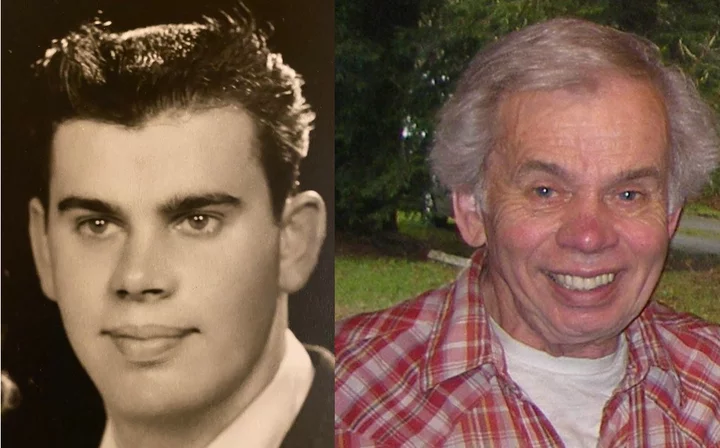
Dwight Marion (Ike) Randle was born on June 26, 1935 in Eureka, CA to Dorothy Frost Randle and Clyde Randle and spent his entire life living in Eureka. While Dwight was his given name, he always MUCH preferred (as anyone will tell you) to be called “Ike.” Ike’s father died unexpectedly at the age of 45 in 1942, after which his mother married Weldon Randle, Clyde’s brother and the family bought a piece of land (after “always renting” – according to Dorothy) on Pine Hill where Ike and his sister, Sidney, grew up. According to his mother, even from an early age, Ike loved to “fix things – somehow all his toys broke and needed to be taken apart and fixed.” He would carry this love of fixing things into his career as a “body and fender repairman.” He was also an inventor – one of the favorite stories about his childhood was that when he was in junior high he fashioned a bicycle with a steering wheel and thinking this was a good idea, went down a hill near his home, only to lose control and break his arm.
Ike’s great-grandmother, Acascia (nee Gordon) Frost, was born near Iaqua, Humboldt County, in 1866, so he was a descendent of Humboldt County Pioneers. He was a graduate of Eureka Junior and Senior High Schools. After graduation, he went to work full time at California Body Shop, eventually becoming a co-owner. He retired (somewhat reluctantly) in 2008.
Two years after marrying Barbara Ansak (in 1956), Ike and Barbara began building their own home on property given to them by Ike’s mother. This project would occupy both their time for over 7 years and result in an ever evolving home for themselves and their two children, Yvonne and Tony, a dog named Tiger, a cat named Mischief, rabbits (early on), and doves.
Over the years, Ike had many hobbies – including refurbishing a 1935 Ford Coupe, collecting coins, fishing, bowling, owning and working a mining claim in Trinity County (not much gold was found, but it was a fun place to spend time in the summers), and re-building “totals” (cars). He also LOVED going to Reno to play Keno and the slot machines – which he would do at least once a year – and playing the California lottery and “hot spots” (typically at Dave’s in Henderson Center). He actually won a little in the lottery (a few times), but never became a millionaire from doing so.
To his kids in their younger days (along with their mother), there were many driving adventures – always with the threat that if you “don’t stop fighting, we’re going to take you home!” These included Disneyland (twice) – magic moment of this trip – the Matterhorn (which the kids, begged him to take them on one more time); and Yellowstone National Park (when the bears still roamed very near your car). There were also several trips to Portland, some to Reno, and, of course MANY trips to the family mining claim in Trinity County where he would take the kids fishing and where, after the kids used their allowance to purchase a “plastic boat,” he had to chase it for us down Canyon Creek after it escaped. All road adventures were made so much more pleasant by the fact that he had one child who was perpetually carsick and later acquired a dog who also would get carsick on the way to Trinity County. Thank goodness that they invented coffee cans with plastic lids!
After casinos opened in Humboldt County, he became a regular – first at Cher-Ae Heights and later at Blue Lake (especially on senior days). When asked how he did in these investments, the response was less than clear. He also began dabbling in the stock market, after his son-in-law convinced him that this would offer better returns than a slot machine. Among his other favorite things were old Western movies and TV shows (Gunsmoke, Bonanza, Andy Griffth), cowboy boots, classic country music (his kids grew up on this), apple pie (never cake for his birthday because he didn’t like it), vanilla milkshakes (ONLY vanilla), and a cold can of Miller Lite (the ONLY beer he drank in later years – although in the early years, it was Olympia).
Ike was predeceased in 2003 by his mother, Dorothy; his sister, Sidney in 2021; and his uncles Jack, Leonard, and Frank Frost. He is survived by his daughter, Yvonne Randle (and Yvonne’s husband, Eric Flamholtz); his son, Tony Randle (and his wife, Johnnie); and Barbara Randle. He is also survived by his grandchildren: Nick Randle and his wife, Macey; Heather Randle; and Kristina Randle and her husband, Adam Smith; as well as great-grandchildren: Maya and Emmett Randle, Samantha J. Randle, and Austin and Emma Smith. He will be dearly missed by his family and all of the many friends he made over the years. He was be laid to rest in Arcata’s Greenwood Cemetery.
###
The obituary above was submitted by Ike’s loved ones. The Lost Coast Outpost runs obituaries of Humboldt County residents at no charge. See guidelines here. Email news@lostcoastoutpost.com.
‘Scary Situation’: Lack of Fiscal Clarity Prompts Board to Adopt Hiring Freeze, Approve ‘Placeholder’ Budget
Ryan Burns / Wednesday, June 29, 2022 @ 5 p.m. / Local Government
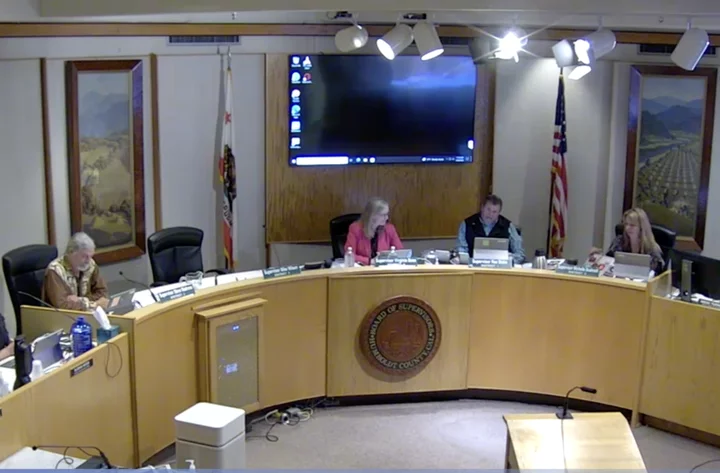
The Humboldt County Board of Supervisors, with Third District Supervisor Mike Wilson absent. | Screenshot from Tuesday’s meeting.
###
Humboldt County’s well-documented backlog of delinquent fiscal reporting has left county administrators in the dark, unable to adequately plan for the future because they lack a clear view of the present.
That’s the picture that emerged during a budget hearing in Tuesday’s Board of Supervisors meeting, and County Administrative Officer Elishia Hayes did not mince words.
“When we tell you we don’t know how much money you have, that is very serious and somewhat dire,” Hayes told the board. “We don’t know if we have $30 million in the bank or if we’re negative $30 million in the bank.”
Because of this uncertainty, she said, the county is not in a good position to adopt a final budget for the upcoming 2022-23 fiscal year, as it would normally do this time of year. Instead, at staff’s recommendation, the board agreed to implement a three-month hiring freeze and approve a “recommended” budget that will serve as a placeholder until September, by which time staff hopes to have a clear enough picture of the county’s financial position to bring forward a final budget for approval.
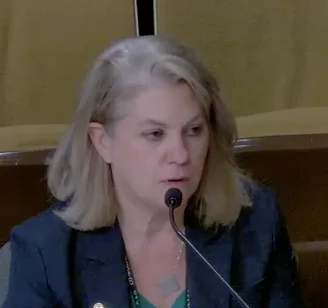
Miller
Tabatha Miller, assistant county administrative officer and chief financial officer, said there are other budgeting challenges this year, including a loss in revenue stemming from the board’s decision in February to slash cannabis cultivation taxes and added expenses from its decision to raise employee salaries and benefits, which was done in hopes of improving recruitment and retention.
Miller said exceptions can be made to the hiring freeze to bring on employees for “essential and critical open positions,” and she explained that the County Administrative Office will make the call on what’s “essential and critical,” in collaboration with the human resources director.
“What is considered essential and critical open positions?” Second District Supervisor Michelle Bushnell asked.
Miller said it could be positions that are essential to public safety or positions in departments that are woefully short-staffed, including the Auditor-Controller’s Office, which is responsible for the vast majority of fiscal reporting.
Miller also said the county is using its second infusion of American Rescue Plan Act (ARPA) funds — $26.3 million — to help right the ship, “making sure that we shore up the county’s fiscal position and using that [money] to sort of replace some of the lost revenues and expenses that you all have paid over the last couple of years.
The proposed budget calls for a record $570.5 million in expenditures, with 47 percent allocated to the Department of Health and Human Services, 20 percent going to Public Works and 18 percent going to Law and Justice.

Screenshot of a slide from Tuesday’s budget presentation.
Grants from the California Department of Cannabis Control totaling $18.6 million helped beef up the Planning and Building budget by nearly $11 million, Miller said. The county’s biggest spending increase — $27.7 million — comes via wages and benefits, which account for 10.3 percent of the total spending budget.
Meanwhile, the county plans to reinstate two percent department contributions to Public Agency Retirement Services (PARS), which became a source of dispute between the County Administrative Office and Auditor Controller Karen Paz Dominguez. Miller said the contributions will help offset the county’s long-term pension liability.
The recommended budget also called for a $5 million contribution to the general services fund, nearly doubling the balance to $9.7 million. “And this is really about rebuilding our fiscal reputation and our financial sustainability,” Miller said. “It’s about building up reserves so we’re ready for a rainy day.”
Rebuilding those fiscal reserves will also improve the county’s credit, she said, “so that in a couple years when you go to your outside municipal rating agencies to look at borrowing money, we’ve got some things in place that show that we really are strong financially.”
DHHS Director Connie Beck expressed concern about the proposed hiring freeze. She said her department is currently recruiting for a number of vacancies, “so if there’s certain ones that we need to be held, we need to know that,” she said. “There are vacancies in our department all over the place. In some areas we have a 40 percent vacancy rate.”
Hayes assured her that recruitments already in progress will not be subject to the hiring freeze. Miller added that the freeze amounts to a “holding pattern” that could keep the county from having to fire people in a few months, not long after they’ve been hired.
“Our hope is we’ll bring back better information and better news” in September, she said.
First District Supervisor Rex Bohn suggested that department heads might be better at determining who’s essential and critical rather than the CAO’s Office. Hayes countered that while her office will certainly collaborate with other departments, it’s essential to pause and “get a grip on our finances.”
To this point in the conversation, nobody had explicitly pointed the finger at the Auditor-Controller’s Office. Bohn took the opportunity to address the elephant in the room.
“We’re coming out of … four years of a financial cluster, of things not being done, things not being turned in and staff turnover in a department that we needed so much help in,” he said. “And it has left such a black cloud. … Basically we’re teetering on an edge and I hate to say it, [but] ARPA funds … may be the only thing that saves us at the end of the day. And that’s a terrible thing to say.”
Mixing metaphors, he continued, “We’re hoping that the light at the end of the tunnel isn’t an oncoming train, but we won’t know what’s out there ‘til we actually start peeling the onion back. And it’s a scary, scary situation. … It’s just a fiscal nightmare we’re in. It took four years to get us here, and it’s going to take us more than that to get us out of [it].”
Bushnell voiced concern about impacts to the Planning and Building Department, noting that “an enormous amount” of planner positions are currently vacant.
“I don’t know if you guys consider that as central, but that’s central to my district,” Bushnell said. “And it stops everything in its tracks. So while I understand [the freeze request], it gives me a little bit of heartburn.”
Hayes held her ground. “This is not something I enjoy bringing before your board,” she said. “Nor are these conversations fun to have with the department heads.” But expenses have risen with equity adjustments and cost-of-living adjustments for employees in every department.
“I’m asking for a pause … ,” Hayes said. “For three months. Give us three months to work through this information so that I can make good recommendations to you. Will it be a hard three months? Yes. But it’s not a year. It’s not two years. It’s not doing layoffs.”
Bushnell wound up making the motion to accept staff’s recommendation for the placeholder budget and hiring freeze, “however reluctant I am,” she added.
Fifth District Supervisor Steve Madrone seconded the motion, though he noted his own reluctance over the hiring freeze. With Third District Supervisor Mike Wilson absent, the board approved the motion unanimously, 4-0.
Englund Marine & Industrial Supply Breaks Ground on New Location Near Eureka’s Wharfinger Building
Isabella Vanderheiden / Wednesday, June 29, 2022 @ 4:28 p.m. / Business
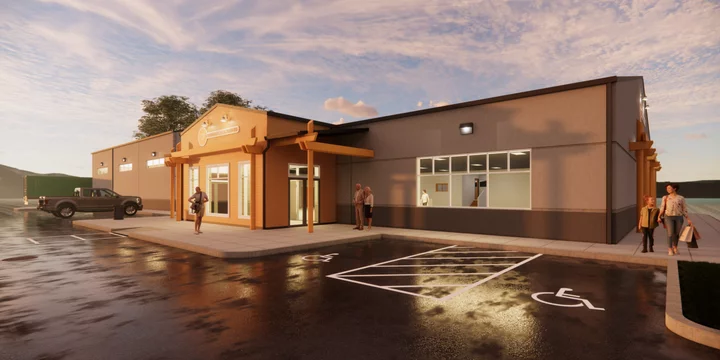
Computer-generated photo illustration of the planned Englund Marine & Industrial Supply on Waterfront Drive in Eureka. | Image contributed by CIDA Architecture Engineering Planning Interiors
###
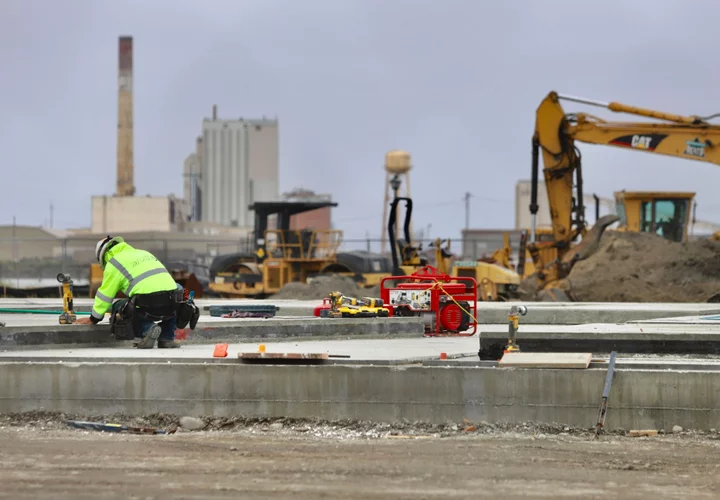
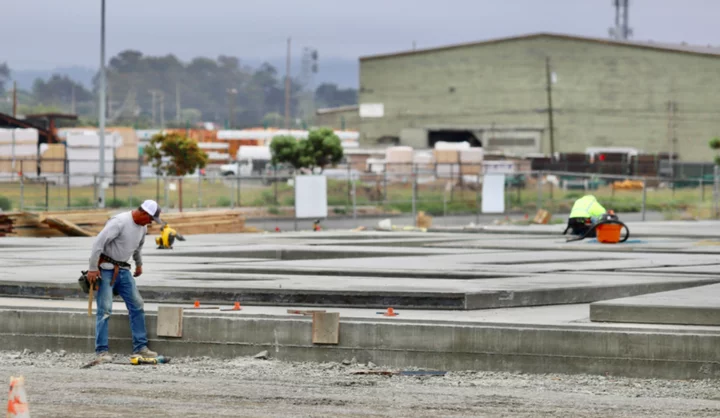
If you’ve traveled down Waterfront Drive or spent any time on Eureka’s waterfront trail in the last month, you may have wondered what’s going on with that newly laid foundation near the Wharfinger Building. As it turns out, the site is the future home of Englund Marine & Industrial Supply.
After more than 25 years in its current location near Pacific Choice Seafood, “It’s time to expand,” said Kurt Englund, president of Englund Marine. Prior to a buy-out in 1995, the business was called Davenport Marine.
“We’ve been in that location servicing commercial and recreational fishermen since 1995,” he said. “We’re all the way down Commercial Street at the end of the water on the dock down there so we don’t have a lot of exposure to the public. We’ve also outgrown the space and we’re looking to expand the products we offer and we can’t do it in that space.”
The Eureka location is one of seven Englund Marine stores along the Pacific coast. Axel Englund founded Englund Marine in Astoria, Oregon, in 1944. After 22 years of establishing Englund Marine as “a preferred and trusted name among commercial fishermen,” he expanded the business up to Washington and, eventually, down to California. They’ve also opened a couple of distribution warehouses in Arizona and Montana.
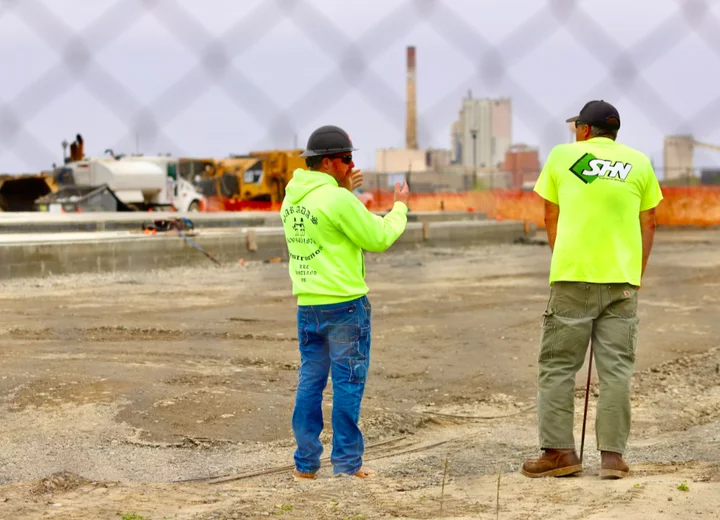
The new building – which will span just over 15,000 square feet – was designed by Portland-based architecture and engineering design firm CIDA and is being built by Perlo Construction out of Tualatin, Oregon, in partnership with SHN Consulting Engineers here in Eureka.
CIDA Project Manager Chris Walker said the walls will go up in a day or two. The building is slated for completion by the end of this year.
“I think the new building will provide a better shopping experience for our current customers and, hopefully, we’ll be able to draw in new customers,” Englund added. “We’re not just a marine supply shop. We also have a lot of outdoor clothing, stainless steel hardware and fittings. We get a lot of homeowners and hobbyist types in our stores.”
Eureka City Manager Miles Slattery told the Outpost he’s happy to see more development along the City’s waterfront.
“This project is one of many commercial development projects currently in progress in Eureka,” he said. “…It is great to see all of the development going on in Eureka and demonstrates that private developers are looking to invest in Eureka. This project and the mixed-use [development project on Second and E Streets], specifically, as they are being developed on our waterfront.”
Scroll for some pictures of the construction site taken by the Outpost’s Andrew Goff.
California’s Change to Concealed Carry Permits Would Reduce Wide Variations Among Counties
Ben Christopher / Wednesday, June 29, 2022 @ 7:47 a.m. / Sacramento

Over the last decade, Orange County issued 65,171 permits to carry a concealed handgun and both Fresno and Sacramento counties issued more than 45,000.
San Francisco issued 11.
That’s according to data published online Monday by the California Department of Justice, but which has since been removed after reporters discovered that the open database included the names, home addresses and other personal information of more than 200,000 concealed carry permit holders in the state.
The wide variation across counties was at the heart of last week’s U.S. Supreme Court opinion, which struck down New York state’s concealed carry permitting scheme, which is very similar to California’s and which gave local law enforcement sweeping discretion to determine who should be allowed to tote a hidden handgun in public.
In California county sheriffs have been the most common adjudicators of whether an applicant has “good cause” to receive a concealed carry permit. In counties with conservative sheriffs, including Orange and Sacramento, they have used that discretion to issue these permits to any applicants who qualify on paper. In San Francisco, concealed carry permits are virtually nonexistent.
The court’s ruling last Thursday is forcing San Francisco’s sheriff’s department to behave more like Orange County’s — at least until state lawmakers pass new legislation.
On Friday, Attorney General Rob Bonta advised all county sheriffs and police chiefs in the state that they “may no longer require a demonstration of ‘good cause’ in order to obtain a concealed carry permit.”
California law also requires applicants to undergo a background check, take a safety course and satisfy a “good moral character” standard, often interpreted to disqualify those who have committed violent felonies or are the subject of restraining orders. In his Friday memo, Bonta stressed that licensing authorities are still obligated to enforce those other requirements.
But the statewide standards are likely to get beefed up soon.
Tuesday, Sen. Anthony Portantino, a Democrat from Glendale, introduced legislation that he said would “update” the state’s concealed carry law to make it more restrictive, while also complying with the highest court’s latest dictate.
The bill, which was authored by Bonta’s office, would create a new statewide application process that explicitly disqualifies applicants who have committed certain felonies or are the subject of restraining orders. Applicants would also need to be at least 21, provide three character witnesses and take an additional firearm storage and safety course.
Beyond the additional hurdles required of applicants, the bill would expand the number of designated “sensitive places” where even a concealed carry license holder would not be allowed to take their firearms. That exception is taken directly from the Supreme Court ruling, which held that the government is allowed to prohibit guns in certain areas, namely schools and government buildings.
Portantino’s Senate Bill 918 would deem all the following “sensitive”: all school grounds, college and university campuses, government and judicial buildings, medical facilities, public transit, public parks, playgrounds, public demonstrations and any place where alcohol is sold.
Some gun rights advocates disagree that the new rules are consistent with the court’s new standard. “It’s not an improvement on California’s concealed carry laws, it’s in defiance of this court opinion,” Dan Reid, a lobbyist with the National Rifle Association, said at Tuesday’s Assembly Public Safety committee hearing on the bill.
The bill passed the committee along party lines, with all Democrats voting in favor. Lawmakers will take it back up in August when they return from the summer recess.
If passed into law, concealed carry licenses could be more onerous to acquire in counties where permits have been issued relatively freely, even while the most restrictive counties will likely be required to issue more. That would close a particularly wide chasm between the urban Bay Area and much of rural northern California. Most Bay Area counties have issued fewer than 60 licenses per 100,000 residents since 2012, according to the new Department of Justice data.
It’s more than 10,000 per 100,000 residents in Shasta, Modoc, Tehama, Inyo, Sierra, Calvareas, Plumas, Siskiyou, El Dorado, Tuolumne and Mariposa counties.
These numbers were published by the state’s Attorney General on Monday through a new “2022 Firearms Dashboard Portal,” which also included information about domestic violence restraining orders and registered firearm vendors.
“Transparency is key to increasing public trust between law enforcement and the communities we serve,” Bonta said in a press release touting the new data tool.
But Tuesday reporters from conservative media outlets pointed out that the dashboard allowed users to access the personal information of thousands of concealed carry license applicants.
The dashboard was offline as of Tuesday afternoon. And after numerous requests for comment, the Attorney General’s press office issued an unsigned statement saying that it was a mistake to expose the personal information and it is investigating.
“Any unauthorized release of personal information is unacceptable,” the statement said. “We are working swiftly to address this situation and will provide additional information as soon as possible.”
The full database was not directly available through the interactive dashboard, but on Monday users could navigate to a menu allowing them to download nearly 600,000 records. The file included the full legal name, birthdate, home address, age and, if specified, race and ethnicity of at least 242,727 individual applicants. Among those applicants, at least 140 are current or former judges.
Butte County Sheriff Kory Honea, president of the California State Sheriffs’ Association, said that he reached out to the California Department of Justice after being notified of the data release. He said a department official assured him that the release of the personal information was “not intentional” and that the department was “taking steps to mitigate the damages that may have resulted.”
But Chuck Michel, president of the California Rifle & Pistol Association, the state chapter of the National Rifle Association, said there could be legal consequences for the state.
“The judge disclosures are illegal,” he said, referring to a state law that prohibits the state from publishing the home address of an elected or appointed official without their permission.
He added that even for ordinary license holders, the disclosure could raise safety concerns.
“You basically advertise to criminals: ‘There’s a gun; here, come take it,’” he said.
###
CalMatters.org is a nonprofit, nonpartisan media venture explaining California policies and politics.
California May Rescue Its Last Nuclear Power Plant — and Give PG&E Millions to Do It
Nadia Lopez / Wednesday, June 29, 2022 @ 7:39 a.m. / Sacramento
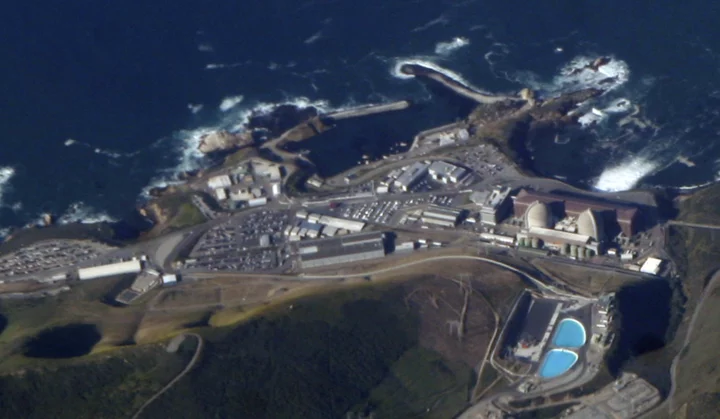
Diablo Canyon Power Plant in San Luis Obispo County | Photo: Doc Searles, via Wikimedia Commons.
A bill under consideration by the Legislature would pave the way for California lawmakers to extend the life of the Diablo Canyon nuclear power plant, the state’s last nuclear facility, past its scheduled closure.
The energy trailer bill negotiated by Gov. Gavin Newsom’s administration allocates a reserve fund of up to $75 million to the state Department of Water Resources to prolong the operation of aging power plants scheduled to close. Diablo Canyon, on the coast near San Luis Obispo, has been preparing to shut down for more than five years.
The funding is part of a contentious bill that, if enacted, aims to address a couple of Newsom’s most pressing concerns — maintaining the reliability of the state’s increasingly strained power grid, and avoiding the politically damaging prospect of brown-outs or blackouts.
Should the Newsom administration choose to extend the life of the nuclear plant, the funding would allow that — although the actual cost to keep the 37-year-old facility owned by Pacific Gas and Electric is not known. Newsom’s office and the Department of Water Resources did not immediately respond to multiple requests for comment. Asked for an estimate, PG&E spokesperson Lynsey Paulo did not provide one.
Even if only a contingency fund, the optics of sending millions of state and federal dollars to the state’s largest utility — which has a recent record of responsibility for deadly wildfires and state “bailouts” — are politically problematic.
While the energy bill doesn’t itself authorize the extension of the plant’s life, it does provide the money should state leaders decide to do so. Such a move would require “subsequent legislation and review and approval by state, local and federal regulatory entities,” said Lindsay Buckley, a spokesperson for the California Energy Commission.
Overall, the energy trailer bill seeks to address the thorny transition as California tries to move from a reliance on fossil fuels to achieve carbon neutrality by 2045. The legislation spells out the state’s concern that, during extreme weather events, renewable energy alone will not be enough to meet the state’s rising power demand.
The state’s solution: Keep Diablo Canyon as open as a failsafe, and pay to retrofit several aging fossil fuel facilities and backup power generation.
“The governor requested this language, not as a decision to move ahead with continuing operation of Diablo Canyon, but to protect the option to do that if a future decision is made,” said state Sen. John Laird, a Democrat from San Luis Obispo.
He also said the public should have a chance to weigh in before a final decision is made on the plant’s fate.
“The shuttering of Diablo Canyon has been years in the making, with hundreds of millions of dollars already committed for decommissioning,” Laird said. “Along with the residents of the Central Coast, I’m eager to see what the governor and federal officials have in mind.”
Learn more about legislators mentioned in this story
DJohn Laird
State Senate, District 17 (Monterey)
Expand for more about this legislator DJohn Laird
State Senate, District 17 (Monterey)
Time in office
2020 — present
Background
Natural Resources Secretary
Contact
District 17 DemographicsRace/Ethnicity
Latino 33% White 54% Asian 8% Black 2% Multi-race 3%Voter Registration
Dem 48% GOP 24% No party 22% Other 5% Campaign ContributionsSen. John Laird has taken at least $1 million from the Labor sector since he was elected to the legislature. That represents 31% of his total campaign contributions.
Learn MoreLocated on the state’s Central Coast, Diablo Canyon has been supplying power to the state’s electric grid since 1985. Its 2,240 megawatts of electricity generation is roughly enough to support the needs of more than 3 million people.
In 2016, PG&E announced plans to close the nuclear plant, noting that the transition to renewable energy would make continued operations too costly. The California Public Utilities Commission approved the closure in 2018, after the utility reached a settlement agreement with advocacy groups and environmentalists. The facility has two reactors: One reactor is slated to close in 2024, followed by the second in 2025.
Regardless of the future decision about the lifespan of the nuclear plant, nothing can happen without federal and state funding.
The Biden Administration created a $6 billion Civil Nuclear Credit Program to rescue financially struggling nuclear power plants, and Newsom has said he would consider applying for federal funding to keep Diablo Canyon open past its scheduled 2025 closure.
But in order to access the federal funding, PG&E is facing a July 5 deadline. The utility on Tuesday asked the federal government to grant it a 75-day extension to apply.
Some federal requirements could prevent Diablo Canyon from qualifying for that federal funding, so last month the Newsom administration sent a letter to federal Energy Secretary Jennifer Granholm requesting changes to ensure Diablo Canyon’s eligibility. In response, the Energy Department has proposed removing one requirement: that an applicant not recover “more than 50% of its cost from cost-of-service regulation or regulated contracts.”
PG&E expressed support for the change in its own letter to the Energy Department Tuesday. It also urged the agency to give it an extension, adding that it “is needed to provide PG&E the time to collect and analyze the information and prepare an application.”
“The current energy policy of the state is to decommission the plant when the licenses expire in 2024 and 2025, but considering the recent direction from the state, we’ve requested an extension of the application deadline,” Paulo said. “The Department of Energy funding would reduce costs to customers if the state decides it wants to preserve the option to keep the plant open to help with grid reliability.”
“This is so ill-advised. It’s a play of desperation.
Linda Seeley, San Luis Obispo Mothers for Peace
But changing the federal rules to accommodate PG&E is a bad idea to longtime critics of nuclear power in California. To keep the plant operating, PG&E would have to seismically retrofit the plant and make heavy investments in cooling system and maintenance upgrades — costs that would outweigh the benefits, the anti-nuclear nonprofit San Luis Obispo Mothers for Peace wrote in a letter sent to the Energy Department on Monday.
Linda Seeley, a San Luis Obispo resident and longtime member of the group, said extending Diablo Canyon will cause a “myriad of problems.”
“This is so ill-advised. It’s a play of desperation,” she said. “I know we’re in a very serious climate crisis, but this is not a rational or practical response.”
Supporters insist the funds are necessary to keep the plant open and advance the state’s goals of getting to a carbon-neutral economy while battling climate change. A coalition of 37 scientists, entrepreneurs and academics on Monday sent a letter to Energy Secretary Granholm expressing support for the Department of Energy’s proposal.
“Considering our climate crisis, failing to pass this amendment could lead to the plant’s closure,” the letter said. “That would not only be irresponsible, the consequences could be catastrophic. We are in a rush to decarbonize and hopefully save our planet from the worsening effects of climate change. We categorically believe that shutting down Diablo Canyon in 2025 is at odds with this goal.”
California is facing steep hurdles in addressing its power supply challenges as the climate crisis intensifies and the state transitions to renewable energy. Soaring temperatures and heat waves have been hitting the state in recent years, straining supply and increasing the risk of power outages. A prolonged drought has depleted hydropower sources, while more frequent wildfires also continue to threaten the state’s electrical infrastructure.
“Failing to pass this amendment could lead to the plant’s closure. That would not only be irresponsible, the consequences could be catastrophic.”
Letter signed by 27 scientists, entrepreneurs and academics
The state’s energy trailer bill, which was negotiated as part of the budget process, would significantly expand the authority of the Energy Commission and Department of Water Resources to streamline electric power projects. The bill would grant the water agency the authority to site, construct and operate power facilities wherever it wants, and does not require the agency to comply with existing state or local laws.
The bill’s funding could allow PG&E to invest in dry cask storage, a method to safely store spent fuel. The money could also be used for capacity payments — public dollars that are used to sustain a plant’s operations — and to issue flex alerts, when a utility asks its customers to voluntarily reduce their energy consumption and use power during off-peak hours, said Michael Colvin, director of regulatory and legislative affairs at the nonprofit Environmental Defense Fund.
The goal, he said, is to have the cash on hand to sustain operations during high-peak hours and potential power crunches brought on by extreme weather.
“Some of that money would be to basically keep those types of power plants around and on standby,” he said. “I look at this allocation as a contingency fund – we don’t necessarily think we’re going to need this but if we do, we want to have some flexibility available. Setting aside some money to be able to do this now is probably a good use of public funds, given the moment that we’re in.”
While Diablo Canyon is seen as a climate-friendly alternative to advocates of nuclear power in California, opponents cite safety threats and problems storing radioactive waste. And the prospect of keeping it open involves numerous technical, financial and logistical challenges. PG&E would need to reapply for licensing with the federal Nuclear Regulatory Commission, which issues the licenses to keep the plant operating, and would need to receive state and federal approval to do so. It would also have to address aging infrastructure problems at the site.
The commission issues operating licenses for nuclear power reactors to operate for up to 40 years, and allows renewal for an additional 20 years at a time.
Though it remains unclear how many more years the plant could be extended, Colvin said it’s unlikely that the state would pursue a lengthy, decades-long extension. He said the plant is more likely to continue operating for another five or so years.
“I don’t think we need an asset like Diablo Canyon for that long of a period of time,” he said, “and certainly not at the size and shape of what Diablo Canyon is.”
###
CalMatters.org is a nonprofit, nonpartisan media venture explaining California policies and politics.
OBITUARY: Ronnie Thissell, 1947-2022
LoCO Staff / Wednesday, June 29, 2022 @ 7 a.m. / Obits

Ronald (Ronnie) Lane Thissell passed away on June 26, 2022, after a short hospital stay. Ron was born on July 6, 1947, to Leland and Olive Thissell in Eureka, California. He was preceded in death by his parents and brothers – Leland Leroy Thissell, Charles (Chuck) Thissell, Gary Thissell and his sister Donna Cluver. He is survived by his brothers Joseph Thissell (wife Patricia), Raymond Thissell and Denny Thissell (wife Sue) and his sisters-in-law Virginia Thissell Carter and Sara Thissell and brother-in-law Trevor Griffith. He is also survived by fourteen nieces and nephews, numerous great-nieces/nephews, and great-great nieces/nephews.
Ron graduated from Eureka High School Class of 1967 and then went to work at Redwood United and then Northern Humboldt Unified School District. Ron participated in the Special Olympics bowling league as a young adult and traveled to numerous tournaments. He also bowled in leagues at Harbor Lanes in Eureka for the last 25+ years. In the last seven years he bowled with the group from the Senior Resource Center on Tuesdays and Thursdays.
Besides bowling, his greatest passion was watching baseball and football. You could ask him anything about the San Francisco Giants and 49ers and he could tell you.
The last ten years of his working life, he was a janitorial assistant at McKinleyville High School where he got the nickname of Papa Ron. He loved being around all the kids and their sports. He was their number one fan.
Ron was a cancer survivor and on his 10-year anniversary of being cancer free he was honored by Relay for Life by leading the survivor’s lap.
At this time, no services are planned. The family asks that in lieu of flowers, donations be made to either Special Olympics or the American Cancer Society in his name.
###
The obituary above was submitted by Ronnie’s loved ones. The Lost Coast Outpost runs obituaries of Humboldt County residents at no charge. See guidelines here. Email news@lostcoastoutpost.com.


