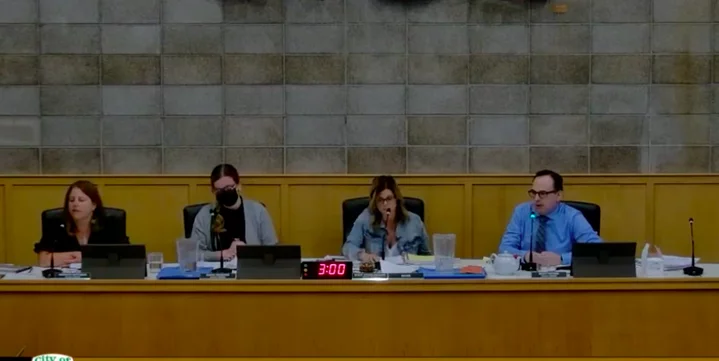
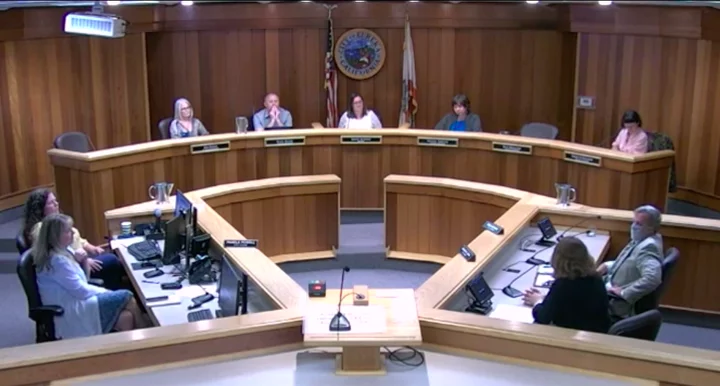
Arcata City Council | Screenshot from online video
The mood was tense during a more than four-and-a-half-hour-long Arcata City Council meeting on Wednesday night, during which the council discussed many pressing issues – including adopting the annual budget, placing the Earth Flag initiative on the November ballot, considering amendments to the City’s vacation rental ordinance and discussing updating the general plan – each conversation peppered with scathing remarks, accusations and emotional outbursts from Councilmember Brett Watson.
After slogging through the consent calendar — Watson requested almost every item be pulled for discussion — the council discussed the City’s Short Stay Vacation Rental Ordinance, which caps the number of vacation rentals in Arcata at 100 and places some additional requirements on their operation. The purpose of the discussion was to hear updates from city staff on how the ordinance has been working, and if there were any changes that need to be made.
The 100-unit cap exempts owner-occupied properties (meaning the owner either lives in the building or on the same lot as their vacation rental) and, concerned by the lack of affordable housing in Arcata, some councilmembers wondered if the cap should be lowered or the exemption removed. Councilmember Watson made a motion to remove all exemptions and lower the cap to 75. But the motion died for lack of a second. Ultimately, the council directed staff to conduct more public engagement and research and to bring the item back to another meeting.
The item had been placed on the agenda by Councilmember Meredith Matthews, who was not yet on the council when the ordinance was initially adopted, and Matthews thanked the staff and council for taking the time to bring her up to speed on some of the details. This prompted one of the first cynical remarks from Watson.
“The mayor’s not responding to my emails or placing any of my items on the agenda,” Watson said. “So I’m really disappointed about that.”
“I’ve been advised by counsel not to respond to you outside of council chambers,” Mayor Atkins-Salazar responded. “So that’s how we’re going to play it.”
Watson has been prohibited from having contact with other council members and city staff outside of meetings, since he has been under investigation for harassment of a female city employee. Although many community members have called for Watson to resign, he has refused, has not accepted any responsibility or shown any remorse for the incident, and has continuously argued that the city staff is conspiring against him.
During Wednesday’s meeting, Watson again took the opportunity to criticize city staff, especially Community Development Director David Loya, who Watson said has been deceiving the council in respect to the development of the city’s controversial Gateway Area Plan. During a discussion on the engagement process for the General Plan Update (the Gateway Area Plan is included in the housing element of the general plan) tension grew, as Watson began listing his issues with Loya. Mostly citing a report from arcata1.com, Watson said Loya has been unwilling to share information requested by the Planning Commission and that he provides contradicting information.
“I watched the May 24 meeting with the Planning Commission and, you know, it really seemed like a reasonable person would come to the conclusion that [Loya] would ignore Planning Commission requests for certain agenda items and put your own agenda items on there instead,” Watson said.
At this point, Vice Mayor Sarah Schaefer got frustrated. “I really don’t think this is relevant to the item that we’re discussing,” she interjected. “I really think that you’re just berating staff.”
“You need to stop interrupting me, Sarah, and turn your microphone off … ,” Watson responded. “It is my First Amendment right to say what I want to say.”
“Okay. Well, maybe try saying it with a little bit more decorum,” Schaefer said.
“This is completely inappropriate,” Matthews added. (Mayor Atkins-Salazar had left the chambers at this point, having recused herself from a conversation related to the Gateway Area Plan due to a Fair Political Practices Commission ruling.)
“It’s sickening to see this culture of lies and deception cultivated by leadership continue to thrive at City Hall,” Watson continued. “It’s been like this for years and it needs to stop. We need to clean up City Hall and give the people the transparent government they deserve.”
Matthews then attempted to make a motion to move on to other business, to which Watson laughed and said “you won’t have the votes.”
Here’s video of the meeting queued up to that exchange:
When the bickering finally came to an end, Mayor Atkins-Salazar returned to the chambers and the council moved on, receiving a report on the City’s budget.
But Watson had more bones to pick with City staff, saying that he has been requesting budget information for months that has not been provided to him. City Attorney Nancy Diamond attempted to address Watson’s concerns and it quickly dissolved into another argument.
“Your communications to city staff are through your attorney,” Diamond said.
“That wasn’t the case several months ago though, so you haven’t answered my question,” Watson said. “It’s okay, you can sit down now, Nancy,” he added condescendingly.
“No,” Diamond replied. “You don’t tell me what to do. The whole council tells me what to do.”
###
There were even more accusations from Watson and uncomfortable moments during the meeting – too many, really, to include in one post. At one point, for example, Watson accused City Manager Karen Diemer of “hiding money in the budget.”
But despite the tension, the council did make some decisions – adopting the 2022/23 budget and placing an initiative that directs the City of Arcata to hang the Earth Flag at the top of all city-owned flagpoles on the November ballot. (Read more about it here.)
The council had the choice to either adopt the Earth flag initiative, or place it on the ballot. Because the council had heard some pushback on the issue, mainly from local veterans who feel that hanging any flag above the U.S. flag is disrespectful, the council opted to go with the second option, and let Arcata’s voters decide.
The council opted not to draft an argument against the measure, but anyone who would like to can submit an argument to the city clerk by July 22. The deadline to submit rebuttal arguments is Aug 2.
###
Of course, Watson could not resist one more opportunity to voice his distrust of city staff, and during final communications, he requested that an item be placed on the next agenda.
“I just want to report that, you know, over the last few months I’ve gathered a lot of evidence of lies and deception by the staff and the city attorney and I think it’s important for the council to discuss that,” Watson said. “So I’d like to agendize that.”
“I’m not going to put that on the agenda,” Atkins-Salazar said.
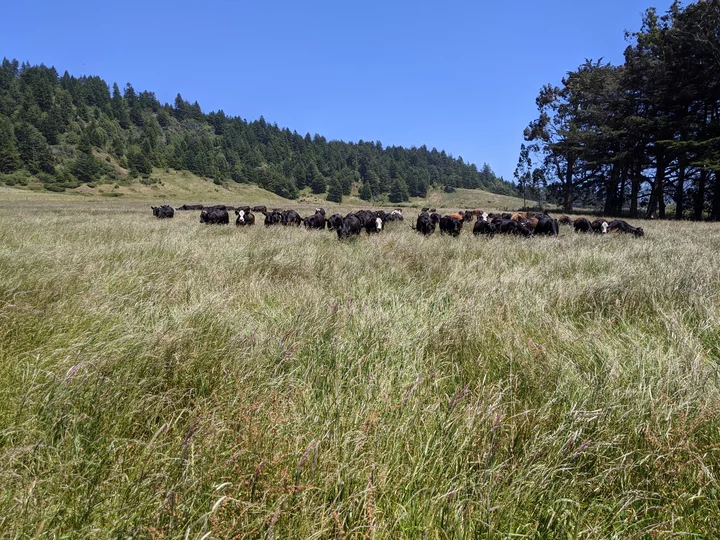
Eel River Organic Beef cattle roam a grassy field. | Photos courtesy Clint Victorine.
###
Hydesville-based Eel River Organic Beef recently expanded its contract with multinational supermarket chain Whole Foods in a deal that will bring the company’s grass-fed beef products to stores in Northern California, Oregon and Washington.
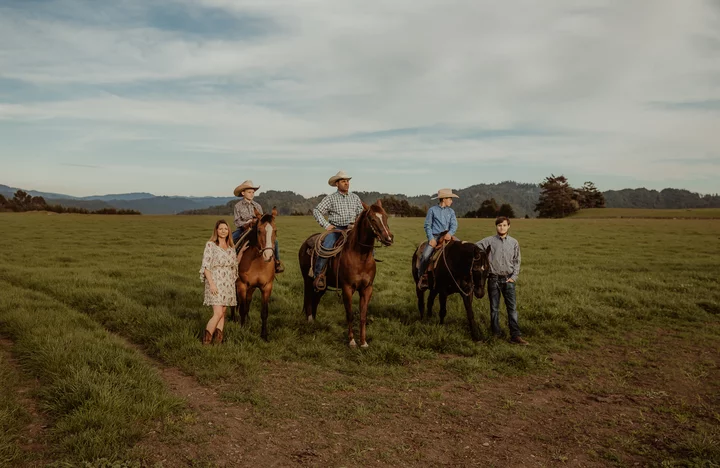
Eel River Organic Beef owner and founder Clint Victorine.
The homegrown company’s steaks, ground beef and other products have been available for more than a decade at Whole Foods stores in Southern California, Las Vegas, Arizona and Hawaii, though owner and founder Clint Victorine says this latest expansion is a big deal.
“It nearly doubled our business,” he told the Outpost in a phone interview from Maui, where he’d gone for his annual check-in with the Whole Foods store in Kahului.
Now one of the largest producers of grass-fed beef in the country, the company has come a long way from Victorine’s humble beginnings as a high school kid, active in Future Farmers of America and 4-H, showing livestock at local fairs — “just like that fair going on right now,” he said in reference to this week’s event at Redwood Acres.
Victorine’s dad spent three decades working for the Pacific Lumber Company, and Victorine recalls growing up in Scotia “when it was still a lumber town.” Through FFA, where in 1996 he launched his career with a single commercial cow-calf, Victorine slowly expanded his operation, buying cattle, raising and selling them and eventually leasing land so he could buy and sell more.
“Fifteen years ago I was in the right place at the right time,” he said. With growing consumer awareness about the environmental and animal welfare impacts of industrial feedlot operations, demand for organic, grass-fed beef took off. In 1998 there were only around 100 producers of grass-fed beef in the United States; by 2016 that number had grown to about 3,900. Victorine started selling his products through independent grocery stores, then signed a deal with Whole Foods in 2011, well before the company was purchased by Amazon.
His company’s cattle are 100 percent grass-fed and grass-finished, meaning they don’t get shipped to feedlots to be confined and fattened on grain diets before slaughter. And while many are born and raised here in Humboldt County, Eel River now contracts with around 30 independent cattle producers who meet the company’s criteria. Most are in Northern California, Victorine said, though there are also operations in the Klamath Falls area of southern Oregon, near Reno and a few in Southern California.
As the name implies, the company is certified organic, meaning its products are non-GMO and raised without any antibiotics, growth hormones, feed additives or animal byproducts. Victorine said the company is now in the process of getting certified as regenerative agriculture through the American Grassfed Association, with Foggy Bottoms Boys co-founder Thomas Stratton managing the process.
Eel River also employs a “whole animal utilization program,” selling everything from steaks and grind to boxed primal cuts, bone broth, sausages, chorizo and other products in an effort to leave nothing to waste. Victorine said his company is also the largest provider of hides to Timberland, the boot, shoe and clothing company.
“If you buy regenerative leather boots or wallets [from Timberland], there’s a good chance they got the hide from us, and a good chance the animal came from Humboldt County,” he said.
The company has more products in the works, including a line of sausages using Rumiano Cheese and Eel River Brewing Co.’s California Blonde Ale, Victorine said.
Of course, the nearest Whole Foods store for Humboldt residents is probably the one in Santa Rosa, but Eel River Organic’s products can also be found at both Eureka Natural Foods locations as well as the North Coast Co-op and Murphy’s markets, and Victorine’s other label, Pacific Pastures, is even more widely available.
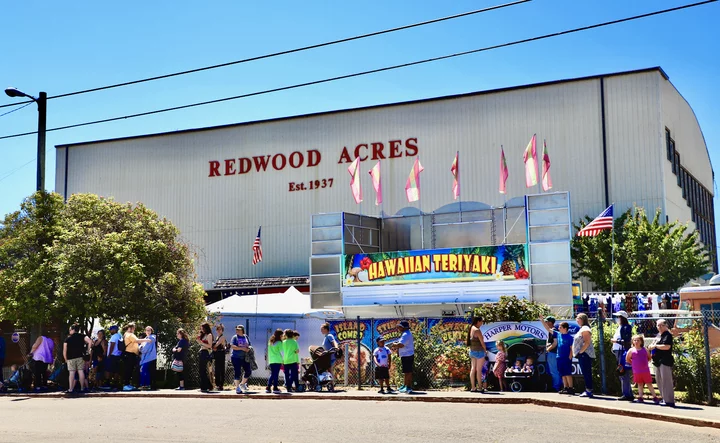
After a two-year pandemic hiatus, the Redwood Acres Fair scored a shockingly sunny Humboldt summer day to kick off its long-awaited 2022 edition. And trust LoCO on this one: Whether it be the result of Wednesday’s promise of free admission or the unprecedented fair drought locals have been forced to endure, or some combination, the place was absolutely packed with people. Lines were long for rides and food booths alike, but the mood was joyous nevertheless. Humboldt was happy to see each other again.
Color and movement met the eye wherever you turned. The midway was bustling with games one feels over-confident they can win, fried food you try to resist but eventually succumb to, corny ventriloquism, acrobats, jugglers, rockin’ tunes and rides you’ve ridden a million times… but here you go again for some reason!
“I couldn’t be happier with the turnout for day one,” said Mic Moulton, the longtime local stock car racing star who has now ascended to the role of Redwood Acres Fairgrounds CEO and who is overseeing his first fair this year. As recently as a few months ago, it wasn’t certain that the fair would be able to proceed this year due to California’s COVID restrictions. Still, Moulton said his team has spent months updating and remodeling the grounds to make sure they looked their best for returning fairgoers.
“Everybody’s been waiting to bust out and do things again,” Moulton told the Outpost. “With our current situation with gas prices it’s making it hard for people to travel. People are dying for stuff to do, so the fact that we can bring this level of entertainment to town is pretty awesome.”
There were other challenges to making the fair happen this year. As COVID shut down events across the country for the past two years, numerous companies that provide entertainment and services to fairs were forced to cease operations making competition fiercer for fair organizers looking to book the ones that remained. Moulton noted that Redding’s fair is also running this weekend which made things tricky. But as someone who grew up attending events at Redwood Acres, making sure his team offered up the best fair possible to the community was a labor of love.
“This is a place that’s near and dear to me,” Moulton said. “And what I find as I talk to [fair] partners and sponsors is that everybody has memories of this place growing up. They played football or baseball. They watched the races. For me, I’m named after my dad’s favorite baseball player, Mickey Mantle. And I met Mickey right out on that grass when I was six years old and got his autograph. I grew up watching the stock car races. I watched a Lynyrd Skynyrd concert in the grandstands. There’s so many emotional connections. And that’s what we’re about: Building experiences and making memories.”
The Outpost hung around the Redwood Acres Fair’s opening day in an attempt to capture some of those aforementioned memories in photo form. Please, now scroll down for way more photos than you require of the fair day that was.
FREE: Fair fans line up down the block waiting for the gates to open at noon on Wednesday
AnGela Jones, of Phoenix, spreads ducks before the opening of the fair’s midway. She’s been working for Johnston Amusements, which operates the fair’s carnival, for about a month. “It’s so fun working with the kids. It’s just a joy seeing the expressions on their faces.”
Humboldt’s BethAnn Lindley, who uses the name “Hatzz” for her singing career, has temporarily put her music on hold to join the carnival. She was hired just this week. “I might join them to go to Willits next.”
Smokey Bear sunk a ball in a vase of colored water but opted not to collect his goldfish winnings.
Popping balloons with darts is harder than you might expect
Aim
Fire
Luck required
Above and below: Performers from the Los Moralitos Circus
Kinda hard to see, but we promise there are two motorcyclists driving in circles in that big sphere. Trust us.
Ventriloquist Joe Gandleman knows more puns than you
Dummy down
Recruitment in action
“The Little Cow Palace,” which houses livestock waiting to be shown
“Bear the Goat” is groomed in advance of his big moment
10-year-old Dally Sue Hunt practices her showmanship with her Californian rabbit. “I never named it, but in its ear it says D2. So I just call it D2.”
D2.
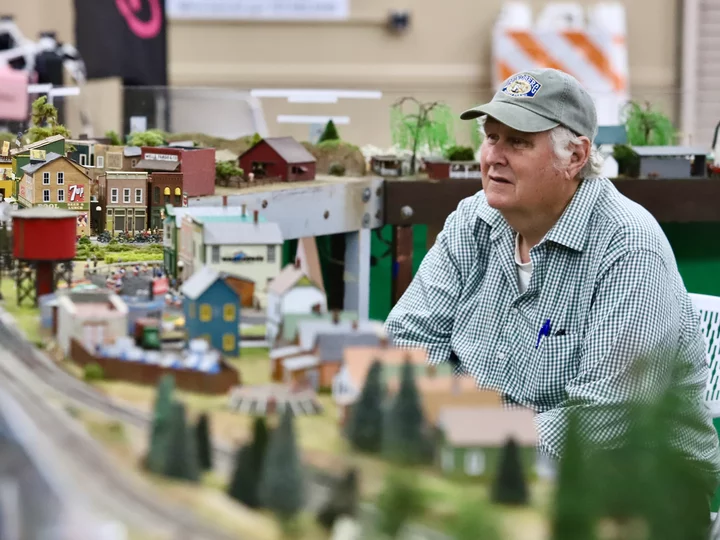
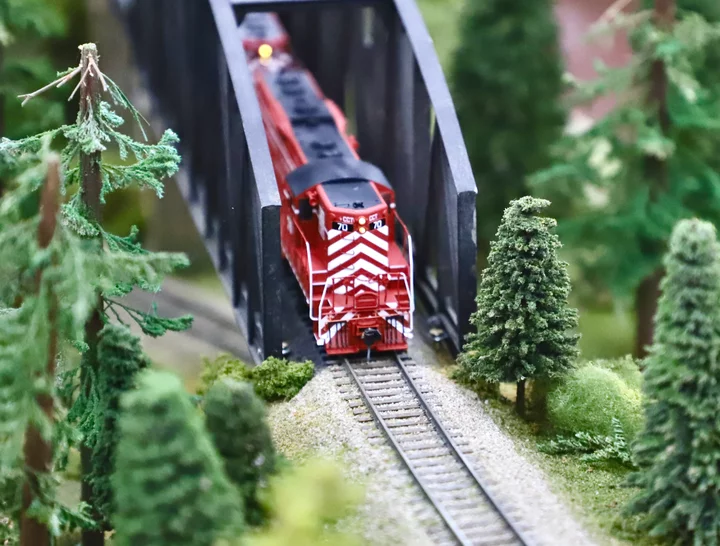
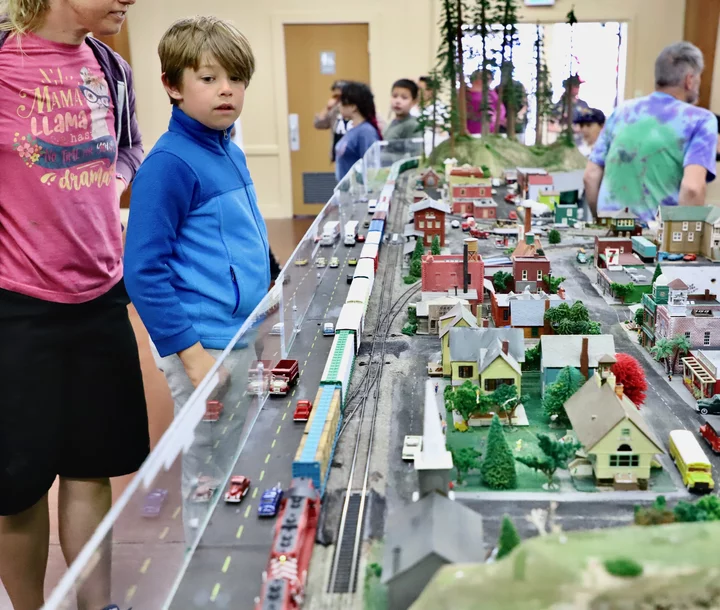
A fair staple: Train enthusiasts from the Humboldt Bay and Eureka Model Railroad Club share their toys (but no touching).
A brick of curly fries
Funnel cake!
Three funnel cakes but only two hands. What you gonna do?
EHS Cheerleaders attempt to raise money by delivering you the joy of soaking city officials.
Eureka City Manager Miles Slattery, for example
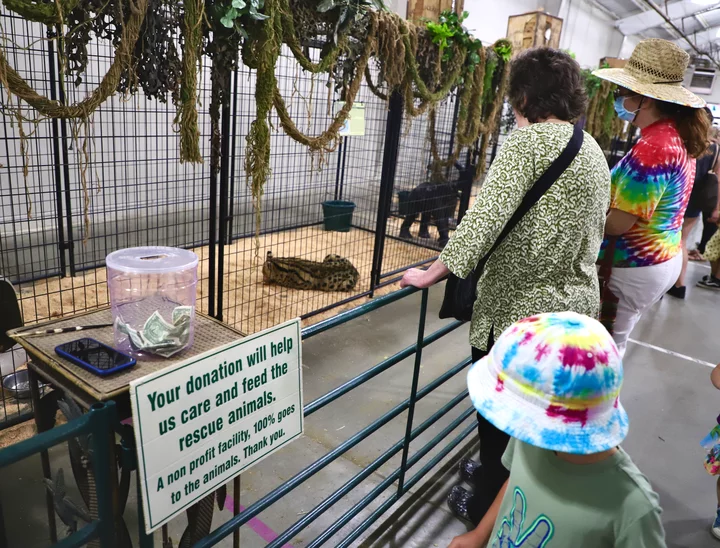
A serval named “Big Girl” on display as part of the fair’s animal exhibit. The menagerie was supplied by the Sierra Safari Zoo in Reno which takes in rescued animals, according to one of the attendants overseeing the exhibit
Super Slide!
Whee!
Uh oh!
Fairs can be romantic if you allow them to be
And now let us enjoy some people experiencing centrifugal force
With funding from the Yurok Tribal Council, the Yurok Indian Housing Authority recently purchased a 3.05-acre property in Trinidad, where YIHA plans to construct up to five family homes.
“The land acquisition and housing project are especially exciting. For the first time in more than a century, the Tribe owns land in Trinidad,” said Joseph L. James, the Chairman of the Yurok Tribe. “This project is part of our long-term plan to create new housing and well-paying jobs for our citizens in Humboldt, Del Norte and Trinity Counties.”
“The Trinidad parcel presents the ideal location for family homes. It is within walking distance of schools, a grocery store and transit services, not to mention restaurants and a multitude of employment opportunities,” said Nicole Sager, the YIHA’s Executive Director. “A beautiful stream flows through a redwood forest on the property too. We are going to keep the forest and creek in a natural state for families to enjoy.”
“The Yurok people have lived in the Trinidad area since time immemorial,” said Sherri Provolt, the Yurok Tribal Council’s Orick District Representative. “With this acquisition, our people will always have a place near the Chue-rey Village. We are going to do everything possible to ensure this project is the first of many.”
The Chue-rey Village, also spelled Tsurai, encompasses more than 65,000 acres in the Trinidad area. For millennia, the Yurok people enjoyed an affluent lifestyle in the Tribe’s southernmost village, due the natural harbor and proximity to diverse resources. In 1775, Spanish explorers invaded the permanent village and used violence to steal the land for the king of Spain. They also changed the name from Chue-rey to Trinidad.
Trinidad is part of the Yurok Tribe’s Orick District. One of seven districts, the Orick District extends south from the center of the Klamath River, through Trinidad to the Little River, all of which is within Yurok ancestral territory. The Trinidad housing project is currently in the design phase. At present, the Yurok Indian Housing Authority manages three rental units in the Orick District, but none in Trinidad. Compared to other parts of the Humboldt, Del Norte and Trinity region, property in Trinidad is exponentially more expensive because the coastal town has become a tourism hotspot. Establishing new homes for tribal citizens in the Orick District is one of the YIHA’s primary objectives.
In the last two years, YIHA has implemented two large-scale housing developments and has plans to construct additional affordable homes in the very near future. Earlier this year, YIHA, in partnership with the City of Arcata, finished the 30th Street Commons Project, which includes 36 environmentally sustainable housing units, a cultural community garden and a community room.
The family friendly neighborhood is in proximity to schools, a tribal health clinic and grocery store. There is also one mile of trail and landscaped walkways on the property. In addition to its earth conscious components, the development was custom designed with the elderly and individuals with physical disabilities in mind. The first-floor units offer special accommodations for elders and the disabled.
Last year, YIHA also built another 10 tribal family homes, a community center and a playground in Tulley Creek. The Tribal government recently installed two large office buildings and created several new jobs close to the housing development. YIHA also renovated seven houses in the same area. This summer, YIHA will commence construction on 10 transitional homes in Klamath Glen.
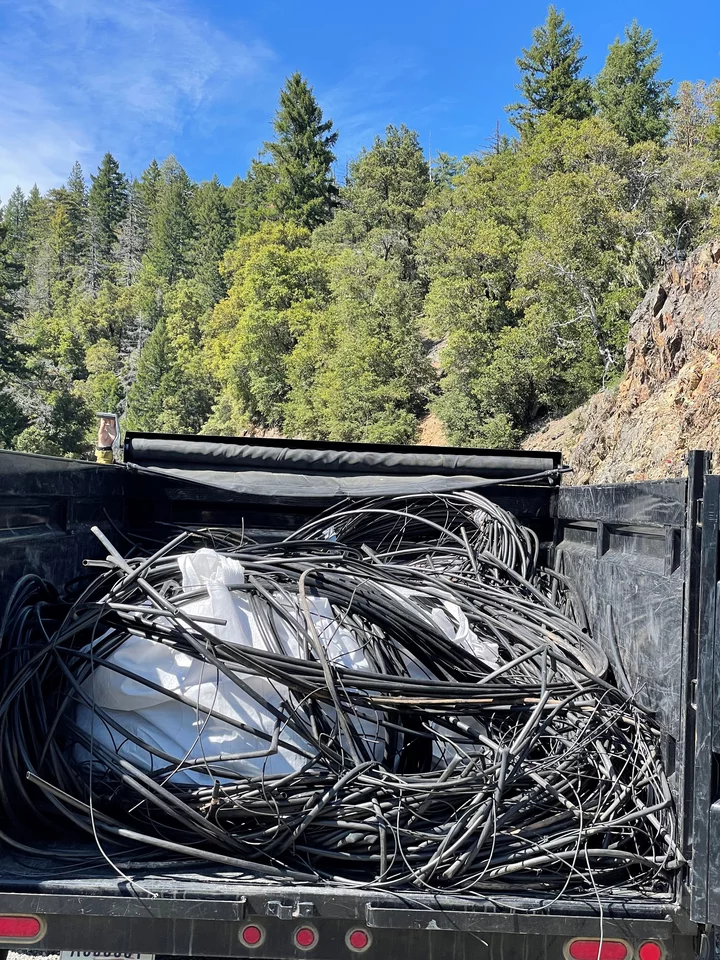
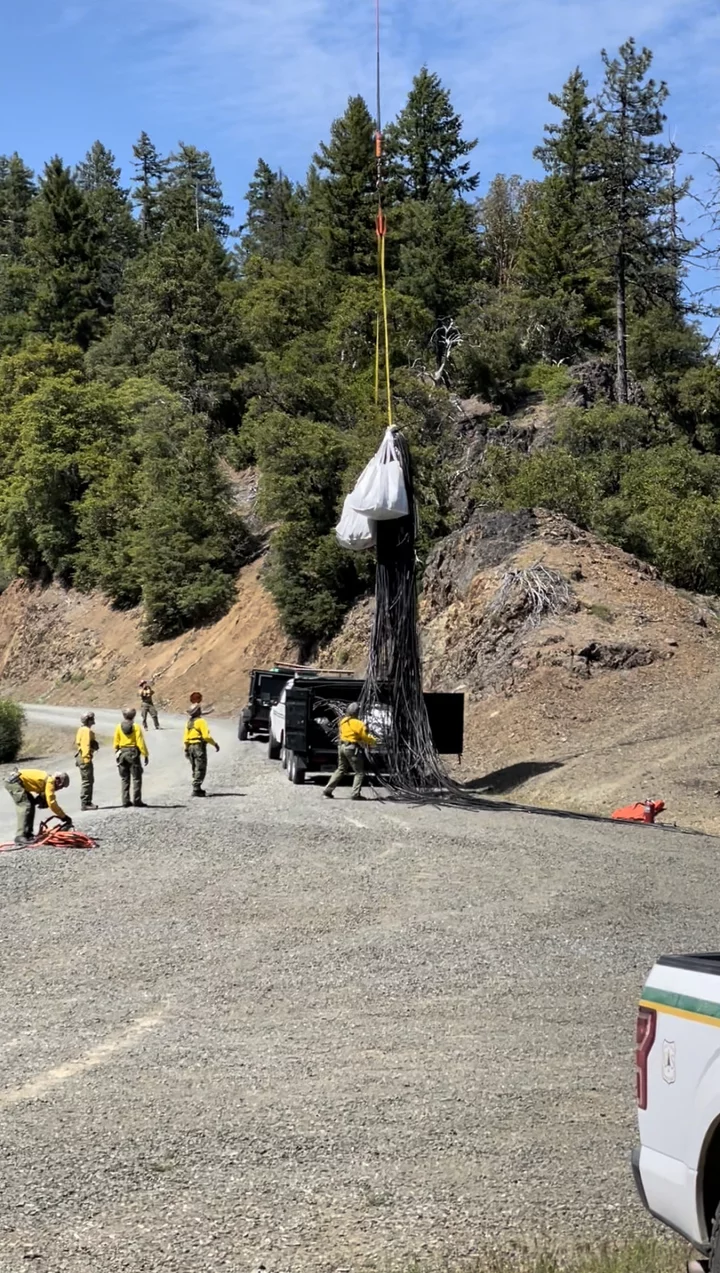
Forest Service Law Enforcement Officers and Forest Service partners at the Integral Ecology Research Center recently conducted reclamation operations on several illegal marijuana grow sites within the Six Rivers National Forest. They removed 5,580 pounds of trash in four days from sites that spanned across the Lower Trinity, Orleans, Ukonom, and Mad River Ranger Districts.
Illegal marijuana grow sites on National Forest land pose problems for the public and the environment – with pesticides poisoning wildlife, soil, and water.
Researchers frequently find dead squirrels, bears, deer, and birds, and other animals killed by the pesticides used on these grow sites. Once an animal consumes and dies from pesticides, the chemicals continue powering through the entire food web as scavengers feed upon poisoned carcasses. For example, researchers have found a dead fox, a dead vulture that had been feeding on the fox, and dead insects that had landed on both.
Pesticide use is also impacting the Northern Spotted Owl, a federally threatened species and the fisher, a small mammal related to the weasel and a federal species of concern, which serves as an indicator species as the species thrives in healthy forests.
Growers’ spray pesticides and add them to irrigation systems, the chemicals then seep into the soil and surrounding waterways, which can negatively impact aquatic species and potentially compromise the safety of people’s drinking water downstream.
One marijuana plant requires approximately 9 gallons of water per day. This equals about 1,350 gallons of water per plant during the growing season. One of the reclaimed sites on the Lower Trinity Ranger District had approximately 5,000 plants. This translates to about 6.75 million gallons of water used for this one site alone.
Where are they getting the water? The irrigation systems use nearby water sources such as springs, often near headwaters. During these recent reclamation operations over 11 miles of irrigation hose was found throughout the sites. This amount of water diversion can dewater an entire spring which decreases the amount of water reaching streams and rivers below, impacting entire ecosystems. Impacts include lower salmon runs and decreased habitat for sensitive amphibians like the foothill yellow-legged frog.
To reduce the grow site impacts and discourage illegal growers from returning, Forest Service and partner law enforcement agents, scientists, safety experts, and others plan and carry out clean-up efforts to remove the plants, irrigation infrastructure, waste, and chemicals. If they leave these resources intact, growers will return and reuse the same site.
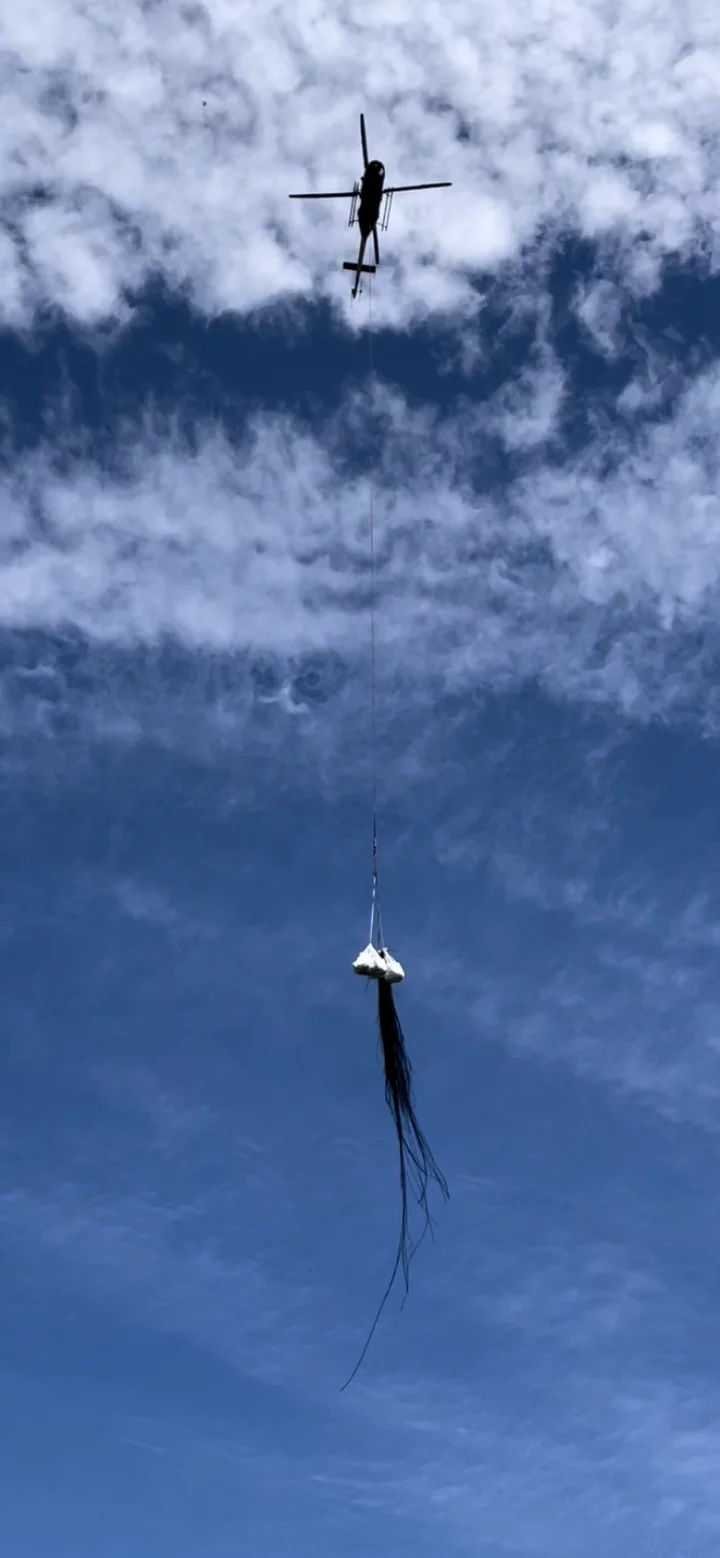
Many grow sites are in remote locations and difficult to access, making remediation efforts challenging and costly. Helicopters must be used to air-lift tons of garbage and miles of irrigation piping. Partial HAZMAT protocols must be followed, and decontamination kits used to contain and clean up the waste.
Many sites harbor booby traps, and the growers themselves are often armed. Law enforcement agents are trained to safely navigate most of these hazards, but if members of the recreating public encounter a grow site, the situation can quickly turn unsafe.
If you encounter what you believe may be an active grow site here are some suggestions on what to do and what not to do:
DO:
Leave the area in the same way you came in, retracing your steps.
Make observations of what you see.
Once clear of the site, report your findings to the Forest Service or local law enforcement officials and relay your location and observations.
Screenshot of Tuesday’s Eureka City Council meeting.
###
The Eureka City Council reviewed a policy proposal for City-owned security cameras during its regular meeting on Tuesday. The policy proposal seeks to define the uses for City-owned security cameras and ensure the uses align with public interest.
Under the policy proposal, security cameras will be used to identify, apprehend and prosecute offenders and gather evidence for administrative, civil and criminal investigations. The images and video captured by the devices “shall be used for City business purposes only, and never for personal or non-City uses.” Security cameras “shall never be used in areas where there is a reasonable expectation of privacy” or “to intimidate, harass, or discriminate against any individual or group.”
One of the most controversial aspects of the Lot Cop is its ability to collect audio. The policy proposal specifies that any City-owned surveillance camera “will never be used to collect audio data from members of the public.” The policy also notes that the devices will not have facial recognition or license plate reading capability.
Councilmember Natalie Arroyo asked who would have access to the security camera footage. City Attorney Autumn Luna said access to the live video footage would be granted by the City Manager’s office but said the feed would not be consistently monitored by staff.
Eureka’s interim chief of police, Todd Jarvis, noted that surveillance footage is typically used to assist an investigation after an incident has already occurred.
“We can go back, look at the footage, track down suspects, and, hopefully, even determine if crimes have occurred or not,” he said. “Oftentimes, these types of cameras are just as valuable to clear somebody of a crime as they are to find somebody and gain prosecution. …There are a lot of things we can use it for but our goal primarily is to be able to identify suspects who have committed crimes.”
Speaking during public comment, Eureka resident Michael Hansen said he was “shocked and infuriated” by the City’s decision to install a surveillance tower in front of the Old Town gazebo and questioned whether such surveillance measures actually deter criminal behavior.
“The purchase of these cameras was a poor decision from the start,” he said. “Rather than act as a deterrent to crime, ongoing monitoring of the general public mostly decreases public trust in the City and law enforcement, and the last thing the public needs right now is any reason to further erode its trust in our institutions. …A far wiser investment would have gone towards actual investing in solutions and solving our homeless.”
Eureka resident Caroline Griffith echoed Hansen’s concerns and called upon the council to take its time in developing a thoughtful and effective policy.
“There is a lack of evidence that surveillance of public places actually reduces crime,” she said. “…One thing that has been documented is the institutional abuse of surveillance footage. …The one fear that I have locally is that it will be used to discriminatorily target houseless people.”
Following public comment, Councilmember Kim Bergel asked how long the footage will be kept. Data that is not downloaded for City business, such as an investigation, will be deleted after 90 days, Luna said.
“So the only time we would review this material would be if there was a complaint in that 90 days, is that true?” Bergel asked. “…Does it require a report from someone else to look at it?”
City Manager Miles Slattery said the footage would be reviewed “only when necessary and when there’s a reason to do so.”
“This could be a traffic accident, this could be an incident of vandalism that happened in a certain period of time and we could go back to see what happened,” he continued. “…We definitely do not have the staff to sit and monitor cameras in any way, shape or form.”
Slattery reminded the council that the City purchased the Lot Cops because of staffing issues at the Eureka Police Department (EPD).
“These Lot Cops were brought in by our previous [chief of police] to provide alternative ways to help with staffing and to provide a deterrent so we can address some of these issues,” he said. “…They’ve been extremely effective at the Adorni [Center]. We’ve also used one at [the foot of] Truesdale Street and in a couple of private locations.”
Bergel asked Slattery if he could explain why City staff decided to install a Lot Cop at the Old Town gazebo without first bringing the matter to the public or council for discussion.
“We chose that location because of calls for service and issues that we’ve had in that location,” he explained. “The decision was made at a staff level, as it was previously for the mobile Lot Cops that we used in other locations. As far as the notification, I’ll take the blame for that. We were looking at this as more of a solution for some of the staffing levels that we have at EPD.”
Councilmember Scott Bauer asked how staff would determine the location of future cameras and whether it would be deliberated by the council or if there would be standards put in place. “We don’t want to get into that tonight, but it’s something to think about in the future.”
Councilmember Leslie Castellano suggested that staff add language to the policy to specify that camera placement will be determined by the volume of calls for service in a given area.
Luna reminded the council that “additional policies will be developed down the road” and warned against “micromanaging” staff.
“There’s got to be some trust for how our personnel is handling these things with this in mind,” she said. “…I hope that there wouldn’t be misuse but if there was misuse, we already have in place personnel policies to address misuse. An additional policy, I’m not saying no to it, but we do have ways to address that already.”
After about an hour of discussion and several suggestions to staff on modifying the language of the policy, the council agreed to return to the matter at its next meeting. The council did not vote on the item.
Press release from the Humboldt County Sheriff’s Office:
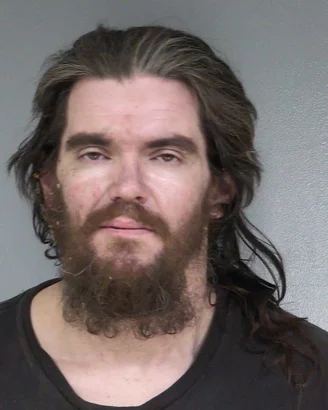
A Humboldt County man wanted for attempted murder was taken into custody Wednesday in Willow Creek.
On June 22, 2022, the Humboldt County Sheriff’s Office received information that 41-year-old Cody Benjamin Sides was seen in the area of The Terrace Lane in Willow Creek. Sides was wanted on numerous local and out of county warrants, including a warrant for attempted murder out of Trinity County. Deputies have continued to search for Sides since he last evaded law enforcement on March 26 in the Weitchpec area.
In a coordinated effort between Humboldt County Sheriff’s deputies and California Highway Patrol officers, Sides was located and taken into custody after a brief foot pursuit at approximately 2:25 p.m. at a property on The Terrace Lane.
Sides was booked into the Humboldt County Correctional Facility on local warrant charges of felon in possession of a firearm (PC 29800(a)), possession of a controlled substance while armed (HS 11370.1(a)) and possession of stolen property (PC 496(a)). Following adjudication of these local charges, Sides will be extradited to Trinity County for prosecution of his Trinity County warrants.
Anyone with information about this case or related criminal activity is encouraged to call the Humboldt County Sheriff’s Office at (707) 445-7251 or the Sheriff’s Office Crime Tip line at (707) 268-2539.