

OBITUARY: Carlie Noelynne Kelley, 2003-2022
LoCO Staff / Thursday, April 7, 2022 @ 6:56 a.m. / Obits

Our
family is sad to announce the unexpected passing of Carlie Noelynne
Kelley. She was in a fatal car accident on January 15, 2022. Carlie
had just turned 18 years old.
Carlie was born September 16, 2003 in Eureka to Charlie Kelley and Jamie Mazzone of Weitchpec.
Carlie’s love and light made this world a better place for all that knew her. She was a bright, sweet, powerful and constant love source in so many of our lives. Even as a baby and young child, she loved BIG. Carlie saw goodness in everyone and formed relationships that will last beyond our lifetime. She definitely “paid it forward” through her heart!
Carlie is survived by her father, Charlie Kelley, her mother, Jamie Mazzone, her grandparents, Richard and Patti Kelley and Ron Sharp and Debi Mazzone, Granny Winona French, her great-grandparents, Barbara and Robert Soos. Her brothers, Kyle Muth (Kirstin), Taylor Muth (Jennifer) Thomas Kelley (Emily), and her sister, Taleena French. Carlie will also be sorely missed by her soul sisters, Tenaya Gensaw, Kaya Norris-French, Mi-kayla French and Tashena French.
Thomas Morrison, Carlie’s childhood sweetheart, was blessed to have and share her love for years.
Carlie is also survived by her extended family and dear friends, Dana Klein and her crew, Elijah, Georgia, Kameko, Joey and her long-time anchor, her solid, steady bestie/sister, Lily. Thank you all for sharing your homes, hearts and guiding her to her peace place.
Carlie was preceded in death by her Uncle Richie Kelley, Jay-Jay Price, Stevie Eli Burton, Damian French and her great-grandparents Janice and Joseph Burton and Ruth Agnes and Charles Kelley. We are certain their reunion has been joyous with all the family and friends welcoming her. A friend recently shared something his father shared with him as a child. He was told that Heaven can’t just be filled with old people. That some young need to be there to bring joy. Carlie will certainly bring Joy!
Carlie shared a deep love with her aunts and uncles, growing up with some of them. Tim, Richie, David and her very special Auntie Menetta. She leaves so many loving cousins, great aunts and uncles, and those friends she considered family. We are grateful for each of you that formed Carlie’s “Village”, as it truly does take a village to raise a child!
Carlie had a special way with the little ones in her life, and they brought her great joy. She loved her “littles”! Kyle and Kristin, Taylor and Jennifer, Morgan and David, Tim and Kassie, Kevin and Menetta, Rachael, Denise, Jamie and William, Analyn and Jeremy, Tessa, and so many others… Carlie loved you all and loved loving your babies!
May Carlie’s energy and presence continue to shine through all that knew and loved her. Let us always have faith in the goodness offered in our daily lives. Let us be our best, love our best and be good to one another and continue sharing her goodness.
A Celebration of Carlie’s Life will be held this Sunday, April 10 at the Trinidad Town Hall from 11 a.m. to 2 p.m. Join us to Celebrate Carlie’s goodness, her heart, her spirit, her shine, her giggle, her spunk and her love. There will be a pot-luck meal, so please bring your favorite dish, side, salad or dessert and a beverage. We plan to move the celebration to Moonstone Beach after the luncheon, so be prepared for any weather. Please bring your family, stories, perhaps a kite or bubble wand and your love for Carlie!
###
The obituary above was submitted by Carlie Kelley’s family. The Lost Coast Outpost runs obituaries of Humboldt County residents at no charge. See guidelines here. Email news@lostcoastoutpost.com.
BOOKED
Today: 7 felonies, 6 misdemeanors, 0 infractions
JUDGED
Humboldt County Superior Court Calendar: Today
CHP REPORTS
No current incidents
ELSEWHERE
Governor’s Office: Governor Gavin Newsom on California securing massive victory for democracy
Coalition for Responsible Transportation Priorities: A Mixed Bag for Transit
RHBB: Family Searching for 25-Year-Old Man Released from Involuntary Hold at Eureka Hospital
KINS’s Talk Shop: Talkshop September 4th, 2026 – Pam Powell
OBITUARY: Vonda G. Wilson, 1939-2022
LoCO Staff / Thursday, April 7, 2022 @ 6:56 a.m. / Obits
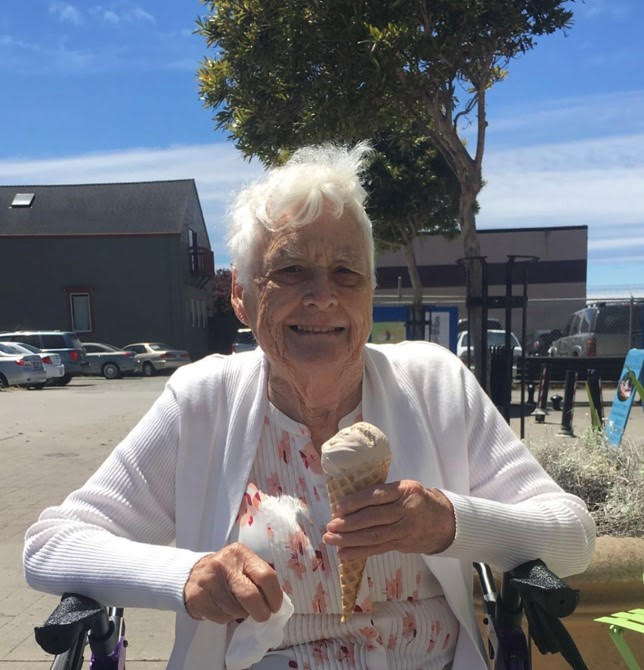
Vonda
Glee Wilson of Eureka peacefully passed away on the night of March
13, 2022, surrounded by her family.
Vonda was born on September 14, 1939 to Vivian and Fred Broyles in Olympia, Wash. She moved with her family to Humboldt County in 1954. After Vonda graduated from Eureka Senior High in 1958, she married Lawrence “Larry” Wilson on July 13, 1958. Vonda and Larry were married for 49 years and had two daughters, Lori Ann and Vonda J. Wilson.
When her youngest daughter started school, Vonda enrolled at Humboldt State University and majored in education. She graduated at the age of 40. After graduation, she worked as a special education teacher at South Bay and in various preschool and after school programs in Humboldt County. Vonda enjoyed working with children and loved her career. She often reminisced about the time she spent at South Bay and how honored she was to have had the opportunity to work with such great people.
Vonda worked in local schools for 20 years. After she retired, Vonda had time to pursue her many interests. She especially loved to travel, was an avid reader and enjoyed gardening. Among her favorite activities was spending time with her grandchildren and great-grandchildren. Whether it was watching movies on the couch or helping them with their schoolwork. She also really enjoyed baking treats for them, they especially loved her cupcakes. Vonda was the type of person to love and care for others. She spent most of her recent time with her family and little ‘maltipoo’ Mimi.
Vonda was predeceased by her parents Vivian and Fred Broyles, husband Lawrence Wilson and daughter Lori Ann Asbury. She is survived by her daughter Vonda J. Liles, brother Fred Broyles and his wife Joan, sister Arlene Broyles, niece Heidi Broyles-Ortega and her wife Julieta. She is also survived by her grandchildren Daniel Asbury and his wife Staci, Heather Asbury, Ashley Carlson, Alyssa Liles, Jordan Liles, and her great-grandchildren Bradley Edwards, Haili Asbury, Jayden Edwards, Jonathan Martinez, Josiah Carlson, Juan Martinez and five other great-grandchildren.
Vonda was dearly loved and will be greatly missed. She will be remembered and honored by her friends and family.
###
The obituary above was submitted by Vonda Wilson’s family. The Lost Coast Outpost runs obituaries of Humboldt County residents at no charge. See guidelines here. Email news@lostcoastoutpost.com.
OBITUARY: Richard (Rich) Todd, 1951-2022
LoCO Staff / Thursday, April 7, 2022 @ 6:56 a.m. / Obits
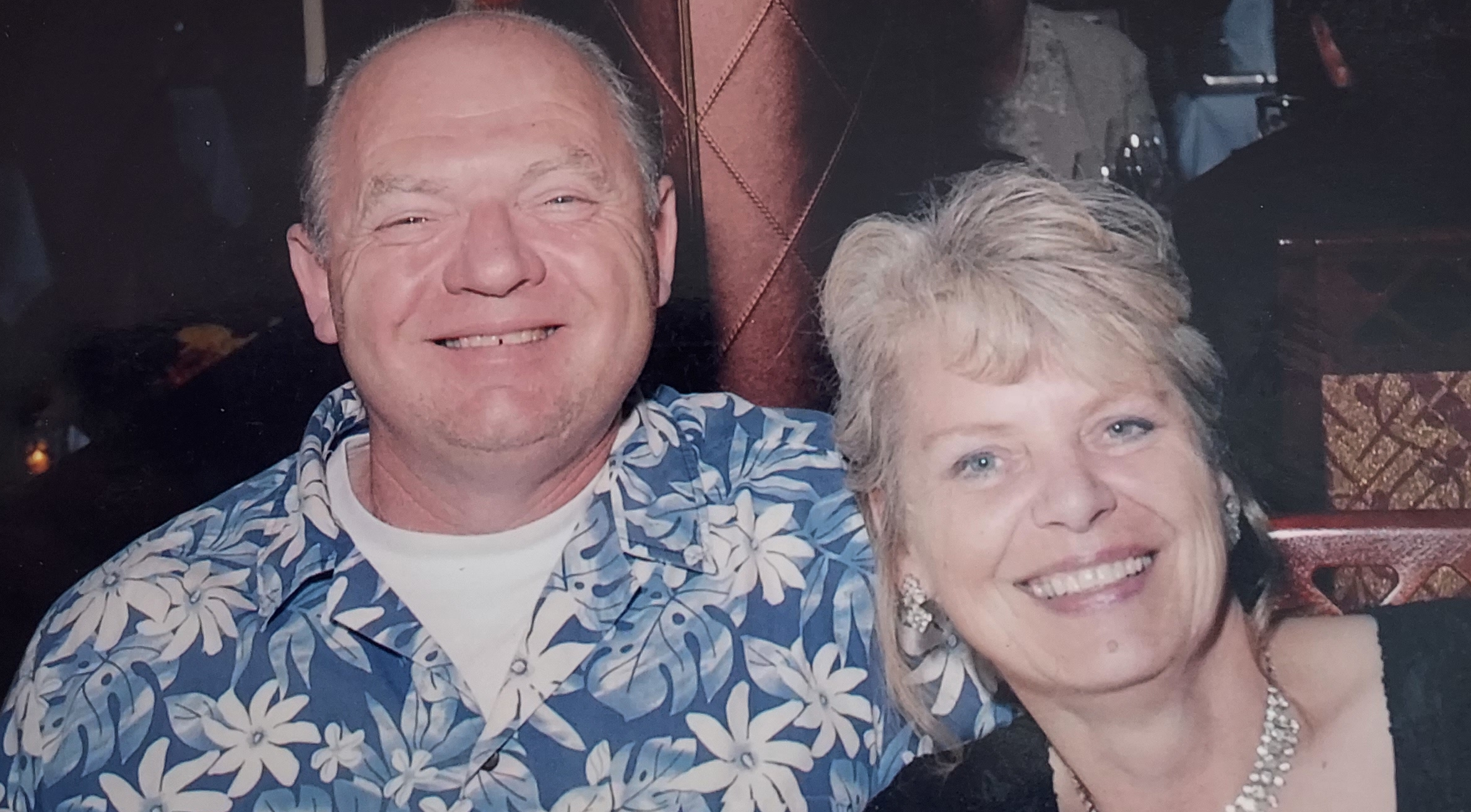
Richard (Rich) Todd
Born February 5, 1951
Died March 6, 2022
Rich lived in the Fresno area until 2000 when he moved here to help his sister, who was going blind. The first time I heard Rick sing I turned around and asked him to marry me. He had the most beautiful singing voice I ever heard. I was kidding at the time but history tells a different story. We married in September 2002.
Rick learned to love cats and cruising. That could have been a deal breaker for me. We went on over a dozen cruises together. He was always up for the next adventure — including camping twice, which he didn’t like.
Rick was a very kind, loving, generous person. He spoiled me rotten, which we both loved.
Rick went to be with the Lord whom he loved. He is well and free from pain for the first time. I cant wait to see him again someday. I miss him terribly. Life isn’t much fun without him. It’s hard to sum up someone’s life in a few paragraphs. He was a wonderful, hard working man.
There will be a memorial for Rick on April 19 at 11 a.m. at Lifehouse Humboldt Church, 2734 Hubbard lane, Eureka
He is proceeded in death by his mother Alene, father Merle, sister Linda Osborn, son Shawn and his grandparents.
He is survived by his wife Margie Omstead, his children Tim, Leslie and Micah, aunts Sue and Kay, nephew Ryan.
###
The obituary above was submitted on behalf of Rich Todd’s loved ones. The Lost Coast Outpost runs obituaries of Humboldt County residents at no charge. See guidelines here.
Eureka Man Cited for Allegedly Dumping a Broken-Down and Burned-Up Vehicle on the River Bar and He Agrees to Clean it Up, Sheriff’s Office Says
LoCO Staff / Wednesday, April 6, 2022 @ 2:20 p.m. / Crime

Photo: HCSO.
###
Press release from the Humboldt County Sheriff’s Office:
On March 30, 2022, the Humboldt County Sheriff’s Office Special Services Division received information regarding the illegal dumping of a vehicle near the Eel River in Ferndale.
Through their investigation, deputies obtained video surveillance depicting a truck towing a broken-down vehicle near the river’s edge on East Ferry Road and negligently abandoning the vehicle on the river bar. Deputies were able to identify the owner of the truck, a 22-year-old Eureka man, and determined the man to be the driver of the truck at the time of the incident. Deputies contacted the man and issued a citation for Illegal Dumping of Commercial Waste (PC 374.3(h)(1)). The man agreed to remove the vehicle from the river bar for proper disposal.
This case is being forwarded to the District Attorney’s Office for prosecution. The Humboldt County Sheriff’s Office takes seriously the illegal dumping of vehicles in our public spaces. Not only does illegal dumping of all types of waste endanger our environment, it also threatens to close the public use of these areas permanently.
Anyone with information about this case or related criminal activity is encouraged to call the Humboldt County Sheriff’s Office at (707) 445-7251 or the Sheriff’s Office Crime Tip line at (707) 268-2539.
Murals, Fruit Trees and an Outdoor Market May Be Coming to Valley West; Arcata City Council Will Vote on Eight Proposed Projects to Improve the Neighborhood
Stephanie McGeary / Wednesday, April 6, 2022 @ 10:55 a.m. / Community , Local Government
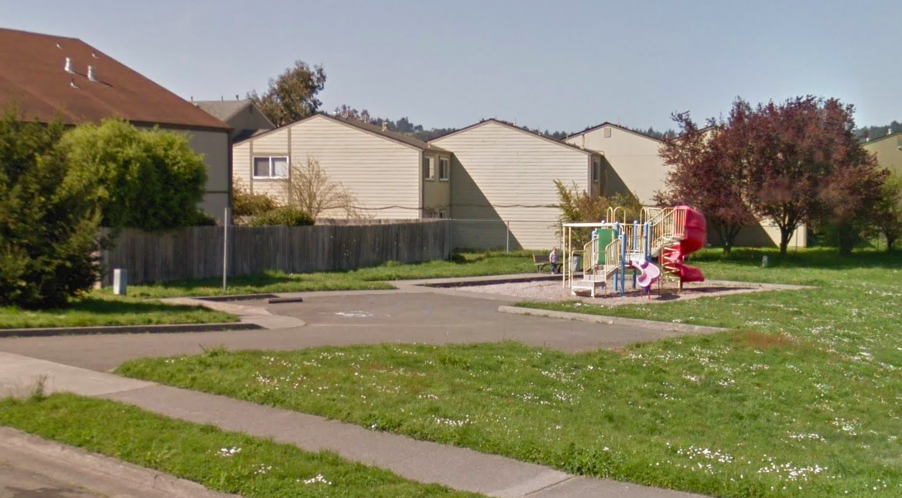
Valley West Park in Arcata may soon have new picnic ammentities, fruit trees and murals | Screenshot from Google streetview
PREVIOUSLY: Live in Valley West? Here’s Your Chance to Decide How $15,000 Will Be Spent on Improving Your Neighborhood
###
More trees, murals, dance and theater classes and an artisan/flea market may all soon be coming to Arcata’s Valley West neighborhood, thanks to $15,000 in American Rescue Act Plan (ARPA) funds allocated by the City for Valley West improvement. During tonight’s meeting, the Arcata City Council will consider approval of eight proposed projects to spend the funding on.
The projects, which focus on community engagement and beautification of Valley West, will be presented to the council by Comunidad Unidad del Norte de Arcata (CUNA) – a group formed through nonprofit Cooperation Humboldt to focus on improving the Valley West neighborhood. After conducting community outreach, CUNA composed a list of 12 project proposals for spending the $15,000. Valley West residents were then given the opportunity to vote, both in-person and online, ranking their top project choices. Out of 12 proposed projects, the eight with the highest votes were selected to present to council.
Here is the list and estimated cost for each project from the city staff report:
- Fruit Trees in Valley West Park—$750
- Outdoor Picnic Amenities at Hallen Basketball Court—$3,200
- Artisan market/flea market/tianguis—$1,950
- Teen meetups—$1,500
- Weekend dance classes—$400
- Weekend theater classes for children—$600
- Mural—Rebound Project (Basketball court mural on Hallen Drive)—$5,000
- The Mural Man—Park Project (5 murals)—$1,600
Completion of the eight projects, CUNA reports, are estimated to cost $15,400 to complete – $400 over the ARPA funds budget. But CUNA says that it plans to cover the remaining costs by either fundraising or allocating the cost from CUNA’s supply budget.
Assuming the council approves the list, the projects will be implemented by CUNA staff, volunteers and Arcata city staff. City staff would be in charge of installing the picnic tables and planting the fruit trees, which will be done with help from volunteers during a community work day, and CUNA and community volunteers would provide a two-year commitment to care for the trees.
The City and CUNA would partner to facilitate weekly teen meetups, which will offer Valley West teenagers an opportunity to participate in activities like bowling or beach trips. CUNA and the City would also work together to plan the tianguis (outdoor artisan/ flea market), selecting an appropriate setting and day and finding vendors to participate. According to CUNA’s report, the children’s weekend theater classes would be run by the Arcata Playhouse and the weekend dance classes (for teens and adults) would be facilitated by local dance studio Redwood Raks and dance teacher/ events planner Shoshanna.
The Mural Man Project, run by Benjamin Goulart, would add five colorful murals to the parks in Valley West, working with volunteer youths and teens to complete the pieces. Goulart has worked with youths on several other local mural projects, including a piece for the Eureka Street Art Festival and the mural at Arcata’s Rotary Park. According to the report, these murals would be painted on wood and hung on fences, so that they could be occasionally switched out for different pieces. Rebound – a recently formed DreamMaker project of the Ink People Center for the Arts – would be in charge of painting a mural on the Hallen basketball court, with CUNA helping select the artists that would contribute to the painting. For an example of the type of work Rebound does, you can check out this project the team completed on the Shay Park court.
CUNA’s report says that Valley West community members suggested several other useful improvement projects, such as adding additional garbage cans, fixing broken street lights and adding additional street lighting, adding bathrooms to the parks and more. These projects were not included in the list of proposals because they were either not feasible with the budget, or should fall under a different budget item. This $15,000 was specifically aimed at beautification and increasing community engagement in Valley West.
CUNA also says that only 74 residents voted on the proposals, a more modest turnout than the group was hoping for. But CUNA does feel that this was a successful pilot program and that it plans to continue implementing this type of participatory budgeting in the future. If these projects are completed swiftly, CUNA hopes it will generate community enthusiasm and will help bring in more people for the next round of voting, when CUNA will decide how to spend an additional $30,000 in ARPA money. The report does not say how soon the next vote will be, however.
In the meantime, if you have thoughts on these proposed Valley West projects, you’ll want to attend the Arcata City Council meeting tonight (Wednesday, April 6) at 6 p.m. either online or in person at Arcata City Hall – 736 F Street.
You can view the full agenda and directions on how to participate here.
From Scandal to Scrutiny: How Intense Citizen Oversight Reshaped Oakland Police
Nigel Duara / Wednesday, April 6, 2022 @ 7:21 a.m. / Sacramento
The man was screaming, but the beating didn’t stop.
It was June 27, 2000, and a group of rogue cops was at work in West Oakland. The Oakland police officers operated in one of the most dangerous beats in one of the most violent parts of the city. They called themselves the Riders.
One officer beat Delphine Allen on the soles of his feet with batons, according to trial testimony. Riders members pepper-sprayed him and drove him under a freeway overpass, where the beating continued, a rookie officer who witnessed the beating would later testify.
[For the record: This story has been corrected to explain that the Riders were a group of rogue Oakland cops and not part of a task force.]
Allen called out for his mother, who lived nearby. “I thought they were going to kill me,” he said in court.
What happened over the next 22 years would reshape the Oakland Police Department and transform it into a progressive model for law enforcement agencies across California.
The rookie police officer who witnessed the assault on Allen filed a complaint in July 2000. The resulting scandal upended the department and touched off a massive overhaul in how the department judges its own officers’ conduct.
Today, Oakland has arguably become the state’s most watched police department with both a federal monitor and strong civilian oversight. In this city of 435,000 across the Bay Bridge from San Francisco, civilians have the power to overrule the police department.
“The direction that Oakland is taking is the inevitable path for a modern-day progressive police department,” said Oakland Mayor Libby Schaaf. “And so I believe that we’re on the front lines, we’re the vanguard of police reform.”
Statewide data help tell that story. The Oakland Police Department sustains complaints against its officers at a higher rate than any other major law enforcement entity, except the state Department of Corrections and Rehabilitation, according to a CalMatters analysis of Department of Justice data.
Complaints originate with citizens, or from the department’s internal affairs unit. A sustained complaint means the department believed the person who complained, and could discipline those officers involved.
Statewide, law enforcement agencies sustained 7.6% of complaints against their officers from 2016 to 2020. In those years, the Oakland Police Department sustained complaints at an average rate of 11.3%, the data show.
In 2018 and 2020, the department sustained more than 15.2% of complaints, double the state average, the data show.
“I think we’re doing a much more thorough evaluation,” said Oakland Police Chief LeRonne Armstrong. “I also think when you have a community with very low trust in law enforcement, it means that law enforcement has to make sure that they have legitimate and professional processes so we can build trust.”
The California Department of Justice has collected the number of complaints and those sustained since 2016, the result of a bill that that ordered agencies to establish a procedure to investigate complaints by the public against officers and publish the results.
The Oakland police complaint process is now handled by both the department’s internal affairs division and a civilian panel that oversees the department.
Among the rank-and-file, there has been fallout.
Today, officers are leaving the department in higher numbers, from an average of about four per month late last year to 10 or 15 a month since then, according to Armstrong.
“We haven’t seen these type of numbers since I’ve been at the department, and that’s been over two decades,” Armstrong said. “When you work in a big city that’s under the microscope like Oakland, I’m sure that can be challenging to some officers.
“I’ve been pushing the same message to officers, that you can’t escape the calls for reform,” he said. “No matter where you go, you’re going to see more community involvement, the community paying more attention to the actions of officers.”
“When you work in a big city that’s under the microscope like Oakland, I’m sure that can be challenging to some officers.”
— LeRonne Armstrong, Oakland Police Chief
The website Oaklandside reported that, in a sample of 30 exit interviews with Oakland police officers, half were leaving because of dissatisfaction with leadership at the police department or city, and seven cited “heavy discipline.” Others cited family reasons, low morale, better jobs or the federal monitoring team.
“I’ve been doing some exit interviews with officers that are choosing to go to other departments, and what I tell them is the Oakland way is going to be the American way any minute now,” Schaaf told CalMatters.
The Oakland Riders’ legacy
Before the Oakland rookie police officer blew the whistle on the Riders scandal, he was told that beating, kidnapping and planting drugs on people were simply how police work was done, he testified in court.
At trial in 2004, the former rookie, Keith Batts, testified that he didn’t immediately report what he saw. He was new to the department and feared repercussions for reporting excessive use of force.
Three members of the Riders would be fired, but juries would later acquit them of some criminal charges and deadlock on many others. A fourth member, Riders leader Frank Vazquez, fled the city in November 2000 and prosecutors have said they believe he’s in hiding in Mexico.
More than 100 people sued the police department in federal court. The cases were combined into a negotiated settlement agreement, in which the police department consented to reforms and accepted a federal monitoring team. The team would oversee dozens of proposed reforms at the department, especially concerning its use-of-force policy and the process by which complaints are treated.
“They pay a lot more attention to police conduct in Oakland.”
— Rocky Lucia, attorney for the Oakland Police Officers’ Association
The original monitoring team and its successor, appointed in 2010, have both praised and condemned the Oakland police for their conduct since 2003. But in the ensuing two decades, one fundamental change has made the biggest difference: Oakland residents have garnered a lot more power over their police department.
First, in a 2016 ballot measure, the city’s voters put the whole department under civilian oversight. Then, in 2020, the civilian police commission fired the city’s police chief.
In December, the city hired its first inspector general for the police department, a civilian position overseen by the civilian board.
Rocky Lucia, an attorney for the Oakland Police Officers’ Association and several other Bay Area police department unions, said the level of oversight in Oakland exceeds what he’s seen anywhere else.
“They pay a lot more attention to police conduct in Oakland,” Lucia said. “There’s more eyes on people. There’s policies, software programs, there’s resources committed. It’s more than I’ve ever seen anywhere else in the state.”
While he said he’s not certain that Oakland should be spending the amount of money it does on oversight, given rising crime rates that began during the pandemic and the city’s always-muddy financial situation, only 18 months removed from a $62 million budget shortfall. But Lucia acknowledges that the department is identifying potentially problematic officers.
“They’re catching these things early,” Lucia said.
A tale of two scandals
Two years before the beating of Delphine Allen, a different and more infamous gang task force controversy erupted 350 miles south: the Los Angeles Police Department’s Rampart scandal.
The Community Resources Against Street Hoodlums – or CRASH – unit was to Los Angeles what the Riders were to Oakland: an elite group of cops on a special detail that made big busts in the LAPD’s Rampart Division.
CRASH unit officers were also accused of robbing a bank, stealing cocaine from the evidence room and replacing it with Bisquick, and beating a suspect until he vomited blood.
As a result, in 1998 the LAPD instituted a new policy: All complaints against an officer would trigger an investigation.
Complaints against officers piled up, major crimes arrests dropped and officers started to complain that the system treated them unfairly.
“Complaints against officers soared,” wrote University of Chicago economics professor Canice Prendergast in a 2021 paper analyzing the scandal’s fallout. “These were sustained at high rates, resulting in suspensions, resignations and terminations at levels far higher than before.”
Any complaint tied up officers’ promotions and transfers. Predergast found that the level of sustained complaints was even more damaging to police morale.
So the officers radically reduced their engagement with the public, according to Prendergast’s paper, which is named after the practice of non-engagement: “Drive and Wave.”
From 2016 to 2020, the last year for which statistics are available, the LAPD sustained complaints at a rate of 5.2%, below the statewide average for that period.
Arrests plummeted. The LAPD accepted a federal monitor from the U.S. Department of Justice in 2000 and nearly 90% of LAPD officers interviewed by the monitor in 2001 said a fear of discipline stopped them from “proactively” doing their jobs.
Then, the LAPD was then handed a big win by, of all things, the federal monitor itself, which encouraged the department to clear up its backlog of complaints.
Prendergast found the police department’s solution in long-buried LAPD archives, a decision that was put out among the department’s employees but never publicized: The LAPD gave its commanding officers the power to dismiss complaints against their subordinates.
That meant complaints could be dismissed moments after they were filed, and an officer’s superior was the one to judge their actions.
The result was that, beginning in 2003, sustained complaints fell dramatically, and penalties for sustained complaints were much more rare, Prendergast found.
From 2016 to 2020, the last year for which statistics are available, the LAPD sustained complaints at a rate of 5.2%, below the statewide average for that period.
“Disciplinary measures across the board became less likely,” Pendergast wrote, “even when an investigation ruled against the officer.”
Some officers ‘just tired’
Under California law, there are four outcomes for a complaint against a police officer.
Complaints can be sustained, which means the investigation proved the allegation to be true by a preponderance of evidence.
An officer can be exonerated, meaning the officer did what was described, but it didn’t violate department law or policy.
Complaints can be ruled “unsustained,” meaning the investigation failed to clearly prove or disprove the allegation. Or, complaints can be determined “unfounded,” which means the investigation clearly showed the allegation was untrue.
For much of the Oakland Police Department’s time under a federal monitor, most complaints were relegated to the “unfounded” bin, said John Burris, one of two lead plaintiff attorneys in the settlement agreement between the police department and the city following the Riders scandal.
With civilian oversight since 2016, he said far fewer complaints were dismissed as unfounded.
Burris said cases dismissed as “unfounded” were the ones that bothered him the most.
“[Complainants are] not lying. I may not be able to prove it, but something happened,” Burris said, and noted that unfounded complaints also disappear from officers’ personnel files.

Civil rights attorney John Burris is photographed outside the Alameda County Courthouse in Oakland on March 21, 2022. Photo by Martin do Nascimento, CalMatters
Today, when a complaint is filed, the Oakland police and the Civilian Police Review Agency launch parallel investigations. Each makes its own conclusions.
When there’s a difference of opinion, the question goes to another set of civilians – the Civilian Police Commission, which holds final authority on questions of officer misconduct.
Tyfahra Milele, chair of the Civilian Police Commission, said she can empathize with officers who feel they are over-policed by their civilian overseers. She said that officers tell her they’re more afraid to engage residents because they’re worried about a complaint, which can tie up their promotions and damage their careers.
Since the police-related killings of Ahmaud Aubrey in Atlanta, Breonna Taylor in Louisville and George Floyd in Minneapolis, “there’s much more of a vigilance around police and accountability,” Milele said. “Some officers are like, OK, I’m gonna go to work and ride this wave. Some [officers say] this isn’t the role for me, all these other factors are making it difficult.
“We have some officers that are just tired.”
Despite what Burris, the attorney, described as widespread opposition among the department’s rank-and-file to civilian oversight, the results have been a higher level of scrutiny of officer behavior, according to lawyers on both sides of the city’s 2003 negotiated settlement agreement.
Attorneys representing Allen who originally brought the lawsuit in Oakland expect the settlement agreement with the police department to end in 2023 or 2024.
A hearing before U.S. District Court Judge William Orrick in San Francisco to determine the department’s progress is set for April 27.
“It’s taken a long time, but we’re finally getting traction,” said Burris. “Our hope is we’ll fundamentally ingrain things in the culture.
“It’s my worst nightmare about the case, that it’s all for naught. That it goes back to the way it was.”
###
CalMatters.org is a nonprofit, nonpartisan media venture explaining California policies and politics.
Report to California Legislature: Prepare for Sweeping Effects of Climate Change
Rachel Becker and Julie Cart / Wednesday, April 6, 2022 @ 7 a.m. / Sacramento
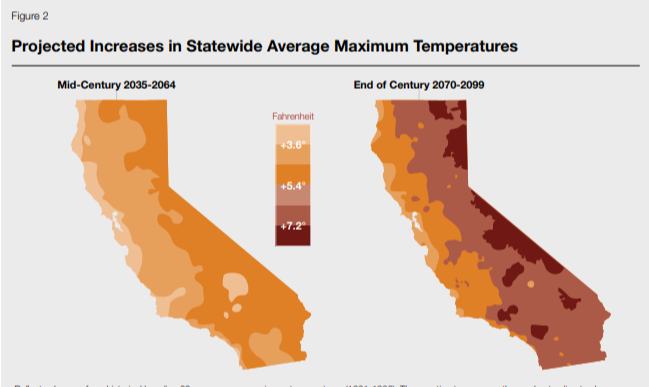
Graphic from “Climate Change Impacts Across California - Crosscutting Issues”, the first of the LAO’s reports.
Painting alarming scenes of fires, floods and economic disruption, the California Legislature’s advisors on Tuesday released a series of reports that lay out in stark terms the impacts of climate change across the state.
The typically reserved, nonpartisan Legislative Analyst’s Office outlined dire consequences for Californians as climate change continues to alter most aspects of daily life. Much of the focus of the six-part series is detailing the economic cost as the changing climate alters where and how Californians build, grow food and protect the most vulnerable residents.
- Wildfires, heat and floods will force more frequent school closures, disrupting education, child care and availability of free school lunches. More than 1,600 schools temporarily closed because of wildfires each year between 2017 and 2020, affecting nearly a million students a year.
- Workers in outdoor industries like agriculture, construction, forestry and recreation — 10% of California’s workforce and mostly made up of Latinos — will continue to bear the brunt of extreme heat and smoke.
- Wildfire smoke may have killed about 20 people among every 100,000 older Californians in 2020, and is projected to become more deadly. A 50% increase in smoke could kill nine to 20 more people among every 100,000 each year.
- Housing, rail lines, bridges, ports, power plants, freeways and other structures are vulnerable to rising seas and tides. “Between $8 billion and $10 billion of existing property in California is likely to be underwater by 2050, with an additional $6 billion to $10 billion at risk during high tide.”
- Extreme heat is projected to cause nine deaths per 100,000 people each year, “roughly equivalent to the 2019 annual mortality rate from automobile accidents in California.”
- Lower-income Californians, who live in communities at greater risk for heat and floods because of discriminatory housing practices, will be hit especially hard by climate change and have fewer resources to adapt.
- Housing will be lost: For example, in the San Francisco Bay Area alone, 13,000 existing housing units and 104,000 job spaces “will no longer be usable” because of sea rise over the next next 40 to 100 years.
- Beaches will disappear, too: Up to two-thirds of Southern California beaches may become completely eroded by 2100.
The report’s unsaid but unambiguous conclusion: Climate change could alter everything, spare no one in California, so legislators should consider preparing for sweeping impacts.
“These hazards will threaten public health, safety, and well-being — including from life-threatening events, damage to public and private property and infrastructure, and impaired natural resources,” the analysts say in their report.
The pain, and costs, will be shared among state, regional, local, private and industry sectors, according to the report.
Scientists say it’s not too late to stop the most severe effects, although the clock is ticking. Technologies and other solutions already exist to reduce greenhouse gases from fossil fuels and other sources and prevent more irreversible harm, according to a landmark international scientific report released Monday. But international accords and plans continue to fall far short, with emissions expected to keep increasing.
“These hazards will threaten public health, safety, and well-being — including from life-threatening events, damage to property and infrastructure, and impaired natural resources.”
— Legislative Analyst’s Office report
California’s legislative analysts did not conduct new research; instead, they compiled existing data and projections, providing a comprehensive clearinghouse for legislators as they enact policies and approve budgets.
State Sen. Bob Wieckowski, a Democrat from Fremont and chair of the budget subcommittee on resources, environmental protection and energy, said he plans to turn to the reports as references and rationale for the subcommittee’s budget proposals.
“It’s impressive,” he said. “(It) turns the climate conversation into an all-hands-on-deck versus, ‘Oh, this is just some tree hugger over here.’”
The analysts make no explicit policy recommendations but they advise legislators to consider such questions as: How can the state avoid exacerbating climate impacts? How can lawmakers protect the most vulnerable Californians? And how should California pay to prepare and respond to climate change?
Assembly Speaker Anthony Rendon, a Democrat from South Gate, asked the Legislative Analyst’s Office to assess the impacts of climate change on a variety of policy sectors, and the reports grew from there. They frame climate change as a complex, multi-disciplinary problem that requires response from all of the state’s agencies.
Project manager Rachel Ehlers said the aim is to assist lawmakers incorporate climate change into decisions outside of traditionally environmental realms, including housing, health and education. For instance, would a new housing policy “have the potential to inadvertently worsen climate change impacts?” she said.
Last year’s budget package reflected the overarching scope of the problem, proposing to spend $9.3 billion over three years to bolster the state’s responses to drought, floods, fire and sea level rise.
Despite the state’s climate-forward reputation, critics and many legislators note that California’s follow-through has been inconsistent.
The reports come in the lead-up to California Gov. Gavin’s Newsom’s May revision to his January budget blueprint, when the administration can reframe and update its proposals. Thus far, the proposed budget included more than $22 billion for climate change efforts that include protecting communities against wildfires and extreme heat.
Despite the state’s climate-forward reputation, critics and many legislators note that California’s follow-through has been inconsistent.
“I don’t at all feel that we are leading the world anymore,” Rendon, a Democrat from South Gate, told CalMatters last year.
Although the state passed a $15 billion climate budget, California Environmental Voters, an advocacy group, gave California its first “D” grade for what it called its climate inaction last year.
“We’re plagued by ‘climate delayers’ in Sacramento – members of the Legislature who talk about climate change but don’t back up those words with action,” CEO Mary Creasman wrote in a CalMatters commentary.
Last month, a coalition of California’s environmental justice advocacy organizations pushed for a phase-out of fossil fuels, and warned that clean air regulators have failed to adequately consider public health in crafting the state’s blueprint for curbing greenhouse gas pollution.
California is already reeling from climate change
The analysis made clear that many of the worst consequences are already here, even as it noted that future impacts are coming sooner and may be worse than scientists had predicted.
Summer temperatures scorched records as the state’s second-largest wildfire tore across Northern California during the third-driest year on record for rain and snowfall. California must brace for yet more climate hazards, the reports warn, from extreme heat to more severe wildfires, whiplash from drought to flood and sea level rise along the coast.
Drought clutches California and a statewide heat wave forecast for Wednesday is poised to sap the remaining snowpack that supplies about a third of the state’s water. California’s firefighting arm warns that a record-dry start to the year could spell a devastating fire season ahead.
It’s a disaster drumbeat Californians have heard many times before. The Legislative Analyst’s Office has released report after report assessing the state’s climate policies and spending. It has warned that sea level rise will submerge billions of dollars in homes, roads and businesses by 2050, and that the state must accelerate planning to protect state assets including college campuses, prisons and even state workers from soaring heat, flooding, fire and extreme weather.
Newsom’s administration launched a preemptive response to the reports, with the Monday release of its updated climate adaptation strategy. The guidelines pull together plans from 38 departments and address priority issues, such as protecting communities vulnerable to climate change and combating risks to health and safety.
California Natural Resources Secretary Wade Crowfoot said the strategy is “a matter of protecting our residents and our communities or natural places from climate threats that are already here.”
State officials regularly recalibrate the official response to climate change, often in response to dire reports. Four years ago, California’s Fourth Climate Change Assessment released under former Gov. Jerry Brown warned that climate change would lead to death and property damage on the order of tens of billions of dollars by 2050.
Though Tuesday’s reports were focused largely on how California must adapt to the ravages of climate change, the Legislative Analyst’s Office has also warned repeatedly that California’s landmark greenhouse gas market, cap and trade, will fail to meet California’s goals to reduce emissions.
###
CalMatters.org is a nonprofit, nonpartisan media venture explaining California policies and politics.


