

New Student Housing and Education Buildings, Two Parking Structures and Major Demolition Work Ahead: A Look at Cal Poly Humboldt’s Five-Year Infrastructure Plan
John Ross Ferrara / Tuesday, March 22, 2022 @ 7:50 a.m. / Cal Poly Humboldt
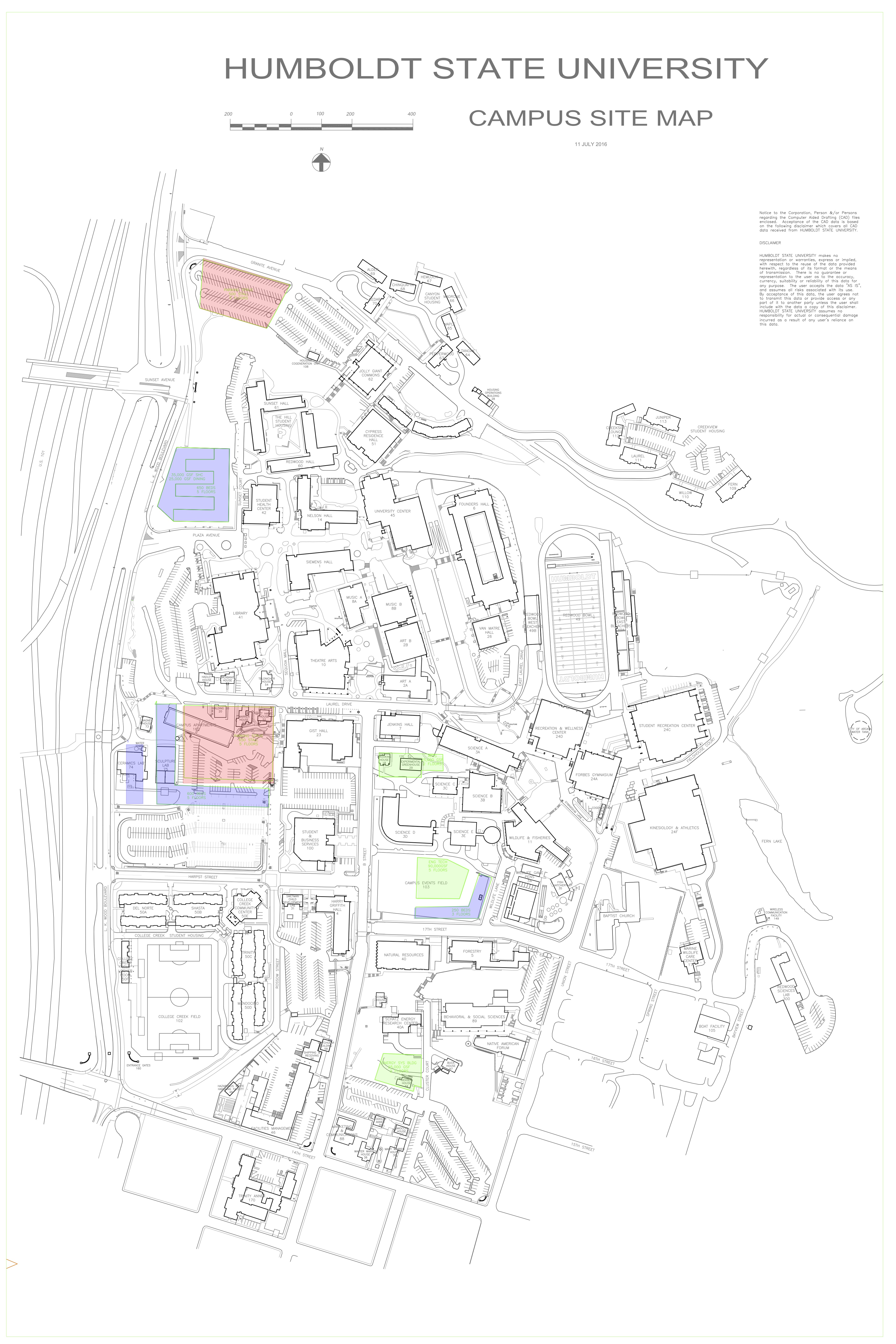
A map of CPH’s proposed construction and demolition projects. | CPH
If HSU was known as the “hills, stairs and umbrellas” campus, Cal Poly Humboldt could soon be dubbed the construction, parking and housing university.
In August, the University published a prospectus, outlining its plans to spend the one-time, $443 million endowment given by the State to transform the school into California’s third polytechnic and double student enrollment in seven years.
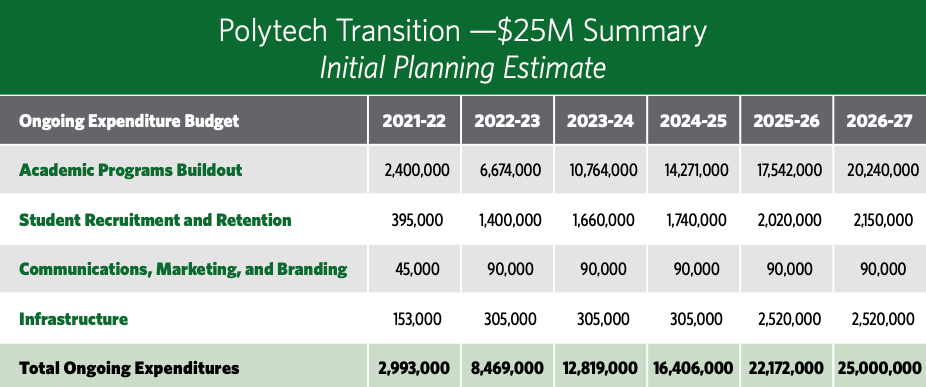
Polytechnic Transition Summary | CHP prospectus.
While the prospectus described the University’s general plans to add several new buildings for academia and student housing by 2027, the school did not specify how it would make room for many many of these new projects. But in late January, around the same time that HSU rebranded as Cal Poly Humboldt, the school quietly published a much more detailed infrastructure plan to its website — a plan that includes a flurry of demolition projects and raised parking structures that would vastly change the school’s appearance within five years.
“The infusion of one-time resources will be instrumental in modernizing existing instructional space needed to support the existing, growing, and future demand for laboratory space to support instruction and research,” the University’s prospectus reads — hinting that major demolition projects are forthcoming. “The University is limited in growth opportunities in its existing acreage.”
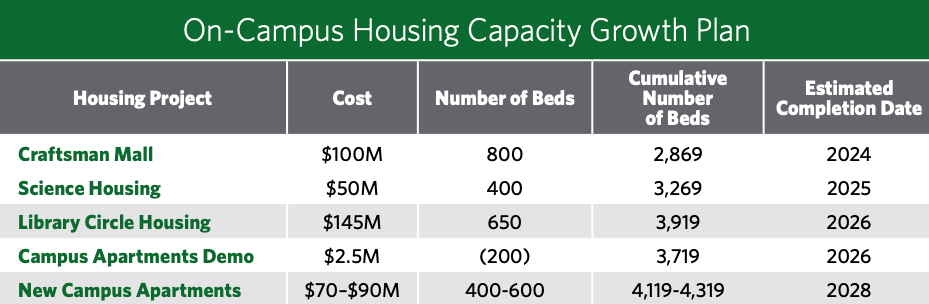
On-Campus Housing Capacity Growth Plan. | CPH Prospectus
According to the infrastructure projects webpage, CPH’s first major build would be the long-debated Craftsman’s Mall housing project. While the City of Arcata initially planned for the building to house 65 percent students and 35 percent “open market” residents, the approved Los Angeles based development company AMCAL mysteriously withdrew its application in 2018 after the City of Arcata said the company invested more than $1 million into the project. In 2020, the Humboldt State University Foundation purchased the 9.5-acre property for $3.95 million.
The January infrastructure update also estimates that the proposed project would cost $150 million — $50 million more than the University initially stated in its prospectus. The development would include four buildings, 800 beds, study areas, a small convenience store, an open common area and 350 parking stalls — all exclusively for CPH students.
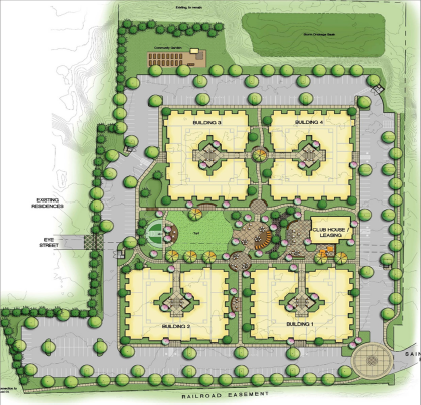
The proposed Craftman’s Mall housing plan. | CPH infrastructure plan
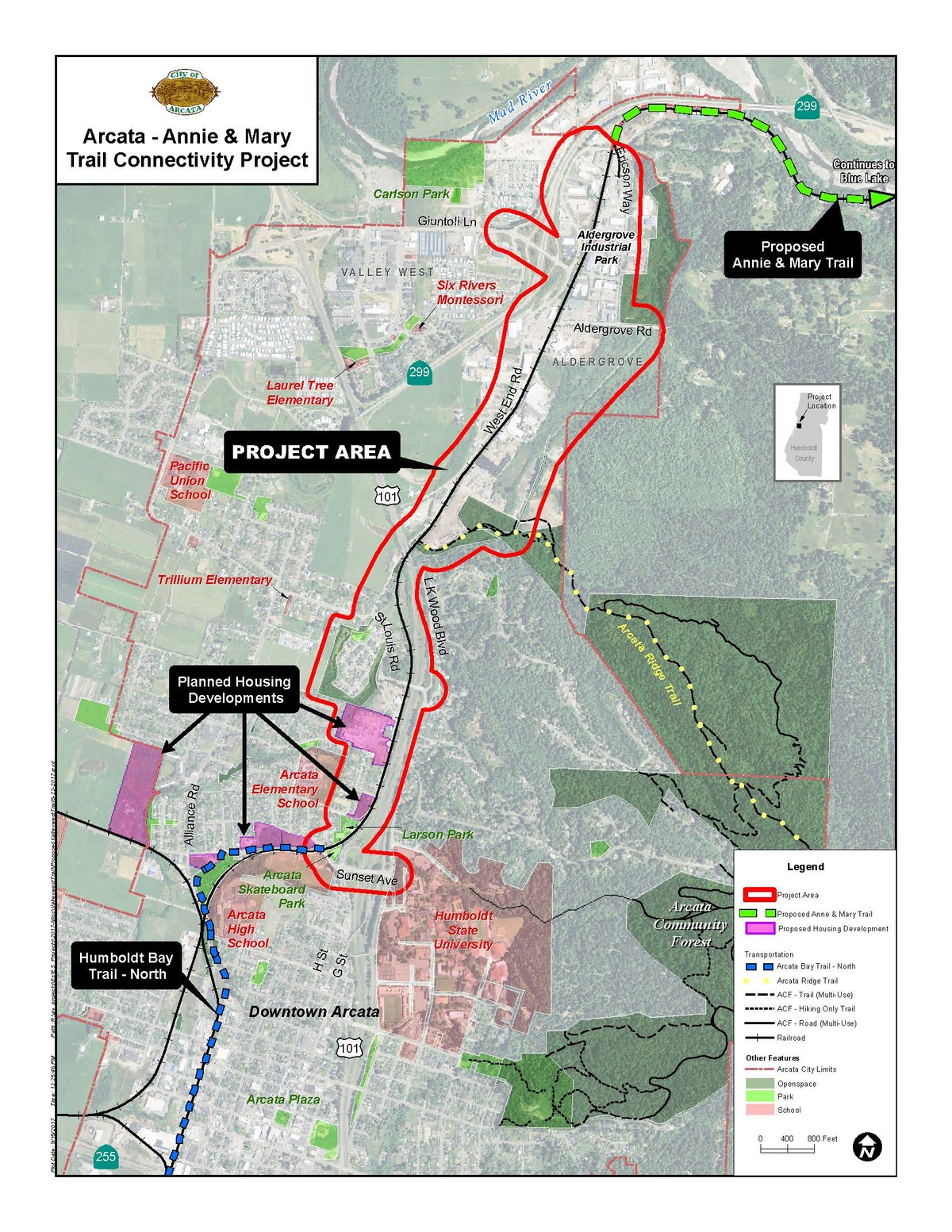
The University is also actively working with the City of Arcata to develop the adjacent railbank as part of the Arcata Annie & Mary Trail Connectivity Project, connecting the development to the University through the highway overpasses at Sunset Avenue and St Louis Road. CPH anticipates that the housing project will be completed by December of 2024.
The first on-campus infrastructure project involves the building of the new “Engineering & Technology — Learning Community Building” at the current site of the Campus Events Field. Traditionally an open field for student activities, the grounds recently housed bungalows to facilitate the University’s Library and Theater Arts seismic retrofit projects. Now it seems the field will be permanently paved over in order to accommodate the five-story, 90,000 square-foot engineering building and an adjacent three-story, 250-bed residence hall. These proposed buildings will include academic departments, lecture halls, labs, offices, student space, communal space, conference space and other “student experience space.” The $135 million project is planned to be completed by August of 2025.
While the loss of the Events Field will mean a significant reduction in open grass space near the center of campus, CPH Associate Vice President of Facilities Management Mike Fisher told the Outpost that the University plans to include some outdoor landscaping in the new design.
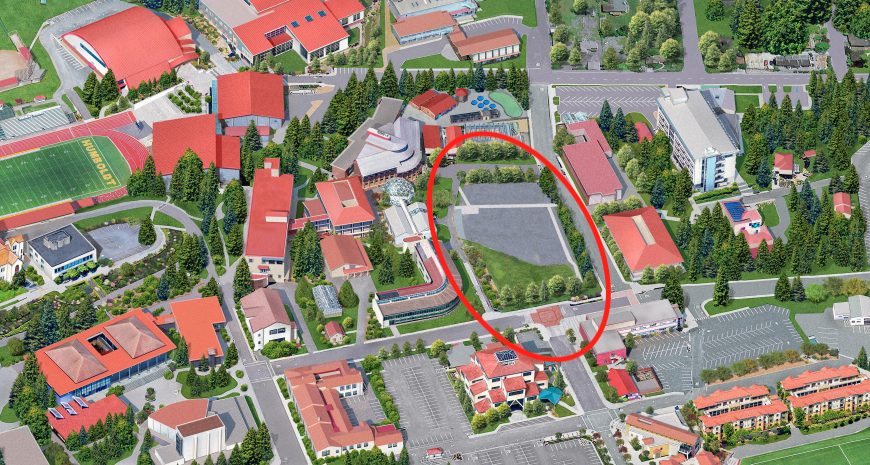
The former location of the Campus Events Field. | CPH Interactive map
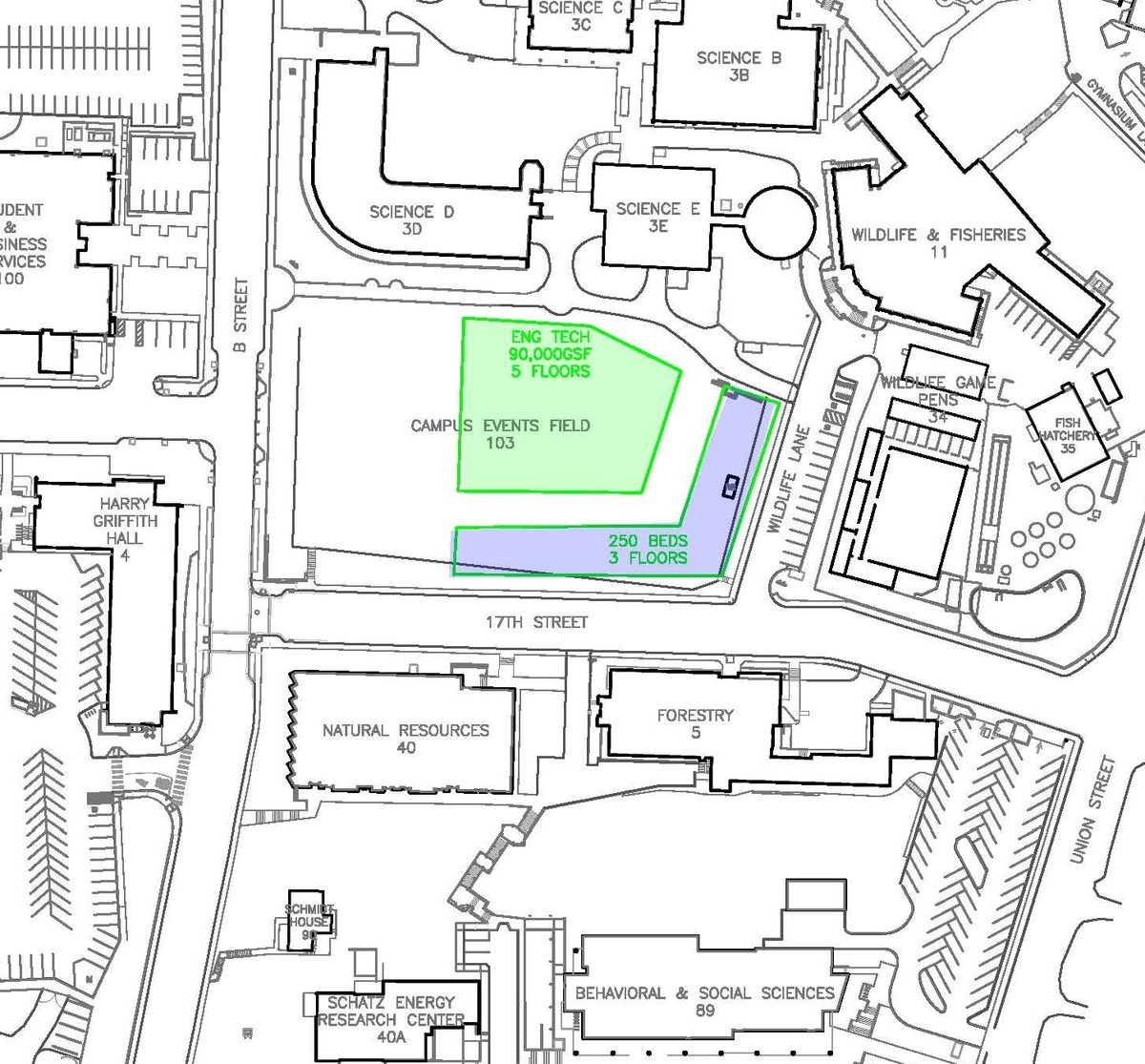
A map of the proposed Events Field construction. CPH
“What this project [aims] to do, is create an entryway for campus and that building,” Fisher said. “That will be tiered down with landscaping and concrete paths that bring you into the campus core. There will be some space out there, some landscaping, places to sit and reflect, places for trees, paintings and outdoor instruction spaces.”
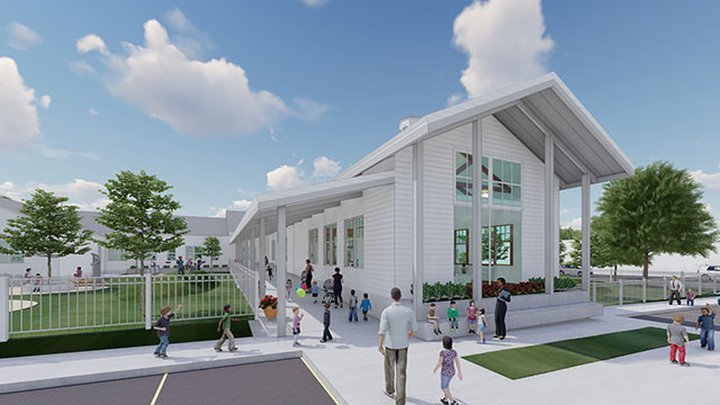
A rendering of the Trinity Annex project looking west. | CPH
The first serious on-campus demolition will involve the Jensen House — the current home of the University’s Children Center, located on the southern edge of campus. In its place, the University plans to build a 25,000 square-foot Microgrid and Sustainability Building by January of 2025. The infrastructure report states that the building will be used as a testing facility for energy systems, and give a “home for sustainability” on campus. The $24 million project will also include space for academic departments, lab research, offices, conferences, students and a common area.
In January, CPH announced its plans to move the Children’s Center and Child Development Lab to the renovated Trinity Annex by June of 2023.
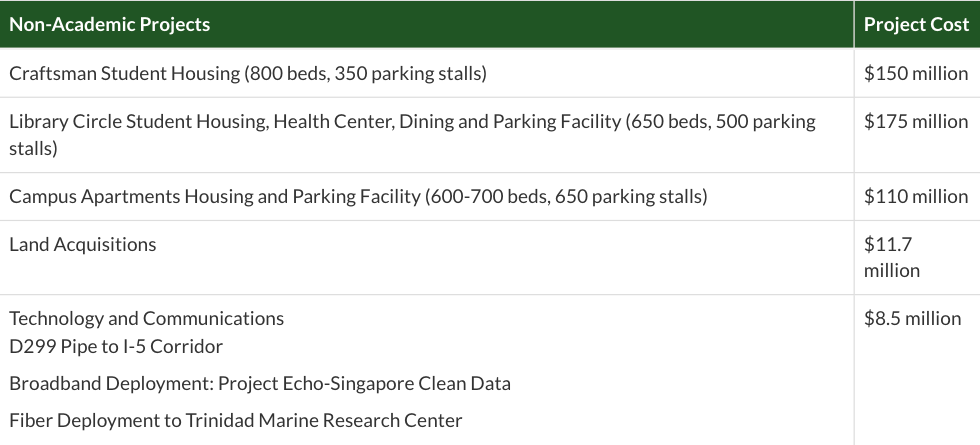
Current projected cost for CPH’s infrastructure projects. | CPH’s updated infrastructure plan
By August of 2026, CPH plans to complete the building of its new Library Circle Student Housing, Health & Dining Building, as well as the university’s first parking structure. This structure will add about 500 new parking spaces to the lot located at the northwestern tip of campus near Granite Avenue and LK Wood Boulevard.
“The project would build approximately 200,000 [gross square feet] at the northwest corner of Library Circle and LK Wood Boulevard,” the infrastructure project states. “The building will contain a new health center and expanded dining services with 650-bed residential complexes above.”
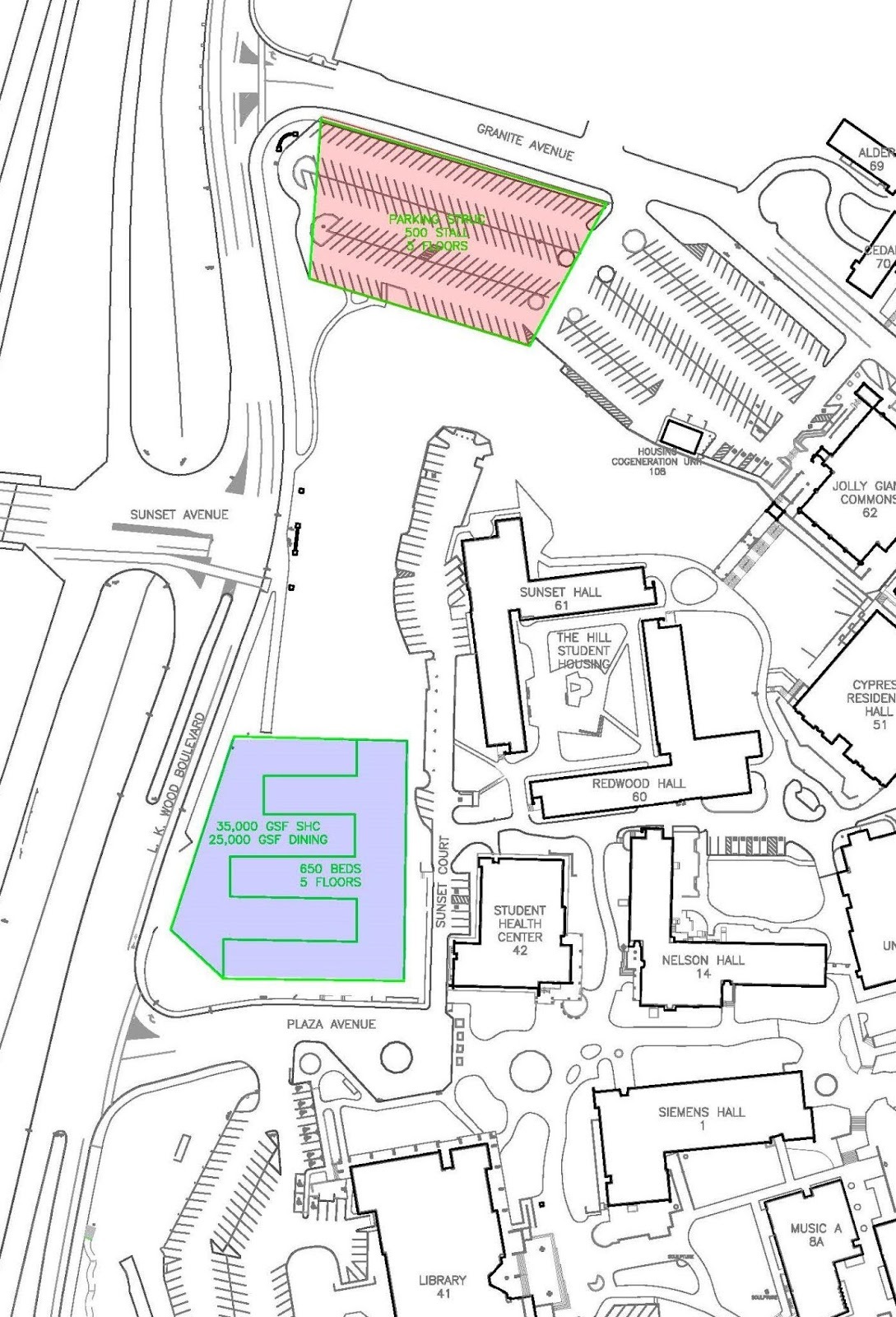
The proposed Library Circle Student Housing, Health & Dining Building and parking structure. | CPH
These proposed projects are estimated to cost $175 million, and would result in the demolition of multiple campus houses, including the “little apartments,” used for CPH’s ZipCar service, Brero House, home to the University’s Indian Tribal & Educational Personnel Program, Hagopian House, and Feuerwerker House, previously used by the now-gutted public radio station KHSU.
“Older homes in a public institution are problematic for many reasons, including code compliance and maintenance costs,” Fisher said. “Not to say they aren’t treasured on campus.”
The final phase of the infrastructure overhaul would include the demolition of Campus Apartments, the current sculpture and ceramics labs, the Warren House, and the Bret Harte House — the longtime home of the University’s journalism department.
The Bret Harte House. | CPH Journalism Department Facebook page
CPH Associate Journalism Professor Deidre Pike told the Outpost that many journalism alumni were heartbroken to hear that the beloved building may be destroyed.
“Bret Harte House is the kind of marvelous charming cottage that oozes Humboldt culture,” Pike said. “So those of us who’ve had the privilege of living, advising, teaching and bonding with students in this charming, not-officially-designated, historic part of campus are devastated.”
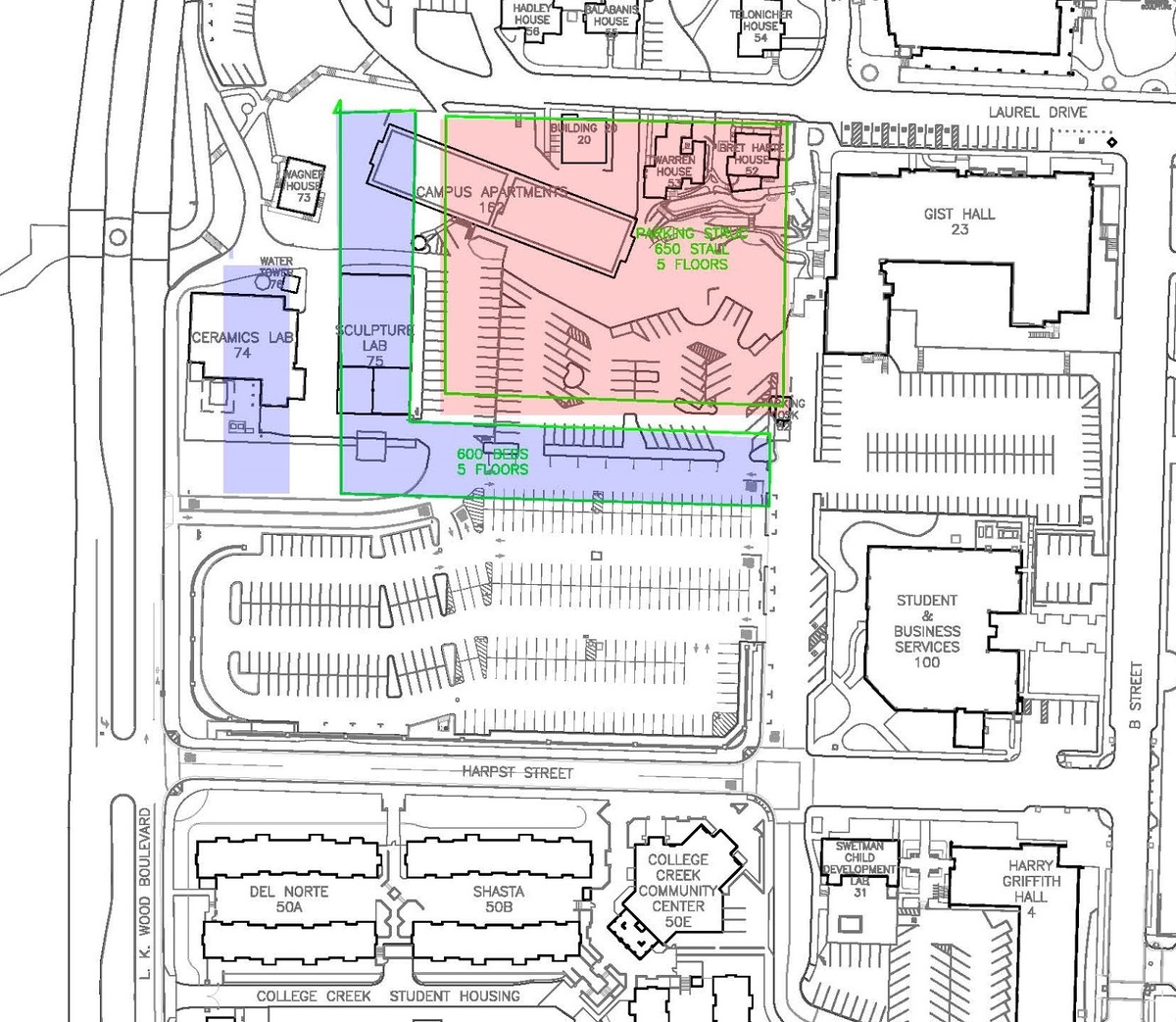
The Campus Apartments Student Housing and Parking Structure project. | CPH
Pike added that the final leg of construction includes the removal of more open greenery and several mature redwood trees.
“It’s not just our hallowed halls on the chopping block, though, but some spectacular mature landscaping and several tall stands of redwoods,” she said. “Warren House, Campus Apartments, the ceramics studios – that whole hill goes down to make room for a parking structure topped by dorms. All of that is needed, yes. But preserving a tiny bit of our Humboldt culture would be a huge needed morale boost right now for faculty, students and alumni. We don’t want to be another Cal State Strip Mall.”
The small grove of redwoods has proven to be a hazard in the past, most notably in 2015, when a giant tree fell directly onto the roof of the four-story student apartment building.
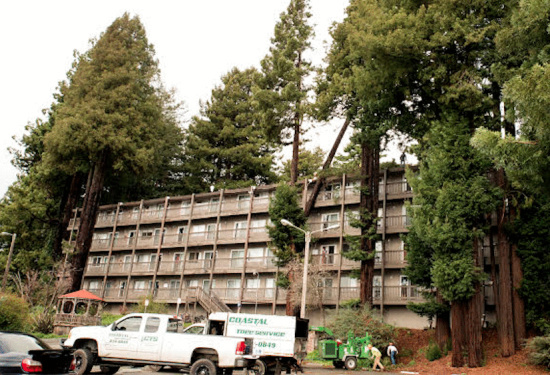
A crew works to remove the tree that fell on Campus Apartments in 2015. | Outpost file photo
“When the redwoods are in standalone groves like that, they’re exposed by winds on all sides,” Fisher said. “It’s very precarious.”
However, he added that no major landscaping would be done without community input.
“Anytime we run into geologic or landscape problems on campus, we try to engineer around those things as much as possible,” Fisher said. “It’s just too early to tell. There’s so much planning between now and when that project comes online. We would always move that type of decision making through a landscaping committee and community forum.”
The $110 million Campus Apartments and parking structure project will include the addition of 600 to 700 beds and 650 new parking spaces. Construction is scheduled to be completed by December of 2027. Fisher said that the Journalism Department and ceramics and sculpture labs will be given new homes at a later date.
CPH also has several major academic renovation projects planned in addition to the aforementioned infrastructure projects. These renovations include more space and updated labs for Alistair McCrone Hall and the Science A and C buildings. The University will also invest $21 million in the Eureka Research Lab (Offshore wind lab) marine facilities. This includes the Telonicher Marine Lab, the University’s “Coral Sea” marine research vessel, and new Eureka Research Lab.
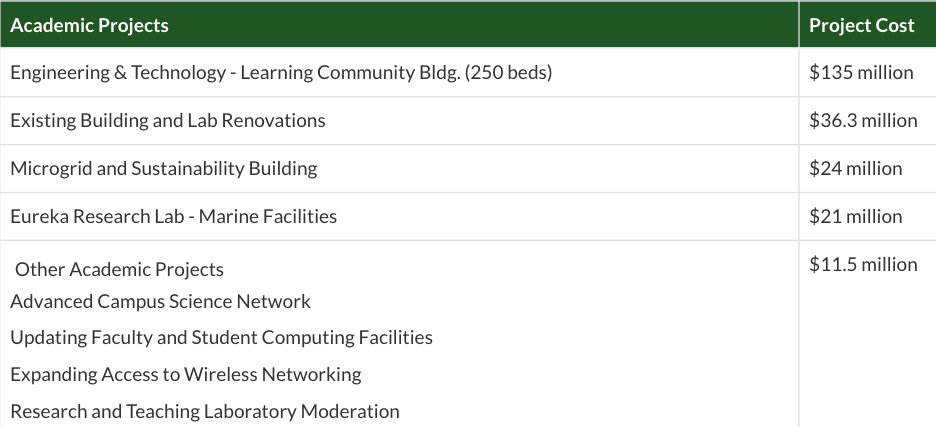
Proposed academic projects. | CPH
While these projects are anticipated to be completed by 2027, Fisher and CPH spokesperson Aileen Yoo told the Outpost that all of this information is subject to change.
“Nothing is set in stone,” Yoo said. “Plans have been and continue to be fluid and incremental, and we share information when we have more details.”
BOOKED
Yesterday: 7 felonies, 17 misdemeanors, 0 infractions
JUDGED
Humboldt County Superior Court Calendar: Friday, Sept. 4
CHP REPORTS
434 Mm197 N Dn 4.30 (HM office): Traffic Hazard
6000 Mm101 N Men 60.00 (HM office): Trfc Collision-No Inj
6183 Mm101 N Men 61.80 (HM office): Trfc Collision-1141 Enrt
Lesina Rd / Titus Rd (HM office): Trfc Collision-Unkn Inj
ELSEWHERE
RHBB: CDPH Issues Immunization Recommendations for 2026-27 Respiratory Virus Season
RHBB: Redway Transfer Station to Close an Extra Day for Construction
RHBB: Dows Prairie Road to Close for Two Months for Culvert Repair
State Unveils Long-Awaited Standard for Drinking Water Contaminant
Rachel Becker / Tuesday, March 22, 2022 @ 7:16 a.m. / Sacramento

Photo by Miguel Gutierrez Jr., CalMatters
###
California has proposed a long-awaited standard for a cancer-causing contaminant in drinking water that would require costly treatment in many cities throughout the state.
Traces of hexavalent chromium are widely found in the drinking water of millions of Californians, with some of the contamination naturally occurring and some from industries that work with the heavy metal.
The proposed standard is a major step in a decades-long effort to curtail the water contaminant made infamous by the movie Erin Brockovich, based on residents of rural Hinkley, California who won more than $300 million from Pacific Gas & Electric for contamination of their drinking water.
Once finalized, the standard would be a first in the nation to specifically target hexavalent chromium.
The highest levels are reported in parts of Ventura, Los Angeles, Yolo, Merced and Riverside counties.
Several hundred drinking water wells throughout the state exceed the State Water Resources Control Board’s proposed standard of 10 parts per billion. The highest levels were reported in parts of Ventura, Los Angeles, Yolo, Merced and Riverside counties. Residents of the low-income, mostly Latino city of Los Banos, for instance, are drinking water that contains three times more than the proposed standard would allow.
Water suppliers say the proposed standard will lead to substantially higher monthly rates for many residents, while public health experts and environmental advocates criticize it as not protective enough of people’s health.
“It’s not terrible, but it’s not acceptable,” Max Costa, professor and chair of environmental medicine at NYU School of Medicine, said of California’s proposal. Costa was an expert witness for residents in the Erin Brockovich case. When it comes to hexavalent chromium in drinking water, he said, “The most acceptable level is none.”
Under the water board’s proposal, 10 parts per billion would be the maximum allowable amount in drinking water. It’s a minute amount, equivalent to about 10 drops of water in an Olympic-sized swimming pool. But it’s also 500 times greater than the amount California’s scientists deem a negligible cancer risk over a lifetime.
Under state law, the state must balance the health risk and the financial cost when setting drinking water standards.
Still not a negligible cancer risk
The new proposal is a draft, released to solicit public comment before officially starting the regulatory process, which could begin by late summer. An official drinking water standard is expected to be finalized in early 2024.
Until recently, the science was mixed on whether hexavalent chromium causes cancer when ingested, rather than inhaled. (Inhaling it has been a well-documented cause of lung cancer for workers for several decades.)
The
proposed standard is "not terrible, but it's not
acceptable...The most acceptable level is none."
--Max Costa, NYU School of Medicine
But in 2008, National Toxicology Program studies showed rats and mice that drank high doses of hexavalent chromium for two years developed oral and intestinal cancers. In addition, California state scientists who analyzed the scientific literature reported increased stomach cancer risk among people who work with hexavalent chromium.
Chemical industry representatives have criticized the studies, saying the rodents were drinking levels much higher than people are exposed to. Mice and rats are routinely given large doses to extrapolate the cancer risk to a larger human population that lives longer.
In 2011, California scientists set a non-enforceable public health goal for hexavalent chromium that is much more stringent than the current proposal — 0.02 parts per billion. The amount was chosen because it poses a negligible, one-in-a-million lifetime cancer risk that is generally considered acceptable for environmental contaminants.
The water board’s proposal would pose a much higher risk — one cancer among every 2,000 people over a lifetime, according to the state’s risk assessment.
“I think we would all much prefer to be at a better protective level than one in 2,000 cancer cases,” said Darrin Polhemus, deputy director of the division of drinking water with the State Water Resources Control Board. “But the costs do impose a really high burden at the lower (standard) levels, and just couldn't strike that balance there. So, I wish there was a different scenario to paint.”
The limit is likely to be tested in court. It’s happened before: In 2014, California set a short-lived standard of 10 parts per billion. But in 2017, a judge overturned it, ruling that state regulators had failed to consider whether the rule would be economically feasible.
“Water systems have had over twenty years to invest in appropriate treatment while communities have faced tragedy and the health cost burdens because of this chemical,” Brockovich, an activist who was instrumental in the PG&E settlement, said in a statement. “That makes it all the more disgraceful that the State Water Board is proposing a drinking water standard that will not protect the California public. This is nothing more than regulatory lip service.”
“We
would all much prefer to be at a better protective level...But the
costs do impose a really high burden at the lower levels."
-- Darrin Polhemus, State Water Resources Control Board
Hexavalent chromium, also known as chromium-6, is used in industrial processes such as metal-plating, stainless steel production and wood preservation. It also naturally occurs in certain California rocks and soil.
State data shows that 129 community drinking water systems serving more than 4.1 million people have reported hexavalent chromium levels above the proposed standard. In addition, 51 systems serving institutions and businesses — including 11 schools — and three water wholesalers exceed the proposed limit. (Some wells may no longer be supplying water to residents.)
The highest level reported by the state is in Ventura County, where one drinking water well was reported with 173 parts per billion — more than 17 times higher than the proposed standard.
Some contamination, such as in the Coachella Valley, is naturally occurring. Some, like in the San Fernando Valley, is linked to industrial contamination. And some may be a combination of both.
Latino communities and those with larger populations of other people of color are more likely to have drinking water with average levels of hexavalent chromium above 5 parts per billion, according to Lara Cushing, a UCLA assistant professor of environmental health who conducted a recent study.
Current federal and California drinking water standards combine hexavalent chromium and its more benign alter ego, trivalent chromium, which is considered an essential nutrient. Federal drinking water standards cap total chromium at 100 parts per billion, and California at 50 parts per billion.
Higher rates for customers
Once a standard is finalized, water suppliers must remove the chemical from drinking water to below 10 parts per billion or face penalties that could include fines of up to $1,000 a day.
They can treat the water at plants or at household taps through reverse osmosis or another technology, blend it with clean water, take contaminated wells offline or pipe water from another system.
The proposal gives water providers some time to comply, Polhemus said — two to four years after the rule’s adoption, depending on their size. In the interim, water providers that detect hexavalent chromium will be required to submit their plans and timeline for attaining the standard.
Domestic well owners — like those in the San Bernardino County town of Hinkley portrayed in the movie — are not covered by drinking water standards. Private well owners are generally responsible for testing and treating their own water.
The cost of treatment is likely to increase customer rates, although some water agencies might opt for a cheaper option, such as blending their water with cleaner sources.
Rates for the smallest water systems — fewer than 100 connections — could increase by around $38 per month if suppliers install treatment in households. Systems with between 100 and 200 connections may see hikes as high as $44 to $167 per month, based on installing reverse osmosis or other costly treatment systems, according to state estimates. The largest water providers, which can buffer the costs across all customers, could have monthly increases between 75 cents and $45.
State regulators couldn’t predict what funding will be available when a standard is eventually finalized, but said in general, state and federal programs help communities clean up their drinking water.
Rates for the smallest water systems could rise by $38 per month, while the largest could see increases between 75 cents and $45 per month.
Some larger water providers are looking forward to the end of a drawn-out regulatory process.
“I've been hoping for it to be re-finalized for some time,” said Tarrah Henrie, manager of water quality for California Water Service, the third largest regulated water utility in the country. “It just gives us certainty.”
The utility has nearly 500 active wells around the state. Of them, 20 wells tested above 10 parts per billion hexavalent chromium. The wells are located in the Solano County town of Dixon, the Glenn County town of Willows and in two small water systems near Salinas.
"Disadvantaged
communities are really in desperate need of state funding
assistance."
-- Mary Lynn Coffee, attorney for the city of Los Banos
Ten of the wells are being treated — in Willows, with the help of a state grant. Though rates increased slightly in Dixon, Henrie said, the company has been able to prevent customer rates from spiking by subsidizing residents there. Without the subsidy, customer rates in Willows and Dixon would have increased by 18% to 28%.
Los Banos in Merced County is bracing for the financial hit.
Rates could increase “exponentially,” said the city’s outside counsel, Mary Lynn Coffee. Costs to treat water from 13 wells could run from $41.6 to $92.3 million, with annual costs running between $1.7 and $5.1 million, Coffee said, based on a 2015 assessment. The city’s water budget has averaged around $4.7 million for the last four years.
The 13 wells that serve the largely Latino city of around 45,000 people have average hexavalent chromium levels of around 29.8 parts per billion, three times higher than the proposed standard would allow. Los Banos residents earn on average about 60% of the state average, and California has categorized the city as disadvantaged.
Since all signs point to the hexavalent chromium being naturally occurring, “there is no polluter that would help contribute to the cost of cleanup,” Coffee said. “Disadvantaged communities are really in desperate need of state funding assistance if they're going to meet a new (limit) around the 10 parts per billion mark.”
###
CALmatters.org is a nonprofit, nonpartisan media venture explaining California policies and politics.
OBITUARY: Margaret Jean (Charles) Martinez, 1957-2022
LoCO Staff / Tuesday, March 22, 2022 @ 6:56 a.m. / Obits

Margaret Jean (Charles) Martinez was born on October 19, 1957 to Clarice Charles-Swain in Crescent City. Margaret sadly passed away from aggressive cancer on Sunday, March 13, 2022 at her home in Blue Lake.
Margaret is survived by her children Nettie and Ellrod (her bingo partner) Daniel Martinez, Rafael Martinez, Margaret “Maria” Mata, Kathy Mata & Flavio, Michael Ballard & Dawn, Guadalupe “Junior”Oscar her grandchildren Waukell, Joseph, Oceanna, Jason Anthony, Sayah, Angelica, Adin, Nettie-jo, Oscar, Milo, Matteo, Tyler, Klohie, Terris, her brother Russell Walters, and ex/good friend 'til the end Butch Henderson (grandpa)
Predeceased by brother John Swain, Delray Bates, grandparents, foster parents and her best friend Blaine Reese, Pete, Bobby and many more. Margaret leaves behind son Justin Stripling; two granddaughters Jazzmean, Karisma; and three great-grandkids; brothers and sisters Jack, Jim, Joe, Lottie, Leona, Tonja; and many beloved nieces, nephews and cousins.
She had a hard upbringing. Despite all that she pushed through and made a good life, getting adopted out and reunited with her blood family. She live down south, moved to Humboldt County to raise her kids in 1980.
She was diagnosed with stage 4 cancer almost year ago after being first diagnosed with stage 3 cancer in 2018. “I put up a good fight, longer than the doctors said (6 month) I did it,” she said on New Year's Day. “Cancer sucks.” (Get to know her sense of humor.)
When people would ask how to spell her last name she would spell it M-A-R-T-I-N-E-Z, but she’s not E-Z. Always got a laugh.
Margaret was known for her bright, colorful hair, cheerful self, a talking buddy, a listening ear, selfless acts, helping the best she can to everyone, and a smile that will be truly missed by all. Things she loved to do: arts and crafts, beading, going to new places to eat, walking, just taking a drive, traveling in general. Within the last year she fell in love with bingo. She likes owls, whales, the color hot pink and tie-dye. But glitter and glow-in-the-dark, she would say.
She struggled with the concept of tough love and was fiercely independent and private. She loved her entire family, despite their quirks and dysfunction. She worried about them, rooted for them, protected them, resented them, forgave them, and always kept on loving them. Biggest joy in life was raising her eight kids and enjoying her 17 grandchildren and three great-grandchildren. When she would be at home you would find her doing something with her hobbies or sitting on the porch enjoying the outside. She was one of a kind and to be loved by her was to be truly blessed. May you be at peace and no longer suffering. FLY HIGH MOMMAKINS.
Margaret's celebration of life will be held in Klamath on April 2, 2022 from 1-5 p.m. Pot luck (ask family for more details).
Carnations are her favorite.
###
The obituary above was submitted on behalf of Margaret Martinez’s loved ones. The Lost Coast Outpost runs obituaries of Humboldt County residents at no charge. See guidelines here.
LoCO Elections is Back! Get Your Questions Ready, Because Your Chance to Grill the Candidates on the June 2022 Ballot Has Arrived
Hank Sims / Monday, March 21, 2022 @ 4:13 p.m. / Elections

Check out LoCO Elections!
Yesterday was the spring equinox, right? That's pretty cool. It's spring now.
And with spring, in this even-numbered year, comes ... election season! Holy moly do we ever have a loaded ballot for June 2022, with contested races for...
- Fourth District Supervisor
- Fifth District Supervisor
- District Attorney
- Auditor-Controller
- Clerk-Recorder/Registrar of Voters
- Superior Court Judge, and
- Arcata City Council
That's a lot of figuring-out-of-things we're all going to have to do before we mark up our ballots, and there are a lot of fresh faces this time around. How do we figure out who they are and what they stand for?
To help with that, the Outpost is reviving a beloved election-season feature: LoCO Elections! It's the special pop-up Outpost subsite where you can put your questions to the people running for office, and they can put their answers to you.
Need a refresher on how it all works? Click here for that. Then pop on over to LoCO Elections and put your questions directly to the people who would like to serve you! Or upvote questions other people have asked, so's to bring it to the candidate's attention!
So far, the following candidates for office have signed up for a LoCO Elections account: Natalie Arroyo, Kim Bergel, Larry Doss, Cheryl Dillingham, Adrian Kamada, Juan Pablo Cervantes and Steven Steward. But if your question is for some other candidate, go ahead and ask it anyway. They might show up at some point.
You're a candidate and your name isn't here? Why didn't you answer my email? Shoot me a line and I'll set you up with an account: hank@lostcoastoutpost.com.
Check out LoCO Elections!
GULCH THOUGHTS? The City of Eureka Would Like Your Views on the Town's Gulches and Greenways, in Advance of Developing a New Citywide Policy
Hank Sims / Monday, March 21, 2022 @ 11:31 a.m. / Local Government
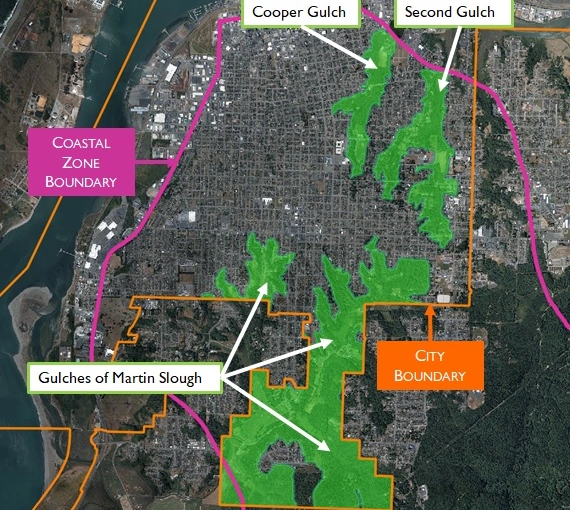
Graphic: City of Eureka.
###
Have you walked that little, unofficial trail behind Zane Middle School and the dog park? Really nice back there, right? What you may not know -- what I didn't know, anyway -- is that the city calls that "Second Gulch."
Someday soon that trail may become a little more than unofficial. The City of Eureka is ramping up its efforts to develop comprehensive policies for its greenways and gulches -- including Second Gulch, Cooper Gulch and the various branches of Martin Slough, as show in the map above.
Before any policies are drafted, though, the city would like your input. What sort of activities should be allowed in the gulches? Trails? Community gardens? Vegetation management? What should be prohibited? Development above a certain slope? Timber harvesting? What?
If you like Eureka and its gulches, you should take the city's survey, which can be found at this link. And once that has whetted your appetite for all matters gulch, maybe you want to register for the city's "Virtual Public Workshop" on the topic, which is scheduled for Tuesday, March 29, at 5:30 p.m. Register at this link.
Want to learn lots more about the city's gulch program? Click here to do that. Right now city staff are hoping to have draft policies in front of the city's Open Space, Parks and Recreation Commission by April 28, before the Planning Commission by May 9, and to the City Council for approval by July.
Second Gulch from the air. Photo: Robert Torres, via Google Maps.
The Collapse of Community College Enrollment: Can California Turn It Around?
Mikhail Zinshteyn / Monday, March 21, 2022 @ 7 a.m. / Sacramento
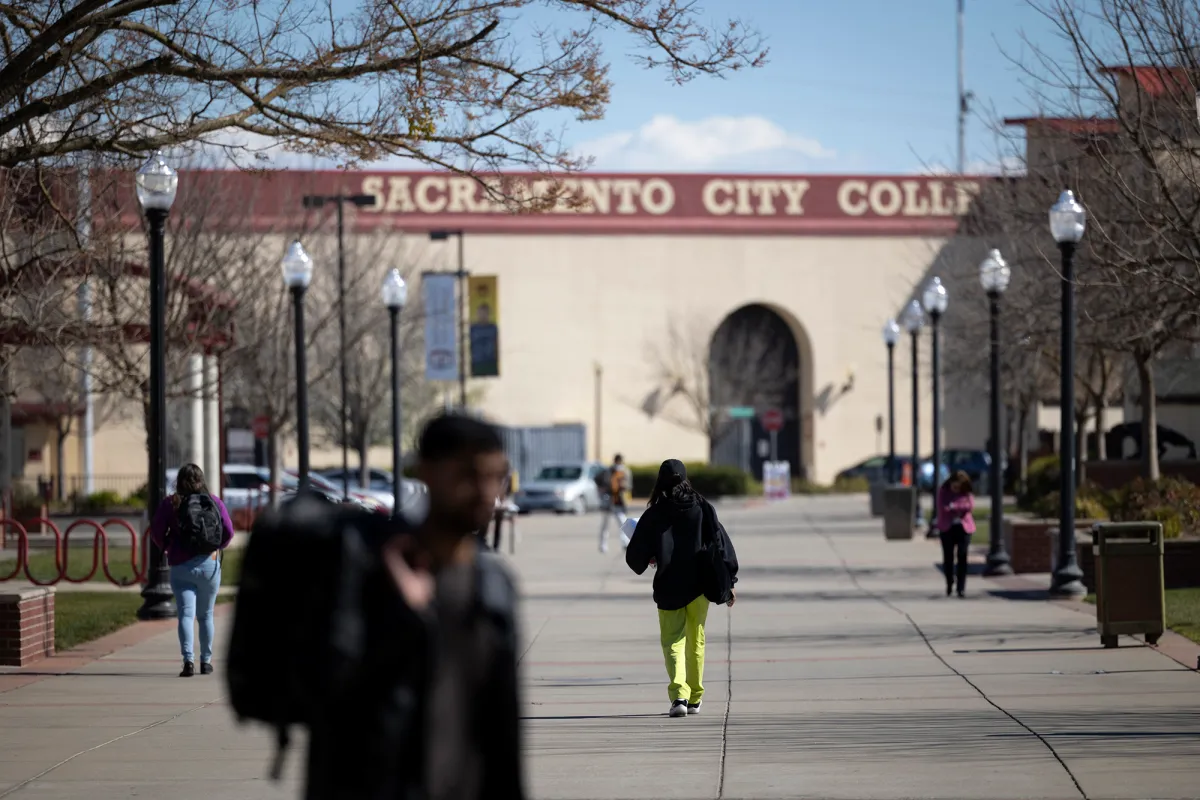
Students walk through campus at Sacramento City College on Feb. 23, 2022. Photo by Miguel Gutierrez Jr., CalMatters
After community college enrollment collapsed in late 2020, California lawmakers last year gave the system of public two-year colleges $120 million to help stem the tide of departing students and bring them back.
So far, progress has been uneven. Through last fall, just 17 of California’s 116 community colleges have seen the number of students they enroll grow since fall of 2020. At 42 colleges, more students left in the fall of 2021 than in fall of 2020, according to a CalMatters analysis of system enrollment data.
Officials acknowledge that the number of students attending continued to sag systemwide. “Fall 2021 headcount is down approximately 7% from fall 2020 and down 20% overall compared to fall 2019,” a cratering of more than 300,000 students over those two years, said a March memo from the California Community Colleges Chancellor’s Office.
While $120 million may be a rounding error in the state’s $47 billion commitment to higher education for the current budget year, it’s still a large chunk of change.
Lawmakers and the governor last year didn’t include any reporting requirements for colleges to show how they are using the re-enrollment dollars.
Gov. Gavin Newsom now wants to send another $150 million to community colleges to further bolster their re-enrollment efforts.
The expected return on investment is unclear.
While colleges received $20 million to stimulate re-enrollment in March of last year -- well before fall term began -- the remaining $100 million only reached colleges in the middle of September at the earliest, several weeks after nearly all colleges started their fall semesters. While most state higher education financial support is annual, this money was one-time.
That means the bulk of the money’s impact can’t be measured yet. The full package’s effect on student enrollment for the spring is also unknown because colleges don’t report their student population numbers until around July.
Nor will the public ever truly know how colleges spend this money: Lawmakers and the governor last year didn’t include any reporting requirements for colleges to show how they are using the re-enrollment dollars.
The chancellor’s office of the community colleges supports Newsom’s plan for re-enrollment money but in its budget request last year sought $20 million in annual support, not $150 million one-time.
Enrollment big picture
Early signs suggest the $120 million for re-enrollment has made a difference in stabilizing campus student populations, but other factors are also responsible for bringing more students back or keeping them from leaving. Offering more courses in-person played a role, several college administrators said, as did billions of dollars in federal COVID-19 relief aid for students and colleges.
Much of the enrollment loss is outside the control of colleges. The labor market is sizzling now, with rampant labor shortages leading employers to pay well above minimum wage for positions that typically don’t require a college education. Historically, community college enrollment swells during economic downturns when employers are more selective, prizing applicants with college degrees. But enrollment dips when the economy is hot because adults don’t view education as an immediate ticket toward gainful employment.
The whole California community college system isn’t likely to return to its fall 2019 enrollment levels until two or three years from now, said John Hetts, a visiting executive for the chancellor’s office who oversees enrollment.
Colleges will have to work harder to keep their student populations steady. The public K-12 system is projected to shrink by nearly 600,000 students in eight years. California’s overall population has been either stagnant or in slight decline. Enrollment growth will have to come from more adults who aren’t recent high-school graduates -- including the roughly 3 million 25-to-54-year-olds who already have some college but no degree -- and from college efforts to retain a greater share of their existing students, Hetts said.
Financial aid helpers
Rio Hondo College, in a suburban pocket of eastern LA County, saw its number of students inch up from 16,292 to 16,370 since fall 2020. That’s still well short of the more than 21,000 enrolled in fall 2019, but makes it one of the very few community colleges that managed to actually grow in the past year.
Signing up students for financial aid has been key, Rio Hondo officials said.
The college used $200,000 of its $1.2 million in re-enrollment money to hire 10 part-time staffers who coached students through applying for federal and state financial aid. All that money came from last year’s smaller March allotment of re-enrollment funding.
The goal at the start of last fall was to increase the number of new and current students applying for financial aid by 5%, a target the school hit, said Earic Dixon-Peters, vice president of student services at the college. With state or federal dollars in hand, more students remain in school.
Rio Hondo is also setting aside $4 million in federal COVID-19 relief to pardon students’ campus debt, such as from unpaid tuition bills. Before the pandemic, if a student owed the campus any amount of money, that student could not register for classes. Now, registration is open to students with outstanding balances. So far 4,000 students took up the college on that offer, leading to $1.7 million in fee forgiveness, said Stephen Kibui, vice president of finance at Rio Hondo.
Shift to in-person helping
At Santa Barbara City College, enrollment inched up to 13,855 students in fall 2021 compared to 13,664 the previous year, which is still short of the 14,874 enrolled in fall 2019.
But the college’s $1.2 million share of the state re-enrollment money had nothing to do with it. The college moved the first installment in March to this fiscal year. As for the remaining $1 million? “We didn’t even know about it till October,” said Kindred Murillo, the college’s interim president. Fall classes at Santa Barbara began Aug 23.
Helping to fuel the enrollment uptick? More in-person classes, Murillo said. In fall 2021, about 70% of classes were online compared to around 88% in fall 2020. Pre-pandemic, about 17% of the college’s classes were online.
The lost students were “the students that really do well in in-person classes and were struggling in the online program,” said Murillo. The college’s push for more in-person classes included a focus on non-credit courses, such as English language courses, Murillo said. Students in those courses are less likely to be able to take classes online, either because of insufficient internet and computer access or language barriers.
State re-enrollment funds are helping to boost spring enrollment, Murillo said. The college used some of the money for a re-enrollment event in December that brought back 150 students for spring. Students appreciate that 50% of the college’s courses will be in person, Murillo said. The college is also using part of the state funds to dole out $500 to select students to cover books and other school supplies.
Isolated idyll, a rural college perspective
College of the Siskiyous, the state’s northernmost community college located an hour from the Oregon border, also saw a modest rebound in the number of students attending last fall. Among students in credit-bearing classes, enrollment increased from around 1,300 to 1,400, a campus administrator said. That’s still below the 1,800 enrolled in credit-bearing courses in fall 2019.
The college has so far used about $36,000 of its re-enrollment money to print schedules and mail them out to its service area -- roughly the size of Rhode Island. Administrators figured sending out physical copies of the course schedule would reach potential students in the rural north who either lacked reliable internet or were unaccustomed to online content. “That could have contributed to some of our enrollment growth,” said Char Perlas, interim superintendent/president of the college.
It also plans to use much of its roughly $400,000 in re-enrollment and retention money as a down payment for an outreach department with three staffers, though the college will have to find other, ongoing sources of money to foot the bill.But because the college is so isolated, it struggles to hire instructors, an ongoing problem that likely prevents the campus from enrolling more students. For instance, the college has an engineering degree, but there are semesters in which it offers no engineering courses, administrators said.
Re-enrollment success
More than just printed schedules or outreach, though, it’s likely just a consistent return to in-person learning that will boost enrollment.
“It was really hard to go from being excited about going on tour across the state…to being completely isolated.”
-- Selenan Johnson, musical theater student
Expanded in-person learning and COVID-19 safeguards lured back Selena Johnson, a musical theater student. Before the pandemic cut the spring term short in 2020, Johnson was taking courses full-time. But the next 18 months of online instruction were a struggle.
“It was really hard to go from being excited about going on tour across the state -- and being able to have that energy when we would meet up and learn together -- to being completely isolated,” Johnson said.
She quit school last fall to work, unsure if she’d ever earn a degree. But the college’s commitment to COVID-19 safety precautions and the return of in-person choir classes brought her back to school this spring on a part-time basis.
It’s a pace that works for her, and if she takes two classes next fall and two more the spring after, she’ll be able to graduate before summer of 2023.
###
CALmatters.org is a nonprofit, nonpartisan media venture explaining California policies and politics.
OBITUARY: Lois Marie Silva Waters,1943-2022
LoCO Staff / Monday, March 21, 2022 @ 6:34 a.m. / Obits

Lois passed away with her grandson Tristen and his
mother, Judy Luna, by her side on January 3, 2022, at St. Josephs
Hospital. Born March 22, 1943 to Domingo
and Mary Silva, Lois was raised on a dairy farm in Blue Lake with her six siblings.
Lois graduated from Arcata High School, Class of '61, and attended Humboldt State following her graduation. She worked in the credentialing department at Humboldt State University until her retirement in June 2004. Lois and her husband Tom opened and operated the Alley Cat Bar and Restaurant in Eureka from 1969 to 1986.
Lois was an avid reader and could frequently be seen with her book or Kindle close by. She looked forward to the Horse Races at the Humboldt County Fair each year. Lois and her sister Arlene enjoyed annual trips to Reno and Tahoe to watch shows and gamble. She and her siblings held annual family reunions to gather and spend time together.
Lois loved her family and hosted many family holiday and birthday events over the years. Her ability to cook an amazing dinner for large groups so effortlessly was envied by many. She loved entertaining and opening her home to family.
Prior to their deaths, Lois provided support and care for her father, Domingo, mother-in-law, Barbara, husband, Tom, and brother-in-law, Joey. She was the grandma, aunt and great aunt who always had special treats and gifts awaiting for every occasion. She had the ability to make everyone feel extra special and all looked forward to going to see her for visits.
Lois was proceeded in death by her parents, husband Tom, sister Marge Cutone, and brother-in-laws, Mike Ladd, Mike and Joey Waters. She is survived by her son Tony, grandsons Tristen and Cooper; daughter Michele, son in law Tony and grandson Morgan, and step-grandchildren Tory, Loren and Brien. She is also survived by her siblings Joyce Ladd, Arlene Bacciocco, Betty Husting (Nick), Don Silva and Alice Hunt (Howard); sister-in-law Sally Sokoloski (Jerry), and brother-in-law Tim Waters and many nieces and nephews and great nieces and nephews.
Lois will be remembers for her laughter, beautiful smile, sense of humor and fun loving spirit. She was a treasured family member and loyal friend who will be missed by all who knew her. She never missed an opportunity to help someone out when needed. A private ceremony will be held at the Minor Mauseleum in Arcata. A Celebration of Life event is scheduled for Thursday, March 24, 2022 at 12 p.m. at St. Bernard’s Catholic Church, Eureka, California. In lieu of flowers, the family suggests a donation to a charity of your choice.
Always in our thoughts, forever in our hearts.
###
The obituary above was submitted on behalf of Lois Waters' loved ones. The Lost Coast Outpost runs obituaries of Humboldt County residents at no charge. See guidelines here.


