

What’s Behind the ‘Great Resignation’ of California Lawmakers?
Ben Christopher / Monday, Jan. 10, 2022 @ 7 a.m. / Sacramento
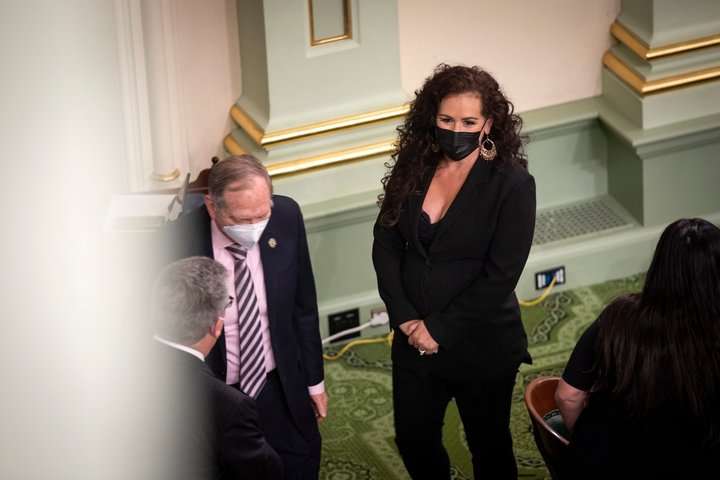
Lorena Gonzalez, a San Diego Democrat, says goodbye to colleagues after she announced her resignation from the state Assembly on Jan. 3, 2022. Miguel Gutierrez Jr./CalMatters.
###
Will the last legislator in the building please turn out the lights?
Propelled by approaching term limits, new district lines and a raft of political opportunities outside the state Capitol, more than a dozen California lawmakers have sought employment elsewhere.
At last count, an exodus of 14 Assembly members and state senators have either opted not to seek re-election in November or have already called it quits mid-term. That doesn’t include the seven members, all senators, who are barred from seeking reelection in 2022 by legislative term limits. Nor does it include Murrieta Republican Kelly Seyarto, who is hoping to jump from the Assembly to the Senate.
It’s not just the number; it’s also the power and stature of those leaving.
Last week alone, the Capitol bid farewell to progressive powerhouse Lorena Gonzalez of San Diego, who departed the Assembly to take the top job at the California Labor Federation. Then came back-to-back announcements from Democratic Sen. Connie Leyva of Chino and Assemblymember Patrick O’Donnell of Long Beach, who both said they would not be seeking reelection despite having four years left to serve under the state’s term limit law. Then, on Thursday, Republican Assemblymember Kevin Kiley of Rocklin, who ran in the 2021 gubernatorial recall, announced that he would be running for Congress.
That all makes for an unusual degree of churn, already the largest in at least seven years. In 2012, California voters passed Proposition 28, extending the amount of time that lawmakers can serve to a total of 12 years, in either chamber. That had ushered in a new era of job security for legislators and continuity for the Legislature as a whole.
But there will be at least 21 new legislators, out of 120 total, after the November election. There are special elections on Feb. 15 and April 5 to fill the four Assembly seats that are already vacant.
And this election year is still young: Candidates have until mid-March to declare their candidacy for office — or not.
Some incumbents and lobbyists say this year’s changing of the guard has the potential to shake up the Capitol’s policy-making dynamic.
As experienced lawmakers move on, they take their policy expertise and their legislative know-how with them. O’Donnell and Leyva both serve as K-12 education committee chairpersons, and last month, Assemblymember Jose Medina, who leads the Assembly’s higher education committee, announced that 2022 would be his final session, too.
“There’s the potential for not just the loss of leaders who have an extraordinary background and expertise, but also the staff that have made the realization of their policies possible,” said Jessie Ryan, lobbyist with the Campaign for College Opportunity, a nonprofit advocacy group.
Kristina Bas Hamilton, a lobbyist and consultant who represents unions and anti-poverty groups in Sacramento, said the turnover makes things less predictable for those in the business of pushing policy change and wrangling support for contentious legislation. For one thing, lawmakers eyeing other races may be more circumspect or distracted.
“If there’s uncertainty, no one wants to commit to doing big stuff,” she said. The early departure of incumbents also means new committee leadership. For policy advocates sponsoring a particular bill, that “changes the whole landscape.”
O’Donnell said his decision not to run for reelection wasn’t motivated by politics. “I’m not getting any younger…and being an elected official is not the sum of my being,” he said. He plans to return to the classroom as a high school civics teacher.
But the fact that many of his colleagues on their way out are preparing to run for Congress or local office is “gonna have an impact on policy,” he said. “People are probably going to be more cautious of the big bills that seek to do Herculean changes.”
Where’s everyone going?
The Legislature’s “Great Resignation” is driven by a number of political trends — all of which have come to a head at roughly the same time.
A rash of congressional retirements and changes in district lines have inspired some legislators to seek higher office. That’s the case for Kevin Mullin, a San Mateo Democrat second in the Assembly pecking order to Speaker Anthony Rendon, who has been endorsed by the retiring U.S. Rep. Jackie Speier to succeed her.
Likewise, after Rep. Karen Bass announced her bid for Los Angeles mayor last year, state Sen. Sydney Kamlager opened up a congressional fundraising committee — though she has yet to officially announce her intention to run.
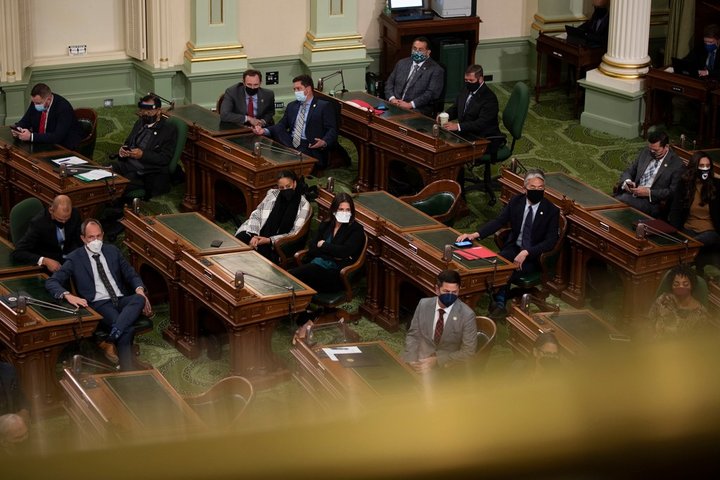
State Assemblymembers on the floor during the first day of the legislative session on Jan. 3, 2022. Photo by Miguel Gutierrez Jr., CalMatters
The approach of term limits may also be pushing some incumbents to an early retirement. Of the 14 legislators so far not seeking reelection in 2022, 10 would have been termed out in 2024 anyway.
“Some of these members were going to raise a bunch of money to — what?” said Republican strategist Matt Rexroad. “Go serve for just two more years and then have no obvious [state] Senate and congressional seat to run for?”
If 2022’s bevy of retirements looks big, it’s nothing compared to the next cycle, said Paul Mitchell, vice president of Political Data Inc. which provides voter tracking services to Democratic campaigns. Because the Legislature’s 12-year term limit law went into effect in 2012, “between 2024 and 2028 you’re going to see the entire Assembly turnover,” he said.
That’s good news for those who make their money off of elections. “Consultants that weathered the last few years of minimal election activity are finally going to get some big years,” Mitchell said.
New maps, new politics
Maybe the biggest factor driving the political turnover: The state’s newly inked electoral maps.
Last week, incumbent Republican Rep. Tom McClintock announced that he would be running to represent the state’s new 5th Congressional District, which spans the Sierra foothills from Placerville to Kings Canyon National Park and includes a big chunk of the district represented by Republican Devin Nunes, who resigned last week to head former President Donald Trump’s new media company.
That left the northern portion of McClintock’s old district without an incumbent — and cleared the way for Kiley to make his move.
In cobbling together the new districts for the state’s 120 legislative and 52 congressional seats, California’s independent redistricting commission was barred from taking an incumbent’s political prospects into account. In some cases, the commission placed politically safe lawmakers in more competitive seats, stripped them of the communities with which they felt the most affinity or placed multiple legislators together into the same district.
When Gonzalez took the union job last week, she sidestepped a difficult choice of either running against fellow Democratic Assemblymember Akilah Weber of San Diego or relocating to another district. State lawmakers, unlike members of Congress, must reside within their districts.
Likewise, labor champion Leyva was placed into the same Inland Empire state Senate district as moderate Democratic Sen. Susan Rubio. Leyva, however, said her decision not to run again had nothing to do with the prospect of a costly intraparty reelection fight.
Instead, she said the new district, which now stretches into the San Gabriel Valley, no longer reflects her geographic loyalties. “My heart is in San Bernardino County,” she told CalMatters. “Those are my people.”
So far, a handful of paired-up incumbents have decided to duke it out with a current colleague of the same party. Democratic Assemblymembers Laura Friedman and Adrin Nazarian will be running against one another in the San Fernando Valley. Ditto, Democratic state Sens. Anna Caballero of Salinas and Melissa Hurtado of Sanger. And Assembly Republicans Tom Lackey and Thurston Smith will be vying for the same high desert district that stretches from Lancaster to the Nevada border.
Asked about the prospect of competing against a colleague and party member, Smith cited Ronald Reagan’s “11th Commandment” not to speak ill of a fellow Republican. “Keep it civil. Let’s talk about the issues,” he said. Lackey, for his part, called the match-up “awkward,” but said there was nothing personal in the race.
He also rejected the notion that it would influence his votes in the Legislature: “I’ll still be the same guy that I was before.”
And for those incumbents who choose not to fight or depart, there’s the Evan Low approach. After finding himself stuck in the same Assembly district with Los Altos Assemblymember Marc Berman, the Cupertino Democrat decided to settle things with a mock pillow fight — before announcing that he would be moving to a neighboring district to seek reelection.
Relocating isn’t to everyone’s taste. Sen. Josh Newman of Fullerton was placed into the same district with fellow Orange County Democrat, Sen. Dave Min. Because Senate terms last four years and both were elected in 2020, they won’t have to make a decision about how to proceed until 2024.
Newman has already ruled out the possibility of settling the impasse by moving.
“I can only imagine that conversation,” he said. “I say to my wife, ‘Hey, I got this great idea!’ And she’d be like, ‘Hey, take care. Keep in touch.’”
###
CalMatters reporter Mikhail Zinshteyn contributed to this story. CALmatters.org is a nonprofit, nonpartisan media venture explaining California policies and politics.
BOOKED
Today: 12 felonies, 16 misdemeanors, 0 infractions
JUDGED
Humboldt County Superior Court Calendar: Friday, Sept. 4
CHP REPORTS
2834 B St (HM office): Hit and Run No Injuries
0 Unnamed Street (HM office): Trfc Collision-1141 Enrt
ELSEWHERE
RHBB: CDPH Issues Immunization Recommendations for 2026-27 Respiratory Virus Season
RHBB: Redway Transfer Station to Close an Extra Day for Construction
RHBB: Dows Prairie Road to Close for Two Months for Culvert Repair
GROWING OLD UNGRACEFULLY: Waking Up to Woke
Barry Evans / Sunday, Jan. 9, 2022 @ 7 a.m. / Growing Old Ungracefully
woke (adjective): aware of and actively attentive to important facts and issues (especially issues of racial and social justice)
– Merriam-Webster
###
When my editor here changed the title of my column on ossuaries (bone-chapels) from “Dem Dry Bones” to “Them Dry Bones,” I shot back with a snide, “You going woke on me, Hank?” I should have known better. The way “woke” is used these days — as a taunt to over-the-top liberal sensibilities — is a far cry from its black origins, and especially from its use during the 2014 Black Lives Matter demonstrations following the shooting of Michael Brown by a white police officer.
(To be fair, I’ve been writing regularly for Hank Sims since 2008, and I’m pretty sure this was the first time he ever played his editor card. FWIW, the song “Dem Dry Bones” dates to 1928, written by brothers James and Rosamond Johnson, both Black.)
“Stay woke” may have originated with Lead Belly* (Huddie Ledbetter), whose recordings led me long ago to my love of the blues. His “Scottsboro Boys” song (about black teenagers accused of raping two white women in 1931) has the lines, “I advise everybody, be a little careful when they go along through there/Best stay woke, keep their eyes open.”
* “If there was no Lead Belly, there would have been no Lonnie Donegan; no Lonnie Donegan, no Beatles” – George Harrison
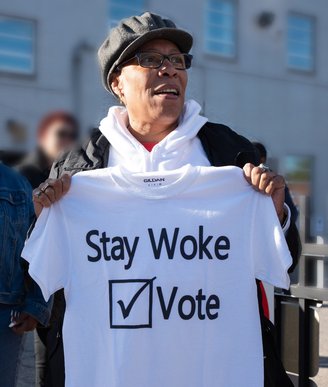
Congresswoman Marcia Fudge in 2018. Photo: US Congress, via Wikimedia. Public Domain.
The phrase was still in use, non-ironically, in 2017 when columnist David Brooks wrote, “To be woke is to be radically aware and justifiably paranoid. It is to be cognizant of the rot pervading the power structures.” (He should know.) In the same year, “woke” was voted the slang word of the year by the American Dialect Society.
“Woke” was soon co-opted by the right as a derogatory term for anyone on the liberal side of politics: “political correctness gone awry,” “over-righteous liberalism,” “an insincere form of performative activism,” etcetera. And — of course — there’s money to be made from woke! Under the guise of green policies, corporations have been cashing in on wokeness, where “woke capitalism” is used for “inexpensive messaging as a substitute for genuine reform,” according to NYT conservative columnist Ross Douthat.
Consider Exxon (“Protect Tomorrow. Today.”), one of the worst polluters on the planet. Prince William Sound in Alaska will probably never fully recover from the Exxon Valdez grounding, in which some 10 millions gallons of crude was spilled. Doesn’t their claim to “continuously work to manage environmental impacts” sound woke to you, with of three of their refineries topping the list of US polluters, according to Reuters?
I was reminded of all this last week, December 30 to be exact. The clue for 37 Down of the New York Times crossword puzzle was, “Social justice catchphrase,” 8 letters = STAYWOKE. Crossword commentator Michael Sharp (aka Rex Parker) wrote, “‘Woke’ is a word that came out of Black political activism and then got appropriated by white people (surprise) in all kinds of ironic and / or openly hostile ways to the point where now all I hear when I hear the word is a kind of mockery, a cheapening and debasing of everything ‘social justice’ is supposed to stand for…clue it as ‘Black’ or don’t use it, thank you.”
I don’t always agree with this guy, who frequently complains about a trendy clue he hasn’t heard of, but this time he nailed it. Now, of course, I worry: Am I being woke to write this?
LETTER FROM ISTANBUL: At the Library
James Tressler / Sunday, Jan. 9, 2022 @ 7 a.m. / Letter From Istanbul
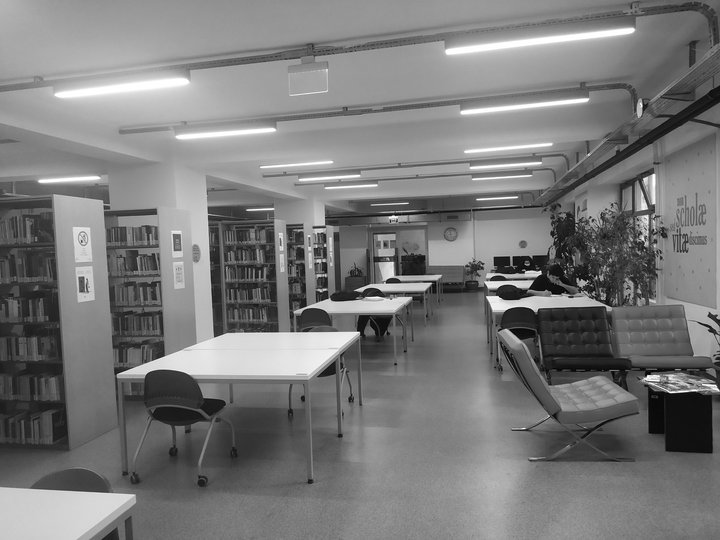
Photo: James Tressler.
###
The other day I went somewhere I haven’t gone in ages – the library. There is one here at the university, on the first floor. Most of our fine students, alas, have never been there, nor are many even aware that there is such a place on campus (I am aware of this unfortunate fact because I casually asked some students).
In truth, I hardly go there myself. The last time I was there was shortly before the pandemic. I checked out a worn, yellowed copy of “The Autobiography of Alice B. Toklas.” It remained in my possession, or at least on my desk at the school, for the better part of two years as we were all forced to work from home during the lockdowns. Funny part of that story is, that when the campus finally reopened and I was able to at last return the long, long overdue book, the librarian took it with a quiet nod and gesture of polite, understanding dismissal.
Anyway, I got to thinking the other day. As a writer, when you feel your spirits lagging, or find yourself at loose ends, there are usually two immediate options. The first is to go somewhere, take a trip, ideally some place you’ve never been before. The second is to pick up a book, and not that old favorite that’s practically etched upon your soul.
Well, a trip to the library seemed to hit two birds with one cliché. After all, I hadn’t been to any library, or even a bookstore, in how long? When was the last time I’d picked up a book?
As I said, the university library is on the first floor. It’s not large, a single, long room with a window facing the courtyard, where you can see students on break sitting at benches smoking and chatting in small, gossipy groups. When I entered, I breathed in that familiar silence, as well as the smell of books. There were precisely four students, easy to count. A trio of girls, sitting at a table and whispering girl talk, and a solitary male standing deep in one of the rows of books, poised, looking like a sailor trying to get his balance on a tipping vessel.
Assuredly, I approached the English section, which comprised five or six rows (the rest of the library is mainly Turkish obviously). I enjoyed the old feeling of letting the names and titles present themselves, waiting for a particular one to stand out. In such moments, one is always transported back to youth. In high school, I used to cut classes I didn’t like (algebra, chemistry, the usual suspects) and hide out in the library to avoid the hall monitors. I’d busy myself browsing the books to appear studious, so as not to alert the suspicions of a pesky librarian. It was through these classic adolescent avoidance strategies that I discovered the world of literature, and it was here that I also found that some books do indeed find us, or so it seems.
It was in the high school library that I read books like “Call It Sleep,” “Of Human Bondage,” and “This Side of Paradise.” The titles seemed to whisper something in those silent afternoons. They had some secret, some urgent thing that I wanted to learn. Or maybe they just offered the best chance of escape, of forgetting about the nagging worry that I was in the process of failing algebra and chemistry (and a few other classes, no doubt).
A few years later, as a young man living in Eureka, jobless and hyped up on the local geeter, I often sought refuge from the cold, winter rain and my own nightmares by going to the city library. It was free, warm and other economically bereft folk hung out there too. Nobody seemed to mind if you picked a book off the shelf, found a not uncomfortable chair or sofa and sat for hours reading. It was there I found books like “The Moon and Sixpence,” “Cannery Row” and “The Possessed” (the last one I liked without really understanding).
And later on, in Prague, I used to retreat into the city library on those afternoons when it was a few days before pay day. It was there, in that old library in Old Town, a proper old library with stone steps, round columns and high ceilings, that I read Kundera, Capek and Hrabal, and Neruda’s wonderfully picturesque stories about Malastrana. Afterward, I’d go to the next door cafeteria, where you could get roast chicken and mashed potatoes for less than a dollar, then head off to teach my three o’clock lesson.
These and other memories breathed out from the dark, cool aisles that morning in the university library, and it felt rather like catching up with an old, neglected friend. I felt a little bad for my students. Sure, they have their smartphones, their social media, their beloved Netflix (OK, they got some good shows on there, I know!). But how could they not know about this place? Hadn’t they discovered, as I had, what a wonderful secret hideaway they had at their disposal right here on the first floor?
I stepped languidly, thoughtfully, back and forth, gingerly, the way an old veteran does when returning to the spot of a battlefield (like the guy in “Across the River and Into the Trees,” not Hemingway’s best effort, but still —). I chuckled as certain titles and names appeared on the shelves, familiar ones. You know how we say that some books and authors just aren’t ready for us yet, that with time we will grow to appreciate them? Well, some names, like Trollope, like Henry James, didn’t do anything for me twenty five years ago and they still fail to entice me. And certain books. I picked up a scarcely touched copy of “Ulysses” off the shelf rather anxiously (maybe now’s the time!) only to feel my heart sinking and revulsion rising the minute I read those same first two or three paragraphs I have tried to read at least a half dozen times over the years. Maybe that trip to Dublin a few years ago, when you visited the Joyce statue near the Spire and paid tribute, now it will all make sense … Nope. Failing again, I shoved the book a bit rudely back in its place. Screw you, Buck Mulligan and your buddy Stephen Dedaelus or however you spell it! Maybe catch me when I’m ninety and got Alzheimer’s.
Of course, you can’t help but scan for old favorites, almost like a litmus test. Do they have any Capote? Check. Fitzgerald? No, not Penelope Fitzgerald, damn you! (who the hell reads her anyway?) Ah, yes, um … “Afternoon of an Author,” a nice, underrated choice. Dostoevsky? Check. “The Gambler” even. Nice. Somerset Maugham. Yes, several titles, including good, old “Moon and Sixpence.” Steinbeck, yep, lots of Steinbeck. Lots of Dickens. Way, way too much Dickens, as a matter of fact. Why do libraries (and bookshops) always overstock Dickens? What does it prove? “We’re a real library – see, we’ve got Dickens! Lots o’ Dickens!” they seem to say. My dickens, it’s desperate, I say. The same goes when they overstock Twain, which again is the case in our university library. I love a good Twain as much as the next bloke, but let’s not overstep the Mark. Henry Miller … they got him, but nah. Hey, Bukowski! “Notes From A Dirty Old Man.” Sorry, not in the mood, Chinaski.
I’ve lost my train of thought … see how easy it is to get lost in libraries?
For some time, I have had my eye on the volumes of Proust. Always wanted to read Proust, or at least say that I have read him. For years, I was frustrated because whenever I went in search of “Rememberance of Things Past,” I could only find “In Search of Lost Time.” Turns out, the two were in fact the same book. Well, fuck a duck! How was I supposed to know (translators, blame them!)?
I made several more languid sweeps through the aisles, always alert for that magical whisper (“Me!”), picking up and putting back a dozen titles (some of the books were so old and hadn’t been touched for so long that the pages were literally stuck together, or they had organically molded together with the books on either side, so you could not take the desired book off the shelf without fear of ripping the cover off (shh! I actually am guilty of this offense. Whilst trying, with the best literary intentions, of finally seeing what this Isak Dineson was all about (both Capote and Hemingway raved about her), I accidentally tore the cover off; I put it back. As long as you keep your mouth shut, dear reader, I am safe, as I am pretty sure nobody is going to even touch that book for another few decades).
No Joan Didion, by the way. Like many others, I read her recent obits and was moved enough to actually look up and read her famous, “Slouching Towards Bethlehem,” at least the one about the young people in Haight-Ashbury. I was impressed enough that I specifically went to our library hoping to check out one of her books, but sadly, no Didion was to be found. Instead, I had to settle for Proust (Vol. 1 “Swann’s Way”) and then slouched toward the checkout counter.
###
Back at the office, there was still plenty of time before my afternoon classes. I opened up the Proust to where I had left off. I was still in the early pages, where the narrator is talking about sleep, and the sensation of waking and not being sure where, or even who, one is, and how places and time itself seems to move around and transform as one sleeps and wakes. Reading these passages, an aroma or perfume, not unknown and yet vaguely familiar, washed over me, a registered experience or expired dream:
“As a rule I did not attempt to go to sleep again at once, but used to spend the greater part of the night recalling our life in the old days at Combray with my great-aunt, at Balbec, at Paris, Doncieres, Venice, and the rest; remembering again all the places and people I had known, what I had actually seen of them, and what others had told me …”
I read on, and was very glad that I had gone back to the library, and back into the old new world.
###
James Tressler, a former Lost Coast resident, is a writer and teacher living in Istanbul. His new book, Building for the Apocalypse, is available on Amazon.
THE ECONEWS REPORT: How is Arcata Planning for Growth? Learn About the Gateway Area!
The EcoNews Report / Saturday, Jan. 8, 2022 @ 10 a.m. / Environment

Looking out over the Gateway District as it currently is. Photo: City of Arcata.
###
Urban planning nerds rejoice! Here is an episode for you.
Humboldt is seeming a bit more crowded as of late. Whether it is climate refugees burned out of their homes or folks freed to move to the redwoods because of lax telework options, Humboldt’s housing market has been white hot. If people are coming, how do we ensure that we have enough housing for those who are looking to join our community (and how we do have enough having for those of us who want to stick around)?
As part of Arcata’s strategic infill development planning, the city is giving a hard look at the future of the “Gateway Area” — that area of already-developed land west of K Street. City planner Delores Freitas joins Gang Green to talk about the city’s planning process and how citizens can participate in long-term planning.
AUDIO:
“The EcoNews Report,” Jan. 8, 2022.
Want to let the city hear your thoughts? Take the community vision survey here.
Keen to learn more about long-range planning for the Gateway Area? Clear here..
THE CANNABIS CONVERSATION: Can Industrial Hemp Save the Planet?
Jesse Duncan / Saturday, Jan. 8, 2022 @ 7:30 a.m. / Cannabis

Industrial hemp field. Photo: University of Kentucky College of Agriculture, via Flickr. Creative Commons license.
###
Hemp, or Cannabis sativa L, was legalized for commercial production by the U.S. Farm Bill of 2018. To comply with federal law, the hemp must test below .3 percent THC and must be cultivated by licensed growers. Since then, hemp production has exploded across the nation, as have conversations about hemp’s usefulness in industrial applications and environmental remediation.
In fact, some argue that hemp can save the planet through carbon sequestration, phytoremediation of contaminated soils, biofuel productionand the creation of earth-friendly consumer, industrialand food products. Hemp is also used to produce cannabidiol or CBD, which offers many health benefits and will be discussed here in the coming weeks.
Carbon Sequestration
Carbon sequestration refers to the process of capturing and storing carbon dioxide from the atmosphere. Because carbon dioxide absorbs and emits infrared radiation, it is deemed to play a significant role in the Earth’s surface temperature. Simply put, more carbon dioxide in the atmosphere would lead to higher temperatures here on the third rock. Without politicizing the issue, it seems that reasonable people, based on this information alone, would want less carbon in the atmosphere.
Hemp can help. A lot. While it is estimated that a hectare of pine trees can absorb approximately 10 tons of carbon dioxide per year, the same size hemp field can absorb up to 15 tons. In certain regions two hemp crops can be grown a year, thus doubling this figure. In addition, trees take a number of years before they begin capturing significant amounts of atmospheric carbon, while the hemp growth cycle is just 120 days.
Phytoremediation
Phytoremediation refers to the use of plants to absorb contaminants in soil and groundwater. Industrial activity, oil & gas spills, agricultural chemicalsand buried waste materials contribute to soil and groundwater contamination. Heavy metals, pharmaceutical compounds and other toxins are now a major threat to both soil and water quality around the world. Certain plants, called hyperaccumulators, can grow in contaminated soil or water. They absorb the pollutants through their root system and contaminants then concentrate in plant tissue over time. This process cleanses the soil and allows abandoned lands to be reclaimed for productive use.
Phytoremediation has been somewhat inefficient in the past as many hyperaccumulators have shallow roots and are smaller in size, thus limiting how many toxins could be extracted and accumulated in the plant’s tissue. Hemp plants, on the other hand, have a deep taproot and can grow very large, allowing for much greater environmental benefits. After harvest, the contaminated hemp biomass can be used in biofuel production, helping to overcome the economic constraint hampering the adoption of phytoremediation more broadly.
Hemp, in the eyes of many, is a more environmentally responsible solution to the very serious and increasing problem of soil and groundwater contamination. Proponents argue that hemp cultivation is preferred over traditional methods of remediating contaminated land such as excavation, incineration, or the use of chemical additives to stabilize contaminants. Additionally, hemp fields are known for biodiversity friendliness.
Biofuel
It is no mystery that fossil fuels are problematic. Resource wars, pollution and potential climate impacts are areas of controversy and heated debate. The hemp seed contains approximately 30 percent oil, and this oil can be transformed into biodiesel. Hemp can also be used to produce methanol, ethanol and biogas. The hemp seed renders more oil than other crops like soybean, sunflower or peanuts, making its use far more efficient as a source of biofuel. Hemp biodiesel is said to outperform conventional diesel in nearly all performance areas.
Industrial Products
Hemp fiber has been used for thousands of years and has been traced back to 8,000 BCE in ancient Mesopotamia where researchers found hemp cloth. The long, straight hemp fibers have incredible strength and are currently used for paper products, textiles, insulation and cordage like twine, yarn, rope and string.
Interestingly, a waste product from hemp fiber production is hemp shives. Shives when combined with lime and a binding agent form hempcrete, a non-load-bearing substitute for concrete. Hempcrete is strong, weighs 90 percent less than concrete, is flame- and mold-resistant, and insulates incredibly well. Hemp cellulose can be formed into biodegradable plastics and high-strength plastics which are currently being explored by automakers Porsche, BMW and others.
Food
Hemp is also healthy for one’s diet. Hemp seeds contain between 25-35 percent fatty acid-rich oil and 20-25 percent protein. They are also high in fiber, magnesium and other nutrients. Hemp seed is processed into oil or milk or consumed as hemp hearts and added to things like salad. Hemp oil is often used as a supplement and is infused into beauty products, while hemp milk is non-dairy and reportedly non-allergenic.
Challenges
Like most things, hemp production has a couple of downsides. While hemp can be grown with less water, nutrients, and pesticides than other commercial crops, farming it at scale will put some strain on natural resources. That said, hemp production is said to be carbon negative, meaning the crop will sequester or absorb more carbon than emitted by the equipment used to grow, process, and transport it. A more natural or regenerative approach to hemp farming would be advised to further benefit the environment.
Additionally, infrastructure in terms of processing plants would need to be constructed to allow the mass commercialization of hemp. As we know, commercial developments are generally disruptive to the natural environment. The hope would be that over time, the environmental benefits of more sustainable products would outweigh the initial environmental costs.
Hemp farming has also created enforcement issues as some hemp farms are a facade masking enormous illicit cannabis grows. As we know from our neighbors to the north, many of Oregon’s “hemp” operations are being raided by law enforcement as they are actually growing high THC varietals destined for the unregulated market. Because CBD hemp looks essentially like traditional cannabis, illicit operators are substituting THC plants for their hemp in attempts to score big.
Finally, hemp crops subject traditional cannabis operations to cross-pollination risk. Hemp pollen can travel many miles and seed out neighboring gardens. Given such risks, Humboldt County banned its production altogether and I support that move for our region.
Despite having some hurdles to overcome, industrial and environmental hemp applications offer both economic and ecological promise. I expect the coming years to show further developments and advancements in the world of hemp. While not a panacea for all evils, perhaps hemp can be part of a broader solution to save the world we live in.
###
Jesse Duncan is a lifelong Humboldt County resident, a father of six, a retired financial advisor, and a full-time commercial cannabis grower. He is also the creator of NorCal Financial and Cannabis Consulting, a no-cost platform that helps small farmers improve their cultivation, business, and financial skills. Please check out his blog at, his Instagram at jesse_duncann, and connect with him on Linkedin.
OBITUARY: Marilynn S. Bartlett, 1928-2021
LoCO Staff / Saturday, Jan. 8, 2022 @ 6:56 a.m. / Obits
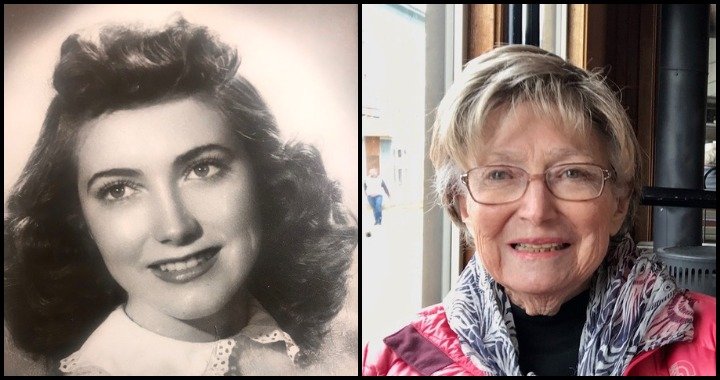
Marilynn S. Bartlett, aka The Sheriff or Big M, passed away December 28, 2021, at her home in Eureka. Marilynn was born in Los Angeles, June 2, 1928, to Howard E. Signor and Dorothy M. Pearson Signor.
Her early childhood featured frequent moves throughout the Midwest and the east coast, and her family eventually landed in Melrose, Massachusetts. She enjoyed reminiscing about canoeing and archery at summer camp, and bonfires and ice skating on the pond near her home. The deadly hurricane of 1938 sent the family by train back to sunny California, where they could pick oranges and avocados in the backyard. North Hollywood was her home until high school graduation, except for wartime homes in Pomona, Riverside, and Corvallis, Oregon.
Along with her best friend, Marilynn found herself on a plane, and then an overnight train to Humboldt State College. She had never heard of the place, but her Aunt Connie and Uncle “Tink” Belfils lived nearby. There was an extended adjustment period for the valley girls who arrived in Arcata attired in pedal pushers and sunglasses. An English and history major, Marilynn immersed herself in college life, and eventually caught the eye of the handsome local and WWII veteran, Thomas B. Bartlett. Tom and Marilynn married during his senior year at UC Berkeley School of Optometry, and after his graduation returned to Eureka, where Tom joined his father’s and uncle’s optometry practice. In contrast to her own childhood, Marilynn was grateful her four children could remain in the same town and in the same schools from kindergarten through high school.
While raising four children, Marilynn was a room mother, Cub Scout den mother, Campfire Girls leader, and consummate costume maker. She was an enthusiastic participant in sewing, bridge, and dance club, and the Martha Mary Guild at Christ Episcopal Church. To her daughters, watching her dress for the fancy dances was magical — she was so elegant, and all the children used to race to the living room after club meetings to see if there were fabulous, leftover appetizers.
Marilynn and Tom were part of a vast social circle made up of Tom’s childhood friends, mutual college friends, and friendships rising out of community groups, an early membership in Baywood Golf and Country Club, the Sequoia Swim and Tennis Club, and in later years, the Ingomar Club. Regular tennis matches with her friends was a decades-long passion. She was also passionate about snow skiing where she was known for her fearless attacks on the mogul fields and her cowboy-style ski hat worn après ski, resulting in her nickname, The Sheriff.
Together with tennis, skiing, dominos group and other friends, Marilynn and Tom were fortunate to travel to many faraway places. Marilynn’s extensive research into each destination enhanced every trip for all, and her trip notes were astonishing in their breadth and depth. In recent years, Marilynn savored time spent with her long-established book club and PEO sisters.
Considerable organizational skills were Marilynn’s particular gift. Beyond her fundraising endeavors, she threw epic parties over the years. Most notably were the two-night Beatnik party, Tom’s “Second Childhood” 60th birthday party, numerous Humboldt Sponsors Project Private Enterprise parties, the La Costa North Spa Retreat, dinner parties serving 20-60 people, and birthday bashes at the Redway summer cabin. She drafted and retained planning and wrap-up lists for every event, to-do lists for all aspects of her family life, and even Santa lists from when her children were very young.
Marilynn felt strongly about giving back to the community. In 1970, as the last president of the Humboldt Circle of the Florence Crittenton Home of San Francisco, she spearheaded the transition of that group to the Humboldt Sponsors, an organization benefitting the youth of Humboldt County. A founding member of the Eureka Heritage Society, she was instrumental in staging the Heritage Fairs at Redwood Acres in 1974 and 1976. Because of these extraordinary fundraising efforts, Eureka, An Architectural View, also known as The Green Book, was published. This book contains photographs of 1,200 Eureka homes and is considered one of the finest collection of details of historic homes ever published. Marilynn also served on St. Joseph Hospital advisory and foundation boards resulting in funding for the initial mammography equipment, and the Humboldt State University advisory board, focusing on scholarship development.
Marilynn is survived by her sister Valerie Whitmyre; children, Jennifer Lusch, James Bartlett (Heather), Julie Osborne, and Joel Bartlett (Mary); grandchildren, Erin Lusch (Jordan Wiley) and Ryan Lusch, Stephanie Menashe (Shawn), Stacy Bates (Sam), and Lindsay Osborne Reitz (Jeff); great grandchildren, Connor Reitz, Atlas Lusch Wiley, and Hudson Menashe. She is also survived by her sister-in-law Marcia Church; nieces and nephews, Erik Whitmyre (Arantxa), Steve Whitmyre, Chris Whitmyre, and David Whitmyre (Karen), Tom Barnes, Marian Barnes Hancock (Dean), Margaret Carvalho (Bill), Betsy Church Pacheco, and John Church. Marilynn was preceded in death by her parents, her husband, Tom, her sister-in-law, Patricia Morrison, and brothers-in-law, Bradley Barnes and Robert Church.
Marilynn’s family is deeply grateful for the exceptional friendship, kindness, and compassionate care provided by the “magic” Jeannie and her Helping Hands Home Care team. If you wish to make a donation in Marilynn’s memory, please consider the Tom and Marilynn Bartlett Stand Down Fund to support veterans, in care of the Humboldt Area Foundation , the Humboldt Sponsors, or a charity of your choice. Due to the recent COVID case surge, a celebration of Marilynn’s life will take place at a later date.
###
The obituary above was submitted on behalf of Marilynn Bartlett’s loved ones. The Lost Coast Outpost runs obituaries of Humboldt County residents at no charge. See guidelines here.
OBITUARY: Amber Jean Miller-Hardy, 1981-2021
LoCO Staff / Saturday, Jan. 8, 2022 @ 6:56 a.m. / Obits
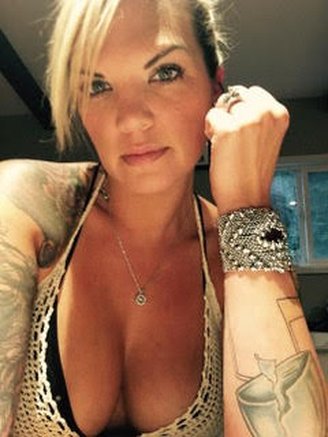
Amber
Jean was born to Bart Hardy and Sherry Corder on November 10, 1981,
in Fortuna. Amber Jean entered the spirit world on December 13, 2021,
at the age of 40 in Carlotta.
Amber was given to love her sister Shaina and her brothers Brandon, Dustin and Thurman. Amber was joined by cousins Jessie, Jenny and Alfred Jr. Many more cousins were to come later, including Wade, Brooke, Pugie, Britney, Darby and more. Her young life centered around these people and her adult life was no different. Family was her foundation!
Amber grew up in the Southern Humboldt area, going to school at Alice Jewett, Leggett, South Fork and Pacific Union. School wasn’t for Amber — she was bigger than that and ended up taking the test to get her diploma and went to work. She was fiercely independent and hard-working at a very young age. If you were lucky enough to be Amber’s friend, you no doubt thought she was your best friend, a true testament to the person she was. She had a contagious personality and smile, and an ability to make you feel like you were the most important person in her life. She would do anything for her family or friends and helped them all many times in her life. Her striking beauty was something that drew people to her, and her inner beauty kept a person captivated.
Amber’s heritage was something she was so proud of. She was born Wailaki Indian, and it ran deep in her blood. Many days her family would gather to share their heritage and talk of old times and old ways. Her adult life was spent living and working in McKinleyville and Southern Humboldt. At the age of 28 her life changed forever when her first daughter Teegan Jade Whitlow was born. Following close behind came Gemma Nykol Whitlow when Amber was 30. Her girls became her life and everything she did centered around them, her family and friends. Her circle all had kids around the same time and the new normal became birthday parties, sports games and sleepovers.
In 2012 Amber met Robert Miller, with him came two more to love, Preslie and Deagan. Amber was the love of Rob’s life and he her’s. They married on December 29, 2018. She was his best friend and his world as he was to her.
Amber is survived by her girls Teegan and Gemma, her husband Rob and his kids Preslie and Deagan, her mom Sherry, sister Shaina and brothers Brandon, Dustin and Thurman, her aunts and uncles Rena, Shelly, Bob, Rhonda, Pat, Michelle and many special cousins. Amber was proceeded in death by her grandparents Roberta, Dave, Richard and Geniveve, and her aunts and uncles Starla and Richard Jr.
When Amber was 12 her life changed forever. The person that no girl should have to live their young life without died, her daddy Bart. Amber spent her entire life grieving and missing her daddy, wishing that he was here on Earth. They are surely together again.
Amber will be laid to rests with her dad at Briceland Cemetery. All family and friends are invited to attend on January 29, 2022, at 11 a.m. Amber’s good friend Kenny Willis will be officiating. This will be followed with a reception and an Amber-style party (fuck it, BYOB) at Beginnings in Briceland.
“The goal isn’t to live forever, the goal is to create something that will.”
###
The obituary above was submitted on behalf of Amber Miller-Hardy’s loved ones. The Lost Coast Outpost runs obituaries of Humboldt County residents at no charge. See guidelines here.


