

Why Does California Have the Highest Jobless Rate in the Country?
Grace Gedye / Friday, Dec. 10, 2021 @ 7:32 a.m. / Sacramento
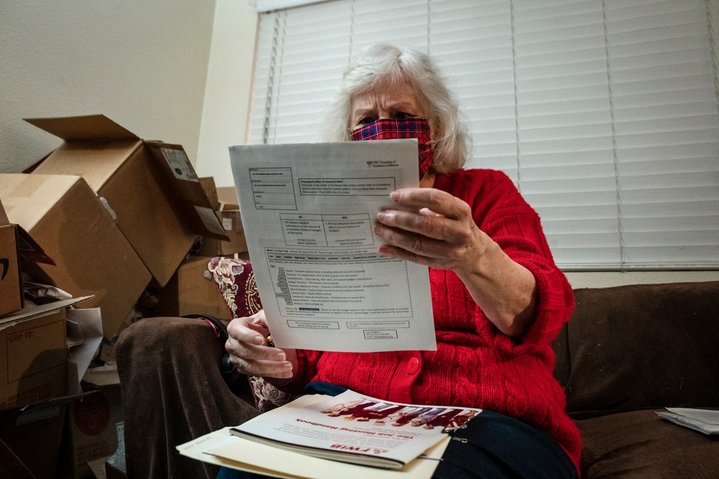
Nance Parry spends hours each day at home searching job listings on the internet and printed out lists of local job postings in Duarte on Dec. 6, 2021. Photo by Raquel Natalicchio for CalMatters
###
Nance Parry says she’s sent out more than 1,000 resumes since she got laid off in September 2019. She’s gotten one interview.
Just five weeks into what Parry thought would be a six-month contract, she was laid off from a job as a document specialist for an engineering firm. She says she’s sent out two to three resumes per weekday since but that’s netted a grand total of one interview, leaving her to live off of a monthly $1,200 Social Security check, $1,030 of which is used to pay rent for her apartment in Duarte.
“I’ve tried to survive, you know, paid bills and food and everything on $200 a month after the rent is paid,” Parry said. “I need to work.” She needs new glasses and electrical work done on her car, but won’t be able to pay for either of those things until she gets a new job. Her landlord has tried to evict her three times, she says, and she’s worried about what will happen when LA county’s eviction protections end in January 2022.
“I don’t know if I’m going to end up living in my car or what because without a job you can’t get an apartment,” she said.
Parry is one of roughly 1.4 million Californians who are out of work and looking for jobs. In October, according to the U.S. Bureau of Labor Statistics, the state recorded a 7.3% unemployment rate,, the highest in the country, a distinction California shares with Nevada. October’s national unemployment rate is several points lower, at 4.6%.
One contributor to the state’s lagging employment situation is that California’s large leisure and hospitality sector — made up of hotels, restaurants and more — hasn’t rebounded as quickly as the rest of the country’s. But other data suggest the news isn’t all bad: There are lots of job openings and workers are quitting their jobs in droves, which is often a sign that people are optimistic they can find a better job.
Why is California’s jobless rate bouncing back more slowly?
Even pre-pandemic, California’s overall unemployment rate was usually slightly above the national rate. But the fact that so many Californians work in the leisure and hospitality industries — which saw massive layoffs in the beginning of the pandemic — contributes to the state’s lagging employment recovery now. Leila Bengali, an economist at UCLA’s Anderson School of Management, pointed out California’s leisure and hospitality sectors employed almost 18% fewer people in September 2021 than pre-pandemic, according to data from the Bureau of Labor Statistics. Nationwide, the industry was just 9% smaller in September than it was pre-pandemic.
One explanation for the gap between the rate at which California’s leisure and hospitality industry has recovered jobs and the rate at which the industry has recovered jobs nationally, Bengali said, is that international tourism, a large part of the state’s economy, was particularly hard hit during the pandemic. Visitors buy lunches at cafes and stay in hotels; when travel dried up, those businesses bore the brunt.
“It’s not a coincidence that two states (California and Nevada) that are heavily reliant on tourism and entertainment have not done as well, given the demise of tourism and entertainment under COVID,” said Manuel Pastor, a professor of sociology and American Studies and Ethnicity at the University of Southern California.
New York, which also has a large tourism industry, has an overall unemployment rate of 6.9%. Florida, another high-tourism state, stands apart among high-tourism states with a 4.6% unemployment rate overall. The leisure and hospitality sectors in California, Nevada, New York and Florida have all added jobs back more slowly than the sectors have nationally.
Another potential explanation comes from research by Harvard economics professor Raj Chetty and several other economists, who found that low-wage workers who worked at small businesses in high-rent zip codes — of which California has many — lost their jobs at higher rates early in the pandemic than low-wage workers who worked in small businesses in lower-rent areas.
“If you lived in East LA, but you got on your bike and a bus to get over to Beverly Hills to work in a restaurant, or to clean a house or to take care of kids, a lot of that demand disappeared,” said Pastor.
But aren’t employers struggling to fill jobs?
Yes. Walk down any commercial strip in a California city and there’s a decent chance you’ll see a ‘Now Hiring’ sign in a restaurant or shop window. Employers have been offering cash bonuses and beefed-up benefits to fill empty positions.
California’s unemployment situation “certainly isn’t a question of a lack of job opportunity; that’s not what’s going on,” said Chris Thornberg, founding partner of Beacon Economics, an economic research and consulting firm. “There are an insane number of job opportunities in our state and in the nation overall.” People may just be taking their time to find a good job, he said.
There are also some indications that lower-income families aren’t experiencing economic stress, said Thornberg. For example, the share of Californian consumers with new bankruptcies is lower than it was pre-pandemic.
A lot of the job openings also require in-person, physical work with unpredictable hours — like serving in a restaurant, or packing goods in a warehouse. Some people aren’t willing or able to do that work.
Parry is worried about working in person while the pandemic is ongoing. “I keep seeing signs in restaurants and stuff like that, it really makes me feel bad because I need work,” she said. She worked at Cost Plus over the holidays once in the past, and it made her legs hurt. “I am 71 years old,” she said. “I mean, the last thing I want is a job where I stand all day because it kills the legs and the back.”
“I think right now we’re seeing a lot of people move out of retail, leisure and hospitality and start looking for other employment,” said Somjita Mitra, chief economist at the California Department of Finance. Unpredictable schedules make it hard for workers in those industries to find child care and use public transit to get to work. “There’s going to be some structural changes in those industries long term,” she said.
It’s not all bad
Compared to California’s jobs recovery after the Great Recession — when unemployment peaked around 12.6% and took more than four years to get down to the state’s current 7.3% unemployment rate — the state’s post-pandemic recovery has been a roaring success. During the pandemic, unemployment in the state crested at 16%, but just a year-and-a-half later, that number had fallen by more than half.
If workers are holding out for jobs that better match their needs and goals, that can prompt employers to increase wages for the lowest wage workers, for example, or offer them more stable schedules — concessions that are good for the economy, said Irena Asmundson, managing director of the California Policy Research Initiative at Stanford Institute for Economic Policy Research and former chief economist for California Department of Finance.
“Our economy really does work better when we have more of a balance of power between employers and employees,” Asmundson said.
When will the unemployment rate come down?
A May 2021 report from the Department of Finance projected that California’s unemployment rate would return to pre-pandemic levels in 2024.
A new report from UCLA Anderson Forecast predicts that California’s unemployment rate will fall to an average of 5.6% in 2022, and will drop further to an average of 4.4% in 2023. Authors Jerry Nickelsburg and Leila Bengali also expect job growth to slow in industries with a lot of personal contact, and in sectors that cater to tourists.
It’s unclear if California’s pre-pandemic jobless rate of about 4% was sustainable, said Asmundson. There’s a sweet spot, she said, and while economists disagree on exactly what that sweet spot is, she puts it at 5% for California. She predicts we will get to that rate in mid 2022.
Other economists think we shouldn’t worry about the unemployment rate. “Who cares?” asked Chris Thornberg. “People shouldn’t care,” he said. The more important question, he said, is whether there are job opportunities for people. “The answer is yeah, more than ever before.”
###
CALmatters.org is a nonprofit, nonpartisan media venture explaining California policies and politics.
BOOKED
Today: 12 felonies, 16 misdemeanors, 0 infractions
JUDGED
Humboldt County Superior Court Calendar: Friday, Sept. 4
CHP REPORTS
0 Us101 S (HM office): Traffic Hazard
4646 MM96 E SIS 46.50 (YK office): Trfc Collision-No Inj
E Washington Blvd / Summer Ln (HM office): Defective Traffic Signals
ELSEWHERE
RHBB: CDPH Issues Immunization Recommendations for 2026-27 Respiratory Virus Season
RHBB: Redway Transfer Station to Close an Extra Day for Construction
RHBB: Dows Prairie Road to Close for Two Months for Culvert Repair
New Gas-Powered Lawn Equipment Banned in California in 2024
Rachel Becker / Friday, Dec. 10, 2021 @ 7 a.m. / Sacramento

Photo by Rick Whittle on Unsplash.
###
New rules phasing out manufacture of polluting lawn and garden equipment in 2024 were unanimously approved by the California Air Resources Board Thursday despite opposition from gardeners and landscapers.
Manufacturers must meet zero-emission standards for new models of yard equipment, including weed whackers, lawn mowers, leaf blowers and smaller chain saws, in three years. Residents and workers, however, can continue to use and repair their gas-powered equipment.
Gardeners and landscaping associations raised concerns about higher costs to buy the equipment and additional batteries needed for a day’s work.
“The cost to transition would be significant and probably kill my small business,” Elizabeth Burns, president of Zone 24 Landscaping Inc., based in Torrance, said at the hearing. “One other issue is the technology is not yet there for battery life and that’s super important.”
Also, under the new rules, new portable generators must meet stricter emission standards in 2024 and reach zero-emissions for model-year 2028 generators.
“The cost to transition would be significant and probably kill my small business.”
— Elizabeth Burns, Zone 24 Landscaping, INC.
At a three-hour public hearing Thursday, much of the opposition came from the RV industry and owners, who urged the board, unsuccessfully, to exempt their generators. Also, rural officials warned that alternatives to portable generators are cost prohibitive and do not perform adequately.
“Power outages in rural areas are frequent, can last for several days and are becoming more common,” said Dave Johnston, air pollution control officer for Eldorado County. “Forcing moderate to low-income rural residents to do without power for extended periods to achieve small emission reductions in these areas that are already in attainment is unconscionable.”
In a presentation, air board staff said the longer lead time of four more years for portable generators will allow “manufacturers to develop models with more energy storage and power delivery.”
Small engines powering lawn equipment and portable generators are a surprisingly large source of California’s air pollution, belching more smog-forming pollutants than cars and SUVs in California. Using a commercial leaf blower for an hour spews as much as driving 1,100 miles in a new car, roughly from Los Angeles to Denver, the air board reports.
Air board officials estimate that 93% of the equipment covered by the new standards would be zero emissions by 2035, compared to only 54% under current rules. The rule will prevent almost 900 premature deaths through 2043, with the health benefits expected to reach $8.82 billion — offsetting expected costs of about $4 billion to achieve the emissions, according to air board estimates.
Earlier this year, California legislators passed a law calling for new state regulations to bar emissions from yard equipment and portable generators.
“These engines cause asthma, cardio respiratory disease and increase cancer risk and premature death,” Assemblymember Marc Berman, a Democrat from Los Altos who co-authored the bill, said at the hearing, reminding board members that California is home to seven of the ten smoggiest cities in the country.
Still, he said, “it is important to emphasize that the regulation is not a ban on use. Nobody will have to give up or stop using equipment they already own.”
The board also planned to vote on major rules that mandate new smog checks for big-rig trucks.
The lawn equipment rules build on existing regulations that have helped cut emissions from small off-road engines by half over the past 20 years. But in the absence of new regulation, their emissions are expected to grow to nearly twice those from cars and SUVs by 2031.
The rule instead is aimed at manufacturers, air board staff say, not gardeners and landscapers, who can continue to use and repair gas-powered equipment even after the new rules take effect.
Manufacturers will be permitted to meet the emission standards using credits earned under previous rules, meaning that the phaseout won’t be instantaneous.
Still, Jeff Coad, vice president of marketing and management at manufacturer Briggs and Stratton, said the timeline is unrealistic for manufacturers and small businesses.
“The development time for each machine to convert from gas power to an electrified drive train can take two years” for each manufacturer, for each product, he said. And there’s been limited commercial uptake due to several issues, he said. “Battery runtime, lack of infield charging options, high cutting performance requirements and the very high price of electrified machines.”
California regulators acknowledge that small business landscapers, which make up more than 99% of the landscaping businesses in the state, may be significantly affected by the costs of the new rules.
“Purchasing all new (zero emission equipment) in addition to the batteries may be burdensome. However, landscapers using (zero emission equipment) may realize net cost-savings within the first few years of purchase due to decreased fuel and maintenance costs,” staff reported.
“There will be more incentive money needed. And we’ll be asking the Legislature and the governor for that.”
— Bill Magavern, the Coalition for Clean Air
To help, California legislators carved out $30 million to provide incentives for small independent gardeners and landscaping businesses to help cover the costs of transitioning to zero-emission equipment. The move follows similar incentive programs offered by regional air regulators in Southern California and the San Joaquin Valley.
“What we’ve learned through these efforts is that zero emission equipment is more readily available, but significant challenges remain and widely deploying this equipment,” said Tom Jordan with the San Joaquin Valley Air Pollution Control District. “This transition will not be an easy one that will require ongoing evaluation of technologies and will need significant new funding.”
Sandra Giarde, executive director of the California Landscape Contractors Association, urged the air board to push back the deadline for commercial users and called the rebates from the $30 million in incentives “woefully inadequate.”
Construction and agricultural equipment such as larger chainsaws and brushcutters used for fuel management and wildfire preparation are exempt.
Bill Magavern, policy director with the Coalition for Clean Air, celebrated the new rule, warning that it’s the workers who suffer the worst consequences from yard care equipment emissions. But he also acknowledged the cost.
“We do think that as you move forward, there will be more incentive money needed,” Magavern said. “And we’ll be asking the Legislature and the governor for that.”
###
CALmatters.org is a nonprofit, nonpartisan media venture explaining California policies and politics.
OBITUARY: Marvin Mattz, 1943-2021
LoCO Staff / Friday, Dec. 10, 2021 @ 6:56 a.m. / Obits

Yurok Tribal Elder Marvin Mattz, was born on July 20,1943 to Emery and Geneva Mattz and passed on December 8, 2021.
A lifelong Del Norte County resident, Marvin resided on the Elk Valley Rancheria. He was an expert fisherman and the best rower on the Klamath River, even if that sometimes meant he had to stand up in his boat to row. He taught numerous nieces and nephews how to fish and row a boat, passing along cultural knowledge and values. He spent his life on the Klamath River, fighting alongside his twin brother Raymond Mattz for the preservation and protection of Yurok Tribal fishing rights.
Growing up, Marvin was a great athlete and he was always encouraging the boys to “keep the left hook going” and had many fond memories of playing basketball with his cousins. He was an avid cribbage player and would intimidate anyone he played with, especially his nieces and nephews. Marvin loved to dance, especially to Merv George. Anytime there was music, he was dancing and was coveted as one of the best dancing partners. He also loved learning, traveling, watching PBS, and was eager to share facts and ideas about a variety of topics which made for fun and interesting conversations.
Marvin was a strong advocate for education and volunteered as a grandparent in local schools. He drove awok Archie Thompson to the Klamath River Early College for nearly a decade to support the students with Yurok culture, language and mentoring. He greeted us with, “what’s the good news?” and cared deeply about the well-being of children and families. He was proud that many Yurok children went to college. He wanted the Yurok Tribe to create job opportunities and child care for its members so all Yurok families could be self-sufficient.
Marvin was preceded in death by his parents Geneva and Emery Mattz; twin Raymond, brothers Jack, Emery and Tony; sisters Betty, Janet and Nadine; and daughter Tabitha. He is survived by his sister Lavina Bowers, his grandsons Darren and Daniel Harwood, great grandchildren Damien and David Harwood; and numerous nieces, nephews, and friends.
Marvin loved his momma, was the youngest of ten children and was always the baby in the family. He reminded us all of his parents’ values and wishes for everyone to love one another and take good care of each other. He was loved by many people and will be greatly missed.
Services will take place Friday, December 10, 2021. Final boat ride will depart from Requa dock at 12 p.m. and graveside services at the Crescent City Catholic cemetery at 4 p.m.
###
The obituary above was submitted on behalf of Marvin Mattz’s loved ones. The Lost Coast Outpost runs obituaries of Humboldt County residents at no charge. See guidelines here.
OBITUARY: Marilyn Elizabeth Lytle, 1941-2021
LoCO Staff / Friday, Dec. 10, 2021 @ 6:56 a.m. / Obits

Marilyn
Elizabeth Lytle died on November 26 after a brief illness. Marilyn
was born at Trinity Hospital in Arcata on April 4, 1941
to Bernard James & Mary Jean Lytle. She is survived by family
here in the US, overseas, and Bolivia.
Motivated by love for God and humanity, Mom chose to live a life of service. From an early age she was determined to be a full-time minister and pursued every opportunity available to share hope and comfort. Her outstanding volunteer spirit led her to be invited in 1966 to join the 43rd class of the Watchtower Bible School of Gilead. After a period of intense training, she accepted an assignment to serve as a missionary to the South American country of Bolivia. Mom treasured the years she spent traveling throughout the country that became her new home, visiting numerous towns and cities, hiking to remote villages high in the Andean mountains, traversing the vast expanse of the Altiplano, and traveling by boat to isolated communities deep in the Amazon jungle. Her zeal for God led many to develop a meaningful relationship with their Creator.
When family illness prevented her from staying in her missionary assignment, she did not lose heart. Instead, she embraced the new circumstances as a new assignment.
Residents of Humboldt know Marilyn primarily from the years she spent caring for her daughter, Lilyán Navarro. Marilyn advocated for Lilyán’s medical needs with the same spirit of self-sacrifice she showed as a missionary. Medical professionals responded to the high level of dedication and compassion Marilyn showed as a care provider. They in turn were willing to go the extra mile in helping Lilyán meet her medical challenges. We the family are profoundly grateful to everyone in the community who helped Marilyn take care of Lilyán all these years.
To the many friends, aids, nurses, doctors and specialists we say thank you.
In times of distress, when life was on the line, Mom’s faith was strong. Even as Lilyán’s medical needs became more involved, Mom would still give others her time and encouragement. She showed us that actions and personal choices are our own to make, despite the uncontrollable events of life. Mom never gave up.
Marilyn believed in God’s Kingdom. She believed in the words of Isaiah 33:24 that promise an end to illness. She believed mankind will have a future of dignity without the misery we see all around us. She believed the Bible’s promises that God will end poverty, war, violence, tears, even death. She believed Jesus’ earthly ministry was a preview of God’s Kingdom. She believed what Paul wrote to Titus: “God cannot lie.” She believed each person can learn to be peaceful, joyful and happy. She wanted everyone she met to know that Jehovah cares for us as individuals.
A memorial for Marilyn Lytle will be held at 2 o’clock Saturday, December 18th. Due to an abundance of caution and a profound respect for life, Marilyn’s memorial will be held over Zoom. The service will be presented in English and in Spanish. Zoom ID: 842 0418 6289 Password: Lytle
###
A nuestra familia espiritual,
Cómo hubiéramos deseado haber estado juntos en persona, en estos difíciles momentos. Cuánto anhelamos vernos de nuevo, cara a cara, y poder abrazarnos, y confortarnos con palabras tranquilizadoras, y sentir ese apoyo mutuo. La muerte de aquellos seres queridos, de aquellos que amamos, es muy difícil de sobrellevar, Incluso aunque sabemos que la situación es temporal. Pronto estaremos en ese maravilloso nuevo mundo, en el nuevo orden de cosas, y finalmente se borrará todo sufrimiento y dolor. Deseamos continuar de lado a lado en nuestra lucha contra Satanás y su espíritu corrupto, hasta llegar al paraíso. Nos entristece mucho, perder a cualquier ser querido en la muerte.
Pero, aunque estemos separados por miles de kilómetros y aparte por la pandemia global, no estamos separados por el amor de Dios, que todos sus siervos reflejamos. Por favor, sepa que a medida que pasaban los años, Marilyn estaba encantada de ser testigo ocular, de ver el avance espiritual de aquellos con quienes tuvo el privilegio de compartir su amor por Jehová. A ella le encantaba ver, que cada uno de ustedes crecieron espiritualmente en su relación con Dios. Además, Marilyn fue testigo evidente de todas las bendiciones de Dios, sobre cada uno de ustedes ya sea en el ministerio y otros aspectos de sus vidas. Qué feliz se sentía al ver crecer pequeñas semillas de la verdad y convertirse en congregaciones, circuitos y grupos lingüísticos prósperos que avanzaban cada vez más en los intereses del Reino.
La Primera Carta de Juan promete: “el que hace la voluntad de Dios vive para siempre”. El enfoque de la vida de Marilyn fue la predicación y la enseñanza del Reino de Dios. Por lo tanto, el memorial de Marilyn será un mensaje alentador para poner fe en las promesas que se encuentran en la Biblia y hacer la voluntad de Dios, con todo corazón. Invitamos a todos los que conocieron a Marilyn y a todos los interesados en aprender el mensaje bíblico de esperanza a estar presentes en el memorial de nuestra querida hermana. Debido a la pandemia en curso, el memorial de Marilyn se llevará a cabo a través de Zoom. ID: 842 0418 6289 Contraseña: Lytle.
###
The obituary above was submitted on behalf of Marilyn Lytle’s loved ones. The Lost Coast Outpost runs obituaries of Humboldt County residents at no charge. See guidelines here.
OBITUARY: Marilyn R. Willits, 1931-2021
LoCO Staff / Friday, Dec. 10, 2021 @ 6:56 a.m. / Obits
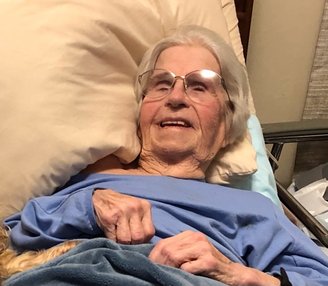
Marilyn Ruth ‘Mary’ Hibbard Willits passed away peacefully at her Eureka home at the age
of 90 on December 5, 2021, with her daughter by her side
and her son close by.
Mary was born July 27, 1931, in a Eureka hospital, the seventh and last child of Ruth Olivia McLearn and Carl Hibbard of Fields Landing. She was a third-generation Humboldt County native, her great-great grandparents, John and Hannah Noe, having been early settlers of the Table Bluff area. Mary’s parents divorced when she was quite young, and her mother was later remarried to Mary’s stepfather Roy “Red” Burnette.
Mary graduated from Eureka Senior High School, where she met her future husband Charles “Charlie” Willits. Many a family argument was had over whether their English teacher was the worst teacher ever or the best. Mary was a good student and paid attention in class and Charlie sat in the back and read the encyclopedias that were in the classroom. You can probably guess who was on which side of that one. After graduating Mary worked office jobs in the Eureka area while Charlie went off to war. After Charlie returned from serving his country during World War II and Korean Conflict, Mary and Charlie were married on November 10, 1951, and started a family, purchasing a home on Donna Drive at the top of Humboldt Hill where they lived for 29 years before moving into Eureka in the early 1980s. They raised a daughter, Connie, and a son, Tim. Soon after Connie was married and when Tim was almost finished with high school they had another very special son, Chris, whom has been enriching all our lives and whom Mary has been lovingly caring for the last 48 years.
For several years Mary and Charlie leased a place in Phillipsville every summer where Chris and the grandkids spent many hours swimming and playing while Grandma and Grandpa tended over 80 tomato plants along with many other fresh vegetables each summer in their large garden. After swimming time, the late afternoons were often spent with Mary telling her grandsons stories of when she was growing up. One that comes to memory is of her dad loading all the kids in the car to go to town for ice cream during the depression.
Charlie owned and operated two different Shell service stations and Mary kept the books for the business. During these years one of the favorite family jokes involved an old Plymouth Valiant that Grandpa Red had bought new and then later sold to Charlie for $2. It was light green and full of rust, had ripped seats, a cracked windshield, and it only started about every third attempt. Mary insisted that car belonged at the service station for running out to get parts for the cars they were repairing and refused to ride in it, but Charlie would drive it home for lunch and park in the driveway and Mary would make an act about how much she hated that car. Family lore is that Charlie had to open the station at Harris and Pine after closing the station at Spruce Point because Mary didn’t want that car parked in front of her home. All in the name of good-natured fun of course. The “Green V” was eventually sold for parts before Charlie and Mary retired and closed the station. Mary and Charlie both enjoyed bowling and Mary did secretarial duties for several leagues over the years along with providing extra support to Charlie as he served in various capacities for both the Humboldt Bowling Association and the California State Bowling Association.
Mary and Charlie kept up on technology, having purchased one of the first color televisions in Humboldt County and owning a home computer before most people even knew what one looked like. Mary took a course in computer programming at College of the Redwoods and wrote a program that allowed her to keep track of the daily receipts from the service station on her Radio Shack TRS-80 that she used until they retired.
Family meant everything to Mary, she often bragged that she had spent every holiday with all her children from the times they were born except for one Thanksgiving that she, Charlie and Chris went to Santa Barbara to celebrate with Tim at college and then a couple years ago when Tim was under the weather and stayed home for Christmas in order to not make anyone else sick.
The disadvantage of living into yours 90s is that most of the people you loved in your younger years pass on from this life before you. Mary was proceeded in death by her husband of 52 years Charles Willits, her son Tim Willits just late last year, her parents Ruth Burnette and Carl Hibbard, 4 brothers Vernon, James “Jim”, Kenneth “Kenny” and Bernard “Barney” Hibbard and 2 sisters Viola “Vi” Thompson and Bethel Wilson, stepfather Roy “Red” Burnette and her son in law Lorenzo “Larry” Alvara.
The advantage of living into your 90’s is you get to spend a lot of time with and influence future generations of loved ones. Mary is survived by her daughter Connie Alvara, son Chris Willits, son-in-law Jim Willits, grandsons Steve (April) Hicks, Scott (Kate) Hicks, and Stuart (Jamie) Hicks, great grandchildren Olivia (Collin), Brianna (Drew), Kaitlyn, Noah, Nicole, Ashley, Kristen, Jackson, Joshua, Kyle, Cody, Kayla, and Cameron, 12 great-great grandchildren, and numerous nieces and nephews.
It was always Mary’s wishes that no services be held. Her immediate family will gather later to share happy memories of our mother and grandmother, but we will otherwise honor this request. Final arrangements will be coordinated with Ayers Family Cremation.
If you would like to honor Mary, donations can be made to the Timothy A Willits Memorial Fund at HLOC.org, Hospice of Humboldt or your favorite charity.
The family is extremely grateful to her caregiver Carol Russell and Hospice of Humboldt for their loving care of Mary over the past year or so and for making it possible for her to spend her last days in the home where she lived with her son Chris.
We were rewarded with many years of having Mary as our family matriarch and now she is finally at rest. Chris said it best, “Mama is happy now.”
###
The obituary above was submitted on behalf of Marilyn Willits’ loved ones. The Lost Coast Outpost runs obituaries of Humboldt County residents at no charge. See guidelines here.
OBITUARY: Doris Knight Oliver, 1936-2021
LoCO Staff / Friday, Dec. 10, 2021 @ 6:56 a.m. / Obits
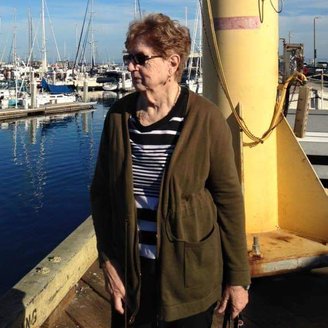
Born Sept. 23, 1936 in Gustine, Calif. Passed away Nov. 15, in Fortuna at the age of 85.
After graduating from Hanford High School in 1954 Doris married Virgil Oliver on Nov. 25, 1955. They moved with their three children to Fortuna in 1964. In 1966 they started Town & Country Refrigeration in their garage. It is still in operation, run by their sons.
Doris enjoyed traveling, a couple of highlight trips were a 25th anniversary trip to Hawaii, a bus trip to Branson, Missouri with Virgil and her two sisters, and a trip of a lifetime to Italy. She loved to garden and always had the nicest patio in her apartment. She loved spending time with her grandkids and great-grandchildren.
Doris was preceded in death by her husband of 46 years, Virgil W. Oliver, an infant son, Jeffery, and her parents Cecil and Melba Knight.
She is survived by a daughter Terri Sommers, her sons Robert (Erin) Oliver, Tom (Laura) Oliver, and daughter-in-law Kathi Oliver; six grandkids and 15 great-grandkids; sisters Freda (David) Gonzales, Nancy Knight and brother Larry Knight; sisters-in-law Goldie Bunker, Alice Oliver and Darlene Oliver. She also leaves numerous nieces and nephews, along with her beloved 21-year-old cat, Wayne.
Graveside services will be held at Sunrise cemetery in Fortuna on Dec. 18 at 11 a.m. A reception afterwards will be at Rohner Park Rec center in Fortuna.
###
The obituary above was submitted on behalf of Doris Oliver’s loved ones. The Lost Coast Outpost runs obituaries of Humboldt County residents at no charge. See guidelines here.
State Launches Investigation Into County’s Financial Practices and Reporting
Ryan Burns / Thursday, Dec. 9, 2021 @ 4:39 p.m. / Local Government
Humboldt County’s ongoing fiscal management nightmare has gotten so bad that the state is sending in a team to conduct an audit.
Yee
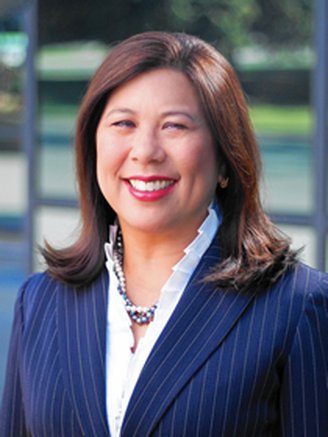
The word arrived Monday in the form of a letter from California State Controller Betty Yee. Addressed to Auditor-Controller Karen Paz Dominguez and County Administrative Officer Elishia Hayes, Yee’s letter says she has directed her Division of Audits to “conduct an investigation of the financial practices and reporting of the County of Humboldt … .”
The basis for the investigation is the county’s “failure” to file its Financial Transaction Report for fiscal year 2019-20, a document that was due more than 10 months ago.
Yee says the team she’s sending will review the county’s annual financial reporting process to “determine whether the county’s inability to submit timely annual financial reports is due to lack of internal controls and, if so, whether the county has adequate internal controls to detect and prevent financial errors and fraud.”
We reported last month that the State Controller’s Office planned to fine the county $5,000 and send staffers here to complete the county’s overdue financial transactions report, on the county’s dime. “That’s not anything anybody wants,” Fourth District Supervisor Virginia Bass said at the time.
Turns out that’s not true; someone does want that. The Auditor-Controller told the Outpost she’s excited about the state coming in to investigate.
“We’re thrilled about it,” Paz Dominguez told the Outpost on Thursday. “I’ve invited the State Controller’s Office to the county before when I’ve faced challenges with getting compliance, most recently with the Cost Plan. The State Controller has always been responsive.”
Later in the day Paz Dominguez submitted this statement via email: “The Auditor-Controller’s Office looks forward to an objective analysis of the County’s fiscal situation free from the politics which have unfortunately governed the discussion so far. We are confident that the Controller’s report will bear out what the Auditor-Controller’s Office has reported to the Board of Supervisors.”
Others in the county say this investigation is a bad sign, an indication that essential fiscal reporting duties aren’t being performed.
“This action is not typical,” county spokesperson Manny Machado said in an emailed statement. “The county in the past has regularly completed its financial reporting within the prescribed timelines. Our financial reporting is a critical component to our operations, [affecting] our ability to perform the single audit and ultimately our ability to draw down funds from the state and federal governments to provide local services.”
On Wednesday, Humboldt County Public Works Director Tom Mattson received his own letter from the State Controller’s Office informing him that they has not received the county’s 2020-21 Annual Road Report, which was due on Dec. 1. This delinquent report could prompt the state to withhold hundreds of thousands of dollars in funding.
The letter cites California Streets and Highways Code section 2155, which says, “No state money shall be allocated to or made available for expenditure by any county or city at any time when such county or city is delinquent in filing the [road] report … .”
Reached by phone Thursday, Mattson was frustrated. “Frankly, this is the thing I was most worried about,” he said. The county receives about $450,000 each month from the state’s Highway Users Tax Account (HUTA), and the letter suggests that next month’s check might be in jeopardy.
Mattson said the report hasn’t been submitted because of delayed postings from the Auditor-Controller’s Office.
Such finger-pointing has grown increasingly common as the county’s fiscal problems, which date back years, grow increasingly more severe. Last month the Humboldt County Board of Supervisors passed a vote of “no confidence” in Paz Dominguez by a vote of 3-2.
But Paz Dominguez has argued that her office has simply been working to comply with generally accepted accounting practices. She says other departments have often failed to submit accurate paperwork in the proper manner or to supply the required backup documentation. She has also complained that her office is woefully understaffed.
“The county side of the books … still require a lot of cleanup work,” she told the Outpost Thursday. “We try to catch errors up front as we process accounts payable but we can’t keep up with what departments are submitting in journal entries. Being a central service department within a decentralized organization with limited collaborative operations and no cohesive administration has led us to where we are today.”
Asked to address the delinquent Annual Road Report, Paz Dominguez said that’s not her fault either. She said the outstanding transactions — called “cost plan charges” — get submitted to her office by different departments, but the submissions she’s received needed correcting to be compliant with the law.
She said the outside accounting firm of Macias, Gini & O’Connell (MGO) has been working with these departments to “correct” the journals in question “so that they will be compliant with federal regulations that govern the charges.”
Mattson said whatever the cause, the state has never threatened to withhold HUTA funds before — not in his 23 years working for the county, anyway.
Perhaps the state’s investigation will shed some light on who’s really to blame for the county’s fiscal catastrophe. The first meeting with the State Controller’s Office will take place next week. If there’s one thing that everyone agrees on it’s this: Help is desperately needed.
###
PREVIOUSLY
- County Moves Payroll Back Under Auditor-Controller’s Office Despite Serious Concerns Voiced by Employees
- County Employees Threaten Legal Action Over ‘Failures’ of Auditor-Controller; Workforce Board Pursues ‘No Confidence’ Vote
- ‘Something is Broken’: County Staff, Supervisors and Department Heads Confront Auditor-Controller in Collective Airing of Grievances
- Fortuna Union High School District Submits Vote of ‘No Confidence’ in County Auditor-Controller, Files Complaint With Civil Grand Jury
- County Board of Supervisors to Consider Vote of ‘No Confidence’ in Auditor-Controller Karen Paz Dominguez
- Board Narrowly Passes Vote of ‘No Confidence’ in Auditor-Controller as State Prepares to Step in and Complete County’s Delinquent Financial Transactions Report


