The
Redwood Coalition for Climate and Environmental Responsibility — RCCER,
pronounced “rocker” — is hoping to give a larger voice
to environmental voters by holding elected officials accountable and
by providing model legislation that local jurisdictions can adopt.
Listen to this week’s episode to learn who is behind this new
organization and what they are looking to accomplish.
The
subject of cannabis is something I care deeply about.
I
am a Humboldt County native, a former caregiver for a dying parent
and other terminally ill cancer patients, a commercial grower, and a
private financial consultant serving the cannabis community thru a
no-cost educational platform.
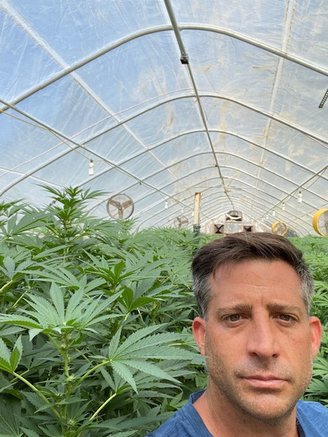
Jesse Duncan.
It
seems the current literature on weed is far too compartmentalized. As
we continue to stumble over the moral underpinnings of cannabis and
continue to silo ourselves into a staunch “for” or
“against” mentality, the ability for true and meaningful
debate is impacted. Like in our political discourse, grandstanding
only goes so far and it doesn’t solve problems…kind of a cop-out, really. A more thoughtful and meaningful dive into the issues is
harder and takes more time. That’s what The Cannabis
Conversation is about.
It’s
about moving past the same type of compartmentalization that stifles
thinking and creativity. It’s about exploring the issues around
cannabis and about offering lasting policy and community solutions to
improve lives, better society, and create ongoing economic
opportunity for ourselves and our children. To be clear, this column
will not be a disingenuous rag that solely pimps the benefits of
using cannabis. Nor will it be a feeble attempt to prop up or
redefine an industry that has a lot of skeletons in the closet. My
hope is that it will be a spirited platform for furthering the
cannabis conversation here and abroad.
As
someone who suffered from physical addiction to cannabis as a younger
man, someone whose wife thinks cannabis is of the Devil and as
someone whose life has been threatened because of my participation in
this industry, I understand the negatives associated with cannabis.
On one hand, I’ve seen the rampant lawlessness and environmental
destruction occurring in the hills of Humboldt County and it’s
repulsive. On the other, I’ve seen a loving, conscious cannabis
community that cares about protecting and nurturing the environment
while providing high-quality, clean products to consumers. I’ve
also seen how cannabis can help the terminally ill ween off of heavy
narcotics and die with relative comfort and dignity.
Pretending
that cannabis (though pure and life-improving herself) is something
akin to a bouquet of roses is disingenuous and will not serve the
debate well. With a more balanced critique acknowledging both the
positives and negatives associated with use and production, we can
make more meaningful strides in educating the public, ensuring safe
access for all people worldwide, and reclaiming the superiority of
the Humboldt Brand.
Over
the coming weeks and months, this column will discuss a multitude of
issues including cannabis and the local economy, industrial hemp,
cannabis as medicine, cannabis addiction, Legacy Farmers, the
unregulated market and many others. It is my hope that The
Cannabis Conversationwill spur
debate and help normalize cannabis as not only a valid economic
driver of our county and state, but also as a tool for personal
health and wellness.
Your
Author
At
43 years old, I’ve been using cannabis for nearly three decades
now. I’m one of the approximately 9 percent of cannabis users who gets
physically addicted to the substance with habitual use, so I only
partake occasionally nowadays. I, like many, have seen the darker
side of the cannabis industry. My life was put at risk through a home
invasion robbery and one of the neighbors on a farm I managed was
killed one night during a deal gone bad. I’ve seen firsthand the
criminality and wanton environmental destruction occurring by some
bad actors in our hills, and my Central American wife of 23 years
believes that I’m taking the family to hell given my participation
in the industry.
That
said, I’ve met hundreds of farmers locally who love the environment
and care deeply about the plant, their community, and their
consumers. I view cannabis as God-given and life-giving when used
responsibly, and have made farming, helping farmers financially,
creating cannabis awareness, and ensuring safe access for all people
worldwide my professional pursuit.
I
am an ardent supporter of medicinal cannabis for the seriously ill,
be they adult, child or infant. While I would prefer that medicinal
efforts for kids focus mainly on the non-psychoactive side of the
plant like CBD, I strongly prefer the use of cannabis over heavy
narcotics for minors facing life-threatening or serious health
complications. As a father of six, I empathize with parents facing
the terrifyingly painful reality of a sick baby or child. The thought
that a child would be denied life-saving and life-improving medicine
because of an outdated statute, policy-driven restrictions on
cannabis research and development, someone’s own imposed morality,
or misinterpreted social externalities is simply unacceptable.
I
started using cannabis in my teen years because it was fun – weed
made me laugh and feel good and that was enough. Humboldt-grown
cannabis is very potent, though, and was disruptive for me in my early
years. For these reasons I strongly support legislation that
restricts the use of recreational cannabis till the age of 21, a time
when individuals have completed secondary education and reached
sexual maturity.
Over
the years, my use became more centered around emotional and spiritual
connectedness, enhanced sensory experiences like sex, wellness issues
like stress relief and harm reduction and health. After being
diagnosed with acute gastritis, dislocating both hips, and suffering
from persistent tears to the posterior iliac with regularly slipping
SI Joints, cannabis also became a sleep aid and my preferred pain
management tool. Because bottles kill people like me, the conscious
choice is clearly cannabis, not alcohol or opiates.
I
actively engage my children in conversations around my use and have
made it abundantly clear that the kids will not indulge while under
our roof unless, God forbid, they fall seriously ill or are seriously
injured. Because we are a family that suffers from addiction and
believes that addiction is genetic at some level, we have shared that
recreational use of any intoxicant is dangerous for our kids. This is
not a conversation my parents had with me and I didn’t acquire a
vocabulary for addiction until after a deferral program in my early
20s. Because cannabis alters the developing mind and the sexual
function of males specifically, exploring in one’s later years
seems healthful and prudent. I also believe in not consuming in front
of the children as I think it normalizes use and increases the
likelihood they will use as well.
I
retired from financial advising in 2014 to caregive for my dying mom
and came to fully appreciate cannabis as medicine as I watched her
body get ravaged from radiation, chemotherapy and a failing immune
system. After her death, I decided that farming professionally and
improving lives with cannabis would be my next professional pursuit.
I studied and farmed rigorously and am now a practicing “clean
rusher,” fighting to solidify Humboldt County family farms’ place
in the global cannabis supply chain. If Canada can ship weed
internationally and establish production facilities in Latin America,
then on a local and state level we can assuredly grapple with issues
of on-site consumption, cannabis tourism, cannabis for seriously ill
children, less discriminatory land use ordinances, and formalizing
the interstate or national marketplace that currently exists in
robust and illicit form.
I
am also a member of the Humboldt County Growers Alliance (HCGA)
through a pro bono offering, NorCal Financial & Cannabis
Consulting. This educational platform is designed to help farmers
improve their cultivation, business, and financial skills so they can
continue to compete in the marketplace and continue to drive the
economic success of Humboldt.
I
am a people person, a lifelong learner, and enjoy the spectacular
array of outdoor activities our area provides.
All
the best,
Jesse
###
Jesse Duncan is a lifelong Humboldt County resident, a father of six, a retired financial advisor, and a
full-time commercial cannabis grower. He is also the creator of NorCal Financial and Cannabis
Consulting, a no-cost platform that helps small farmers improve their cultivation, business, and
financial skills.
Please check out his blog at, his Instagram at jesse_duncann,
and connect with him on Linkedin.
Strong,
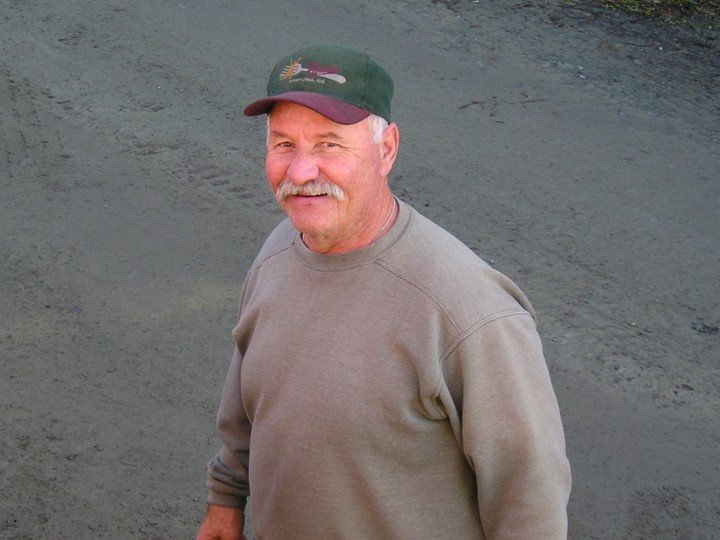
courageous, gentle and kind — for those who knew Ron, that is how
they speak of him. He had the natural ability to touch your heart
with very few words needing to be spoken. Ron passed away peacefully
at the age of 79 on Dec. 6, 2021. He persevered through the many
challenges of Parkinson’s disease over the last 12 years with
strength and courage.
Ron
was born on February 20, 1942 and was raised in Fortuna by his aunt
and uncle Caroline and William Marquis after his father Rinaldo
Pelletier was killed falling timber in Blanton Creek when Ron was
three
years old.
Ron
had many nicknames throughout his life due to his jovial and
fun-loving spirit. Ron’s friends that he grew up with talk about
his days on the Fortuna High football team and how they could count
on his sense of humor to brighten their day. He was thought of as a
real comedian catching his friends off guard with a good prank or
witty comment. Back in the sixties, Ron was often seen cruising his
1963 Corvette and smoking a stogie. This is a beloved memory of those
he grew up with. He loved reminiscing with friends and sharing
stories. His childhood and high school friends remained close to him
throughout his entire life.
When
Ron went to work, he followed in both his father Rinaldo Pelletier
and “Papa” Bill Marquis’ footsteps working in the timber
industry at PALCO. He worked in the woods and hauled logs for 30
years starting in the 1970’s and retiring in 2003. In the 1970s and
1980s, “Frenchie” and “Dad” echoed from the CB
throughout the Yager Creek drainage from his longtime and cherished
work friends as he hauled heavy loads.
Ron
was the definition of the greatest Dad you could ever have to his
four
kids. He was a steady, reliable man who we all admire and are proud
of. Even though he would put in 12-hour workdays, he still had time
for his kids. He was involved in all their sports growing up, and
taking them hunting, fishing, camping and many family trips. He also
made an impact on those he worked with in the woods throughout the
‘80s and ‘90s as he was known by all as Dad. He had a long
history working in the woods and had so many stories to tell from
working with the road crew who became family to him. He liked to say
that he was “flying the mail” after he found the mailbox on the
500 road. Dad loved to talk about all those times up until his
passing. He liked to remind us that he was the last remaining member
of the Mill C carpool to Elk River where he worked pulling green
chain as one of his first jobs. He made us laugh with his dry sense
of humor and his witty statements that he thought up on the spot at
just the right time. We could count on Dad to be there for us always
for a hug, a laugh, encouragement, advice, and to know what time the
SF Giants and 49ers were playing. If you needed to know what that one
person’s name was from years ago, that you just couldn’t quite
remember at that moment, he could tell you.
After
retirement, Ron met his love Helen Belloni, together they enjoyed
going on trips especially to Forest Glen and the Trinity River.
During this time, Ron continued enjoying the outdoors. They enjoyed
being retired and watching birds and whales and combing the beach and
river for knots for carvings he liked to make. Together they also
enjoyed time with friends. Ron also loved being involved with Helen’s
grandchildren. He got to continue to share his love of sports with
Mariqus, watching him play football, basketball, and baseball. He
would often call Madison to give her support and encouragement as he
was always proud of her accomplishments. Ron began going to “Rock
Steady Boxing” classes to help with Parkinson’s disease. This
gave him the opportunity to improve his condition and help him to
continue to live life to the fullest, and he made many friends there.
Ron
is preceded in death by his parents, his wife Joann Pelletier,
daughter Sarah Pelletier and many close relatives and friends.
Ron
is survived by his children Ron Pelletier (and his wife Mary),
Michael Pelletier, Amanda Pelletier, Joseph Pelletier, and
granddaughter Abbi Pelletier. Ron is survived by his love of 16
years, Helen Belloni and Helen’s children and grandchildren Madison
and Mariqus.
The
memories he made and helped us to make are gold. We love you Dad!
A
celebration of life will be held on February 19, 2022, from 1-3 p.m.,
at the Fortuna Fire Hall.
Donations
in his honor can be made to the Loleta Fire Department, Hospice of
Humboldt, and the Parkinson’s Foundation.
###
The obituary above was submitted on behalf of Ron Pelletier’s loved ones. The Lost Coast Outpost runs obituaries of Humboldt County residents at no charge. See guidelines here.
The mural will be of David Josiah Lawson and his mother, Charmaine.
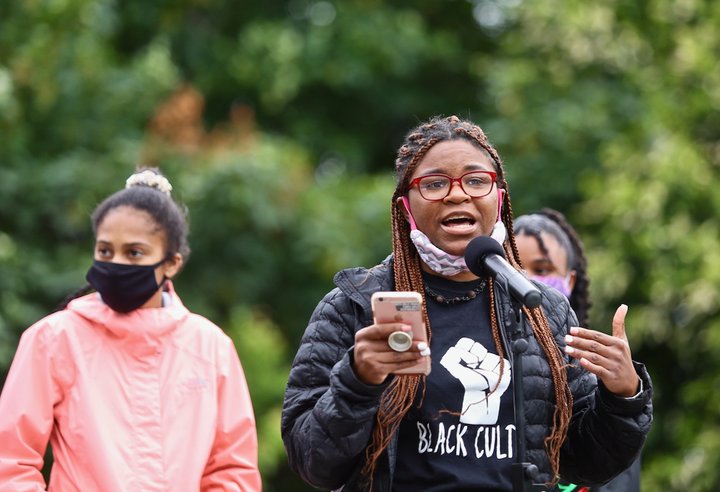
“It’s not really to highlight his death, but highlight his legacy that he left behind,” Amaya Watson, president of the Eureka High Black Student Union and Eureka City Schools student board representative, told the Outpost.
“Charmaine has done a lot for Humboldt’s community, especially the Black youth around here.”
The Lawsons will be surrounded by the silhouettes of Martin Luther King, Tupac, Nina Simone, Maya Angelou and others, each holding a fist in the air, each painted in yellow, green or red over a black background.
It will have quotes written above the figures, and a row of seven more fists bordering the bottom. Below the fists will be the names of Black people who have fallen because of injustice.
The mural will have these things, that is, if it ever exists at all.
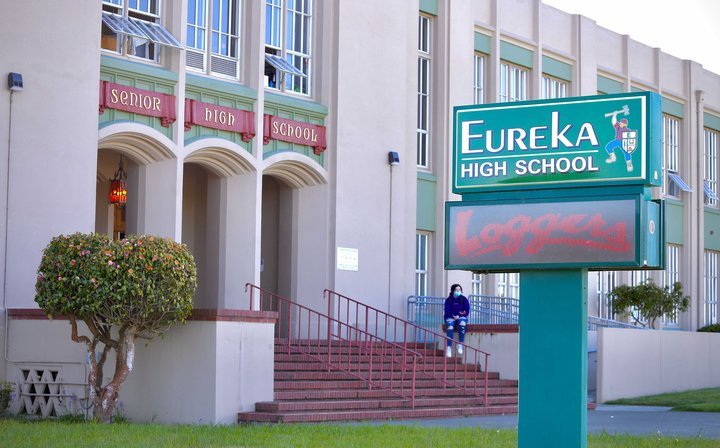
It depends on whether the Eureka City Schools Board of Education votes to overturn its November decision to ban murals on ECS campuses. Because that vote interrupted a two-years-and-counting mural project aiming to give an artistic platform to Eureka High clubs representing BIPOC students, the ban sorely alarmed ECS students, staff and community members invested in the murals.
The project, led by Naomi Doherty, began with a $2,500 grant from the Humboldt Area Foundation and grew into a community-wide effort after the Eureka NAACP raised $5,000 to pay local BIPOC artists to paint the murals and the project became a DreamMaker Project of the Ink People, renamed A.R.C. (Art. Representation. Culture.). The mural Watson described, designed by the Eureka High Black Student Union, is just one of four murals still in the planning stages by BSU, Asian and Pacific Islander Club, Latinx Club and Native American Club.
As president of the BSU, Watson became very involved with the project. She went to ECS campuses to meet with principals and learn about other murals in the district, and as a student board representative, communicated with the board on behalf of all four clubs. “Nothing was able to get lost or fizzled in translation because I was able to speak at the board meetings and answer any questions anybody had,” Watson said.
Amaya Watson speaking at a Black Lives Matter event in June 2020. | Photo: Andrew Goff
Things were going as planned for the project when the district requested Doherty help develop formal mural guidelines for ECS – a mural-approval procedure that never existed before now. Doherty agreed, but when the board couldn’t agree on the mural guidelines – discussed over two board meetings in October and November – Superintendent Fred Van Vleck recommended the board vote to no longer allow murals. And they did; Trustees Mike Duncan, Fran Taplin and Lisa Ollivier approved of the ban, while Watson and Trustee Mario Fernandez voted “no.” Trustee Susan Johnson was absent.
The community rallied. Sharrone Blanck, Eureka NAACP president, asked community members to contact the board with a request to reopen the discussion. A teacher wrote a letter – that 21 faculty club advisors endorsed – urging the board to reopen discussion. The Black Student Union sent a wave of letters asking for the same thing.
It’s looking like those four murals might find their way onto Eureka High’s buildings after all. At last night’s board meeting, Trustee Susan Johnson, who was absent for the November vote, asked that the board return to the mural procedures item on a future agenda.
“I felt really bad that I missed the board meeting when we had the vote on the mural,” Johnson said. “I feel bad that I wasn’t there and that’s part of my job. And so I’d like to ask that we bring it back.”
The meeting, packed with students and community members in support of the murals, broke into applause with Johson’s request.
During their board reports, Trustees Ollivier and Duncan seemed to indicate that they might change their no-more-murals vote when the item comes back at a future meeting. (To be clear, the item will return as approving or not approving the criteria for murals.) Ollivier, inspired by equity seminars at the recent California School Boards Association Annual Education Conference, said she’s interested in developing an equity policy for ECS.
Public comment came after Johnson’s request, and students, teachers and community members spoke about the importance of the murals.
One student, an immigrant and member of BSU and Latinx clubs, said she felt welcome when she walked into the cafeteria for the first time and saw her country’s flag on the wall. “Having a mural showing my history, where I’m from, my background, it will [make me and more students] feel more welcome.”
“Much of the artwork I do reflects my cultural background. And it often shares history that doesn’t appear in history books, or is not known to the general audiences in our community. Art is the most accessible means of communication on a deeper level,” Uyeki said. “BIPOC students sharing their voices in an expressive way can only have positive repercussions for the entire school and for the community.”
Watson’s parents, Latrice and Ray Watson, both addressed the board.
“I just want to thank you guys for bringing the guidelines back to the agenda for the next meeting. But I also encourage you not just to bring it with a lighthearted discussion, to really have deep conversations about what the students are asking,” Ray Watson said.
“It really hurt me to hear what happened at the last board meeting. It did, because I raised my kids to be leaders, to speak up,” he said.
“Board members should take this opportunity to explore your own bias and what makes you uncomfortable. Your personal opinion may not align with the greater good of the voice of the students,” Latrice Watson said.
“I urge you to reconsider the guidelines for murals for Eureka City Schools and appoint a subcommittee of staff, teachers, students and our community members to do further research on other district policies.”
As NAACP president, Blanck extended an offer to help the district with equity.
“Equity needs to be addressed with the people that are affected,” Blanck said. “Having people of color, adults of color in the space, having people who identify as LGBTQ+ in the space, and other groups that have been marginalized and continue to be marginalized in the space is going to be necessary. A room full of white people talking about equity is not going to lead to anything that’s helpful to the community.”
Today, Watson said she’s trying to stay optimistic about the mural guidelines getting through the board.
“Based on the past meetings, I’m trying to stay grounded and be ready to jump through any hoops that may be thrown at me,” she said. Watson missed last night’s board meeting; she was out of town.
“It sounds like all of the board members across the whole panel were kind of feeling optimistic about murals now that they’re seeing our view and actually hearing that it’s more than just a mural; how much it actually means to the students and the parents and the whole school community.”
Fortuna resident Erik Keith Wood was handcuffed in court today and led off to jail, where he will spend a year for shooting a 14-year-old boy who was among a group of teens harassing Wood’s family.
Judge Kaleb Cockrum suspended a three-year prison sentence and placed Wood on two years probation, with 365 days in Humboldt County Correctional Facility. Wood, 42, pleaded guilty earlier to one felony count of assault with a firearm.
Wood,
The now 15-year-old victim and his father were in court for the sentencing.
A group of juveniles had been harassing Wood and his family for months, they say, and on May 24 he fired at the kids after they banged on his doors and windows, screaming obscenities when they were told to get off the property.
The juvenile victim stated in a letter read to the judge that he was not part of the group. He was just riding his bicycle in the neighborhood and rode down to investigate the commotion.
“I was in the wrong place at the wrong time,” the letter said.
He said the shooting has left him with physical and emotional scars.
A family friend, Susan Nessen, said she became a surrogate grandmother to the victim and his brother after their mother died when they were just 7 and 8 years old. Nessen said the victim has injuries “all the way up his leg, and on one side all the way up to his shoulder.”
“That leg is noticeably smaller than the other leg,” she said.
Wood was accompanied this morning by a large group of supporters, including his 17-year-old son, Chris Wood. During a court break Wood hugged and comforted Chris, who was sobbing.
Chris Wood was home when the shooting occurred. He told Cockrum today there was a knock on the door, then nobody there. Another knock. When he looked out “I see a bunch of them.”
He said he also saw a rock and a knife. And then “I hear a humongous sound.”
Kari Jones, Woods’s fiancee, told the judge she ordered the kids outside to get off the property.
“”They started yelling obscenities to me,” she recalled. She described Wood as a wonderful father and a hard worker who has never been in trouble.
“Now he will be a felon.”
Wood also spoke, saying “We had a lot of problems with those kids for quite awhile. I asked for help from the school, from the police.”
When he looked at the crowd of juveniles, Wood said, “I did see a knife.”
“I wish every day of my life that I could take (the shooting) back,” he said. “… I was just frustrated because nobody would help us.”
But Deputy District Attorney Luke Bernthal was very skeptical of Woods’s account of the incident and what led up to it.
Records show Wood called the police about the problem one time, Bernthal said. He asked Cockrum to sentence Wood to the mid-term of three years, and to deny probation.
“The defendant fired a shotgun at a group of juveniles,” he said. He called the person who was shot a particularly vulnerable victim.
“He was a teenage boy. He had no way to defend himself against a shotgun … he was simply there hanging around with a group of friends.”
The prosecutor said Wood never mentioned seeing a knife until after he was arrested.
Cockrum said he was taking into account Woods’s lack of criminal history, and he also didn’t doubt that Wood and his family felt threatened and fearful.
Nevertheless, “he shot a juvenile on a bicycle.”
Cockrum said he has no way of knowing whether the victim was part of the group.
After Wood was taken off to jail and most spectators left the courtroom, the judge spoke to the juvenile.
“Young man, I want to talk to you. I want you to come up here. I want to talk to you a little bit.”
He approached the bench, and he and Cockrum had a brief conversation. It appeared the judge was giving him some advice and encouragement.
Press release from the Humboldt County Sheriff’s Office:
Dylan Joseph Morrow Booking Photo | Humboldt County Correctional Facility
On Dec. 10, 2021, at about 1:40 a.m., Humboldt County Sheriff’s deputies on patrol in the unincorporated area of Eureka conducted a vehicle investigation on a suspicious occupied vehicle parked at the Herrick Park and Ride.
Deputies contacted two individuals inside the vehicle. The driver of the vehicle was identified as 32-year-old Dylan Joseph Morrow. Morrow was wanted by the Humboldt County Sheriff’s Office in connection to a shooting investigation in Manila last month.
Deputies took Morrow into custody without incident. During a search of Morrow, deputies located drug paraphernalia and approximately 0.8 grams of heroin. During a search of Morrow’s vehicle, deputies located a loaded, unregistered firearm.
Morrow was booked into the Humboldt County Correctional Facility on charges of carrying a loaded firearm in a public place (PC 25850(a)), carrying a concealed weapon without a license (PC 25400), possession of a controlled substance while armed (HS 11370.1(a)), convicted felon in possession of a firearm (PC 29800(a)), possession of controlled substance paraphernalia (HS 11364), possession of a controlled substance (HS 11350), prohibited person in possession of ammunition (PC 30305(a)) and shooting at an inhabited vehicle (PC 246).
The second individual contacted inside the vehicle was released at the scene.
Anyone with information about this case or related criminal activity is encouraged to call the Humboldt County Sheriff’s Office at (707) 445-7251 or the Sheriff’s Office Crime Tip line at (707) 268-2539.
Press release from the Humboldt County Sheriff’s Office:
On Dec. 9, 2021, at about 10:37 a.m., Humboldt County Sheriff’s deputies on patrol in the Blue Lake area observed a stolen vehicle parked alongside Old Highway 299. The vehicle was found to be occupied by one male.
When deputies attempted a felony traffic stop on the vehicle, the male, later identified as 33-year-old Perry Dale Sanderson, fled in the vehicle at a high rate of speed. Deputies pursued Sanderson onto State Route 299 and then onto Bair Road. During the pursuit, deputies observed Sanderson commit multiple vehicle code violations.
The Hoopa Valley Tribal Police Department and the California Highway Patrol (CHP) were requested to assist deputies. During the pursuit, a CHP officer successfully deployed a spike strip near Hoopa, disabling the suspect vehicle. Sanderson then fled from the vehicle into a wooded area.
At approximately 1:58 p.m., a Hoopa Valley Tribal Police Officer located Sanderson in the area of Matilton Cutoff Road. Sanderson was found to be in possession of over 13 grams of suspected fentanyl.
Sanderson was arrested and booked into the Humboldt County Correctional Facility on charges of evading a peace officer (VC 2800.2), fleeing a peace officer (VC 2800.4), possession of a stolen vehicle (PC 496d(a)) and possession of a controlled substance (HS 11350), in addition to warrant charges of evading a peace officer (VC 2800.2) and fleeing a peace officer (VC 2800.4).
The Humboldt County Sheriff’s Office would like to thank the Hoopa Valley Tribal Police Department and the California Highway Patrol for their coordination and assistance with the pursuit and apprehension of Sanderson.
Anyone with information about this case or related criminal activity is encouraged to call the Humboldt County Sheriff’s Office at (707) 445-7251 or the Sheriff’s Office Crime Tip line at (707) 268-2539.
Perry Dale Sanderson Booking Photo | Humboldt County Correctional Facility