

(AUDIO) This New ‘Hi-Lo’ Siren Will be Your Signal to Evacuate, So You’ll Want to Know What That Sounds Like
LoCO Staff / Thursday, Sept. 2, 2021 @ 12:31 p.m. / Crime
Press release from the Humboldt County Sheriff’s Office:
The Humboldt County Sheriff’s Office is utilizing a new way to alert the public when it is time to evacuate. All Sheriff patrol vehicles are now equipped with the Hi/Lo siren, a European style 2-tone siren, that will only be used to alert residents of an immediate evacuation during emergencies such as wildfires, floods and other disasters.
The implementation of the Hi-Lo siren was made possible through California Senate Bill 909, following the devastating Tubbs Fire in 2017 during which it was determined first responders needed a new way to alert the community of immediate evacuation orders.
Due to recent wildfires in and near Humboldt County prompting wildfire evacuations, the Hi-Lo Siren is a welcomed tool to assist in public safety during evacuation emergencies.
“We have already seen statewide and here locally how wildfires can grow quickly, putting people in dangers way,” Humboldt County Sheriff William Honsal said. “The Hi-Lo siren will allow deputies to quickly alert large areas that are in immediate danger.”
In addition to utilizing the Hi-Lo siren, the Humboldt County Sheriff’s Office also uses Humboldt Alert, the county’s emergency alert system, to notify residents of emergency situations. Both Humboldt Alert and the Hi-Lo siren will be used to alert residents of an emergency evacuation order. Humboldt Alert is also used to notify residents of evacuation warnings, downgrades and police activity impacting public safety. Humboldt Alert is an opt-in system, meaning residents must sign up to receive the alerts. To sign up for Humboldt Alert, visit humboldtgov.org/alerts.
The community is encouraged to prepare their homes and families for the impact of wildfire. To learn how you can get prepared, visit humboldtsheriff.org/oes or readyforwildfire.org.
The Sheriff’s Office reminds residents to always use your best judgement during an emergency. If you hear the Hi-Lo, it’s time to go!

BOOKED
Today: 3 felonies, 8 misdemeanors, 0 infractions
JUDGED
Humboldt County Superior Court Calendar: Today
CHP REPORTS
0 Us101 (HM office): Live or Dead Animal
4827 Valley West Blvd (HM office): Hit and Run No Injuries
9700 Mm1 N Men 97.00 (HM office): Trfc Collision-No Inj
ELSEWHERE
RHBB: Magnitude 3.7 Earthquake Centered East of Hydesville
RHBB: Motorcyclist Injured in Solo Crash at 14th and California in Eureka
RHBB: Southbound Highway 101 Traffic Backs Up From Richardson Grove to Benbow
RHBB: Woman Suffers Possible Leg Fracture in Dyerville Loop Road Motorcycle Crash
Dead Gray Whale Washes Up on Samoa Beach
John Ross Ferrara / Thursday, Sept. 2, 2021 @ 11:50 a.m. / Wildlife

Photo of the whale provided by reader Sean Barron.
A 27-foot gray whale has washed ashore on Samoa Beach near the Samoa Drag Strip.
Stranding Coordinator for the Marine Mammal Stranding Program Allison Lui told the Outpost that the female, subadult whale was reported to be dead when it first washed up on the beach Tuesday evening.
“We were able to conduct an external exam and collect samples yesterday,” Lui said. “Sample analysis takes some time so the results are not available just yet, but we will be coordinating with our partners at the West Coast Marine Mammal Stranding network to confirm our findings in the near future.”
Lui said the whale’s death may be connected to an “unusual mortality event” noticed along the West Coast and Alaska since 2019.
“Gray whales are currently stranding at higher than normal rates along the West Coast and are experiencing what is considered an unusual mortality event,” she said.
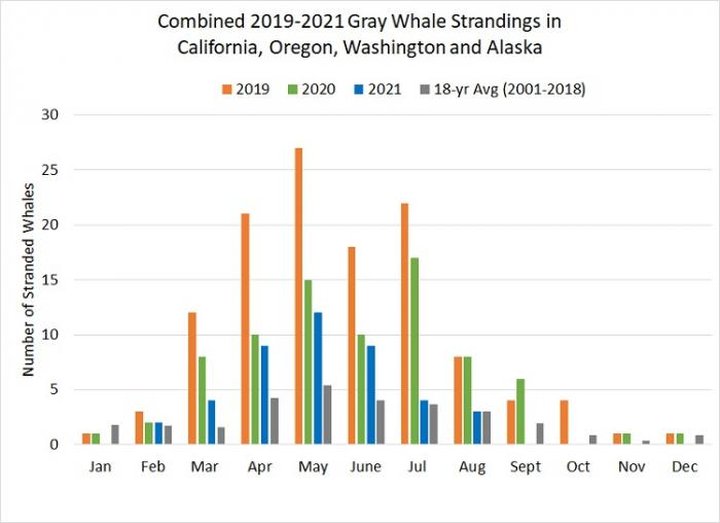
Combined 2019-2021 Gray Whale strandings in California, Oregon, Washington and Alaska. | NOAA
Lui encourages anyone who spots dead or stranded marine mammals to report the information to the Humboldt State University Marine Mammal Stranding Program at (707) 826-3650 or marinemammals@humboldt.edu.
Live injured or sick stranded marine mammals can also be reported to the North Coast Marine Mammal Center at (707) 951-4722.
Humboldt’s Schools Are Finally Fully Open, But Some Parents Don’t Trust That They’re Safe
Jacquelyn Opalach / Thursday, Sept. 2, 2021 @ 11:18 a.m. / Education
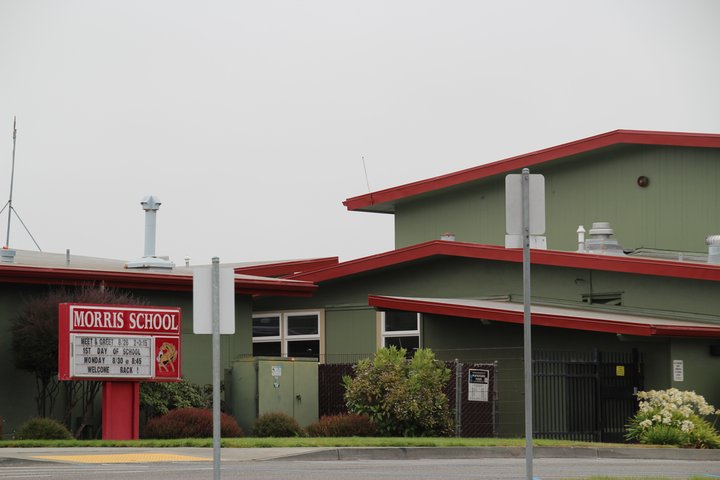
Morris Elementary School in McKinleyville | Jacquelyn Opalach
###
It’s back-to-school season, and for some of Humboldt’s 18,000-ish elementary and high school students, that means back to campus for the first time in 18 months.
“School is alive and well,” McKinleyville Union School District Superintendent Heidi Moore-Guynup told the Outpost. This week is MUSD’s first week back.
“Kids are happy to be back, teachers and staff are happy to serve their students and there is a general feeling of relief on the part of all. Our parking lots were full of eager families dropping their children off, some of which for the first time in over a year. Our McKinleyville Schools are certainly the hub of energy in McKinleyville at the moment.”
But some parents, especially those of young students who can’t be vaccinated, are feeling the opposite of relief. Sending their kids to “normal” school during Humboldt’s most devastating surge is pushing these parents’ stress levels to an all-time pandemic high.
“I feel like I’m about to send my son to the lion’s den,” one mom, whose 10-year-old son attends school in McKinleyville, told the Outpost. (This person asked for her name not to be printed; we’ll call her Stella.) “It’s just a situation where we’re actively still in a pandemic and our numbers are way worse than they ever were before, and here we’re going to open everything back up,” Stella said. “I think that it’s insane.”
Regardless of whether local schools agree that opening up is insane — though none have indicated they do — it isn’t a choice. California law mandates in-person instruction this fall, with an independent study option for those still wary of going on campus. It replaces last school year’s distance learning, which usually involved live remote video classes. Independent study is less interactive and places more responsibility on parents, and, in most cases, it’s not an option for students with an Individualized Educational Plan (IEP).
Stella’s son can’t learn through independent study because he has an IEP. “It’s in his best interest to be in person and have that hands-on learning, but these children are not old enough to be vaccinated,” Stella said. “Am I the only person worried about this?”
She doesn’t think it’s worth it.
Full campuses are a huge change following the 2020-2021 school year, when COVID had most school districts offering fully online or hybrid models at a fraction of a normal year’s instructional minutes. Back then, choosing whether to reopen was up to individual districts.
From learning loss to mental health, last year’s challenging learning conditions left lawmakers determined to safely reopen classrooms. If safety measures — like vaccination of those eligible, masking, proper ventilation, disinfection and screening testing — are properly layered, the risk of spread in schools is low, the Centers for Disease Control and Prevention claims. Transmission levels in students are generally less than or equal to community transmission rates, according to CDPH.
Humboldt’s case rates are higher than ever, and open schools around the county have already had a few positive cases and sent students into quarantine to prevent in-school transmission.
“I think we will definitely see an increase in cases from the schools,” County Health Officer Ian Hoffman said at a media availability last week. But “almost all of these are gonna be kids who are getting it outside of school. We really haven’t seen any in-school transmission across the state.”
That’s been the case at Ferndale Unified School District, which offered in-person instruction throughout the 2020-2021 school year. The district did need to quarantine a couple of elementary cohorts but had no secondary transmission, said Superintendent Beth Anderson. “That’s a good indicator that our protocols are working,” Anderson said. “I’d say we were extra extra careful last year.”
Aiming to keep students in the classroom, CDPH developed “modified quarantine” prior to the beginning of the 2021-2022 school year, which allows potentially exposed students to continue attending classes in-person if they were masked when exposed to the COVID-positive individual, have no symptoms, and test twice weekly over the 10-day quarantine period.
Social distancing protocols for schools have also changed dramatically since last school year. The CDC does recommend an attempt to distance indoors by three feet, but recognizes the unlikelihood of that in a full classroom — which is more important, it says — and suggests compensating by layering other safety measures.
Parent Johnny Kell told the Outpost he thinks the recommendations “seem to be written for the wrong variant.”
Elementary schools are “unguarded reservoirs of unvaccinated individuals,” said Kell, who works as a nurse for the Northern Humboldt Union High School District. “I have made the very difficult decision to keep my two kids under 12 home until vaccinated, which couldn’t come sooner.”
Stella is afraid that the safety measures will be impossible to enforce. She worries that kids will take off their masks or wear them improperly; that there won’t be enough surveillance in bathrooms or during breaks, recess and lunchtime. “Kids are gross. I could probably use better language, but they pick their nose, touch the door handle,” she said. “It’s really alarming.”
She thinks transmission will happen in schools.
This summer’s delta-driven spike has not overlooked the county’s school-aged population. Though kids continue to be at the lowest risk for serious illness, kids, like adults, are more susceptible to delta than other variants. For both the 0-9 and 10-20 age groups, nearly 25 percent of total positive cases have been in the last month (total case numbers 555 and 921, respectively). Four locals in the 10-20 age group have been hospitalized, two in the last month. A third to half of eligible teens are fully vaccinated, and kids under 12 are still waiting on their vaccines, which have no solid approval timeline.
Humboldt schools have implemented most recommended safety measures, but many continue to evade one practice supported by the CDC and CDPH.
Screening testing, or surveillance testing — regularly testing several students at random in an effort to prevent outbreaks — is a safety measure available to California schools thanks to state and federally funded programs that supply tests and test-administration training. Because screening testing is not a requirement and is challenging, most local schools aren’t utilizing that option. On top of needing parental consent, schools lack the infrastructure and personnel to mass administer tests to students, a few administrators told the Outpost in May.
In May, though, the county was in a very different place COVID-wise, and most schools only had a fraction of their student body on campus at a time. Considering what’s changed since then, some guardians wish schools would start screening testing students now to prevent an outbreak.
“We should be as proactive as we can,” said Carl Young, whose 11-year-old granddaughter Emily goes to school in Fortuna. He corresponded with the school district’s superintendent over the summer, asking for the implementation of on-campus surveillance testing, without any luck. “Schools are trying to operate within the confines of their physical buildings,” he said. “It’s a lot of kids. I don’t know if it’s possible.”
But Emily loves school and doesn’t want to learn through independent study, so she’s back in the classroom alongside most Humboldt County kids. “Things seem to be going pretty good,” Young told the Outpost. He’s comforted by California’s teacher vaccination or weekly COVID test mandate, and kids seem to be following the rules and keeping their masks on, including Emily. “She is a full-on mask wearer, which is great,” Young said. “In fact, I can’t get it off of her.”
But because Emily’s grandparents are raising her, anxiety lingers in the Young household. “Anything that happens at school could be brought home to us,” Young said.
Very few of Humboldt’s 30-plus districts outline an intent to implement screening testing (or any on-campus testing for students) in safety protocols on their websites.
Rachel Price, whose two kids are fully vaccinated, opted to enroll her 12-year-old son in independent study. “I do not feel that we have a handle on this virus enough to risk letting him go to school in person,” she told the Outpost. “Half of the people here are kinda being careless and willy nilly with their day-to-day life like the virus does not exist.”
Price let her daughter, who is a senior in high school, decide to go to school in person. But two days in, her daughter came home with stories of non-compliant students and decided to transfer school districts. “I have a feeling she will be right back to distance learning anyways. I predict that schools will shut down again,” Price said.
The four families we spoke with share doubt about whether opening schools is safe, but Humboldt’s communities have some parents who feel the opposite. In Ferndale, Anderson said that quite a few parents have resisted the mask mandate, arguing that masks are harmful to social-emotional health and young kids’ ability to learn phonetics. Moore-Guynup, superintendent of McKinleyville Union School District, told the Outpost that one parent filed a formal complaint about masking.
But “most families are super appreciative to have their children back in school and have been very cooperative with our COVID-19 safety protocols and expectations,” Moore-Guynup said.
“It is good to be back in person. As proud as I was of our ability to offer a high-quality distance learning program, nothing beats the joy of seeing student learning in person that is also real-time.”
FIRE UPDATE: Knob Fire Now Estimated to Be 52 Percent Contained
LoCO Staff / Thursday, Sept. 2, 2021 @ 10:55 a.m. / Fire
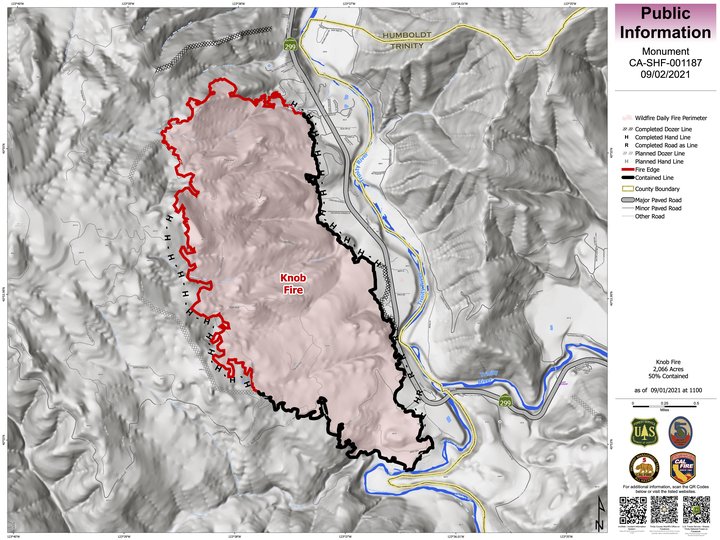
The latest map of the Knob Fire. | USFS
U.S. Forest Service press release:
MONUMENT FIRE RESOURCES: 2,427 personnel, 38 hand crews, 170 engines, 20 helicopters, 55 dozers, 59 water tenders, 19 masticators.
KNOB FIRE RESOURCES: 210 personnel, 7 hand crews, 18 engines, 1 dozer, 2 water tenders.
CURRENT SITUATION: The Monument fire is estimated at 176,759 acres and 29% contained. The Knob Fire is estimated at 2,179 acres and 52% contained. Today, the highest priorities are the Knob Fire and the southwest portion of the Monument Fire along Hyampom Road.
Monument Fire North Zone: Overnight fire activity was minimal and firefighters continued to improve contingency lines in the Hyampom Road area. Today, the focus is to continue strengthening contingency lines along Hyampom Road and to the south. Crews are also working to keep the fire in check and south of Pattison Ridge. On west portion of the fire, crews continue to patrol, mop up and look for hotspots from Corral Bottoms to Burnt Ranch. On Big Mountain, the fire continues to be active and is being monitored. In the northeast portion of the fire, resources completed the dozer line on Backbone Ridge and constructed handline down to the East Fork of North Fork Trinity River securing the contingency line. Today, crews are scouting for additional areas to build contingency lines east of Weaverville.
Monument Fire South Zone (including the communities of Weaverville, Hayfork and Junction City): Please visit the CAL FIRE Shasta -Trinity Unit Facebook page at https://www.facebook.com/CALFIRESHU
Knob Fire: The priority is to protect structures and infrastructure in and around Willow Creek. Fire crews had a successful night constructing containment lines along and above FS Road 6N13 in the direction of Brushy Mountain. Night crews were successful in securing containment line along State Route 299. Today crews will continue to build line on FS Road 6N13, as well as building a contingency line on Panther Ridge.
WEATHER: Very light winds over the fire area will continue to hamper smoke dispersal today. Smoke over the area may limit air operations on the Monument Fire.
ROAD CLOSURES AND RESTRICTIONS:
HIGHWAY 299: The east side of the Monument Fire closure on State Route 299 has now been moved just west of Rose Road and Big Flat Campground. The westside closure point remains in place in Burnt Ranch just east of School House Road. Traffic will be lead through the Monument Fire closure every 1.5 hours beginning at 7:00 A.M. with the last opening scheduled for 7:00 P.M., Monday through Friday. For Labor Day weekend (Saturday, September 4 through Monday, September 6), traffic openings will be at the top of every hour between 7:00 A.M. and 7:00 P.M. During the Nighttime hours 7:00 P.M. to 7:00 A.M. only emergency personnel and residents with proof of resident will be allowed to travel on the road.
Other Road Closures: Big French Creek north of State Route 299 and Big Mountain Road. Hayfork-Carr Creek Road, Barker Creek Road, Barker Valley Road and Big Creek Road. Burnt Ranch–State Route 299 between Helena and Burnt Ranch are subject to intermittent closures. Junction City-Soldier Creek Road.
EVACUATION ORDERS:
Monument Fire: Hayfork-Brady Road – West from Brady Road to Nine Mile Bridge, including Highland Drive, and all roads off of Highland Drive, Cedar Gulch.
Knob Fire: Areas east of Brushy Mountain Lookout Road/FS Road 6N08A to State Route 299, south of Victor Creek to Butterfly Creek Road. Salyer-All of South Fork Road, South of State Route 299.
EVACUATION WARNINGS:
Monument Fire: Hayfork – Everything north of State Route 3, from Brady Road to Hayfork Summit. Hayfork – Everything South of State Route 3, from Hayfork Summit to SR 3 at Hyampom Road and SR 3 at Tule Creek Road. Everything off of Morgan Hill Road, and Oak Avenue. Areas between Oak Avenue and State Route 3. Junction City – the end of Dutch Creek Rd. Coffee Creek and Trinity Center- all areas west of SR 3 from Long Canyon to Rams Horn Rd; Coffee Creek proper and Trinity Center proper. Big Flat, Big Bar, and Del Loma. Trinity Village, Hawkins Bar and Denny.
Knob Fire: China Creek and Friday Ridge areas near Willow Creek. Areas east of State Route 299 to the Trinity River, south of Panther Creek Road to Butterfly Creek Road. All areas east of Brushy Mountain Lookout Road/FS Road 6N08A to State Route Highway 299, south of Butterfly Creek Road to the end of FS Road 6N20. Areas east of State Route Highway 299 to the Trinity River, south of Butterfly Creek Road to Christian School Road, including residents on Christian School Road. Areas east of FS Road 6N33 to the Trinity River, south of Gypo Lane to Friday Ridge Road. All of South Fork Road in Salyer, south of State Route Highway 299, to the end of South Fork Road. Areas east of Boise Creek to the Humboldt/Trinity County Line, south of the Trinity River to Victor Creek.
EVACUATION CENTERS:
Monument Fire: McKinleyville Seventh Day Adventist, 1200 Central Avenue, McKinleyville, CA; Fireman’s Hall Pavilion, 9 Park Street, Fortuna, CA; First Baptist Church, 1261 Main Street, Weaverville, CA; Shasta College, 11555 Old Wagon Trail, Redding CA.
Knob Fire: McKinleyville Seventh Day Adventist, 1200 Central Avenue, McKinleyville, CA; First Baptist Church, 1261 Main Street, Weaverville; Shasta College, 11555 Old Wagon Trail, Redding CA.
FOREST CLOSURE: Due to extreme fire conditions and lack of additional fire resources, the USDA Forest Service has temporarily closed all National Forests in California, including the Shasta-Trinity and Six Rivers National Forests. Questions can be directed to https://www.fs.usda.gov/main/r5/about-region/offices or by calling 707-562-9113 or email SM.FS.R5inquiries@usda.gov.
ANIMAL EVACUATIONS: Domestic Animals: Trinity County Animal Shelter, located at 563 Mountain View St., Weaverville, CA (530- 623-1370) Domestic + Large Animals: Hoopa Rodeo Grounds on Pine Creek Road, Hoopa, CA.
CLEAN AIR CENTERS: Trinity County has established a Clean Air Center at the Trinity County Library, 351 Main Street, Weaverville. Hours are Monday, Wednesday and Friday from 1-6 p.m. and Tuesday and Thursday from 10 A.M. to 6 P.M.
PROPERTY DAMAGE ASSESSMENTS: Damage assessment teams have confirmed 50 structures have been destroyed. For questions or information regarding the status of your property, call Trinity County Office of Emergency Services (OES) at 530-623-8223.
Firefighters Make ‘Significant Progress’ on the Knob Fire; Containment Jumps to 34 Percent
LoCO Staff / Thursday, Sept. 2, 2021 @ 9:25 a.m. / Crime
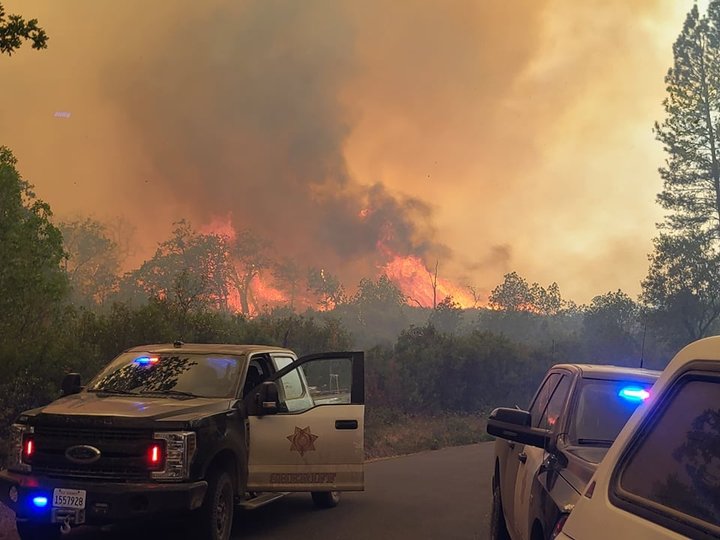
The Knob Fire. | HCSO
Press release from the Humboldt County Sheriff’s Office:
Evacuation warnings and orders remain in effect for the Willow Creek area as fire crews work to contain the Knob Fire.
CURRENT SITUATION
The Knob Fire originated Sunday, Aug. 29, 2021 between 4:00 and 5:00 pm. It is burning in timber, brush and grass. The U.S. Forest Service (USFS) is leading fire suppression efforts. Fire crews made significant progress yesterday and overnight, leading to an increase in the containment of the fire. According to California Incident Management Team 5, as of 8 a.m. September 2, the Knob Fire is approximately 2,066 acres and 34% contained. Fire crews will continue working today to conduct dozer lines to the north and west of the fire.
According to the Pacific Gas and Electric Company, approximately 1,174 customers are without power as of 8 a.m. September 2. See outage map: https://pgealerts.alerts.pge.com/outages/map/
Humboldt County Sheriff’s deputies continue to patrol the mandatory evacuation zones and liaise with the fire Incident Management Team to ensure the safety of residents. The Sheriff’s Office would like to remind members of the public that re-entry into Evacuation Order zones is prohibited by law. Community members assembling to assist in firefighting efforts should focus efforts in areas not under evacuation order; or contact the United States Forest Service or your local volunteer fire department to learn how to become a deployable firefighting resource.
EVACUATION INFORMATION
EVACUATION ORDERS remain in effect for:
Areas east of Brushy Mountain Lookout Road/Forest Route 6N08A to Highway 299, south of Victor Creek to Butterfly Creek Road.
Areas east of Brushy Mountain Lookout Road/Forest Route 6N08A to the Trinity River, south of Butterfly Creek Road to the end of Forest Route 6N20.
An EVACUATION WARNING remains in effect for:
Areas east of Boise Creek to the Humboldt/Trinity County Line, south of the Trinity River to Victor Creek.
A map of evacuation zones is available at tinyurl.com/humcoevacmap
VIRTUAL Q&A
The Humboldt County Sheriff’s Office will hold a virtual Q&A today, Thursday, September 2, 2021 at 2:30 p.m., to address community questions and concerns regarding the Knob Fire. This Q&A will take place on Facebook Live at the Sheriff’s Facebook Page www.facebook.com/HumboldtSheriff and on YouTube at youtube.com/humboldtsheriff. Community members can submit questions ahead of time via email to oes@co.humboldt.ca.us.
CURRENT ROAD CONDITIONS
The following road closures are in effect related to the Knob Fire:
China Creek Road at Hodgson Road;
Burwood Drive;
Gypo Lane;
Friday Ridge Road;
Butterfly Creek Road.
The above routes are closed to entering traffic, but may be used by residents to leave the area in compliance with the evacuation orders.
State Route 299 is currently open to one-way controlled traffic in the fire area. Road conditions are subject to change based upon fire activity and public safety. Residents are encouraged to visit http://quickmap.dot.ca.gov/ to check for state highway closures.
RESOURCES FOR THE COMMUNITY
An Evacuation Center remains open at the McKinleyville Seventh Day Adventist Church, located at 1200 Central Avenue, McKinleyville, for evacuees. Resources available at this location include:
Overnight sheltering;
Restrooms;
Water;
Red Cross services.
Large animal sheltering is available at the Hoopa Rodeo Grounds, located on Pine Creek Road in Hoopa.
Domestic pet sheltering is available at the following Red Cross Evacuation Centers:
McKinleyville Seventh Day Adventist | 1200 Central Avenue, McKinleyville, CA
Firemen’s Pavilion | 9 Park St., Fortuna, CA
Voting Information for Wildfire Evacuees:
https://humboldtgov.org/2946/38197/Press-Releases-Notices-Recall2021
SIGN UP FOR HUMBOLDT ALERT
County residents are encouraged to sign up for county emergency notifications via Humboldt Alert at humboldtgov.org/alerts. Residents must opt-in to receive evacuation notifications via phone or email.
If having trouble signing up for Humboldt Alert online, please contact the Humboldt County Sheriff’s Office of Emergency Services at 707-268-2500
FOR MORE INFORMATION
Additional updates will be issued via press release as needed.
For more information regarding the Knob Fire, current impact and evacuation areas, please go to humboldtsheriff.org, visit @HumCoOES on Facebook and Twitter, or call 707-268-2500.
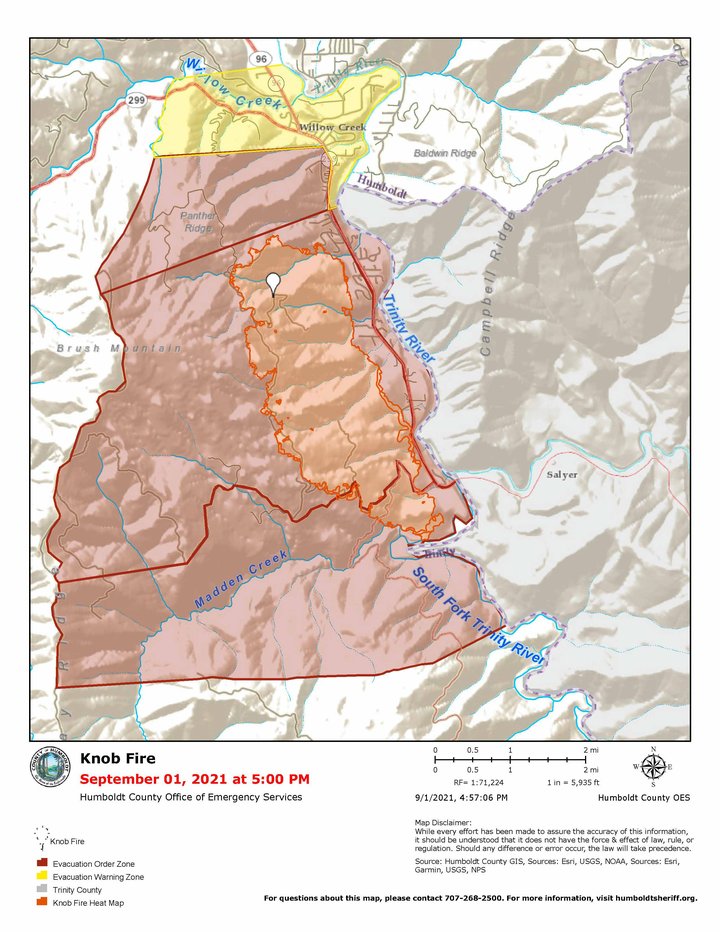
The latest map of the Knob Fire. | HCSO
Help Wanted: Humboldt County Employers Struggle to Find Workers Amid a Smaller Labor Force, COVID Fears, Child Care Needs and the Remote Work Revolution
Ryan Burns / Thursday, Sept. 2, 2021 @ 7:15 a.m. / COVID-19 and Humboldt , Labor

A help wanted sign outside Starbucks in Eureka boasts a range of benefits. | Submitted.
###
If you need a new job in Humboldt County, now is a great time to be on the hunt. Unfortunately for local employers, not nearly enough people are hunting.
As the economy sputters back to life amid the ongoing COVID pandemic, job listings abound, and “Help Wanted” posters adorn numerous shop windows, with some offering unprecedented hiring incentives.
The Starbucks on Fifth Street in Eureka, for example, has a sign offering a host of perks including a free college education via Arizona State University’s online program.
The labor shortage isn’t unique to Humboldt County; the trend has made national news. More than 11 million workers quit their jobs in recent months, according to the U.S. Department of Labor, sparking countless stories about what’s been dubbed the Great Resignation.
Shelley Nilsen, owner of local staffing firm Express Employment Professionals, said her business is struggling to find candidates who are ready to work.
“Recruiting is harder than it was before the pandemic started,” she said, “and it was hard then.”
The employee shortage is constricting businesses that might otherwise be enjoying a financial rebound.
“We’ve seen a lot of [businesses] adjusting hours because there are not enough employees to stay open as long as they’d like,” she said. “Businesses have plans for growth. They’ve got the business but not the staff to do it.”
She identified a number of contributing factors, including the public’s fear of contracting COVID-19, difficulty finding child care and the range of federal unemployment benefits available during the pandemic. Others have simply reassessed their work/life balance, and many members of the Baby Boom generation have decided to retire.
Plus, the pandemic prompted a revolution in remote work, allowing many local residents to find new jobs with out-of-the-area employers.
“You’re no longer bound by the Redwood Curtain,” Nilsen said. “As a business, your competitor is not just the guy right down the street. It’s the company in Sacramento that can offer better benefits.”
But if employers spend more on labor, they may be forced to raise prices, which can put them in a tough spot.
“A very real fear that businesses have is that when they raise prices, people will either shop online or balk [at the increase],” Nilsen said.
The employment landscape has changed in other ways, too. During the pandemic, Humboldt County’s unemployment rate ballooned from around four percent to a high of nearly 13 percent in May 2020. As of last month the rate had dropped back down to a historically reasonable 6.4 percent. However, that figure is a bit misleading because fewer people are even looking for work.
Since March 2020, when the shelter-in-place order took effect, the size of Humboldt County’s labor force has declined by more than five percent. That’s 3,200 people who simply left the local labor pool, whether due to retirement, fears of contracting the virus or some other reason.
Child care
“One big one is child care and school,” Nilsen said. “COVID has decimated a lot of our child care facilities.”
Kerry Venegas, executive director of the nonprofit Changing Tides Family Services, agreed that this is a major factor for many local workers.
“Child care is critically important for people being able to work,” she said. “It’s not always at the forefront of economic discussions, but the pandemic forced that into the light. A lot of times it’s considered the parents’ problem; right now it’s everyone’s problem.”
Venegas pointed to some numbers. Early last year, before the pandemic arrived in force, Humboldt County had 205 child care providers. By mid-August that number had shrunk to just 157, and last week 11 of those were temporarily closed for mandatory 10-day quarantines due to to possible COVID exposure.
Each of those closures, whether temporary or permanent, has a ripple effect in the community.
“The impact is large and immediate,” Venegas said. First, it affects the owners. Most child care facilities, both nationally and locally, are privately owned small businesses, often run out of people’s homes and serving five or six kids at a time, though larger ones can accommodate as many as 50 kids.
“When they close, even for a day, they lose all their revenue, and they’re already running on small margins,” Venegas said. Some of them simply can’t afford to reopen.
Then there’s the impacts to parents. A big chunk of child care costs in Humboldt County are paid with federal dollars in the form of vouchers available to income-eligible parents. These parents often don’t have a backup plan when their child care falls through.
“The bulk of families that are income-eligible are the same people who worked throughout the entire pandemic,” Venegas said. “They work at grocery stores, in the service industry, at gas stations. They can’t afford not to work, and they also need the child care. … Most of those folks literally can’t stay home.”
But when a child care facility closes unexpectedly, they may have no other choice.
Venegas sees an opportunity in this new labor landscape for employers looking to recruit new workers. Rather than offering their own in-house child care services, which can be expensive, time-consuming and challenging, business owners could purchase slots for their employees’ kids at existing child care facilities. “This would give the child care providers a steady and guaranteed income and employers reliable and high-quality child care,” Venegas said. Not to mention grateful employees.
Unemployment benefits
A lot of local employers suggest that the dearth of job candidates can be tied people sitting at home, collecting unemployment benefits. Nilsen said she’s definitely seen evidence of that.
As soon as President Joe Biden passed a new stimulus package in March, extending unemployment benefits until early September, Express Employment Professionals saw a huge drop-off in applications and a simultaneous increase in no-shows at job interviews.
“Ghosting is always a thing, but it just became crickets,” Nilsen said. “People who applied the week before and said they really need work, they just stopped answering the phone.”
Four federal unemployment benefit programs are set to expire at the end of this week, and Nilsen is hopeful she’ll see an uptick in applications and interviewees.
So is Jaymi Dark, owner of Dark Staffing Solutions, an employment agency focused on the cannabis industry.
“We have people that are very open about it, [who] say they don’t want to go to work because it will interrupt their unemployment and they’re making more on unemployment than they ever made having a job,” Dark said.
Her own company has been inundated with unemployment claims, receiving between three and 15 per day — “and we have more jobs than we can fill,” she said. “That became a huge burden on our business because I essentially had to hire an entire person just to respond to the COVID epidemic paperwork.” And the wave of approved unemployment claims will cause her workers compensation insurance to skyrocket, she said.
Government workers
The labor shortage has also hit the public sector, including Humboldt County government offices.
“Many county departments and divisions are struggling to fill positions right now,” Economic Development Director Scott Adair told the Outpost via email. He said the number of applicants for open positions is lower than in years past, making competition for workers fierce.
“This is good for workers, but can also be challenging for employers,” Adair said. “Even traditionally low-paying positions (take retail for example) are evolving. Fast food companies have responded to the shortage in labor by increasing wages, which now makes their places of employment directly competitive with office and trades jobs.”
That includes many government jobs, and Humboldt County Human Resources Director Linda Le said the county is feeling the effects of the Great Resignation. “In normal times, employees resigning or retiring in large numbers signals a healthy economy with plentiful jobs. However, the pandemic is not normal times,” Le said in an email.
Adair said the county is working with partner agencies and community stakeholders to address the labor problem, but those efforts are also hamstrung by the shortage in workers.
“Our programs run on human capital, and our greatest capital asset is our team,” Adair said. “But it takes workers to help workers. Therein lies the catch-22.”
Hospitality and restaurants
Jeff Durham, owner of the Redwood Riverwalk Hotel in Fortuna and a member of the Humboldt Lodging Alliance, said he has managed to sidestep the worst impacts of the Great Resignation by taking care of his employees. He has given them three raises since May of last year; he offers them interest-free loans of up to $500 for emergencies; and he gives them a range of perks.
“Moving forward, as owners and operators in hospitality, we need to look at how we can treat our biggest asset in the right way to ensure that this doesn’t happen again — because this is a reckoning for us,” he said. Durham downplayed the impact of $600 unemployment checks available through the federal CARES Act, saying employers need to focus on paying a living wage.
Nicholas Kohl, owner of Oberon Grill in Eureka, agreed. “The only reason I’m able to be open the limited hours I am is I have tremendous loyalty from my core staff,” he said. Like Durham, Kohl increased employee pay during the pandemic. “That was my way of recognizing my staff for sticking with me,” he said.
That’s not to say things have been easy for him. His business last year was just 30 percent of what it had been the year before, and he said this year he might make it to 50 percent. He has taken advantage of the Paycheck Protection Program and county assistance. “If there’s a program out there, I’ve accessed it,” he said.
He has also tried to lower costs wherever possible — for example, by exploring solar energy as a means of reducing his power bills and by negotiating for a lower workers compensation rate.
Even with increased wages, though, Kohl has lost employees — hence the limited hours for Oberon. “It’s been making receiving harder, getting mail harder — everything’s just harder,” he said. Hiring entry-level workers is a particular challenge. For one thing, fewer people are seeking work in the restaurant industry when the hours are so unpredictable.
“Also, I can’t take a risk on a person who’s not going to be as productive as they need to be,” Kohl said. In the past he might hire an HSU student just to see if they could host or wash dishes. But now, fewer students are even looking for work, and Kohl said he’d rather hold out for someone with years of experience, relevant training or personal references vouching for their reliability.
Cannabis
There’s one other key factor at play in Humboldt County in particular: Kohl said that when the shutdown hit, many of his kitchen staff took jobs in the cannabis industry.
“I know kitchen personnel were not paid well” pre-pandemic, Kohl said. “I get it. Tips were a big deal but so is stability. For cooks that’s big. It keeps ‘em going to have this routine. As soon as COVID broke, they took another job. And the pot market took most of it.” Some of his former cooks and other kitchen staffers are now trimming or delivering weed.
Dark is on the other end of that equation. “We’ve received an influx of people who are coming from the restaurant or service industry, and those people do very well in our industry,” she said. “Especially back-of-the-house workers, cooks.”
Dark also pointed out that the illicit side of the cannabis industry can facilitate unemployment fraud.
“It’s interesting, especially in our industry, how easy it is to collect unemployment checks and then work in the illicit market and collect cash payments,” she said. “We’re seeing and hearing about [that kind of] double dipping, and that’s hard to compete with.”
COVID’s current resurgence amid low vaccination rates and the more contagious delta variant has led some employers to require masks for unvaccinated workers and others to require proof of vaccination.
Dark’s agency asks applicants to check a box indicating whether they’ve been vaccinated or not, though she said she’s not sure how accurate that is. “Because at the end of the day, there are a lot of people that don’t want to wear a mask.” In other words, unvaccinated workers will pretend to be vaccinated in order to go maskless at work.
As for requiring proof of vaccination, Dark said most of her roughly 200 active employees — 65 percent in an informal company poll they recently conducted — said they’d be unwilling to work for an employer with a vaccine mandate.
Long-term outlook
Despite the current setbacks, Dark and others we spoke with for this story said they’re bullish on the future of Humboldt County’s economy.
“I mean, we’re booming here,” Dark said. “We do have a lot of jobs [available] … and we have good jobs, not just entry level positions that need to be filled. There’s a lot of upper management that needs to be filled, too.”
Kohl agreed. While he and other local employers are in crisis management mode right now, he’s excited about such prospects as the Nordic Aquaculture project on the peninsula, HSU’s transformation into a polytechnic institution and the development of offshore wind energy.
“There are so many great things just over the horizon,” he said. “Right now we still have to deal with what’s here.”
##1#
Call 988: How Will California Pay for the New Crisis Hotline?
Jocelyn Wiener / Thursday, Sept. 2, 2021 @ 7 a.m. / Sacramento
Soon, Californians will be able to dial a new three-digit number when seeking help for a mental health crisis.
While 9-8-8 will debut nationwide by next July, the funding California needs to make the help line work successfully remains uncertain.
As the legislative session winds down, mental health advocates are struggling to find the $50 million they estimate is needed to support the call centers and related crisis response services. A bill that would impose a fee on phone lines in California – both cell phones and landlines – stalled earlier in the summer, and legislators are scrambling to find alternatives.
Without that money, they say, the state’s 13 existing National Suicide Prevention Lifeline call centers – where 9-8-8 will direct callers – may not be equipped to handle the tripling of volume they’re anticipating.
In the worst case scenario, they say, people who are suicidal could find themselves waiting on hold, or even having their calls dropped.
“I’m incredibly concerned,” said Le Ondra Clark Harvey, CEO of the California Council of Community Behavioral Health Agencies, which includes the state’s 13 call centers. “I think it’s pretty dire.”
Clark Harvey said that call centers have already seen a 67% increase in volume in recent years, and the pandemic has only intensified the pressure.
In October 2020, President Donald Trump signed into law a bipartisan bill to make 9-8-8 the national number to call for people in crisis; providing an alternative to 9-1-1.
The federal law gives states the ability to raise money to fund the call centers, as well as related mental health crisis services, by attaching new fees to phone lines.
Phone fees challenged
Bill supporters are pushing for a fee that would be capped at 80 cents per line per month. It would be used to support a range of services, including adding staffing and infrastructure to the existing 13 call centers. The money would also be used to connect the 9-8-8 and 9-1-1 systems and build out mobile crisis response services to allow trained professionals to intervene in person, when needed.
Supporters of California’s bill to pass those fees, AB 988, are reluctantly acknowledging that they may not succeed this session. The bill faces opposition from the telecommunications industry, which wants to narrow the scope of what services fees can cover.
At the same time, Gov. Gavin Newsom, who has been vocal about his desire to improve the state’s struggling mental health system, is in the final weeks of fending off a recall effort. Some legislators have expressed concerns about sending a new fee to his desk right now, said Tara Gamboa-Eastman, a legislative advocate at the Steinberg Institute, which is co-sponsoring the bill. The bill has a provision to exempt low-income people from paying the fee.
Despite a long list of supporters in the Legislature – sponsors say almost a third of its members have signed onto the bill – AB 988 has not been heard in key policy committees.
In a last ditch effort to find a way to fund call centers and crisis services for the next year, a coalition of supporters has put together a request for $50 million, which they hope will be included in a budget trailer bill before the session ends Sept. 10. But it is still unclear whether that will get the green light.
“There’s no disagreement on the policy and the needs here,” Gamboa-Eastman said. “Everyone’s just trying to figure out what’s feasible at this point to make sure we’re getting ready for next year.”
“Every American should be doing everything they can to get those in crisis help when and where they need it, and not working on tying the hands of those who can provide it.”
— U.S. Sens. Ron Wyden, Jeffrey Merkley and Christopher Murphy
Carolyn McIntyre, president of the California Cable & Telecommunications Association, said her organization has opposed the California bill because it would require consumers to pay not just for the call centers, but also for other types of crisis services needed to respond to those calls. While advocates are pushing a per-line fee capped at 80 cents, the telecommunications association says it would like to see a 10-cent cap, with a limited scope of what it can cover.“We are not opposed to the program, not by any means,” McIntyre said. While her organization would be willing to compromise and say it’s ok to fund “the communications aspect” of 9-8-8 with a small fee, she believes other services should be funded through the general fund or some other source. As it is, a quarter of the cost of consumers’ phone bills is made up of fees to support a variety of services, including 9-1-1, she said. She doesn’t want that list to keep growing.
In July 2021, three U.S. senators, Democrats Ron Wyden and Jeffrey Merkley of Oregon and Christopher Murphy of Connecticut, sent a letter to the president of CTIA, the trade association representing the wireless communications industry, raising concerns that opposition to state bills like AB 988 could threaten implementation of the new federal crisis line.
“Every American should be doing everything they can to get those in crisis help when and where they need it, and not working on tying the hands of those who can provide it,” the letter said.
Families mourn deadly police encounters
Families backing the bill know too well the impacts of a tragedy that scrolls, on repeat, across the news cycle. Someone is in a mental health crisis. A loved one dials 9-1-1 in search of help. Police arrive. Things escalate. The grieving are left to ponder an impossible question: What if I hadn’t called?
Bella Collins started asking that question after her older brother, Angelo Quinto, died last year following an encounter with Antioch police. Quinto, a 30-year-old Navy veteran, had suffered from depression, anxiety and paranoia in recent months. On Dec. 23, 2020, Quinto had an episode of paranoia; his sister called 9-1-1, concerned he was becoming aggressive and threatening, according to a federal lawsuit his family filed in August against the city of Antioch, police chief and officers.
By the time police arrived, his family told CalMatters, Quinto had calmed down and was compliant. He begged officers not to kill him. Despite this, they said, police officers handcuffed him and knelt on his neck – an account Antioch police disputed in a news conference covered by various outlets this spring. Quinto died in the hospital three days after the incident.
“If I had another number to call I would have called it,” Bella said. Police officers at the scene later told her she’d done the right thing by calling them, she said.
“The right thing ,” she said. “would not have killed my brother.”

Taun Hall holds up a card describing the Miles Hall Foundation, an organization in memory of her son who was killed by Walnut Creek police in 2019 during a mental health crisis. Photo by Anne Wernikoff, CalMatters
Taun Hall was left with the same question after Walnut Creek police shot and killed her 23-year-old son, Miles, on June 2, 2019. Miles, who had serious mental health issues, had used a long iron gardening tool to break his parents’ sliding glass door. He believed it was a staff gifted from God. His grandmother, mother and several neighbors dialed 9-1-1 in search of help. Officers found him in the neighborhood. He ran toward the police, according to witness accounts and officer body camera recordings; they shot him first with bean bags, then when he didn’t stop, with handguns.
If they had had a different number to call, Hall said, “Miles would be alive today. With everything I have in my whole body, I believe that. He wasn’t dangerous. He wasn’t a criminal. He was someone who had mental health challenges who needed help.”
In September 2020, the city of Walnut Creek announced a $4 million settlement in the case. According to the city’s website, since Hall’s death, the city and police department have undertaken “a comprehensive review” of policies and practices and expanded training in de-escalation and crisis intervention, as well as working to offer more mobile crisis response options.
Rebecca Bauer-Kahan, the principal author of AB 988 – also called The Miles Hall Lifeline Act – said she was inspired to take up the cause after a meeting with Hall.
“Here was this woman who had tried for years to get her son the care he needed,” Bauer-Kahan said. “She had done everything right and it ended in her worst possible nightmare.”
A handful of states, including Washington, Colorado and Nevada, have successfully passed legislation similar to AB 988, said David Lloyd, national senior policy advisor of The Kennedy Forum, an organization that advocates for mental health that is co-sponsoring the bill. But, facing strong opposition from the telecommunications industry, other states have failed.
Rep. Tina Orwall, who authored a similar bill for Washington State, said she received a lot of pushback from the telecommunications industry. She met with them weekly to discuss how to move the bill forward. The bill eventually passed with a reduced per-line fee, which will start at 24 cents in October and increase to 40 cents in 2023.
“We’re in a pandemic,” Orwall said. “There couldn’t be a more important time to implement this. People need it more than ever.”
Counties brace for surge in crisis calls
In California, counties and call centers are proceeding with preparations for an influx of new callers – with or without funding in place.
Los Angeles County started a pilot program in February to divert 9-1-1 calls to a mental health call center. Now, they are hustling to find additional sources of funding, especially if the bill and budget request don’t pass.
“We’re all scrambling to make that a reality,” said John Franklin Sierra of the county’s Alternative Crisis Response system.
The launch of 9-8-8 reflects a growing momentum around the issue of mental health crisis response at the federal, state and local levels.

Steven Taylor’s grandmother, Addie Kitchen, left, comforts Cassandra Quinto-Collins, center, mother of Angelo Quinto at a celebration of life held for Taylor on the one-year anniversary of his death, on April 18, 2021. Both Taylor and Quinto were killed by police during mental health crises. Photo by Anne Wernikoff, CalMatters
The current state budget includes a one-time allocation of $205 million for mobile crisis response – which could help with certain aspects of 9-8-8, but wouldn’t cover the cost of call center operations, Gamboa-Eastman said. The federal American Rescue Plan includes an 85% federal match for three years for Medicaid programs that provide mobile crisis intervention services.
Another bill, AB 118, seeks $10 million, to be administered through the state’s Department of Social Services, to fund up to a dozen mobile crisis response pilot programs around the state. The bill, introduced by former Democratic Assemblymember Sydney Kamlager, now a state senator, follows a similar bill, AB 2054, which the governor vetoed last year. The two bills are substantially similar, except for changing the office where the program would be housed.
Addie Kitchen, whose grandson, Steven Taylor, was killed in a San Leandro Walmart by police last year, has worked to rally support for Kamlager’s bill and increase awareness about the needs for alternatives to 9-1-1.
Taylor, 33, was homeless and living with schizophrenia and bipolar disorder when he was detained after trying to walk out of the store with a tent, Kitchen said. He was holding a bat when officers arrived at the store that day, she said. An Alameda County judge in June upheld a manslaughter charge against the officer who shot Taylor in the store and said he would face trial – but also said he doubted a jury would convict, according to the Bay Area News Group.
Kitchen said she believed law enforcement officers are not the right people to respond to someone in a mental health crisis: “If you let trained crisis people intervene, there’s a possibility that no one is going to get hurt,” she said.
###
CALmatters.org is a nonprofit, nonpartisan media venture explaining California policies and politics.


