

New Nonprofit Wants a Humboldt Where Aging-Out Foster Youth and Other Young Adults Aren’t Destined for Homelessness
Jacquelyn Opalach / Wednesday, July 21, 2021 @ 7:47 a.m. / Homelessness
A local woman is on a mission to pair homeless young adults with temporary host families in Humboldt County. Joann Taijala’s new nonprofit, Home Grown Host Homes, is nearly up and running, but she’s facing one significant, expected challenge: finding volunteers willing to host a transition-aged youth — people between 18 and 24 — for anywhere between one to twelve months.

“I know [it’s] a big ask to bring someone into your home, and becoming a host is a big commitment,” Taijala told the Outpost. “But it’s really a life changing experience for both the host and the youth, in a positive way.”
Her motivation to start the nonprofit is personal, following an upbringing that found Taijala and her family housing-insecure at times. “At one point, my dad didn’t have stable housing, and had to couch-surf, double up with friends, family. I had to sleep on the floor at his friend’s house, because they lived in a trailer and there weren’t enough beds for everyone,” she said. “I also remember when I got locked out of his friend’s house and we had to sleep in his car in a restaurant parking lot.”
Years later, as an adult, Taijala and her partner wanted to adopt two teenage sisters from the foster system, but were unable to complete the adoption process. “My biggest concern was, you know, what would happen to them if they aged out without being adopted? Where would they live? What supports would they have?”
The answers to those questions, Taijala discovered, were alarming. According to the National Foster Youth Institute, 20 percent of the 23,000 people who age out of the foster system each year immediately become homeless. In 2020, there were 77 homeless transition-age youth in Humboldt County, according to a US Department of Housing and Urban Development Point in Time report.
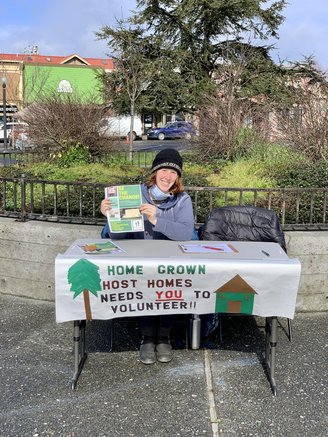
Home Grown Host Homes founder Joann Taijala tabling at the Arcata Plaza. | Courtesy of Joann Taijala
“The more I reflected on that and my own experiences, the more I wanted to do something to help support youth and help them from ending up homeless,” Taijala said. With an existing interest in nonprofits — she earned a master’s in nonprofit management — Taijala decided to pursue the idea during the pandemic. She quickly landed on replicating the host home model of Point Source Youth, a national youth homelessness-prevention nonprofit.
Her goal is layered. Taijala hopes to place transition-age youth into local homes for one to twelve months, where she hopes they’ll develop a long-lasting and trusting relationship with their host. During that time, her team will help the young adult pursue independent housing and employment. With all of that, Taijala would also really like to see the community’s attitude toward homelessness change.
“By labeling them as homeless, our society kind of marginalizes and alienates them, which further perpetuates that cycle of homelessness. And so a lot of people ignore them, they don’t make eye contact, and that can be incredibly dehumanizing. And so our program’s really trying to change that us-and-them mentality to an us-and-us mentality.”
Here’s how Taijala’s model works. Folks interested in hosting must be 25 and have a private room in their home for the youth. After filling out an application, Taijala will interview and background check potential hosts before sending them through a host training session.
Taijala identifies eligible 18- to 24-year-olds via referrals from local agencies like the Raven Project, Affordable Homeless Housing Alternatives or the Humboldt County Office of Education. The young adult will fill out their own application, and Taijala will do a background check and interview to learn their goals for the period they’ll stay in a host home. After that, youth look through the host profiles and decide which hosts they want to meet. “It’s not like foster care where you just place someone in a home,” Taijala said. “Everyone has a choice at every step of the way.”
If the selected host and youth are both comfortable after an initial meeting, Taijala will set up a second meeting to develop a housing agreement. Based on availability, stipends are available for hosts, to offset the costs of utilities, toiletries and food.
But placement is really only half of the program. Once the youth has moved in, Home Grown staff will work with them towards achieving independent living, employment or educational goals. Staff will also check in with the hosts to make sure all’s well throughout the stay.
“It’s not the host’s job to be the parent or the case manager,” Taijala said. “Hosting is really definitely a closer experience having a roommate, but then adding in some mentoring components to it.”
Taijala has not placed anyone yet. That’s partly because she can’t apply for funding until Home Grown is a registered 501(c)3, which is pending approval (Taijala hopes it will be approved in October). She thinks she can still place youth before then, though, with help from some local organizations that have offered to donate money for host stipends. But until Home Grown is a 501(c)3, Taijala can’t hire and pay staff, and she’ll be volunteering herself in the meantime.
Though she’s found a few folks interested in hosting, Taijala needs more to get started. “Definitely the biggest challenge is finding more volunteer hosts,” she said. If you’re able and interested in hosting, you can learn more at Home Grown’s website, or reach out to Taijala directly at (707) 502-2228 or info@homegrownhosthomes.org.
“Most homeless youth, they’re homeless for no fault of their own,” Taijala said. “And if you talk to someone who’s experiencing homelessness, you’ll often find that they’re a lot like you, except that when they were down on their luck they didn’t have that support or access to resources they needed to help them get back on their feet.”
BOOKED
Yesterday: 3 felonies, 8 misdemeanors, 0 infractions
JUDGED
Humboldt County Superior Court Calendar: Today
CHP REPORTS
No current incidents
ELSEWHERE
RHBB: Planning for Sea Level Rise Splits Humboldt Commission
RHBB: Burning Starting Today on Vegetation Management Project West of Redding
Gavin Newsom Report Card: What He Has Done, and What He Hasn’t
Ben Christopher and Sameea Kamal / Wednesday, July 21, 2021 @ 7:42 a.m. / Sacramento
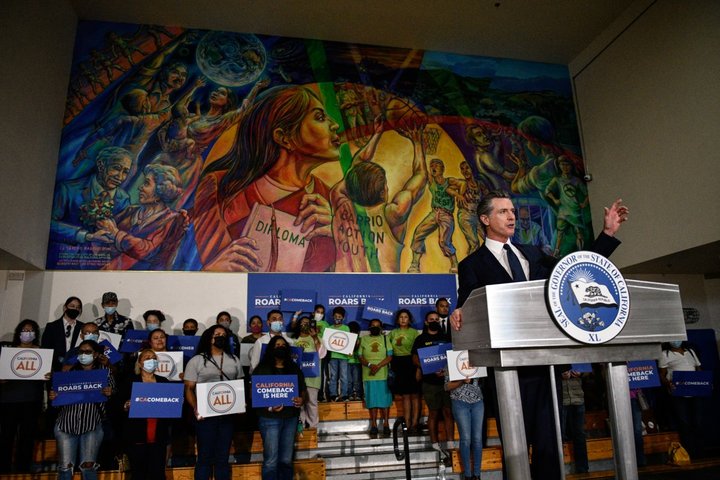
Gov. Gavin Newsom delivers a speech during a rally at the Barrio Action Youth and Family Center in El Sereno, where he signed the California Comeback Plan relief bill, on July 13, 2021. Photo by Pablo Unzueta for CalMatters
###
Backers of the campaign to fire Gov. Gavin Newsom are hoping that Californians will keep some things in mind when they cast their vote in the Sept. 14 recall election. To name a few: Mask mandates, shuttered schools, sluggish vaccine rollouts and the French Laundry. More than any other issue, the pandemic — and Newsom’s handling of it — is the reason the state is holding its second gubernatorial recall ever.
But the governor isn’t just in charge of pandemic policy. How the state’s children are educated, the help we extend to the state’s poorest, who is punished and who gets leniency under the law, and how the state balances the demands of industry and those of environmental stewardship are among the questions facing the state’s chief executive — whether it’s Newsom or any of the 40-plus people hoping to take his place.
For voters who need a highlight reel of Newsom’s two-and-a-half years at the helm of state government, here’s a look at some of the most significant ways he’s changed California — and some of the ways he hasn’t.
Criminal justice
California Republicans have been hammering the state’s Democratic governors for their handling of crime for at least half a century. It’s no different this election season.
Early on in his term, Newsom incensed the state’s tough-on-crime voters by halting executions statewide — a decision that got a specific call-out in the recall petition. But public opinion may be on the governor’s side, and the overwhelming defeat of a ballot measure last November suggests most voters don’t want to return to the era of “lock ’em up.”
Meanwhile, homicides in California shot up in 2020, though they still remain low by historical standards. Whether that increase is a pandemic-era anomaly or a sign of things to come, it’s another political vulnerability for a governor who has been a stalwart liberal on crime. Recall proponents, who held a July 20 press event at the state Capitol with relatives of murder victims, certainly think so.
What he’s done:
- End the death penalty (for now): Newsom made no secret of his opposition to capital punishment during his 2018 campaign. Sure enough, one of his first acts as governor was to place a statewide moratorium on executions. It’s not a permanent ban — there are still more than 700 people on death row and a future governor can undo the move with the stroke of a pen. Recall supporters are counting on it.
- Put new limits on police use of force: One of 2019’s fiercest legislative battles was over a bill to make it more difficult for police to legally justify killing civilians. After helping to broker a compromise between criminal justice reform advocates and police unions, Newsom signed the bill into law calling on further action to “make this moment meaningful.” A CalMatters analysis found that the law hasn’t yet had the transformative impact hoped for by supporters.
- Move forward with two prison closures: Newsom has been flirting with the idea of closing a state prison since his inauguration. Now, he’s pushing ahead with shuttering two: Deuel Vocational Institution in Tracy by Sept. 30, and California Correctional Center in Susanville by next summer. It’s a response to a long-term decline in the state’s incarcerated population — helped along by the pandemic — but it also represents a sea change in a state once the epicenter of the “tough on crime” movement.
What he hasn’t:
- End the death penalty (for good): In 2018, Newsom not only said he wanted to end capital punishment in California, he said he wanted the voters to do it. In 2016, voters rejected a ballot measure that would have done that by a 6-percentage-point margin. Newsom hasn’t yet given them another chance — or backed an effort to put it back on the ballot.
- Support a new gun tax: In 2021, Newsom’s tough on guns rhetoric collided with his commitment not to raise taxes during a budget boom. An excise tax on guns, gun parts and ammo to fund violence intervention programs passed the Assembly by a thread and is pending before the Senate. Newsom has been mum.
- Replace cops with mental health professionals: Newsom last year vetoed a bill that would have let some cities send clinicians or social workers to respond to certain mental health-related 911 calls rather than armed police. He praised the bill’s “underlying goal” but argued that it put responsibility for the new project with the wrong state agency. Another version is before the Legislature this year, while some cities have acted on their own.
Economy/poverty

Will Hollman waters the roof of his house in the San Fernando Valley, on July 17, 2021. According to Hollman, who has not had electricity for two years, watering the roof helps lower the temperature inside his home so his children do not overheat in the summer. Photo by Pablo Unzueta for CalMatters
In the same state that boasts the world’s fifth largest economy and is home to household names in entertainment, tech, agriculture and high finance, about 13% of the population lives below the federal poverty line. Once you factor in cost of living, California’s poverty rate spikes to more than 17% — higher than any other state.
That so many people — more than 6 million — live with such insecurity in a state that is so rich speaks to just how staggeringly unequal the state’s wealth is divvied up. That inequality is layered onto existing regional, ethnic and generational fault lines, a fact that long predates Newsom. But he has been more vocal on the subject than any governor in recent memory, widening the social safety net and making both homelessness and child welfare early priorities. Still, as his critics on both the left and right eagerly note, the numbers don’t lie.
What he’s done:
- Push the largest economic stimulus ever: Buoyed by higher than expected tax revenue and an avalanche of federal money, Newsom proposed the largest budget in this state’s — or any state’s — history this year. It included $100 billion in headline-grabbing, poverty-targeting initiatives including direct payments to millions of Californians and billions more for housing, debt relief, pre-K education and broadband.
- Expand signature anti-poverty program: At Newsom’s urging, the 2019 state budget doubled the size of California’s Earned Income Tax Credit, which sends cash to low-wage workers. That expansion, which also included a supplemental boost for taxpayers with young children, was according to one enthusiastic commentator, Newsom’s “biggest accomplishment” to date. Last year, he signed a bill extending the payments to undocumented immigrants.
- Support controversial gig worker law: In 2019, Newsom signed a bill that rewrote California labor law and sent shudders through the political system. It codified a state Supreme Court ruling to make it much harder for companies to classify their workers as “independent contractors.” For freelancing Californians, this meant the prospect of less flexibility, or less work in general, but also a minimum wage, worker compensation protection and other benefits of formal employment. Corporate titans of the gig economy pushed back, placing a carve out for ride-hailing company on the 2020 ballot. Newsom didn’t take a side and it passed overwhelmingly.
- Extend rent and utility debt relief: With the end of California’s eviction moratorium rapidly approaching, the governor and other state lawmakers set aside a $5.2 billion pot of federal cash to help Californians pay their back rent. Another $2 billion has been set aside to help people pay their delinquent utility bills. But both initiatives, mired in delays and confusing or complex applications, have struggled to get money out the door.
What he hasn’t:
- Reform the state tax system: Another one of Newsom’s ambitious policy plans was to overhaul California’s top-heavy tax system. On the table: a sales tax on services, an oil severance tax, an adjusted income tax structure and reform of state property taxes. All of this would stabilize the state’s oscillating revenues that spike during boom years (with one notable exception), but leave the state scrambling for cash and cutting services during recessions. Though he did back a ballot measure in 2020 to raise property taxes on many large commercial properties, it failed. None of the other ideas have gone anywhere.
- Cut interest payments on child support debt: California is particularly tough on those who don’t pay their child support on time, charging 10% interest and collecting its cut before money goes to children. A bill scrapping that highest-in-the-nation levy made it to the governor’s desk, but Newsom vetoed it, citing cost concerns. While this year’s state budget included partial forgiveness for some debtors, the 10% interest rate remains in place over the objections of anti-poverty advocates.
Education: K-12

Micah Castillo, 10, holds up a sign while his father, David Castillo, speaks at the podium during a rally to reopen Oakland public schools on Feb. 28, 2021. Photo by Anne Wernikoff, CalMatters
Leaving aside federal money, the biggest single component by far of California’s budget is K-12 education spending. The state’s public schools educate more than 6 million kids, employ 300,000 teachers and oversee education policy across more than 1,000 districts — including L.A. Unified, the nation’s second largest. That all makes Newsom one of the country’s most consequential education policymakers.
That leadership was put to the test when in-person education shut down during much of the pandemic. The education loss was not distributed equally, worsening the achievement gap — the decades-long chasm in educational outcomes between poor kids and rich, Black students and white ones. The governor made an early priority of closing the gap at its source, by bolstering the state’s early childhood education efforts. We won’t know how well any of those efforts are working yet, but at least the state is now tracking the data.
The governor’s lucrative friendship with California’s teachers unions — the California Teacher Association was Newsom’s biggest backer in 2018 and now opposes the recall — has also provided the political backdrop for many of the most tempestuous education debates.
What he’s done:
- Expand early childhood education: Courtesy of the unprecedented amount of money sloshing around the state budget, the governor and Legislature hammered out a new plan that would allow every 4-year-old in California to attend transitional kindergarten by 2025.
- Okay free school meals for all: During the pandemic, the federal government gave schools permission to offer free grab-and-go breakfast and lunch to all students, suspending proof of income eligibility requirements. Universal school lunch is a policy long sought by anti-poverty and child welfare advocates. This year, Newsom signed off on a legislative proposal to keep the pandemic-era program going at a cost of $650 million a year starting in 2022-23.
- Overhaul charter school law: In 2019, the Legislature passed and Newsom signed a package of new bills subjecting charter schools — publicly funded but independently operated — to new rules. One makes it easier for local school districts to block the creation of new charters, while another requires that charter teachers hold California teaching credentials.
What he hasn’t:
- Mandate ethnic studies in high school: In the fall of 2020, Newsom vetoed a bill to make ethnic studies a required course for California’s high school students, citing “uncertainty about the appropriate K-12 model curriculum.” His decision came after months of public debate over what the class would actually teach. A model curriculum from the state Board of Education was denounced for including “anti-Jewish bias” and the Los Angeles Times editorial board labeled it “jargon filled and all too PC.” This year, a new model curriculum was approved and a new bill introduced.
- Require public schools to reopen: Public schools may be officially set to reopen for in-person classes in the fall (most of them anyway), but that isn’t because the governor forced them. As ticked-off parents, teachers’ unions and a divided Legislature did political battle this spring over when and how to reopen schools, Newsom struck a balance: offering financial incentives and urgent pleas, but no mandates.
- Increase funding accountability: How exactly are school districts spending state money set aside for disadvantaged kids? In 2018, Newsom vowed to push for more transparency and accountability to ensure that the money was actually being spent on narrowing the achievement gap. But in 2020, he vetoed a bill that would have slapped school districts with new financial reporting requirements for the funding over concerns about “new and unnecessary procedural requirements.” This year’s budget includes a massive increase in funding for high-need schools. While it includes a new requirement that districts account for the dollars they’re awarded, it stopped short of the bill that Newsom vetoed and does not require that the money be spent on students being targeted for help.
Environment

A boat ramp ends in the dry lakebed at Lake Folsom on April 22, 2021. Photo by Anne Wernikoff, CalMatters
California has been setting America’s green standard since first declaring war on smog in the late 1960s. In the last two decades, the state has become one of the nation’s most aggressive forces on climate change. For supporters, that policy pathmaking is a source of great pride — and for detractors including many Republicans, one of derision.
Newsom was elected with plenty of green cred. A Bay Area Democrat with the endorsement of most major environmental groups, he promised to carry on the climate change fighting legacy of his predecessor, Jerry Brown.
But California has been beset by a cascade of environmental tragedies, and the governor has been besieged with criticism from both the left and right. Fossil fuel-related bans have outraged the oil industry and many conservatives, but have come too late and too filled with loopholes for some environmentalists. Wildfire seasons have grown more severe, a seasonal political liability for the governor, no matter how much of the blame he actually deserves. And though Newsom made access to clean drinking water an early priority — with mixed results — the current drought seems to have caught him flat-footed.
What he’s done:
- Ban future fracking: After dancing away from this hot-button campaign promise, Newsom finally moved toward a phase-out. The fracking ban isn’t slated to go into effect until 2024, but in July, the administration denied 21 additional fracking permits, citing environmental concerns.
- Announce the end of fossil fuels (eventually): The governor has set two especially audacious goals for the state: an end to oil extraction by 2045 (he wants to bump it up to 2035) and a ban on new gas-powered cars by 2035. These aren’t detailed policies, and Newsom won’t be governor long enough to see them implemented, but they’re signals to both business and other policymakers where the state is headed.
- Prohibit a widely used pesticide: For decades, California farmers have used chlorpyrifos to kill the pests that ravage their fields and orchards. It’s also a neurotoxin. The administration ordered it banned, though it won’t be fully outlawed for two years.
What he hasn’t:
- Defend environmental rules against Trump: In 2019, top Senate Democrat Toni Atkins pushed a bill to give state agencies carte blanche to turn any Obama-era environmental regulations reversed by the Trump administration into state law. The bill passed, but Newsom vetoed it, siding with water agency heads and farmers who were particularly concerned that endangered species protections would be used to curtail water transfers.
- Prevent wildfires: Clearly not. Newsom’s time as governor has coincided with some of our worst wildfire seasons. Though his administration has ramped up spending on forest management and fire prevention — a budget item that often gets the financial short shrift over fighting active fires — Newsom has also overstated the scope of its recent efforts, according to CapRadio.
- Support buffers between oil wells and homes: State lawmakers have twice proposed mandatory setbacks between oil and gas-related facilities and “sensitive receptors” — namely, homes, schools and medical facilities. Both bills died in the Legislature, buried in opposition from industry, labor, business-aligned Democrats and Republicans. Newsom didn’t vocally support either bill and hasn’t stepped forward to offer executive workarounds, despite calls to do so from environmentalists.
CalMatters reporter Julie Cart contributed to this story.
Health care

UCSF pharmacy student Connie Chen, right, administers a flu vaccine to Yvonne Predium, left, during a free drop-in flu shot clinic at Santa Clara County fair grounds on Oct. 17, 2020. Photo by Anne Wernikoff, CalMatters
It’s easy to forget after a year and a half of a deadly global pandemic, but Newsom’s 2018 campaign was chock full of big health care policy promises that had nothing to do with COVID-19. Among them were a state-funded single-payer health care, lower prescription drug prices and a comprehensive statewide plan to care for aging Californians.
Most of those plans have been slow to get off the ground. That’s in part due to COVID, but also to the governor’s habit of setting big, audacious goals that aren’t always easy to deliver. In the meantime, Newsom has overseen some changes to the state’s health care system that are fairly significant.
What he’s done:
- Expand Medi-Cal for undocumented residents: For years, one of the top items on California progressives’ wish list has to been to make Medi-Cal, the publicly funded health insurance program, available to the largest group of uninsured people: undocumented immigrants. In 2019, Newsom signed a law letting young adults as old as 26 sign up. And this year’s budget covers those 50 and older.
- Boost Obamacare subsidies: Few states embraced the Affordable Care Act like California. In 2019, Newsom proposed a few enhancements: Though Congress stripped the federal law of the mandate to get insurance, California would add its own. The state also made roughly 1 million more Californians eligible for subsidies through the state insurance marketplace.
What he hasn’t:
- Enact single-payer health care: Few campaign proposals generated as much attention — and as much heat — as Newsom’s 2018 pledge to bring state- funded health insurance for all Californians. So far, the governor has assembled a task force to look into how to get to universal coverage, but he was silent on last year’s single-payer proposal in the Legislature.
- Lower health care costs: On his first day in office, Newsom signed an executive order directing state agencies to collaborate on purchasing prescription drugs and last year he signed a bill enabling the state to produce its own generic drugs. But the state has yet to get into the pharmaceutical business and likely won’t for years. And last year alone, manufacturers reported price increases of more than 16% on more than 1,200 prescription drugs to state regulators.
CalMatters reporter Ana B. Ibarra contributed to this story.
Housing/homelessness

A tent community beneath BART tracks in West Oakland on Dec. 31, 2019. Photo by Anne Wernikoff, CalMatters
The cost of housing in California has been so high for so long it’s practically part of our identity. The median price of an existing single-family home in California topped $800,000 this year, an increase of 53% since Newsom’s inauguration. And despite his repeated pronouncements that the state needs to build way more housing, permits for new construction have more or less flatlined — with a major dip last year.
The pandemic gave Newsom a year-long opportunity to reshape housing policy by executive fiat. Some of those programs and protections may continue. But as COVID concerns ease, rents, home prices and the cost of living remain a top concern for many Californians.
What he’s done:
- Enact mild rent control: In 2019 state lawmakers placed a ceiling on how much landlords can hike the rent. At roughly 7%, the cap only banned exorbitant increases. Many rent control advocates were not impressed, and they put an unsuccessful rent control measure on the ballot last November. But in a state that has long been wary of telling landlords what they can charge their tenants, it remains one of Newsom’s biggest legislative accomplishments.
- Ban many evictions during COVID: In the summer 2020, COVID cases were reaching ever higher totals, unemployment rates were skyrocketing and a potential wave of evictions presented not only an economic crisis, but a public health one. So the governor issued an executive order barring evictions for non-payment of rent — though crucially, tenants still owe their back rent. The Legislature has renewed that policy twice now, most recently through Sept. 30, in part because the state has been slow to roll out rent relief. But a CalMatters investigation found that thousands of tenants had been evicted despite the moratorium.
- Turn hotels into housing: In the early months of the pandemic, Newsom launched “Project Roomkey,” a program that spent federal money on acquiring vacant hotel rooms and converting them into temporary shelter for homeless Californians. It temporarily helped more than 42,000 people off the street while also curtailing the spread of the raging virus. Since then, the governor has supercharged the idea, converting 6,000 rooms into permanent supportive housing. This year’s state budget includes another $5.8 billion for the program, about half people with mental illness. That’s all part of an unprecedented $12 billion package to reduce homelessness.
What he hasn’t:
- Meet housing production goals: Running for governor, Newsom vowed to oversee the construction of 3.5 million new units by 2025. That works out to about 500,000 units a year — a feverish pace of construction unseen even in the state’s boomingest years. Critics called the promise wildly unrealistic. It looks like they were right. Even before the pandemic, new building permits statewide were coming in at about a fifth of the goal.
- Reduce the number of homeless people: California’s most intractable problem has not gotten any less so on Newsom’s watch. Since his inauguration, the number of Californians estimated to be living in shelters or on the street has increased by 25%.
- Ease zoning laws: Since Newsom took office, some of the most ferocious legislative battles have been over bills that would relax local zoning rules across California, opening up neighborhoods to more duplexes and apartment buildings. To the dismay of “Yes In My Backyard” activists, none of those proposals have earned the full-throated endorsement of Newsom and — perhaps partially as a result — all have failed so far.
CalMatters reporter Manuela Tobias contributed to this story.
Pandemic

A sign requiring customers to wear a mask is posted outside Modern China Cafe in Walnut Creek on Aug. 16, 2020. Photo by Anne Wernikoff for CalMatters
When former Yolo County Sheriff’s Sgt. Orrin Heatlie started gathering signatures in February 2020 to put the recall on the ballot, COVID-19 wasn’t on his list of grievances. But without the pandemic — and Newsom’s handling of it — it’s hard to imagine Heatlie’s long-shot campaign succeeding.
It wasn’t always obvious things would end this way. In the early months of the pandemic, when Newsom acted more quickly and aggressively than most governors to quell the new contagion, his popularity grew. But as months of restrictions on daily life and often confusing messaging from the governor’s office went on, the public’s patience started to fray and pandemic policy became an increasingly partisan issue. The governor did himself no favors when he accepted the invitation of a friend-lobbyist to wine and dine maskless at the French Laundry restaurant with a $350 prix fixe menu.
Even so, most Californians seem to give Newsom passing marks for his handling of the worst public health emergency in living memory.
What he’s done:
- Ramp up vaccinations: California may have gotten off to a rough start, but we’ve since turned a corner maintaining an inoculation rate higher than all but 12 states. Newsom has helped with the pro-vaccine campaign, from funding door-to-door vaccination campaigns, partnering with churches and other trusted community groups and, of course, emceeing those cheesy vaccine lottery drawings.
- Set the record for executive orders: While the pandemic slowed the other branches of government to a crawl, the governor’s office went into lawmaking overdrive. In 2020, Newsom issued more executive orders than any governor in a single year in modern history. Of the 58 that were COVID-related, some called for lockdowns or implemented color-coded tiers, while others lifted and relaxed them; some redirected billions of dollars while others loosened restrictions on aid; and many reshaped other areas of the law in response to the public health threat, suspending evictions, extending tax filing deadlines and ensuring that every voter would receive a ballot in the mail, to name a few.
- Led in acquiring personal protective equipment: In the early months of the pandemic, everyone — hospitals, households, national governments — was scrambling to get masks, face shields and ventilators. With the federal government taking a laissez-faire approach to PPE, the governor coordinated purchases with neighboring states, massaged the Trump administration for more gear and deployed a torrent of contracts to private vendors. While some of those last-minute contracts collapsed or went to eminently unqualified vendors, other no-bid deals benefited Newsom’s biggest campaign benefactors.
What he hasn’t:
- Solve the unemployment catastrophe: Since the beginning of the pandemic, California’s Employment Development Department has struggled to keep up with the historic surge in unemployment claims. Hundreds of thousands have spent weeks or longer waiting for desperately needed assistance while the department and its contractors fight against fraud. Newsom has deployed a “strike team” to streamline the process and the state has spent hundreds of millions on consultants. But the governor has also conceded that the current system was “not designed for the challenge.”
- Shutter churches to prevent COVID: The earliest pockets of pushback against Newsom’s handling of the pandemic came from houses of worship. As early as Easter 2020 — less than a month after the first public health orders — churches represented by conservative legal action groups began suing the state over the right of congregations to pray, chant and sing in-person and indoors. Initially, the churches lost, but as their challenges landed at the nation’s highest court with its newest member, Justice Amy Coney Barrett, California restrictions began to fall — a loss for Newsom and a sea change in constitutional law.
###
CALmatters.org is a nonprofit, nonpartisan media venture explaining California policies and politics.
Outgunned: Why California’s Groundbreaking Firearms Law Is Failing
Robert Lewis / Wednesday, July 21, 2021 @ 7:30 a.m. / Sacramento

Illustration by Anne Wernikoff, CalMatters; iStock; California Department of Justice; Alameda County Superior Court
###
Two decades ago, California legislators added a new weapon to the state’s growing arsenal of gun-control measures, already among the toughest in the nation. Their motivation came from 2,000 miles away in a shaken Chicago suburb.
It was there that a gunman opened fire in an engine factory where he’d worked for nearly 40 years. He killed four people and wounded four others before pulling the trigger on himself. It was soon revealed that some of the weapons he smuggled inside should have been earlier confiscated because of his past criminal convictions.
In the wake of the rampage, and with lofty expectations, California became the first state in the country to create a database identifying thousands of people who’d legally purchased guns but were now deemed too dangerous to be armed.
In a rare display of bipartisanship — especially on an issue as fractious as gun control — the California Legislature wanted to give state and local authorities a methodical way to remove firearms from individuals who’d lost their right to bear them because of violent crimes, serious mental health issues or active restraining orders.
But what seemed at the time like a straight-forward approach to the enforcement of existing gun laws has instead become mired in chronic shortcomings, failing for years to make good on its potential. Successive administrations have vowed to fix the problems, but all have fallen short.
Today, the state is struggling to recover thousands of guns from people who have been ordered to surrender them. At the start of the year, the list compiled by the state Department of Justice had swelled to 24,000 individuals, the most ever. The pandemic only worsened the mounting backlog of cases when some state Justice Department agents were pulled from field enforcement.
“We are lucky to have a system that tells us this information,” said Julia Weber, a former supervising attorney for the state courts’ administration who now works on gun policy issues for the Giffords Law Center to Prevent Gun Violence. “But it’s disheartening. It’s a failure of the promise of the system.”
CalMatters spent three months examining the layered troubles of the Armed and Prohibited Persons System, interviewing current and former law enforcement officers, gun control advocates, lawmakers and researchers. The news outlet also contacted hundreds of law enforcement agencies across California to assess their engagement — or lack thereof — with the system.
“We are lucky to have a system that tells us this information, but it’s disheartening. It’s a failure of the promise of the system.”
— Julia Weber, former supervising attorney for the state courts’ administration
The state would not provide names of individuals in its database, citing confidentiality restrictions. But CalMatters obtained a small sampling dating back to March through separate requests to local law enforcement agencies that had received state Justice Department information for their jurisdictions. They provide a glimpse of the stakes behind the statistics.
In Santa Paula, a woman in the database has been ordered to surrender her guns because of a mental health-related prohibition. She’s listed as having 22 of them. In Ukiah, an accused domestic abuser is believed to have 44 guns. A Central Valley man awaiting trial on a rape charge for three years has remained armed despite a court order requiring him to hand over his firearm.
One of the names in the database stunned Corina Arias. In 2016, the Kings County grandmother was punched by her next-door neighbor, John Marshall Smith, who was convicted of misdemeanor battery. The conviction carried a 10-year ban on owning a gun in California.
“I can’t even believe they’d allow him to be armed,” Arias said when told her attacker was listed by the state in March as having failed to surrender his gun. “It’s a complete shock.” (CalMatters was unable to locate Smith, and his attorney in the case is deceased.)
Top-to-bottom problems stymie success
The system’s effectiveness, CalMatters found, is being undermined on numerous fronts.
On the ground, the envisioned collaboration between state and local criminal justice officials to confiscate firearms has been scattershot, at best. Some police departments say they had no idea they even had access to monthly state reports identifying individuals in their jurisdictions who remain unlawfully armed.
At the same time, many judges have done little to ensure their orders requiring gun relinquishments are executed, worsening the backlog and potentially putting the public’s safety at risk.

Julia Weber, who works on policy issues for the Giffords Law Center to Prevent Gun Violence, photographed at her home in San Francisco on July 19, 2021. Photo by Anne Wernikoff, CalMatters
Meanwhile, understaffed state agents in the Bureau of Firearms are often outmatched by the onslaught of new cases every day from throughout California. Each one must be checked and cross-checked by hand across multiple criminal justice databases before being added to the prohibited-persons list. Simply put, the additions are coming faster than the subtractions.
The work-intensive process and outmoded technology has led some in law enforcement to question the database’s reliability. They say they’ve discovered errors during field operations and that investigations based on the list are a waste of resources.
Experts on the system — who note that thousands of guns have, in fact, been removed from individuals — say stakeholders throughout government must summon the resolve to finally fix the system’s deepening problems.
“We’ve made a decision as a society that there are people who, for a constellation of reasons, should not be allowed to have firearms. Are we going to enforce that social decision or not?” asked Garen Wintemute, director of the Violence Prevention Research Program at UC Davis.
To be sure, a person’s inclusion on the list does not mean he or she will act violently with a legally purchased but unlawfully possessed weapon. Gun control advocates struggled to identify shootings that might have been prevented had authorities successfully retrieved firearms. Officials acknowledge that some people on the list may have already surrendered their weapons.
Although the state does not track how many individuals, if any, commit crimes while they continue to remain armed, the agency has good reason to be concerned.
“We’ve made a decision as a society that there are people who should not be allowed to have firearms. Are we going to enforce that social decision or not?”
— Garen Wintemute, director of the Violence Prevention Research Program at UC Davis
Last year, agents recovered 12 handguns, four rifles, two shotguns, one assault weapon and thousands of rounds of ammunition from a person listed in the database as having 24 firearms. One of the handguns was loaded and unsecured in a bedroom closet of the Norwalk home, where a 16-year-old and 2-year-old also lived.
The previous year, law enforcement authorities discovered that a Los Angeles County man in the database was trafficking illegal weapons. They found a tactical vest and a pipe bomb in his home.
In 2020, as the pandemic spread across the months, nearly 300 people on the list tried to buy ammunition but were denied the purchases during background checks mandated in California, according to the Justice Department. Agents investigated and closed 73 cases involving those people, recovering 96 guns.
At the time of its adoption, the Armed and Prohibited Persons System was seen as the low-hanging fruit of gun-control measures — taking firearms from known owners who legally shouldn’t have them.
But today, the inability of state and local agencies to make it work as envisioned has raised questions about how they can begin to confront the wider menace posed by the thousands of illegal firearms circulating throughout California or the new wave of untraceable “ghost guns,” assembled at home from mail-order kits.
“It’s very frustrating to see that we have such a hard time implementing firearms removals in situations where we have all the information in front of us,” said Weber of the Giffords Law Center. “It doesn’t give the public a lot of confidence in our ability to tackle a lot of these more complex firearm issues.”
Stephen Lindley spent more than 15 years in the state Justice Department, including nearly a decade in charge of the Bureau of Firearms before leaving in 2018. He said he was proud of California’s database and its successes removing weapons from potentially dangerous and suicidal individuals.
But he said he also saw up close the many obstacles. You can’t keep adding people to the list, he said, without making sure weapons are being removed from people, too.
“We’re no longer at the front of the pack here,” he said.
A vow to fix California’s gun law — again
During his recent confirmation hearings, State Attorney General Rob Bonta was peppered with questions from lawmakers on how he planned to fix the system. The discussion mostly focused on the need to modernize the database and hire additional agents to investigate cases.
At the start of this year, there were 75 authorized positions in the Bureau of Firearms unit responsible for the Armed and Prohibited Persons System, nicknamed APPS, including special agents, supervisors and trainees. But a third of those spots were vacant, meaning that some 50 individuals in six offices across California were primarily responsible for tens of thousands of guns.
In the past, money has not been the answer.
Following the Newtown, Conn., elementary school mass shooting in 2012, for example, the state added $24 million to address what was then a rising backlog of armed individuals. With that funding, the Justice Department said it could reduce the backlog by 40% over three years, bringing total cases down to 11,900.
It didn’t work, largely because the agency had trouble recruiting and keeping staff.
Bonta said in an interview that he wants to address those staffing shortages and keep pace with advances in technology so overburdened agents don’t have to grapple with a hodge-podge of nearly a dozen outdated databases to create a reliable list. As it stands now, the department can’t even determine the precise breadth of the backlog, including how many cases have remained unresolved for more than six months.
“It is a nation leading system, something that California should be proud of,” Bonta said. “We’re committed to making progress in reducing the APPS list and hope to be able to show you the outcomes and data in the months and year ahead that demonstrates that.”
Holes on the front lines
Lost in all the talk about funding and modernization has been an arguably bigger obstacle to success — how to get hundreds of local law enforcement agencies to pick up a heavier share of the burden, as legislators initially envisioned. Building the list is one thing, getting the guns is another.
The Justice Department has for years prepared a monthly report for local agencies across the state showing who in their jurisdictions is in the database. But either the word hasn’t gotten through or the will to act among some local police hasn’t been strong.
Lindley, the former head of the state firearms bureau, said that under his watch the state sent the monthly reports as both a document and spreadsheet so departments could filter data to, say, focus on just local residents with a history of domestic violence or severe mental health issues.
But “agencies didn’t do shit with them,” Lindley said. He later softened his criticism, saying some, like the Los Angeles Police Department, did set up local programs to confiscate the guns. But many agencies didn’t engage.
“The APPS program saves lives,” Lindley said. “And if more agencies invested just a little bit of time into doing that in their own jurisdictions, it would be very beneficial.”
CalMatters asked 400 local law enforcement agencies across California for the most recent monthly reports they’d received regarding unlawfully armed people in their jurisdictions.
About 80 departments indicated they were aware of the report but declined to provide a copy, citing various public records exemptions. Many departments simply didn’t respond.

Stephen Lindley, a former state Justice Department official, gives a speech on firearm law implementation at the California Brady Conference in November of 2019. Photo courtesy of Stephen Lindley
But more than 150 agencies wrote back saying they didn’t have any such reports. Although it’s possible an officer in one of those agencies may have obtained information directly through the Justice Department’s website, numerous police officials said they had no idea what CalMatters was asking about.
“I have been the police chief here for almost eight years. We have never received a report from anyone regarding who has guns that they should not have,” Orange Cove’s police chief wrote in an email. “I have never heard of such a report.”
The same went for Leslie Easley, a records administrator at the Lassen County Sheriff’s Office. “As far as I know, there is no report like that. I’ve never seen one in 15 years here.”
While on the phone with a CalMatters reporter, she logged into a portal where the state shares information with local law enforcement agencies. She tried searching for a monthly armed and prohibited persons report but got only an automated message saying her search yielded no results.
And it wasn’t just smaller agencies that said they were unaware of the reports.
“I’ve never heard of this,” said Maryann Weiman, a senior administrative analyst with the Stockton Police Department. “That might have been nice to know about.” Weiman said she couldn’t rule out the possibility that someone in her 400-person department receives an email. But if the department was using such a document, Weiman said, she’d know about it.
One Northern California department indicated that it would start getting reports as a result of CalMatters’ records request.
“After checking our files, we found that our agency was not receiving the Armed Prohibited Persons System reports on a monthly or any basis. As such, we have no reports that are subject to release,” Willits Police Chief Fabian E. Lizarraga wrote in an email. “We have now instituted steps to start receiving these reports through the Department of Justice. Thank you.”
“I have been the police chief here for almost eight years. We have never received a report from anyone regarding who has guns that they should not have.”
— Marty Rivera, Orange Cove’s police chief
Questions surrounding the reports publicly surfaced as a result of a 2008 shooting in the Southern California city of Baldwin Park.
In that case, Roy Perez shot and killed his mother, a neighbor and the neighbor’s 4-year-old daughter with a handgun he bought legally in 2004. In the aftermath, authorities acknowledged that Perez was in the state’s database and should have had his guns confiscated three years earlier because of mental health issues.
In a 2011 article on California’s database system, The New York Times noted that Baldwin Park police had failed to regularly read the state’s locally-tailored reports. “Nobody knew where the e-mail was or where it was going,” one lieutenant was quoted as saying.
A decade later, the list apparently still remains a mystery to the Baldwin Park Police Department.
Through a public records request, CalMatters asked the department for the latest monthly armed prohibited person report.
“There are no responsive documents because the City does not have the report you are requesting,” wrote an attorney representing Baldwin Park. Police department officials did not respond to multiple requests to clarify whether they were aware of the reports.
Every weapon a challenge
The system’s mounting backlog reflects, in part, the time-consuming hurdles authorities confront in trying to get thousands of recalcitrant individuals to surrender their firearms — or to verify they’ve already done so. Each one presents its own formidable complexities in a system that, despite the state’s centralized database, is often hit-and-miss locally.
Take the case of Roger Martin, who was on the list supplied to Kings County law enforcement in March and obtained by CalMatters. Last year, court records show, he was accused of domestic violence in both criminal and family courts.
Martin, 60, allegedly shoved his wife so hard she fell face first onto the floor and broke her wrist, according to a restraining order request filed by her attorney in September 2020. In the request, the court was informed that Martin possessed firearms.
Martin was arrested and charged criminally for the alleged attack, ultimately pleading no contest to a misdemeanor domestic violence charge.
He was required to surrender his guns in early September when he was first served with the family court’s temporary restraining order. Two months later, the judge presiding over the criminal case issued a protective order, which also barred him from having guns.
Despite the two court orders, Martin for months failed to surrender numerous firearms.
Court records show that in April of this year, the family court appointed a local lawyer to retrieve the guns and give them to Martin’s attorney, who would ensure his client no longer had access to them. Records submitted in the case show that Martin transferred 12 firearms on April 12 for no money to a gun shop in Arizona — seven months after he was ordered to relinquish them.
Attorney David Lange, who represents Martin’s wife, is challenging the transfers because he believes the guns should have been transferred to a licensed dealer in California, as he argues the law requires. What’s more, he said the gun dealer in Arizona is Martin’s friend.
“He still has access to these guns. I believe this is a sham transfer,” said Lange, who has asked the family court to hold Martin in contempt.
Barring someone from having a gun for a few years, Lange said, allows for a “cooling off period” and gives “time for someone to heal and get over their anger. But it only works if we can actually get the guns away from them. Nobody is following through to make sure it actually happens.”
Martin’s attorney in the criminal case referred questions to his family court lawyer, who handled the weapons transfer. That attorney declined to comment.
In the field, police see flaws up-close
Law enforcement officers, meanwhile, face their own roadblocks.
The database is what some refer to as a “pointer system.” It points officers toward possible guns, but it takes investigation and planning to determine if a firearm should be seized and how to do it.
Merely being in the database does not rise to the level of probable cause for authorities to obtain a search warrant and gain access to a home. Instead, officers must resort to knocking on doors, getting people to voluntarily acknowledge they still possess firearms and then convincing them to hand them over — no small feat.
Troy Newton spent 22 years in the Sonoma County Sheriff’s Department before retiring in 2019. Several years ago, he was part of a small team his department assembled to recover guns from people on the list. But it was a bust, he said.
Newton said the team knocked on doors for all of one night before abandoning the effort as a waste of resources that could be directed toward more pressing violent crime problems. Some individuals the team contacted, he said, easily provided proof their guns had been sold long ago, while others claimed they had gotten rid of them but could provide no evidence.
“There was just no way to verify,” Newton said, adding that the state “has no idea who has guns and who’s turned them in.”
Department of Justice officials acknowledge their database isn’t fail-safe.
In 2018, for example, they found that local police routinely failed to update the state’s databases after taking a gun. As a result, state agents concluded that in more than 8% of their investigations that year, the guns in question were already in law enforcement custody.
Even when the information is correct, some people might be on the list because of an apparent misunderstanding or paperwork issue, not because they’re trying to illegally keep their guns.
Christopher Blankenship, a former reserve officer for the Santa Paula Police Department, said he had to “jump through hoops” to get his name off the list. In 2013, he pleaded guilty to a felony for a drunken, off-duty crash that killed another officer. The conviction resulted in a lifetime ban on firearms ownership.
CalMatters contacted Blankenship to determine why, eight years after his conviction, he was among eight individuals who remained listed as unlawfully armed as of March, according to information released by Santa Paula police through a public records request.
Blankenship said the Justice Department informed him about five or six years ago that he was in the Armed and Prohibited Persons System as owning two guns. He said he told the agency that he’d given both away as gifts — one to his brother, one to a friend — and provided photos to back up his account. He said he also signed a form attesting that he no longer owned them.
“As far as I knew that was done, taken care,” he said.
But in March, he said, two Ventura County Sheriff’s deputies knocked on his door. Their department is one of four participating in a pilot project in which local agencies help recover firearms from individuals on the list, an effort that got a $10 million funding boost from the Legislature this year.
Blankenship said they told him he’d have to legally transfer ownership of the gifted weapons in California, otherwise he’d remain in the database.
So in late March, Blackenship said, he drove north to a gun store in Redding, where he met his Oregon friend and transferred ownership of the firearm. He did the same with his brother at a store in Oxnard.
Despite the hassle, Blankenship said, he appreciates the importance of the state’s database. Whether it’s getting guns from dangerous individuals or simply ensuring they’re properly accounted for, “it’s just a good way of making sure they’re handled in a legal, proper way.”
Courting danger
One logical place to start confronting the backlog of unlawfully possessed weapons, advocates say, is in the courts, where judges issue the directives prohibiting individuals from possessing firearms because of convictions and restraining orders.
But CalMatters found that California judges, for a variety of reasons, are failing to ensure that their orders are being followed. This forces the Justice Department and local police to play catch-up months later after the names end up in the state’s database.
Department officials flagged the problem in their last two annual reports on the system.
They noted that the percentage of individuals with felony convictions in the database climbed from 47% to 54% between 2019 and 2020, suggesting that “relinquishment regulations at the time of conviction are not being effectively implemented.”
Over the years, there have been efforts — including legislation and voter-approved measures — to ensure guns are being surrendered earlier, at the courthouse level, but many have been stymied by budget barriers, hiring hurdles, technological issues or inconsistent enforcement.
“What if (judges) could say, ‘I got it right here in the computer… You’ve got guns and we’re going to send you home with the bailiff and we want those guns now.’ Just get it done.”
— Garen Wintemute, director of the Violence Prevention Research Program at UC Davis
The state has failed, for example, to fully fund a mandate requiring California’s county courts to confiscate or enforce the transfer of firearms “at the time of conviction when an individual is prohibited due to a felony or qualifying misdemeanor,” the Justice Department noted in its 2020 annual report.
A 2001 law also has failed to live up to its billing.
It requires family courts to perform background checks on individuals before issuing domestic violence restraining orders to determine, among other things, criminal histories. A later law expanded the checks to include a review of the state’s vast database of all legal weapons sales. If there’s a match, judges are empowered to convene hearings and hold gun owners in contempt to ensure their weapons are surrendered.
In practice, this hasn’t always happened.
The full background checks only applied to courts with the resources to afford them. The state Judicial Council was legislatively tasked with determining which courts were too hard-pressed to comply. But that analysis was never done. To this day, state court administrators do not know who’s doing rigorous background checks and who’s not.
In addition, many judges lack access to a confidential Justice Department database that includes all weapons sales, to match against individuals in their courtrooms accused of acts that would bar gun ownership.
Records show that 20% of people in the Armed and Prohibited Persons System — nearly 4,600 gun owners — are under restraining orders.
“Why don’t we give judges access to the purchase records?” said gun researcher Wintemute, who is studying the state’s system. “What if they could say, ‘I got it right here in the computer…You’ve got guns and we’re going to send you home with the bailiff and we want those guns now.’ Just get it done.”
Only 28 superior courts — fewer than half — have access to the Justice Department’s web portal, which includes firearm ownership records and other law enforcement databases, according to the Attorney General’s Office. Although some courts told CalMatters that local sheriff’s offices check firearm ownership for them in domestic violence cases, others acknowledged they’re unable to regularly get such information.
Confusion was evident in the response of Placer County to CalMatters’ queries. The court there initially said it had access to criminal histories, but not firearms ownership. After follow-up questions, a spokesman said the court discovered it did have access to that information and would now use it in domestic violence cases.
Even when family court judges learn an alleged abuser is armed, they don’t always require proof that guns are surrendered.
Too often it’s an “honor system,” said Allison Kephart, the legal director of Weave, a nonprofit that helps domestic abuse survivors in Sacramento County. “It falls on the victim to come back to the court and say, ‘Excuse me, your honor, you told this person they needed to turn their gun in. And I don’t believe they have.’”
A bill advancing through the Legislature, Senate Bill 320, would force family court judges to do more to ensure abusers surrender their weapons. Although a similar bill failed last session, this one has little opposition.
Defiantly armed and dangerous
The price of legislative inertia or judicial inaction can be harrowingly high.
In June 2019, a Fremont woman asked the family court in Alameda County to issue a domestic violence restraining order against her husband, Treveonn White. She alleged that he strangled her and threatened to shoot her.
CalMatters learned of the case through a public records request to county prosecutors for information on individuals with restraining orders who were later charged with firearms possession. CalMatters does not identify alleged abuse victims without their consent.
During a hearing, the 22-year-old woman warned a superior court commissioner, who functions like a judge, that White owned two handguns. Records confirm that he had two registered firearms.
“He’s definitely required to surrender those,” the court commissioner replied, according to hearing transcripts.
The woman was granted a restraining order, which directed White to hand over any guns in his possession to a law enforcement agency or licensed dealer. “The judge will ask you for proof that you did so,” the order states.
There’s no record that the court followed through with the warning — not in hearing transcripts or any documents available in the court file.
There is, however, evidence that White’s wife continued to fear for her safety. Twice, she filed documents with the court saying her husband remained armed. She wanted the court to force him to surrender the weapons but she missed one hearing on her request and was told she incorrectly filled out the paperwork a second time.
Just weeks later, in the middle of the night, White began leaving menacing messages on his wife’s phone.
“I can’t wait. I can’t. I’ll be right there and I’ll be watching when I blow your f — ing brains out,” he said, according to allegations later filed in criminal court.
Terrified, the woman called the police. Fremont officers raced to her house, where they found White parked in the darkness in a black Kia. He had a .22-caliber handgun and a magazine loaded with nine rounds.
White was charged with making criminal threats and possessing a firearm, despite being the subject of a restraining order. Last month he pleaded no contest to illegally carrying a concealed weapon, and the District Attorney’s Office dropped the other charges.
The Alameda County Public Defender’s Office declined to comment on the case. So, too, did a court spokesman. Nor would the Justice Department confirm whether White was in the state’s Armed and Prohibited Persons System.
But according to a declaration police filed in the case, White did know about the restraining order. When officers asked him why he hadn’t surrendered his firearms, White responded: “F — k that.”
###
CALmatters.org is a nonprofit, nonpartisan media venture explaining California policies and politics.
OBITUARY: Molly van Zeumeren, 1929-2021
LoCO Staff / Wednesday, July 21, 2021 @ 6:56 a.m. / Obits
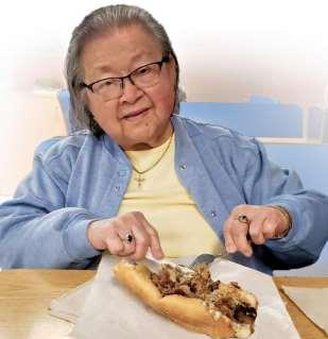
Molly van Zeumeren
August 13, 1929 – June 23, 2021
Molly van Zeumeren passed away at the age of 91 in her McKinleyville home on June 23, 2021. She was a longtime resident of El Toro, Calif., before moving to Humboldt County in 2001. Molly is survived by her husband Jan and her three children — Jan J, Rosey and Paul.
Molly Dahrani was born on August 13, 1929 in Moulmein, Burma (Myanmar). At the early age of 16, during WWII, she was forced to flee Burma to India with her two sisters, due to the invading Japanese Army. While living in India when she was about 18 years young she converted to Catholicism and continued her education at a Catholic Convent in Mysore, India. Shortly following the war, she traveled back to Burma, where she pursued her education as a nurse and worked in various hospitals. Jan, her husband to be, was a merchant marine engineer working on a ship docked in Burma. At a social event the two met and fell in love. After Jan’s contract ended, he returned to the Netherlands, taking Molly with him to get married and to begin their life together.
After having their first two children Jan J and Rosey, the couple immigrated to America, first settling in Arizona. Eventually, Molly and her family settled in Southern California, where she had a son, Peter, who died during his birth, and another son, Paul.
Molly had a career working at various hospitality positions. She retired from a successful 25-year career at Disneyland. Molly has touched the lives of so many people that she has come in contact with. Molly’s conversion to the Roman Catholic faith was a guiding force in her life. This motivated her to become a Eucharistic minister in the church. She would take communion to the elderly, the sick, and people otherwise unable to commute to church, so they could share in the sacrament of communion. Molly was a dedicated member of The Little Company of Mary and made hundreds of rosaries by hand to be distributed to the less fortunate around the world. Many of her friends described how Molly had been an inspiring light for them when faced with their own troubles by providing encouraging words. What more! A priest from her congregation called Molly “a living saint” when he recently visited her at her home.
Molly had a magnetic personality, attracting many friends and acquaintances, some of whom were much younger than she. That fact is likely a testament to Molly’s outlook and zeal for life and others. Molly’s loves, aside from her family and friends, included playing bingo, Philly cheesesteaks and going on road trips when others were driving.
Molly once said that when she was a young girl in Burma, all she ever wanted from life was to drive a car and go to America. She had those experiences and so much more. Molly was honored by the Walt Disney Corporation for 25 years of service at The Monorail Café. Many of the customers she encountered adored her and would return regularly to see her. Molly was truly a kindred spirit to those whose lives she touched. Molly will be missed, loved and remembered by all who had the privilege of calling her a wife, a mother, and a friend.
Funeral Mass will be held at Christ the King in McKinleyville on Tuesday, July 27, 2021 at 5 p.m. Burial will be at Accension Cemetery in Lake Forest on Friday August 13, 2021 at 1 p.m. Molly will be buried and reunited with Baby Peter.
###
The obituary above was submitted on behalf of Molly van Zeumeren’s loved ones. The Lost Coast Outpost runs obituaries of Humboldt County residents at no charge. See guidelines here.
OBITUARY: Joann D. Stewart, 1943-2021
LoCO Staff / Wednesday, July 21, 2021 @ 6:56 a.m. / Obits
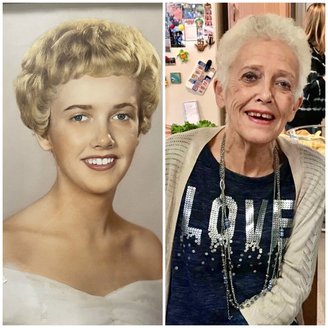
Joann D. Stewart passed away peacefully on June 29 with
her best friend/daughter by her side. She was born to Archie and
Evelyn Smith on April 9, 1943 at the old St. Joseph Hospital in
Eureka. Joann was an only child and the apple of her parents’ eye.
She had an amazing childhood and was spoiled rotten. Her dad owned
Archie Smith Lumber Company in Arcata and he was also a contractor so
they would live in many of the houses he had built around Eureka.
Joann graduated from Eureka High School in 1961, followed by studies
at HSU.
She later married her high school sweetheart Robert “Bob” Stewart. They started a family and had two boys and one girl. She spent most her summers in Willow Creek at her family’s summer home sunbathing, enjoying family time around the pool and barbecuing. Joann worked alongside her mother at Julie’s Florist, their family-owned business on the Plaza in Arcata for over 20 years. She loved being a florist. Joann retired for a short while and then worked for Country Living Florist in Arcata for five more years. She then finally retired for good and became a full-time grandma. Joann lived with her daughter and son-in-law and her four grandsons. They kept her busy for many years. She loved watching them ride their dirt bikes and play outside. Joann enjoyed picking them up from school every day with Kari. She loved to show pictures and brag about how talented and kind all four of them are. Joann loved those grandsons with all of her heart. They were able to see her and spend time with her up until the day she passed away.
Joann was proceeded in death by her husband Robert “Bob” Stewart, her parents Archie and Evelyn Smith, stepfather Mose Dungan, and Father and Mother-in-law Edward and Audrey Stewart. She also was preceded in death by her oldest son, Jason who passed away unexpectedly at the young age of 20, due to complications after a heart surgery, and her favorite ski partner and cousin Dennis Stayton.
Joann is survived by her sweet and caring daughter Kari and her husband Rob Hemmingsen and her four grandsons – Robby, Wyatt, Mason, and Brantley Hemmingsen, all of Eureka; her son Keith Stewart and his wife Toni of Toledo, Oregon; her two granddaughters Marissa Stewart of Eureka and Miranda Stewart of Newport, Oregon; sister-in-law Cheri Rowell of Modesto; cousins Jan Steeholm of Puyallup, Washington and Kathy Parson of Felton, Calif.; and many other extended family and friends.
We would like to thank Dr. Mathews and Dr. Trieu for all their genuine care and support that led up to her final days. They treated her with kindness and compassion and were heartbroken along with all of us when we lost her; the Eureka Dialysis Center for their great care for the last few years. St. Joseph Hospital second floor unit, Med/Surge 2, where Joann received her last few weeks of excellent medical support. Also a big thanks to the Hospice Center of Humboldt, where they treated us like family, made us feel at home, and were very attentive to Joann’s every need. They made a wonderful impact on Joann’s last few days. We can’t thank everyone enough. Donations can be made in Joann’s name to Hospice of Humboldt or a charity of your choice.
We are all saddened she will miss so many of her grandkids’ milestones, but we know she is at peace with her husband and son, whom she has missed for so many years.
There will be a celebration of her life to be announced at a later date.
###
The obituary above was submitted on behalf of Joann Stewart’s loved ones. The Lost Coast Outpost runs obituaries of Humboldt County residents at no charge. See guidelines here.
OBITUARY: Gene Fisher, 1931-2021
LoCO Staff / Wednesday, July 21, 2021 @ 6:56 a.m. / Obits
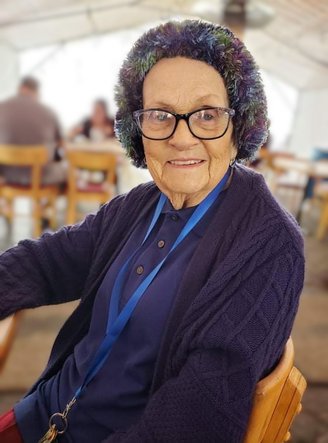
With a heavy heart our beloved, Mom, Nana, Angel, Gene Fisher passed
away on Friday, July 16, 2021 at the age of 89 after surviving breast
cancer twice, but was unknowingly being taken by its third attempt,
resulting in her death. She was a strong , beautiful, amazing human
who is now dancing to Gene Kelly music with her late husband, Harold,
under the loving gaze of her savior Jesus Christ.
Gene (maiden name Kelly) was born on December 19, 1931 in San Francisco. As a young adult, she had her own dance studio “Gene Kelly Dance Studio “ in San Francisco, where she grew up and met her husband, Harold Fisher, who was a competitive roller-skate ballroom dancer.
Gene was a Eureka Transit Gold route bus driver and Southern California school bus driver for over 20 years. She taught Sunday school at the local church, she helped raise her grandchildren, and was an active part of their lives and well as their friends.
In her retirement, she would sit and chat over coffee and doughnuts with her resident friends, watching residents play billiards pool, and listing to karaoke in her apartment building. She also enjoyed being at a coffee shop writing letters to friends and family, where each letter had a matching paper, envelope, and a sticker theme. She also enjoyed going to lunch at the Village Pantry with family. She was loved and known by all by her colorful fuzzy hats and her matching outfits.
Preceded in death by her mother Myrtle Rose Kelly, father Arthur (Bud) James Kelly, husband Harold Eugene Fisher. Survived by her daughter, Carol (David) Pryor, son, James (Maria) Fisher, granddaughters Jess (Jay) Blake and Christina Fisher,gGrandsons Garrett (Jay) Krueger and Michael (Shaby) Fisher, and her great-grandchildren, Victoria, Ethan, and Alice Fisher.
Thank you all who loved and enjoyed Gene’s feistiness and loving soul. There will be a remembrance (“Graduation Party”) near her birthday in December, details will be mailed out by USPS by September 2021.
###
The obituary above was submitted on behalf of Gene Fisher’s loved ones. The Lost Coast Outpost runs obituaries of Humboldt County residents at no charge. See guidelines here.
OBITUARY: Vivian Isola Bradford Long, 1927-2021
LoCO Staff / Wednesday, July 21, 2021 @ 6:56 a.m. / Obits
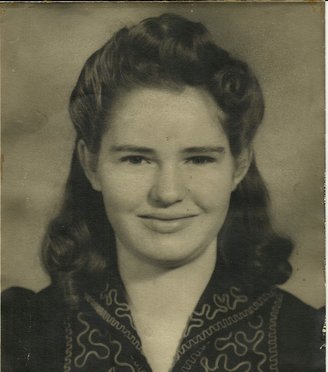
Vivian
Isola Bradford Long, age 94, passed away, on July 15, 2021. She has
been a resident of Fortuna for 52 years.
Vivian was born in Colorado on March 27, 1927, and grew up in Paonia, a small town at the foot of Mount Lamborn Masa.
On her first day of school, her father drove her to school in the family buggy, then told her older brother, Winton, to wait for her and walk her home. She did not see Winton after school, so Vivian walked the mile and half home alone, much to the horror of her mother. Vivian exhibited this kind of strength, independence, and bravery her entire life.
She was a math whiz at Paonia High School and was awarded a full college scholarship when she graduated. She met the love of her life while in her senior year of high school. One night, on a double date, it quickly became obvious that both girls were more attracted to the other’s date, so they decided to switch boys, that is how she met Alfonzo Rochester Long.
They soon fell in love and after she graduated in 1945, they eloped to Aztec, New Mexico. During World War II, many things were rationed, including tires. The truck they were driving to Aztec, had very bald, worn out tires, one of which fell off while on the Silverton Million Dollar Highway. It was late at night and the embankment was very steep.
A passerby took them into the town of Silverton, where they rented a room in the Imperial Hotel for the night. The next day Al hitchhiked back to where the tire came off, climbed down the embankment, retrieved the tire, put it back on the truck. He then returned to the hotel, picked up Vivian and they continued to Aztec. They were married on September 28, 1945.
They made their home in Paonia, where their first daughter, Esther, was born. When she was three months old, they moved to Morgan Hill, California, where their second daughter, Kathryn was born. The next year their third daughter, Wanda was born in Colorado and just after their fifth anniversary. Their only boy, Steve, was born in California. Then, seven years later, their fourth and last daughter, Carol was born in Tulare, California.
When Carol was two the family moved to Crannell, a small company town for sawmill workers of the Little River Redwood Company, located about 4.5 miles southeast of Trinidad.
In 1969, Vivian, Al and their two youngest children, moved to Fortuna. Very shortly after moving to Fortuna, Vivian became a member of the Rohnerville Assembly of God Church. She spent a lot of her time in the women’s ministry, making quilts for the needy, a project she deeply enjoyed.
In 1989, she lost the love of her life when Al died of lung cancer. After his death she decided she needed to re-engage with life so she went to work for McDonald’s, where she worked for five years. She greatly enjoyed making the morning biscuits.
After her home burnt to the ground in 2011, she bought a home in Royal Crest, where she lived until her death.
She was preceded in death by her parents, Carl and Madge Bradford; her four brothers, Dale, Dean, Winton and Lynn Bradford; her beloved granddaughter, Sheila Vukevic; her sons-in-law, Norman Fleek and Marion Matlock; and her husband, Alfonzo Long.
She is survived by her children, Esther and Tom Bowles, Kathryn Matlock, Wanda and Virgil Muncton, Carol and Robert Marshall and Steve Long; her grandchildren, Norma Jean Patrick, Carol Rene’ and Hazen Crowl, Peter Vukevic, Suzie and Gunter Kison, Sonya and Ron Waggoner, Aimee and James, “JJ” Whaling, Steven and Levi Anderson and Tommy and Sara Long; as well as many great-grandchildren.
Services will be held at Rohnerville Assembly of God on July 24, 2021, at 1 p.m. Please join the family for coffee and desert at 3 p.m. in the Church Fellowship Hall. Gobles Mortuary is handling the arrangements.
###
The obituary above was submitted on behalf of Vivian Long’s loved ones. The Lost Coast Outpost runs obituaries of Humboldt County residents at no charge. See guidelines here.


