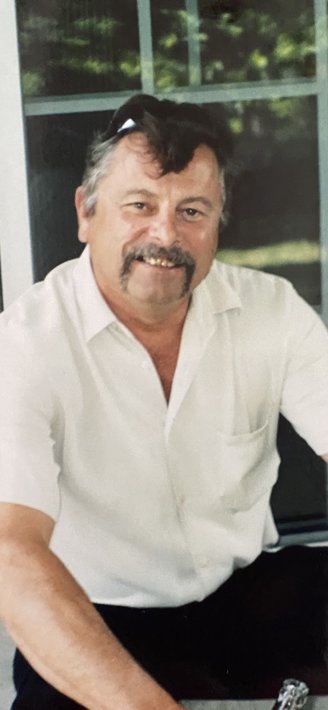
Michael
Wayne Bigham peacefully passed away on June 23 at his home
with his family by his side. He was 65 years old.
He
is preceded in death by his mom Dorothy, his dad Bill, and his
sisters Susie and Kathy.
He
is survived by his wife Julie, their son Matthew and his wife Kelli
Bigham and granddaughter Bella, their daughter Melissa and her
husband Jedd with his grandchildren Justin, Cody, Ryan and Olivia
Ambrosini, their daughter Tyler and her husband Chris with his
granddaughters Tatem and Caydence Greene, their daughter Blake
Weigand and his grandson Wyatt Treadwell, their son Jerrad Bigham,
his sister Gaylene and her husband Les with their children Jason and
wife Stacy and Adam Gildersleeve and his great-nephews Austin and AJ
Gildersleeve, great niece Caitlin with great-great-nephew Samuel
Gildersleeve.
Mike
was born July 10, 1955 in Crescent City.
He grew up with a close extended family that moved a lot where
the work took them. Mike began working in construction with his dad
when he was only 10 years old. He received his contractor’s license
when he was just 21 years old. Mike and his dad were best friends
working together until Bill’s passing.
Together they constructed hundreds of residential homes,
entire subdivisions, and several hotels over 50 years. Mike separated
from his dad for a short time to go to Sacramento to build houses on
his own. However, when it came time for his first child, a son, to be
born in 1979 he moved back home to be close to family where he
stayed. Mike’s daughter was born in 1981. Mike also built
commercial buildings, apartment buildings and even a couple of school
buildings. Mike’s talents were not limited to the construction of
the building. He designed many of his projects, including five of the
six hotels he built.
In
1991 Mike met Julie and her two daughters. They were married in 1994
and raised their family together. Their son Jerrad was born in 1995.
They worked side by side for 30 years, recently completing an
Extended Stay America in Ukiah. Also working by Mike’s side was his
good friend and brother, Jitu Ishwar. Although Mike’s illness was
becoming unbearable he completed the hotel, even participating in the
opening by cutting the ceremonial ribbon. Amazingly, Mike and Bill’s
work will live on for hundreds of years.
Mike
had a passion for great outdoor activities including hunting, water
and snow skiing and living life to its fullest with his friends and
family. He rarely passed up the opportunity to shoot a game of pool.
Annual houseboat trips to Lake Shasta were a favorite way to spend
time with family. Ruth Lake was another favorite family vacation
spot. Weekend getaway is more like it. Mike bought property in Ruth
about 30 years ago and the family took full advantage of the quiet
spot, camping, swimming, motorcycle riding, and BBQing over the open
campfire. Too many memories to share. Mike always said, “Thank God
for family, born or chosen”.
Mike’s greatest love was always his family.
Julie will always be Mike’s truest love and was always by
his side in every facet of life.
Mike’s
grandson Wyatt says “He was a really great grandpa!”
Mike
enjoyed his life, living it to the fullest with his heart full of
fun, adventure, and love. We will do our best to honor him by living
our lives the way he would want us all to do. It may be difficult
though considering he was always the instigator!
A
celebration of life is being held on Saturday, July 10 starting at 1
p.m. at 1866 Singley Hill Road, Loleta. His remains will be
distributed in Humboldt County.
###
The obituary above was submitted on behalf ofMike Bigham’s loved ones. The Lost Coast Outpost runs obituaries of Humboldt County residents at no charge. See guidelines here.
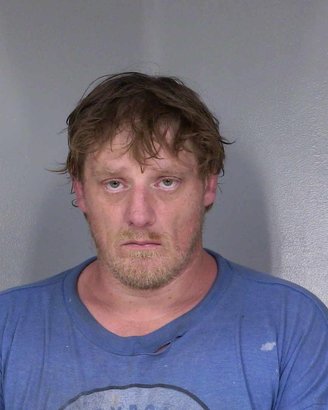
On July 8, 2021, Detectives with the Eureka Police Department’s Problem Oriented
Policing Team (POP) responded to a motel on the 2400 block of Broadway in Eureka to
serve a search warrant after receiving intelligence that 43-year-old Michael Busenius of
Eureka was selling narcotics and was in possession of firearms. Busenius is a convicted
felon and is prohibited from owning or possessing firearms and ammunition.
Busenius was detained outside the motel. During the search, detectives located a loaded
.22 caliber pistol and methamphetamine. Detectives then responded to a garage located
on the 1400 block of Union Street in Eureka to serve a search warrant at a second
location associated with Busenius. During a search of the garage, detectives located a
.12-gauge shotgun and more ammunition.
Busenius was arrested and booked into the Humboldt County Correctional Facility for
felon in possession of a firearm, felon in possession of ammunition, possession of
methamphetamine and possession of methamphetamine while armed with a loaded
firearm.
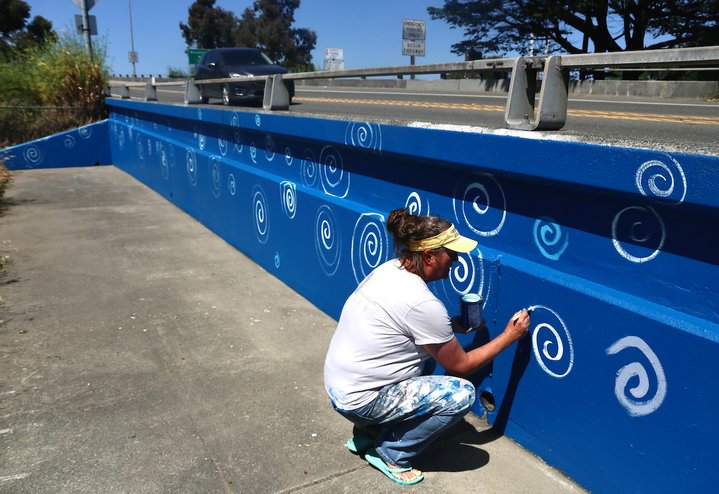
Bernadette Vielbig applies her “Ocean Currents” to the southernmost Samoa Bridge
In keeping with LoCO policy of alerting the community any time paint is applied to a surface, we must now inform you that the west-facing end of the Samoa Bridge that briefly interrupts Eureka’s Second Street is in the process of being blued up.
It’s a quick facelift. Local artist Bernadette Vielbig, along with a smattering of volunteers, began painting today and she expects to finish tomorrow. Vielbig lives nearby and was able to receive funding for the light mural as part of the City of Eureka’s Neighborhood Investment Mini Grant Program, which offers small grants up to $500 for “volunteer-fueled solutions
developed by the community.”
Of course, you are now wondering if the government will help you express yourself too. Well, they might! If you are a Eureka resident who wants to improve your block in some creative way, consider perusing the city’s grant application form at this helpful link. Do it!
Note: We have written to the Arcata Police Department to request a photo of Mr. Carney, so as to possibly aid people in identifying him, but are not too hopeful about the prospect of a response. -Ed.
###
From the Arcata Police Department:
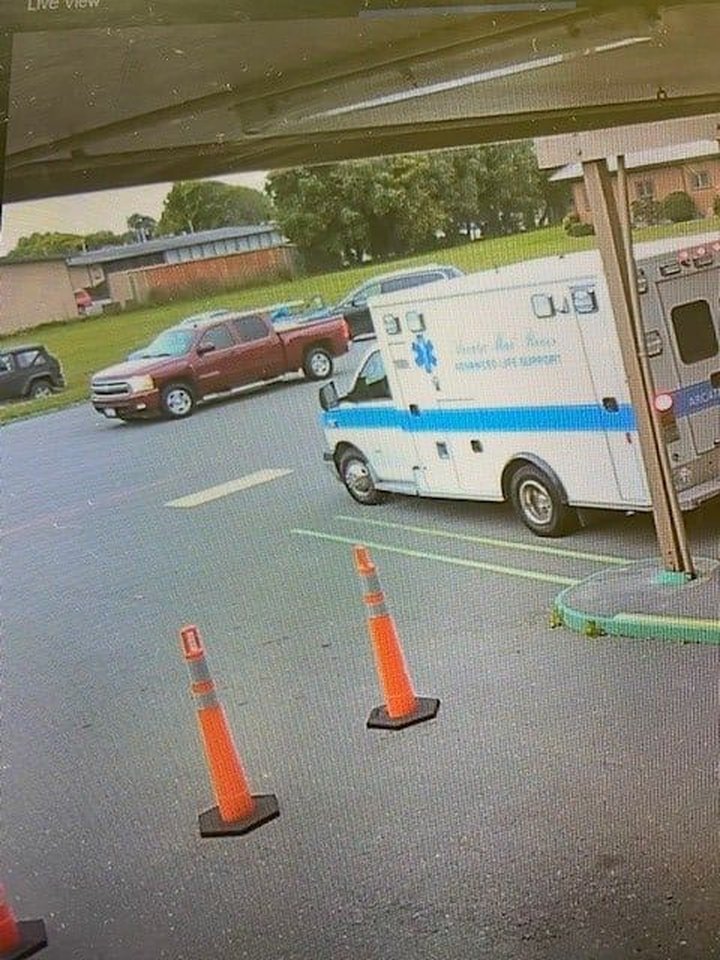
On 7/8/21, at about 0952 hours Officers from the Arcata Police Department were dispatched to Mad River Community Hospital for the report of 81-year-old Edward “Eddie” Carney of Vacaville who was missing. Carney suffers from Alzheimer’s disease and is not familiar with the area.
Carney is described as a white male adult, 5‘9, 170lbs with white hair and blue eyes. Carney was last seen wearing a red long sleeve collared shirt and blue jeans. Carney was last seen leaving Mad River Community Hospital on 7/8/21 at 8:00am, driving a red 2007 Chevrolet Silverado, California License 04207H2 in the company of a white dog.
A Silver Alert has been activated by California Highway Patrol. If anyone has seen or sees Carney please immediately contact the Arcata Police Department 707-822-2424.
The request, Newsom said, applies to businesses and agriculture as well as residents. Meeting the target could save enough water to supply 1.7 million average households for one year, according to state officials.
Speaking from windy Lopez Lake in San Luis Obispo County, Newsom stressed that the reductions are voluntary and urged Californians to make common sense cuts like looking for leaks and running full loads of laundry and dishes.
“Not here as a nanny state. And we’re not trying to be oppressive,” he said. “But nonetheless, the sober reality is such that here we are again, and we will need to proceed with the lessons learned from the last drought.”
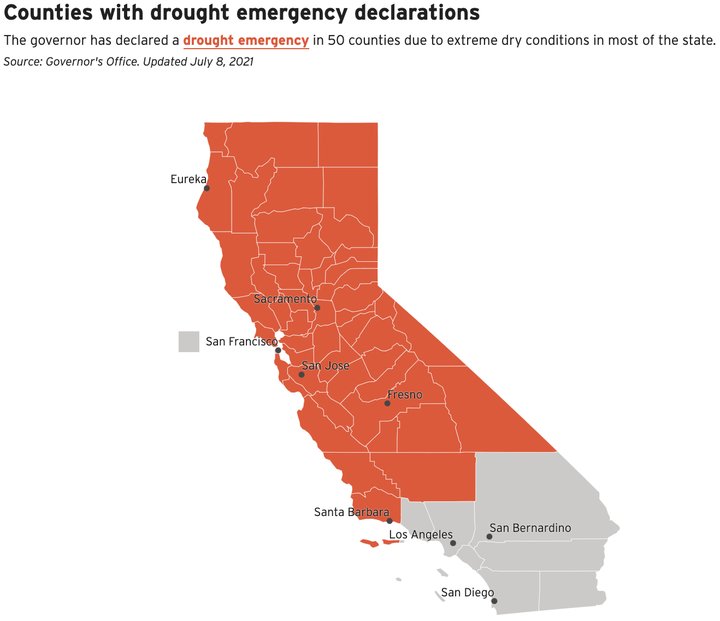
Newsom also today expanded drought emergency declarations to nine more counties, including three parched Bay Area counties and several along the Central Coast. Fifty counties, home to 42% of the state’s population, are now under drought emergencies.
The nine new counties with emergency declarations are Inyo, Marin, Mono, Monterey, San Luis Obispo, San Mateo, Santa Barbara, Santa Clara, and Santa Cruz. Conditions are not severe enough to include Los Angeles, Orange, Riverside, San Bernardino, San Diego, San Francisco and Ventura, all of which have sufficient supplies in storage so far.
The emergency declarations will ease environmental and other regulations to speed drought responses, such as purchase of bottled water supplies.
For now, the statewide requested cuts are voluntary. Standardized water waste rules stalled after the last drought, leaving Californians with a patchwork of water restrictions that has some Californians restricting their shower time and others flush with water.
Between 2013 and 2016, Californians on average reduced their residential use by 30% in summer when they were asked to cut back.
In April, Californians in residential areas used 14% less water than they did in 2013. But the State Water Resources Control Board warns that water use is ticking up. April was the first month of 2021 when urban suppliers distributed more water than in 2015 — with an estimated 152 billion gallons compared to 149 billion gallons, said Charlotte Ely, conservation supervisor for the water board at a June water board meeting.
“Historically low winter and spring precipitation has resulted in the highest April numbers since 2015,” Ely said. “We are still well below the 2013 baseline, but the savings between 2013 and (the) present is narrowing.”
###
CALmatters.org is a nonprofit, nonpartisan media venture explaining California policies and politics.
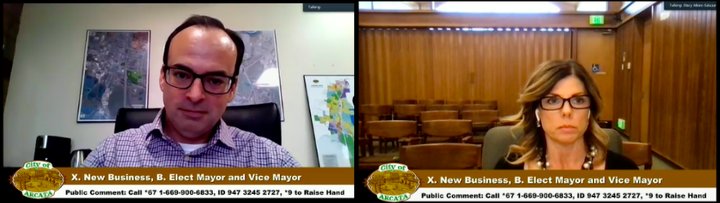
Arcata Mayor Brett Watson (left) and Vice Mayor Stacy Atkins-Salazar | Screenshots from what was the council’s last virtual Zoom meeting
###
The Arcata City Council chambers will sit empty no more! During its Wednesday night meeting, the Arcata City Council decided that after more than a year of meeting virtually over Zoom, it will return to meeting in-person starting on July 22.
Governor Gavin Newsom’s Executive Order that suspended portions of the Brown Act to allow government bodies to fully meet virtually during the pandemic will be lifted on Sep. 30, which means the council is required to resume in-person meetings in October. But the council members agreed that they were eager to meet in person as soon as possible.
As far as COVID-19 safety protocols, the council decided that masking will only be required for non-vaccinated individuals and that the City will not require proof of vaccination, but will implement an honor system and trust that anyone who attends unmasked is, in fact, vaccinated. The council also decided against removing some seating in the council chambers or the use of any kind of partitions to enforce social distancing.
Arcata City Manager Karen Diemer said that the City is still working to procure all of the necessary equipment to hold hybrid meetings, so that those who are not comfortable or unable to attend in-person will still have the option to attend over Zoom. With any luck, the City will be able to hold the July 22 meeting in the hybrid fashion, Diemer said, but, if it is not possible, public will still have the option to email or call to comment.
###
Also during Wednesday’s meeting, Councilmember Brett Watson officially ascended to the role of mayor. Watson was already serving as interim mayor in the place of previous councilmember Sofia Pereira, who resigned last month. Councilmember Stacy Atkins-Salazar will now serve as vice mayor, the role previously held by Watson.
The council will reassign these positions in late December, but the council seemed to agree that, with both council members scheduled to serve in these roles next year per the council’s usual rotation, Watson will most likely continue to serve as mayor and Atkins-Salazar as vice mayor of Arcata in 2022.
###
Earlier in the meeting, the council unanimously approved a statement of support for Arcata’s LQBTQ+ community, written and presented by Councilmember Emily Goldstein in response to two recent anti-LGBTQ acts of vandalism.
Both acts of vandalism took place on the corner of 18th and H Streets in late June — Pride Month. First, someone burned a Pride flag that had been hung in the city-owned planter at 18th and H Streets. In response, community members gathered for a Pride celebration at the location on June 25. During the gathering, participants hung hand-crafted pride decorations on an ornamental cherry tree in the planter. Sometime over the next two days, someone cut down and removed the tree.
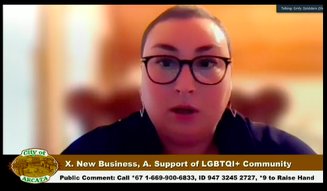
Councilmember Emily Goldstein reads her statement in support of her ‘LGBTQ Siblings’ to the council
Diemer recently told the Outpost that the incident is currently being investigated as felony vandalism and possibly a hate crime.
“While we are grateful that no physical harm came to any member of our community, these are acts of hate and violence,” Goldstein read from the statement. “We as a city stand with our LGBTQ+ siblings and unequivocally denounce these and any acts of violence and hatred. These acts should serve as a reminder to us that we still have a long way to go to ensure the equity and safety of our LGBTQ+ community. This is just the start of a conversation and one that needs to be had again and again. We invite our community to join in the conversation. Together we must actively and tirelessly work for equity and justice for all.”
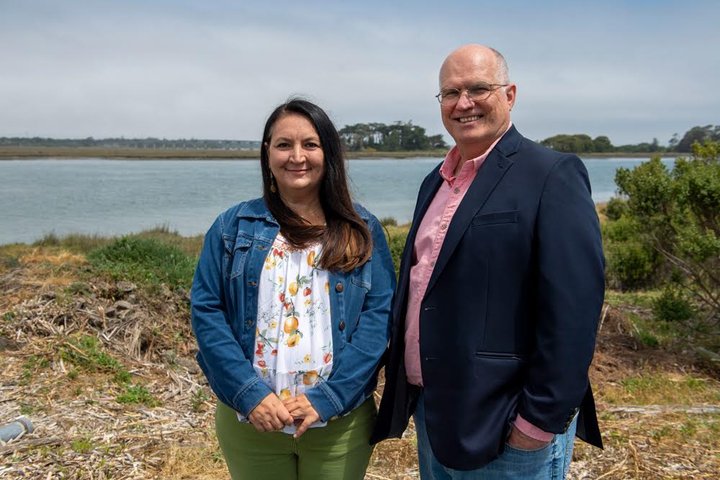
Wiyot Tribal Administrator Michelle Vassel and Cooperation Humboldt Co-founder and Executive Director David Cobb, with Tuluwat Island in the background, as they prepare to launch Dishgamu Humboldt, an ambitious land trust that is to be led by the Wiyot Tribe | Photos: Mark McKenna
Just about everywhere she looks throughout Humboldt County, Wiyot Tribal Administrator Michelle Vassel sees need. There’s a lack of well-paying jobs and rampant food insecurity. There’s a lack of skilled trades labor and affordable housing. And for the Wiyot people, who lived in approximately 20 village sites scattered around Humboldt Bay before first contact, Vassel sees a lack of autonomy over their ancestral territory.
But now, on the near horizon, Vassel also sees a solution to some of the region’s most entrenched problems: Dishgamu Humboldt. Named after the Wiyot word for love, Dishgamu Humboldt is a first-of-its kind community land trust, a partnership between the tribe and Cooperation Humboldt that those involved feel will have a transformational impact on the area.
“I think what excites me most is just working on the concept of place-based healing, and looking at building together as a community and coming together as a community and working on the long-term vision for the place that we all live,” Vassel said, stressing that the project is truly about taking immediate action toward a long-term vision. “We’re looking at multi-generational. We’re looking past 10, 20, 30 years. We’re looking at 100 years, 200 years, 250 years.”
###
An artist’s rendering of the Wiyot-led land trust’s plans for a proposed apartment complex in Eureka. Courtesy of Dishgamu Humboldt
If you get Cooperation Humboldt co-founder David Cobb to tell you Dishgamu Humboldt’s origin story — not the elevator pitch but the cocktail party version — an undeniable irony comes into sharp focus. Long before Cobb and Vassel hatched plans for the Wiyot-led land trust that aims to address pressing needs while putting land back under Wiyot ownership throughout the tribe’s ancestral territory, there was a wealthy white man.
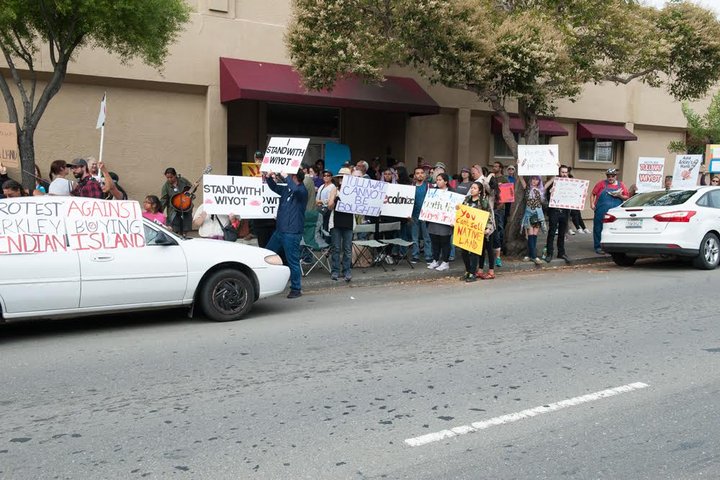
It was the summer of 2017 when Robin Arkley — whom Cobb describes as “Humboldt’s own Mr. Potter” — took to the radio waves to lambast the city of Eureka’s plans to return 200 acres of Tuluwat Island back to the Wiyot Tribe from whom it had been violently stolen 150 years prior.
“We’re giving it away! To the Natives!” Arkley said incredulously, protesting that he and his kids liked using the island and shouldn’t be prevented from doing so simply to right a multi-generational wrong that began with the slaughter of more than 100 unarmed people, mostly women, children and elders.
The businessman’s effort to keep the island from being returned to the Wiyot Tribe ultimately failed, with the city showing no interest in his offer to pay more than twice the appraised value of the island and the city council remaining resolved that Tuluwat should be returned to the people who hold it sacred. But seeds were planted that day that are just now beginning to bear fruit.
More than 150 people protest in front of Robin Arkley’s Eureka office after the wealthy businessman said on a local radio show he intended to block the return of Tuluwat Island to the Wiyot Tribe by purchasing the property in 2017.
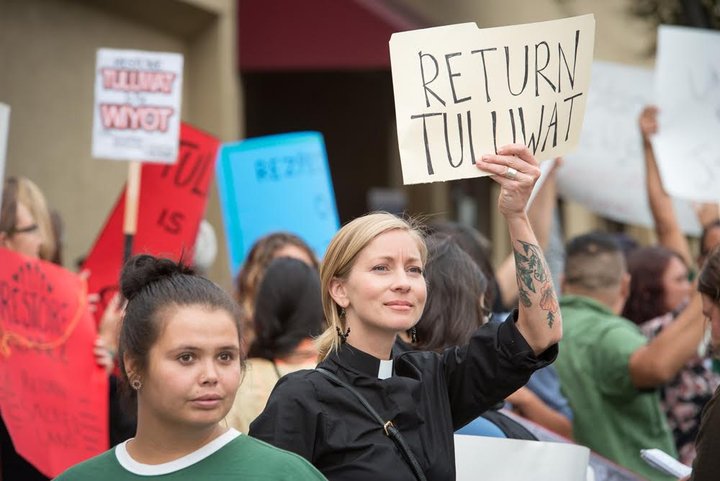
Bethany Cseh holds a sign calling for the return of Tuluwat Island to the Wiyot Tribe during the 2017 protest.
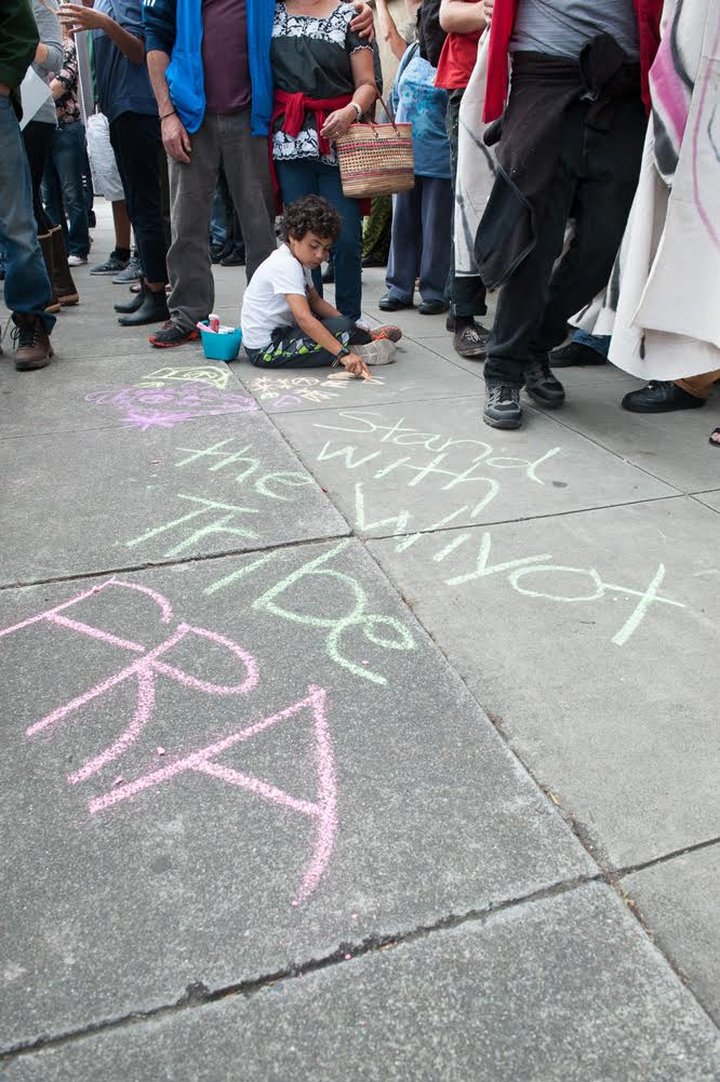
Carlo Campagna, 8, of Eureka, draws with chalk during a 2017 protest in front of Robin Arkley’s Security National Servicing Corp.
When some 150 people turned out to protest in front of Arkley’s Eureka office in the weeks following his comments on the radio, Cobb and Vassel met for the first time and a connection was born, one that has since led to a deep friendship. And Cobb said the gravity of the moment struck him — with the city of Eureka taking the monumental and unprecedented step of giving back tribal lands — and stuck with him, noting that, years later, he still has the “I Stand with Wiyot” sign he held that day.
At the time, Cobb was working to get Cooperation Humboldt off the ground with Tamara McFarland. The pair committed to pay 1 percent of the nonprofit’s gross income annually to the Wiyot Tribe as an honor tax. When the nonprofit was ready to begin taking on projects — tackling food sovereignty and working toward the development of a solidarity economy — Cobb and McFarland went to the tribe to ask for its input.
“I am an uninvited guest on un-ceded Wiyot territory,” he says. “The best thing I can do is heed the teachings of my mama and my poppa: ‘If you’re going to be a guest, be an appropriate guest. Act right.’ Well, I’m learning to act appropriately under the guidance of the Wiyot and my aspiration is to become a welcomed guest.”
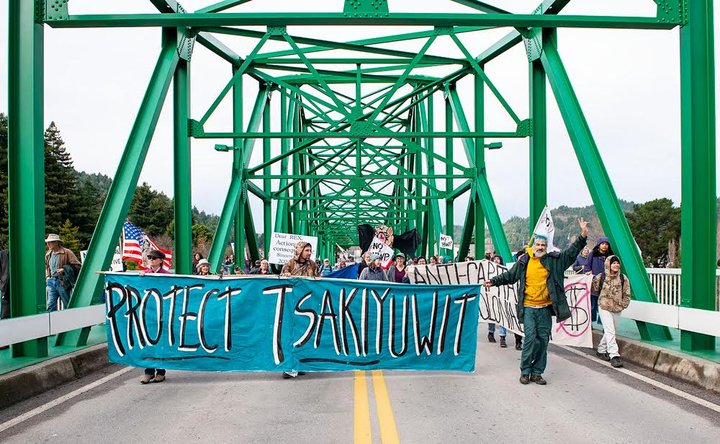
If the seed of a lasting partnership between Cooperation Humboldt and the Wiyot Tribe was planted when Arkley took to the radio that day in 2017, it sprouted amid a threat to another sacred site. When the county was considering permitting a large wind farm on Bear River Ridge, an ancestral prayer site known to the Wiyot as Tsakiyuwit, the nonprofit jumped to the tribe’s aid, organizing protests, letter-writing campaigns and more in an effort to elevate the tribe’s voice and make sure its concerns were heard.
“Specifically out of that project, I think we developed a real good working relationship with Cooperation Humboldt,” Vassel says. “After that, they came to our tribal council proposing some ideas of how we could work together and we’ve just been developing that as it goes.”
###
The resulting partnership that was formalized with a Feb. 10, 2020, vote of the Wiyot Tribal Council is unprecedented and — if successful — holds the promise of generational reverberating impacts.
Dishgamu Humboldt isn’t your typical land trust. First off, its bylaws were constructed to make sure delegates of the Wiyot Tribe control the land trust in perpetuity, requiring the organization’s seven-member board always be made up of four delegates from the tribe, and one each from Cooperation Humboldt and Full Spectrum Capital Partners, which is creating the Gouts Lakawoulh Hiwechk (money that makes us well, in Wiyot) Fund to finance the land trust, and a yet-to-be finalized third entity. The Humboldt Area Foundation has also been invited to a seat on the board, an offer the organization is considering.
“This is a Wiyot-led experiment and we are taking an appropriate four-to-one role,” Cobb says. “It’s an organizational commitment in perpetuity.”
Cobb and Vassel have their sights set on a variety of ambitious projects, from eco villages and cooperative home ownership to low-income housing and worker-owned cooperatives. The through line of all the ideas is that the land trust will purchase properties in Wiyot ancestral territory for the tribe, which will own the land moving forward while the land trust or other partners would own and manage the buildings.
Take for example, the idea of a housing co-op. The land trust could purchase and renovate an existing Victorian, turning it into a four-plex. The land underneath the home would be owned by the tribe, but then four families could together purchase the building itself at an affordable price, perhaps even with added financing from the land trust.
“It would put home ownership in reach for people who typically and historically couldn’t even imagine it,” Cobb says.
The same basic idea would be at play for an eco village, Cobb says, explaining that the land trust would purchase the kind of property that would normally be subdivided in an unincorporated area of the county. But instead of building four or six traditional three-bedroom, two-bathroom homes, it would be a tiny home subdivision, which could accommodate more housing units, while also creating a walkable neighborhood with communal features, like solar panels, organic gardens, fruit trees and even horticulture ponds.
“It’s high-density that feels and looks much more bucolic,” Cobb says.
Cobb pauses a moment from discussing the specifics of various project ideas to reiterate that the whole concept of Dishgamu Humboldt is that it is Wiyot-led, allowing the people who have inhabited the county since time immemorial to lead a path forward to the benefit of all.
“Land back is not just a slogan,” he says. “This is how we make it real.”
###
The first projects up for Dishgamu Humboldt are outliers, as they won’t actually involve land ownership. The city of Eureka is in the process of requesting proposals to build apartment complexes on city-owned parking lots in an effort to ease a housing shortage and compacted rental market, both of which contribute to the city having one of the highest rates of homelessness in the country. Dishgamu Humboldt plans to submit two proposals: one for elder housing and the other for family units. Plans for both are intensely focused on sustainability.
Cobb, who has been consulting with the Schatz Energy Research Center at Humboldt State University, says the plans call for the use of laminated mass timber, a cutting edge technology.
“It’s beautiful,” he says. “It sequesters carbon. It’s an amazing thing. Our proposal is going to be incredibly beautiful and it’s going to be not just greenwashed, it’s going to be deep green. … You and I and your readers will want to live there.”
Vassel adds that the land trust is committed to using not just local labor for its projects, but an apprentice labor model.
“There’s just not enough skilled labor here,” she says. “So we need to grow people with the projects to be the people who will do more projects in the area.”
Vassel says she’s been working with College of the Redwoods and local contractors, as well as organizations like Pacific Builders, the Arcata Economic Development Corporation and the Small Business Development Center, to build apprenticeship programs that will expand the impacts of all Dishgamu Humboldt’s projects.
“We’re just trying to connect all the dots, finding contractors willing to apprentice people and finding people who want to apprentice,” she says. “It’s really needed in our area. It’s not just the place to teach — College of the Redwoods provides classes, but they also need projects to work on and licensed professionals in the field to work with.”
Developing housing complexes on city-owned parking lots provides a great opportunity for the land trust, Cobb and Vassel say, as it would allow the fledgling organization to complete two large-scale projects — proving its ability to do so — without the necessary capital outlay of purchasing land.
Vassel says the land trust team has been consulting regularly with its “financial integrity team,” which includes folks like county Treasurer John Bartholomew, Redwood Region Economic Development Executive Director Gregg Foster, Redwood Coast Rural Action Director Kathy Moxon and former Humboldt Area Foundation Executive Director Peter Pennekamp, among others. But the cornerstone of Dishgamu Humboldt’s capital effort will be the Gouts Lakawoulh Hiwechk Fund.
###
Speaking to the Journal via a video conference from the Bay Area on an afternoon in June, Taj James is all smiles. For 20 years, James says he ran an organization called the Movement Strategies Center in Oakland, which worked to “bring people together to solve problems.”
But many of the organizations James worked with, it turned out, had a shared problem.
“Many of the communities we worked with realized they needed a more robust economic development strategy,” he says, adding that caused him to shift gears to start Full Spectrum Capital Partners, an organization dedicated to pairing philanthropic individuals and organizations, investors and other funders with community-based organizations doing good work.
That work ultimately led James to Cooperation Humboldt and a series of meetings on the North Coast with a variety of organizations. James says he listened excitedly as the land trust idea came together.
“A really powerful way to really uplift the whole community is to support the leadership of the Wiyot people and tribe in helping us all figure out how to take care of the land and take care of each other in a way that’s restorative and innovative,” he says. “The needs are real and the ideas are really exciting.”
And that, he adds, will appeal to investors and donors. James said the details will take shape on a project-by-project basis, but the fundamental strategy is to pair philanthropic giving, grants and tax incentives — including those available to tribal communities — with conscious investors who are willing to take their money out of Wall Street and put it to use locally. Keys to that effort, James says, will be getting local investment initially — showing the rest of the world that Humboldt believes in efforts taking place in its own backyard — and completing a kind of flagship project the organization can point to as an example of what’s possible.
“The scale of economic development that’s needed to really transform the quality of life for the majority who live there is significant,” he says. “Significant resources are required. But those resources are available.”
Cobb, for his part, says initial fundraising efforts have already proven successful and he’s fully confident that will continue, saying people are thirsty to both give to impactful restorative justice efforts like this and to invest in more just economic structures. And when the new land trust is fully up and running, Cobb says he intends to step down as executive director of Cooperation Humboldt to work under Vassel as one of Dishgamu Humboldt’s first employees.
Vassel says the whole effort has been an exercise in “creating as we go,” as there simply isn’t an existing model for a tribally led land trust organization that looks to put land back in Native hands while managing one economic revitalization project at a time to meet urgent community needs.
“There really wasn’t a setup for this kind of thing so we’ve been working on developing it,” she says. “It’s Wiyot-led and it’s land back.”
Thadeus Greenson (he/him) is the Journal’s news editor. Reach him at 442-1400, extension 321, or thad@northcoastjournal.com. Follow him on Twitter @thadeusgreenson.
The Community Voices Coalition is a project funded by Humboldt Area Foundation and Wild Rivers Community Foundation to support local journalism. This story was produced by the North Coast Journal newsroom with full editorial independence and control.
[Ed. Note: This story has been edited from its originally submitted form to omit a passing reference to Rob Arkley as a billionaire. The Outpost highly doubts it.]