

As County’s Fiscal Fiascoes Mount, Feds Impose Tax Liens, Contractors Plead for Their Money and Department Heads Sound the Alarm
Ryan Burns / Friday, July 9, 2021 @ 3:01 p.m. / Local Government

Screenshots from the last Audit Committee meeting (clockwise from top left): Supervisor Virginia Bass, Auditor-Controller Karen Paz Dominguez, Supervisor Mike Wilson, Administrative Analyst Mychal Evenson, Treasurer-Tax Collector John Bartholomew and (now-former) County Administrative Officer Amy Nilsen.
PREVIOUSLY:
- The Auditor-Controller’s Ongoing Beef With Other County Departments is Getting Ugly
- Supes Call Special Meeting, Say County at ‘Serious Risk of Losing Millions’; Auditor-Controller Says She’s Being Asked to Cut Corners
- County Department Heads and Local Agency Leaders Voice Frustration, Concern With Auditor-Controller
- In Ongoing Conflict With Its Own Auditor-Controller, County Opens Investigation, Looks to Outsource Some Fiscal Oversight Duties; A-C Asks to Retain Outside Counsel
- ‘Nobody is Outsourcing the Auditor’: County Administrative Office Responds to Claims By and About Paz Dominguez
- TODAY in SUPES: Board Agrees to Appoint Outside Attorney for Auditor-Controller, But Not the One She Picked
- State Suspends County’s Purchasing Account for Overdue Payment; Auditor-Controller Takes Responsibility
- County Abandons Investigation Into Fiscal Management Delays, Having Never Interviewed the Auditor-Controller
- TODAY in SUPES: Board Approves ‘Audit Committee’ in Hopes of Solving the Ongoing ‘Dysfunction’ Surrounding Financial Transactions
- The Agency Running Humboldt County’s Workforce Services is Ready to Bail Over Chronically Late Payments
- Board Approves Creation of Chief Financial Officer Position as Staff Emphasizes Distinctions From Auditor-Controller
- Humboldt County Audit Committee Held Its First Meeting … and the Auditor-Controller was Absent
- Board Agrees to Spend Another Half-Million Dollars Trying to Fix Its Ongoing Fiscal Shitshow
- An Embarrassing About-Face on an Expensive Non-Solution to Our Payroll Problems
###
Everyone is on edge.
In recent conversations about county finances with officials, staff members and outside agencies, everyone chooses their words carefully, speaking with diplomacy to avoid inflaming an already volatile situation.
The tense atmosphere was apparent during the most recent meeting of the Humboldt County Audit Committee, an oversight group that was formed specifically to address rampant dysfunction in the county’s fiscal management, which has devolved into a slow-motion catastrophe of overdue reports, disgruntled county contractors, internal investigations and cross-departmental power struggles.
As you’ll read below, one department head recently told county supervisors she’s never been more worried about the state of the county’s finances. Staffers tell the Outpost that dysfunction has so thoroughly bogged down the system that whole departments fear financial collapse.
From the outside, the drama often seems to center around Karen Paz Dominguez, the county’s firebrand auditor-controller who was elected in 2018 after publicly declaring that the office was so understaffed that it was incapable of ferreting out misstatements or potential fraud.
Since her election, Paz Dominguez has positioned herself as a reformer out to systematically modernize the county’s sloppy fiscal reporting by streamlining operations and closing loopholes to achieve compliance with state-mandated accounting standards. In conflicts with the County Administrative Office, county supervisors and other departments she has argued that her efforts have been frustrated by continued short-staffing, interference and a lack of cooperation.
Critics, meanwhile, accuse Paz Dominguez of mismanaging her resources, spending dollars to chase pennies and losing sight of the big picture.
In one characteristic conflict about a year and a half ago, Treasurer-Tax Collector John Bartholomew wrote to Paz Dominguez saying the county was accumulating interest charges of nearly $270 per day while waiting for her department to establish a new fund.
‘We can’t be expected to resolve years of neglect at the drop of a hat when everything around us requires immediate or urgent attention.’
Paz Dominguez replied that rules can’t be broken, and some things take time. “We can’t be expected to resolve years of neglect at the drop of a hat when everything around us requires immediate or urgent attention.”
The conflict escalated with each accusing the other of being unprofessional.
“Frankly,” Paz Dominguez wrote at one point, “the years of mismanagement happened right in front of you and I’m the one tasked with cleaning it up so perhaps exhibiting some patience and grace would be more productive.”
Bartholomew countered, “[Y]ou throw wrenches into county operational processes so they no longer function, then don’t bother to provide another tool to allow that process to continue.” He urged her to use a scalpel rather than “taking a machete to anything you suddenly believe should be changed.”
The interpersonal conflicts have only escalated since then, with much of the focus on the apparent power struggle between Paz Dominguez and County Administrative Officer Amy Nilsen. (Several county employees who asked not to be quoted on the matter said Nilsen’s recent resignation after more than 20 years with the county can largely be attributed to this conflict.) But other department heads have clashed with Paz Dominguez as well.
Late last year, after the county had launched an internal investigation into delayed payments, transfers and reconciliations of accounts, Paz Dominguez sought to retain an outside attorney who has a history of suing the county. Her refusal to be interviewed under any other circumstances effectively stymied the investigation, which was eventually abandoned.
Last month the Board of Supervisors voted 4-1 in closed session, with Fifth District Supervisor Steve Madrone dissenting, to authorize a new fact-finding investigation into five instances of “workplace misconduct and delayed payments by the Auditor-Controller.” Paz Dominguez told the Times-Standard she had no information about the matters.
So what’s really going on? Is the auditor-controller getting sabotaged by entrenched powers resistant to change? Is she in over her head and putting the county at risk? Or are the problems more diffuse and systemic?
In this story we examine some of the most recent fiascoes, including a pair of federal liens levied against the county and the struggles of a local homelessness services provider that owed more than half a million dollars. We also investigate internal county emails and documents that reveal growing discord and increasing alarm over the county’s finances.
Bills unpaid
On Monday morning, county supervisors received a desperate letter from the board of Arcata House Partnership, a nonprofit that works to address the needs of the local homeless population.
The letter says the county owes the agency $507,394, nearly a third of its annual operating budget, and that delayed payments — some more than six months past due — are seriously jeopardizing its ability to serve the county.
‘It should come as no surprise that the County has defaulted on their contracts with many vendors and contractors … .’
“[B]oth of our lines of credit are maxed out, we cannot pay our utility bills AND our payroll this week [and] our accounts payable is in arrears,” the letter states. In the accompanying email, Arcata House Partnership Executive Director Darlene Spoor told the supervisors, “It should be no surprise that the County has defaulted on their contracts with many vendors and contractors having outstanding unpaid invoices months overdue.”
Arcata House Partnership is a key member of Humboldt County’s Continuum of Care, the collaborative planning body that coordinates local homeless services and brings in millions of dollars in state and federal funding. Those services are typically contracted through the county Department of Health and Human Services (DHHS), which in turn submits invoices to the Auditor-Controller’s Office. At this point, Arcata House Partnership says it simply can’t afford to accept any more contracts through the county.
“This means the Continuum of Care is in danger of needing to return most of the $5.4 million that was allocated to Humboldt County for homeless services,” the letter explains. “If we do not receive our contracted reimbursement soon, this Board must consider the probability that we will default on our contracts, suspend services for which we are currently contracted, and lay off staff in an effort to maintain some part of the viability of what remains of Arcata House Partnership.”
When the Outpost spoke with Spoor last week she said DHHS Director Connie Beck and her staff have done their best to help resolve these issues, to no avail. She’s not entirely sure where the problem lies but said the invoices her organization submits keep getting rejected for minor discrepancies.
“We’ve submitted our invoices and they got rejected for literally two-cent adjustments because somebody rounded up or down,” Spoor said. Such minor variations are routine and not a reasonable justification for refusing payment, she said, and yet it has happened again and again. “A two-, five- [or] 20-cent adjustment and $90,000 invoices don’t get paid because of it,” she said. “We submitted nine invoices yesterday for the sixth or seventh time.”
Asked about this via email, Paz Dominguez said the holdup isn’t in her department. Her office’s records show that an Arcata House Partnership invoice from February was rejected due to an overtime-billing issue that has since been resolved and there have been no problems since.
“I haven’t heard from Darlene Spoor myself but I can assure you that my office does not have any pending invoices for [Arcata House Partnership] in our queue. We have issued payment for every invoice we have received,” she wrote.
The underlying issue may lie a level or two higher in the fiscal management process. County staffers say Paz Dominguez has also rejected numerous contracts between the county and outside organizations, repeatedly demanding that they be amended or rewritten over minute details that impact extraordinarily small amounts of money. Without a contract in place, invoices can’t be paid, so these revisions can cause bills to go unpaid for weeks and months at a time.
Paz Dominguez denied this, saying she has never asked for a contract to be rewritten. Rather, she offers contractors and county employees the option of either abiding by the terms of existing contracts or, if necessary, amending them.
Whatever the cause, Arcata House Partnership now has more than half a million dollars tied up in the county’s bureaucracy. Spoor said the organization may be unable to fulfill its contract obligations, forcing them to return funds used for such key homeless services as street outreach, referral services and their food pantry, which serves hundreds of local residents each week.
“I can’t tell you how sad I am,” Spoor said in a phone conversation last week. “I was angry for a long time. Now I’m really sad. I’m having to decide, ‘Do I pay my electric bill or do I pay staff this week?’”
Spoor said she knows Paz Dominguez came into office with a lot of issues that needed to be cleared up. “But clearing them up doesn’t mean stopping progress,” she said. “If I stop doing my work — work that we’re contracted to do — what is that? We have an obligation to provide the service, and we are. Now the county’s got an obligation to reimburse us.”
The Outpost reached out to DHHS to see if Director Beck could comment on conflicts with the Auditor-Controller’s Office. A spokesperson replied via email, “Due to ongoing investigations, Director Beck declines to comment at this time.”
However, in emails and other documents obtained by the Outpost, Beck’s concern is clear, as is her frustration with Paz Dominguez, specifically.
In May, DHHS staff got into an email back-and-forth with the Auditor-Controller’s Office over a county expense claim that Paz Dominguez rejected on the grounds that the itemized amounts didn’t exactly match the total listed on the claim form. Mary Gentle-Martin, a fiscal services analyst with DHHS, said in an email to Paz Dominguez that the discrepancy — five dollars on a claim of more than $16 million — was the result of rounding individual figures. “It is typical to see a variance of up to $10,” Gentle-Martin wrote.
On the morning of May 19, Beck emailed Paz Dominguez requesting a Zoom meeting to resolve the issue. Paz Dominguez replied she was busy doing payroll but would be available after 4:30 p.m. However, at 4:14 p.m. she wrote back to Beck, saying, “Unfortunately, we’ve encountered an issue with today’s payroll and I need to resolve it before I do anything else. As you know, payroll is the top of all priorities.” She asked for a revised claim form with corrected dollar amounts.
“[T]here isn’t a corrected claim certification to send,” Gentle-Martin replied. “The $5 variance between the top and bottom numbers is explained.”
Paz Dominguez wasn’t appeased. “Is it customary for DHHS to submit claim forms that don’t balance?” she wrote back.
The dispute escalated until, on May 20, Beck sent a high-priority email again asking for a Zoom meeting. “I will move anything off my calendar this afternoon to do so,” Beck wrote.
Paz Dominguez replied that she’d spent some more time reviewing the claim and found other discrepancies: “[N]othing seems to tie to the summary sheet of the claim.” Nevertheless, she signed off on the claim, albeit begrudgingly. “At this point,” she wrote, “I’m signing under pressure, not because I can certify accuracy. … I’m not comfortable signing under these conditions again.”
In an emailed statement to the Outpost, Paz Dominguez said, “The $5 discrepancy referenced was just a minor tangential afterthought that I thought would be easy to correct.” The real issue, she said, concerned a broader discrepancy between submitted reference figures and the summary of financial activity.
Regardless, this exchange left Beck frustrated, and early last month, in preparation for the second meeting of the Humboldt County Audit Committee, she forwarded the email chain to Supervisors Virginia Bass, who chairs the committee, and Mike Wilson, who is also a member. Beck told the supervisors that such disputes over a few dollars here and there were wasting a lot of staff time and taxpayer money, and meanwhile the Auditor-Controller’s Office had yet to close the books on Fiscal Year 2019-20, creating a host of problems.
“The main reason why I asked that we not move forward with a new or improved payroll system is just that,” Beck wrote in her email to Bass and Wilson. “She [Paz Dominguez] will focus on that instead of closing the books. She does not have any ability to prioritize.”
DHHS staff recently compiled a spreadsheet describing more than 40 separate problems they’ve encountered with the Auditor-Controller’s Office since the beginning of April — problems including rejected invoices, policy changes, late payments, delayed financial reports and a chronic failure to respond to emails.
Asked about these issues, Paz Dominguez disputed the accounts laid out in the DHHS spreadsheet, saying they misrepresented the situations in question.
As one example, she also forwarded emails from April regarding a situation similar to Arcata House Partnership’s, in which a vendor who works with DHHS complained of unpaid invoices and blamed the Auditor-Controller’s Office. Paz Dominguez was able to provide evidence to Beck that the invoices in question hadn’t been submitted to her office for payment until weeks, sometimes more than a month after DHHS staff received them, “leaving us only a working day or two to issue payment before the due date, and in some cases, we’re getting invoices after they’re already past due.”
Beck was apologetic. “I have seen in the past where we have stated that the payment is at the Auditors Office which has caused folks to blame your office,” she responded to Paz Dominguez. “That is unfortunate and uncalled for. We all need to take responsibility when it is due. I really appreciate you bringing this example to our attention.”
‘I have never in my career been so worried about the state of the county financial system.’
Nevertheless, Beck’s May 19 email to Bass and Wilson emphasized the seriousness of her concerns. “I have NEVER in my career been so worried about the state of the COUNTY financial system,” she wrote. She mentioned Arcata House Partnership’s situation specifically, noting that the City of Arcata had to start a loan account to cover the cost of services the agency is now providing. “We are going to start losing service providers and losing other funds that we could use for homeless and other services,” Beck warned.
For her part, Paz Dominguez was unapologetic about the level of precision she demands.
“An auditor’s job is to confirm accuracy of financial data, and that can be time-consuming and challenging when data may be labeled or filed incorrectly,” she wrote in an email to the Outpost.
Paz Dominguez declined to comment on the record about Beck’s pointed comments about her, personally.
Tax liens
On September 25 of last year, Yolanda Kidd, a revenue officer with the Santa Rosa office of the Internal Revenue Service, sent a notice to the Auditor-Controller’s Office regarding delinquent tax returns. According to the notice, the county had failed to file its employer’s federal tax returns from the fall of 2019. Kidd’s message warned of interest charges and penalties for continued delays and urged the Auditor-Controller to contact her.
Six weeks later, on Nov. 5, Kidd sent a follow-up notice saying the returns still hadn’t been filed. Five months passed, and on April 6, Kidd sent the Auditor-Controller’s Office a Final Notice via certified mail.
“Your federal tax is still unpaid,” it read. “We asked you to pay the tax, but we still haven’t received your payment. … Please send us a full payment today to prevent additional collection action.”
The county owed the IRS more than $142,000, according to the notice, and in a paragraph under the bold-face header “What we’re going to do” it warned, “We may file a Notice of Federal Tax Lien at any time to protect the government’s interest.”
The IRS did file a lien against the county on April 7 — a penalty assessment of $141,674.75 for failure to pay taxes in a timely manner. Early last month the IRS filed a second federal tax lien against the county, this one for an unpaid balance of $29,839.37 for a total of more than $171,000.
When the Outpost asked Paz Dominguez about the liens via email last week she said the matter has been fully resolved. The quarterly tax returns had been filed on time, she wrote, but some of the deposits “were recognized in the wrong quarters” and the IRS hadn’t updated its records.
Paz Dominguez said that she first learned about the liens in late April or early May, though the IRS says they spoke with her staff about the matter months earlier. According to a May 11 email from Human Resources Director Linda Le to other county officials, IRS officer Yolanda Kidd recalls speaking with an Auditor-Controller employee in November, “and staff stated they had received the memos [regarding overdue tax returns] and forwarded them to Ms. Paz Dominguez who was working remotely,” Le’s email said. The Outpost was unable to reach Kidd for comment.
Asked why it took so long to resolve the matter, Paz Dominguez said that during the pandemic some physical mail failed to reach her and her employees, who were all working remotely. She added, “Compiling the documentation for two years’ worth of weekly tax deposits and submitting it in the requested format given our limited staffing, urgent tasks, and daily operations, was very laborious. There were also periods of miscommunication as other departments were also coordinating with the IRS on the matter.”
Miscommunication
The county’s internal and external communication problems have been a recurring theme in its mounting fiscal fiascos. For example, Humboldt-Del Norte Film Commissioner Cassandra Hesseltine recently had trouble getting an answer as to why her invoices weren’t being paid. A bill she’d submitted in January had yet to be paid by April, so she reached out to the County Administrative Office. Assistant CAO Elishia Hayes replied via email that the Auditor-Controller’s Office had rejected it “again.”
“The rejection gave no justification for the reject so we will need to reach out to the AC for additional information,” Hayes wrote.
Hesseltine had no idea what to do. “I am at a loss … ,” she wrote back. “I thought for sure I did everything that was in the contract and beyond. I am open to critique but I can’t keep guessing at this point.”
In follow-up emails, Economic Development Director Scott Adair explained to Hesseltine that the Auditor-Controller’s Office has gotten a lot more strict in its requirements for proof of expenses, but Hesseltine thought she’d accounted for all expenses as required.
Adair was sympathetic. “I know that the AC’s office has reported that they are feeling understaffed and overwhelmed,” he replied. “We’ll reach out to see what it is they require. They sent another rejection to your invoice today, but we are not sure why.”
In a similar instance, the Smart Business Resource Center recently got so fed up with jumping through hoops in its efforts to get paid that it bailed altogether, announcing in March its intention to terminate all contracts with the County of Humboldt. In emails obtained by the Outpost, Smart CEO Wendy Zanotelli bemoaned what seemed to her like moving goalposts.
“Since we have asked for more regular payments starting mid-last year, the A/C has requested increasing amounts of backup documentation. Each time we comply, she asks for more,” Zanotelli said in an email to Bass. “At this point, we are providing documentation above and beyond what we provide to our other workforce boards [across Northern California] and it still isn’t enough to secure payment timely.”
In other instances, organizations have had trouble getting any response at all. In May, for example, staff at the Redwood Region Economic Development Commission (RREDC) was trying to resolve a rent issue at the Prosperity Center building on E Street in Eureka. Suzanne Dockal, a CPA with RREDC, said in an email that she couldn’t tell Adair when rent had last been paid.
“I can’t answer that, as we cannot get anything from beyond November 2020 from the auditor controller offices,” she said, as quoted from an email to Adair on May 17. “I have been following up for weeks … and haven’t received any response… .”
Paz Dominguez has asked people to send emails to ctyauditor@co.humboldt.ca.us, an address that goes to her and others in her office, rather than to PazDominguez@co.humboldt.ca.us, which goes only to her.
On March 17, Humboldt County Treasurer-Tax Collector John Bartholomew sent an email to the latter address asking about an overdue check that should have been issued to the Humboldt Lodging Alliance. Two months later, the check still hadn’t been delivered, and HLA officials wrote to Paz Dominguez to complain.
“We have never had an issue with the County of Humboldt not transferring these funds to HLA and are confused as to why this situation exists,” the email said. “Your immediate attention into this with a payment would be greatly appreciated.”
“I see what happened,” Paz said in an explanatory email to Bartholomew. His original email had gotten buried in her non-preferred work email inbox, so it never got picked up by the accounts payable staff, she said.
However, according to emails obtained via a Public Records Act request, the check request had, in fact, been sent to her preferred email address — by Assistant Treasurer-Tax Collector Michale Hale on March 16, a day before Bartholomew’s email.
This afternoon, the Humboldt Lodging Alliance wrote to Paz Dominguez yet again, cc’ing all five county supervisors along with staff from the CAO’s office, to say the funds still haven’t been deposited.
Even California government offices have had communication troubles with the county. On February 26, the State Controller’s Office wrote to the Auditor-Controller to say they hadn’t received the county’s financial transactions report, which had been due the previous month. Fast-forward three months and the State Controller’s Office wrote again saying, “The attached delinquent letter was mailed February 26, 2021 and we still have not received the report or any correspondence.”
‘The function of our office’
In email correspondence with the Outpost, Paz Dominguez agreed to address each of these complaints in turn, and she defended her office’s strict attention to detail and demands for full accountability.
“I continue to admire the diligence of A-C staff in ensuring contract compliance to protect public funds,” she said via email. “This is the function of our office. We take great pride in the level of care we utilize when reviewing transactions and authorizing payment of invoices so that State auditors can clearly see our work when they are reviewing.”
Regarding the Film Commission’s issues, she said, “It appears that delays in submitting invoices to our office as well as subsequent miscommunication about dollar amounts resulted in the impression that invoices were rejected without explanation. They were not.”
The matter has since been resolved, and henceforth the Film Commission will deliver invoices to both the CAO’s Office and the Auditor-Controller’s Office, Paz Dominguez said.
As for relations with the Smart Business Resource Center, she said her office simply requested the documentation specifically required per the agency’s signed agreement with the county.
Regarding unanswered emails, Paz Dominguez said her office has been chronically short-staffed but has worked hard to prioritize requests and provide timely responses.
“As soon as our remaining staff vacancies are filled and we are able to train them, there will be an increase in responses per hour and we’ll be able to clear out the backlog of inquiries,” she said. “We understand that any delay involving funds is stressful for all involved and sincerely appreciate how gracious and patient our customers have been.”
The Humboldt Lodging Alliance situation, she said, “was being discussed across three different inboxes in multiple email threads which quickly resulted in confusion and miscommunication.” In hopes of avoiding such confusion in the future, her office has asked all departments to use her office’s centralized email addresses, and the asked the county’s IT department to set up a “task-based ticket system” to keep all requests in a central location.
The Bottom Line
The last Audit Committee meeting had the charged atmosphere of a congressional hearing. The agenda was comprised of a list of questions for Paz Dominguez: When will the books be closed for 2019-20? What’s the status of the Corrective Action Plan for the 2018-19 audit findings? What about the Cost Allocation Plans for 2020-21 and 2021-22?
Wilson asked her to consider prioritizing.
“As you know, there is some nervousness among departments and external entities about the timing of getting stuff done,” he said.
Bartholomew said his top concern was getting the books closed for the previous fiscal year.
Bass wanted to know the status of the IRS liens.
Paz Dominguez was composed and methodical in her replies, if occasionally defensive. When Mychal Evenson, an administrative analyst with the county and a member of the Audit Committee, asked how a certain task had been done historically, Paz Dominguez bristled.
‘Historical is irrelevant to the now. We don’t do “That’s how we’ve always done it.”’
“Historical is irrelevant to the now,” she said. “We don’t do ‘That’s how we’ve always done it.’”
When Bass asked about spending dollars to chase pennies, Paz Dominguez replied, “It’s not a matter of chasing pennies. It’s a matter of: Are we doing things correctly?”
But for all the fraught exchanges, Paz Dominguez finished with a smile on her face.
“I want to say, this has been a delight,” she sad as the Zoom meeting was wrapping up. “I am very grateful to this committee for meeting today and allowing me the opportunity to share this information. I love talking about this stuff, and I’m so hopeful, and I see us only getting better from here as a county.”
Few others in the county seem to share her optimism. Reached by phone last week, Bartholomew said that while he believes the county’s finances are being handled competently, the chronic delays have serious ramifications. He also suggested that some of the recent attention to detail may be excessive.
“The county is audited every single year, and there have never been any fraudulent activities [uncovered] that I’m aware of since I’ve been with the county,” which was in 2008, he said. The county has always been able to comply with state regulations, so he has trouble understanding why fiscal reporting can’t be done on time now.
A 2018 report on the management and operations of the Auditor-Controller’s Office, conducted by the firm CPS HR Consulting, came to a similar conclusion. “The primary finding of this review is that the current imposition of a 100% complete and correct standard on the submission of invoice records for payment, without consideration of the value or impact of the record, is inappropriate, and results in unnecessary negative consequences for the County,” the report said.
But Bartholomew said departments just need to coordinate better.
“Communication is the thing I tend to harp on,” he said. “We have to have open communication between all departments … and some [exchanges] have been frustratingly slow. Frustration builds up when people outside [the Auditor-Controller’s] Office have to get work done and they can’t get answers. I think there’s a snowball effect … . The bottom line is we need to make operations function in a much more smooth fashion than they have been lately.”
Paz Dominguez agreed with that last part. “What matters most to me and my office at this moment is improving communication and cooperation between different departments in the county so we can work together to deliver the best services to county residents,” she said via email. “The question is how do we get there. We start by fully staffing departments, developing step-by-step procedures manuals and training staff to use them, working to improve communications and by digging in to resolve any problems that may arise.”
Problems have arisen in bunches lately. Time will tell whether the county is able to dig in and resolve them.
BOOKED
Yesterday: 3 felonies, 8 misdemeanors, 0 infractions
JUDGED
Humboldt County Superior Court Calendar: Today
CHP REPORTS
1 Mm162 E Men R0.00 (HM office): Assist with Construction
ELSEWHERE
RHBB: Planning for Sea Level Rise Splits Humboldt Commission
RHBB: Burning Starting Today on Vegetation Management Project West of Redding
Enviro Groups Urge State Regulators to Tighten the Screws on Eureka’s Sewage Operations
LoCO Staff / Friday, July 9, 2021 @ 1:39 p.m. / Infrastructure
From Humboldt Surfrider and Humboldt Baykeeper:
Surfrider Foundation, Humboldt Baykeeper and the Environmental Protection Information Center (EPIC) are calling for the City of Eureka to fix an ongoing sewage problem in Humboldt Bay instead of trying to evade minimum state water quality standards.
The City had been operating on the assumption that the treated sewage discharged from its Elk River Wastewater Treatment plant washes out to sea, but a 2014 study determined that much more of the treated sewage (also known as “wastewater” or “effluent”) remains in Humboldt Bay than was previously understood. In 2016, the City was ordered by the North Coast Regional Water Quality Control Board (Regional Water Board) to “cease and desist” discharging into Humboldt Bay and move to an ocean discharge by 2030. The City is instead asking for an exemption to existing water quality rules so it can continue pumping up to 12 million gallons of treated sewage alongside the Elk River Slough, home to “Stinky’s Beach,” a popular winter surf break, year-round fishing and critical coastal habitat.
“The sewage is really only partially treated. All the pharmaceuticals and lots of other stuff we put into our bodies and down the drain comes out the same way it goes in. Antibiotics, hormones and viruses like COVID-19 – ick!” said Jen Kalt, director of Humboldt Baykeeper.
The criteria required to qualify for the exemption include full protection of “beneficial uses” such as surfing, swimming and shellfish harvesting, and compliance with ammonia objectives but the City’s proposed exemption does neither of those things. Additionally, neither the City nor the Regional Water Board has held any public workshops or otherwise informed people about the treated sewage discharge remaining in the bay. The City’s website still claims “The outgoing tide carries the treated wastewater past the mouth of Humboldt Bay and into the ocean.” The public also deserves to be in the know that the City’s proposed exemption would result in rate increases for not only Eureka residents but all Humboldt Community Services District ratepayers.
“The Elk River peninsula is protected from large winter swells and serves as a busy surf break for children and people learning to surf, especially in the fall and winter months,” said Delia Bense-Kang, Surfrider Foundation Northern and Central Chapter Coordinator.” In 2020, a typical day would see 40 or more surfers paddling across the river to surf at Stinky’s.
Instead of investing in better wastewater treatment, the City instead is proposing to build an “interpretive center” near Elk River. The groups question whether this is the most appropriate use of taxpayer funds that are directed to go to wastewater treatment.
Surfrider, Humboldt Baykeeper and EPIC are requesting the City to thoroughly examine the feasibility of moving to an ocean discharge or to commit to significant upgrades that will improve water quality in Humboldt Bay, with proof that the minimum criteria have been met before moving forward with the proposed exemption, and that they hold at least one public workshop on the matter prior to the Regional Water Board hearing in mid-August. All three organizations have requested the Regional Water Board deny the exemption in its current form.
A BRIGHT LIGHT: At the Launch of Humboldt’s New Electric Microgrid, a Vision of the Future
Jacquelyn Opalach / Friday, July 9, 2021 @ 7:21 a.m. / Energy

Some day soon, these posts will be adorned with solar panels. | Photos by Jacquelyn Opalach
A massive collaborative effort has been brewing at the Redwood Coast Airport over the last three years. On Wednesday, partners of that effort — including representatives from Redwood Coast Energy Authority, Humboldt State University’s Schatz Energy Resource Center, Pacific Gas and Electric, and the County of Humboldt — gathered to celebrate progress of a soon-to-be-finished solar-power microgrid that represents a milestone for emergency energy preparedness in California.
“For years, I’ve been pushing for cleaner, safer, more flexible infrastructure to take us into the next century to the more challenging times that we know lie ahead,” said Congressman Jared Huffman, who was one of eleven speakers at the event. “And this project just checks all of those boxes, and more.”
What is a microgrid, anyway? A microgrid is any power source — be it solar, wind or fuel — that generates and stores energy for a small network of nearby users. Increasingly, renewable energy microgrids have been popping up around California, sometimes with the intention to cut ties with PG&E due to frustration over fire season-provoked mass power outages.
But what’s unique about the Redwood Coast Airport microgrid is that it was possible because of a partnership with PG&E, along with several other entities. It was designed by HSU’s Schatz Energy Center, its battery and solar systems will be owned and operated by the Redwood Coast Energy Authority and it will deliver electricity via lines owned by PG&E. It was financed by a $5 million dollar grant from the California Energy Commission’s EPIC program and a 6.6 million dollar loan from the United States Department of Agriculture.
The project shows “that there isn’t a choice between reliability, and, you know, decarbonization and renewables,” Matthew Marshall, executive director of Redwood Coast Energy Authority, said. “We don’t need to compromise resilience. We can actually enhance resilience by transitioning off of fossil fuels to renewables.”

Power people discuss the microgrid.
The Redwood Coast Airport Microgrid will usually be connected to PG&E’s centralized grid, adding stability to their services and generating enough electricity to power more than 500 households per year.
The beauty — and point — of the microgrid, though, is that it can function independently in the event of a mass power outage or emergency. The Redwood Coast Airport Microgrid will be able to supply power to the airport and neighboring US Coast Guard Air station — which covers search and rescue missions from the Mendocino-Sonoma county line to the Oregon border — for up to two weeks in the event of a mass power outage and for up to 24 hours in particularly gnarly weather conditions, like a winter storm.
Huffman praised what the Redwood Coast Airport microgrid means for Humboldt County: Fewer greenhouse gas emissions, a safety net for the airport and Coast Guard station — two essential services in the case of an emergency — and a blueprint for future collaborative microgrids in California and the United States. “Thanks for your excellent work,” Huffman said. “I’m going to go back to Washington and brag about everything I’ve learned today, everything I’ve seen on the ground.”
This microgrid is also unique because it is the first front-of-the-meter (offsite) multi-customer microgrid located within PG&E service area — microgrids often supply energy to areas that are outside of PG&E territory and therefore have no other option for power — and the first microgrid to participate in the state’s wholesale energy market, which will help pay for the microgrid itself.
Because of this, its creators anticipate the microgrid will serve as a model for other communities interested in building something similar, and PG&E is already in the process of developing those guidelines.
“This microgrid is quickly becoming, like, the capital microgrid development in California, if not the United States,” Ron Richardson, regional vice president of PG&E, said. “We all know the importance of having a clean, reliable energy, and microgrids play an increasingly important role in PG&E’s ongoing effort to harden our electrical systems and enhance local grid resilience throughout Northern California.”
Peter Lehman, the founding director of Schatz Energy Center, thanked PG&E in particular. “Together with PG&E, we’ve had to devise control strategies, safety protocols, cybersecurity tariffs and operating agreements to make this whole project work,” he said.
Cody Roggatz, Humboldt County’s director of aviation, is already interested in possibly replicating the microgrid at the five other airports in Humboldt County, and marveled at the number of people this microgrid’s power will reach.
“There’s over 5 million people that are going to go through that terminal in the next 25 years while this thing is operating,” Roggatz said. “Think about that conceptually. So if we took this field of posts here, we couldn’t fit 5 million people in this 11.1 acres that the micro grid will be occupying, and that’s what’s exciting to me, is the amount of people this is going to impact.”
The Redwood Coast Airport Microgrid was largely modeled after the Blue Lake Rancheria microgrid, which was the first designed by Schatz Energy Center in 2017.
Reflecting on the severity of the climate crisis — peak CO2 levels, fires, droughts, sea level rise, ocean warming and acidity, shrinking glacial ice — Blue Lake Rancheria Tribal Council Member Jason Ramos pointed out that projects like these prove we’re turning a corner.
“You know, at the Blue Lake Rancheria, we have some traditional cultural beliefs. We have a belief that we have to take care of our land, that we don’t just take from the land, but we give something back. We believe that we’re the original stewards of our land. And we’re serious about low carbon energy projects that help support the land, and protect it. Microgrids do that for us,” Ramos said.
“Microgrids also do another thing that is near and dear to our cultural beliefs, and that’s the belief that we have a principle of self reliance and of self determination and of our own tribal sovereignty, and it’s a belief that we need to take care of ourselves and that we should be self-sufficient.”
(DISCLOSURE: The Blue Lake Rancheria is a minority owner of Outpost parent company Lost Coast Communications, Inc.)
Right now, the microgrid looks like some big boxes and a field of poles, which will soon balance solar panels. The project is projected to be complete in late 2021.
“When you hear the news these days — fires, heat waves, hurricanes — it’s pretty easy to go to a dark place when you realize how quickly our Earth is changing and how daunting the challenges are that we all face,” Lehman said. “But this microgrid is a bright light. Right behind me here is the technology and the know-how we need to both mitigate climate change and adapt to its challenges.”

OBITUARY: Randy King, 1954-2021
LoCO Staff / Friday, July 9, 2021 @ 6:56 a.m. / Obits

Randy King, the son of Verne and Ruth King and stepmother Nola Ferris
King, was born in Eureka on May 25, 1954 and passed away June 25,
2021 after a valiant fight with cancer.
Randy grew up in Humboldt County and lived most of his life in the
Weitchpec/Hoopa area. Randy’s dad, a truck driver, taught his boys
how to drive a truck and Randy made a career of driving trucks for 35
years until he retired due to health problems. He was known in this
area as one of the best truck drivers around.
Randy was a dad, grandfather, uncle and friend to many, and to him
his friends were family. Randy had a soft spot in his heart for all
dogs and considered many his babies, spoiling them like they were his
kids. He took it very hard if he lost one of his pets. He was also an
avid motorcycle racing enthusiast, taking his niece and nephew
McKenna and Andrew Stephens to Hangtown every year to enjoy the
motorcycle races. Randy and his good friend Danny Wild would go to
motorcycle races every year in Oakland.
Randy was also a proud member of the Armed Services, serving in the
United States Air Force as an aircraft maintenance specialist. Randy
enjoyed his time outdoors and was an avid gatherer of local
mushrooms, harvesting many different local varieties. He was a proud
member of the Yurok tribe of Northern California.
Randy is preceded in death by his parents and his brother Fred Downs.
He is survived by his spouse Christine Nix. Siblings Tony King, Rita
Sullivan, Kelly Fletcher, Dan King, and Ray King. Children Stormy
King and Misty Kafader, son in law Kris Kafader, daughter and son of
his heart Naomi and Billy Matilton. Grandchildren Rain, Solomon and
Sunshine Garcia and Summer, Autumn, Kolton Kafader, Hunter Shults,
Jake and Josie Matilton. In-laws Gary and Kathy Colegrove, Carol
Pease, Kenny and Ida Lucas and Henry MacDonald. Family of his heart
Dawn Kilby, Cindy Sylvia, Walt Cosce, Wally Morton, Johnny Blake,
Glen Jones, Ted Pearson, Randall Pearson, Vikki King, Steffani
Kitchen, Onita Viramontes, Billy McCovey, Jeanette Bain, Pastor John
Armand and multiple nieces, nephews and dear friends.
Randy has chosen the Yurok Veterans Cemetery as his final resting
place, up on the hill in Yurok Country. Pastor John Armand will be
officiating the services. Services to be held on July 17 at 10 a.m.
for graveside with a reception following at the Yurok Housing
Gathering Facility in Hoopa at 1 p.m.
The family is eternally grateful to the many friends that came to help care for Randy. Their company helped ease his day along. He was very happy to see them. Special thanks to Dr. Kent and his nurse Paula for their care in his final days. Again, thank you all!! Just know he loved you.
###
The obituary above was submitted on behalf of Randy King’s loved ones. The Lost Coast Outpost runs obituaries of Humboldt County residents at no charge. See guidelines here.
OBITUARY: Brian Robert Lewis, 1993-2021
LoCO Staff / Friday, July 9, 2021 @ 6:56 a.m. / Obits

Brian Robert Lewis
September 2, 1993 - June 29, 2021
Brian Robert Lewis was born on September 2, 1993 to Vernon and Carole Lewis in Eureka with his parent’s good friend Carrie Dunn in attendance. Brian’s life was tragically cut short on June 29, 2021 at the age of 27.
Throughout Brian’s life he touched the hearts of many people, especially his “Wey-res” Samantha, his parents, and his three children Natasha “Tashee,” Quentin “Kwee-Kwee”, and Sylvester. In his younger years he loved to skateboard and would try many daring stunts, one that ended his skateboarding career. Brian has many friends and relatives, including his chosen sisters Aurelia (Xavier) Knight, ‘aawok Cindy, and Rosebud (Ryon), and he also had his 2nd family; mother ‘aawok Rosie, David Arias, and his boss Matt Nagel.
Brian was a man of many talents including, but not limited to drawing, painting, writing, music, and his all-time favorite pastime playing video games. He had a love for music and movies of all types, and his knowledge of musicians and actors was extraordinary.
Brian is survived by his by parents Vernon and Carole Lewis, significant other Samantha Martin, children Natasha, Quentin, and Sylvester, brothers Shawn (Angel) Korb, Shanon Korb, Sterling Korb, Norman Neil “Dubby” (GinaMae) Lewis, Aurelia (Xavier) Knight, Rosebud (Ryon), Dawn “Pooh Bear” Donahue. Uncles/aunts Charles Lewis, Fred McGuffey, George “Dick” Robbins, Lawrence (Elizabeth) O’Rourke, Tomas (Sherry) O’Rourke, Kay (Rudy) Inong, Valerie O’Rourke, Margo Robbins (Tony), and Roger Gibbens. Nephews/Nieces; Darrel (Paula) Aubrey, Crystal Korb, Michael (Amber) Korb, Dennis “Dj” Korb, Sarah Korb, JaVahn, Jack, Jaelynn, and numerous well-loved cousins, too many to mention. Brian is preceded in death by his grandparent(s); Robert Calvin Lewis, Emily Nadine Colley, and Richard Sr. (Lorraine) O’Rourke, uncles; Richard Jr., Mickey, Dennis, Greg O’Rourke, his aunty Patti Gibbens.
Services will be held on Friday July 9, 2021 at Vernon & Carole Lewis Ranch family cemetery on upper Kepel Road at 10 a.m. second road to the left down the hill.
###
The obituary above was submitted on behalf of Brian Lewis’ loved ones. The Lost Coast Outpost runs obituaries of Humboldt County residents at no charge. See guidelines here.
OBITUARY: Tamera Sanders, 1992-2021
LoCO Staff / Friday, July 9, 2021 @ 6:56 a.m. / Obits
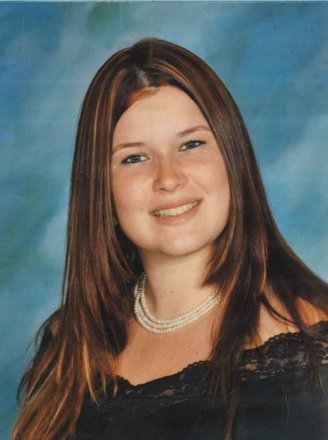
Tamera Rokael Sanders was born in Fortuna on March 18, 1992. Tamera left this earth in a horrible, still unexplained fire on May 2, 2021, in Crescent City. Her family and friends were devastated to be informed of her passing on June 17, 2021. She is predeceased by her stepdad Nikk Metcalf, grandpa Eddy Sanders and grandma Margaret Sanders, grandma and grandpa Weaver, and aunt Michelle Dennison. She is survived by many loved ones including friends and family too numerous to mention, however some of this list includes her mom, Kelley Metcalf and fiancé Miguel Ortiz; her siblings: Ginny Truby-Metcalf, Logan Floyd Griffis, Barry Metcalf and Alex Metcalf; her granny Kate Lanferman and uncle Aaron Floyd, her dad, Jason J. Sanders, and siblings Jason and Logan Sanders; her cousins Andi Floyd, Connie Worrell, Jessie Guyette, Samantha, Jessica, Anthony, and the most important person to Tamera — her son, Jaxon River Legendre, age 6.
Tamera was an old soul. Characteristics of an old soul include: material possessions do not matter much. They focus on meaningful connections, they need a lot of time alone, they have high empathy and they spend a lot of time thinking about how to make a difference. These things were true of Tamera. Material possessions never meant anything to Tamera. She never held on to much unless it was something sentimental from family. Tamera was all about meaningful connections and meaningful encounters. Any number of people can tell you how Tamera made a difference in their lives. Tamera was OK being alone even when she was little, even though she really enjoyed people. She was happy before her siblings Ginny, Logan, Barry and Alex came and even happier with them, because even though this sacrificed a lot of her alone time the meaningful encounters with her siblings meant something way more to her.
Tamera carried others pain with her and was extremely empathetic. Tamera always thought about others above herself, and she wanted to make a difference.
Tamera was the easiest baby. She only cried when she truly needed something. Her mom, Kelley Metcalf, cousin Connie Weaver Worrell, Granny Kate Lanferman, and daycare provider April Robbins can attest to this. She was smart as a whip, knowing and understanding things far before other babies and children. She learned to talk and read much earlier than most and school came easily to her. She grew up in Fortuna and went to school at Ambrosini for kindergarten through fourth, then went on to Toddy Thomas Middle School. Then, when she was 14, she went to live with her dad and attended school in Eureka for a while. She moved back to Fortuna and graduated from Fortuna High School. Tamera made friends easily and she was well liked by many.
Tamera was artistic. writing poetry easily such as the Remember poem that she wrote when she was 10 years old just one year after 9/11 (included at the end of this article). She loved to read, write and learn. She would read many books at one time and have a grasp of what she was reading, and easily remembered which book she read things from. She was brilliant.
When she was little, she planned to be a doctor. She went to HSU’s pre-med program right after high school and when she was about at a bachelor’s level of education, she decided she did not want to be a doctor anymore because she formed the opinion that “doctors don’t spend enough time with their patients.” She studied along her then partner’s side during his electrician program, sometimes helping with his homework. It was during this time she became a mother, a job she thought was the most important.
Tamera was also a server at Hot Brew restaurant in Fortuna. She loved her customers, her coworkers and the boss.
Although Tamera was highly intelligent, she struggled with escapism. She turned to alcohol throughout her teenage years and in her twenties. Addiction to escapism with alcohol caused her to seek help from a detox center. It was while she was in the detox center that she met a guy who introduced her to methamphetamines at the age of 27 and this took her spiraling to the streets.
When she was missing back in November of 2020, she had somehow left the area and went to Crescent City. She was well known to the Crescent City sheriffs and residents. She died in a suspicious fire on May 2, 2021. We do not have answers to all our questions at this time, and while we wish to lay Tamera at the feet of our Creator, we will not forget her or our unanswered questions. We want JUSTICE for Tamera. Thank you to all of you who continue to love her.
Please join us for a celebration of life on July 10, 2021, 5 p.m. to 8 p.m. at Hot Brew 904 S. Fortuna Blvd. in Fortuna.
###
Remember
by Tamera Sanders
There is a point in time that you will always
remember
One of those things happened in September
Many people died
but only few died with pride
Read about it in the paper
always a tear jerker, always a heart shaper
when someone you love dies
a part of you always cries
If someone dies of old age
it’s different when they die at a considerably young stage
You seem to think about what you last said
what you said to that person before they were dead
you always seem to wonder why they had to die now
You finally realize that you don’t appreciate things
until they’re gone ‘wow’
You become a completely different person inside
but even then, your emotion you try to hide
That’s why the month of September
is something I will forever
remember
###
The obituary above was submitted on behalf of Tamera Sanders’ loved ones. The Lost Coast Outpost runs obituaries of Humboldt County residents at no charge. See guidelines here.
OBITUARY: Michael Wayne Bigham, 1955-2021
LoCO Staff / Friday, July 9, 2021 @ 6:56 a.m. / Obits
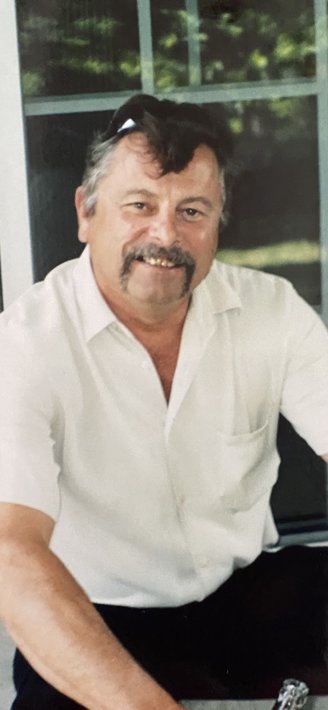
Michael
Wayne Bigham peacefully passed away on June 23 at his home
with his family by his side. He was 65 years old.
He is preceded in death by his mom Dorothy, his dad Bill, and his sisters Susie and Kathy.
He is survived by his wife Julie, their son Matthew and his wife Kelli Bigham and granddaughter Bella, their daughter Melissa and her husband Jedd with his grandchildren Justin, Cody, Ryan and Olivia Ambrosini, their daughter Tyler and her husband Chris with his granddaughters Tatem and Caydence Greene, their daughter Blake Weigand and his grandson Wyatt Treadwell, their son Jerrad Bigham, his sister Gaylene and her husband Les with their children Jason and wife Stacy and Adam Gildersleeve and his great-nephews Austin and AJ Gildersleeve, great niece Caitlin with great-great-nephew Samuel Gildersleeve.
Mike was born July 10, 1955 in Crescent City. He grew up with a close extended family that moved a lot where the work took them. Mike began working in construction with his dad when he was only 10 years old. He received his contractor’s license when he was just 21 years old. Mike and his dad were best friends working together until Bill’s passing. Together they constructed hundreds of residential homes, entire subdivisions, and several hotels over 50 years. Mike separated from his dad for a short time to go to Sacramento to build houses on his own. However, when it came time for his first child, a son, to be born in 1979 he moved back home to be close to family where he stayed. Mike’s daughter was born in 1981. Mike also built commercial buildings, apartment buildings and even a couple of school buildings. Mike’s talents were not limited to the construction of the building. He designed many of his projects, including five of the six hotels he built.
In 1991 Mike met Julie and her two daughters. They were married in 1994 and raised their family together. Their son Jerrad was born in 1995. They worked side by side for 30 years, recently completing an Extended Stay America in Ukiah. Also working by Mike’s side was his good friend and brother, Jitu Ishwar. Although Mike’s illness was becoming unbearable he completed the hotel, even participating in the opening by cutting the ceremonial ribbon. Amazingly, Mike and Bill’s work will live on for hundreds of years.
Mike had a passion for great outdoor activities including hunting, water and snow skiing and living life to its fullest with his friends and family. He rarely passed up the opportunity to shoot a game of pool. Annual houseboat trips to Lake Shasta were a favorite way to spend time with family. Ruth Lake was another favorite family vacation spot. Weekend getaway is more like it. Mike bought property in Ruth about 30 years ago and the family took full advantage of the quiet spot, camping, swimming, motorcycle riding, and BBQing over the open campfire. Too many memories to share. Mike always said, “Thank God for family, born or chosen”. Mike’s greatest love was always his family. Julie will always be Mike’s truest love and was always by his side in every facet of life.
Mike’s grandson Wyatt says “He was a really great grandpa!”
Mike enjoyed his life, living it to the fullest with his heart full of fun, adventure, and love. We will do our best to honor him by living our lives the way he would want us all to do. It may be difficult though considering he was always the instigator!
A celebration of life is being held on Saturday, July 10 starting at 1 p.m. at 1866 Singley Hill Road, Loleta. His remains will be distributed in Humboldt County.
###
The obituary above was submitted on behalf of Mike Bigham’s loved ones. The Lost Coast Outpost runs obituaries of Humboldt County residents at no charge. See guidelines here.


