From the Humboldt County Joint Information Center:
The
State of California has retired the “Blueprint for a Safer
Economy,” and Humboldt County — effective today — has lifted
two local health orders, removing nearly all COVID-19
pandemic-related precautions.
Humboldt
County Health Officer Dr. Ian Hoffman rescinded the Shelter-in-Place
and Facial Coverings orders originally issued more than a year ago.
Isolation & Quarantine Orders remain in effect and will be
reviewed and revised in the coming days to reflect the most recent
guidance from the California Department of Public Health (CDPH) and
the Centers for Disease Control and Prevention (CDC).
All
California residents now fall under the State Public Health Officer
Order issued on June 11, which outlines ongoing COVID-19 safety
measures.
As
of today, fully vaccinated individuals no longer need to maintain
physical distance or wear masks in most settings. Unvaccinated
individuals must continue to wear masks in indoor public settings,
and all people must wear masks in the following places, regardless of
vaccination status.
Public
transit and transportation hubs
Indoors
in K-12 schools, childcare and other youth settings
Health
care settings
State
and local correctional facilities and detention centers
Homeless
shelters, emergency shelters and cooling centers.
Employers
and employees are regulated by CalOSHA regulations put in place in
November of last year, which require masking in the workplace.
CalOSHA is expected to update COVID-19 safety standards this Thursday
to more closely align with the state’s masking order.
Customer
masking is determined by an individual business’s policies.
According to CDPH, businesses have three options to accommodate
unvaccinated individuals:
Provide
information to all patrons, guests and attendees regarding
vaccination requirements and allow vaccinated individuals to
self-attest that they are in compliance prior to entry.
Implement
vaccine verification to determine whether individuals are required
to wear a mask.
Dr.
Hoffman called this a good day for county residents and businesses
and described the removal of local and state health orders as an
“important milestone” that demonstrates the effectiveness of
COVID-19 vaccines. “Those who are fully vaccinated can go without
masking or distancing with confidence,” Dr. Hoffman said. “Our
local EOC team has spent countless hours, and community members have
done their part to get us through this. Removing these orders shows
that our hard work has paid off.”
Dr.
Hoffman continued to urge caution for those who are unvaccinated or
not yet old enough to get vaccinated.
“Anyone
who is still unvaccinated, including 13% of the population who are
ineligible due to age, we continue to encourage adherence to all
public health guidelines until you are fully vaccinated.”
If the walking tours are popular and end up over capacity (roughly 15 people per tour), the City plans to schedule more in the next few weeks.
Reminder, our online survey is available here regarding updates to the City’s 20-year vision (you do not need to be a current Arcata resident to take it)!
We will have more opportunities for feedback available via zoom as well. Sign up for our e-notifications to keep in the loop (including PSAs for more walking tours, surveys, zoom town halls, etc.) by clicking here.
###
From the City of Arcata:
The City of Arcata invites the community to join City staff for a walking
tour of Arcata’s “Gateway District” on Saturday, June 19.
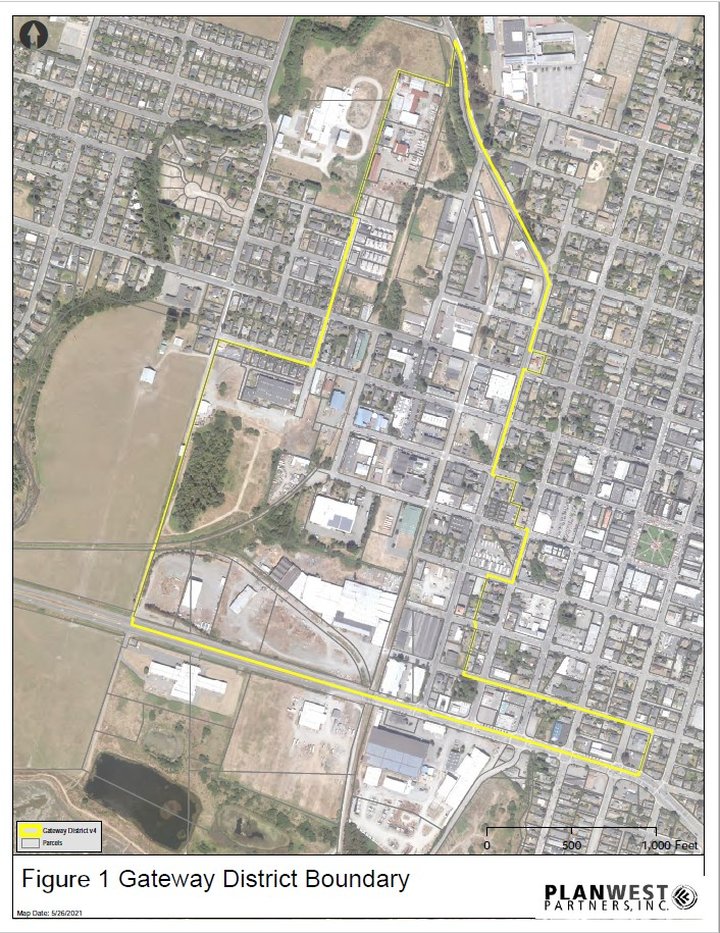
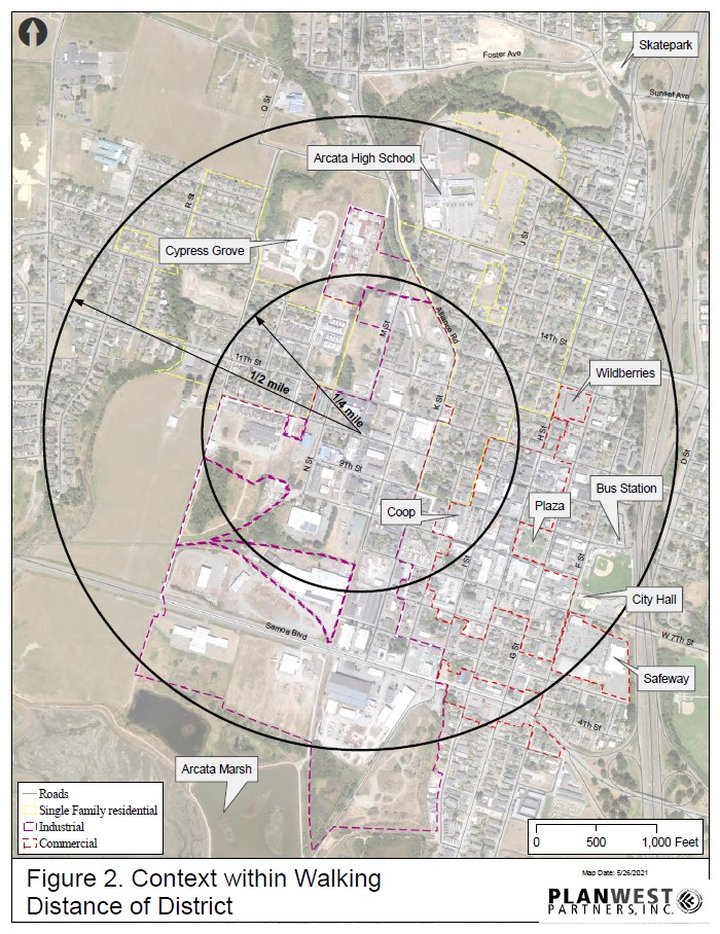
The Gateway District is a 100-acre area located west of K Street that is planned to be re-zoned as a part
of the City’s General Plan Update, and could possibly be redeveloped into future housing.
Tour participants will have the opportunity to explore areas of the Gateway District with high potential
for redevelopment. Community members will have the opportunity to ask questions and discuss
potential effects of new housing units in the area, the potential size and height of the housing units,
environmental considerations including wetland and stream restoration, historic preservation, and
aesthetic and safety improvements that could be made to the area.
The tour will take approximately one hour and there are two timeslots available, at 10 a.m. and at 12
p.m. Tours will leave from the southwest corner of the Arcata Plaza at the corner of 8th and H Streets,
across the street from Jacoby’s Store House. Each tour will be limited to 15 people, and reservations are
not required. Participants must plan to bring a face covering and follow adopted COVID-19 safety
protocols.
Community feedback received during these walking tours will be used to help shape the way Arcata
looks in the future. The Community Development Department has recently hosted a similar walking tour
with Arcata High School students and has facilitated two virtual Arcata future visioning sessions with
members of the public to inform and engage the community on updates to the City’s General Plan
policies, which will help shape how the city of Arcata will look, function, provide services and manage
resources for the next 20 years. Community feedback gathered from previous events can be reviewed at
cityofarcata.org.
For more information on the walking tours or City planning efforts, please visit cityofarcata.org, call
(707) 825-2213 or email Senior Planner Delo Frietas at dfreitas@cityofarcata.org.
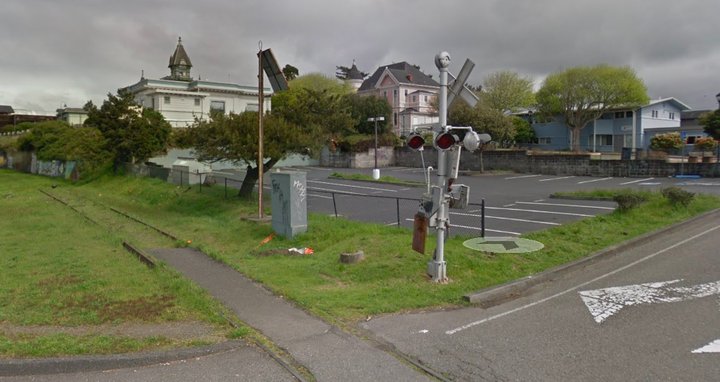
The parking lot on the corner of 2nd and L Streets, catty-corner from the Adorni Center, to be used for housing development | screenshot from Google maps
CORRECTION: Originally this article contained an image of the wrong parking lot near the Adorni Center. It has been replaced with an image of the correct lot. The Outpost regrets the error.
###
With what looks to be a pretty jam-packed agenda, the Eureka City Council will discuss some important issues during tonight’s meeting including the city’s budget for the upcoming fiscal year and the development of housing on another batch of three city-owned parking lots.
###
The first thing to say about the 2020-2021 City of Eureka budget, which will likely be passed at today’s council meeting, is that the news is very, very good.
Overall, the city forecasts that it’ll bring in around $109 million in revenue in the next fiscal year – up from about $79 million in the previous year – due mostly to some large grants and the citizenry’s overwhelming approval of Measure H on the last ballot. That measure, which upped the city’s sales tax rate from 8.5 percent to 9.25 percent, is expected to bring in an additional $7.5 million dollars or thereabouts – money that goes straight into the city’s general fund, where it can be spent more or less wherever the council likes.
One of the things it likes, apparently, is to fix roads. Lane Millar, the city’s finance director, tells the Outpost that though there is some juggling of funds involved – money transferred from the general fund to a different pocket and back again – the net result is that the city should have a $3.2 million budget for road repair in the next fiscal year.
A number of new positions will be added to city government (or added back, after they were cut in previous budgets), including a new police officer for the city’s Community Safety Engagement Team, which works on chronic problems in Old Town, the waterfront and other city green spaces. The budget also makes positions for a couple of workers in the city’s IT department, a couple of people in accounting, and some part-time people at the newly refurbished Zoo, on which the budget places high hopes.
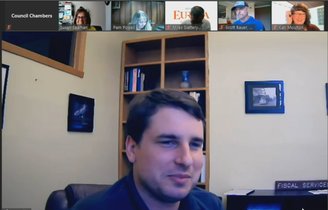
Finance Director Lane Millar during a budget study session | Screenshot from Zoom meeting
In addition, the proposed budget moves several city expenditures, including those pertaining to code enforcement and harbor maintenance, into the general fund, where previously they had been paid out of other pockets. At a recent city council session, Millar explained the rationale for this switch.
“The general fund’s financial system has improved greatly, so now, going into 2021-2022, we’re going to focus on those other funds, that need a little help financially,” he said. “So this is one way to do it.”
Finally, the proposed budget builds in, for this year, a $3.1 million general fund surplus, which will build back some of the reserves that had been drawn down in recent years.
The overall budget this year is also bolstered by a couple of massive grants – $6.6 million to renovate 20/30 Park, and $7 million for an electricity storage system to be located at City Hall. These are single grants dedicated to specific projects, though, so they’re accounted for outside of the city’s “operating budget,” or the money it spends providing day-to-day services.
Millar will speak on the impact of Measure H on the budget tonight, after which the council will presumably approve it. You can take a look at the full proposed 2021-2022 budget here.
— Hank Sims
###
In other business the council will review and, most likely, authorize the release of the second batch of three parking lots to be converted into housing developments — a part of what has become a somewhat controversial plan to eventually turn 12 of Eureka’s parking lots into housing.
The three lots the council will be looking at tonight include the two parking lots right next to City Hall — one at the corner of 5th and K Streets and one on 6th and L — and a third lot on the northeast corner of 2nd and L Streets, across from the Adorni Center. Originally, the City had planned to release three different parking lots — on the corners of 5th and D Streets, 4th and G (near the Arkley Center for the Performing Arts) and 3rd and E Streets (right next to the Sea Grill restaurant) — but decided to postpone the release of these lots, due to concerns raised by some community members.
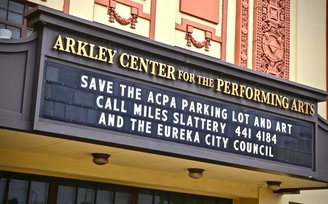
Rob Arkley, patron of the Arkley Center and owner of many other properties, was so upset over the city’s plan that he recently vowed to take political and legal action against the City of Eureka. In recent weeks, the Arkley Center’s marquee has displayed a message calling for the community to save the 4th and G parking lot and the mural that sits next to it.
File photo
And Arkley is not the only public figure who has disparaged the City over the parking lot plans. During a meeting back in April, former Eureka Planning Commission Chair Jeff Ragan abruptly resigned from his position because of his “grave concerns” over the proposed housing plans for the first three parking lots released by the City. Ragan has since turned up at several public meetings to voice his opposition to the project.
Arkley, Ragan and other community members have claimed that the City has not been transparent about the plans, and has not been doing enough to notify the public about these projects. City Manager Miles Slattery has largely rebutted these claims, but has also said that the City will make more of a concrete effort to include the community in the planning process moving forward.
The other main concern raised by the community has been over the loss of public parking, with several nearby business owners and employees saying it is already difficult to find parking in these areas. But the City holds that developing these parking lots is absolutely necessary for Eureka to meet its state housing requirements. And despite the concerns being raised now, the Eureka City Council already approved the plan to develop housing on all 12 city-owned parking lots as part of the Housing Element of the City’s General Plan, adopted in 2019.
If authorized by the council tonight, city staff will release a request for proposals for developments on the three parking lots. According to the staff report, the plans must include a cumulative of 84 affordable housing units, of which 39 must be low-income and 45 must be very-low income.
The deadline for the proposals will be September 9, after which, a review panel will select a preferred proposal. The proposal will then come before the council for approval in October.
Press release from the Humboldt County Sheriff’s Office:
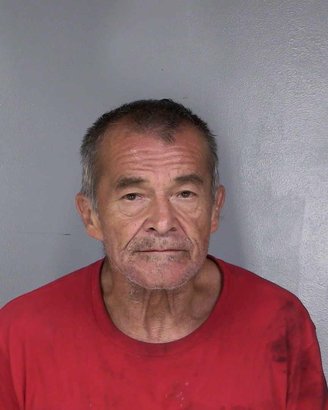
Frank Surber Jr.
On June 14, 2021, at about 6:05 p.m., a Humboldt County Sheriff’s deputy on patrol in in the Hoopa area observed a reported stolen vehicle traveling on Highway 96 near Milepost Marker 19.
The deputy conducted a traffic stop on the vehicle and detained the driver, 63-year-old Frank Owen Surber Jr., without incident. During a search of Surber, law enforcement located approximately 4 grams of Methampetamine and drug paraphernalia. During a search of the vehicle, law enforcement located a loaded firearm.
Surber was arrested and booked into the Humboldt County Correctional Facility on charges of possession of a stolen vehicle (PC 496d(a)), convicted felon in possession of a firearm (PC 29800(a)), carrying a loaded firearm in a public place (PC 25850(a)), possession of a controlled substance while armed (HS 11370.1(a)), possession of a controlled substance (HS 11377(a)) and possession of a deadly weapon (PC 12020(a)).
The Humboldt County Sheriff’s Office would like to thank the California Highway Patrol and the Hoopa Valley Tribal Police Department for their assistance with this investigation.
Anyone with information about this case or related criminal activity is encouraged to call the Humboldt County Sheriff’s Office at (707) 445-7251 or the Sheriff’s Office Crime Tip line at (707) 268-2539.
Press release from the Humboldt County Sheriff’s Office:
On June 14, 2021, at about 8 p.m., Humboldt County Sheriff’s deputies were dispatched to a residence on Willow Way in Willow Creek for the report of an attempted vehicle theft.
While en route to the residence, the male victim recontacted law enforcement advising that a female suspect who attempted to steal the victim’s vehicle had fled on foot and was walking in the area of Highway 299 and Country Club Road. Deputies located and detained the female suspect, who was later identified as 22-year-old Tiffany Jane Lilly.
Upon further investigation, deputies learned that the victim’s vehicle was parked in his driveway and was briefly left unattended with the keys in the ignition as the victim went inside the residence to collect items. The victim located Lilly in the driver seat of the vehicle upon exiting the residence. The victim confronted Lilly, who then attempted to start the vehicle. According to the victim, the vehicle failed to start and Lilly fled on foot with the vehicle’s keys. The victim reportedly chased after Lilly and was able to retrieve the stolen keys.
Lilly was arrested and booked into the Humboldt County Correctional Facility on charges of attempted vehicle theft (PC 664/10851(a)) and disorderly conduct while under the influence (PC 647(f)).
A significant number of vehicles stolen out of Humboldt County are taken with their very own ignition key. This is often the result of unsuspecting victims leaving their vehicles running while unattended or leaving a spare key or FOB inside the vehicle. Protect your vehicle from theft by following these easy tips:
Always lock your vehicle doors, even in your driveway, and take your keys with you. Remove hidden keys from your vehicle
Never leave your vehicle running unattended (this includes while loading tools or equipment, or warming your vehicle on a cold day).
Remove all property of perceived value from the interior of your vehicle that can be seen from the outside. Also remove garage door openers, key cards, and house or work keys from your car.
Consider adding a motion light and/or camera in the area where the vehicle is parked at your residence or workplace if you work after dark. Trim back trees and bushes that block the view of your vehicle from your house.
Anyone with information about this case or related criminal activity is encouraged to call the Humboldt County Sheriff’s Office at (707) 445-7251 or the Sheriff’s Office Crime Tip line at (707) 268-2539.
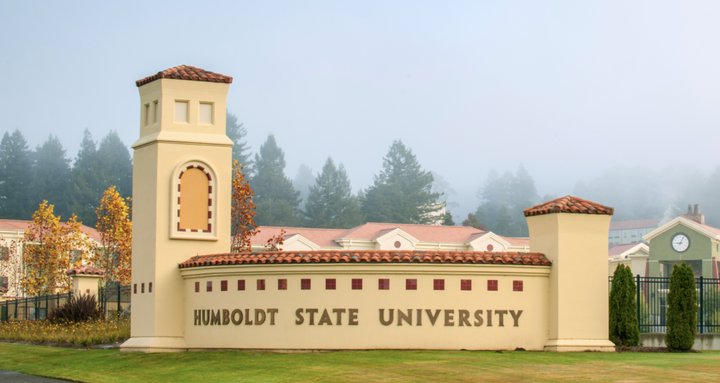
Drawing on its strengths in STEM, environmental and social responsibility, and experiential learning, Humboldt State University has submitted documentation of its intent to launch several new and innovative undergraduate and graduate degree programs as soon as Fall 2022 and Fall 2023.
HSU will formally submit proposals for the following programs to the California State University for consideration: Applied Fire Science & Management, Cannabis Studies, Data Science, Energy Systems Engineering, Engineering & Community Practice, Geospatial Information Science & Technology, Marine Biology, Mechanical Engineering, and Software Engineering for Fall 2023. (See descriptions below.)
“This is what a 21st century education looks like: programs where students build the skills to have meaningful careers and a nuanced understanding of society’s complex issues so they can make the world a better place,” says Jenn Capps, provost and vice president of academic affairs.
The programs are among those prioritized through the collaborative polytechnic planning process on campus. The fast-track timeline is highly dependent on additional state funding that has been proposed by the Governor and is being considered by the Legislature.
These programs, in addition to those in applied and social sciences slated for 2026 and 2029, are pending the necessary approvals by the CSU Chancellor’s Office, CSU Board of Trustees, plus accreditation from various organizations.
The announcement comes as HSU explores becoming the third polytechnic university in the CSU and the only one in Northern California. The new programs align with the University’s vision of becoming a polytechnic that builds on a strong liberal arts foundation and long-standing commitment to sustainability and social justice; and infuses traditional ecological knowledge, renewable energy, and more.
A polytechnic status would have broad implications for the region and state. It would help revitalize the economy of the North Coast, provide educational opportunities to students across the state, and help meet California’s workforce needs.
“These programs are a win for HSU and the greater north state,” says Mary Oling-Sisay, vice provost and dean of undergraduate and graduate studies. “They bring to life what we do and what we’re known for and will augment our current offerings in a very significant way.”
New HSU Degree Programs
Applied Fire Science & Management, Bachelor of Science, will develop the practical knowledge and skills to become fire science or management professionals. Created in collaboration with HSU’s respected Forestry & Wildland Resources and Native American Studies programs, the Applied Fire Science & Management major will also include a breadth of perspectives and knowledge systems (e.g., traditional ecological knowledge), with an emphasis on incorporating indigenous practices.
Cannabis Studies, Bachelor of Art, engages a curriculum that centers place with people, planet, and prosperity as related focal areas. These areas encompass environmental, life and physical sciences as well as geography; sociology, anthropology, psychology, history, politics, social work, Native American Studies, child development, kinesiology, and criminology and justice studies; and economics, business, and recreation management.
Data Science, Bachelor of Science, develops the skills to synthesize knowledge and apply contemporary statistics, data analysis, and computational science methods to solve social and environmental problems.
Energy Systems Engineering, Bachelor of Science, incorporates elements commonly included in Civil, Environmental, Mechanical, and Electrical engineering disciplines. It is designed to prepare students for careers in developing, designing, operating, and analyzing clean energy systems.
Geospatial Information Science & Technology, Bachelor of Science, prepares students for careers as Geographic Information System (GIS) analysts and specialists, remote sensing analysts, cartographers, photogrammetrists, and geographers.
Engineering & Community Practice, Master of Science, develops future engineering leaders who will sustain, restore, and protect our natural resources and the environment.
Marine Biology, Bachelor of Science, explores the diversity of marine life, its evolutionary history, the importance to our planet, and how it is impacted by human activities.
Mechanical Engineering, Bachelor of Science, explores a range of integrated engineering systems that include thermal and electromechanical elements.
Software Engineering, Bachelor of Science, applies engineering concepts to software development. It encompasses the development, operation, and maintenance of programs.
Pedestrians with suitcases walk through Union Square in San Francisco on June 14, 2021. The intersection of Geary and Powell Streets would have been busy with traffic, street cars and throngs of foot traffic before the pandemic. Photo by Anne Wernikoff, Calmatters.
###
When COVID-19 shut down businesses and travel across the U.S., communities such as Anaheim that rely heavily on entertainment and tourism were some of the hardest hit. Hotel occupancy taxes, which accounts for more than half the city’s budget, plummeted 90% between 2019 and 2020.
“We depend on large groups at Disneyland, Angels games,” said Jay Burress, president and CEO of Visit Anaheim, the city’s nonprofit tourism office. “It was devastating for our industry and our city.”
With California reopening today to mostly full capacity, its travel and tourism industry is aching for a significant bounce back. But experts are tempering expectations; domestic travel won’t fully recover until 2023 and the number of international tourists, especially from China and Mexico, remain less than half of pre-pandemic levels. And a full reopening won’t happen until large conventions return — not a certainty with the wholesale move to work shift.
“Rebounding as quickly as possible is vitally important,” said Caroline Beteta, president and CEO of Visit California, a nonprofit organization promoting travel to the state. “California’s tourism industry provides more than 1 million jobs and supports thousands of businesses.”
The state generated $144.9 billion in travel spending in 2019, according to a study by travel and tourism research group Dean Runyan Associates. But when the pandemic hit, travel and occupancy restrictions devastated gains that California had nurtured after the Great Recession.
While tourism dropped 36% nationally in 2020, California’s tourism revenue dropped 55%, according to Dean Runyan. And more than half of California’s roughly 1.2 million-person tourism workforce lost their jobs in the first month of the lockdown, according to a report released in May 2020. The Legislature passed a law requiring businesses to prioritize rehiring those who lost jobs, and many workers are hoping to resume work.
Low cases, high vaccination aid California reopening
Before the pandemic, the city of Anaheim had so many visitors, Burress said he feared they might get citations for over-congestion. Instead, the tourism director said this past year felt more like a “zombie apocalypse.”
“We had six years of record numbers coming into Anaheim and Orange County,” said Burress. “Normally hotels were running at 90% occupancy. And then it was in the single digits.”
The industry is already beginning to see some bounce back. This April, California’s leisure and hospitality sector was up 400,000 jobs year over year. On the eve of reopening, Gov. Gavin Newsom made an appearance Monday in San Francisco at the historic Ferry Building, a draw for visitors with its artisanal food and restaurants. He noted California’s economy this year has outperformed other states, including Texas and Florida, because of its public health precautions and vaccination campaign. There’s hope that the upward trend will continue.
“With one of the nation’s highest vaccination rates and lowest case rates, California is poised for a powerful comeback,” said Beteta. “Leisure travelers will lead the way. We expect outdoor activities and road trips will be extremely popular.”
But experts acknowledge that returning to normal won’t happen instantaneously despite speculation of a second coming of the Roaring ‘20s. While many restrictions have been lifted in California, they aren’t the only inhibitors to people going on vacation.
California travel hasn’t recovered
“The drop in visitor spending isn’t due entirely to business closures and restrictions,” Beteta said. “Consumers must be willing to travel, and for much of 2020, more than half were not willing to venture out at all.”
Domestic travel to California is expected to rebound this year to 75% of its 2019 levels. But it’s not expected to recover entirely until 2023, according to the most recent Tourism Economics report prepared for Visit California released this April.
International travel remains another question mark as other countries continue to grapple with the virus and travel restrictions remain in place. Inbound international travel to California fell 79% in 2020 and is expected to reach just 41% of 2019 levels this year, according to Tourism Economics. Travellers from Asia and Mexico make up two of the biggest spending groups in the state, according to Visit California. Tourists from China alone spent $4 billion in California in 2019.
San Francisco is likely to feel the loss of international travellers the hardest. Foreign visitors account for 61% of total overnight spending city-wide, the largest share of any major U.S. city, according to data from the San Francisco Travel Association.
San Francisco is also the biggest convention city in the state and typically generates $8.3 billion annually on overnight spending at hotels alone. But experts expect conventions to be one of the last tourism industries to rebound this year, largely due to the fact that California is keeping restrictions on indoor gatherings of more than 5,000 people in place until Oct. 1.
Convention spending has larger economic impact
The money generated from conventions is considered integral to the city.
“It’s vital to the city’s health. It’s vital to our hotel community, our restaurant community,” said Nicole Rogers, executive vice president and chief sales officer for the San Francisco Travel Association. “While tourism is important to us — and we absolutely can’t function without it, the convention is a higher spend on average because companies are paying, plus the attendees are paying.”
Conferences held at San Francisco’s Moscone Center can hold upwards of 10,000 attendees at a time. But the economic impact has a ripple effect. For example, during the annual Dreamforce conference put on by San Francisco tech giant Salesforce, more than 30,000 hotel rooms a night are booked. The city typically holds 50 to 60 major conventions a year. So far, just two have been confirmed this fall.
The future of convention spending in San Francisco relies on many things, such as retaining customers. Some opted this year to hold their conventions in less restricted states including Texas and Florida. Other factors relate to how businesses will opt to run going forward and if they’ll continue to hold in-person conferences at all, especially as employees become accustomed to remote work.
###
CALmatters.org is a nonprofit, nonpartisan media venture explaining California policies and politics.