Check Out the Neo-Victorian Designs for Those Eureka Parking Lot Housing Developments; Council Will Discuss Project Funding Tonight
Stephanie McGeary / Tuesday, May 18, 2021 @ 3:04 p.m. / Housing , Local Government

Design plans for the housing development on the parking lot at 8th and G Streets | Images from the City of Eureka.
###
During tonight’s meeting the Eureka City Council will again discuss the controversial Linc Housing Project — a plan for three affordable housing developments to be built on the city-owned parking lots at 8th and G Streets, 6th and M Streets and Sunny and Myrtle Avenues — and will consider authorizing an application for grant money to help fund the project’s development.
These sites are three of 12 parking lots that the city plans to turn into housing, releasing three lots each year. The strategy was approved in 2019 as part of the Housing Element of the City’s General Plan, in an effort to meet state housing requirements. The council approved Linc Housing’s proposal for the three housing developments in October 2020.
The development plans have drawn the ire of some community members, particularly owners and employees of neighboring businesses who are concerned over the loss of parking spaces. Some folks have also complained about the project designs and the city’s community outreach efforts prior to the project’s approval — previous Eureka Planning Commission Chair Jeff Ragan even resigned over the projects, citing concerns over the city’s public process.

Design for development at 6th and M Streets
City Manager Miles Slattery has rebutted the claims, however, saying that both Linc Housing and the City have held many notified public meetings on the project and that Linc has actually made several drastic changes to the designs based on public input from those meetings. The current architectural designs — approved by the Design Review Committee in Feb. of this year — have a completely different look from the designs Linc had included in the proposal, which Slattery told the Outpost looked very “SoCal.” After taking public comments into consideration, planners returned with some more Victorian-era-looking designs that they felt would fit more with Eureka’s character.
Tonight’s meeting will include a presentation on the transportation improvement plans for the Linc Housing Project, which will include adding new crosswalks, adding additional bus routes and bus stop shelters, creating bicycle boulevards and funding trail construction. They’re still figuring out which improvements will be added to each development, Slattery told the Outpost, and they’ll be guided by input received through a community survey and recent public meetings.
If authorized by the council tonight, city staff will apply for up to $30,000,000 in grant funding from the Affordable Housing and Sustainable Communities (AHSC) program, to primarily be used for funding the transportation improvements.

Design for development at Sunny and Myrtle Avenues
The Eureka City Council meets tonight via Zoom at 6 p.m. You can view the full agenda and directions on how to participate here. The Linc Housing grant application is listed on the Consent Calendar (items that don’t require discussion and are usually approved with one motion), but Slattery said that the council plans to pull the item for discussion.
You can view the full Linc Housing Project plans here.
###
PREVIOUSLY:
- The City of Eureka is Gearing Up to Turn Three More Parking Lots into Affordable Housing Developments, Including the Two Lots at City Hall
- The Eureka City Council Wants Developers to Build Affordable Housing on Three City-Owned Parking Lots
- EUREKA CITY COUNCIL: Wiyot Land Acknowledgement, Affordable Housing on City-Owned Parking Lots, Police Chief Citizen Advisory Board All on Tonight’s Agenda
- Eureka Planning Commission Chair Jeff Ragan Abruptly Resigns, Citing ‘Grave Concerns’ Over City’s Approval of Housing Projects on Three City-Owned Parking Lots
BOOKED
Today: 7 felonies, 9 misdemeanors, 0 infractions
JUDGED
Humboldt County Superior Court Calendar: Today
CHP REPORTS
Greenwood Heights Dr / Dean Ln (HM office): Trfc Collision-1141 Enrt
ELSEWHERE
RHBB: Magnitude 3.6 Earthquake Strikes West of Petrolia
Governor’s Office: Governor Newsom signs first-in-the-nation AI safeguards to protect Californians, calls on the federal government to do its part
RHBB: Body Recovered from Humboldt Bay Near Foot of Commercial Street
KINS’s Talk Shop: Talkshop September 9th, 2026 – Michelle Bushnell
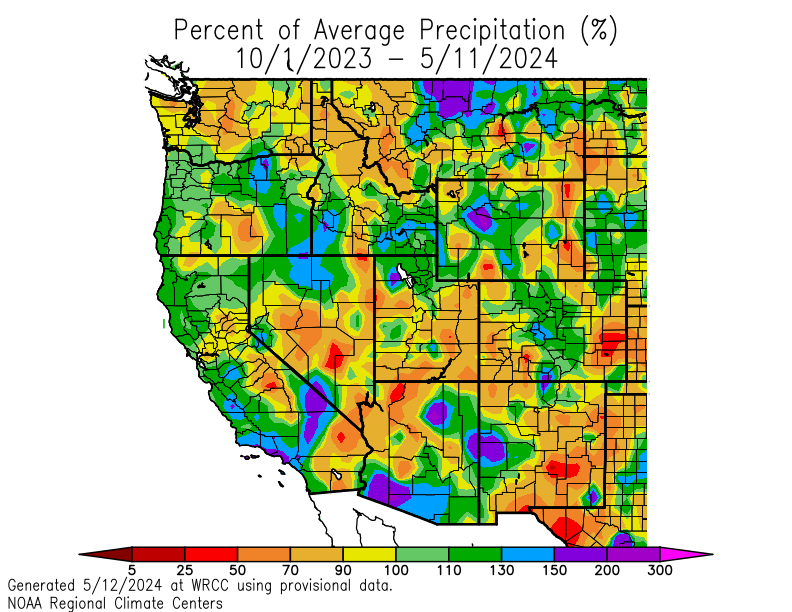
Running Out of Water and Time: How Unprepared Is California for 2021’s Drought?
Julie Cart and Rachel Becker / Tuesday, May 18, 2021 @ 8:17 a.m. / Sacramento

A pregnant cow named Cherry Pie stands in the dry grass at Megan Brown’s Oroville ranch in late April. Brown sold off much of her herd last spring after the dry 2020 winter. Photo by Anne Wernikoff, CalMatters
When James Brumder and his wife Louise Gonzalez moved into their home tucked up against the mountains northeast of Los Angeles, he applied all his know-how to the task of undoing the thirsty garden they inherited.
Brumder, who worked for a commercial landscaping company, pulled up their weedy, unkempt lawn in Altadena and replaced it with native grasses, filled in garden beds with species that could make a living off the region’s fickle rainfall, installed drip irrigation, set up rain barrels and banked soil to collect any errant drops of water. Whenever the backyard duck pond – a blue plastic kiddie pool – was cleaned, the water was fed to drought-adapted fruit trees.
It was 2013, a year before a statewide drought emergency was declared, but even then the water crisis was apparent to Brumder and most everyone in California: A great dry cycle had come again. Four years later, it receded when a torrent of winter rains came. The drought, finally, was declared over.
Generals know that you always fight the last war. So California — already in the clutches of another drought emergency — is looking over its shoulder at what happened last time, anticipating the worst and evaluating the strategies that worked and those that failed.
So is California in a better position to weather this drought? Some things are worse, some better: Groundwater is still being pumped with no statewide limits, siphoning up drinking water that rural communities rely on. In northern counties, residents are reliving the last disaster as water restrictions kick in again, but in the south, enough water is stored to avoid them for now.
The good news is that in urban areas, most Californians haven’t lapsed back into their old water-wasting patterns. But, while some farmers have adopted water-saving technology, others are drilling deeper wells to suck out more water to plant new orchards.
The upshot is California isn’t ready — again.
“We are in worse shape than we were before the last drought, and we are going to be in even worse shape after this one,” said Jay Lund, co-director of the Center for Watershed Sciences at University of California at Davis.
 Trucks are parked along the waters edge in the dry lakebed at Lake Folsom, a state reservoir. The water level is currently at about 48% of historical average. Photo by Anne Wernikoff, CalMatters
The most acute problem, experts say, is the lack of controls on groundwater pumping.
“Despite increasingly occurring droughts, we could be doing much better than we are doing,” added Peter Gleick, co-founder of the Pacific Institute, a global water think tank. “We manage finally to get some statewide rules about groundwater, but they are not going to be implemented for years.” As a result, he said, aquifers are still being over-pumped and land is sinking.
And an overarching question lingers: How will Californians cope as the world continues to warm and the dry spells become ever more common and more severe?
Then and now: How does it compare?
Three-fourths of California is already experiencing extreme drought, a designation that only hints at the trickle down of impacts on people, the environment and the economy. Nature’s orderly seasons are upended: As the winter so-called “wet season” ended, Gov. Gavin Newsom declared a drought emergency in 41 counties.
This year’s drought is steadily approaching the peak severity of the last one, climate experts say. It’s a dangerous benchmark: 2012 through 2015 was the state’s driest consecutive four-year stretch since record-keeping began in 1896.
Drought is characterized by deficit — of rainfall, snow, runoff into rivers, storage in reservoirs and more. And all of these factors are in dire shape this year. Some are even worse than they were during the last drought.
Much of the state has received less than half of average rain and snowfall since October, with some areas seeing as little as a quarter. For most of Northern California, the past two years have been the second driest on record.
The Sierra Nevada snowpack, which provides about a third of California’s water, dwindled to 5% of average this month, equaling April 2015’s record-low percentage. That signals trouble for California’s reservoirs — even before the long, dry summer begins.
Already, the water stored in major reservoirs is far below normal as some rivers’ runoff has dipped below the last drought’s levels. Lake Oroville, which stores water delivered as far away as San Diego, has dropped to just under half of its historic average for this time of year.
“We’ve had dry springs before, but that is just astonishing,” said Daniel Swain, a climate scientist at the University of California, Los Angeles and The Nature Conservancy. “And we’re still a few months out from seeing the worst of things.”
Megan Brown, a sixth-generation cattle rancher in Oroville, worries that climate change might finally make her the last of her family to run cattle in California. Dry pastures can force ranchers to sell livestock or buy expensive feed.
Usually, she said, the hills on her ranch are as green as Ireland in the spring. But by the end of April, dry golden grass had already started to claim the slopes. The blackberry-lined creek on Brown’s ranch is so parched that her dogs kick up clouds of dust as they nose through the rocks.
“It’s turning,” she said, looking up at her browning hills dotted with so many fewer cows than usual. “I don’t like it. It’s scary.”
Prolonged dry periods, some more than a hundred years in the state, can be traced to the Middle Ages, via tree rings from stumps preserved in lakes. But while droughts are part of California’s natural cycles, climate change is exacerbating them, increasing drought frequency and making them more extreme, climate experts say.
In his 1952 novel, East of Eden, John Steinbeck depicted the yin and yang of California’s water cycle in the Salinas Valley where he grew up, how the bounty of the wet years drove out memories of the dry, until, predictably, the water wheel came back around. “And it never failed that during the dry years the people forgot about the rich years, and during the wet years they lost all memory of the dry years. It was always that way.”
But droughts and water shortages are more of a persistent way of life now in California than a mere cycle. The rare has become the routine.
 Pastures were turning yellow in April, long before summer, on Megan Brown’s ranch in Oroville. Brown wonders what climate change will mean for the future of ranching in California. Photo by Anne Wernikoff, CalMatters
Drought’s terrible price
The last drought posed a palpable, day-to-day crisis. The signs were clearly visible: withered crops and gardens, bathtub rings around shrinking reservoirs, dried-out salmon streams. People drove filthy cars and thought twice about flushing their toilets. Ski runs reverted to gravel and mountain resorts shut down months early.
All Californians were ordered to conserve, and state officials in 2015 mandated a 25% statewide cut in the water used by urban residents. Homeowners used smartphone apps to turn in neighbors for over-sprinkling their lawns, and cities hired water cops to enforce the rules. Hotels notified guests of reduced laundry service. In restaurants, glasses of water that used to automatically appear were served only after patrons requested them.
Thousands of rural wells, particularly in the Central Valley, ran dry, forcing the state to truck in emergency drinking water to hard-hit Latino communities. In 2014, with years of the drought to go, recent groundwater levels in some parts of the San Joaquin valley had already sunk 100 feet — the equivalent of a 10-story building — below historic norms.
Agriculture took a $3.8 billion hit from 2014 through 2016. More than a half-million acres of farmland was taken out of production for lack of irrigation water, and an estimated 21,000 jobs were lost in 2015 alone.
The astonishing aridity also killed more than 100 million trees and weakened millions more, setting off a catastrophic cascade: The carpet of dead trees added fuel to California’s wildfire epidemic. Fire season stretched year-round and into normally damp parts of the state.
As rivers heated up, their flows dwindled and about 95% of endangered winter-run Chinook salmon were lost below Shasta Dam in two consecutive years. A record number of commercial and recreational fisheries were shut down, and countless ducks and other waterbirds died as wetlands vanished.
“California was unprepared for this environmental drought emergency and is now struggling to implement stopgap measures,” the Public Policy Institute of California concluded in 2015.
Today, despite the warnings, in many ways the state finds itself in the same situation: Forewarned but still not ready.
“The universal truism is that by the time you react to a drought it’s too late to react to a drought,” said Jeffrey Mount, a senior fellow at the Public Policy Institute. “The majority of things you have to do to mitigate impacts have to be done before the drought.”
Droughts are expensive for taxpayers. The legislature appropriated $3.3 billion toward drought response from 2013 to 2017, including $2.3 billion in voter-approved bonds. About $68 million was spent on emergency drinking water for communities where wells went dry, but the biggest chunk funded projects to begin augmenting supply, such as more water recycling and groundwater management.
Now, to address the current drought, the Newsom administration has proposed spending another $5.1 billion, for a start. But the “start” may be already too late.
“I can think of a lot of places to spend money, “ Mount said. “But it’s too late for this drought.”
Natural Resources Secretary Wade Crowfoot said California is better prepared than before the last drought, but climate change is quickly moving the finish line.
“We are in a race against time and the changing climate. And so all that we’ve done is important, but we need to do more,” Crowfoot said.
Felicia Marcus, the top water official who shepherded the state’s response to the record-breaking drought under former Gov. Jerry Brown, said California “made real progress in some areas during the last drought” but needs to conserve and recycle more water, capture more in aquifers and better protect ecosystems.
Learning to live with less
The experience of the last drought left behind lasting effects across California, in the way that trauma can afford painful lessons.
But it’s one thing to repeat the mantra that “water is precious” and quite another to learn to live with less of it. State officials are relieved that some behaviors mandated in the last drought have become habits with lasting benefits for conservation.
Between 2013 and 2016, Californians on average reduced their residential use by 30%. Since then, per capita water use has ticked up, but Californians used 16% less water in recent months than they did in 2013.
The ubiquity of drought has forced many Californians to change their fundamental relationship with water.
Their responses to the pleas to conserve have varied, reflecting the state’s diversity of climates, populations, property sizes and lifestyles. For instance, urban residents of the San Francisco Bay Area, the Central Coast and North Coast used the least amount of water in 2020 — an average of 71 to 73 gallons a day per person — compared to 86 in Southern California, 125 in the Sacramento Valley and 136 in the southern San Joaquin Valley. Every region’s use edged up slightly last year — perhaps due to COVID-19 sheltering at home — but every region is considerably lower than the early years of the last drought.
Some Southern Californians endorsed conservation with a vengeance, ripping out more than 160 million square feet of lawns during the last drought. Golf courses followed suit; they tore out turf on non-playing areas in favor of drought-tolerant plants, while watering greens and fairways with recycled water.
Still, households using 400 gallons per day aren’t uncommon in Southern California, said Los Angeles County Public Works Director Mark Pestrella. And, despite permanent conservation gains leftover from the last drought, some massive residential water users — called water buffalos — use 4,000 gallons a day.
The disconnect? “Water is cheap,” Pestrella said.
Despite permanent conservation gains leftover from the last drought, some massive residential water users — called water buffalos — use 4,000 gallons a day.
The state’s cobbled-together policies of carrots and sticks managed to reduce water consumption in cities statewide. California officials toughened standards for toilets, faucets and shower heads and ramped up efficiency requirements for new landscaping. Millions of dollars in rebates were offered by state and local water agencies to coax Californians into replacing thirsty lawns.
When conservation alone wasn’t enough, an executive order by then-Gov. Brown gave officials the authority to send help to well owners and struggling small water systems.
Some policies, however, have not yet been fully realized.
Lawmakers tasked state agencies with developing efficiency standards for residential, commercial, industrial and institutional water use, but these are still in the works. Also, statewide rules that banned wasteful practices like hosing off driveways expired in 2017. The water board’s 2018 effort to revive them was dropped after local agencies complained that mandates should be left up to them.
A major law enacted during the last drought is supposed to stop groundwater depletion over the next 20 years. But the law is still in its very early stages; the state has not limited groundwater pumping anywhere yet.
“We do an absolutely terrible job at some things, and groundwater is one,” said UC Davis’s Lund. “It takes 30 years to implement (the new groundwater act) from zero to something sustainable. It’s going to take a long time and it’s going to be ragged around the edges.”
Lawmakers were warned by state analysts last week to prepare for wells to go dry again, largely in Central Valley rural towns, and line up emergency supplies of drinking water.
“I suspect we’re going to see similar issues with wells running dry and damage to infrastructure that we saw during the last drought,” said Heather Cooley, director of research at the Oakland-based Pacific Institute. “We’re going to see a lot of that this year and in the coming years.”
The mighty agriculture industry, which uses the bulk of California’s water, plowed up some crops such as rice and alfalfa to save water. A state program awarded growers more than $80 million in grants to install low-pressure irrigation systems and make other conservation measures.
But growers also continued to plant new fruit and nut crops, despite the recurring water shortages. Some farmers offset their financial losses by fallowing fields and selling their water to other growers.
Some orchard growers intensified groundwater pumping by digging deeper wells and using “new water” to plant more trees. The number of acres of almond trees — a water-intensive, high-value crop — doubled in the last decade, although the industry has significantly improved its water efficiency in recent years. “High returns on orchard crops have made it profitable for farmers to invest in deeper wells, aggravating groundwater depletion,” according to a Public Policy Institute of California analysis.
Ranchers face difficult decisions
Katie Roberti of the California Cattlemen’s Association told CalMatters that ranchers are facing the most severe conditions in decades. “Without precipitation many California cattle producers are going to be forced to make the difficult decision to reduce the size of their herds, some more drastically than others,” she said.
Megan Brown, the Oroville rancher, already sold a third of her cattle — including all of her replacement breeders that replenish her herd — after the dry 2020 winter, when the grasslands they forage on dried up.
 “I always felt like I might be the last one in the family to run cattle. I’ve just had a bad feeling. And this (drought) kind of makes it real, like my bad feeling was justified,” said rancher Megan Brown Photo by Anne Wernikoff, CalMatters
“We were ahead of the game because we saw the writing on the wall,” she said. “If you don’t have the grass, you’re not going to make the money.”
She sold “anything that looked at me funny, or had an attitude, or I thought would fail or wouldn’t make me money,” she said. “It was hard, some of these cows I’ve had for ten years.”
The US Department of Agriculture declared a drought disaster that allows growers and ranchers to seek low-interest loans.
But Brown refuses to accept a loan. “Our family history has a saying that if you can’t buy it in cash, you can’t really afford it.”
Brown has seen back-to-back calamities hit her land: drought, torrential rains and then fires that destroyed wooden flumes that ferry water from the west branch of the Feather River to Oroville and landowners like her along the way.
“It’s all these things, bam, bam, bam, bam, bam — every year. It’s not supposed to be like that. We’re supposed to have these once in a generation,” Brown said. “It’s more. It’s worse.”
She’s already weighing how to adapt her ranch to a changing California, such as raising heritage hogs and turkeys instead of cattle, and wondering whether there’s a future in emus.
“It hurts, man, it hurts your soul,” Brown said. “I always felt like I might be the last one in the family to run cattle. I’ve just had a bad feeling. And this kind of makes it real, like my bad feeling was justified.”
North and south: One dries up while one stored for a rainy day
When you take into account the path that water moves from source to tap, it’s a daily miracle that any of it arrives at its destination. Every day 20% of the electricity used in California and 30% of the natural gas is used to pump water.
All that energy is necessitated by geography: Much of the state’s water is in the north and much of its population is in the south. This shift requires the State Water Project’s massive pumping plants to push water uphill 2,000 feet from the floor of the San Joaquin Valley and over the Tehachapi Mountains, where it flows down to the great southern basin and its 24 million people.
This year, the state expects to deliver only 5% of water requested from the State Water Project. And there’s an indefinite hold on federal allocations for some agricultural users both north and south of the Delta.
Nevertheless, the Metropolitan Water District, which supplies imported water for 19 million people in six Southern California counties, says it has managed to sock away record levels of water despite back-to-back dry years.
“We’ve gone into this year with the highest storage levels in our history, actually,” said Deven Upadhyay, assistant general manager and chief operating officer for the Metropolitan Water District. “Storage-wise, we go into this year — the second year of a drought, and now a really critical year — pretty well positioned.”
About 3.2 million acre-feet of water are tucked away in storage, with another 750,000 reserved in case of a disaster like an earthquake. That’s enough to meet the demands of 12 million households in the Los Angeles area.
As a result, Southern California agencies are unlikely to mandate rationing this year, although Upadhyay encourages residents to be careful with their water use.
 A creek that once ran through Megan Brown’s property is already dry before the summer comes on April 22, 2021. Photo by Anne Wernikoff, CalMatters
But in the north, the situation is more dire. Some local agencies and counties are already limiting water use long before the drier summer months arrive.
For some, it’s deja vu: Fountains are going still again, pools and hot tubs must be covered and residents are urged to turn down taps and swap out lawns. Some water providers are already hiking rates to pay for emergency water supplies.
The town of Mendocino, which depends heavily on rain-fed aquifers, declared a stage 4 water shortage emergency requiring residents to use 40% less water than allotted. Many residents are already there, said community service district superintendent Ryan Rhoades.
In Redwood Valley, which has roughly 1,100 municipal and 200 agricultural customers just north of Ukiah, the water district has already turned off the tap to agricultural customers.
Bree Klotter, a wine grape grower and member of the district’s board, said it’s one more challenge for residents who are just emerging from devastating wildfires on the heels of the last drought.
The district earlier this month set a 55-gallon-per-person-per-day limit on residential water use, and expected pushback. But it never came.
“We had set a meeting for two hours and literally nobody showed up,” Klotter said. “I don’t know whether it’s because they have adapted their behaviors to accommodate the drought, or whether they’re just like, this is just something else — one more thing.”
 Boo the ranch dog sips from a livestock tank at Brown’s ranch. When fires burned the wooden flumes that ferried water to her land, her family sunk thousands of dollars in installing solar-powered wells. Photo by Anne Wernikoff, CalMatters
Her well is ‘more valuable than gold’
Novelist Joan Didion wrote that growing up in Sacramento, she knew it was summer when “coughing in the pipes meant the well was dry.”
It’s a sound familiar to many, and a harbinger of dry times. About 60% of California’s water supply comes from groundwater during dry years, and the state has roughly a million residential wells. More than 2,000 households reported dry wells during and after the last drought.
Some well owners are already struggling with coughing pipes this year.
Jasna Hendershott, 66, has lived in the same house in the mountain town of Oakhurst outside of Yosemite National Park for nearly three decades. She has always been careful how she uses her well water.
During hot summers, Hendershott uses paper plates to avoid washing dishes. She takes short showers, only washes full loads of laundry and she doesn’t have sprinklers for her yard.
“It’s more valuable than gold, and you really need to worry about it,” Hendershott said. “If you don’t save water, then you’re putting everybody into danger.”
Even so, during the last drought, her well occasionally ran dry during summer months. And about a year-and-a-half ago, it dried up completely. While she waits to find out whether she needs to drill a deeper well, Hendershott has been relying on water deliveries to fill her well’s storage tank — first from Madera County and now from the non-profit Self-Help Enterprises.
She isn’t the only one; the non-profit coordinates water deliveries for more than 320 other households.
Monthly water deliveries can run the nonprofit $1,500 a month for a household, on top of about $5,000 to buy and install a storage tank — totaling close to $23,000 for the first year. The money comes from state grants.
During the last drought, California spent roughly half a million dollars a month to dispatch water to those without.
Of all the lessons the state should learn, this might be the most valuable: “There’s never enough water in California,” the Pacific Institute’s Gleick said. “We have to assume that we are always water-short and we have to act like it.”
###
CALmatters.org is a nonprofit, nonpartisan media venture explaining California policies and politics.
Newsom Releases Tax Return, but Will Recall Candidates?
Laurel Rosenhall / Tuesday, May 18, 2021 @ 7:52 a.m. / Sacramento

Gov. Gavin Newsom holds a press conference at The Unity Council in Oakland to announce an estimated $75.5 billion surplus and a new round of tax rebates on May 10, 2021. He released his tax returns, and his campaign called on potential recall challengers to do the same. Photo by Anne Wernikoff, CalMatters.
###
Gov. Gavin Newsom tried to troll then-President Donald Trump in 2019 by signing a law that required presidential candidates to release their tax returns in order to have their names appear on the California ballot. It didn’t work.
Now the Democratic governor is trying to troll his Republican challengers in this year’s likely recall election by saying that state law requires they release their tax returns, too. Will it work this time?
Newsom released his 2019 tax returns today, on tax filing deadline day, revealing that during his first year as governor he and his wife Jennifer Siebel Newsom took in $1,692,167. They paid federal taxes of $518,402 and state taxes of $194,142, the records show. The couple’s adjusted gross income went up by 40% compared with the year before.
“I’m proud of the fact that some of the dollars that I’m putting back into the California coffers as a taxpayer are going to help single moms out there,” Newsom said last week during a presentation on his updated budget. “I don’t regret success — I’m proud.”
Most of their 2019 income came from assets held in a blind trust, where Newsom moved his ownership stake in the Plumpjack wine and hospitality businesses after he was elected governor in 2018. The couple also took in $140,000 from renting out their home in Marin County, which Zillow describes as a “spectacular mid-century modern” house designed by a renowned architect, with 5 bedrooms, 6 bathrooms and views of San Francisco Bay. The Newsoms claimed they lost money as landlords because the house depreciated more than $277,000.
Asked how that’s possible when Zillow currently estimates the home is worth $5.2 million, Newsom’s campaign spokesman Nathan Click said that according to IRS law, a home’s value can depreciate a lot during the first year as a rental.
The governor also earned $125,000 for his work as an author in 2019, the tax filings show. The payment stems from a children’s book Newsom is writing about his experiences with dyslexia, his spokesman said. Newsom earned $175,827 in salary as governor.
Siebel Newsom was paid $151,875 for her work as the head of the Representation Project, a feminist advocacy group, and $50,850 as owner of Girls’ Club Entertainment, a film production company.
The couple also filed a Hawaii state income tax form for nonresidents, though it doesn’t show they paid any taxes there. The filing was required because Newsom and his father, who is now deceased, together owned property in Hawaii for many years, Click said.
Newsom’s re-election campaign made the tax returns available to reporters to review, but not photograph or copy. Newsom was the first candidate to release tax returns in the 2018 governor’s race and promised then to release them every year if he became governor.
In 2019, he signed a controversial bill that required presidential and gubernatorial candidates to release five years of tax returns to have their names appear on the California primary ballot. The bill was widely seen as a dig by Democratic lawmakers against Trump, who defied tradition by never releasing his tax returns. The state Republican Party sued and won, with the California Supreme Court striking down the part of the law that applies to presidential candidates.
Though the court’s decision does not affect the part of the law that applies to gubernatorial candidates, there is not a consensus on whether it applies to the looming recall election that will likely be held later this year. Newsom’s campaign insists that it does, with Click saying anyone who runs to replace Newsom “will be put to this level of scrutiny.”
But the language of the law says that the requirement to release tax returns applies to candidates who want to be on the ballot for a “direct primary election.” A recall is a special election, not a primary.
“There is no direct primary election at issue in this recall,” so the law does not apply, said Harmeet Dhillon, an attorney who represented the California Republican Party in challenging the part of it related to presidential candidates’ tax returns.
Her opinion was echoed by Jessica Levinson, a professor of political law at Loyola Law School.
“You could say the legislative history and purpose is all about disclosure and transparency and the need for voters to identify if their potential officials are corrupt and have potential conflicts of interest,” Levinson said. “But it’s going to be hard to overcome a plain language problem.”
State Sen. Mike McGuire, the Healdsburg Democrat who co-wrote the law, said his intention is that it would apply in the recall.
“We didn’t contemplate a wasteful partisan recall election,” McGuire said in an interview. “The spirit of the bill is to release one’s tax returns, and all candidates — no matter their party affiliation — should do the right thing and be transparent with California voters.”
The recall election has not officially been called yet, but several Republicans have said they plan to run, including former San Diego Mayor Kevin Faulconer, businessman and losing 2018 gubernatorial candidate John Cox, former congressman Doug Ose and reality TV personality Caitlyn Jenner.
“We expect all of them to follow the law, as we will,” Click said.
Candidates reached today did not weigh in on whether the law requires them to release their tax returns. Faulconer’s communications director said in an email that he will “fulfill every legal requirement for his candidacy to recall Gavin Newsom and become California’s next Governor.”
Ose said in an email that he will disclose his tax returns “once the election is set and I complete the paperwork to run. Such disclosure should apply to every state legislative and constitutional office candidate, as well as their Chiefs of Staff.”
Cox’s press secretary said the campaign is reviewing the requirements. Jenner did not respond to CalMatters.
###
CALmatters.org is a nonprofit, nonpartisan media venture explaining California policies and politics.
OBITUARY: Aaron Charles Jackson, 1985-2021
LoCO Staff / Tuesday, May 18, 2021 @ 6:56 a.m. / Obits
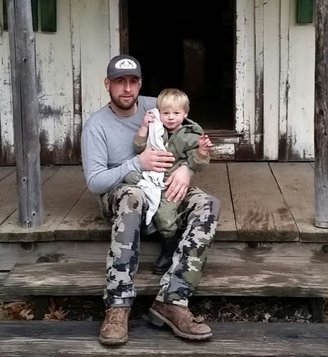
Aaron Charles Jackson of Eureka passed away suddenly on
Sunday, April 4, 2021. Aaron was born on June 4,
1985 at Mad River Hospital to his parents, Judith and Jerry
Jackson. Aaron was raised in Eureka, and named after his Grandpa,
Charlie Marsh, whom Aaron was very fond of and close with as a child.
Aaron loved growing up in a small town during his childhood with his older brother Shane Jackson and baby sister Alycia Jackson. He was popular and often knew every kid on the block. Much like Aaron, his childhood was never dull. He was full-throttle with everything and didn’t know the meaning of “slow down” or “you can’t do that”. His response would often be “WATCH ME”. He often instigated fun adventures like a ride in the wheelbarrow tied to a go cart, with Shane and Alycia watching, laughing, or driving. His full-throttle personality was known to all, and would back fire at times. Aaron broke his collar bones five times as a kid. You could say he was fearless.
Aaron was a momma’s boy through his life; however, he like to share his love with pranks and scaring his mother daily with fake cat poop, puke, rats and snakes, with his dad not far behind with the video camera catching all things Aaron in action. The childhood memories in his neighborhood were the best a kid could ask for. Most of the kids Aaron and his siblings grew up with became lifelong friends. Aaron was always the lively one thinking of fun things to do, including paintball guns and dirt bikes with his friends in Elk River. Aaron was two years older than his baby sister, Alycia Jackson. They were close growing up, with Aaron being the middle child, and Shane, his older brother by 2 years were the best of buds. They shared many fun memories like skiing and snowboarding at Shasta every winter.
During summers, Aaron spent most of his time at Trinity Lake with all the Jacksons and Vallees, staying at Pinewood Cove and the Jackson cabin. Spending summer days on the ski boats of his parents and his cousins water skiing, tubing and jumping off the leaky tiki patio boat. Aaron was close to a pro at tubing during those years. He loved to battle Shane on the tubes, anything that goes fast, and soon enough he got his sister to do it with him. She learned from the best, often looking up to her brother like he was superman!
From snowboarding, wakeboarding, rollerblading, ocean fishing, dirt bikes, skateboarding, paintball guns, hunting bear, turkey and deer up at showers pass, and more. He did it all and was good at all of it. His middle name should have been FULL THROTTLE.
Aaron enjoyed life and it was filled with so much family and friends. Aaron spent his last 15 years in love with Melissa McNeese and raising their son, Tanner Charles Jackson, age 5. He loved to prank Melissa on the daily, for he did love to keep things exciting and fun in their life. They both loved fishing and camping at Ruth lake together. Aaron and Melissa loved each other very deeply since a young age.
Aaron loved being a father. Tanner and Aaron would do all the manly things together, for Aaron wouldn’t have it any other way. Building their chicken coop, fixing the fence, fishing in the bay, and accidentally catching seagulls. Aaron liked to spoil Tanner with farm animals and would let him have his goat and chickens come inside to play with him, which Melissa was not too fond of cleaning up the mess. Aaron’s absolute favorite, was taking Tanner hunting with him up to Showers Pass with his stepdad at the hunting cabin. This was one of Aaron’s favorite places. The last hunt Aaron and Tanner shared was a turkey hunt up at the cabin with his stepdad, also known as grandpa Burt.
Aaron developed a great work ethic in his adult life. He was a local roofer for 10 years, worked for a tree service, more recently a commercial fisherman and sport fishing in his ocean boat. He was good at all the things he put his mind to. He was talented with his hands and worked hard for everything he had.
Aaron’s smile could brighten any day. His laugh was contagious, the Aaron Jackson laugh as we all knew. Aaron also had a kind soul beneath his fearlessness. He sadly suffered from anxiety and depression for many years in his teens and adult life. When it came to family functions and events he was always asking his mom and dad, “Is Alycia going to be there, is Shane going to be there?” he wouldn’t go unless they were there, for he felt at ease with his siblings around him. The grief of losing Aaron will be lifelong for all of us, for he was so loved and so close with his family.
Aaron Charles Jackson was a loved son, brother, cousin, uncle, fiancé and father. Aaron leaves behind his son Tanner Jackson, age 5 years, fiancé Melissa McNeese of 15 years, brother Shane Jackson, sister Alycia Jackson, parents Judith Jackson, Jerry Jackson, stepdad Burt Guthridge, his two nieces Montana and Autumn Holberg, stepsiblings Amy and Travis Cloninger, all his many aunts, uncles, cousins and his side kick dog Ryder.
As his loving baby sister, I know he is now in our grandparents’ loving arms, fishing with grandpa Charlie, logging with grandpa Judd and hunting with Uncle Dick.
A celebration of Aaron Charles Jackson’s life will be held at Fortuna River Lodge on June 13. Doors will open at 4:30 p.m. This will be open to all his family and friends. Any friends and family that have pictures please contact Alycia Jackson on Facebook. We do advise all that plan on attending be either fully vaccinated or have a negative COVID test with days of attending. Any memorial donations are much appreciated. Please contact Alycia Jackson on FB to do so.
###
The obituary above was submitted on behalf of Aaron Jackson’s loved ones. The Lost Coast Outpost runs obituaries of Humboldt County residents at no charge. See guidelines here.
OBITUARY: Israel David Widmark, 1976-2021
LoCO Staff / Tuesday, May 18, 2021 @ 6:56 a.m. / Obits
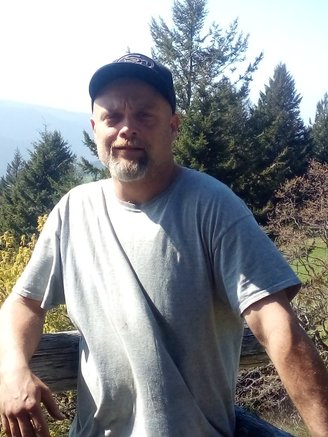
Israel David Widmark passed away on April 2, 2021.
Israel was born on March 23, 1976, in Eureka at the old General Hospital. He attended Eureka Nazarene School from kindergarten through seventh grade. From there, he entered the Eureka school system and later the McKinleyville school system. He was a life long resident of Humboldt County living in either the Eureka or McKinleyville areas.
Israel was employed by various jobs through out his life, most related to automobile or small machinery repairs.
Israel had a variety of interests. He liked working on vehicles, repairing small machinery, fishing, camping, and collecting older money. He learned about cutting and polishing rocks (lapidary) from Grandpa Boatright. It excited him to see the different rock colors, their cuts and their beauty.
He enjoyed eating fried frog legs, sushi, and grilled cheese sandwiches with tomato soup.
Israel loved his family more than anything, and advocated the importance of family. He was always ready to share what little he had with others. He had hoped to teach his children more about loving each other and showing respect. He loved small children, and liked being a grandpa. We all knew that we were loved by him.
Israel leaves behind his three children: Brandon Widmark, Jesse Widmark and Harmony Taylor. His two grandkids, Shanelle and Izaiah. His brother and friend, Aaron. His mother, Athleen Baker, and his father, David Widmark. His Aunt Asia and Uncle Levi, Aunt Melissa, Aunt Lisa, and Uncle John. Three nieces: Cora, Karly, and Taresa. And numerous cousins.
Lastly, Israel leaves behind his “buddy” Chief, his Boston Terrier.
Israel was preceded in death by his grandparents: Levi and Alvina Boatright and Elvin and Jessie Widmark.
Israel’s cremation was handled by Ayers Family Cremation. The family had a graveside service on May 15th at Greenwood Cemetery in Arcata where his ashes are buried. The service was officiated by Rev. Tim Shires, who has been a friend of the family for years.
###
The obituary above was submitted on behalf of Israel Widmark’s loved ones. The Lost Coast Outpost runs obituaries of Humboldt County residents at no charge. See guidelines here.
OBITUARY: Dennis Cook, 1953-2021
LoCO Staff / Tuesday, May 18, 2021 @ 6:56 a.m. / Obits
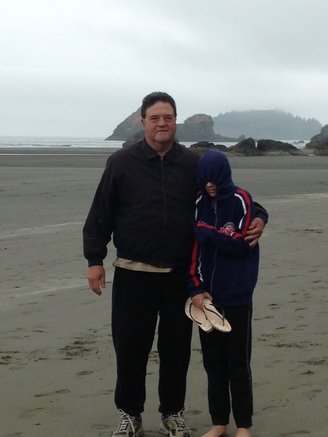
Dennis
Cook passed away earlier in May in Eureka with his wife and two sons
by his side. Dennis was not only a wonderful husband and father but a
friend to many in the Humboldt community. Above all, though, his
mission was to walk with God and live by the principles of Christ.
Dennis was born in Arcata to Bernie and Marian Cook. He had two older siblings, Kenny and Patty, and grew up in the Jacoby Creek/Bayside area around a great number of relatives. He spoke often and fondly of his youth as a time of family gatherings on the creek, motorcycles, golf, Willow Creek and many other idyllic youthful moments.
Dennis graduated from Arcata High and Humboldt State University in the 1970s before starting his own business. He spent more than 40 years working to grow and develop Cook Logging while maintaining many relationships in the business community. It was often said among those that worked with Dennis that he was a fair and honest businessman.
In 1977, Dennis married the love of his life, Barbara Cook, and they spent 44 wonderful years together. It is often expressed by Barbara how marvelous Dennis treated her and what a wonderful husband he was. She couldn’t imagine having a better life companion than Dennis. In addition, Dennis had two sons, Chris and Ty, and loved them with all his being. From sports to school to a countless number of activities, he demonstrated this love through active participation in their lives. As his son, he never once made me feel unloved. He was the model father, husband and man.
Dennis devoted the later half of his life to Jesus Christ. He spent time in a few local churches but found a home and was born again under Bishop and Pastor McDonalds. He held the ultimate respect and honor for their leadership, guidance and friendship. Dennis participated in multiple roles within their church such as usher and marriage counselor.
Dennis was preceded in death by his mother Marian and father Bernie Cook. He will be greatly missed and is survived by his wife Barbara; son’s Chris and Ty; grandchildren Alexis and Noah; brother and sister Kenny Cook and Patty McDonald; and in-laws Dennis McDonald, Jerry and Gwen Dohrman, Jim and Sue Titera as well as a great number of friends and brothers and sisters in Christ.
Dennis will have a celebration of life/memorial service at a date to be named later. I love you, Dad.
###
The obituary above was submitted on behalf of Chris Cook’s loved ones. The Lost Coast Outpost runs obituaries of Humboldt County residents at no charge. See guidelines here.
OBITUARY: Rosie Blanca Arias, 1964-2021
LoCO Staff / Tuesday, May 18, 2021 @ 6:56 a.m. / Obits
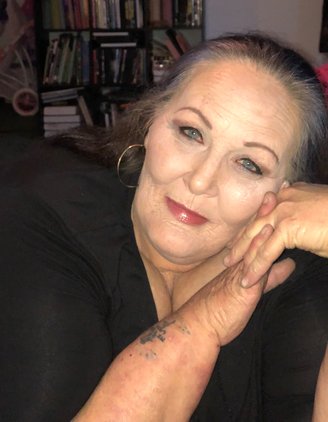
Rosie Blanca Arias was born January 24, 1964 to Janice Moore and
George Bigovich. On May 13, 2021, she took Jesus’s hand, surrounded
by her family. She is survived by her husband, David Arias, children
Alaina Cisneros (Aaron William), Carlos Cisneros (Rose Sylvia), Luis
Cisneros (Trisha Cisneros), Ezequiel Arias (Cheyanna Salazar), and
David Arias (Selena Osorio), grandchildren Rosie, Brandon, Aubree,
Brynlee, David, Ayden, Jocelyn, Audriana, Cruz, and Asher, nephews
Saul Arias-Peralta and Enoc Arias-Peralta, Uncle Melavon “Biggy
Rat” Bigovich, many nieces and nephews in Mexico and numerous
extended family. She was greeted in heaven by her mother, Janice
Moore, father, George Bigovich, brother Mark Bailey, daughter Raina
Arias and her dog, who was her bonus child, Baby.
Rosie had a larger-than-life personality and anyone who knew her knew she loved fiercely. If she called you a friend, you know she would give you the shirt off her back and no one could say she didn’t have your back. Everything she had, she gave out of her love. Her family was the light of her life. Being with her children and grandchildren brought her unsurmountable joy and she beamed with pride whenever she spoke of them. She was always the happiest when she was surround by her family. She freely gave hugs and kisses out to her family; she was very affectionate. She loved to laugh, dance and sing. She gave the best compliments and had a great sense of humor. She will be deeply missed by all who loved her.
There was a small, private family viewing on Monday, May 17th at 2 p.m. at Paul’s Chapel in Arcata.
###
The obituary above was submitted on behalf of Rosie Arias’ loved ones. The Lost Coast Outpost runs obituaries of Humboldt County residents at no charge. See guidelines here.