The car was operated with stolen gas in its tank, says the Sheriff’s Office
Press release from the Humboldt County Sheriff’s Office:
On April 22, 2021, at about 4:04 a.m., Humboldt County Sheriff’s deputies were dispatched to a gas station on the 120,000 block of U.S. Highway 101 in Orick for a security alarm sounding.
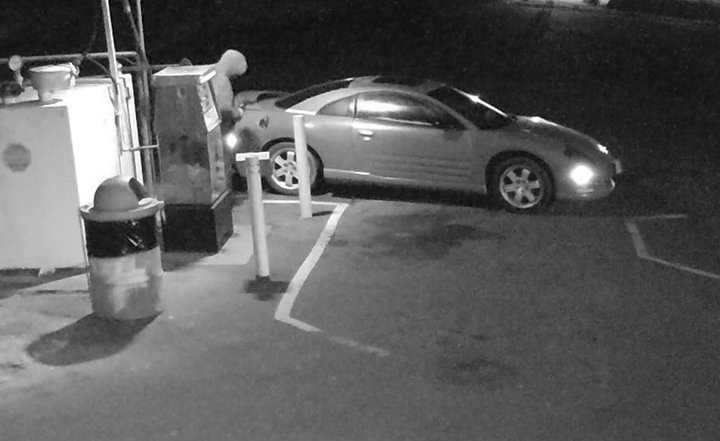
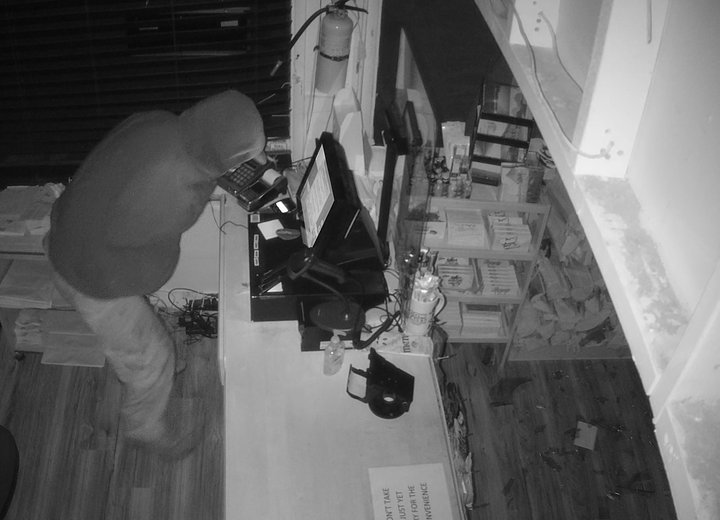
Deputies arrived at the business and discovered the front window had been broken out. No suspects were located inside the business. After reviewing surveillance footage, deputies learned that an unknown person forced entry into the business by breaking the window. The suspect activated a gas pump from inside the business and proceeded to steal gas before fleeing northbound on Highway 101.
The suspect is only described as a possibly male adult, approximately 20-30 years of age, wearing a hoodie and dark jeans. The suspect is associated with an early 2000’s model Mitsubishi Eclipse, unknown color or license plate number.
This case is still under investigation.
Anyone with information about this case is encouraged to call the Humboldt County Sheriff’s Office at (707) 445-7251 or the Sheriff’s Office Crime Tip line at (707) 268-2539.
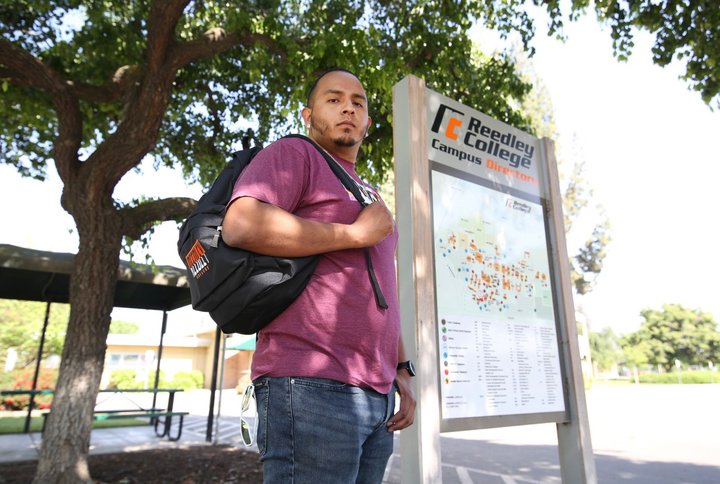
Stephen Kodur, a student at Reedley College, was denied a Cal Grant due to time-out-of-high-school restrictions. Older students such as Kodur stand to benefit from an expansion of the state’s financial aid program. Photo by Gary Kazanjian for CalMatters.
###
At age 30, Stephen Kodur is on his fourth stab at college in 12 years.
He’s been attending class until his savings run out, pausing to work and build up cash, and repeating. Though his federal financial aid application says that he has the highest need, he’s not eligible for the main state aid program because he began community college several years after finishing high school.
“The fact that I didn’t have the resources made me leave so many times,” Kodur said. Had he had more aid earlier in his academic tenure, Kodur thinks he’d already possess a UC degree.
Though California’s financial aid grant is among the most generous in the country, the Cal Grant leaves out hundreds of thousands of students each year who are older and took more than a year to get to college after finishing high school.
Now the Legislature is exploring whether to expand the number of students who receive benefits and supercharge the support they receive — paving the way for a debt-free financial aid overhaul that advocates say is long overdue.
The $1,656 a year a Cal Grant gives community college students would have been meaningful for Kodur. When he was attending Reedley College in Fresno County in 2014-15, Kodur tried to save money on bus fare by riding his skateboard to campus five days a week — a roughly 16-mile round trip commute from his home in Dinuba. Eventually he moved closer to campus by couch-surfing at friends’ homes to stop paying rent altogether, but even that wasn’t enough to preserve the money he saved from working full time at a sports goods store.
Kodur left college again to work two jobs before attending Reedley once more in 2019. He’s now applying to transfer to several University of California and Cal State campuses. As president of the statewide Student Senate for the California Community Colleges, he’s been leading student advocacy to expand the Cal Grant as well as federal grant aid.
Around 40%of the 2.1 million California Community Colleges students are 25 and older, yet just 5% receive the Cal Grant. At the UC and CSU, where far fewer undergraduate students are older than 24, more than a third receive Cal Grants. Currently, students who aren’t eligible for the traditional Cal Grant can enter a veritable lottery that awards 41,000 grants annually. But because demand far outstrips supply, only about 1 in 8 students who apply receives this competitive Cal Grant.
If Assembly Bill 1456 passes and is funded this year, 240,000 more community college students will be eligible to receive Cal Grant cash stipends of $1,656 a year. Another 40,000 more university students could have their tuition covered either partially or fully, depending on where they’re earning a bachelor’s degree.
The bill cleared its first legislative hurdle Thursday after an Assembly committee passed the measure. It’s written by higher-education stalwarts and Democrats Assemblymembers Jose Medina of Riverside and Kevin McCarty of Sacramento and state Sen. Connie Leyva of Chino, who proposed massive financial overhauls in 2019 that failed to woo enough lawmakers.
The state Senate proposed a budget framework that largely aligns with the Cal Grant expansion while also proposing additional aid to cover the full cost of college, including housing, food and transportation that often exceed the price of tuition. The Assembly will introduce a similar budget blueprint in the coming days, and debt-free college “is high on the list,” McCarty said in an interview.
“We exclude too many people right now and we don’t necessarily cover the full cost of college,” McCarty said.
Remove the Cal Grant’s time-out-of-high-school and age restrictions.
Drop the minimum GPA requirement for community college students and lower it from a 3.0 to a 2.0 for students in four-year institutions.
Lift the age cap that blocks students 28 and older from receiving a guaranteed Cal Grant if they transfer to a four-year university.
Peg Cal Grant income eligibility to the federal Pell grant to further simplify financial aid.
The upfront costs to expand the Cal Grant under the bill are considerable. The program would grow by $233 million in the first year on top of the $2.5 billion the state spends on the Cal Grant already — in part to expand additional aid of $6,000 to students with dependent children. There are additional one-time costs of $437 million across four years to continue giving aid to students already receiving Cal Grants who are projected to lose eligibility under the new rules.
The Senate’s budget plan similarly would overhaul the Cal Grant to remove time-out-of-high-school and age restrictions. The Senate’s spending framework calls for additional grants to lower the total cost of college for students, aiming to cover the costs of college that other grants and part-time work don’t. Under this plan, estimated to cost $1.5 billion annually, families that earn more than $100,000 would get less money.
Some aspects of the Cal Grant extension are raising alarm at California State University.
Presently, tens of thousands of public university students with Cal Grants earning bachelor’s degrees not only have their tuition covered, but they also receive a supplemental Cal Grant award of $1,656. Cal Grant expansion proponents want to pull those supplemental awards — totaling $202 million — and reroute those dollars to fund more tuition waivers at four-year colleges and universities, benefiting students who don’t receive the Cal Grant but are still low-income.
If the expansion bill is enacted, 28,000 more CSU students would have their tuition covered by the Cal Grant, according to an estimate by the California Student Aid Commission, which oversees the Cal Grant and supports the bill. In turn, the internal funds universities were spending to cover students’ tuition could instead help pay for other student costs such as housing, food and transportation, the commission argues.
The CSU is lobbying to ensure students don’t lose the $1,656 supplemental grant. The system also worries how the changes will affect its students, many of whom graduate in six years. Cal Grants currently only go for four years.
The Cal Grant expansion bill has other limitations. The proposal would only give the $1,656 grants to community college students who qualify for the highest amount of federal Pell grant aid. While that benefits the most financially disadvantaged students, it leaves out students in less dire fiscal situations who are still low-income. Backers of the expansion vow to pursue future legislation that would expand the pool of eligible students and seek to increase the community college award to $2,500.
More money would be good for Kodur. The $1,656 wouldn’t pay for a semester’s worth of bills, “but it helps,” he said. “That might get me through two months.”
###
CALmatters.org is a nonprofit, nonpartisan media venture explaining California policies and politics.
Two weeks ago, a contingent of United Way staffers descended on tiny Tulelake, three miles south of the Oregon border in Siskiyou County.
Ferrying laptops, printers, scanners and wireless hotspots to the area of the state where the highest concentration of people are missing their stimulus checks, they had one goal: help residents file tax returns so they can claim the latest round of $1,400 stimulus payments.
There are 8.8 million Californians receiving state benefits who are eligible for stimulus checks, according to a study by the California Policy Lab, and more than 2 million of them don’t earn enough to need to file taxes. But without those filings, the IRS can’t reach them.
The United Way staffers were there to help bridge that divide — the so-called stimulus gap. They helped a few people on their day trip, but not as many as the nonprofit agency had hoped.
Theresa McCausland, who operates eight programs among nine counties at the United Way of Northern California in Redding, understands her target population tends to be skeptical. “Anything that has to do with taxes or government is something they would prefer not to deal with,” McCausland said, “even if it means a few hundred or thousand dollars in their pocket.”
As the May 17 tax extension deadline nears, the California Policy Lab study identifiedat least 2.2 million low-income Californians in the stimulus gap who will miss out on $5.7 billion. The UC Berkeley researchers say at least 1.4 million within that group could miss all three rounds of stimulus checks, or as much as $3,200 per adult and an additional $2,500 per dependent.
&&
The number of people in the stimulus gap is likely far more than 2.2 million since that’s what the researchers managed to count among missing tax returns for those enrolled to receive any state benefits from the Department of Social Services, such as CalWorks and CalFresh. And the study only counted people who have accessed state benefits, a number pre-pandemic research shows falls far below the total number of those actually eligible. It also doesn’t include additional money from California’s supplemental pandemic relief known as Golden State Stimulus checks.
Risk of missing payments
The policy brief identified four types of Californians who tend to be at risk for missing payments: adults without dependents, dependents of undocumented residents who came of age in the latest stimulus round, Native Americans and rural residents in California’s northern and eastern counties.
McCausland’s team serves many who fall into those categories.
The communities of her nine-county region are tight-knit. Much of it is rural farmland or tourist draws among the lakes and astounding views, the population split nearly evenly between white residents and Latino residents, many of whom speak Spanish as a first language.
The staff has Spanish, Hmong, Mandarin and American Sign Language interpreters on call.
But their success in the northern counties is admittedly mixed for reasons McClausland says are largely out of their control, such as long routes to remote areas where residents might not have the money for gas or a ride, or fears among undocumented farm workers of contact with the federal government.
Trust from the local community can be hard to come by. McCausland said the local resource centers have the connections to their local communities but scant money to help them; the United Way has laptops and hotspots and expertise, but transportation in and out of rural Tulelake can be tough for low-income residents to find.
And the United Way’s tax assistance is relatively new to the region: The organization has been operating the IRS’s Volunteer Income Tax Assistance program for just four years in Tulelake. Before they arrived, McCausland said locals lost faith with the local community center’s ability to handle their taxes.
“That’s been tough,” McCausland said.
Ways to reach out
The good news, according to the California Policy Lab study, is 6.6 million Californians
enrolled in state safety net programs and received about $18 billion in stimulus payments.
“The folks that we have identified, they are connected to the state, the state knows who they are,” said the study’s co-author, Aparna Ramesh. “And so the upshot of that is, there are ways to reach out to them to help connect them to the resources they need in order to file a tax return in order to get the money.”
The simplest way, Ramesh and her co-author argue in their analysis, is for the IRS to reopen their non-filers payment tool, first made public during the early days of the pandemic to get stimulus money to people who usually aren’t required to file taxes. But the IRS closed that program in November, and an IRS spokesman told CalMatters there are no plans to bring it back.
The report also recommends that the IRS send unclaimed stimulus money to the states, which can then transfer the money to people who didn’t file their taxes but are on a state benefits program like CalWorks or CalFresh.
“The real question, which no one knows, is ‘Who’s not connected to government benefits?’ ” Ramesh said.
Anyone who has missed part or all of a stimulus payment can file for a recovery rebate credit with the IRS. It requires — of course — that recipients file a tax return.
###
This article is part of the California Divide, a collaboration among newsrooms examining income inequality and economic survival in California.
CALmatters.org is a nonprofit, nonpartisan media venture explaining California policies and politics.
Jean Register Turner was born in Mckinleyville and passed away April 11, 2021, due to complications from pneumonia.
Growing up, Jean lived in many different places. Her father was in the Navy, and they moved from time to time, living in Klamath, Florida and Georgia.
She attended Dows Prairie school as a youngster, and graduated the 8th in 1943 and Arcata High School in 1946. She graduated from College of the Redwoods, with a Associates degree in Library Science.
One of Jean’s most memorable times in her life was when she went to Scotland. She always wanted to go back, but because of her health, she couldn’t make the trip.
She had a very happy life, being married and raising three sons. She was a Boy Scout leader, having meetings at the “ranch” in the “cub” house. When the boys were older, Jean was happily employed at the Dows Prairie School in the cafeteria, and later as the Librarian for 42 years.
Jean is preceded in death by her parents, Duke and Myrtle Register, her husband Orrin, her sister Lynette DeRemer, her grandson Scotty Turner, and her son Gregory Orrin.
Jean is survived by her sister, Elizabeth Register of North Bend, Oregon; her grandchildren Lisa, Joshua, Rusty, Riley, Darcy and Gregory Lee; Her great-grandchildren Bailey, McKenna, Brady, Piper, Lucy, Kyndle, Wyatt, Aubrey, and Levi, and many nephews, neicies, and cousins.
Jean leaves behind many good friends, and she will be missed by all who knew her.
Paul’s Chapel of Arcata will be in charge of arrangements. At her request, there will be no formal services held. There will be a Celebration of Life at a later date.
Memorial contributions may be made to the Dows Prairie School Library. or the 4-H Trails in Trinidad.
###
The obituary above was submitted on behalf of Jean Turner’s loved ones. The Lost Coast Outpost runs obituaries of Humboldt County residents at no charge. See guidelines here.
On April 21, 2021, at about 4:00 p.m., officers with the Eureka Police Department
responded to the intersection of Broadway and W Clark Streets for the report of a
vehicle vs pedestrian collision.
The 56-year-old male driver, a resident of Woodland,
was traveling southbound on Broadway in a semi-truck when he struck the 52-year-old
male pedestrian, a resident of Eureka, in the roadway.
The pedestrian suffered major injuries as a result of the collision.
Humboldt Bay Fire
and City Ambulance responded and provided emergency medical care and
transportation to the hospital.
The driver was evaluated on scene and DUI does not appear to be a factor. Video
surveillance from the area is being collected and reviewed and the cause remains under
investigation.
The California State University today announced that beginning this
Fall, all faculty, staff and students who access campus facilities
will be required to be immunized against COVID-19.
The requirement will be conditional upon full approval of one or more
vaccines by the FDA. This is a CSU decision and will be required of
all campuses in the system. Consistent with the CSU’s policy for
other required vaccinations, the COVID-19 vaccination requirement
would allow for students or employees to seek an exemption based on
medical or religious grounds.
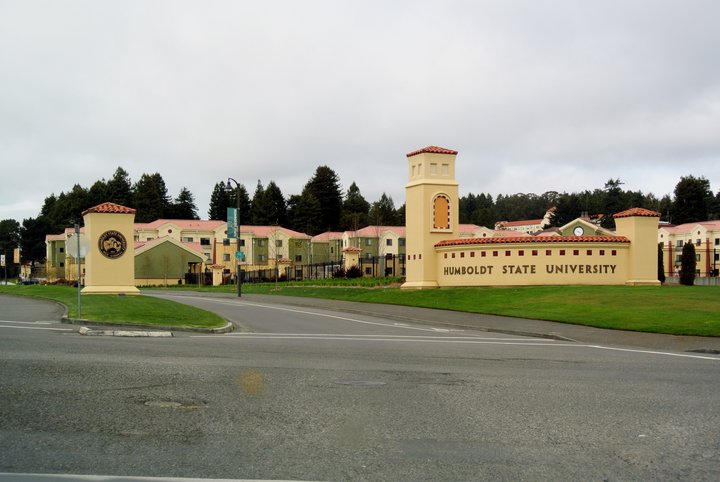
Humboldt State University is still working out the details of the
requirement for our campus. We encourage everyone to get vaccinated
as soon as possible for the safety of themselves and the community,
and to prepare for this requirement. More information will be
provided when it’s available.
Humboldt County Public Health has opened vaccinations to those over
16 years old.
If
you have not yet been vaccinated and aren’t currently working with
HSU Student Health & Wellbeing Services to receive a vaccine at a
local pharmacy, you can sign up through MyTurn.ca.gov.
See information in the County press release.
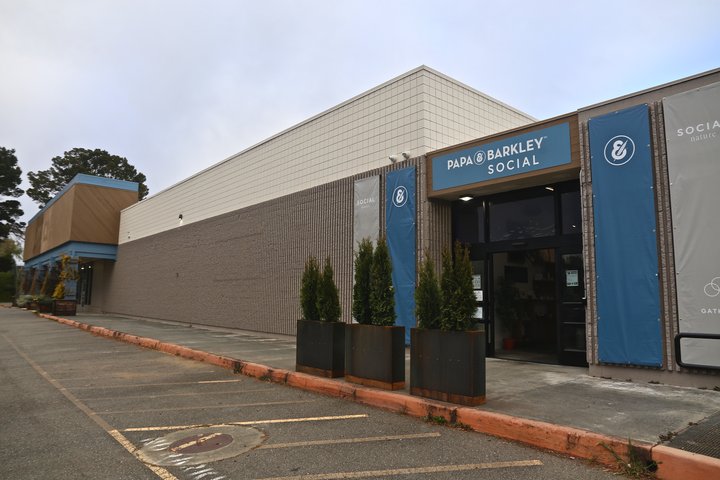
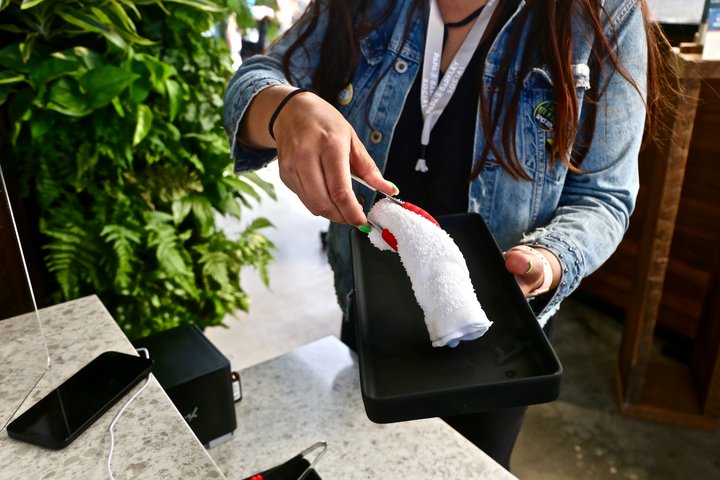
Would you care for a hot, moist towel? That was the first option guests were asked to wrestle with as they attended the soft opening of Papa and Barkley Social, the chic, new-concept cannabis consumption lounge, dispensary and spa located next to Papa and Barkley’s manufacturing facility on Broadway in the space formerly occupied by the garden shop of Eureka’s defunct Kmart. You, the loyal Forbes reader that you are, may have read about them recently.
Don’t feel bad you missed out. The 4/20 event was invite-only and, as such, was attended mainly by city officials, business leaders and various other local mover/shaker types. There was excitement in the air as a few guests noted to LoCO that this was the first real event they’d attended since the onset of the pandemic. For their bravery, they were rewarded with the first dibs on touring the new fancy facilities. For the general public, you’ll need to wait until May 6 to scope the scene.
LoCO was on hand for Tuesday’s soft launch and snapped a few photos we hope will help illustrate some of what Papa and Barkley Social has to offer the emerging upscale weed consumer. Here’s what we saw.
Papa and Barkley Social is a collaborative effort from the minds behind local cannabis manufacturing business Papa and Barkley and the Humboldt Bay Social Club. Their dispensary offers P&B products as well as offerings from a trio of local woman-owned farms.
Get “activated”: Massage therapist Nicole Fryer and her team will be offering indoor THC- and CBD-infused lotion massages to soothe your senses
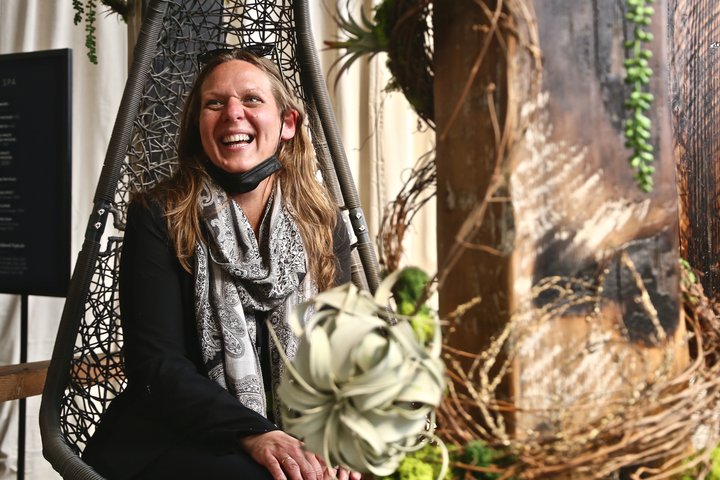
“Smoking Section”: Guests chill in the consumption lounge — which is absolutely located more-than-30 feet from any entrance into the main building — where you’ll soon be able to enjoy a preroll or an edible
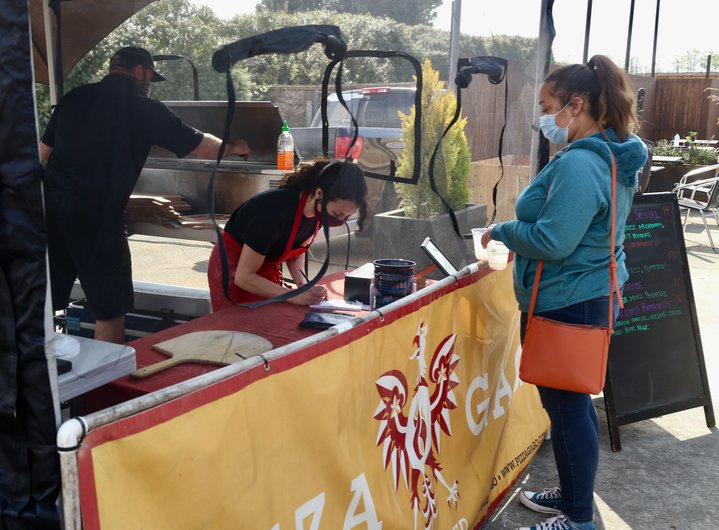
You may experience munchies. Chef Pawel Gago — known to locals for his Pizza Gago venture — will help you with that at his Pig & Leaf Cafe. On opening night, though, he stuck to pizza.
Papa and Barkley Social co-founder Jon O’Connor and the evening’s non-alcoholic beverages bartender Loren MacLaren convene behind the bar
A potential consumer checks out the booth for DewPoint, one of the farms whose products are available at Papa and Barkley Social
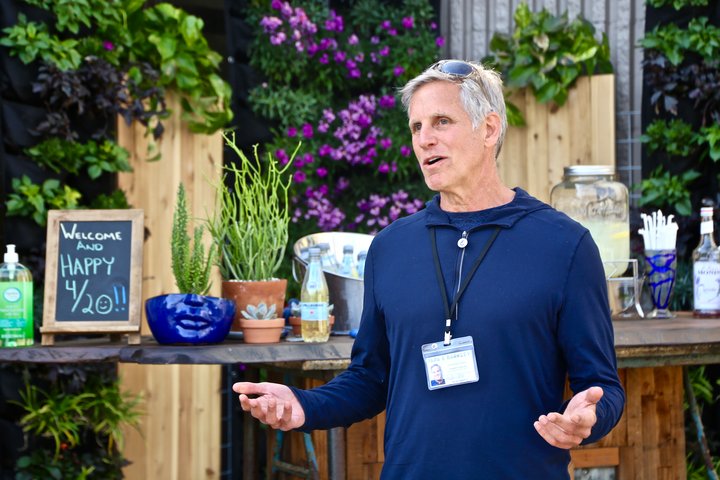
Guy Rocourt, Papa and Barkley Chief Product Officer kicked off the speeches: “As we all pull together for the normalization of cannabis, the sky is the limit. And I think the things in the traditional market that kept us tightly knit are the things we still need to honor. That’s how we win. Together we rise.”
Adam Grossman, Papa and Barkley Founder: “We’re in the epicenter of this world and we’re representing cannabis through our products that we do our best to make life-changing. All of that magic is fueled by the plant that grows naturally here and the people who care for it, who share our values around sustainability and this planet that we inhabit.”
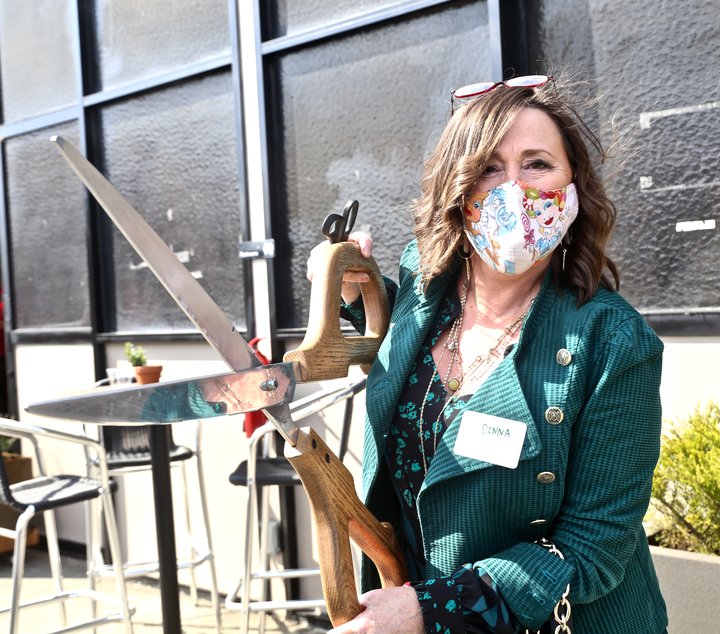
Often the wielder of comically giant scissors, Eureka Chamber of Commerce CEO Donna Wright was on hand to make sure a ribbon was properly cut
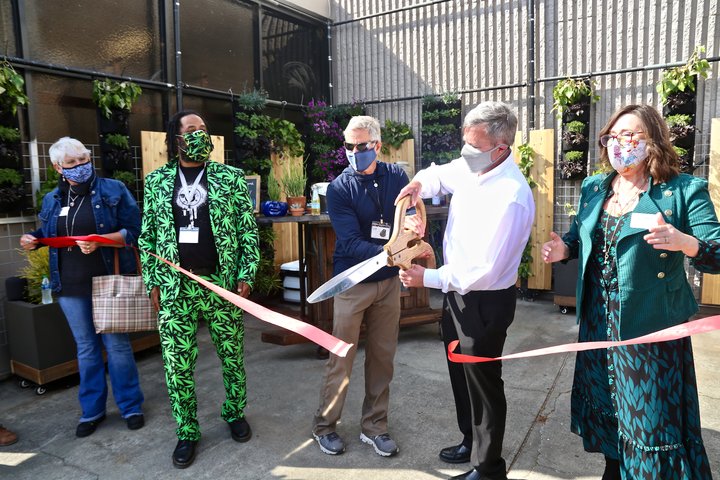
And so it was. Linda Wise, Eureka Chamber of Commerce, Guy Rocourt, Adam Grossman, Papa & Barkley, Miles Slattery, Eureka City Manager, and Donna Wright make it official. More opening ceremony speech highlights can be viewed in the clip below.