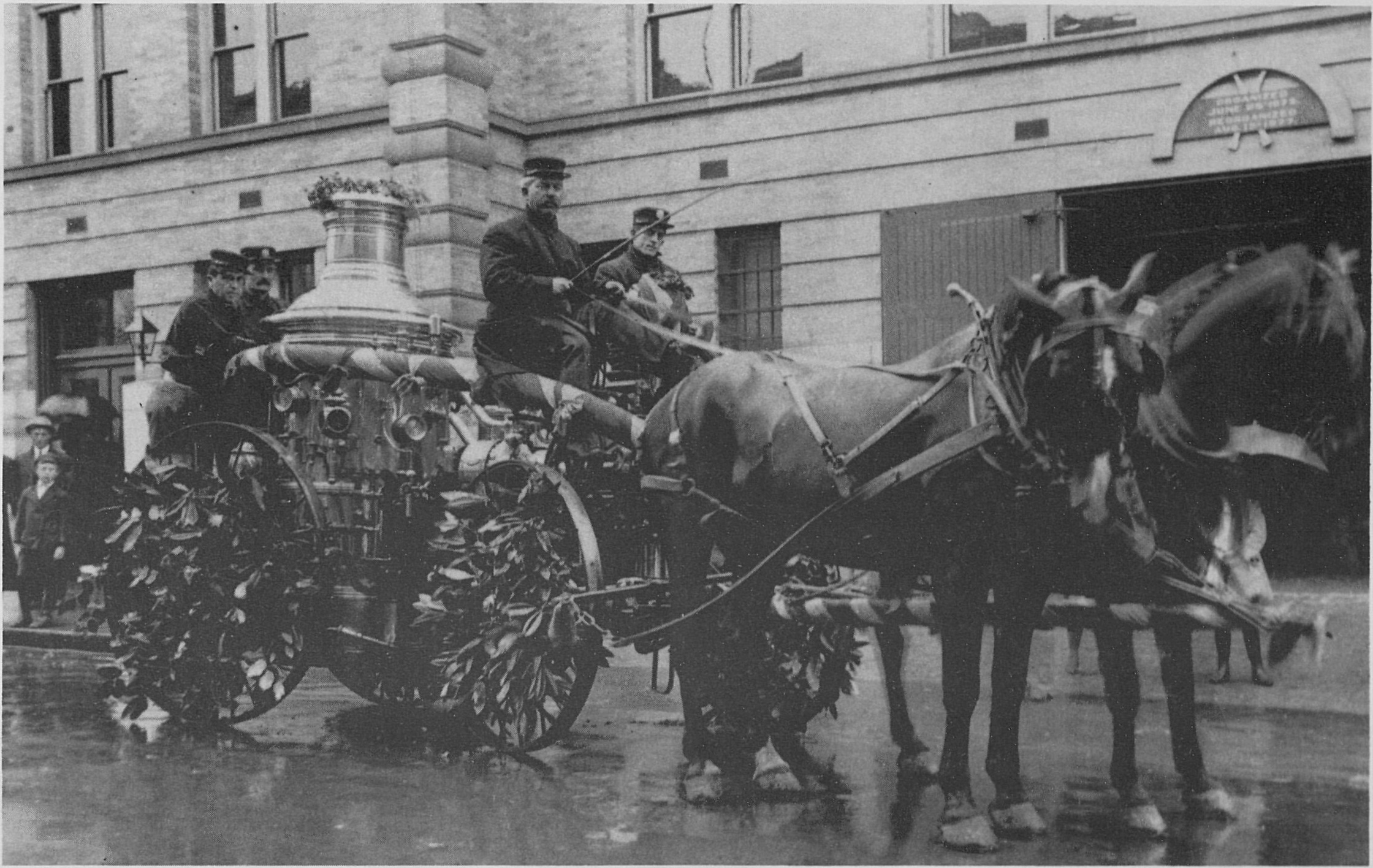
Bernard J. McGaraghan, with whip, guides a steam-powered fire engine on parade. Photos via the Humboldt Historian.
The McGaraghan Drayage Company operated in Eureka for 65 years. My grandfather Michael McGaraghan opened the company in mid-July 1868 and ran the business successfully for many years until his death in the early 1900s. It was then that my paternal grandmother Mary Ann McGaraghan took over. In 1920, when she moved to Berkeley, my father Bernard J. McGaraghan became head of the company.
Today the term “drayage” is not a familiar one; the word means cartage service. The McGaraghan Drayage Company owned three drays (wagons), two lumber and sand wagons, as well as some equipment to modify them so that four horses could be harnessed together to pull very heavy loads such as those going to the Eureka Boiler Works.
Dad was a hard worker. In addition to running the business, he did his share of the manual labor, adding his hauling charges to the freight bill totals. With his marvelous memory he easily recalled charges handled by his two or three horse-drawn drays. In the evening after dinner he did his bookwork. Although an active man, my father suffered from high blood pressure and heart problems, and at age 57 died while at work in the company office on the waterfront. My mother had just gotten up from her desk as my father turned, looked at her, then simply dropped dead.
My mother Annie Sullivan McGaraghan took charge of the business as my grandmother had before her. Our immediate family now consisted of my mother and her four children: Margaret, born in 1906; Frank, 1908; Jim, 1910; and Bert, 1912. When my father died in 1927, I was attending St. Mary’s College in Oakland on a football scholarship but decided to return home to assist my mother.
A Time of Horses
At this time horses were becoming a thing of the past. It was sad to see them go, for they were colorful and beautiful, and the teamsters who drove them were interesting, hard-working men.
I recall we had a teamster from Norway, named Bergen, who was especially concerned for his team. Every Sunday morning Bergen drove his big (1,600 to 1,700 pound) horses down to the bay by Cousins’ boat service to allow them to swim. He had long ropes attached so that he could guide them while they swam. A crowd always gathered to watch the sight of the horses holding their ears and tails high as they swam, obviously proud and pleased to be enjoying the water.
The teamsters often worked 12 hours a day, and some of the men were victims of liquor. One such man every day at noon fed his team, then drank a half pint of whiskey and took a deep 45-minute nap in the hayroom. Sharply at 12:50 he awoke, hooked the horses to his dray and went back to work. He seemed to have a wonderful body time-clock.
Once during the first days of Prohibition this fellow was driving a heavy load of lumber to the county hospital on Harrison — a hard pull — and the horses were nervous. When the teamster stepped down from his load, the horse kicked him and broke his leg. The builders carried the teamster into the hospital. At lunchtime, he asked for his whiskey but was informed they could not serve him because Prohibition had just made it illegal. My father informed the doctor and hospital that the man would die if he didn’t have his whiskey. Sure enough, the addicted teamster died four days later.
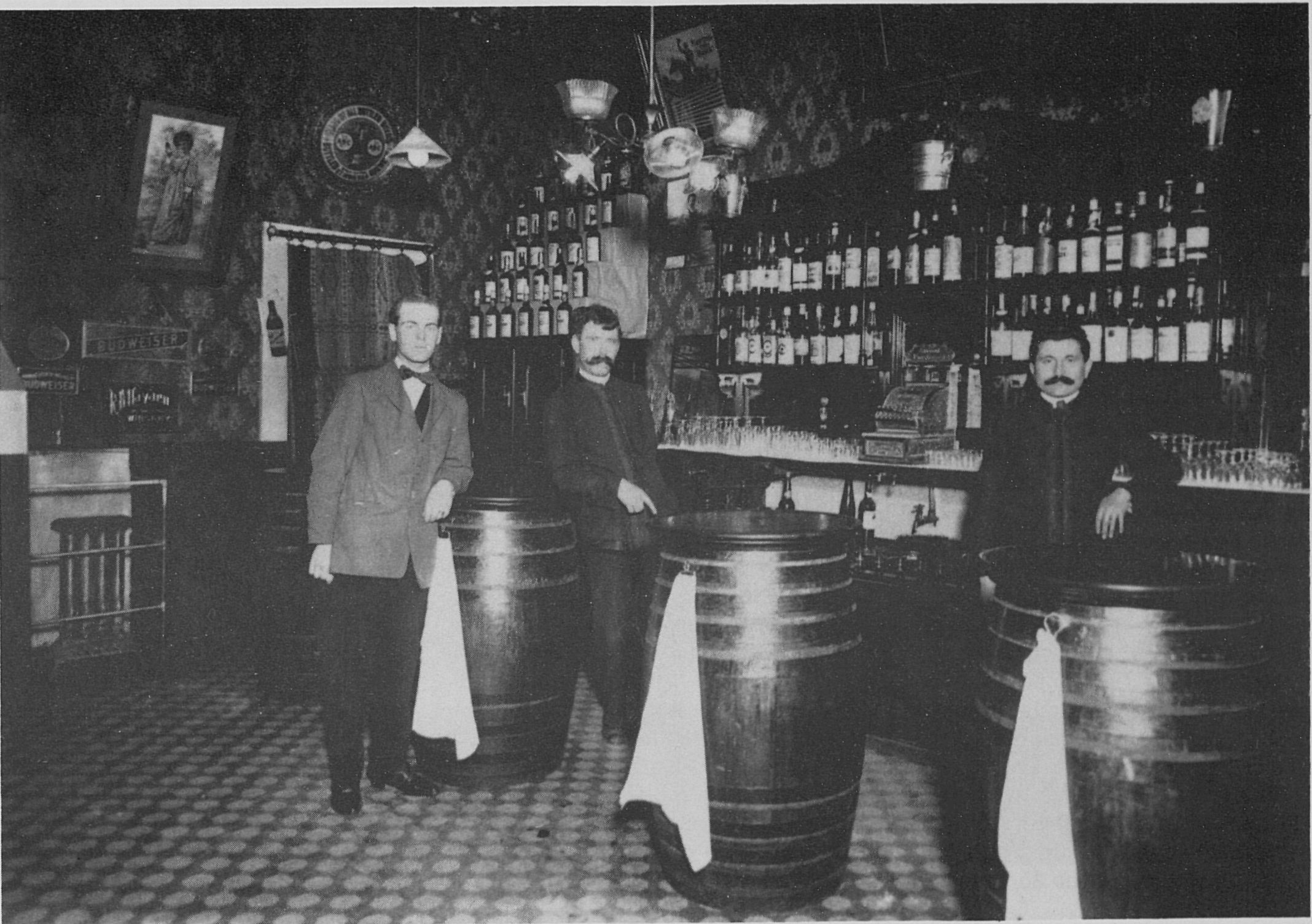
The Peter Delaney Saloon, Third Street, Eureka, one of the many businesses requiring drayage service.
When I was a junior in high school, I received an emergency telephone call from my mother telling me to rush to the courthouse at Fifth and J streets. When I reached there on my bike, I found two of our horses had pulled their dray out on the newly planted lawn. About 50 angry people were shouting at them making them nervous, so I had a dickens of a time backing them off the lawn. While he had been driving up Fifth Street, Fred, the teamster, had spotted an old drinking pal and had gone to have a few drinks. The horses couldn’t resist the newly green lawn.
I remember going with my father on a Sunday morning in our Ford touring car out to Metropolitan (near Scotia) to see Mr. Atkinson, owner of the Metropolitan Lumber Company, who had a team of his famous Belgian horses for sale. My father looked the horses over carefully, and Mr. Atkinson said he was asking $600 for the team. The horses and the price were OK, but my father told him that he had never made a happy or successful business deal on Sunday. He said that he would return the following day to pick up the beautiful bay Belgian horses and to pay for them. My father wasn’t outwardly religious, but he had strong principles.
The Belgian horses were the envy of all the local teamsters. They were studs, and several times annually they would act up around the drayage mares. They were a heavy team, one weighing 2,150 pounds and the other 1,750. The lighter one was by far the better worker. They worked for several years, and then the 2,150-pound horse died.
Disposing of dead horses was a difficult task in those days. They were either towed by Coggeshall Launch Company out past the entrance to Humboldt Bay and cut loose, or they were brought to the dump along with at least five gallons of kerosene to be burned. Naturally, both solutions were painful because the horses had been like pets.
Our drayage company had a black and white who, every time we went to harness him, would close his mouth in play, requiring extra time to insert the bit in his mouth. The exception was when the fire whistle blew. Sensing the emergency, he would open his mouth so that the bit could be slipped in easily.
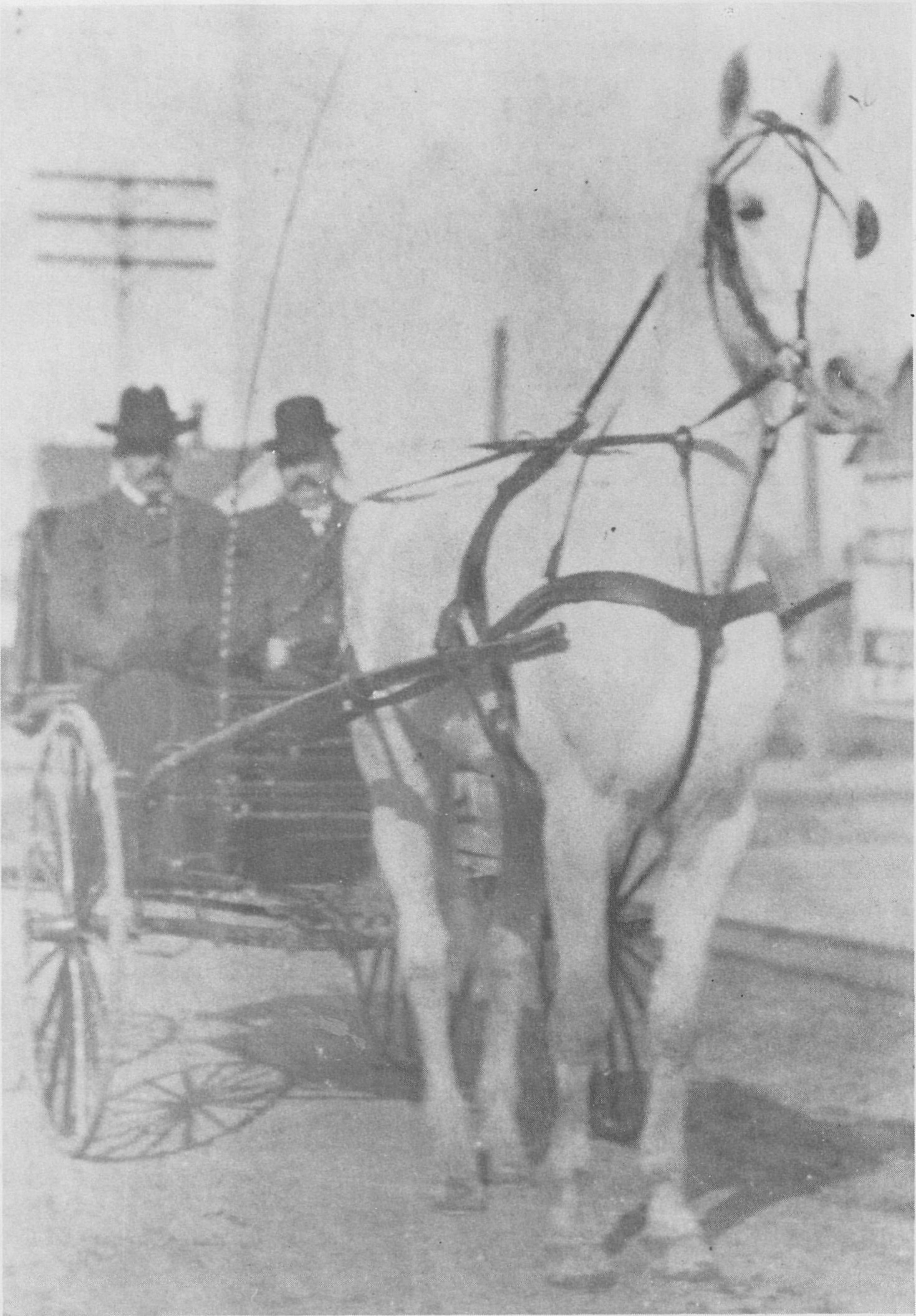
A local judge (name unknown) and Bernard J. McGaraghan travel in the height of fashion.
The horses were kept in the three firehouses to be immediately available if a fire occurred. My father received $5 during the day and $10 during the night when his team was hooked up to the engine or hook and ladder. During the daytime any team, however, was eligible to be hooked up to the engine, so there was always a scramble to see which team would get the $5 from the city. When the fire whistle blew, both horses and firemen became eager and excited.
If the fire were in the eastern part of Eureka, it meant that the engine had to be taken up hill. Many nights Third Street was slippery, and when the horses were excited, they would slip and fall. Sometimes, we would have to tie sacking over their hooves to keep them from slipping.
One day the fire bell rang when I was riding on the dray with my father on Sixth Street, which was cobblestoned. The stones and the iron dray wheels gave us a rough ride. Our dray had a load of 50-gallon barrels of whiskey. When the fire bell rang, the horses broke into a run, the dray bounced, and one 50-gallon barrel rolled off into the street. Without stopping, my dad told me to jump off and to sit on the barrel until he returned from the fire. It was two or three hours before he returned. Even though my dad collected only $5 for responding to the fire, he put his duty above the $100 to $200 value of the whiskey.
I too was serious about the duty. When I was in high school, I had asked the prettiest girl in Eureka to the Junior Ball. I bought a new tailor-made suit from Dolf Logan at Jimmy Hutchinsons’ Men’s Store for the occasion. The night of the dance, I was proudly dressed in my handsome suit when the fire bell rang. I rushed to the firehouse to hitch our team to the hook and ladder (we would earn $10). Periodically we sent our horses to a ranch on Kneeland. When I harnessed our horse, who had just come down from a rich diet of Kneeland grass, he let go a dose of diarrhea all over my new suit. But I didn’t stop. When the recall sounded, I called my date, and eventually had a wonderful time at the dance — in my old suit.
The firemen held great parties, and even though I wasn’t old enough to drink beer legally, they always let me join them when they got their keg of beer after the fire. The conversation always featured the bravery of the firemen at the fire or going to the fire. The stories grew more inflated as the party continued. Yes, the volunteer fire department was a help to community safety, but it was also a lot of fun socially. Many of Eureka’s most prominent men from all professions and vocations belonged to the department and took in all the parties.
Sometimes the parties got a little rough. Once I took home a fellow who had drunk too much, and his wife beat both of us with an umbrella! The best party of course, was the Firemen’s Ball held the Saturday night before Washington’s Birthday. Two hundred firemen, dressed in black pants and red shirts, with their wives in formals, turned out at the Civic Auditorium. The Paul Jones and the Grand March were colorful sights to see.
In the 1920s and ’30s, tan oak bark for commercial use in tanning leather was brought through Eureka by wagons to the ships. It was an impressive sight to see the high wagons, painted black and pulled by four or six horses with black harness and shining brass snaps. There were sets of musical bells attached to the harnesses which could be heard for several blocks, accompanied by the barking of several sharp looking dogs that always ran with the wagons.
In my early days, 1912 to 1915, there was tremendous activity south of Fourth Street. Buildings for businesses were rising as trees were cut from the waterfront to Seventh Street. Some of the businesses north of Fourth were H.H. Buhne, the Splendid Cafe, William Carson’s Men’s Store, about 27 saloons, six restaurants, the Carpentry Shop, Grand Hotel, First Western Hotel, Fior de Italia, and the Buon Gusto Hotel. A busy place!
On the bay front were huge warehouses for freight. Most of the freighter ships hauling foods and furniture tied up either at the K, E, F, D, or C street docks to be unloaded.
Many homes and businesses were moved to different locations in Eureka. Heavy rollers were used to move the houses. Power was furnished by one horse with a capstan anchored in the sewer hole on street corners. When the hauser was connected to the capstan, a horse would make about 10- or 12-foot circles around the capstan having to step over the hauser every time around. And of course the streetcars were pulled by horses.
The Waterfront
The waterfront was an exciting place when lumber companies owned small ships that came to Eureka loaded with cargo, then returned north or south with heavy, butt lumber. Hammond Lumber Co. owned most of the little lumber schooners. The Little River Lumber Co. and McKay Mills also attracted many two- or four-masted sailing ships. The four-masted were a sight to behold, graceful, well designed and balanced. They were met at the bar by Henry Cousins’ launches and Walter Coggeshall’s launches.
The Humboldt bar was unpredictable, often too rough to cross or having too shallow a tide. Whatever the problem, there were often delays. The longshoremen sometimes waited all day before being able to work. A number of them would wait in the friendly, nearby “blind pig” saloon (a building where illegal liquor was sold). If the ships were delayed too long, some of the longshoremen would be in poor condition to work.
One such time, a new custom-built Packard sedan, which had been anticipated for months, finally arrived aboard a steam schooner. The ship was late arriving, so the winch driver was not in great control of himself when he lifted the big, new automobile with his gear and swung it over the side of the ship to be landed on the dock. He miscalculated and dropped the shiny, new Packard on a two- to three-foot piling that slammed through the engine. The Packard dealer, Pyke Ross, the purchaser, and the steamship manager, Bill Hunter, were on the dock to see the shining beauty firsthand. It was a sad morning at the foot of E Street dock.
Needless to say, when ships were delayed by the bar for any length of time, cargo damage was usually higher than normal.
When the ships arrived, usually on Mondays or Fridays, the waterfront was a busy place. Horse-drawn drays, trucks, automobiles, and small delivery trucks were wedged together, using every inch of space. When space was at a premium, we were all exposed to some colorful language, and fist fights were common when there were differences of opinion. Onlookers urged the fighting participants to greater efforts instead of trying to stop them. Excitement ran at high pitch, and action was everywhere.
During the daylight hours McGaraghan’s dray wagons were at the waterfront or the railroad terminal where freight was picked up to be delivered to the warehouses and stores. The waterfront and railroad station were nearly always scenes of great activity. Each drayage company (there were about six or eight companies) really competed to sign up firms so they could do the hauling for them. Hard feelings developed many times when accounts were transferred.
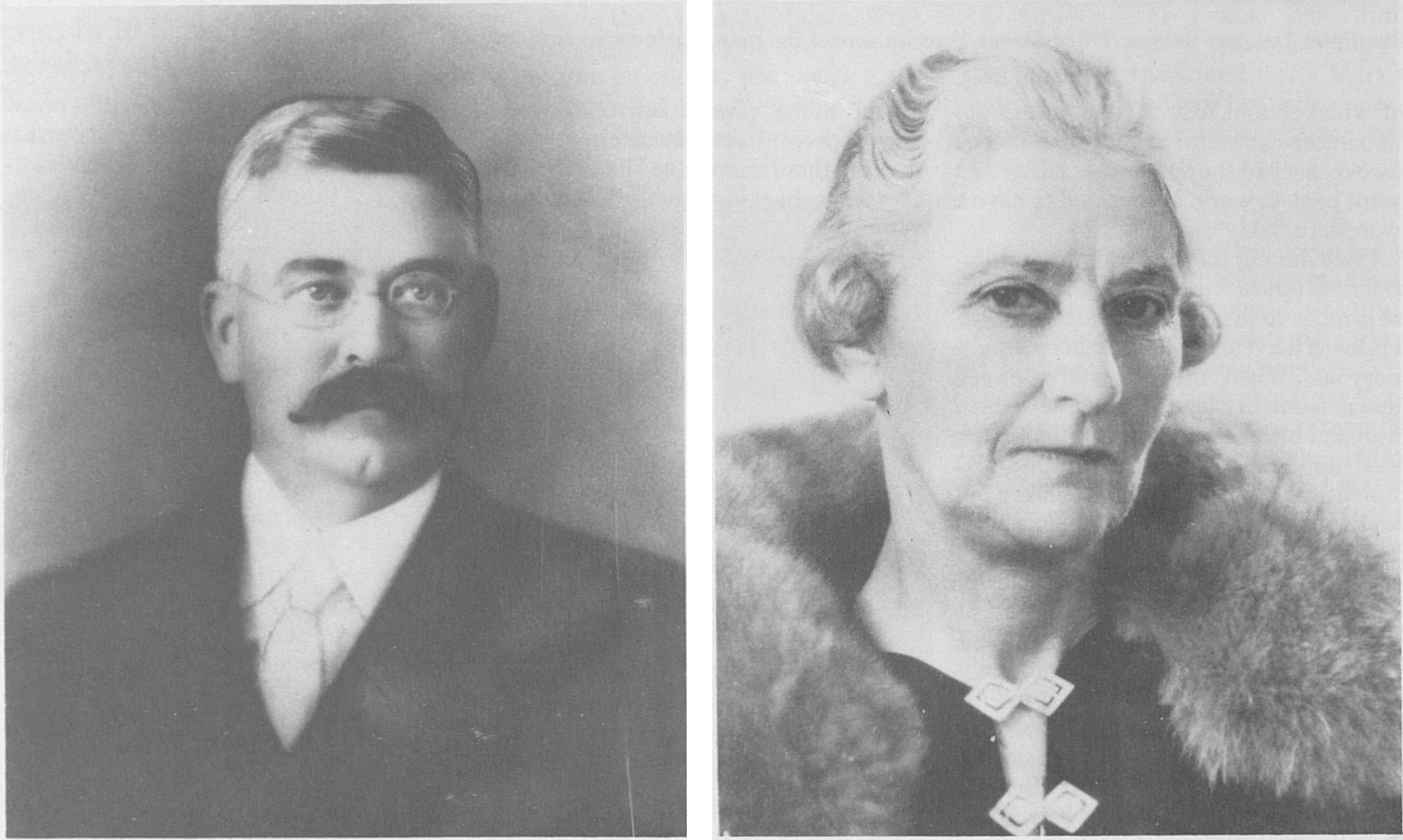
Bernard J. and Annie McGaraghan.
Horseless Drayage
When trucks were first introduced, my mother asked us to select proper vehicles to replace the horses. The ones finally chosen, “low boys,” cost about $4,000 each; they were custom made trucks by the McDonald’s Truck Co. of San Francisco. Our first one was so right for our work that business grew despite the Depression. The next year we needed and bought a second similar truck. Business boomed with Annie and “her three boys” working extra long, hard hours to satisfy our work commitments.
The blacksmiths and machinists were always designing and forging attachments and supplemental equipment enabling us to haul or move the various items requested by our customers, such as furniture, freight, long heavy steel, safes, pile drivers, bull dozers, lumber, and even small houses.
In the middle to late 1930s, former Eureka Mayor Arthur Way and Veryl Callison began bringing freight to Eureka by truck. Freight, until the advent of trucks, had been brought to Eureka by the lumber schooners and the railroad, usually a two- or three-day time span versus the overnight trucking service. The railroad and the trucks then began hauling lumber formerly handled by the steam schooners. Eventually, the steam schooners were discontinued for lack of business. Seamen, longshoremen and warehousemen were hard hit. It was the end of a very colorful period.
It was then that we moved our office to our warehouse at 529 Broadway. Local drayage followed the same pattern. When the boats no longer brought freight to Eureka, there was little need for local delivery. The overland trucks delivered directly to the door.
However, we were not out of the drayage business. Every winter in the early days we experienced storms that washed out the railroad in various places between Willits and Eureka. Because McGaraghan’s Drayage Company had a contract with the Southern Pacific Railroad, we were called on to meet the stalled trains and transfer parcel post, mail, and freight to the Eureka station.
Jim and I would be on the road continuously, only resting to clean up and take short naps while our trucks were unloaded and reloaded before returning to the stalled trains. Because of the intensity of the storms, it was not unusual for us to get stranded between two highway slides. There was great adventure on every trip.
Business Matters
There was never any doubt about whether or not McGaraghan’s would succeed. We had to pay our bills. To the best of my knowledge, we were never late in paying our bills, or in paying off our loans. Collecting money for work done was difficult at times during the Depression. Many people owing us paid cash on the due date, but others just didn’t have the money.
Annie, our mother, taught us much about people and the fine points of credit. She always made sure the person about to owe us understood the amount and how and when it was to be paid. We were never abusive, nor did we lack understanding or sympathy with those who were behind in their payments, but we did continue to request the money owed us so that we could keep our financial commitments. Annie felt that not keeping after people who owed us made those debtors weaker and got them into more financial trouble.
In the late 1920s and during the 1930s, the Eureka Woolen Mills was our key account. We did all of their hauling. Frank McGee was president and William P. Slade, vice president. Billy Slade, a son, worked there too. They were wonderful people to deal with and furnished many jobs and financial support to the community.
We hauled hundreds of tons of cotton, wool, bales of rags and felt, supplies of all kinds, and considerable machinery: huge containers of soap, lye, dyes, motors to drive the belts, and drying and pressing machines. Cotton and wool were in six-foot bags, and burlap and felt were in 1,000-pound bales.
Try as I might, I never understood how it was financially profitable to ship locally grown wool to the market in Boston and then reship it back here to Eureka. I never understood why the wool wasn’t bought directly from the local wool growers at a lower price, rather than buying it back at higher prices from Boston.
The Eureka Woolen Mills went out of business here in 1949, mainly because the remote location of Eureka prevented fast delivery of their goods.
After Prohibition was repealed, the Humboldt Malt and Brewery Company came into production. Hauling the outgoing shipments furnished lots of work for us. The Eureka Boiler Works, PG&E, the telephone company, the lumber companies, steamship lines, and dozens of other businesses, large and small, kept us working 6 a.m. to 6 p.m., six days a week. For this Annie paid each of us $30 per week, then deducted $7.50 per week for board and room.
Along with the drayage business, we operated a bonded warehouse that brought us considerable income and work. People who stored their merchandise or possessions with us could take their storage receipts to the bank and borrow money on them.
Storing flour for the two local bakeries, Roma and Log Cabin, brought us a good income. Unfortunately, weevils were a problem at times. Once a specialist from a large oil company paid us a visit, advertising their latest spray to protect us from weevils. We followed instructions to the letter, and were proud of our extra-clean flour storage area until a small bakery in Arcata brought us a sample loaf of bread from the recently sprayed flour. It had a medicinal taste.
We called the flour companies, and they sent representatives to go through the flour in our warehouse. As I recall, some 50 tons were either ruined or contained a suspicious taste. The ruined flour was eventually shipped to San Francisco where it was sold for a pittance to be used for wallpaper paste. The loss was split by all involved. Obviously, this event happened before “nuisance lawsuits.”
We also stored walnuts and locally grown potatoes at 529 Broadway. No matter how much rat poison, traps, cats and so forth, we brought in, the rats outsmarted us and caused considerable and constant damage. An experienced warehouseman from another area told us about papering our warehouse floors where we kept the nuts and potatoes with brown wrapping paper. Overnight our troubles ended; the rats disappeared.
When heavy rainstorms caused leaks in the warehouse, we had to move whole areas of merchandise. At times we even stored furniture although we were not equipped to protect the personal possessions from dust or damage. Before transporting the furniture to its eventual home, we had to dust everything thoroughly.
Annie, not directly exposed to these various happenings, continued to solicit goods for storage. She dealt with the revenue, while we dealt with the problems.
When World War II came along, I volunteered for active duty in the U.S. Army. During my five-year stint in the service, my brothers sold the drayage company in 1942 to Ray Foster, thus ending our ownership that had been in operation since 1868. Ray eventually sold the greatly enlarged business in the 1970s. McGaraghan’s Drayage was the last local drayage company to exist in Eureka.
On Dec. 14, 1941, Zdenka Poscic and I were married. Following the war, we established McGaraghan’s Apparel business in Henderson Center and enjoyed 37 happy years of merchandising. But that’s another story!
###
The story above was printed the November-December 1992 issue of the Humboldt Historian, a journal of the Humboldt County Historical Society. It is reprinted here with permission. The Humboldt County Historical Society is a nonprofit organization devoted to archiving, preserving and sharing Humboldt County’s rich history. You can become a member and receive a year’s worth of new issues of The Humboldt Historian at this link.