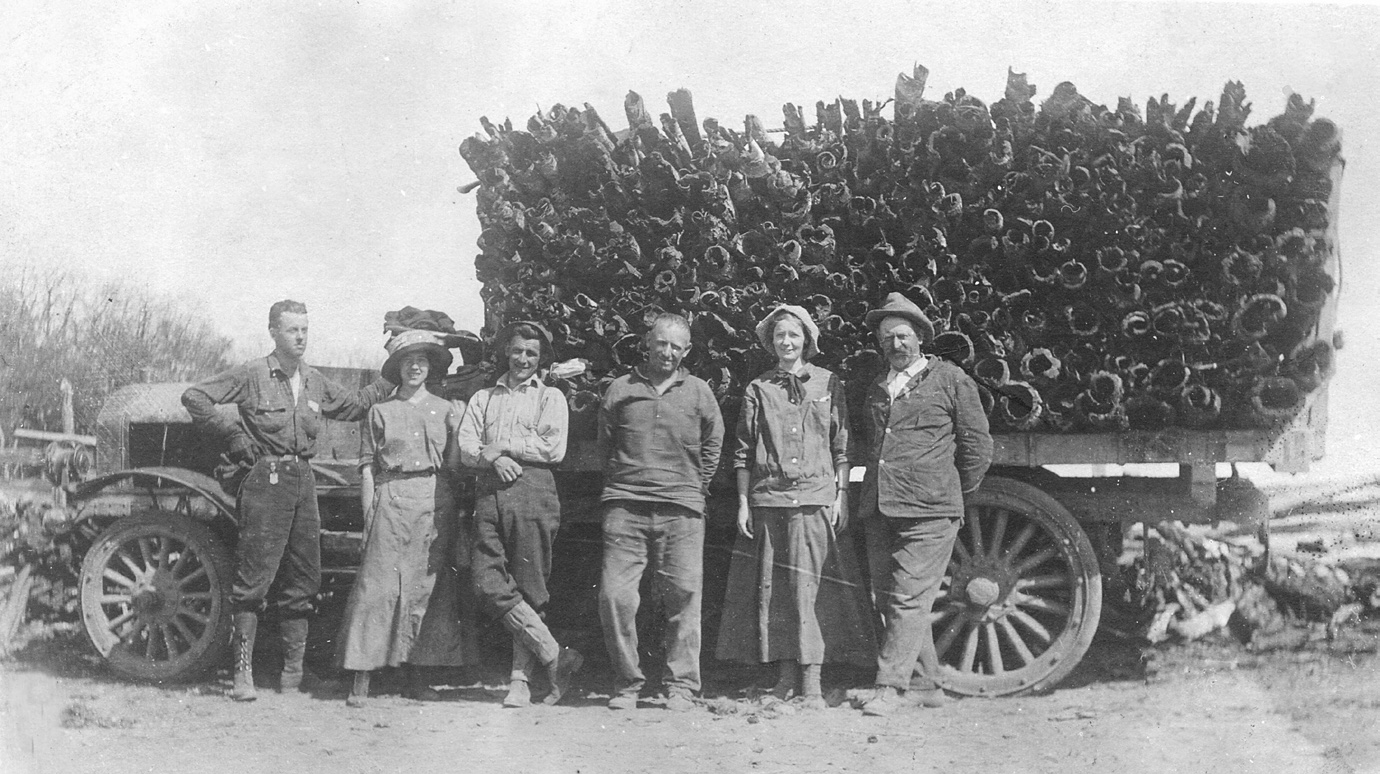
A load of tanbark, with various Phillipses. All photos courtesy the author, via the Humboldt Historian.
“Fro ’er inna fire,” ordered two-year-old Ted, when shown his new baby sister. He was learning to talk, but had trouble with some words. For example, he called his older brother “Danner,” because Alexander was too much of a mouthful. Perhaps Ted felt threatened by this new baby girl whose mop of auburn hair outshone his own bright carrot-top. Maybe he didn’t want to give up his place as the youngest in a family that already had four children. Whatever the reason, his animosity did not last. He and his little sister became fast friends, always getting each other into and out of scrapes.
The new sister, Laura Isabel Phillips, was born on November 19, 1903, in a house built by her father, Alexander Phillips. The Phillips home had a four-cornered roof that ended in a peak in the center, and stood where Miller Farms Nursery now stands on Central Avenue, McKinleyville’s main street. Latticework from the old house still decorated one of the Miller Farms buildings up until the 1980s.
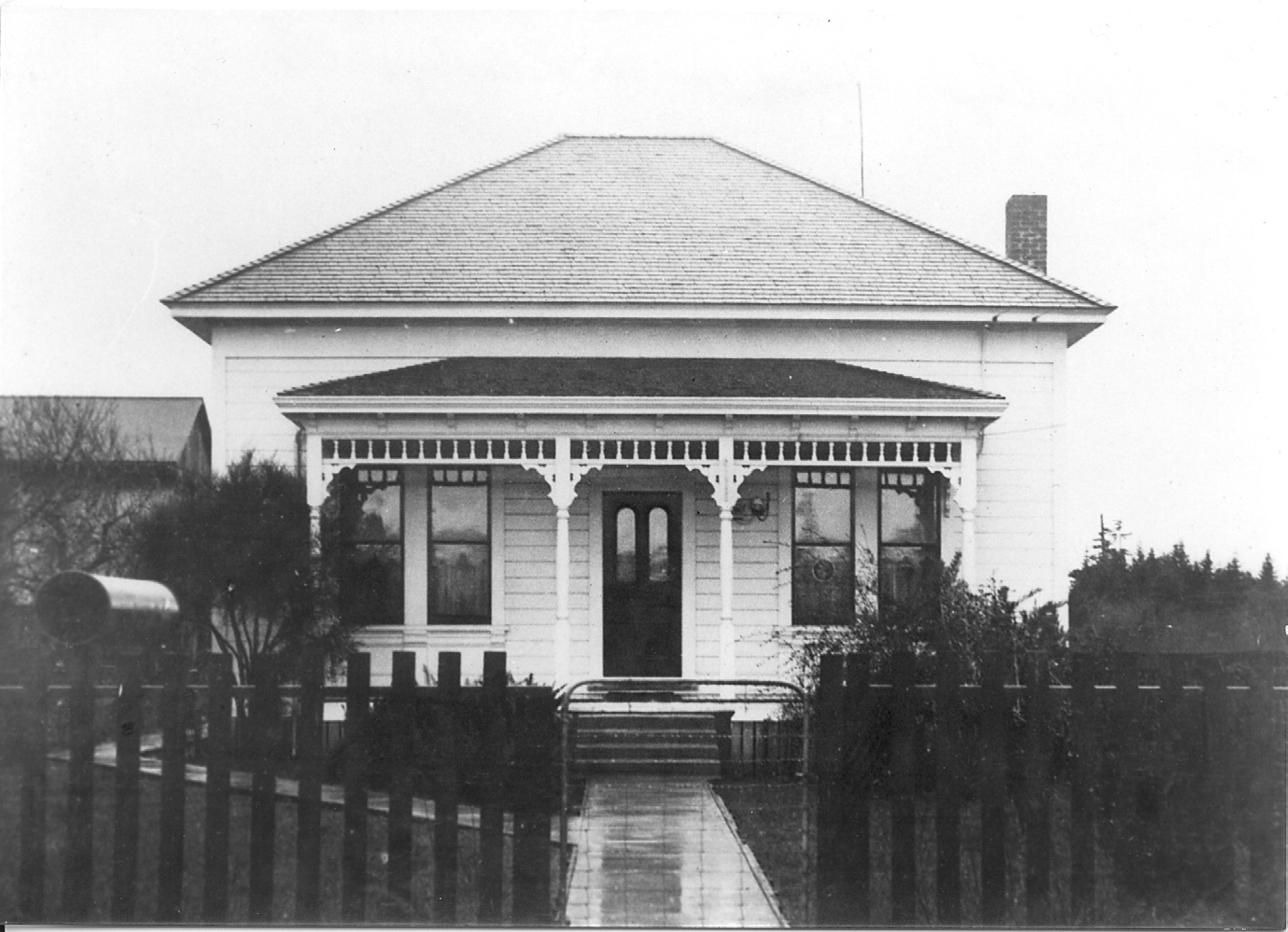
The McKinleyville house built by Alexander with latticework across the porch.
Alexander Parker Phillips had immigrated to Eureka in 1885 from Nova Scotia, a Canadian province with a coastline much like that of Humboldt County near Trinidad. Alexander preceded the rest of his family, traveling alone at the age of nineteen by riverboat up the St. Lawrence River and by the Great Northern Railway, to Seattle. From there, he took a steamship to Eureka.
Like many folks in the late nineteenth century, Alexander had leanings toward Socialism. Politics were the main entertainment in his life, and he loved to argue. His philosophy was that everyone must “produce” something, just as he did. People who worked at desks didn’t produce anything as far as he could see. He was variously a farmer, a rancher, a ship-knee contractor, a tan-bark gatherer, and a house builder.
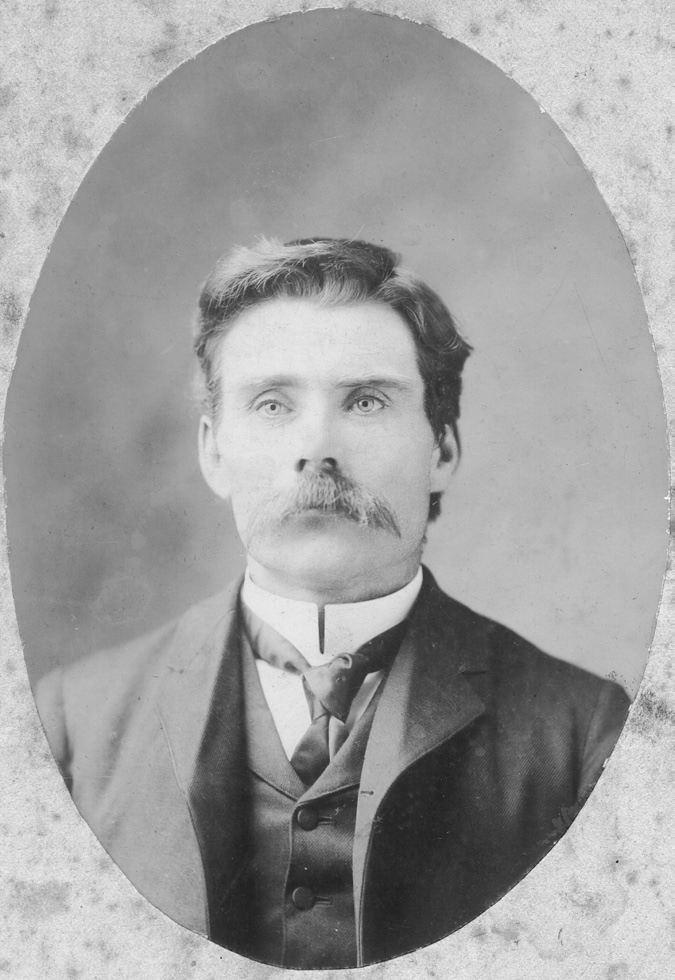
Alexander Phillips in about 1890.
As a young man, Alexander had studied for the ministry, but for some reason abruptly changed his mind about religion. After he married Amy Heustis of Eureka, he refused to allow her or their children to attend church. In addition, he vehemently disliked what he called “the Papists.” However, when he reached fourscore and ten years of age, he became a Bible-reader once again.
###
Times were hard in the early 1900s. Circumstances forced Alexander to be frugal, although frugality may have been part of his Scots nature. He and Amy raised their brood of six children on a strict Scottish budget of twice-turned collars and darned socks. Alexander did not believe in having fun. No singing. No dancing. Education was important, but work was more so. A simple treat like candy was a rarity in the Phillips household, except on special occasions when company arrived, and Amy would have a taffy pull. The new baby, Laura, who grew up to be my mother, once said they always had to eat the bruised and rotting apples harvested from the apple trees first, and save the good ones for later. By the time later came along, these apples, too, were rotting. As a child, she had longed for a crisp, unblemished apple.
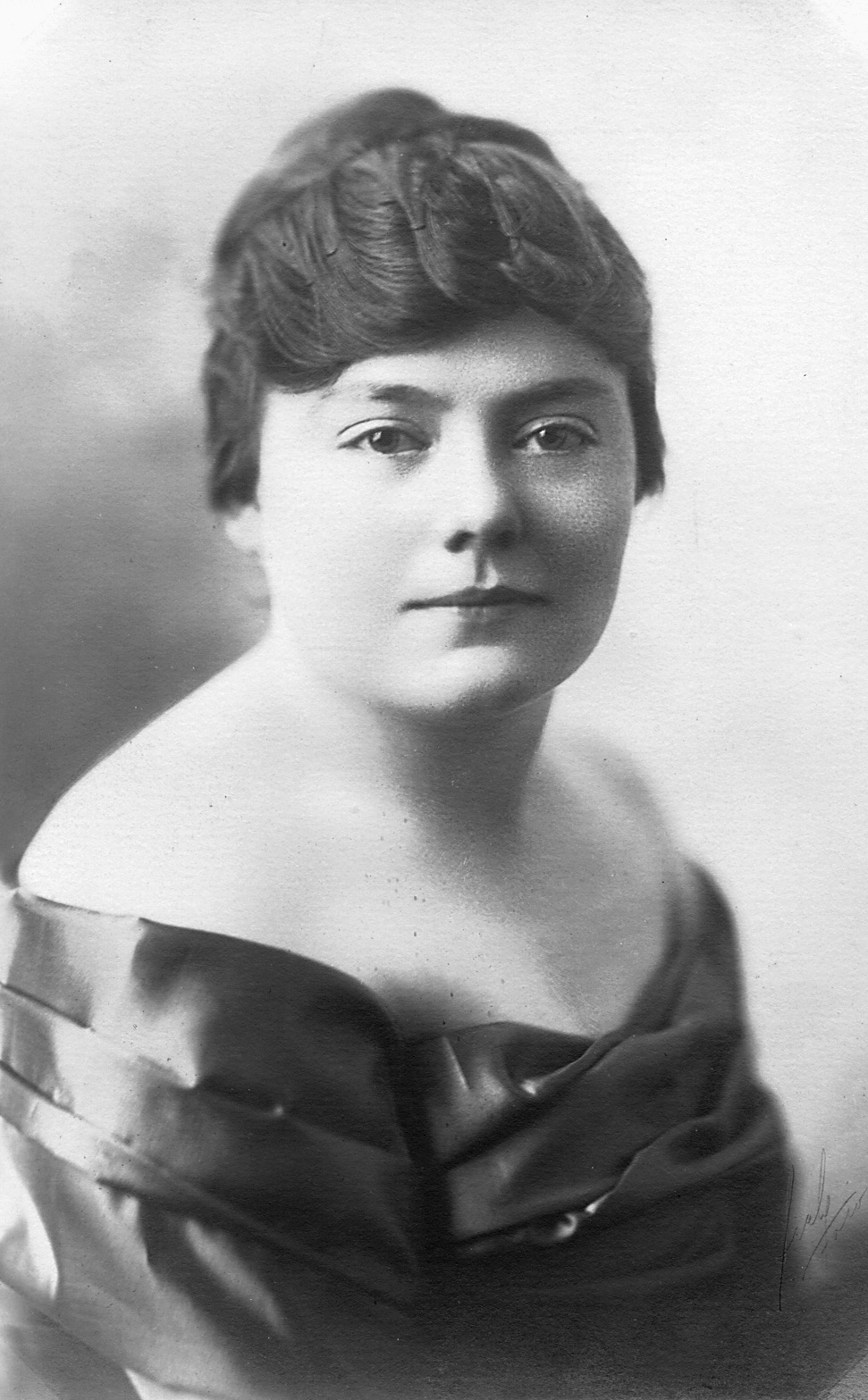
Eva at about age 17.
One summer, the eldest Phillips daughter, Eva, was invited to spend a week in Blue Lake with her aunt and uncle. Eva rode the train from McKinleyville to Blue Lake. She had a wonderful time with her cousin and her Auntie Em, who made a new dress for her in the latest fashion—a bit shorter than the floor-length, turn-of-the-century style. Eva rode back home on the train wearing her new dress, happy with her holiday. But when her father met her at the station he was not pleased. Alexander drove the buggy home in silence, unhitched the horse and put it out to pasture. Then he stormed into the house.
Eva heard his angry voice berating her mother about how mortified he had been when Eva stepped off the train in that short dress. He and all the men standing around the station platform could see her legs. Even to reveal an ankle was unthinkable to Alexander. His embarrassment over the incident was more than he could bear. He told Amy she would have to speak to Eva.
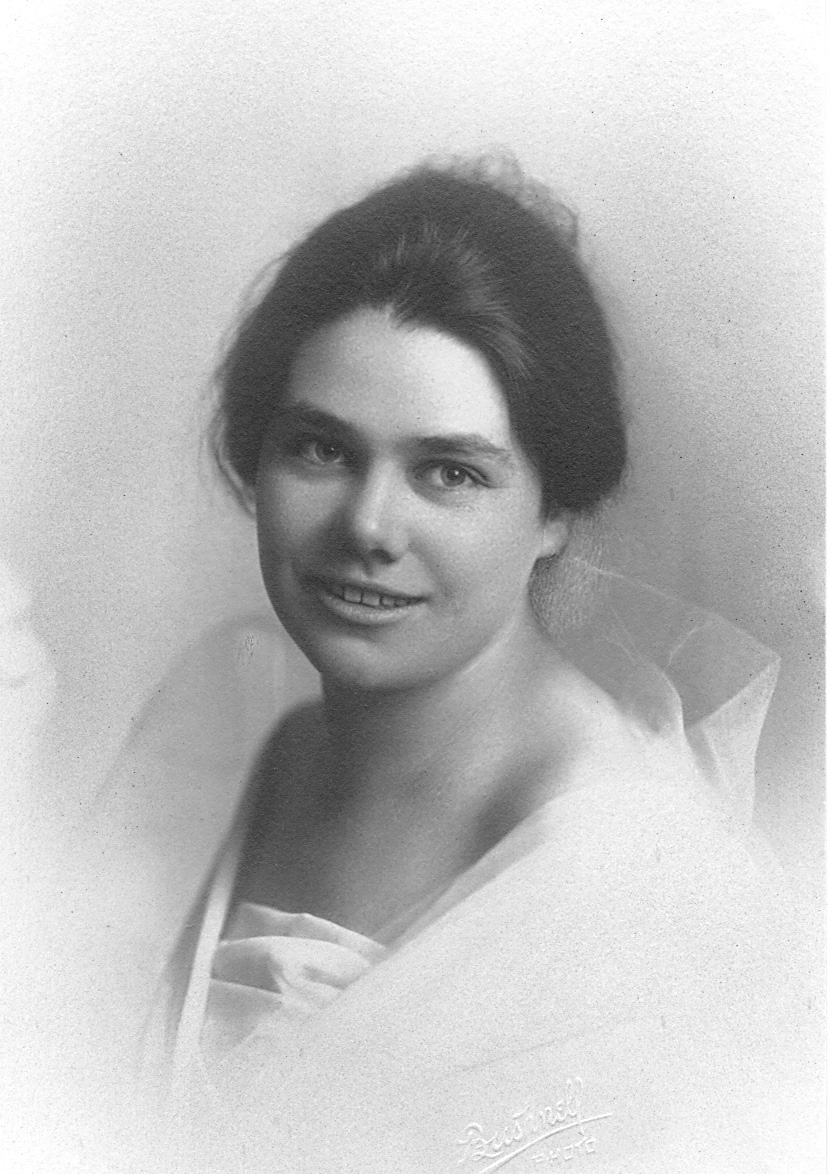
Audrey at about age sixteen, c. 1913.
Alexander moved his family several times: they lived in McKinleyville, Dows Prairie, Kneeland, Showers Pass, Eureka, and Cutten. When Laura was a very small child, the family camped at Lawrence Creek while Alexander and a crew of hired men stripped tanbark to sell to a leather tannery. An old homestead cabin stood by the creek. Amy and the two oldest girls, Eva and Audrey, cleaned out the spider’s nests and cobwebs, the rat droppings and dirt, so they would not have to sleep in a tent. Laura, who was only two or three at the time, clung to Audrey’s skirts, saying, “I’m afraid of s-spiders, s-sister.” Audrey laughed, picked her up, carried her inside the cabin, and showed her the spiders were all gone.
Just before Alexander moved his family to the camp, one of the hired men had killed a bear and skinned it, leaving the head attached to the hide. He laid the bearskin over a log and went back to work. One of the men decided it would be fun to play a joke on the family. He took the bear hide into the woods and draped it over his shoulders, balancing the bear’s head on top of his own. Then he shuffled and snuffled his way into the clearing in the manner of a bear. Alarmed, Amy herded her children into the cabin and barred the door. She got the rifle from a trunk, loaded it, opened a window a crack, and aimed the barrel out the window at the bear. Sunlight filtering through the alder and willow trees along the creek bank glinted off the gun barrel. The “bear” realized in a hurry the joke was on him. He threw up his arms, shedding the bear skin, and shouted, “Don’t shoot, Mrs. Phillips! Don’t shoot! It’s only me, Buck!”
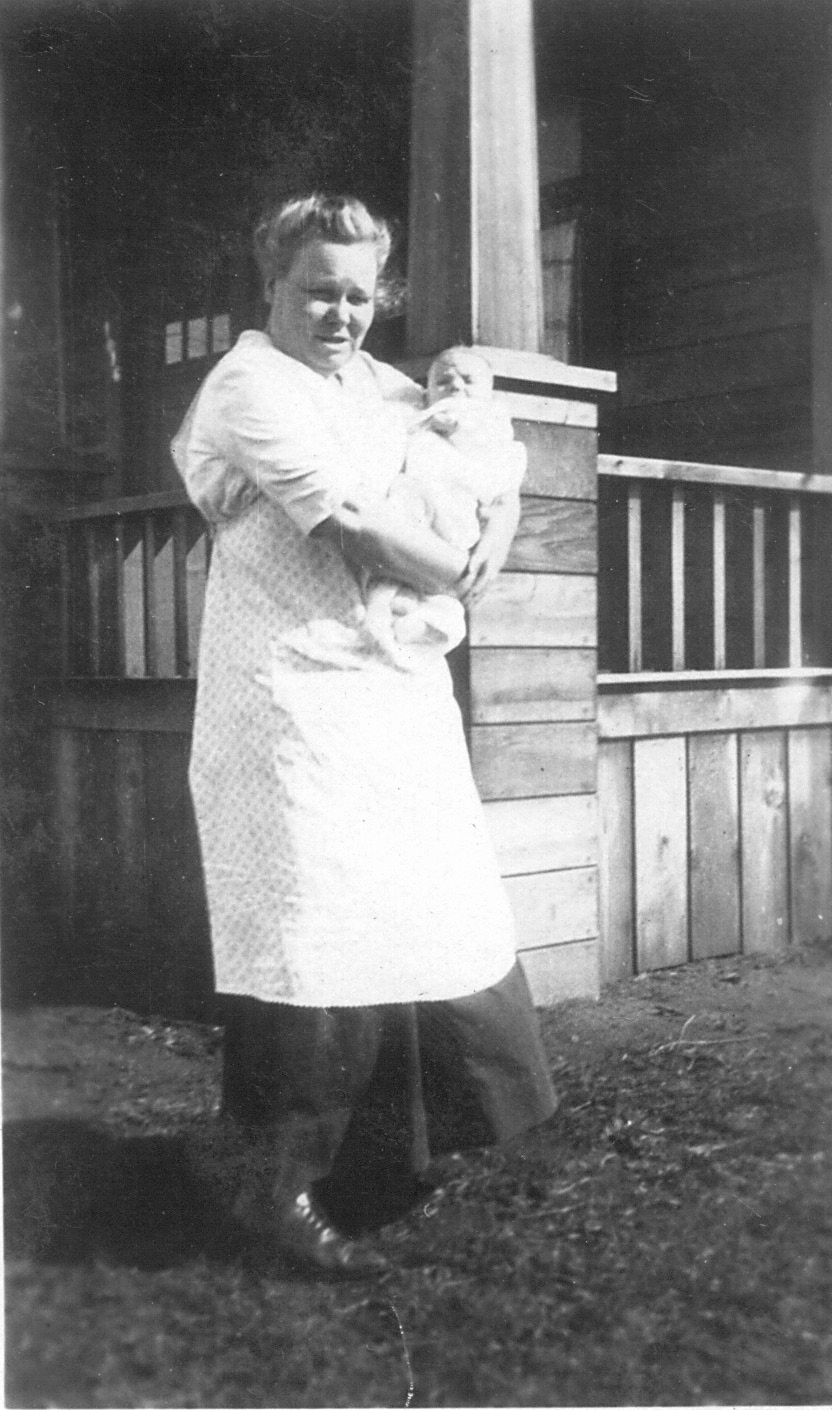
Amy Phillips in 1924, holding her granddaughter, Patricia Lorene Olsen.
After camping at Lawrence Creek, they moved to Kneeland where they had a sheep ranch. Buck was still one of their hired hands. The family lived in the house. The hired hands lived in a bunkhouse and took their meals in the house. Amy had her hands full with five children and a new baby at that time, plus all the laundry, sewing and cleaning, not to mention cooking for the whole crew. Of course the children all had to help, especially the two eldest girls.
One day when Laura was about five, rain poured down as it can only rain in Humboldt County. The children couldn’t go outside. Water streamed off the shake roof and ran down the window panes. Amy had cooked a huge kettle of chicken and dumplings on the wood-burning stove. Everyone was bored and hungry. Finally Alexander and the men came in. They took off their muddy, manure-encrusted rubber boots and left them just inside the door. The men ate first, as was the custom. Amy and the children had to wait until they had finished. Laura stuck her small feet into her father’s large boots and clumped around the kitchen while she waited. Finally, the men were through. They stood up to go out to the bunk house.
“Whoopee!” shouted Laura, kicking one foot high into the air. To everyone’s chagrin, the muddy boot flew off her foot and landed in the kettle of chicken and dumplings—all they had left for their supper. Laura’s older sisters, just as hungry as Laura, were cross with her, but their mother carefully lifted the boot from the kettle and set it in a bucket. She checked to see that no mud had fallen off the boot into the gravy, and then brought the kettle to a rolling boil for a good ten minutes to kill any germs that might have found their way into their food. She made a new batch of dumplings, and they finally got to eat that night.
Like all little girls, Laura wore knee-length dresses with several layers of underclothes: split bloomers and petticoats that tied with drawstrings around her waist, a chemise, and a small garter belt to hold up long black cotton stockings. How Laura hated those stockings. She had to wear the same pair every day for a week before putting on a clean pair. By the middle of the week, the feet of the stockings were stiff with dirt and sweat. She had only two pair—one to wear and one to wash.
###
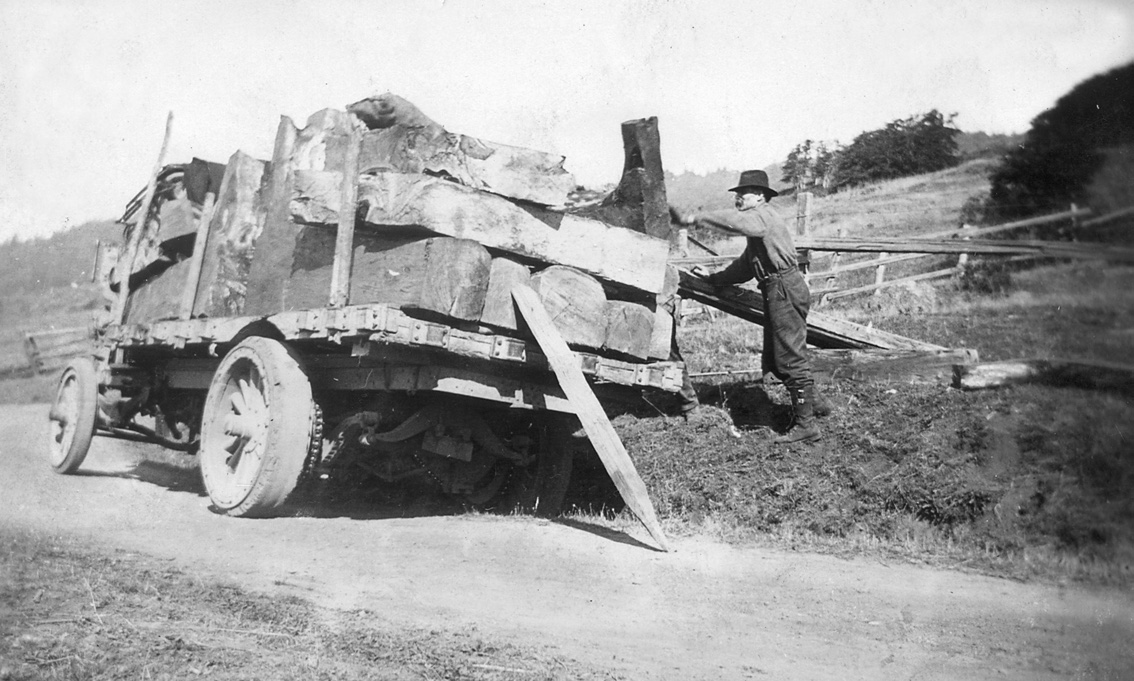
Alexander Phillips is seen loading ship-knees, probably at Kneeland. He took them to Freshwater and from there they went to the shipyard in Fairhaven.
Alexander worked hard to support his family. After falling the trees that grew at Kneeland, he sawed the logs into lumber, and dug up the stumps, trimming off the roots with sections of the stump to make “ship knees.” The strong, natural bend of the tree root was used to shape the keels of wooden ships in the Fairhaven shipyards across the bay from Eureka. Once a month Alexander went to town with a load of tanbark, railroad ties, or ship knees, and brought home supplies. The older children took turns going with him. Finally, Laura was old enough for a turn.
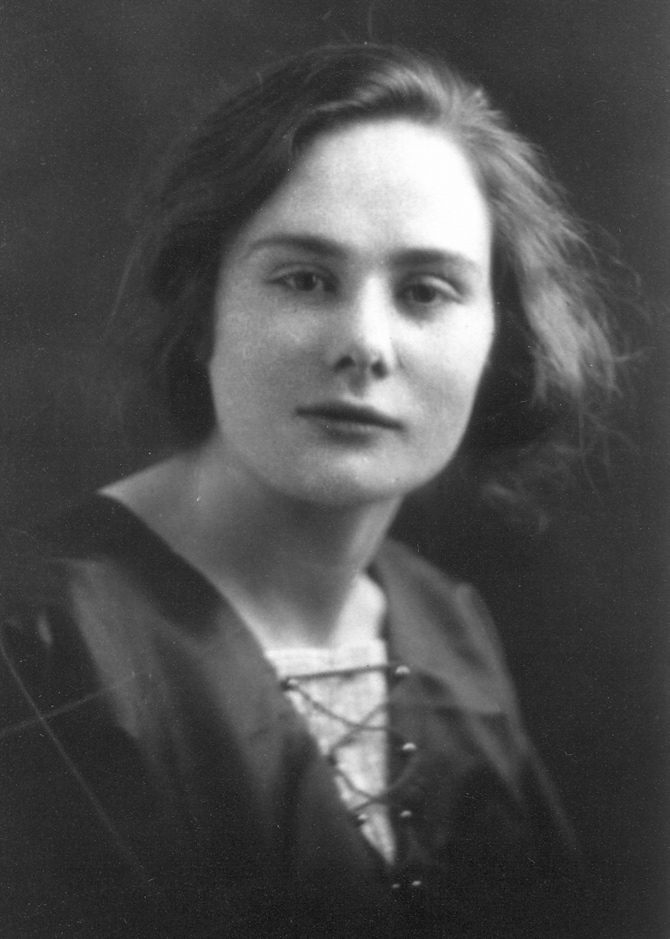
Laura in 1920, at age 17.
The rooster crowed to awaken them and the sun before dawn. Alexander and Laura headed toward Freshwater with the wagon and team. When they reached the Freshwater store, Alexander turned the horses in a wide circle and brought the wagon up in front of the building. While he unloaded the wagon, Laura wandered around the store. She met another little girl her age by the candy counter. Laura offered to ask her father to buy them each a bonbon: two for five cents. Laura was too young to know her father did not like to throw his money away on things like candy, that he struggled just to provide the basic necessities.
After unloading the wagon, Alexander stood with a group of men talking politics. His impatience might have shown when his little daughter interrupted him, but he gave her a buffalo nickel to buy the candies. Laura’s new friend gobbled her bonbon down in one gulp, but Laura nibbled at hers like a little mouse, and, wrapping it in her handkerchief, put it in her dress pocket to share later with her brother, Ted, and sister, Sadie.
Only after they had returned home that night, and Laura heard her father’s tirade to her mother, did she realize she had done something wrong. Alexander told Amy that Laura had embarrassed him in front of all those men by asking for money to buy candy. Money he could not afford to give her. The bonbon treat was spoiled for Laura. She gave what was left of her candy to Ted and Sadie, and vowed never to ask her father for anything again.
On another trip to town, Amy asked Alexander to bring a few yards of cotton flannel to make petticoats and nightgowns for the girls. Alexander returned home that night proud of the bargain he had made: a whole bolt of grey flannel for one dollar. They wouldn’t have to buy flannel for a year or two! The girls knew better than to complain. They all wore grey flannel, seemingly forever.
One Christmas when her first two daughters were still small, Amy had managed to buy dolls with china heads and eyes that opened and closed. She tucked the dolls away in her linen chest. Amy also had a toy for little Danner. One day when no one was in the house, Danner—redheaded with a temper to match— opened his mother’s linen chest and discovered the dolls. Irate that he could find nothing for a little boy, he smashed the dolls with a hammer. Amy did not dare spend Alexander’s hard-earned money on gifts for the children again. But years later when her parents died, Amy came into an inheritance of about $600. For the first time, she had money of her own. Of course, she and Alexander discussed how they should use the money. He was desperate for a new team of horses, so part of the money went for horses, but with the rest, Amy purchased a small house in Freshwater where she could take her children in the winter so they could attend school.
###
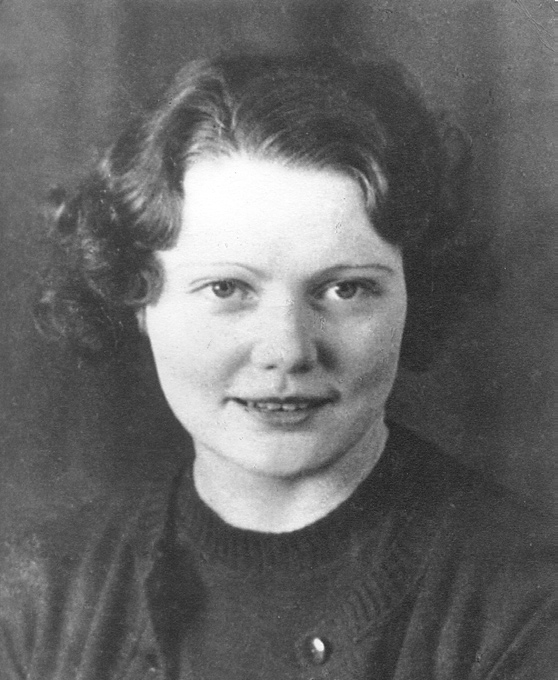
Sadie at about age fifteen, c. 1924.
With the birth of their sixth child, Sadie, Alexander decided to add an ell to the Kneeland house, and while working left the ladder leaning up against the roof. Laura was about five years old and Ted seven. They played follow-the-leader, with Ted the leader. Up the ladder they went onto the roof. Then Ted scampered down and Laura went too, but instead of turning around and going down backwards, she went down facing to the front, as though she were going down a staircase. Laura fell through the ladder two stories to the ground. She screamed; her leg bent crooked. Ted ran to their mother for help.
Amy carried Laura into the house. Alexander had just bought a load of lumber, and the lumberyard owner had given him a few free wooden yardsticks advertising his place of business. Amy grabbed those yardsticks, measured them next to her daughter’s leg, snapped them off at the right length, and splinted the broken leg. She snatched up a blanket and the pillows she had made by saving the down from chickens and geese. Alexander hitched a horse to the buggy and brought it around to the house. They put the pillows on the floor of the buggy, laid Laura on top of them and covered her with the quilt, and headed for town. They made one stop a short way down the road at a sawmill with a telephone, where Alexander called the doctor and asked him to meet them in Freshwater.
A forest fire was raging on both sides of the road as they made their way down the mountain into town. From her down-pillow bed on the buggy floor, Laura could see the fire through the buggy wheel spokes. Even long afterward, at the age of ninety, the thought of the fire and the roar of the flames still frightened her. Amy later said that had it not been for Alexander’s skill with the frightened horses, they never would have made it past the fire and into Freshwater.
The doctor drove from Eureka in his open touring car with a mattress across the back seat and met them in Freshwater at the storekeeper’s house. He laid Laura on the dining room table, gave her chloroform, and set her broken bone. Then he put Laura on the mattress across the back seat of his automobile and took her to the brand new hospital in Eureka, where she was its first patient. This might have been the Sequoia Hospital on “H” Street.
How the nurses fussed over her. They talked and read stories to her. They played games to pass the time. Laura’s parents came to see her when they could. After many weeks, the doctor took off the cast and let Laura get up to walk, but her foot was turned out the wrong way. Amy nearly collapsed at the sight. They had to put Laura under anesthesia again, re-break the bone and re-set it.
One day Amy asked Laura if there was anything they could bring next time they came to see her. Laura hesitated to ask, but finally managed to whisper that she would like to have a doll.
On the next visit, Amy and Alexander stopped at Lincoln’s Stationery Store on Fifth Street in Eureka. A toy section on a balcony hung over the back of the store. Alexander agreed to buy a doll, but not the one Amy knew their daughter wanted. This doll was a stiff toy soldier, maybe a little bit shopworn. The price had been marked down, a bargain my Scottish grandfather could not resist.
Laura tried to be happy with her soldier doll, but when Buck, the hired man, came to visit, he understood this was not the sort of doll a little girl would like. He went to Lincoln’s Store, and with his hard-earned wages bought a doll with a china head. Her cheeks were rosy. Delicate painted eyebrows arched above blue eyes that opened and closed and were fringed with eyelashes. Her smile revealed tiny pearl-like teeth, and her long golden curls were tied with a blue ribbon. The doll’s composition arms and legs were jointed and even her wrists could be moved. She wore a dress, petticoat, underdrawers, shoes and stockings. Laura loved her.
The next time her parents came to visit, they brought Laura’s baby sister, Sadie, just learning to walk. Sadie wanted to hold the doll. Of course Laura had to let her do this, even though she did not want to. Sadie was her baby sister, after all. Sadie toddled around the room and fell with the doll, smashing it. Laura was heartbroken. A few days later, Buck came to see her again, and brought another doll, just like the one that had been broken.
When my sister Betty and I were children, Laura, our mother, took the doll from the trunk where she had stored it for many years. She let us play with it. We called the doll “Clara,” but I’m not sure that’s the name little Laura had given her. One of Betty’s grandchildren—Laura’s great-granddaughter—has it now.
After nearly six months, Laura was allowed to go home, but she couldn’t walk. She had to be carried from the bed to a chair in the kitchen. One day, Laura heard her parents talking in the kitchen. Her mother cried, and said she was afraid Laura would never walk again. That day Laura struggled to get up, and, holding onto furniture, walked between the bed and the door. She did learn to walk again.
When Laura had fully recovered, she took her turn being responsible for her younger sibling, as was usual in large families. Sadie would allow no one else to do anything for her except Laura. She called Laura “Missy,” and her demands were endless. No one could help wash her hands, except Missy. No one could button her shoes with a special “shoe hook” but Missy. No one else could open a gate for her, only Missy. Sadie would stand at a gate and scream until Missy arrived to open it. This became very tiresome for Laura. Although she loved her little sister and they were friends all their lives, it was a relief to Laura when school started, and she could not be there for Sadie all the time.
###
The story above was printed in the Winter 2007 issue of the Humboldt Historian, a journal of the Humboldt County Historical Society. It is reprinted here with permission. The Humboldt County Historical Society is a nonprofit organization devoted to archiving, preserving and sharing Humboldt County’s rich history. You can become a member and receive a year’s worth of new issues of The Humboldt Historian at this link.