Kenneth “Joe” Shepp May 16, 1950 – November 4, 2024
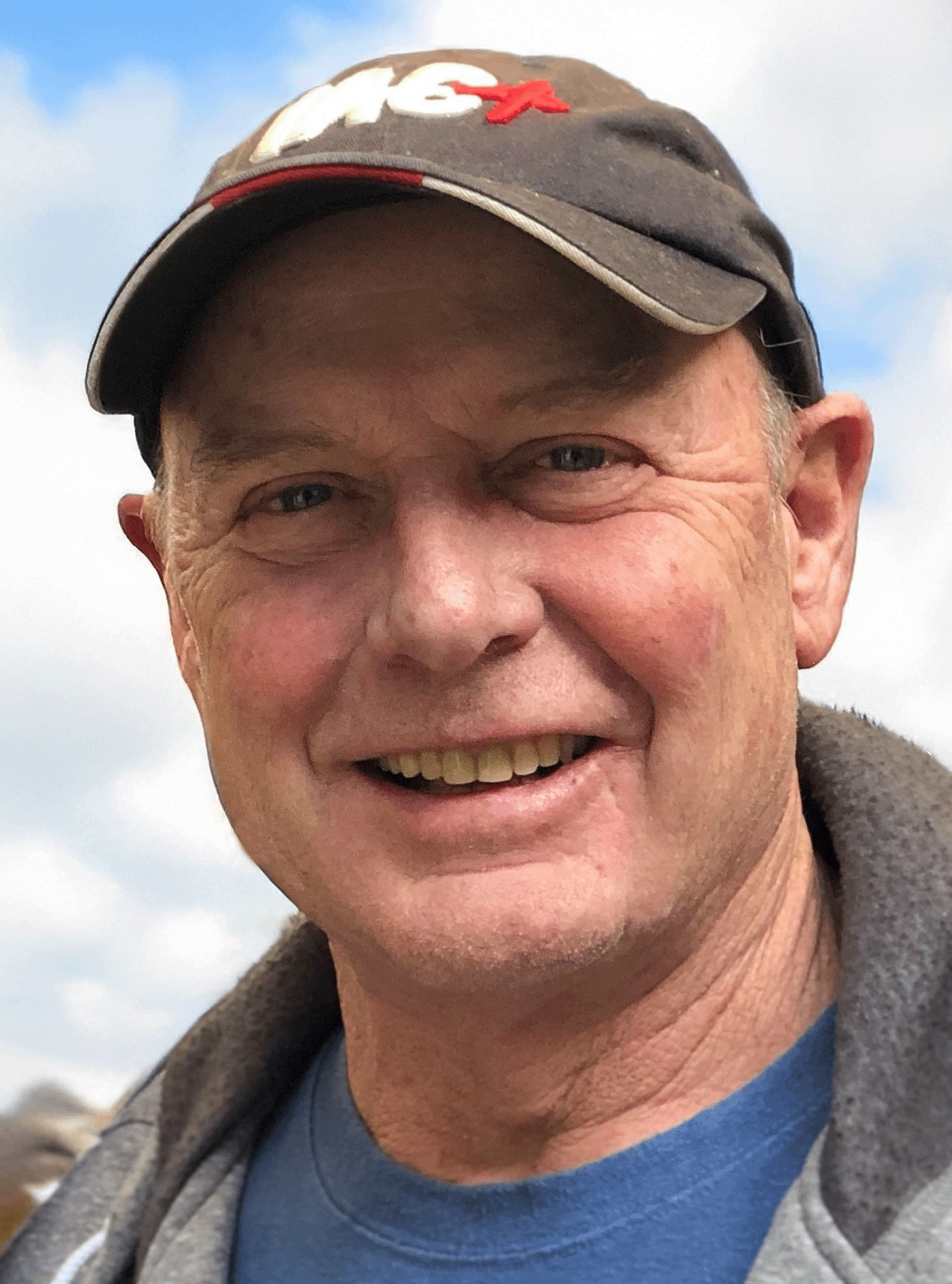
Kenneth “Joe” Shepp, 74, passed away on November 4, 2024. Born on
May 16, 1950, in Bay City, Michigan, Joe was a dedicated husband, a steadfast father, and a
cherished member of the Southern Humboldt community. He will be remembered for his bold
spirit, self-made success and unique sense of humor.
Joe spent much of his life as a heavy equipment operator with Shepp’s Equipment, as a master
cannabis farmer, and as a skilled carpenter and mechanic. He was an early homesteader in
Ettersberg, a local bush pilot, a motorcycle racer, an ocean sailor, and a cold water surfer,
embodying a love for the outdoors and fearless pursuits.
He shared 47 devoted years with his late wife, Mary Shepp, who passed away on June 16,
2013, and later found companionship with Jessica Duran, his partner of 10 years. Joe is
survived by his three sons, their families, and grandchildren: Joey, Stacie, and Devin Shepp;
Jason, his former wife Amber, and their children Makoa, Alana, Ikaika, and Mahina Shepp; and
Jerrell, his former wife Rakhia, and their children Jacoby, Omarie and Khyrie Shepp. He is also
survived by his siblings Carol Shepp Johnson, Edward Shepp, David Shepp, Patrick Shepp, and
Paula Shepp Bassett. He was preceded in death by his siblings Richard Shepp and John
Shepp.
Joe’s contributions extended beyond his family and work. He was a skilled pilot who helped
young pilots obtain their wings. He served as the president of Southern Humboldt Little League,
mentored young motorcycle racers, and was a familiar voice on KMUD Radio, demonstrating his
commitment to the local community.
A memorial service celebrating Joe’s life will be held in June 2025 in Shelter Cove — further
details coming in early 2025. For further information and to reach out to the family, please visit
joe.shepp.com or leave a voice message or text at (707) 413-7526.
###
The obituary above was submitted on behalf of Joe Shepp’s loved ones. The Lost Coast Outpost runs obituaries of Humboldt County residents at no charge. See guidelines here. Email news@lostcoastoutpost.com.
A grower addresses the Humboldt County Board of Supervisors. | Screenshot.
###
Once again today, the Humboldt County Board of Supervisors opted to cut the struggling cannabis industry some slack, voting 3-1 to eliminate taxation on next year’s cultivation and directing staff to explore options for an altogether new system of weed taxation that could replace Measure S, which voters approved in 2016.
Fifth District Supervisor Michelle Bushnell was forced to recuse herself due to her participation in the industry, but the matter still required three “yes” votes for any motion to pass. With the four participating supervisors workshopping measures on the fly, the deliberations descended into confusion before the board landed on a suggestion that the majority supported, with First District Supervisor/board chair Rex Bohn voting “no.”
The approved motion will also give growers a discount on their 2024 cultivation taxes, which come due next May. Following a suggestion from Third District Supervisor Mike Wilson, the board agreed to eliminate a built-in inflation increase of 23 percent, based on the Consumer Price Index (CPI).
That means the tax on this year’s cannabis gardens will drop back to the previously slashed rates of 10 cents per square foot of outdoor cultivation, 20 cents per square foot of mixed-light cultivation and 30 cents per square foot of indoor. (The original rates of Measure S were ten times those amounts.)
This isn’t the first time that the board agreed to lessen the burden on local growers as the statewide industry struggles from oversupply. In 2022, for example, the board responded to urgent pleas from local growers by agreeing to suspend Measure S taxes for two years. This past October the board reinstated the tax at dramatically reduced rates, starting with the current calendar year. At the time, the board also directed growers with outstanding tax debts to enter into payment plans with the county by March of 2025.
Today, Deputy County Administrative Officer Sean Quincey said there are roughly 1,000 cultivation permits still active countywide, and as of last month 771 of those are delinquent on their county taxes, owing a combined $11.97 million. Only 418 of those growers have signed up for a payment plan.
Quincey laid out a variety of options for the board, including a proposal to temporarily suspend taxes altogether for the smallest farms while taxing larger ones at 10 percent of Measure S rates. He noted that it’s very difficult in the current economic environment to predict revenue from weed taxation, but he ventured a “guesstimate” of less than a million if the board continued with the current, reduced rate and maybe half that amount if it adopted the proposal for a graduated billing structure.
Fifth District Supervisor Steve Madrone offered the most lenient terms to growers, even suggesting a program that would allow those in debt to surrender their permits in exchange for having all of their fees and taxes forgiven. He also suggested extending the payment plan deadline beyond March of 2025.
Fourth District Supervisor Natalie Arroyo said a lot of community members want more information about how Measure S revenues are being spent, and she voiced interest in exploring the idea of repealing and replacing the measure, possibly with one based on gross receipts rather than cultivation area.
Third District Supervisor Mike Wilson pushed back against Madrone’s proposal for a two-year suspension, saying, “I still believe that the general public is still pretty supportive of of some kind of cannabis tax in Humboldt County.”
The Humboldt County Growers Alliance, a cannabis industry group, put up its social media bat signal yesterday, calling on growers to turn up at today’s meeting and call for a two-year suspension of Measure S. Many did just that. HCGA Policy Director Ross Gordon, for example, cited results of an internal survey of local growers.
“We distributed a survey in September looking at current market conditions,” he said. “About 107 cultivators responded. Of those cultivators, 85% said that since the board’s decision to totally suspend the Measure S tax in November 2022 things have gotten worse. Cultivators reported that average price per pound has dropped from $400 a pound to $350 a pound over the last year. … This is why we’ve asked for an additional two year suspension of the Measure S tax.”
Other growers called for “normalization” of the industry, by which they meant treating cannabis like other agricultural products in the state, which aren’t subject to cultivation taxes.
Grower Dylan Mattole said economic studies show that cannabis still generates hundreds of millions of dollars for the local economy, and he argued that Measure S taxes shouldn’t exist.
“We need to stay at zero so that we can keep in business and keep inputting well over half of billion dollars … into this economy,” he said.
HCGA Executive Director Natalynne DeLapp described an industry in economic free fall.
“We are going to see more and more farmers going out of business, because you can only operate in the red for so many years before you file bankruptcy,” she said. “[A]nd everyone knows that taxing a struggling industry is the fastest way to crush it.”
Humboldt County Planning Commissioner Thomas Mulder called in during public comment, saying he’s among the cannabis cultivators who owes back taxes, though he’s trying to make payments.
When the matter came back to the board, Madrone laid a variety of options on the table and eventually made a motion to suspend Measure S taxes for two years — the 2025 and 2026 calendar years, for which bills would be due in 2026 and 2027.
Wilson remained resistant to slashing those taxes altogether. He suggested the idea of a flat tax to be assessed on all but the smallest-scale growers.
In a rare instance of agreement with Madrone, Bohn suggested laying off taxation for now, saying everyone seems to want a piece of the pie. “And if we want to have any idea of maybe having pie later, we’re going to have to support the cultivators,” he said. He joined Madrone in advocating for a two-year suspension.
The board tossed around some more ideas for a while. Wilson argued that growers’ economic woes have more to do with external market forces than local taxation, and he reminded his colleagues that voters approved taxation of the industry.
“We heard from one side today, but there’s definitely another perspective,” he said.
Both he and Arroyo expressed reluctance to suspend Measure S for two years, and so Madrone pulled his motion back before a vote was taken. He made a new motion to suspend the tax for one year and direct staff to return with options for repealing and replacing it. Wilson seconded the motion, but then Bohn said he’d rather see growers get a break on this year’s bills.
Madrone then seemed to (perhaps subconsciously) incorporate Bohn’s suggestion into his already-made motion, later saying he would be unwilling to “amend” his motion to include any taxation of the current year. Wilson objected, saying that wasn’t the motion he’d seconded, and the conversation went sideways for a spell.
Arroyo was put in the awkward position of having to take a side, and she wound up agreeing with Wilson, saying she didn’t come into the day’s conversation thinking it would include re-litigating previously settled taxation decisions.
Eventually, Madrone withdrew his motion once again and made a new one. As noted above, it called for the elimination of Measure S taxes for the 2025 calendar year, plus a small reduction in taxes for the current year and a directive to county staff to bring back options to repeal and replace Measure S. Wilson seconded again. Bohn was dissatisfied with the lack of immediate relief for growers and thus voted “no.” The motion passed regardless.
Electric car battery pilot project
Earlier in today’s meeting, the board debated the financial implications of participating in a pilot project involving Nissan LEAF electric vehicles, some state-of-the-art bi-directional electric vehicle charging stations and the Redwood Coast Airport Microgrid.
Former Humboldt County Aviation Director Cody Roggatz, whose abrupt resignation remains a mystery, initiated this pilot project, which will see the county partner with PG&E, Nissan, Fermata Energy and the Schatz Energy Research Center to install bi-directional electric vehicle chargers at the Arcata-Eureka Airport. The two-year project is financed through a sub-grant award from Cal Poly Humboldt. (The primary funder is the California Public Utilities Commission).
As Schatz engineer Dave Carter explained to the board, these bi-directional chargers are unique in that they not only charge Nissan LEAF vehicles but can also export energy from the vehicle batteries back to the county’s facilities, which will help manage electricity costs and improve grid stability.
“That is a very unique kind of leading-edge technology, [an] up-and-coming system that we’ll see a lot more of in the coming years,” Carter said. He went on to explain, “We will be able to use the cars to balance the frequency inside the microgrid when the microgrid is islanded,” that is, when it’s not plugged into the statewide electrical grid.
The matter was set to be approved without specific deliberation as part of the consent calendar, but Bushnell pulled it over cost concerns, noting that it will require money from the county’s General Fund contingencies during a budget crisis. (The General Fund is facing a $17 million deficit, per the latest projections.)
“I’m not feeling very great about it,” she said, noting that this project isn’t budgeted.
The pilot project requires the Department of Aviation to purchase one Nissan LEAF electric vehicle at $33,769 (a discounted rate) and to accept a loan of a second Nissan LEAF. The rest of the project, including installation of the bi-directional EV charging stations and software and cloud services from Fermata Energy, would be financed through the Cal Poly Humboldt sub-grant in the amount of $104,147.
Bohn was skeptical about the ability of two small car batteries to balance the microgrid, but Carter said they’re capable of generating 40 kilowatts, which is enough to extend the microgrid’s capabilities in an emergency.
“It’s a significant injection of energy in a worst-case scenario,” he said.
Bohn also questioned the utility of such tiny vehicles.
“You can’t get a shovel in a LEAF,” he said. “So we’re just going to have people drive up to the airport, look at it and drive back. There’s not going to be any repairs, weed eaters, any of that work done at the airports.”
Wilson defended the project’s value in keeping Humboldt County at the forefront of renewable energy development, saying, “I think we probably have the highest microgrid capacity per capita of any county in the United States.” And he said that bi-directional chargers will eventually allow the larger community to have more energy resilience, with electric cars serving as backup battery systems.
Bushnell remained wary, asking what will happen if the county doesn’t want to keep these LEAF-specific bi-directional chargers at the end of the program period. Carter explained that much of the circuitry to be installed will be compatible with other chargers.
When it came time to vote, Bushnell said, “I’m gonna vote yes. However, I have a lot of feelings about it.” She’s worried that it will cost the county money in the long run. Nevertheless, the board voted unanimously to embark on the pilot project.
So long, Jim Wood
Wood
Family dentist and former Healdsburg Mayor Jim Wood, who has been our District 2 representative in the California State Assembly for the past decade, has just two weeks left on the job before he’ll be succeeded by incoming Assemblymember-elect Chris Rogers.
Wood appeared in board chambers today to deliver some retrospective observations, offer some advice for dealing with the state legislature and bid fond farewells to county personnel.
Wood recounted his work on legislation to extend seismic compliance deadlines for small rural hospitals, expand timber harvest plans to improve wildfire resilience, and address and restore sites that have been damaged by illicit cannabis cultivation.
He also emphasized the importance of communicating with state legislators to address critical local issues and said Rogers will continue work on important projects such as expanding the region’s “middle mile” broadband network here in “the most underserved district in the state.”
Wood warned that this year’s state budget will not be good, so we shouldn’t expect much in the way of extra resources from Sacramento.
Each board member expressed gratitude for Wood’s work over the past decade, and at the end of the meeting they posed for a group photo. (Minus Wilson, who had to leave the meeting early.)
Posing for the photo (from left to right): Jim Wood, Michelle Bushnell, Rex Bohn, Steve Madrone, Natalie Arroyo and County Administrative Officer Elishia Hayes. | Screenshot.
Last year’s King Tides in King Salmon. Photo via the California King Tide Project.
Every we time we post something about King Tides, some wiseacre pops in to say: “Uh, you mean high tides? Duh, they happen twice a day! Fake news! LoCO is dumb! I am smarter!”
This is why you are the dummy. While it is true that there is no strict scientific definition of a “king tide,” we’re generally talking about the highest of high tides, here. They happen a few times a year, when the sun and moon and Earth line up just right. Educate yourself.
King tides show us what sea level rise is going to mean for our coastline. If you are interested in taking photos of super-high tides around the county in November and December, the California Coastal Commission would be delighted if you would share your work with them in the name of citizen science.
Press release from the California Coastal Commission:
King
Tides will inundate California beaches, roads and other coastal areas
during the next two months, providing a glimpse into future erosion
and flooding as the planet continues to warm and sea level rise
accelerates.
The
California Coastal Commission is asking the public to safely
photograph the impact of waves and rising groundwater on shorelines
and nearby communities during this winter’s King Tides — November
15 to 17 and December 13 to 15. Those interested can submit their
photos to the California King Tides Project at
www.coastal.ca.gov/kingtides,
where people can also view photos
from previous years.
Photographing
these extreme high tides brings attention to the impact of climate
change and helps prepare for the future. The images are used by
climate researchers, as well as local and state officials, to
validate sea level rise models and assess local vulnerabilities to
erosion and flooding. The project is one of many similar community
science efforts across the world to create a visual record of our
changing coastlines.
King
Tides are caused when the sun, moon and Earth are aligned, creating a
stronger than normal gravitational pull. When these astronomical
conditions are coupled with storm surges, the potential for property
and other types of damage dramatically increases.
King
tides are typically at least one to two feet above the average high
tide. For comparison, ocean levels in California are projected
to rise as much as 1.2 feet by 2050 and up to 6.6 feet by the end of
the century.
Sea
level rise is caused by climate change from burning fossil fuels such
as oil, gas and coal, which releases greenhouse gases into the
atmosphere. This pollution acts like a blanket, trapping heat that
would otherwise escape, raising the global temperature of the land,
air and ocean. Sea levels are rising because land-based glaciers and
ice sheets are melting into the ocean and water expands when it
warms.
The
state of California’s sea level rise planning efforts include
updating the California Coastal Commission’s Sea
Level Rise Policy Guidance,
which will be presented for adoption at the public agency’s
November hearing in San Francisco. The guidance includes updates for
new sea level rise science, environmental justice principles related
to sea level rise and recent state
law
that requires local governments to incorporate sea level rise in
coastal planning documents.
Details
available on the website include local times for king
tides,
community
events
and resources
for educators
interested in teaching about climate change. The king tides photo
upload
form
includes instructions in both English and Spanish.
The Sequoia Park Zoo does not follow the trends, thank you very much
The Sequoia Park Zoo has no time for LoCO’s silliness. Last week we irresponsibly whipped our readers into a frenzy by suggesting that all the world’s woes might be solved if only we’d band together and force Eureka’s zoo into acquiring a Moo Deng-like baby pygmy hippo.
Well, today the Sequoia Park Zoo has responded: Uh, no. Instead, they are going with what they know: Adorable red panda goodness.
Get ready for Saffron madness, Humboldt. The Sequoia Park Zoo explains in the release below:
Sequoia Park Zoo wants to reassure the community that we have no plans to bring a baby pygmy hippo (or ten) to the best little zoo in the redwoods.
While we acknowledge that Moo Deng is undeniably charming and her antics on social media have created a frenzy, a pygmy hippo would be unsuitable at Sequoia Park Zoo for many reasons.
“A hippo, even a pygmy one, would require the construction of a brand new habitat that is simply not practical,” explains Zoo Director, Jim Campbell-Spickler. “We don’t have the space or resources to care for major African mammals. Our temperate coastal climate and intimate size allow us to specialize in smaller North American, South American, and Asian species that will thrive at our facility.”
Saffron! Saffron! Saffron!
Instead of focusing energy on hypothetical pygmy hippos and hybrids, Sequoia Park Zoo would like to take the opportunity to announce the very real arrival of Saffron - a NEW red panda at the Zoo!
Last week, Zoo staff quietly welcomed a young male red panda from the Lee Richardson Zoo in Garden City, Kansas. Born in July 2023 to parents Charlie Junior (CJ) and Paprika, Saffron has come to Sequoia Park Zoo through the red panda Species Survival Plan (SSP) coordinated by the Association of Zoos and Aquariums (AZA). As part of standard procedures for all new animals at the Zoo, Saffron will be cared for behind-the-scenes during a typical 30-day quarantine period. “Red pandas are part of our identity as a Zoo, and we all have been patiently - but eagerly - waiting for this little guy!” says Animal Curator, Amanda Auston. “He’s still a young panda, and this is a big adjustment for him. We are going to work at his pace to gradually introduce him to life at our Zoo.”
Sequoia Park Zoo reminds the community that it might take months before Saffron is comfortable and ready for public appearances. We look forward to posting regular updates about Saffron’s progress as we care for him and learn the personality of this aptly nicknamed “baby spice.”
Guests wanting to support red pandas at Sequoia Park Zoo can contribute to the Red Panda Improvement Project Fund by making a donation at redwoodzoo.org/donate.
The Red Panda Improvement Project supports construction and renovations to Sequoia Park Zoo’s red panda and muntjac habitat that will increase habitat size, enhance guest experience, and improve animal visibility.
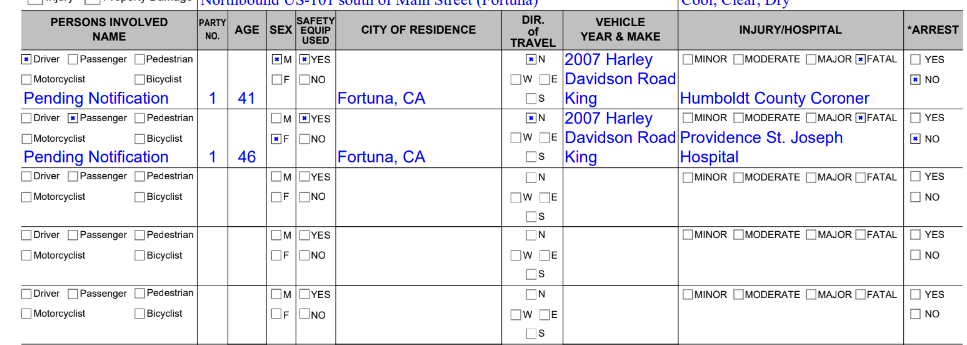
On November 10, 2024 at approximately 12:03 PM, a 2007 Harley Davidson with two occupants was traveling northbound on US-101, south of Main St., with a group of other motorcyclists. For unknown reasons, the driver lost control of the motorcycle and both riders were ejected. Emergency personnel were notified and responded to the scene. Unfortunately, due to the severity of his injuries, the male driver was pronounced deceased at the scene. The female passenger was transported with major injuries to St. Joseph Hospital in Eureka, however, she later succumbed to her injuries. Northbound US-101 was periodically closed for approximately two hours to facilitate this investigation. It is currently unknown what factors may have contributed to the cause of this crash.
The California Highway Patrol is continuing its investigation and asks for anyone that may have information related to this crash to contact the Humboldt Area CHP at 707-822-5981 or email Humboldt_Area@chp.ca.gov.
Cal Poly Humboldt’s bachelor’s program offers new opportunity to people incarcerated at maximum-security Pelican Bay State Prison
In less than 15 minutes, Michael Mariscal validated why a team of officials at Cal Poly Humboldt have spent more than three years trying to set up the first bachelor’s degree program at a maximum-security prison in California.
At the end of a class in persuasive speaking, Mariscal was tasked with giving a presentation to highlight his personal growth. His 22 classmates inside B Facility at Pelican Bay State Prison were skeptical: Just two weeks earlier, Mariscal had used his presentation time to give step-by-step directions on how to make a peanut butter and jelly sandwich.
But today was different.
“I’ve never told this to anyone before,” the 32-year-old Mariscal said, holding back tears as he explained his feelings when he learned at his trial that the state was requesting he be put to death. “I said, ‘That’s OK, that’s cool,’” showing no outward emotion at the time, he told the class. But inside his mind was reeling.
“I’m not innocent; I did everything I was convicted for,” he quickly added, referring to a gang shooting that left two people dead.
Mariscal went on to say that his brother had received a life sentence and been murdered while in prison. Mariscal himself was given five life sentences. He declared that he did not expect ever to be released, but finished by saying, “I can still live a meaningful life in here. Freedom is different for everybody.”
A shocked silence filled the room before classmate Darryl Baca spoke up. “That’s some raw stuff right here. I recognize the potential in you.”
“It’s not the first time I’ve cried after class,” the professor, Romi Hitchcock-Tinseth, said later, although she was teaching only her fourth session at the prison.
Mariscal’s speech exemplified everything officials at Cal Poly Humboldt hoped to accomplish when they set out to create a satellite campus at one of the most notorious prisons in the country. They knew that earning a degree could help some men shorten their sentences and possibly land well-paying jobs once released. But they also hoped that the classes, and the camaraderie fostered there, would pay immediate dividends, lessening violence at the prison and improving students’ daily behaviors. Seeing Mariscal address his past while both sharing his feelings and mapping out a hopeful path forward just four weeks into the semester was validating, officials said.
First: Incarcerated college student Michael Anthony Mariscal, 32, center, leaves the education hallway with fellow classmates after school at Pelican Bay State Prison in Crescent City, Calif, on Sept. 17, 2024. Last: Incarcerated college students applaud Michael Anthony Mariscal, 32, after he gave a presentation about his own journey to turn his life around during a CalPoly Humboldt class on persuasive speaking at Pelican Bay State Prison in Crescent City, on Sept. 17, 2024. Photos by Manuel Orbegozo for Hechinger Report
California has been a leader in prison education programs, starting with a 2014 rule authorizing state funding for community colleges to set up programs for students who are incarcerated. Since then, some 25 community colleges and eight universities have established degree-granting programs that now cover every facility in the state. Humboldt’s Pelican Bay program is not only the state’s first bachelor’s initiative at a max-security prison; earlier this year, it became the first program in the country approved under new federal Department of Education rules to let incarcerated individuals access Pell Grant funds to pay for college.
For about 29 years Pell money had been largely prohibited for individuals who are incarcerated, with the exception of a small federal pilot program that debuted in 2015. The new Pell rules made 767,000 people at state prisons nationwide eligible to pay for college with federal funds — starting with a handful of those at Pelican Bay.
“We’re setting an example,” said Tony Wallin-Sato, a former Humboldt official who helped create the program. “If we can be successful at Pelican Bay, it can work anywhere.”
Pelican Bay is one of the most infamous prisons in the country. Built in 1989 in the extreme northwest corner of California, the facility was created to isolate its occupants in two ways. Many of the men who are incarcerated there hail from the Los Angeles area, nearly 700 miles south. And nearly half of the facility’s units were built for solitary confinement, with some occupants stuck inside these 7-by-11-foot cells for decades.
A “60 Minutes” report in 1993 highlighted excessive force by guards, and a 1995 lawsuit exposed inadequate medical care. In 2013, people incarcerated there staged a two-month hunger strike that spread throughout the state’s prisons to protest the excessive use of solitary confinement.
But program staffers and people incarcerated at the facility say day-to-day life there now bears little resemblance to those days. About 400 of the prison’s 2,200 incarcerated men currently take classes that include GED preparation, courses from four community colleges and, now, Humboldt’s new bachelor’s program.
Pelican Bay “used to be one of the most violent prisons in the country. Now it’s not,” said Mark Taylor, a Humboldt official who spent more than 21 years incarcerated before helping to create this program.
In fact, incarcerated students openly drop hints around Kari Telaro Rexford, the prison’s supervisor of academic instruction, telling her they hope she’ll soon bring in a master’s degree program. “I’m trying,” she tells them.
Humboldt prison program ‘makes people safer’
Rebecca Silbert, the deputy superintendent of higher education for the state’s Department of Corrections and Rehabilitation, has watched every program that has started in the eight years since bachelor’s degree programs began in state prisons. “Because of the involvement of senior leadership,” she said, “Cal Poly Humboldt’s was the easiest by far.”
Yet Silbert admitted she first tried to talk officials out of creating this program. “Are you sure?” she said she asked them. “It’s easy to be starry-eyed in the beginning, but it’s an endeavor.”
Humboldt’s provost, Jenn Capps, said she agreed with that assessment but pushed on because the program “makes people safer.” Offering bachelor’s degree classes helps “disrupt the narrative” of violence in these men’s lives, making life safer for them, their families, guards at Pelican Bay, and ultimately the public, she argued.
“There are lots of myths out there about people who are incarcerated,” Capps said. “But everybody wants community safety. Offering prison education programs is key to community safety.”
A team of Cal Poly Humboldt officials worked for more than two years before beginning the program in January. The university’s communications department chair, Maxwell Schnurer, taught a class at the prison through the College of the Redwoods to understand why that community college’s program had been so successful. Redwoods began with one course at the prison in 2015, and its program has since mushroomed to 43 courses serving 390 students, said Tory Eagles, the college’s Pelican Bay Scholars program manager.
CalPoly Humboldt communications lecturer Romi Hitchcock-Tinseth discusses a presentation assignment with inmates during her persuasive speaking class at Pelican Bay State Prison in Crescent City, on Sept. 17, 2024. Photo by Manuel Orbegozo for Hechinger Report
As of this semester, the university has ramped up to four classes, each of which are taken by all of the school’s 23 students. Each student had already earned associate degrees and all are now communications majors. Humboldt’s five-year plan is to add other majors and expand to two more of the prison’s four yards, said Steve Ladwig, the director of the university’s Transformative and Restorative Education Center.
Being the first program the federal government authorized to use Pell Grants for incarcerated men put a spotlight on Humboldt’s work. But actually getting those funds has proven to be hard, largely because of the federal Department of Education’s botched rollout of the Free Application for Federal Student Aid, or FAFSA, last year.
Although all of Humboldt’s students are eligible for Pell, only about half of the 23 have had their applications reviewed by the Department of Education so far, said Ladwig. While the university waits for approval of its students’ Pell Grants, it is covering tuition for each student, he added.
When Humboldt staged a ceremony to hand incarcerated individuals their college acceptance letters, Ladwig had to venture to the prison’s solitary confinement wing to deliver Mariscal’s letter, because he was being punished for getting into a fight.
Decades in solitary confinement
Darryl Baca — the student who praised Mariscal after his classroom speech — epitomizes the entire history of Pelican Bay. He came to the prison in 1990, only months after it opened. He spent his first 25 years in solitary confinement, where many incarcerated individuals with gang backgrounds were placed. He was part of the 2013 hunger strike that led to changes in how the prison uses solitary. Now he’s not only a straight-A student, but someone both staff and fellow students look to for guidance.
As Mariscal unspooled his revelation, Baca noticed the seven-minute timer the instructor had set was about to go off and interrupt his speech. From his seat at the front of the class, Baca reached over and deftly paused the timer while handing Mariscal a tissue.
Baca said it took him three tries to earn his GED. Later, he used correspondence courses to secure an associate degree. He continued his education with College of the Redwood’s courses and said he recently passed up a chance to transfer to a lower-security prison because of his Humboldt classes.
“It’s the opportunity of a lifetime,” he said. The college classes have erased the barriers that typically exist among prisoners of different backgrounds, he explained. While classmates support each other, many people at the prison “are making better choices now. The culture has evolved. We’re like a campus now.”
Baca isn’t the only person incarcerated at Pelican Bay who has rejected possible transfers to other prisons. Others said they made the difficult decision to pass up the chance to be moved closer to home and earn a lower-security designation because they wanted to continue in Humboldt’s classes. “I told my family, ‘I want to see you and get closer, but I can’t transfer,’” said Davion Holman, 35, who is originally from the Los Angeles area. Holman, sentenced to 31 years in 2013, told his classmates that before being arrested, he liked school. “I knew I was smart, but I was content being stupid,” he said.
“We take it serious because it is serious,” he added.
Humboldt Professor Roberto Mónico, who teaches a course called multiethnic resistance in the U.S., says at times it feels more like a graduate-level seminar than an undergraduate class. Students are well prepared, he said, with “all the readings marked up,” and they drop in references to the theories of Plato and Aristotle. Yet they can be sensitive about not knowing how to create a PowerPoint presentation or other computer skills because of their lack of formal education.
“If I tell them to read two out of five essays, they read all five,” said Hitchcock-Tinseth. Added Ladwig: “They are phenomenally well prepared to take on a bachelor’s degree.”
Being in a college classroom and able to debate ideas freely is “not mirrored in a lot of other prison experiences,” said Ruth Delaney, who directs the Vera Institute of Justice’s Unlocking Potential initiative, which helps colleges develop prison programs.
Francisco Vallejo, an incarcerated college student with a passion for multicultural resistance courses, poses in front of a mural painted by inmates at Pelican Bay State Prison in Crescent City, on Sept. 17, 2024. Photo by Manuel Orbegozo for Hechinger Report
Francisco Vallejo admitted he struggled when he first began taking community college classes, dropping some before trying again the next semester. But now he hopes his academic progress will bolster his case for parole in 2026. “I had to train to be a student,” he said. “Redwoods gives you the tools, but you use them at Humboldt.”
Student Dom Congiardo said the prison environment teaches people to guard their feelings. But taking college classes shows them “you don’t have to be afraid to open up,” he said. “You won’t be judged for it. It’s all new territory for us.”
Carlson Bryant is another student who declined a transfer to stay in Humboldt’s program. At 41 years old, he’s been at Pelican Bay since 2003, more than half his life.
Bryant said he was scared of the prison’s reputation when he came to Pelican Bay at age 19. “In the beginning, I would have left so fast,” he said. “But there’s too much positive stuff here. It changes you all the way around.”
###
Contact editor Lawrie Mifflin at 212-678-4078 or mifflin@hechingerreport.org.
This story was produced with support from the Education Writers Association Reporting Fellowship program.
“Guardians of a Forgotten Warship,” a Cal Poly Humboldt student documentary highlighting a group of local veterans, has been selected to screen at the 2024 Veterans Film Festival in Los Angeles.
The five-minute documentary, directed and produced by Ray Olson of Humboldt Outdoors, tells the story of six dedicated veterans who have taken on the tremendous task of restoring the USS LCI(L)-1091 – affectionately known as Ten-Ninety-One – a World War II-era warship beached on the Samoa Peninsula.
Before it arrived here in Humboldt County, LCI(L)-1091 took part in the Battle for Okinawa in 1945, witnessed atomic bomb tests at Bikini Atoll and served as a medical lab during the Korean War to help prevent the spread of wartime disease. In 1988, landing craft infantry veteran Ralph Davis bought the historic ship and renamed it Ten-Ninety-One. Davis used the ship as a fishing vessel for 17 years before he donated it to the Humboldt Bay Naval Sea/Air Museum with the hope that it could one day be restored. The ship sat in Humboldt Bay for another decade before it was dragged ashore to its current location behind the Samoa Cookhouse.
Twice weekly, the Ten-Ninety-One crew climbs aboard the historic ship to battle the ever-present threat of rust, tackle leaky areas of the top deck, touch up the paint, weld new deck plates and work on various other repairs.
McCarthy
“It’s definitely a labor of love,” U.S. Airforce veteran Royal McCarthy said in an interview with the documentary crew. “[W]e don’t want to see this thing go away, and we don’t want to see it rust into nothing. We definitely don’t want to see it cut up for scrap, so we’re doing all we can to promote the longevity of the boat and to make sure it’s saved.”
If the crew can’t find a new location for the ship, it will be scrapped to make way for the Humboldt Bay Offshore Wind Heavy Lift Marine Terminal project, which aims to convert the Redwood Marine Terminal I property into a state-of-the-art industrial site for manufacturing, assembling and exporting the massive components needed for offshore wind development on the West Coast.
Relocating the ship would cost an estimated $50,000, which is “far beyond” the crew’s financial resources, according to Olson. The crew’s dream is to replace the bottom of the ship, lug it back into Humboldt Bay and turn it into a museum and a meeting place for veterans. However, doing so would cost another $1 million dollars.
“It’s a long shot – I know it’s a long shot – but that isn’t going to stop us because the mission is to save the ship,” said U.S. Army veteran Ron Matson. “If we don’t, they’re going to cut it up into little pieces, which would be a travesty.”
“Guardians of a Forgotten Warship” was produced by Olson as a class assignment for Cal Poly Humboldt’s film class “Documentary Film Production” with help from Toni Brown, Solomon Winter, Tyler McNally and Jake Stoll.
“‘Guardians of a Forgotten Warship’ embodies everything we hope for in the documentaries our students create,” Dave Janetta, an assistant film professor at Cal Poly Humboldt, wrote in a statement to the Outpost. “We encourage them to tell local stories that resonate widely and bring awareness to issues that need attention. … It’s incredibly rewarding to see our students apply the lessons of the classroom to real-world projects in the community and have the opportunity to share their work with a broader audience.”
The documentary will screen at the Bob Hope Patriotic Hall in Los Angeles on Friday, Nov. 15.