Trust Signing Opening Prayer. | All photos via Trinidad Rancheria.
###
Press release from the Trinidad Rancheria:
The Cher-Ae Heights Indian Community of the Trinidad Rancheria (Trinidad Rancheria) is proud to announce that the US Department of the Interior, Bureau of Indian Affairs has placed the Trinidad Harbor Properties into Trust for the Trinidad Rancheria. The completion of this landmark land-into-trust transfer, solidifies the sovereignty and self-determination of the Trinidad Rancheria.
The transfer, commonly referred to as a fee-to-trust acquisition, signifies a significant step forward in the Tribe’s efforts to assert jurisdiction over our ancestral lands and resources. Under this agreement, the Trinidad Rancheria facilitated the transfer of land title to the federal government, which will now hold the land in trust for the exclusive benefit of the Trinidad Rancheria.
“We are here today to celebrate this land-into-trust transfer as it is a monumental achievement for the Tribe,” said Garth Sundberg, Trinidad Rancheria Chairman. “With this action, we reclaim our inherent rights to stewardship over our lands and resources.”
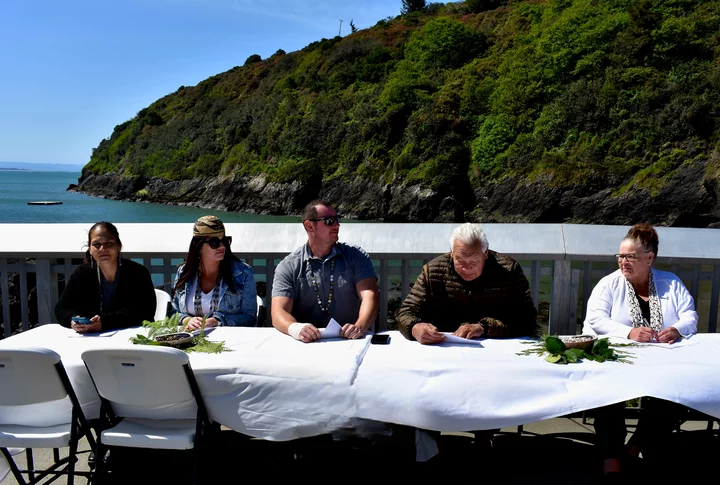
Left to Right: Trinidad Rancheria Tribal Councilmembers: Secretary/Treasurer Trina Mathewson, Councilwoman Aprilskye Hemsted, Vice Chairman Robert Hemsted, Chairman Garth Sundberg, and BIA Regional Director Amy Dutschke.
###
Trinidad Rancheria Chairman Garth Sundberg and Bureau of Indian Affairs Regional Director Amy Dutschke executed the Grant Deed and Acceptance of Conveyance during a formal signing event at the Trinidad Harbor Seascape Restaurant on May 1, 2024. The signing event attended by the Trinidad Rancheria Tribal Council and Staff, BIA Regional Director and Staff, Trinidad City Mayor Cheryl Kelley, Board of Supervisor Rex Bohn, and District Representative John Driscoll on behalf of Congressman Jared Huffman.
“Today we accept the responsibility of the governance of these Tribal lands and acknowledge the sacrifices of our ancestors since time immemorial,” stated Robert Hemsted, Trinidad Rancheria Vice Chairman. “We shall continue to move forward in the spirit of our Original Assignees.”
The acquisition of land in trust is not merely symbolic; it carries tangible benefits for the Trinidad Rancheria and its tribal members. By placing land into trust, the Tribe gains greater control over land management decisions, enhances access to crucial resources, and maximizes eligibility for federal services and programs aimed at improving the well-being of Tribal communities.
Aprilskye Hemsted, Trinidad Rancheria Councilwoman, expressed, “Being here on this historic day is truly an honor. We’ve waited a long time for this moment, and it’s immensely gratifying to witness our hard work yielding positive results as our goals and projects reach completion.”
The successful completion of this land-into-trust transfer reflects the culmination of comprehensive mitigation and cleanup of hazardous waste, renovation of harbor infrastructure, and numerous legal challenges. It stands as a testament to the resilience and determination of the Tribal community to safeguard our cultural heritage and secure a prosperous future for generations to come.
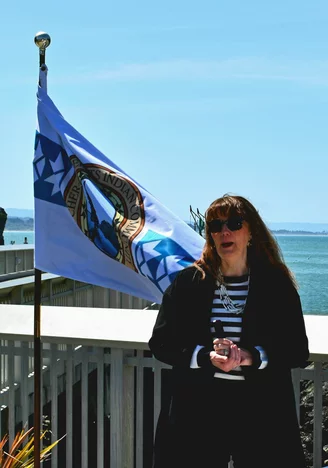
Trinidad Rancheria CEO Jacque Hostler-Carmesin
Jacque Hostler-Carmesin, Trinidad Rancheria CEO, stated, “The Trinidad Rancheria Tribal Council, Tribal Members, and Tribal Staff have worked tirelessly to ensure these 9.3 acres were secured in Trust for the Trinidad Rancheria. This endeavor epitomizes Indian Self-Determination and Tribal Sovereignty, prioritizing the preservation of cultural and environmental treasures. Moving forward, we remain steadfast in our commitment to fostering commercial and recreational fishing activities, while also extending a warm welcome to visitors and kayakers eager to explore our stunning harbor.”
The Trinidad Rancheria is grateful to all those who have contributed to this historic endeavor, including tribal members, community members, government officials, and partnering organizations. Your dedication, perseverance, and unwavering support have been instrumental in realizing this milestone achievement.
“This is a significant moment for me”, Trina Mathewson, Trinidad Rancheria Secretary / Treasurer, reflected. “My grandmother, Carol Ervin-Tripp, served as Chairwoman in the 90s, dedicating over 20 years to our community. This achievement was her vision for our people, and I’m thrilled to see her dedication bearing fruit. She would be proud.”
The process to place land into trust requires coordination among multiple stakeholders, compliance with legal and regulatory requirements, and careful review of land titles and environmental considerations. The Bureau of Indian Affairs plays a critical role in facilitating the trust acquisition process, ensuring compliance with legal and regulatory requirements, and safeguarding the interests of the Trinidad Rancheria.
“It is my pleasure to be here and I am honored to take this land into Trust on behalf of the Secretary of the Interior”, said Amy Dutschke as she signed the Acceptance of Conveyance. “This land will now be held by the United States on behalf of and for the benefit of the Trinidad Rancheria. Forever!”
On 5/02/2024 at 20:26 hrs. Humboldt Bay Fire responded to a reported Structure Fire at
53 Ole Hansen Rd Eureka. Humboldt Bay Fire responded with 1 Chief Officer, 3
Engines, 1 Water Tender and 1 Truck for a total of 14 fire service personnel.
Additionally, 1 volunteer Fire Support personnel responded and provided traffic control.
The first Engine arrived on scene and reported a working fire in a residential structure
and began to attack the fire. The second arriving unit was assigned to search the interior
of the residence for any potential victims and the third arriving unit was assigned to
Safety. The fourth arriving unit was assigned to Ventilation. The fire was controlled in 10
minutes and no occupants were in the residence.
Humboldt Bay Fire remained on scene for an additional 2 hours to completely extinguish
the fire and conduct a cause and origin investigation of the fire. The cause of the fire is
undetermined under suspicious circumstances. PG&E arrived on scene and confirmed the
electrical and gas service to the residence was disconnected. There were no civilian or
Firefighter injuries and the value of the property is estimated at $250,000 and damage
from the fire is estimated at $25,000.
Humboldt Bay Fire would like to thank HCSO, City Ambulance, PG&E, Samoa-
Peninsula Fire and Arcata Fire for their assistance on scene and providing coverage to
other emergency calls during this incident.
Humboldt Bay Fire would like to remind everyone to immediately call 911 and get
outside in the event of a fire in your home and to please have a designated meeting place
Smoke Alarms Save Lives.
outside your home in case of a fire so all occupants of the home can be accounted for by
arriving fire service personnel.
State Sen. Caroline Menjivar, a Democrat from Van Nuys, criticized proposed cuts to foster care, family programs. 2023 photo by Rahul Lal for CalMatters
Last week Ed Center, a foster parent from San Francisco County, told a Senate budget subcommittee a painful story about reaching his breaking point during his son’s COVID-era mental health crisis. His son’s breakdowns included violent tantrums and blacking out his own face from family portraits with a marker.
“When we were in crisis, we needed Wonder Woman with a social work degree,” Center explained. That’s what he said his family found in the Family Urgent Response System, a free, trauma-informed support system for foster youth and their caregivers. The $31 million state program sends counselors out to families in crisis at all hours.
Now, as the state faces a budget shortfall that the Legislative Analyst’s Office predicts could be as much as $73 billion, programs the state funded during times of surplus are on the chopping block.
Advocates say the cuts will undermine the state’s goals to help vulnerable Californians and those trying to escape poverty.
“All of our programs at CDSS impact people experiencing need or vulnerability, so any proposed reductions are very difficult,” Jennifer Troia, the Department of Social Services chief deputy director, told the committee. “The choices that we are facing as the administration and Legislature in light of the state’s fiscal situation are indeed very difficult.”
The family urgent response program received 4,987 calls for help from January through December 2023, and its staff responded in person to a family in crisis 1,090 times. The Los Angeles County Department of Children and Family Services, which received the most calls, said 87% of in-person responses resulted in a stabilized placement of the foster child.
Foster care sacrifices
Some of those calls came from Center and his family, which is now stable, he said. But one desperate night, when his family was struggling, the foster father said he drove three hours away from home before calling for help.
“I asked the counselor a simple question: ‘Why should I go back?’” he recalled.
The social worker reminded Center how much he mattered to his son, even if his then 10-year-old couldn’t show it at the time.
“I bought some crappy gas station coffee and I turned around for home,” Center said.
His story brought tears to the eyes of state Sen. Caroline Menjivar, a Democrat from Van Nuys who is chairperson of the subcommittee. “It’s been a tough week,” she said, her voice cracking as she reached for tissues.
“Your kid could have been a statistic. He could have been homeless, died by suicide, or you would have had a broken family, and it wouldn’t have been your fault. It would have been because the system failed you,” Menjivar told Center.
Many of the budget priorities set by Newsom and other lawmakers seem out of touch, said Menjivar, who served seven years in the Marines and has worked as an emergency medical technician.
“I come from a working, low-income community; some crossed the border to come here for a better life for their children,” she told CalMatters on Wednesday.
“My mom cleans houses still to this day. I had to start working at age 15 because I needed to help my mom.”
Budget priorities
Menjivar said she gets frustrated talking about bills on such issues as artificial intelligence when her constituents struggle to put food on the table or to buy feminine hygiene products, reflecting California’s wealth inequality. Top-earning families made 11 times what the bottom 10% earned in 2022 — $305,000 vs $29,000, according to the Public Policy Institute of California.
In his January budget proposal, Newsom called for at least $66 million in general fund cuts to services for children, families, and foster youth involved with the state’s child welfare system.
His plan includes eliminating a $13.7 million program that helps former foster kids find housing, an $18.8 million housing supplement for foster children ages 18 to 21, and an $8.3 million program that provides public health nursing services for children, youth, and families in LA County.
Menjivar asked state Department of Finance staff how these efforts were selected for program-ending cuts and suggested the decision-makers must have been playing ‘pin the tail on the donkey’ to choose what to cut.
“The solutions reflect difficult decisions in order to achieve a balanced budget,” said Marlon Davis, a budget analyst with the finance department. “Despite these solutions, the administration remains committed to the well-being of children in the child welfare system.”
Menjivar was not impressed: “They’re just the same robotic, copy-and-paste responses. The answers are subpar,” she told CalMatters.
Where else to look
State officials said the family urgent response program is not being fully used in every county, but the governor is willing to work with lawmakers to find other places to cut.
Menjivar recommended looking at state-funded media campaigns as an example.
In 2022, Newsom proposed spending $65 million a year on “strategic communications for community partnerships” to conduct engagement campaigns about COVID-19 vaccination, water conservation, and extreme heat.
His January budget proposal would claw back $5 million from it in 2023, and $8 million in 2024 and 2025, leaving $57 million.
Menjivar also noted the governor has proposed delaying, rather than cutting, $74 million from the Health and Human Services Innovation Accelerator, an initiative to “create the environment for researchers and developers to create solutions” to such health challenges as diabetes, maternal and infant mortality, and infectious diseases.
“Things do have to get cut somewhere,” said Menjivar. “But never, ever, ever from kids and our most vulnerable.”
Groups of pro-Palestinian protesters gather at an entrance to their encampment at UCLA on the late evening of May 1, 2024. Law enforcement would eventually clear the encampment on the morning of May 2, 2024. Photo by Ted Soqui, CalMatters
As campus tensions escalate over student encampments to protest the war in Gaza — with canceled classes, violent clashes and mass arrests in recent days — Republican leaders in the California Legislature are calling for the state to use its upcoming budget process to punish demonstrators who they say have gone too far.
Senate Republican Leader Brian Jones of San Diego and Assembly Republican Leader James Gallagher of Chico announced Thursday that they would push to strip state financial aid from protesters found to have committed violent or criminal acts or violated other students’ rights.
They did not offer a formal proposal with details, but Jones and Gallagher said at a press conference that students who assault, harass and intimidate their peers or physically block them from attending class — as reportedly happened to Jewish students at UCLA this week — did not deserve to benefit from the Cal Grant program.
“You have to earn those,” Jones said. “We ought to be rewarding the students that want to use those Cal Grants to go to school, get educated and become productive members of society.”
Jones and Gallagher focused their ire on pro-Palestinian demonstrators, whose aggressive tactics they said have left Jewish students feeling unsafe and completely derailed some campuses, including Cal Poly Humboldt, which closed for the rest of the semester after protestors occupied an academic and administrative building. They largely sidestepped the attack earlier this week by pro-Israeli counterdemonstrators on the encampment at UCLA, which was dismantled by police Thursday morning.
“No violence should be condoned at all,” Gallagher said. “But let’s be clear, there was violence on both sides.”
The Republican leaders blamed university administrators across the state for not shutting down encampments sooner and Gov. Gavin Newsom for not intervening. They said they would also seek to withhold funding in the upcoming budget from University of California and California State University campuses that did not respond adequately to the protests — perhaps an amount equal to state resources spent on providing law enforcement and cleaning up damage.
“It’s outrageous and it’s unacceptable that we’ve allowed this chaos to ensue over weeks,” Gallagher said. “There does need to be accountability. Some people need to be fired.”
Any budget plans will require support from the Legislature’s Democratic majority, which did not immediately jump on board with Jones and Gallagher’s ideas.
Assemblymember Jesse Gabriel, an Encino Democrat who leads the Assembly budget committee and serves as co-chairperson of the California Legislative Jewish Caucus, said he did not want to comment until he saw their proposals.
“These campuses are going to have to figure out how to move forward in a way that works for everybody,” Gabriel said. “That’s a difficult question and certainly something we’re doing a lot of thinking about.”
A spokesperson for Newsom’s office declined to comment but noted that the state has established a mutual aid system to provide additional law enforcement when college campuses request assistance. He provided a previous statement from the governor affirming that “those who engage in illegal behavior must be held accountable for their actions — including through criminal prosecution, suspension, or expulsion.”
Shuttered since 2020, Arcata Plaza bar Toby & Jack’s has continued to deteriorate. | Photo by Ryan Burns.
###
Even for a dive bar, Toby & Jack’s is looking nasty these days.
The exterior is smeared with partially removed graffiti. The pinstriped teal-and-beige marquee has faded, and the neon martini glass affixed to the plywood siding has gone dark.
The illustrated top hat, cane and gloves superimposed on the yin-yang “TJ’s” sign above the door suggest long-lost aspirations of elegance, which can only look ironic affixed to such a ramshackle facade.
As with Sidelines Sports Bar, the former Arcata Plaza tavern located two doors down, Toby & Jack’s was raided by law enforcement in February of 2018 following a 10-month undercover investigation into illegal drug dealing. (During a subsequent administrative hearing, a prosecutor with the California Department of Alcoholic Beverage Control quipped that while Cheers was the place where everybody knows your name, Toby & Jack’s was where everyone went for cocaine.)
Both bars had their liquor licenses revoked in 2020 following a series of appeals and administrative hearings, and they subsequently went out of business.
But Toheed Ahmad and his sister Maria Khalid, who immigrated to the Bay Area from Pakistan in the late 1990s, have plans to revitalize the building over the coming months, renovating it inside and out to create Habibi Bar and Grill. Once open, the restaurant will offer cuisine from India, Pakistan and the Mediterranean region while the full bar will serve cocktails, hard alcohol, beer, wine and more into the wee hours.
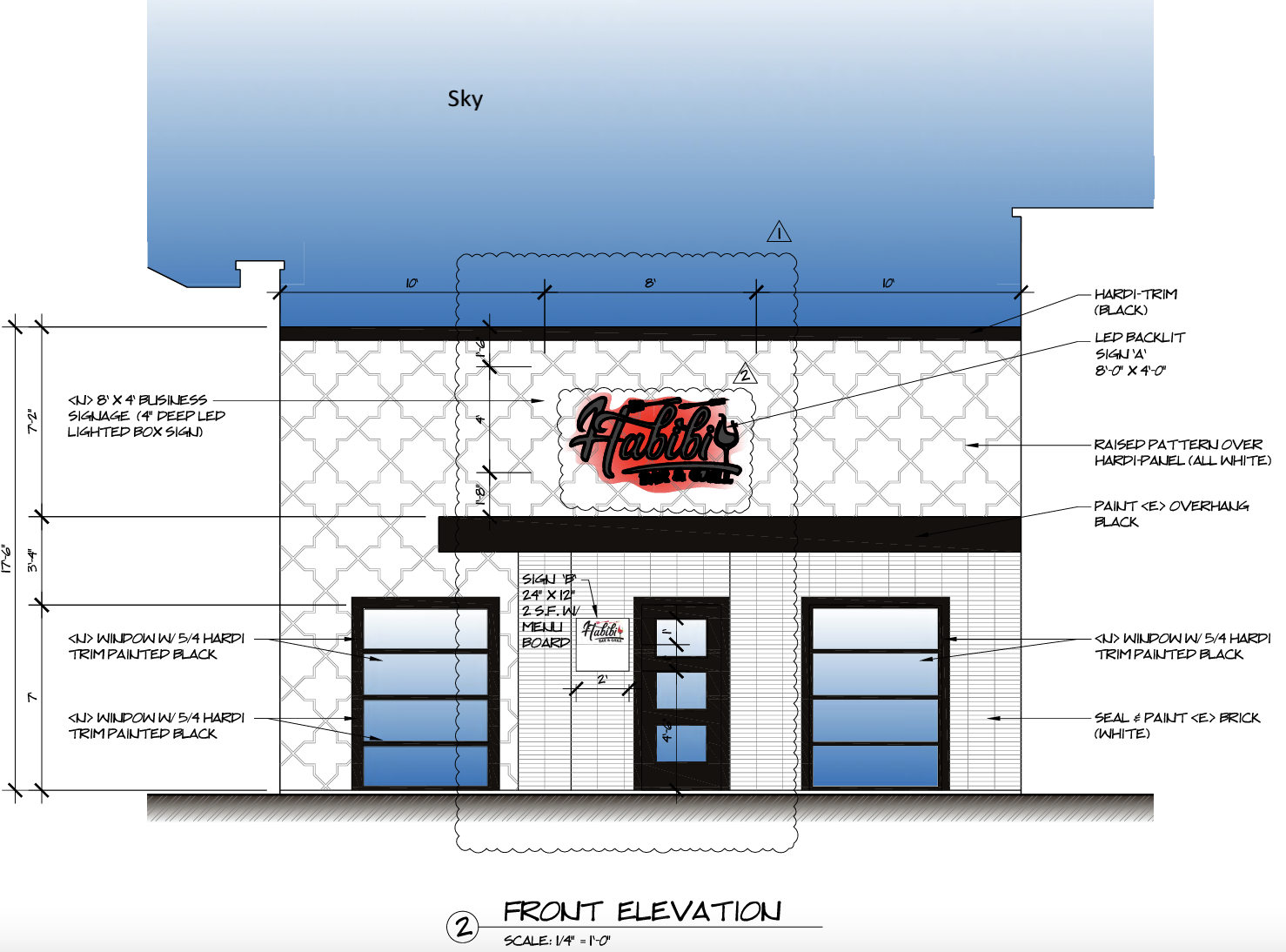
Conceptual design for the facade of Habibi Bar and Grill by Brown Designs. | Image via City of Arcata.
###
The Outpost recently sat down with Ahmad in his small office at Arcata’s Fourth Street Market, Liquors and Deli, the salmon-colored landmark on Samoa Boulevard that he has owned and operated since 2004.
Ahmad | Photo by Ryan Burns
“I bought it from the Dal Porto family,” Ahmad said, referring to the multi-generational locals who opened Dal Porto’s Deli here in 1979. Ahmad, who had been managing a similar business in the San Jose suburb of Mountain View, purchased the business in 2004.
“We have a deli here, too,” he explained.
It was his sister, though, who had dreams of opening a sit-down dining establishment.
“She’s the one who said, ‘Okay, brother, let’s move into the restaurant’ – because she’s a good cook,” Ahmad said.
Last week, the Arcata Planning Commission approved a sign permit and design review for the building’s facade, which will be renovated with a black lattice design over white background and a cut-metal sign backlit by red LED lighting.
“I want to uplift that building, make it beautiful [and] increase the cleanliness of the plaza,” Ahmad said.
The floor plan, again by Brown Designs. (Click to enlarge.)
###
The plans submitted to the city depict a covered outdoor dining area facing the alley. Inside the train car-shaped dining area will be a long bar, a dining counter and tables, with a row of five skylights overhead.
Ahmed said the vibe will be a mix of casual and fine dining featuring classic Indian dishes (curried, lamb, chicken, goat, etc.), a variety of spinach-based and other vegetarian dishes, pani puri, mixed vegetables, dal and “definitely some barbecue,” including fish, lamb, beef and chicken.
“It will be nice for the community to have different kinds of food, because I didn’t see any – in all Arcata – any Indian restaurant or Mediterranean restaurant fine dining. So that will be good.”
Ahmed and his sister plan to serve food until 9 or 10 p.m. but keep the bar open longer.
“We will stay open late [and have] different cultural nights,” Ahmad said. “We’ll have Bollywood night, Arabian night [and other] theme nights. So it will be a little different for the students; the university is expanding. Diversity, different kinds of food, a different kind of culture – that’s what my idea is.”
With a hard alcohol license already acquired, Ahmad has a few more bureaucratic and logistical hoops to jump through, including city approval for the building redesign, cleanup, construction and more. He intends to keep running Fourth Street Market and hopes to open Habibi Bar and Grill by the end of the year or early next year.
Pseudo-nitzschia, a naturally occurring, single-celled marine alga, produces the potent neurotoxin domoic acid under certain ocean conditions. Bivalve shellfish, like clams and mussels, accumulate the toxin without being harmed. In fact, razor clams are known to bioaccumulate domoic acid, meaning it may not clear their system until long after the ocean conditions that caused it have abated.
Domoic acid poisoning in humans may occur within minutes to hours after consumption of affected seafood and can result in signs and symptoms ranging from vomiting and diarrhea to permanent loss of short-term memory (Amnesic Shellfish Poisoning), coma or death. There is no way to prepare clams for consumption that will remove the toxin – cooking and freezing have no effect.
The recreational razor clam fishery in Del Norte County remains closed due to elevated levels of domoic acid. The closure, which began in November 2023, will remain in effect until state health agencies determine razor clams no longer pose a health risk.
CDFW will continue to work with the California Department of Public Health (CDPH) and Office of Environmental Health Hazard Assessment to collect, monitor and analyze razor clams to determine when the recreational razor clam fishery can be reopened safely in these areas.
To get the latest information on current fishing season closures related to domoic acid, please call CDFW’s Domoic Acid Fishery Closure Information Line at (831) 649-2883.
For the latest consumption warnings, please call CDPH’s Biotoxin information Line at (510) 412-4643 or toll-free at (800) 553-4133.
Press release from the County Administrative Office:
The
terminal and security checkpoint at the California Redwood Coast
Humboldt County Airport (ACV) were closed at approximately 3:45 p.m.
today, Wednesday, May 1, due to a security concern related to a
suspicious item in a passenger’s luggage. This temporary closure
was in place out of caution while Transportation
Security Administration
(TSA) agents and the Humboldt County Sheriff’s Office investigated
the issue.
Safety
is ACV’s first priority. While the investigation was conducted the
airport airfield (runways and taxiways) remained open as a safety
buffer was established. There was one airline delay as a result of
this matter.
At
approximately 7:30 p.m. the Humboldt County Sheriff’s Office
determined that the suspicious item was cleared and there is no cause
for further concern. The terminal and security checkpoint reopened at
7:45 p.m.
The
Humboldt County Department of Aviation would like to thank the
community for their patience while the investigation took place. The
Department of Aviation extends its utmost gratitude to the TSA,
Federal
Aviation Administration
(FAA) and Humboldt County Sheriff’s Office for their prompt
response.
For
more information on the California Redwood Coast-Humboldt County
Airport, please visit FlyACV.com.