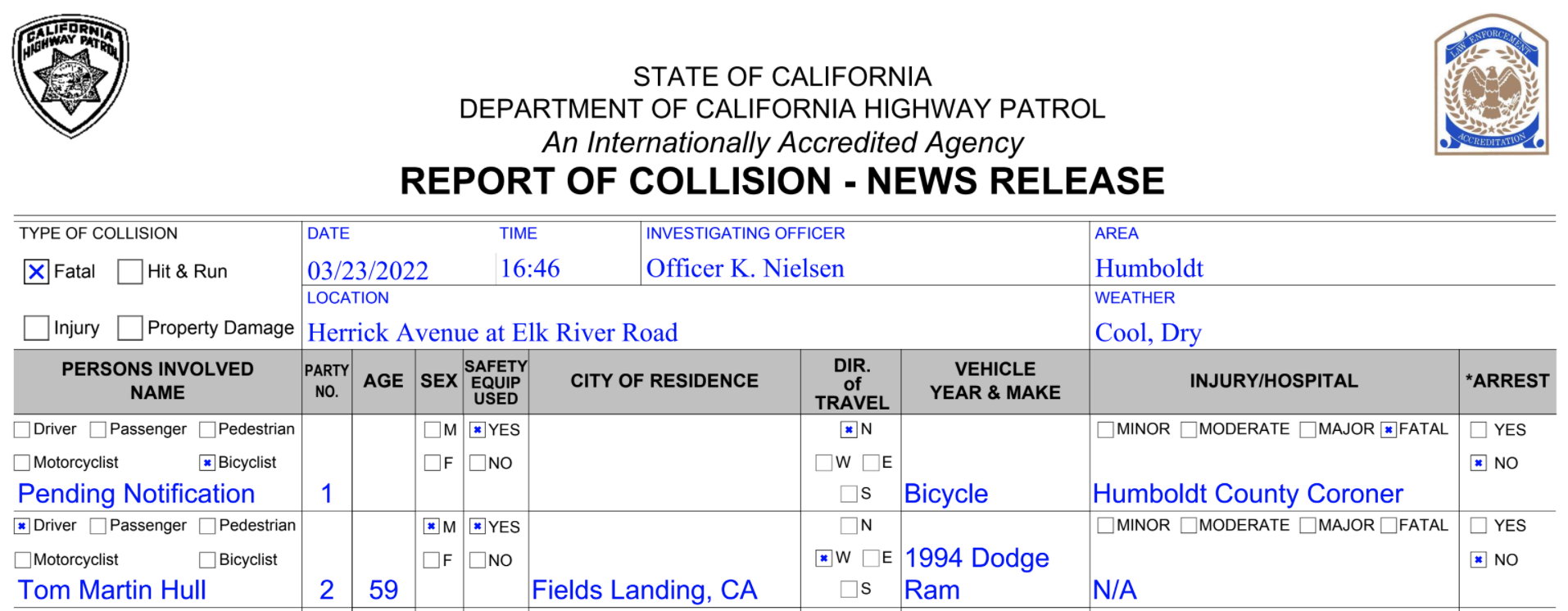
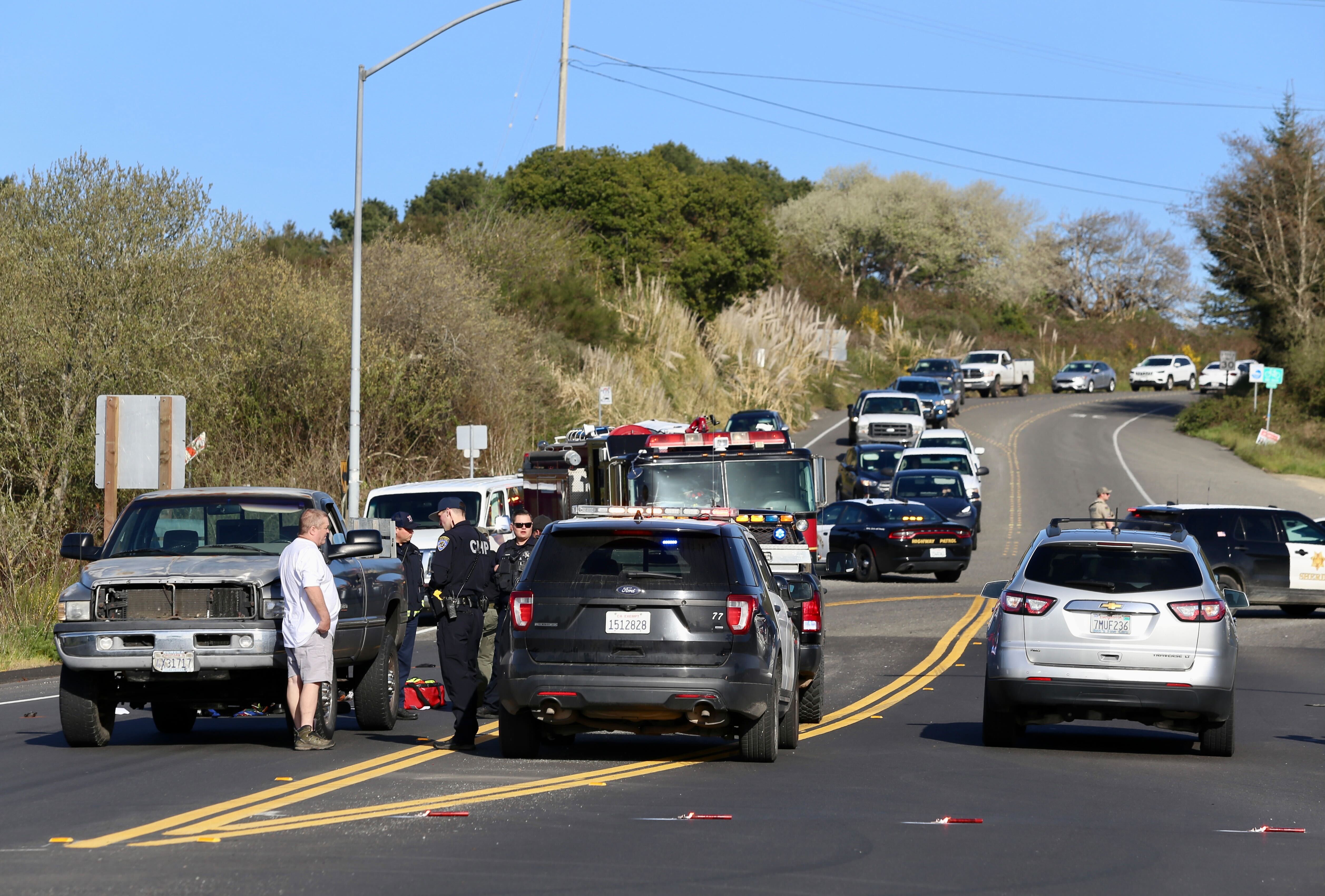
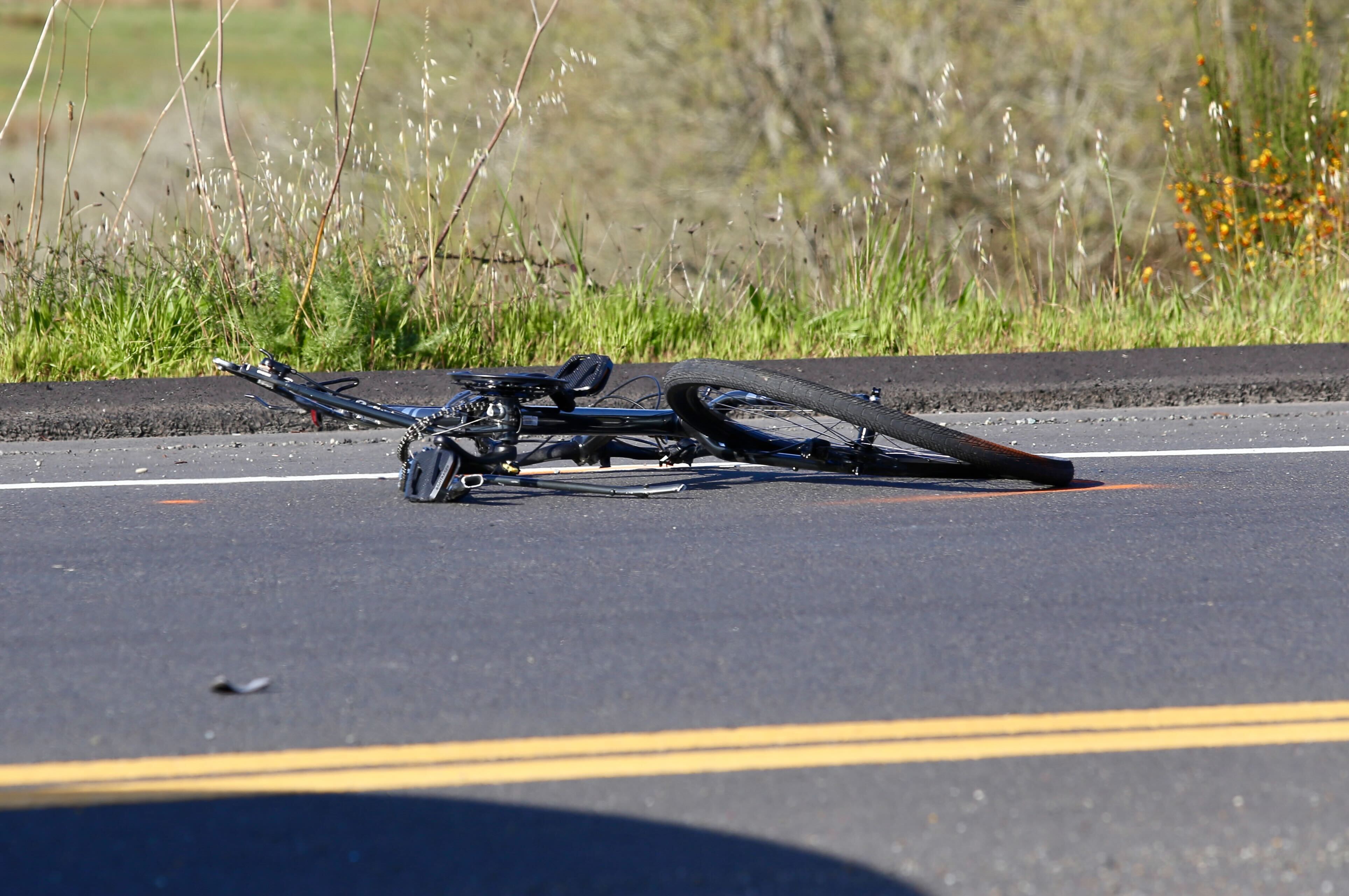
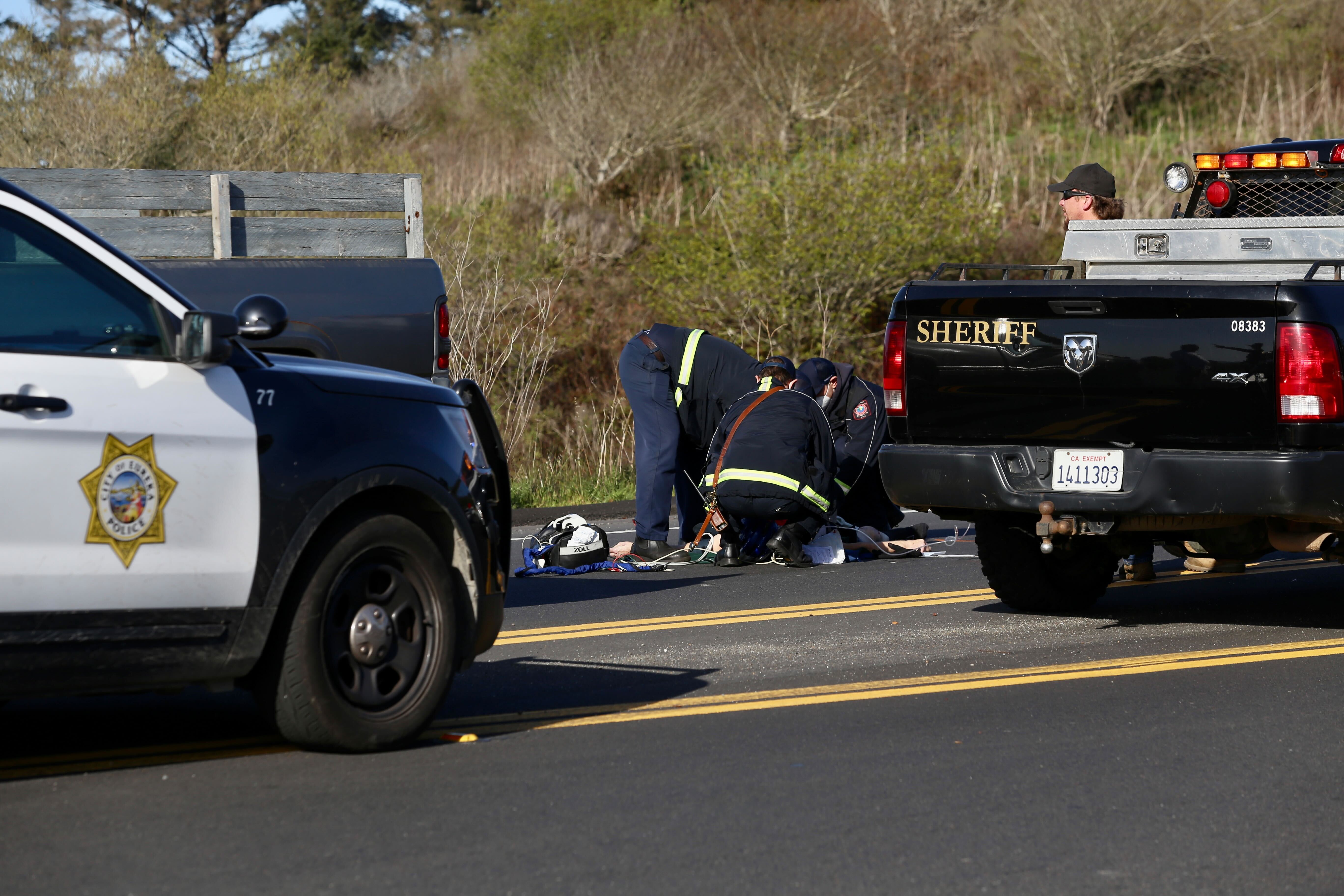
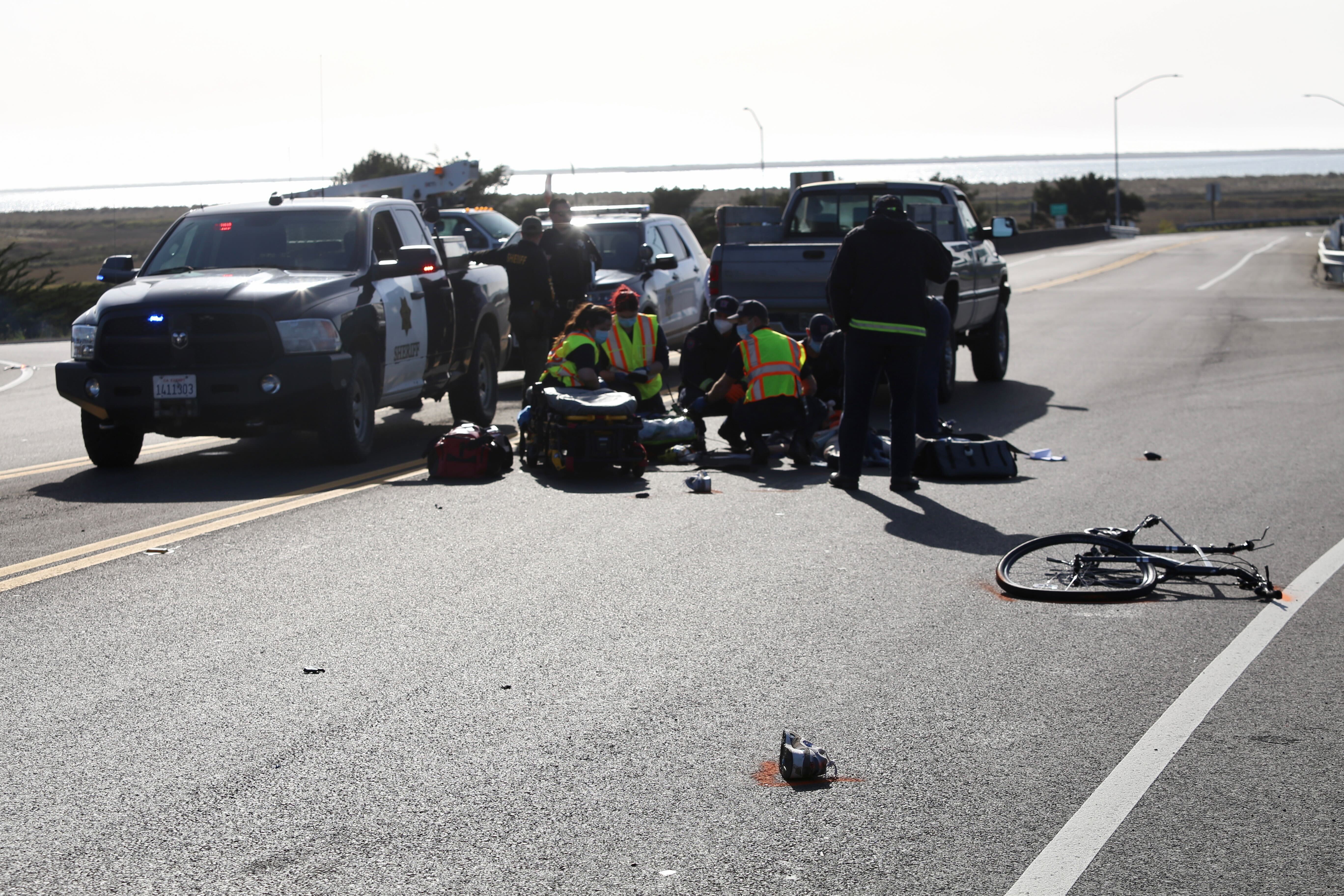
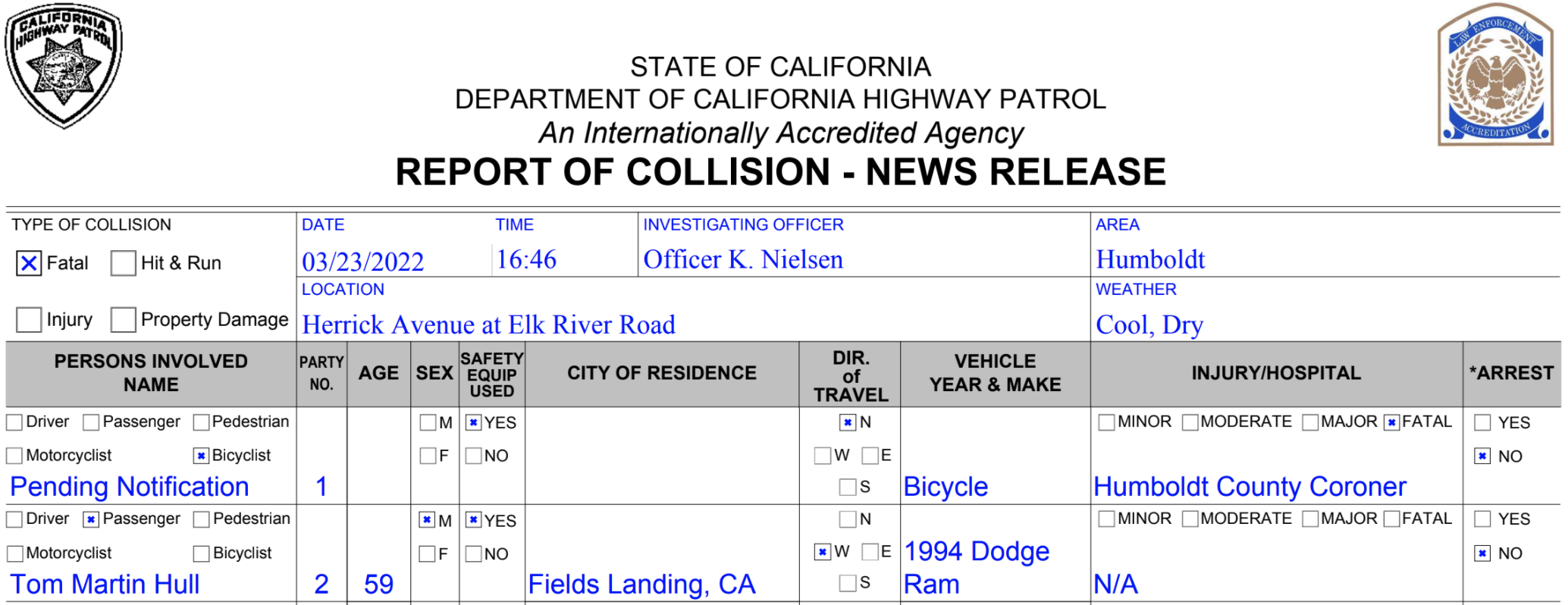
On 03/23/2022, at approximately 4:54 PM, Humboldt Area CHP received a report of a crash involving a bicyclist and a vehicle at the intersection of Herrick Avenue and Elk River Road. Personnel from Eureka Police Department, Humboldt Bay Fire Department, Humboldt County Sheriff’s Office, City Ambulance of Eureka and California Highway Patrol responded to the scene.
Based on the preliminary investigation, CHP has determined that a 1994 Dodge Ram was being driven westbound on Herrick Avenue, approaching Elk River Road. A bicyclist, whose name is currently being withheld pending notification of next of kin, was riding northbound on Elk River Road approaching Herrick Avenue. For reasons yet to be determined, the bicyclist entered the intersection, riding into the westbound lane of Herrick Avenue, and directly into the path of the Dodge. The bicyclist was struck by the front left of the Dodge, resulting in major injuries. The driver of the Dodge, 59 year old Tom Hull of Field’s Landing, remained on scene and cooperated with law enforcement’s investigation of the crash. Mr. Hull did not receive any injuries as a result of this crash. Unfortunately, due to the severity of the injuries, the bicyclist succumbed to their injuries on scene and was pronounced deceased by emergency medical personnel.
The California Highway Patrol extends its condolences to the family of the deceased, and thanks all responding agencies for their assistance in managing the scene. The CHP Humboldt Area office is continuing its investigation and asks anyone who witnessed the crash, or has any additional information related to the crash, to contact the California Highway Patrol at 707-822-5981.
A Shell gas station in Sacramento on March 10, 2022. Photo by Miguel Gutierrez Jr., CalMatters
California is flush with cash — the state has an estimated budget surplus of $21 billion — and, separately, gas prices are way up.
Those two facts combined have lawmakers tripping over themselves with spending proposals to help people with rising costs.
Last week, a cohort of Assemblymembers proposed giving every California taxpayer $400 to offset new, higher prices for goods and especially gas. A few days later, the Los Angeles Times reported details of another proposal, this one from Democratic leaders in the Legislature: $200 to each taxpayer, plus $200 for each kid for families making up to $250,000, and a grant program with the same benefits for people who don’t file income taxes.
On Wednesday, Gov. Gavin Newsom threw yet another idea into the mix which, among other things, would give car and truck owners $400 per vehicle via debit cards, for up to two vehicles per person. The governor’s proposal does not have an income cap “in order to include all Californians who are facing higher prices due to the cost of oil,” the administration said in a statement.
The plans to send cash to Californians directly come on the heels of Republican calls to temporarily suspend the state’s gas tax of roughly 51 cents per gallon in its entirety and a proposal from the governor in January to pause a planned 3-cent increase in the state gas tax. Both approaches to reducing the gas tax predate the war in Ukraine, which has driven gas prices even higher.
Lawmakers want to do something in response to the higher gas prices. What remains to be negotiated is who gets how much, and how exactly they get it.
A check that people can spend however they want, particularly if it’s targeted at lower- and moderate-income Californians, makes sense, said Chris Hoene, executive director of the left-leaning California Budget and Policy Center, which advocates for aid aimed at lower-income Californians. Rising gas prices wind up making lots of products more expensive, he points out, and lower-income people feel the effects of increased gas prices much more acutely.
Lawmakers want to do something in response to the higher gas prices. What remains to be negotiated is who gets how much, and how exactly they get it.
On average, Californians spend about 4% of their income on gas for their cars and homes, according to research from the Public Policy Institute of California. But Californians in the bottom fifth of earners spent about 16% of their income on gas. In other words, when gas prices go up, people who make less money feel the squeeze on their budgets for food, housing and other essentials.
Families who don’t have a lot of flexibility in their household budget feel these price increases the most, said Sarah Bohn, an economist at the Institute.
Giving more money to people with more cars rather than distributing money to lower-income people doesn’t make sense, said Hoene. “I think it’s terrible,” he said of the governor’s proposal. “Millionaires and billionaires who don’t need the credit at all will be receiving it because they happen to have a record at the DMV.”
He also cautioned that sending checks to people with more money in the bank might exacerbate inflation. While lower-income households would likely use the money to meet their basic needs, higher income households that didn’t have to cut back in response to increasing gas prices might use a check as a chance to splurge and order things off their Amazon wishlists. But he complimented another part of Newsom’s proposal, which would theoretically make public transit free for three months, because it would make it easier for people to use transit options that use less fossil fuels.
Sending money directly has proven to be an effective tool for helping people when economic circumstances change, most recently during the pandemic. The stimulus checks the federal government sent out kept 11.7 million Americans from falling into poverty during the pandemic, the Census Bureau found.
Sending out checks and cutting the gas tax both have the same aim, but the two methods have different implications for reducing usage of fossil fuels, says David Neumark, an economist at UC Irvine.
When the price of gas is high, people try to use less of it, said Neumark. If the state sends out checks, people who can’t change how much gas they use can use the money to offset higher prices at the pump, while others could try to drive less and use the money to cover other needs.
“We want the price of gas to be high to discourage people from using gas,” said Neumark. Cutting the gas tax to directly bring down the price of gas, he said, would have the opposite effect: It would make it easier for people to decide to drive more.
“A lot of people don’t have the luxury of just being able to say ‘oh gosh, I guess I’ll stop driving.’” said Assemblymember Kevin Kiley, a Republican from Granite Bay who introduced a bill that would get rid of the state gas tax for six months.
“If you have to drive a long way to work or you live in a rural area and there is no access to public transit; If you’re someone who is a low income person can’t necessarily afford to go out and buy a Tesla tomorrow,” said Kiley, “there really is no viable alternative in a lot of these situations.”
One benefit of cutting the gas tax temporarily is that it’s simple and fast, said Kiley. He critiqued the complexity of Newsom’s proposal, saying it “seems like it involves a lot of bureaucracy and seems like it preserves the role of the government in directing where funds go and who gets them.”
One drawback of cutting the state gas tax is that it’s not clear exactly how much it would drive down prices. The gas tax is paid by suppliers, so they would need to pass the savings along in order for the price to come down. With the global oil market constrained by sanctions, it’s not clear how much of the tax cut consumers would see at the pump.
The current spike in gas prices has been driven by Russia’s invasion of Ukraine and the sanctions that followed. That situation doesn’t necessarily warrant a broad-based solution from California lawmakers, said Neumark. Giving checks to everyone might score political points, he said, but middle- and higher-income Californians can handle higher gas costs.
“Bad stuff is happening out in the world and someone’s got to help pay for it,” said Neumark. “Other people are paying with their lives, right? We’re paying a dollar more for gas.”
###
CALmatters.org is a nonprofit, nonpartisan media venture explaining California policies and politics.
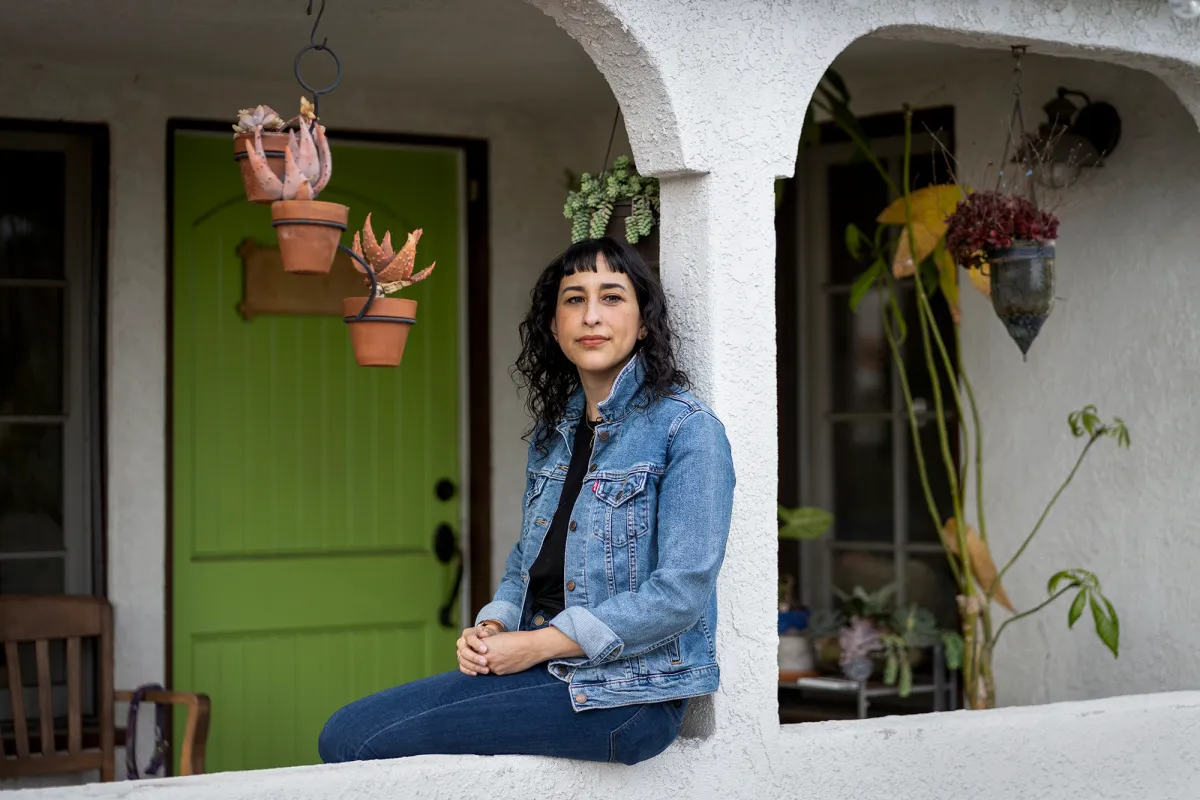
Angela Vázquez, shown at her home in Mount Washington in Los Angeles, has been suffering from symptoms of long COVID for almost two years. Photo by Lauren Justice for CalMatters
It’s been two years since Angela Meriquez Vazquez was infected with COVID-19, but some of her most debilitating symptoms remain. Migraines, fatigue, brain fog, heart palpitations, insomnia and sometimes even a fever are among the symptoms that disrupt her day-to-day life.
Lisette Duarte still needs an inhaler eight months after her COVID-19 infection, and damage to her voice box occasionally leaves her struggling to speak. She can’t return to work, so she relies on Medi-Cal for her health coverage.
Long COVID is a mysterious, debilitating and difficult-to-diagnose compilation of post-infection problems that have affected perhaps millions of Californians. And health experts fear that the toll will be especially harsh for Latinos, African Americans and low-income residents, who already face a disproportionate impact from COVID-19 as well as less access to quality health care.
At least 20 specialized, post-COVID programs have been set up at medical centers in California to help treat these long-haul patients. But they already are overburdened, and experts fear that long COVID could go largely unaddressed or misdiagnosed in people who have few resources.
“What we know is that because the greatest amount of exposure happens in low-income communities, they will have the highest burden of long COVID,” said Dr. Neeta Thakur, a pulmonary and critical care doctor at UC San Francisco.
People with long COVID “feel frustrated. They’re told it’s anxiety or to be patient, that symptoms will get better on their own.” — Dr. Jeffrey Hsu, UCLA Health’s long COVID program
Long COVID patients often need a team of specialists because cardiac, respiratory and neurological problems have been documented. As a result, people with Medi-Cal or no health insurance may struggle to find proper care and pay for expensive tests.
Some vast regions of California have few doctors experienced in diagnosing and treating long COVID conditions. Of the 20 post-covid clinics and programs in California, according to a crowdsourced list collected by a patient advocacy group, nearly all are in the Bay Area, Los Angeles, Orange County and San Diego. Of those listed, only one is in the Central Valley. None are in the San Joaquin Valley, an eight-county region where hospitals were inundated during previous COVID-19 infection waves.
The general experience (of patients) is that they’ve been seen by numerous providers in the community. They feel frustrated,” said Dr. Jeffrey Hsu, a cardiologist who is on a team of physicians treating patients at UCLA Health’s long COVID program. “They’re told it’s anxiety or to be patient, that symptoms will get better on their own.”
Studies have estimated that more than one in four COVID-19 patients experience symptoms that last for months, known as “long haulers.” In California, that could mean as many as 2 million people among the 8.5 million COVID-19 cases may have long COVID, including more than 100,000 African Americans and one million Latinos.
But it’s hard to know how many people actually suffer from long COVID, largely because it is still being defined: The U.S. Centers for Disease Control and Prevention says symptoms are considered long-term if they last more than four weeks after an infection; the World Health Organization says it’s 12 weeks.
The California Department of Public Health is collaborating with UCSF and UCLA on a national study tracking the aftermath of COVID infections through patient surveys. Without providing details, the department also said it is working on partnerships with the University of California system to expand access to post-COVID information and care.
Demand for long COVID care exceeds capacity
At UCLA, the long COVID team includes four primary care doctors who evaluate patients and then connect them to the appropriate specialist — cardiologists, neurologists, pulmonologists, psychiatrists and others.
Hsu said demand for the program is high. UCLA’s program has received more than 300 referrals, but only has capacity to see 200 patients.
About half of the patients in UCLA’s program are already UCLA Health members, while the other half are referred from other providers around Los Angeles, he said. He worries about patients who don’t have insurance since a lot of expensive tests are involved, and those battling symptoms who live in areas without access to providers who have been trained to identify long COVID.
“We just have to imagine that the patients we see are the ones who have the resources to get to us,” Hsu said.
Patients with long COVID could go to their primary care doctors, who can then consult with experts. But another challenge is the long-standing uneven distribution of primary and specialty care physicians across the state. For instance, the ratio of active physicians per 100,000 people in the Inland Empire and San Joaquin Valley is about half of the ratio in the Bay Area, according to a 2018 report from the California Health Care Foundation.
Duarte, who lives in East Los Angeles, had to push hard for months to get the right help for her ongoing conditions.“Nobody was listening to me,” she said. It took her switching doctors and filing complaints, but last month she got a referral to a long COVID program.
“I definitely feel like I’ve received substandard care,” Duarte said. She wonders if it’s because she’s covered by Medi-Cal, California’s insurance for low-income residents.
Research has shown that in many cases, the health symptoms of people of color and low-income people are not taken seriously, leading to misdiagnosis and prolonged poor health.
“I’ve changed providers several times. I am being treated for several conditions that are likely going to be with me long-term, if not forever.” — Angela Meriquez Vazquez, long COVID patient in Los Angeles
For example, African Americans receive worse care than whites in 43% of the quality-of-care measures, such as effective treatment, set by the federal government. Latinos receive worse care in 36% of the measures compared to whites.
That inequity could be particularly problematic for patients with long COVID, since it’s difficult to diagnose and treat properly. Similar to the disparities seen in other chronic conditions like diabetes and hypertension, providers say they anticipate unequal treatment of the conditions that spring from long COVID.
“Just as the state tries to put an equity framework around vaccine distribution, having some kind of equity framework around limited resources when it comes to treatment may be helpful,” said Kristen Azar, a registered nurse and scientific medical director for the Sutter Health Institute for Advancing Health Equity.
Vazquez works for the Children’s Partnership, an advocacy organization for child health, so she understands how to navigate health systems and advocate for herself. But she still found it difficult to score the right team of providers familiar with post-COVID disorders, even where she lives, in Los Angeles, and even with good health insurance.
“I’ve changed providers several times,” said Vazquez, 34, who was a runner before she was infected with COVID. “I am being treated for several conditions that are likely going to be with me long-term, if not forever.”
Among the conditions she is being treated for: postural orthostatic tachycardia syndrome, a circulatory disorder that leaves her lightheaded. She doesn’t leave her house much because even the slightest social activity leaves her exhausted.
“What would have been a normal day, let’s say working and then going to a brewery for happy hour — if I did that today, I would absolutely go to bed with a huge fever and the shakes,” she said.
Last year, Vazquez became president of Body Politic, an advocacy group that serves as a resource and support group for long COVID patients. She advocates for training and education about long COVID among Medi-Cal providers, so that low-income patients can receive proper care.
“The state needs to make sure that all Medi-Cal providers and beneficiaries have information about long COVID, ” Vazquez said. “When someone tests positive, at the next follow up appointment, doctors should be asking about long-term symptoms.”
“The COVID-19 pandemic has the potential to be an enormous disabling event, in addition to being a cause of acute illness and death.” — Dr. Erica Pan, state epidemiologist
Medi-Cal patients have a lower vaccination rate than California’s general population, leaving them more vulnerable to severe disease and long-term symptoms. About 56% of Medi-Cal enrollees had received at least one dose of the vaccine, compared to 83% of the general population, according to the state’s February vaccine update.
People who are vaccinated are less likely to report some symptoms of long COVID, such as muscle pain and fatigue, according to a small study in Israel. But vaccinated people and those with mild infections can still wind up being COVID long haulers.
With debilitating symptoms, many can’t return to work
Vazquez gets to work from home, a privilege not everyone with long COVID has. “That reduces my exposure,” Vazquez said. “But essential workers, there’s no way that in my current health I could be on my feet and check groceries everyday.”
About 2.37 million people may be out of work at some point due to long COVID, according to Dr. Gregg Vanichkachorn, medical director of the Mayo Clinic COVID Activity Rehabilitation Program, who spoke at a state legislative hearing earlier this month.
While the state doesn’t have its own estimate, “it’s likely that a large number of Californians will be affected,” Dr. Erica Pan, the state’s epidemiologist, said at the hearing.
“The COVID-19 pandemic has the potential to be an enormous disabling event, in addition to being a cause of acute illness and death,” she said.
Duarte is one of the patients who said she can’t return to work. She is a consultant who helps education and autism nonprofits develop programming. She said her voice box issues, which she thinks could be from excessive coughing, her brain fog and occasional reliance on oxygen tanks make it impossible for her to work.
“I wish we had access to case managers who attend appointments with you and help you navigate this,” she said. Before her infection, she had what she calls an impeccable memory, but now she has to create lists for just about everything.
As researchers seek to learn more about the disease, many patients grow desperate to find relief.
Duarte said she hears from friends and family members who also deal with symptoms like shortness of breath and cough months after a COVID-19 infection.
“There are many of us, and I think for the most part, people are just dealing with it on their own,” she said.
###
CalMatters COVID and health care coverage is supported by grants from the Blue Shield of California Foundation, the California Health Care Foundation and the California Wellness Foundation.
CALmatters.org is a nonprofit, nonpartisan media venture explaining California policies and politics.
Flowers unfolding we were. Now, some of us from flowers to ashes have gone
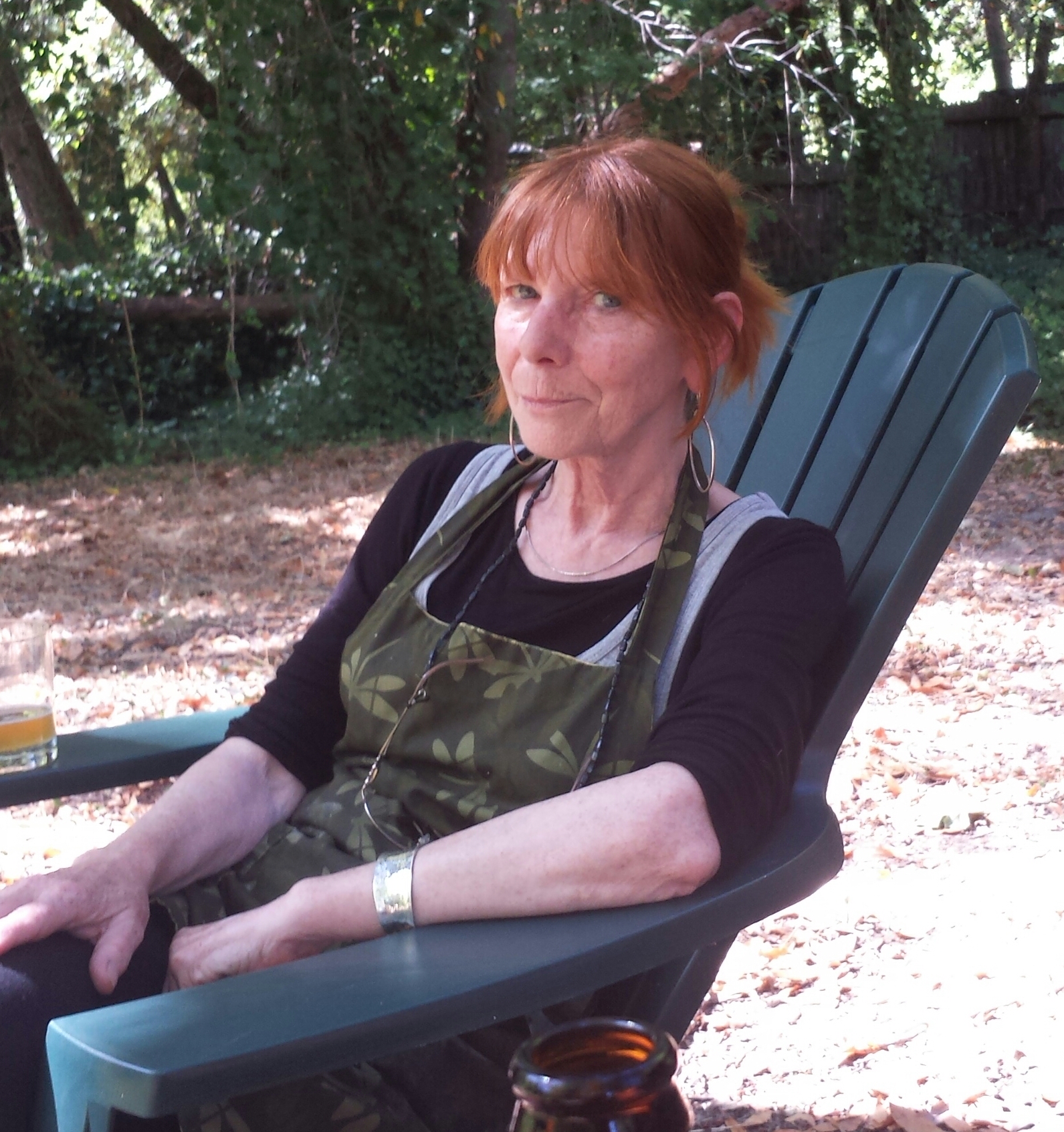
Paula Gregoire Schwartz passed away on March 3, 2022, after a long battle with Alzheimer’s – a battle
she fought with grit and her trademark sense of humor.
Paula was one of five children born to Leo and Kathleen Gregoire and was raised in the Fox Point
neighborhood of Providence, Rhode Island. Like many in her generation, however, she was drawn to
northern California as a young woman, hitchhiking across the country and eventually landing in the hills
of Harris by invitation of her lifetime friend, Ann Shea Graham (another Rhode Islander). Although Paula
was to remain in Humboldt County for the rest of her life, she never forgot her Rhode Island roots, nor
did she ever quite lose her east coast accent. She took pride in the values of her Irish working-class
upbringing and the life lessons learned in her close-knit neighborhood.
It was in the hills of Harris where Paula discovered perhaps unknown resourcefulness and aptitudes.
Converting an old hog barn on the Miller Ranch into a livable space, she learned to live with no
electricity or indoor plumbing. She also learned how to grow her own food and to master cooking,
baking and canning on a woodstove. She even once delivered a baby when her neighbor couldn’t get to
a hospital. It was here where her two sons, Green and Jordan, were born and raised. In her poem “Back
on the Ranch” Paula captures both the hardships and the joys of living on the land: “… no wood for fire.
My small boys and I go scavenging. They watch me pull old fence posts out of the ground…. I am
freezing but thaw out when they smile at me. To them we are having a great time overcoming need.”
After a few years of living in the hills Paula and her sons moved to the town of Redway. It was a life
filled with more conveniences, but a car wasn’t one of them. Paula was known for walking wherever
she needed to go — she was in her 50’s when she got her first driver’s license — and she was easily
recognizable by her long red hair (and in later years, her walking companion, a large white dog named
Key). It was on her many walks in Redway that Paula would pass by houses built along the river and
dream of living in one someday. It was also during the Redway years that she met her future husband,
John Schwartz.
John and Paula married in 1995 in a small family ceremony in Mendocino and she moved to his
hometown of Fortuna where she would spend the rest of her life. Many years into their marriage, John
inherited his family’s summer home (built by his grandfather) – a house on the road by the river in
Redway. It was Paula’s dream come true and she spent many happy times there with friends, family –
especially grandchildren – and with the new friends she and John made in that little community.
Perhaps the one thing that most defined Paula was her life-long love affair with words. At any early age
she learned how words and wit could disarm older and bigger kids. She was known to have ‘the gift of
gab’ and could carry on a conversation with anyone. She was a teller of stories and loved to get a laugh
out of her audience. But it was in her poetry where she honed her love of language. The owner of many
dictionaries, she would research subtle differences in definition and usage, reaching into the roots and
origins of words before carefully placing them in her poems. She was disciplined about waking early and
writing each morning. In her poem “The Calling” Paula makes clear her commitment to poetry “With
concentrated effort I strained my ears through the sieve of the ordinary atmosphere. Heard the sounds
of poetry. Resounding faintly far away yet feeling through resonance close by.”
Paula is loved and missed by those who survive her, her husband, John Schwartz, her sons Greenleaf
Burns and Jordan Rose, siblings Jeanette Sousa (Butch) and Ricky Gregoire, sister-in-law Linda Russ,brother-in-law Chuck Schwartz (Debbie), nieces and nephews and many friends too numerous to
mention. And, of course, her beloved grandchildren: Kira, River, Cadence, Ava, Brandon and Abbie.
The baby in the baba’s eye The baba in the baby’s eye Beholding each other in recognition Of behaviors and predilections Kin in passing positions One arriving…one departing
A memorial will be held later this spring. Donations can be made to the Alzheimer’s Association.
###
The obituary above was submitted on behalf of Paula Schwartz’s loved ones. The Lost Coast Outpost runs obituaries of Humboldt County residents at no charge. See guidelines here.
UPDATE, 5:33 p.m.: A coroner’s vehicle has arrived at the scene.
###
A very bad crash on Herrick Avenue, just east of the Highway 101 overpass, has closed down traffic on the street as of this writing.
Eureka Police, the Sheriff’s Office, the California Highway Patrol and Humboldt Bay Fire are all at the scene, where a driver of a silver pickup is reported to have struck a bicyclist, who was seriously injured.
The Outpost’s Andrew Goff, who is at the scene, reports that first responders have placed a sheet over the cyclist following attempts to provide first aid.
Traffic on Herrick Avenue is being sent to Elk River Road while the police investigation.
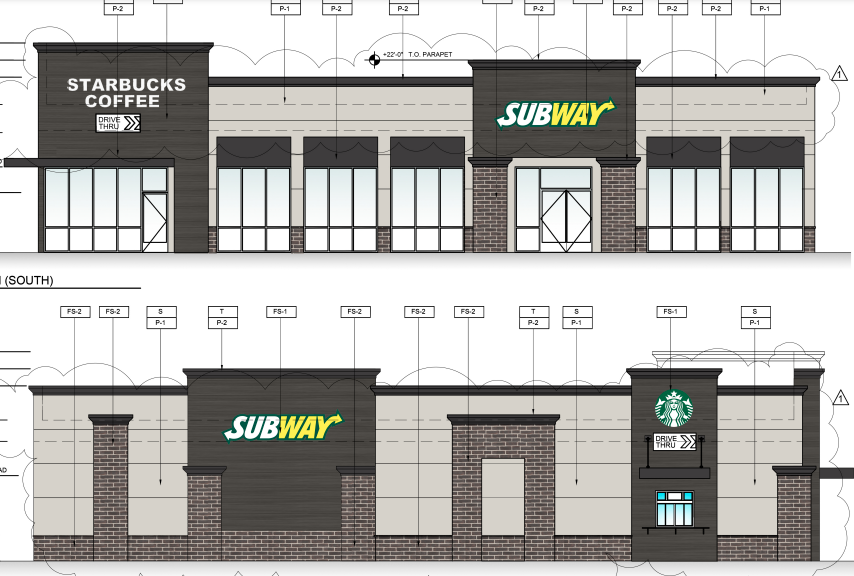
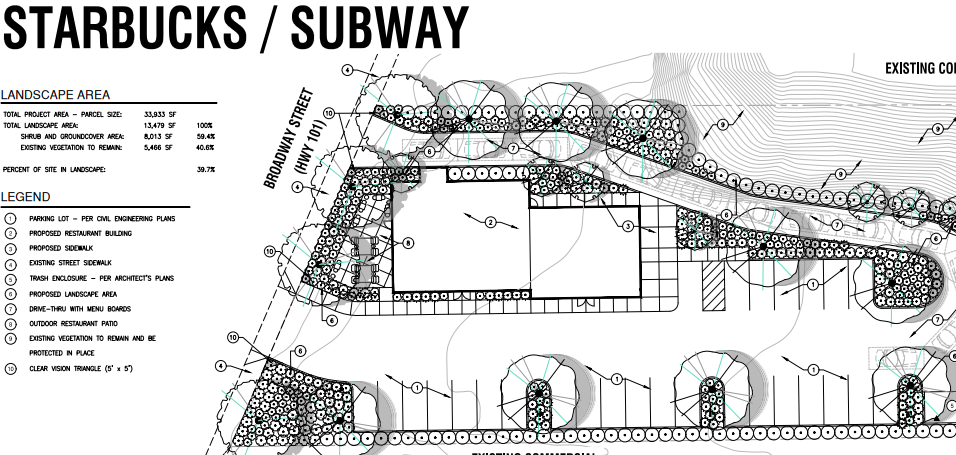
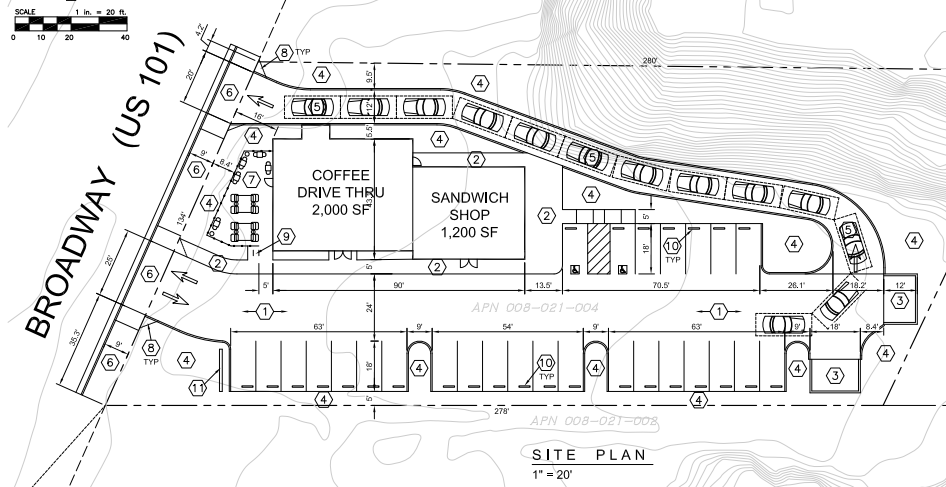
Proposed plans for a new Starbucks and Subway on Broadway. | City of Eureka
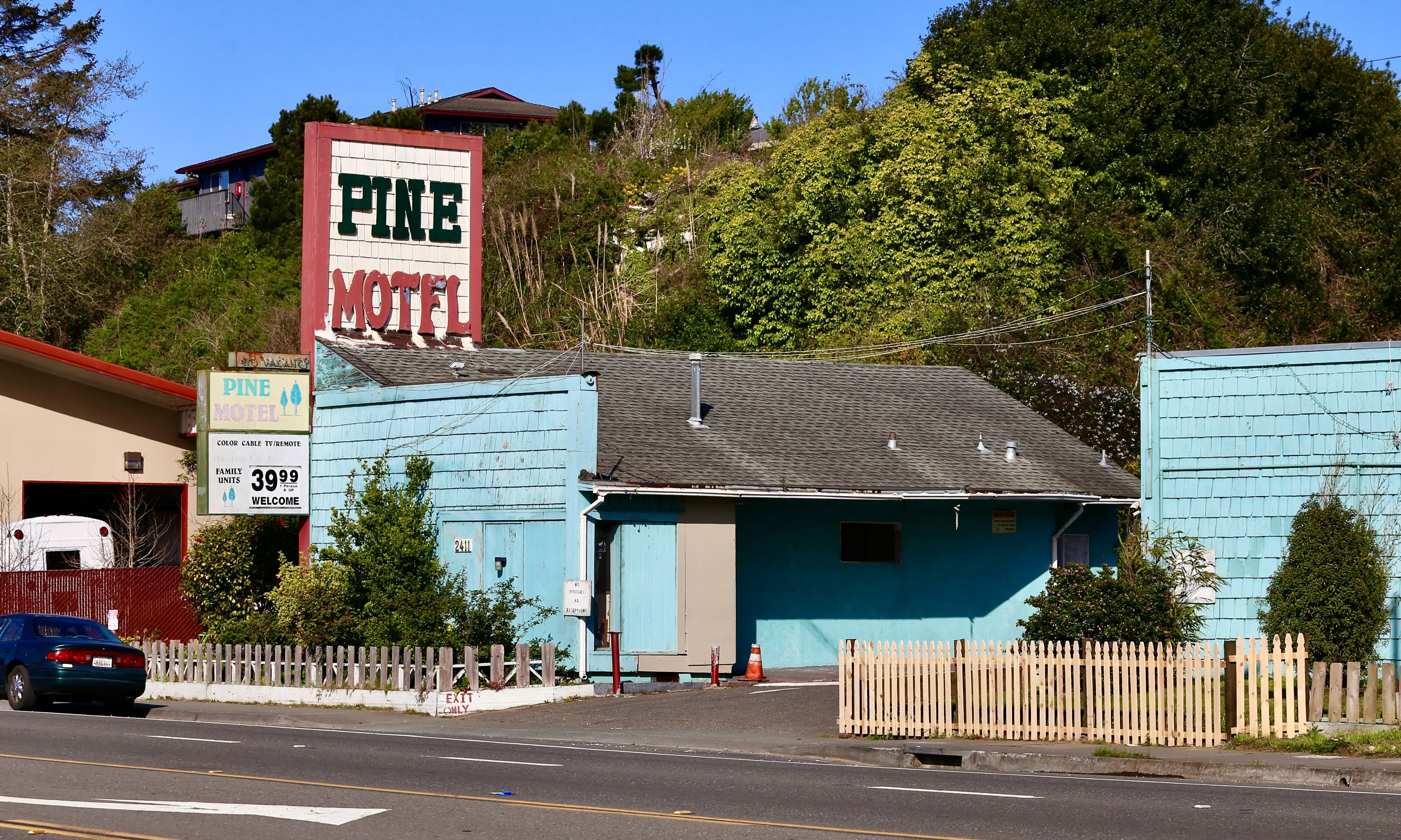
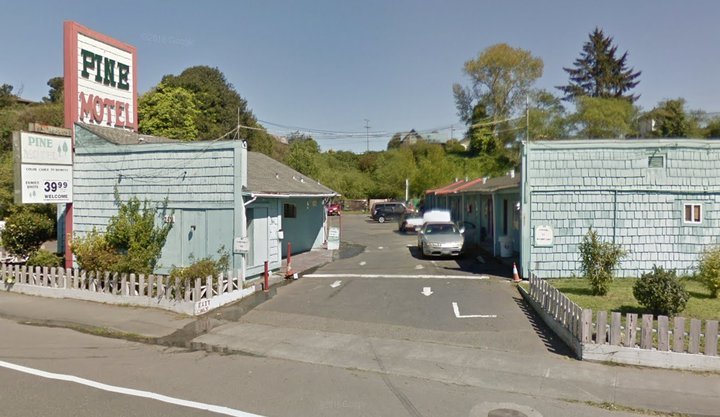
The City of Eureka’s Design Review Committee held a meeting this morning to discuss a proposal that would replace the Pine Motel at 2411 Broadway with a new building containing a Subway and separate Starbucks drive-thru.
Eureka Principal Planner Kristen Goetz told the Outpost that the committee was in favor of the proposed project.
“Ultimately, their consensus was that it was a good project and that it would be cleaning up that section of Broadway,” Goetz said.
The Pine Motel. | Andrew Goff
Plans for the project show designated spaces for landscaping, outdoor seating, about two dozen parkings spaces and a one-way drive-thru lane that wraps around the building.
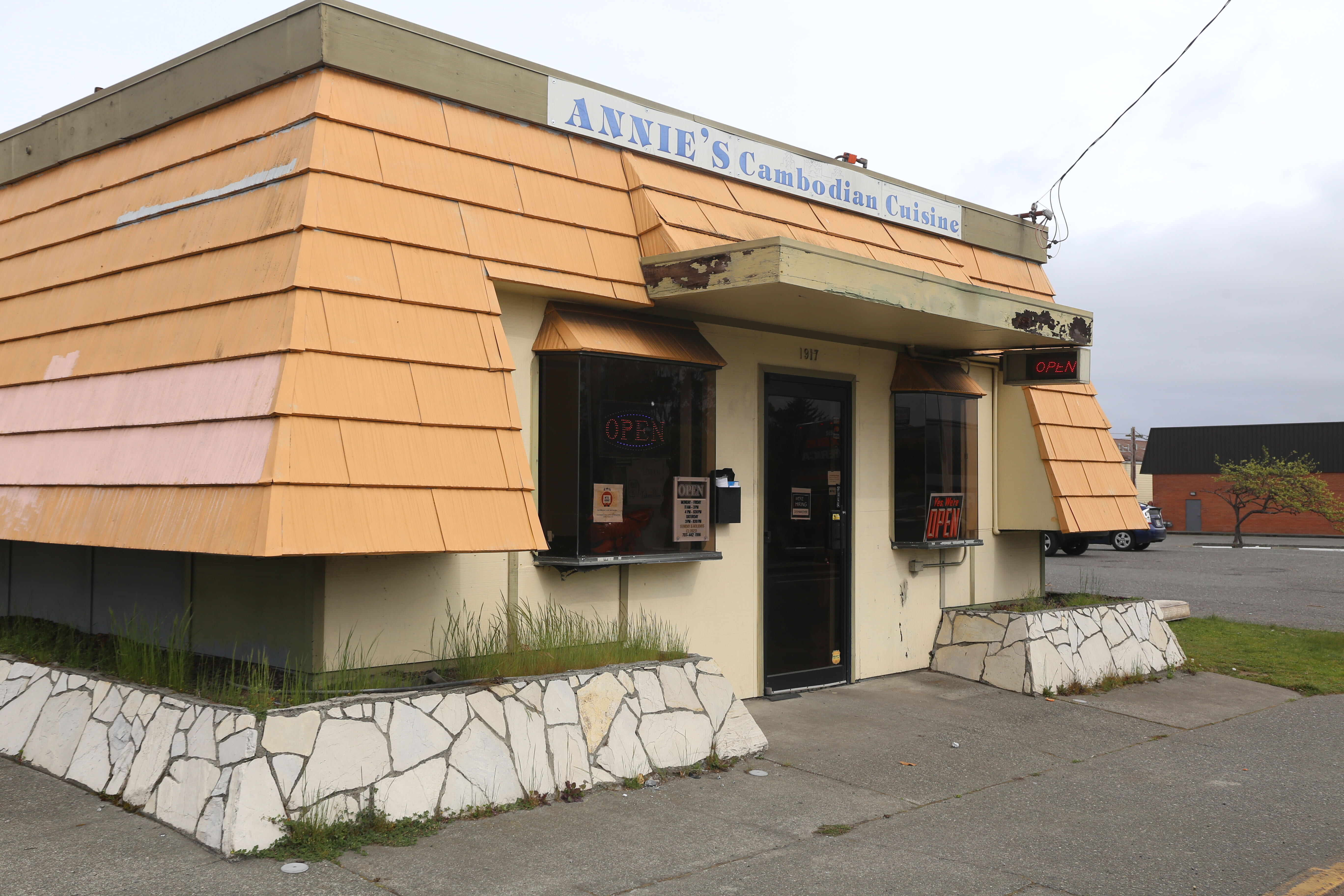
The property was previously owned by Ron Zhang and Whendy Chan. However, Eureka City Manager Miles Slattery confirmed that the property was recently purchased by Victor Chiang, the same developer who plans to demolish three existing restaurant buildings sandwiched between Highway 101 at 1906 Fourth Street and 1905 Fifth Street in Eureka. These buildings include Annie’s Cambodian and the now-closed Subway and Sizzler. Starbucks and another yet-to-be-named restaurant are planned to be built in their place.
Annie’s Cambodian on Fifth Street in Eureka. | Andrew Goff
In 2020, the City of Eureka expressed interest in obtaining a Homekey grant from the State to purchase the $360,000 Pine Motel property and convert it into a transitional housing facility. UPLIFT Eureka Program Coordinator Jeff Davis told the Outpost that the City asked for more than $1.4 million in funding to help cover the cost of buying the property, plus remodeling and operational expenses. However, Davis said the State only agreed to provide enough funds to buy the property — leaving the City more than $1 million short of its goal.
“We looked into other options, but couldn’t find alternative sources of funding,” Davis said. “It’s unfortunate that we weren’t able to secure that property.”
Following today’s meeting, the City will now begin a review process for approving the proposed Subway and Starbucks project.
This morning the San Francisco-based publication 7x7 — once a proud glossy city magazine, now apparently devolved into listicle-slinging — blogged a blog post entitled …
… and the number one most charming AF Northern California town that you’ve never heard of, assuming you’ve never read any of the previous 723 listicles on the same subject, is, of course: Ferndale!
The home of “storybook vibes and an old saloon,” Ferndale, we are told, is “dripping in [?] storybook homes and bay window–fronted shops.” Make sure you visit the “creepy yet beautiful” cemetery. Maybe you want to stay the night? Well, check out the Gingerbread Mansion!
But it’s 7x7’s kicker, here, that prompts this particular reply track to our colleagues on the wrong side of the Golden Gate.
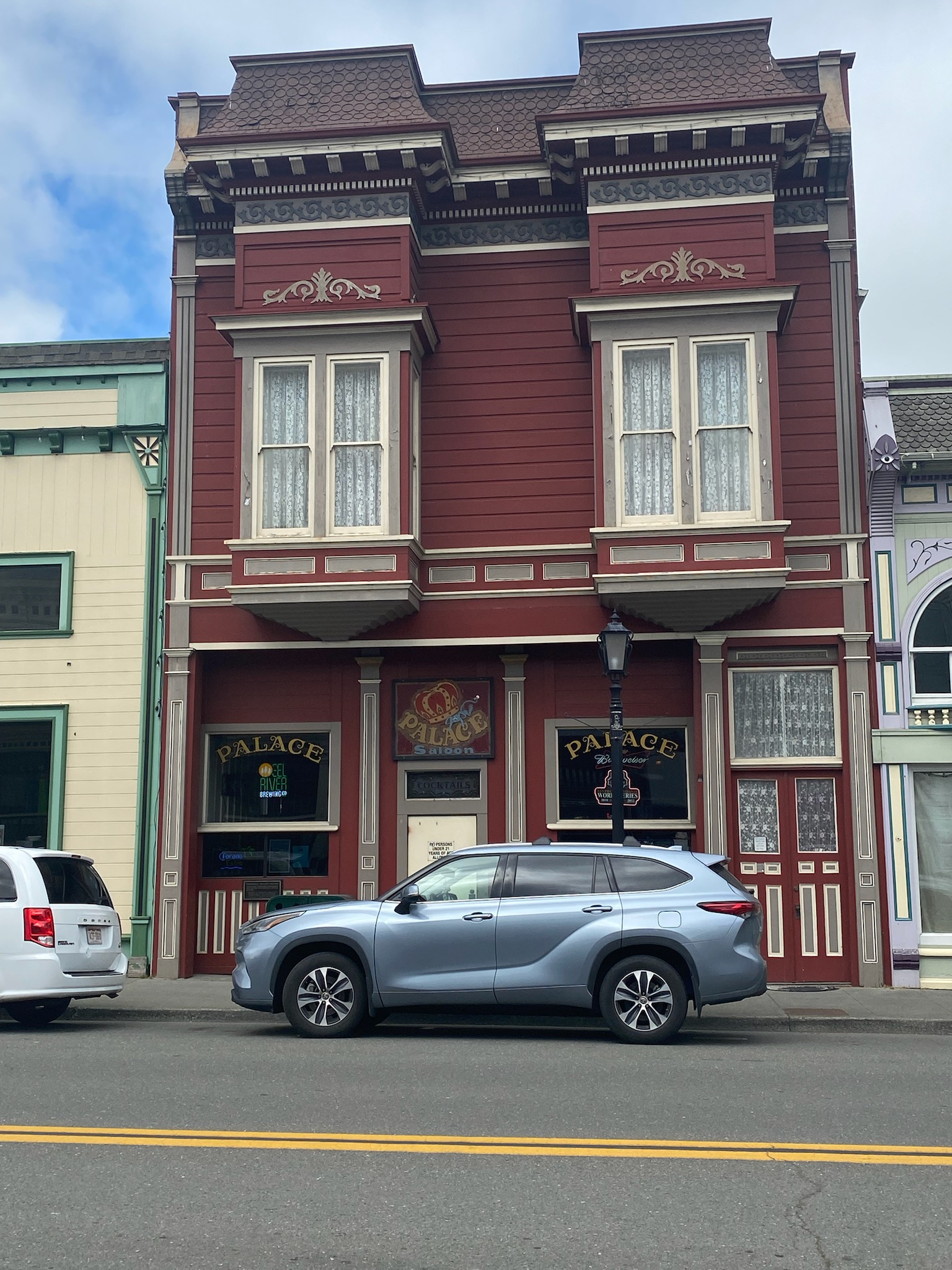
“Either way, don’t forget …” writes associate editor Shoshi Parks from what I imagine to be a bunker 50 feet beneath the Transamerica Pyramid, where she is chained to her cubicle tapping out content at 80 words a minute while leaky pipes hiss steam around her. “Either way, don’t forget to stop in for a cocktail and a game of shuffleboard at The Palace Saloon, the westernmost bar in the continental U.S.”
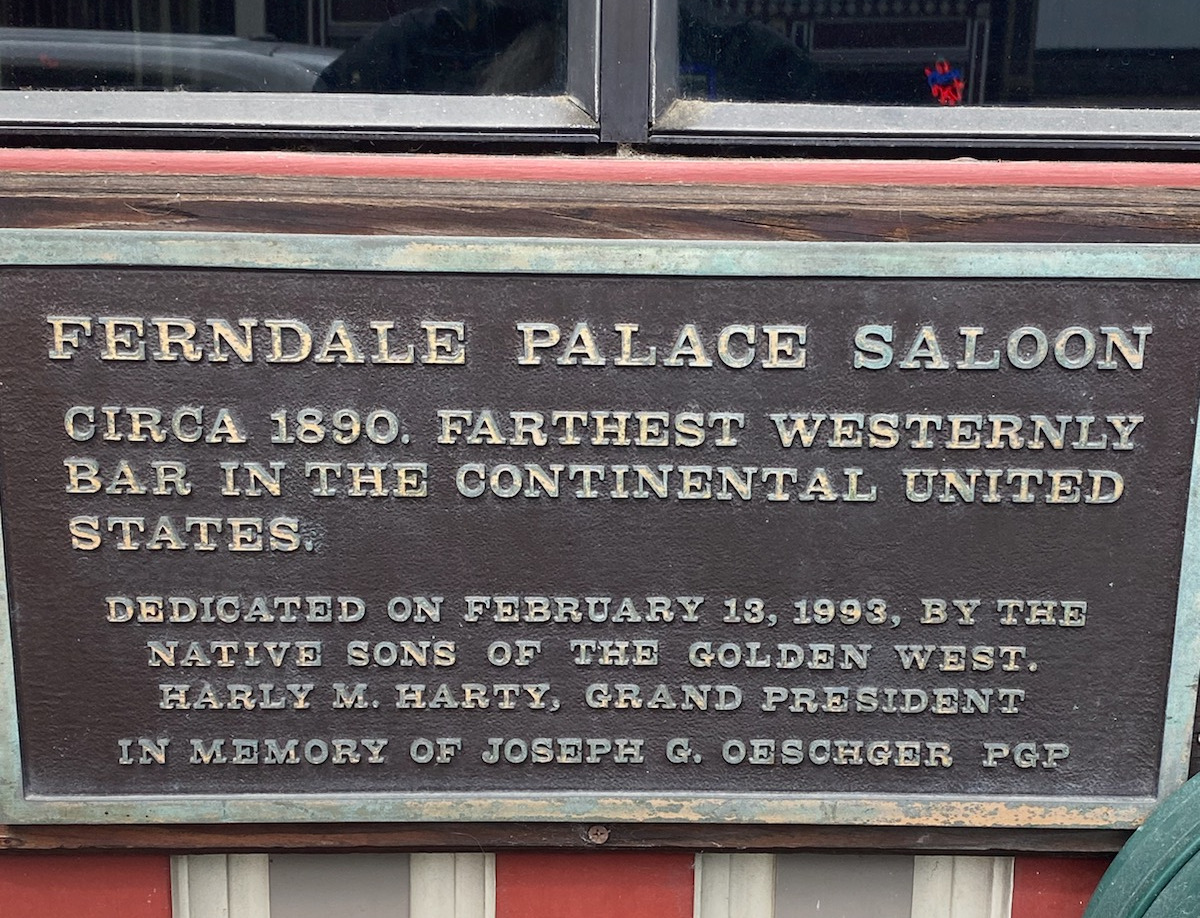
Now, look. We know this is Humboldt County legend of longstanding, and there’s even a plaque outside the bar trumpeting this obvious falsehood to everyone who strolls past — or even, God forbid, into — The Palace.
But no one who is not drunk actually believes this, right? Look. I made you a map.
Go ahead and zoom in, there. You may confirm the black line of longitude I’ve added to this map — 124.264505371 degrees West — passes right through The Palace.
Now scroll north.
Uh huh.
What do you see?
You see that The Palace is only the westernmost bar in the continental United States if the entire southern Oregon Coast and the town of Forks, Washington suddenly reinstated Prohibition without telling anyone.
Trust me, they have not. Bandon, Brookings, Port Orford — not only do they possess bars, they possess some of the hard-drinkingest bar patrons you’ll find anywhere. Show them some respect.