

Hand-to-Hand Stings on the Plaza Yesterday Yield Meth, Shrooms, Drug Task Force Says; Four Arrested
LoCO Staff / Friday, March 25, 2022 @ 8:13 a.m. / Crime
Press release from the Humboldt County Drug Task Force:
On March 24th, 2022 special agents with the Humboldt County Drug Task Force (HCDTF), with the assistance of the Arcata Police Department (APD), and the Humboldt County Sheriff’s Office (HCSO) conducted an undercover buy operation in the area of the Arcata Plaza. This operation was in response to multiple community complaints of drug dealing on and around the plaza area.

Cempa.

Blinn.
During the operation an undercover agent contacted a male on the plaza who directed him to a motel room a few blocks away to purchase the methamphetamine. The agent successfully purchased methamphetamine in the motel parking lot from two individuals, Ezrah Cempa (22 years old from Arcata) and Joshua Blinn (42 years old from Arcata).
Cempa and Blinn were placed under arrest and transported to the Humboldt County Jail where they were booked for the following charges:
182 PC Conspiracy to distribute methamphetamine
11378 H&S Possession of methamphetamine for sale

Adams.

Wellington.
Agents went back to the plaza and contacted a male about purchasing psilocybin mushrooms. This individual put the undercover agent in phone contact with a male that he described as selling all the “shrooms” around the plaza. The undercover agent contacted the individual on the phone and he agreed to meet the agent on South G St. in Arcata.
The undercover agent met Marshall Adams (40 years old from Arcata) and Victor Wellington (43 years old from Arcata) on South G St. Adams and Wellington sold the agent psilocybin mushrooms.
Adams and Wellington were placed under arrest and transported to the Humboldt County Jail where they were booked for the following charges:
182 PC Conspiracy to distribute psilocybin mushrooms
11378 H&S Possession of psilocybin mushrooms for sale
Anyone with information related to this investigation or other narcotics related crimes are encouraged to call the Humboldt County Drug Task Force at 707-267-9976.
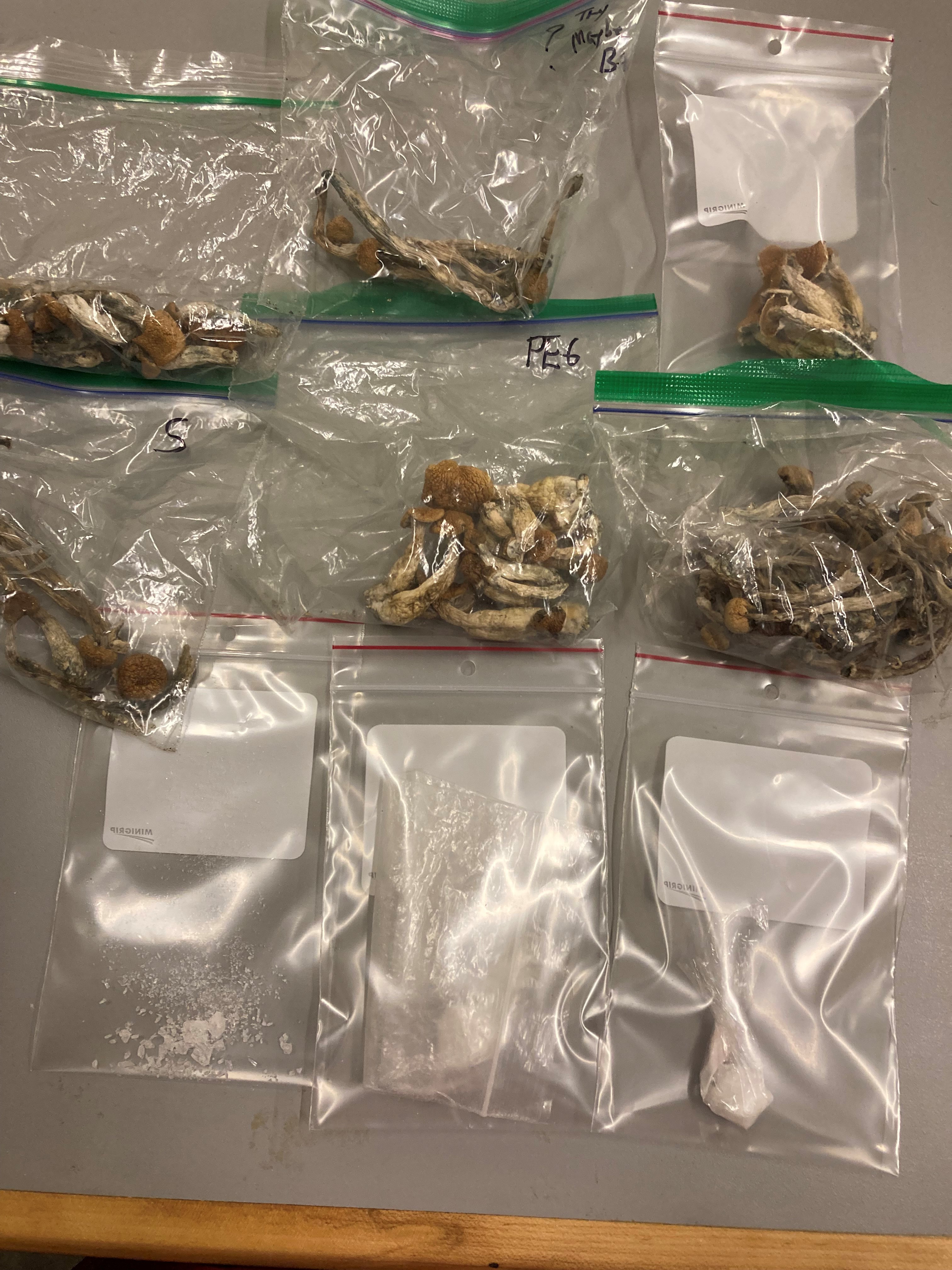
Photos: HCDTF.
BOOKED
Yesterday: 7 felonies, 17 misdemeanors, 0 infractions
JUDGED
Humboldt County Superior Court Calendar: Friday, Sept. 4
CHP REPORTS
6000 Mm101 N Men 60.00 (HM office): Trfc Collision-Unkn Inj
6183 Mm101 N Men 61.80 (HM office): Trfc Collision-1141 Enrt
2470 Mm199 N Dn 24.70 (HM office): Traffic Hazard
Lesina Rd / Titus Rd (HM office): Trfc Collision-Unkn Inj
0 Sr299 (RD office): Trfc Collision-No Inj
ELSEWHERE
RHBB: CDPH Issues Immunization Recommendations for 2026-27 Respiratory Virus Season
RHBB: Redway Transfer Station to Close an Extra Day for Construction
RHBB: Dows Prairie Road to Close for Two Months for Culvert Repair
Audit: California Utilities Aren’t Doing Enough to Reduce Wildfire Threats
Julie Cart / Friday, March 25, 2022 @ 7:35 a.m. / Sacramento
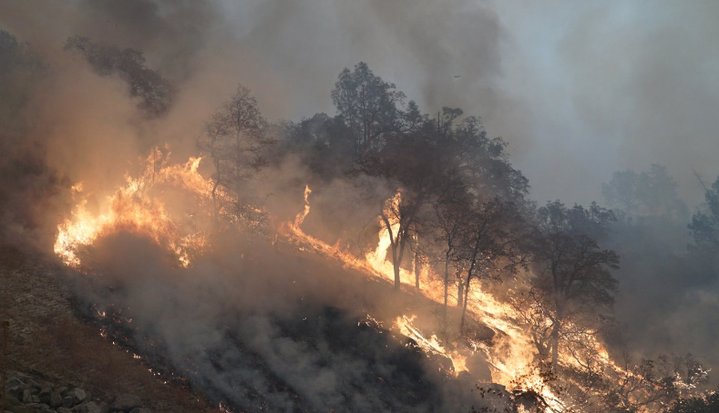
The Camp Fire burns near Paradise. Photo: Calfire.
As record-breaking drought fuels another potentially dangerous wildfire season, the state auditor reported yesterday that state officials are failing to hold California’s electric utilities accountable for preventing fires caused by their equipment.
The report to the California Legislature found that the new Office of Energy Infrastructure Safety approved utility companies’ wildfire prevention plans even when they were “seriously deficient.” Included were plans by Pacific Gas & Electric, California’s largest utility, which was held responsible for sparking the state’s deadliest wildfire, the Camp Fire that killed 85 people in 2018.
While power companies are working to make their equipment more fire-resistant, neither the energy office nor the Public Utilities Commission has done enough to ensure that the companies prioritized upgrades where they are most needed — in high fire-risk areas, according to the 91-page report.
Since 2015, power lines have caused six of California’s 20 most-destructive wildfires, according to the report. Uninsulated lines and older transformers and other equipment are dangerous during high winds, when falling trees or flying debris can strike them and spark flames.
The PUC “does not use its authority to penalize utilities when its audits uncover violations.”
— State Auditor’s Office report
The energy office, which was part of the PUC until it was moved last summer to the Natural Resources Agency, has a broad charge to monitor the risk of utility-caused fires and issue safety certificates to power companies. The report cited instances when the office approved plans that it knew to be inadequate or vague.
“Given the nightmarish wildfires that have become part of normal life in recent years, California taxpayers would be right to ask if they’re paying for utility watchdogs or lap dogs at the CPUC,” said Ken Cook, president of the Environmental Working Group, an environmental research advocacy organization that tracks wildfire issues.
Representatives of PG&E did not immediately respond to a request for comment.
The State Auditor’s Office criticized the PUC for not conducting thorough audits of work that companies said they performed. The PUC “does not use its authority to penalize utilities when its audits uncover violations,” the report said. Among its range of duties, the commission regulates privately-owned utilities and is supposed to ensure the safe operation of the state’s electric grid.
PUC officials said they agreed with most of the report’s recommendations. The commission will “establish a plan and timelines toward implementing the recommendations identified in the California State Auditor’s report,” according to a statement by spokeswoman Terrie Prosper.
In a letter accompanying the report, Acting State Auditor Michael S. Tilden raised concerns about the increasing numbers of so-called public safety power shutoffs, when companies cut power during times of high fire risk. Tilden noted that between 2013 through 2021, the state’s largest utilities shut off power to more than 3.6 million customers during 67 power curtailments. There were some 600 unplanned power outages in 2020 alone, the report said.
Authorities are not doing enough to ensure that the companies prioritize equipment upgrades in high-risk areas, the report found. In 2020, utilities reported they had replaced or upgraded equipment on 1,540 miles of lines.
But as of last summer, there were 40,000 miles of bare power lines in high fire-risk areas, the report found.
“Even if all of the improvements they completed in 2020 consisted of replacing bare power lines in high fire-threat areas with covered or underground lines, they would have addressed only 4 percent of such lines,” Tilden wrote.
State law requires utilities to begin identifying sections of line that are regularly affected by power shutoffs. The report suggested the Legislature could strengthen this law by requiring utilities to identify what is necessary to prevent future power shutoffs.
In recent years, consumer and ratepayer groups have regularly criticized efforts by the state’s largest investor-owned utilities — PG&E, San Diego Gas and Electric and Southern California Edison — to upgrade their equipment, and complained that the state’s utility regulator is not a vigorous monitor of the industry.
In written responses included in the report, the agencies in some instances challenged factual assertions and in others noted that many of the suggested changes require legislative action.
The audit carries no authority other than to inform the Legislature. The process does include a status update, beginning in 60 days, to record responses and note any actions taken regarding the auditor’s recommendations.
###
CALmatters.org is a nonprofit, nonpartisan media venture explaining California policies and politics.
BURRE DENTAL CENTER EXPANSION: Jared Huffman Tours Clinic to Learn More About Plans to Expand Capacity by 8,000 Visits Per Year
Stephanie McGeary / Thursday, March 24, 2022 @ 4:17 p.m. / Government , Health Care

Congressman Jared Huffman in front of the Burre Dental Center in Eureka | Photos: Stephanie McGeary
###
If you’ve tried to make a dentist appointment in Humboldt lately, you’re probably aware that it can take months and, especially for low-income folks, it can be difficult to find a local dentist office that can see you at all. Soon it may be just a little bit easier to find a place that can fix your teeth, with the Burre Dental Center — a branch of Open Door Community Health Services — planning an expansion that could increase capacity by up to 8,000 visits per year.
The expansion will be funded by $1 million from the Consolidated Appropriations Act – an omnibus spending bill signed by the president last week, more than $11.5 million of which Congressman Jared Huffman secured to fund community projects in Northern California, including several in Humboldt County. On Thursday morning Huffman joined representatives from Open Door Community Health Services to tour the Burre Dental Center and learn more about the expansion plans.
The $1 million will be used to add six additional stations to the facility, as well as an additional lab, a new call center and administrative offices. Cheyenne Spetzler, senior vice president of development for Open Door Community Health, said that Open Door acquired the additional space next to the current Burre Center several years ago, and she is grateful that the center will finally be able to expand there.

In addition to adding the new space and equipment, Open Door plans to
put the funding toward recruitment efforts and hopes to hire two
additional dentists and multiple dental assistants. Five thousand dollars will be invested in the in-house training and certification of someone who wants to become a dental assistant, Sarah Ross, vice president of operations for Open Door, said during the tour. Ross added that the dental center has seen a major decrease in staff since the pandemic.
“We noticed that during COVID we had a real drought in dental assistants in particular,” Ross said during the tour. “We went down by about one third, and are still recovering to come back out of that.”
Samantha Hani, administrative site director for the Burre Dental Center, added that the center is still short about six employees. Most days there is that is enough staff to operate the center, but if someone calls in sick there is no cushion. With the center operating with a skeleton crew, wait times for patients increase, and sometimes days the center has to call patients to reschedule because there is just not enough staff on to accommodate everyone, Hani said.
The new expansion should not only take some of the strain off of the current staff and patients, but will also allow the center to accept new patients. Hani said that the center expects to increase capacity by between 5,600 and 8,000 visits per year. Hani could not say yet exactly how or when new patients might sign up, and said there will be more information about that as the expansion moves forward.
The expanded capacity will be largely focused on children’s dentistry and preventative care, although the center will take patients of all ages, the staff said. The age makeup of new patients will largely depend on what dentists the center can recruit, and whether or not they are able to hire specialists in children’s dentistry.
Exactly how long it will take for the new plans to become reality is still uncertain, but it will likely be a few months before the building expansion can begin. With the conceptual design in place, Speltzer said, the next steps will be to take the plans to an architect for a design. The design will then need to be taken to the City of Eureka for permitting approval.
When asked by Huffman if the $1 million would be enough to cover the full expansion, Spetzler said that it should be. But if the project does go over, Open Door will be able to make up the rest of the funding.
Following the tour, Huffman told the press how impressed he was with the Burre Dental Center’s expansion proposal, adding that he was very happy to help secure the funding for this project.
“We tried to look for projects that have the most bang for the buck and this is one of them,” Huffmann told the press outside of the Burre Dental Center. “For a million dollars to provide this additional capacity to a facility that meets such a critical community need is really a great example of how these dollars can make an impact.”
###


EXTREME DROUGHT: So Far This is Eureka’s Driest Year Ever Recorded
Isabella Vanderheiden / Thursday, March 24, 2022 @ 3:58 p.m. / Drought
Local precipitation totals for the month of March are shaping up to be the lowest ever recorded. While late December and early January storms started the season with great promise, historic drought conditions have gripped Humboldt County.
“Our total precipitation in Eureka for the year so far is a whole 3.83 inches,” James White, a meteorologist with the National Weather Service office in Eureka, told the Outpost. “That is the lowest precipitation level recorded since record-keeping began over 100 years ago. We had the driest January and February on record and that trend will probably continue for the month of March.”
Eureka has received 1.4 inches of precipitation this month, about three inches below normal, he said. On average, the Humboldt Bay region receives just under 17 inches of precipitation by mid-March.
Much of the state has reported severe to extreme drought conditions, aside from a swath of moderate drought conditions along the Southern California coast, according to data from the U.S. Drought Monitor. Just this week, local drought conditions shifted from overwhelmingly severe to extreme.

Drought conditions have worsened across Humboldt County in the last week | U.S. Drought Monitor
“That’s one category below the highest which is exceptional drought,” White explained. “If the lack of precipitation continues, we’ll probably fall into that category before too long. …We could always get some more rain in April, but long-range forecasts don’t look too great at the moment.”
This means yet another year of strained water resources, lower than average river levels and increased fire potential throughout the North Coast.
“In short, it’s very dry throughout the county, setting the stage for what could be a devastating fire season,” Ryan Derby, Humboldt County Office of Emergency Services (OES) Manager, told the Outpost in an email. “…At this point in the season, any rainfall we receive is beneficial but likely won’t have a significant impact on the drought overall. What we really need in order to see improvement in drought conditions is light-to-moderate rain over a prolonged period of time, as opposed to a lot of rain at once. It has been fairly dry since October, with a few significant rain events in more recent months, but nothing that will turn the drought around.”
Speaking from an emergency preparedness perspective, Derby said he is focused on wildfire preparedness and conducting community outreach.
“Internally, OES is working on building depth in our Emergency Operations Center (EOC) staff by providing training and testing our systems to ensure functionality prior to peak fire season,” he said. “OES is also engaging in preparedness talks with high fire-prone areas of the county to discuss evacuation zones, emergency alerts and personal preparedness planning.”
Derby encouraged residents to find their evacuation zone through the Zonehaven Evacuation Management platform and prepare an evacuation checklist. Local residents should also sign up for emergency notifications from the county here.
The Humboldt County Board of Supervisors voted to approve the ongoing local drought emergency last month and again on Tuesday on the advice of the county’s Drought Task Force, which has shifted its focus to policy recommendations and compliance with Senate Bill 552. That bill concerns drought planning for small water suppliers and rural communities at risk of water shortage and drought vulnerability.
Assembly Bill 2451, a new bill introduced by Assemblymember Jim Wood (D-Santa Rosa), would require the State Water Resources Control Board “to establish a Drought Section within the Division of Water Rights” and adopt new “principles and guidelines for diversion and use of water in coastal watersheds during times of water shortage.”
“Drought is a statewide catastrophe,” Wood wrote in an email to the Outpost. “In my district, I am especially worried about the coastal watersheds, especially as demand continues to exceed annual rainfall in most cases. This year I have a bill, AB 2451, which would establish a new unit at the water board focused specifically on drought preparedness. It would develop a pilot project for watersheds in Northern California. We need to have long-term plans in place not after the fact or a few months before disaster strikes.”
State Sen. Mike McGuire’s climate emergency declaration, Senate Concurrent Resolution (SCR) No. 53, passed the state Senate with bipartisan support, 30-4, last month and moved forward to the state Assembly. However, the bill has been “held at desk,” in part because of the use of the phrase “climate emergency.”
“SCR 53 declares that, ‘the climate emergency threatens the state, the nation, the planet, the natural world, and all of humanity.’ Given the concordance of such a wide body of scientific evidence supporting this fact, there is little doubt this is true,” according to the legislative analysis of the bill. “However, the term ‘climate emergency’ does not appear in California statute and merits further consideration.”
Reached by phone this afternoon, McGuire acknowledged the “dire situation” facing Californians.
“We know that the planet has hit a tipping point and the effects of climate change are accelerating,” he said. “Here in California and throughout the American West, we’re seeing extreme wildfires and record-breaking temperatures. …We have to change our thinking. The state of California is investing literally billions of dollars this year and next to help our communities prepare for what will be a drier climate in the decades to come.”
Gov. Gavin Newsom advanced $15 billion in funding last fall through the California Comeback Plan to build wildfire and forest resilience, support immediate drought response and long-term water resilience, and directly protect communities across the state from multi-faceted climate risks, including extreme heat and sea-level rise.
“California needs to move forward with even more aggressive policies,” McGuire said. “We can no longer be in a reactive mode. We have to become much more proactive which means we have to advance aggressive policy along with associated financial investments to help prepare our communities. It is going to be incredibly challenging, but California can lead the way.”
Supervisors Approve 320-Unit McKay Ranch Subdivision in Cutten Despite Developer’s Refusal to Make Any Project Modifications
Ryan Burns / Thursday, March 24, 2022 @ 3:26 p.m. / Business , Local Government
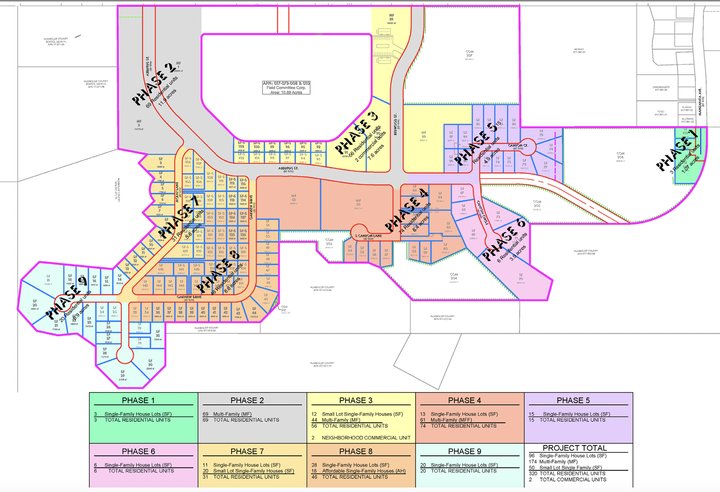
Plans for the North McKay Ranch Subdivision include up to 320 residential units, including up to 172 multi-family units, along with 22,000 square feet of commercial development on a total of about 81 acres.
###
PREVIOUSLY
- MCKAY RANCH SUBDIVISION: Big Community Meeting in Cutten Tonight to Discuss Proposed 320-Unit Development Around Redwood Fields
- McKAY RANCH SUBDIVISION: Environmental Groups Voice Concerns About 81-Acre, 320-Unit Development Planned in Cutten
- McKAY RANCH SUBDIVISION: County Recirculating Environmental Document for 320-Unit Development Planned in Cutten
- McKAY RANCH SUBDIVISION: Board of Supes Set to Decide Fate of Proposed 320-Unit Development in Cutten
###
The county’s acute need for more housing was up against the looming threat of catastrophic climate change this week as the Humboldt County Board of Supervisors considered the fate of a major residential and commercial development near Cutten.
At the end of Tuesday’s very, very long meeting (it wrapped up nearly 12 hours after it began), the board unanimously approved the North McKay Ranch subdivision, an 81-acre mixed-use project from local developer Kurt Kramer. The subdivision is slated to add up to 320 residential units and 22,000 square feet of commercial space in Cutten and, in approving it, the board also approved a general plan amendment and zone reclassification that will allow the development to proceed.
The unanimous approval came despite Kramer’s steadfast refusal to make any modifications that could have made the development more environmentally friendly, including the elimination of natural gas hookups, an increased number of bicycle storage lockers and the addition of charging infrastructure for electric vehicles (EVs).
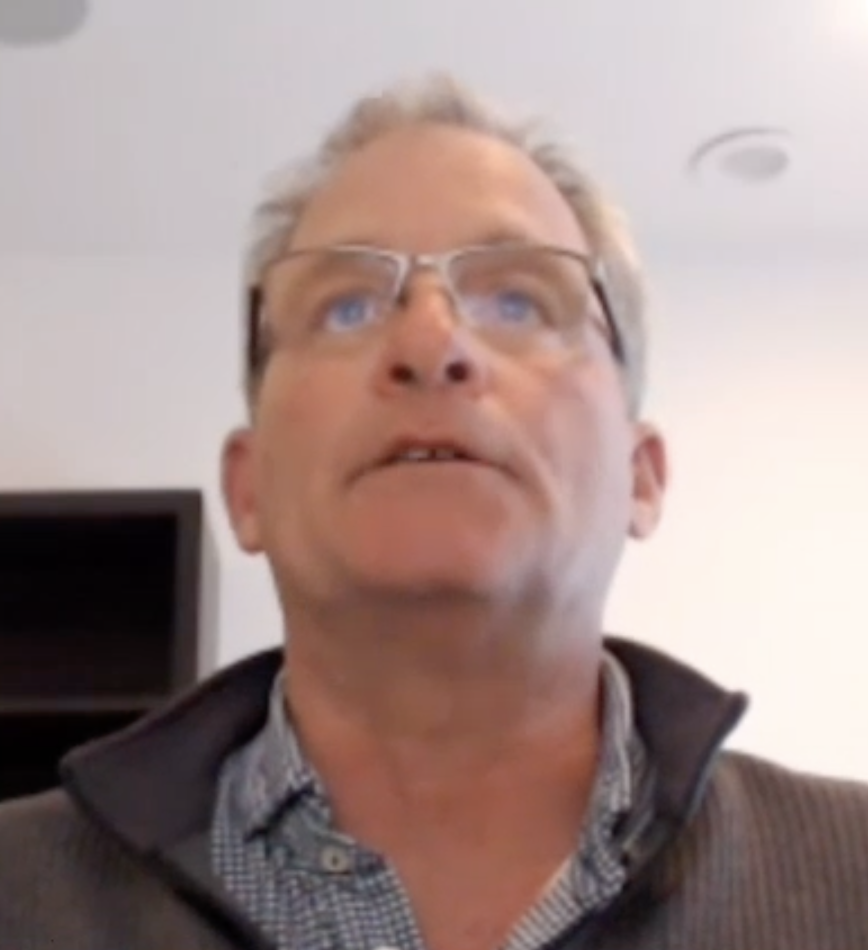
Kramer laid down his ultimatum early in the hearing, telling the board that because the project is already on the verge of being financially infeasible, the county needed to approve it as proposed or else he was prepared to walk away.
“This project has to make commercial sense or it’s not gonna get developed — and we need housing!” he told the board via Zoom. “So at the end of the day, what I would hope for is that we put this to a vote, and it’s up or down,” he continued, noting that he’s already spent $700,000 on studies and reports. If the board won’t approve the development as is, he said, the North McKay Ranch plans will just go on a shelf somewhere “and we’ll move on — and I’m good with it.”
The project’s environmental impact report (EIR) found that the development will have a couple of significant and unavoidable environmental impacts: namely, increased greenhouse gas emissions and exacerbated wildfire risks.
In order to approve the project despite those impacts, the board needed to find that the costs are outweighed by other considerations — in this case, meeting the county’s rapidly expanding housing needs (and thereby complying with state housing laws), stimulating economic growth and expanding open spaces and recreational opportunities for the surrounding community.
The housing element in the county’s general plan calls for the development of 1,413 new housing units between 2019 and 2027 across all income categories, and First District Supervisor Rex Bohn noted that growth expectations have only increased lately with the development of Cal Poly Humboldt along with other projects, such as the Nordic Aquafarms fish farm on the peninsula and the high-speed, transpacific fiber optic line landing near Samoa.
Kramer’s project — which is expected to be built in nine phases over a period of 15 to 20 years, depending on market conditions — includes 172 multi-family units, which will presumably be available for cheaper than the individual units.
Eight of the nine speakers who stuck around for the public comment period urged the supervisors to either deny the project or require modifications to lessen its footprint.
Dan Chandler said the developer and the county planning department “rejected many proposals and alternatives that would have reduced greenhouse gas emissions.”
Colin Fiske, director of the Coalition for Responsible Transportation Priorities, said the developer’s contention that this project qualifies as “infill” is “frankly absurd.” He called for more mitigation measures such as increased housing density, completion of local bicycle and pedestrian networks, inclusion of traffic-calming features and free bus passes for residents.
Tom Wheeler, the executive director of the Environmental Protection Information Center, said he’s not opposed to the project but would like to see the county require all-electric construction with no new natural gas hookups while improving the project’s EV-charging infrastructure.
Bohn, who lives in the neighborhood, made it clear that he supported the project. He talked up the location’s walkability to local stores and a post office and downplayed the fire risk, noting that the nearby groves of coastal redwoods aren’t nearly as combustible as, say, fir forests in more wildfire-prone regions such as Paradise.
Third District Supervisor Mike Wilson, on the other hand, made repeated attempts to get his board colleagues to join him in requiring modifications, including full electrification and underground conduits to make all parking spaces EV-ready.
Existing plans call for the addition of two traffic signals at nearby intersections. Wilson said he’d rather see the money spent on improving pedestrian and bicycle connectivity to neighborhood commercial areas, saying that change wouldn’t cost Kramer any more money. He also said there should be a bike locker for every upstairs unit so residents don’t need to haul their cycles up a flight of stairs.
Board Chair and Fourth District Supervisor Virginia Bass asked for Kramer’s take on these suggestions. The developer said Wilson was “adding more ornaments to a Christmas tree we can’t afford to buy already.”
Wilson struggled to get support for the stand he was trying to take. At one point, Fifth District Supervisor Steve Madrone seconded an amending motion that would have required the elimination of natural gas hookups.
Wilson turned to Bass to see if she’d join them to form a majority. “I just have to ask you, Virginia,” he said, swiveling to face her, “is anything on this list something that you’re willing to go [with]? Because as far as I can tell I’ve got a two and a half and two and a half here.”
Bass prevaricated for a couple moments before saying, “We heard pretty clearly when [Kramer] said, ‘Either say yes or say no.’ … So I really, really think that’s where Kurt is.” She said that maybe some of the things Wilson was suggesting will be state-mandated by the time Kramer’s ready to build.
Wilson kept trying, asking the board to consider his idea to swap traffic signals for better pedestrian and bike access. Second District Supervisor Michelle Bushnell was skeptical, asking who’d be legally liable if a fatal accident happened at one of those intersections.
Wilson also pushed for the board to require Kramer to sign an indemnification agreement limiting the county’s liability for the development. Such agreements have become common practice with the county, but Planning and Building Director John Ford said he’d discussed that possibility with Kramer, who said “no” to the idea. Bushnell said she didn’t feel good about putting that requirement on the project.
After some discussion, Bohn made a motion to approve the development agreement and its associated general plan/zoning changes, along with a rather squishy amendment: The board added a condition that will allow the developer to make improvements to pedestrian and bicycle connectivity, rather than installing the two traffic lights, but only if both county staff and Kramer himself agree that it’s a good idea.
That condition will come back before the board for consideration and public input at a future meeting. But the project itself was approved by a 5-0 vote.
###
Interactive map of the project site (outlined in red):
(AUDIO) The Yurok Tribe Will Reintroduce Four Young Condors Into Their Ancestral Skies This Spring
Andrew Goff / Thursday, March 24, 2022 @ 3 p.m. / Wildlife

Photo: Gavin Emmons, National Parks Service
PREVIOUSLY:
- They’re Planning to Bring the California Condor Back to Humboldt! Your Input Welcomed at Meetings Next Week
- Federal Government Partners With Yurok Tribe to Bring California Condor Back to Pacific Northwest
- The California Condor is One Step Closer to Soaring Above Yurok Land Once Again, as Key Environmental Regulation is Set to be Introduced
In the coming weeks, after years of exhaustive collaborative planning by the Yurok Tribe, the National Park Service and U.S. Fish and Wildlife, four young California condors are set to be released into North Coast skies, nearly 100 years after the local population disappeared as the result of human incursion.
For Tiana Williams-Claussen, a Yurok tribal member and director of the tribe’s Wildlife Department, the condor’s reintroduction into Yurok territory is the culmination of a process she helped set into motion back in 2008 after returning home following her graduation from Harvard University. She considers this to be her “life’s work” and can hardly believe the big day is almost here.
“It seems almost unreal,” Williams-Claussen told Here and Now as part of an interview you can hear by clicking the player above. “What keeps striking me is when I’m driving along the highway, for example, through the mountain ways or along the coast, along the canyons, and I’ll see see a turkey vulture in the air … and I can just see a condor flying through what I know is their ancestral home. Really what I’m envisioning is that moment when [condors] are just a part of our life again and I can at any point just look up and see them in the sky.”
It’s the latest chapter in the California condor’s unlikely success story. The largest land birds in North America, with wingspans approaching 10 feet, California condors once faced extinction before efforts were made to protect them leading to a miraculous population resurgence for the species. The following information on the bird’s saga comes from a U.S. Fish and Wildlife release on the project:
California condors prehistorically ranged from California to Florida and, in contemporary times, from Western Canada to Northern Mexico. By the mid-20th century, condor populations drastically declined due to poaching and poisoning. In 1967, the California condor was listed as endangered. In 1982, only 23 condors survived worldwide. By 1987, all remaining wild condors were placed into a captive breeding program. Thus, began an intensive recovery program to save the species from extinction.
As a result of exemplary conservation partnerships, and intensive captive breeding and reintroduction efforts, there are now over 300 California condors in the wild in California, Arizona, Utah and Baja California. However, the bird is still listed as endangered and lead poisoning (largely caused by ingesting lead shot or fragments of lead bullets when feeding on carcasses) is listed as one of the species’ primary threats.
As for our soon-to-be local population, after the initial four condors are released in Redwood National Park this spring, the plan going forward is to release even more birds in the future.
“We will actually be adding about six birds per year for the next 20 years,” Williams-Claussen said. “This first cohort is super important. They are going to be the leaders of everyone who comes after.”
To read more about the Yurok Tribe’s Condor Progam click here.
CHRISTIE CASE: Rancher Battling Cancer as Second Trial Looms
Rhonda Parker / Thursday, March 24, 2022 @ 12:17 p.m. / Courts
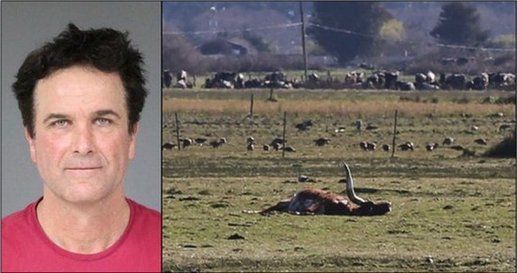
File photo: Andrew Goff
Evidence gathered during an October 2021 federal raid on Ray Christie’s Arcata ranch will not be presented at Christie’s second jury trial, Judge Gregory Elvine-Kreis ruled this morning.
Elvine-Kreis granted defense attorney Rick Richmond’s motion to withhold evidence collected by federal agents. So far no federal charges have been filed against Christie, 58. He remains charged with four felony counts of animal cruelty after a state and county raid in spring 2018.
Deputy District Attorney Steven Steward objected to the motion and also offered to bring in a sheriff’s sergeant to testify about what he saw during the federal operation. (Some local officers assisted.) Elvine-Kreis declined to hold an evidentiary hearing on that raid.
In 2019 Christie leased his cows — hundreds — to Ferndale dairy farmer Mario Avelar, who is now legally responsible for their care. But Christie and his family still live on the ranch.
“Mr. Christie’s home is right in the middle of it,” Steward said this morning. He suggested Avelar should be brought in to verify he has a valid lease on the cattle.
During Christie’s first trial the jury deadlocked 11-1 for conviction on the animal cruelty counts. He was convicted of numerous misdemeanor charges of dumping dead cows near state waterways. A large pile of carcasses was found on the Arcata ranch.
Christie is accused of neglecting his cows to the point that some allegedly starved to death and others were near death, too weak to stand up. Witnesses testified cattle on some of Christie’s properties had no access to food or water.
The second trial is set for May 9, but that is highly unlikely. Christie is being treated for cancer and did not come to the hearing this morning. He attended via Zoom but was not on camera.
“He’s not here because he’s not up to it,” Richmond said.
Richmond has made an issue out of Steward not responding in writing to his motion to withhold the evidence from the federal raid. But Elvine-Kreis informed him this morning that under local court rules, Steward has until up to two days before trial to file.
The bottom line, Steward said, is “we will introduce no evidence beyond what was introduced in the last trial.”


