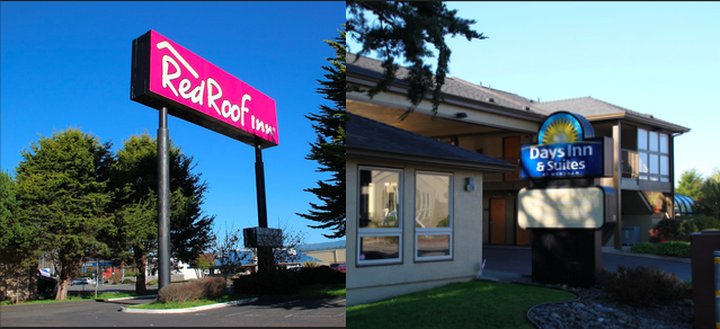
The Red Roof Inn and Days Inn in Valley West | Photos: Jacquelyn Opalach
A project that will convert two Valley West hotels – the Red Roof Inn and Days Inn & Suites – into permanent housing for homeless individuals in our community is one step closer to reality, after the Arcata City Council voted on Wednesday night to make the necessary zoning changes and approve the grant and loan applications for funding the projects.
The zoning change expands the City’s Homeless Housing Combining District – adopted by the City in 2009 to allow for creation of emergency shelters and homeless housing – to include the hotel properties. It also adds language establishing standards for Permanent Supportive Housing (PSH) developments, a type of housing that is meant to serve as a permanent residence for homeless individuals.
The project is a partnership between the City, local nonprofit Arcata House Partnership (AHP) and development company Danco, and will be funded by grant money from the Homekey Program – a statewide effort to rapidly expand housing for the homeless population. AHP will purchase the Days Inn and convert it into 60 apartments for chronically homeless people and Danco will purchase and convert the Red Roof Inn into 78 units for the homeless population. With the council’s approval, the City also agreed to provide both organizations with a loan, which will be paid back by the grant money (with three percent interest).
Many community members spoke during Wednesday’s virtual Zoom meeting. Some were in support of the project because of the homeless community’s dire need for housing opportunities, but many voiced opposition, citing concerns over safety, crime and the potential depreciation of nearby property values.
“This will segregate one of the lowest income groups to a one block radius of Valley West,” commenter Carol Graham said during the meeting. Graham added that she received no notification about the proposed projects, despite living within a block of the hotels.
The project planners held two public outreach meetings on Dec 1. – one over Zoom and one in Valley West. One community member, Melissa Lazon, said that she had attended the in-person meeting and was “touched” by the comments from the homeless population in attendance, saying that they want to be a more active part of their community and help improve the Valley West neighborhood with things like a public garden and holding community workshops.
“The homeless population, by the way, are already in our backyard,” Lazon said. “They are already a part of our community. Let’s give them the dignity they deserve and the services they need to help rebuild their lives. All of Arcata needs affordable housing and this is the start.”
Chris Dart, president of Danco, and Darleen Spoor, executive director of AHP, both spoke during the meeting and attempted to address some of the community’s concerns. Dart and Spoor mentioned that both properties would have 24-hour management and would each have fencing around the perimeter for security and safety purposes. Spoor said that the facility would not look like a prison, but more like a “gated community.”
Spoor added that the Days Inn pool room would be converted into a community center that could eventually hold events and support group meetings, and also that tenants would have access to drug counseling programs and other support services, with one case manager provided for every 10 tenants. She also emphasized that the residents of this housing would be paying 30 percent of their income toward rent (if they have no income, then they would pay nothing) and that these would be people’s homes, not a temporary shelter.
“The homeless population is substantial,” Spoor said during the meeting. “We need to act – and fast – before more people die on the street, before more people become homeless, before more people suffer needlessly.”
Feeling a little concerned over the Planning Commission’s recommendation to not approve the project, Councilmember Brett Watson moved that the council continue the conversation at a later meeting, to give the commission a chance to review. But Watson’s motion died for lack of a second. Vice-Mayor Emily Goldstein then moved that the council go forward with the zoning change, and her motion was passed unanimously. The decision to approve the two grant applications were also passed unanimously, and with little discussion.
The ordinance changing the city’s zoning code to allow for the project development will return to the council for adoption on Jan. 5
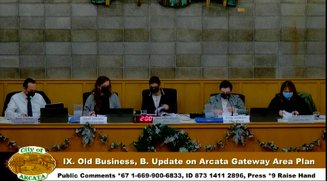
The Arcata City Council | Screenshot from online meeting video
Gateway Area Plan Update
In other housing-related business, the council received an update on the City’s Gateway Area Plan – a proposal to facilitate the development of high-density housing in the area of town including and surrounding the Creamery District, roughly between K and Q Streets and 17th Street and Samoa Boulevard.
After holding many outreach meetings and walking tours over the last year or so, the City released the draft plan earlier this month and has been encouraging the public to review the plan and submit questions and comments to the City. David Loya, Arcata community development director, began by outlining some of frequently asked questions to the Council.
Questions from the public have included concerns about if the project is in the tsunami zone (it is not), if it will be impacted by sea level rise (it should not be), and whether business and residences will be forced to vacate (they will not).
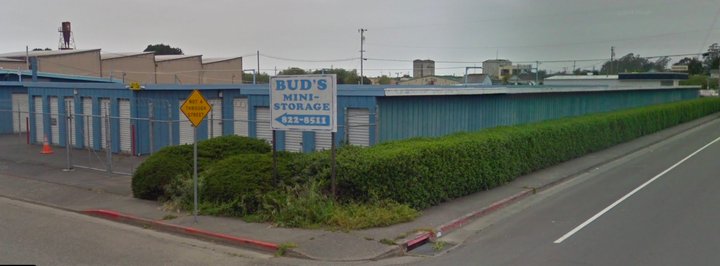
Although no one will be forced to vacate, Loya said, the City does plan to incentivize some businesses to relocate, so that their property could be converted to housing, particularly businesses that take up a lot of space, but do not employ many people. One example of this type of business is storage facilities – like Bud’s Mini-Storage on Fifth and K Streets, which occupies an entire city block.
Bud’s mini-storage on Fifth and K Streets, Arcata | Screenshot from Googlemaps
Another big concern surrounding this plan is parking, Loya said, referring to the issue as one “you cannot win, no matter what you do.” Loya candidly explained that this particular plan does not emphasize parking, because the City is trying to discourage people from driving.
“This plan does have an ambitious goal of moving toward a car-free lifestyle,” Loya said. “Move toward a car-free neighborhood – a place where you can walk and work and live all in the same place. This plan is designed to de-emphasize parking and encourage other forms of transportation.”
Of course, parking was mentioned by many members of the community during the public comment period – during which more than two dozen people spoke – as were potential building heights. Though no height restrictions have yet been established, the City has mentioned allowing up to eight stories, something that several community members said they do not support.
Many community members also voiced support for the project, emphasizing the need for housing in Arcata and mentioning that infill will be the best approach to creating the amount of housing we need.
Rob Holmlund – former community development director for the City of Eureka and principal planner for Planwest Partners Inc., which prepared the Gateway Plan – gave a presentation after Loya. He outlined some of the key components of the plan and why this area of Arcata is so desirable for housing, including its walking distance to downtown and proximity to many prominent businesses. Echoing Loya, Holmlund pointed out that the neighborhood has many potentially underutilized business properties, such as storage facilities and large warehouses owned by businesses like Wing Inflatables. Some of these businesses could be asked to relocate, or could consolidate their operations to use fewer buildings or parts of their property.
Holmlund also mentioned at the beginning of his presentation that he feels people’s attitudes and expectations around housing may need to shift. He said that many people say they are in support of more housing, but then add that they don’t want the developments to be too dense, don’t want it to be more than four stories, do want ample parking and don’t want it to impact the community.
“What I’ve come to hear when I hear that is ‘I want magic housing that has no impacts, that no one can see and that doesn’t change anything about my community,’” Holmlund said jocularly. “And what people are really asking for is a magic, flying rainbow unicorn. It is a really great dream, but you can’t have both the housing that you want and no impacts of any kind at all.”
If you have concerns about the Gateway Area Plan, there is still lots of time to submit your comments and there will be many other opportunities to learn more. You can review the draft plan here and email your comments or questions comdev@cityofarcata.org.
Images from Holmlund’s presentation, “equal sign” added by Stephanie McGeary
Press release from the Humboldt County Sheriff’s Office:
On Dec. 16, 2021, at about 12:08 a.m., a Humboldt County Sheriff’s deputy on patrol in the Pepperwood area conducted an investigation on a vehicle parked in a turn out on Highway 254.
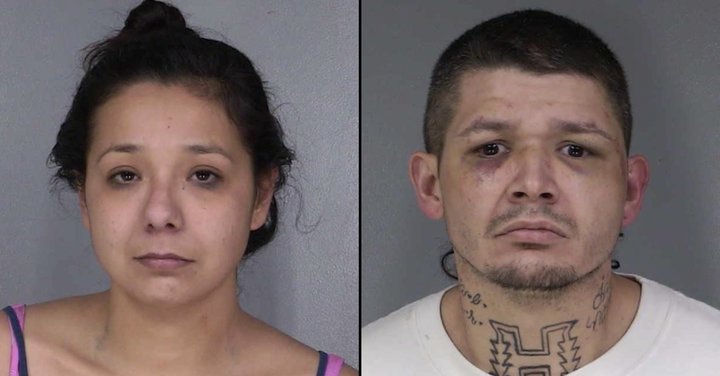
Inside the vehicle, the deputy contacted 34-year-old Michael Wayne Brown and 30-year-old Jazzy Bobbie Alicia Colegrove. Brown was found to have a warrant for his arrest and Colegrove was found to be on formal probation with a search clause. Additionally, upon contact with the two, the deputy observed drug paraphernalia inside the vehicle in plain view.
During a search of Brown incident to arrest, deputies located a loaded firearm, approximately 0.83 grams of heroin and 0.98 grams of methamphetamine. During a search of Colegrove pursuant to the terms of her probation, deputies located approximately 0.13 grams of suspected fentanyl.
While searching the vehicle, deputies located drug paraphernalia, a loaded high-capacity magazine and a firearm which had been reported stolen out of Eureka.
Brown was arrested and booked into the Humboldt County Correctional Facility on charges of possession of a controlled substance while armed (HS 11370.1(a)), convicted felon in possession of a firearm (PC 29800(a)), carrying a loaded firearm in a public place (PC 25850(A)), carrying a concealed weapon without a license (PC 25400), possession of a loaded, stolen firearm (PC 25850(C)(2)), prohibited person in possession of ammunition (PC 30305(a)), possession of a narcotic controlled substance (HS 11350(A)), possession of a controlled substance (HS 11377(a)) and possession of a firearm with an active restraining order (PC 273.6(G)(1)).
Colegrove was arrested and booked into the Humboldt County Correctional Facility on charges of possession of a narcotic controlled substance (HS 11350(A)).
Anyone with information about this case or related criminal activity is encouraged to call the Humboldt County Sheriff’s Office at (707) 445-7251 or the Sheriff’s Office Crime Tip line at (707) 268-2539.
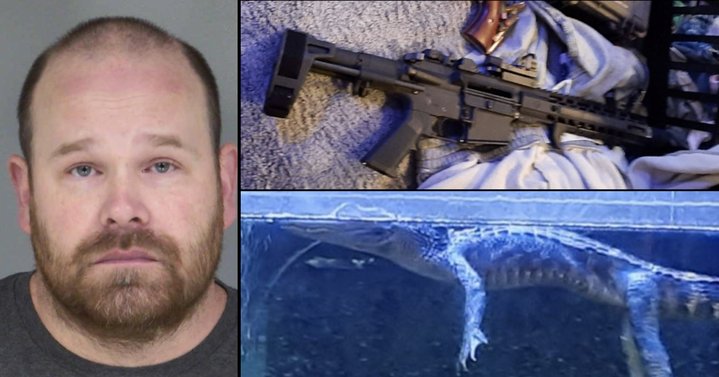
McKinleyville’s Ronnie Allan Miller, a “ghost” assault rifle, a dwarf alligator | HCSO
Press release from the Humboldt County Sheriff’s Office:
On Dec. 15, 2021, deputies with the Humboldt County Sheriff’s Office Marijuana Enforcement Team (MET) served one search warrant to investigate illegal cannabis activities at a residence on Cochran Road in McKinleyville. The parcel owner did not possess the required county permit and state license to cultivate or manufacture cannabis products commercially. The California Department of Fish and Wildlife, Humboldt County Code Enforcement and the Humboldt County DHHS – Environmental Health and HazMat Unit assisted in the service of the warrant.
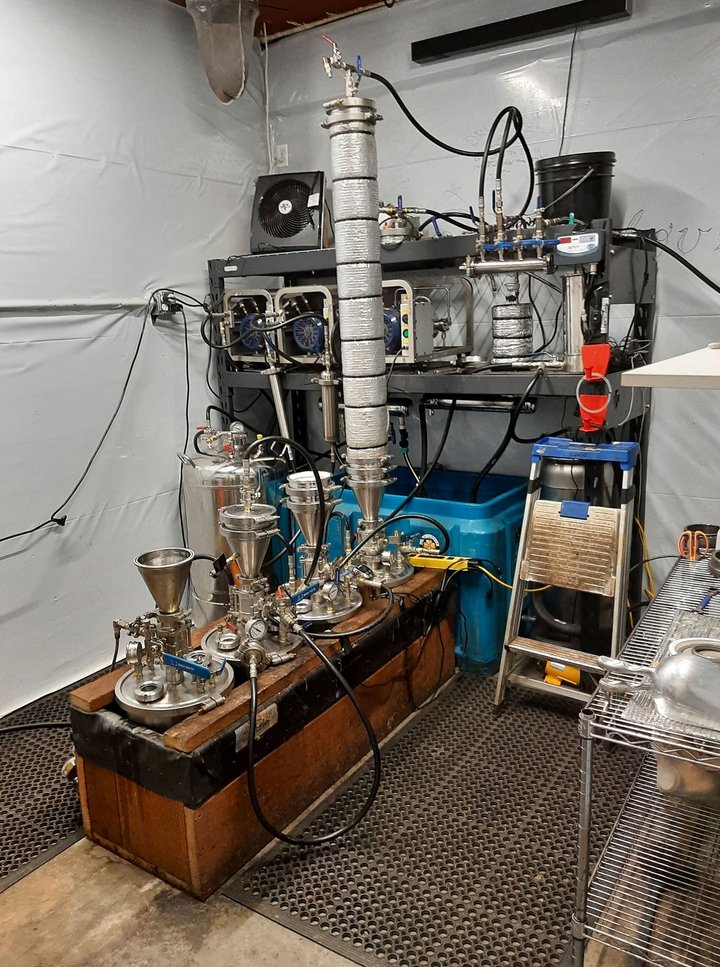
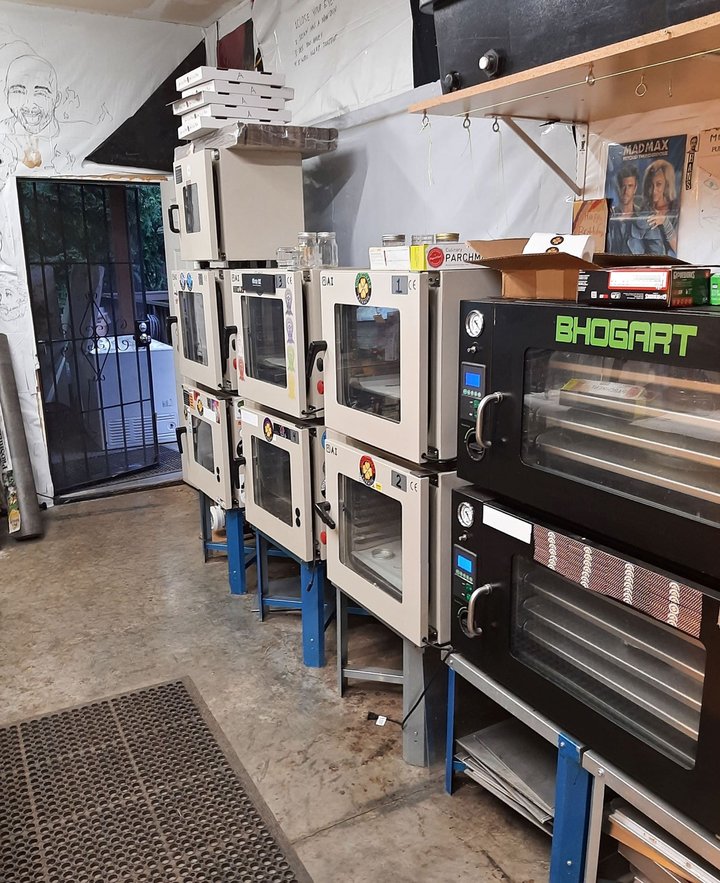
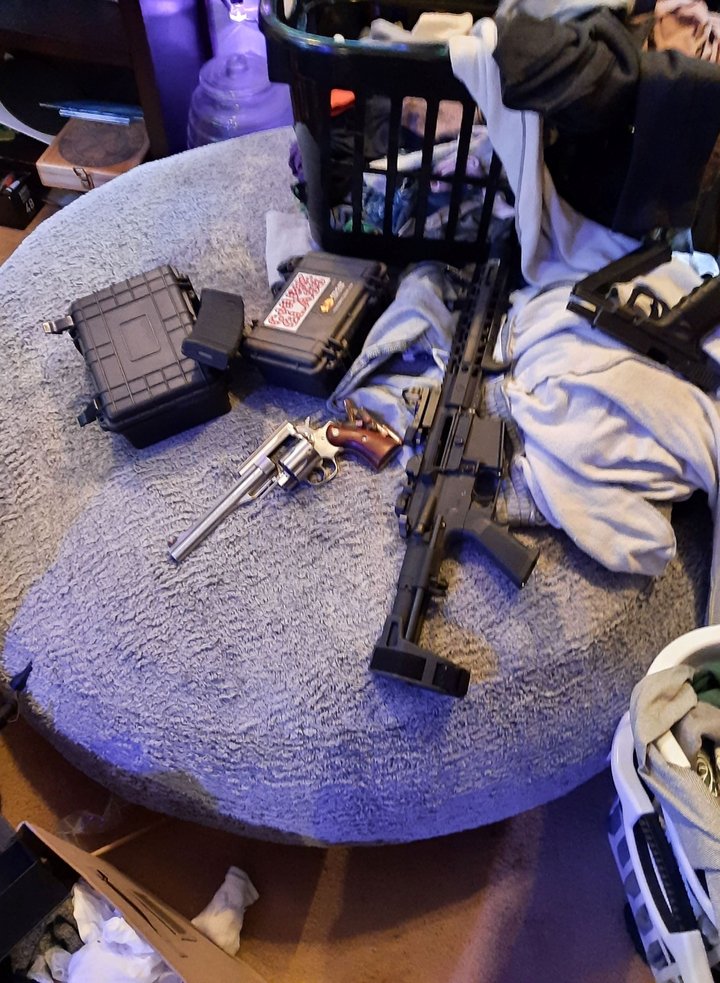
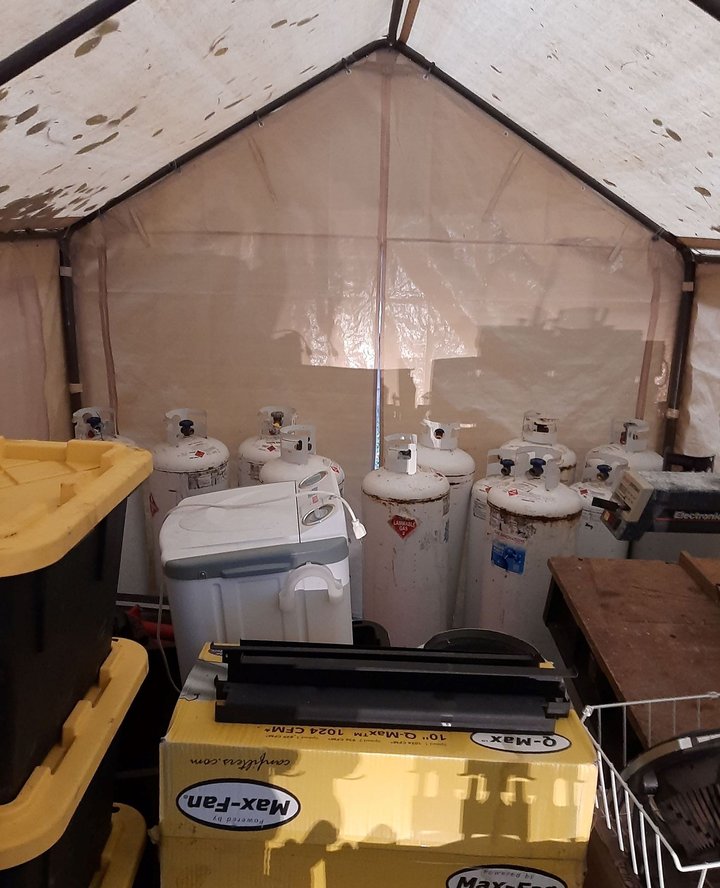
During the service of the warrant, deputies discovered an indoor cannabis cultivation operation and a large Butane Hash Oil (BHO) lab. Deputies eradicated approximately 238 growing cannabis plants. Deputies seized and destroyed over 509 pounds of processed cannabis, over 499 pounds of cannabis bud, over 364 pounds of cannabis shake, approximately 165 pounds of BHO product and seven pounds of cannabis seeds. Deputies also located and seized three firearms, including one unserialized “ghost gun” assault rifle.
BHO lab equipment located during search warrant.
More lab equipment
Three firearms located and seized during search warrant.
BHO lab supplies located during search warrant.
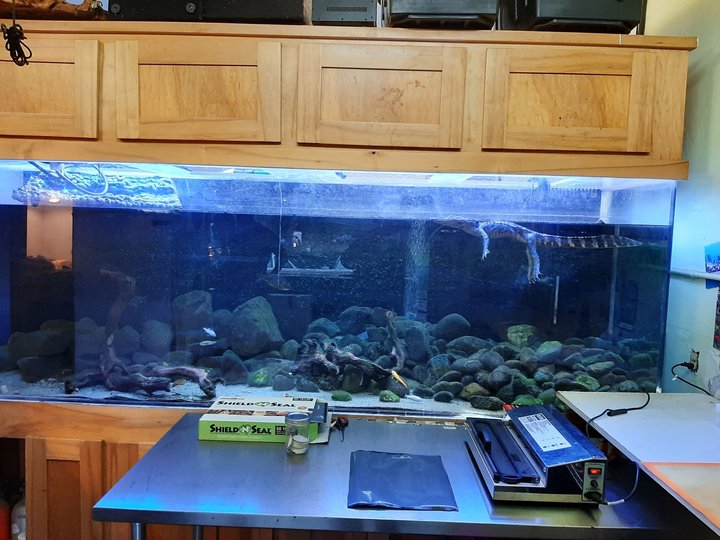
Illegally-owned dwarf alligator located during search warrant being showcased in a tank at the residence.
Additionally, CDFW wardens located an illegally-owned dwarf alligator being showcased in a tank at the residence. The CDFW is working to coordinate the safe removal and re-homing of the alligator.
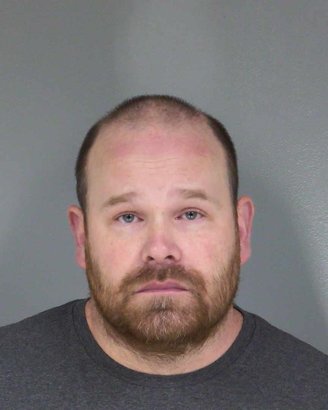
Ronnie Allan Miller
At the residence, deputies contacted and detained 42-year-old Ronnie Allan Miller. Through their investigation, deputies learned that Miller and his two young children were living in the residence alongside the cannabis operation.
Miller was arrested and booked into the Humboldt County Correctional Facility on charges of child endangerment (PC 273a(a)), possession of an assault weapon (PC 30605), manufacture of a controlled substance (HS 11379.6(A)), maintaining a residence for the purpose of manufacturing a controlled substance (HS 11366.5(A)), possession of cannabis for sales (HS 11359(b)), possession of over six cannabis plants (HS 11358(C)) and civil contempt (CP 1209).
Anyone with information about this case or related criminal activity is encouraged to call the Humboldt County Sheriff’s Office at (707) 445-7251 or the Sheriff’s Office Crime Tip line at (707) 268-2539.
At a special meeting of the Rio Dell City Council on Tuesday, December 14th the Council approved a resolution
urging the State government to consider reforming its cannabis taxation system. Specifically, the Council requested
that State dramatically reduce or eliminate State cultivation taxes. The State’s original tax scheme called for
cultivation rates ranging from $9.25 to $2.75 per ounce, depending on the type of dried product. This is in addition to
a 15% State transaction tax at the retail level.
Starting on January 1, 2022 the State plans to raise their cultivation taxes to range from $10.08 to $3.00 per ounce
despite a deep decline in legal cannabis prices.
“This is a case where what is going up should be going down, and what’s going down needs to be going back up,” said Rio Dell Mayor Debra Garnes. “It’s upside down. The State needs to correct this. The State needs to
respond. They are by far taking the lion’s share of cannabis tax receipts and they risk killing the concept of the small
legal cannabis farmer. That’s not good for anyone in Humboldt.”
The Council’s Resolution resulted from the request of Margro Advisors, a cannabis consulting firm that has invested
in the City.
California voters passed cannabis legalization via Proposition 64 on November 8, 2016. Over the subsequent years,
the City of Rio Dell worked hard to develop a comprehensive framework to allow the newly legal industry to invest in
the community, including cultivation.
“I think locally we’ve done a good job of turning this newly legal industry into something that benefits Rio Dell as a
whole.” Stated Rio Dell City Manager Kyle Knopp. “We’ve been able to pave roads and invest in public safety, in
good part because of cannabis legalization and how we’ve approached it. But the State’s taxation system is now
putting these local benefits at risk, perpetuating the black market and shutting down legal north coast cultivators.”
Knopp concluded by underlining the disconnect between the January 1st cultivation tax increase and the State’s
current record $30+ billion surplus.
Rio Dell City Manager Kyle Knopp, Bolivar Cortes, Daniel Whyte and Mayor Debra Garnes
Promotional photo, graphic of Mick Foley provided by Savage Henry.
Legendary professional wrestler Mick Foley, best known for his work with World Wrestling Entertainment, will be performing standup at the Savage Henry Comedy Club in Eureka in April.
After decades of performing in the ring as his various wrestling alter egos Cactus Jack, Dude Love and Mankind, Foley transitioned to a less physically demanding career in stand-up comedy in 2009.
Savage Henry owner Chris Durant told the Outpost that tickets for the show will be made available on Sunday at noon.
“This will sell out and a very limited number of VIP tickets [are] available!” Savage Henry shared on social media. “VIP includes [a] quick meet-and-greet, photo, autograph pic and one thing from home autographed.”
A WWE fan favorite, Foley is admired around the world for the dangerous stunts he performed during his nearly three decades as a professional wrestler — most notably his falls from the top of the cage and through the cage during a “Hell in the Cell” match with the Undertaker at the King of the Ring in 1998.
His career, chipper personality and obsession with all things Christmas have been explicitly chronicled in the documentaries “Beyond the Mat” and “I Am Santa Claus.”
Watch “Beyond the Mat” in its entirety in the video embedded below.
A patient sample that wasn’t processed for more than 30 days. A test used without proper validation of its accuracy. Patient results changed without notification. Safety and disinfection procedures called into question.
These are just a few of the myriad problems at the Valencia Branch Laboratory, a public-private COVID-19 testing lab operated by PerkinElmer that the California Department of Public Health hired in a no-bid, $1.7 billion annual contract.
An inspection report released last month by the health department outlines major problems dating back further than a year ago, raising new questions about how the state is spending taxpayer dollars to combat the pandemic. The report shows the lab has routinely underperformed, failing to meet the contract’s goals for turnaround times and numbers of processed tests. But the state auto-renewed the year-long contract at the end of October.
Gov. Gavin Newsom and state health officials say the laboratory has been crucial to expanding the state’s testing capacity for schools and underserved communities.
But California’s two largest school districts — Los Angeles Unified and San Diego Unified — aren’t relying on the lab because it was unavailable when they needed it.
A CalMatters analysis shows each test at the PerkinElmer Valencia lab costs the state more than three times the amount the Los Angeles Unified pays a Bay Area startup, SummerBio.
Already, the state has paid more than twice as much to PerkinElmer for 5.5 million tests as LA Unified’s total projected $350 million cost for the entire school year. The school year is less than half complete, but LA Unified already has administered 7.4 million COVID tests while never using the state’s PerkinElmer lab.
In the 10 months following its October 2020 opening, the lab processed between 1 and 8% of all COVID-19 tests administered in California each week, according to available data archived by CalMatters. During the first week of December, the lab processed roughly 8.5% of California’s tests, according to the most recently available data.
PerkinElmer, a global testing diagnostic company, did not respond to a request for comment about the cost of the testing and the reported problems at the lab.
“CDPH probably should have canceled (the contract) because honestly, there’s other vendors out there. They’re doing it for a lot less money more efficiently.” — State Senator Scott Wilk
State health department officials, in an unsigned statement in response to questions, said the PerkinElmer contract was renewed because of the potential for a winter surge and continued need for testing.
But the health department’s report, which was released eight months after officials indicated it would be completed, revealed that inspectors from the state’s Laboratory Field Services threatened sanctions for major deficiencies just 10 days before the contract was renewed.
The state public health department “probably should have canceled (the contract) because honestly, there’s other vendors out there. They’re doing it for a lot less money more efficiently,” Republican Senate minority leader Scott Wilk, who represents the area surrounding Valencia, told CalMatters.
Wilk has been the most outspoken critic of the contract, repeatedly calling on the Newsom administration and the health department to halt the auto-renewal. Wilk said his office is working on a proposal to reform the no-bid contracting powers that the Legislature granted Newsom at the beginning of the pandemic.
“I think there have been abuses there,” Wilk said.
Public health experts and advocates say despite the lab’s troubles, it provides critical testing for smaller school districts, rural counties and underserved communities. Roughly 62% of tests processed at the lab are from communities of color, with about a third from the state’s most disadvantaged neighborhoods, based on the California Healthy Place Index.
In Madera County, for instance, the lab allowed the county and its partners to ramp up testing in a speedier time frame.
“Valencia has been a net positive for Madera County. Residents would have been at a significant disadvantage without the combination of the Valencia lab and state contracts like the one with OptumServe,” said Sara Bosse, Madera County’s public health director.
Could the state have gotten a better deal?
The state currently pays PerkinElmer $37.78 per test, according to a Department of Finance analysis, and charges schools $21 and community organizations $55 per test.
That compares to $12 per test that LA Unified pays SummerBio.
When the state contract was announced, it was hailed by local governments and health organizations as a cost-savings measure. But as whistleblower reports about lab failings emerged and vendors with more competitive pricing came online, many questioned why the state didn’t try to renegotiate a better price, which is allowed under the contract.
Compared to SummerBio’s pricing for LA Unified, the state could have paid approximately $4.6 million less for testing during the first week of December, the most recent week the lab’s testing numbers are available. (CalMatters calculated that amount by multiplying the number of tests conducted by the state by the rate charged by PerkinElmer versus the rate SummerBio charges LA Unified)
LA Unified tests a dizzying half a million students and employees weekly and has been held up by proponents of testing and critics of the state government as a model for COVID-19 surveillance.
Former Superintendent Austin Beutner, who spearheaded the search for a cost-effective COVID-19 testing company at the time, said the district knew early on routine testing would be critical to bringing students back to school.
“We said it’s got to be accurate, quick, high volume, and then the fourth piece was the price,” Beutner said. “In most cases, we were looking at north of 100 bucks. You do the math — 100 times half a million each week. That’s a lot of money.”
The state has paid PerkinElmer about $740 million. In contrast, LA Unified will spend $350 million for the whole school year and tests far more people.
According to district documents, 22 companies were evaluated through an expedited bidding process and SummerBio offered the lowest price by far, between $38 and $166 less than other diagnostics companies, including major players like Curative and Fulgent.
The state has paid PerkinElmer about $740 million for testing in the past year. Most of the cost is recouped through federal funds and health insurance payments, according to the state health department. In contrast, LA Unified is projected to spend $350 million for the entire school year, and tests far more people per week than the Valencia lab. The district will also recoup the costs through federal school reopening grants and federal emergency funds.
“Cost comparisons from laboratory to laboratory are difficult because a laboratory’s testing arrangements vary due to differences in the scope of their contracts and the set-up of each laboratory,” health officials said in an emailed statement.
The health department did not answer questions about whether other vendors were considered or whether the department has tried to negotiate a lower rate with PerkinElmer.
SummerBio representatives declined to comment about the Valencia lab but said the company has been in contact with state officials.
Beutner said he notified the governor’s office about LA Unified’s plans as a courtesy, months before the PerkinElmer contract was announced. As the largest district in the state — and second largest in the nation — LA Unified’s contracts are often piggybacked by other districts and government organizations.
“The simplest way to put it is, they (state health officials) weren’t particularly responsive or interested,” Beutner said.
By the time the state laboratory opened in October 2020, LA Unified was well on its way to developing its own internal testing infrastructure. And the state test — which was $55 for schools at the time — was still far more expensive.
Too little, too late or a lifeline for schools?
Like LA Unified, San Diego Unified School District began developing its testing plans well before the state’s PerkinElmer lab was a resource. The district tests around 25,000 students per week, which is approximately a quarter of its student population.
“Just speaking from our experience, our district, we have always had to move quickly and establish our strategies because, you know, waiting for the state would just have taken too long,” board president Richard Barrera said.
San Diego Unified conducts a limited amount of pooled testing through the state lab at no cost, but the bulk of its testing is done through a private vendor.
The district initially contracted with UC San Diego to offer tests to students and staff at around $40 per test before moving to another vendor, which charges about $60 per test, when the university could no longer handle its testing needs. At the time, there was little guidance from the state for school testing, which caused headaches for school administrators.
The state was charging schools $55, which made the district’s contract with UC San Diego cheaper. Now, although the school district is paying a private vendor much more than the state’s reduced price of $21, Barrera said it’s too late for the district to switch. The district has already built up capacity through a private vendor and established procedures for getting parental consent, notifying them of test results, training staff and contact tracing.
“The last thing we would want to do now that we’re finally able to scale with private vendors would be to then move away and do something with the state and then have the state’s program end,” he said. “Then we’re back to ramping up from scratch.”
State officials say the laboratory is needed to reach communities with few resources. Barrera said for smaller districts, the state support is likely crucial to keeping kids in classrooms.
Most school testing has been funded by the state through federal grants.
Long Beach Unified has been using the state’s PerkinElmer Valencia lab. But after January, Long Beach administrators say the district will be responsible for paying for testing. At the peak of its efforts, which averaged between 6,000 to 12,000 tests per day, Long Beach officials said other vendors couldn’t handle the volume, although there were some early issues concerning slow results from the state. At the now-reduced cost of $21 for school districts, Long Beach officials said the state laboratory is one of the cheaper testing options.
South of Modesto, in Ceres Unified School District, administrators say they have worked closely with the state’s Valencia lab for molecular PCR testing. Several months ago they had issues with false positives from the laboratory.
“We were informed by the lab that a few tests were positive, but when they retested with another organization they were negative,” said Edith Narayan, the district’s coordinator of student services. There have been no recent issues.
“There are few companies that control the entirety of the supply chain…PerkinElmer was uniquely able.” — California Dept. of Public Health
Officials in San Juan Unified School District, northeast of Sacramento, said supply chain shortages played a part in their decision to use the state testing program, which seemed like the most reliable “comprehensive, accessible and affordable” option. They have had one instance of delayed test processing and are generally satisfied with the program.
State health department officials said in their statement that control of the supply chain was one of the reasons PerkinElmer was awarded the contract. “There are very few companies that control the entirety of the supply chain meaning that they not only build their own laboratory machines, they also produce all the necessary reagents and testing kits…PerkinElmer was uniquely able to address this particular testing constraint,” they said.
Like smaller school districts, some rural counties have relied heavily on the PerkinElmer lab. In Tulare County, at least 23 public testing locations — both community sites and schools — send COVID testing samples to the state lab. In addition, local pharmacies and clinics contract with the state on their own, according to Tulare County Public Health.
In the past two decades, 11 public health labs have closed, leaving the state with the same number of laboratory resources that it had in 1950 despite having more than three times the population.
“They need to keep funding (the Valencia lab),” said Kat DeBurgh, executive director of the Health Officers Association of California. The issues that came with opening a laboratory in a hurry were avoidable if local public health infrastructure had been funded adequately to begin with, she said.
“I hope after the pandemic our state lawmakers and the people in charge of the budget recognize that we can’t be in this state where we spend a lot of money on immediate solutions that are necessary and then let the infrastructure dwindle until the next emergency,” DeBurgh said.
Lab didn’t live up to promised capacity
When the lab opened in October 2020, it was built with the promise to process 150,000 tests per day, doubling the state’s capacity at a time when local public health departments, commercial labs, and health systems were straining to keep up. However, commercial labs and health systems have simultaneously ramped up capacity and have accounted for the bulk of testing throughout California.
The lab processes a daily average of 40,000 tests, according to state health officials.
But the PerkinElmer Valencia lab has routinely processed far fewer results than its commercial counterparts, at times less than 4% of the state’s total tests during the summer of 2021, according to available data archived by CalMatters.
The state Testing Taskforce posts the number of tests processed online weekly but deletes the previous week’s records, so CalMatters used a web scraper to compile historical data between August 2020 and December 2021, after a public records request to the health department yielded minimal documents.
Demand for testing dropped statewide during the summer, so the lab processed on average 75,000 samples and as few as 28,000 samples per week — a small fraction of the daily capacity of 150,000 tests promised by the Newsom administration.
In their anonymous statement, health department officials said the lab has the capacity but has never been asked to ramp up to the maximum.However, in mid-September, the lab had to send overflow samples to another lab even though it hadn’t reached the contract’s 150,000 capacity, according to the health department.
It wasn’t until schools opened in August that the lab began processing more than 10% of the state’s tests. In contrast, commercial labs have accounted for 60 to 70% of all tests, while medical centers account for roughly 20%.
At times, SummerBio alone has processed a greater proportion of tests than all public health labs combined, reaching nearly 20% mid-September.
At the state’s PerkinElmer lab, aside from capacity concerns, the state’s report from April highlighted four instances between Nov. 14 and Dec. 1 of last year where groups of test results were “corrected” or “amended,” but there was no evidence that patients were promptly notified, meaning they may have inaccurately thought they tested positive or negative. Inspectors also reported that when the lab lost tests, instead of reporting them as lost, it labeled the samples “unsatisfactory.”
State health officials said the problems found in the inspection reports have since been resolved.
DeBurgh, the director of the Health Officers Association, said the state has a responsibility to ensure testing is available to everyone regardless of cost or insurance status. Because commercial labs won’t be around forever, the state needs the Valencia lab for long-term public health beyond the pandemic, she said. “Right now, it’s profitable to give COVID-19 tests. That’s not going to be true forever. And yet we are still going to need the tests,” she said.
Elaine Howle, who is stepping down this month after leading the state Auditor’s Office for 21 years, said in a November CalMatters interview that auto-renewal of contracts like the PerkinElmer one “may be something that’s particularly concerning, particularly if, as you say, there were some reporting requirements and those weren’t met.” Her office has reviewed use of federal money but has not reviewed no-bid contracts.
“I’m aware that there are no-bid contracts out there,” she said. “I wasn’t aware of a contract that size that auto-renewed.”
Sacramento-based public contract lawyer Jennifer Dauer said it’s not uncommon for government’s competitive bidding requirements to be suspended or auto-renewal of contracts to occur during emergencies like the pandemic or wildfires.
She said there tends to be little oversight once a contract is signed, particularly during states of emergency. The courts tend to side with public entities, leaving the public to serve as the watchdog.
“There is extreme deference to what public entities who are dealing with emergencies do in their contracting,” said Dauer, who has worked with companies pursuing local, state and federal contracts. “The traffic cop is the public, and it’s an uphill battle.”
Wilk said as the pandemic evolved, and once issues at the laboratory became apparent, the state should have, at minimum, renegotiated the contract rather than renew it on the same terms.
“Renegotiate and get a better deal for the taxpayers,” he said.
###
CALmatters.org is a nonprofit, nonpartisan media venture explaining California policies and politics.
Frank “Charlie” Lewis Jr., born May 25, 1961, in Hoopa, to Athena Rube and Franklin Lewis Sr. Frank came from a blended family. His siblings from his dad included Carolyn Lewis, Gary Lewis, Nora Lewis, Fred Lewis, Aa’wok MaryAnn Lewis-McCovey, and Linda Lewis. Siblings from his mom included Darrell Thorton Jr., Shantelle Willison, Aa’wok Athena Willison, and Jessica “Nikki” Willison.
After Frank’s parents divorced, he spent his teenage years going between Klamath Falls and Hoopa. He spent some time attending school at Kicking Horse Job Corps in Montana. After he left Montana, he started his family with Marla Kimbol in Klamath Falls. Ginette Lewis was his first born, followed by her brother Preston Lewis.
Later Frank continued building a family with Carolyn “Tambi” Schonchin. Their children are Kira, Jacquline, and Tanya Schonchin. Frank and Adeline “Pebbles” Jackson finished adding to his family with Derek, Talisa, and Sarah Jackson.
Frank was first made a grandfather by Ginette, bringing Charles Ochoa into the world. He was followed by his siblings Tyson, To-le-us, and Manny Ochoa. With Tyson adding the first great-grandson Kanoa. Preston and his wife Elyesse added to the family with Preston Jr., Eunice, Enid and Elizabeth. Kira brought her daughter Mya. Jacquline’s children are Javy and Braiden. Tanya added grandson Desmond and Derek with his son Javen. And Talisa added the final grandchild with her daughter, Kaytwana.
As many native families suffer the effects of residential schools, so did Frank’s. While family was so important to Frank, it didn’t come easy. Many of the relationships with his children can attest to the struggle as he tried to navigate through his traumas. Frank had many support readings for healing and becoming a better person. He wanted better and did his best to be better.
While Frank spent a majority of his life in Klamath Falls, he never forgot his traditional roots and his family in Hoopa/Weitchpec. He would make trips to Klamath to visit and occasionally fish with his brother Fred. He would make weekend trips and stay with his sister Carolyn Lewis. And of course he never failed to spend time with his sister MaryAnn and her family. On any given trip he would make stops along the way to check-in on his nieces and nephews, starting in Yreka, Happy Camp and of course Hoopa.
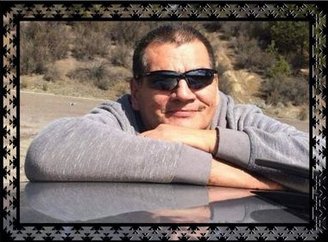
His trade would keep him busy working in the woods (in Klamath Falls and Hoopa areas), and running heavy equipment. His passions were cars and woodworking. Whether he was on the road or at work he enjoyed taking the time to capture pictures to share with his family and friends on Facebook. It was common to receive a random text with a picture of the sunrise, snow, or a selfie in his machines.
Frank was supported and loved by: siblings Carolyn Lewis, Gary Lewis, Nora Lewis, Fred Lewis (Bonnie), Shantelle Willison, Linda Lewis (Cody) and Jessica “Nikki” Willison (Edward), Michelle Rocha.
His children, grandchild, and great-grandson as follows:
Nieces and nephews: Rebecca Lewis-Campbell (Melissa, Mariah, and Sam Campbell Jr), Angela & Justin Danel (Izzy, Rowland), Sophie Blake. Gary “Koo” Lewis Jr, Samuel Lewis (Elliott Xion), and Spencer Lewis (Nova). Josh Petty (Brody), Daniel& Janell Lewis (Jaden, Jaziah), Ayela & Matt Carstensen (Kohl, Keliegh), Derrick Lewis (Jordahlea) Hawk Erickson (Angel, Halo, Malakai) Tina & Jake Mitchell (Jordan, Oden), Pohliklah & Danny Lewis (Pohliklah Jr), Amelia Lewis (Jack) and Destiny Lewis. Russell, Per-Gish Hayden, Chegemmem McConville-McCovey. Calvin, Nathaniel McConnell, Gerrious Eaton, Marissa Morgan, Nai-tai-ya Willison.
His family and loved ones he joined:
His grandparents Amelia Caroll and John Rube, Manual and Jane Lewis
His parents Athena Rube and Franklin Lewis, his brother Darrell Thorton Jr, and sisters MaryAnn Lewis-McCovey, and Athena Willison. His grandson Charles Ochoa. His nieces Jillian and Jerry Lewis Zariah Erickson. His nephews Zakema Erickson and Justyn Eaton. His paternal uncles Daniel (Jimmy), Alfred, Harold (Joe-boy), Robert, and Manual Lewis Jr. Maternal uncles Harold, Robert, Clyde, Vernon, and Pete Henry. His aunts Maxine Lewis-Raymond, Nelda Morgan, Lucille Lewis, Ruth Knutson. Many cousins and friends who passed along the way.
The services will be held Jan. 8 at the Yurok Tribal office in Weitchpec. The services will be at noon, with Celinda Gonzales officiating.
“Life is too short for hate. Love each other and show that love to one another”
-Frank Lewis
###
The obituary above was submitted on behalf of Frank Lewis’ loved ones. The Lost Coast Outpost runs obituaries of Humboldt County residents at no charge. See guidelines here.