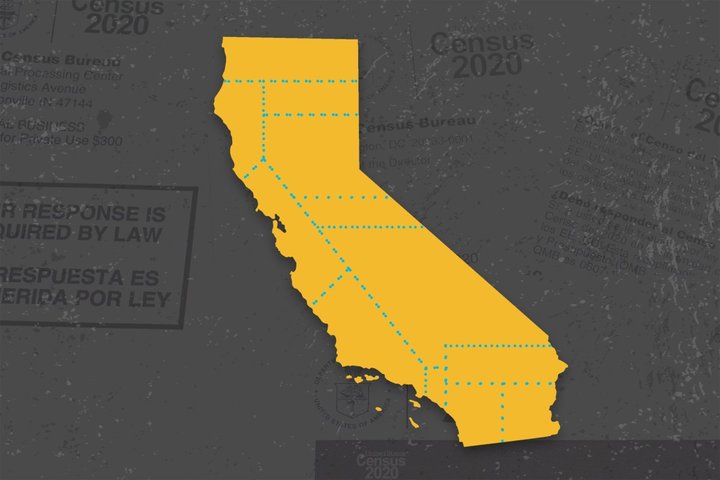
We’re getting right up against the redistricting deadline — Dec. 15 — and over the last week, both the Humboldt County Board of Supervisors (which is in charge of local redistricting) and the California Citizens Redistricting Commission (which is in charge of state legislative districts and California’s seats in the House of Representatives) have published draft maps for review.
But a couple of supervisors had other thoughts. Supervisor Mike Wilson, representing the Arcata-centric Third District, thought that the public was owed at least a couple of alternative choices, perhaps with very slight alterations. Supervisor Rex Bohn, representing the Cutten-Ferndale-Scotia-Petrolia First District, thought that perhaps a very few extremely small tweaks might be made, mentioning specifically the Blue Lake Rancheria, which is cleaved in two by the line running between the Third and the Fifth Districts.
Most notably, Supervisor Steve Madrone, representing the McKinleyville-based Fifth District, pushed very hard for Blue Lake to be added to his demesne, despite the fact that the Fifth is already overpopulated. To do this, he leaned on the “community of interest” testimony and the recommendation from the advisory committee that Glendale and Blue Lake be placed into the same district.
He wished for this district to be the Fifth District, based on the idea that Blue Lake was once Fifth District and should be so again. But after a round of raised eyebrows from a couple of his fellow supervisors — the fact escaped no one that adding Blue Lake to the Fifth would give the left-leaning Madrone, up for reelection, a healthy injection of likeminded voters in a contest he won by a hair four years ago — Madrone relented and said, well, how about we see two new maps: One that has Blue Lake and Glendale united in the Third District and one that has them united in the Fifth?
Those are the ones that were released Wednesday. Here they are, along with population charts:
Supervisors — Blue Lake in the Third
Pop.
Diff.
Diff. %
1st
26,964
-398
-1.5%
2nd
27,329
-33
-0.1%
3rd
28,082
720
2.6%
4th
26,560
-802
-2.9%
5th
27,875
513
1.9%
Supervisors — Blue Lake in the Fifth
Pop.
Diff.
Diff. %
1st
26,954
-398
-1.5%
2nd
27,329
-33
-0.1%
3rd
26,682
-680
-2.5%
4th
26,560
-802
-2.9%
5th
29,275
+1,913
+7.0%
As you can see, if putting Blue Lake and Glendale into the same district is so hellfire important, it makes much more mathematical sense to place them in the Third District than the Fifth. If you put them in the Fifth, you end up with that district massively overpopulated and every other district in the county moderately underpopulated.
So did Madrone argue himself out of Glendale as well as Blue Lake? Probably not. The Board of Supervisors is unable to vote on these maps at its next meeting — they’ll hear a short presentation about it, but the maps haven’t been circulating long enough to take a vote yet — but it seems more likely that the Board will just plump for the status quo, perhaps with a very small number of very tiny adjustments of the type that Bohn was plumping for.
Statewide
It was a rocky road at times — see here, and here — but with the publication of draft maps Wednesday it looks as though the California Citizens Redistricting Commission is going to leave the North Coast’s traditional districts for Congress, state Senate and state Assembly more or less intact. (Though be mindful of the proviso issued by our friends at CalMatters this morning — these are still draft maps, and they could still shift.)
One big thing to note, here, Humboldt-wise, is that each of the below maps lop off the northeast corner of the county, the land around Orleans, and give that area to the Republican-dominated Central Valley districts to our east. So a corner of Humboldt would, in fact, likely be represented by the Trumpy Rep. Doug LaMalfa.
Why do this? Well, the commission thought that it was important to keep Karuk tribal territory intact in one district. The tribe’s traditional territory runs from Orleans to Happy Camp up the Klamath, and so to keep it in one district you either have to carve off part of Siskiyou County and add it to the coast, or else carve out part of Humboldt County and add it to the inland districts. The commission opted for the latter; the tribe itself would very much rather have it opt for the former. (See letter from tribal chair Buster Attebery here.)
But apart from that, things are mostly back to normal. In these draft maps, no longer are Rep. Jared Huffman and Assm. Jim Wood threatened to be mapped out of the North Coast, and no longer is all of Humboldt yoked awkwardly to Redding.
Again — these could be tweaked, perhaps significantly, but here is the current state of play:
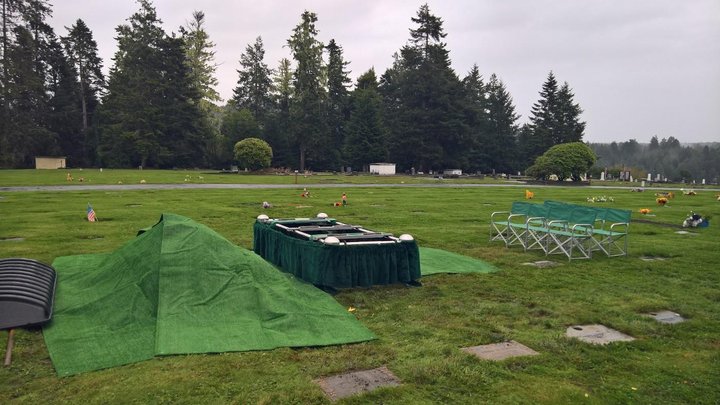
A graveside burial preparation at Sunrise Cemetery in Fortuna | Photo provided by Tony Eusted
###
In the friendly city of Fortuna, a dispute has been brewing between the city’s only mortuary, Goble’s, and the Fortuna Cemetery District over which of them is responsible for transporting the caskets to the gravesite for burial — something that the cemetery district insists is solely the responsibility of the mortuary or the family of the deceased.
Bryan Carnahan, owner of Goble’s Fortuna Mortuary, reached out to the Outpost last week to share an official letter he had received from the Fortuna Cemetery District, which formally stated that cemetery staff would not provide this service, and insisted that he no longer ask them. The letter, signed by Catherine Culver of the district board of trustees, states:
Recently it has come to my attention that Goble’s staff continues to request Fortuna Cemetery District employees serve as pallbearers at full body burials. The District has stated verbally to Goble’s Fortuna Mortuary that Fortuna Cemetery District employees are not to serve as pallbearers. Not only is it not the job of Cemetery District employees to serve in such capacity, but the District workers’ compensation policy does not anticipate or cover pallbearer-related injuries.
Please inform families that pallbearers must be provided by the family if Goble’s Fortuna Mortuary cannot provide an adequate number of pallbearers.
Fortuna Cemetery District employees have been instructed not to serve as pallbearers regardless of the circumstances.
Please inform your staff that they are not to ask Fortuna Cemetery District Employees to serve as pallbearers.
For those who are not super-familiar with what goes on behind the scenes of funeral arrangements, a little background is probably needed here. When a traditional cemetery burial is held for someone who passed on, the family generally chooses to hold the service in one of two ways: either they hold the service at a separate location — such as a church — after which the casket holding the deceased is transported to the cemetery plot for the burial, or they opt for a graveside service, in which case the casket is usually already placed on the gravesite when the party arrives.
When the service is held at a church or chapel, the casket is usually carried to and from the vehicle by pallbearers — often friends or family members who were selected to serve in the role. For graveside services, usually hired staff would be responsible for placing the casket, since it is already there when the family arrives. And this is where Carnahan and the cemetery district are not seeing eye to eye.
Carnahan — who has owned Goble’s for more than seven years and owns several other mortuaries throughout Northern California and Oregon — told the Outpost that moving the caskets onto the gravesite is and has always been, at the very least, a shared responsibility of the cemetery and mortuary staff.
As the funeral director, Carnahan is responsible for preparing the body and making all the arrangements for the burial, while the cemetery staff will dig the grave and prepare the site for the service by doing things like putting out chairs and covering the dirt. When Carnahan and other mortuary staff arrive at the cemetery with the deceased, usually the cemetery staff will either help mortuary staff move the casket or take over and move it themselves.
“I’ve been in the business 40 years and every other cemetery I’ve worked with does this,” he said, adding that even the Fortuna cemetery staff would usually provide this service, although sometimes reluctantly. So he was pretty surprised when he was told by the district that staff had been instructed to never move caskets.
Tony Eusted, grounds manager for the Ferndale Fortuna Cemetery District, told the Outpost that the issue really comes down to a problem of staffing. The district only employs three staff members — Eusted, an assistant grounds manager and an office manager — who are responsible for running all seven cemeteries in the district.
With the staff stretched so thin, it’s difficult for them to always be available to transport the caskets. On top of that, Eusted said that he injured his back earlier this year and is not able to lift heavy things. That leaves only the assistant grounds manager to help move caskets.
All that being said, Eusted told the Outpost that, up until recently, he and the other staff would help move caskets “as a courtesy” if they were available to do so. But it was never something they were required or expected to do. With the bereaved paying the mortuary to arrange the funeral, Eusted feels that “it is the job of the funeral director to arrange for pallbearers and members of the clergy.”
Though Carnahan understands that the cemeteries operate with a skeleton crew, he says that he too has a small staff and is not always capable of providing all the people needed to move the caskets. The family is also not always capable of helping, especially when the bereaved are very elderly. Carnahan also said that he has had many issues with the Fortuna Cemetery District staff, saying that they don’t always complete other duties, such as placing chairs before the service or helping direct parking.
As a special district of Humboldt County, the Fortuna Cemetery District is largely funded by property taxes. The board of trustees is appointed by the Humboldt County Second District Supervisor and the board selects and oversees the performance of the employees. Carnahan says he has lodged complaints about the cemetery employees with both the board district’s trustees and the Board of Supervisors, but to no avail.
Catherine Culver of the Ferndale Fortuna Cemetery District says she has certainly received many complaints from Carnahan, but that she has never heard these complaints echoed by the public and that she feels confident that Eusted and the other employees are doing their jobs. And when it comes to moving caskets to the gravesites, that is not in Eusted’s job description. A copy of the ground manager’s job description provided by Culver does not specifically include the job of moving caskets but does outline the more general duty to “coordinate with the office manager to schedule, prepare for and remain on site for burials.”
Culver added that moving caskets presents a liability issue and that, as she stated in the letter sent to Carnahan, the district’s worker’s compensation policy does not cover pallbearer-related injury.
“We’ve been told by the Public Cemetery Alliance attorney that they shouldn’t be [moving caskets],” Culver told the Outpost. “It’s a liability issue and a workers compensation issue.”
But why has this become an issue so recently, when Goble’s Fortuna Mortuary and the Fortuna Cemetery District have worked together for decades? Well, Culver admits that it just seems to be a communication issue between Eusted and Carnahan. Until Carnahan took over, Culver said, they had no problems with Goble’s.
“I’m not happy that we’re having this ongoing misunderstanding and difference of opinion,” Culver said. “We care for the public that we serve.”
Tom Howe — whose family owned Goble’s since the 1960s and who was owner himself from about 2004 to 2014 — agrees that the he and cemetery district had not had a disagreement over carrying the caskets, and that during his time as owner the cemetery staff was usually happy to help with the task.
Like Carnahan, Howe also said that placing the caskets on the gravesite is something that every other cemetery he’s worked with — both locally and out of the area — has provided. So Howe was also pretty taken aback when he read the letter Culver had written.
What does he think is behind the change? Well, kind of like Culver, he feels that it is simply a disagreement that has gotten out of hand.
“Ultimately, the bottom line is that Bryan and Tony don’t get along,” Howe told the Outpost. “It’s just carrying a casket 30 feet over to a grave. I can’t believe it’s gotten to this point.”
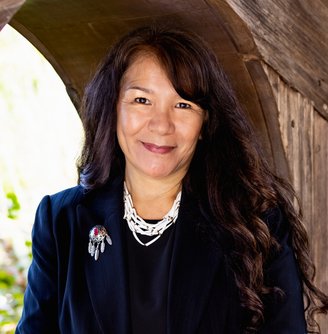
Liz Lara-O’Rourke has been named the new CEO of United Indian Health Services (UIHS.) Lara-O’Rourke has served in multiple roles at UIHS over her 34 year career at UIHS, and is excited to begin her tenure.
“UIHS is special to me for the unique services we are able to provide to our American Indian community,” Lara-O’Rourke said. “It is an honor to be selected as the next CEO and I look forward to continuing our growth in services to serve our community.
Outgoing CEO John Reeves expressed support for the selection, saying that he “could not ask for a better person to usher UIHS into its future!”
UIHS is entering it’s 51st year of service to the American Indian community on the north coast and serves thousands of patients annually at their seven locations in Humboldt and Del Norte Counties.
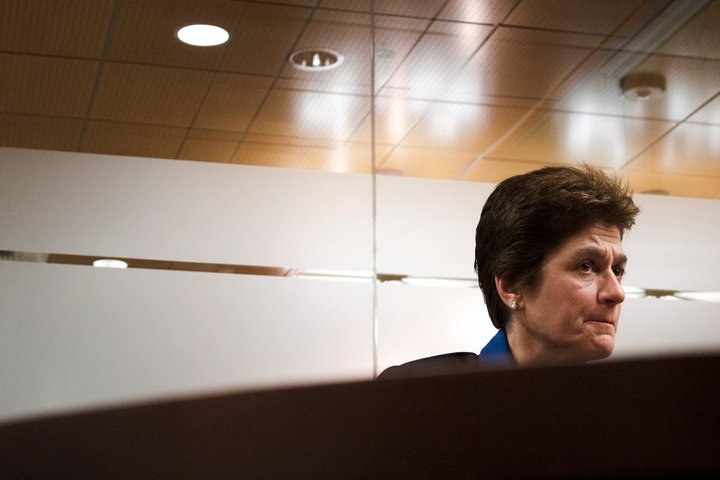
California State Auditor Elaine Howle speaks with CalMatters at her office in Sacramento on Nov. 9, 2021. Photo by Rahul Lal for CalMatters
###
Gov. Gavin Newsom will soon get to make yet another appointment with far-reaching implications: Who should lead the independent agency tasked with evaluating the performance of his own administration?
Elaine Howle — who has led the California State Auditor’s office for 21 years — announced last month that she plans to retire at the end of the year. The news sent shock waves through Sacramento: “I’m not sure I’m ready — the institutional knowledge and the framework that it’s taken us to get here, I think is so incredibly important,” Assemblymember Cottie Petrie-Norris, a Laguna Beach Democrat,told Howle last month after she testified on the progress California’s beleaguered unemployment department had made on key reforms.
Howle became the first woman to be appointed California state auditor in 2000, when then-Gov. Gray Davis named her to the position. She was subsequently reappointed by Republican Arnold Schwarzenegger and Democrats Jerry Brown and Newsom.
CalMatters columnist Dan Walters wondered whether lawmakers — charged with recommending replacement candidates to Newsom — would “select a worthy successor who will maintain the office’s tradition of telling it like it is, not like politicians wish it to be.”
And Republican lawmakers — who make up a small minority of the California Legislature — are raising alarms that they will be shut out of the process altogether. In a Wednesday letter to Assemblymember Rudy Salas, the Bakersfield Democrat who leads the committee responsible for sending nominations to Newsom, seven Republican legislators asked that “one Democrat and one Republican from each house” be “assigned to a subcommittee to review applications, vet candidates, and make a recommendation to the full committee.”
“Government inefficiency, along with waste, fraud, and abuse, affect all Californians, so it only makes sense that this process should be open, transparent, and enjoy bipartisan cooperation from the start,” the GOP lawmakers wrote.
Committee staffers said Thursday that both Democrats and Republicans will review applications, vet candidates and decide which names will be sent on to the governor, but staff for Republicans said there was no statutory guarantee of a bipartisan process.
In recent months, Howle’s office — the only agency that under state law has full access to all records, accounts, correspondence, property and other files of any publicly created entity — has unleashed a series of blistering reports on California’s pandemic response.
This week, Howle sat down with CalMatters to discuss her 38-year career at the state auditor’s office, her blockbuster EDD investigations, the political pressures she’s faced, the most challenging organizations she’s worked with and the qualities she hopes to see in her successor. This conversation has been lightly edited for length and clarity.
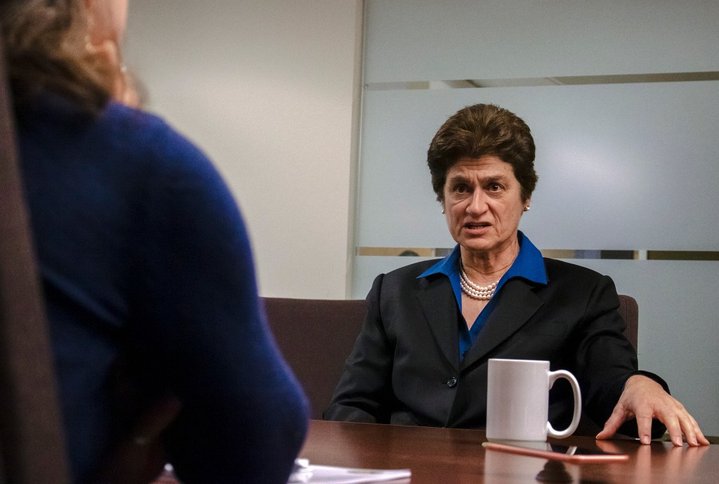
California State Auditor Elaine Howle speaks with CalMatters at her office in Sacramento on Nov. 9, 2021. Photo by Rahul Lal for CalMatters
CalMatters: “We wanted to get your thoughts on the last 30-plus years that you’ve been doing this … and what prompted this transition.”
Howle: “I graduated from Sac State in 1982 and I was struggling to find a job. And my brother actually had worked at the Capitol as a legislative staff. And he’s like, ‘Why don’t you work for the auditor general?’ … I got the job and I thought, ‘Oh, OK, yeah, I’ll learn about state government and then figure out what I really want to do.’ Because my real dream job was to be an athletic director at a major university. I was an athlete in college — soccer, basketball and softball. … Anyway, long story short, I tried. It’s the ’80s. How many women were getting jobs in collegiate administration in ’82, ’81? Forget it. … Anyway, I got out here, got the job with the auditor’s office and started working on some audits. This organization — it may sound, I don’t know, odd — but it’s like a family.
A few things prompted the transition — 21 years is a long time. I think it’s time for the next generation of leaders to take over the office. … There are a lot of people in this organization that worked here for a long time who I think are ready … for me to hand off the torch to them and have them run with it. And then just personal. It’s a demanding job, very difficult job, rewarding job. But, you know, I’m in my 60s now. It’s time to dial it back a little bit and enjoy life and have a little bit more balance.”
CalMatters: “I’m curious if in the 20 years you’ve been leading this agency, if any patterns have emerged among specific agencies or (political) parties that, you know, are maybe receptive or not so receptive to the things that you’re saying?”
Howle: “Of course, no one wants to get audited and be criticized, but all of the administrations consistently were receptive to the results of the work. … They didn’t necessarily like perhaps the tone of the report, the timing of the report, things like that. But I think they were all committed, and I feel the Newsom administration, same thing, is committed to trying to improve government in California.
It’s not an easy thing to do with big agencies like EDD. … The frustration that we have had — or I have personally felt — with that situation is we issued audits 10, 11 years ago about concerns we had with … their ability to process unemployment claims. We made some recommendations. Things weren’t implemented. Pandemic’s unprecedented, but … if you had made some improvements, perhaps the impact wouldn’t have been as bad on Californians as it has been. .. It’s gotten better, but it’s still a problem out there.” “Of course, no one wants to get audited and be criticized, but all of the administrations consistently were receptive to the results of the work.”
“Of course, no one wants to get audited and be criticized, but all of the administrations consistently were receptive to the results of the work.”
CalMatters: “Based on your audits of high-speed rail, do you have any thoughts about that project’s ability to succeed?”
Howle: “I think it’s been slow going. … We looked at that project over multiple audits and from one audit to the next, you’re seeing improvement, but not enough. You know, it’s been a long, long process and it’s just incredibly expensive. Nobody is going to suggest that high-speed rail is not a good idea, but the fact that the state has had to rely so much on contractors … Clearly, you need to rely on contractors for certain types of expertise, but we need to have our own control — state employee control — over certain processes.”
CalMatters: “Are you willing to name your favorite agencies and your least favorite agencies in terms of the level of cooperation?”
Howle: “Local governments are difficult because they’re not familiar with the state auditor’s office. Local law enforcement on occasion can be difficult, but … once they understand … how our process works, that they are going to have the ability to see a draft long before it goes public, then they start to settle down a little bit.
I would say one of the challenging audits was the University of California. … When we were conducting the audit we did a few years ago and we found out that the Office of the President was interfering with our ability to work directly with campuses, that was a major issue for me. … Most agencies don’t do that. … I think that’s the one and only time I ever had to inform anybody that an entity directly interfered with our ability to do our work independently.”
“I’m aware that there are no-bid contracts out there — I wasn’t aware of a contract that size that auto-renewed.”
CalMatters: “You’ve been doing a lot of audits on the high-risk spending during COVID. … The state has this COVID lab that they built down in Valencia, and they recently auto-renewed this $1.7 billion contract for it, even though there have been a lot of reports about inaccuracies and problems. … There was supposed to have been a report investigating it, but then they didn’t release that report. I was wondering if you think that’s something that is worthy of looking into what’s going on, and also some of the other … no-bid contracts that the state has made during the pandemic.”
Howle: “I’m aware that there are no-bid contracts out there — I wasn’t aware of a contract that size that auto-renewed. Certainly, we have done an analysis of … all the federal money coming into California. … We didn’t look at no-bid contracts. Certainly, that’s something that the office could look at. … It certainly sounds like it … may be something that’s concerning, particularly if, as you say, there were some reporting requirements and those weren’t met.”
CalMatters: “You are pretty much the only person in state government that can be like, ‘You’re doing a bad job,’ and that’s your job to say that. And no one wants to hear that they’re doing a bad job. What are the political pressures that you may face behind the scenes?”
“The minute anybody in this position agrees to, ‘OK, I’ll wait and issue it a week later,’ or, ‘OK, I won’t say that,’ the integrity and the credibility of this organization is destroyed.”
Howle: “Have I received phone calls from people saying, ‘I don’t like this text’ or ‘I hope you’re not issuing this report next week’? Absolutely. But the answer is always, ‘Yes I am issuing the report next week,’ because our responsibility is … to speak the truth to power. And so whether UC doesn’t like it or whether the Newsom administration, the Schwarzenegger administration, the Gray Davis administration, didn’t like what we were saying, we did our due diligence, had the evidence to support what we were going to say and what we were going to recommend.
The minute anybody in this position agrees to, ‘OK, I’ll wait and issue it a week later,’ or, ‘OK, I won’t say that,’ the integrity and the credibility of this organization is destroyed, and we can’t afford to let that happen. And I hope my successor understands that that cannot happen.”
CalMatters: “Looking back on your long career here, what do you feel like has been your biggest accomplishment or proudest moment?”
Howle: “There’s a program that we audited like 10, 11 years ago. It’s called Every Woman Counts, and it’s a program … that provides mammography and cervical cancer screenings for low-income women. … We audited the program and we said, ‘Yeah, you could cut back on how much you’re spending on contracts, use some of that money to be able to provide more screenings.’ And so that’s what happened. And so, you know … I have no doubt there are some women out there who received those services whose lives were saved. … You’re looking at the efficiency of the program, but there are real people who are impacted by that. And that’s the rewarding part of the job for me personally, and I hope for my staff.
I’m really proud of how much this office has been able to — I don’t want to say influence — I suppose you could say influence public policy. We don’t make policy, but we’re giving the information to the administration, to the Legislature and to the public to hopefully affect change in California.”
###
CALmatters.org is a nonprofit, nonpartisan media venture explaining California policies and politics.
It took weeks of long, late-night meetings full of wonky debate and digital line drawing — as well as a haiku and at least two songs as public comment.
But Wednesday night, California’s independent redistricting commission reached a key milestone: Its first official maps are out.
The commission’s work is far from done, however. It acknowledges that these preliminary maps are far from perfect, and that it will need the six weeks before its Dec. 27 court-ordered deadline to fix them before adopting final districts for the next decade, starting with the 2022 elections. On its schedule: At least four public input meetings starting Nov. 17 and 14 line-drawing sessions between Nov. 30 and Dec. 19.
“It’s messy. It’s very slow,” commissioner Linda Akutagawa said Wednesday evening just before the vote. “But I do believe that it is a process that has enabled as many people who seek to be engaged in this process to be engaged.”The commission is working toward “final maps that will best reflect everybody,” added Akutagawa, a no party preference voter from Huntington Beach who is president and CEO of Leadership Education for Asian Pacifics.
Some key questions as the 14 commissioners start their next phase:
How much could the maps change?
A lot, commissioners concede.
While they’re required to follow a specific set of criteria, with equal population numbers being the highest priority, there are different ways to achieve those goals.
The draft maps that were approved Wednesday night are generally along the lines of the final round of “visualizations” that the commission worked on this week. They include reworked congressional districts in Northern California, the Central Valley and San Diego in response to public feedback.
For example, the progressive city of Davis was moved from a U.S. House district with politically conservative, rural areas in Northern California in earlier maps into a more urban, liberal district that includes parts of Yolo, Solano and Contra Costa counties.
To meet its self-imposed deadline so it could avoid meetings around Thanksgiving, the commission also put a pin in several areas that need further work, including congressional and legislative districts in Los Angeles.
Who are some early winners and losers?
The commission responded to concerns about earlier maps that combined two congressional districts represented by longtime African American representatives into one, and kept them separate in the latest maps. Commissioners were also able to keep the Hmong community united in congressional maps,and kept Native American tribes mostly united in Congressional and state Assembly maps.
The commission also addressed concerns from community members in Orange County’s Little Saigon by ensuring they were in the same state Senate district. San Joaquin County community leaders who wanted less divided districts are also likely happy with the draft maps.
Meanwhile, voters in and near Tracy who were disappointed with being grouped into a congressional district with the Bay Area were relieved to see their city placed back with the Central Valley.
But other areas and advocacy groups are on the losing end so far.
Inyo and Mono counties, where officials asked to be kept together, were split in congressional and Senate districts, as was the city of Santa Clarita in Senate maps.
“Losers” also include voters in Sacramento County, which hasn’t been as vocal in the process and is in danger of being sliced into several congressional districts, according to Jeff Burdick, a political blogger and 2020 congressional candidate.
And the uncertainty surrounding the districts is making it difficult for candidates and campaigns to get going for the June primary, some political professionals told Politico.
Which incumbents should be most worried?
House Republican leader Kevin McCarthy of Bakersfield, who hopes to become speaker after next year’s midterm election, argues that congressional Democrats who won by 16 percentage points or less in 2020 would be in competitive races in 2022.
One factor that could help tip the balance in favor of Republicans: voter concerns about the economy. A poll released this week by the Public Policy Institute of California showed that majorities in the Central Valley, the Inland Empire, Orange County and San Diego are more pessimistic about the economy. And those are areas where some seats are already closely contested.
Transparency, or the lack thereof, has been a recurring complaint during the process so far.
Some experts have raised concerns that one data set — known as the Racially Polarized Voting Analysis — is not made public. It drives much of the decision-making around Voting Rights Act districts — ones where minorities make up more than 50% of the voting-age population — but those conversations happen in closed session.
Despite the advances in technology the commission is able to use, such as a public line-drawing tool, the panel didn’t post its preliminary maps until hours before voting, giving the public less time to review them. And the ones it posted, as with some earlier maps, were not easy to decipher.
Commission spokesperson Fredy Ceja responded that the commission posted maps as soon as possible and that with the draft maps approved, “the public will be able to use our map viewer on the website to zoom in and out of districts.”
In addition, some complained about the lack of a clear schedule — specifically, when public comment would be allowed. For some, that meant waiting on the phone for hours to speak, though the commission issued frequent reminders that comments submitted online were also reviewed.
Ceja said that while the commission tried to start with an agenda, things changed “quickly and constantly.” “We communicated changes as they arose,” he said via email.
But, at times, even some commissioners have been exasperated. During the Nov. 7 meeting, Sara Sadhwani tweeted only an emoji: the face screaming in fear.
###
CALmatters.org is a nonprofit, nonpartisan media venture explaining California policies and politics.
Press release from the Humboldt County Sheriff’s Office:
On Nov. 10, 2021, at about 9:19 p.m., Humboldt County Sheriff’s deputies were dispatched to a residence on the 700 block of Poole Road, in the county’s jurisdiction of Ferndale, for the report of a burglary in progress.
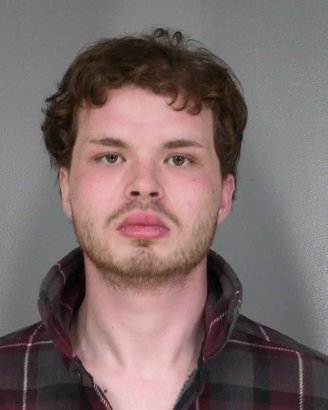
Dustin Beau Campbell Booking Photo | Humboldt County Correctional Facility
Deputies arrived on scene and observed an elderly female in possession of a firearm, detaining a male suspect. The resident complied with deputies’ requests to set aside the weapon and the firearm was rendered safe. The male, identified as 21-year-old Dustin Beau Campbell, was then taken into custody by deputies.
Through their investigation, deputies learned that the resident arrived home to find the door open and several items out of place. While inside the home, the resident located Campbell. At that time, the resident drew her personal firearm, holding Campbell at gunpoint until deputies’ arrival.
Campbell was booked into the Humboldt County Correctional Facility on charges of first-degree burglary (PC 459/461(a)).
Anyone with information about this case or related criminal activity is encouraged to call the Humboldt County Sheriff’s Office at (707) 445-7251 or the Sheriff’s Office Crime Tip line at (707) 268-2539.
“I got offered [the fight] about a month ago,” Cosce said. “I’ll be doing what I always do to prepare: train my ass off and make sure my technique is on point.”
After losing his first official UFC match to Philip Rowe in July, Cosce now faces an opponent who’s making his own UFC debut.
Mathetha, a champion kickboxer, is set to enter the octagon for the first time after training under the tutelage of UFC superstar and current UFC middleweight champion Israel Adesanya.
Cosce said that he’s excited to test his skill against a competitor from Adesanya’s camp, but that he’s mainly focused on getting his first win in the UFC.
“I’m more excited just to be able to compete again sooner than later,” he said. “I want to redeem myself.”