Since early August 2021 agents with the
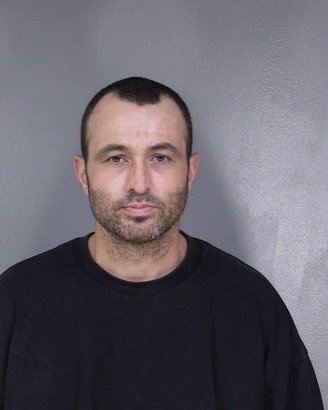
Humboldt County Drug Task Force (HCDTF) had been investigating Hamed
Shraibati (45 years old) for
multiple violations related to cultivation of marijuana, illegal
firearms possession, and trafficking of methamphetamine.
On
August 30th,
2021 the HCDTF served a search warrant on Shraibati’s commercial
building in the 100 block of 7th
St. in Eureka. Inside the building agents detained Shraibati without
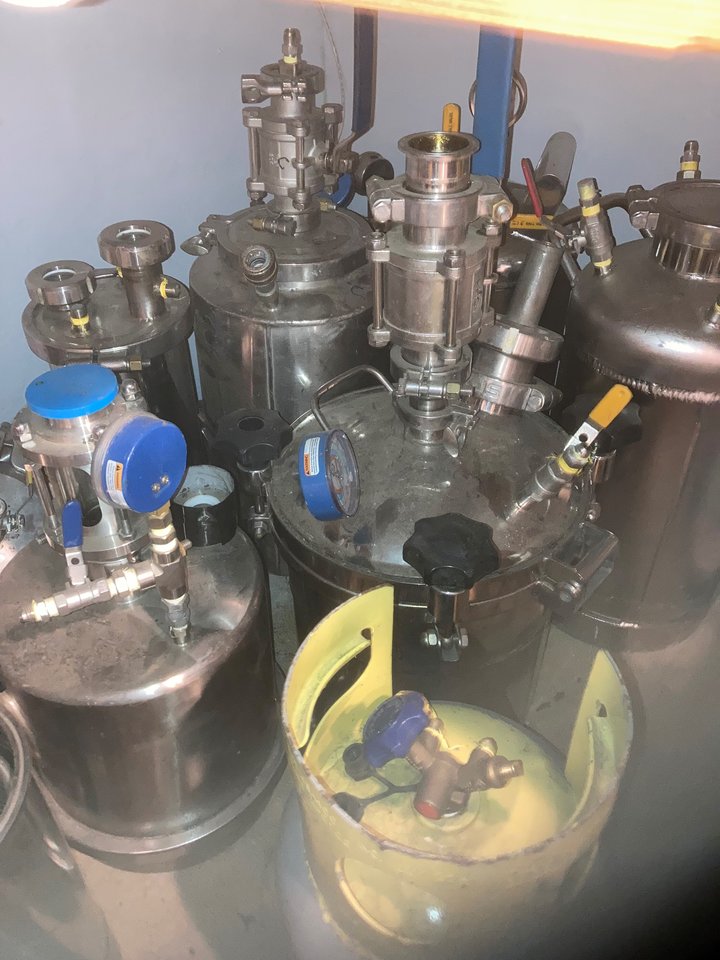
incident. Agents seized approx. 1300 marijuana plants inside the
building along with all the equipment for a closed loop BHO lab.
Agents also located approx. 10 grams of methamphetamine and digital
scales.
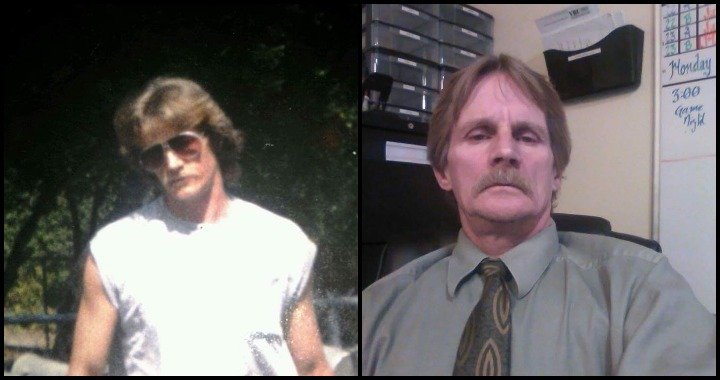
Hamed Shraibati | HCSO
Agents
served a search warrant on Shraibati’s residence in the 300 block
of Laura Ln. in Bayside. Inside the residence agents located a
short-barrelled AR-15 style rifle with an attached silencer, a second
AR-15 style rifle, an illegal short barreled shotgun, and two
additional shotguns.
Shraibati
is a convicted felon and a registered sex offender. Because of these
previous convictions he is not allowed to possess firearms, and it is
a felony for him to possess any amount of methamphetamine. Shraibati
did not possess any permits for his marijuana cultivation operation
in the City of Eureka.
Shraibati
was booked at the Humboldt County Jail for the following charges:
H&S 11379.6 Manufacturing a
controlled substance
H&S 11358 Cultivation of marijuana
H&S 11377 Felony possession of
methamphetamine
PC 33215 Possession of a short-barreled
rifle
PC 29800(a)(1) Felon in possession of
firearms
PC 33410 Possession of a silencer
PC 30605(a) Possession of an assault
weapon
Anyone
with information related to this investigation or other narcotics
related crimes are encouraged to call the Humboldt County Drug Task
Force at 707-267-9976.
You’ve seen the posts on Twitter and Facebook, or maybe someone forwarded a WhatsApp message about suspicious activity with California’s recall ballots.
Unfounded rumors about election security have always been around, but they’ve been rampant since the 2020 election and former President Trump’s “Stop the Steal” movement. Despite those allegations, the 2020 elections were found to be “the most secure in American history,” according to a statement from a coalition of government and election industry officials.
So ahead of the Sept. 14 election, state and county election officials are emphasizing transparency — including allowing observers to watch the vote count — and ramping up messages to combat disinformation. On television and social media, the secretary of state’s office is running spots about how votes are safeguarded, including independent testing, paper trails and audits.
Here’s a look at the most common allegations and conspiracy theories out there:
Stolen and extra ballots
There can be fraud, or at least potential fraud. But it’s just not widespread.
Last week in Torrance, police officers investigating reports of a man sleeping in his car found stolen driver’s licenses, credit cards and mail, including300 unmarked, unopened recall ballots. The man was arrested, and voters whose ballots were found will be sent new ones.
Torrance Police Sgt. Ron Salary said the ballots were a small fraction of the mail stolen, and that while the investigation is ongoing, it did not appear to be part of any larger election-related plot.
“When someone gets caught committing a crime, that means the system is working,” said Jenna Dresner, spokesperson for the state’s Office of Election Cybersecurity. “In this case, it was a matter of general mail theft and was referred to the appropriate federal and local law enforcement authorities to investigate and prosecute as needed.”
“When someone gets caught committing a crime, that means the system is working.” — Jenna Dresner, spokesperson for California’s Office of Election Cybersecurity
Some Californians have reported receiving ballots that weren’t meant for them — either with names of people not in their household, or extra ballots.
Counties send out ballots based on voter rolls — a registry that can sometimes fall out of date due to unreported deaths, or changes of address, for example. The accelerated timeline of the recall election could lead to some ballots landing in the wrong places, experts say. But as with the stolen ballots in Torrance, there are safeguards to ensure no one can vote more than once.
“Every returned Vote by Mail ballot is verified by matching the signature on the return envelope with the signature on the voter’s registration record,” said Mike Sanchez, communications officer for theLos Angeles County Registrar-Recorder/County Clerk. “Once verified, the ballot is recorded as received in our database and the ballot is processed to be tallied on Election Night.”
In 2020, a study published by the nonpartisan California Voter Foundation found that 1.4% of all the vote-by-mail ballots cast in the March primary were rejected. A closer look at just San Mateo, Santa Clara and Sacramento counties in 2018 found that signature mismatches accounted for 4%, 10% and 40% of all rejections, respectively. Voters are notified so they can try to fix their ballot and get it counted.
Kim Alexander, president of the California Voter Foundation, says misinformation is not always spread by conspiracy theorists: Sometimes, it’s just concerned or confused voters.
“Elections in California have never been simple,” she said, noting that some voting specifics vary from county to county. “That results in confusion and unfortunately some people, when they don’t understand something, jump to the worst-case scenario.”
Take, for example, the posts circulating about holes in mail ballot return envelopes. Some raised concerns that how they voted could be seen through those holes.
“Elections in California have never been simple. That results in confusion and unfortunately some people, when they don’t understand something, jump to the worst-case scenario.” — Kim Alexander, president of the California Voter Foundation
“It does raise a concern that we need to address, but that doesn’t mean it’s a sign that someone’s trying to steal your vote,” Alexander said.
The envelope holes are one of a number of measures to help those with disabilities, including the Remote Accessible Vote-by-Mail system, which lets people with disabilities vote privately on their computer using whatever audio, visual or other technology they might need.
The process was temporarily opened up to everyone due to COVID-19, which led some conservative websites to claim it was a means of election theft. In 2020, 37,178 voters registered to receive the remote accessible ballots, according to the secretary of state’s office.
But the state says it has measures in place to prevent any fraud: Each registered voter is linked to a single address and signature, so no one can print more than one ballot. The voter’s choices are also transferred to a ballot and both documents are stored together for a post-election audit.
Janna Haynes, public information officer for Sacramento County’s registrar’s office, noted that sometimes there’s misinformation that includes elements of truth, but lacks the context for people to understand it.
Sacramento County issued a notice about the ballot envelope holes, even though its design was different from the one in Los Angeles: “This ballot and envelope are NOT from Sacramento County – and the Sacramento County ballot and envelope do not have this issue – while there are holes in the envelope to help guide blind voters to the signature line, they do not reveal any of the contests, regardless of how the ballot of folded and placed in the envelope.”
Because the order in which the 46 replacement candidates are listed on the ballot is different in each state Assembly district, that also means the ballot’s fold running through a candidate’s name is not a way of “rigging” the election.
“We’ve now taken a stance that we want to just address stuff that we see, even before we get questions about it,” said Janna Haynes, public information officer for Sacramento County’s registrar’s office.
Turning ballots in early
The COVID-19 pandemic has added complexity to the election; as in2020, people have the option to vote in person, mail back ballots or deliver them to drop boxes.
The decision to allow universal vote-by-mail was made before the delta variant of the coronavirus became a major concern in California, despite claims that the state was using it as an excuse to send a ballot to all registered voters.
In Lassen County, the elections office addressed a social media post warning anyone hoping to recall Newsom that turning in a ballot early would allow someone — presumably the governor and Democrats — to know how many votes had been cast in favor of the recall, and thus be able to “estimate how many ‘ballots’ they will need for their side to be the victor.”
The Lassen County elections office debunked that claim. The secretary of state says that while ballots can be processed and counted as long as 29 days before Election Day, no results on which side is winning are announced until after the polls close.
Concerns about Dominion
During the 2020 presidential election, Trump cited a report by One America News Network that falsely claimed voting machines deleted “millions of votes” cast for him. Those machines were made by Dominion Voting, which has sued OAN and Fox News, among others who floated the rumor.
Sacramento County put out a statement Aug. 13 regarding a rumor officials said was circulating nationally and internationally that two Dominion employees were employed in the Registrar’s office.
“These rumors are false. The genesis of these rumors is still unclear, but due to the prevalence of this rumor, our office is addressing this lie head-on,” the county’s notice said.
While the county is one of many that uses Dominion machines, the county stated that no Dominion employees have been or ever will be employed by the Sacramento County elections office. It clarified that a Dominion technician was on-site to help during a voting machine accuracy test, but that maintenance and repair is done by county employees and that outside vendors are not permitted to touch voting equipment, election files or ballots.
Finding facts
So how do you determine what’s fact and fiction when it comes to the Newsom recall? A little bit of research helps; CalMatters has a FAQ.
The state has been working with county officials on the #VoteSafeCA campaign to inform voters and provide tips to ensure their own election security, such as tracking their ballots.
County election officials encourage voters to call or email their offices with questions or concerns. Sacramento County is holding a public question-and-answer session this evening.
“If people are feeling uneasy about something,” Haynes said, “we have to do whatever we can and set ourselves up as the resource of correct information.”
###
CALmatters.org is a nonprofit, nonpartisan media venture explaining California policies and politics.
Sally
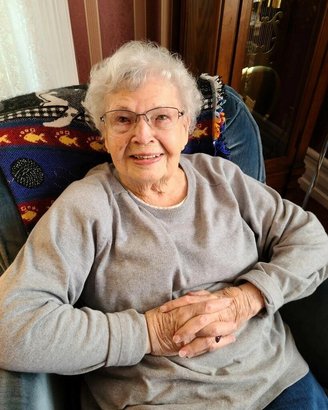
Tanner left us on August 20 at 7:30 pm. Her two sons were by her
side as she peacefully stepped into the next chapter of her fabulous
existence. She was larger than life, as all of the many many people,
whose lives she touched, will attest to.
She
was born Marcella A. Zinski in East Chicago, Indiana. She was the
last born of eight children born to Anton and Mary. It was the year
1926. She was raised in Indiana and it was where she started her
first protest. It was the beginning of a political career.
When
Sally graduated from high school, her parents moved to Southern
California. A few years passed and the war began. Sally got a job as
a riveter like Rosie. She soon got a promotion and became the girl on
roller skates, delivering blueprints to all of the different
contractors within a giant complex.
Very early in Sally’s life people realized that she was a special
human being.
After the war Sally met a man named Paul Tanner. She married Paul and
they had two children, Timothy Paul, and Christopher John. She got a
job as an administrative assistant, for Assemblyman Harvey Johnson, a
good Democrat.
When
Harvey Johnson retired, Sally ran for his seat in the California
Assembly, where she spent the next 14 years making our world a better
place to live. She was the First Chair of the Clean Air Clean Water
committee. She started the California Consumers Board. She also
chaired the Toxic Waste Committee. She authored, among her many
bills, the Lemon Law. During her tenure she had a park and two
streets named after her. Halfway through her career she divorced her
husband and raised her boys by herself. Her and her boys stayed very
close for the rest of her life. She was the best mom on the planet.
As
her career was winding down she met Whittier’s Honorable Superior
Court Judge Patricia Hofstetter. They became partners in life.
Together they found the, “Dream Come True, Town of Ferndale.”
They bought, the home she died in, the same day they drove across the
Fernbridge for the first time. Together they learned to fish, and
became, arguably, the best fishermen in California. They won the
Cal-Ore Steelhead tournament three times. Sally fished until she
couldn’t. She once caught a Sturgeon 8’6” long. Her last
fishing trip was with her boys. She caught the most and the biggest.
A
memorial celebration of Sally’s life is planned for on Wednesday,
September 1 in Ferndale. Masks are required and attendees are also
required to be vaccinated. For details about the memorial
celebration, please contact Karen Pingitore at (707) 407-5668.
###
The obituary above was submitted on behalf of Sally Tanner’s loved ones. The Lost Coast Outpost runs obituaries of Humboldt County residents at no charge. See guidelines here.
Paul Weber, at the age of 56, suffered a hemorrhagic stroke with no chance of recovery.
Paul lived and worked in Loleta as a dairyman. Paul’s greatest pleasure was waking up at the crack of dawn to go and greet and care for the cows he was in charge of. Paul loved and respected his boss, Jim O’Neil of O’Neil Dairy. There was no one in the world he loved more than his children — Jacob Weber, aged 21, and Christina Bond, aged 22. Paul held a special place in his heart for Angela Bond, his children’s mother. His sister, Judy — he was very appreciative of as she always did so much for him. He was so very proud of her children and his nephews, Daniel and Adam, for their talent.
Paul was an amazing friend to everyone. There wasn’t anything he wouldn’t do for them. If he didn’t have it, he would find a way to get it for them. He was very loyal.
When Paul walked into a room, everyone knew it! He would light it up with his energetic personality and smile. Paul was very talented in his own right. He was so curious about everything. He was always trying to figure out how things worked. One of his passions was to search for gold. He would go to Trinity County and collect rocks that he would then roast in an effort to tear them apart and get the gold out.
Paul was a great dad. He loved big and lived out loud.
Paul is survived by his fiancé, Julieanne Edwards; Angela Bond, the mother of his children, Jacob Weber, son, Christina Bond, daughter; brothers Norman Weber, Ed Weber, Tom Weber, John Weber; and sisters, Pat Patton, Nancy Harvey, Judy Hollifield.
He was preceded in death by his dad, Donald Weber; mother, Mary Weber; and sister, Jan Lillethorup. His family and friends will miss him so very much. Rest in peace Paul. We love you!
###
The obituary above was submitted on behalf of Paul Weber’s loved ones. The Lost Coast Outpost runs obituaries of Humboldt County residents at no charge. See guidelines here.
Samuel Spies, 32, passed away August 25, 2021 due to complications of liver failure. Sam is survived by his partner, Mallory, his father, Brienne Spies, his mother, Desiree Spies, and his siblings, Jake Spies, Daniel Spies (Melodi Spies), Rachel Spies Hernadez (Gilbert Hernandez), and his dog, Boogie.
Originally from Hanover, Pennsylvania and growing up in Memphis, Tennessee; Sam moved to Willow Creek, California about nine years ago and has been a beloved member of the community since. Sam was a best friend to so many. He was an avid movie buff, music lover, and a talented drummer. Sam worked hard and played hard. His sense of humor was one of a kind.
Sam is extremely loved and will be so missed by all who knew him. A memorial service will be held at Trinidad Beach on Monday, August 30, 2021 at 3 p.m. (to the left of the parking lot).
###
The obituary above was submitted on behalf of Sam Spies’ loved ones. The Lost Coast Outpost runs obituaries of Humboldt County residents at no charge. See guidelines here.
A federal judge on Monday granted summary judgement in favor of Caltrans, dealing a significant blow to environmental interests in their 11-year legal battle over a proposed road-widening project along Hwy. 101 through scenic Richardson Grove.
The ruling doesn’t mean that Caltrans is now cleared to proceed with the project. In a separate lawsuit filed in Humboldt County Superior Court, the judge issued a writ of mandate blocking the project until the agency recirculates the supplemental environmental documents from a 2017 project revision for public review.
Yes, the legal web is tangled. At one point in today’s ruling, Alsup makes weary reference to the “ever-growing mountain of
documents” in the administrative record, which he says “has ballooned to 57 volumes amounting to just under
18,000 pages.”
A cursory recap: The case concerns a proposed Caltrans project that would widen a curvy, 1.1-mile stretch of highway through Richardson Grove, allowing it to accommodate extra-long (if industry-standard) semi trucks known as “STAA heavies.” (The acronym refers to the Surface Transportation Assistance Act of 1982, which authorized such extra-big rigs.)
Caltrans officials have long described the project as a “minor” realignment that would not harm any old growth redwoods, much less cut any of them down. But plaintiffs, including the Environmental Protection Information Center (EPIC), the Center for Biological Diversity and Californians for Alternatives to Toxics, argued that the state’s environmental review was insufficient and that excavation activities could impact the roots and health of the majestic redwoods.
Caltrans revised the project several times in response to public feedback, but the environmental groups still had objections, and in 2017 they challenged the agency’s environmental assessment (EA) and its Finding of No Significant Impact (FONSI).
Onward, the legal battle did stretch.
In today’s ruling, which you can read in full here, Alsup finds that any remaining claims that the plaintiffs may have had under the National Environmental Policy Act (NEPA) were foreclosed in a prior appellate court decision.
Strike one.
The plaintiffs had also argued that Caltrans violated section 4(f) of the U.S. Department of Transportation Act, which prohibits projects requiring land in any public park, recreation
area, wildlife and waterfowl refuge or historic site unless there’s no “feasible and prudent alternative” and unless every effort has been made to minimize harm.
Alsup found that the plaintiff’s claim on these grounds lacked merit, noting, “We must keep in mind that this project is not a brand new highway through pristine
parkland. It is an improvement to an existing highway already long laid through a parkland.”
Strike two.
Lastly, the plaintiffs argued that Caltrans had run afoul of the Wild and Scenic Rivers Act. Alsup shrugs this claim off in a perfunctory manner, noting, “Plaintiffs have not briefed their Wild and Scenic Rivers Act Claim in their renewed
motion for summary judgment. Plaintiffs have abandoned this claim and it is therefore
dismissed.”
Strike three.
Reached for comment, EPIC Executive Director Tom Wheeler said he was still reading through the decision and not yet ready to make a public statement.
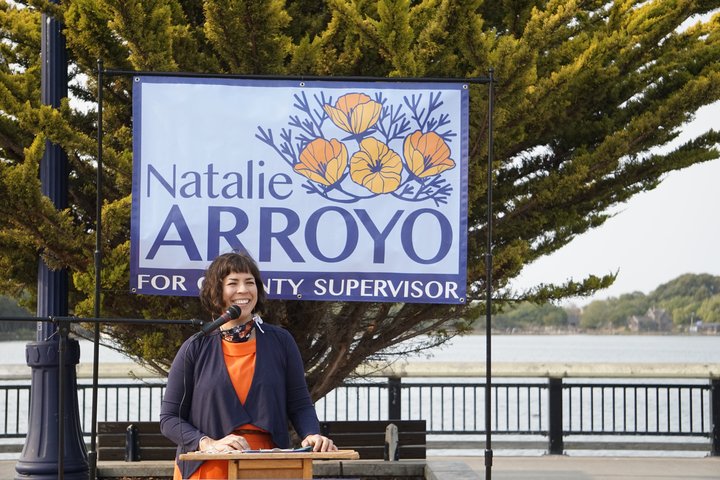
After serving nearly seven years on the Eureka City Council, Natalie Arroyo, a rollerskating Coastie, Rutabaga Queen and senior planner with the Redwood Community Action Agency, officially launched her campaign for the Fourth District seat on the Humboldt County Board of Supervisors Saturday evening with an event at Eureka’s Madaket Plaza.
Arroyo has also launched a campaign website where she outlines her vision for Humboldt County. That page of the site features a photo of offshore wind turbines and the statement, “I am committed to actions that reduce greenhouse gases and increase our resilience to climate change.” Other priorities listed include economic growth, transportation safety, “housing for all income levels” and small business support.
The incumbent in the Eureka-located Fourth District, Virginia Bass, has yet to announce whether she’ll seek re-election. Often seen as a centrist and potential swing vote, Bass, a former restaurant manager who, like Arroyo, served on the Eureka City Council, has held the Fourth District seat since 2010.
Here’s a press release from the Arroyo campaign:
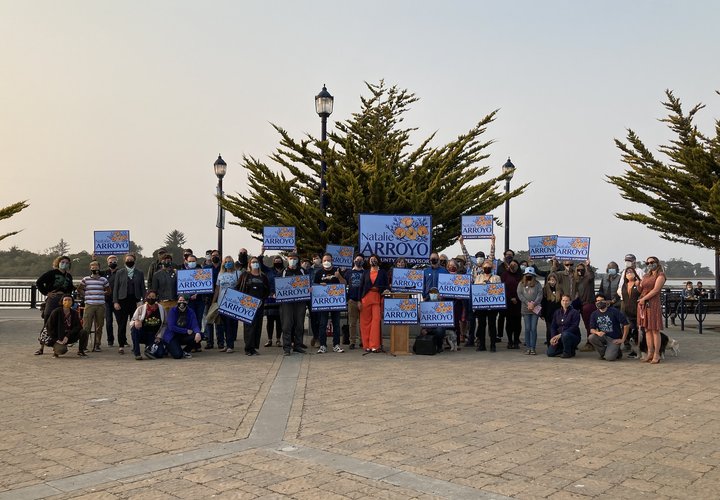
Natalie Arroyo, current Eureka City Councilmember, has officially launched her 2022 campaign to be the next County Supervisor representing Eureka and the Samoa Peninsula. She announced her candidacy on Saturday, August 28th at an outdoor event at Madaket Plaza in Eureka, surrounded by many supporters.
As a longtime Eureka resident, Natalie is passionate about serving the Humboldt community. She is a two-term Eureka Councilmember who will complete her second full term in 2022. Natalie has worked locally in natural resources management, watershed restoration, and trail planning for more than 15 years. In addition, Natalie works as a college educator, has served as a board member for multiple local and regional non-profit organizations, and is a military officer and veteran.
Natalie says, “I bring plentiful experience working in government, I know how to get things done, and my family and I love life in Eureka on Humboldt Bay. We need creative thinking, enthusiasm, and a willingness to take bold steps for our County in the coming years. I look forward to working with you to address our greatest challenges while continuing to support the culture, beauty, and ingenuity that makes Humboldt County such an incredible place to live!” Natalie is focused on cutting-edge economic development, increasing housing availability, improving transportation safety, and increasing collaboration and morale within County government.