How Much Will California’s EDD Scandal Cost Newsom in the Recall Election?
Emily Hoeven / Wednesday, Aug. 4, 2021 @ 7:50 a.m. / Sacramento
Had Ivy Bland been able to access more than $9,000 of locked unemployment benefits, she and her husband might have been able to put off their move to Florida.
Had Lindsay Green’s benefits not been frozen due to suspected fraud, she might have kept her medical, dental and car insurance — and not been forced to go on food stamps.
Had Susan Baker’s unemployment payments not suddenly stopped, she might have avoided dipping into her savings to make house payments.
On the other hand, had the state Employment Development Department’s system worked perfectly, Ginny Silver might still have only 37 subscribers to her YouTube channel.
Instead, she has more than 72,000.
The 36-year-old Elk Grove mother of two posts daily videos demystifying the inner workings of EDD by discussing work search requirements, pending payments and tricks for reaching the notoriously backlogged call centers. More than 1 million people watch her videos a month, enough for Silver — who went on unemployment at the beginning of the pandemic when her wedding photography business shut down — to not only get off unemployment herself but also hire an assistant.
She currently makes more money from her EDD videos than she does from her photography business, which resumed once California began to reopen.

Ginny Silver of Elk Grove has turned frustration with the California Employment Development Department into a successful YouTube channel. Photo courtesy of Ginny Silver.
People “shouldn’t have to go to a random person on the internet compiling these government documents,” Silver said. “But because the EDD’s communication, website and customer service departments are so inaccessible and confusing, unfortunately, they do come to my channel for that.”
“So while I am happy I have a channel, it should not have a need to exist.”
California’s unemployment department has consistently been one of Gov. Gavin Newsom’s biggest political liabilities during the COVID-19 pandemic. Hundreds of thousands of jobless residents’ claims have been backlogged for weeks at a time even as EDD paid out an estimated $31 billion in fraudulent claims, including $1 billion to prison and jail inmates. With account freezes, jammed phone lines and pervasive tech glitches blocking unemployed Californians from the funds they needed to stay afloat, many called their lawmakers for help, desperate and even on the brink of suicide.
After forming a strike team in July 2020 to overhaul EDD’s outdated technology, Newsom largely avoided commenting directly on the beleaguered department. But his administration has begun to do so, suggesting he’s aware EDD’s shortcomings could be top of mind for a potentially sizable number of voters in the Sept. 14 recall election.
On April 26, the same day Secretary of State Shirley Weber said enough signatures had been gathered to force a recall election, Newsom’s unemployment fraud task force announced it had arrested 68 people and opened another 1,641 cases.
On July 20, the day before Weber certified the final list of recall candidates, the Newsom administration said it had hired a former federal prosecutor to help crack down on unemployment fraud. On July 22, EDD announced it would start automatically paying benefits to certain jobless Californians to help reduce the mountain of unresolved claims.
Recall candidates have pinpointed EDD as one of Newsom’s weak spots while proposing reforms that rely largely on recommendations from the state auditor, such as fixing long-standing operational and tech issues and instituting stronger safeguards against fraud.
Meanwhile, former San Diego Mayor Kevin Faulconer launched a website to collect Californians’ EDD horror stories and slammed Newsom on Twitter for continuing “to do nothing” about the growing claim backlog. Reality star Caitlyn Jenner vowed that as governor, she would “work to the bottom of this corruption” at EDD.
Former Sacramento-area U.S. Rep. Doug Ose said in an interview, “It’s important to listen to what politicians talk about, but it’s also important to note what they don’t talk about. Newsom knows he’s got really dirty hands on this because he never talks about it.”
In Newsom’s March State of the State speech — which also doubled as the kickoff for his anti-recall campaign — the governor acknowledged many California workers have faced “impossible choices” and pledged “economic support for those who’ve struggled most,” citing Golden State stimulus checks, small business relief grants and other expanded safety net programs. But he didn’t specifically mention EDD — a fact that did not go unnoticed by Republican lawmakers.
The Newsom campaign did not respond to a request for comment for this story.
CalMatters talked with California voters — many of them Democrats like Newsom — about whether their negative experiences with EDD had changed their perception of the governor or how they planned to vote in the recall election. Here’s what a few of them said.
‘You just can’t win’
Lindsay Green, 39, voted for the governor in 2018. But now the Santa Monica Democrat said she will “one thousand percent” vote to recall Newsom: “I think I was probably one of the first people to put down my name on that recall petition.”
Before the pandemic, Green was flying high. After years of working in retail, she had finally landed her dream job as a travel agent. She had medical and dental insurance and a “great income.”
But all of that began to change in April 2020, when she was furloughed and forced to apply for unemployment benefits. In December, she said, her account was suddenly suspended for identity verification — setting off a chain of problems that resulted in her spending as many as eight hours a day trying to contact EDD. Unable to get her benefits, Green said, “I had no choice but to go on food stamps, because I had nothing.”
She also lost her car insurance, which effectively prevented her from driving: “I’m not going to put myself in a position to, you know, get in a car accident and be in a worse position.” Though she’s regained dental coverage, she still hasn’t been able to obtain health insurance — and was penalized for it on her taxes.
“You just can’t win, you know?” Green said. “I’ve never in my entire life felt so helpless.”
“I had no choice but to go on food stamps, because I had nothing.”
— Lindsay Green, Newsom supporter in 2018
Green said repeatedly that the main thing she wanted from Newsom was for him to acknowledge EDD’s glaring problems — and the hundreds of thousands of affected people — during press conferences and TV appearances.
She hasn’t yet picked a replacement for Newsom, but said, “If he were to come out tomorrow and maybe change his tune, I possibly would change my tune as well.”
“I would have a lot more respect for him if he actually did something about what’s going on,” Green added. “I mean, he made the decision to let out thousands of prisoners because he was worried about COVID.” She questioned why he wasn’t doing more to solve the problems of “good, decent, hard-working people.”
‘I still want what’s due me’
Ivy Bland, 64, no longer lives in California. She moved to Jacksonville, Florida in July 2020, after living in Antioch, Pittsburg and Oakley for the past 20 years. She and her husband had been planning to move to Florida eventually, but difficulties with EDD accelerated the transition.
“California is very expensive to live in,” said the registered Democrat. “If we’d have stayed there without getting the unemployment, it could have been a big problem.”
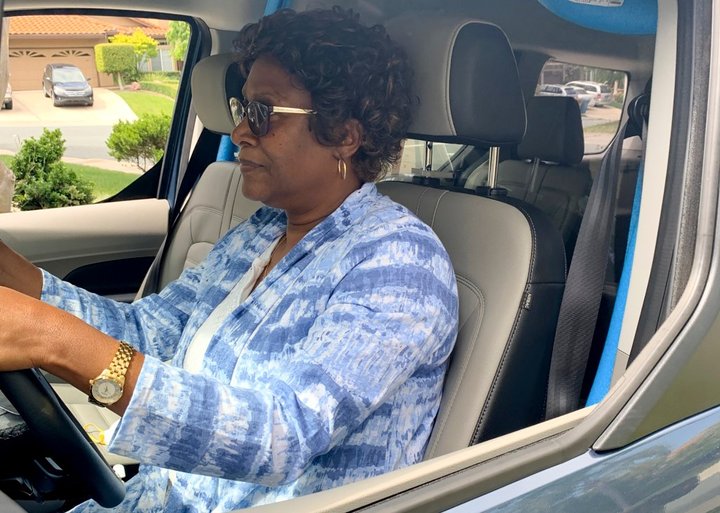
Ivy Bland says she moved from California to Florida earlier than planned due to problems getting her unemployment benefits. Photo courtesy of Ivy Bland.
Bland’s work as a full-time Lyft driver dried up in April 2020. She said that when she called EDD to say she would be moving to Florida, the department said she could still collect California unemployment benefits. But Bland’s checks stopped coming in December, apparently due to identity verification problems and potential fraud. When she finally reached someone at EDD, the representative said she “didn’t have a footprint in the state of California. It was almost like she was saying I never lived in California.”
Bland appealed the case, but said she has so far received only $3,400 of the at least $9,075 she is owed — funds that could have prevented her from borrowing money for rent and going to food banks for the first time in her life.
“I still want what’s due me,” she said. “I have to pay the taxes that I had to pay when I was there for those 20 years, and that money, that $9,075 that they put a freeze on, that’s my money. And they need to give it to me.”
Bland is no longer registered to vote in California, but said her EDD experience didn’t necessarily affect her opinion of Newsom.
“I don’t know what … he had to do with that,” Bland said. “You know what I’m saying? He don’t work for EDD.”
‘It just kept getting worse’
Susan Baker, 70, voted for Newsom in 2018. But the Santa Rosa resident is ready to see another Democrat at the helm of the Golden State.
“It just really irks me that they’re not allowing another Democrat to be on the ballot,” Baker said, referring to the California Democratic Party’s successful efforts to discourage a big name from challenging Newsom in the recall.
Baker filed for unemployment in January 2020 when she was laid off from her job as an office assistant at a law firm. Payments went smoothly at first, but once the pandemic hit, “everything just stopped,” Baker said.
“They were painting this rosy picture of everything … And it wasn’t like that. It just kept getting worse.”
— Susan Baker, Newsom supporter in 2018
Blocked from her benefits, Baker “cut back on everything.” She tapped into her savings to make house payments and “didn’t spend anything frivolously. … I didn’t eat out, I didn’t buy any special foods.” To help make ends meet, she worked part-time for the U.S. Census, knocking on doors even as the pandemic raged to ask people to fill out the survey that determines California’s congressional representation and level of federal funding.
She also regularly watched the news — an experience she often found frustrating.
“They were painting this rosy picture of everything,” Baker said. “You know, they’re handling everything, and EDD’s getting it under control, and everything’s coming up roses. And it wasn’t like that. It just kept getting worse.”
Baker said she could put up with Newsom being “arrogant” and “wanting to be president.” But she said she was less willing to accept his refusal to acknowledge EDD’s problems or “make it a priority.”
Nevertheless, Baker said she will vote to keep Newsom in office because she doesn’t see any of the 46 candidates running to replace him as a “viable choice.”
Another reason she would have liked to vote for a different Democrat? Newsom’s record on wildfires.
“I mean, I live in Santa Rosa,” which was devastated by the 2017 Tubbs Fire and last year’s Wine Country fires, Baker said. “We lost a lot here. … I don’t feel he’s done enough regarding fire protection. That’s a major issue.”
‘This broken system’
Ginny Silver, the wedding-photographer-turned-EDD-YouTuber, hears every day from Californians on the brink of desperation because they haven’t received their unemployment benefits.
“I have many claimants that I’ve redirected to a suicide hotline,” Silver said.
“Unfortunately, it goes beyond simply receiving money while you’re being unemployed,” she said. “It stretches into claimants having to ruin their credit, claimants having to get evicted, claimants going into debt. … And while many are trying their best to find suitable work in the process, they’re having these lasting effects as a result of navigating this broken system.”
The sad stories come one after the other.
Eric Szaras, a 37-year old Santa Monica resident and registered Democrat, said he called EDD more than 270 times in the space of a week and a half after his account was frozen due to suspected fraud.
Cynthia Rene Brown, a 64-year-old Los Angeles resident and registered Republican, said she was so frantic that she hired consultants to help her reach EDD, ultimately paying them nearly $4,000 of the $16,000 in benefits she received.
“My opinion of Gavin Newsom has gotten worse since the pandemic and sunk even more with the EDD issues,” Brown said in an email — her cell phone service had been cut off while she awaited benefits. “He just pointed fingers and played the blame game.”
Silver doesn’t discuss politics on her YouTube channel. But the conclusion she’s drawn from spending 30 to 40 hours a week helping Californians is inherently a political one.
“Claimants should not need to come to a random person on the internet in order to obtain these answers.”
###
CALmatters.org is a nonprofit, nonpartisan media venture explaining California policies and politics.
BOOKED
Yesterday: 3 felonies, 8 misdemeanors, 0 infractions
JUDGED
Humboldt County Superior Court Calendar: Today
CHP REPORTS
No current incidents
ELSEWHERE
RHBB: Planning for Sea Level Rise Splits Humboldt Commission
RHBB: Burning Starting Today on Vegetation Management Project West of Redding
OBITUARY: Johnny Quinton Olson, 1946-2021
LoCO Staff / Wednesday, Aug. 4, 2021 @ 6:56 a.m. / Obits
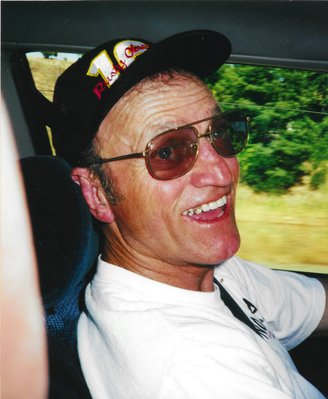
Johnny
Quinton Olson passed away on Saturday July 10, 2021, at the age of 75
years old, due to complications from Covid-19. Johnny was born on May
3, 1946, in Hettinger, North Dakota to Einar and Rose Olson. He was
the eighth of 12 children. The family eventually moved to Eureka when
he was 13 years old.
Johnny attended Eureka High School and began boxing, following in the footsteps of his older brothers Rich and Jimmy. He was well known locally and won many bouts, including two Golden Gloves. On July 2, 1966, at 21 years old, he married his first wife, Carol Molver, and had his first child, Sandra Kay. Though they divorced soon after, they remained great friends. Johnny joined the United States Army in 1968, where he served as an Exhibition Fighter. He met and married Gwen Faulk in 1971 and had his second child, Raeleen Lynn. After a second divorce, he spent some time traveling and working all over Northern California, also visiting North Dakota to stay close to his roots and his extended family. When he finally returned to Eureka, he met the love of his life Kathy McBride. They spent the next 30 years together and had Johnny’s third child, Tamera Kate.
Johnny worked at RAO Construction, the family-owned business, until his retirement. He also worked at Redwood Acres Raceway, another family run-endeavor, supervising the safety crew for the stock car races. He traveled the West Coast with his nephew, who was racing the NASCAR Southwest Tour Series. He attended as many NASCAR races as possible, cheering on his favorite driver, Jimmie Johnson.
Johnny played softball for many years and was a proud member of the Clampers. He also loved restoring old wooden furniture and could always be found working on a project. In recent years Johnny’s love for boxing would bring him back into the ring, this time as a referee for “Fight Nights” at Cher-ae Heights.
His easy going and helpful attitude made him lots of friends, and his family meant the world to him. He always found the time to spend with the kids or grandkids. He will me dearly missed by all who knew him.
He is survived by his brothers, Richard Olson and Merle Olson; sisters, Veronica Ward, Paulette Papageorge, and Patty Nichols; children, Sandra Hopkins, Raeleen Olson, and Tamera Olson (Matt Scott); grandchildren, Alicia Rose, Jerrica Fessler (Rob Fessler), Brittney Holland (Jeff Holland), and Nathan Scott; and great grandchildren, Tristin, Jacob, Aiden, Hailey, Judah, McKinzie, Boston, and Riley. Johnny also had countless nieces and nephews, all whom he loved dearly. He was preceded in death by his brothers, Larry, Jim, and Marv, along with his sisters, Charlotte, Mona, and Marty.
A celebration of life potluck will honor his memory at The Moose Lodge in Eureka on August 21 at 1:30 p.m. We know that Johnny knew so many people, and we would love for you to come to share your stories and memories.
###
The obituary above was submitted on behalf of Johnny Olson’s loved ones. The Lost Coast Outpost runs obituaries of Humboldt County residents at no charge. See guidelines here.
Facing ‘Dire Water Shortages,’ California Bans Delta Pumping
Rachel Becker / Tuesday, Aug. 3, 2021 @ 5:56 p.m. / Sacramento
In an aggressive move to address “immediate and dire water shortages,” California’s water board today unanimously approved emergency regulations to temporarily stop thousands of farmers, landowners and others from diverting water from from the Sacramento-San Joaquin Delta watershed.
The new regulations — the first to take such widespread action for the massive Delta watershed stretching from Fresno to the border with Oregon — could lead to formal curtailment orders for about 5,700 water rights holders as soon as Aug. 16. The decision comes on the heels of curtailment orders issued to nearly 900 water users along the drought-stricken Russian River, with 222 more expected next week.
The five water board members, who were appointed by Gov. Gavin Newsom or former Gov Jerry Brown, approved the rule despite vehement opposition from representatives of Central Valley growers.
Sen. Shannon Grove, a Republican from Bakersfield, said the regulation would “disrupt the critical production of essential food…Instead, the state should focus on expanding water storage and upgrading its existing water infrastructure, not punish local water managers.”
Assemblymember Adam Gray, a Democrat from Merced, called the curtailment orders for senior water rights holders “one of the most destructive measures possible.”
“The Board’s legal authority is by no means certain,” Gray wrote to the board. “Growers will have to risk significant fines and penalties just to find out whether the Board actually has the authority it claims. Either way, they lose.”
Water users who continue to divert could face penalties of up to $1,000 per day plus $2,500 per acre-foot of illegally diverted water, according to Erik Ekdahl, deputy director of the board’s division of water rights.
“Growers will have to risk significant fines and penalties just to find out whether the Board actually has the authority it claims. Either way, they lose.”
— Assemblymember Adam Gray, D-Merced
Most of California is experiencing an extreme drought, with May and June the warmest and driest on record since 1896. Lake Oroville, one of California’s largest reservoirs, is expected to reach a new historic low in October.
Demand for water from rivers and streams has outstripped supply 16-fold in the San Joaquin River watershed and three-fold in the Sacramento River, according to State Water Resources Control Board staff. Dwindling flows risk salty backwash from the Pacific tainting supplies for drinking, farmers and fish.
Karen Ross, secretary of the California Department of Food and Agriculture, told the water board that “this year there’s plenty of pain to go around.
“Mother Nature and climate change have brought us the situation that we have. And therefore the decisions that you have to make have very real impacts on people. But not making these decisions would have even more horrendous impacts for people,” Ross said.
However, six growers organizations, including the California Farm Bureau and the Almond Alliance of California, said in a comment letter that the board does not have authority to curtail the rights of users with claims for properties next to waterways or that pre-date 1914 — the year California enacted its water rights law.
“Treading lightly there is probably a good idea on a prudential basis,” Chris Scheuring, senior counsel for the California Farm Bureau, said at today’s meeting. He also warned that smaller growers “could run afoul of an order or something in a very inadvertent way. We don’t want draconian penalties there.”
“There’s a face behind all of this,” he said. “And those faces actually include my family.”
Irrigation districts also warned that the water board acted too quickly and may have violated due process.
“It’s just too fast, you’ve got to listen to stakeholders in this process,” said Valerie Kincaid, a water law attorney who represents the San Joaquin Tributaries Authority, a coalition of irrigation districts and water agencies. “We now have a draft regulation that exceeds water board authority.”
A similar critique came during the last drought when, in 2015, six irrigation districts sued the state over its efforts to stop some Delta diversions. A Superior Court judge ruled that the state violated their due process by failing to give them a “meaningful opportunity, including some form of public hearing, to challenge the board’s finding before they are ordered to curtail their water use.”
This time, state officials said at a July workshop that they were giving ample notice and opportunity for input. They said the governor’s drought emergency declarations ensured they were “on very firm legal footing.”
Some residents, however, urged the water board to act quickly. One Shasta County resident, Diane Bond, wrote that because of heavy diversions, a critical creek in the region is all but dry. She urged the board to consider stopping all diversions regardless of seniority.
“We have no water for fire suppression and the fish and wildlife are dying. We have put out water for the wildlife near our property. It is heart-wrenching to see our creek dry,” Bond wrote. “These are desperate times and water is so scarce.”
A representative of the Westlands Water District, which relies on stored federal water supplies that flow through the Delta, said he supported the water board’s regulations.
“They will protect transfer water that’s been acquired to help mitigate, in part, the impacts of drought,” said Jon Rubin, assistant general manager and general counsel. “They will also help protect stored water and for those reasons Westland supports the resolution that’s been presented.”
“It is heart-wrenching to see our creek dry. These are desperate times and water is so scarce.”
— Shasta County resident Diane Bond
Supplies of up to 55 gallons per person per day for minimum human health and safety needs, such as drinking and household use, are exempted from the curtailments.
The City of Vallejo urged the water board in a public comment letter to increase the 55 gallon cap, or change the way it’s calculated. The limit is “too rigid,” said Vallejo water operations manager Beth Schoenberger “and will be very difficult to implement in areas without a firm population count.”
Small community water systems and the Merced County Hispanic Chamber of Commerce warned in letters to the board that without surface water, growers may fall back on groundwater wells sucking from already depleted basins.
“I urge you to consider that this will result in local wells under producing or simply not producing at all, as well as reduced overall water quality,” Daniel Chavez, district manager for the Planada Community Services District, wrote.
###
CALmatters.org is a nonprofit, nonpartisan media venture explaining California policies and politics.
Arcata Mayor Brett Watson Issues Statement on His Arrest for DUI, Drug Possession
LoCO Staff / Tuesday, Aug. 3, 2021 @ 3:57 p.m. / News
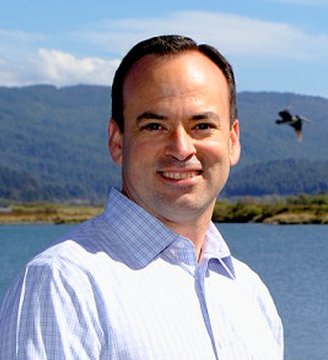
Watson
PREVIOUSLY: Arcata Mayor Brett Watson Arrested for DUI, Drug Possession Late Last Night
###
Press release from the City of Arcata:
On the night of Sunday, August 1, Arcata Mayor Brett Watson was detained and cited for driving under the influence. The arrest resulted when the California Highway Patrol were conducting a controlled traffic stop on L.K. Wood Boulevard.
In a statement made today, Mayor Watson shared his initial response to the arrest:
“Last week was the one year anniversary of my father’s death. He was severely depressed and took his own life. I’ve really been struggling with the loss this last week. I appreciate the community’s patience while I sort through the impact his death has had on me and the events of Sunday night. I take full responsibility for the results of the arrest while recognizing the importance of seeking treatment to support my mental health.”
Crescent City Company Looks to Solve Humboldt’s Recycling Crisis With New Center in Arcata
Hank Sims / Tuesday, Aug. 3, 2021 @ 3:23 p.m. / Infrastructure
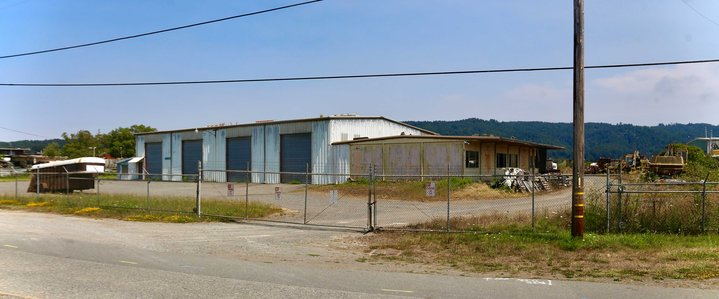
If everything goes well, this will be the place you can redeem your cans and bottles in the very near future. Photo: Andrew Goff.
###
PREVIOUSLY:
- With the State’s Recycling Redemption Program in Shambles, Local Agencies Look to Develop a More Sustainable System
- With No Recycling Redemption Centers Left in the County, Stores Face Fees of $100 per Day Unless They Offer Buy-Back
###
For the last several months, no recycling center in Humboldt County has been honoring the state’s California Redemption Value, that extra five cents on bottles and cans that you’re supposed to get back when you bring your beverage containers back.
The reasons for this are several — mostly the pandemic and a global collapse in scrap prices — but the effects have been huge. Not only is it near-impossible to redeem your empties, but many local stores have been paying a $100 per day fine to CalRecycle in lieu of offering their own redemption systems on site.
But all that could be changing soon, as an employee-owned, Crescent City-based business called Hambro has applied to set up a new recycling center on Arcata’s South G Street.
Hambro’s Randy Scott said that they’ve already leased land at 420 South G and filed for permits from Arcata and the California Coastal Commission, and barring any unforeseen setbacks a new Arcata dropoff center could be up and running in the next couple of months.
“As far as the operation itself — we can set that up pretty darned quick,” Scott said.
Hambro operates a multitude of businesses out of its Crescent City headquarters, including recycling, garbage hauling, trucking, truck repair and soil amendment sales, and it’s been handling Del Norte County garbage since the early 2000s.
Scott said that the global recycling glut has been difficult, but that the company has been able to weather it due to the company’s dedicated, well-trained staff — who all have a stake in the company’s financial success.
“Running efficient helps a lot,” Scott said. “We have very, very good staff up here.”
Hambro was well aware of Humboldt’s recent recycling difficulties, Scott said. Many Humboldters have been driving their bottles and cans up to their Crescent City compound during the outage — something that he hopes will continue, at least until the Arcata facility comes online.
“A lot of folks have come up and seen us, and they can continue to come see us until we get up and running down there,” Scott said.
COVID Virus Concentrations in Eureka Sewage ‘Among the Highest in the Nation,’ Says City
LoCO Staff / Tuesday, Aug. 3, 2021 @ 2:14 p.m. / COVID-19 and Humboldt
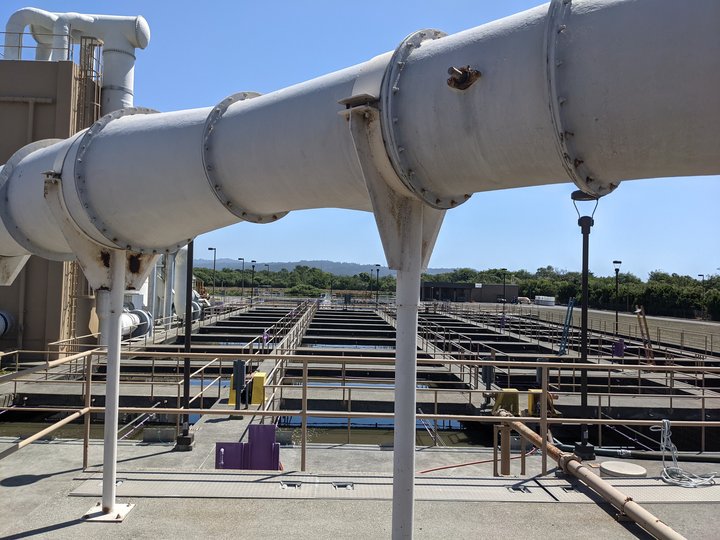
The Eureka Wastewater Treatment Plant’s primary treatment pools. Photo: Hank Sims
###
Press release from the City of Eureka:
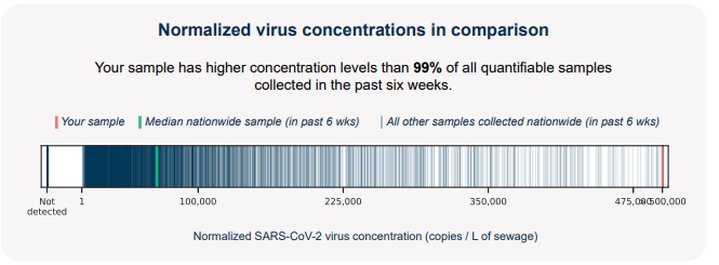
The City of Eureka has been notified of a higher-than-average concentration of SARS-CoV-2, the virus that causes COVID-19, in wastewater flowing to the City’s wastewater treatment plant. Samples from the plant, which serves the greater Eureka area including Myrtletown, Cutten, and Pine Hill, were collected via the National Wastewater Surveillance System (NWSS), a federal program designed to help public health officials monitor COVID-19 spread. Out of all samples submitted nationwide in the last six weeks, local wastewater contained concentrations higher than 99% of all samples.
This report coincides with last Friday’s Humboldt County Department of Health and Human Services announcement that cited that the county experienced its highest single day case count of confirmed COVID-19 last week and yesterday’s subsequent announcement that more than 90 additional cases were confirmed since last week’s report.
“While this is another useful datapoint that can help our community make more informed decisions to protect themselves from transmission, it is critically important to remember that this is a test of wastewater, not drinking water. At no point has local drinking water been threatened during the pandemic, and it remains safe for consumption,” Brian Gerving, Director of Public Works for the City of Eureka said. “However, knowing that the virus may be spreading locally at levels higher than in other parts of the country is important information that helps public health officials monitor and respond. We are making this information public so that citizens can also take early action and remember to follow all guidance to better protect themselves and their families.”
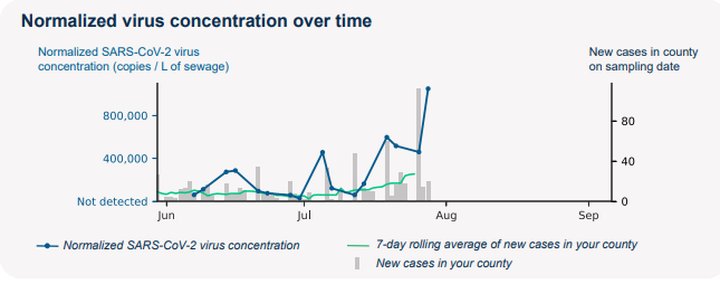
From the BioBot report.
The City of Eureka has been participating in the federally funded National Wastewater Surveillance System (NWSS) since June. The Centers for Disease Control and Prevention (CDC) and the U.S. Department of Health and Human Services (HHS), in collaboration with agencies throughout the federal government, initiated this program in response to the COVID-19 pandemic.
By testing wastewater for the presence of SARS-CoV-2, the virus that causes COVID-19, health officials are better able to understand and predict community trends related to COVID-19 infection rates. Sewage testing has been used throughout the world to monitor the spread of harmful disease.
“As much as we may want it to be, the COVID-19 pandemic is not over yet,” said Humboldt County Health Officer Ian Hoffman, M.D. “Vaccination is still the best measure to protect yourself and the community from COVID-19. Masking and social distancing is also advised. This new local data including both rising case counts and now the wastewater testing results are cause for concern. Everyone must continue to do their part to protect themselves and each other.”
Citing the increased spread of the Delta variant of COVID-19 nationwide, the CDC currently recommends that all people, regardless of vaccination status, wear a mask indoors in public in areas of substantial or high virus transmission. Humboldt County now meets this threshold. Both Humboldt County administration and the City of Eureka are now requiring everyone who enters county or city facilities to wear a face covering, regardless of vaccination status.
To view the full biobot report, visit this link.
For more information on wastewater testing, visit this link.
For more information about COVID-19 conditions locally, including where to get vaccinated, visit this link.
Dinsmore Bust Yields 3,800 Unpermitted Plants and 125 Unpermitted Pounds, Sheriff’s Office Says
LoCO Staff / Tuesday, Aug. 3, 2021 @ 1:18 p.m. / Crime
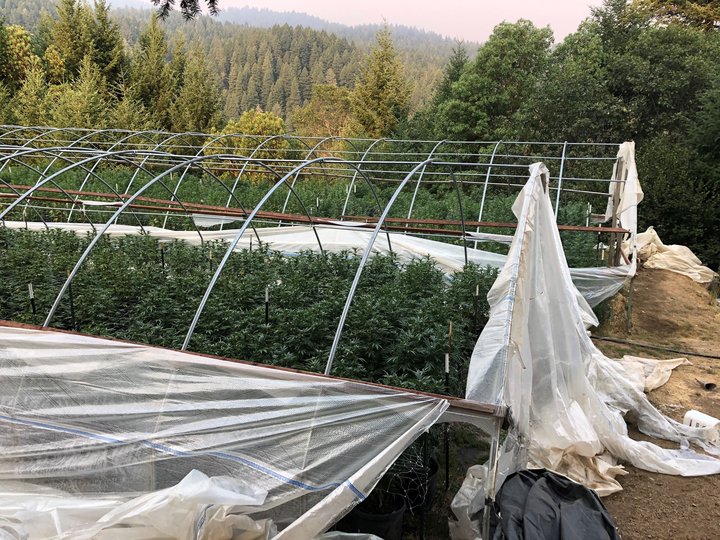
Photos: HCSO.
Press release from the Humboldt County Sheriff’s Office:
On August 2, 2021, deputies with the Humboldt County Sheriff’s Office Marijuana Enforcement Team (MET) served one search warrant to investigate illegal cannabis cultivation in the Dinsmore area. The California Department of Fish and Wildlife and Humboldt County Code Enforcement assisted in the service of the warrant.
Two parcels were investigated during the service of the warrant. The parcels did not possess the required state license to cultivate cannabis commercially.
During the service of the warrant, deputies eradicated approximately 3,800 growing cannabis plants. Deputies seized and destroyed over 125 pounds of processed cannabis.
Additional violations with civil fines are expected to be filed by the assisting agencies.
No arrests were made during the service of the warrant. The case will be forwarded to the Humboldt County District Attorney’s Office for review.
Anyone with information about this case or related criminal activity is encouraged to call the Humboldt County Sheriff’s Office at (707) 445-7251 or the Sheriff’s Office Crime Tip line at (707) 268-2539.