

OBITUARY: Verity June (Falgout) Gladden, 1957-2021
LoCO Staff / Thursday, July 29, 2021 @ 6:56 a.m. / Obits
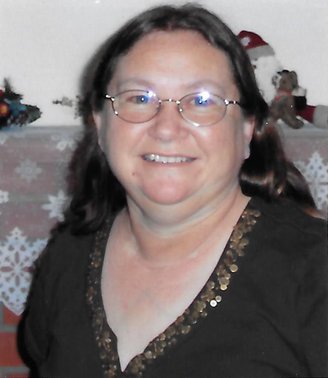
Verity June (Falgout) Gladden
went to join her parents in the loving arms of Jesus on the morning
of July 24, 2021 after a valiant, 25-year battle with kidney disease.
She was born on May 29, 1957 as one of the first 10 babies born at St. Joseph Hospital in Eureka to Marshall and Agnes Falgout. She grew up in Loleta as the youngest of five children. She spent a lot of time in her dad’s barbershop and was a member of Loleta Community Church. She attended Loleta Grammar School and graduated from Fortuna High School in 1975, where she made many lifelong friends.
June lived the majority of her life here in Humboldt County with a brief time in Okinawa, Japan, with her first husband, where she gave birth to her first child, Jennifer. In 1984 she married Alfred Gladden, and proceeded to have two more children, Jared and Andrea. She was a Jill of all trades and held a variety of jobs that included babysitting, selling ice cream at Candy Sam’s at the Humboldt County Fair, worked in the dietary department at Redwood Memorial Hospital, waitressing at Denny’s, working at Kmart and Walgreens and well as working as a poll worker for the elections board. Her favorite job of all was being a mom and grandmother.
Despite many hardships in her life, June always had a positive outlook. She always met obstacles head on and never let them define her. She lived her life to the fullest and enjoyed every day. June absolutely loved horses since she was a child and owned several in her life, and also had a large collection of glass horses. She also bowled in a league at Empire Lanes in Fortuna with her mom and several of her friends. She was very proud of her high score of 210. June loved to be surrounded by people and truly enjoyed game days with family, outings with friends and family, and Friday brunches. She was a lifelong SF Giants fan and enjoyed taking weekend trips as often as possible. There was rarely a day that you wouldn’t see a smile on her face.
June is preceded in death by her parents, Marshall and Agnes Falgout, as well as numerous aunts and uncles. She is survived by her siblings, Marshall and Mona Falgout, Victor and Lynne Falgout, Ray and Lezle Falgout, and Velma and Steve Town; her children Jennifer and Brad Pitek, Jared Gladden, and Andrea and David Wrisley; her grandchildren Dayna and Jason Newland, Natalie Kendall, and Destiny and Faith Wrisley. She will be greatly missed by all who knew her including Al Gladden, her “second mom” Beverly Stafford, numerous nieces, nephews, and cousins, and her closest friends Leslie Burchfield, Janelle Littlefield Voigt, and Denise Davi. Also the Gladden family, and her Denny’s, Kmart, and Walgreens “family”. We want to give special thanks to her wonderful dialysis family for the fantastic care and friendship that June received. There are too many friends and family to list, so if you are reading this and thinking fondly of June, please include yourself in this list.
A celebration of life will be held on Saturday, August 21, 2021 at 2 p.m. at the Loleta Community Church located at 218 Church St., Loleta. All are welcome. For those wishing to, in lieu of flowers, please donate to the National Kidney Foundation at www.kidney.org.
###
The obituary above was submitted on behalf of June Gladden’s loved ones. The Lost Coast Outpost runs obituaries of Humboldt County residents at no charge. See guidelines here.
BOOKED
Yesterday: 3 felonies, 8 misdemeanors, 0 infractions
JUDGED
Humboldt County Superior Court Calendar: Today
CHP REPORTS
No current incidents
ELSEWHERE
RHBB: Planning for Sea Level Rise Splits Humboldt Commission
RHBB: Burning Starting Today on Vegetation Management Project West of Redding
In Response to Spiking COVID Cases, State Joins CDC in Urging People to Resume Masking in Public Indoor Settings
Ryan Burns / Wednesday, July 28, 2021 @ 1:29 p.m. / COVID-19 and Humboldt

Photo by Mika Baumeister via Unsplash.
###
Humboldt County has seen 165 new cases of COVID-19 confirmed over the past week, easily landing us in the “high-transmission” category alongside much of the rest of the country.
Last week, the Humboldt County Public Health Division joined a growing coalition of counties in advising residents to go back to wearing masks indoors in public places, regardless of vaccination status. On Tuesday, the CDC changed its guidance, urging the vaxed and unvaxed alike across much of the country to resume wearing masks indoors in public areas.
Today, the California Department of Public Health joined the call, urging people to mask in public indoor settings to slow the spread of COVID-19 and the Delta variant. Below is the press release with that announcement:
With more than 90% of the state’s population in areas with substantial or high transmission, the California Department of Public Health recommends universal masking in indoor public settings
SACRAMENTO – In response to the spike in COVID-19 cases and hospitalizations, and new CDC guidance calling for masking measures to prevent the spread of the highly transmissible and deadly Delta variant, the California Department of Public Health (CDPH) updated its Guidance for Face Coverings, recommending mask use for indoor public settings, regardless of vaccination status.
“The Delta variant has caused a sharp increase in hospitalizations and case rates across the state. We are recommending masking in indoor public places to slow the spread while we continue efforts to get more Californians vaccinated,” said Dr. Tomás J. Aragón, CDPH Director and State Public Health Officer.
Under the CDC’s new guidance, more than 90% of California’s population is currently in areas designated as substantial or high transmission.
According to the CDC, getting vaccinated helps protect from the virus and the circulating variants, including the Delta variant that is now seen in the majority of California’s new cases.
California continues to work to increase vaccination rates across the state. This week, California took the nation-leading step of requiring state and health care employees to provide proof of vaccination or submit to regular testing. California had also led with its K-12 school guidance, requiring universal masking and other prevention measures as schools fully open for the upcoming school year.
CDPH is continuing to motivate businesses and local communities to encourage vaccination to prevent new outbreaks in areas of substantial and high transmission.
COVID-19 vaccines are safe, effective, and free. Unvaccinated Californians can go to myturn.ca.gov or call (833) 422-4255 to schedule their appointment or go to myturn.ca.gov/clinic to find a walk-in clinic in their county.
‘Is Something Around the Corner?’ Small Businesses Reopen to Find New Challenges
Grace Gedye / Wednesday, July 28, 2021 @ 7:07 a.m. / Sacramento
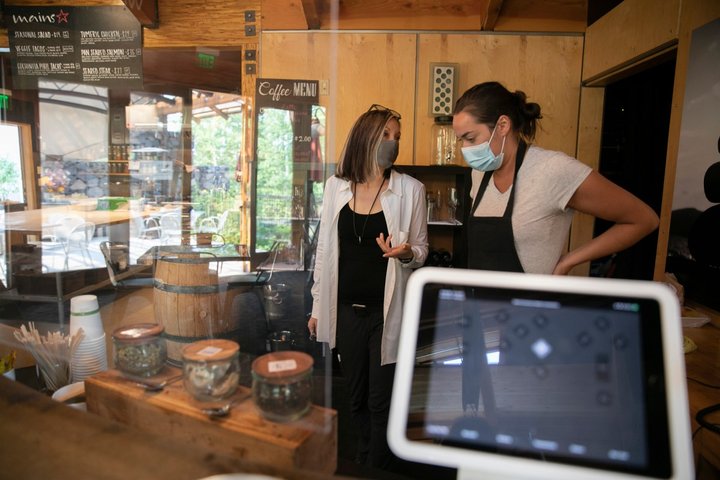
Hotel owner Patty Baird, left, speaks with server Krisann Smith while checking the kitchen at Cedar House Sport Hotel in Truckee on July 23, 2021. Baird works long days, frequently including double shifts, in order to prevent burnout among her employees who she describes as family. Photo by Anne Wernikoff, CalMatters.
###
Patty Baird hasn’t taken a single day off in the past year. Cedar House Sport Hotel, her boutique hotel in Truckee, is experiencing a surge of reservations. Even weekday evenings are getting booked up by the work-from-anywhere contingent. Baird is grateful for the additional business, but she’s struggled to hire more staff, which has left her working 12- to 16-hour days.
Difficulty hiring is just one of several issues Baird faces this summer as California’s economy reopens. The uptick in COVID-19 cases across the state caused by the more contagious delta variant has renewed her sense of uncertainty. She has stopped taking deposits for events because cancellations and refunds last year created gaping holes in her balance sheet. An air conditioning unit she ordered in May won’t arrive until August at the earliest. In the meantime, staff routinely spray it with water to keep it from overheating. This year feels harder to manage than last year.
“It just feels more stressful, because of the unknowns,” Baird says. “Is something around the corner?”
California’s economy is no longer at its nadir. The state has regained slightly more than half of the 2.7 million jobs it lost in March and April 2020 when the pandemic shut down many businesses. Gov. Gavin Newsom, squeezed by the Sept. 14 recall election, touts the state’s economic gains bolstered by a massive budget surplus and an infusion of billions from federal stimulus programs. Yet it’s clear that the state’s economy is in a different place than it was before the pandemic.
No region of California — from Silicon Valley, to Hollywood, to the Central Valley — is back to pre-pandemic employment rates. And while some large companies raked in record profits over the past year and a half, small business owners say several factors — including the possibility of new restrictions, difficulty hiring staff and inadequate child care — make the coming months feel uncertain, which is preventing California from making a full comeback.
Positions going unfilled
According to the state, California employers added roughly 73,500 non-farm jobs in June. But total civilian employment increased by only 24,500. That means thousands of positions remain open — and lots of small businesses are stretched thin.
There are several reasons those jobs are going unfilled, says Christopher Thornberg, founding partner at Beacon Economics. People may be taking more time to find their next job, or holding out for a job that is linked to a career path, and getting by on unemployment benefits and stimulus money in the meantime. The workforce has also shrunk: The pandemic spurred an uptick in retirements across the country, according to analysis of government data by Pew Research Center. Some parents may be waiting to reenter the workforce until they have reliable childcare options.
As a result, unemployment rates are still up — Los Angeles, Anaheim, and San Francisco, for example, all have jobless rates more than double their pre-pandemic numbers. The upside for workers is that wages have been rising over the past year and demand for employees is high.
How difficult is it to recruit workers?
Jim Mayfield, president and owner of Rainbow Ag, a chain of stores selling home goods and pet supplies in rural Northern California, says the number of applications he’s receiving for job postings is a quarter of what it was before the pandemic. Applicants for positions on the business team are increasingly requesting the option to work from home. Retention is difficult as well.
“Maybe they’re putting their own individual needs and fears in front of the job, which I can’t blame them for,” said Mayfield, who is rewriting job descriptions to make them more appealing to prospective employees.
Another looming question is whether school will be held in person this fall and whether parents send their children back. What would several more months of virtual school mean for working families? For some, it could mean a shift from having two incomes to one, says Rob Lapsley, president of California Business Roundtable. While employment for working women without children had nearly returned to pre-pandemic levels by May, employment for women with school-aged children was still more than 6% behind, according to an independent analysis by Misty L. Heggeness, a principal economist at the U.S. Census Bureau.
In a state with one of the highest costs of living, it can be hard for families to get by on one salary. A recent report from United Ways of California found 3.5 million working families don’t make enough to meet their basic needs.
For Baird, the lack of reliable child care for her staff has made her more concerned about burnout. She’s been letting her employees at Cedar House Sport Hotel bring their children to work if they don’t have easy access to daycare or school. The kids take over one of the hotel meeting rooms, and staff in the nearby laundry room are able to keep an eye on them.
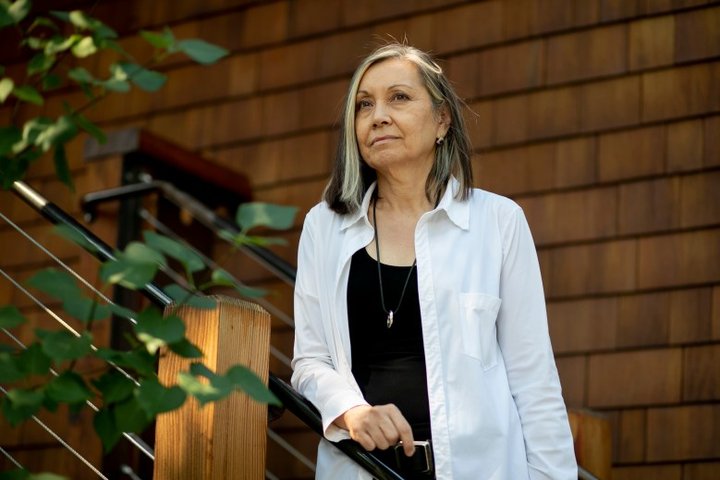
Patty Baird, co-owner of Cedar House Sport Hotel, photographed at the hotel on July 23, 2021 in Truckee. Baird says despite an uptick in revenue, “this is the most stressful year we’ve ever had.” Photo by Anne Wernikoff, CalMatters
Hiring incentives
Luis Sanchez, owner and chef at Mouthful Eatery, a Latin-fusion restaurant in Ventura County, says he saw the surge in demand for workers coming. In the spring, a couple months before the state was set to loosen restrictions, he increased employees’ hourly wages and meal discounts, and even started a 401(k) retirement program. He also hired two more workers he didn’t yet need and trained them so that when the state officially reopened on June 15 he wasn’t scrambling for staff.
Still, the uptick in cases from the delta variant, Sanchez says, is concerning. Since neighboring Los Angeles County reimposed a mask mandate on July 17, he thinks Ventura may soon follow. But in the meantime business has been good. In fact, he said, his restaurant was busier the week after the mandate, possibly as Angelenos sought out less-restrictive dining options.
For Mayfield, owner of Rainbow Ag, the possibility of new rules that affect his business are his top concern. He knows how to take care of his team, he says, and he’s not going to put them at risk. But he doesn’t want to be told what to do by the governor or a public health officer.
“Give us the facts,” he says, and he will take appropriate steps.
A new normal?
The roller coaster of the past year — outbreaks, shutowns, new regulations — has become the new normal for some business owners, says Bruce Stenslie, president and CEO of Economic Development Collaborative, a small business development center assisting employers in Santa Barbara, Ventura and Los Angeles counties.
“Most businesses that we’re working with are pretty reconciled with the notion that it’s not over,” he says. “It’s never over.”
For others, temporary adjustments to the pandemic have become permanent ones. Takeout used to be 5% of Sanchez’s business at Mouthful Eatery. Now he says it’s 30% to 40%, and he believes it will remain popular in the years to come.
“Most businesses that we’re working with are pretty reconciled with the notion that it’s not over. It’s never over.”
— Bruce Stenslie, president and CEO of Economic Development Collaborative
In fact, he’s betting on it: He plans to open another restaurant focused exclusively on takeout.
Tom Sawyer Camps, which runs day and after school camps in Pasadena, had to close its doors when the governor issued a stay-at-home order. They used to run after-school programs at four different campuses, but with schools shut down, they moved that program to a park. The adjustment, says executive director Guy Fish, has been easier on staff.
Despite uncertainties, Fish and other small business owners are feeling optimistic. There was a time last year when Fish thought he’d have to shut down the nearly century-old camp. “We feel hopeful, given everything we’ve been through and survived,” he says. “I feel like we’ve weathered the worst of it financially and physically.”
###
CALmatters.org is a nonprofit, nonpartisan media venture explaining California policies and politics.
Newsom Recall: GOP Challengers See Parents as ‘Consumers’
Joe Hong / Wednesday, July 28, 2021 @ 7 a.m. / Sacramento
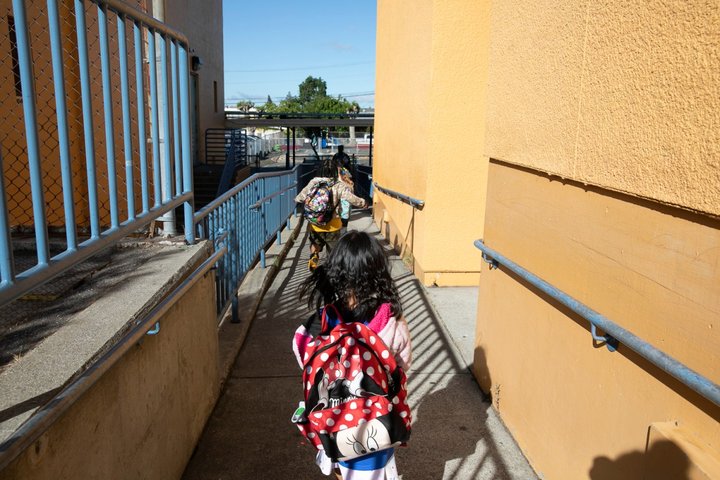
Republican recall candidate support directing education funding directly to families and giving them the choice of where to spend it through enrollment. Photo by Anne Wernikoff, CalMatters
###
When the COVID-19 pandemic shuttered schools, the grades and mental health of millions of students declined. Several of the leading Republican challengers in the upcoming recall election of Gov. Gavin Newsom see this crisis as an opportunity.
Their solution: more school choice.
The candidates — CalMatters interviewed John Cox, Larry Elder, Kevin Kiley and Doug Ose for this article — want to “empower” parents by sending state dollars directly to the families rather than school districts. Parents can take that $14,000 dollars of per-pupil spending from the state to any traditional public, charter or private school they like.
Turning parents into consumers, the candidates say, will cultivate competition between schools. Parents will “vote with their feet,” and if the state plunges the public school system into the free market, schools will finally have to provide a high-quality education to stay afloat.
“Ultimately, I would like to see traditional public schools look a lot more like charter schools,” said Kiley, a Sacramento area state Assembly member running in the Newsom recall election. “I would like to have districts liberated from our education code: Less mandates coming from Sacramento and a lot more freedom.”
“I would like to have districts liberated from our education code: Less mandates coming from Sacramento and a lot more freedom.”
— Kevin Kiley, Sacramento area state assembly member
These Republican candidates also say that teachers unions have undue influence on the public education system, and they accuse the unions of using political sway to lobby for charter school regulations. Conservative talk show host Elder — who is running on the most radical school-choice platform of the four — said if elected he would declare a state of emergency for California’s public schools and fire the state’s 15,000 “worst” teachers.
The American Federation of Teachers has given $250,000 to the anti-recall campaign and while the California Teachers Association has not yet contributed, it has historically been one of Newsom’s supporters.
While the candidates paint a clear picture of what their education system should look like, many aren’t ready to give up on the traditional public school system. Despite the state spending more money than ever to education, some experts say public schools remain underfunded. With the Newsom administration’s historic spending, they say, California is on its way to seeing what the current system can really do for students.
With this year’s budget, Newsom continued his commitment to early childhood education, including funding to achieve universal transitional kindergarten by 2025. He also increased funding for schools in low-income communities as well as for special education.
“For a long time, California ranked at the bottom of per-pupil funding relative to other states,” said Julie Marsh, an education professor at the University of Southern California. “I don’t think we’re ready to throw in the towel yet.”
Newsom recall: The Republican vision
The major Republican candidates all say that under Newsom, California’s public school system failed students during the pandemic. They say K-12 education in California is controlled by special interests, primarily teachers unions, who supported extending the school closures.
Throughout California, private and charter schools began offering in-person instruction while most public schools remained in virtual learning. Some parents flocked to these schools to get their kids inside a classroom and in front of a teacher.
The Republican candidates say the charter and private schools that took their chances on reopening should be rewarded for their success.
“We need to empower the parents to evaluate schools,” said Ose, a former California member of Congress running in the recall election. “I think parents right now are beat down by a system that pats them on their heads and dismisses their concerns.”
For Ose, Kiley and Cox, who also ran unsuccessfully in 2018, empowering parents means having the state money follow the student, whether they go to a traditional public school, a public charter school or a private school.
“My figurative description is to put the money in the child’s backpack and send it to school with them,” said Ose. “Why should we dictate to parents where their kids can best be educated?”
This type of system is often called a voucher program or an educational savings account. It would take the money that the state allocates for each student and give it directly to parents.
But the candidates face an uphill battle against Democratic voters as well as a Democratic supermajority in the legislature. California voters rejected ballot measures that would launch school vouchers in 1993 and 2000.
Cox said it’s a “different environment” in 2021. The Republican candidates are hopeful public opinion has changed, especially after the pandemic.
For the Republicans vying to replace Newsom, the pandemic has demonstrated that parents need options when the traditional public school system fails to serve them. They say lawmakers have instead restricted school choice at this critical moment.
In May, Democratic lawmakers drew criticism when they passed Assembly Bill 1316, which would “hold harmless” school districts for significant drops in attendance during the pandemic. But this move to protect traditional public schools hurt charter schools where enrollment actually increased because they offered in-person instruction.
In the past year, Democratic lawmakers supported legislation that would restrict charter school enrollment and funding, especially for virtual charter schools. In 2019, Newsom signed into law a controversial bill that would allow school districts to consider the fiscal impact of approving a charter school. Both were condemned by charter school advocates.
“That is an inherent conflict of interest,” said Kiley.
The Republican candidates say that a few bad actors have tarnished the reputation of charter schools and that others throughout the state have made significant progress in closing the achievement gap for Black and Latino students. And if a charter school doesn’t deliver, the candidates told CalMatters, the state will hold it accountable — but they expect parents will, too.
“If a charter school is not performing, you shut them down. Parents vote with their feet by going there,” said Ose. “That’s how charter schools succeed. The ultimate consumer is the parent.”
A complicated reality
Voting with your feet, however, isn’t so easy for all families: Charter schools aren’t required to provide transportation for all students. Parents who can’t drive their kids to school don’t have the option of exploring beyond their neighborhood schools.
“It is a privilege to be able to vote with your feet because it means you have modes of transportation,” said Liz Guillen, an attorney at Public Advocates, a law firm that has advocated for charter school regulations.
It also goes beyond material resources. Parents in affluent neighborhoods are often better equipped to explore the options for their children’s education.
“It also means you’re savvy and educated or experienced enough to understand the system,” said Guillen.“We’re not all on the same page when it comes to navigating the public school system.”
While candidates Cox and Kiley said they would help parents navigate the system, Elder said parents, regardless of their own education level or income, should take the initiative to find the best school for their children
“It’s not unfairness, it’s life,” Elder said. “People who have more resources will always have more opportunities.”
“It’s not unfairness, it’s life. People who have more resources will always have more opportunities.”
— Larry Elder, radio show host running to replace Newsom
Some charter schools have had success working with high-needs students, even closing the achievement gap for Black and Latino students.
Perhaps most importantly, their independence from the bureaucracy of school districts allows them to be nimble. They can decide their own curricula, offer internships for students and bring in experts to teach students.
Ted Lempert, president of Children Now, a research and advocacy organization based in Oakland, says charters were initially designed to be hubs for educational innovation.
“To me, the great thing about charters, the good ones, is that they don’t just educate students, they can help improve the whole system,” he said. “If some schools are doing a really great job, what can you learn from that and apply to all schools?”
Charter schools in California were able to experiment with programs like project based learning and dual-language immersion, which have more recently become more prevalent in traditional public schools.
Charters, Lempert said, became more polarized during the Trump presidency with the extreme approach of Education Secretary Betsy DeVos, a staunch advocate for charter and private schools.
“I can see charters having a positive impact on all public schools,” Lempert said. “It’s so politicized. DeVos messed things up for everyone.”
A failed system?
Republican challengers in the Newsom recall contend that the governor has only poured money into the broken machinery of public education while failing to move the needle for students.
“There’s no reason we could not be achieving vastly superior outcomes,” said Kiley. “Before we pump even more money into the system, we need to make reforms.”
While the billions of dollars the state gives to public schools sounds like a lot, per-pupil spending in California was among the lowest in the country, according to a 2018 study by Policy Analysis for California Education.
But experts say with this year’s record-breaking $123.9 billion K-12 education budget, Newsom is taking steps toward adequately funding and fully realizing the potential of both charter and traditional schools. Per-pupil spending will go from about $10,000 to $14,000. This puts California closer to the mid-tier among per-pupil spending by states, but the amount is still much lower than states like New York and New Jersey, which spend over $20,000 per student.
“We made great strides and significant investments this year,” Lempert said. “Newsom deserves some credit for that.”
Candidate Cox said he would prefer not to cut the education budget while in the same breath saying he would try to cut school administrative spending.
Other candidates said California’s education system focuses too much on the adults on campus.
“I think we’ve gotten away from public schools being an education program and focused on it being a public jobs program, and that’s a mistake,” said Ose.
But Marsh, the USC professor, said more adults are exactly what California’s public schools need. Compared to other states, California public schools lack nurses, counselors and social workers.
“We have far fewer adults in our schools. We ranked at the bottom of all states,” said Marsh. “The adult-child ratio was at the bottom in every category.”
Experts and left-leaning advocates agree with the Republican candidates, however, that parents should be able to decide where their kids go to school, and that successful charter schools do have a place in the future of California public education. But that doesn’t mean charter and private schools should replace the system.
“You want parents to have some choice within the district,” Lempert said. “But ideally, every neighborhood school would be really strong. That shouldn’t be a dream.”
###
CALmatters.org is a nonprofit, nonpartisan media venture explaining California policies and politics.
OBITUARY: James V. Carter, 1944-2021
LoCO Staff / Wednesday, July 28, 2021 @ 6:56 a.m. / Obits
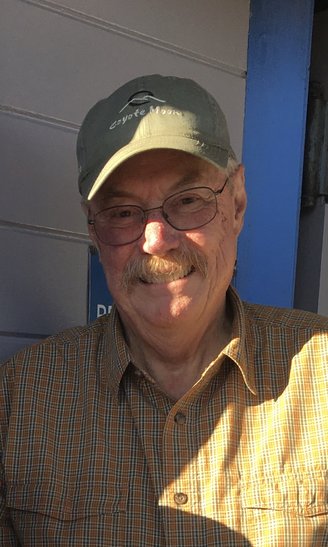
James V. Carter AKA “Flamo”
June 21, 1944-July 5, 2021
Jim was born in Dover, Ohio to Herman and Marcella Carter. Brother John joined them later. Jim graduated from Campbell High School in 1962. He came to Humboldt County to play basketball at Humboldt State College, before it was a university. He married Jackie Alessi in 1969. They had two children, Julie and Mike. He played pick-up basketball and softball. He was an “Amazing Rosini” for three to four years. He worked for Sid Hansen at North Coast Mercantile until 1979. In the early 80s he went to work for Young’s Market Company until he retired in 2007. Through the years he went on many golf trips with “The Dirty Dozen” – Hennessey, Tanner, Billy Jack — at the Lou Sterlin Tournament for 40-plus years. They often toasted at “tee time” for those who had passed.
He is proceeded in death by his late wife Jackie, her parents, his parents, many tournament buddies and Young’s Market Co. friends.
He is survived by his wife Sandy of Arcata, two daughters Julie and son Cody of Eureka, Sarah Burns and partner Mike Hostler, son James Fike and his father Brandon Fike of McKinleyville, son Mike and partner Wendy, children Daphne, Shane and Trace of Stockton, brother John, wife Karen and daughters, Ashley, Jodi and families of Windsor, sister-in-law Kathy Jeffers and family Michelle, Carl, Justin and Scotty Wilkins, JJ and Rachel, Noah and Savana Jeffers all of Sacramento, brother-in-laws Robert and Jennifer Short of Utah, daughter Tabitha and husband Bo Reese and the Reese’s Pieces of Santa Rosa, Linden and Lisa and family, Rhiannon, Dakota, Linden and Destiney Short of Eureka, Andrew and Jessica Howard and their family AJ and son Andrew Howard, Seth Howard, Shawn and Brandon Amis and families of Eureka.
Jim loved sports, gardening, cooking, “tee time,” going to the Farmer’s Market in Arcata and his family gathering time at “4 O’Clock.” He also enjoyed being a grand-dad in his retirement years. Jim was kind, loving and fun. He is missed and loved beyond words.
We want to thank the oncology nurses at St Joe’s. You make a rough day enjoyable. Thank you to the nurses in the ER, the second and third floors at St. Joe’s as well as Granada and Vibra in Redding.
Family and friends are welcome to join us for a memorial that will be held on Saturday, August 21, from 2 p.m. to 6 p.m. at the Bayside Grande in Bayside. He wanted a party, so bring your dancing shoes. 2297 Jacoby Creek Rd in Bayside. Please RSVP by calling or texting 707-834-3673. UPDATE: This has been postponed.
In lieu of flowers please donate to your favorite charity or to McKinleyville Little League, PO Box 2284, McKinleyville, CA 95519.
###
The obituary above was submitted on behalf of James Carter’s loved ones. The Lost Coast Outpost runs obituaries of Humboldt County residents at no charge. See guidelines here.
OBITUARY: Kelly Eugene Berry, 1962-2021
LoCO Staff / Wednesday, July 28, 2021 @ 6:56 a.m. / Obits
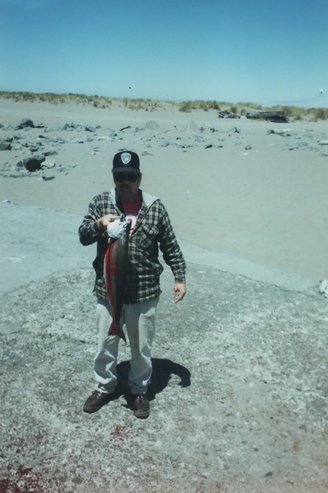
Kelly Eugene Berry
October 29, 1962 – July 15, 2021
Dad was born in Glendale on Monday, October 29, 1962, to Shirley Ann and Robert Earl Berry (Bob). Dad grew up in La Crescenta until the age of 11. In 1973, Dad, his older sister Shelley, his mom Shirley and his dad Bob moved to Chico, where dad attended Serria View Elementary, Bidwell Junior High School and Pleasant Valley High School.
At the age of 18, in 1981, dad worked at Paramount Studios with his dad for a short time. Dad moved back to Chico six months later, when he decided studio work was not for him. Dad then worked for Chico Car Wash, where he washed and detailed cars as well as working for our mom’s dad as a ranch hand in late 1981 and 1982.
Dad met our mom in late 1981 and they married on February 26, 1983, in Corning, Calif. at Four Square Church. In May 1983, mom and dad were blessed with identical twin girls – Michelle De Ann and Kelly Marie. During this time dad worked at Sun Sweet Dryers as a forklift operator during harvest season. In the off-season dad worked for Turf King in Chico.
In March 1989, dad and mom were again blessed with their first and only son, Robert Earl Berry the second. Dad worked at Chico Heating and Air and Corning Molding Mill.
In July 1995 our family moved to Eureka, where our youngest blessing of a sister Tiffany was born. Between 1995 and 2006, dad worked for Culver Roofing, Boyd’s Automotive Repair and New Horizons Dry Wall.
In 2006 dad retired due to ongoing health reasons.
In dad’s younger years he loved going camping with his family and riding his 75cc dirt bike with his older sister Shelley and his cousin Dale Jr. in Anza, Calif. Dad also loved fishing, gardening and working on older cars in his retirement years.
He is survived by, Jerri Berry (wife), twin daughters Michelle (Greg) Callender, grandsons Knolin and Korbyn Callender. Kelly Marie (Casey) Stephens, granddaughter Courteney Goodman and grandson Henry Stephens. Son, Robert Earl Berry II, granddaughter Amelia Ann and Nason Robert Berry, youngest daughter, Tiffany Berry (Nick Pezzoli) and granddaughter Anna Pezzoli. Sister Shelley Brownell and many nieces, nephews, cousins and extended family.
He is preceded in death by grandparents, Charles and Olga Berry and Eugene and Dorthey Lonis. Parents, Robert Earl and Shirley Berry. In-laws, Vernon and Wanda Frizzell. Uncle, Roger Conkright, Nephew Andrew Towne, niece Leslie Towne, brother in-law and sister in-law, Mary and Daniel Perry, brother in-law, Donald Lee Kimbell and brother in-law Mann C. Hunt Sr.
Dad, you will be greatly missed and are loved beyond words.
Memorial service to be announced at a later date.
###
The obituary above was submitted on behalf of Kelly Berry’s loved ones. The Lost Coast Outpost runs obituaries of Humboldt County residents at no charge. See guidelines here.
Who Will Be the Next Arcata City Councilmember? Better Know the Seven Applicants Who Will be Grilled During Wednesday’s Public Forum
Stephanie McGeary / Tuesday, July 27, 2021 @ 5:36 p.m. / Local Government
The Arcata City Council will soon appoint a new member to fill out the remainder of previous councilmember Sofia Pereira’s term, which ends in December 2022. On Wednesday night, the seven applicants who qualified will participate in a candidate forum, during which they will answer questions from the council and the public.
There was a fair amount of interest in the open seat and out of 14 people who took out applications, seven qualified to be considered for the position. Several of them have run for or served on the council in the past, whereas some are first-timers. So, before they are publicly grilled on their views, let’s take a look at the seven candidates and the statements they submitted to the city on why they want to be Arcata’s next councilmember.
###
Katelyn Bourne

Bourne | Photo from Facebook
A student at Humboldt State University, Bourne has lived in the area since 2019. According to Bourne’s candidate statement, she moved to Humboldt after getting out of the Army, where she served as a combat medic. Bourne also served as the president of Associated Students at College of the Redwoods and helped welcome students during COVID-19.
From Bourne’s candidate statement:
As a political science major and someone who wants to be a politician, I have become a firm believer that those who hold a public service office should serve the people before they serve a party or themselves. Because of this belief, my focus as an Arcata City Council member would be to help the City Council strengthen its relationships with Humboldt State University and College of the Redwoods students, as well as work to increase engagement with those who live in the city of Arcata.
Elizabeth Conner

Conner | Photo from Facebook
Conner, 67, served on the Arcata City Council from 2002 to 2004. Conner has lived in the area for 25 years and has also served as chair of the Arcata Planning Commission, co-chair of the Arcata General Plan Task Force, executive director of Housing Humboldt and is currently chair of the Humboldt County Housing Authority. Conner lists her current occupation as a self-employed affordable housing and political consultant.
According to her candidate statement, Conner’s priorities include economic, social and racial justice; climate change; affordable housing; re-imagining public safety and supporting local businesses.
From Conner’s candidate statement:
I’m proud to have served on the Council which started Redwood Coast Energy Authority, placed a cap on formula restaurants and committed to infill and affordable housing. I’d be honored to continue this work with the excellent team of staff and Council working for a better Arcata.
Meredith Klein

Klein (Matthews) | Image from Facebook
Klein has lived in Arcata for five years and has served on Arcata’s Economic Development Committee for three years. Klein also works as an administrative specialist for the Redwood Coast Energy Authority, serves on the board for the Arcata Chamber of Commerce, volunteers for Arcata Main Street and is a member of Cooperation Humboldt.
In her candidate statement, Klein focuses on economic development and housing creation and says that her experience and “rapport with local businesses” will help her serve the people of Arcata.
From Klein’s statement:
Arcata is a special place, and we are on the cusp of great change. With HSU becoming a Polytechnic University, Covid ending, new airline routes and new businesses on the horizon, the needs of the community and availability of resources are changing quickly. My goal is to align our economic and development needs to meet these opportunities, while still maintaining the Arcata I moved here for- progressive ideas, a welcoming community with unmitigated access to beauty and nature, one-of a kind events, and local businesses.
Humnath Panta
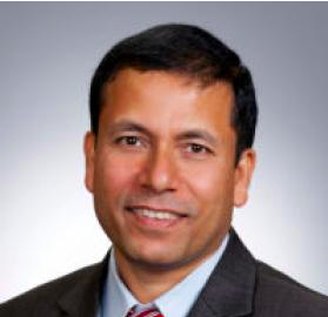
Panta | Image from HSU’s website
An assistant professor in finance at HSU, Panta boasts an impressive educational background with a Ph.D. in Finance from the University of Texas at Arlington, a master’s degree in Financial Economics from Ohio University, a master’s degree in International Relations and Trade from Monash University, Australia, and a BA in English Literature with a minor in Economics from Tribhuvan University, Nepal.
In addition to his experience as a scholar and professor, Panta also says he has extensive experience in planning, budgeting, financial policies, capital improvement plan, spending and revenue policy, formulation of policy and procedure and more.
From Panta’s statement:
[Panta] is an active scholar, dedicated teacher, and effective mentor for students with diverse backgrounds and career goals. His primary objective is to serve the community by promoting a positive learning environment and helping students in their self-development through quality financial education. He is active in various civic, cultural, and professional organizations, including Blood Donors of America, Financial Management Association and Southwestern Finance Association. He wants to support the local community through financial education and involvement in various community-based activities.
Bennett Perrault

Perrault | Photo from Facebook
Perrault, 25, is a wildlife biologist for the California Waterfowl Association and works at the Humboldt Bay National Wildlife Refuge. Perrault has lived in Arcata for about six years and graduated from HSU with a degree in wildlife management and conservation in 2019.
Perrault says that as an administrative vice president at HSU, he helped fund the bike library, put free tampons in all the bathrooms, and made sure students were involved in every aspect of school politics.
From Perrault’s statement:
I want the people to be empowered to voice their opinions and make the small or large changes that are needed in our community. I love this town and I want to make sure the whole community feels the same. As a wildlife biologist, I want to make sure we are protecting our town for people and wildlife. We can do this! Power to the people, the business owners, the artists, the skateboarders, the renters, the home owners, the houseless, the new arrivals, and the locals! I am here for you and your voice!
Paul Pitino

Pitino | File photo
Of all the candidates, Pitino definitely boasts the most Arcata City Council experience — he served one term in in 2004, was elected again in 2014 for a two-year-term and was reelected for a full term in 2016. Pitino again ran for council in the last election, but was defeated.
Pitino decided to keep his candidate statement very brief and listed no experience, goals or priorities. In full, it reads:
Thank you for the opportunity to serve on the Arcata City Council for the next 16 months. I have no specific agenda other than to be a positive member of the City Council. Thanks for your consideration.
Kimberly White
A planning commissioner for the City of Arcata, White also ran for council and was defeated in the last election. White has lived in Arcata for over 30 years and states that she is a “proud resident of Valley West.”
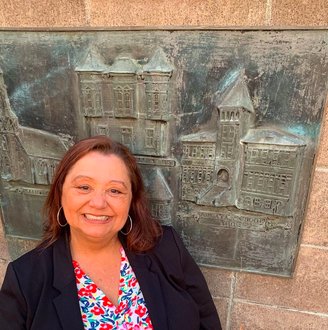
White | File photo
White’s statement lists many topics she is passionate about, including: equity,
affordable housing, addressing the climate emergency, supporting the
artist community, zero waste, better connections with HSU, zero tolerance for hate crimes, supporting the LGBTQ+ community and supporting the Native American community.
From White’s statement:
Currently I have the honor to serve the City of Arcata as a planning commissioner. I am a consultant, a mother of a teenage daughter and a proud Valley West resident. I received my master’s degree in Sociology with an emphasis in affordable/cooperative housing from HSU…I’ve lived in Goudi’ni (Arcata), land of the Wiyot, for more than 30 years and I am ready to bring my passion, education and experience to serve the people of Arcata.
###
The Arcata City Council candidate forum will be held on Wednesday, July 28 at 6 p.m. in the council chambers at Arcata City Hall — 736 F Street. The tentative schedule is as follows:
1. Questions for Candidates from the Council (6:00-7:30)
2. Questions for Candidates from the Public (7:30-8:00)
3. Questions for Individual Candidates (8:00-8:15)
4. Candidates’ Closing Comments (8:15-8:30)
5. Public Input (8:30-9:00)
6. Initial Council Ranking and Discussion (9:00-9:15)
The council will either make the appointment on Wednesday night or set a future date for additional discussion.
For those who do not wish to attend the meeting in-person, you can also join via Zoom, or watch the meeting streaming online. You can view the full candidate statements and directions on how to participate in the meeting here.


