

LETTER FROM ISTANBUL: Back in Kadıköy
LoCO Staff / Sunday, May 30, 2021 @ 7 a.m. / Letter From Istanbul
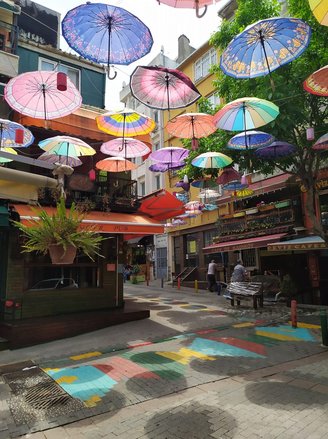
Photo: James Tressler.
One of the things you forget is how big and varied the city is. Getting out of the taxi on Rihtim Caddesi (Rhythm Street – nice, eh?), and crossing the busy intersection into Kadıköy’s backstreets, you almost feel like you are in a different city altogether – a different world even from our neighborhood in Üsküdar, just 15 minutes away.
Instead of mosques, covered women and staid, plain buildings, you’ve got bars, girls in shorts and sporting tattoos and shades, guys in grungy black t-shirts, waffle ice cream shops, bookshops with decent English collections (I picked up a copy of “Tender is the Night” for a slender 20 lira). You’ve got Umbrella Street.
In Üsküdar, everything seems old; in Kadıköy, it all goes young.
###
When I first moved to the city back in spring 2010, I lived in Kadıköy and for a long time after. Most of the teachers did. It’s on the Asian side of the city, kind of like Brooklyn to Beyoğlu ’s Manhattan (OK, that’s a non-comparison, James. One of the reasons you love Istanbul, and have stayed here, is that like New York, like all great cities, it need not be compared to anywhere or anything else. New York is New York. Istanbul is Istanbul.) Anyway, it’s leaner, sunnier, hipper and a bit cheaper too, at least it was then. “The most beautiful women live in Kadıköy,” observed the poet Nazim Hikmet, and looking around, one is not inclined to disagree.
Over the years, after I married Özge and settled down in Üsküdar , we always made a habit of visiting Kadıköy regularly, almost every weekend. We’d walk the streets, sometimes head out to the coastal strip of Moda, buy a few bottles of Efes beer and sit on the rocks and look out at the sea. Other times we’d opt for dinner at one of the kebab places and then hit the Nazim Hikmet (yeah, him again) café, where the tables were always full of people sitting under the trees and gazing around at the scene and sipping bottles of ice cold Bomonte.
After the pandemic, we didn’t or couldn’t go anywhere for a long time. A few months back, we ventured to Kadıköy one Saturday and it was awful. Everywhere was crowded, long queues outside the cafes and you needed a HES code to enter. Taxis were impossible to get. It seemed like the whole city had descended on Kadıköy that dreadful day. Shortly thereafter, following a spike in Covid cases, the lockdowns were brought back and we were consigned once more to our dreary existence at home.
So this past Friday it was quite a pleasant surprise when we arrived and found that the traffic was light, the streets peopled but not crowded. The cafes and restaurants were open but only for take away. The bars are still closed, but we heard they are set to re-open in June. Indeed, as we passed by some bars I noticed young guys washing the windows briskly, and making other preparations.
I felt a bit like a tourist, not having been there in so long. As always there were changes. We passed the Rexx Cinema, where a friend and I used to go and watch movies in the summer time, then grab a few drinks on Bar Street. Sadly, the cinema closed recently (I’d read about it), and as we passed I snapped a photo of the boarded up façade, the movie posters stripped away, leaving no trace of all the years of thrillers, fantasies, comedies … it’s like all those dreamed-away afternoons had expired, vanishing into the spring air.
Our son Leo is old enough to walk now. Özge took him out of the kangaroo and let him potter around. He peered with interest at his new surroundings. High above, a police helicopter roared and circled, probably scouting around for illegal parties, super-spreader events. “Why don’t they just walk around?” my wife asked, irritably, when the helicopter kept returning. You felt like Henry Hill in “Goodfellas,” with the helicopter following him around all morning.
We noticed other boarded up shops, with “For Rent” or “For Sale” signs in the window, no doubt victims of the pandemic restrictions. But there were plenty of other places open. We passed a coffee shop that had a new name, and probably a new owner. Why not? The old name, “Let’s Coffee!,” had never worked for me or anybody with a modicum of cool in their genes. The gallery where Özge and I used to go and see Devrim Erbil’s paintings is still there, with new artists on display in the windows. The fish markets and all the other sellers at the bazarr were bustling as always, all the goods looking fresh and slick and freshly watered down with hoses. Motorcycle delivery boys scooted past on the narrow streets, darting around the pedestrians. Özge was thirsty, so I stopped at a bakkal and bought a bottle of water for 1 lira. The proprietor, evidently thinking I was a tourist, was especially considerate, thanking me as I paid. As a matter of fact, I’d noticed that at the bookshop too.
“The shop owners are being very nice,” I remarked to Özge . “I think they miss the foreign tourists.”
We went to Umbrella Street so that Leo could look at the umbrellas seeming to float like in a Mary Poppins world, brightly colored umbrellas dancing in the breeze, and Leo pointed his little index finger at each one, his droopy brown eyes lighting up, as if aware that there was something amiss about umbrellas being up there, but liking it as one does.
All the bars and cafes were closed here too, and the umbrellas danced alone. Even a hanging plant nearby looked lonesome (“Hey, look at me! I’m a hanging plant!” it seemed to say, with green desperation).
“It’s good to be out,” I said. “Even if we really can’t go anywhere.”
Özge agreed without saying anything, as she picked up Leo, who wanted to stay and look at the umbrellas until the end of time. She wanted to go to Moda for coffee. “We can sit by the seaside,” she said, which was as good an idea as any. So we walked to Moda, entering its quiet green streets for the first time in (two?) years. The streets were lovely and familiar, and strangely new. I thought about the years I’d lived in Kadıköy, and all the people and the places. We bought coffee and walked down to the coastal park that looks out at the Sea of Marmara. Sailboats looked like paintings on the calm sea, beneath a gauzy sky, and in the distance you could see the big red tankers and container vessels, bound for the Dardenelles, the Med and perhaps North Africa, or else on their way to the Bosphorus and north to Russia and China.
In the park, young people were lounging in the grass, having picnics, taking off their masks and stretching out. Young couples ate ice cream; friends who hadn’t seen each other for a long time were embracing; others just sat wearing shades and looking out at the sea.
Özge let Leo walk around on the grass. He pointed at the boats, he turned and regarded the people in the park, staring at them, wanting to walk up to them, or else he stooped to pick up a cigarette butt or piece of plastic (“No, Leo! No!”). A big white dog napped in the grass next to us, and Leo wanted to go over and pull his fur, so we had to remind Leo that the dog was sleeping and not to disturb him. He seemed to understand, and let the dog get on with his nap.
Speaking of naps, Leo was long past his usual time. We could see he was getting tired, so we packed him into the kangaroo and set off for Kadıköy again. As we walked back, the streets were livelier than they had been earlier. It was afternoon now, and young people passed us on their way to Moda, and everywhere there was this feeling of anticipation. It was palpable and registered on the senses the way the gleaming windows in the bistros affected the eyes in the bright sun. Maybe it was just the spring, I thought, or the fact that you haven’t been to Kadıköy in so long. You’re just feeling stimulated. Maybe. But it occurred to me that perhaps (touch wood) that things were finally getting better, that we were turning a corner on this long, dreary episode in our lives.
“Is that our old burger place?” Özge asked, pointing across the street to a place, where as a couple we used to go. It was a student-run joint that served these tiny, cheap but very scrumptious cheeseburgers.
“Yep, that’s it,” I said. We were silently glad to see it was still there.
Özge was preoccupied with Leo, who was nearly asleep in her arms. She was tired from carrying him, and I was tired from all the walking and the sensory overload from seeing all the people and places. After all, we are not as young as we’d like to be (is anybody?).
We made it back to Rihtim Caddesi where we’d started. Almost on cue, a taxi pulled into the station in front of the Starbucks. He nodded at my signal, and I opened the door and held it for Özge and Leo. The traffic was still light, and as we drove back to Üsküdar , Leo slept soundly. Özge and I felt very good. It was like the old days, almost.
“See you Kadıköy,” I murmured, as we rounded the corner, passing an apartment building where I used to live. “See you soon, I hope.”
Yes, it’s always good to be back in Kadıköy.
###
James Tressler is a writer and teacher.
BOOKED
Today: 7 felonies, 9 misdemeanors, 0 infractions
JUDGED
Humboldt County Superior Court Calendar: Today
CHP REPORTS
489 El Dorado St (HM office): Trfc Collision-1141 Enrt
SR299 / Riteway Ln (RD office): Report of Fire
Greenwood Heights Dr / Dean Ln (HM office): Trfc Collision-1141 Enrt
ELSEWHERE
RHBB: Magnitude 3.6 Earthquake Strikes West of Petrolia
Governor’s Office: Governor Newsom signs first-in-the-nation AI safeguards to protect Californians, calls on the federal government to do its part
RHBB: Body Recovered from Humboldt Bay Near Foot of Commercial Street
KINS’s Talk Shop: Talkshop September 9th, 2026 – Michelle Bushnell
Aggressive Anti-vaxxers Protest McKinleyville High Vaccine Clinic, Harass Students and Staff
Jacquelyn Opalach / Saturday, May 29, 2021 @ 4:25 p.m. / News
A clown-nosed protester at a McK High vaccine clinic on Friday | Photos submitted by Johnny Kell
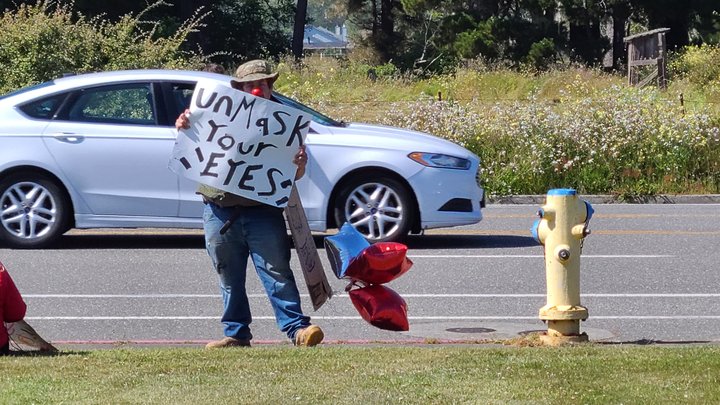
A small group of six or seven anti-vaxxers appeared to protest a COVID-19 vaccination clinic at McKinleyville High School on Friday afternoon. The group called teens arriving for their shots “pedophiles” and “Nazis,” said Johnny Kell, a nurse who works for the district.
Kell also told the Outpost that the protestors repeatedly entered the campus and swarmed students’ cars as they entered and left the clinic, trying to give them pamphlets and blocking their view of the road. The protestors’ interactions with Kell himself were more aggressive. One person prevented him from exiting his car by hovering and breathing inches away, Kell said, and another ran towards Kell threatening to stick her tongue down his throat. One person told Kell they’d look for him in the community and kill him.
Kell called 911 and officers arrived at the school. When Kell requested to file a report, the officers said that the threats fall within the protestors’ First Amendment rights.

A few students waving signs to advertise the clinic and promote vaccines spoke with the anti-vaxxers and were met with some corona conspiracies. Kell interviewed these students afterwards and shared the interviews with the Outpost. One student was called “a Jew that works for Bill Gates.” Others said that the protestors claimed that hand sanitizer causes cancer (it does not), said that the vaccine alters DNA (a more common misconception that is also untrue), warned that the vaccine makes people sterile (it does not), and claimed that COVID vaccines “have abortions in them” (no).
THE ECONEWS REPORT: It Sounds Great on Paper: The 30x30 Movement
The EcoNews Report / Saturday, May 29, 2021 @ 10 a.m. / Environment

Illustration: LoCO.
In October 2020, California Governor, Gavin Newsom, issued an executive order pledging to conserve 30 percent of California’s lands and coastal waters by 2030. In January, President Joe Biden announced a similar effort, calling for conservation of 30 percent of the United States land and water by 2030. But what do these executive actions mean and will they move the needle on our climate and biodiversity crises.
Gang Green examines the potential of the “30x30” movement and the potential for disappointment. After all, more than 30 percent of California’s lands and coastal waters are already held by the public, so “conserve” must mean something additionally, right?
AUDIO:
“The EcoNews Report,” May 29, 2021.
REQUIRED READING:
”The Biden administration has a game-changing approach to nature conservation,” Vox, May 7, 2021.
OBITUARY: Edith Dalton, 1932-2021
LoCO Staff / Saturday, May 29, 2021 @ 6:56 a.m. / Obits
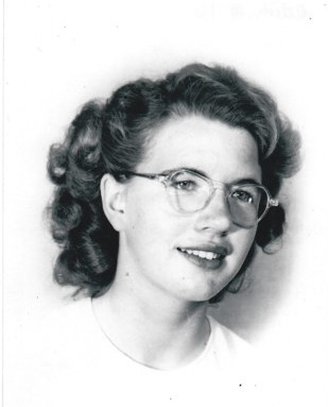
Sadly, Edith Dalton passed away on May 17, 2021.
She had a full life. She was born Edith Annette McKissen, to Barney and Vesta McKissen in Los Angeles on January 25 1932.
Edith grew up during hard times and learned to appreciate the simple things in life. She was well-accomplished and completed her schooling for her nursing degree in her 40s.
She married Arthur Walter Schaefer and had four sons: Walt, Keith, Brian and Jimmy.
After Arthur’s death, Edith met Charles Larry Dalton, who she affectionately called Larry, and they had 14 lovely years together before her passing. She enjoyed her life in Fortuna and constantly bragged about the wonderful weather.
She had eight grandchildren and 10 great-grandchildren, all of whom she was very proud of.
In her younger years she loved photography, hiking and visiting new areas. Her main bucket list was to visit all 50 states, which she almost accomplished. In her later years her major enjoyment came from reading. For those that didn’t know, her joy of reading came from the fact that she had twice contracted rheumatic fever as a young child. At that time when she was bed-ridden, her only joy was reading.
She will be sadly missed by all those who knew her. Graveside services will be held at Sunrise Cemetery on June 5th at 11 a.m.
###
The obituary above was submitted on behalf of Edith Dalton’s loved ones. The Lost Coast Outpost runs obituaries of Humboldt County residents at no charge. See guidelines here.
The HACHR Mobile Syringe Exchange is Up and Running, and The Organization’s Director is Hoping to Do More
Stephanie McGeary / Friday, May 28, 2021 @ 4:07 p.m. / News
A map of HACHR’s mobile syringe exchange location and the area it must clean up | Image from the City of Eureka
After five months without offering syringe exchange services, the Humboldt Area Center for Harm Reduction (HACHR) — a local nonprofit — finally has its mobile exchange up and running in Eureka, something that new executive director Jasmine Guerra says has been a huge relief.
“We are in a more stable place now than a few months back,” Guerra told the Outpost in a phone interview on Thursday. “Trying to figure out how to get mobile services was kind of a chaotic process. We had a huge disruption in the community part of outreach, but we’re starting to see more familiar faces now and we are like, ‘Yes!’”
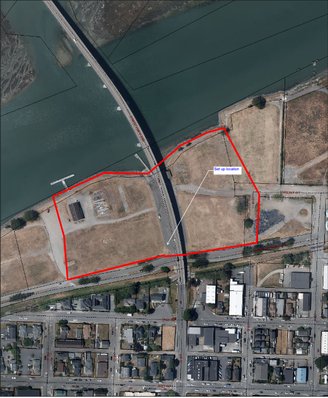
HACHR has been operating the mobile syringe exchange for about three weeks now, Guerra said. The non-profit’s old Chevy Trailblazer, staffed by two or three people, has been setting up shop Monday, Tuesday and Thursdays — either near the Samoa Bridge or in a parking lot on A Street, around the corner from the St. Vincent De Paul free meal.
The Eureka City Council approved the two locations in January, as a part of HACHR’s mobile exchange proposal. (A third location behind the Bayshore Mall was removed because the mall owners did not give permission.)
HACHR’S proposal was approved by the council in a split vote (3-2) following multiple meetings filled with hours of often contentious deliberations about the nonprofit and its syringe exchange program. After banning syringe exchanges altogether, the council adopted a temporary resolution allowing for mobile-only exchanges in Eureka during the COVID-19 emergency. The City hoped that other organizations would also apply to operate, but HACHR’s proposal is the only one the city has received to date.
During the process, Eureka city staff has been working on drafting a new, permanent ordinance governing syringe exchange programs, but the city must first complete a California Environmental Quality Act (CEQA) review, which can be a lengthy and expensive process. The city is considering holding off a bit, Eureka City Manager Miles Slattery told the Outpost, while awaiting the results of pending legislation — AB-1344 — that would exempt syringe exchanges from the CEQA process. But the bill wouldn’t come into effect until January, and Slattery says he would like to get things moving sooner than that.
At least for now, tensions between the City and HACHR seem to have calmed, and Slattery told the Outpost that the mobile syringe exchanges seem to be going well. “We haven’t heard of anything out of the ordinary and haven’t received any complaints yet,” he said.
Before operating the mobile exchange, HACHR needed to update its auto and liability insurance, which Guerra said cost the organization quite a bit of time and money. Luckily, Guerra said, HACHR has had some donations that have helped cover the increased costs. The nonprofit is now concentrating its efforts on raising money for a new van to replace the Trailblazer, which Guerra says is in pretty rough shape. This limits the distance staff can drive for its syringe exchange delivery service, which HACHR operates outside of Eureka, as permitted by its state authorization. So far HACHR has raised over $19,000 of its $20,000 goal for donations toward the van. The rest of the cost for a new vehicle will be covered by grant funding, Guerra said.
Also: Because of limited space in the vehicle and limited staffing, Guerra says HACHR has only been able to offer “the bare minimum” when it comes to mobile outreach services, and is currently only providing the syringe exchange and overdose prevention (Narcan and Naloxone). HACHR would like to provide its other harm reduction services on the mobile sites, including HIV and Hepatitis testing and entrance into medicated assisted treatment. It does, however, still offer those and other services, including COVID testing, at its Third Street location.
Between operating the brick-and-mortar location and the mobile exchange, HACHR staff is stretched a little thin right now. Guerra said that a lot of volunteers have been coming out to help with cleanup of the mobile site. As a part of the agreement with the city, HACHR is required to clean up all paraphernalia and trash — including sharps, caps, cookers, smokers and alcohol wipes — at the sites and some of the surrounding area. For the city-owned site near the Samoa Bridge, HACHR is responsible for cleanup of about 11 acres. Guerra said that the help of volunteers has made this process much easier.
After a few weeks of operating the mobile exchange, Guerra feels that word of mouth is getting around and says the number of people HACHR is seeing at the exchange is increasing again. Although DHHS — not subject to the City’s jurisdiction — has continued to operate a syringe exchange and HACHR has been able to provide its other services at its Third Street site, Guerra says that it has not been enough and the impact on the community has been devastating. Not only has HACHR seen an increase in people with abscesses due to needle sharing or reuse, but has also seen a dramatic decline in people obtaining other services, such as overdose prevention — something that is incredibly important, considering that Humboldt County has seen a recent increase in overdose deaths.
“We are happy to see people coming back and getting access to services, but I think it’s important to know that there have been these irreversible consequences of not having services for those five months that we’ve already seen take place,” Guerra said.
###
PREVIOUSLY:
- Eureka City Council to Discuss HACHR’s Syringe Exchange Program; Consider Grant Funding to Aid Bars, Restaurants and Retailers Adapting to COVID-19
- Eureka City Council Approves Letter Opposing the Reauthorization of HACHR’S Syringe Exchange Program
- Eureka City Council to Consider Allowing Mobile Syringe Exchange During the Pandemic, Discuss Caltrans’ Richardson Grove Project, Vote Again on Anti-Camping Ordinance
- Eureka City Council Unanimously Approves Mobile Syringe Exchanges During the Pandemic
- Eureka City Council to Consider HACHR Mobile Syringe Exchange Proposal, Vote Again on Camping Ordinance
- Eureka City Council Approves HACHR Mobile Syringe Exchange, Despite Concerns Over ‘Commentary’ in the Nonprofit’s Proposal
- HACHR Executive Director Announces They are Leaving
Suspect in Alleged Fortuna Shotgun Assault on Allegedly Ding-Dong-Dashing Juvenile Denied Supervised Release
Rhonda Parker / Friday, May 28, 2021 @ 3:38 p.m. / Courts
PREVIOUSLY:
###
A Fortuna man charged with shooting a boy with a 12-gauge shotgun will remain behind bars until at least June 8.
Today Judge John Feeney denied supervised release for 42-year-old Erik Keith Wood, who on Sunday morning allegedly fired a shotgun at a group of juveniles, striking one of them in the leg. Wood is charged with assault with a firearm.
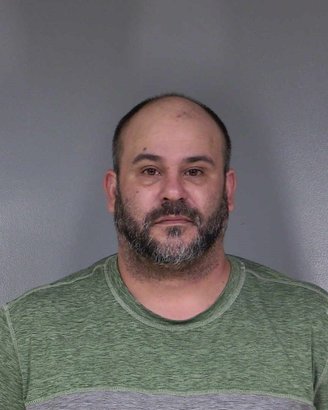
Wood.
Defense attorney Zack Curtis told Feeney the juveniles in question have a history of harassment.
“These kids have been terrorizing (Wood’s) children for a long time,” Curtis said, arguing Wood is not a threat to public safety and should be released. Curtis said Wood has called police numerous times to report the problem and “has gotten no response.”
When Wood was arrested, Fortuna police said the group of juveniles may have been ringing doorbells and running away.
Wood is a long-time local resident with no criminal history, Curtis said, and the shooting was a unique situation.
“There’s no reason to believe there are going to be further occurrences,” he said.
Deputy District Attorney Shelly Small responded that Wood “took a shotgun and fired at juveniles.” And when questioned later by police, “he said he didn’t care if the kid was hurt.”
Small said she had no information today on the boy’s current condition. Law enforcement said earlier he was treated and released at a hospital and is recovering from his wound.
The prosecutor said Wood may have been frustrated, “but I don’t think you take a shotgun and fire at someone … he poses a risk and a threat to the community.”
Feeney agreed, following the Probation Department’s recommendation that Wood belongs in jail. Bail remains set at $35,000. The judge noted that Wood “is gainfully employed.”
Wood’s preliminary hearing is set for June 8 “and will proceed,” Feeney said. Preliminary hearings are generally postponed, often for months.
Assault with a firearm is a “wobbler,” meaning it can be charged as either a misdemeanor or a felony. If charged as a felony, the maximum penalty is four years in state prison.
Wood appeared today by video from the jail.
(VIDEOS) Arcata High’s AAPI Club is Here to Educate and Celebrate Asian American and Pacific Islander Heritage Month
Jacquelyn Opalach / Friday, May 28, 2021 @ 8:54 a.m. / Education
Arcata High’s Asian American and Pacific Islander club has been celebrating AAPI heritage month all May long, and you’re invited to celebrate, too. While there’s lots to honor this month, it’s important to remember that although racism toward Asian American and Pacific Islander people has increased with the pandemic, anti-Asian hate is nothing new. From Chinese exclusionary laws in 19th- and 20th-century Eureka to racist coronavirus-related harassment at a local high school dance, a history and persistence of anti-Asian sentiment is as relevant in Humboldt as it is anywhere else.
“I feel like a lot of students read headlines and they’re like, ‘Oh, [anti-Asian hate crimes are] happening, that’s bad,’” Arcata High senior and AAPI club president Maya Scanlon told the Outpost. “But it hasn’t just been happening the past couple of months, where it kind of erupted.”
And so Maya and her fellow club members decided to help their peers — and also, indirectly, their teachers — get started on an AAPI education. They created a series of four videos that explore the coronavirus-era Asian American experience, explain and debunk Asian stereotypes, look into local history about Eureka’s Chinese exclusion efforts and explain the geography, cultures and traditions that make up Asia.
Following mounting anti-Asian sentiment with the spread of COVID-19, some staff members at Arcata High supported Maya and other students to start the club last year. Although their 15-ish members haven’t been able to do many social events, AHS AAPI has been productive since it kicked off a year ago. From the beginning, reaching the greater student body with educational materials has been their goal.
“In May, due to the nature of what was going on, we really tried to focus on Instagram posts and interacting that way,” Maya said. It was about “bringing awareness to the Arcata High School community.”
The students have taken on this educational mission, but having the space at school has been personally important and beneficial, too, at least for Maya. “I didn’t really identify with being a person of the Asian culture,” Maya said, “but with the starting of the club I definitely identify as Asian American — very much so.”
Overall, Maya said she feels like AHS is a supportive community — with room and need for improvement. Maya was the target of some racist comments at her junior prom in February of 2020, when a few students repeatedly asked her if she had the virus because of her ethnicity. “I was basically just really in shock and so confused,” Maya said. “It was just hard because administration was right there, kind of like supervising the event. Of course, I feel like if they had heard that then they would have stopped it, but I feel like they were focusing more on just making sure no one who exited the building returned in, rather than actual verbal discrimination that was happening.”
As reported by the Pepperbox — Arcata High’s student-run newspaper — there are growing efforts at AHS to prevent stuff like that from happening more.
“It’s just nice to kind of realize that there’s plenty of allies around, even if they’re not Asian,” Maya said. “Allyship really means a lot.”
So if you’re looking to educate yourself about some AAPI-related topics — an important thing to seek out! — AHS AAPI club has gotcha covered. Hop on over the club’s Instagram page or website to soak up all the info.


