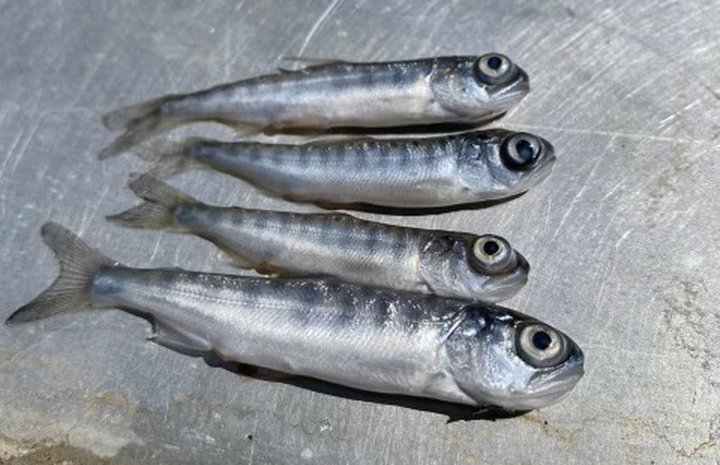
Yesterday, the US Bureau of Reclamation announced it would not release water to prevent a catastrophic juvenile fish kill on the Klamath River. While historic drought is the primary cause of the lack of water, previous BOR water allocation decisions led to the widespread fish kill, which could have been prevented with a flow increase.
“Right now, the Klamath River is full of dead and dying fish on the Yurok Reservation,” said Frankie Myers, the Yurok Tribe’s Vice Chairman. “This disease will kill most of the baby salmon in the Klamath, which will impact fish runs for many years to come. For salmon people, a juvenile fish kill is an absolute worst-case scenario.”
“We are watching a massive fish kill unfold in real-time,” said Yurok Fisheries Department Director Barry McCovey Jr, a Yurok citizen who has studied fish disease on the Klamath for more than two decades. “The juvenile fish kill will limit salmon production for many years to come. It will also negatively impact many other native species, ranging from orcas to osprey, because salmon play such an essential role in the overall ecosystem.”
Since time immemorial, the Yurok lifeway has revolved around the Klamath River salmon runs. This invaluable species is integral to the Tribe’s traditions and ceremonies. Prior to the fisheries collapse, salmon were an important source of sustenance for thousands of Yurok citizens. During the last five years, the Klamath fish runs have been some of the lowest on record and the Yurok Tribe has not been able to harvest enough fish to meet its subsistence or ceremonial needs, let alone implement a commercial catch. This year’s adult salmon forecast is also very low and the Yurok Tribe cancelled its commercial fishery for a fifth time to protect struggling fish stocks. On the Yurok Reservation, where the median income is $11,000, many tribal families rely on the fishery to pay basic bills.
Communities throughout the Klamath Basin are facing serious hardships as a result of the drought. Farm communities and our upstream neighbors the Klamath Tribes are also feeling the pinch this year. In addition to the hardship brought by low flows on the mainstem Klamath, the fish in the Shasta and Scott Rivers are also facing dire conditions and loss of year class. In the Scott River, unless groundwater extraction is moderated, it is a virtual certainty that Chinook and Coho salmon will not be able to reach their spawning grounds due to insufficient flows for migration.
“What Klamath Basin communities are facing right now is the definition of a disaster. It is also the new normal. Substantial water shortages are a long-predicted symptom of climate change. There is an urgent need for an equitable federal disaster relief bill that addresses the immediate needs of our communities and establishes a foundation from which to build a more resilient ecology and economy in the Klamath Basin. We owe it to future generations to never let another juvenile fish kill like this happen again. We need to act now before it is too late for the Klamath salmon,” concluded Vice Chairman Frankie Myers.
###
The Yurok Tribe is the largest Tribe in California with more than 6,300 members. The Tribe’s ancestral territory comprises 7.5 percent of the California coastline, spanning from the Little River to the south and Damnation Creek to the north. The eastern boundary is the Klamath River’s confluence with the Trinity River. The Tribe is a leader in natural resource management, fisheries restoration and cultural protection.
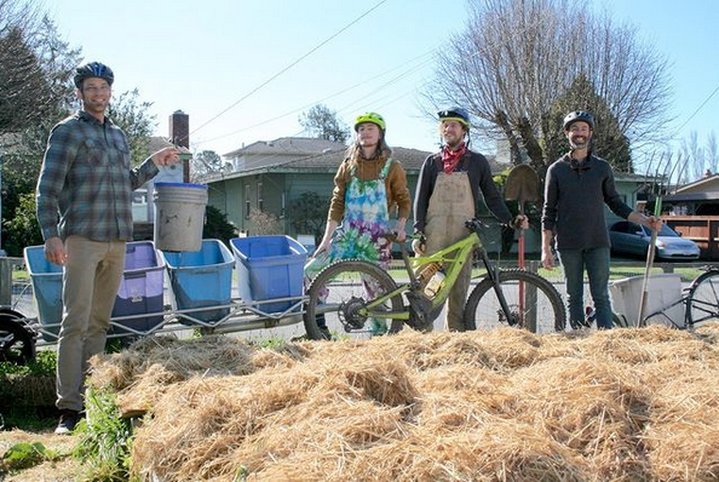
Most of the Full Cycle Compost crew | Photos from Full Cycle Compost
Though certainly many folks in the eco-conscious and vegetable garden-filled community of Arcata already do their own composting, some residents — such as those without a yard — don’t have a lot of options when it comes to properly disposing of their food scraps.
That’s where Full Cycle Compost — a new, Arcata-based, bike-powered business — steps (or pedals) in. Starting at the end of May, Full Cycle will bike to Arcata homes and businesses to pick up food waste, so that those folks who, for whatever reason, have not been composting, will no longer have to feel guilty for throwing their leftovers into the trash.
“One reason we’re doing this is we really want to keep food scraps out of the landfill,” Morgan King — one of the operators of Full Cycle and a climate action analyst at HSU — told the Outpost. “A lot of students live off campus and a lot of people don’t have access to composters. Doing your own composting can be difficult and we understand that even people who do have a backyard sometimes just don’t have the wherewithal to do it.”
Diverting green waste from landfills will be completely necessary if Arcata is to reach its goals outlined in the Zero Waste Action Plan, which aims to reduce the City’s waste by 90 percent by the year 2027. And although Recology Arcata does offer yard waste pickup, there is currently no city composting for food items. According to a study by the Humboldt Waste Management authority cited in the action plan, food and compostable paper make up more than 30 percent of the county’s disposed waste.
The city has also made an effort to help promote composting by offering composting bins to residents for $25. But, again, this might not be super helpful for someone that does not have a yard. And though residents of apartment complexes may be able to find a suitable location for the bin, there is also the question of what to do with the compost itself if you don’t have a garden to put it in.
Full cycle crew member, Julian working at the Arcata Community Wellness Garden on 11th and F Streets
Full Cycle’s service works just like garbage and recycling pickup — you put out your composting container (either one of your own, or the business can provide you with one) on the curb once a week and someone comes and takes it. The scraps are then transported to either the Jacoby Creek Land Trust farm or the Arcata Community Health and Wellness Garden, where they are turned into beautiful, food-feeding compost.
Of course, unlike your usual garbage pickup service, Full Cycle does not plan to use trucks and the whole operation will be done by bicycle. As of now, King said, the business is made up of five “avid cyclists” who will place the scraps in large totes, securely fastened to a bike trailer.
“We’re committed to sustainability,” King said. “If we’re driving around in trucks, emitting greenhouse gases, then it kind of defeats the purpose.”
Using only bicycles for transport does come with some disadvantages though, such as limiting the area where Full Cycle can offer its service. Right now, the service area covers most of Arcata and Bayside but does not include the Valley West neighborhood — which King said is just kind of hard to get to on a bike. King really hopes to be able to expand to Valley West in the future, he said, and is hoping that as the business grows it will be able to offer the service in other parts of Humboldt. If you live slightly outside of Full Cycle’s service area, King said that you can still likely be eligible. Just contact the staff and they will try to work something out.
Map of Full Cycle’s service areas from the businesses website
Though strapping bins to a bike trailer might not sound like the most practical way to transport large quantities of compostables, King assured the Outpost that Full Cycle will monitor their customers and design the pickup routes in such a way as to not “max out” the trailers or cyclists. If enough people sign up, King said, they will add more pickup times and cyclists as needed.
King added that there are a number of other pedal-powered food scrap collectors around the country that have been successfully operating under a similar model. King is also part of a similar compost program at HSU, which recently started using bicycles for transport, he said.
Now you’re probably thinking to yourself “OK LoCO, sustainability is cool and all, but how much will this service cost me?” The answer is…it kind of depends. For most folks the rate will start at $7.50 per week, which covers up to five gallons of scraps. If you need more than that, you could upgrade to 10 gallons for an additional $2.50 a week. Although, King said, he understands that people will sometimes produce more scaps than usual (if they, say, have a party or something) and that there won’t be a penalty for producing a little bit more on occasion.
Since this service will likely be the most helpful for folks who might be on a fixed income, such as students or seniors, Full Cycle also offers an “income equity” discount, which provides the service for $5.25 a week. To qualify you need to provide proof that you receive benefits from Medical, Calfresh, SDI or unemployment.
To celebrate the launch of the new business, Full Cycle and partner Cooperation Humboldt will be hosting a bike party on the Arcata Plaza on Friday, May 21 at 6:30 p.m. The event will include a street-safe ride through town, ending at the Arcata Community Health and Wellness Garden on the corner of 11th and F Streets. Live music will be provided by a Humboldt favorite, Bandemonium and members of the Garberville Town Band.
According to a press release from Cooperation Humboldt, attendees are encouraged to “come dressed as farmers and vegetables.”
Press release from the Humboldt County Sheriff’s Office:
The Humboldt County Sheriff’s Office is seeking the public’s assistance in locating a missing person.
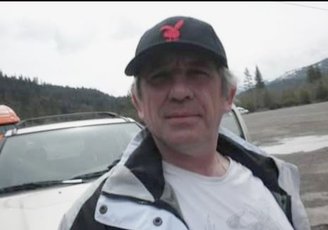
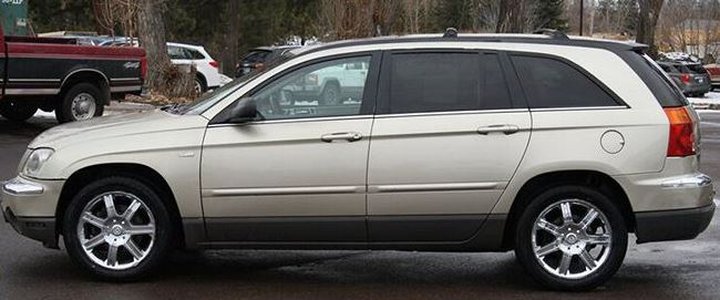
On March 14, 2021, Robert W. Thorpe, age 62, was reported missing to the Humboldt County Sheriff’s Office. Robert was reported to have left his residence in Medford, Or. to visit his son in Humboldt County. It is believed Robert arrived in Humboldt County around March 5, but family and friends have since been unable to contact Robert and he has not returned home. Robert was reported to be driving a gold, 2005 Chrysler Pacifica, with an Oregon license plate number of 224KVP.
Anyone with information about this case is encouraged to call the Humboldt County Sheriff’s Office at (707) 445-7251 or the Sheriff’s Office Crime Tip line at (707) 268-2539.
The above photo depicts a vehicle of the same make, model and color of Robert Thorpe’s vehicle. Pictured above is not Thorpe’s actual vehicle and was obtained via Google.
Biden’s Justice Department Revives Trump Administration Assault on Tribal Water Rights.
Hoopa Valley Tribe’s Trinity River Fishery Once Again Falls Prey to Central Valley Water Barons.
Subordinate officials in the Biden Administration’s Justice and Interior Departments announced today
that they will defend the Trump administration’s water policies that imperil the rights of the Hoopa Valley
Tribe in California’s Trinity River basin and ignore overwhelming evidence of financial misconduct that
will cost the Federal Taxpayers at least $400 million (see attached).
“The cruel indifference of the Trump Administration’s corruption has reached our homeland,” said Hoopa
Valley Tribal Chairman Byron Nelson, Jr. “Left unchecked, it will destroy the fishery on which our
people have relied as the foundation of our culture, religion and economy since time immemorial.”
“We are calling on Secretary Haaland to fulfill the federal trust responsibility to our people and rein in the
reckless and destructive practices that still afflict the Department of the Interior,” said Hoopa Tribal
Fisheries Director, Michael Orcutt.
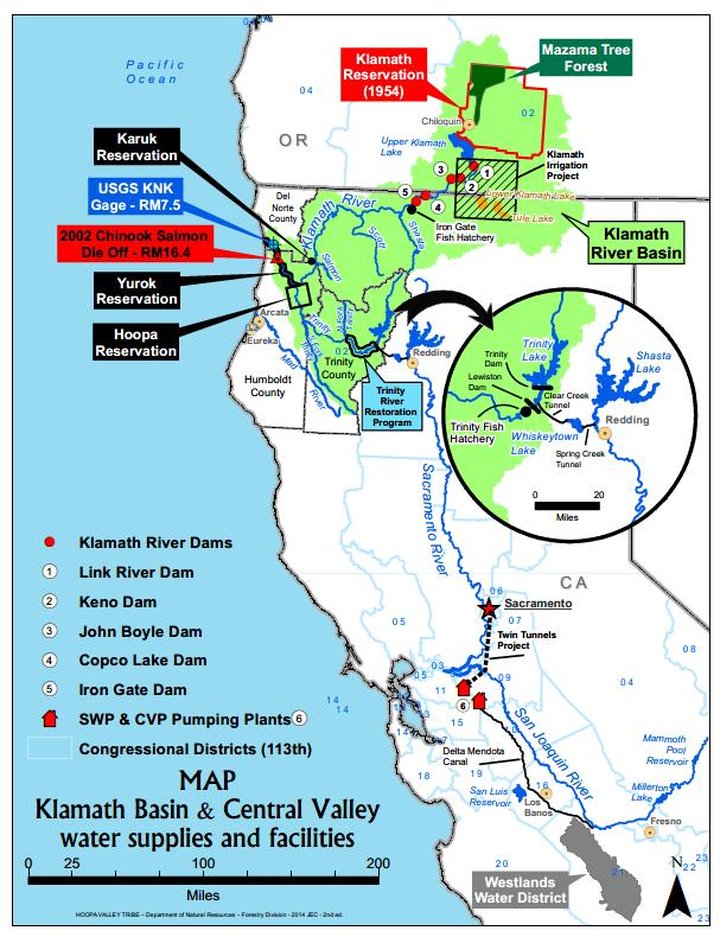
Here is what happened. In the 1950s, accompanied by promises to protect the Trinity River, the federal
government dammed the Trinity River, destroyed vast stretches of salmon habitat, decimated salmon
populations, and diverted water to industrial agricultural corporations in California’s Central Valley 400
miles from Hoopa (see attached map).
The dams on the Trinity River generate electricity and irrigate arid lands, including the Westlands Water
District, a sprawling desert the size of Rhode Island. The District includes land that the Bureau of
Reclamation and the State of California have known for more than a half century could not be practicably
irrigated because of poorly drained soils that had high concentrations of naturally occurring toxins.
In the decades since, use of Trinity water to irrigate Westlands and elsewhere in the Central Valley has
leached toxins, poisoned land, polluted water and genetically deformed Pacific Flyway wildfowl.
Meanwhile, Reclamation’s Central Valley Project contractors have reaped billions from federal subsidies
and profiteering associated with the Trinity’s irrigation and power development.
By 1992, galvanized by the shocking environmental destruction and urged by numerous interests seeking
environmental justice and fiscal responsibility, including Hoopa, Congress passed the Central Valley
Project Improvement Act. Over the objections of Project contractors, Congress made environmental
restoration a formal purpose of the Project, on a par with water development. It specified environmental
restoration activities and made the Project contractors pay for them as a cost of doing business. The
CVPIA imposed an explicit trust responsibility on the Bureau of Reclamation for restoration of Hoopa’s
fishery resources. The CVPIA also required revision of all Project contracts to reflect this change in the
law. For decades, Westlands and other contractors waged a prolonged, but for the most part losing, war
against the CVPIA, including against the restoration of Hoopa’s Trinity River fishery.
This is where the Trump Administration comes in. Of all the candidates President Trump could have
chosen to be Secretary of the Interior, he selected Westlands’ long-time attorney, David Bernhardt. In his
tenure, Secretary Bernhardt did three things. First, he instructed the Bureau of Reclamation to engage in
fraudulent federal cost accounting that, if unchecked by the Biden Administration, will—by the
contractors’ own admission—wipe out at least $400 million in environmental restoration and other
Project cost obligations that they owe to the Federal Treasury. That money would be vital to the
President’s infrastructure plan. Hoopa documented that fraud and submitted its evidence to the
Department, the Office of Management and Budget, and Congress in the past two months.
Second, perhaps concerned that he might need a hedge against the potential failure of his accounting
scheme, Secretary Bernhardt ordered a set of memoranda from the Bureau of Reclamation, the Fish and
Wildlife Service, and the Solicitor’s Office to conclude, against all facts 1 and law, that the CVPIA’s
environmental restoration, including Trinity River fishery restoration, was complete so that certain
restoration costs to the contractors could be reduced further. Secretary Bernhardt signed off on that
conclusion on January 19, 2021.
Third, Secretary Bernhardt ordered the approval of new water contracts for Westlands and others that
violated numerous cost and environmental protection provisions established in the CVPIA and other
federal law, including essential protections for Hoopa’s fishery.
Hoopa sued the Trump Administration about all of this; the case is in a California federal court. In March,
the Court asked the Biden Administration whether it wants to remain Hoopa’s adversary in this case. The
Administration had to make up its mind by today. “Those staffers made the wrong decision,” said
Chairman Nelson. Because of today’s action, the Biden Administration now stands in the shoes of the
Trump Administration. “We are confident that once Secretary Haaland reviews what happened today she
will see that this attack on Hoopa is really an attack on all Indian Country and those who seek the
environmental justice promised by President Biden,” said Orcutt.
Hoopa has proposed settlement terms to the Biden Administration. “We have every expectation that
Secretary Haaland will reverse her staff’s action and join with us to make a decision that is fair and
equitable to all,” said Chairman Nelson.
“Secretary Haaland has lived her commitment to honor tribal nations and strengthen their economies,”
said Orcutt. “We will welcome her leadership on this critical issue for our people and California’s
environment.”
We also appreciate that Cong. Jared Huffman (CA D-2) and Cong. Katie Porter (CA D-45) sounded the
alarm about the persistence of Trump’s destructive polices in their May 8, 2021, letter to Secretary
Haaland.” Orcutt added.
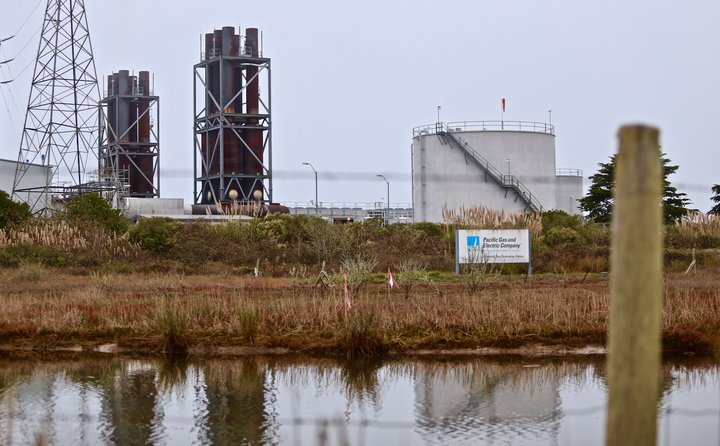
Humboldt Bay Generating Station. File photo: Andrew Goff.
###
Press release from the Redwood Community Action Agency:
Beginning June 1, 2021,
Pacific Gas and Electric Company will begin transitioning ratepayers
in Humboldt County to new Time-Of-Use electricity rate plans unless
you have chosen another option.
With
Time-of-Use plans, rates rise when energy demand is highest and
renewables are less available. Remember
to Power Down — or use less energy — between peak usage hours of 4
pm to 9 pm.
Redwood
Community Action Agency and Pacific
Gas and Electric
invite
you to join us on Tuesday May 25, 2021 from 1-2 pm for
an
on-line presentation and discussion of the new rate plans and your
options.
Please call Chris Driscoll at
707-269-2016 or go to our website www.RCAA .org for more information.
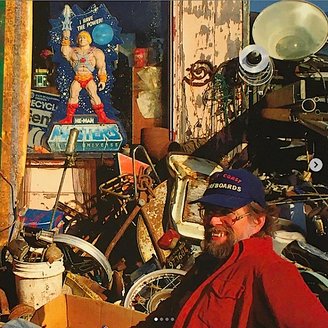
Ken
“Rotch” Rothschiller Jan.
21, 1947-April 20, 2021
Throughout
his life, the artistic sensibility of Ken “Rotch” Rothschiller
manifested in many forms. Rotch was best known, and beloved, for
being Humboldt County‘s first surfboard manufacturer, shaping and
glassing beautiful, functional surfboards that were invariably works
of art.
A
longtime resident of Manila, Rotch was born in Klamath Falls, Ore.
His family moved to Eureka when he was nine months old, renting a
place over Phillip’s Camera shop until his dad had the opportunity
to buy five-and-a-half acres of land in Manila – for $300 – where
Rotch and his friends would make rafts out of old railroad ties to
play around in the bay. This interest in being on the water grew
exponentially when Rotch began surfing in 1963. He was a junior at
Arcata High at the time and inspired by a surf contest on the Wide
World of Sports. When relaying what motivated him to start, Rotch
said, in a long-ago interview, “I just looked at it and thought,
‘Wow, that is so cool.’”
Despite
not knowing how to swim and having no idea what a wetsuit was (they
had only been invented in 1952), Rotch borrowed an old Hobie balsa
wood board from a friend, layered up with several sweaters and went
up to Moonstone Beach to give surfing a try. When the sweaters turned
out to be useless against the cold water, he borrowed a buddy’s
diving suit, but that proved too inflexible for surfing. Undeterred,
Rotch continued to paddle out, hiking across the Manila Dunes with
his surfboard tucked under his arm.
At
the time, the only stores offering surfboards in Humboldt County were
Olsen’s Paint and Bob’s Ski Shop – and the only boards carried
were “Malibu foamies,” surfboard-shaped pieces of foam covered in
vinyl with metal frames running through them. Rotch made his first
board around this time, a minor disaster in which the foam melted and
collapsed, and the inexperienced glass job resulted in sharp edges
lining the board. He painted this initial attempt hospital green,
added stripes with black electrical tape and named the board
“Leprosy.” Although that particular surfboard came to an abrupt
and untimely end, Rotch wasn’t discouraged. He continued reshaping
castoff longboards, learning to deglass and even sometimes piling
bricks on them for months at a time to change the horizontal curve of
the board. In 1982, Rotch and former Arcata Exchange owner Keith
Newcomer formed Lost Coast Boards together.
In
the following years, many up-and-coming shapers benefitted from
Rotch’s mentorship, including renowned Humboldt shaper Brian Kang,
who was stoked to have Rotch’s guidance. “I’d heard about him
and he shaped boards for all the big local crazy guys, so for a young
shaper from Los Angeles, that was a big thing. He was a great mentor,
never judgmental, and a funny guy. It was nothing but bitchin’
times! I feel honored to learn the lessons passed down by Rotch.”
Some
years later, Rotch partnered with his longtime friend John Thomas in
a new business, Out of the Woodworks, thinking woodworking would be
more financially lucrative than shaping surfboards (which turned out
to be true). All the years of shaping surfboards had trained his eyes
to follow curves, resulting in beautiful craftsmanship in many forms
including bowls, lamps and beds. One of his favorite projects was
making a four-poster bed with, at the client’s request, light-up
mushrooms on the top of each post. His lifelong ability to see things
three-dimensionally continued to serve him even in two-dimensional
media – his vibrantly detailed paintings have long been collected
by surf and ocean aficionados.
Carol
Vander Meer, former executive director of Friends of the Dunes and
longtime Manila resident, remembers Rotch as “an amazingly talented
artist,” who was also curious and knowledgeable about the natural
world.
Rotch
was preceded in death by his parents, Leona and Nick Rothschiller,
his brother Richard Rothschiller and many, many friends.
Join
a celebration of the life of Ken “Rotch“ Rothschiller on
Saturday, May 15 at 3 p.m. A paddle out will be held at “G.I.
Joe’s,” the bayside beach just south of the Humboldt Bay Coast
Guard station. All are welcome! Following the paddle out, friends
will gather to share food and talk story at the North Jetty. All
COVID-19 safety guidelines will be respected. A number of Lost Coast
surfboards and art pieces will be on display for people to enjoy.
Those who are fortunate enough to have a Lost Coast surfboard are
invited to bring it and add it to the display.
###
The obituary above was submitted on behalf of Rotch Rothschiller’s loved ones. The Lost Coast Outpost runs obituaries of Humboldt County residents at no charge. See guidelines here.
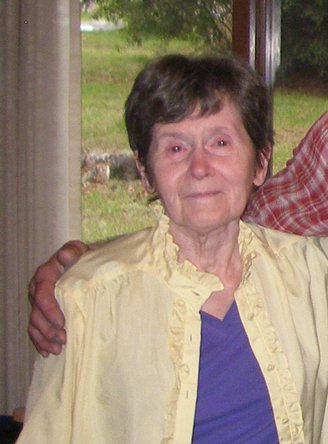
Sidney Eileen Randle August 31, 1932 to March 12, 2021
Even into her early
80s, Sidney Randle was quite the “get around kind of ‘gal’” –
walking (pretty quickly) nearly everywhere. One of her favorite
places to be was the Eureka Mall – where she made many
acquaintances over the years of the people who worked there. Sidney
could provide a great deal of detail on practically any subject and
could remember people’s phone numbers without writing them down.
She also NEVER forgot a family member’s birthday – recognizing it
with a card, a gift, or a call. When prompted (and it sometimes took
some prompting), Sidney could draw upon her memory to share
“historical” (and sometimes hysterical) stories about the family.
One of her best was the tale of how her grandmother, Anna Frost
McNew, sat on a scorpion in the outhouse when she was pregnant with
her mother, Dorothy (or so that story goes). There was, apparently,
no damage done.
Sidney was born on
August 31, 1932 in Oakland, Calif. to Dorothy Frost Randle and Clyde
Randle and lived her entire life in Eureka. As a child, she and her
family lived in various locations all over the Eureka area, but one
of her favorites was on “Ole Hanson Road,” where there was a
creek that she and her brother used to play and fish in. Her father
died unexpectedly at the age of 45 in 1942, after which her mother
married Weldon Randle, Clyde’s brother and the family bought a
piece of land (after “always renting” – according to Dorothy)
on Pine Hill where Sidney and her brother, Dwight (Ike) grew up with
many friends in the neighborhood.
Sidney was a 1950
graduate of Eureka Senior High School. After graduation, she worked
in various jobs, but eventually found her true calling as a cake
decorator at, among other businesses, Jan’s Cakebox. She was very
talented at this and delighted her customers and her family with the
“art” that she created on a cake face. She was also notorious for
pulling pranks on family members – including a “fake” and
beautifully decorated cake made out of a sponge that was impossible
to cut, as well as the occasional candles that couldn’t be blown
out.
Over her lifetime,
Sidney enjoyed visiting (usually with her mother) various locations
that had significance to the family – including Showers Pass
(Kneeland) where her mother, Dorothy, grew up; the old lumber town of
Falk (with permission, of course), where her great-grandmother,
Acascia (nee Gordon), her great-grandfather, Hiram, and her
grandfather, Ralph Frost, had once resided; as well as Trinity County
(where the family had once had a mining claim); and the Bay Area (to
visit her Uncle, Leonard). Sidney relished the hot turkey sandwiches
at Marie Callander’s (before it closed), loved Mexican food, and
was always up for a good piece of pie.
Sidney was
predeceased in 2003 by her mother, Dorothy; and her uncles Jack,
Leonard, and Frank Frost. She is survived by her brother, Ike Randle,
her sister-in-law, Barbara Randle, her niece, Yvonne Randle (and
Yvonne’s husband, Eric Flamholtz), her nephew Tony Randle, (and his
wife, Johnnie), and her Uncle Ralph Frost. She is also survived by
her great nephew, Nick Randle and his wife, Macey; great niece
Heather Randle; and great niece Kristina Randle and her husband, Adam
Smith; as well as many cousins and five great-great nieces and
nephews that she had the pleasure of meeting in her lifetime.
She was laid to rest
with her mother, father and many other Randles in Arcata’s
Greenwood Cemetery.
###
The obituary above was submitted on behalf of Jerry Nelson’s loved ones. The Lost Coast Outpost runs obituaries of Humboldt County residents at no charge. See guidelines here.