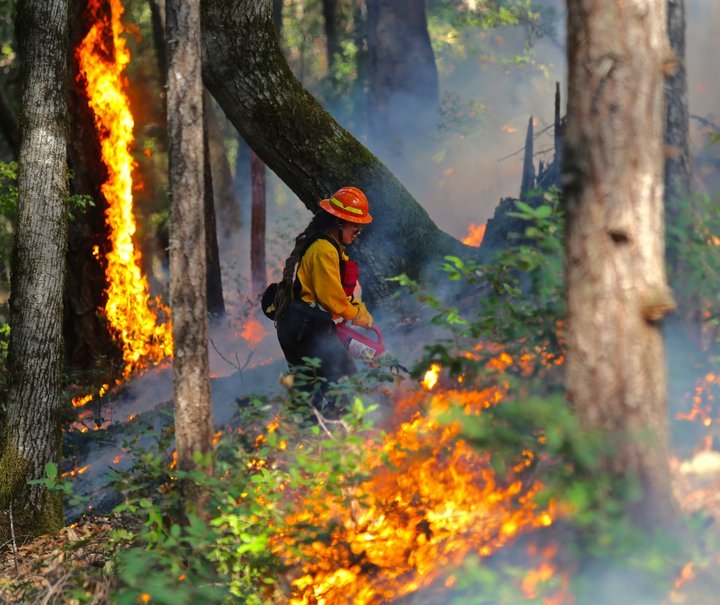
A participant in a 2017 prescribed fire training exchange (TREX) spreads flame to the underbrush during a collaborative effort between the Karuk Tribe and the Mid-Klamath Watershed Council. | Photos by Andrew Goff.
###
Press release from the California Cattlemen’s Association, the Karuk Tribe and Defenders of Wildlife:
Today a diverse coalition representing tribes, ranchers and conservationists announced strong support of Senate Bill (SB) 332, state legislation that would enable more cultural and prescribed burns. Tribes like the Karuk want to use prescribed fire to protect homes and restore watersheds, much like their ancestors did, and farmers, ranchers and conservationists use fire to manage noxious weeds, restore wildlife habitat and protect biodiversity. In many cases the legal and policy barriers for all of these groups are the same.
According to the bill’s author, Senator Bill Dodd (D-Napa), “California has to work harder to protect our communities from catastrophic wildfire. I’m proud to work with Tribes, conservation groups and ranchers to help our local communities play a larger role in fire management.”
For over 100 years fire suppression policies have led to a dangerous build-up of brush and unhealthy trees. Climate change and increased rural development have dramatically increased the risk of catastrophic wildfires in recent years. In order to incentivize the use of prescribed and cultural burning to fight dangerous wildfires, groups say California must reform its liability laws.
“Prescribed fire is an essential tool for ranchers managing rangelands and controlling invasive weeds, not to mention the part it plays in helping mitigate wildfire,” explains Tony Toso, Mariposa County cattle rancher and California Cattlemen’s Association President. “Currently, it’s nearly impossible to find someone willing to take on the personal liability risks associated with a burn project.”
According to Karuk Natural Resources Director and traditional fire practitioner Bill Tripp, “My ancestors practiced cultural burning for millennia along the Klamath and Salmon Rivers. Low intensity burns at the right time of year reduce wildfire risks in our communities and promote forest health. We must enact policies to enable and encourage rural communities to do this important work.”
“Ramping up the pace and scale of prescribed burning is an important way to fight fire with fire,” said Pamela Flick, California program director for Defenders of Wildlife. “These efforts will succeed only if property owners have better liability protections in order to participate at a meaningful scale. We thank Senator Dodd for leading on this issue and addressing California’s wildfire resiliency in the face of a changing climate and increased fire risk.”
California is currently rolling out its new State-Certified Burn Boss Program, which will certify highly experienced practitioners to plan and lead prescribed burns. Though more rigorous than most other states’ programs, the California certification does not provide the same level of liability relief that other states do. This means California Burn Bosses risk personal liability for damages even when meeting all legal and permit requirements of a project, while their federal and state counterparts enjoy indemnification from their agencies for the same work.
In other words, highly qualified individuals will not be interested in gaining certification unless California can offer better liability protections.
“You can’t expect an individual to take on prescribed fire projects unless they have liability protections. California is simply behind the times when it comes to providing incentives to communities to protect their homes and restore their watersheds,” explains Lenya Quinn-Davidson, Director of the Northern California Prescribed Fire Council.
Currently, SB 332 enjoys support from over 60 organizations from around the state representing a wide range of interests. Opponents include insurance and trial lawyers who financially benefit from the status quo.
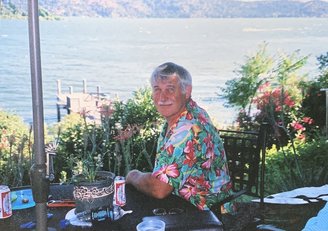
North America’s top ranked Tonk player, John Sylvan Brownfield,
died unexpectedly on March 16, 2021 at his home in Fieldbrook with
his wife by his side (#1 ranking unofficial and under dispute). While
the cause of death is currently unknown, the rumor on the street is
that his heart gave out because he had not been to a garage sale in
over a year.
John is survived
by the love of his life, his wife of 45 years, Leanne Brownfield, his
devoted daughter, Holly Ruys, his brother, Danny Brownfield, and many
other adoring friends and family members. He is preceded in death by
his parents, among others. He is both survived by and preceded in
death by one. His beloved dog Pete, who although dead for over twenty
years, lives on since John had him stuffed and would often take him
on car rides with Pete riding shotgun.
John has always
blessed us with adoptive children such as Lynne Owens and Holly
Brunner. Other times we’ve been completely surprised by new
children coming into our lives ready to call him Dad.
For those that
know John, you know that there are no words or reciting of stories
that could accurately describe him. For those that did not know him …
you missed out.
John was always
the funniest person in the room. He would go great lengths to make
you laugh, or more importantly, make you laugh with him. A story,
when told by John, was a magical experience no matter how many times
you had heard a version of that story. At the end of the experience,
you never knew if what you just heard was true, part true, or just
complete and utter rubbish John had made up for a laugh. John was
happiest when creating stories and adventures for the children in his
life.
John exemplified
the adage that a stranger was just a friend you had not met yet. He
engaged with everyone and anyone, always finding common ground so
that by the time they parted they felt loved and listened to.
Something he learned while traveling across the United States and
Europe on his motorcycle.
John could often
be found burning brush on his property in Fieldbrook, and several
times had the privilege of the Fieldbrook Fire Department assisting
in extinguishing those fires.
John loved agate
hunting, any large agates he would find he would throw them into his
gravel driveway along with coins and marbles for kids to hunt for.
John had an
incredible love for his grandchildren. This is where John’s
presence will be missed most.
Please join us in a Celebration of John’s life to be held at his
brother’s house in Fieldbrook Friday, June 18 at 12 o’clock noon.
Please bring your favorite dish to enjoy potluck style. Guaranteed to
be a day full of tears, laughter, food and drink and of course a
bonfire sure to make John proud, where everyone can enjoy a beer, and
tell their favorite Uncle John story. There will be a large
collection of authentic colorful Hawaiian shirts available for all
that arrive to wear, enjoy & take home.
Hope to see you.
###
The obituary above was submitted on behalf of John Brownfield’s loved ones. The Lost Coast Outpost runs obituaries of Humboldt County residents at no charge. See guidelines here.
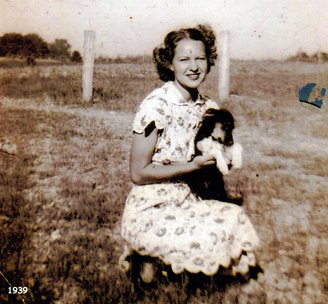
Marjorie Lois Chaplin October
16, 1923 –April 1, 2021
Mom
was born in Pawhuska, Oklahoma to William and Margret Kinkaid, she
had one older brother, William “Red” Kinkaid. She was proud of
her Scotland, England, German and Cherokee heritage.
Mom
married our father, James Ulmer, in 1940. In 1946 the family moved to
Placerville. In 1950 the family moved to southern Humboldt, near the
little town of Phillipsville.
Our
parents divorced in 1960.
Our
mom met and married Henry Chapman in 1963. They both were great cooks
and leased two small cafés for a few years – one in Phillipsville,
and the last one in Miranda: “The Chuck Wagon” They collected
antiques and old glass and had fun finding a treasure. Henry passed
away from kidney disease in 1973. Great person, missed by all.
Mom
met and married Raymond “Bud“ Chaplin in Fortuna about 1978.
They enjoyed wood working projects and spending time at the cabin in
Ruth, planting a garden and lots of flowers. Bud Chaplin, one of the
nicest people to know, he passed away in 1998.
Mom
was a person who would help someone in need. She was an excellent
role model for her children. Always there to help or listen to give
her love and opinion if asked.
Some
times you didn’t have to ask, you got her opinion anyway. Wonderful mother.
Mom
lost two children, infant Robert Ulmer in 1945, and David Ulmer in
2019. Three stepsons, Hank Chapman Jr., John Chapman and Tom
Chapman,.
Mom
is survived by her children, Don Ulmer and wife Ceil and family of
Appomattox, Virginia, Judy and spouse John Peterson and family of
Arcata, Albert Ulmer and wife Julane and family of Colville,
Washington. Daughters in law Peggy Ulmer of Fortuna, and Tracey
Chapman of New Castle, California, Bob Kinkaid and family of Pine
Bluff, Arkansas, fifteen grandchildren, thirty-two great-grandchildren, four great-great-grandchildren.
Thank
you to Hospice of Humboldt for making the last week of her life pain
free and comfortable. No service will be held at her request.
###
The obituary above was submitted on behalf of Marjorie Chaplin’s loved ones. The Lost Coast Outpost runs obituaries of Humboldt County residents at no charge. See guidelines here.
For the first time in its 171-year history, California’s political voice is about to get a little quieter.
After months of delay, the U.S.Census Bureau today released new population estimates for each state. The bad news for California: It loses a seat in Congress, down from 53 House districts to 52.
The worse news: Not only does that mean the state will have one fewer representative in the House, it also means one fewer vote in the Electoral College that decides the presidency and proportionately less of the $1.5 trillion in federal money distributed by population each year.
Maybe the hardest news to take of all: While California is seeing its national stature shrink ever-so-slightly, that power is being shunted to our faster-growing rivals, Texas (which adds two seats) and Florida (which gets one). In all, seven House seats will shift among 13 states, the smallest change since 1941.
The federal government is required to conduct the census every ten years. That data is used to dice the country up into 435 roughly equally sized congressional districts.
“It’s a fixed pie, and California did not grow as fast as the rest of the nation,” said Hans Johnson, a demographer at the Public Policy Institute of California, speaking today at a UC Riverside webinar on the new census data.
Between 2010 and 2020, the national population increased by 7.4% to 331.4 million, according to the bureau’s new figures. That’s the second smallest increase in the 24 decades the census has been done. California’s population grew by even less, just 5.9%, from 37.3 million to 39.5 million residents.
Census officials said that while California recorded more births than deaths over the decade and the state added international residents, more people moved to other states than came here. There’s another potential factor: Last year, the U.S. Supreme Court refused to allow the Trump administration to place a question about immigration status on the 2020 census. Still, activists and Democratic elected leaders said the high-profile effort might discourage undocumented immigrants from participating and lead to an undercount in states with large non-native born populations like California.
The loss of a congressional seat is also likely to fuel a narrative peddled by conservatives that Californians are fleeing an expensive Democratic-governed state in search of cheaper, less regulated climes.
Though the number of new Californians has been slowing for decades, a Public Policy Institute of California analysis found that rising net migration from California to other states has become an increasingly significant “drag on the state’s overall population growth.”
An analysis of the new data conducted by the state Department of Finance and shared by department spokesperson H.D. Palmer disputed the notion that outward domestic migration was to blame for California’s lost seat and instead pointed the finger at former President Trump’s nativist immigration policies.
“Domestic flows out to other states were more than offset by international migrants,” the analysis reads. “However, federal immigration policy decisions in the last half of the decade, accompanied and perhaps exacerbated by an officially pronounced federal view of immigration overall, slowed California’s migration-related growth.”
Much of the federal funding distributed to the various states is also based on census data. Medicare and Medicaid, food stamps, highway construction and affordable housing vouchers are among the federal programs split up on a per-person basis. Now California will be getting a bit less.
The news also makes a thorny political problem even thornier for the state’s independent redistricting commission, which must now draw new congressional maps with one fewer district. That will water down the political representation of hundreds of thousands of voters somewhere in the state and could potentially deprive an incumbent of his or her seat.
It’s still too early to say who is going to lose out in that process. But today’s announcement raises the stakes of what was already a very high-stakes job.
“The highly debated question regarding where we will lose a congressional seat remains unanswered,” the commission said. “The commission will use the census data in conjunction with input from communities on the ground to create a full assessment of the representational needs of the state.”
Because the bloc of states that stand to gain House districts skew more purple and red than the states that are losing seats, today’s shuffle also raises questions over control of the House. Rep. Nancy Pelosi of San Francisco regained the speaker’s gavel after the 2018 election; Minority Leader Kevin McCarthy of Bakersfield wants to become speaker.
While census officials said that states will get redistricting data by Aug. 16, elections officials across California have also been sounding the alarm that the delay in census data will make it much harder for the redistricting commission to draw up the state’s new electoral maps in time for the 2022 midterms.
Even if the commission is able to do the work on time, the crunched timeline could jeopardize “the ability of the public to participate in the process,” said John Dobard with Advancement Project California, a racial justice advocacy group, speaking at the webinar.
Today’s news also removes an easy alternative if the commission runs out of time to finish its maps, said political consultant Matt Rexroad.
With California losing a seat, “there is no legal remedy to just run the old seats,” he said. “You don’t have that off-ramp anymore.”
###
CALmatters.org is a nonprofit, nonpartisan media venture explaining California policies and politics.
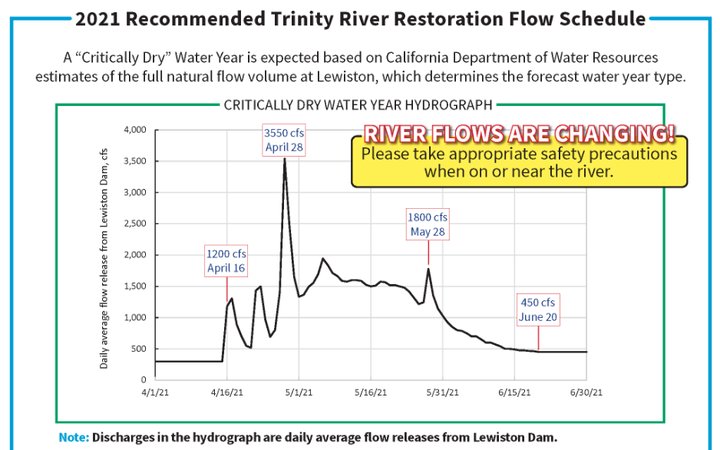
The largest water release of the season is scheduled to happen at the Lewiston Dam on Wednesday, bringing a surge of cold, treacherous water to the Trinity River.
The release is a response to the “Critically Dry” Water Year forecasted for the Trinity River by the California Department of Water Resources based on recorded natural flow volume at the Lewiston Dam, the Trinity River Restoration Program reports. These “restoration flows” are done to prevent the further decline of the river’s salmon and steelhead populations.
A graphic of scheduled Trinity River flows | Trinity River Restoration Program.
“The impacts of land use, dams and very low flows combined to push the river past its regenerative capacity,” the Bureau of Reclamation said in reference to its Mid-Pacific Region, Trinity River Restoration Program in 2017. “By 1970, less than 10 years after the dams were completed, the extent of habitat alteration and decline in salmon and steelhead populations became obvious. Intent on reversing the decline, the U.S. Fish and Wildlife Service, Hoopa Valley Tribe and other agencies began studies that culminated in the Trinity River Flow Evaluation Study. Completed in June 1999, this study is the foundation of the Trinity River Restoration Program (TRRP) which is designed to restore the Trinity River and its populations of salmon, steelhead and other fish and wildlife by restoring the attributes that produce a healthy, functioning river system.”
The Bureau of Reclamation urges the public to be extremely cautious around the river during dam releases, as these powerful, frigid currents have resulted in countless deaths.
Humboldt County Sheriff’s deputies now have a new tool allowing them more opportunity to de-escalate a situation without the use of lethal force.
Sheriff William Honsal recently enacted a new plan to outfit all Humboldt County Sheriff’s Office patrol cars with less lethal shotguns, firearms that shoot bean bag rounds instead of traditional ammunition. Traditional less lethal tools already carried by deputies, such as a baton, taser and OC spray, require a close range for successful use, increasing danger and decreasing time for de-escalation. While sheriff’s deputies in supervisory roles already carried less lethal projectile devices, the expansion of the tool to all patrol staff gives deputies an immediate option for de-escalation.
“In any critical incident, time and distance is a necessity for the safety of our deputies and the public. Very rarely if someone is charging at us do we get a second chance,” Humboldt County Sheriff William Honsal said. “So, what a less lethal shotgun does is it gives us the ability to have more time and distance between us and the subject we’re trying to communicate with and de-escalate.
”While the less lethal shotguns are a “new” tool, they are not a new purchase. The shotguns are actually the Remington 870 shotguns previously carried in deputy patrol cars, however, they have been repurposed to discharge bean bag rounds instead of traditional ammunition.
“It doesn’t cost the county a whole lot of money to repurpose the old patrol shotguns. They fit in the same mounts in all the patrol vehicles,” Sheriff Honsal said. “We have painted the buttstock and foregrip orange and there will only be less lethal rounds carried with the shotgun in the patrol cars. So, we’re doing this for really next to nothing and equipping every one of our deputies with an option for less lethal force.”
Sheriff Honsal says the use of the less-lethal shotgun is situational, as each incident requiring de-escalation is unique. Deputies have received training on de-escalation and crisis intervention, but Sheriff Honsal says the choice to de-escalate is ultimately that of the person in crisis. If other traditional de-escalation techniques fail, the less lethal firearm can assist in gaining compliance before the situation escalates further.
“It could be someone that is suicidal, someone that has an edged weapon or some kind of an impact weapon. When we have time and distance, we can talk to them and try to get them to put the weapon down,” Sheriff Honsal said. “But if they decide not to, when they charge toward a citizen or a deputy sheriff, then we have the ability to discharge a less lethal shotgun to try and get compliance with a subject before he gets close enough to hurt someone.”
Deputies have and will continue to receive training on the less lethal shotgun and force options throughout the year. They will be required to qualify with it once a year to ensure they are able to appropriately deploy the bean bag rounds when reasonable to do so. In addition to the new tool, the Sheriff’s Office continues to explore other less lethal options to aid in de-escalation and create safer interactions for both deputies and the community.
On April 24, 2021, at about 11:44 a.m., Humboldt County Sheriff’s deputies were dispatched to a motel on the 300 block of State Highway 96 to contact an individual harassing medical and emergency communications dispatchers via 9-1-1.
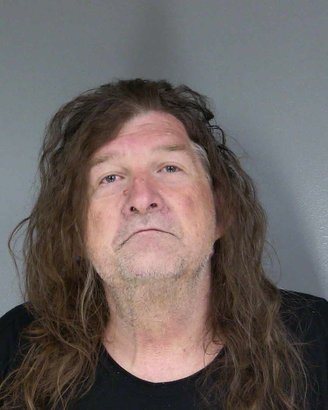
Robert Melvin Hurd. | HCSO
Robert Melvin Hurd, age 63, contacted the Humboldt County Sheriff’s Office Emergency Communications Center via 9-1-1 approximately 26 times over the course of eight hours. During these contacts, Hurd was uncooperative and belligerent with dispatch staff. Upon deputy contact, Hurd continued being hostile with deputies.
Hurd was taken into custody and booked into the Humboldt County Correctional Facility on charges of unlawful 9-1-1 calls (PC 653x) and disorderly conduct while under the influence (PC 647(f)).
The Sheriff’s Office would like to remind the public that utilizing 9-1-1 for non-emergency purposes, including to harass dispatchers, is a misdemeanor punishable by a fine of up to $1,000, imprisonment in a county jail for up to six months, or both. While we recognize unintentional 9-1-1 calls do occasionally happen, often resulting in a verbal warning, abuse of the system is documented and will be forwarded to the District Attorney’s Office for prosecution.
The public is encouraged to utilize the Sheriff’s Office Main Line, 707-445-7251, for all non-emergency calls.