To submit a locally-filmed (or produced) video, upload it to YouTube and email the link to News@LostCoastOutpost.com with your name, a brief description of your work and “TRL” in the subject line. Please do not submit videos containing any form of violence, racism, illegal activity, pornographic material, bullying or harassment. Also, no advertisements or duplicated submissions please.
Mad River Steelhead Part 1 - Ray Olson
An introductory guide to steelhead fishing in Humboldt County. Featuring music from the Compost Mountain Boys and aerial filming of the Mad River in summer by Kevin of Humboldt Craft Works. Olson adds that “this is not a how-to video on catching steelhead.”
Bob Dylan Cover “On A Night Like This” - Matthew Cook
“Here’s a video of myself playing a Bob Dylan song,” Cook shares. “Originally recorded for Bob’s Birthday Show.”
“Deep Creep” - Alien Tacos
“Our music video is finally ready,” the Arcata “trip-hop” duo announces. This music video was filmed in various locations around Humboldt County.
Patients enter Levi’s Stadium to receive Pfizer COVID-19 vaccines on Feb. 9 2021 in Santa Clara. Photo by Anne Wernikoff, CalMatters.
###
Californians with high-risk medical conditions will qualify for COVID-19 vaccines starting March 15, the state’s health secretary announced today.
Under the state’s previous guidelines, people with chronic conditions did not qualify for vaccinations until people 65 and older, first responders, food industry workers and educators were vaccinated. That amounted to almost 15 million Californians who were eligible before those with severe, chronic conditions and disabilities could sign up.
Under the new guidelines, people ages 16 to 64 with high-risk conditions — such as heart, lung or kidney disease, diabetes, cancer and weakened immune systems — or with developmental disabilities will join older Californians, food workers and educators beginning March 15.
Dr. Mark Ghaly, California’s secretary of health and human services, said at a press briefing today that delaying for a month will allow the state to build its vaccine supply, develop ways to determine eligibility and figure out how to reach people who are homebound.
Advocates for the disabled and people with serious medical conditions had criticized Gov. Gavin Newsom for failing to prioritize some of California’s most vulnerable residents, saying he was sacrificing equity for speed.
30% of BMT patients dying within 30 days of COVID-19 diagnosis. This isn’t enough to prioritize us for vaccination. It is so hard to live in a world that treats us as disposable #HighRiskCAhttps://t.co/xlWSTcIQ9s
California until last month had included people with disabilities or chronic medical conditions in the same priority group as Californians between the ages of 65 and 74. They were listed in the tier just behind people aged 75 and older. But the state moved to prioritize vaccinations primarily by age, targeting those 65 and older. That meant medically vulnerable people were left behind.
State officials have listed the severe health conditions in an advisory for providers, including:
Cancer, current with debilitated or immunocompromised state
Chronic kidney disease, stage 4 or above
Chronic pulmonary disease, oxygen dependent
Down syndrome
Immunocompromised state (weakened immune system) from solid organ transplant
Pregnancy
Sickle cell disease
Heart conditions, such as heart failure, coronary artery disease, or cardiomyopathies (excludes hypertension)
Severe obesity (body mass index ≥ 40 kg/m2)
Type 2 diabetes mellitus with hemoglobin A1c level greater than 7.5%
The federal Centers for Disease Control recommends that people with underlying conditions, including heart and kidney disease, diabetes, cancer, weakened immune systems, Down syndrome and obesity, receive the vaccine alongside those aged 65-74. But states are allowed to adjust those priorities.
Other states vary in how they prioritize people with health conditions.
New York will start vaccinating people with high-risk conditions, including pregnancy and developmental disabilities, on Monday. Florida currently vaccinates people considered by hospital providers to be “extremely vulnerable” to COVID-19 along with those 65 and older. In contrast, Kansas has placed people under 65 with high-risk conditions behind people 65 and older, prisoners and those living in “congregate settings” that aren’t nursing homes.
###
CalMatters COVID-19 coverage, translation and distribution is supported by generous grants from the Blue Shield of California Foundation, the California Wellness Foundation and the California Health Care Foundation.
CALmatters.org is a nonprofit, nonpartisan media venture explaining California policies and politics.
On February 11, 2021, at about 6:30 p.m., officers with the Eureka Police Department
responded to the 1000 block of California Street for the report of a female checking
mailboxes and stealing mail in the area. The reporting party was able to provide a
detailed description of the female and updated dispatch on her direction of travel.
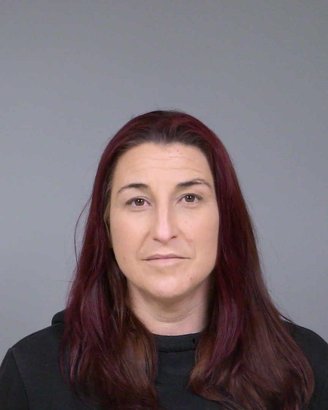
An officer located the female near the 200 block of B Street and identified her as 40-
year-old Eureka resident, Susan Rau, aka Susan Allen. Rau was found to be in
possession of mail belonging to 27 victims and bank cards and identification cards
belonging to an additional 7 victims.
Rau was transported and booked into the Humboldt County Correctional Facility for
theft of mail and probation violation. This is an ongoing investigation. The Eureka
Police Department would like to acknowledge the actions of the reporting party, for
recognizing the suspicious activity and providing such detail to our dispatchers.
If you witness suspicious activity in the city limits of Eureka, call our non-emergency
24/7 dispatch center at (707) 441-4044. Be prepared to describe clothing, weapons,
vehicles, and directions of travel.
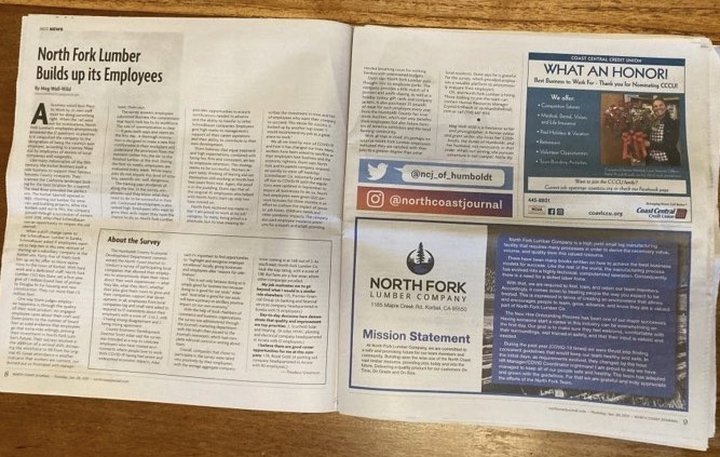
A copy of the Jan. 28, 2021 issue of the North Coast Journal, featuring a profile of North Fork Lumber Co. beside an ad for the same company.
###
Last fall, the Humboldt County Economic Development Department hired the North Coast Journal to run a campaign called “Humboldt’s Best Companies to Work For Promotion.”
The contract, obtained by the Outpost through a Public Records Act request, was signed on October 21 by the Journal’s general manager, Melissa Sanderson, and by Humboldt County Economic Development Director Scott Adair. The terms were as follows: In exchange for $6,700 from the county, the Journal would provide a range of services, including:
Managing all marketing and promotion materials while working with industry partners throughout the promotion,
Advertising in the North Coast Journal, North Coast Trader and northcoastjournal.com, and
Sub and organizing promotions third party vendors
Final sponsored content feature In North Coast Journal In Jan. 2021.
The Journal appears to have fulfilled its obligations. The website is up and running, a series of ads regarding the campaign has been published, and the paper’s January 28th edition featured a glowing profile of North Fork Lumber, a subsidiary of Schmidbauer Lumber in Eureka.
The Korbel-based business “must be doing something right,” freelancer Meg Wall-Wild reports, because in a recent anonymous survey of employees from dozens of local businesses, North Fork Lumber performed so well that “it catapulted the company to the designation of being the county’s best employer.”
The Economic Development Department had paid the Journal to conduct the survey and deliver a “sponsored content feature,” and this one appears to fit the bill. However, it wasn’t labeled as such. The story was published in the Journal’s news section, with no indication that the Journal had been paid to produce it.
Contacted by the Outpost on Thursday, Journal News Editor Thadeus Greenson said no one in the editorial department, including himself, was aware of the paper’s contract with the county before or during the reporting, writing and editing processes, and he stood by the North Fork Lumber story as a product of his department’s independent journalism.
“[T]here are internal issues we at the Journal need to work out to make sure something like this doesn’t happen again, and that advertising and paid content are always clearly labeled,” he wrote in an email.
Greenson said he has “pushed back” against advertorial or sponsored content before.
“A number of times when it has come up in department head meetings, someone brought it up as a potential revenue source,” he told the Outpost. At conferences for the Association of Alternative Newsmedia, of which the Journal is a member, other outlets have revealed that they’ve embraced “sponcon,” Greenson said, but the Journal‘s editorial staff has steadfastly resisted — “to the point where, the last couple times it’s been broached, [the other department heads] said, “‘We know you guys hate this idea, and we know it’s gonna be shot down but … ,’” Greenson recalled.
Al Tompkins, a senior faculty member at the Poynter Institute, a nonprofit journalism school, said the concept of maintaining a divide between the advertising and news departments is considered sacrosanct in most journalism circles.
“The code of ethics from the Society of Professional Journalists is premised on the idea that you can’t buy news coverage, and you can’t prevent unfavorable news coverage by spending money,” Tompkins told the Outpost by phone on Friday. “The public needs to be able to depend on a certain amount of independence that happens journalistically, that you will report stories without fear or favor.”
That code of ethics he referenced says journalists should “distinguish news from advertising and shun hybrids that blur the lines between the two. Prominently label sponsored content.”
For the record, the Outpost was also contracted by the county’s Economic Development Department to publish sponsored content. The resulting “landing page” on our website can be found here, under the label “Sponsored Content.”
In light of the Journal‘s contract, and the lack of a “sponsored content” label, some readers might wonder whether the paper can fulfill journalism’s watchdog role in relation to county government when the county is allowed to buy space in the news section.
“The public should be able to trust that just because someone’s buying an ad or paying a bill, they don’t get favoritism,” Tompkins said.
As best Greenson could recall, the idea for the Jan. 28 story was floated during a department head meeting. Sanderson brought it up “with some involvement from Kyle [Windham],” the Journal’s sales manager, Greenson said. They told him they had a deal to conduct an anonymous survey of local business employees and wanted to know if the editorial department would be interested in writing about the results.
“I said, ‘If we have autonomy to write whatever we want about the findings, yeah, I imagine we could find something interesting and newsworthy,’” Greenson told the Outpost.
The resulting story is unfailingly laudatory. It says “the commitment that North Fork has to its workforce” can be gleaned by its generous employee benefits packages, which include “a 401k match of 4 percent and profit sharing, as well as a holiday turkey, gift cards and company jackets” — plus a 25-pound bag of meat once a year for every worker, “which not only benefits their employees but also Future Farmers of America exhibitors and the local farming community.”
The story concludes by saying, “Oh, and North Fork Lumber is hiring. Those looking to join the team can contact Human Resources Manager Crystal Eckhardt at ceckhardt@nflmill.com or call (530) 739-2102.”
In a sidebar published alongside the story, Greenson explained the background of the story this way:
With the help of local chambers of commerce and business organizations, the survey was administered through the Journal’s marketing department with the results then passed to the Journal’s newsroom, which had complete editorial control in writing about them.
The fact that the resulting article wound up perfectly matching the intent of the county’s promotion — “Humboldt County’s Best Companies to Work For” — is an unfortunate coincidence that gives the appearance of a blurred line between the advertising and editorial departments, Greenson said.
But he reiterated that that wasn’t the case — at least from his perspective. Could his department have chosen to run no story at all regarding the results of the survey?
“Yeah, that was my understanding,” Greenson said, though he added that he’d made it clear to Sanderson that if enough businesses participated in the survey (and “a few dozen” did so), he was confident that something story-worthy could be found in the results.
Asked about the perception of independence, given the transaction that occurred, Greenson said, “While it appears based on what you’re telling me that the county may have thought it was buying space in the news section, I don’t feel it actually did because I never felt directed to make sure a certain thing was in the newspaper. I feel like our news department has never shied away from covering the county or filling that watchdog role. That certainly didn’t change because we ran a feature news story on North Fork Lumber.”
Could the Journal‘s news staff have chosen to write about the worst local business to work for? Or to analyze the methodology of the survey?
Greenson believed that the choice was up to him and his department — “100 percent,” he said. He was genuinely surprised by how positive most of the participating companies fared overall, he said, and in reading the employee comments that accompanied the numerical results, he was struck by the generous and unusual benefits given to employees of North Fork Lumber Company — especially those big bags of meat.
“I thought, ‘That’s colorful and interesting. Let’s do that,’” Greenson said. He added that he’d been equally open to the possibility that they’d find something darker in the data, like a category where many Humboldt businesses were falling short, or perhaps a well-known local business “just getting dragged by its employees.”
Of course, while Greenson may have been open to that type of story, that’s not what the county paid for or what the Journal‘s general manager agreed to deliver. Adair was quoted in the Journal saying he wanted to “highlight and recognize employer excellence,” and the contract between the county and the Journal, executed three months before the story was published, makes the promotional intentions of the campaign clear.
The website that the Journal agreed to host and maintain, thehumboldtbest.com, now features North Fork Lumber Company’s corporate logo beneath a headline reading “Best Company To Work For” in large typeface. Scroll down and you’ll see the Journal‘s profile of the company reproduced in its entirety above a grid with logos and links of the financial backers, all of which are business associations or chambers of commerce save the Journal and the Humboldt County Economic Development Department (which has been rebranded GoHumCo).
At the end of our conversation, Greenson asked the Outpost to forward a copy of the contract. About an hour and a half later he sent some more comments via email:
Reviewing the contract you provided makes clear to me there are internal issues we at the Journal need to work out to make sure something like this doesn’t happen again, and that advertising and paid content are always clearly labeled.
I want to reiterate that when I agreed the results of the employee survey were something we would write about, I was unaware this story was part of any work contracted by the county. Had I understood that, I would have refused and said it needed to run clearly labeled as a paid advertising feature. That said, once I agreed the editorial department would produce a story about the results, no one outside the editorial department had any input or control over the content of the article. This process was inherently different than for the Rodeo Guide produced by the Journal or other paid promotional pieces, all of which are always clearly labeled.
Since coming to the Journal in January of 2014, I have always pushed back against sponsored or advertorial content because I believe it blurs the lines between what is paid for and what is independently produced by our editorial department, jeopardizing reader trust. I believe that the appearance of a conflict of interest can be as damaging as an actual conflict. We clearly need to take steps to ensure something like this does not happen again.
The contract for “Humboldt’s Best Companies to Work For Promotion” was struck during a shaky financial period for the Journal. Greenson was recently quoted in a Time magazine story about how the COVID-19 pandemic is “ravaging” local newspapers. The Journal’s newsroom briefly shrunk from five employees to just one full-timer and one part-timer as advertisers pulled out or closed.
“There was a point early on where we didn’t know — there was major doubt about whether we would survive this as a company,” Greenson told Time.
In this week’s issue, Journal Publisher Judy Hodgson reveals that there were layoffs and furloughs in other departments as well, and the paper reduced circulation and printed “far fewer pages than normal each week” to cut costs. A loan from the CARES Act Payroll Protection Program put the Journal back on firmer financial ground, Hodgson writes, though she adds that Sanderson “completely revised” the paper’s budget multiple times last year, including in September “and probably November.”
If there was a revision to the Journal‘s budget in November, the revenue column would have included $6,700 for a promotional campaign that included sponsored content.
Briefed on the broad strokes of this situation, Tompkins said, “My heart goes out to an editor who’s having cards dealt behind his back. … It’s a heck of a position to be in to try to do the right thing, thinking you have independence, and then it has the smell of being for sale.”
The way to move forward, he suggested, was to have training within the organization. “Part of the education that has to happen is between whoever’s doing sales and the customer to make sure the [customer] understands that there are no promises for content,” Tompkins said. “But it has to be part of your culture [as a company] that people who advertise with you understand that they’re not buying news. It should be in the sales contract. It’s an education process, honestly.”
###
[Disclosure: I worked for the Journal from 2008 through 2013 and before that worked in the same newsroom as Greenson at the Times-Standard.]
[Note: This post has been updated to include links to the Outpost’s own contract and sponsored content.]
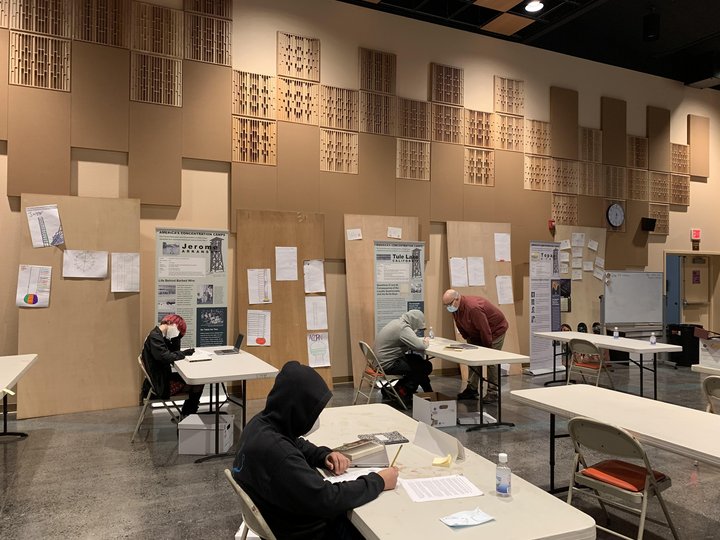
Inside the Acorn Project classroom. Photo: NHUHSD.
###
To ensure that learning through COVID doesn’t knock struggling
freshmen off track, the Northern Humboldt Union High School District
has introduced a new program, called the Acorn Project, to help
students make up units lost during their first semester of high
school.
As
they near one year taught almost entirely virtually, the district’s
three comprehensive high schools — Arcata High, McKinleyville High
and Six Rivers Charter High — saw an increase in the number of
students earning at least one D or F during the 2020 fall semester
compared to pandemic-free semesters past.
“We’ve
got a number of kids who, if it was not for COVID, they would have
been doing fine,” Jack Bareilles,
NoHum’s grants and evaluations administrator, career and technical
education administrator, and a main visionary of the Acorn Project,
told the Outpost recently. “It’s just, COVID has been
hard. Stay-at-home has been hard on everybody, and some of our
children have really just struggled.”
Younger
students have struggled more than older ones — 57.8 percent of
freshmen versus 23.3 percent of seniors ended up with at least one D
or F on their transcripts this fall. By comparison, during the fall
2019 semester, 36.2 percent of freshmen versus 22.6 percent of
seniors were on that list.
A
different, and perhaps better, way to understand the challenge
students are facing right now is to compare how the grades of a
specific group have changed pre- and post-lockdown. The 36.2 percent
of freshmen who earned at least one D or F in 2019 have jumped to
42.9 percent as those children became pandemic-era sophomores. By
contrast, fewer students from fall’s 2019 junior class are now on
the list as seniors; 26.4 percent has dropped to 23.3 percent. Some
students are academically doing better with distance learning.
The
long-term impacts of COVID-driven academic setbacks have been on the
mind of Greg Cornelison, the Acorn Project’s lead teacher, since
before he was hired a couple months ago. If students flunk their
freshman year because of COVID, how will that impact the rest of
their high school experience, and beyond? He said he worried “we
would lose a big chunk of this generation” to dropping out or
depression.
After
moving to Humboldt from Merced in August 2019, Cornelison, with years
of full-time teaching behind him, worked as a substitute teacher
around the county. He ended up teaching tech essentials at NoHum as a
long-term sub last semester. When the Acorn position opened, “I
jumped at the opportunity to, you know, be a part of a solution. I
don’t know if it’s the solution, but it’s a solution, and it
seems to be working,” said Cornelison.
That
solution, the Acorn Project, is an emergency intervention classroom
currently supporting 20 Arcata and McKinleyville freshmen who have
been unable to keep up in a virtual format and have fallen
significantly behind in units. The goal is to help those students
make up the credits they lost last semester, which would set them on
track to enter tenth grade and eventually graduate alongside the rest
of their class from one of the district’s comprehensive high
schools. The program launched virtually at the beginning of January,
but they started bringing the students on campus a few weeks ago.
“It’s
going great,” Cornelison said of the program. “The kids are just
so happy to be back with other students, and having some social
contact.”
Bareilles
said the program is averaging a 90 percent attendance rate. “They’re
showing up, they’re happy to be there. I mean, my gosh, after being
at home during COVID, it’s a joy to come to school.”
The
classroom is set up in compliance with COVID safety measures. Large,
single-person folding tables are spread several feet apart across the
auditorium in Arcata High’s Fine Arts Building, and all students
and staff are supplied with KN95 masks. The school day runs from 8:30
to 12:30, with a break in the middle and breakfast and lunch provided
on either side. The curriculum covers English, math, global life
science, and health and tech.
Wednesdays
at the Acorn Project are reserved for field trips and community
service projects. For instance, the class might go to the Arcata
marsh or other outdoor areas where students could do some kind of
science lab.
“I’m
hoping to work with Yurok and/or Hoopa Valley tribal fisheries, and
get the kids up on the river and be able to work with the fisheries’
biologists,” Bareilles said. “My
hope is that they get their science credits, or their science
experiences, by being out in the field and working and learning from
your actual practitioners.”
Students
will also take a college and career success class at College of the
Redwoods, make a four-year plan, and have access to academic and
crisis counselors. Beyond helping them catch up, the goal is to help
these students feel prepared and equipped to take on their sophomore
year, when they’ll rejoin the rest of their class with credit
recovery behind them.
“Everyone’s
supporting these kids like crazy. It’s just awesome to see, and
they’re responding,” Cornelison said. “I have not heard one say
‘This sucks, I want to go back to Zoom.’ You know, they’re just
happy to be there, even though they’re doing school.”
The
Arcata Acorn classroom is at capacity, and the district plans to open
a second classroom at McKinleyville High later this month, which will
serve 12 more students.
If
not for the program, these students would need to take three sessions
of summer school to catch up. Otherwise, they would likely need to
transfer to one of the district’s continuation schools — Mad River
or Pacific Coast — which help students 16 and older earn back
credits needed to graduate but do not assign grades. “Those are all
really, really good programs, who really, really care for the kids,”
Barellis said. But transferring does mean that students are left with
little opportunity to participate in the electives and
extracurriculars available at NoHum’s comprehensive schools, like
the Arcata Arts Institute, ArMack Orchestra, culinary classes, wood
and metal shop, or other career and technical education opportunities
(all of which are all currently available to students during COVID).
“It’s not that the teachers aren’t caring and compassionate and
wonderful. But when you only get a kid for a few hours a day, you
have to limit what you can do with them,” Bareilles said. (In
California, continuation schools require students to spend a minimum
of 15 hours per week at school.)
Without
access to more niche educational opportunities, Bareilles
worries, students might be missing out on the resources to develop
job skills or discover a potential career path.
Students
shouldn’t miss out on that because of a pandemic, which is why the
Acorn Project is arriving now. But freshmen who fall behind in units
under normal circumstances shouldn’t miss out either, Bareilles
says. And the problem existed before COVID — it’s just intensified
with distance learning.
For
instance, 30 percent of the class of 2019, which entered the district
in 2015, didn’t graduate from one of NoHum’s comprehensive high
schools. Because of falling behind in units, those students had to
relocate to and graduate from continuation schools or other
alternative programs outside of the district, Bareilles
said, adding that “we do a really good job of keeping kids in high
school.”
NoHum
has been aware for a long time that “our schools have an attrition
problem with kids who start ninth grade and don’t make it to 11th
grade in the comprehensive high schools,” Bareilles
said. In contrast to the continuation schools, Acorn is an early
intervention program that will allow students to rejoin their class
at a comprehensive school after one semester, rather than separating
them down the road and permanently.
At
a December board meeting, Bareilles
shared that 30 percent statistic, and Board Member Cedric Aaron asked
if there is a way the district might measure why students are
choosing to switch schools. Aaron referenced a recent equity
roundtable discussion — where speakers shared that they left high
school because of discrimination, bias, microaggrassions and
macroaggressions — and wondered whether there might sometimes be
more to deciding to leave than just not understanding the academics.
Bareilles
assured Arron that students change programs almost always because
they lack units, but why they lack units is harder to quantify.
One
reason, Bareilles later explained to the
Outpost, might be that the stakes rise monumentally from
eighth to ninth grade, and students don’t realize it. In K-8,
schools for the most part use “social promotion” — boosting
students to the next grade whether or not they’ve learned the
material — with the belief that keeping students with their peer
group is more beneficial for them than holding them back. “Kids
come into high school and don’t realize what a unit is,” Bareilles
said. “But in high school, if you don’t get the units, you don’t
get to stay.”
Finding
a way to help students transition from middle to high school is
something the district has been brainstorming for a while now, and so
the hope is that this semester’s Acorn class will be the pilot of a
long-term, expanded program. Bareilles
has already submitted a state grant that, if awarded, would fund
Acorn classrooms to operate in Arcata, McKinleyville, Hoopa and Del
Norte starting in August.
“My
hope is within a few years we’re able to have these classes serving
15 percent of our freshmen and keeping them in our comprehensive high
schools, where they can take advantage of all the enrichment
opportunities, all the career technical opportunities, all the sports
and other things that make school a richer experience,” Bareilles
said.
With
unit loss on the rise in other grades as well, NoHum is also planning
a summer school opportunity for other students who need to make units
in order to graduate on time.
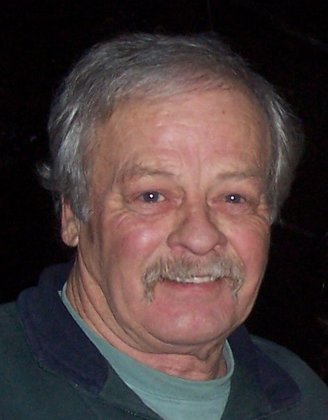
Howard Edward White was born to Francis Coleman “Beeb” White and Barbara Dean
White (Combs) on September 10, 1952. In the early hours of February 1, Howard
was the 31st person in Humboldt to be taken too soon by COVID-19.
Howard was a proud member of the Yurok Tribe. He grew up in Orick with his older
siblings David, Hazel and Karen. Even though Howard has a younger sister Joyce
he was still always treated as the baby. To this day his mother still calls him
“My Baby Boy.”
When Howard graduated from 8th grade Orick was a Mill Town with four working
lumber mills around it. He always joked that there were more kids in his class
than the whole school now.
After he graduated from McKinleyville high school in 1971 he moved to
Washington state and married his high school sweetheart Ruby Lewis.
Ruby’s older brother Rodger Lee Lewis also moved to Washington and worked
with Howard as long shoremen. Howard and Rod (Rodger) enjoyed working along
side Howard’s beloved stepfather, Oscar Combs.
Howard and Ruby took on the role of raising Ruby’s first niece Michelle Lewis
(Mead) who was born in June of ‘73.
In the mid ‘70s Howard moved his family back to Humboldt County.
In April of ‘76 Howard and Ruby welcomed their son Joshua Jon White. At that time
Howard was working as a woodsmen/logger and had worked for a few
different local logging companies. In March of ‘79 they were blessed with
the birth of their daughter Eunice Yvonne White (Oquist) who was named Eunice
after Howard’s grandmother and Yvonne after Ruby’s mothers middle name.
Howard loved his grandmother very much and went to her house every weekend to
do work around her house and make sure her wood box was full. Every hunting seasons
Howard would fill his grandmother’s freezer.
Howard’s grandparents Edward & Eunice White were both Yurok story tellers and
they passed their stories onto their son Francis Beeb White who in turn passed the
love of storytelling onto his granddaughter Eunice (Oquist).
Howard’s grandmother Eunice was recovering in Mad River Hospital from
celebrating her 90th birthday a little too hard when Little Eunice was born only two
days after she turned 90. Howard was so proud when he wheeled his grandmother
up to the glass so she could get a glance at her namesake.
Howard and Ruby took their children all the time up to see their great grandmother
Eunice who lived in an old house built above the mouth of Redwood Creek in Orick. His
grandmother loved having her name live on and adored her great-granddaughter Eunice
no matter how much of a brat she was (and still is) for Eunice was the baby and
just like her father she took that roll very seriously.
Howard would tell you his “Life Changing Experiences” was when he drove across
country with some friends to South Dakota to see a Sun Dance.
Howard wasn’t a very tall guy but he was strong and he boxed in his 20s calling
himself The Crow but his friends called him The Creeper behind his back because he
would get his short frame down so low and creep around the ring that it was really
hard to hit him. He did win a lot of fights but he never liked that name.
In the early ‘80s Howard and Ruby divorced. They parted on pretty good terms the only
thing they fight about was the family dog Arrow. Ruby would say years later that there
was no question of course she was going to take the kids but she also wanted the dog
but, in the end, Howard got Arrow who was also a boxer.
Howard met his best friend Major Cook in the first grade. Howard and Major were
lifelong friends until Major passed away a few years ago. There are hundreds of stories
about the crazy things Howard and Major did “Back in the good old days” but very few that
can be repeated.
After Howard’s divorce, he moved back to Orick to be closer to his father Beeb White.
At that time Howard worked for the U.S. Parks until he retired. Even though Howard never
remarried he did have a 30-year relationship with Betty Ann McCovey who later passed away
in 2011. Howard and Betty Ann loved shooting pool and both of them were very excellent pool
players. Pool was one of his favorite hobbies. Howard joked that he never met a barstool that
he didn’t like.
Late in life Howard find himself lost and need help and turned to his ex-wife. Ruby agreed
that he could stay at her house but in the living room and only for a few months, but that ended
up being years. Howard would go to Cher-Ae Heights every single day. The Firewater Lounge
became his home away from home. He would get there as soon as the bar opened in the
afternoon and would stay there at the Heights sipping on his beer and playing his favorite slot
machines and eating all his meals in the Sunrise Deli. 365 days a year for the past decade Howard
could be found wondering around Cher-Ae Heights Casino. Howard liked talking to anyone
even if he didn’t know them. If he knew your favorite sports team was playing, he would sit
near you and cheer as loud as he could for the other team. Howard liked to push people’s
buttons and enjoyed annoying people every day. Howard was preceded in death by his father
Francis Coleman “Beeb” White his grandparents Ed & Eunice White his older sisters Karen Vice
and Hazel Freeman. Close cousin Diane Nelson and as he would say “favorite cousin in the
whole world” Glenna Beaver.
Howard leaves behind his children Joshua “Bear” White and Eunice Oquist (White) His only
grandchild Alexa Oquist. His brother David White Sr Sister Joyce Rangila. Nieces & Nephews
Michelle, Shannon, David Jr, Barbara, Shaunana, Christopher, Timothy, Robert, Ryan and Ashley.
Aunt Gloria Shuster and numerous other family members.
Howard’s favorite person has always been his mother or as he would say “My Mama.” Howard leaves behind his loving and caring mother Barbara Dean Combs. He would call his mother every year on his birthday so she
could sing to him and wish him a happy birthday.
His family would like to send a special thank you to all the wonderful staff at Mad River ICU
for the care and compassion, they have shown Howard in his last days.
Howard’s family would also like to thank Ayres Family Cremation for all the help in
this hard time.
A memorial service will be held at Cher-Ae Heights Casino’s
Firewater Lounge on Friday, Feb. 12, 4 p.m. to midnight.
Because of COVID guidelines we are asking that people stop by between the hours of 4 p.m. to midnight to see photos of his life sign the book and maybe have a beer in his memory.
Howard’s family would like to thank all of his Cher-Ae Heights bartender’s past and present
and all of the workers who were Howard’s.
###
The obituary above was submitted on behalf of Howard White’s loved ones. The Lost Coast Outpost runs obituaries of Humboldt County residents at no charge. See guidelines here.
Karl Oliver Lehto Jr. February 12, 1946 –
February 3, 2021
It is with a heavy
heart we announce the passing of Karl Lehto on February 3, 2021, just
nine days shy of his 75th birthday.
Karl Oliver Lehto
Jr. was born in Eureka on February 12, 1946 to June (Goodwin) and
Karl Lehto Sr. His family moved to Petaluma in 1959 ,where he
graduated from Petaluma High in 1963. In 1965 he joined the Local 34
Pile Drivers Union, remaining a proud member for 55 years.
Karl served in the
United States Army as a Radio Teletype Operator from 1966-1968,
serving one tour in the Vietnam War. He married Linda Dolcini in
Petaluma in 1971 and they had their only daughter in 1973. Karl
worked in construction for over 30 years, spending most of his career
with Healy Tibbitts. He moved to Trinity County in 2004 then back to
Eureka in 2018 where he spent his final years.
Karl was one of a
kind. He was always up for an adventure and had a story to tell for
just about everything. There was never a dull moment when “Crash”
was around. As a kid he loved fishing, enjoyed working in the family
bakery and getting into mischief. As he got older, he started working
odd construction jobs with his dad and other family members. He later
took a job as a piledriver, working his way up to foreman with Healy
Tibbitts in San Francisco. Karl took great pride in his work that
included the construction of the pipeline at the Monterey Bay
Aquarium, the BART tube, many local docks and bridges, and various
piers throughout San Francisco and Oakland. In his spare time, he
enjoyed deer and duck hunting, fishing, water-skiing and racing
motorcycles. He was on a bowling league and softball league for many
years. A favorite pastime of his was to visit his Uncle Fred and Aunt Audrey’s boat in the Bahamas, fishing, snorkeling, sailing and
eating lobster.
Karl was preceded in
death by his mother June Montelbetti, father Karl O. Lehto Sr.,
step-father Danny Montelbetti, niece Jennifer Macias, great-niece
Monica Macias, great-nephews Robert Lehto and Scott Philips.
He is survived by
his only daughter Natalie and son-in-law Ken Anthony; his
granddaughters Ella and Sophia Anthony; his ex-wife Linda Lehto,
sister Greta Lehto, nieces Kelly (Dick) and Sue (Ali), brother Harold
Lehto, nephew Chris (Becca), niece Mary (Brad) many great-nieces and
great-nephews, cousins and extended family.
Gratitude and
appreciation for the staff of Seaview Rehabilitation and Wellness
Center.
Karl was loved by
many and will be greatly missed by his family and all who were
fortunate enough to meet him.
###
The obituary above was submitted on behalf of Karl Lehto’s loved ones. The Lost Coast Outpost runs obituaries of Humboldt County residents at no charge. See guidelines here.