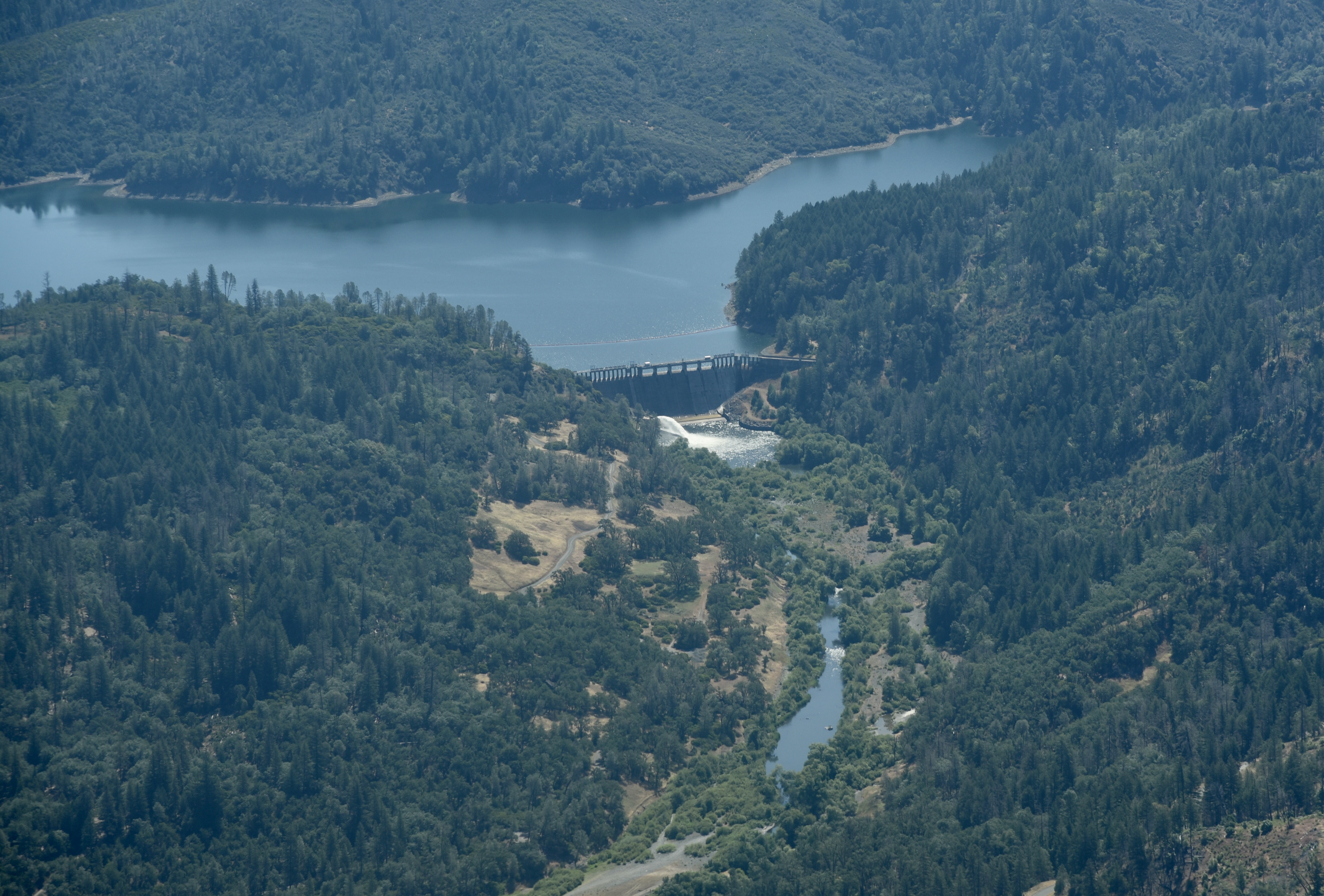
Scott Dam, a total barrier to fish passage on the Eel River. Photos and videos by Isabella Vanderheiden
###
Up the Eel River, far from where Ferndale dairymen awake on dark mornings, beyond redwoods cloaked in fog, past abandoned train cars and the river canyon’s collapsed tunnels, and well into the chaparral hills of Mendocino and Lake counties, sits the Potter Valley Hydroelectric Project.
It has diverted water from the Eel for over a century, and sits 160 miles from the river’s mouth.
To some, the project’s two dams, diversion infrastructure and defunct hydroelectric parts stapled onto a piece of the 200-mile Eel represents the promise of the next great dam removal project, something that will open up hundreds of miles of upstream habitat for fish and help restore decimated salmon runs the North Coast has historically relied on.
To others, the dam removal effort represents the meddling of NGOs and a massive utility in a scheme that will mean less water to rural farmers in Potter Valley when they need it most, and change the supply of thousands more downstream that have grown used to it.
In a flight hosted by environmental groups, the Outpost flew in a single-engine Cessna 210 Friday and saw the project with a birds-eye view.
###
###
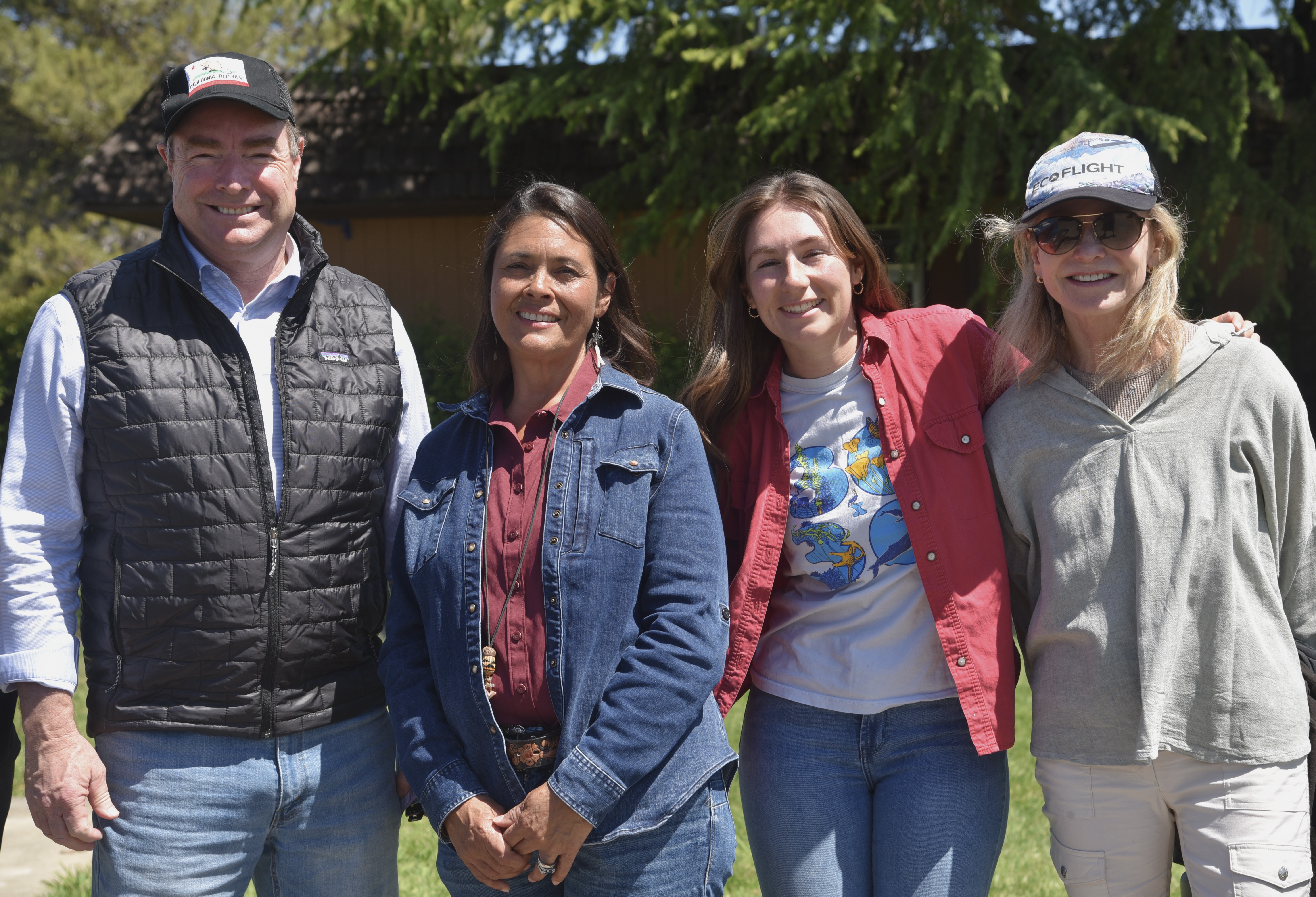
Myself and Outpost photographer Isabella Vanderheiden were nestled in the warm plane behind a candidate for state Senate and a Mendocino County supervisor hopeful.
We took selfies in green headsets. A voice told us the sky above Ukiah’s Municipal Airport was clear.
As the plane accelerated we watched parked pleasure crafts and FedEx vans whip past us. Ukiah’s buildings grew smaller as we lifted off. The little plane jolted and Isabella and I braced in our unfamiliarity with small aircraft.
We rose over a line of hills that march east of U.S. 101 in Mendocino County, with the waters of Lake County in the distance. We were told about a vision for the region environmental organizations have been dreaming of for thirty years.
Three groups who are pushing for dam removal — the Environmental Protection Information Center, Friends of the Eel River and CalTrout — put together the tour with EcoFlight.
As we flew over Potter Valley, where the headwaters of the east branch of the Russian River originate, I noticed the area is relatively small. It’s just about 12 square miles, peppered with a few ponds of water and a series of green fields.
The valley has been at the heart of a political movement opposing dam removal.
Alicia Hamann, executive director of Friends of the Eel River, told us the water there is mostly used to irrigate pasturelands.
“Even in drought years, they’re often able to take three cuttings of alfalfa, which is — for any of you who are familiar with the farming landscape — that’s relatively unheard of,” she said.
This agricultural area would still be getting water in a proposed two-basin solution, an agreement recently penned by involved groups across the state to allow for diversions to continue alongside PG&E’s plan for dam removal.
But the deal hinges these post-dam diversions on flows for fish, something new that environmental groups and Humboldt County representatives pushed for in the agreement signed last year. In the driest parts of the year, both fish and farmers need flows tapped from the Eel. Further south, people in Mendocino and Sonoma counties use the water diverted into the Russian River.
The project and water rights are owned by PG&E, but Potter Valley stopped producing electricity for the utility in July 2021.
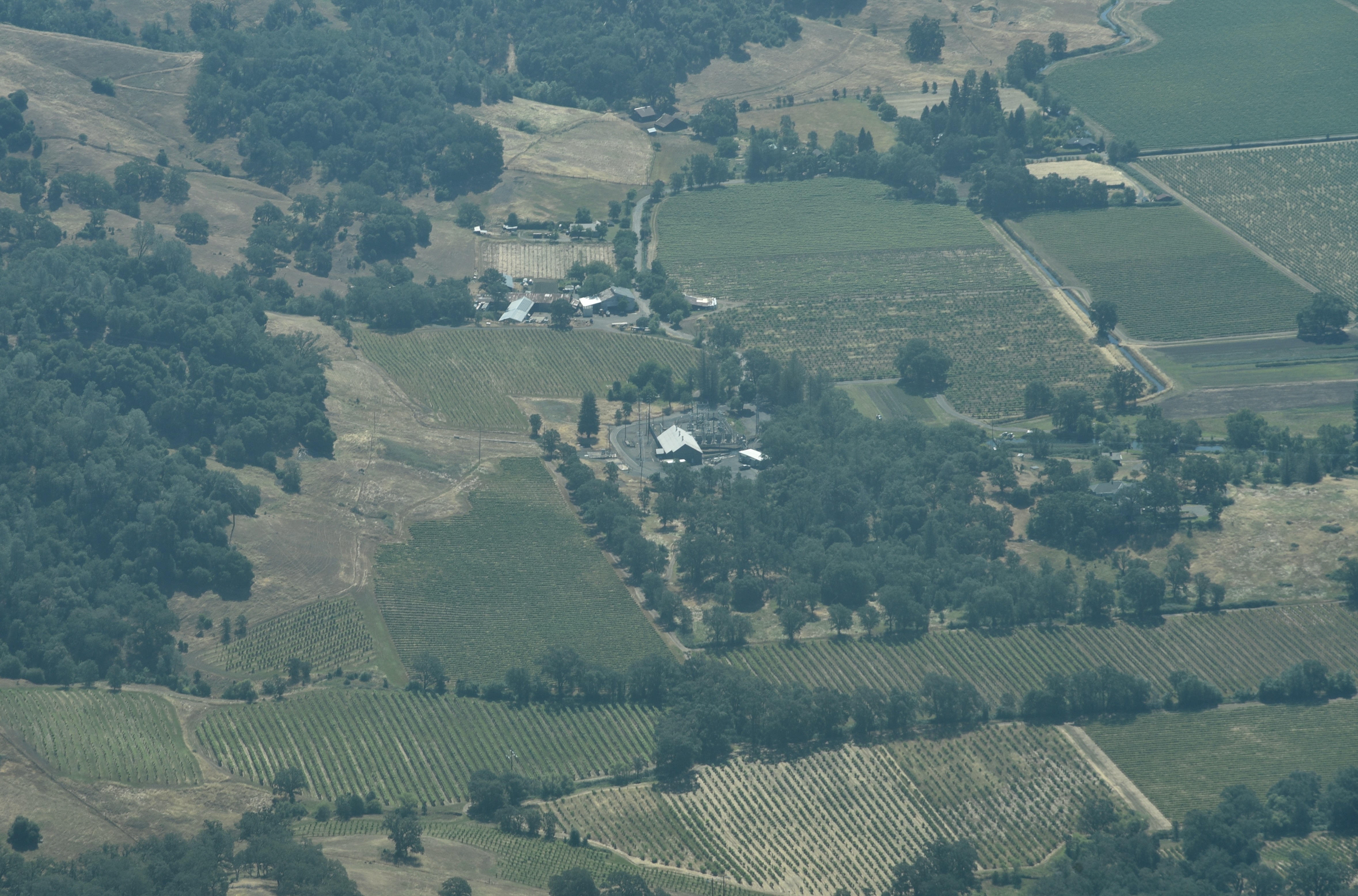
Potter Valley Powerhouse, the barn like structure in the middle.
Hamann pointed out the barn-like, broken powerhouse in the north part of the valley from above, surrounded by agricultural fields. PG&E previously estimated it would cost $10-15 million to rebuild the facility, she said.
“If anyone were to try to restart electrical generation there, they’re looking at a pretty sizeable price tag to get it even to a functional state,” she said.
We flew over where a tunnel through the mountain connects the Cape Horn dam to the Russian River, where an average of somewhere around 40,000 acre-feet of Eel River water is diverted annually.
Environmental groups have largely been concerned about the impacts of the dams on aquatic wildlife, and say 288 miles of potential salmon- and steelhead-rearing habitat is waiting for them above Scott Dam, which is presently impossible for fish to get past.
Hamann told us she’s been reflecting on how short, in an evolutionary timescale, the ecosystem of these waterways has existed.
Cape Horn Dam and the diversion tunnel were completed in 1908, while Scott Dam and Lake Pillsbury were completed in 1922. The lengthy Eel River historically supported the third-largest runs of salmon and steelhead in California, according to CalTrout.
The 63-foot-tall Cape Horn dam, about 12 miles upriver of the larger Scott Dam, has a fish ladder.
###
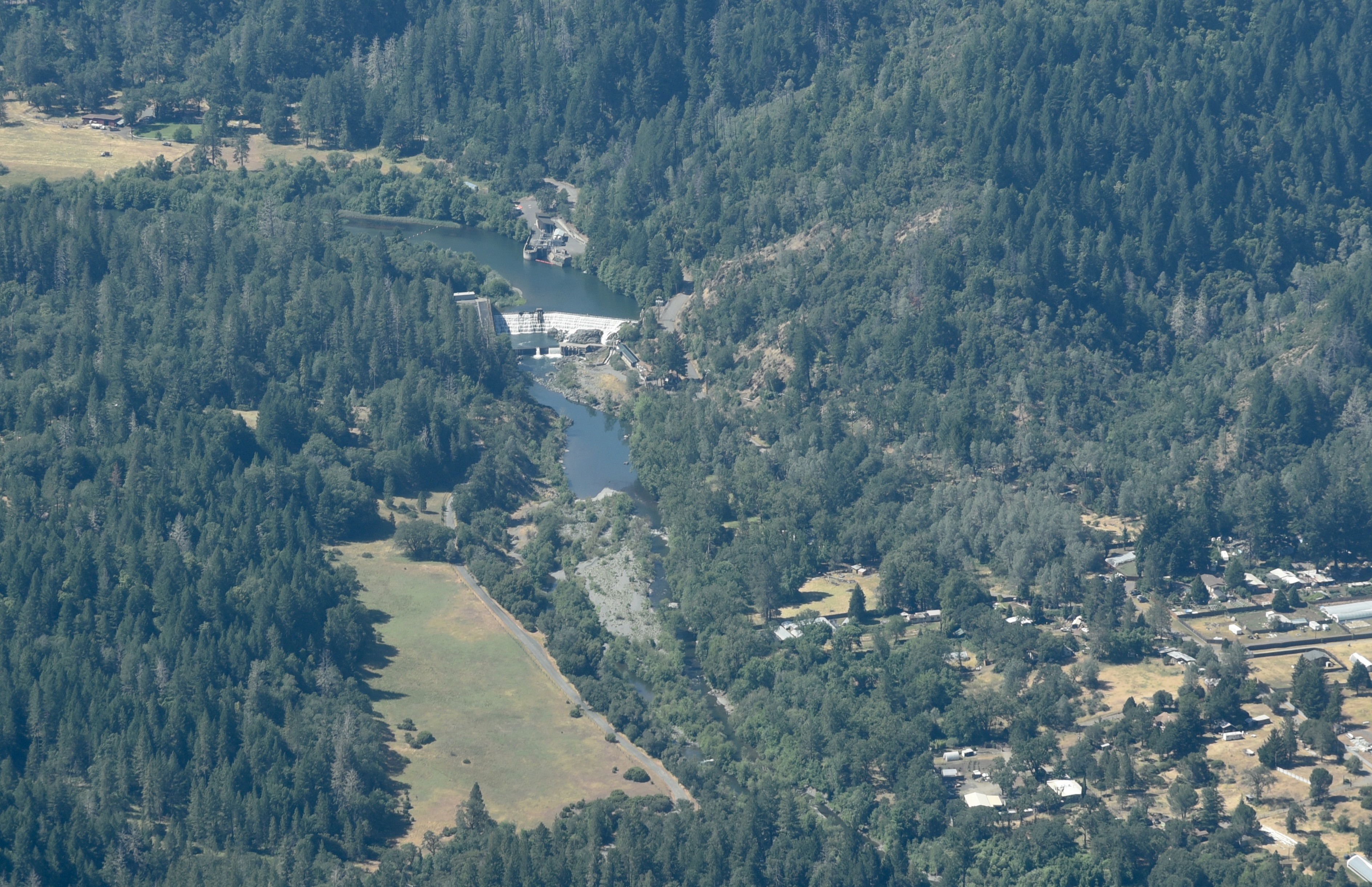
Cape Horn Dam, the grey structure that crosses the Eel river in Mendocino County.
###
But the ladder “has had quite a few problems,” said Hamann. She said some fish issues have been addressed over the years, with an improved stream intake, a mechanism to stop clogs in the ladder and a tube for Pacific Lamprey (the namesake of the Eel, albeit erroneous).
Before the tube was installed, she watched lamprey try to migrate the fish ladder using their sucker mouths, before falling off again.
Unfortunately for fish, the ladder also serves as an “all you can eat buffet” for predators, she noted, who can wait at the spot to snatch dinner.
More so than feasting otters, the biggest problem for fish in the area, says Hamann, is the inter-dam reach, the 12-mile area of the mainstem Eel between the two dams.
“The habitat is pretty severely degraded,” she said.
Water temperatures affected by the dams are an issue, she says, particularly for juvenile salmon. Plus, there’s not a natural flow of sediment in this section and invasive pikeminnows thrive in the slow water and warm temperatures and eat native fish.
The pikeminnow was introduced into Lake Pillsbury (the reservoir made by Scott Dam) in the 1970s. The species is known to eat salmonids, and environmental groups say they’re a primary cause of the decline of salmon in the river.
But as we flew above a sharp rock on a hillside above the river, Bloody Rock, Hamann said the site represents the most hopeful part of the story for fish.
“What’s really, really cool is that Bloody Rock, that area is a partial barrier to migratory fish, and what they’ve found is that the trout that live up there in that part of the watershed actually maintain genetics to be anadromous fish, and in fact, to be summer steelhead,” she said.
Once these fish get back to the sea, says Hamann, their offspring could take on that life history in their genetics and become summer steelhead in practice. (The Eel River summer steelhead is listed as endangered under the California Endangered Species Act).
The area around the rock is “some of the best habitat in the entire watershed,” she said. Stream temperatures remain appropriate for salmonids, and the area is just right for spawning and rearing.
###
Jane Pargiter, executive director of Colorado-based nonprofit EcoFlight, told the Outpost flights like these help provide an objective view of environmental issues, by showing off key landscapes in policy decisions.
After a successful landing I spoke with candidate for District 2 State Senate Damon Connolly, who wants to represent the North Coast including Lake, Mendocino and Humboldt counties. He said seeing the infrastructure and communities from above was helpful.
He spoke in support of the approach of the “two-basin solution,” an agreement that puts fish health and water diversion on equal footing.
“I appreciate the level of work that went into it — I think the task at hand now is how to effectuate the solution,” he said.
Under the two-basin solution, he pointed to benefits to habitat and environment, river flow, while also addressing issues that are part of the negotiated solution around maintaining water supply to communities to the south.
When asked about recent news that the Elsinore Valley Municipal Water District, which serves around 160,000 residential and commercial users in western Riverside County, is in talks about taking over the project, he said he found it unacceptable.
“The notion that somehow a Southern California water district is going to inject itself into the situation in our communities is unacceptable, to me,” he said.
And federal cabinet members have spoken in support of this plan.
“One is left to wonder if it’s political theater from this administration, if it’s real. I believe we need to at least assume that we need to take it seriously and react accordingly,” he said, noting he’s been in conversation with Rep. Jared Huffman, who announced an investigation into the Trump Administration’s role in the district’s involvement.
###
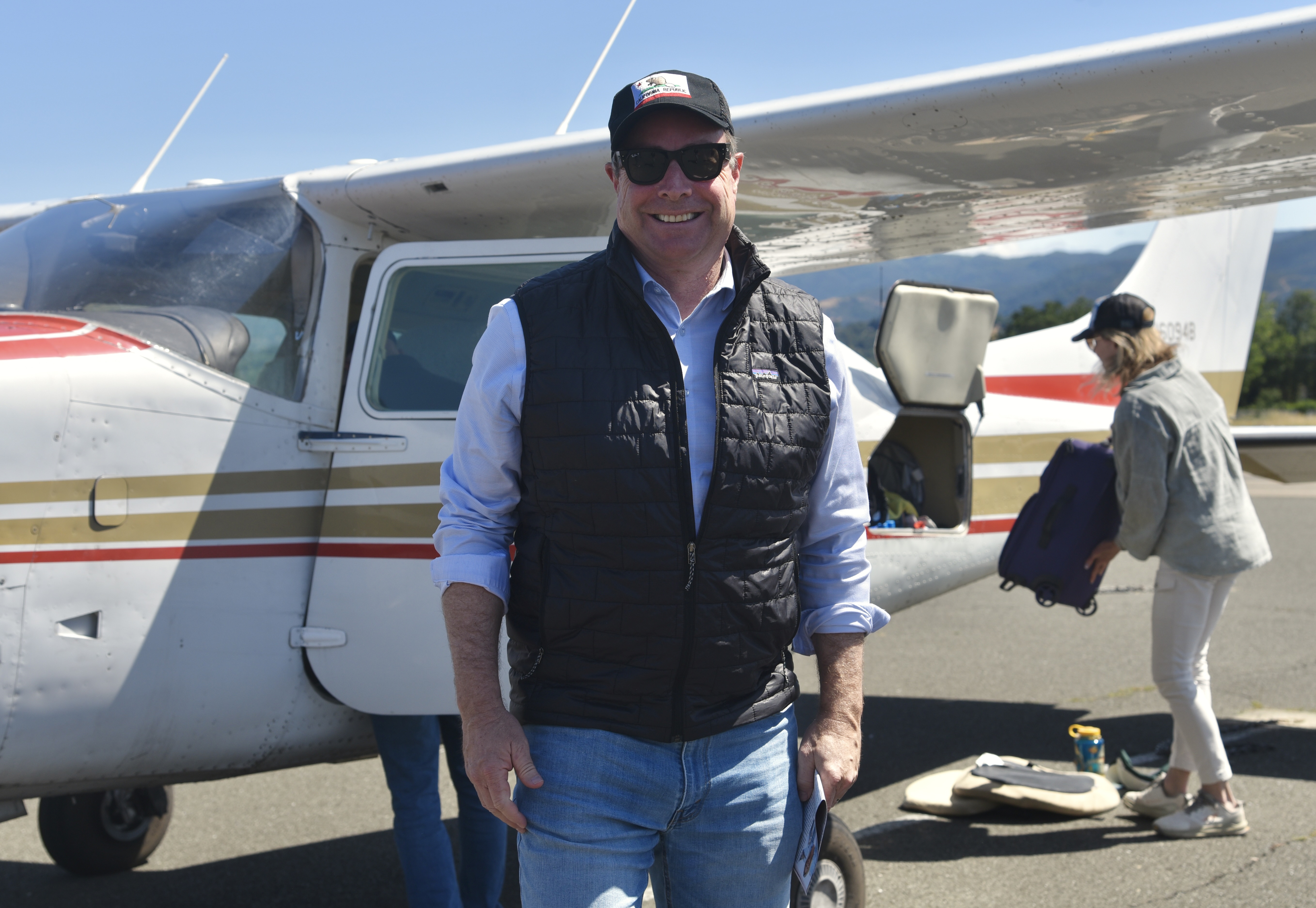
District 2 State Senate candidate Damon Connolly poses for a photo at the Ukiah Municipal Airport after an flight over the Potter Valley project.
###
These days, PG&E is knee-deep in the long, drawn out regulatory process required to decommission a dam. PG&E filed the paperwork to pursue relicensing of the project in 2019, citing high operational costs.
In 2025, after no other groups told the Federal Energy Regulatory Commission (the agency in charge of approving the dam decommissioning plan) they wanted to take over the project, PG&E filed a final License Surrender Application and Decommissioning Plan.
Meanwhile, for almost a decade, a group of various agencies have been hashing out the future of diversion under the two-basin solution, with help from Rep. Jared Huffman.
This includes the California Department of Fish and Wildlife, California Trout, Eel-Russian Project Authority, Humboldt County, Mendocino County Inland Water and Power Commission, Round Valley Indian Tribes, Sonoma County, Sonoma County Water Agency and Trout Unlimited, who signed onto a historic deal last year.
But a push against this agreement has picked up. Lake County leadership have been speaking out against the plan, alongside a spread of Potter Valley residents and those who own property around the reservoirs.
U.S. Secretary of Agriculture Brooke L. Rollins filed a notice to intervene in the FERC process last year, and more recently has tweeted in support of talks with Elsinore Valley Municipal Water District.
Despite this push, the Federal Energy Regulatory Commission has recently indicated it would eliminate alternatives other than PG&E’s proposal, according to reporting from the Press Democrat.
Environmentalists are hopeful the Trump administration’s meddling won’t stop dam removal.
“Regardless of that tweet, this is all that’s officially on the table,” said CalTrout’s Charlie Schneider, who leads the environmental nonprofit’s effort to remove the dams. He gets the impression FERC largely stays out of the political thicket.
PG&E won’t be done with this latest phase in the process for the next few years. A first draft of a surrender order is expected in possibly 2028 or 2029.
Ultimately, enviros see dam removal as essential to restoring the Eel River.
It is estimated that less than 5% of the historical fish population remains in the Eel. A massive drop in salmon in Humboldt County and California at large have shaped the communities who’ve traditionally lived off the fish.
Schneider said in an email it’s difficult to tease out the impacts of the dams from other factors, like historic logging, overfishing or cannabis. But he said the issues compound.
“If a fish can’t spawn in the headwaters, and has to survive pikeminnow, and has a degraded estuary, it makes it really hard to survive. So we think about this issues in aggregate,” he said.
“But, we also know things are not going well, and the headwaters are really important for spawning chinook and for spawning and rearing steelhead, so dam removal is the most important single action we can take to recover fish,” he said.
###

Another view of Scott Dam, showing the Lake Pillsbury Reservoir.
###
CLICK TO MANAGE